Category: Relationship film

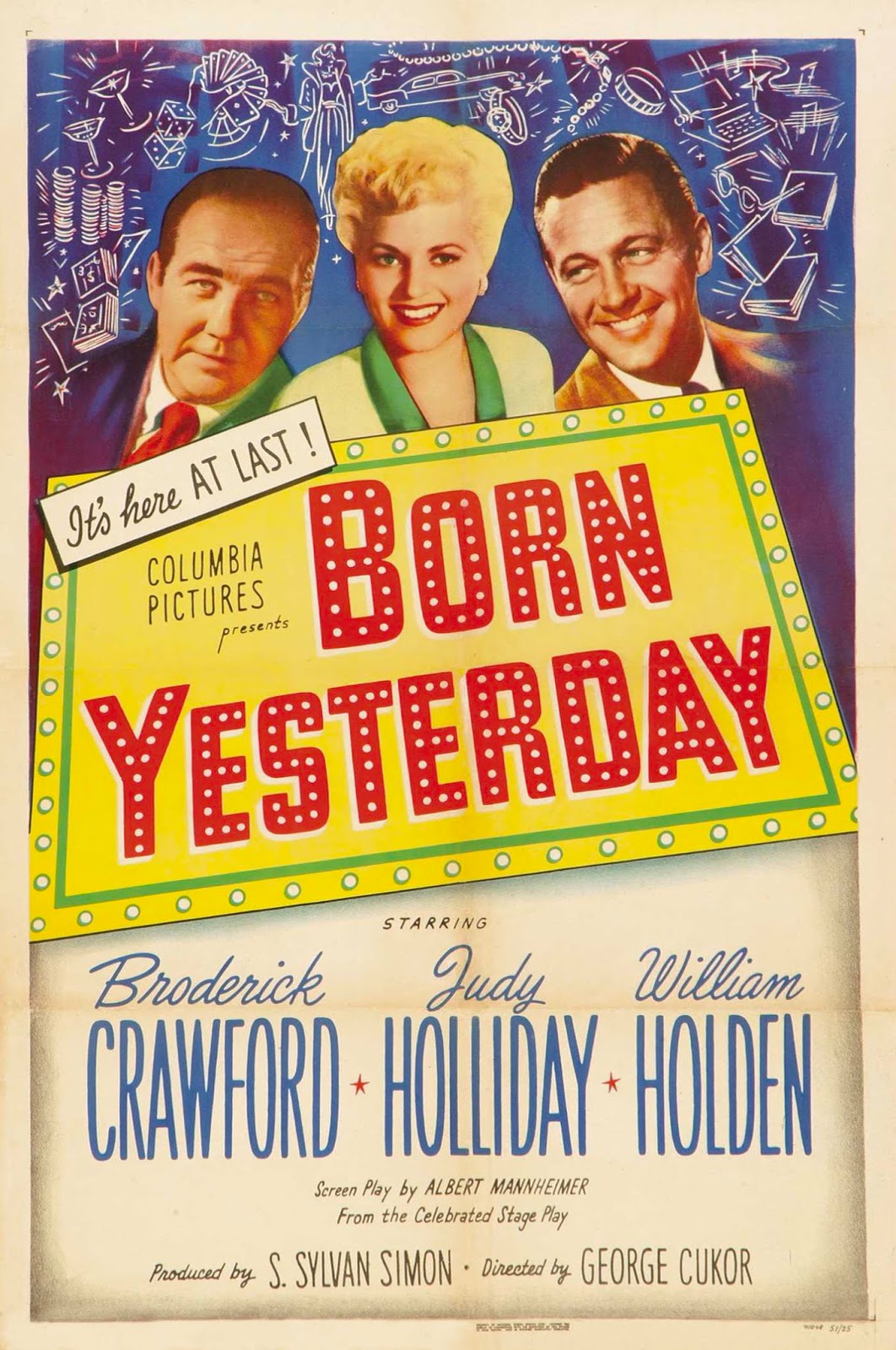
Born Yesterday (1950)

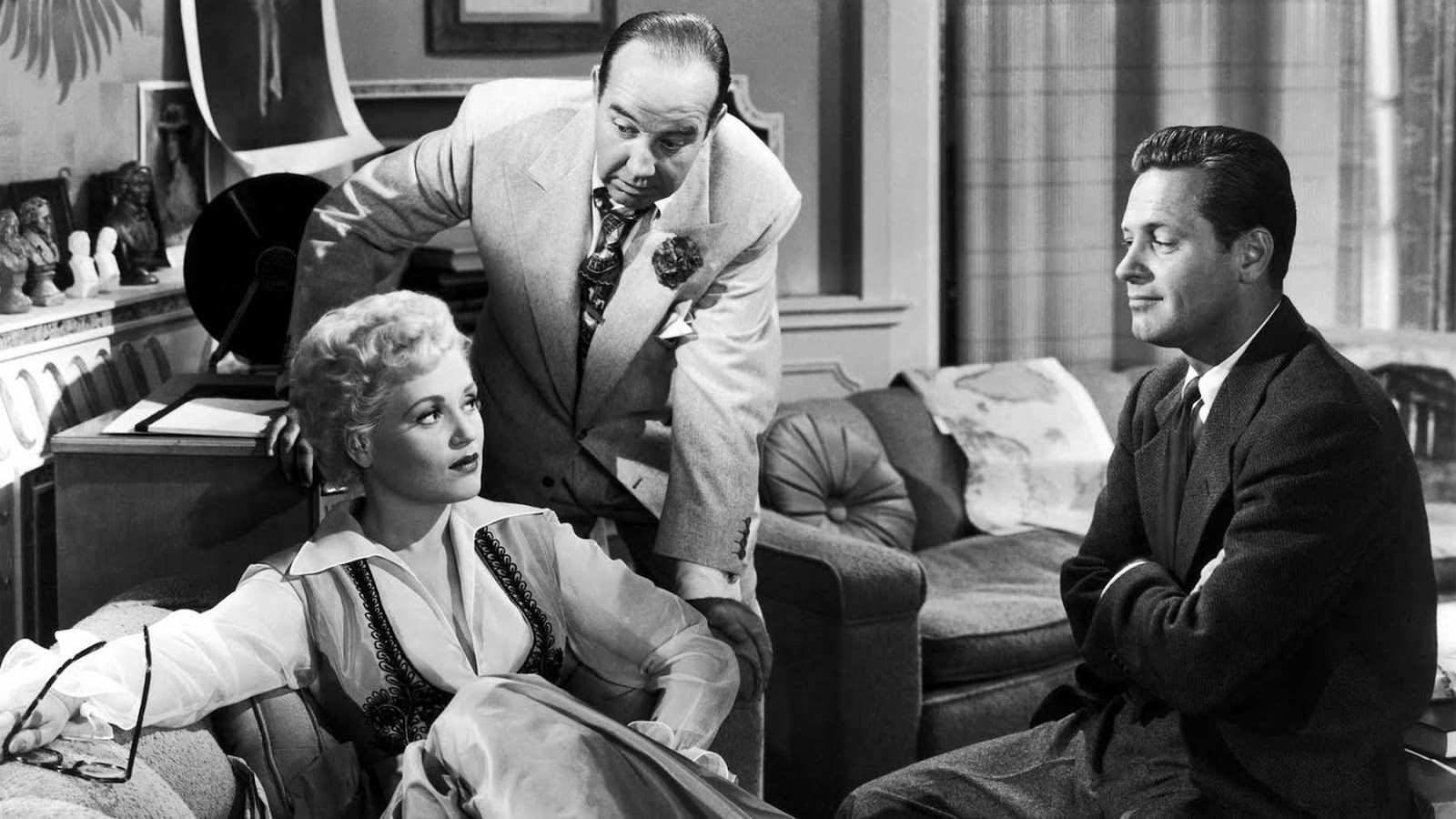
Judy Holliday gets a tutorial in class from William Holden – much to the chagrin of Broderick Crawford – in Born Yesterday

Director: George Cukor

Cast: Judy Holliday (Billie Dawn), Broderick Crawford (Harry Brock), William Holden (Paul Verrall), Howard St John (Jim Devery) Frank Otto (Eddie), Larry Oliver (Congressman Hedges)

Perhaps George Bernard Shaw should have tried to copyright the Pygmalion concept. After all no end of films and plays have tried their best to replicate the magic of having one working class classless type (usually the woman) learning how to use their own natural intelligence effectively by a wiser tutor (usually the man). Born Yesterday is a near text-book example of this – she’s as ill-informed as a young baby so might as well have been “born yesterday” y’see – that offers very little in the way of surprises, but a lot in the way of charm – most particularly from Judy Holliday who carries the entire the film with aplomb.

Harry Brock (Broderick Crawford) is a corrupt, uneducated businessman who has arrived in Washington to buy up a few congressmen. Brock may be a boreish bully, but he’s worried that his mistress, former Chorus-girl Billie Dawn (Judy Holliday), is so brash and ill-educated that she will show him up in front of his new political contacts. So he hires investigative journalist Paul Verrall (William Holden) to educate her. But Paul and Billie have an immediate romantic frisson – and as she learns about politics, literature and the state of the world Billie starts to realise that maybe all those shares she holds in her own name (for tax purposes) in Brock’s dodgy dealings might give her the chance to put his wrongs right.

Born Yesterday was an adaptation of Broadway hit that had made Judy Holliday a star. Written by Garson Kanin, bullying Harry Brock was allegedly based on Colombia Pictures head Harry Cohn. He clearly didn’t care when he smelt a hit – and even confirmed some suspicions by ordering Kanin to do re-writes of the rewritten script for no extra payment. Cohn had been deeply uncertain about bringing the unknown Holliday along for the ride (she had made only three small appearances beforehand) so Cukor cast her in a key role in Adam’s Rib (where Hepburn generously ceded many scenes to her) to prove Holliday could make it on the big screen.

Thank goodness she did make it to the film, as Holliday makes the film. Winning the Oscar – famously beating Bette Davis and Anne Baxter in All About Eve and Gloria Swanson in Sunset Boulevard – Holliday is superb in the role. Billie Dawn may be brassy, may be load, she might have the sort of screeching Brooklyn accent that sometimes feels like nails on a blackboard – but she’s not dumb. She’s smart – as she shows by repeatedly beating Harry with ease at games of gin rummy – she’s capable and she cares. She just hasn’t learned any better, and having spent her life being told that her opinions don’t matter, she’s decided to not mention them.

But Holliday shows Billie is a woman fast – and eager to learn – and a week or so with Paul won’t turn her into a genius, but she’s more than sharp enough to work out what’s wrong about her life and her sugar daddy, and to give her the oomph to do something about it. Holliday demonstrates this endearing growth of engagement and curiosity with a superb lightness – her comic timing is faultless – and a touching sweetness. 

The script gives Billie a hilarious tendency towards malapropism and her wide-eyed innocence and desire to do her best works wonderfully in getting us onside. While she is often the source of jokes she is never the butt of them, and Holliday makes clear her decency and sharpness is innate. She’s far from a dumb blonde – although she certainly looks and sounds like it – and watching her apply good-old fashioned Hollywood liberal ideas to confound boreish businessmen is good fun.

Her co-stars give sterling performances. Broderick Crawford channels his Oscar winning turn from the year earlier as corrupt bullying Willie Stark in All the King’s Men as the loud, bullying and dim Harry Brock. Throw-away lines suggest he has killed in the past – and at one point he strikes Billie – but he’s always a comic blusterer rather than a real threat. William Holden generously cedes much of the ground to Holliday as her Henry Higgins, although unlike that guy he’s humble, supportive and pleasingly democratic (quite the year for Holden, having also played a similar supplicant role in Sunset Boulvard).

Cukor directs with his usual lack of flash, quietly setting the camera in place and letting the actor’s go about their business meaning, for all the location shooting in Washington, this still feels very much like a Broadway piece. Cukor does skilfully manage to smuggle a lot under the censor wire – not least that Billie is clearly Harry’s mistress – and keeps a fine romantic tension between Billie and Paul, even if having the pair of them kiss early on does undermine some of the “will-they-won’t-they” magic.

But then basically this is a very straight forward film that just looks to entertain. There are some dirty dealings in Washington – but it’s all sorted out very easily and we are reassuringly told that there are only a very few bad apples in this barrel, and we can trust in the decency of our leaders. It’s no surprise who ends up with who, and no real revelations in character. The most surprising character in many ways is Harry’s disillusioned, self-loathing lawyer played by Howard St John, constantly on the verge of alcoholic self-disgust.

The film is really a showcase for its star though – and Holliday delivers with a terrifically entertaining performance that hammers home even more the sad fact that she passed away at 43 with only a handful of films to her name. Pygmalion Goes to Washington it maybe, but this is still a lovely epitaph to a talented actress.

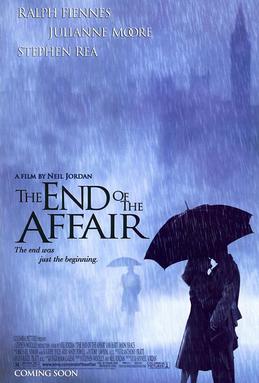
The End of the Affair (1999)

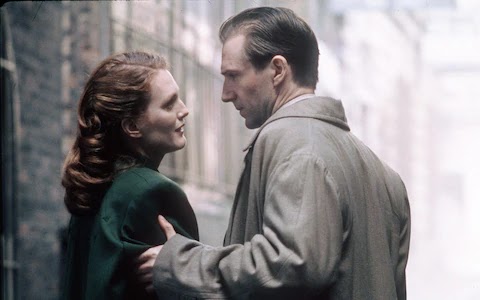
Julianne Moore and Ralph Fiennes in a doomed romance in The End of the Affair

Director: Neil Jordan

Cast: Ralph Fiennes (Maurice Bendrix), Julianne Moore (Sarah Miles), Stephen Rea (Henry Miles), Ian Hart (Mr Parkis), Jason Isaacs (Father Richard Smythe), James Bolam (Mr Savage), Sam Bould (Lance Parks), Deborah Findlay (Miss Smythe)

The End of the Affair is one of Graham Greene’s most autobiographical novels, based strongly on his relationship with Catherine Walston, wife of a friend in the civil service. Unlike the affair in the book, Greene’s continued for decades, long after the publication of the novel in 1951 (which had led to the husband demanding an end to it – a demand ignored). Greene’s novel recounts the dangerous passions of an affair, mixed with the powerful anxieties and uncertainties that the Catholic faith can have on relationships. Jordan’s film captures much of this – but in places fails to fully understand the spirit of Greene’s compelling novel.

Maurice Bendrix (Ralph Fiennes) is a moderately successful popular author, excused war service due to having injured his leg in the Spanish Civil War. In 1946, a chance meeting with Henry Miles (Stephen Rea), a staid civil servant brings back vivid memories of Maurice’s wartime affair with Henry’s wife Sarah (Julianne Moore). The affair ended abruptly for reasons Maurice cannot understand, and his love is twisting into jealous resentment. With Henry now concerned Sarah is having an affair – and seemingly unaware of Maurice and Sarah’s wartime relationship – Maurice takes it upon himself to hire Parkis (Ian Hart) a private investigator to find out more. The results though give him profound and affecting insights into both the present and the reasons for the end of his own affair with Sarah.

Jordan’s adaptation gets so much right, it’s almost more of a shame that it gets things wrong as well. The atmosphere of the film is simply perfect. It looks and feels exactly like a classic slice of Greeneland, with its dreary London, rain-soaked settings and gloomy period setting. Roger Pratt’s Oscar nominated photography is perfect for the tragic beauty of Greene’s work, and its matched with a sublime musical score from Michael Nyman that wrings every inch of emotion from the story.

Ralph Fiennes is also the perfect idea of a Greene hero – slightly imperious, bitter, arrogant with an air of prep school smugness mixed with an underlying sense of grim inferiority. It’s hard to imagine any other actor – maybe except Colin Firth – better suited to the slight air of dissolute, not obviously sympathetic world-weary struggle that a Greenian hero needs to exhibit. Fiennes barely puts a foot wrong and could have practically walked off the page.

Equally good is Julianne Moore, who nails a very English type of person, a woman determined to do her best and to set standards, but who carries just below the surface a deep well of emotional pain and sorrow that briefly is allowed to peek through. It’s a heart-rending performance of a person desperate for happiness, but hiding that longing under a veneer of acceptability, who sacrifices what she wants from life to meet the obligations of her faith. 

Because, it being Graham Greene, Faith is the big issue here – the idea of the private deals we make with God and the cost that those impose on us, the sacrifices of our own happiness in surface of something higher than ourselves. Greene’s novel intrinsically understand the eternal struggle felt in Catholicism to do the right thing, to accept the love of God into your life even if it means turning your back on more earthly loves and passions. How these journeys can be hard – unbearable even – but carry a level of reward in themselves. 

It’s that feeling for God – who Bendrix grows to believe has cheated him from happiness on earth – that powers his “diary of hate” that he is writing as the book opens. It’s an idea the film only fitfully engages with. Jordan deviates from the novel’s real intention at a key point, in particular “correcting” a dramatic error he feels Greene makes by having Sarah die “off camera” in the book, of a sudden cold, after confessing to Bendrix her reasons for ending the affair, her pact with God.

This narrative change allows a sequence in Brighton as the two reignite their affair – but it also undermines the tragedy of the book, that suddenness of loss, and also makes Sarah’s death feel like a tit-for-tat punishment for going back on her word. More to the point, the affair restarting has the air of an atheistic view of the Catholic complications here, an idea that these can be easily brushed aside because the “heart wants”. It’s to miss the point of Greene’s world thinking and undermine the small everyday tragedy in favour of something more conventional and “epic”.

It’s a major tweak that undermines the strength (otherwise) of Jordan’s work here – his directing and scripting is otherwise largely faultless. Other changes to the source clarify the message – I think changing Smythe (a gently but arrogantly certain Jason Isaacs) into a priest rather than an atheist Sarah is using to test her faith makes sense, even if it does suggest that she acts under the influence of someone else rather than on her own opinions. Making Bendrix a Spanish war veteran rather someone suffering the effects of a childhood illness adds a political and moral romanticism to the character entirely absent from any of the rest of his personality. But it’s fine.

Jordan’s film has many strengths. Its tone is excellent and it’s passion inspiring (the tender explicitness of the sex scenes landed it with a bizarre and controversial 18 certificate) and there are superb performances, not just the leads but Stephen Rea excellent as the meek but noble husband and some lovely comic work from Ian Hart as a haplessly efficient private eye. But the film slightly misses, in the end, the point of the novel – which is a real shame. If Jordan had stuck to the book, and its complex themes of guilt and grief and Catholicism we could have really had something here.

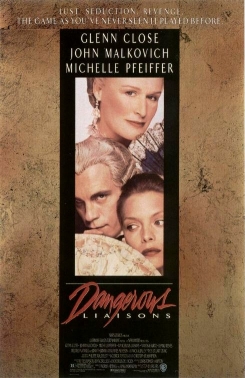
Dangerous Liaisons (1988)

Glenn Close and John Malkovich play games of lust and sex in Dangerous Liaisons

Director: Stephen Frears

Cast: Glenn Close (Marquise Isabelle du Merteuil), John Malkovich (Vicomte Sébastian de Valmont), Michelle Pfeiffer (Madame Marie du Tourvel), Uma Thurman (Cécile de Volanges), Swoosie Kurtz (Madame de Volanges), Keanu Reeves (Raphael Danceny), Mildred Natwick (Madame du Rosemonde), Peter Capaldi (Azolan), Valerie Gogan (Julie)

Christopher Hampton’s adaptation of Pierre Choderlos de Laclos Les liaisons Dangereuses had been a stunning success in the West End and on Broadway – so a film adaptation of this lusciously set story of sex was inevitable. Stephen Frears’ film keeps the story grounded in its setting of pre-Revolutionary France, but deliberately encourages a modern looseness, even archness, from its actors that makes it feel grounded and modern.

The Marquise du Merteuil (Glenn Close) and Vicomte de Valmont (John Malkovich) are two French aristocrats who fill their time with seductions and sexual manipulation of other people, while conducting a dance of attraction around each other. Du Mertuil wants revenge against her ex-lover by getting Valmont to seduce the lover’s innocent intended bride Cécile de Volanges (Uma Thurman). But Valmont is more interested in setting himself the challenge of seducing the unimpeachable Madame du Tourvel (Michelle Pfeiffer) – du Merteuil so convinced the task will be impossible that she bets him if he seduces du Tourvel, she will sleep with him as well. These games of sexual manipulation develop with disastrous consequences for all involved, as unexpectedly real emotions of love and affection intrude on the heartlessness and contempt.

Frears’ film won three Oscars for its most striking elements: production design, costumes and Hampton’s script. Hampton’s script provides a series of striking scenes and tongue-lashing dialogue for its stars. Meanwhile the film looks marvellous, it’s use of French locations superb in creating the world of decadence that these characters move in, while the costumes are so strikingly, elaborately intricate they practically become characters themselves. The film opens and closes with scenes of dressing and de-dressing: the opening sequence shows Merteuil and Valmont being dressed in their elaborate finery, a sequence uncannily reminiscent of knights being dressed for war, ending with shots of their defiantly cold faces starring down the lens. The film bookends this with the film’s key survivor, brokenly wiping away from their made-up “public face” probably forever. It’s a film that uses the intricacy of the period, to strongly suggest modern, dynamic tones and emotions. 

The film is shot with a series of tight shots, intermixed with the odd long shot, that is designed to bring us in close with the film’s serial seductions and envy-powered clashes. This brings us straight into the middle of the events, giving them an immediacy and suddenness that makes this feel like anything but a traditional costume drama. Seductions have a steamy immediacy, while the growing moments of tension in the relationship between Mertuil and Valmont is similarly bought in close to us, to allow us to see the mix of emotions these two have for each other – both a deeply, unexpressed, love and a strange sense of loathing linked together with a possessive jealousy.

Frears makes marvellous use of mirrors in the film. These reflective surfaces appear in multiple shots and frequently expand the world, mirrors reflecting characters as others discuss them, or forcing into shot (usually between two other characters) the subject of conversations. They reveal (to the viewers) eavesdroppers hiding and, in one striking shot, as Valmont and Mertuil’s latest lover argue she is framed in reflection hanging above them on the wall mirror. There’s a reason why one of the film’s final sequences revolves around the smashing of a mirror in grief. 

The film’s modernism also stems from its use of very modern American actors – apeing the success of Milos Forman’s Amadeus – with everyone using their own accents. Glenn Close is superb as Mertueil, a woman projecting a cold, manipulative authority but does so to suppress and hide her own emotional vulnerability. Mertueil has convinced herself that she is a champion of her sex, but her every action seems to be motivated by finding indiscriminate revenge on all those who have found the sort of happiness she has been denied (or denied herself). Close lets little moments – wonderfully captured by the intimacy of Frears’ camerawork – where moments of micro-emotions and pain flash briefly across her face, only to be wiped away.

Malkovich is an unusual choice as Valmont – and his serpentine swagger and arch mannered style at first feels quite a disconnect with a character renowned as the most successful lover in France. But Malkovich’s eccentricity, his very oddity, in a way makes him believable as a man women would find intriguingly irresistible. Malkovich, while naturally perfect for the coldness of the character, is also highly skilled at expressing the slow, non-continuous growth of conscience and feeling in Valmont, as his feelings for Tourvel dance an uncertain line between manipulation and genuine feeling – and while his confused feelings for Mertuil alternate from possessive devotion to revulsion.

The whole cast respond well to Frears guidance, and his ability to draw relaxed performances from an odd selection of actors. Michelle Pfeiffer is particularly fine in a role that on paper could be very dull – the perfect, kind woman – but which she invest with such a seam of emotional truth and longing for deeper connections, combined with naked emotional honesty that she becomes the most compelling character in the film. Uma Thuman is very good as a naïve young girl, Kurtz and Natwick suitably arch as society bigwigs, Peter Capaldi creepily willing as a manipulative servant and even Keanu Reeves has a certain sweetness about him, even if he is at the height of his “Woah” dudeness.

The film’s principle problem is perhaps the very archness and coldness that makes it affecting. While it’s intriguing and intelligent, it is never perhaps as engaging as it should be and its characters are so jet-black, deceitful and cruel that it becomes hard at points to really invest in this chilling story of unpleasant people using other unpleasant people and manipulating innocent ones. It becomes a film easier to admire, perhaps carrying too much of the freezing chill of imperial French greed and selfishness. Come the denoument for all the skill it is played with the actors, it is hard to feel your emotions invested or your heart moved by any of the fates of the characters. Perhaps, in presenting a heartless world of selfishness and lies, it does its job too well.

Once Upon a Time in America (1984)

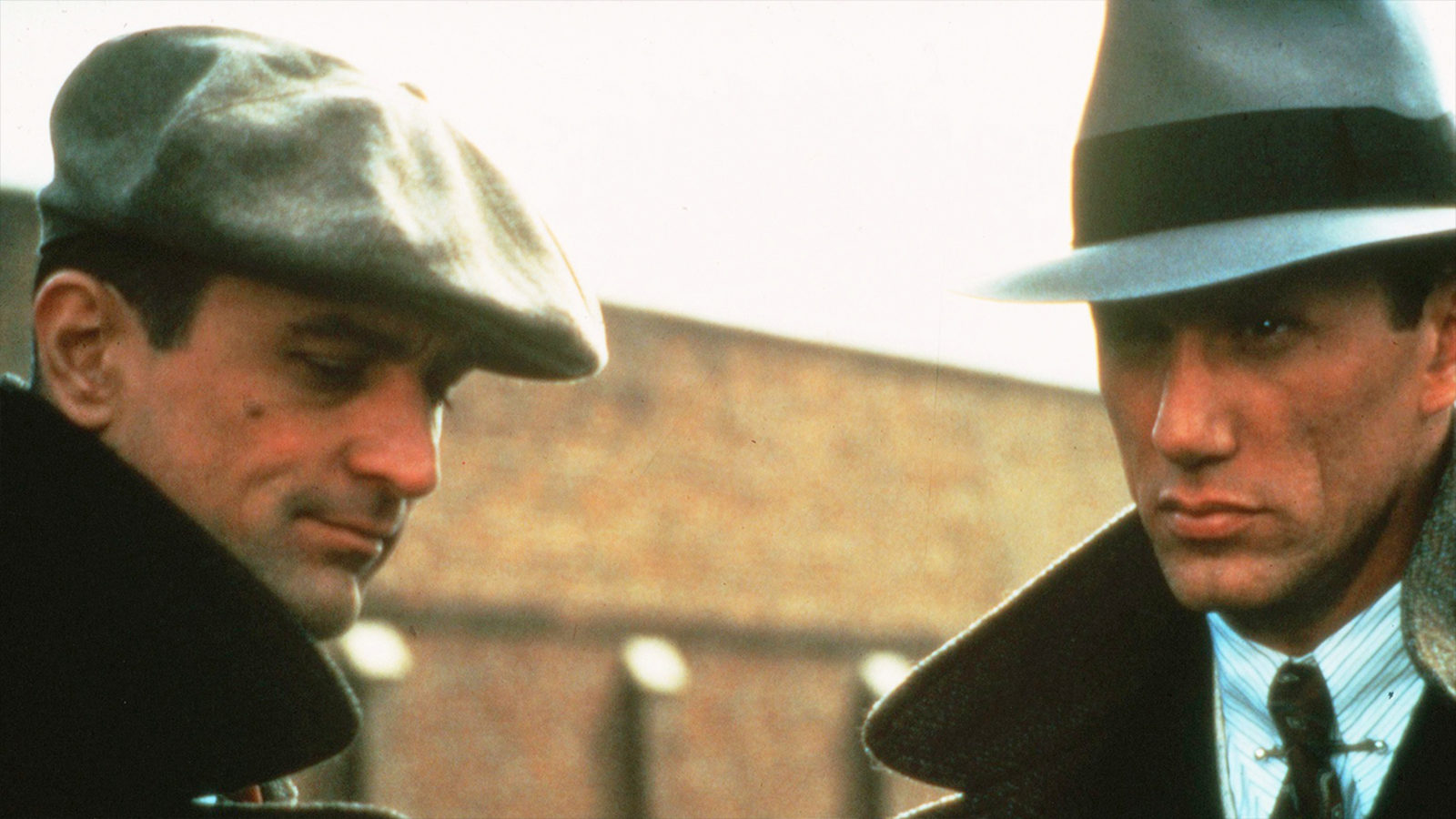
Robert De Niro and James Woods are gangsters in Sergio Leone’s sprawling indulgent masterpiece Once Upon a Time in America

Director: Sergio Leone

Cast: Robert De Niro (Noodles), James Woods (Max), Elizabeth McGovern (Deborah), Joe Pesci (Frankie), Burt Young (Joe), Tuesday Weld (Carol), Treat Williams (Jimmy O’Donnell), Danny Aiello (Police Chief Aiello), Richard Bright (Chicken Joe), James Hayden (Patsy), William Forsythe (Cockeye), Darlanne Fluegel (Eve), Scott Tiler (Young Noodles), Rusty Jacobs (Young Max), Jennifer Connelly (Young Deborah)

It had been thirteen years since Leone had made a film. During this time he turned down The Godfather in favour of his own dream of filming Harry Grey’s novel The Hoods. The final film, Once Upon a Time in America, seems destined to live in the shadow of The Godfather, from its settings and many of its themes through to its graphic design and cast. It’s a challenging, over-indulgent, sometimes difficult film that, never-the-less has its own sense of hypnotic power to it.

Told in a partly non-linear style, it opens with Noodles (Robert De Niro) a Jewish gangster on the run from thugs in 1930s New York days after the fall of prohibition. With his friends and his girl dead and his money stolen, Noodles flees the city – returning only in 1968 after a mysterious summons suggests his past is not as buried as he thought. Within this, the film weaves an intricate series of flashbacks that fill in the story of Noodles and his friend Max (James Woods) turning their teenage gang of hoodlums into an effective crew, muscling in on the money that can be made from prohibition. Carrying the story from 1918 all the way back to 1968, we discover why Noodles was on the run, what the money was, where it’s gone and who or what summoned him back to life.

Leone originally envisioned the film as a two-part epic: two films of three hours length. His original cut was almost ten hours long, cut down to six and then finally to just over four. This cut was released to critical acclaim at Cannes – but was still too long for the producers, concerned about making their money in America. To the fury of the cast (James Woods continues to be vocal about the butchering of the film), and the heartbreak of Leone, the film was cut again to just over 2 hours before its release in the States – a move that rendered it nearly incomprehensible and led to reviews that labelled it one of the worst of the year. Only with the much late release of the European cut (and work continues to restore something closer to Leone’s six hour cut) did the film find acclaim.

But you can see why the producers worried. Leone was never a director who felt the need to get where he was going quickly. As his films became ever more dominated by his love for artful compositions, meditative longeurs and drawing the tension out for as long as possible, so their running times ballooned. Leone matched this with a yearning to tell a story that was to be nothing less than about defining “America” – or at least, give a symbolic weight and depth to the Americana he loved. The film is overflowing with the feel of Old Hollywood gangster films and classic imagery of the immigrant experience in Manhattan. It’s like a brilliant coffee-table album bought to life and covered with blood.

So Once Upon a Time in America is a slow, lethargic even, film that takes its time to build up a picture of an immigrant community drawn together through bonds of culture and shared past that are nearly impossible to express – but fractured by the greed and capitalism of the American Dream, temptation to make an even bigger killing leading to old loyalties being sacrificed. Leone juggles some big ideas here, and if the film never quite comes to grips with any of them as it charts the fractured relationship of Max and Noodles, from brothers-in-arms to ambition, pride and private frustrations leading to betrayal it’s never less than strangely engrossing. 

In many ways this is a hugely indulgent film, but it is also remarkable (strangely) for how restrained and elegiac it is. The razzamatazz of some of Leone’s Westerns are mixed in with a golden age romantic view of the past – and its lost opportunities and loyalties – in a film particularly fascinated with the coming-of-age of young men. The film is nothing less than an old man taking a ruminative journey through the past (both Leone and Noodles in his memories), looking back at a life time of bad choices and lost chances. It all makes for one of cinema’s greatest mood pieces ever, with faultless period reconstruction, but also a piece that for all its focus on personal lives at cornerstones of histories, makes its characters seem strangely impersonal.

Part of that lies in Leone’s clear love for the film’s long second act (nearly a third of its runtime), which charts the young Jewish hoodlums teenage lives in 1918 New York – their meeting, first scores, rivalries with other gangs and inevitably the loss of virginity. For all its overextended backstory, the section of the film hums with love and elegiac romance. It’s the richest part of the film. There is a beauty in beats of the watching the boys encounter everything from first crime to first love – and easy as it is to mock a good 3-4 minutes watching one of them eat a cake intended as an offer in exchange for a first sexual experience with the local floozy, moments like that have an innocence and a beauty to them that Leone really captures.

It’s a shame that it’s the back-end of the film that suffers – and its plot and narrative drive. It feels like Leone fought to keep the beauty of this early section and sacrificed drive and narrative later. The fracturing of the relationship between Max and Noodles is less clear, and their adult characters never quite come into focus. Perhaps there isn’t quite room for actors in the long sequences of wordless silence and atmosphere, punctuated by bursts of shocking violence, in Leone’s world. Certainly the cut doesn’t help, with most of the supporting cast (Joe Pesci, Treat Williams, Burt Young, Danny Aiello) reduced to little more than one scene each, their storylines – particularly a crucial Teamsters plot – barely making any sense.

Max’s growing distance from Noodles is perhaps rooted in everything from his ambition being frustrated by Noodles small-time viewpoints, perhaps even in suggestions of a frustrated homosexual love for the defiantly straight Noodles. James Woods does very well to piece to together a suggestion of deep psychological unease and confusion in a character who remains unknowable, a man to whom loyalty is everything until it isn’t.

As Noodles Robert De Niro anchors the film with one of his quietest, most reflective performances. Noodles is a deeply flawed, low-key, humble character who carries in him a capacity for self-destructive and vicious violence. Leone’s film suggests Noodles is perhaps troubled by feelings and longings he can’t begin to understand or appreciate. He is a romantic character, deeply infatuated with both Max and his childhood sweetheart Deborah, but unable to express or communicate his feelings until it is far too late, a man traumatised by emotional connection.

Not that this excuses Noodles for his actions, particularly towards women. If there is one troubling aspect of the film it is its attitude towards women. There are two prominent women in the film, both of whom are raped. One of them, Carol, is a shrewish temptress, who deliberately provokes Noodles to rape her and is then shown enjoying it. The second rape, this time of Deborah, comes from Noodles after a romantic date where he has finally done everything right. While Leone shoots the scene with an almost unwatchable grimness – Elizabeth McGovern’s screams and distress make for very hard viewing – the film still asks us to feel not only for her pain, but also (perhaps more so) Noodles regret. Further when they encounter each other late in life, Deborah matches him in sadness at chances lost – an unlikely reaction you feel for someone who has suffered as traumatic experience as she has. 

But then to Leone perhaps this is part of the corruption of America – or rather the vileness of gangsters. The gangsters are a grotesque bunch in this film, killing without compunction, torturing, stealing, using violence as second nature. Loyalty is barely skin deep and arrogance abounds. There is no romantic sense of family behind it all – perhaps the thing Leone rejected most from The Godfather – just a series of people on the make and on the take. 

But for all its faults and over extended length the film is increasingly hypnotic and engrossing, Leone’s understanding of mood being near faultless. While the ideas are perhaps not quite pulled into sharp focus in the film – and leave the audience having to do a lot of supposition – it still works over time. And the film has so many astonishing merits – from its awe-inspiring shooting and production to the sublime score from Ennio Morricone that gives the film even more poetic depth – it more than merits its existence.

And of course there is the cheeky sense Leone throws in that some – or indeed all – of what we are seeing may not even have happened. The film opens and closes with Noodles in an opium den, stoned out of his mind, in the 1930s. In the opening he lies there, haunted by the sound of a ringing phone (the memory of the phone call he made betraying Max), and we see him arrive at the film’s end taking his first puff and lying back with a grin. Is the film’s off-kilter 1968 even real? Or just an opium den dream? Is the past – and the film’s disjointed narrative flying back and forth – just a stoned man lost in his own fantasies? Who knows? What we do know is that Leone’s indulgent epic is a flawed but genuine masterpiece – and the opium fantasy angle may just be the perfect cover for the fact more than half the film is on the cutting room floor of history.

The Magnificent Ambersons (1942)

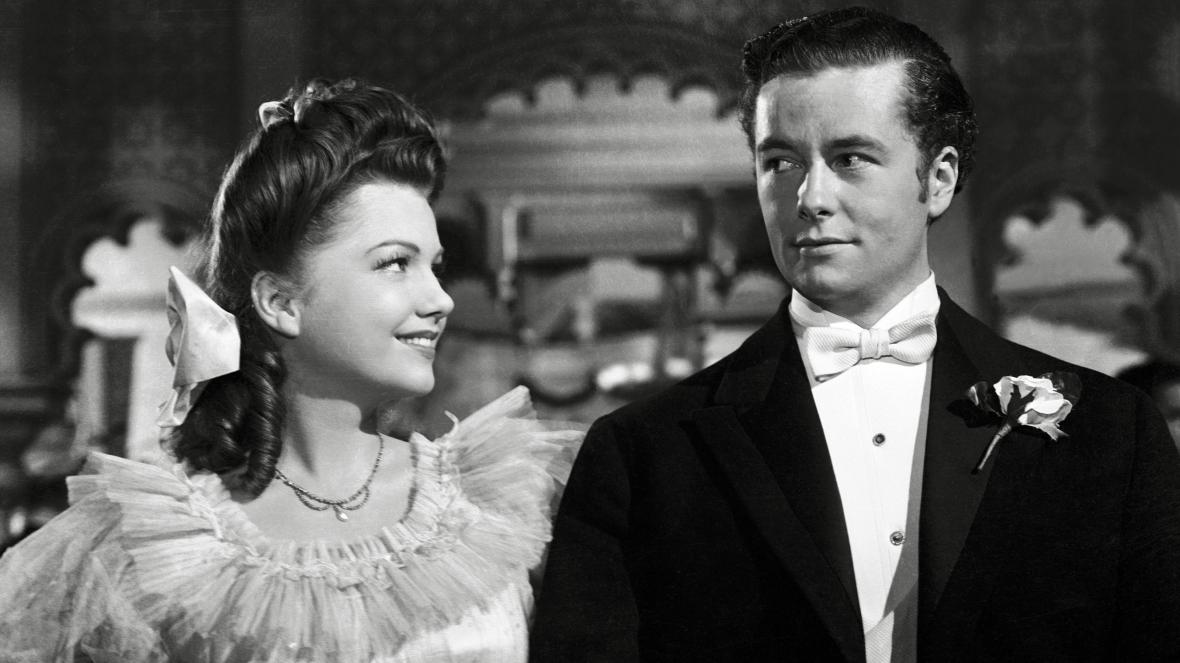
Tim Holt can’t understand how the world is changing in The Magnificent Ambersons

Director: Orson Welles

Cast: Joseph Cotton (Eugene Morgan), Dolores Costello (Isabel Amberson Minafer), Anne Baxter (Lucy Morgan), Tim Holt (George Amberson Minafer), Agnes Moorehead (Fanny Minafer), Ray Collins (Jack Amberson), Erskine Sanford (Roger Bronson), Richard Bennett (Major Amberson), Don Dillaway (Wilbur Minafor), Orson Welles (Narrator)

In early 1940s, Orson Welles was given the sort of contract by RKO directors normally only dream of. The freedom to write, direct and star in films of his choice and, most of all, the power of “Final Cut” – the dream of all his contemporaries. All this for a 25-year-old who had never made a film. It was unheard of – and it was never heard of again. The reaction to Citizen Kane had been full of praise from the critics but that hadn’t saved it from box office disappointment – nor the savages of the Hearst press or the jealousy of his peers. The chickens would well and truly come home to roost on The Magnificent Ambersons, the second picture in Welles’ deal.

The film itself is an adaptation of Booth Tarkington’s Pulitzer prize-winning novel. The Ambersons are a powerful and rich Midwestern family at the turn of the century – but the film charts their decline and fall as the modern age (represented by the motor car) slowly leads their world of genteel wealth and entitlement to a close. It’s a particularly challenging concept for the youngest member of the clan, George Amberson Minafer (Tim Holt) to come to term with, the spoilt young son of Isabel (Dolores Costello), who has grown up expecting his every whim to be met without question. His hostility focuses on Eugene Morgan (Joseph Cotton), his mother’s rejected suitor (now renewing his interest with her widowhood) and inventor who has patented a new form of motorcar. Things are complicated by George’s own love for Eugene’s daughter Lucy (Anne Baxter), a young woman who expects George to want more from life than just to live off his family’s wealth.

It’s impossible to discuss The Magnificent Ambersons without mentioning its status as perhaps the greatest “lost film” ever. Welles’ original cut of the film was a little over two hours long. He completed the cut and then flew to Brazil to begin collecting footage for his next project, It’s All True a part-documentary, part-fiction film (which in the end was abandoned). While he was out of the country, the film was roundly rubbished at a test screening. RKO panicked and demanded cuts. Welles had foolishly surrounded his right to final cut for the film and sent back a list of suggested changes (some have argued the list was deliberately bad to force the studio to make no changes), but refused to fly back to supervise things. 

So his editor Robert Wise (later a two-time Academy award winning director) cut the film down to just over an hour and twenty minutes. Cotton and Moorehead were corralled into filming some new scenes to hurriedly wrap the story up and give it the studio mandated “happy ending”. Welles wasn’t happy, but still wouldn’t come back to fight his corner. His notes were destroyed and eventually the remaining negative of the deleted scenes were burnt. So the truncated shadow is all we have.

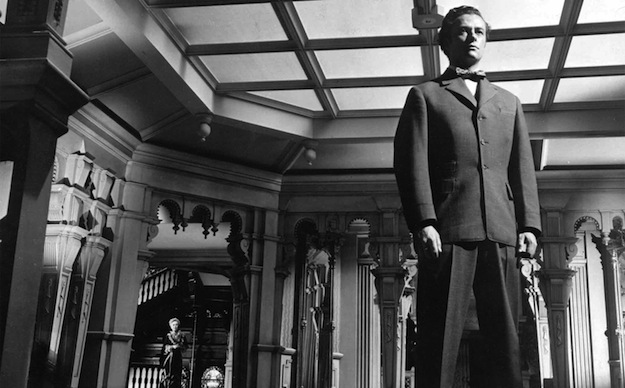
I call it a shadow, because that is what the film feels like – an afterimage of a true masterpiece, like a dream you can almost completely remember. In some ways it’s an even more confident and controlled piece of film-making than Kane, a wonderfully assured and graceful piece of film-making that mixes luscious long-takes with a triumph of techniques and little details (both of performance and technical work). Welles captures this all within a triumphantly impressive set, an elephantine house of at least three stories with a winding grand staircase, that allows him to film from different, heights and angles as well as indulge a series of graceful tracking shots that all proceed and accompany the actors through the house.

Welles matches this with a storyline that captures a sense of a country in a state of change – a tipping point of modern America as the Henry Jamesian Old Americans, with their wealth and inherited English-class system, gave way to industrialist new money. These two worlds sit awkwardly against each other, constantly compared and contrasted – Eugene’s car factory is a noisy, piston filled Ford-ist church, a world away from the formal gentility of the Amberson home. 

Welles also captures this in a series of wonderful vignettes, not least an early scene featuring Morgan driving Isabel and her siblings through the snow bound countryside in his prototype motor car, at first passed by an arrogant George with Lucy in a horse and sleigh, then having to bail George out when the sleigh turns leaving him and Lucy stranded. George is reduced to pushing the car to getting it started – getting a face full of fumes for good measure – a humiliation that hardens his stance against the modern world (and Eugene) all the more.

Because for George – superbly played with a fragile ego and utter lack of self-awareness by a preeningly weak Tim Holt – the world has a certain order that places Ambersons at the top and the rest of the world at various levels on the way down. And anything that might threaten to change that is rejected at all costs. George expects the world to march to his tune without him putting in the faintest effort – and when it doesn’t, his whole life is a desperate raging of petty attempts to assert his control.

This focuses above all on exerting a bullying moral force on his mother, a woman who loves her son but also wants to explore the romantic feelings she has for Eugene (and by extension her understanding that the world is changing). George makes this choice stark – him or Eugene – a choice no mother can be expected to make. Dolores Costello is superb as a woman who has spent her life shutting her eyes to her son’s selfish nature until it’s too late to change, who sacrifices her own desires for the good of her family.

The whole film is a feast of sublime acting, a reminder of how Welles could get the best out of actors (all regular collaborators of his). Joseph Cotton’s earnestness is perfect for the upright and decent Eugene, too proud to let his resentment and anger show. Ray Collins is wonderfully sweet and endearing as Jack, George’s generous and open-minded uncle. Anne Baxter has a radiant honesty that hides a determined spine of moral certainty as Eugene’s daughter Lucy. Perhaps finest of all is Agnes Moorehead (Oscar nominated) as Aunt Fanny, George’s spinster aunt, who has worn a mask of contentment over her own frustrations and resentments for so long she only slowly begins to work out what she actually feels about anything at all. Moorehead’s performance walks a brilliant line between careful underplaying and explosive dynamics – she has at least three striking emotional breakdown scenes of such brittle honesty that it’s enough to move you to tears.

All of this comes together into a superb package of sublime film-making and intelligent story telling. The problem is it’s too short. The later scenes really bear the brunt, with Wise’s cutting trimming much of the connecting meat between the key scenes. Events towards the end seem to happen with no build up – characters suddenly die, fortunes are swiftly lost, years disappear from one scene to the next. As the film accelerates through its final half hour, narratively it begins to make less and less sense. Then the studio caps on a functionally filmed happy ending (Wise does at least ape Welles’ tracking shot techniques – he was a very capable director) which rings utterly untrue with the sadly elegiac story we’ve been watching (superbly narrated by the way by Welles).

It makes The Magnificent Ambersons a wonderful, incomplete masterpiece. It’s the filmic equivalent to those parts cut off from The Night Watch or Ucello’s Battle of San Romano. What we are left with is still awe inspiring. But it could have been even more.

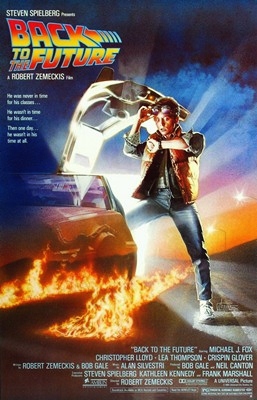
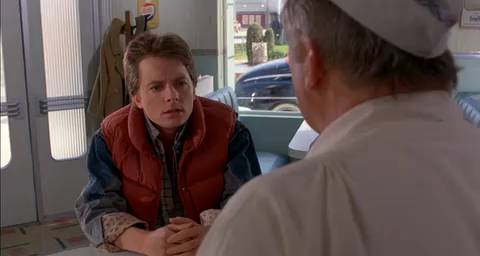
Back to the Future (1985)

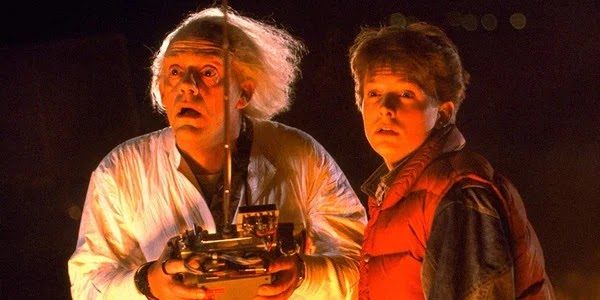
Michael J Fox and Christopher Lloyd head to the past and back in the ever beloved Back to the Future

Director: Robert Zemeckis

Cast: Michael J Fox (Marty McFly), Christopher Lloyd (Dr Emmett “Doc” Brown), Lea Thompson (Lorraine Baines-McFly), Crispin Glover (George McFly), Thomas F. Wilson (Biff Tannen), Claudia Wells (Jennifer Parker), James Tolkan (Gerard Strickland)

In the tentpole 1980s film icons, few films are as beloved as Back to the Future. With the highest of high-concepts, it could easily have alienated people – or felt a little bit silly – but instead it’s a perfectly structured entertainment, a wonderfully assured combination of light comedy, drama, science fiction, farce and adventure. It’s one of those rare films that doesn’t have a wrong beat in it.

Set in 1985, Marty McFly (Michael J Fox) is a your typical teenager, cool, loves rock music, has a great girlfriend Jennifer (Claudia Wells) – and is worried he’s going to turn out like his parents, his weak father George (Crispin Glover) bullied by his supervisor Biff (Thomas F. Wilson) who never amounted to anything and his depressed mother Lorraine (Lea Thompson). His friend, eccentric scientist Emmett “Doc” Brown (Christopher Lloyd) ropes Marty into tests of his latest invention – a time travel machine built into a DeLorean car. When the first test is interrupted by angry Libyan terrorists – furious that Doc used their investment and stolen plutonium to build a time machine rather than a bomb – Doc is killed and Marty escapes in the DeLorean, accelerating to 88mph and accidentally throwing himself thirty years into the past. There he meets his parents, disrupts their first meeting and finds his mother falling in love with him and his father a weakling who he has to teach how to become a man and win his mother’s love – all while finding the help of the younger Doc to return him to 1985. 

Back to the Future has a tricky concept but a remarkably simple story which revolves around completely relatable ideas and questions. Who hasn’t wondered what your parents were like when they were young? Would you get on with them? How different would they be from the adults you know? These ideas are all caught – and told with maximum comic and dramatic impact – in Robert Zemeckis and Bob Gale’s superbly constructed script.

The secret really is in the cooking of that script – nearly five years in the making – where every single scene serves a clear purpose, and all the plot points sprinkled through the first twenty or so minutes or brilliantly pulled into effect in the rest of the film. With skilfully swift and economic story telling us all the information we need to know about Marty, his interests and skills, his parents – not to mention all the hundred and one other things happening in the film – so that as each careful plot point sprinkled through the film comes into effect it’s instantly satisfying and convincing. As director Zemeckis also gets a perfect conveying of the film’s tone of light comedy, even more surprising since it frequently touches on darker themes (murder, incest and rape for starters!) but never once feels like it’s tone is falling all over the place.

The film has a brilliant Frank Capraesque film of the strength of how one person can make a difference – both for good and bad. By arriving in the past – and with his confidence, bravery and shy decency – Marty at first ruins his parents meeting and then (almost without realising it) builds up both of them to head-off the mistakes they will make in their lives. Most obviously in his coaching of the timid and frightened George into someone who will have the confidence to make his own choices and go after the things he wants. The grooming of luckless loser George into someone who will stand up (eventually) against the brutality of Biff (a swaggeringly vile Thomas F Wilson) is particularly affecting, Crispin Glover to be commended for making a character who is wimpish and frustrating but not unlikeable. Lea Thompson also does great work as a sweet young girl, who’s more daring than she appears.

The film’s real success though is tied directly into the casting of Michael J Fox in the lead. Fox was born to play this role, the film effectively a showcase for his timing, ability to throw just enough shade and emotion onto scenes to keep them real, and above all his almost unparalleled skills as a light comedian. Originally unable to play the role due to a scheduling clash with his sitcom Family Ties, Fox was only bought on board after three weeks when backup choice Eric Stoltz proved unsuitable for the role (by his own admission). The entire film was shot either at night or the weekend to allow Fox to shoot after this 9-5 commitment to Family Ties was finished. And thank goodness because Fox makes the film.

He also has superb chemistry with Christopher Lloyd (graciously stooping for the whole film so he could fit in the same frame as the famously diminutive Fox). Lloyd, another great comedian with the instincts of a natural actor, channelled Einstein and conductor Leopold Stokowski as Brown, making him a larger than life eccentric who still feels like a real person. These two actors spark off each perfectly, adding a huge amount of comic and dramatic force to their rat-a-tat dialogue. Fox’s skill in understanding the light drama tone – and making what was already a very strong script comedy gold – as well as his ability to be immediately relatable to viewers is what makes the film an eternal success. 

That and it’s simple themes. The joke of travelling back in time and having your mum accidentally fall in love with you is perfectly judged, being just the right amount of icky (Fox’s horrified discomfort is hilarious) without being unsettlingly disturbing. The reconstruction of the tone and vibe of the 1950s is perfect – with Marty’s more hip 1980s style juddering up against the picket fence Americana of the past. There is plenty of humour from watching Marty “invent” everything from the skateboard (in a hilarious but gripping chase sequence) to rock and roll music. But it all works because the film is very heartfelt and genuine and very sweet.

Not only that but when it wants to be it’s also exciting and dramatic. The final resolution of George’s rise to manhood carries a real sense of threat as well as a cathartic moment of violence. The film’s final sequence as Doc and Marty race against time to channel a lightning strike to get the Delorean back to 1985 is truly exciting, helped as well by Alan Silvestre’s perfectly judged musical score (and thank goodness for executive meddling that nixed Zemeckis original idea of a Nevada test site and the time machine being built into a fridge). It all works as such an entertaining package you don’t even think about the fact that, as Marty returns to a radically altered family life in 1985, he won’t share any memories with his parents and siblings.

With a star actor taking on the role he was born for – and Fox was never better again, perfectly charming, endearingly sweet, cocksure and cool – Back to the Future has been entertaining audiences for almost 35 years – and it will carry on entertaining them the more we head into the future.

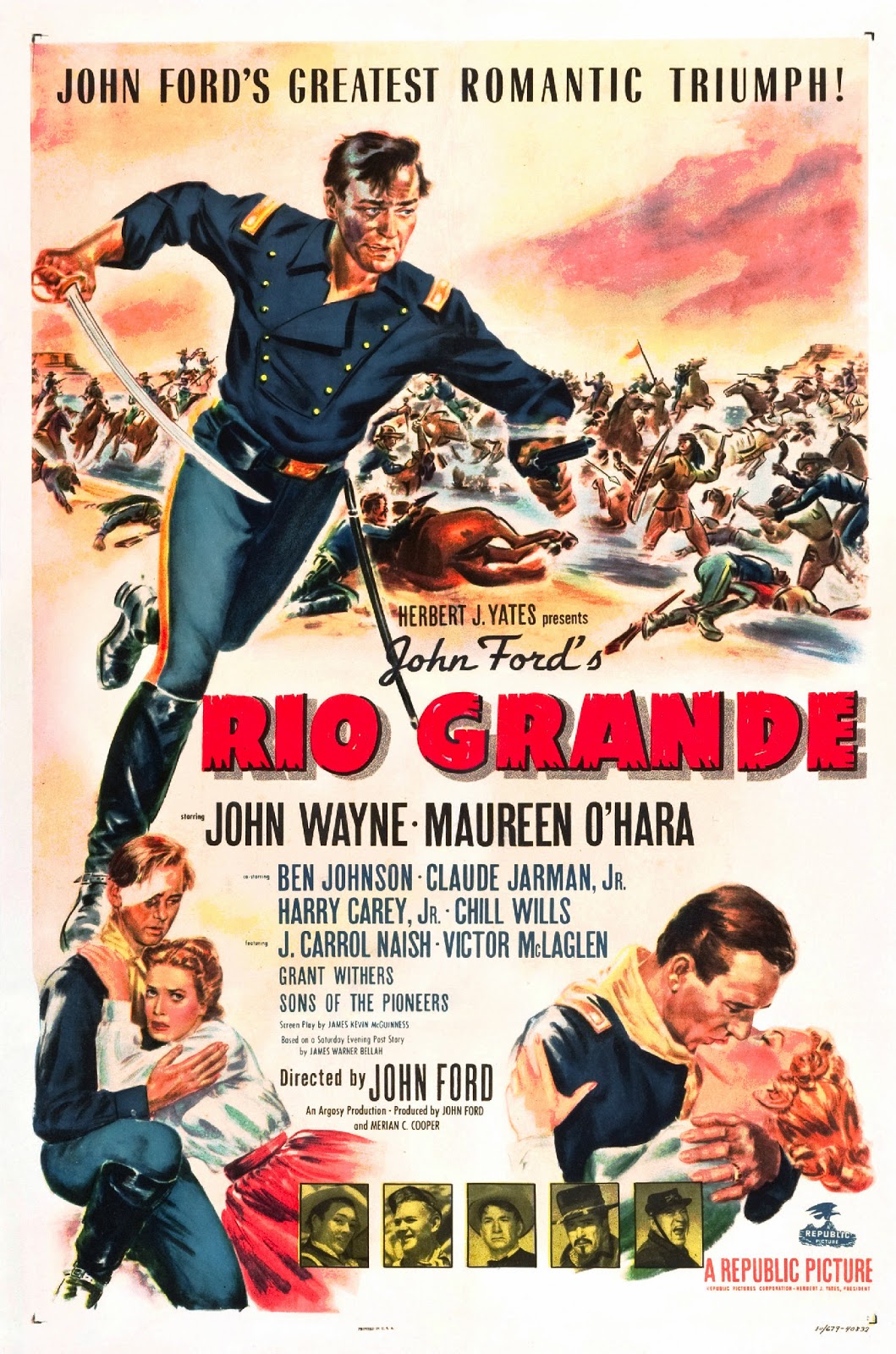
Rio Grande (1950)

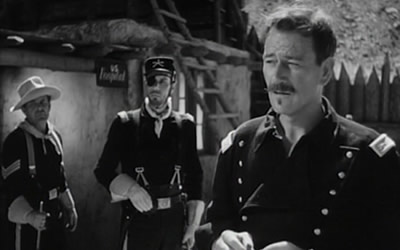
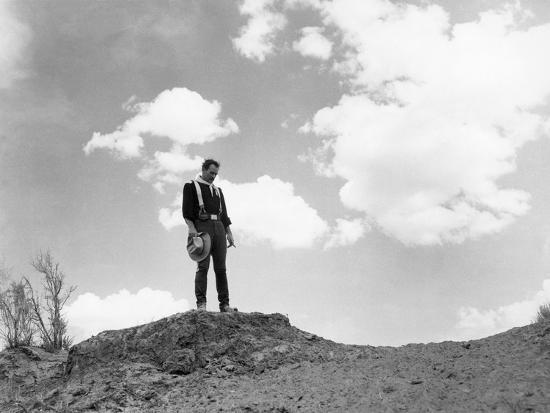
John Wayne is the Colonel regretting past mistakes in Rio Grande

Director: John Ford

Cast: John Wayne (Lt Colonel Kirby Yorke), Maureen O’Hara (Kathleen Yorke), Victor McLaglen (Sergeant Major Quincannon), Ben Johnson (Trooper Travis Tyree), Claude Jarmon Jnr (Trooper Jefferson Yorke), Harry Carey Jnr (Trooper “Sandy” Boone), Chill Wills (Dr Wilkins), J. Carrol Naish (General Philip Sheridan)

John Ford’s next project was meant to be The Quiet Man, his Ireland-set passion project. However the studio, Republic Pictures, were not convinced the expensive picture could ever be a hit (it later became one of their biggest hits and only Best Picture nominee). So they told Ford he could make it on condition that he, and his proposed stars Wayne and O’Hara, first made a good old-fashioned Western. Because they sure as hell knew they could sell that. So Ford turned out the third and final picture in his “Cavalry” trilogy, three interconnected films (the others being Fort Apache and She Wore a Yellow Ribbon) with loosely connected themes and overlapping character names.

Lt Colonel Kirby Yorke (John Wayne) is posted on the Texan frontier, defending the settlers against Apache attacks. When Yorke’s son Jefferson (Claude Jarmon Jnr) – who Yorke wasn’t seen in almost eighteen years – washes out of West Point, he volunteers to join Yorke’s regiment as an ordinary Trooper.  This leads to the arrival of his mother – and Yorke’s estranged wife – Kathleen (Maureen O’Hara arriving at the Fort, eager to get her son out of an enlisted life she feels isn’t right for him. But Yorke is determined there will be no special treatment for his son, never mind how dangerous are starting to get with the Apaches. 

Rio Grande is a professionally assembled, classic Ford western that hits all the marks you could expect in terms of action, excitement and that romantic version of the West that you might expect from Ford. But it’s perhaps so professionally assembled it still feels like one for the money at times – it’s a collection of all you might expect from a Ford classic, so much so it doesn’t feel like it offers much new among the director’s other works.

It’s most interesting parts revolve around John Wayne’s complex performance as a man who has buried his emotions beneath a cover of professionalism. Yorke is now martinet, but he’s a man who has put duty above his personal relations. It’s easy to forget that in many of his iconic roles Wayne was often the veteran, and here is man nearing retirement, loaded down with regrets and secretly crying out for a chance at reconciliation. Wayne’s performance is heartfelt and tinged with sadness, the sort of man who looks at his son from a distance as he performs dangerous horse riding stunts, but then backs away into the shadows, anxious that his fatherly concern remains unseen. It’s a quiet, lonely and sad performance from Wayne, a reminder of what a soulful actor he could be.

It also helps that he has wonderful chemistry with Maureen O’Hara, equally wonderful as his wife. A caring and loving woman, O’Hara’s Kathleen is also determined and independent, sure of her own mind and with no compunction about standing her ground against her husband. The two of them make a wonderful pair, two people who fear they have turned their backs on happiness for duty but secretly desperate for reconciliation. That desire certainly drips from Wayne, whose sad eyes beneath his drooping moustache seem to be constantly searching for grasping something from his life – and Ford certainly knew how to shoot this American icon with angles that made him appear like a mournful monument.

The actual plot of the film outside of this isn’t really that strong. Any shade or depth is removed from the Apaches who are faceless, ruthless killers who move like a swarm and spend the nights dancing and drinking after a victory. Even at the time there were feelings that the film was uncomfortably slanted in its view of the Native Americans. The actual story of the battle against the Apache meanders across the screen, with discussions of crossing the Rio Grande to do battle with them largely forgotten in a final act kidnap plotline that serves as the film’s action set piece.

Honestly, most of the plot outside of whether Wayne, O’Hara and son (played with an earnest honesty by Claude Jarmon Jnr) pretty much is by the numbers stuff. There are a host of songs and musical interjections from contemporary Western group Sons of the Pioneers. Ford made a virtue of the studio’s decision to include the band – apparently they loved being in the film and led a number of impromptu sing-alongs during the late night cast sessions, which basically led to Ford putting more of them in the film. The songs do add a wistful, whimsical air to the film which actually works rather well and mirrors nicely the personal drama of a family unit which duty is keeping apart.

The action when it kicks in is enjoyable, even if Ford relies a little too heavily on over cranked cameras to adjust the speed of various falls and horse riding stunts – the sped up effect actually often makes the whole thing look a little too reminiscent at times of keystone kops silent film. The best stunt sequence is done instead in real time, as Johnson, Carey Jnr and Jarmon Jnr take it in turns to “Roman Ride” two horses at a time around a course. Johnson and Carey – skilled horsemen – spent weeks training, the effect was so good that Ford suggested Jarmon have a go.

The cast is rounded out by some solid work from Ford regulars. McLaglen is good value as a decent Sergeant, one of those comic Irish types that Ford had such fondness for. Johnson is very good as a trooper on the run from the law who can’t resist coming back to the do the right thing. But the film belongs to Wayne and O’Hara, a couple looking to seize a last chance at happiness. Rio Grande may be one for the money, but it’s still got a touch of that Ford magic.

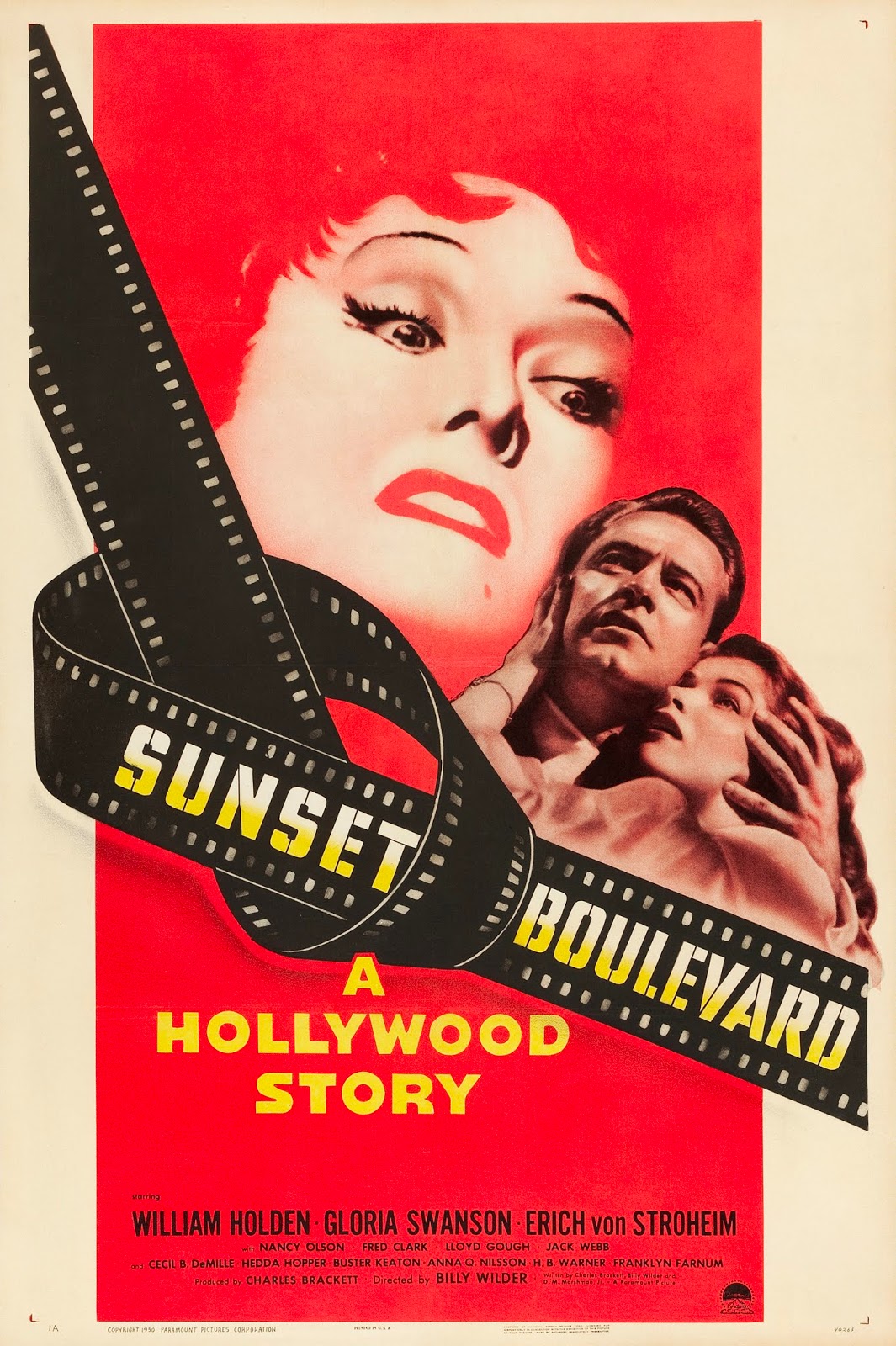
Sunset Boulevard (1950)

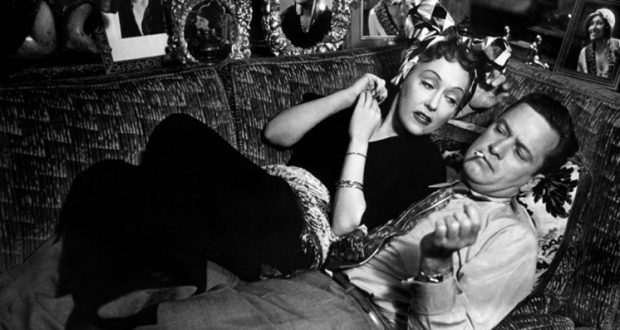
William Holden falls under Gloria Swanson’s spell in Billy Wilder’s superb Hollywood satire Sunset Boulevard

Director: Billy Wilder

Cast: William Holden (Joe Gillis), Gloria Swanson (Norma Desmond), Erich von Stroheim (Max von Mayerling), Nancy Olson (Betty Schaefer), Jack Webb (Artie Green), Fred Clark (Sheldrake), Robert Emmett O’Connor (Jonesy), Lloyd Gough (Morino); as themselves: Cecil B. DeMille, Hedda Hopper, Buster Keaton, Anna Q. Nilsson, HB Warner

Imagine if Charles Dickens had been born a hundred years later. He would surely have headed to Hollywood – and if he had, surely would have written something like Sunset Boulevard. Because who is Joe Gillis but another shallow Pip, dreaming of fortune and wasting his brains, who turns up at Satis House but stays on to become Miss Havisham’s live-in lover? Sure Wilder is more cynical and bitter than Dickens, but I guess even optimist Dickens killed off Little Nell so maybe he too would have had Joe Gillis end (and start) the film face-down in a swimming pool with three bullets in his back?

The cops arrive to find Joe (William Holden) exactly like that, while we hear Joe’s acidic commentary outlining exactly how this state of affairs came about. Joe is a screenwriter in Hollywood (he’s in the second tier of a second tier profession in the movies) who can’t get his latest script made for love nor money. Dodging the debt collectors set on reclaiming his car, he pulls into the drive of a mysterious house. It’s the home of Norma Desmond (Gloria Swanson), a forgotten silent film star who now lives out her days in her mansion, dreaming of her past glories and planning for a return to stardom that will never come, tended to by her loyal butler Max (Erich von Stroheim). Joe is roped in first to rewrite the (terrible) script she has been working on for her comeback, and then to become her live-in lover. But can such a situation survive Hollywood’s cold heart and Joe’s own self-loathing and desires to restart his screenwriting career in partnership with ambitious young studio script reader Betty Schaefer (Nancy Olson)?

Billy Wilder’s poison-pen love letter to Hollywood skewers the coldness at its heart. It does this with a triumphant mix of the grotesque and the heartfelt, the surreal and the coldly realistic, an insider’s guide to the world behind the magic of film-making and a story about those shut out of that very world. Hollywood is a shallow, bitter town where you’re either top of the bill or no-one at all. Would people from any other profession write such a bitter denunciation of their job that is also laced with affection and love? Maybe it has something to do with this being a unique profession which you have to love to enter, but once there you work with people who see it as a business.

The smell of desperation is there from the start, with Joe peddling his dreadful sounding baseball movie The Base Is Loaded to a polite but uninterested producer. Dropping a host of names and accepting any number of changes to the story (including changing it into an all-female sporting musical), Joe might once have had a talent but, as he says, “that was last year, this year I need money”.  William Holden was a late choice for Joe, but he is perfect in the part, capturing the air of the self-loathing cynic, a man bright enough to understand he’s shallow, a hack and desperate for any touch of the fame and fortune Hollywood can bring him.

Just like Pip, Joe is a young man who feels he is entitled to a life he scarcely seems to be qualified for. No wonder he settles into a life as Norma Desmond’s gigolo – it may well damage his sense of masculine pride to be an emasculated house-boy, but my God the suits are nice. And what talent does Joe even really have anyway? The script he is peddling barely seems to have any merit at all, and his extensive polish of Norma’s vehicle is still so alarmingly bad it never even gets the slightest consideration from Cecil B. DeMille. But Joe can’t let it go because he’s like a moth drawn towards those bright Hollywood lights.

And those bright Hollywood lights have consumed forever Norma Desmond. Wilder pulled Gloria Swanson out of an enforced semi-retirement to play the silent screen siren, whose career her own so closely parallels. It’s easy to remember Norma as a sort of Psycho-ish grotesque, a demented Miss Havisham living in her own crazy patchwork world of memory and delusion. Swanson certainly channels brilliantly the expression and body language of silent cinema into the part, and Desmond’s use of the sort of exaggerated gestures from that era in everyday life hammers home how her life hasn’t moved on from her glory days. 

But that would be to overlook the immense skill in Swanson’s performance. Norma may be sad, desperate, probably more than a little unhinged – a larger than life Miss Havisham to whom the “the pictures got small”, but she’s also a real person. Swanson makes it clear she genuinely loves Joe, she’s generous when she wants to be, devoted in her own way and immensely fragile. She takes a delighted pleasure in entertaining – a sequence of her reliving her glory days for Joe’s amusement (he couldn’t give a toss, making it all the more painful), capped with a charmingly delightful Chaplin impersonation shows a Norma who loves entertaining, loves putting a smile on people’s faces. Sure she’s obsessed with fame and desperate to reclaim it, but she’s also deep-down a real person.

But then that’s part also of Wilder’s romantic look at cinema. He can totally understand the bitter, destructive “business” part of it, but he still loves the show. His insiderish film is full of loving tributes to old Hollywood. Norma sits and watches real film footage of the real Gloria Swanson. The visit to Paramount Studios delights not only with its “backstage pass” feel, but also in the excitement with which the ageing extras and stage hands greet Norma. Norma’s weekly card games are staffed with genuine silent movie stars like Buster Keaton. Cecil B DeMille even pops up as himself (on the set of his film Samson and Delilah), kindly trying to guide Norma out of the studio even as he lacks the guts to tell her that her dream of a comeback is stillborn.

So how can you not feel sorry for Norma, who is clearly locked up in her haunted house on the outskirts of town, a million miles from reality, surrounded by endless reminders of her past glories. It’s so all-encompassing it traps Joe as well – at one point Wilder shows him trying to storm out, only for his pocket watch to literally get caught on the door. This place of dreams is staffed by the butler Max, a beautifully judged performance of Germanic chill mixed with doe-eyed devotion from Erich von Stroheim, also playing a dark version of himself as Norma’s pioneering former director (and husband) now reduced to protective butler. The entire house is a mausoleum without any escape.

The only character who seems truly positive is Nancy Olson’s wonderfully sweet Betty Schaefer, passionate about crafting a career for herself in the cinema. But even she is ruthlessly ambitious, a woman quite happy to consider jilting her fiancée for Joe’s attentions and has her eye on the price of success. She may have the talent, but she’s also got the sharpness.

Billy Wilder’s film brilliantly explores all these divides and contradictions in Hollywood and its history. Because what is Hollywood but a town that pays lip service to the past, but only has eyes for the future? Particularly with women. Female stars have a short shelf life and then they are dispatched. Poor Norma is still glamourous, still clearly has star quality – but as far as Hollywood is concerned she may as well be a million years old. No wonder Joe, used to these attitudes, is so ashamed to be kept by her – a woman he constantly refers to as a middle-aged friend. 

The dialogue, as you would expect from Brackett and Wilder, is superb from top to bottom with zingers and well-constructed dialogue exchanges so well placed they will survive for as long as there are movies. The film is beautifully shot by John F Seitz – part gothic horror, part dark romance, part neo-realist. Its pacing is perfect, its four act construction perfectly put together. All four of the principals (all Oscar nominated, none winning) are pitch perfect, sketching out characters that feel real and mixed with tragedy and loss as much as they are larger-than-life otherworldliness.

It’s the mixture of the freak show and the heart, in the massive Havishamesque estate, that marks this out as Hollywood does Dickens. The astute understanding of central characters, with enough depth to understand their shallowness, the grotesques that revolve around them but still have their humanity, it’s all there. Wilder mixes it with his own Hollywood emotions and his dry wit and cynicism to create a damn near perfect movie.

Who’s Afraid of Virginia Woolf? (1966)

Burton and Taylor play a feuding couple in Who’s Afraid of Virginia Woolf?

Director: Mike Nichols

Cast: Elizabeth Taylor (Martha), Richard Burton (George), George Segal (Nick), Sandy Dennis (Honey)

In 1966, Hollywood was only just emerging from the strict rules of the Hays Code. These governed everything from the themes a film could explore to the language you could use while doing it. But in the permissive 60s, it was finally beginning to crack – and Who’s Afraid of Virginia Woolf? was one of the first films to really push it over the edge. This film helped usher in 70s Hollywood, where filmmakers finally felt empowered to explore darker themes and to do so with sex, violence and bad language. Five years after this film came out, something like A Clockwork Orange could become a box-office smash and a Best Picture nominee. Talk about the changing of the guard.

Mike Nichols’ film debut is a faithful adaptation of Edward Albee’s Broadway smash, which had been controversial enough on stage for its full and frank exploration of a marriage consumed with bitterness, feuding and pain. Not to mention its open acknowledgement of extra marital sex, abortion and alcoholism all delivered with a literal “screw you!”. Elizabeth Taylor is Martha, daughter of the president of a small New England college, whose husband George (Richard Burton) is a failed associate history professor. The couple are locked into a dysfunctional marriage that mixes recrimination and a perverse, shared sense of humour. Drunkenly returning home after a party, they welcome a new professor (George Segal) and his wife (Sandy Dennis) to their home for a nightcap. There they quickly rope the couple into a series of increasingly personal “games” with an edge of cruelty and lashings of verbal abuse.

Today, Who’s Afraid of Virginia Woolf? has not always aged well, coming across at times as rather forced and overbearing, as is often the way with films that pushed the boundaries so effectively back in the day. Nichols has the confidence to avoid “opening up” the play too much – its single setting on stage is augmented here only with a brief drunken excursion out to a late night bar – and instead focuses on drawing out four superb performances from its actors (all Oscar nominated) and letting the camera move intricately around the confined rooms where the action takes place.

What Nichols really draws superbly from this film is the control of the film’s continual pattern of simmer, tension and release. The play is effectively a series of psychological games that George and Martha play between themselves. The film is like a drunken, truly mean-spirited version of Noel Coward’s Hay Fever, where the self-absorbed hosts similarly play elaborate ”games” with their confused guests. Most games involves Martha and George turning on each other, viciously attacking the other for everything from failure to drunkenness, with their guests used as the jury, mixed with “get the guests” interludes as the couple turn on the sexual and marital issues in their guests’ lives.

It makes for a series of compellingly delivered sequences – even if the constant thrum of tension and heightened half-mock, half-real fury Martha and George keep up for most of the film finally starts to bear down on the viewer. The film starts banging its points with a transgressive pride, which looks like increasingly like a lot of sound and fury over quite minor issues. But then that’s always the way with convention defying films – so many following films have buried these conventions, that the attention grabbing way this film does it looks quite tired and overworked today.

As Martha and George, Nichols was able to cast the most famous married couple on the planet at the time, in Elizabeth Taylor and Richard Burton. With these titanic personalities working – for perhaps the only time – with a director who had the skill and authority to tame them, the two of them delivered probably their finest performances on film. It also adds to the illicit sense for the audience – like Nick and Honey – that we are trapped into seeing a series of personal and intense conversations and arguments. 

Finally accepting the sort of intense and challenging material he often overlooked for well-paid gigs, Burton is superb as George: a mass of passive aggression, condescending to everyone around him, capable of great cruelty but also a crushed, disappointed and vulnerable man, desperate for affection.

Elizabeth Taylor was similarly sensational – and Oscar-winning: puffy faced, blowsy and domineering as Martha, who similarly has buried her pain and loneliness under a never ending onslaught of aggression, mockery, tartiness and loudness. Brassy and bold, Martha at first seems the controlling, even abusive force in the relationship, but she is also isolated, scared and overwhelmed with pain. 

What’s brilliant about the relationship between the couple is at first it seems like George and Martha are a deeply unhappy couple, fuelled by hate. However, it becomes clear their feuding and contempt for each other is in fact part of a relationship grounded on mutual love and need (the final shot is their hands joined together), revolving around their mutual shared pain on their failure to have children. The couple’s primary “game” is a private one – a fictional child, invented to compensate for their mutual infertility – discussion of whom early on by Martha opens the door to the fury that follows. But it gives an insight into their relationship, actually kept fresh by their feuding.

By contrast, it’s the seemingly happier young couple who have serious problems. Nick, very well played by George Segal, is a dashing young buck who is actually selfish and, with a dream of sleeping his way to the top (despite his possible impotence), whose lack of depth is routinely savaged by both Martha and George. Despite this, Nick doesn’t seem to realise that this he’s in the middle of a series of games. He’s married his wife out of obligation for her pregnancy. Honey – an Oscar-winning turn by Sandy Dennis – on the other hand seems to be aware she’s out of his depth here, and reverts into an almost childish passiveness, mixed with awkward horror which slowly peels away to reveal her misery and depression. Slowly we realise Nick and Honey have nothing in common.

It’s a complex and intriguing play, brilliantly bought to the screen by Nichols whose camera (in stark black and white) bobs and weaves through the action, involving each actor in every scene (the camera often focuses on reactions as much as dialogue delivery). All four of the actors are great, but Burton and Taylor are nothing less than sensational (ironically their careers never seemed to recover from the amount they put out there, with more than a few speculating that their own marriage was but a few degrees different from George and Martha) and the film itself, while overbearing, is also still compelling in its complexity and stark insight into human relationships.

Adam's Rib (1949)

Spencer Tracy and Katharine Hepburn go toe-to-toe in court and marriage in Adam’s Rib

Director: George Cukor

Cast: Spencer Tracy (Adam Bonner), Katharine Hepburn (Amanda Bonner), Judy Holliday (Doris Attinger), Tom Ewell (Warren Attinger), David Wayne (Kip Lurie), Jean Hagen (Beryl Caighn), Hope Emerson (Olympia La Pere)

He’s a tough-on-crime DA. She’s a top liberal lawyer with a feminist agenda. So when Doris Attinger (Judy Holliday) is arrested for firing a gun at her philandering husband Warren (Tom Ewell) and his lover Beryl (Jean Hagen), naturally Adam (Spencer Tracy) and Amanda Bonner (Katharine Hepburn) end up on opposite sides of the court case in this witty “battle of the sexes” married life comedy.

Directed with unfussy calmness by George Cukor who, as he often does, hires the best actors, points the camera and lets them get on with it, Adam’s Rib is an enjoyable and fascinating watch, partly ahead of its time in its gender politics, partly relic of another era. It completely accepts the idea that a woman can be a successful, skilful lawyer – the idea isn’t even questioned – while still bemoaning the march of militant feminism. After all even the title is a humourous little reminder of where Eve came from.

The plot revolves around Amanda’s belief that a man firing a gun at a cheating wife would get very different treatment from a woman doing the same: that he would be seen as a man protecting his home, while the woman is a neurotic danger. Adam disagrees strongly with this – a crime is a crime – and to be honest he’s probably right (today Doris would almost certainly go down for actual bodily harm, if not attempted murder). But in the 1940s, this issue gets tied up with women starting to push against the idea that their role was just to follow the man’s lead and not threaten to shake up his existence. And that’s exactly contrary to what happens in this film.

Amanda is played by force-of-nature Katharine Hepburn at her most quick-witted and sharp, a lawyer more successful in many ways than her husband (and by being in private practice, probably the main bread winner as well, although that is never stated). Her place in the court is never questioned, which is interesting in itself in the post-war era where the idea of women in the professional world was just beginning to be seen as a possibility (although lord knows there was still decades to go until it was to be seen as completely normal).

It’s not a position that Adam questions. His main problems are more with the law being used as a tool for a very specific agenda, rather than a feeling that women are crowding into his realm. Played with brusque stuffiness and uncomfortable formality that tips over into moral outrage by Spencer Tracy (again showing his natural gift for both acting and reacting), Adam feels that his belief in the law is being damaged by Amanda’s use of Judy’s case as a political tool for women’s rights, rather than being judged on its actual merits. 

So this becomes the spring board for a series of extremely well-acted (and frequently funny) arguments between this tempestuous couple as the court case turns from a flirtatious rivalry into an increasingly bitter one. These ding-dong battles work so well on screen because of the immense chemistry between Tracy and Hepburn, a couple so devoted in real life that they convey this even when really going at each other on screen. 

Mix that in with an obvious sexual chemistry between them (and this film is remarkably open about sex, by my count the camera cuts to black to imply sex at least three times in this movie – and the couple have separate beds in their bedroom as per the Hays Code, but only one sees the sheets disturbed by sleeping!) and you’ve got an entertaining show. The courtroom antics are frequently both dynamic and entertaining, and the perspectives of both Adam and Amanda carry force – yes women are treated differently by the law, but you surely can’t deny that Doris broke that law.

There isn’t much room for the rest of the cast apart from the barnstorming Tracy-Hepburn show, with the two seasoned performers tearing through the screen. Judy Holliday comes off best in the second-string as the woman on trial, suggesting enough hypocrisy and two-facedness under the surface of her butter-wouldn’t-melt sweetness. Holliday was also helped by Hepburn’s generous insistence that she be made the focus of their scenes together – Hepburn being keen to help Holliday land the leading role in the film Born Yesterday, the play of which made Holliday’s name on Broadway (it worked and Holliday won the Oscar the next year). 

Of the rest, there is a neat, naughty little cameo from Jean Hagen as the other woman, though Tom Ewell mugs as the husband. David Wayne meanwhile plays the Bonners’ next door neighbour, a supremely irritating musician, smug and trying, but whom we’re meant to think of as a witty, eccentric “character”.

The latter half of the film starts to tip a little bit, as Adam has of course to end with the upper hand (he is after all the man!) which he does using underhand tactics and an actually rather unpleasant business with a fake gun (the sort of trick that you imagine if Tracy had pulled in real life, Hepburn would have walked out of the door and never come back). But this is still a film with plenty of top gags and a refreshing look at a marriage where both participants are professional equals and which goes quietly some way in arguing for greater rights for women, before retreating back to its more conservative resolution. Still great entertainment – and Tracy and Hepburn are both at the top of their games here.