Category: Romance

Memoirs of a Geisha (2005)

Memoirs of a Geisha (2005)

Lush romantic adaptation settles for tourism and pretty pictures instead of any emotional or narrative weight

Director: Rob Marshall

Cast: Zhang Ziyi (Sayuri Nitta/Chiyo), Ken Watanabe (Chairman Ken Iwamura), Michelle Yeoh (Mameha), Gong Li (Hatsumomo), Suzuka Ohgo (Young Chiyo), Kōji Yakusho (Nobu), Kaori Momoi (Kayoko Nitta), Youki Kudoh (Pumpkin), Kotoko Kawamura (Grandmother Nitta), Tsai Chin (Auntie), Cary-Hiroyuki Tagawa (the Baron), Samantha Futerman (Satsu Sakamoto), Mako (Mr. Sakamoto)

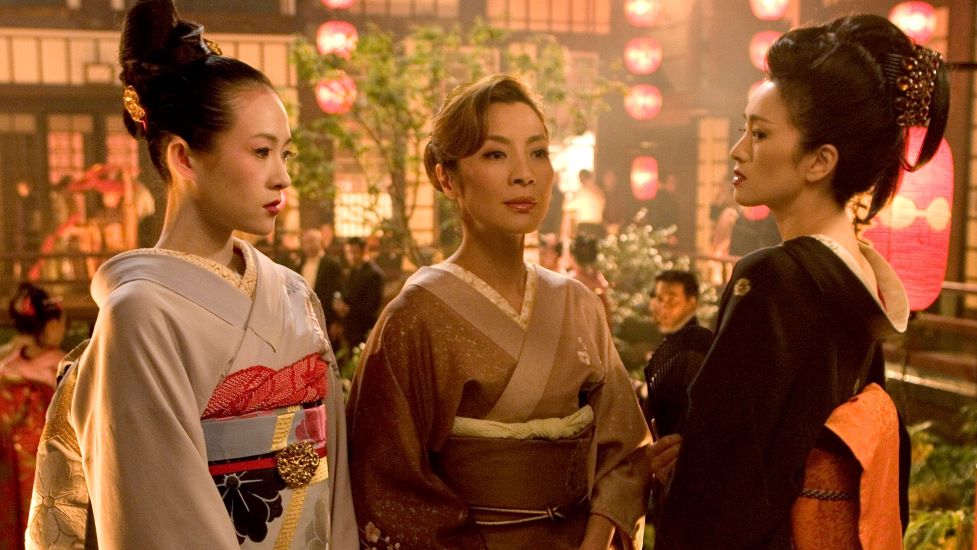
In 1920s Japan, 9 year old disgraced former geisha pupil Chiyo (Suzuka Ohgo) meets a businessman, Chairman Ken Iwamura (Ken Watanabe), who is kind to her. She resolves to one day become a geisha so she may see him again. As a young woman, Sayuri (Zhang Ziyi), as she is now known, masters the geisha arts under the tutelage of famous geisha Mameha (Michelle Yeoh). She encounters the Chairman again – but can she confess her love? And can she escape the attempts of her rival Hatsumomo (Gong Li) to destroy her?

Arthur Golden’s romantic novel was a major success in 1997, tapping into a fascination with Japanese culture. It was inevitable it would come to the screen. But in the journey, it has been stripped down into a beautiful but basically empty story, that seems trite and shallow and revolves around hard-to-invest in characters. By the time it’s finished you’ll wonder what the fuss was about.

The reconstruction of 1920s-40s Japan does look radiant, even if the film focuses on the most chocolate-box, touristy view of Japan you could possibly imagine (think of a Japanese item, event or object and it’s in the film). But it’s radiantly shot and intricately put together – the geisha costumes are a gorgeous, multi-layered, decorative treat – and it’s not a surprise the film lifted three Oscars for cinematography, production and costume design.

It’s not a surprise as well that it was overlooked in all the majors. It’s well-directed by Rob Marshall (juggling a multi-lingual cast and framing the film beautifully), but fundamentally a mix of the highly predictable and the deeply troubling. It’s basically Geisha Expectations or Jane Geishyre. Our heroine is a poverty-stricken youth who makes a series of key encounters in her childhood that shape her whole personality as she comes into wealth as a young adult. Similarly, this quiet girl’s obsessive love for a distant businessman (whom, yuck, she meets as a child – and he compares her to his own children), suffering quietly while sacrificing everything to help him.

But it’s all much less interesting than either of those novels. Despite the narration by an older Sayuri, we never get inside the young woman’s head. Ziyi Zhang is given very little to work with: she either looks distressed, simpering or sad, and frequently fades into the background of her own story. All we really learn about her is that the Chairman gave her an ice cream when she was 9, and that this event influenced her entire life. Equally dull is the Chairman himself, whom Watanabe struggles to make anything other a mute and inscrutable character, terminally dull.

It’s hard to invest in a love-across-the-ages (in every sense) romance between these two, because the film fails to build them up as characters we care about and gives them hardly any time to be together. By the time we reach a late confession, that the Chairman decided (when Sayuri was 9) to turn her into his ideal geisha (um, grooming anyone? Oh yuck) and they finally kiss each other, they still feel like complete strangers. She never matures into a woman who can fall in love past her childhood obsession and he seems more like an oddly manipulative sugar daddy.

Memoirs of a Geisha flounders on the empty plot and non-characters at its heart. It ends up relying on the visuals and lovely design work, because there is no drive or interest in its plot. The film’s most compelling performance is Gong Li’s Hatsumomo and when she walks out of the picture three quarters of the way through, it never recovers. Gong is superb as an envious, embittered geisha being replaced by younger faces. She snipes and growls like a relic from a Bette Davis Hag-thriller, but in the next scene her face will crumple with fear and sadness. She gets all the best lines and the most interesting scenes, from sniping, to lost love to pyromaniac revenge.

Memoirs of a Geisha disappointed at the box office. It’s clumsy casting didn’t help: fine actresses as Zhang, Yeoh and Gong are, they were all Chinese (in Yeoh’s case Malaysian Chinese) rather than Japanese, and there was an uncomfortable feeling that the producers didn’t think this was really an issue. It opened up a can of worms about lingering Chinese hostility over Japanese war crimes, leading to a ban in China. In Japan, the casting was condemned and the film seen as more interested in a tourist eye on geisha culture than a truly Japanese one (and it does appear the film consulted virtually no Japanese people during its making).

All the glorious design in the world can’t hide the emptiness at the heart of Memoirs of a Geisha. World War Two is skipped over in about two minutes (Sayuri spends the time working in the hills, and sums up her whole wartime experience in a couple of sentences, delivered in voice-over while Zhang looks beautiful and pained washing fabric in a river). Other than their external glamour, we don’t learn much about what being a geisha actually means. Its central romance goes from bland, to anonymous, to deeply troubling. It looks wonderful, but if there was anything deeper to the novel than a luscious, gorgeous setting and a predictable, traditional romance, it’s completely lost in translation.

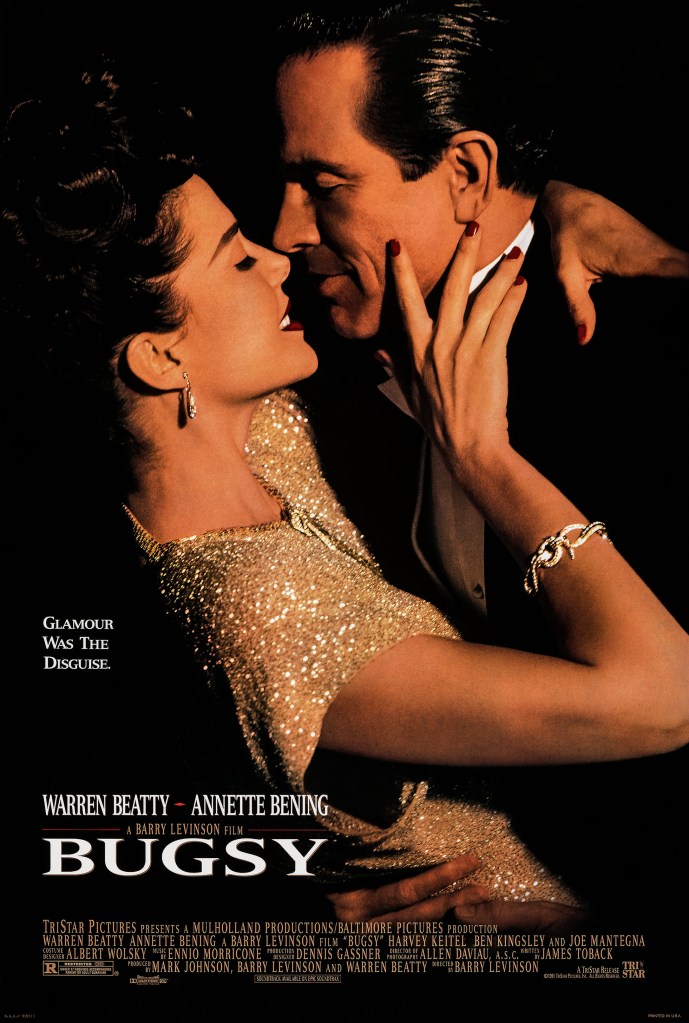
Bugsy (1991)

Bugsy (1991)

Old school glamour is the order-of-the-day in this luscious but slightly empty gangster film

Director: Barry Levinson

Cast: Warren Beatty (Ben “Bugsy” Siegel), Annette Bening (Virginia Hill), Harvey Keitel (Mickey Cohen), Ben Kingsley (Meyer Lansky), Elliot Gould (Harry Greenberg), Joe Mantegna (George Raft), Bebe Neuwirth (Countess Dorothy de Frasso), Bill Graham (Charlie Luciano), Lewis van Bergen (Joe Adonis), Wendy Phillip (Esta Siegel), Richard C Sarafian (Jack Dragna)

Las Vegas: the city of dreams for gangsters. As Ben (“Bugsy” – but don’t call him that) Siegel (Warren Beatty) tells a room full of gangsters when he’s pitching for their investment, like a hyper-violent Dragon’s Den: build the largest city in a state, you own the state, own the state and you own a slice of America. Imagine how the money can come rolling in then. It’s fair to say the mobsters aren’t so certain – and maybe Las Vegas would never have been a huge success if Bugsy had run it rather than being whacked – but God knows their investment paid out millions of times over.

The dream of building Las Vegas is at the centre of Beatty’s passion project (in this one he just played the lead and produced, dropping a couple of hyphens compared to Reds), a Golden-hued, romantic biopic of notorious gangster (and killer) “Bugsy” Siegel. Siegel sees what no-one else could see: how a city in a law-lax desert could become a mecca for gamblers, and crime could reap the profits. But the project goes millions over budget – not helped by girlfriend Virginia Hill (Annette Bening) creaming millions off the top. Trouble is Bugsy’s investors aren’t the sort of guys who shrug their shoulders at failed investments.

You can see what attracted Beatty to Bugsy. For all it’s about gangsters, I couldn’t escape the feeling Beatty sees Bugsy as something akin to a fast-talking movie producer. Bugsy spins elaborate stories for his backers of how their investment will pay-off, builds fantasies on a huge scale, won’t accept any compromise (a load-bearing wall should be knocked down if it’s blocking the view of the pool!), pouring his heart-and-soul into every detail of his vision. It doesn’t feel a world away from the same control-freak energy Beatty poured into Reds (Bugsy is basically financier, manager, backseat architect and marketing man for his dream).

Bugsy feeds a lot off the fascinating two-way admiration street between Hollywood and gangsters. Beatty’s Bugsy is enamoured with Hollywood, even shooting a (terrible) test reel to try and break into the movies. He’s thrilled to be hanging around with old pal George Raft (a muted Joe Mantegna), who seems equally jazzed to hook up with notorious criminals. Hollywood laps up the notoriety of criminals, both on-screen and off. For his Flamingo launch, Bugsy wants to stuff the place with stars (to his fury, bad weather prevents them arriving), and schmoozing celebrities is at least part of what is going to make the City of Sin such a fun place.

Levinson’s film is shot with a romantic lusciousness, a sepia-tinged nostalgia that wants you to soak up the glory of the costumes, sets and the cool of being a quick-witted gangster who gets all the best girls. It’s very different from the real Bugsy, a brutal killer with a huge capacity for violence. The film tries its best to match this, but can’t escape the fact that Beatty is way more suave and charming than Bugsy deserves. For all we’re introduced to him gunning down a cheating underling – and we see him brutally beat others for bad-mouthing Virginia or using his loathed nickname – he never feels like a brutal criminal, but more like a flawed, romantic dreamer with a temper.

It’s hard not to compare Bugsy with the best works of Scorsese from the same era. Goodfellas knew that, under the surface glamour, this was a dog-eat-dog world and that there was no romance at the end of a bullet. Casino (which followed a few years later, a sort of semi-sequel) sees the true vicious sadism and greed at the heart of this city-building operation, while Bugsy sees it more as a lavish dream and a tribute to a sort of visionary integrity. Even seeing Bugsy gunned down in his own home by a sniper, doesn’t carry  with it the sort of inevitability it needs. As Scorsese understands, this way of life is like playing Russian roulette forever – eventually the chamber is going to be full. For all Bugsy literally plays roulette, it never feels like he’s playing with fire, more that he’s reaching slightly beyond his grasp.

Perhaps Levinson doesn’t quite have the vision to make the film come to life or stamp a personality on it. It feels like a film that has been carefully produced and stage-managed to the screen – and Levinson deserves credit for marshalling such an array of commanding personalities together to create such a lavish picture. But it’s muddled in its message. Is Bugsy actually worth making a film about? What are we supposed to understand from this: was he a killer out of his depth, or an unlucky dreamer? Bugsy wants him to be both, but fails to make a compelling argument for either.

Beatty is impressive in his charisma though, for all he never quite seems to have the edgy capacity for instant violence the part needs. He does capture Bugsy’s desire for self-improvement, from the Hollywood dreams to the eternal elocution lessons he repeats over-and-over like a mantra. His desire for glory even manifests as a bizarre fantasy that he is destined to assassinate Mussolini. It also perhaps explains why he’s drawn to Virginia, a would-be starlet. Annette Bening gives arguably the most impressive performance (but, inexplicably, was practically the only major figure involved in the film not to pick up an Oscar nomination) as a woman who is an unreadable mix of devoted lover and selfish opportunist, leaving us guessing as to her real intentions and feelings.

There is good support from Keitel (hardly stretching himself as Bugsy’s number two Mickey Cohen), Kingsley (an ice-cool but loyal Meyer Lansky, unable to stop Bugsy destroying himself) and, above all, Elliott Gould as Bugsy’s hopeless, pathetic best friend. Bugsy though, for all it’s entertaining, feels like a mispackaged biopic that wants to turn its subject into a romantic figure, unlucky enough to be rubbed out before he could be proved spectacularly right. This soft-soap vision doesn’t ring true and misses the opportunity the film had to present a more complex and nuanced view of the era and its crimes.

Avatar (2009)

Avatar (2009)

Cameron’s monster-hit is an exciting slide of traditional story-telling, that had less cultural impact than you might expect

Director: James Cameron

Cast: Sam Worthington (Jake Sully), Zoë Saldana (Neytiri), Stephen Lang (Colonel Miles Quaritch), Sigourney Weaver (Dr Grace Augustine), Michelle Rodriguez (Trudy Chacón), Giovanni Ribisi (Parker Selfridge), Joel David Moore (Dr Norm Spellman), CCH Pounder (Mo’at), Wes Studi (Eytukan), Laz Alonzo (Tsu-tey), Dileep Rao (Dr Max Patel)

Why is Avatar so easy to mock? It’s the second biggest box office hit ever (Cameron holds slots two and three with this and Titanic:only Avengers: Endgame grossed more). But its cultural impact feels wide but not deep. As FOUR more Avatar films start to arrive from 2022, the question remains: why has no-one really talked about Avatar since 2009?

Perhaps it’s because there isn’t really much new or unique in Avatar, beyond the magic of its visuals and the magnificent showmanship of Cameron. For all the striking blue design of the aliens, their story was too reminiscent of too many other things. The script lacked punch, distinctive lines and unique characters. There was little to quote and few truly original pivotal moments that could be embraced by our cultural memory. Narratively and structurally, it’s all a little too safe, predictable and conventional.

 Avatar partly became a “must see” cinematic event, because it was the film that finally nailed 3D. Maybe it is the best 3D film ever made. I don’t know, I’ve only ever seen it in 2D. To be very fair, Cameron doesn’t fill the film with crappy shots of things pointing at the camera. Instead, concentrating on telling a cracking (if predictable) story and filling the screen with beautiful, imaginative imagery that works in any dimension.

Avatar’s imagery is so striking because it’s set on the magical alien world of Pandora. In 2154, with Earth’s resources depleted, mankind has struck out into the stars – and Pandora is a rich seam of an insanely valuable mineral called unobtanium (chuckles presumably intended). Pandora is a carefully balanced biosphere, peopled by exotic animals and 10-foot, blue-skinned natives called the Na’vi. Pandora’s atmosphere is poisonous to humans, so scientists – led by Dr Grace Augustine (Sigourney Weaver) – use Na’vi “avatars”, operated by genetically matched humans, to explore. The mission is carefully balanced between science and financial exploitation by a sinister corporation, backed by mercenary army, led by the fanatical Colonel Quaritch (Stephen Lang).

Into this magical set-up drops paraplegic ex-marine Jake Sully (Sam Worthington), taking the place of his dead scientist brother because he is a genetic match for a freshly grown Na’vi avatar. With this warrior background, Jake is welcomed by the Na’vi, becoming an ambassador to the people. But Jake’s loyalties split as he finds a purpose in Na’vi life he has long since lost on Earth – and as he falls in love with Na’vi warrior Neytiri (Zoë Saldana). When the company decide to destroy the Na’vi’s home to gain access to the rich unobtanium deposits beneath, which side will Jake back?

It’s not hard to guess. At heart, Avatar fits very neatly into a series of Dances with Wolves-esque films, in which a wounded and lost (white) soldier finds a spiritual peace and solace with a native people, eventually rising up to fight for their rights against his own people. Avatar also finds roots in The Mission, with the scientists as the missionaries fighting alongside the natives (although with much better results), the conclusion of Return of the Jedi and Cruise’s The Last Samurai. Not to mention more than a few stylistic and plot echoes from Cameron’s own Aliens (you can even hear them at several points in Horner’s score), from technology (those stomping war suits) and cocky marines lost in a world they don’t understand (except this time, we love to see them killed off).

Avatar doesn’t challenge you, presenting its humble message of environmentalism and peaceful co-existence within a familiar framework where military forces and corporations are very bad and enlightened missionaries and Indigenous people are good. It entertains because it’s told with such skill. Cameron, while never the greatest screenwriter in the world, knows how to marshal his clichés and standard narrative tricks into something exciting and involving.

It also helps that the stock characters he creates a played with such forceful engagement by the actors. Stephen Lang is a growlingly hateable racist, delighting in the prospect of genocide, while Giovanni Ribisi’s corporate boss is a snivelling opportunist who couldn’t care less about the impacts of his actions. Opposite them, Sigourney Weaver gives huge weight to a fairly standard irritated-boss-turned-mentor role as the head scientist, Sully’s bridge to learning the Na’vi way. As Sully, Sam Worthington is not the most charismatic performer but he has an earnest intensity and emotional honesty that helps us invest in his pre-Pandora misery and his growing love of his adopted home.

Cameron’s greatest achievement though is the vision he creates for the Na’vi. All are played by actors using cutting-edge (and still impressive now) motion capture. Cameron builds a whole world for these people: a language, belief system, culture and bond with the environment. Sure, it’s heavily inspired by Indigenous American culture, but it feels real. Its bought to the screen with grace and tenderness and gains a huge amount from Zoë Saldana’s committed and emotionally open performance as Neytiri. Cameron so successfully builds a bond between audience and the Na’vi that you feel your heart wrench to see mankind tear their beautiful world apart.

It’s that emotional connection Cameron successfully builds that helps make the film work. After all we’ve all seen effects stuffed films before, but they don’t all become monster hits. And if the film was a dog, all the 3D magic in the world wouldn’t have helped. Few directors have as much skill with threading emotional bonds within the epic as Cameron. He shoots Avatar with a stunning majesty, carefully placed shots and graceful, almost traditional, editing help to build a sense of magic and wonder around the awe-inspiring alien vista. Avatar has a lot of action, but it never feels like just an action film: it’s a relationship drama, inspired by the beauty of its setting, with action in it.

More people have mocked Avatar with comparisons to the visually and thematically similar Fern Gully: The Last Rainforest than have actually seen Fern Gully. Narratively it does little new or unique and offers very little surprises. But its visuals are stunning and Cameron’s superb direction knows how to engage you. Clichés last because they carry a sort of truth: Avatar uses these truths to help you invest in a gripping, if conventional, story. But it’s also why its impact over time has been so slight – there aren’t any new ideas for viewers to tie themselves to and almost nothing that stands out as a unique cultural reference point – even if the conventional plot helped make it a short-term monster hit. But it’s also why it still makes for enjoyable rewatching.

Vertigo (1958)

Vertigo (1958)

Obsession and grief come dangerously into play in one of the greatest films ever made

Director: Alfred Hitchcock

Cast: James Stewart (John “Scottie” Ferguson), Kim Novak (Madeline Elster/Judy Barton), Barbara Bel Geddes (Midge Wood), Tom Helmore (Gavin Elster), Henry John (Coroner), Raymond Bailey (Doctor), Ellen Corby (Hotel manager), Konstantin Shayne (Pop Leibel), Lee Patrick (Car owner)

Spoilers: Vertigo was controversial at the time for revealing its twist, three quarters of the way through the film. I might well do the same in the review – although this is possibly a richer film if you know the twist going in

In 2012 Vertigo dislodged Citizen Kane at the top of Sight and Sound’s decadal “Greatest Film” poll, after 50 uninterrupted years for Welles’ classic. It’s an astonishing turn-around for a film which was a box-office disappointment and first met with reviews that called it “long and slow” and complained that Hitchcock had “indulged in such farfetched nonsense”. (Welles also hated the film – bet he’s even more pissed off at it now.) This is partly because Vertigo is a fiercely, almost defiantly, complex and cold film that defies easy characterisation and flies in the face of the fast-paced watchability of most of Hitchcock’s popular films. But it’s still a haunting and fascinating masterpiece, which has its greatest impact when you reflect on it days after it has finished.

Its plot is both complex and slight. John “Scottie” Ferguson (James Stewart) is an ex-police detective, his career ended by crippling acrophobia bought on by powerlessly watching a fellow officer fall to his death. He’s hired by old college friend Gavin Elster (Tom Helmore) to follow Elster’s wife Madeline (Kim Novak). Madeline is in the grip of an idée fix that she is an incarnation of Carlotta Valdes, a woman who committed suicide in 1857. Scottie follows her – and develops an idée fix of his own for the beautiful Madeline. When his acrophobia prevents Scottie from saving Madeline from jumping to her death from a bell tower, he suffers a near-breakdown. Then he catches sight of Judy Barton (Kim Novak again) who has a chilling resemblance to Madeline. And Scottie tries to turn her into just that.

Vertigo is a dizzying film of monomania and obsession, something you are immediately plugged into with its beautiful Saul Bass opening (swirling spirals, reflecting the circular nature of the obsessive) and its hauntingly mesmeric and off-beat romantic theme from Bernard Herrmann (possibly his greatest work – and he also scored Kane!). More than any other Hitchcock film, Vertigo places us firmly into the POV of its lead character, who is in all but three scenes and whose perceptions and observations we not only share but which totally guide our understanding of everything we see in the film (until that twist, when suddenly we shift to knowing more than he does).

Hitchcock’s technique is truly masterful here. There isn’t the flash of something like North by Northwest, but the sort of chilling control that builds tension and unease that also marks out films like The Birds or, to a degree, Psycho (although that’s much more of a black joke, where Vertigo is terrifyingly serious). Hitchcock uses a huge number of POV shots, alternating with shots of Stewart’s reactions (at times these are disturbing in their fixed intensity) building a subtle momentum that reflects the character’s obsession and further filters everything we experience from his perspective.

That would be the perspective of an ever-more obsessed man tipping steadily into stalkerish territory. Few films have so clearly drawn the link between the private eye and the voyeur. As Scottie silently prowls the streets of San Francisco, observing every inch of Madeline’s actions – and Vertigo has long, worldless stretches of what Hitchcock called “pure cinema” – the disturbing pleasure and control that following brings you becomes more and more clear. It’s certainly giving a sense of masculinity back to Scottie, introduced to us hanging helplessly from a ledge and then so hamstrung by his condition he can’t even climb a step ladder without collapsing.

Judged from this perspective, Scottie is one of the most darkly disturbing characters in film. Rescuing Madeline from the Golden Gate (where she has jumped in) he takes her home, undresses her and puts her in his bed – hardly normal behaviour. It’s not long from there before he surrenders to his romantic obsession (feelings Madeline perhaps returns), that eventually leads him again to be a powerless witness as Madeline plunges to her death right in front of him.

Catatonia and mental collapse follow – but really it’s perhaps just a continuation of the same obsession in another form. Because after a stay in a sanatorium, Scottie is back on the streets again, prowling for something – anything – that could make him feel closer to Madeline again. Which is how he spots Judy, the woman who reminds him of the woman he’s lost. Scottie doesn’t so much woo Judy as seemingly browbeat her into a bizarre (joyless and sexless) relationship and undertake a terrifyingly grotesque remodelling exercise, designed to make her into a carbon copy of Madeline.

This sequence is probably partly at the heart of the film’s fascination for critics and film historians – even more so since we’ve learned about Hitchcock’s manipulative, controlling relationship with his blonde female stars. Here we have Scottie instructing his love interest how to dress, walk and cut her hair – all while telling her it’s for her own good and she’ll like it – his voice with the breathless longing of a closeted pervert (that is when Scottie manages any sexual yearning to Judy, who he treats more like a treasured exhibit). This is Hitchcock dramatizing his own hang-ups, presenting them as creepy and dangerous, making Vertigo partly as well a fascinating psychological study of its director. Did Hitchcock know that his controlling relationship with women was wrong? And, in real life, could he not help himself or did he not care?

Vertigo is a perfect exploration of obsession. But it also pulls the rug out from us – and rewards constant reviewing as a result – because the film reveals there was a whole other level going on. Scottie may seem the Hitchcock substitute, but the in-film Hitch figure is actually the amiable Gavin Elster. Because the entire action of the film is carefully stage-managed by Elster to manipulate Scottie (and us!): Judy and Madeline (as Scottie has met her) are in fact the same woman, a doppelgänger for Elster’s wife. The real Madeline – who Scottie never sees or meets – is murdered by Elster at the top of that tower, and Judy/Madeline was helping build a backstory to have this murder written off as suicide, with Scottie’s acrophobia perfect to make him a powerless witness.

Here comes that pleasure for rewatching: because now when Scottie rescues “Madeline” from the river, then spends the next day with her, we thought at first he knew more than she. Now however, we understand he’s always been a patsy who knew less than anyone else. We’ve been manipulated by Elster, the master director, pulling the strings and building horrors for us. That’s Hitchcock.

The film reveals this in one of the few scenes told from Judy/Madeline’s perspective – and means we then watch Scottie actually craft a woman who actually is the woman he’s obsessed with into his memory of that very same woman. (Get your head around that!) And she allows it, because she seems as desperate as he to recapture the passion of those brief days together – but cannot tell him the thing that would help to do that. It all leads, of course, to Scottie’s destructive obsession leaving him once again to being a helpless witness as another victim plummets to their death.

Vertigo is effectively a two-hander, and most of the focus usually lands on Stewart. He is chillingly dead-eyed in this, his crazed hunting after something he doesn’t even understand capturing the controlling horror behind some romance. In many ways though, Kim Novak has the more complex part. She doesn’t speak for almost 45 minutes – she spends it mostly in long shot performing Elster’s play for Scottie (and us) of the mentally disturbed wife. But when Novak does take centre stage, this is a complex multi-layered performance, carefully modulated throughout to communicate (in advance) Judy’s vulnerability and love for Scottie, without ever letting us realise she is anything but the death-fixated “Madeline”. Novak marries two contradictory characters into one with a simple and convincing aplomb. Equally good is Barbara bel Geddes, in almost the only other named role, as Scottie’s one-time fiancée now best friend, all too aware that her feelings are not returned.

Vertigo will never match the likes of Casablanca or North By Northwest – on a list of films truly popular with audiences. It’s been described as the ultimate critic’s film: a cool, chilling, brilliantly filmed, psychological thriller that quietly exposes the mechanics of film, the manipulation of story-telling and the dark psyche of its director. In many ways initial reviews were right: on first impression, the film is cold and slow, with characters it’s hard to relate to. But it has a truly haunting quality few others can match. And it constantly presents us with a clear image, while never allowing us to guess we are seeing only part of the overall picture. It can leave us as dizzy as Scottie is, hanging from that ledge and staring down at doom, the camera zooming inside his head and showing us his terrifying POV. You need to work at it, but this is a film to value.

An American in Paris (1951)

An American in Paris (1951)

Romance, love and a lot of dancing in this charming Best Picture winning musical

Director: Vincente Minnelli

Cast: Gene Kelly (Jerry Mulligan), Leslie Caron (Lise Bouvier), Oscar Levant (Adam Cook), Georges Guétary (Henri Baurel), Nina Foch (Milo Roberts), Eugene Borden (Georges Mattieu)

“This is Paris. And I’m an American who lives here!” Those are almost the first words you hear in this charming but light and frothy Best Picture winner. They are pretty much an indicator of the loosely constructed, lightly plotted film that unspools. With the rights to the back catalogue of Gershwin, a story was swiftly thrown together to give us a reason to watch Gene Kelly and friends dance and sing their way through them. Tapping into a post-war romanticism about the delights of Old Europe, An American in Paris is a hugely entertaining technicolour delight that blew audiences away.

That American is Jerry Mulligan (Gene Kelly), an ex-GI hanging around in Paris to try and make his dreams of being an artist like Renoir and Toulouse-Lautrec come true (one glance at his paintings is enough to know he has no chance). His best friend is fellow ex-pat, ageing ‘child prodigy’ pianist Adam (Oscar Levant). Adam’s friend is Henri (Georges Guétary), a famous French singer (and war hero!). Henri is engaged to Lise (Leslie Caron), who meets Jerry by chance, neither knowing who the other is. Doncha-know-it Jerry and Lise fall in love. All this while Milo (Nina Foch), a wealthy would-be patron, longs to make Jerry her companion. How will these romantic complexities play out?

The story is by Alan Jay Lerner, but it can’t have taken him more than a long afternoon to come up with it: two friends unknowingly love the same woman, which will she choose? There is the odd sparkling piece of dialogue, but really this is a showcase for three things: Gershwin, Kelly’s dancing and Paris. Pretty much in that order, since the film is almost completely shot on a Studio backlot  (there are some brief second unit shots of the actual locations). Kelly objected at first to the lack of location shooting (“Ever tried dancing on cobble stones?” a producer pointed out), but actually it works for a film that is basically a fantasia on the city of romance, at points literally taking place in dream-like Parisian streets.

Constructed on a huge set (with some ingenious technical effects to expand the heights of the buildings, like Jerry’s apartment) the film is basically one delightful dance sequence after another, shot with a technicolour richness by Minnelli. We get introduced to our three male leads – Jerry, Adam and Henri – in overlapping voiceover, their faces unseen, as the camera roams over their Parisian locale. (We also get a neat repetition three times of the same joke as a camera settles on someone who nearly fits their description only to be told “no that’s not me”).

From there they meet each other and burst into a richly dynamic all-singing, all-dancing rendition of By Strauss in a classic Parisian café, that uses every prop going.  (It later gets mirrored with an equally amusing ‘S Wonderful where, unknowingly, Jerry and Henri sing of their love for the same woman, while a stressed Adam who knows the truth puffs seemingly a whole pack of cigarettes at once). Not to be out down, as Henri describes his fiancée to the boys, we see Caron perform a series of ballet steps each of them styled differently to reflect the different facets of her personality.

Kelly took on much of the choreography work and the film is a tribute to his grace. The man could move like almost no one else. One of the best bits of choreography in the film isn’t even a musical number: after his introduction Jerry gets out of bed in his tiny apartment and, with a stunningly witty musical grace, rearranges all the furniture from ‘night-time’ (bed) to ‘day-time’ (table and chairs). It’s just about a perfect bit of physical choreography, one of my favourite in the movies and at least as beautiful in its way (if not more so than) Jerry and Lise ballet stepping to Love is Here to Stay under a Parisian bridge. Not to complain about this number, which is a hugely influential routine of two dancers moving increasingly in rhythm with each other, shot with a luscious romantic beauty by Minnelli.

The numbers are so good, you give a pass to the fact that Jerry behaves like a bit of shit. His paintings are hilariously – and I believe intentionally – third-rate rubbish (he’d barely manage to land a job as a postcard painter), so its clear his aspirations to art are a fantasy. It’s also clear that Milo can’t seriously be interested him as an artistic prospect, as opposed to a bed one. Jerry of course knows this, but he still blows hard and cold on her with a slightly shabby selfishness. He’ll take her money for an apartment and whisk her away to a masked ball when he’s feeling low. But he’ll also flirt shamelessly with Lise right in front of Milo and her friends, and then act with a churlish “what’s the problem” harshness in the car with a tear-stained Milo on the way home.

I’m not sure how sorry the film wants us to feel for Milo, but one look at Nina Foch’s fragile face and her wobbling voice a few seconds away from tears as she deals with humiliation from her possible-boyfriend, always puts me on her side (at least at that moment). Jerry is borderline stalker in his pursuit of Lise, chasing her down in the café he has been bought to by Milo (after spending large chunks of the evening starring uncomfortably at Lise), dragging her into a dance and then pestering her later at her workplace into a late night meal. Just as well she loves him. Honestly if Kelly wasn’t so charming, you’d give Jerry a slap. Or a restraining order.

An American in Paris saves its final flourish for its last act: a seventeen minute ballet, taking place in a mix Jerry’s memories and wishes after it seems he and Lise will be kept apart for ever. Choreographed by Kelly, there isn’t anything else really like this in the movies (until La La Land stole the idea). Minnelli and Kelly sit in the ballet in a deliberately artificial Paris, essentially Jerry’s paintings bought to life and mixed with those of his artist heroes. This sequence is at times a little indulgent (some reviewers have unkindly compared Kelly’s desire to dance a ballet to a clown gracing us with his Hamlet) but it’s beauty and dynamism means it rewards investing in it.

Because Kelly and Caron (who is admittedly incredibly raw here as an actor) are wonderful dancers and the choreography here showcases them to perfection. Partially retelling the events of the film, partially telling its own romantic fantasia of a couple bought together and pulled apart, it’s a perfect mixture of several dancing styles and emotions and looks stunning, in its hyper-realistic design.

It makes for a unique ending to a classic musical that gets a bit overlooked – possibly because of the brilliance of Singin’ In the Rain that followed a year later, but was a flop compared to this mega-hit – but is an explosion of superb musical entertainment. Sure, the story is slight – only Nina Foch gets anything approach a hard-hitting role – but the joy is grand. Kelly is charm itself, Levant and Guétary very good in roles that riff on their personas and the whole thing will have you tapping toes and clicking fingers.

Smiles of a Summer Night (1955)

Smiles of a Summer Night (1955)

Sexual and romantic comeuppances abound in Bergman’s landmark comedy of manners

Director: Ingmar Bergman

Cast: Eva Dahlbeck (Desirée Armfeldt), Gunnar Björnstrand (Fredrik Egerman), Ulla Jacobsson (Anne Egerman), Björn Bjelfvenstam (Henrik Egerman), Harriet Andersson (Petra), Margit Carlqvist (Countess Charlotte Malcolm), Jarl Kulle (Count Carl-Magnus Malcolm), Åke Fridell (Frid), Naima Wifstrand (Mrs. Armfeldt), Jullan Kindahl (Beata), Gull Natorp (Malla), Gunnar Nielsen (Niklas), Birgitta Valberg (Actress), Bibi Andersson (Actress)

An Ingmar Bergman comedy? Surely a contradiction in terms, right? Like Da Vinci spraypainting graffiti or Austen writing a jingle. The Swedish master is near synonymous with glacial, Scandi-misery, not material that will be transformed into a Sondheim musical. But yet: Smiles of a Summer Night was the big smash-hit that guaranteed Bergman lifetime artistic independence (he followed it with the one-two punch of The Seventh Seal and Wild Strawberries that made him untouchable as Sweden’s premiere Artist). A Bergman comedy was never going to be a Ray Cooney farce, and while there are pratfalls and farce here, this film is an exploration of manners with more than hint of Shaw and Wilde, mixed with echoes of filmic greats like Ophüls and Renoir.

Set in turn-of-the-last-century Sweden, the film follows the romantic and sexual entanglements of a series of would-be couples. Fredrik Egerman (Gunnar Björnstrand) is a respected middle-aged solicitor, who hasn’t consummated his two-year marriage with 19-year old Anne (Ulla Jacobssen). This is partly due to her anxiety about sex. But really both of them are in love with someone else. Fredrik with his old mistress, celebrated actress Desirée Armfeldt (Eva Dahlbeck). Anne with Fredrik’s young son Henrik (Björn Bjelfvenstam) who is also in love with her. Henrik is flirting with house maid Petra (Harriet Andersson), who doesn’t seem averse to a relationship with any member of the Egerman family. Desirée is having an affair with Count Malcolm (Jarl Kulle), whose wife Charlotte (Margit Carlqvist) is considering infidelities of her own just to get his attention.

All of these potential couples merge, swop and work out their feelings overnight at the country house of Desirée’s mother (Naima Wifstrand) during one of the longest days of the year, where the sun hardly sets and people traditionally stay up until dawn. There is more than a touch of the theatrical about all of this – particularly with Bergman’s arch, intelligent dialogue – with the country house as a setting beautifully formal and strangely other-wordly. You can sense the theatrical influences here – Bergman had just directed a production of The Merry Widow – with the characters riffing with Wildean wit and insight, in typically Shavian set-ups.

What we get is a high comedy of manners, that’s also coated in a rich, insightful poetry that gives it a great deal of meaning. There is farce here – including a room with a switch that drags a bed from a neighbouring room (with occupant!) into it. There are several funny lines – many from Jarl Kulle’s hilarious heartless count, who doesn’t care who flirts with his wife until someone actually takes him at his word. There are pratfalls – Henrik has a superbly bleak bit of pure farce near the end that tips into erotic joy (“If the world is full of sin, then I want to sin”). The pompous Fredrik is constantly humiliated, from falling in a puddle to being thrown out of Desirée’s apartment in nothing but a borrowed nightshirt and a pair of slippers. There is no end of sexual suggestiveness, from Harriet Andersson’s gorgeously flirtatious maid (“Hurrah for vice!”) to hints about Mrs Armfeldt’s past (“I was given this estate for promising not to write my memoirs”).

Being Bergman though, this is the sort of romantic comedy that ends with a duelling game of Russian roulette and where we learn as much about human nature as we enjoy the scripted bon mots. Namely, that people – especially men – never seem to know what they want. Fredrik spends a huge chunk of the film persuading himself he is deeply in lust with Anne – although its pretty clear that he’s barely interested. Marriage and relationships in this case are gilded cages that lock people into things they barely want. They don’t even lend themselves to communication – the Malcolm’s marriage doesn’t seem to be based on any communication at all.

So, no wonder it needs a bit of Midsummer Night’s Dream style madness to try and sort it all out. Before that short night, the characters all down a particularly intoxicating wine that they are warned will bring down all their restraining impulses (whether that’s true or not, it certainly does). It’s part of a plot by Desirée – a superb Eva Dahlbeck, serene and glamourous, but also a battle-axe force-of-nature who knows exactly what she wants and how to get it – to resolve all complications for the (her) best, carried out in partnership with Caroline, a woman she’s far to savvy to let something petty like sleeping with her husband get in the way of useful friendship.

Contrasted with all these slightly restrained middle-class people who struggle to understand or express their real feelings, or (like the Egermans) seem to feel a slight guilt at sex anyway, we have the more earthy and free Petra, radiantly played by Harriet Andersson. Andersson gives Petra a flirtatiousness that sees her go from unbuttoning her top to attempt to seduce Henrik, to rolling in a bed with Anna. While the upper classes engage in a formal dance, she seizes life and opportunities – and ends up well-matched with the equally down-to-earth chauffeur Frid (an exuberant Åke Fridell), who like her doesn’t muck around when there is a chance to grab a bit of joy.

Not like the Egermans. Fredrik – a beautifully reserved Gunnar Björnstrand – should want Anna, but all the starring at her photos in the world won’t stop him muttering Desirée’s name while he sleeps. Not that it will allow him to try and rekindle his past relationship with her. Anna (a luminous Ulla Jacobsson), nervous about sex or rather nervous about her feelings with Hendrik, channels her feelings into jealous criticisms of his clothing after catching him naively succumbing to Petra’s flirting. Henrik (Björn Bjelfvenstam, very funny in his bemused wetness) is so inept in his romance of either woman, he barely seems to know what he wants.

Perhaps Desirée recognises all this is a bit of prime, Theatrical nonsense and tries to solve it all accordingly. After all her whole life is the theatre – from treading the boards, to singing and dancing while walking late at night with Fredrik. And it was for Bergman – that and film, which is why perhaps the film has echoes of Jean Renoir’s Le Regle de Jue with its country house romantic intrigues and Max Ophüls partner swopping La Ronde. And Smiles of a Summer Night is a beautifully mounted film, shot with a luscious, poetic beauty by Gunnar Fischer.

The whole film is a complex dance – you can see why it was ripe for Sondheim – that also explores profoundly the romantic and gender clashes between men and women. Men who are in a position to take what they want, but have no idea what that is. Women who know far more, but must be smart about how to achieve their goal – or like Petra willing to embrace a wild abandon to live in the moment. It may be a theatrical, drawing-room, sex comedy of sorts: but it’s also a film about humanity and people’s fates, all under the eyes the suggestively supernatural power of a smiling summer night. Perhaps its not such a contradiction of Bergman terms after all.

Casablanca (1943)

Casablanca (1943)

Bogart and Bergman are a love story for the ages in the ever-young Casablanca

Director: Michael Curtiz

Cast: Humphrey Bogart (Rick Blaine), Ingrid Bergman (Ilsa Lund), Paul Henreid (Victor Laszlo), Claude Rains (Captain Louis Renault), Conrad Viedt (Major Henrich Strasser), Sydney Greenstreet (Signor Ferrari), Peter Lorre (Signor Ugarte), Dooley Wilson (Sam), Madeline Lebeau (Yvonne), Curt Bois (Pickpocker), SZ Sakall (Carl), Leonid Kinsky (Sascha), Marcel Dalio (Emil), Joy Page (Anna)

For today, for tomorrow and for the rest of your life. That’s the sort of lifespan Casablanca has: to see it is to fall in love with it. That’s what people have been doing for nearly 80 years. There isn’t a more popular “great” movie. This is vintage, top-notch, prime Hollywood product, made by a group of people at the top of their game that has such impact you’ll know most of its highlights without having ever seen the film. No wonder people have been saying since it was released “Play it again” (famously, a phrase you will never actually hear in the film itself).

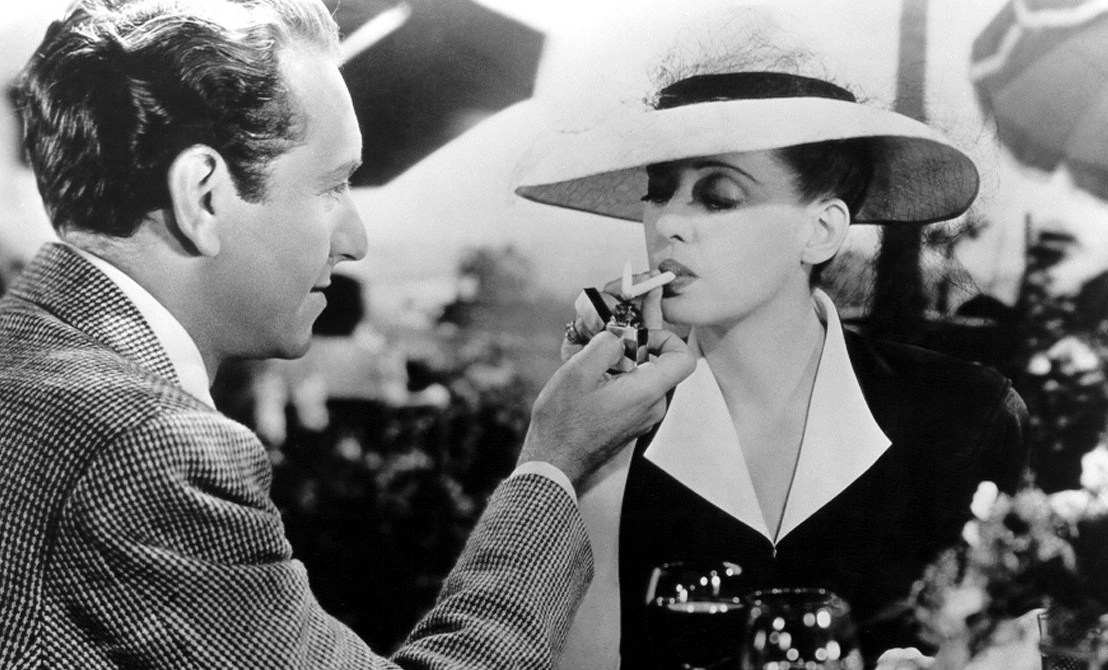
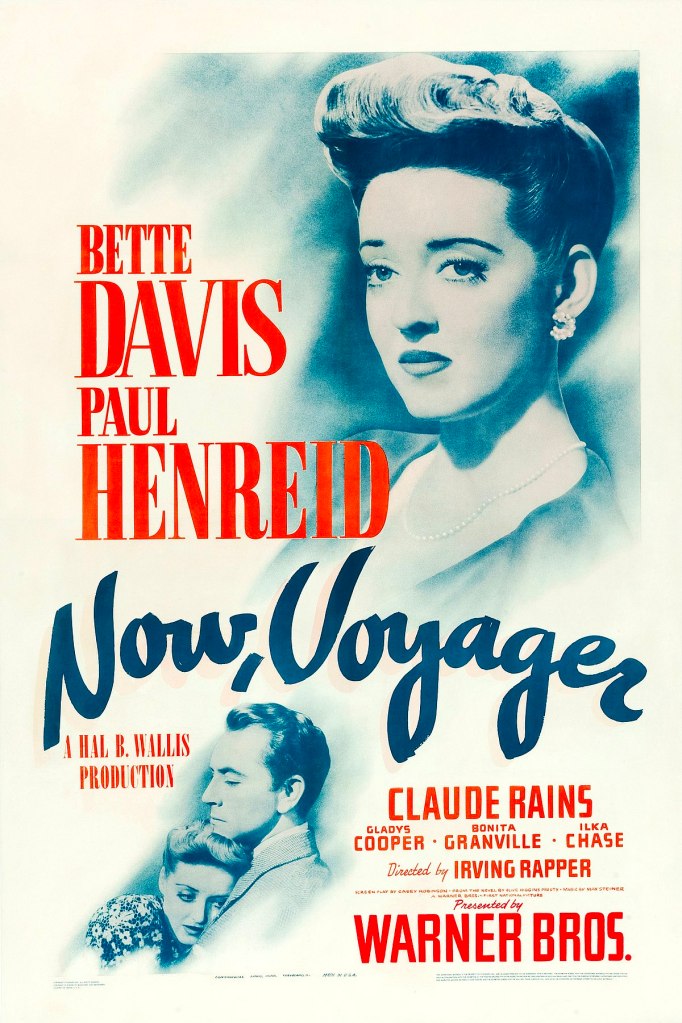
Casablanca, December 1941. Corrupt Vichy France officials rule the roost, with the city clinging to neutrality. European refugees and American ex-Pats mix with Nazi officers – everyone trying to get those all-important “letters of transit” you need to climb onto a plane and get out of the warzone. Letters like this will cause a world of trouble for American ex-Pat Rick Blaine (Humphrey Bogart), keeping Rick’s Café going as a place where politics are never discussed. But Rick may be forced to choose sides when his lost love Ilsa Lund (Ingrid Bergman) lands back in his life, on the run from the Nazis with her husband Czech freedom-fighter Victor Laszlo (Paul Henreid). Just before the fall of Paris, Rick and Ilsa had a love affair (she thought Victor was dead at the time) and neither of them has got over it. Will Rick take a stand and help Victor flee to continue the fight against the Nazis? Or is this a chance for Ilsa and he finally to be together?

Like many hugely beloved films, Casablanca combines a host of genres into one superbly digestible, hugely enjoyable, package. This is a star-crossed romance in the middle of a war film, with lashings of everything from espionage to gangsters to comedy of manners. In short, there would have to be something wrong with you not to find something to tick your boxes in Casablanca and it’s all brilliantly packaged together by Michael Curtiz into possibly one of the most purely entertaining and crowd-pleasing films ever made.

Casablanca is a superbly written pinnacle of the hard-edged but strangely romantic dialogue of Hollywood at the time, all delivered with more than a dash of humour. There isn’t a scene that doesn’t have a quotable line in it: and all of them delivered by a brilliant actor. Each scene is a master-class in Hollywood professionalism and skill. From our introduction to the streets of Casablanca – capped with the shooting of a Free-French fighter, who collapses to his death underneath a poster of Petain – to the beautifully evocative set (wonderfully shot by Arthur Edeson) for Rick’s café, where we will spend so much of the movie. In swift economy we see how ruthless Rick can be – not lifting a finger to help to petty crook and friend Ugarte (a wonderful cameo from Peter Lorre) – before understanding fully why he’s like that when he responds with something between shock, horror and desperate longing by the arrival of Ingrid Bergman’s Ilsa.

It’s also a film where the stakes are expertly set out. There are jokes about the cold ruthlessness of the Germans, but we are left in no doubt about their danger. (Conrad Viedt is grimly imperious as head Nazi Stasser). The scar on Victor’s face is a constant reminder of the horrors he escaped in the concentration camp (although, as per the time, the film understands these as jails rather than the hell they were). The refugees are putting on a brave face, but there is desperate practising of English and a willingness to trade anything (including their bodies) for letters of transit speaks volumes.

Nearly all of those actors (and Curtiz) are of course refugees and migrants themselves (only Bogart, Wilson and minor-player Page were American). The film gains a sub-conscious depth from this being more than just a story for so many of them. Fleeing from German advance in Europe (or escaping from Nazi persecution) was no theoretical for Henreid, Veidt or the host of great European actors in small roles. You can see that emotion when Victor cajoles the café’s clientele to sing La Marseillaise. The scene never fails to move because of the genuine power of watching real refugees, playing refugees, defiantly singing in the face of the Nazis who ruined their lives (the shots of Madeline Lebeau genuinely tear-stained face or the increasingly moved Spanish guitar player are beyond memorable). You can’t watch this sequence without a lump in your throat.

Mind you can’t watch most of it without that lump. Bogart and Bergman cemented themselves as icons with this passionate love story. It’s grounded, like so many truly affecting romances, on loss and pain rather than joy. Aside from a brief flashback to their time together in Paris – before Ilsa jilts Rick at the train station, rain washing the ink from her note (the sky shedding the tears Rick cannot) – these are two people essentially at loggerheads, because it’s the only way to keep their hands off each other. Rick deeply resents Ilsa, Ilsa can’t even begin to allow herself to think about her lost love for Rick because she fears it will take control of her. Particularly as, in Bergman’s beautifully judged performance, she clearly has a sort of spiritual (as opposed to romantic) love for the noble Laszlo.

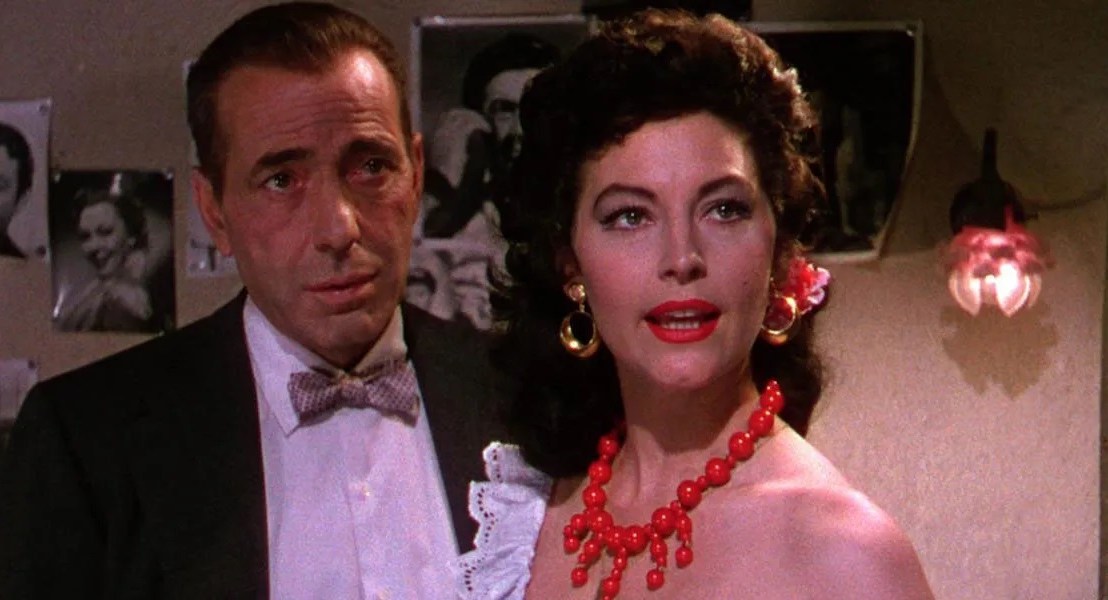
It all helped to make Bogart such an icon for generations to come. Bogart is effortlessly cool here, but he’s also incredibly relatable – who, after all, hasn’t had their heart-broken? Watch him sadly starring in the middle distance, befuddled by drink and demanding Sam play As Times Goes By over and over, and it’s no surprise that he’s so torn for so much of the film about what to do. Paul Henreid could never compete with the mix of vulnerability and misanthropic cynicism Bogart effortlessly brings to the part (one of the all-time great performances in the movies).

Bogart is also a perfect encapsulation of what America wanted (and still wants) to be. Minding his own business, but tread on him and he’ll bite back. Not only that, he’ll pick the right side and always make sure he does the right thing. It’s hinted to us that, for all his shady past, Rick has sided with anti-Fascists in Spain and Ethiopia. We even know he had to flee Paris because there was a price on his head. He might “stick his head out for nobody”, but the genius of Bogart is we don’t quite believe him, even while we see him do just that.

The chemistry between him and Bergman – who claimed never to quite understand why the film had such impact – is breath-takingly good. Helped by some of the wittiest and hard-edged dialogue in the movies, they become Hollywood’s own Lancelot and Guinevere. Bergman’s deceptively soft-edged performance, carries inner grit masking her own pain – she also brilliantly manages to show how she could be in love with two men (in different ways) at once. These two characters go through a long dance of denial before finally confessing all: and the iconic ending has the perfect combination of heartfelt longing and sacrifice they both know needs to be made.

But it’s not the only romance in the movie: having almost as much impact is the chemistry between Bogart and a never-better Claude Rains as jovially corrupt Vichy inspector Renault (merrily trading letters of transit for sexual favours and ticking the boxes of his duty while lining his own pockets). Casablanca also has in it one of the greatest love-hate friendships in the movies, between two people who can’t help liking each other, even when they barely have a single interest combined. Sounds like the beginning of a beautiful friendship.

Critical discussion has often revolved around whether Casablanca can be considered a piece of “high art”. It’s hard to imagine Ingrid Bergman’s famous Swedish compatriot directing it. To be completely honest, Casablanca is one of the finest packaged pieces of Hollywood Hokum ever made. And there is nothing wrong with that. It’s a master craftsman of glorious stand-up-and-applaud films in Curtiz, delivering his masterpiece. Casablanca doesn’t have the revelatory flair of something like Citizen Kane. But no other film in existence so brilliantly exploited the Hollywood formula. And it shows how much power, emotion and joy you mine from Hollywood’s narrative and filmic tropes when they were worked with as much skill and passion as you get here.

It’s a film that not only perfectly encapsulates a whole period of Hollywood professionalism, it also establishes the sort of golden rules – a brittle semi-anti-hero, sacrifice, moral complexities and open-endings – that would increasingly dominate Hollywood in the decades to come. Casablanca is a genuine turning point in Hollywood, a perfect summation of the noirs, love stories and adventures that preceded it, but repackaging them with influential insight. It’s also, above and beyond everything else, a bloody brilliant film that, as Nora Ephon said, you can never see enough.

Eternal Sunshine of the Spotless Mind (2004)

Eternal Sunshine of the Spotless Mind (2004)

An impulsive decision leads to a wild tour through mind and memory in this mind-bending, desperately romantic classic

Director: Michel Gondry

Cast: Jim Carrey (Joel Barish), Kate Winslet (Clementine Kruczynski), Kirsten Dunst (Mary Svevo), Mark Ruffalo (Stan Fink), Elijah Wood (Patrick Wertz), Tom Wilkinson (Dr Howard Mierzwiak), Jane Adams (Carrie Eakin), David Cross (Rob Eakin), Dierdre O’Connell (Hollis Mierzwiak)

What makes us who we are? If it’s anything, it might just be the sum total of our experiences. The events of our lives, and the emotions they cause in us, shape and define us. If we cut some of them away, what would we be? Is losing painful memories worth it, if we also cut away memories we cling to as treasured possessions? What makes us love someone: instinct or the sum total of our memories with them? Ideas around this and how love works are at the centre of Michel Gondry and Charlie Kaufman’s extraordinarily inventive, imaginative but also romantic and heartfelt Eternal Sunshine of the Spotless Mind, a truly original film crammed with rewarding moments.

Joel Barish (Jim Carrey) wants to make-up with his electric but troubled girlfriend Clementine Kruczynski (Kate Winslet). Imagine his pain when he goes to see her and she seems not to recognise him – and how much worse that might be when he discovers Clementine has erased him from her memory. An experimental surgery, Lacuna, run by Dr Howard Mierzwiak (Tom Wilkinson), offers its clients an unmatchable service: they will erase a person from your memory. Struggling to get over the loss of a partner, wife, friend, child or even dog? No problem, they’ll be gone from your mind and you never need worry about their memory causing you pain again.

Hurt and angry, Joel decides to undergo the same surgery to forget Clementine. While the procedure takes place over night – supervised by techs Stan (Mark Ruffalo) and Patrick (Elijah Wood) and Stan’s girlfriend (and Dr Mierzwiak hero-worshipper) Mary (Kirsten Dunst) – Joel comes to realise in his sub-conscious that he doesn’t want his memory stripped of Clementine. The cost of losing so many good memories isn’t worth it. In his sub conscious he tries to protect his memories – while in the real world the team battle to complete their contract and erase them.

Not many films like that are there? Gondry’s film could have been a slave to its concept. Instead though, it manages to juggle its deeper meanings with a truly heartfelt, winning and very sweet human story about two people who, for all their faults, become people you completely invest in. Kaufman’s script, as you would expect, triumphs as a complex and inventive magic tour but it’s also a wonderfully placed romance and heartfelt relationship story. Effectively the film manages to have something for everyone to invest in, from sci-fi nerds to lovers of romcoms to philosophy students.

It’s also a triumph of style. Set largely in Joel’s mind, the film reflects the fractured nature of the surgery as his memories are assaulted, deconstructed and destroyed. Lights fade, buildings disassemble and disappear, faces melt away from bodies and memories start to crash into each other. In his mind Joel walks through a door in a library to find himself on a beach, or rounds a corner to find himself back in his childhood memories. All of this is filmed with a series of stunning in-camera effects that make characters disappear, duplicate or seem to be in several places at once, all shot in a series of one-take effects that sees buildings disappear in front of us or fascinating memory loops. Visually the film is a feast, a tribute to Gondry’s playful imagination.

But it sticks with people because of the heart at the centre of it. Joel and Clementine become people we care about. We root for Joel to defy the odds and preserve some of his memory. Because, the film makes clear, being consciously aware of his memories being deleted is basically like going through the pain of losing her a second time – only this time knowing you won’t even be left with the parts you want to hold onto. In fact – re-enforced by the distress we see in Clementine when we see her undergoing the panic of being subconsciously aware of memory loss in the real world – Joel’s horror of what he has asked for is likely what all the other patients of Lacuna’s ‘brain damage for your own good’ surgery have gone through.

Superbly played by Jim Carrey and Kate Winslet in cast-well-against-type performances, Joel and Clementine might at times be selfish, frustrating, even irritating people – but it’s clear their love for each other is real. Jim Carrey, dialling down his gonzo mania to an unprecedented degree, is perfect as the shy and gentle Joel, bewitched by this explosive presence in his life. Winslet is electric – cranky, brittle, damaged but also caring and playful. Kaufman’s film shows they hurt and snap at each other, but also that they bring each other happiness they can’t get anywhere else.

So, it comes back to that question: do we accept that part of the price of loving and living is pain? That the people who we love the most, are the ones that may also hurt us the most. The film is also clear that love can’t be forced or replicated. In the ‘real world’ Clementine is being wooed by Elijah Wood’s creepily needy techie, using his records of her romantic memories of Joel to replicate their special moments. The falseness of this isn’t a remote match for the true emotion of the real event: and it’s a testament to the film’s commitment that you can’t forge or force love, and that eventually it might just find a way.

Because, even without our memories, will we still be drawn towards the same people? Can love in fact survive, even if you don’t know who the person who love is anymore? It’s another fascinating thread in this film. Romantic couples throughout find themselves drawn to each other continually, a subconscious emotion surviving the purging of actual memories. It adds even more to the horrific trauma of seeing what’s happening to Joel here. His obvious distress as he realises the implications of what he rashly asked for – and there is plenty of suggestion Clementine feels the same – gets worse and worse as he realises he has signed away his own rights to decide who he loves.

Those ethical questions – is it even possible to make an informed decision here about lobotomizing your memory – mix with those philosophical questions of what makes us what we are. Will Joel and Clementine be the same people or not after this operation? How will they adjust to losing such a hugely important part of their histories? Especially as they won’t even know that they have. Kaufman’s script explores this all carefully, but never once losing track of the emotional story driving it.

So Eternal Sunshine becomes a touching love story, about two people going to huge ends against impossible odds to stay together. That, I think, is what lies behind its appeal. What makes it one of the most lasting films of the 00s is the invention and flair the story is told with – Gondry’s direction and its non-linear structure all only add to the fabulous script from Kaufman and Gondry – and the way it very lightly tackles a whole host of fascinating ideas while never losing track of its nature as an entertainment. It’s a brilliant film.

As Good As It Gets (1997)

As Good As It Gets (1997)

Sparks fly in this straight-forward sitcom set up from James L. Brooks

Director: James L Brooks

Cast: Jack Nicholson (Melvin Udall), Helen Hunt (Carol Connelly), Greg Kinnear (Simon Bishop), Cuba Gooding Jnr (Frank Sachs), Skeet Ulrich (Vincent Lopiano), Shirley Knight (Beverly Connelly), Jesse James (Spencer Connelly), Yeardley Smith (Jackie Simpson), Harold Ramis (Dr Martin Bettes)

Melvin Udall (Jack Nicholson) is the rude, misanthropic writer of Mills and Boon style novels who suffers from an OCD that sees him keep to a strict series of routines. One of the most important is always having breakfast at the same table of the same restaurant, where the only waitress who will serve him is Carol Connelly (Helen Hunt). Carol is caring for her young son Spencer, who suffers from chronic asthma. All starts to change when the homophobic Melvin is persuaded to look after the dog of his neighbour, gay artist Simon Bishop (Greg Kinnear), after he is assaulted during a robbery. Melvin finds himself getting closer to the dog – and before he knows it, starts to reluctantly build a friendship with Simon and a romantic relationship with Carol.

If you thought that sounds rather like the set-up for a sitcom… you’d basically be right. James L Brooks demonstrates his TV roots again with what could almost be an extended pilot for a TV series, shot with his characteristic functionality. While its an attempt to show how different people can struggle to overcome barriers to connect with each other – be those psychological, social or health – it squeezes this into a trope-filled plot set-up, that swims in sentimentality and gives opportunities for actors to enjoy scenery-chewing, attention-grabbing parts.

None more so than Jack Nicholson, winning his third Oscar as Melvin. To be honest, what Nicholson does he is essentially portray a less complex version of Victor Meldrew from One Foot in the Grave. Melvin is a man who doesn’t suffer fools gladly, and delights in using his wealth to excuse him from saying a host of unacceptable things about everyone he meets (not a single gender, sexuality or race escapes his quick-witted bile).

Of course, the audiences know that it’s alright because it’s Jack, and while he might be a rogue he’s basically got his heart in the right place. Discovering that is basically the purpose of the film: of course, all that rudeness and cruelty is a front to protect an insecure man from the dangers of emotional commitment. Not to mention that the first thing to melt his shell is that most familiar (and sweet) of Hollywood props, a dog. Brooks does manage to demonstrate that Jack’s acts of kindness are at first partly about making life easy for himself – securing an expensive doctor for Carol’s son is about ensuring she doesn’t leave his restaurant and agrees to keep talking to him – but the film is determined to show everyone is basically “decent” and “kind” even if they don’t know it.

Inevitably, the best way of doing this is for that familiar old development, the road trip: for contrived reasons connected to Simon needing to ask his parents in Baltimore for help with medical bills, Melvin, Carol and Simon climb into a car for a cross-country drive. Needless to say, the predictable clashes, confessions, break-ups and reconciliations take place. It being a Brooks movie, this all takes place over an extended two and a half hour run time (indulgent for such a traditional set-up).

What makes it work is that the acting of the three principles is fiercely committed. Oscar-winning Nicholson eats up the cutting dialogue but also manages to mine a lot of “little boy lost” vulnerability from Melvin, a man who throws up barriers of rudeness, aggression and misanthropy to protect himself from getting hurt. Helen Hunt (who won another Oscar) hones years of experience in delivering fast-paced, witty dialogue from Mad About You, also shows real depth making Carol a similarly guarded person, using sass and cynicism as a shield against a world she expects to bite her. Greg Kinnear is a fragile artist, hiding behind his art, tortured by denial about his problems and desperate for an emotional connection.

That theme of the defensive barriers – and crippling effects of our own mental hang-ups – is the deeper message that Brooks manages to bring to the film. Melvin might seem, on the surface, the most obviously maladjusted but at least he’s vaguely happy in his skin at the start of the film. The other characters wear smiles of contentment, but only to hide deep stress and turmoil. It’s Brooks’ TV roots that turns all this into a series of “learning” lessons, where every scene in the final act is accompanied by someone making a profound choice, making a new start or letting something go.

As Good As It Gets is about making the best of things. And Brooks makes a pretty good fist of making this a decent (overlong) romantic comedy with a touch of depth. But its still mired in predictable tropes. Melvin’s OCD expresses itself in the most amusing filmic way possible, essentially as a form of charming eccentricity rather than the crippling disease it can actually be (it ticks all the predictable boxes, from light-switches, to compulsive hand cleaning to not stepping on cracks in the pavement). The film also, rather worryingly, suggests OCD can be overcome just like any other personality problem, simply by opening your heart and learning those lessons.

It’s fine, but you can watch it now and wonder how a film that’s essentially an over-extended dramedy TV-show pilot ended up scooping so many prizes. Entertaining, with some interesting perspectives, with committed acting, but very little that’s new and a lot that’s rather tired.

Sayonara (1957)

Sayonara (1957)

Racism gets exposed at clumsy length in this heavy-handed social issues drama

Director: Joshua Logan

Cast: Marlon Brando (Major Lloyd “Ace” Gruver), Patricia Owens (Eileen Webster), James Garner (Captain Mike Bailey), Martha Scott (Mrs Webster), Miiko Taka (Hana-Ogi), Red Buttons (Airman Joe Kelly), Miyoshi Umeki (Katsumi Kelly), Kent Smith (Lt General Mark Webster), Ricardo Montalban (Nakamura), Douglass Weston (Colonel Crawford)

It’s post-war Japan and the American occupation forces have got very strict rules about what their soldiers are allowed to do with the native population: namely not marry them. Any suggestion of American soldiers finding themselves Japanese wives is frowned on at the very highest level. Something flying ace Major “Ace” Gruber (Marlon Brando) is about to find out when he’s transferred from shooting down commies in Korea. Airman Joe Kelly (Red Buttons) is determined to marry Katsumi (Miyoshi Umeki) – and nothing commanding officer Gruber or anyone else can say will dissuade him. Meanwhile, Gruber finds himself falling in love with Japanese actress Hana-Ogi (Miiko Taka) – and facing the exact same pressures to chuck her overboard as Kelly meets.

Sayonara is very much a Hollywood message film: that being interracial marriage is a fact to celebrate not condemn, with a subsidiary message focused on rehumanising the Japanese people for American audiences still holding strong memories of the Second World War. Like a lot of message films from the era though, its also slow, stuffy, self-important and more than a little dull – something its multiple Oscars can’t hide.

Shot on location, it often come across as a sort of Japanese travelogue which, for all its efforts to make the Japanese sympathetic, can only interpret them and their culture through a selection of cliches and generic expectations. The film is a parade of kimonos, lotos blossoms, tea ceremonies and geisha girls, all shot with a laboured flatness by Joshua Logan. Logan’s direction overflows with middle-brow earnestness, pleading for a little love and understanding, while shuffling together a series of stereotypical and predictable plot events. Logan also seems to struggle with the cinemascope frame, which frequently dwarves this intimate story.

It’s all told at a very slow pace: it’s remarkable that such a slim story manages to fill almost two and a half hours. Much of this is taken up with the romantic entanglements of Ace, half-heartedly engaged to General’s daughter Eileen Webster (a saintly understanding Patricia Owens, who practically asks to be thrown over), before a chance sighting on a bridge (of course it’s a soribashi bridge) leads to him falling head over heels in love with Hana-Ogi, hanging around the bridge every day and struggling his way through a Japanese phrase book so he can ask her out on a date (the dates, when they come, are like a travelogue of the most Japanese events you could imagine).

The languid lack of drive isn’t helped by Brando’s curious performance. Sayonara is the perfect example of what a mystifying actor Brando could be: here he was in a project that clearly meant a lot to him personally (he was a long-standing social campaigner), but he drifts through it with a lazy off-the-cuffness that suggests he’s only doing the film under protest. Only Brando could act in a passion project with such surly indifference (allegedly motivated by his lack of regard for Logan’s direction). Brando uses a non-descript Southern drawl, which he uses as an excuse to dial his mumbling up to 11. He slouches and ambles through every scene, barely raising his voice or lifting a finger unless it’s essential.

Because Brando seems so disengaged and bored by the whole thing (the only spark of energy he gives is when he playfully bangs his head on a low Japanese ceiling) it makes the film drag on without the stakes ever seeming to really mount. Ace is told repeatedly that he will have to chuck Hana-Ogi, but he shrugs it off with all the indifference of a laid-back hipster. I think Brando is straining to suggest that Ace has the soul of a poet, trapped inside his father-mandated time in West Point – there is a moment where he airily mumbles something about his dreams as a young man of finding something more. But the overall effect is more of an actor drifting through a long role with minimum effort.

You can’t say the same for Red Buttons, who plays Kelly with a great deal of commitment. Winning an Oscar, this first role was also his best, with Kelly having Button’s good-natured lightness but mixing it in with a fierce defiance and a touching pain when his wife suggests surgery to try and alter her facial features to appear more Western. Umeki also won a generous Oscar for a brief performance which gives her very little scope to do much beyond playing the quiet wife (I suspect the Oscar was partly for the film’s theme and reflects a weaker year of candidates). Miiko Taka is more impressive (and given more scope) as Hana-Ogi, all too aware of the pressures on her not to get involved, torn between her feelings and what she sees as her duty.

Sayonara as a whole though remains a flat, often rather uninvolving film that holds its liberal conscience so close to its chest that it manages to squeeze any trace of life out of it. Its liberalness only goes so far: Logan casts two Japanese actresses but has no concerns about recruiting a pale-faced Ricardo Montalban to play the only Japanese male with lines. It’s exploration of mixed-race relationships is solely focused on white guys marrying who they want. A truly daring film would have thrown in a flirtation between Montalban’s Japanese actor and Patricia Owen’s patrician General’s daughter. A Japanese man marrying the daughter of one of America’s own? Now that is a vision that would have really shook up 1950s America.

It’s not to be though. Instead, this is an overlong, overly serious, pleased with itself melodrama, coated in lashings of social awareness that is cursed with a languid central performance that helps make the whole film seem to drag on forever. Logan is unable to provide either any dramatic or political fire to the film and it settles all to often for safe, picture perfect shots of Japan. While you can admire the motives behind it, there is little to admire in the film itself.