Category: Romantic comedy

Our Hospitality (1923)

Our Hospitality (1923)

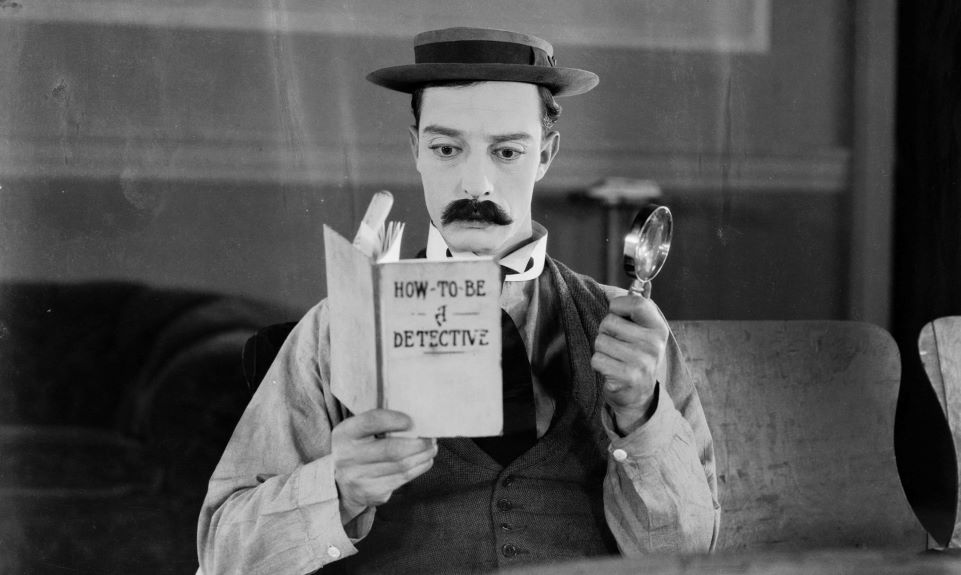
Keaton’s feature-length debut is a masterpiece of comic invention and slapstick stunt thrills

Director: Buster Keaton (& John G Blystone)

Cast: Buster Keaton (Willie McKay), Joe Roberts (Joseph Canfield), Natalie Talmadge (Virginia Canfield), Ralph Bushman (Clayton Canfield), Craig Ward (Lee Canfield), Monte Collins (Parson), Joe Keaton (Train engineer), Jack Duffy (Train conductor)

It starts with a dark and stormy night. If that sounds like cheap melodrama that’s kind of the point. Keaton’s first feature length comedy would be different from his joke-crammed shorts. This would be plot-led comedy, a drama full of jokes. As part of that, Keaton started the film with a storm-filled, joke-free, DW Griffith-inspired opening salvo that sees the lead character’s father dead in Intolerance inspired opening. With its gun flashes and bodies, we know in this film bullets kill.

The father is John McKay and he dies along with James Canfield in a deadly exchange. It’s part of a long-running feud betwixt McKays and Canfields (any similarity to the legendary Hatfield-McCoy feud is entirely deliberate), and the rest of the Canfields swear revenge on McKay’s baby son-and-heir. Twenty-one years later, Willie McKay (Buster Keaton) has grown up in New York, ignorant of the feud. When he returns to his father’s ranch, he finds himself in the awkward position of having fallen in love with Virginia Canfield (Natalie Talmadge), daughter of his newly discovered deadly enemy Joseph Canfield (Joe Roberts). How will matters be resolved?

With a great deal of laughs and a breath-taking series of stunts. Our Hospitality is early Keaton but already it cements his legend of comic invention and physical daring as well as his dynamism and imagination as a filmmaker. Our Hospitality is crammed with comic bits of pieces that Keaton would go on to explore and finetune in even greater detail in later films, but also culminates in a (admittedly slightly tongue-in-cheek) but still surprisingly gripping action sequence as our hero battles to survive a mountainous waterfall and save his love from toppling.

The film neatly divides into four acts, each subtly different in tone but all unified by Keaton’s creativity. Stone-faced and implacable, Keaton never mugs or goes overboard for the laugh but trusts that, with the intimacy of the camera, the smallest inflection or slightest turn of the head will raise a chuckle. He’s also charmingly innocent, refreshingly resourceful and rather brave – a perfect combination for a little guy (it helps, as always, that Keaton is literally a little guy) we root for.

That charm powers a lot of the film’s second act, a long incident-filled train journey McKay takes to the South. Keaton was fascinated by the comic potential of early technology – watching Willie, po-facedly, cycling with an early peddle-free bike, his feet alternately propelling the bike and lifted in the air is hilarious (the Smithsonian even asked if it could display this perfect replica) – and he deliberately set the film in 1831 to introduce a Stephenson-style rocket train, pulling its open carriages behind it. This vehicle not only looks hilariously ramshackle and strangely incongruous, it also opens an ocean of possibilities.

It is, for starters, hilariously slow – Willie’s dog has no problem keeping up with it. Its tracks have been laid with a rigid rule-following lack of imagination – at one point they ride up over a fallen tree log, the train and carriages bumping over it. The train is forced to stop by a donkey that refuses to leave the line (eventually the engineer simply drags the tracks around the donkey). There is an on-going feud between the Engineer (played by Keaton’s father Joe) and ticket-master about who is actually in charge of the train. At one point it veers off the tracks and down a road (everyone comments about how much more smoother this is) and later gets separated from the carriages at a junction, requiring Keaton gymnastics to bring it together. By the time it trundles into the station – and note how beautifully the train is filmed – you’ve had more comic invention than most other comedies.

During this journey Willie falls in love with fellow passenger Virginia (played, a little awkwardly, by Keaton’s wife Natalie Talmadge), little knowing she is a Canfield. The Canfields swiftly discover his identity: Willie asks one of her brother’s directions to his ranch, and the brother guides him there, all the while darting away at every opportunity to try and borrow a gun to take his revenge.

Most of the second act, which gives the film its title, revolves around Willie’s invite from Natalie to dinner at the Canfield house. Southern gentility declares the Canfields cannot take revenge on Willie while he is their guest – as soon as Willie realises this he does everything he can to remain in the house, as the (literal) instant he steps outside the door, guns come out. (Keaton also gets a lot of comic mileage from the cumbersome one-shot guns, which Willie frequently pinches to discharge to give himself a few precious moments to move outside while various Canfield’s reload).

When Willie eventually flees the house – disguised as a lady – it leads into a glorious, action-packed chase scene. Scaling mountains and cliffs, shot with a vertigo inducing brilliance (in reality Keaton placed the camera on its side and made it appear with his genius physicality that he was climbing rather than crawling). There are falls into rapids, Willie is dragged behind a racing train carriage and finally bobs and floats down a rapid (including one shot, kept in the film, where Keaton’s rope snapped and he was literally washed head first down a river). It culminates in an athletic, stunt-filled, precarious balance on a log suspended over a waterfall (a brilliant backdrop shot makes this feel impossibly high), swinging desperately on a rope to save Virginia from falling.

Our Hospitality is awash with comic energy and genius touches of business but it’s also an impressively ahead-of-its-time in the skill of its plotting and structure – you could pretty much remake it exactly today (but with words) without changing a detail, and it would still be a hit. But it wouldn’t be a legend because the only thing you wouldn’t have is Keaton. And he’s the lodestone that balances the whole thing.

The Russians are Coming, the Russians are Coming (1966)

The Russians are Coming, the Russians are Coming (1966)

Ealingesque farce meets Cold War moralising in this not-quite funny enough farce

Director: Norman Jewison

Cast: Carl Reiner (Walt Whittaker), Eva Marie Saint (Elspeth Whittaker), Alan Arkin (Rozanov), Brian Keith (Link Mattocks), Theodore Bikel (Captain), Jonathan Winters (Norman Jones), Tessie O’Shea (Alice Foss), John Philip Law (Alexei Kolchin), Ben Blue (Luther Grilk), Andrea Dromm (Alison Palmer), Paul Ford (Fendall Hawkins)

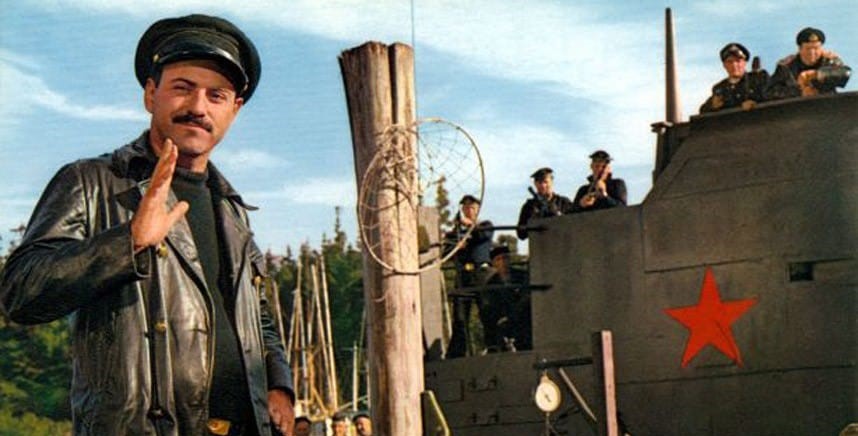
Off the coast of a New England island, a Russian captain (Theodore Bikel) wants to take a quick peek at the US of A. Bad idea. When his sub runs aground, they are forced to send a party ashore led by political officer Rozanov (Alan Arkin) to find a motor launch to get the sub back out to sea. They run into the Whittakers – playwright Walt (Carl Reiner), wife Elspeth (Eva Marie Saint) and their kids – take them hostage, steal their car, cut the telephone lines and try to save themselves. The town quickly hears news of the possible arrival of Russians, and the hysteria grows – just as Walt starts to feel his sympathies grow for the terrified Russian sailors. Can peace be reached across the divide?

The Russians are Coming, the Russians are Coming is basically an Ealing-esque comedy – written by Ealing veteran William Rose – translated not entirely successfully to America. Directed with an epic, widescreen sweep by Norman Jewison that sometimes crushes the life out of a comedy of confusion and coincidence, The Russians are Coming wants to be both a broad farce and carry an earnest message about the Cold War. It’s quite sweet that the film, made four years after Cuba nearly turned the world into an ash pile, wants to focus on what unites as humans rather than divides us, but the message is at times crow-barred in a little too forcibly.

It’s very hard not to see the Ealing influence on every single scene – and I suspect the film would have worked better as 4:3 black-and-white film full of harassed people in offices and homes, rather than the grand panoramas of the town and large crowd scenes. The Ealing influence can be seen in the townsfolk, who become a farcical panicked crowd of have-a-go heroes, making sweeping decisions based on no information at all, led by puffed up self-important, self-elected leaders determined to seize their moments of heroism. Misunderstandings abound, as tiny pieces of evidence balloon the “threat” into a full-blown invasion: the crowd are almost disappointed when they arrive at an airfield to find not a smouldering ruin but an operator blissfully unaware anything is going on.

Similarly, the Russians themselves fit nicely into the Ealing model of ordinary, decent, underdogs up against the system (in this case the townsfolk). In a brave touch, the Russian in the film is never translated – Theodore Bikel doesn’t have a line in English – meaning we only gradually learn what is going on and why, as Arkin’s character explains things to Whittaker in stumbling half-English. Arkin is, by the way, the film’s prize asset, demonstrating excellent comic timing and delivering his dialogue in a parade of Russian and fumbling English (there is a great sequence where he earnestly tutors his men on how to pass as officials clearing the street, teaching them phrases just a few degrees incorrect that will make them stick out like sore thumbs as soon as they open their mouths).

The film is never quite funny enough though and Jewison’s direction neither tight nor taut enough to keep the farcical pace up. There are one too many wrong turns taken by the Russians, one too many narrative cul-de-sacs as townsfolk barrel up and down the streets. The whole film plays out like this, many of its effective comic performers among the townsfolk lost among a sea of people and faces. Arkin and Reiner get the most impact, because their scenes tend to make place in individual rooms in set-ups that let us clearly see their faces and appreciate their comic skills.

The Russians are Coming largely struggles to keep the pace up – the best of the Ealing comedies told their farce-tinged struggles between the little-guy and the system, or confusion between two fundamentally sympathetic groups, in about 90 minutes, and this feels heavily over-stretched at a little over two hours. That’s partly because of the political statements which the film dresses up as a sub-plots. A romance between John Philip Law’s Russian sailor and the Whittakers’ babysitter Tessie O’Shea is all too obviously a plea for using love as bridge-building. The final alliance between the Russians and the townspeople, forged in their joint rescuing of an endangered child, bangs the “we are all the same” drum a little too persistently.

It makes the film today feel a little too much like it’s trying to have its cake and eat it: to be both a farce where Reiner’s playwright gets tied up to a librarian and the two struggle to free themselves in a series of pratfalls, and also a political statement about the bonds that can be built if we just let the Cold War melt a little bit. I won’t deny this must have had more impact in the 1960s, but today it makes for a film that is a little too grandiose where it should be nimble, and a little too lightweight when it should be important.

Four Weddings and a Funeral (1994)

Four Weddings and a Funeral (1994)

The phenomenon of the 90s, this charming comedy still (rightly) lies in many people’s soft spot

Director: Mike Newell

Cast: Hugh Grant (Charles), Andie MacDowell (Carrie), Simon Callow (Gareth), Anna Chancellor (Henrietta), Charlotte Coleman (Scarlett), James Fleet (Tom), John Hannah (Matthew), Kristin Scott-Thomas (Fiona), David Bower (David), Rowan Atkinson (Father Gerald), David Haig (Bernard), Sophie Thompson (Lydia), Corin Redgrave (Hamish Banks), Simon Kunz (John), Rupert Vansittart (George)

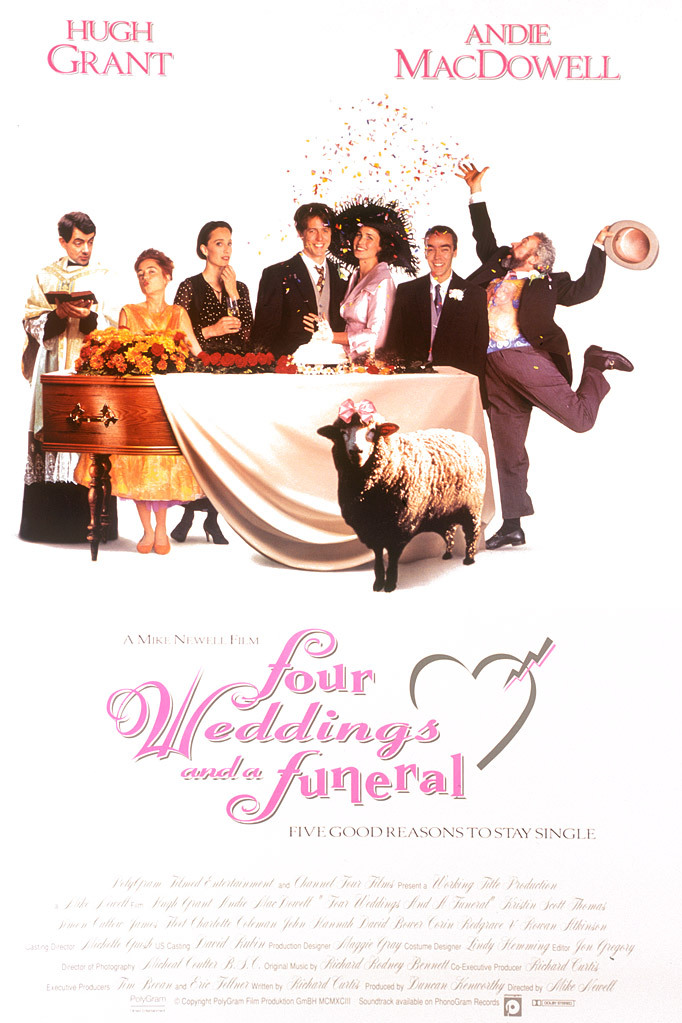
It’s 1994 and love really is all around. It certainly felt like it in the UK, as Four Weddings and a Funeral went from small Brit rom-com to national phenomenon. It was number one at the box office for ten weeks and Wet Wet Wet’s Love is All Around felt like it was number one for the whole year. The film was a huge international hit, the sort of once-in-a-lifetime movie for everyone involved, culminating in an Oscar nomination for Best Picture. For anyone who went to the movies in the 90s, it feels like an old, familiar friend. And, leaving aside the inevitable backlash, it’s still witty, charming and fun today.

Based on writer Richard Curtis’ experience of attending a never-ending parade of weddings one year (we’ve all been there), we follow Charles (Hugh Grant) through a series of disastrously different weddings (and, of course, one moving funeral) while he tries to deal with the fact he’s fallen in love with American Carrie (Andie MacDowell) – and one of the weddings he attends is hers. Around him float a phalanx of loyal friends: gregarious Gareth (Simon Callow) and his loyal, utterly reliable partner Matthew (John Hannah), dimly posh Tom (James Fleet) and his arch sister Fiona (Kristin Scott-Thomas) and zany Scarlett (Charlotte Coleman). But, when the time comes for Charles to head down the aisle, who will he find waiting for him at the end?

Four Weddings works because it’s blessed with a series of talents at the peak of their powers. Richard Curtis has never written a film script that balances so perfectly excellent one-liners, sharply sketched, engaging characters and a perfect mix of pathos and belly-laughs. Mike Newell balances the comedy with just the right touch of drama, never allowing events to tip into sitcom territory. The cast are all pretty much selected perfectly. And above all, it turned out Hugh Grant was placed on earth to play the lead roles in Curtis comedies.

Before Four Weddings, Hugh Grant was almost completely unknown: a Merchant Ivory supporting player at best. After it, he would be almost indistinguishable in the public’s eye from Charles (he’d effectively play the same role three times again for Curtis). What Grant does in this film is simply phenomenal. Curtis’ dialogue and rhythm fits his style like a glove: not since Rowan Atkinson (who delivers a Peter Sellars like performance as a nervous and shy vicar at the other end of the comic spectrum from Grant’s mix of comedy and pained earnestness) had an actor clicked so much with Curtis. There is, perhaps, no skill harder than light comedy, but Grant is a master at it.

He turns socially awkward comedy into a thing of beauty (trapped at a table with a series of ex-girlfriends, he lets the smallest inflections telegraph his desire for the earth to swallow him). He has the subtlety to not overplay pratfalls or physical gags (look at the minimalist simplicity which he plays being trapped, hiding, in a cupboard while a recently married couple have noisy sex in the same room, his face a mix of pained embarrassment and longing for escape). Grant captures better than almost any actor alive a peculiar, self-deprecating British sense of humour, the quiet rabbit-in-the-headlight horror of saying the wrong thing. He even makes you love Charles (who, in many ways, is a self-obsessed git) because Grant is so effortlessly likeable, emitting rays of little-boy lost charm.

It also works because the film crams into it a hinterland of friendship and warmth. The chemistry between the company is pretty much spot-on – you never for one moment doubt these people are lifelong friends, despite the fact we learn nearly nothing about any of them over the course of the film (even Charles – what other film would not even tell us his job?). Each of the actors seizes their role with relish. Simon Callow got to explode with red-faced bonhomie and shaggy-faced camp in a way you suspect he had been dying to do his whole career. Kristin Scott-Thomas’ arch dryness and icy posture was leavened with just the right touch of romantic yearning and wit.

In fact, the whole cast were so perfectly cast they almost became destined to spend their whole lives struggling to break out of the moulds Four Weddings placed them in. James Fleet was so skilled at nice-but-dim sweeties like Tom, he had to grow a huge beard to get serious roles. John Hannah (extremely good, with the films much touching WH Auden inspired moment) took on playing a posh twit in The Mummy. Anna Chancellor was so born to play the strangely needy ‘Duckface’, Charles’ ex-girlfriend she jokes the first line of her obituary will be “Duckface dies”. Callow and Scott-Thomas would play versions of these roles several times over – and even being arrested for picking up a sex worker wouldn’t break the public perception of Grant being Charles.

Which is all a round-about way of saying everything works here, the magic alchemy of everyone being in the right place at the right time, and every single risk paying off. You can be slightly churlish and say Andie MacDowell lacks some of the charisma and comic skill the role of Carrie needs (it’s a Meg Ryan role), but her innocent Southern exterior is needed to make the scene of her recounting her serial shagging to Charles over a restaurant table land with as much comic force as it does.

That’s one of many comic set-pieces that just plain work. From the “fuck!”-filled opening montage, which sees Charles hare, late, to a wedding where he is the best man, via the film’s many social faux pas (“She is now my wife” has never been funnier), Atkinson’s malapropism-stuffed wedding service to the film’s final comic denouement at Charles’ wedding, it’s packed with laugh-out-loud moments. But, because the characters are so well-drawn, with just the right amount of reality, we also care as well. The funeral carries real emotional impact – not least due to Hannah’s beautiful delivery of the eulogy (and let’s not forget, few other mainstream movies were as open to homosexuality at the time as this one). And every character has moments of depth: even dim Tom has flashes of real emotional insight.

You can mock it in retrospect for moments like “is it raining, I hadn’t noticed” – but films like this don’t stumble into becoming cultural phenomena. They get there because, for one glorious moment, everything comes together the way it was meant to be. A great script got just the right approach, from a series of actors perfectly cast and marshalled by a director towards warm, genuine comedy. That’s why people continue to watch – and quote it – thirty years later and it still feels like love is all around it.

The Quiet Man (1952)

The Quiet Man (1952)

Ford’s sweet and funny Irish fable is possibly his most purely enjoyable film

Director: John Ford

Cast: John Wayne (Sean Thornton), Maureen O’Hara (Mary Kate Danaher), Barry Fitzgerald (Michaleen Oge Flyyn), Ward Bond (Father Peter Lonergan), Victor McLaglen (Squire Will Danaher), Mildred Natwick (The Widow Sarah Tillane), Francis Ford (Dan Tobin), Eileen Crowe (Mrs Elizabeth Playfair), Arthur Shields (Reverend Cyril Playfair), Charles B Fitzsimmons (Hugh Forbes), James O’Hara (Father Paul), Jack MacGowran (Ignatius Feeney), Sean McClory (Owen Glynn)

John Ford wasn’t born in Ireland, but he loved the place in the way only the child of ex-pats could. The Quiet Man is a loving, romantic, almost fairy-tale view of Ireland, an affectionate feelgood fantasy that transcends any possibility of patronising its subject through its warmth and charm. It’s an unashamedly feel-good film, a delightful fable full of luscious scenery and tenderly sketched characters that plays out like a warm end-of-term treat where we are all invited to the party. It’s possibly Ford’s most purely enjoyable and heart-warming film.

Set in 1920s Ireland, Sean Thornton (John Wayne) returns to his childhood home of Inisfree after growing up and becoming a boxer in Pittsburgh. Sean loves his home country, but with his American upbringing is out-of-step with the customs and traditions of Ireland – something that becomes very clear when he falls in love with Mary Kate (Maureen O’Hara), sister of local squire Will Danaher (Victor McLaglen). Their rules-bound courtship – overseen by matchmaker Michaleen Oge Flynn (Barry Fitzgerald) – eventually leads to marriage, but via tricking Will, who withholds Mary Kate’s dowry, the sign of her independence. Mary Kate wants Sean to fight for it – but the former boxer is haunted by the accidental killing of an opponent in the ring and wants to live-and-let-live. Problem is everyone, from Mary Kate down, sees that as cowardice.

Ford was desperate to make The Quiet Man, the rights for which he had paid $10 for in 1933 when the short story was published by Maurice Walsh (Ford ensured Walsh received another $5k when the film was finally made). B-movie studio Republic Pictures was the only one willing to take a punt on it. But, alarmed by Ford’s insistence to shoot in colour and (even more expensively!) on location, they were convinced they had a box office bomb on their hands. They insisted Ford and his cast made a western first – the literally for-the-money Rio Grande – to cover the expected losses. They even demanded Ford couldn’t make it longer than 2 hours. Ford screened the final 2 hours and 9 minutes cut to them, stopping the film on exactly the two hour mark and asking them what they’d cut. They released the film unchanged. The film was an Oscar-nominated smash-hit.

It’s not a surprise why, because the film is a whimsical delight. Ford isn’t often remembered for his sense of fun, but The Quiet Man is unarguably funny. It’s crammed with sight gags – from sly double takes (there is a delightful one from the railway station workers, who watch first a determined Sean then a horse walk straight past them), to Sean and Will grimacing in pain but smiling as they exchange a brutal handshake, to Mary Kate jumping over obstacles as Sean drags her back to the village to have it out with her brother. It famously ends with an extended comic set-piece as Sean and Will launch a mano-a-mano “Queensbury Rules” fistfight that takes most of a day, moves across the whole village, and is interrupted only by a break for a pint.

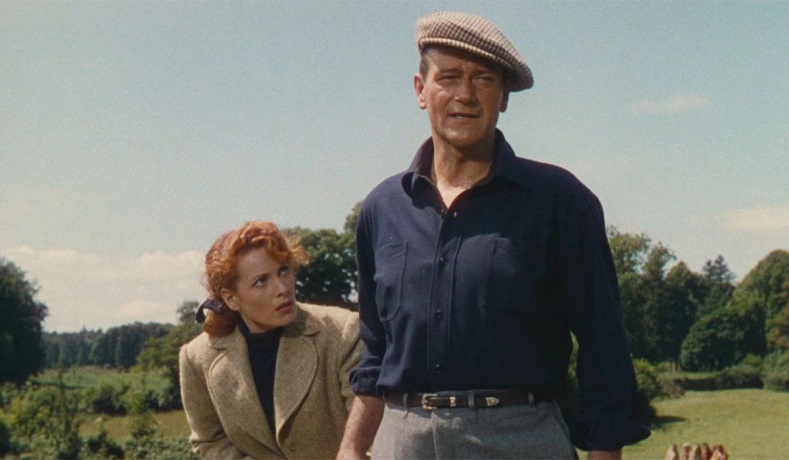
All of this takes place in an Ireland that, while it never feels entirely real, is drawn with such loving affection and cast with such careful exactitude that it hardly matters. Ford’s insistence on shooting all the exteriors on location paid off in spades. The country has never looked more ravishing than through Winton C Hoch’s technicolour lens. Rolling vistas, gentle brooks, quaint villages, perfect beaches. You totally understand why Sean, on arrival, simply stands on a stone bridge and stares across the valley of Inisfree, lost in memories and his emotions.

Sure, it’s a romantic vision. And 1920s Ireland wasn’t the sort of haven depicted here, where Catholic and Protestant lived in perfect harmony, politics never reared its head and the local IRA man is a jolly joker in the pub. If The Quiet Man had not been so well-meaning, you can imagine people taking offence at a picture of the country full of roguish charm, horse-drawn carriages, drinking and fighting. (You could say The Quiet Man shaped many Americans’ perceptions of what the country is like.) But Ford never makes any of this a subject of humour. In fact, it’s a subject of love. The joke is never on the Irish. Inisfree is in fact a haven of community spirit, a supportive village where its people are wise, caring and decent, tradition is respected and what people say and do matters.

It’s why so many are shocked by Sean’s seeming cowardice at not raising his fists earlier. That’s not what “men” do. John Wayne is very effective as the easy-going Sean, a guy who just wants to settle down to marriage. It’s a decent playing-against-type by Wayne, that balances his quiet sense of dignity with the sort of manly determination we know will eventually come through. It’s easy to see why he and Mary Kate fall in love. Also, why she is both swept up in his masculinity and also enraged that he doesn’t behave enough like a man, by refusing to take a stand to defend her honour and secure that dowry that will make her a true wife.

O’Hara is marvellous in a challenging role as Mary Kate. This is a feisty and determined woman, who knows what she wants but denies to herself what that is. She and Wayne share a striking, windswept early kiss – her mood in it going form surprise, to fascination, to irritation, to surrendering to her own desires. While you could suggest the film’s comic set-piece of Sean dragging her (sometimes literally) back to the village so she can watch him fight her brother the way she’s demanded from the start feels uncomfortable today, but it’s also Sean not only delivering what she has wanted him to do from the start, but also strangely the thing that finally bonds them together.

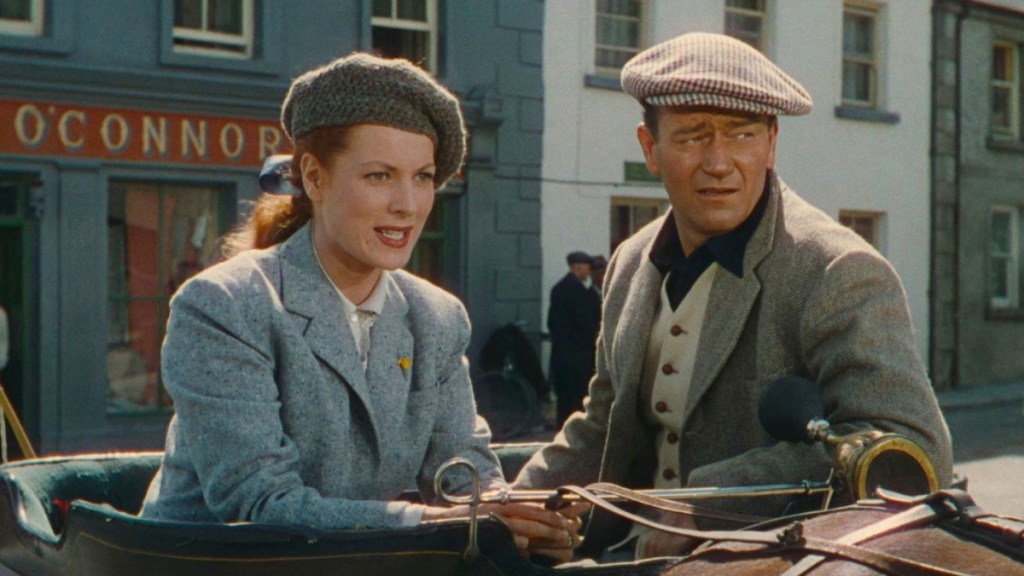
A bond is what they have, both of them straining against the confines of the courtship rules of Ireland. Together they flee the chaperoned carriage ride Michaeleen (a delighful Barry Fitzgerald) takes them on to ride a tandem through the streets. Mary Kate constantly, bashfully, tries to go after what she wants – and a large part of that is the lurking “bad boy” tendency that she detects under the surface of the quiet Sean. Something her less-bright brother Will can’t see.

Victor McLaglen (Oscar-nominated) swaggers, slurs and puffs himself up as this rough-and-tough, punch-first-think-later bruiser, who constantly thinks he’s being cheated. He and Wayne throw themselves into the long dust-up that ends the film with the same comic energy and enthusiasm they did exchanging handshakes. Part of The Quiet Man’s success comes from the comfort and familiarity the cast felt for each other. The trip to Ireland was like a friends-and-family holiday: old mates like Ward Bond, Ford’s brother, O’Hara’s brother, Wayne’s children – they all round out the cast. It helps build even more the family and community feeling that makes the film a delight.

Above all, The Quiet Man leaves you with a smile on your face. With expertly filmed set-pieces – a horse race, Sean and Mary Kate’s long walk back to Inisfree and the epic punch-up – combined with luscious shooting (also done with wit – a sexually frustrated Sean pounds through the countryside, tossing heavily puffed cigarettes aside, after Mary Kate withdraws favours) – it’s also fast-paced, witty and warm. The cast even effectively take bows as Ward Bond’s (his finest hour) priest delivers a final voiceover. Full of affection and charm, it’s a delight and is perhaps the only foreign “Irish” film that has been embraced by the Irish.

Summertime (1955)

Summertime (1955)

An independent woman finds romance in Venice in this luscious travelogue, one of the best of its genre

Director: David Lean

Cast: Katharine Hepburn (Jane Hudson), Rossano Brazzi (Renato de Rossi), Darren McGavin (Eddie Yaeger), Jane Rose (Mrs McIlhenny), Mari Aldon (Phyl Yaeger), Macdonald Parker (Mr McIlhenny), Gaetano Autiero (Mauro), Jeremy Spender (Vito de Rossi), Isa Miranda (Signore Fiorini)

American spinster Jane Hudson (Katharine Hepburn) has dreamed of her holiday-of-a-lifetime in Venice for as long as she can remember. So long in fact, that she wants to capture every single minute on camera and not miss a single sight in the gloriously romantic city. But there is more in this canal city than she expected, something her life of proud, self-sufficient, isolation has had little of: romance – namely from antiques dealer Renato (Rossano Brazzi), the two of them thrown together by chance, in a meeting of hearts and minds.

Summertime was, surprisingly, referred to by David Lean as his personal favourite of his films. It feels like an odd choice: the final film shot in the period between his ever-green 1940s British classics (and Summertime has echoes of Brief Encounter, from love affairs to train stations) and the super-epics that would fill the rest of his career. But, in its patient, quiet and slightly sad look at the continuous presence of regret in our lives and our feelings of loneliness, it perhaps speaks of something in the soul of this surprisingly vulnerable great director.

It won’t have hurt either that Lean himself fell in love with Venice during the shooting of the film. Summertime is very much in the genre of “romantic holiday travelogue” so beloved of the 1950s, when it was practically de rigeur to send glamourous Hollywood stars to exotic locations to conduct star-cross’d love affairs. Summertime might just be the finest of these, combining one of Hollywood’s all-time greats with a director and cameraman who made the setting truly cinematic, rather than the holiday snaps the journeymen who shot similar films reduced the locations to.

I’ll admit it helps I love Venice as well (and it’s amazing, watching this, how little the city has changed in the past 70 years). But Lean and gifted photographer Jack Hildyard shoot it with an intimate wonder. We follow Hepburn down the city’s winding streets and across its many bridges with a close intimacy that doesn’t shy away from the bustle of the city. A beautiful moment sees the camera slowly reveal the appearance of the St Mark’s Square campanile through an arched streetway. Carefully cut imagery flicks over striking features of Venetian architecture. Lean and Hildyard make the city feel like both a dream of a destination, but also a real, organic place, full of delightful nooks and crannies. It’s a masterclass in how to shoot a city both for impact and truth.

It’s a backdrop for an affecting, low-key, character study that gains hugely from the intelligent, emotionally precise performance from Hepburn. No actress in Hollywood could convince more as a woman full of enough brio and confidence to be very comfortable in her own solitude. The brilliance of Hepburn though is to play this all as a carefully maintained front shielding a loneliness she is always aware of but doesn’t want to acknowledge. It’s there from her compulsive need to make conversation with a fellow passenger (a lovely uncredited cameo from André Morell) on the train into the city, or with the people she meets at her hotel. The desire for human contact fills the easy rapport she builds with street urchin Mauro (a lovely performance from Gaetano Autiero) or the awkwardness she feels sitting alone in the bustle of St Mark’s.

It’s why romance – or perhaps the lack of it in her life – creeps up on Jane. Her first chance encounter with Renato is at a café in St Mark’s when he signals down the waiter she’s struggled to catch the eye of, leaving her discombobulated and uncomfortable, as if surprised that a man has taken even a passing interest in her, and uncertain how to respond. She retreats and sit on the canal-side, her eyes caught by a lion-headed drain that water laps in and out of. Perhaps only Hepburn could turn such a small moment into one of such profound passing reflection – and Lean shoots it with a beautiful simplicity.

The relationship slowly builds as she happens to chance on Renato’s antiques shop and he sells her an 18th-century Venetian red glass goblet. Hepburn has a beautifully sensitive, almost girlish tentativeness to her as they walk idly together the next night through the streets. After they kiss under a bridge, she impulsively mumbles she loves him and then runs, as if she was startled by her own confession. The next night she prepares to meet him with a pampering session not out of place in a teen drama, sitting waiting for him with a giddy excitement.

As her beau, Rossano Brazzi has a wonderful unknowable quality to him. There are touches of his own sensitivity and isolation. There is also the worry, as he sits with cosmopolitan ease at a café table or (possibly) flogs Jane a worthless red glass goblet (she later discovers they are ten a penny, though he swears his is a genuine antique) that he could be a heartless roué. Jane worries it as well. But does she care? After all, this is a holiday-of-a-lifetime and perhaps a love affair is just part of that. It might well be the same for Renato: like Brief Encounter, two lonely people who recognise qualities in each other come together for a brief time, to find a little comfort. Let the fireworks explode (which Lean literally does in one more-than-suggestive cross-cut late in the film).

Summertime is very romantic, but it’s also very true. Both Jane and Renato know exactly what they are getting going into this: a blissful moment in time, but not a lasting commitment. There is something very true about this: and a pleasing acknowledgement that independence isn’t a condition to be fixed, but a state that allows bursts of companionship in between voyages of self-contentment. It’s mixes this with touches of humour (Hepburn sportingly performs a pratfall into the Venetian water – although it left her with an eye infection that troubled her for the rest of her life).

It’s possibly the finest travelogue romance ever made, very well paced and gently but handsomely filmed by Lean. Hepburn gives a stunningly intelligent, gentle and wise performance and its honest look at loneliness and passing regret at that loneliness – but still being contented at the choices you have made in life – also make it perhaps one of the most realistic and true-to-life.

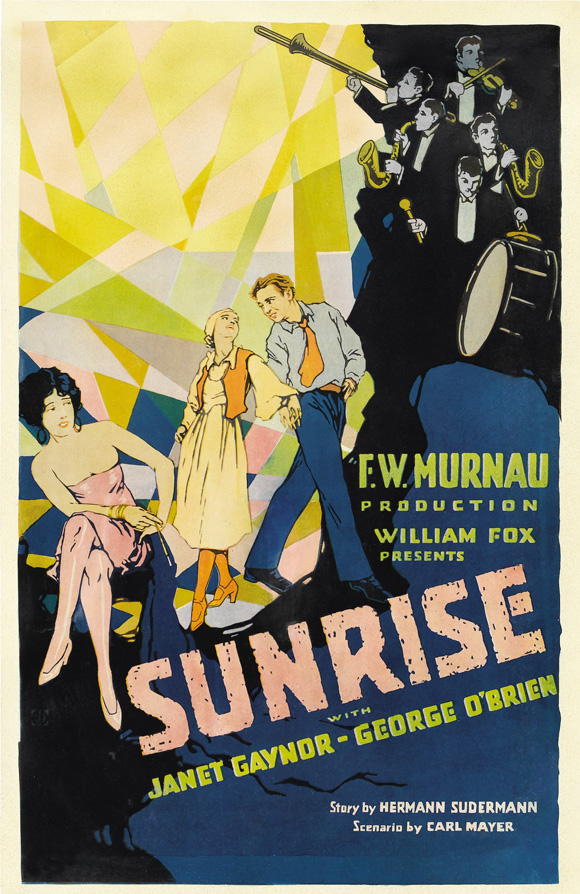
Sunrise: A Song of Two Humans (1927)

Sunrise: A Song of Two Humans (1927)

The visual language of cinema is redefined for Hollywood, with this expressionistic, fairy-tale, silent masterpiece

Director: FW Murnau

Cast: George O’Brien (The Man), Janet Gaynor (The Wife), Margaret Livingston (The City Woman), Bodil Rosing (Maid), J Farrell MacDonald (Photographer), Ralph Sipperly (Barber), Jane Winton (Manicurist), Arthur Housman (Obtrusive gentleman), Eddie Boland (Obliging gentleman)

It’s 1928 and Hollywood has a neat idea. How about an annual awards ceremony toasting the best the industry has produced in the last year? But how on earth do you decide the “best” film? Isn’t comparing war films to arthouse films like comparing apples and oranges? The solution? An award for Outstanding Production and another for Best Unique and Artistic Picture. FW Murnau’s revolutionary silent movie, Sunshine: A Song of Two Humans, was the first and last winner of the latter category: a movie so technically inventive and astonishingly cinematically literate that its influence has seeped into almost every frame of footage shot by the movies ever since.

It would be fair to say Sunrise is less a narrative, more a quiet piece of expressionist art. Its plot is incredibly slim, essentially a fairy tale. In an unspecified country village (presumably in America, but it might as well be from the Brothers Grimm), a married man (George O’Brien) falls in lust with a floozy from the big city (Margaret Livingston). Before he can take the infatuation any further than canoodling by a country lake, he’s got to get rid of his wife (Janet Gaynor). He takes her out on a boat, planning to “get her drowned”, but can’t go through with it. She works out his intent though and runs. He follows her and they wind up in the big city, where a series of encounters helps them remember they actually do love each other. When they return to the village, she briefly seems lost in a genuine boating accident, before a fairy tale ending.

That’s what Sunrise is: a fairy tale. Murnau aimed at universality in his film. Namesless every people and generic, fantastic locations. A dreamlike structure and pace. It would have a monster who becomes a prince, a damsel in distress who saves the day and a wicked “crone” who wants to shatter their happiness. This is all part of turning it into a universal fable. It makes for a beautiful simplicity in narrative that is surprisingly effective if you surrender yourself to it. No one is going to mistake it for Tolstoy or Zola (for all it’s Therese Raquin remix), but you might just mistake it from something from Hans Christian Anderson.

This atmosphere benefits even more from Murnau’s artistry. One of the true founding fathers of cinema, Murnau believed in the power of images. (He died with the advent of sound – somehow that seems sadly fitting for a director whose poetic visual power would have sunk forever under the fixed rigidity of Hollywood movie cameras capturing sound.) Sunrise has fewer intertitles than almost any other silent movie. Most are concentrated in the film’s first 20 minutes, establishing plot and character. Then it relies almost entirely on the power of images.

Sunrise may be a slight story, but cinematically it’s a heavyweight. Today, transitions, flashbacks, montages, superimposed images and vivid panoramas are just part and parcel of film. But many of these techniques date from the work of Murnau, and Hollywood really woke up to them with his first American film. Sunrise is immaculately shot – photographers Charles Rosher and Karl Struss would also win one of those Oscars – a series of beautifully composed images, with a free flowing camera that looks normal today but reinvented the industry back then. Few other films, except maybe Citizen Kane, can claim to be as influential on cinematic technique.

Look at the opening montage of the big city. What seems like a straightforward fixed shot was a triumph of invention. The city was a carefully constructed set, with the shot combining forced perspective of a model train, dwarf extras and intelligent angles and camera positioning to create a vibrant, overhead shot of city life quite unlike anything anyone had seen before. (Rochus Gleis’ Oscar-winning art design is superb.) The city, when we see it in more depth, is a fascinating collection of architectural influences contrasting beautifully with the village’s homespun ruralism.

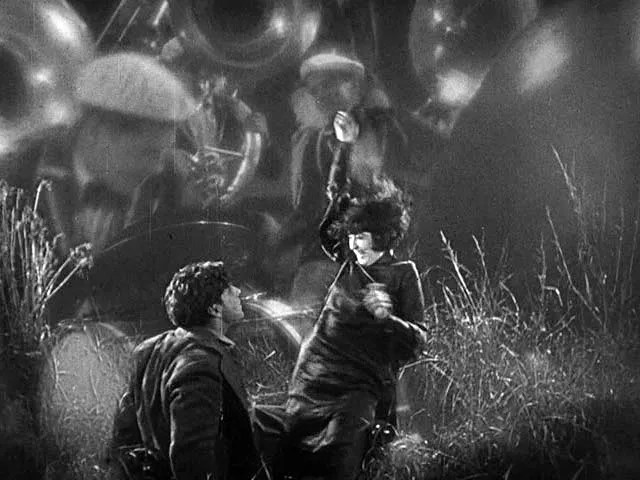
The camerawork and editing is sublime, its use of superimposed images truly extraordinary. As the man meets his fancy woman by a lake, they lie back and look at the stars. Above them, in the night sky, images of the city are imposed that stress its energy, excitement and raw sex appeal (can-can dancers and the like). It’s almost like our lovers are watching an actual movie.

Later the imposition will be reversed: after reconciling in the city, man and wife walk down a busy street – without a cut, as they walk, the street fades away and is replaced by the country fields of their home. In most cases, the imagery throws the character’s inner longings up on the screen for the viewer to digest. It doesn’t stop there. Images at various points show the city woman imposed standing behind the man as he debates killing his wife (again those inner thoughts given visual life). As the man lies back on his bed and stares at his wife, water is superimposed on top of him – it’s clear what he is thinking.

Murnau shoots with an expressionistic, early-morning brilliance, the man working home from his assignation – his slumped back and shoulders (George O’Brien joked his back did most of the work) telling us everything about his mood, in contrast with the brilliance of the surroundings, which we realise he finds as overwhelming as we do (he even gets slightly lost in the frame).

The possible drowning is a masterclass in cutting – moving swiftly from the man’s furrowed brow, as he builds up to what he must do, and the wife’s growing realisation of what he has in mind. A big part of the film’s poetic beauty is how this point of no return is an entrée to a love story. Reunited in the city, the two walk into a church and witness a wedding: the ceremony reminds them of the one they once shared, and Murnau captures the two of them emerging from the church just before the married couple, cementing the rebirth of their marriage. It’s an overwhelmingly optimistic view of love and the durability of the human spirit.

The film’s long second act of hijinks in the city can strain the patience of some. It’s effectively the couple’s second honeymoon, from having their photos taken (a candid moment of genuine love) to dancing at a Moulin Rouge style club where the man captures an escaped pig (yes seriously). It’s dreamlike (the camera work, especially in the club, reflecting this) but undoubtedly low on plot and drama. But it’s charming in its simplicity and in Murnau’s little touches of wit – the couple’s attempt to hide a damaged statue in the photographer’s studio is surprisingly funny.

It all leads us back to the narrowly averted tragedy of the final act as – irony of ironies – the newly reconciled couple are swept up in a genuine storm on the river that nearly sweeps the wife to her death. The man is distraught – so much so his homicidal rage is often overlooked him. Anyone seriously considering bumping his wife off is not well adjusted, and his reaction to the presumed loss of his wife it to attempt to strangle his lover.

This doesn’t intrude on the optimism of the tale and Murnau’s desire to present a fairy-tale like restoration of domestic bliss (after all, darker things happen in Brothers Grimm), all of which ends with an art deco sunset that kisses the frame. O’Brien’s body language may seem crude today, but it perfectly communicates the tempest at the heart of the man’s doubt. Gaynor has a beautiful innocence to her (she won an Oscar as well). Together they play enraptured love without being cloying, and are equally convincing during the rage and accusation.

Murnau, inexplicably, didn’t get an Oscar (not even a nomination), but Sunrise is a testament to his artistic brilliance with cinema. Effectively, he created a new grammar for this language, a superb use of visuals, effects, editing and production to lift a slight story into the realms of high art. Which is what Sunrise is: an arthouse poem, a visual feast that will linger with you long after its runtime has elapsed. Its influence has touched so many parts of cinema, that you might wonder today what all the fuss is about. But everything from your arthouse darling to your favourite Marvel blockbuster owes Sunrise a debt.

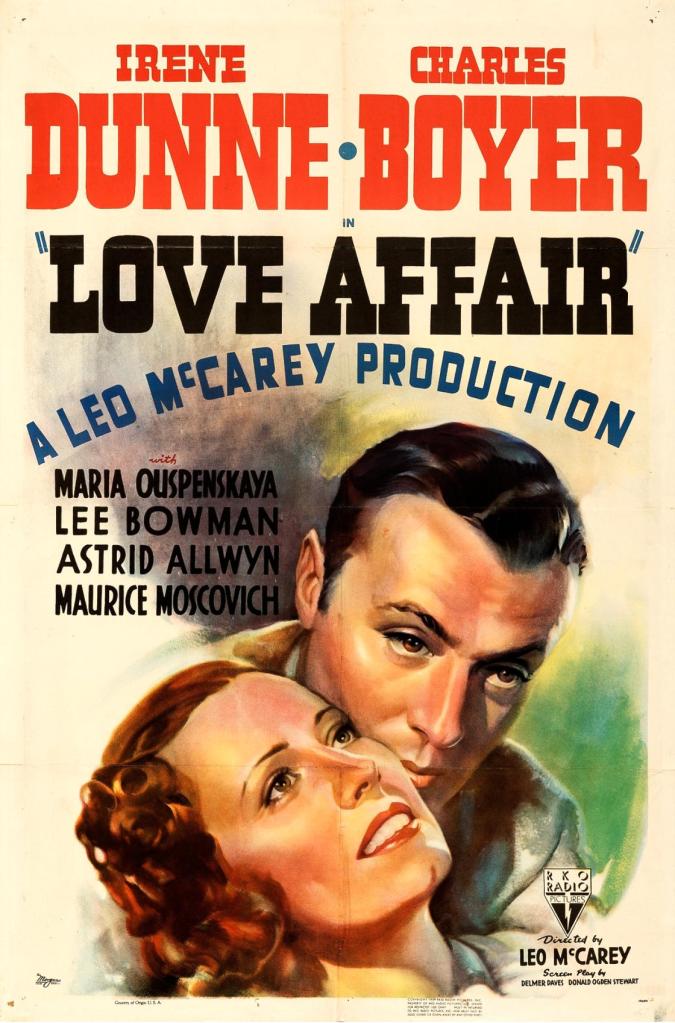
Love Affair (1939)

Love Affair (1939)

Two people in love, separated by circumstance, in this film of two halves: one comedy, one sentimental

Director: Leo McCarey

Cast: Irene Dunne (Terry McKay), Charles Boyer (Michel Marnay), Maria Ouspenskaya (Michel’s Grandmother), Lee Bowman (Kenneth Bradley), Astrid Allwyn (Lois Clark), Maurice Moscovich (Maurice Cobert)

In many ways you could say Love Affair was the turning point in Leo McCarey’s career. For years in silent films and the early talkies he had been one of Hollywood’s leading comedy directors, the quick-witted master of the improvisational pun. But there was a second McCarey: the devout Catholic, concerned about social issues. The McCarey who light-heartedly complained when was given an Oscar for The Awful Truth rather than his heartfelt critique of elderly care, Make Way For Tomorrow. This McCarey increasingly leaned into well-meaning, sentimental dramas.

So why is Love Affair a turning point? Because the first half is a charming, funny, sexy meet-cute: and the second a well-meaning but sentimental love story that pulls two people apart. Those meet-cuters are famous Parisian playboy (he’s basically a gigolo) Michel Marney (Charles Boyer) and nightclub singer Terry McKay (Irene Dunne). They meet on a trans-Atlantic liner and fall in love. Problem is they are both engaged to others (both of them rich), waiting for them in New York. Should they decide to chuck it in and be together, they arrange to meet six months later at the top of the Empire State Building. Come the day, Michel waits – but on the way there, Terry is hit by a car and possibly left paralysed. She doesn’t want to tell him. He thinks she never planned to show up. Will they ever be together?

That car crash is the pivot in a film that feels like two genres surprisingly successfully wedded together. Love Affair is a great idea (so good in fact that McCarey remade it about 20 years later as An Affair to Remember), a romantic story with all the joy and vibrancy of a couple finding each other and falling in love, then the painful sting of tragic circumstances pulling them apart. It manages to be sweetly funny and then more or less manages to land just the right side of sentimental (though, lord, it skates near to the edge).

You go with that more overtly manipulative conclusion though, since the subtle comedic and romantic manipulation of the first half is so well done. McCarey encouraged his actors to improvise: filming started with McCarey sitting at a piano, plinking keys, waiting for inspiration to jazz up the script. It’s an approach many actors found challenging (Cary Grant nearly had a meltdown at first on The Awful Truth). But he found the perfect pairing with Boyer and Dunne.

Of course, Irene Dunne was a veteran. An actress far too overlooked today, Dunne flourished under McCarey’s style. Here she’s gloriously warm, sexy and charming. Terry McKay has a very dry (at times almost slightly smutty) wit; she’s absolutely no fool, but also kind, caring and considerate. Dunne sparkles every time she steps in front of the camera, displaying the sort of comic timing you can’t buy (her teasing glances at Michel during their first meeting, when she accidentally reads a telegram all about his sexual exploits at Lake Como, are to die for). But her face also lights up with a genuine radiance as she finds herself falling in love.

She also sparks wonderfully with Charles Boyer. Another overlooked star of 1930s Hollywood, Boyer was desperate to work with McCarey. He found the improvisational style awakened a relaxed, playful element in his acting that helped make Michel exactly the sort of dreamboat you could imagine falling in love with on a cruise. Boyer was also a superb reactor, his face able to communicate anything from growing interest, to delight and also piety, pain and disappointment. Boyer’s comic timing, like Dunne’s is faultless. Like her, he also effortlessly shifts to drama in the second half, expertly demonstrating the maturity of a playboy into someone generous and understanding.

With these two actors, McCarey couldn’t go too far wrong. Their natural ease with each other makes for wonderful chemistry. They are two people who progress naturally from teasing, to enjoying each other’s company, to realising they enjoy each other’s company way too much. Today, Love Affair can look a little tame – they don’t even kiss (although one shot of crashing waves, cutting to them opening a door on the boat to walk along the deck together, is rather suggestive). But the point is that this is love not an affair (or an affair about love). The feelings they develop for each are genuine and, bless them, they don’t want to corrupt it with behaviour that could compromise them.

Tellingly their love is cemented during a stop off in Madeira, where they visit Michel’s aunt (played by an archly eccentric Maria Ouspenskaya). She welcomes them into her home, bonds with Terry, and Michel shows Terry a far different side to himself than his playboy persona: a thoughtful artist. McCarey even shoots them together (in a beautifully lit scene by photographer Rudolph Maté) in a chapel, kneeling side-by-side at the altar. Could McCarey make the endorsement of their love more clear?

Perhaps he felt he needed to, since the screenplay was controversial. The Hays Code had no intention of allowing a film showing two engaged people walking out on their partners. Perhaps that’s why they needed to be “punished” with that sudden car crash. The second half is less successful: maybe because I find the “I can’t ruin his life by making him look after me in a wheelchair” a little too on the nose. Boyer and Dunne play the hell out of it: Dunne is quietly crushed under a surface of charm and what-will-be-will-be. Boyer tries his best to hide his pain, but still searches for some of what he’s lost in his new career as an artist.

Of course, the truth will out – and it will end happily. But there’s a little too much sentiment in the second half, after the heartfelt romancing of the first. A little too much put-a-brave-face-on-the-pain, a few too many contrivances to maintain the illusion (of course they go to the same play on Christmas Eve!). There are too many sickly sweet scenes of Dunne singing with the kids at the orphanage she’s recuperating at (a ghastly advance warning of McCarey’s tedious Going My Way). But it just about works, because we really care about Terry and Michel. We want them to be together, come what may.

Love Affair can be a mixed bag, but it’s got two wonderful performances for Boyer and Dunne (she was nominated, he was robbed) and McCarey manages to juggle comedy, romance, sweetness and a little touch of sadness. It’s a luscious romantic film, even while you see it manipulating you – and for that, it will always give you a great deal of pleasure.

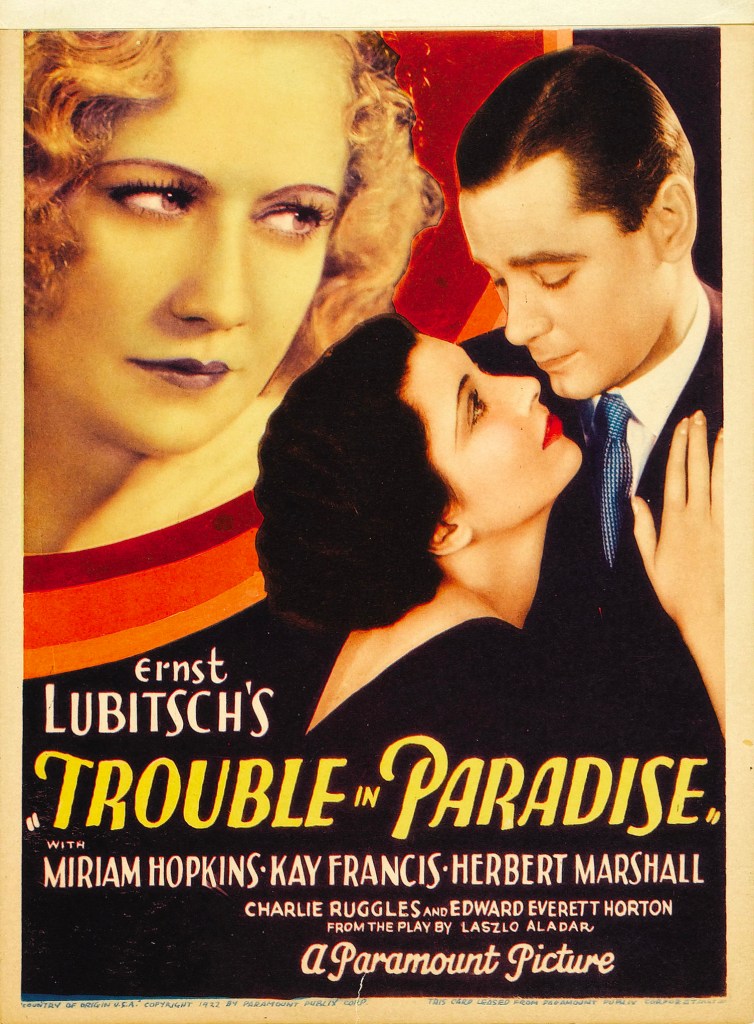
Trouble in Paradise (1932)

Trouble in Paradise (1932)

Stealing, swindling and sex abound in Lubitsch’s masterful – and influential – early Hollywood comedy

Director: Ernst Lubitsch

Cast: Miriam Hopkins (Lily), Kay Francis (Madame Colet), Herbert Marshall (Gaston Monescu), Charles Ruggles (The Major), Edward Everett Horton (Francois Filiba), C. Aubrey Smith (Adolph J Giron), Robert Greig (Jacques, the butler)

“Ah, that Lubitsch touch!” It was a slogan invented by the studio (probably to help turn Lubitsch into a brand – see also “The Master of Suspense!”). No one has ever been quite sure what it is exactly – but you can’t argue it doesn’t exist after watching Trouble in Paradise. A smoother, more charming slice of Wildean wit mixed with saucy naughtiness you couldn’t hope to find. All put together with effortless, cosmopolitan wit by Lubitsch, where every shot and camera movement has been planned for maximum effect. No wonder it’s one of the great early Hollywood comedies.

It’s Vienna and a Baron and a Countess are sitting down to a wonderful dinner together. But both know all is not what it seems: they’re both professional conmen. The Baron is Gaston Monescu (Herbert Marshall), the Countess Lily (Miriam Hopkins) – and they can pick each other’s pockets as easy as breathing. Falling in love, they team up and head for Paris, there to relieve fabulously wealthy Marie Colet (Kay Francis) of some of her firm’s dividends. Gaston becomes Marie’s private secretary – but don’t you know it, he finds himself falling in love with her. Will he go through with the scam? And will Lily give him the choice? The answer is almost certainly not what you think.

Trouble in Paradise is so swift, smooth and gloriously comically inventive that its very existence is enough proof of that Lubitsch touch. The comic business here is so marvellously done, so hugely influential and inventive, that half the comedies existing owe it a debt. Take a look at that first sequence as the two of accuse each other of being thieves and liars, in between passing each other the salt, with consummate politeness then proceed to take part in a pickpocketing game of one-upmanship (purses, pins, watches, garters, you name it!). All shot and directed with a perfect mixture of one-take dryness, matched with perfectly chosen fluid camera movements that accentuate punchlines.

Then there’s that script (“Do you remember the man who walked into the Bank of Constantinople and walked out with the Bank of Constantinople?”). It’s crammed to the gills with sensational bon mots with more than a touch of Wilde or Coward but also a certain emotional truth (“I came here to rob you, but unfortunately I fell in love with you.”). Trouble in Paradise is an intensely suave and sophisticated film that delights in making its characters feel like the nimble-thinking smartie-pants who always know what to say, that you’d love to be, but never quite are.

It’s grist to the mill of Lubitsch, who coats the film in the three things that really makes it work: European sophistication and ruthlessly dry wit; playfully smooth direction; and more than a dollop of sex (and lots of people in this, let’s face it, are pretty impure to say the least). Sex is in fact what’s at the heart of this film: they may be criminals, but Gaston and Lily are at least as interested in getting some of that as anything else and Marie is more than a match for them.

Trouble in Paradise is pre-Code – and far racier than anything we normally expect from Old Hollywood. After all, this is a film that makes a series of perfectly timed punchlines out of a Butler constantly knocking on the wrong bedroom door to find Marie, unaware that Gaston and Marie are “spending time together” elsewhere. Gaston and Lily’s first meeting is capped with a “do not disturb” sign being hung on their bedroom door. The word sex gets bandied about. In case we missed the point, Lubitsch shoots a romantic clinch between Gaston and Marie by focusing the camera on the bed where their shadows are being cast, looking for all the world like they are lying down on it. Later Lubtisch will focus on a clock marching forward in time as we hear Gaston and Marie flirt (and clearly more than just flirt) as the time flows by.

No wonder when the Code was introduced, Trouble in Paradise was slammed on the shelf for years. It’s more than clear that Gaston has it away with Marie and Lily – and, even more scandalously, no one seems to mind that much. There is sexual liberalness to Trouble in Paradise. Marie is happily stringing along two boorishly foolish suitors (Charles Ruggles as a bluff retired major and Edward Everett Horton as a slightly pompous fop, fleeced in the past by Gaston – both very funny). Gaston feels many things, but never ashamed, while Marie seems sexually excited by the idea that he might be a crook. (Their first meeting is a simmering swamp of sexual tension.)

Lubitsch keeps the film flowing so effortlessly, it glides down barely touching the edges. The humour is spot on and perfectly delivered. At one point Lily (still disguised as the Countess at this point) phones her “mother” in front of Gaston. Her conversation is polite and giddy – then Lubitsch cuts to the other end of the call where her crude landlady is prattling bored on the end, and we realise it’s all part of a con. Gags like this have inspired filmmakers for years. You can see the root of half the screwballs that were to come in the love triangle flirtatiousness between Marshall, Francis and Hopkins.

All three of them are excellent. Marshall had few better opportunities to showcase his dry wit and sex appeal (he was so often cast as stuffy, dull husbands), and he’s the ideal arch gentleman here, with a twinkle in his eye at his daring smartness and very sexy in his confidence. (The constant shots of Gaston running up and down stairs is, in itself, a gag – Marshall had only one leg and all that running was a body double). Far from a rube, Kay Francis makes Marie a sexually curious, determined and out-going woman who knows what she wants and happily plays the game to get it. Miriam Hopkins has a punchier feistiness as a woman who can shift personae with effortless ease.

Trouble in Paradise – that Paradise being Gaston and Lily’s natural partnership – slides so smoothly from set-piece to set-piece, each of them shot with superbly smooth camera movements that perfectly accentuate their comic impact, that it continues to offer huge entertainment. Brilliantly acted, packed with superb set-pieces, it benefits above all from that glorious Lubitsch touch. Sophisticated, amoral, naughty but with a touch of heart among all the lying and cheating, it’s very funny and very cheeky and all about sex and stealing. It’s a landmark film.

Twentieth Century (1934)

Twentieth Century (1934)

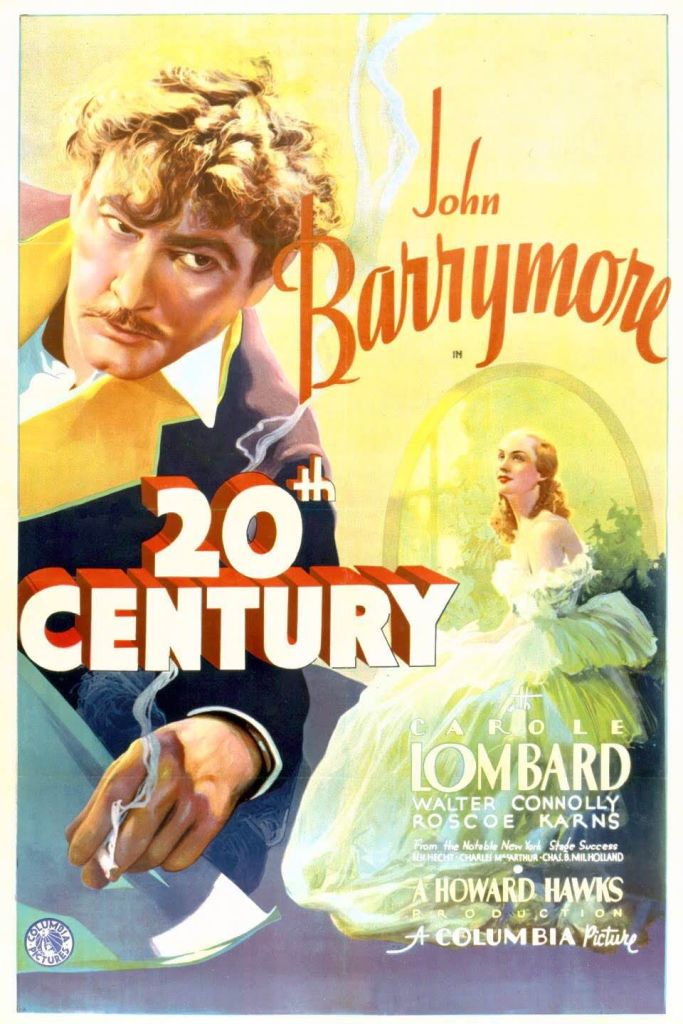
A producer and his muse bicker, feud and fall in love in the theatre in this funny proto-screwball

Director: Howard Hawks

Cast: John Barrymore (Oscar Jaffe), Carole Lombard (Lily Garland), Walter Connolly (Oliver Webb), Roscoe Karns (Owen O’Malley), Ralph Forbes (George Smith), Charles Lane (Max Jacobs), Etienne Girardot (Mathew J Clark), Dale Fuller (Sadie), Edgar Kennedy (Oscar McGonigle)

Oscar Jaffe (John Barrymore) is the biggest showman on Broadway. He can take the rawest stone and polish it into the brightest diamond. Lily Garland (Carole Lombard) is just such a stone, a lingerie model turned superstar of stage and screen. Trouble is, Jaffe is also a control freak who turns mentoring into manipulation. After three years Lily leaves – and Jaffe can’t get a hit without her. Smuggling his way onto the luxurious 20th Century Ltd express train from Chicago to New York, can Jaffe use the journey to win Lily back?

Hawks’ comedy is, along with It Happened One Night, one of the prototype screwball comedies. In some ways its even the best model. It has all the elements you expect: lightening fast dialogue, farcical set-ups, mistaken identities, ever more overblown rows, a dull second banana as the ‘new’ love interest, ludicrous misunderstandings and its heart a mismatched couple who get more of a thrill from fighting each other than they do from loving anyone else. You can see the roots for half the comedies that Hollywood produced over the next ten years here.

The film also captures the greatest screen performance by the leading actor of the American stage in the early years of the 20th century, John Barrymore. Barrymore’s performance is a delight –something near a self-parody – a larger-than-life role of bombast and wild-eyed eccentricity that should feel ridiculously over-blown, but actually really works. Jaffe is a force-of-nature, and that’s the performance Barrymore gives. He hurls himself into the fast-paced dialogue, delights in the physical comedy (from prat falls to swooning fits) and he gives the film most of its understanding of the mechanics of theatre (Hawks famously said he knew nothing about it). It’s a delightful, hilarious comic performance.

He’s well matched by a star-making turn from Carole Lombard, in one of her first roles. Initially overawed by working with Barrymore, Hawks coached Lombard to worry less about “acting” and to focus more on bringing her natural sharp-edged comedic instincts to the film. Something she does to huge success: you can feel the performance getting larger, wilder and more hysterically funny as the film goes on. By the time she’s half playfully, half furiously kicking at Barrymore’s stomach during one late argument in a train compartment, we’ve seen a brilliant comic actress find her stride. Lily goes from a talentless ingenue to a grand dame of stage and screen – but never loses (only conceals) her chippy rumbustiousness nature.

It’s all wrapped up in a neat parody of the artificial, overblown, performative nature of acting and theatrical types. These two are always putting on a show: either for themselves or for each other. Everything is filtered through their understanding of scripts and stories and their trade has made them artificial and unnatural people. If they feel larger-than-life, its because small intimacies don’t shift seats in the theatre. And the theatre is of course the real calling of an actor – not those shabby temptations of the big screen.

Not that the theatre is really that different. The film is book-ended by rehearsals for two almost identical Jaffe productions. Both of them are feeble Southern Belle dramas, with shock murders, deferential servants and stuffed with secrets and lies and plot reveals which could have been thrown together by chimps with typewriters. Between these, Jaffe stages a ghastly sounding Joan of Arc play and flirts with the most tasteless Life of Jesus play you could imagine (with an all-singing, all-dancing role for Lily as Mary). But then art seems to be less important than exhibitionism to these guys.

It’s not as if Jaffe’s style is designed to explore depth of character with his actors. For all his fine words in rehearsals, Jaffe is soon drawing chalk lines on the floor to tell Lily exactly where to stand on every line (the floor soon resembles a spider’s web of crossed lines and numbers) and finally gets the scream he wants from her in a scene by sticking a pin in her derriere. Lily is both infuriated and delighted by these methods – she keeps the pin as a treasured totem for years – but it’s clear acting is really an excuse for all the attention seeking screaming and shouting that they do anyway.

Twentieth Century makes for a neat little satire on the artificial nature of some acting, but at heart its mostly a very fast-paced, witty film that bottles two cracker-jack performers who engage in a game of one-up-manship to see who can deliver the wildest, hammiest and most entertaining line readings. Hawks directs with a confident assurance and the train-based finale (it does take nearly half the film to board the eponymous train) is a perfectly staged farcical comedy of entrances, exits and misunderstandings. The film itself is as theatrical as the personalities of its lead characters – and all the more delightful for it.

Smiles of a Summer Night (1955)

Smiles of a Summer Night (1955)

Sexual and romantic comeuppances abound in Bergman’s landmark comedy of manners

Director: Ingmar Bergman

Cast: Eva Dahlbeck (Desirée Armfeldt), Gunnar Björnstrand (Fredrik Egerman), Ulla Jacobsson (Anne Egerman), Björn Bjelfvenstam (Henrik Egerman), Harriet Andersson (Petra), Margit Carlqvist (Countess Charlotte Malcolm), Jarl Kulle (Count Carl-Magnus Malcolm), Åke Fridell (Frid), Naima Wifstrand (Mrs. Armfeldt), Jullan Kindahl (Beata), Gull Natorp (Malla), Gunnar Nielsen (Niklas), Birgitta Valberg (Actress), Bibi Andersson (Actress)

An Ingmar Bergman comedy? Surely a contradiction in terms, right? Like Da Vinci spraypainting graffiti or Austen writing a jingle. The Swedish master is near synonymous with glacial, Scandi-misery, not material that will be transformed into a Sondheim musical. But yet: Smiles of a Summer Night was the big smash-hit that guaranteed Bergman lifetime artistic independence (he followed it with the one-two punch of The Seventh Seal and Wild Strawberries that made him untouchable as Sweden’s premiere Artist). A Bergman comedy was never going to be a Ray Cooney farce, and while there are pratfalls and farce here, this film is an exploration of manners with more than hint of Shaw and Wilde, mixed with echoes of filmic greats like Ophüls and Renoir.

Set in turn-of-the-last-century Sweden, the film follows the romantic and sexual entanglements of a series of would-be couples. Fredrik Egerman (Gunnar Björnstrand) is a respected middle-aged solicitor, who hasn’t consummated his two-year marriage with 19-year old Anne (Ulla Jacobssen). This is partly due to her anxiety about sex. But really both of them are in love with someone else. Fredrik with his old mistress, celebrated actress Desirée Armfeldt (Eva Dahlbeck). Anne with Fredrik’s young son Henrik (Björn Bjelfvenstam) who is also in love with her. Henrik is flirting with house maid Petra (Harriet Andersson), who doesn’t seem averse to a relationship with any member of the Egerman family. Desirée is having an affair with Count Malcolm (Jarl Kulle), whose wife Charlotte (Margit Carlqvist) is considering infidelities of her own just to get his attention.

All of these potential couples merge, swop and work out their feelings overnight at the country house of Desirée’s mother (Naima Wifstrand) during one of the longest days of the year, where the sun hardly sets and people traditionally stay up until dawn. There is more than a touch of the theatrical about all of this – particularly with Bergman’s arch, intelligent dialogue – with the country house as a setting beautifully formal and strangely other-wordly. You can sense the theatrical influences here – Bergman had just directed a production of The Merry Widow – with the characters riffing with Wildean wit and insight, in typically Shavian set-ups.

What we get is a high comedy of manners, that’s also coated in a rich, insightful poetry that gives it a great deal of meaning. There is farce here – including a room with a switch that drags a bed from a neighbouring room (with occupant!) into it. There are several funny lines – many from Jarl Kulle’s hilarious heartless count, who doesn’t care who flirts with his wife until someone actually takes him at his word. There are pratfalls – Henrik has a superbly bleak bit of pure farce near the end that tips into erotic joy (“If the world is full of sin, then I want to sin”). The pompous Fredrik is constantly humiliated, from falling in a puddle to being thrown out of Desirée’s apartment in nothing but a borrowed nightshirt and a pair of slippers. There is no end of sexual suggestiveness, from Harriet Andersson’s gorgeously flirtatious maid (“Hurrah for vice!”) to hints about Mrs Armfeldt’s past (“I was given this estate for promising not to write my memoirs”).

Being Bergman though, this is the sort of romantic comedy that ends with a duelling game of Russian roulette and where we learn as much about human nature as we enjoy the scripted bon mots. Namely, that people – especially men – never seem to know what they want. Fredrik spends a huge chunk of the film persuading himself he is deeply in lust with Anne – although its pretty clear that he’s barely interested. Marriage and relationships in this case are gilded cages that lock people into things they barely want. They don’t even lend themselves to communication – the Malcolm’s marriage doesn’t seem to be based on any communication at all.

So, no wonder it needs a bit of Midsummer Night’s Dream style madness to try and sort it all out. Before that short night, the characters all down a particularly intoxicating wine that they are warned will bring down all their restraining impulses (whether that’s true or not, it certainly does). It’s part of a plot by Desirée – a superb Eva Dahlbeck, serene and glamourous, but also a battle-axe force-of-nature who knows exactly what she wants and how to get it – to resolve all complications for the (her) best, carried out in partnership with Caroline, a woman she’s far to savvy to let something petty like sleeping with her husband get in the way of useful friendship.

Contrasted with all these slightly restrained middle-class people who struggle to understand or express their real feelings, or (like the Egermans) seem to feel a slight guilt at sex anyway, we have the more earthy and free Petra, radiantly played by Harriet Andersson. Andersson gives Petra a flirtatiousness that sees her go from unbuttoning her top to attempt to seduce Henrik, to rolling in a bed with Anna. While the upper classes engage in a formal dance, she seizes life and opportunities – and ends up well-matched with the equally down-to-earth chauffeur Frid (an exuberant Åke Fridell), who like her doesn’t muck around when there is a chance to grab a bit of joy.

Not like the Egermans. Fredrik – a beautifully reserved Gunnar Björnstrand – should want Anna, but all the starring at her photos in the world won’t stop him muttering Desirée’s name while he sleeps. Not that it will allow him to try and rekindle his past relationship with her. Anna (a luminous Ulla Jacobsson), nervous about sex or rather nervous about her feelings with Hendrik, channels her feelings into jealous criticisms of his clothing after catching him naively succumbing to Petra’s flirting. Henrik (Björn Bjelfvenstam, very funny in his bemused wetness) is so inept in his romance of either woman, he barely seems to know what he wants.

Perhaps Desirée recognises all this is a bit of prime, Theatrical nonsense and tries to solve it all accordingly. After all her whole life is the theatre – from treading the boards, to singing and dancing while walking late at night with Fredrik. And it was for Bergman – that and film, which is why perhaps the film has echoes of Jean Renoir’s Le Regle de Jue with its country house romantic intrigues and Max Ophüls partner swopping La Ronde. And Smiles of a Summer Night is a beautifully mounted film, shot with a luscious, poetic beauty by Gunnar Fischer.

The whole film is a complex dance – you can see why it was ripe for Sondheim – that also explores profoundly the romantic and gender clashes between men and women. Men who are in a position to take what they want, but have no idea what that is. Women who know far more, but must be smart about how to achieve their goal – or like Petra willing to embrace a wild abandon to live in the moment. It may be a theatrical, drawing-room, sex comedy of sorts: but it’s also a film about humanity and people’s fates, all under the eyes the suggestively supernatural power of a smiling summer night. Perhaps its not such a contradiction of Bergman terms after all.