Category: Romantic comedy

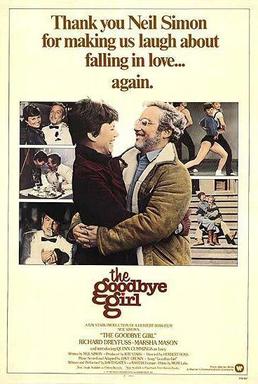
The Goodbye Girl (1977)

The Goodbye Girl (1977)

Some funny lines isn’t quite enough for this romantic comedy to work as well as it should

Director: Herbert Ross

Cast: Richard Dreyfuss (Elliot Garfield), Marsha Mason (Paula McFadden), Quinn Cummings (Lucy McFadden), Paul Benedict (Mark Bodine), Barbara Rhoades (Donna Douglas), Nicol Williamson (Oliver Fry)

Working as a performer sucks. There’s no money and who knows when the next job is round the corner? It’s even tougher when you are forever unlucky in love. That’s the case for semi-retired dancer Paula McFadden (Marsha Mason). She’s been jilted twice by actors who disappear for a big break somewhere else, leaving only a cursory apology behind. It makes being a single mother to precocious-but-vulnerable ten-year-old Lucy (Quinn Cummings) even harder. Harder again is that her recent awful boyfriend, as a parting gift, sublet their apartment without her knowledge to Elliot Garfield (Richard Dreyfuss), an actor as neurotic as Paula, arriving in New York for his big break. Paula refuses to leave her home and the two kick off a territorial feud, which settles into a truce and a flat share. But could it lead to anything else?

It probably won’t be a surprise to say yes it does, in this sharply written film from Neil Simon, crammed with fast-paced, theatrical, gag-filled dialogue which keeps the film’s pace up without really converting it into something real. The main problem with The Goodbye Girl is that it’s hard to believe in, or really care for, either of its two lead character. I don’t think it’s an exaggeration to say both of them would be incredibly hard work to live with. After all, they can frequently be rather trying just to watch. Simon makes them both brittle, neurotic, high-strung and prone to performative bursts of euphoria and rage. Both can swing on a six-pence between these. It’s probably meant to make them the perfect match, like a feuding Bogart (who Garfield impersonates at one point) and Bacall, but after a while just starts to wear you down. You want to give both of them a bit of a shake and say “pull yourself together!”

The ability to stick with the film revolves around how charming you find both performers. Here, Richard Dreyfuss has the definite advantage. Coming off a hot-streak that had seen almost every film he had made turn into a smash hit, Dreyfuss’ performance made him (at 29) the youngest winner of the Best Actor Oscar. A late replacement for a fired Robert De Niro (can you even begin to imagine De Niro’s deadpan intensity working here?), the part is a perfect match for Dreyfuss’ youthful, madcap energy. He seizes on the rat-a-tat dialogue, embraces Garfield’s zany love for New Agey thinking (yoga, guitar and sleeping “buffo”) and bounces around the film as likely to make monkey noises while euphorically chinning up on a door frame as he is to play sweet imagination games with young Lucy. He brings a lot of charm to a highly strung, difficult man, uncovering a lot of his essential decency and kindness.

He actually settles more into the difficult balance than Marsha Mason, the person (Simon’s wife) who the film was written for. Mason never really manages to find the softness and likability in this role. It’s not entirely her fault: while the point is that Paula is a woman with serious trust issues, the film never gives her a moment of calmness or reflection to open up about this. Instead, it takes a lazier route of having this turn her into an abrasive comic character, the sort of person who responds to a “morning after” with a furious expectation of betrayal. Mason never quite manages to find a softness or likeability under this prickly defensiveness. Interestingly, for all the project was written for her, she has few of the truly funny lines and is effectively the obstacle that must be fixed rather than having the more engaging role of charming disrupter.

To be honest there is not a lot of chemistry between the two. Simon so enjoys the competitive dialogue feuding over territory, bills and who will have what room and when, that he rather forgets to  show them actually falling in love. In fact, he ends up relying on the age-old formula of a precocious, New York Times reading child being the bridge to bring them together. Quinn Cummings is rather good as the sort of kid who only exists in the movies, as adept with the witty retort as the adults. But between Elliot and Paula, the romance always feels a bit too inevitable rather than natural, the eventual thawing occurring swiftly rather than feeling it has developed naturally and gently.

It’s part of the slightly formulaic nature of The Goodbye Girl. It’s a highly safe film, with a very conventional romantic storyline, that bubbles along to a happy ending. You can feel the box-ticking from scene-after-scene, just as you can feel the inevitability of its happy ending. It’s also overly theatrical, feels constrained by its location and never quite light enough on its feet. There are a few too many stand-up rows around the apartment block (their poor neighbours) and Herbert Ross’ direction struggles as much as Simon’s script to give us a reason to really root for this couple.

There are though some decent digs at the working life in the arts. Paula, trying to get back into the dancing game, is hideously off-the-pace and takes a job as an enthusiastic glamour-girl flogging Japanese cars at trade show. Elliot is forced to fall back a doorman gig at a strip club. It’s a tough old trade, especially as Elliot’s big break in New York falls apart after he is forced by a pretentious, talentless director to perform Richard III as a limp-wristed, 1970s stereotype of a gay man, mincing around and lisping his lines to the ridicule and disgust of audiences and critics. This comic highlight feels a little awkward now (the joke is the stereotyped gay behaviour, rather than the appalling idea, making it a little uncomfortable to watch at times, rather as if Elliot was being made to play it in black face).

The Goodbye Girl just isn’t quite charming or likeable enough and its characters are never people we really end up warming to or rooting for. Its sharp dialogue ends up making them feel less like real people and more like theatrical characters, bouncing off each other for effect. Dreyfuss comes off best here, but Ross’ direction is uninspired, its romantic coupling never really convincing and it tends to rather overstay its welcome.

La Ronde (1950)

La Ronde (1950)

Ophüls masterful film is a cheeky end-of-pier comedy in smart clothes and subtle musing on filmmaking

Director: Max Ophüls

Cast: Anton Walbrook (Master of Ceremonies), Simone Signoret (Léocadie, the Prostitute), Serge Reggiani (Franz, the Soldier), Simone Simon (Marie, the Chambermaid), Daniel Gélin (Alfred, the Young Man), Danielle Darrieux (Emma Breitkopf, the Married Woman), Fernand Gravey (Charles Breitkopf, the Husband), Odette Joyeux (Anna, the Young Woman), Jean-Louis Barrault (Robert Kuhlenkampf, the Poet), Isa Miranda (Charlotte, the Actress), Gérard Philipe (the Count)

La Ronde is the sort of film many would describe as elegant and sophisticated, with its Edwardian Viennese setting, gorgeously expansive costumes and luxuriant sets. Which is perhaps part of Max Ophüls’ joke: because, in many ways, La Ronde is a sublimely naughty end-of-the-pier show where a suave Master of Ceremies (a gloriously arch Anton Walbrook, standing in for Ophüls himself), manipulates events and people to present a chain of sexual encounters that eventually loop back round through the partners to the prostitute (Simeone Signoret) who started it all. Only of course she didn’t start it, since Walbrook’s MC instructed her exactly which soldier she was to invite for a romantic knee-trembler. La Ronde is a sex comedy of manners – but it’s also an intriguing commentary on the act of film-making.

Walbrook’s MC is essentially the film’s director. He all but tells us this, as Ophüls camera (in one of the director’s signature long, roving camera moves) tracks him walking in evening garb in front of what looks suspiciously like a painted backdrop… and then is immediately revealed to indeed be one as Walbrook guides us past a film camera onto another set, changes his clothes and begins handing out instruction to actors. Over the course of the film, Walbrook will guide characters between sets (through a blatant back-stage area), take on a series of small roles to directly intercede in the action and even snip out the film of La Ronde’s most smutty part. He’ll even cue the sun to rise. Walbrook’s archly artificial performance is crammed with assurance, charm and a supremely entertaining streak of naughtiness: for what is a film director but a sort of enthusiastic child who enjoys playing out his stories for us.

It makes sense that La Ronde takes place in a curiously artificial world, that often seems to be only populated by whichever pair of lovers Walbrook happens to have introduced. Its design echoes the circular narrative of the piece. Ophüls camera frequently moves through circular tracking shots, while the frame is stuffed with circles. From the merry-go-round the MC rides on, circles are everywhere: courtyards and rooms are circular, stair-cases and walkways roll round on themselves, characters are framed through chandeliers or circular gaps in ormolu clocks. The set seems to loop around as much as the story does, characters being forced into rotation, as if they were constantly riding the merry-go-round (which indeed we see, at one point, kitted out with a whole dinner service) not in control of their own fate but driven forward by endless momentum.

It’s an endless momentum that crashes only once, the MC’s roundabout breaking down when a young lover suffers from a bout of impotence. It’s telling that, during this sequence, we get the closest we get to an adult conversation between two lovers, Daniel Gélin’s eager-to-please young man and the relaxed worldliness of Danielle Darrieux’s married woman. Just as it’s telling that the only encounter not punctuated by sex, but instead by an earnest conversation that there are more important things in a marriage than the buzz of passion, is between Darrieux and Fernand Gravey’s fusty but strangely vulnerable Husband. Aside from that, these encounters have a constant frission of desire beneath them, only rarely punctuated by more complex emotions.

In fact, there is something very stereotypically French about a film that essentially says a constant parade of sexual encounters between willing partners is perfectly harmless, so long as eyes are open and honesty prevails. It’s also striking how, from encounter-to-encounter, characters switch from seduced to seducer.  Simone Simon’s Chambermaid goes from the arms of Serge Reggiani’s enthusiastic soldier (whose interest in her declines almost immediately after the deed), to shamelessly provoking the lust of Gélin’s young man who then immediately, enthusiastically, courts Darrieux. Odette Joyeux coquettishly plays along with Gravey’s extra-marital tumble and then finds herself swept up with Barrault’s poet who is putty in the hands of Miranda’s actress.

It all eventually loops us back round to Simone Signoret’s prostitute: and if there is anything in La Ronde about the cost of love, it seems fitting it should be connected to the loneliness of the only person to whom this is a professional obligation rather than a choice. Signoret makes the woman surprisingly melancholy and regretful, more desperate perhaps than anyone else for a taste of genuine connection: be it from Reggiani’s soldier (to whom she offers a free romantic encounter, which he only accepts so long as it doesn’t involve a ten minute walk to her apartment) or later from Philipe’s count, where she seems not even surprised that he awakens claiming to not remember a thing about the night before. La Ronde bookends a frequently light, sexy, cheeky film with its most tragic character (another sign of Signoret’s skill at pained neglect).

Aside from this, it’s a surprisingly light, playful and cheeky confection – one which relies on its impact from the masterfully graceful filming it receives from Ophüls, at the top of his game here. No point is made too forcefully, every scene smoothly but relentlessly builds towards a comic highlight, each shot is framed to perfection, from the gliding tracking shots to the Dutch angles and circulatory framing. This is a director’s film like few others: so, its immensely fitting it should, with Walbrook’s character, effectively make the director the key character, delightedly telling us every part of his design, guiding our eyes where to look and manipulating and positioning the other characters so they add to our enjoyment. There are few films quite like La Ronde in that all this is done with an astonishing lightness of touch. Nothing here is to be taken too seriously, or to be hammered home too hard. Instead, it’s a whimsical naughty story intended to leave you with a grin on your face when you recount it to friends.

Hold Back the Dawn (1941)

Hold Back the Dawn (1941)

A potentially cynical drama becomes a sweet romance, with three excellent lead performances

Director: Mitchell Leisen

Cast: Charles Boyer (Georges Iscovescu), Olivia de Havilland (Emmy Brown), Paulette Goddard (Antia Dixon), Victor Francen (Professor van der Luecken), Walter Abel (Inspector Hummock), Curt Bois (Bonbois), Rosemary DeCamp (Berta Kurz), Eric Feldary (Josef Kurz), Nestor Paiva (Fred Flores)

Refugees flock at the USA-Mexican border, desperate to squeeze into the Land of the Free, only to meet with a stringent border control and tight rules on immigration quotas. No, it’s not a story from today – it’s from the 1940s, with Mexico awash with refugees from Europe, fleeing Hitler. But the USA only has a certain quota of refugees it will accept from each country – and Romanian Georges Iscovescu (Charles Boyer) finds he’s got no less than a five to eight year wait before his quota number will come up. His ex-flame Anita (Paulette Goddard) suggests there might be a way around this: if Georges can get married to an American citizen, he will fly through the border on a green card. Georges sets his eye on spinsterish teacher Emmy Brown (Olivia de Havilland) marrying her in a whirlwind romance – only to find feelings of guilt and growing affection for Emmy making his plan more difficult.

Hold Back the Dawn is well-assembled, well-paced mix of romance and black-comedy which pulls its jet-black punches in favour of a more conventional happy ending. Perhaps that’s why it was the last Billy Wilder script (working with regular collaborator Charles Brackett) he didn’t direct himself. You can imagine a director as prone to the cynical as Wilder, may not have settled quite as happily for the more optimistic and reassuring film Hold Back the Dawn becomes. Wilder was also unhappy with how he felt the film pruned back the more cutting political criticism of America’s immigration policy. As a refugee from Hitler himself, Wilder knew of what he was talking about.

However, that’s not to say Hold Back the Dawn isn’t awash with Wilder and Brackett’s patented mix of waspish character comedy and sharp dialogue tinted with more than a touch of arch cynicism. Mitchell Leisen’s success here, is to smooth the wheels to allow enough of this mix of black and absurdist humour to carry through a film you feel the studio has attempted to shoe-horn into being a conventional ‘love conquers all’ narrative (not least with its ending, which has the look and feel of a mix of hurried re-shoots and re-purposed footage to create a late upbeat ending, filmed after de Havilland was no longer available from her loan from Warner Brothers).

Hold Back the Dawn doesn’t shirk on the vicious, oppressive cycle of being stuck in a holding pattern waiting to be allowed into the US. Georges only gains his room in the overstuffed hotel because the previous tenant hangs himself (the manager matter-of-factly says he’ll have the room ready shortly). There is quite a lot of both dark humour (from Georges and Anita’s nakedly opportunist cadism) to little touches of high farce (a pregnant woman gaming the system to give birth on US soil) and the faintly surreal (a would-be refugee who might just be a descendant of honorary US citizen Lafayette). Throughout most of Hold Back the Dawn this never feels out of keeping with the slow-burning romance between Georges and Emmy.

A lot of this is also due to Charles Boyer’s highly successful performance in the lead role. Few actors were as skilled at mixing suave European class and louche rotter-ness than Boyer, and Georges is a gift of a part. A playboy stuck in a boring, dead-end purgatory of a town (one he aimlessly walks around time and time again to kill the hours), Boyer makes Georges believable charm personified – certainly enough to back the film’s implication he keeps himself afloat as a gigolo for tourists. Boyer’s arch voiceover relays every-step of the nakedly self-centred plan he initiates to squirm his way over the border. His performance is full of charm, tender shyness and love-struck adoration to Emmy, punctured throughout by Boyer’s canny side-eye to check on the effect of his shameless lies (there is a glorious moment when Boyer checks himself and cocks an eye when walking down a street, to make sure Emmy is following him).

The character works though because Boyer is a master at balancing this ruthless, self-serving charm with a general decency just below the surface that, no matter how hard he tries, he can never quite dampen down. It excels in the film’s middle act as the couple’s ‘spontaneous’ (so Georges can escape the notice of Walter Abel’s excellently shrewd immigration inspector) honeymoon in Mexico. Boyer brilliantly demonstrates through the slightest of vocal inflections and subtle shifts in body language (there is a point during a village fiesta where his face lights up with a genuine smile the like of which we have never seen before) that make us totally believe this is a man who, much to his surprise, is actually falling in love.

It helps with this that he shares scenes with such a winning presence as Olivia de Havilland as Emmy. Oscar-nominated, de Havilland takes a role (a spinsterish frump, who has never been loved) that could be ridiculous and makes it utterly and completely real. Throughout Georges initially cynical courting, there is a little sense of doubt throughout in de Havilland’s manner (she knows instant love is too good to be true), but such is her loneliness we can see and feel her willing herself into belief. As she does so, de Havilland lets the shy Emmy flourish into a woman of greater confidence, wit and burgeoning sexual desire (hilariously, the increasingly shamed Georges begins to event injuries to put off the consummation of this marriage). De Havilland makes Emmy a living, breathing person, someone miles away from the joke she is set up as initially: instead she is a genuine, true-hearted, increasingly brave woman whose decency and sense of warmth we grow to love as much as Georges does.

She makes an excellent contrast with Paulette Goddard’s ruthlessly amoral Anita. In one of her finest performances outside of her work with Chaplin, Goddard makes Anita utterly ruthless in seeking out what she wants and full of a hilariously honesty about her willingness to use anyone and anything to get it. She’s Georges even darker reflection, Goddard’s dialogue awash with brutal firecracker one-liners. But even she is capable at points of depth, a late act of petty cruelty awakening in her underlying feelings of sympathy and empathy that seem to surprise even her. It’s a lovely performance of darkly comedic ruthlessness.

These three leads all elevate a film that at times compromises on its vision of the harshness of the system these people are all stuck in. Hold Back the Dawn doesn’t want to make a statement as such – it wants to offer a more reassuring vision of hope and decency. This it does well: the film is even built around Georges pitching it as a possible film project to the actual Mitchell Leisen (effectively playing himself, on set shooting a real film with the real Veronica Lake and Brian Donlevy). After a start that suggests something darker and more dangerous, it ends as a comforting and safe picture – but one that works extremely well.

Moonstruck (1987)

Moonstruck (1987)

Charmingly romantic comedy with little touches of Shakespeare in its celebration of family love

Director: Norman Jewison

Cast: Cher (Loretta Castorini), Nicolas Cage (Ronny Cammareri), Olympia Dukakis (Rose Castorini), Vincent Gardenia (Cosmo Castorini), Danny Aiello (Johnny Cammareri), Julie Bovasso (Rita Cappomagi), Louis Goss (Raymond Cappomagi), John Mahoney (Perry), Feodor Chaliapin (Old man), Antia Gilette (Mona)

People do strange things all the time. We don’t always understand why, so why not say it’s a midsummer madness caused by the moon. Moonstruck seizes that old superstition of blaming the position of our nearest celestial neighbour for sending us all a bit barmy, and weaves it into a film that’s both a playfully eccentric romantic comedy and a sweet tribute to the power of a family’s loving bonds. John Patrick Shanley’s (Oscar-winning) script pulls these strings together so well, it’s not a surprise it’s the sort of a film that frequently ends up on people’s ‘favourite film’ lists.

Loretta Castorini (Cher) is an Italian-American widow, living with her parents, who is starting to wonder if she is cursed with spinsterhood. As the moon reaches its bright zenith, she agrees to marry her terminally dull, utterly unromantic boyfriend Johnny (Danny Aiello), because anything’s better than nothing (despite the fact he seems to see her as much a substitute for his mother as a romantic partner). She agrees to mend the bad blood between him and his younger brother Ronny (Nicolas Cage). Ronny is a picture-postcard of an eccentric, a one-handed baker (blaming his brother for that) prone to melodramatic fits of rage and outbursts of Operatic passion. Loretta and Ronny – blame that moon – are instantly smitten with each other. Who is going to sort that out?

It all pulls together into a sort of modern fairy tale, where everything has an air of gently heightened reality. It’s also the sort of thing that wouldn’t seem out-of-place in Shakespeare’s lightest comedies: people fall in love on a sixpence, feuds are fixed in minutes, cheating spouses instantly return to their wives and jilted suitors smile and join in the celebratory drinks. In this world of theatrical, fairy-tale comedy, it’s quite easy to buy that an exceptionally bright moon is sending everyone a little bit crazy (like Shakespeare’s Dream lovers in the forests outside Athens, going through one crazy doped-up night before settling suddenly into two loving couples) and eventually you just run with it in Jewison’s charming film.

With a script full of witty lines and theatrical bits of bombast (which Cage in particular, inevitably, rips through), Moonstruck is also one of those endlessly charming, relaxing and pleasant films where fundamentally everyone is at-heart decent. Sure, mistakes are made throughout; harsh words and truths are spoken, but within a film where everyone cares for each other. Ronny may (rather unjustly) blame his brother for briefly distracting him at work into losing his hand, but deep down he’s just waiting for an excuse to forgive his brother. Loretta may have a prickly relationship with her mother, but it’s roots are really firm and based around both protecting the other from knowledge of the knee-jerk philandering of her father. It takes the influence of the moon to suddenly spark these people into a few days of crazy behavior that changes their lives and leads them to re-address their relationships with each other.

It also makes Loretta, in an Oscar-winning comedic turn from Cher, face up to the fears about where her life is going. In a performance that is remarkably unglamourous – Cher plays every inch of the reliable window settling into spinsterhood and the film never falsely ‘transforms’ her – Cher invests Loretta with a deep fear and resignation below her surface of reliability and unflappability. Loretta is so used to being practical and dependable, organising the lives of everyone (even patiently instructing the confused Johnny on how to propose marriage), part of her romantic relief with Ronny is being able to let rip a more sensual and vulnerable part of herself. Cher lets the mask slip, as if having had love potion dripped into her eyes, letting her express her deeper feelings.

It makes sense then that she should fall in love with someone as self-willed and resistant to being mothered as Ronny. In an early role that straight away captures Nicolas Cage’s willingness to rip into a scene (what other actor would feel like such a natural fit for a lovably blow-hard, one-handed, baker melodramatically prone to threatening no end of harm on himself?), Ronny has all the sort of wildness and uncontrolled energy and excitement the rest of Loretta’s life doesn’t have. And he doesn’t want her to fill a surrogate role for another family member – he wants her to be part of an equal relationship on her own terms with him.

It’s probably the sort of relationship Loretta’s parents had at one point. Before her mother Rose (another Oscar-winner, Olympia Dukakis) become cynical and shut-off from her husband Cosmo (Vincent Gardenia). Cosmo has let his decency get squashed under a fear of growing old, clinging to a younger girlfriend (Anita Gillette) who he conducts an affair more out of habit more anything. No wonder Rose considers flirting with John Mahoney’s constantly-jilted professor (in a touch that hasn’t aged well, he keeps trying to date his students), but not going the whole hog, while Cosmo tries to feel young again by doubling-down on his quietly dying affair.

What’s surprising then is that Moonstruck bubbles all this romantic back-and-forth into a warm celebration of familial love. While romantic bonds are firey, they are transient – the bonds of family last. Moonstruck culminates in the family putting the sort of romantic divisions that have kept them apart aside to come together in a warm celebration: like Shakespeare’s lovers they have woken up and found out everything is in fact fine. There’s something really reassuring and hopeful about this – that our feuds and divisions can bring us together as much as they can tear us apart.

It’s another reason as well why this is a popular film. It’s helped of course by John Patrick Shanley’s well-crafted script, and the terrific playing of the actors. Cher and Cage both have great chemistry and get the tone of the eccentric but touchingly tender unlikely romance just right. Dukakis and Gardenia are both funny and sweet as their parents, Aiello gives a very generous performance as a dutiful-boy-who-never-grew-up and there’s a scene-stealing cameo from Feodor Chalipin as Loretta’s eccentric grandfather. Above all, Moonstruck is a playful, feel-good film that doesn’t take itself too seriously and lives you feeling hopeful that everything can work itself out – even when the magic of the moon sends us a little crazy.

On the Town (1949)

On the Town (1949)

Hugely enjoyable musical, fast-paced, funny and crammed with excellent song-and-dance routines

Director: Stanley Donen, Gene Kelly

Cast: Gene Kelly (Gabey), Frank Sinatra (Chip), Betty Garrett (Hildy Esterhazy), Ann Miller (Claire Huddesen), Jules Munshin (Ozzie), Vera-Ellen (Ivy Smith), Florence Bates (Madame Dilyovska), Alice Pearce (Lucy Shmeeler)

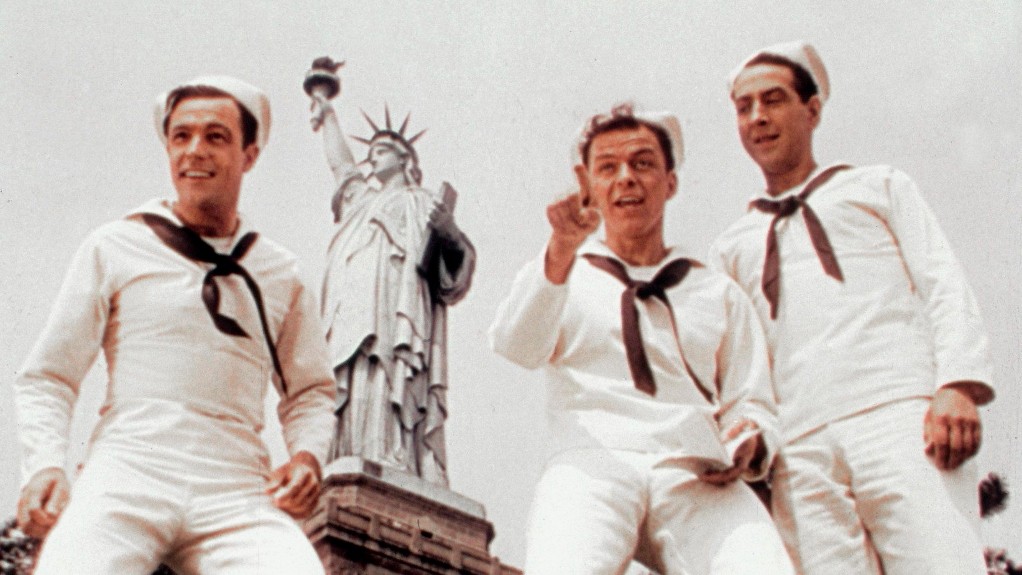
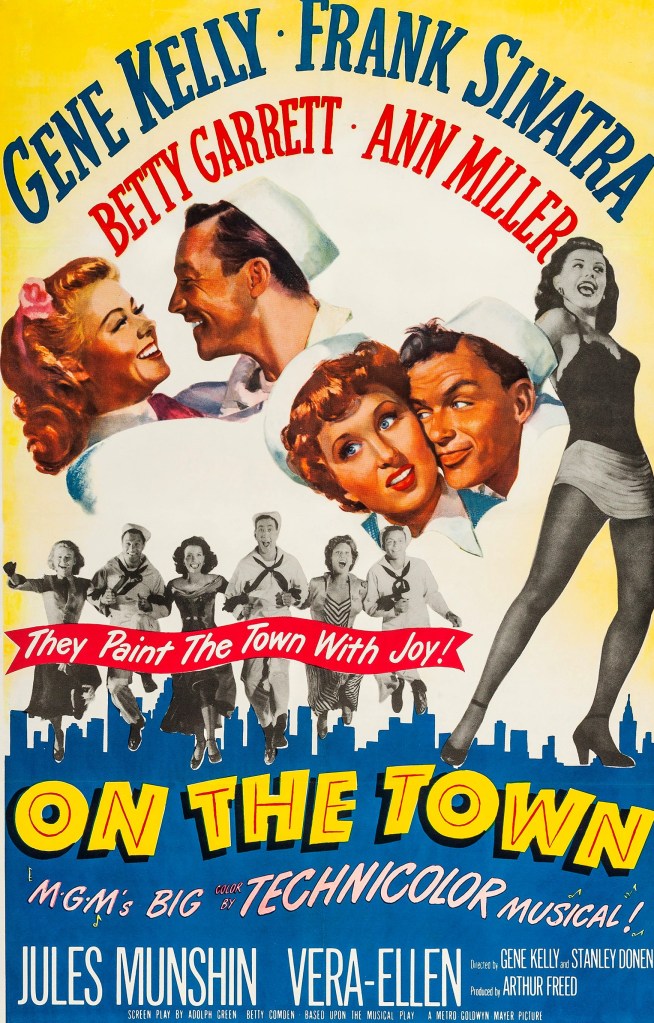
I assume Freed, Donen and Kelly re-watched Anchors Aweigh and said ‘There’s a good idea in here… but we can do better’. They certainly did with On the Town – and it surely helped that they seized on Leonard Bernstein’s hit Broadway musical with its book by Betty Comden and Adolph Green, for a pacier, funnier, more focused version of a very similar story. Once again, Gene Kelly and Frank Sinatra (now accompanied by third banana Jules Munshin) are sailors enjoying leave (this time in New York) and looking for romance. And they find it, with Gabey (Kelly) star-struck by Vera-Ellen’s Ivy Smith (who he mistakes for a celebrity), Chip (Sinatra) falling for flirtatiously voracious taxi-driver Hildy (Betty Garrett) and Ozzie (Menshin) inexplicably charming glamourous anthropologist Claire (Ann Miller). These three couples spend a fab 24 hours, getting in-and-out of scrapes and falling in love.

It’s all gloriously entertaining, zipping by in 90 pacey minutes with assured, dynamic and engaging direction by Stanley Donen that crams the film with zip and an enormous sense of fun. Donen’s first credit saw him handling much of the visuals and camerawork, while co-director Kelly took on the choreography. It made for a fantastic teaming, and it’s striking how much energy and visual panache Donen bought to the musical (again, compared to the more staid direction and visual compositions of Anchors Aweigh). Donen cuts the film tightly, never lets scenes out-stay their welcome, cuts tightly to the beat (the opening song New York, New York shifts excitingly from location to location during its performance) and crafting visual set-pieces that were exciting to watch (crane shots, tracking shots) while never compromising the view of the dancing.

On the Town also had the advantage of some fabulous source material. Interestingly, Freed and musical director Roger Edens were sceptical about whether Bernstein’s original score (with its artful repeated refrains) was accessible enough to appeal to audiences (not to mention many of the numbers in the musical were not a good fit for their cast). It was decided to junk a huge portion of Bernstein’s score (only four songs remain), a decision that led to him boycotting the film – but meant they could combine the best of his work with the sort of song-and-dance material that played to its star’s strengths.

And the film has several stand-out sequences, most notably of course that ‘New York, New York’ opening. Kelly and Donen pitched heavily to be allowed to shoot on location in New York and were granted ten days of location footage. It makes a huge impact to the number, allowing Donen to give it a grounded and vibrant mood. On the Town helped set the template for future films for fast-paced location shooting in bustling locations: driven by the fact Sinatra’s fame meant inconspicuous camera set-ups for quick shots was essential to avoid attracting crowds. (The only scene that shows the problems the film had with longer set-ups was the shot of the gang dancing in front of the Rockefeller centre, the balcony above the statue packed with rubber-necking fans).

There are also great song-and-dance scenes which utilise the strength of all the film’s performers. ‘Prehistoric man’ is suitably zany, ‘You’re awful’ a lovely song-showcase for Sinatra and Garrett, ‘On the Town’ and ‘You Can Count on Me’ fantastic toe-tapping showcases. It’s a parade of hugely engaging, dynamic musical numbers which are immensely fun to watch. It’s more than enough to make you forgive Kelly’s continued desire to prove himself a ballet dancer (On the Town shoves in a day-dream, silent ballet set-piece ‘A Day in New York’ which is an impressive showpiece for Kelly, even if it’s the only number that slows the film down rather than keeping the comic and narrative pace up).

On the Town also has a punchy series of funny lines, clever comic set-pieces and jokes from Comden and Green (it’s Dinosaur/Dinah Shaw mishearing gag is a real stand-out). Of course, narratively On the Town is completely barmy, much of the drama revolving around Ozzie’s accidental destruction of a Brontosaurus skeleton in the Natural History Museum and a resulting on-and-off again Keystone Kops style series of chases. The film zips along with such pace and wit that you happily swallow bizarre ideas (such as Ozzie, in a surprisingly vertigo inducing moment, hanging off the side of the top of the Empire State Building) and shameless coincidences.

But it’s knock-about fun and zany, nonsense plotting actually makes it all the more entertaining to watch. The film’s constant reminders of how far we into this strange 24-hour leave period works very well to give a sense of momentum to events and there is a more than a bit of Hays Code baiting naughtiness, not least in the clear implication that Chip and Hildy (in particular) and Ozzie and Claire spend most of the afternoon going at it great guns while claiming to Gabey that of course they spent the time searching the libraries and museums of New York for Ivy.

On the Town has its cast of musical stars nearly at their peak. Kelly’s dancing and choreography is energetically perfect as always and he fully embraces the charismatic romantic naivety of this would-be player Gabey. Sinatra is much more assured and comfortably witty than in many other musical roles. He also has excellent chemistry with Betty Garrett’s hilariously eager Betty. Ann Miller is wonderfully endearing and funny as Claire. Alice Pearce is surprisingly affecting in a role that initially suggests it might be a one-joke loser, as Ivy’s blousy single flatmate. Vera-Ellen may not have the charisma the role needs but is very sweet. Only Jules Munshin is trying too hard with some aggressively enthusiastic gurning.

Kelly later said On the Town might not have been the best musical they ever made, but it was the one when pretty much everyone involved was at the peak of their powers. He might well be right. On the Town is a slick, sleek and highly enjoyable confection that makes for perfectly entertaining Sunday afternoon viewing.

Anchors Aweigh (1945)

Anchors Aweigh (1945)

Classic musical frequently overlong and under-plotted with fun moments but dwarfed by later films

Director: George Sidney

Cast: Frank Sinatra (Clarence Doolittle), Kathryn Grayson (Susan Abbott), Gene Kelly (Joe Brady), José Iturbi (Himself), Dean Stockwell (Donald Martin), Pamela Britton (Brooklyn), “Rags” Ragland (Police sergeant), Bill Gilbert (Café manager), Henry O’Neill (Admiral Hammond)

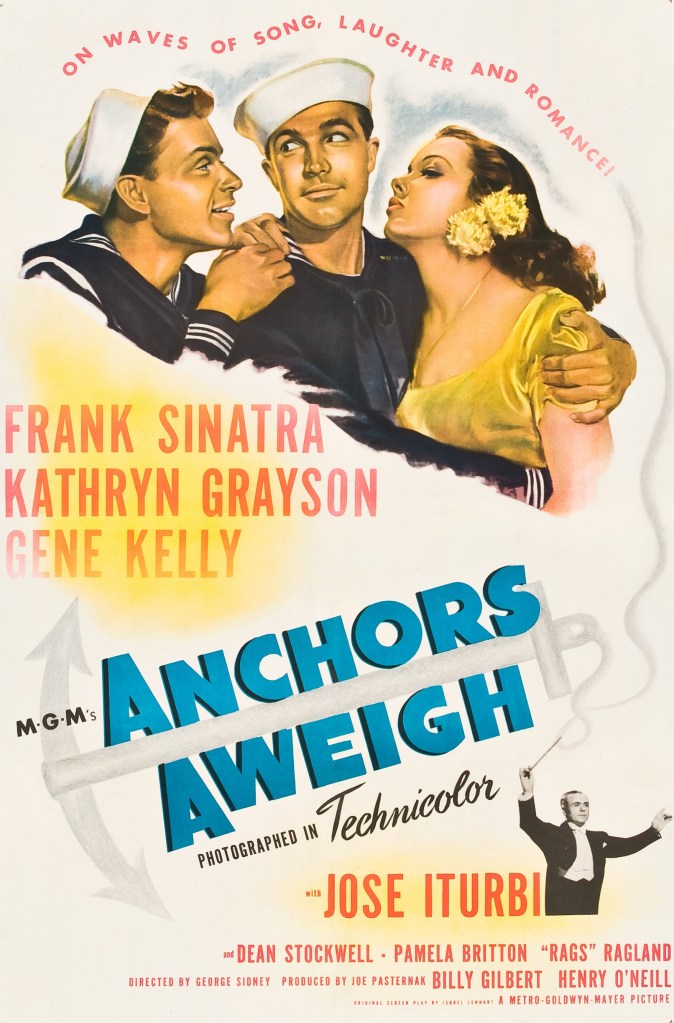
US Navy sailors Clarence (Frank Sinatra) and Joe (Gene Kelly) win medals and shore leave all on the same day, and head to the streets of Hollywood looking for a good time. But, Cyrano-like, Joe finds himself helping Clarence court would-be Hollywood actress Susan Abbott (Kathryn Grayson), whom he secretly wouldn’t mind whispering sweet nothings to himself. Just as well the naïve, never-been-kissed Clarence finds an instant spark with café waitress Brooklyn (Pamela Britton). But can the boys deliver to Susan the audition they’ve promised with esteemed MGM musical director José Iturbi (playing himself)? And can true love find a way through?

It certainly can, but it takes a very, very long time for it to do so. Anchors Aweigh was a big hit, scooping several Oscar nominations (including Kelly’s only acting nomination). But today it feels like a self-indulgent pilot for far more successful (and considerably shorter) Freed musicals that followed. The concept of Sinatra and Kelly as shore leave sailors was recycled in On the Town while a peak behind Hollywood’s curtain was obviously used far more effectively in Singin’ in the Rain. Compared to these two, Anchors Aweigh feels bloated, massively over-staying its welcome while its incredibly flimsy plot is stretched out over two hours and twenty minutes (in that time you could watch most of both of its superior successors).

Anchors Aweigh is really a collection of short skits where the stars showcase what they do best: Kelly dances and Sinatra sings. Every so often they sing-and-dance together. The plot’s romantic shenanigans are solved easily and everyone ends with a beaming smile on their face. Instead, the film is almost exclusively remembered for its skits, most famously a very impressive fantasy sequence where Kelly dances with an animated Jerry (of Tom and Jerry fame). This five minutes or so of ingenious animation matched with Kelly’s charm and energy would make for a heck of a short film: which is what of course it really is, since it bears almost no connection with almost anything else in the film (Kelly is spinning a yarn about how he won his medal, suggesting he did it by teaching a lonely mouse king how to trip the light fantastic).

The finest points of this film are these sequences: but there are far too many of them, and many don’t match the same quality. On the positive side, we get some fine singing from Ol’ Blue Eyes, and Kelly and Sinatra dance two hugely enjoyable numbers together: We Hate to Leave where they tease their fellow sailors about all the great fun ahead for them on shore leave and I Begged Her a high-tempo number (which Sinatra took eight weeks to master) as the boys brag about all the wild-antics we know they didn’t actually get up to the night before. Kelly gets a showpiece paso-tinged tap dance themed around Zorro which provides the film’s most impressive athletic stunts. On the negative side, Iturbi is given the scope for too many classical concerto excepts which dramatically slows the action (such as it is) down.

Problem is there is no cement to hold these moments together. The central plot is so flimsy, slight and utterly unsurprising, so completely devoid of conflict or drama, it seems designed to lull you to sleep between the set pieces. It’s not helped by the general acting weakness of much of the cast. Sinatra at this time was a stunning singer and surprisingly competent dancer but a very mediocre actor – amusing as it is to see him play a timid virgin who can’t get a girl. Kathryn Grayson gives a solid but uninspired performance, hardly charismatic enough to make you believe both men would fall for her so swiftly. José Iturbi is wooden as himself. Pamela Britton is so low on charisma, you hardly notice the film doesn’t bother to give her character a name. In his first major role, Dean Stockwell actually shows promise, even if his character is the sort of melt-your-heart child many audiences secretly find nauseating.

The real star here is the third billed Kelly, who nails the persona that would carry him through many films: the charismatic, sometimes glib charmer with the knack for comedic facial reactions who hides hidden romantic depths under a smooth exterior. Kelly is the motor of the whole film, with just the right light comic touch to keep things going, not to mention throwing himself into the film’s most memorable sequences. Every scene showcases his ability to pull a parade of witty facial expressions from bemused to long suffering to sheepishly guilty to exasperated. He’s the finest thing in a mediocre film.

A mediocre film is what Anchors Aweigh is, assembled with the sort of bland competence that was George Sidney’s calling card (compare his work here to the imagination and energy that Stanley Donen bought to pretty much the same material). It’s chief amusement now is chuckling at how certain set-ups now come across: the completely innocent homoerotic undertones between Kelly and Sinatra (although the film winks at this, when Kelly’s attempt to teach Sinatra to woo a girl sees him drawing glances as he minces down the street imitating the girl-next-door); the fact that Kelly’s unseen girlfriend Lola really sounds like she might be a sex worker; the tone-deaf decision of the boys to discourage Susan’s older (and, to be fair, predatory) suitor by singing a song about how she is the equivalent of the town’s bike; how completely chill everyone is about letting two random sailors take a small boy home alone. To be honest giggling at how these particular mores have changed over time is more amusing than most of this otherwise over-long, under-plotted, thuddingly average film.

Seven Brides for Seven Brothers (1954)

Seven Brides for Seven Brothers (1954)

Gentle fun from more innocent times, in an impressively high-kicking Western musical

Director: Stanley Donen

Cast: Jane Powell (Milly), Howard Keel (Adam), Jeff Richards (Benjamin), Julie Newmar Dorcas), Matt Mattox (Caleb), Ruta Lee (Ruth), Marc Platt (Daniel), Norma Doggett (Martha), Jacques d’Amboise (Ephraim), Virginia Gibson (Liza), Tommy Rall (Frank), Betty Carr (Sarah), Russ Tamblyn (Gideon), Nancy Kilgas (Alice)

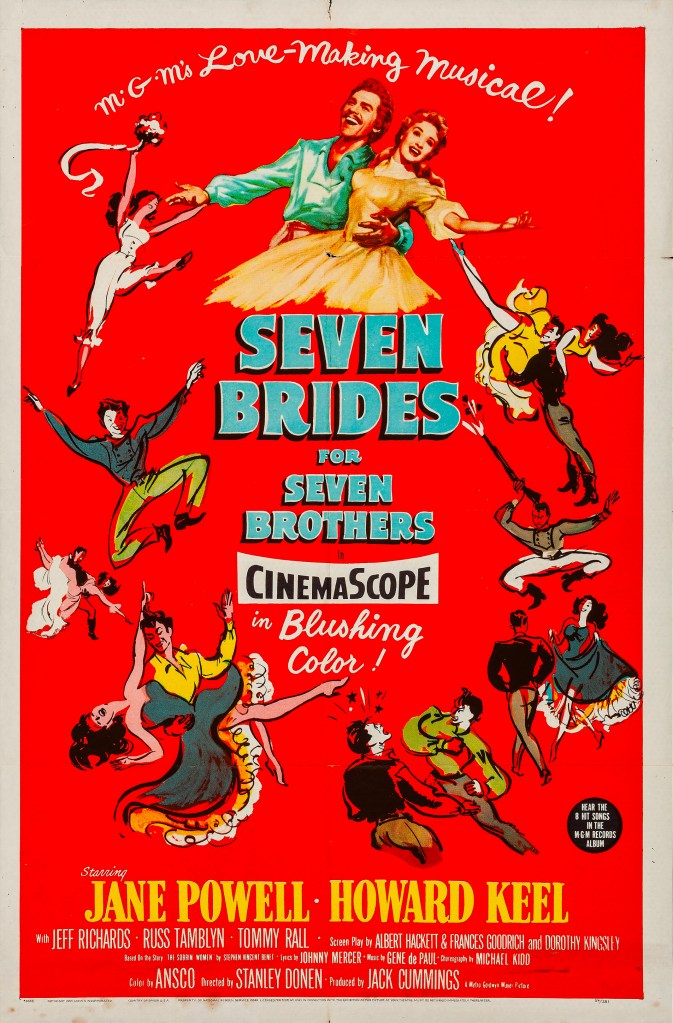
Glance at any list of odd things to adapt into a musical, and you might well find The Rape of the Sabine Women. You’ve got to admire the idea of shifting a Roman legend of horny menfolk grabbing armfuls of women from the Sabine tribe to carry them to Rome to make homes and babies, into… a primary-coloured, hi-kicking, cosy Western musical. Sure, parts of Seven Brides of Seven Brothers look rather awkward today but there is an innocent sense of good-fun (not to mention a sweet lack of sex in any frame) about the whole thing that still makes it rather charming today.

Out in Oregon in 1850, the Pontipee brothers are rough-living guys out in the sticks, who can’t imagine needing a woman in their lives, except maybe to cook and clean. That certainly seems to be what oldest brother, Adam (Howard Keel), has in mind when he marries Milly (Jane Powell). She is shocked to discover he sees her role solely in the kitchen and the laundry. Milly decides she’s not having this, pushing the brothers to clean up their home and acts. Much to their surprise, the brothers like clean living and fall in love with six more women in town (and they with them!). Shame they’re so inept at courtship they decide (much to Milly’s shock) the best way to get a wife is to grab a woman and bring them back home, just like those ‘sobbin’ women’ of yore.

You can see the trickier content there, but Stanley Donen’s film is so good-natured you can imagine its makers being baffled that anyone today could have an issue with it. We can address an elephant in the room: the kidnapping scenes – the Pontipee brothers throwing blankets over the women’s heads, chucking them over their shoulders and making for the hills – play uncomfortably today when framed for laughs. But these are men who, when they arrive home, are gosh-darn-it furious with themselves for not grabbing a priest so they could marry these women at once and immediately sleep in the cold barn to preserve the ladies’ dignities. Seven Brides for Seven Brothers is really a sort of fairy tale rather than a dance-filled Stockholm Syndrome drama, the beauties falling in love with the (not very beastly) beasts.

Take that mindset, and Seven Brides for Seven Brothers is gentle fun, more focused on its bright primary colours and superb dance sequences than any look at gender roles. Choreographed by Michael Kidd, the film is stuffed with imaginative showpieces showcasing the skills of its mostly professional-dancing cast. A pre-barn-raising dance turns into a competitive barn dance, with dancers throwing themselves into a myriad of possible positions, leaping over planks and swinging partners in wild circles (the film uses every inch of the Cinemascope framing – God alone knows what the 4:3 version Donen also had to shoot looks like). Every time the film kicks into dance mode, you are generally in for an impressively athletic treat.

The cast (except, noticeably Jeff Richards) are all strong dancers – or in the case of Russ Tamblyn so athletic it hardly matters – allowing Kidd to push the dance envelope. His choreography also conquers his initial concern: how believable would it be for rough-tough woodsmen like this to confidently trip the light fantastic at the drop of a hat? Its solved, in many cases, by using the sort of everyday jobs (like woodcutting in one single-take sequence) these boys would be doing as the framing device of the choreography. That and a wittily done sequence where Milly teaches her new brothers-in-law some basic dance steps only for them to find they actually enjoy kicking their heels.

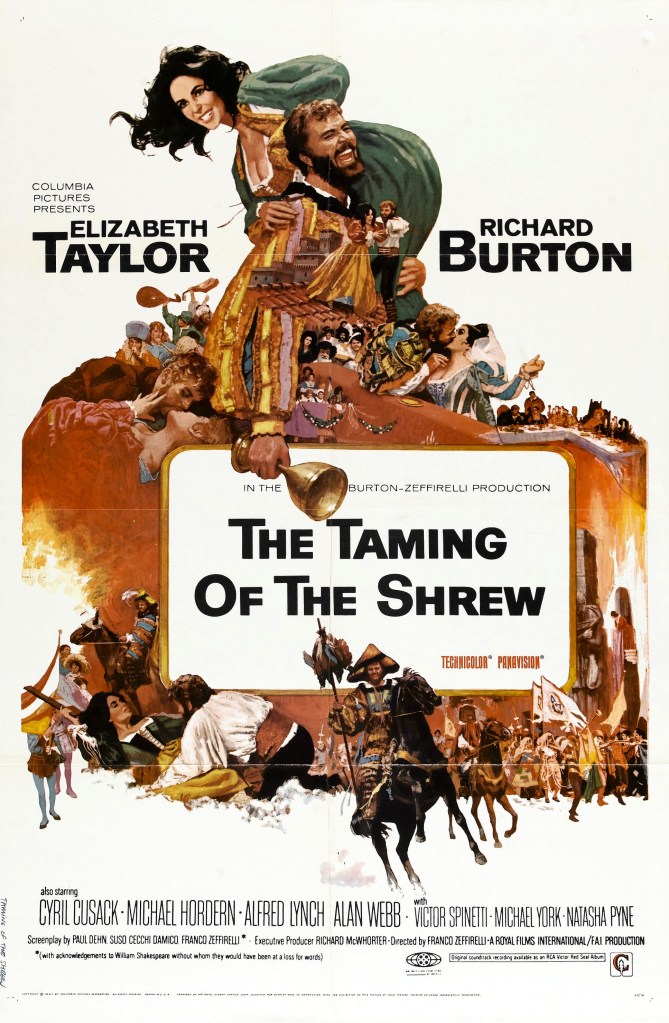
Its one of several witty sequences, that serve to generally puncture for laughs the masculinity of this clan of brothers. Milly’s arrival, finding her new brothers-in-law are all strangers to the razor and the bath, then finds her tour of the house has to work around an on-going fight between these lads which her new husband all but ignores. By the time Milly is flipping over the dinner table after the brothers dive into her prepared meal with all the grace of a bunch of frat boys on a night out, you’re with her. In fact, Seven Brides could be a sort of Taming of the Shrew in reverse, where our heroine trains decency, politeness and basic interpersonal skills into the men. And, since Jane Powell’s firm-but-fair Milly is the most unfairly put-upon person in the film, we instantly side with her.

Instead, it’s Howard Keel’s (with his distinctive gloriously low voice) Adam who needs to be made to see sense: first to understand there is more to marriage than a servant-with-benefits, and secondly that other people’s feelings need consideration. Much of the drive for this change is Milly – the importance of her character being the main reason writer Dorothy Kingsley was recruited to bulk up her part from Albert Hackett and Frances Goodrich’s earlier drafts. Similarly, the seven brothers switch from punch-first braggarts to figures reminiscent of Snow White’s dwarfs in their eagerness to please Milly (even, during the barn-raising sequence, they politely back away from all provocations from the jealous townsmen until they are finally pushed too far by the townsmen’s rudeness to others).

In this framework, we are never in doubt that their brides-to-be are, in fact, not unhappy at being carried away by these men. There is no sense of danger in Seven Brides: no doubt that it’s not all going to turn out well. A large part of this gentle tone is due to Stanley Donen’s warm, witty direction. (Donen was heartbroken the budget wouldn’t stretch to Oregon location shooting, although the backdrops used throughout are hugely impressive). It generally looks like a film everyone had huge fun making – and that warmth, along with the brightly coloured shirt humble-pie-ness of it all, has meant it remains all jolly good fun today.

Three Coins in the Fountain (1954)

Three Coins in the Fountain (1954)

The first big travelogue hit, full of beautiful images and a nice song – and almost no plot

Director: Jean Negulesco

Cast: Clifton Webb (John Frederick Shadwell), Dorothy McGuire (Miss Frances), Jean Peters (Anita Hutchins), Louis Jourdan (Prince Dino di Cessi), Rossano Brazzi (Giorgio Bianchi), Maggie McNamara (Maria Williams), Howard St. John (Burgoyne), Kathryn Givney (Mrs. Burgoyne), Cathleen Nesbitt (Principessa)

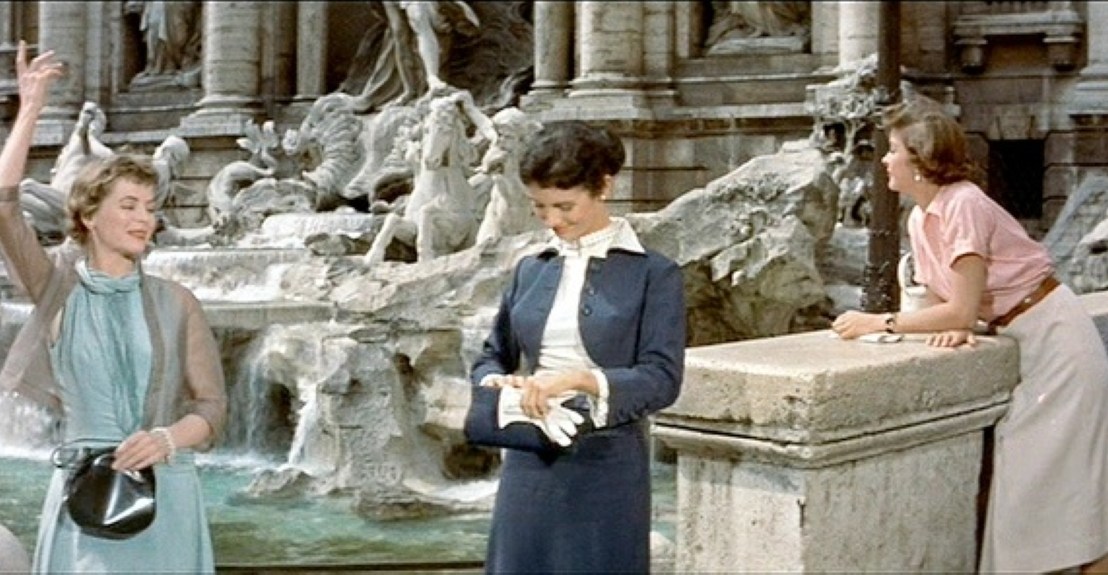
Did you ever visit the Eternal City and wondered why the Trevi Fountain seems to be full of small change? Well, a large chunk of the responsibility probably lies with this film. Three Coins in the Fountain, the very first Cinemascope travelogue super smash, meanders from our heroes chucking a coin into the fountain in line with the local myth that it means they will, one day, return to Rome. I can’t blame them – pretty sure I did the same when I was there. Whether many people have ever tossed a coin wishing to return to Three Coins in the Fountain is another question.

But Three Coins in the Fountain, a picturesque romance as shallow as the fountain itselfmade the idea internationally famous (it doesn’t trouble itself, by the way, with the fact only two of them actually toss a lira in). The story from there is as thin as paper. Our three leads are American secretaries: Frances (Dorothy McGuire) works for famed expat author John Frederick Shadwell (Clifton Webb) whom she secretly loves, Anita (Jean Peters) is seeing out her final weeks in the American embassy before flying home to a fictional fiancée, training up her replacement Maria (Maggie McNamara). Anita can’t afford to marry her Italian translator beau Giorgio (Rossano Brazzi) with his family of thousands to support. Maria sets her cap at Prince Dino (Louis Jourdan), ruthlessly researching and copying his views and opinions on everything from art to playing the piccolo.

Will these three relationships end well? What do you think! Drama in any case largely takes a complete back seat to the film’s main focus: filling the screen with the gorgeous architecture of Rome (and Venice as a two-for-one, thanks to a brief stop-off in Dino’s private plane) and basically giving the American cinema-going public a mouth-watering chance to see in glorious technicolour sights they had only previously seen in black-and-white photos. If 20th Century Fox and director Jean Negulesco didn’t have some shares in the Italian tourist industry squirreled away somewhere, I’ll eat my Panama hat.

Surely one of the most forgettable Best Picture nominees of all time, Three Coins in the Fountain did win two Oscars for its most memorable features. The first was Milton Krasner’s picture-postcard cinematography, making Rome look like the sort of place you’d jump on the first plane to get to. The other was Jule Styne and Sammy Cohn’s charming little ditty Three Coins in the Fountain (the velvet vocals of a surprisingly unbilled Frank Sinatra must have helped here). You can enjoy the finest moments of each in the film’s opening three minutes that plays the entire song (endlessly refrained again throughout the film) while the camera glides through the most beautiful sights of Rome. Truthfully, the rest of the running time is more of the same with added soap suds.

The plot lines are so slight and insubstantial it almost feels mean to poke critical holes in them. Few moments in this film ever ring true, but then this is the sort of luxurious fairy tale where American secretaries live in what seems to be a five-star hotel with panoramic views and work jobs that are really just time-fillers for their real quest of finding husbands. (The sexual politics of Three Coins in the Fountain, where women can’t imagine any other life horizon than typing up a gruff employer’s dull thoughts, and dream of swopping that for setting up house-and-home for a wealthy man, is as dated today as Anita and Maggie seemingly working for the 50s equivalent of USAID). Three Coins in the Fountain knows though the romantic plots are just there to keep us occupied between the postcards, and so long as they don’t offend or bore the viewer they’ve done their job.

Dorothy McGuire invests all the charm she can in playing a role written as a fussy busy-body interfering in her friend’s romantic lives and pining for Clifton Webb’s John Patrick Shadwell but seems oblivious to the fact that he is all too clearly coded to be what gossip columnists of the day called ‘a confirmed bachelor’. Their resolutely sexless ‘companionship’ contrasts with Jean Peter’s Anita giving a lusty fire to her flirtation with Giorgio (an underused Rossano Brazzi, who got a much better go round at this sort of thing in David Lean’s vastly superior Summertime). Various artificial obstacles are placed in their way (a modern film, unburdened by the Hays Code, would have leaned more into hints of a pregnancy scandal in Anita’s otherwise inexplicable decision to leave Rome).

Finally, Maggie McNamara gives a lightness of touch to a hilariously transparent campaign of romantic deception launched by Maria to win the heart of Prince Dino. Dino is, of course, deeply hurt that ‘the only woman I can trust’ has been lying to him – but I couldn’t help but feel most men at the time would jump like Casanova in heat on a woman who smilingly repeated back their own opinions to him with total conviction. Louis Jourdan, like Clifton Webb, charmingly offers up the sort of Euro-charm he was called to produce for most of the 50s.

There are amusing moments in Three Coins. Webb (clearly having a nice holiday in between dialling in his trademarked waspy socialite) is always pretty good value, and his arch glance through Maria’s charade is as grin-inducing as Frances being seen as so destined to become a frustrated spinster that Shadwell’s maid gives her a cat so she won’t be alone. Giorgio’s family eagerness to practically shove Anita into a wedding dress the second they meet her is almost as funny as watching the clueless Anita fail to control Giorgio’s truck as it rolls wildly downhill (inexplicably she tries to put it into gear rather than, oh I don’t know, hitting the brakes…)

But moments like this are few and far between in an otherwise gentle amble through the tourist hotspots of Rome. (The Venice shots, hilariously, see all the actors appear in brief scenes in front of projected images – clearly just the camera crew got that trip.) Negulesco keeps it all flowing forward like the pro he was, but by the time it ends you’ll be left with a vague longing to stroll around the streets of one of the world’s most beautiful cities – and only a vague idea about whether there was any other point to the film you just watched.

Hit Man (2024)

Hit Man (2024)

Inventive, playful, funny, sexy and dark this fabulous dark comedy changes gears with confident ease

Director: Richard Linklater

Cast: Glen Powell (Gary Johnson), Adria Arjona (Madison Figueroa Masters), Austin Amelio (Jasper), Retta (Claudette), Sanjay Rao (Phil), Molly Bernard (Alicia), Evan Holtzman (Ray Masters)

You might not want to hear it, but despite what the movies say there is no such thing as a hit man. In New Orleans, if you are talking to a mysteriously charismatic man who offers to take care of your ‘personal problems’ for a wedge of cash, you are probably confessing your desire to conspire to murder to a police agent. That agent would be mild-mannered psychology professor Gary Johnson (Glen Powell), a bland forgettable person who discovers a hidden talent for charismatic role-play, using his psychological skills to create a persona specific to his target. On a job, Gary becomes attracted to Madison (Adria Arjona), first dissuading her from ‘hiring him’ to kill her husband and then starting a relationship with her ‘in character’ as ‘Ron’. But relationships prove to be as risky for fake hit men as they would be for real ones.

To say where Hit Man, Linklater’s darkly twisted rom-com, heads would be to spoil it (let’s just say I didn’t see where it’s going) and the journey is a fabulous ride. Linklater and Powell collaborated on a (heavily) fictionalised version of this true story and pull together a smart, sexy, witty and at times surprisingly dark film, which make some shrewd points about the extent to which we choose and shape our own identities. Hit Man sees Linklater so confidently shift tone and mood within scenes, that you almost don’t notice how smoothly the film travels from farce to psychological insight to Postman Always Ring Twice sexiness to screwball wit to morally shady action. It’s a terrific ride.

It’s also a superb showcase for Glen Powell, who co-wrote the screenplay with Linklater. This should be a star-making role for Powell, in which he deftly plays mild-mannered and timid and darkly charismatic, often in the same scene. What’s so superb about Powell’s performance is how fluid it is, his two personalities (mild Gary and confident Ron) overlapping and merging into each other from moment-to-moment, or switching in response to sudden changes of situation. Powell and Linklater carry this out with real subtlety from moment to moment but watch the first scene and the last and you immediately notice the difference in our lead from the man we met at first.

Powell is both extremely funny – sequences showing the dizzying array of characters (from red necks to prissy Snape-ish goths) he becomes to lure in his targets are hilariously done – but also wonderfully engaging. Beneath the surface, it’s clear Gary is thrilled by how differently he is perceived when he becomes ‘Ron’, grinning as he overhears his police colleagues confess how exciting and sexy ‘Ron’ is compared to boring bird-watcher Gary. He finds he takes on a whole new confidence – and accompanying sexual prowess – as he throws himself into a dizzyingly sexual fling with Madison, who is also far more excited about the prospect of illicit sex with a killer than she probably would be with sweet rumpy-pumpy with a tenured psychology professor. Powell captures this all wonderfully, throwing himself into a tangled web of deceit with gleeful gusto.

Adria Arjona is similarly excellent as Madison, a woman who becomes harder and harder to read as the film continues. Its early stages really feels like a traditional rom-com – except the ‘meet cute’ features one person trying to hire another for murder, before they charm each other with cat puns – but the relationship shifts as much as the film itself does. Madison seems to come to life, filled with sexually excited recklessness, as she spends time with Ron. But Arjona is able to imply half a dozen things under the surface: is Madison a downtrodden girl enjoying a brush with danger, or is she some sort of manipulative femme fatale?

Linklater uses this to maintain a real high-wire tension in the film, which increasingly becomes impossible to predict. Both Gary and Madison are playing with fire here. If Gary’s dalliance with a former ‘client’ is discovered by his superiors – or if a chance encounter unmasks him to Madison – hell knows what might happen next. And can he keep the pretence that he is capable of ruthless, skilled violence, something much harder to do when your date takes you to a firing range and asks you to teach her? And what is Madison’s game, as it emerges that her break with her boyfriend isn’t as clean as she suggests it is – does she have something in mind that Gary isn’t prepared for?

Hit Man balances this brilliantly with the comedy, in one of Linklater’s most delightfully off-beat films, expertly played by Powell and Arjona. It’s underpinned with a deftly layered thematic message. Throughout we are reminded, by Gary’s psychology lectures to his increasingly engaged students, that people balance their own ids and egos and eventually ‘choose’ where they land. In doing so they create their own personality. It’s what we realise we are watching in this film. Both Gary and Madison decide they like more than a few of the elements of the people they are pretending to be – so why not mix them into their own personality? Suddenly they find themselves effortlessly capable of things they never thought possible – yet still embracing passions their playful alter-egos would find dull beyond belief.

It leads to a surprisingly ending that comes from left-field, but we realise we have been prepared for by Linklater and Powell almost from the film’s opening moments. It makes for a supremely entertaining and rewarding film, brilliantly played by its two leads (and it bears repeating that Powell is sensational here), with excellent support from Austin Amelio as a sleazy cop and Retta and Sanjay Rao as Gary’s more playful police colleagues. Hit Man is a dynamic, funny, sexy and surprising treat.

The Fall Guy (2024)

The Fall Guy (2024)

Very enjoyable action caper and also a rather sweet tribute to the unsung heroes of filmmaking

Director: David Leitch

Cast: Ryan Gosling (Colt Seavers), Emily Blunt (Judy Moreno), Aaron Taylor-Johnson (Tom Ryder), Hannah Waddingham (Gail Meyer), Teresa Palmer (Iggy Starr), Stephanie Hsu (Alma Milan), Winston Duke (Dan Tucker), Ben Knight (Dressler)

I’ve seen every single Hollywood Superstar I’ve ever heard of perform miraculous acts of derring-do in front of my very eyes. That all happened right? The camera doesn’t lie! Alas what we saw wasn’t the Legendary Star but instead a well-trained guy, dressed in the same costume, putting life and limb on the line for the big shot. And they don’t even get Oscars for it! The Fall Guy is a witty, exciting and rather sweet tribute to the unsung hero of the movies, the stunt guy, all wrapped up in a pulsating, tongue-in-cheek action-adventure that showcases two likeable stars and, of course, their similarly costumed fall guys.

Our hero is Colt Seavers (Ryan Gosling), stuntman of choice for superstar Tom Ryder (Aaron Taylor-Johnson), a spoilt man-child who brags he does his own stunts but can’t cross a road without a double. Colt is riding high, in a promising relationship with cinematographer Jody Moreno (Emily Blunt), until a stunt goes wrong leaving him badly injured. Colt disappears, breaking-up with Jody and wallowing in depression for eighteen months. However, he comes storming back when summoned to Australia by producer Gail Meyer (Hannah Waddingham) who claims Jody personally asked him to double for Tom on her directorial debut, Mad-Max-meets-Independence-Day sci-fi epic Metalstorm. Only turns out she didn’t ask: Colt is in fact tasked by Gail to find the missing Ryder or she’ll be forced to cancel the film and end Judy’s career. Colt soon gets bogged down in drug lords, dead bodies, hitmen who don’t quit and imaginary unicorns. Can he find Ryder and make amends with Judy?

The Fall Guy is fast-paced, loose and funny with a script of punchy Drew Pearce jokes, focused overwhelmingly on giving the viewer a cracking night out at the movies. It leaves very little in the locker room which is fitting for a film is all about celebrating the joy of doing things for real. The Fall Guy pushes the envelope for stunts, be it stupendously high falls, multiple barrel roll cars, furious fisticuffs that use everything going and car chases that leave burnt rubber skid marks on every surface. Basically, it’s a celebration of the art of stunt work, no more than you would expect from Leitch, a former stunt co-ordinator and champion of doing it for real.

It very successfully mixes giddy action thrills with a engaging romantic comedy that uses its two stars to great success. Gosling is relaxed, witty and above all extremely cool, his obvious enjoyment of the material very infectious. Blunt’s comic timing is immaculate. Together their chemistry not only creates plenty of laughs, but makes us invest in wanting them to be together. But The Fall Guy doesn’t just settle for rom-com conventions. A focus of the film is watching Colt get in touch with his feelings (how many other action films feature their stars quietly crying in a car, listening to Taylor Swift?) and accepting his stuntman bravado (it’s the profession where you stick your thumb up at the end of the stunt, regardless what happens) led him to drive Judy away out of twisted shame.

Of course, on the way to getting in touch with his findings, Colt doesn’t half stumble through more than his fair share of brawls. You couldn’t make a film about a stuntman without packing in more death-defying thrills than you can shake a stick at. The Fall Guy delivers two types of stunt thrills. One is the behind-the-scenes on-set stunts Colt executes – death-defying falls, flipping and rolling cars, people being thrown across a field into a rock – where we get to see a few tricks of the trade behind the magic. And then we also get genuine ‘real world’ stunts of epic, popcorn-munching excitement as Colt goes about his search. This is some of the most impressive stuff you’ll see (and its expertly deconstructed in the behind-the-scenes clips that festoon the end-credits), from Colt being hurled and smashed through every inch of Ryder’s apartment to a stunning car-chase that turns into a bare-knuckle dumper-truck fight that’s the film’s mid-act calling card.

The action is somehow even more enjoyable because of the world-weary comedy Ryan Gosling plays it with. After all, being thrown into situations like this is bread-and-butter for Colt, so whether its spending a fight protecting an elusive jet-lag-defeating espresso or working out exactly when he to jump into the road to collide with a car, everything is met with a semi-resigned shrug. He also gets some excellent partners-in-crime, trading stunt-movie facts with colleague Dan (a very funny Winston Duke, shouting the name of the Hollywood stars whose signature moves he’s replicating during fights) and, perhaps best-of-all, a French speaking stunt dog called Jean-Claude who Colt treats like a friend (a dog that bites people in the groin shouldn’t be as funny as this, but I must have been in the right mood). The final battle also sees Colt call on an army of fellow stunt-people.

It makes sense in a film that celebrates this brotherhood. When Colt and the team are working on set, The Fall Guy centralises their creativity and commitment. The shooting of a Metalstorm battle scene is hugely improved by Colt and the team pushing the envelope with suggestions and improvements to the rudimentary script and the whole crew is scrupulously dedicated, professional and committed.

The real threats in The Fall Guy are the things that work against this. Special effects and deep fakes (whch plays into the film’s neat double-meaning title) are the tools of the villains and, in a wider sense, kill the flesh-and-blood of film-making. Hollywood stars and bottom-line Hollywood suits with no respect for the craft are the baddies. Aaron Taylor-Johnson has a lot of fun in a role that parodies almost every star you can think of (Tom Cruise is twice specifically named in the film, as if to stress for the laywers Tom Ryder is not him) while Hannah Waddingham is a smilingly heartless producer, never seen without clutching an oversized diet coke.

The Fall Guy is, above all, a film designed to cheer you up no-end. Crammed with sharp one-liners, expert sight gags and thrilling stunts with a cast having an absolute ball in their roles, it’s the sort of treat that will be remembered long after its slightly disappointing box-office haul has been forgotten.