Category: Romantic comedy

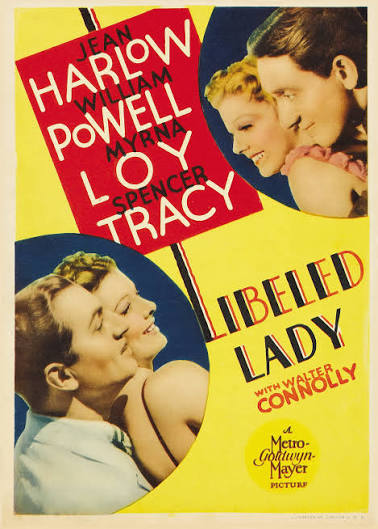
Libeled Lady (1936)

Libeled Lady (1936)

Conventional screwball that stands out from four star-turns and a few striking scenes

Director: Jack Conway

Cast: Jean Harlow (Gladys Benton), William Powell (Bill Chandler), Myrna Loy (Connie Allenbury), Spencer Tracy (Warren Haggerty), Walter Connolly (James B Allenby), Charley Grapewin (Hollis Bane), Cora Witherspook (Mrs Burns-Norvell), EE Clive (Evans)

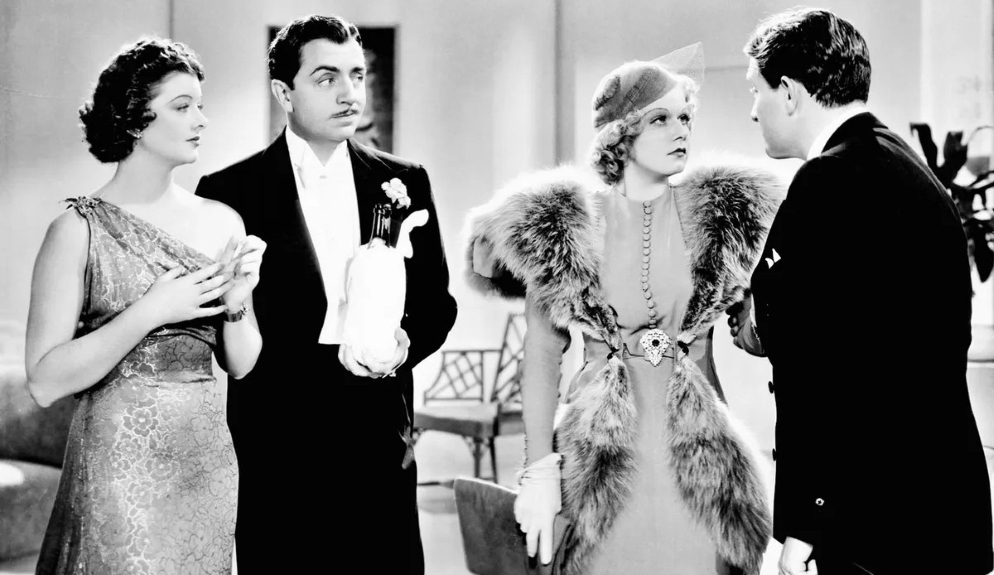
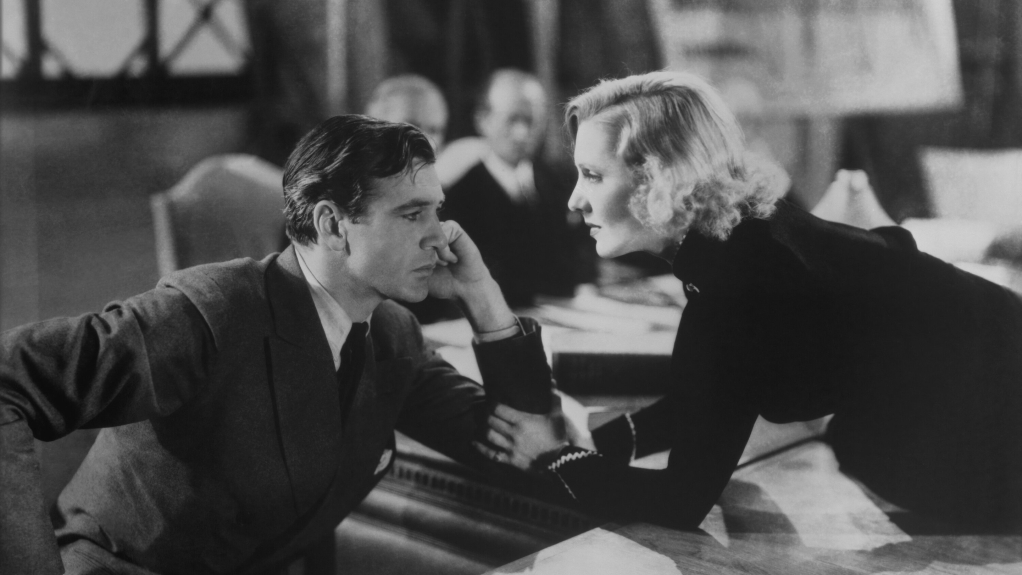
“She may be his wife, but she’s my fiancée!” That richly comic line from Spencer Tracy in Libeled Lady sums up this overlooked screwball comedy, a tangled web of romantic complications giving excellent opportunities for its four talented leads to let rip. Libeled Lady may not be the most accomplished screwball, but it packs a great deal of comic punch in the natural chemistry between its leads (comic gold in any combination).

Tracy is Warren Haggerty, editor of the New York Evening Star, in hot water after running a false story accusing Connie Allenbury (Myrna Loy), daughter of a wealthy business magnate (Walter Connolly), of breaking up another woman’s marriage. She sues the paper for $5 million. Haggerty is desperate to discredit the case by tricking her into breaking up a marriage for real. So naturally, he marries off his fiancée (on the day of their wedding no less!) Gladys Benton (Jean Harlow) to suave former reporter Bill Chandler (William Powell) and then instructs Bill to seduce Connie so Gladys can “catch her” in the act. Naturally it all gets chaotic when Connie falls for Bill, Bill falls for Connie and (to her surprise) Gladys falls for Bill. How are they going to sort that out?

Libeled Lady opens with the thundering roll of newspaper printing and ends with our four leads in a confused romantic scrap in a hotel room. Along the way – bar one stand-out sequence down the river (of which more later), it’s a smoothly assembled four-way star vehicle that lets the actors do their thing. And their thing they most surely do. This romantic screwball is be lifted from the pack purely on the back of the charisma of the stars themselves. In lesser hands, its fairly familiar set-up and funny-but-not-inspired wit might have raised only the odd grin: with these four pros firing on all cylinders, it makes for genuine belly laughs.

Jean Harlow originally intended it as a vehicle for her and beau William Powell. The studio had other ideas – after all, they argued, all cinema goers know Powell and Loy go together like booze and The Thin Man – so Harlow was shifted to the role of ‘other lady’ and Tracy bought in as her romantic intended. It may not have been her choice, but Harlow brings a feisty determination and confidence to a woman who, in other hands, might have been a flighty showgirl. From storming into Tracy’s editorial room in full bridal gear, demanding to know why he hasn’t turned up at their wedding, to throwing herself into a series of pretend clinches with Powell followed by wearied complaining about what arrant husband-to-be asks of her, she’s keeps Gladys a woman who knows her own mind won’t tolerate nonsense. The fact she shifts naturally into someone won over by Chandler’s suave charm and likeable self-deprecation speaks wonders for Harlow’s under-exploited comic skills.

Loy’s archly dry delivery however is perfect for the society heiress who starts the film barely deigning to acknowledge Chandler at dinner (she constantly asks him questions, only to turn to talk to her father before he can answer). However, she’s as smart, worldly-wise and quick off the mark as Chandler, certain she can unmask him as the gold-digging scoundrel she assumes he is and deftly spinning Haggerty’s pleas to think of the newspaper staff (who will lose their jobs) by stating that but of course she’ll set up a trust for them, meaning she’s even more determined to win the $5 million. Like Harlow, Loy has the deft touch to shift this very naturally into classic screwball romance, exchanging longing looks and quick witted barbs with Powell.

It helps that Powell is at his absolute best here, his suave wit and debonair charm absolutely perfect in making someone who arguably starts the film as a conscience-free part-grifter-part-reporter into a deeply likeable rogue with a line for everything. Needless to say, his playful ease and comfort with both leading ladies goes some way to making it perfectly natural they fall for him, and he has an effortless grace and humour while bouncing through a series of awkward situations guaranteed to bring a smile to the face.

He’s equally well contrasted with Tracy’s bull-in-a-china-shop (as Chandler calls it) energy as a fiercely determined newspaper editor with flexible morals. Tracy has complete control over the rat-a-tat pace of the dialogue while his skill at reacting is put to superb effect as a series of ever-more out-of-control situations threaten to overwhelm him. From opening the film nearly rushing out of the door without his trousers, to ending it clutching a hankee to his nose, it’s a sublime comic turn.

These four stars bring their best to what is mostly a series of drawing room set-ups, shot with a functional professionalism by Conway. Most of its scenes, excellently played as they are, would fit nicely into half a dozen other screwballs, bar possibly one. Whoever decided that suavity itself William Powell, should be roped into awkward looking fishing gear and made to wade into a river to do pratfall filled battle with a large fish on the end of the line probably deserves some sort of award for comic invention. Powell doing slapstick farce is the film’s one true stand-out sequence, probably worth the price of admission alone. Otherwise it’s a very enjoyable screwball which, while it doesn’t reinvent the wheel, gives its four leads rich material to showcase their talents.

The Devil Wears Prada 2 (2026)

The Devil Wears Prada 2 (2026)

Fan-pleasing sequel that cosily does exactly what it says on the tin

Director: David Frankel

Cast: Meryl Streep (Miranda Priestly), Anne Hathaway (Andy Sachs), Emily Blunt (Emily Charlton), Stanley Tucci (Nigel Kipling), Justin Theroux (Benji Barnes), Kenneth Branagh (Stuart Simmons), Lucy Liu (Sasha Barnes), BJ Novak (Jay Ravitz), Simone Ashley (Amari Mari), Tracie Thoms (Lily), Patrick Brammall (Peter), Helen J Shen (Jin Chao)

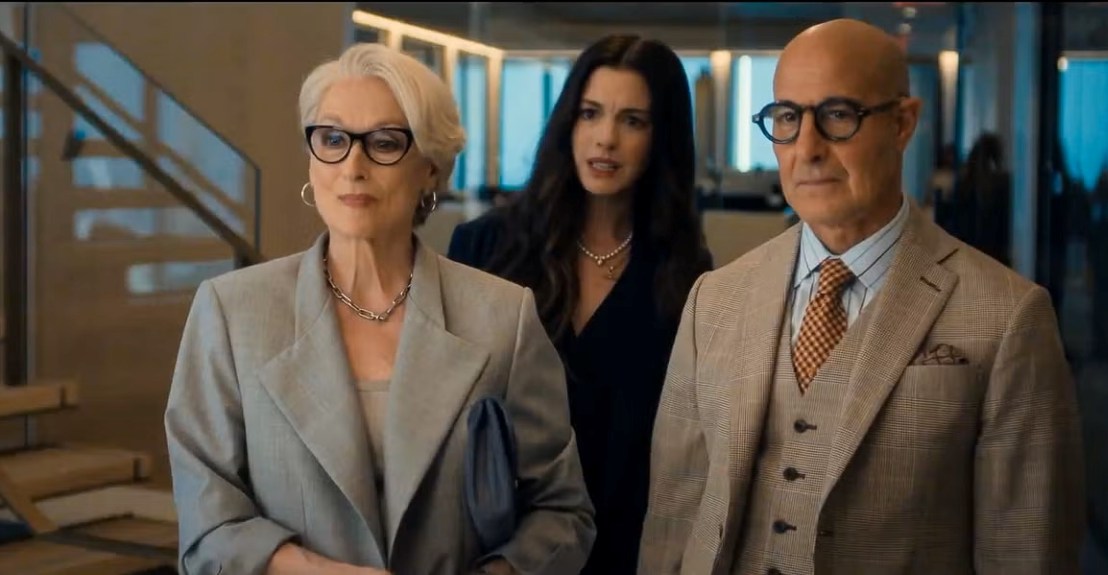
Twenty years on and once again The Devil Wears Prada trots down Hollywood’s cat-walk. Andy Sachs (Anne Hathaway) is now an award-winning journalist, whose entire newsroom has recently been kicked to the curb (via a group WhatsApp!) by their owner. Meaning she’s free to come back to Runway to help the magazine pilot its way through an online storm around a puff piece for a recently exposed sweatshop brand. Subdued dragon Miranda Priestly (Meryl Streep) might not want her back, but the listless editor is struggling in a world of HR complaints and magazines kow-towing to whip-hand holding advertisers like Dior – their advertising team now managed by former assistant Emily (Emily Blunt). Can Andy, Miranda and loyal number-two Nigel (Stanley Tucci) work together to make Runway successful and relevant again in the age of clickbait?

But of course, they can. There is nothing really surprising about The Devil Wears Prada 2, a perfectly entertaining film that has been skilfully set up to offer a good night out for fans of the first film. It’s packed with knowing little in-jokes and references and is overwhelmingly focused on getting the band back together and giving them a joint mission. Which in this case is those two familiar enemies of modern Hollywood, money-obsessed owners with no interest in talent and the internet and all its phone watching shallowness for legacy media.

As such, the idea of a print fashion magazine editor being a symbol of all powerful, devil incarnate ruthlessness feels incredibly passé. That’s one reason why Miranda feels like such a milder, put-upon, even vulnerable figure here, for all Streep can still rip through a sharp one-liner. The other is, of course, that rather like Hannibal Lecter becoming a sort of bizarre cult anti-hero by the time we got to Hannibal, rather than fearing Miranda, Devil Wears Prada 2 knows most of the audience love her. It’s a trend that was already happening in the first movie, and its doubled down here. Miranda is no more-or-less than the primary focus of sympathy for the film.

From the fact that her old world is falling down around her, to the joyless HR rules that stop her poisonous barbs even passing her lips in public, it’s in every inch of the film that expects the viewer to be openly rooting for her. In fact, the whole film is about getting that poisonous, go-getting killer back purring again – with Andy even being called out by a journalist friend for going through Stockholm Syndrome in her eagerness to help her old boss restore herself to terrifying the masses of the fashion world. Andy’s just feeling what the film is going through.

This is all part of a film that recognises the four leads are really popular with the audiences, so since we love them all they might as well all love each other (however secretly) as well. Stanley Tucci’s avuncular affection as Nigel is the glue that brings this gang back together. Anne Hathaway is still all sprightly, girly enthusiasm (however much we are told she is an ace investigative reporter) still trying to impress her private mentor. Emily Blunt (still ace) carefully lets the vulnerability and desperation to be liked peek through the surface of her brittle namesake, obsessed with style and etiquette. All the performers natural mateyness (heck, Blunt and Tucci are famously in-laws) scream off the screen in a film that’s basically a cosy reunion party.

It’s also a film that demonstrates the power of the original. Ironically, for a film all about cost-cutting at Runway, the budget for the film seems through the roof. Most of the second half takes place in the fashion hotspot of Milan. An armada of fashion figures play themselves at various junkets and black-tie dinners (bizarrely, even Rory McIlroy and his wife appear – Rory’s probably shouldn’t have acting in mind as a back-up career). You know a film has passed through the popularity mirror, when the industry it as effectively parodying (however gently) in the first film, pulls out all the stops to get every single name going into its sequel. To cap it off, Lady Gaga pops up to play an exaggerated version of herself, as holder of a long-running feud with Miranda.

The plot, as such, isn’t particularly important compared to the clothes, the charisma of the actors and the warm comfort the film is sure you are getting from the very fact it exists and is playing in front of your eyes. Meryl Streep is still lots of fun, even if she could still play Miranda while standing on her head. I would guess she asked for a top line actor to be her scene partner for her domestic scenes, hence the slightly bizarre presence of Kenneth Branagh of all people (doing a perfectly serviceable job, and he seems to have also gone to the trouble of learning a few notes on the violin).

How much you enjoy all this, rather depends probably on your level of knowledge and affection for the original. But, if you’ve got any level of that, you’ll probably find something to enjoy in this light, feel-good confection, where problems can be easily solved (twice!) by the waving of mythical billionaire Lucy Liu’s magic wand. There are some very, very mild points made about the downfall of the print industry (not to mention journalism) in the digital age, but that’s a subsidiary point to what we really want to see: a closing shot of our heroes working in perfect harmony, having learned (finally) to love and respect each other. It’s the sequel as very particular fan fiction.

Love Me Tonight (1932)

Love Me Tonight (1932)

Delightful semi-parody of Lubitsch, that’s one of the most enjoyable and brilliant films of the decade

Director: Rouben Mamoulian

Cast: Maurice Chevalier (Maurice), Jeanette MacDonald (Princess Jeanette), Charles Ruggles (Vicomte Gilbert de Varèze), Charles Butterworth (Comte de Savignac), Myrna Loy (Comtesse Valentine), C. Aubrey Smith (Duc d’Artelines), Elizabeth Patterson (First aunt), Ethel Griffies (Second aunt), Blanche Friderici (Third aunt)

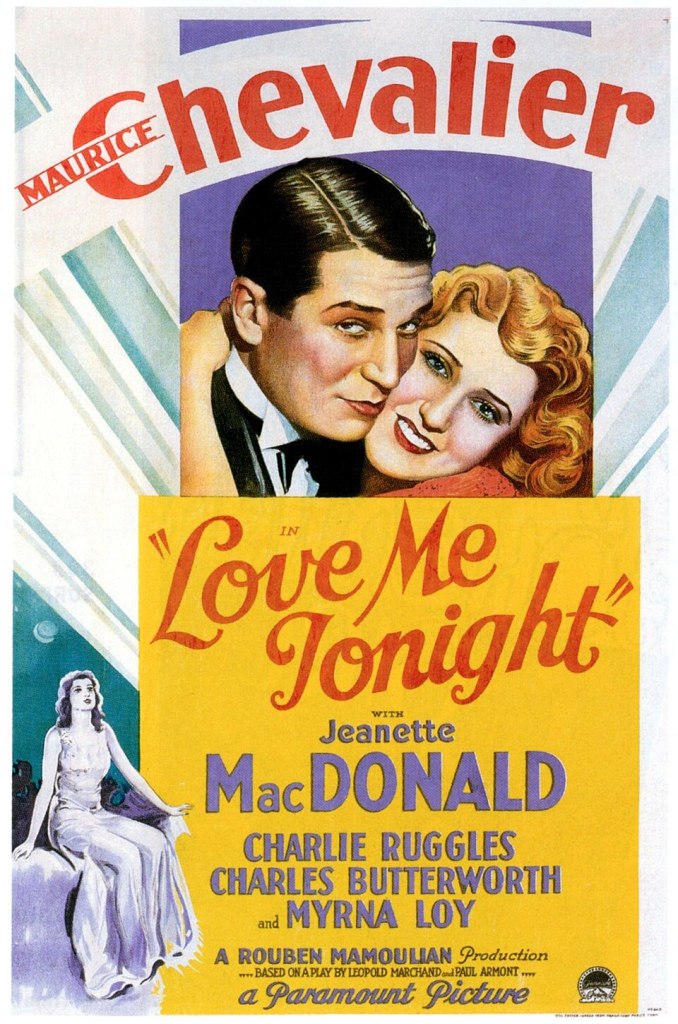
It’s very easy to assume Love Me Tonight comes from Ernst Lubitsch’s masterful hands. It does seem to have every element of his classic “Touch”: mixing light comedy in refined, courtly circles with charming ear-worm ditties – not to mention the presence of Maurice Chevalier and Jeanette MacDonald as an unlikely couple drawn (inevitably) together. It’s a surprise then that itwas directed by that overlooked master Rouben Mamoulian, intended as a parody of Lubitsch’s style. But it was so masterfully witty and well-delivered, that arguably became the greatest Lubitsch comedy ever.

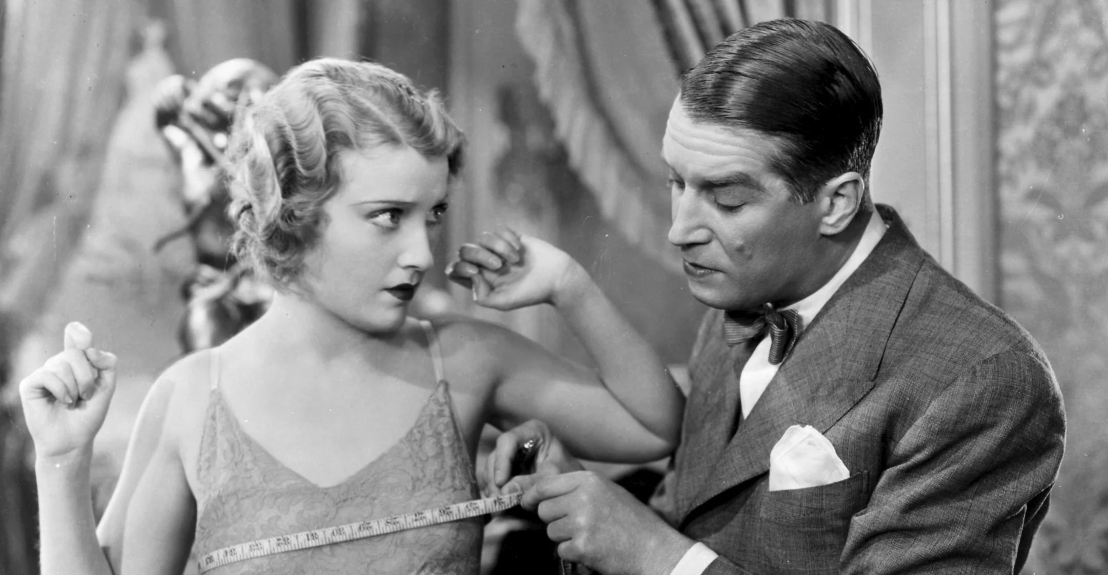
It’s certainly one of the finest, funniest and most inventive musical comedies you’re going to see. Set in Paris at some point in the 1920s (despite which, only Chevalier has any trace of an accent), we meet Maurice (Chevalier), a plucky tailor with a dream, thrilled to land the big-spending Vicomte de Varèze (Charles Ruggles) as a client: and less thrilled to discover the Vicomte never pays his bills. Maurice rides post-haste to the Vicomte’s family manor, where the guilt-free Vicomte (worried his uncle (C. Aubrey Smith) will cut him off in disgrace) passes him off as a hidden royal, while he tries to raise money. Maurice falls in love with the Vicomte’s cousin, widowed Princess Jeanette (MacDonald), who at first can’t stand him, but soon discovers his charm.

Perhaps you should be tipped off this is a parody (of sorts) of vehicles the stars had made at least twice already with Lubitsch, that Love Me Tonight doesn’t even bother to change their names. But Love Me Tonight has a rich, cheeky script full of risque one-liners (tragically, some of the naughtiest stuff is lost forever after a post Hays Code recut) and it barrels along with an effortlessly smooth comic charm. Although the stars both found Mamoulian harder to work with than Lubitsch, these are two of their lightest, funniest most endearing performances, with Chevalier archly flirtatious while still a perfect gentleman and MacDonald austerely repressed with just a hint of excitement.

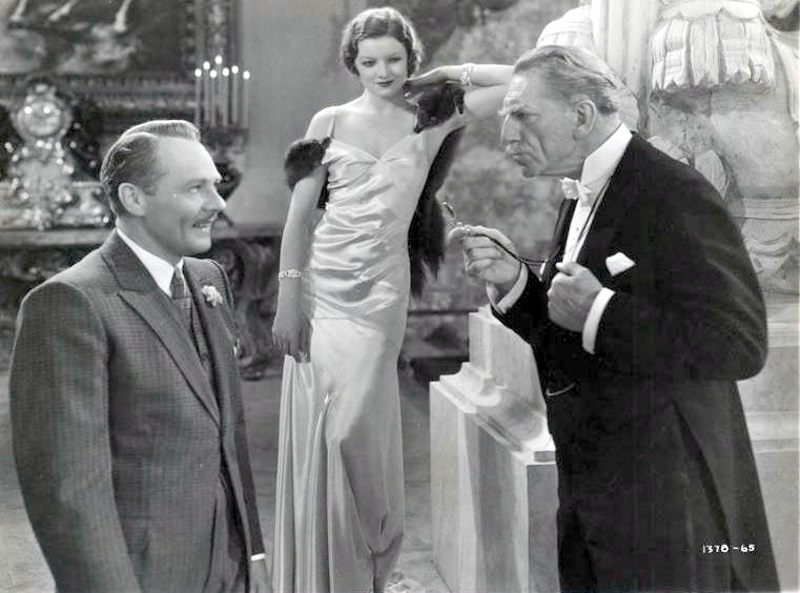
It’s a film stuffed with gloriously eccentric characters, with a top-of-the-line comic cast, all throwing themselves into top-of-the-line songs. Charles Ruggles is full of shameless, comic selfishness as the Vicomte who genuinely doesn’t understand why he should pay debts. C. Aubrey Smith shows more playfulness here (including a delightful moment where he dances in glee) than he did in his whole career of stiff-upper-lipped army officers. Charles Butterworth scowls and sulks superbly as MacDonald’s unwanted suitor. Elizabeth Patterson, Ethel Griffies and Blanche Friderici are great fun as a pack of easily-flustered maiden aunts (“Oh let me die!” one quietly mutters at a moment of risqué shock) who are one-third Macbeth’s witches, two thirds excited, yapping puppies. Perhaps best of all, Myrna Loy is a vampishly, sex-obsessed young woman making a pass at anything with a penis and a pulse.

Backed with a host of excellent songs – ‘Isn’t it Romantic’, ‘Mimi’, ‘Love Me Tonight’ and ‘The Son of a Gun is Nothing but a Tailor’ are first rate – the film is crammed with genuinely funny lines and marvellous moments of comic invention. From Maurice (shamelessly) mumbling the most risqué lines of ‘Lover’ (making his intentions all too clear) to a hilarious sequence where he derails a stag hunt by escorting the lucky animal to safety in a cottage, there is something to make you laugh almost every minute. Mamoulian directs with real zip and pace throughout, keeping the delightfully light confection gloriously whisked without ever letting it grow heavy.

That’s just scratching the surface of Mamoulian’s outstanding work. Disparaged as a director obsessed with innovation, it’s hard to see how anyone felt that was a negative when you see results as rich as this. Love Me Tonight is so full of brilliantly dynamic use of sound, visuals and editing, that I’m stunned it isn’t referenced more often as a landmark in Hollywood’s emerging understanding of what was possible. The fact it does all this, in fabulously enjoyable way, in gorgeously designed sets where charming actors effortlessly do their work is even better.

The invention is right there from the opening frames. Taking a theatrical technique he had used on Broadway in Porgy and Bess, Mamoulian opens the film on the street of Paris. One-by-one the citizens emerge to go about their daily business – sweeping streets, cobbling shoes, beating carpets, washing windows – the cacophony building up into a rhythmic beat that leads us into the opening number. It’s superbly done, so simple but so far ahead of the imaginings of other directors at the time, it smacks a smile on your face.

It continues with the masterful delivery of the ‘Isn’t it Romantic’ song. Starting with Chevalier singing the song (off-the-cuff) in his tailor shop, it’s picked up (in turn) and then travels across the country, via a customer, taxi driver, composer in the taxi, platoon of soldiers, fiddler in the country and finally winds its way under Jeanette’s window for MacDonald to sing. With an effect both natural and brilliantly artificial, the two stars are linked together by one song without even meeting. Again, it’s simple but perfect.

Love Me Tonight is crammed with superb moments like this that take the breath way. At a shocking reveal, a ceramic urn smashes on the ground – but the sound is replaced by a dynamite blast, reflecting the impact the reveal has had. A superb split screen gives the appearance of Chevalier and MacDonald in bed together (they are of course in different beds dreaming of each other). When Chevalier is given the crazed horse Solitary to ride at the hunt (so called, as the horse always come home alone) Mamoulian uses sped-up-film to masterful effect. He then balances this with artfully slow-motion footage, when the hunt ‘tip toes’ away from the resting stag – he even uses reverse film for a stunt to show Chevalier leaping onto the back of MacDonald’s horse. A final horse-train chase sequence wouldn’t like out of place in an action thriller, in its brilliant use of composition and editing to suggest speed and dynamism.

There is barely a frame in Love Me Tonight that doesn’t have a stroke of theatrical or cinematic genius. But these never overwhelm the story or unbalance it. Even without noticing the superb nature of the film’s construction, you could still love every minute of its humour, charm and romance – not to mention the effortless likeability of everyone involved. Love Me Tonight may have began as a parody of a familiar genre, but it’s also possibly the greatest example of the genre in existence, mastering the Lubitsch touch so well, it turns out it didn’t need Lubitsch at all. One of the best films of the 1930s.

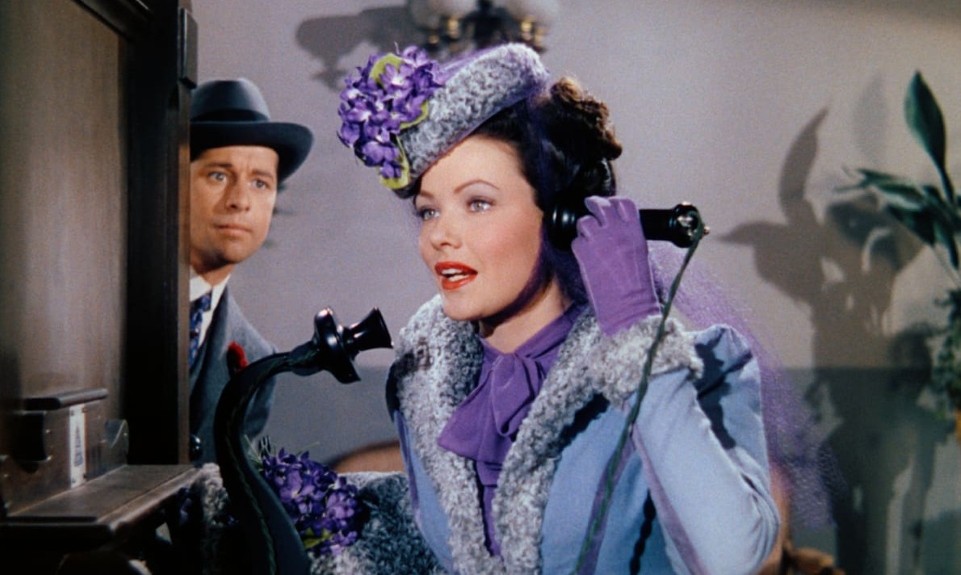
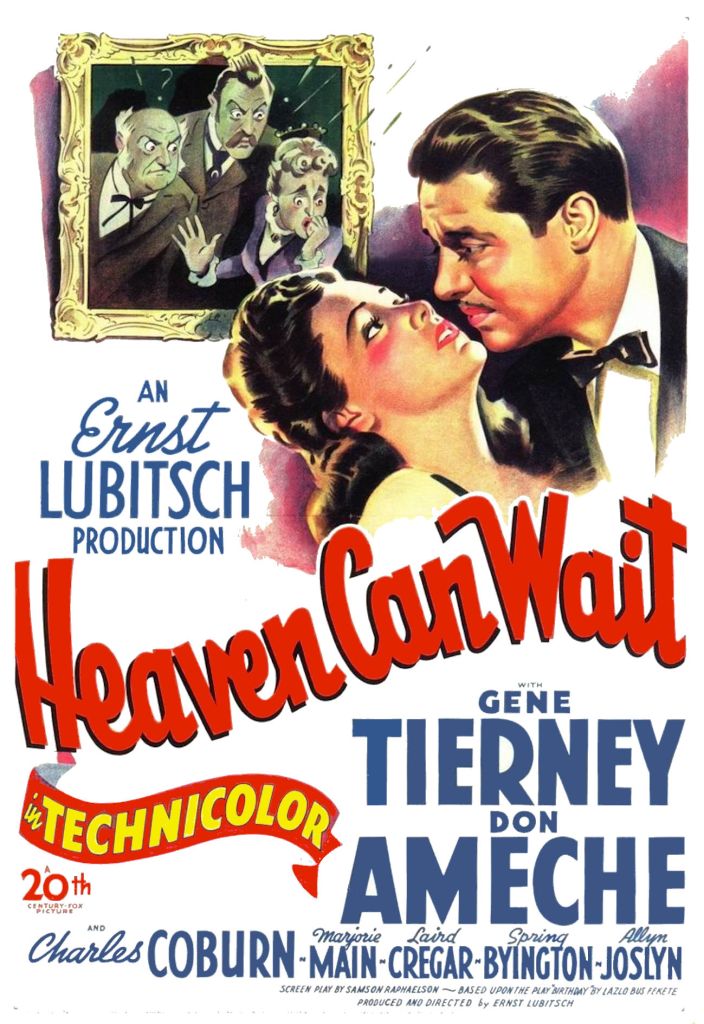
Heaven Can Wait (1978)

Heaven Can Wait (1978)

Deliberately old-fashioned and comforting drama, probably why it was a big hit when released

Director: Warren Beatty, Buck Henry

Cast: Warren Beatty (Joe Pendleton), Julie Christie (Betty Logan), James Mason (Mr Jordan), Jack Warden (Max Corkle), Charles Grodin (Tony Abbott), Dyan Cannon (Julia Farnsworth), Buck Henry (The Escort), Vincent Gardenia (Inspector Krim), Joseph Maher (Sisk), Hamilton Camp (Bentley), Arthur Malet (Everett)

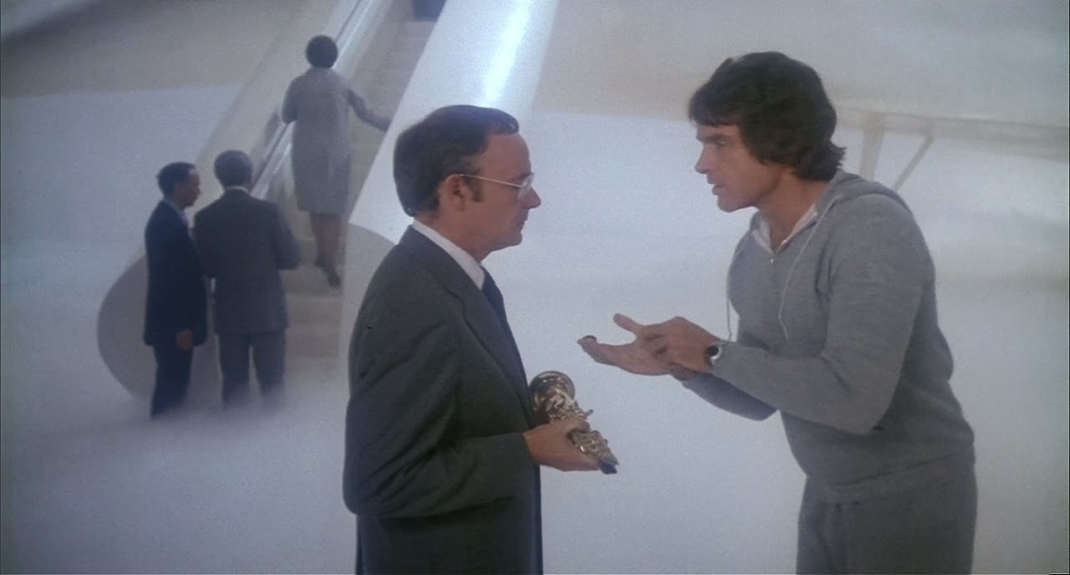
Beatty’s cosily old-fashioned directorial debut – in which, Welles like, he celebrated Oscar nominations for producing, directing, writing and acting – might well be the reason for its financial success. Perhaps a world in turmoil needed a remake of the smooth 1941 studio film Here Comes Mr Jordan, becoming the third adaptation of Harry Segall’s 1938 play. Heaven Can Wait reshuffles a few bits and pieces here and there, while aiming to capture as much of the tone of the original as possible.

Beatty is Joe Pendleton, promising quarterback for the Los Angeles Rams… until, facing certain death in a road accident he is plucked to Heaven by his guardian angel (Buck Henry). But the angel was overzealous, as supervisor Mr Jordan (James Mason) reveals Joe had 50 years to live. With his body cremated, Jordan arranges for Joe to take the body of billionaire Leo Farnsworth, recently murdered by his gold digger wife Julia (Dyan Cannon) and her lover, Farnsworth’s secretary, Tony Abbott (Charles Grodin). In his new body, Joe, inspired by environmentalist Betty Logan (Julie Christie), tries to make his company care while buying the Rams and persuading old coach Max (Jack Warden) that it’s really Joe and he needs his help to train his new body for the Super Bowl.

Heaven Can Wait shifts Here Comes Mr Jordan from the world of boxing to the world of football – possibly when original casting choice, Muhammad Ali, turned it down and Beatty’s high school football experience was a better fit. Ali wasn’t the only sought after legend – Beatty offered the sun and moon to Cary Grant to play Mr Jordan, but not even the presence of Grant’s wife Dyan Cannon could tempt him from retirement.

There are the odd tweaks here and there – the plane to Heaven is now a proto-Concorde for starters – but honestly Heaven Can Wait would have been made almost identically in the 1940s, with its dry wit, gentle romance and the Capraesque idea that the little guy can fix the world’s problems with a little bit of honesty, decency and common sense. There is almost nothing of the cynicism of the 1970s at all. It’s a gently reassuring throwback. Nothing wrong with that, but nothing inventive or original either.

Beatty does a decent job of directing things with a classical gentleness, and he’s also pretty good as the good-natured Joe, a sort of sweetly dim guy obsessed with health food and dodgy saxophone playing (roughly in that order). He’s got an endearing simplicity, the sort of guy who takes ages to work out he’s in a way-station for heaven, bounds into his new life with a chattiness that confuses his army of staff (used to an austere employer) and tries to corral his board of directors with a winningly earnest speech crammed with football metaphors, so intently well-meant it even manages to convince (some of) the crusty bean-counters sitting around the table.

Fish-out-of-water comedy emerges rather nicely out of how bemused both Beatty’s character is at the life he finds himself in, and how politely his staff and employees turn a blind eye to what must be a juddering change in personality of their boss. After all, Beatty and Elaine May’s script lands more than a few subtle digs suggesting Farnsworth must have been quite the dick. His wardrobe is a mix of ludicrous sailor and polo outfits and garish mock military uniforms. He had the staff raise a flag and fire a cannon every day. And his company is mercilessly gutting the environment.

Must be a shock for the staff then, that their new boss keeps popping into a cleaning cupboard on the stairs for surreptitious chats with invisible angels. Or that he corrals them en masse for a good-natured football training session in the grounds. The dry, carefully reserved reactions of these servants – led by Joseph Maher’s perfectly straight-faced butler – is consistently funny.

Also consistently funny are Dyan Cannon (Oscar-nominated) and Charles Grodin as a pair of conniving schemers, trying everything they can think of to pocket Farnsworth’s money. Cannon is hilarious, consistently oscillating between hysterical shock and resigned confusion at the unexpected appearances of ‘Farnsworth’. Grodin is perfect as the dry Abbott, a master of the micro-reaction, loathing his boss while also being pathetically deferential to him and wheedling a parade of schemes to try and dispatch his boss. These two are the film’s stand-out performers and funniest characters.

Not that there isn’t merit elsewhere. James Mason is perhaps the perfect substitute for Claude Rains, dry and suave as Head Angel Jordan and forming a good double act with co-director Buck Henry’s harassed junior angel. Jack Warden gained an Oscar nomination for a warmer, gentler version of his distracted coach from 12 Angry Men. Julie Christie’s chemistry with Beatty is not surprisingly on point, although the script gives her very little to play with for the film’s least developed role.

What is surprising though is the sudden bleak note Heaven Can Wait ends on: Joe will eventually lose all memories of his previous lives. It’s so sudden, I had to remind myself the same thing happens in the original (but with a bit more forewarning). Here, it emerges out of left-field and feels unbearably harsh, as if Heaven is cleaning up a clerical error by wiping Joe from existence. The film fails to prep us for this possibility – in the way the original did – as if it was felt the danger of being wiped from existence would spoil all that apeing of 40’s lightness (in which case why not just change it?).

Heaven Can Wait was garlanded by Oscar nominations (including those four for Beatty) but won only one for its admittedly clever set design which plays up the grandiose nonsense of Farnsworth’s mansion (I enjoyed Cannon’s bedroom with its matching fabric covering every wall and surface). Was that because it was so gently reassuringly, old fashioned, but fundamentally a very close remake? It’s a sentimental, charming little crowd-pleaser the sort of thing that perhaps made everyone feel better at the time, a decent, inoffensive film.

Roman Holiday (1953)

Roman Holiday (1953)

Gorgeously light romantic comedy that invented and mastered a whole genre

Director: William Wyler

Cast: Gregory Peck (Joe Bradley), Audrey Hepburn (Princess Ann), Eddie Albert (Irving Radovich), Hartley Power (Hennessey), Harcourt Williams (Ambassador), Margaret Rawlings (Countess Vereberg), Tullio Carminati (General Provno), Paulo Carlini (Mario Delani), Claudio Ermelli (Giovanni), Paola Borboni (Charwoman), Alfredo Rizzo (Taxi driver)

Everyone loves a fairy tale, which is probably why Roman Holiday remains one of most popular films of all time. The whole thing is a care-free, romantic fantasy in a beautiful location, where it feels at any time the chimes of midnight could make the whole thing vanish instantly in a puff of smoke. It’s like a holiday itself: a chance to immerse yourself in something warm, reassuring and utterly charming. This fairy tale sees a Princess escape to freedom. Only she’s not escaping imprisonment by some ghastly witch or terrible monster: just from the relentless grind of never-ending duty.

The heir to the throne of an unnamed country (one of those Ruritanian neverwheres you’d find in a Lubitsch movie), Princess Anne’s (Audrey Hepburn) every waking moment is a never-ending parade of social and political functions. Just for once she’d like to do what she wants to do for the day. Something she gets when she escapes into Rome (after being given a dopey-inducing drug to sleep) and finds herself in the company of American newshound Joe Bradley (Gregory Peck). Joe quickly works out he’s harbouring the most famous woman in the world and dreams of the scoop of the century. Pretending not to know ‘Anya’s’ identity, they spend the day shooting the breeze in Rome – only to find themselves falling in love. Will Joe sell the story? And will Ann stay free or return to her duties?

Truth be told, like many fairy tales, it’s a very light story that leads towards familiar (and reassuring) morals, with a big dollop of romance along the way. It works however, because it’s told with such lightness, playfulness and gentle innocence, that it washes over you like a warm bath. A director like Lubitsch would have found sharper wit (not to mention sexual tension) in the material, but Wyler’s decision to hold back arguably works better. It lets the magic of the plot weave without directorial flourishes overbalancing things. It works because it’s so soft touch and unobtrusive in its making that it allows the actors to flourish.

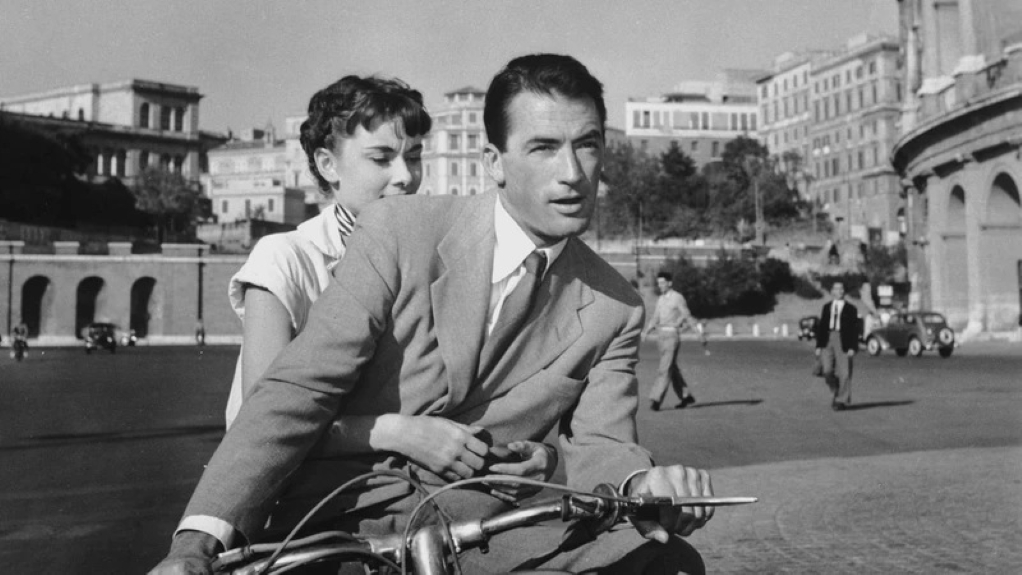
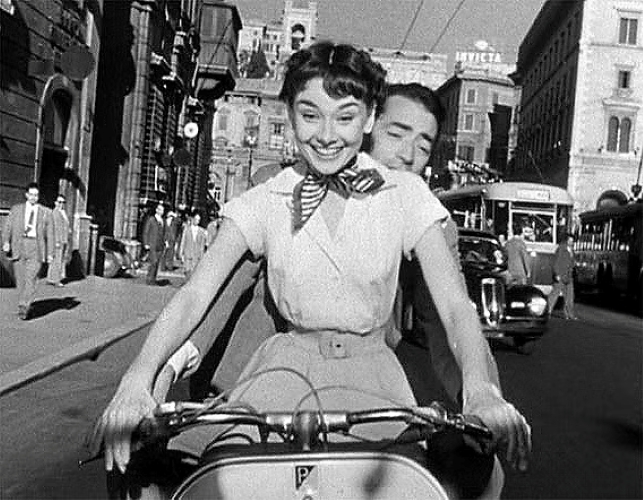
It helps as well that they had Audrey Hepburn. Hepburn’s entire life changed with Roman Holiday (surely the last time she could have walked through Rome unnoticed!), winning an Oscar for the sort of dream-fit role that comes once in a blue moon. Hepburn looks perfect as a fairy-tale Princess, but her performance succeeds because of her gift for light comedy and flair for slapstick. She’s an acutely funny and hugely endearing performer, and your heart warms to her instantly. From stretching her foot and losing a shoe (under her billowing dress) in the film’s opening reception, Hepburn launches into a perfect low-key comic routine as she attempts to restore it. That comic physicality carries through her doped-out first night of freedom, including an impressive roll across a bed into a sofa, fully committed to the word-slurring ridiculousness. She’ll bring the same daft energy to her disastrous Vespa riding. Hepburn has become such an icon of class, it’s easy to forget what a bouncy comedian she was.

These comic touches make us root for her, and it’s made even easier through Hepburn’s ability to make naivety combined with touches of austere distance effortlessly charming. Watching her react with blithe confusion (and then charmingly embarrassed realisation) as she accepts shoes and flowers from retailers without realising they expect payment is never less than charmingly hilarious. Her wide-eyed excitement at everyday things like ice cream or getting an (iconic) haircut is winningly loveable. You find it funny rather than frustrating that she expects help undressing (much to Joe’s flustered surprise) or for problems like policemen to melt away. Hepburn’s performance is nothing less than transcendent, a sprinkle of Hollywood magic.

Opposite her, the film wisely casts that bastion of decency Gregory Peck. Other actors would have leaned into Joe’s background as a fast-living reporter constantly in hock to a parade of gamblers, landlords and newspaper editors. But Peck is so clean-cut he feels like Walter Cronkite on leave and removes any audience concern that Joe might do something caddish. We never once feel for a moment Anne is at risk of being taken advantage of when she sleeps in his apartment (would we have felt the same certainty with, say, Tony Curtis or even Cary Grant?) and Peck is so straight-shootingly decent, the implied threat that he may betray Anne by reporting her day of freedom as a glossy tell-all of outrageous behaviour very easily drifts from the audiences mind when watching the film. We all know Peck would never do that!

All this allows us to fully relax and enjoy the bulk of the film, which is essentially watching two beautiful, likeable people have a lovely day looking among the gorgeous sights of the Eternal City. It’s hard to credit it, but the Roman authorities initially refused the right to film as they were worried it would demean the city. Just as well they changed their mind, as perhaps no film has driven more people to Rome. Roman Holiday (even the title is a subliminal suggestion to the viewer) is full of wonderful locations, from the Trevi fountain to the Spanish steps and it single-handedly turned the Mouth of Truth into a must-visit tourist spot – not surprising, as Peck’s improvised pretence to lose his hand and Hepburn’s wails of laughter are one of the film’s most lovable moments.

Moments like that showcase the natural warmth and chemistry between the two actors, and Roman Holiday leans into it to create one of the most romantic films ever made. There is a genuine palpable spark between the two, from their meet-cute in a taxi (a dopey Anne confusedly mumbling that she lives in the Colosseum) to the ice melting between them, to the little glances they give each other as they make each other laugh on Vespas or their bond growing as throw themselves into fending off a parade of besuited goons from Anne’s embassy (this moment includes the hilarious moment when Hepburn bashes a goon over the head with a guitar).

It’s all leading of course to the inevitable bittersweet ending – because, such is the decency of Peck and Hepburn, we know they are never really going to chuck it all aside when duty and doing the right thing calls – which is equally delivered with a series of micro-reactions at another interminable function that is genuinely moving in its simplicity. Even Eddie Albert’s hilariously cynical photojournalist gets in on the act.

It’s the perfect cap to a wonderfully entertaining, escapist fantasy which never once leaves you anything less than entertained. You could carp that there is never any threat or peril at any point – and that the paper-light plot breezes by – but that would be to miss the point. But Roman Holiday invented and mastered a Hollywood staple: two likeable people fall in love in a gorgeous location. And who hasn’t dreamed of a holiday like that?

A Touch of Class (1973)

A Touch of Class (1973)

A decent farce gets buried in a film that tries to make a profound point about relationships

Director: Melvin Frank

Cast: George Segal (Steve Blackburn), Glenda Jackson (Vickie Allessio), Hildegard Neil (Gloria Blackburn), Paul Sorvino (Walter Menkes), K Callan (Patty Menkes), Cec Linder (Wendell Thompson), Nadim Sawalha (Hotel manager), David de Keyser (Doctor Alvarez), Eve Kampf (Miss Ramos)

London-based American banker Steve Blackburn (George Segal) and divorced fashion designer Vickie Allessio (Glenda Jackson) feel an instant spark when they literally bump into each other while he’s playing baseball in the park. She loves the idea of some no-strings sex; he’s got more than a little experience of cheating on his wife. They head to Málaga for a dirty weekend, only to find a string of circumstances keep getting in their way of a relaxing (dirty) weekend.

A Touch of Class seems an odd choice as Best Picture nominee – just as Glenda Jackson seems an unlikely Oscar winner for a fairly straight-forward role of comic exasperation. (Surely part of Oscar was the voters surprise that the fiercely serious Jackson even had a sense of humour). But this film has its moments of entertaining farce, particularly in its opening half covering the disastrous trip to Málaga where literally nothing seems to go right. It works less well when A Touch of Class segues later into something trying to be more serious, not least since the film’s attempt to explore genuine feelings works best when it embraces the fact its lead characters realise that, beyond a sexual charge, they pretty much can’t stand each other.

There is something very British about this farce of manners. The first hour chronicles a series of embarrassments, nearly all of them revolving around a constant sense of social obligation and clumsy propriety, much of it coming from Steve’s desperation not to be caught out as an unfaithful husband. From booking tickets for their flight – an arch travel advisor (a very funny Eve Kampf) responding with mocking po-faced seriousness to attempts by Steve to pass Vickie off as his ‘mother’ – to the two awkwardly pretending not to know each other when Steve bumps into film producer friend Walter (Paul Sorvino) – who you suspect wouldn’t care less –  it quickly goes from bad to worse.

Like any classic farce, they end up trading their winning pre-booked car for a juddering mini with a faulty clutch (so Steven can escape Sorvino’s character without having to explain why he can’t give him a lift), arrive at their hotel to be shunted from room-to-toom, Steve putting his back out after a bizarre argument about which side of the bed each will sleep on and eventually both being invited separately to dinner with Walter and his wife (who, unknowingly to them, are awkwardly shadowing part of their holiday). The comedy of this social awkwardness, the terror of saying something that might shock or embarrass someone, genuinely generates some decent comic mileage.

A Touch of Class also generates an entertaining sense that the two have very little in common. George Segal’s Steve is an overgrown, spoilt schoolboy, obsessed with winning who celebrates like he’s scooped The Open when he beats the child (as talented as a young Seve) he’s hired to play golf with him. (Vickie’s look of scornful disgust throughout this match is great.) When it comes to sex, you get the sense he’s demanding and in constant need of praise. Their first major argument kicks off when he responds very poorly to her review of their first tumble as ‘very nice’. Segal mixes this with a frantic desire to constantly be seen as a nice guy by everyone, from his wife to his friends while making minimal sacrifices for a relationship with Vickie.

In fact, the film would work best if it just focused on the disastrous holiday and two people discovering an initial spark disguised feelings clearly closer to mutual loathing. A more nimble film would have allowed more peaks and troughs where strong sexual desire mix with growing dislike outside of the tumbles in the sheet, leading to the affair beginning and ending in Málaga. Instead, A Touch of Class suddenly shifts in its final third to exploring the two attempting a long-term adulterous affair, a beat of seriousness it’s not adept enough to pull off. It’s not helped by the fact it repeats points already made (Steve is interested in booty calls with minimal concentration, Vickie is torn between having some fun and wanting something serious). It becomes a different – and to be honest, not that good, movie (not helped by an in-movie screening of Brief Encounter which really points up how much weaker this films depiction of infidelity is).

Part of the problem is it’s really hard to see what Glenda Jackson’s Vicki could find to respect in this guy once she got to know him. Jackson is a much better comic performer than you might expect – she landed the role after Frank saw her royally take the piss out of her impossibly-serious image on TV’s Morecambe and Wise – but her comedy is one of dry, arch exasperation not flat-out farce. She’s at her most relaxed in the moments where she can barely hide her contempt for Steve, or when laying into his selfishness and immaturity with arch sarcastic monologues. But this strength of character makes it all the more unlikely Vicki would consider continuing the affair in London – or that she would ever tolerate being used as essentially a sex toy by a selfish lover.

A sudden pivot to wider ambitions the film can undermining what could have been a decent comic farce. Expanding the film’s first two thirds and embracing showing the life cycle of a relationship starting as a fling and disintegrating under the pressure of actually spending time together gets lost under a clumsy attempt to say something profound about infidelity. A strange desire to suggest there is in fact real emotion between these two clashes constantly with the comic drive of the film suggesting the exact opposite. As the humour drains awkwardly out the film, so does its purpose and success. It’s as if Frank and team were as embarrassed as Steve to be caught out in a sex farce and felt they needed to add a clumsy social message and character study to make it feel legit. This never meshes with the film’s most successful moments and never rings true.

Mr Deeds Goes to Town (1936)

Mr Deeds Goes to Town (1936)

Capra’s brilliant comedy lays out his world version – and is extremely entertaining to boot

Director: Frank Capra

Cast: Gary Cooper (Longfellow Deeds), Jean Arthur (Babe Bennett), George Bancroft (McWade), Lionel Stander (Cornelius Cobb), Douglass Dumbrille (John Cedar), Raymond Walburn (Walter), HB Warner (Judge May), Ruth Donnelly (Mabel Dawson), Walter Catlett (Morrow), John Wray (Farmer)

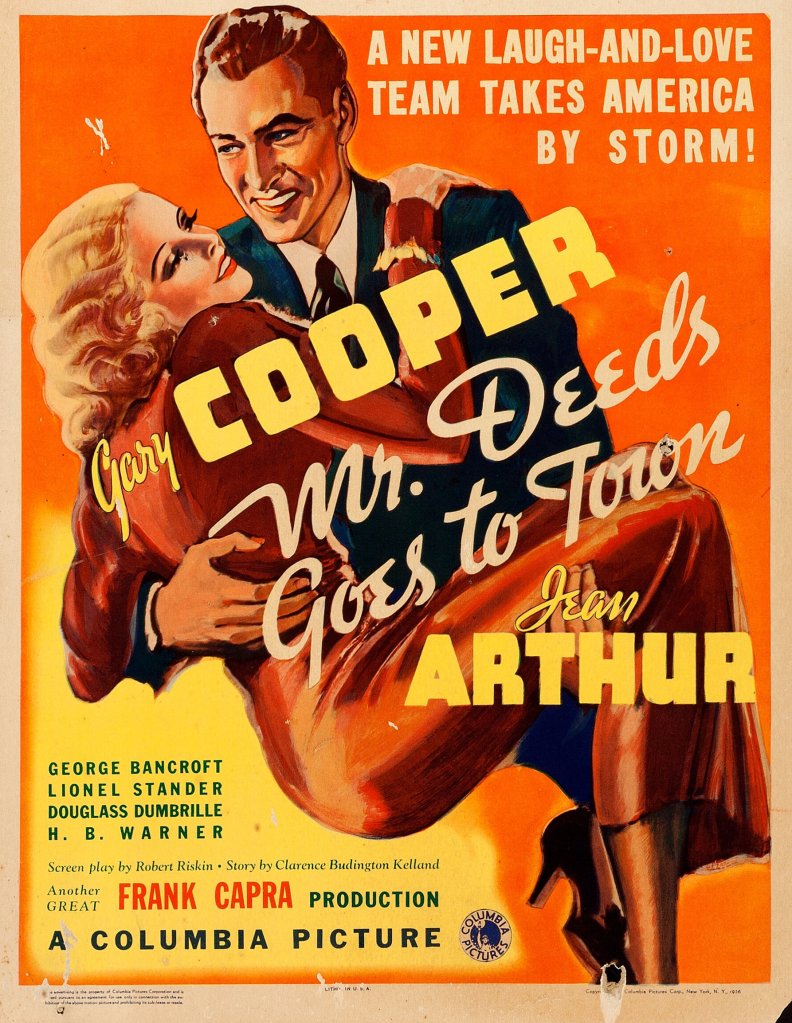
If any film first set out what we think of today as ‘Capraesque’ it might well be Mr Deeds Goes to Town. This was the film where so many of the elements we associate Capra – the honest little guy and his small-town, homespun American values against the selfish, two-faced, disingenuousness of the elites – really came into focus. Mr Deeds Goes to Town develops these ideas with a crisp, sharp comic wit, with Capra’s reassuringly liberal-conservative message delivered to perfect, audience-winning effect. It led to the even-better Mr Smith Goes to Washington and the template for every film which celebrates the little guy asking ‘why’ things have to be done this way.

Longfellow Deeds (Gary Cooper) is just your-average-Joe from small-town Mandrake Falls in Vermont who suddenly finds that he has inherited the unheard-of sum of $20million from a recently deceased uncle. His uncle’s assorted lawyers, led by suavely corrupt John Cedar (Douglass Drumbille) expect the naïve Deeds will happily allow them to continue riding the gravy train they’ve enjoyed for years. However, Deeds proves to have a mind of his own, refusing to kowtow to opportunists.

However, Deeds has an Achilles heel: he’s fallen hard for Babe Bennett (Jean Arthur), who he believes to be an out-of-work office girl but is in fact a star reporter, spinning the stories she picks up from their dates into articles about Deed that make him a laughing stock (the ‘Cinderella Man’). When Deeds discovers the truth – and is simultaneously threatened by Cedar with institutionalisation over his plans to give away his fortune to help the poor – he’s flung into a desperate court case to establish his sanity. Will a heart-broken Deeds defend himself?

Mr Deeds, with a sparkling script from Riskin, captures Capra’s idea of true American values. Deeds is a softly-spoken, unfailingly honest, no-nonsense type who won’t waste a minute on flattery and forlock-tugging and respects hard-work and plain, simple decency. He’s an independent spirit: be that playing the tuba, sliding down the banisters of his grand home, jumping on board fire trucks to help out or sweetly scribbling limericks, he’s as endearingly enthusiastic as he is lacking in patience for pretension.

He also proves an honest man is no fool, but a shrewd judge of character – expertly recognising a lawyer who turns up pushing for his uncle’s ‘common law wife’ to take a share of his fortune is an ambulance-chasing crook – and he’s no push-over or empty suit (made the chair of his uncle’s Opera board, he shocks the rest by actually proceeding to chair the meeting and make decisions). He’s the sort of humble-stock, common-roots, middle-class hero without any sense of snobbery or self-importance, just like his hero President Grant, judging people on their merits not their finery.

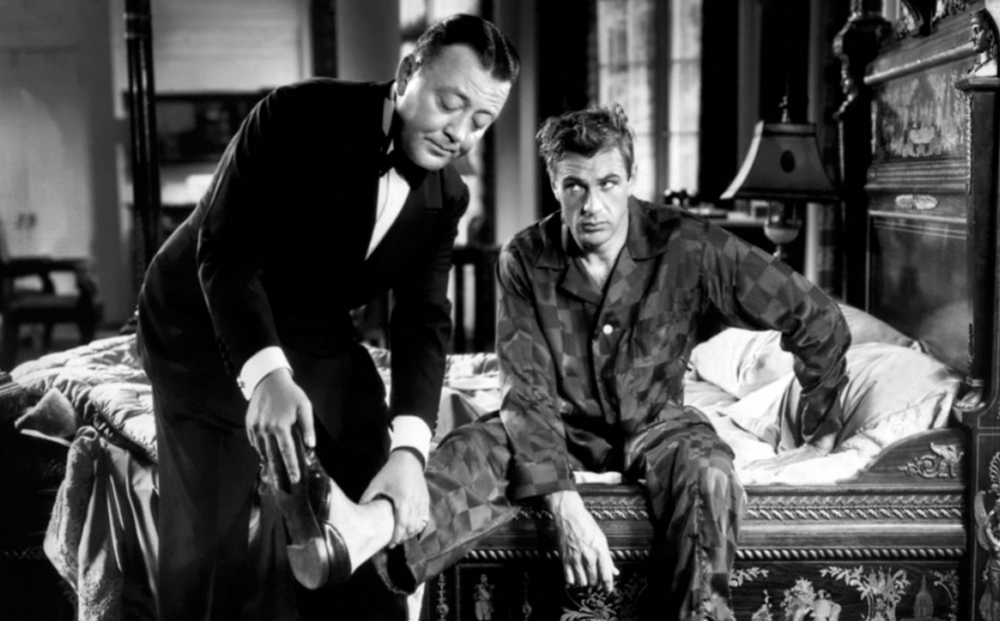
It is, in short, a near perfect role for Gary Cooper, at the absolute top-of-his game here: funny, charming and hugely endearing. Cooper can also convincingly back-up Deeds’ affability with a (literal) fist when pushed too far. Cooper is an expert at preventing an otherwise almost-too-good-to-be-true character from becoming grating or irritating. He’s also extremely touching when called upon – his giddy, bed-rolling phone call to Jean Arthur’s Babe is as sweet as his broken edge-of-tears sadness when he discovers she’s been lying to him (I can think of very few 30s actors who would have been comfortable looking as emotionally vulnerable as Cooper does here).

But Capra’s world view was always more complex though than we think. It’s easy to see Mr Deeds as arguing we should re-direct our efforts to helping the poor and needy, and the greed and hypocrisy of the rich (the sort of snobs who mock Deeds to his face at the dinner table). That might be closer to screenwriter Robert Riskin’s views: but actually, Capra’s vision has more of an Edwardian paternalism to it. He sees Deeds’s destiny – once he renounces the wild living of suddenly being loaded – not be a Tony Benn style-radical but the sort of paternalistic benefactor of the deserving poor you might see in a cosy Downton Abbey-style costume-drama.

Because the people Deeds ends up helping share his view of the world, as one where hard-work and having the right attitude should lead to rewards (with the implicit message, that if you can’t succeed then, it’s your fault). Deeds is tugged out of his slowly forming playboy lifestyle by John Wray’s desperate farmer. Wray is at the heart of a genuinely affecting sequence, determined to cause Deeds harm (believing stories of him frittering away money on eccentric trifles) and ending it in shameful tears, accepting Deeds unasked-for help. Like this man, those Deeds helps have lost farms and land due to the depression, screwed by the games of the financial elites.

But Mr Deeds Goes to Town never once tries to suggest there is anything fundamentally wrong with this system – only some of the people who have risen to the top. And even then, it’s their personal greed and inverted snobbery that’s their crime, not the fundamentally unbalanced financial system. The main strawman for elite’s financial frippery is the Opera house committee Deeds chairs for: he can’t see the point of taking a loss on an art institution, essentially arguing it should focus more on commerce to earn its way – the sort of art view that it’s only good if loads of people pay for it (on that basis Avengers Endgame is the greatest film ever made).

It’s part of a criticism of snobbery that the homely, common-man, Deeds can’t abide: captured in the idea that enjoying the plays and books ordinary people don’t want to read is somehow proof of an elitist coldness that doesnt value ordinary people. There’s an inverted Conservative snobbery here.

Now, don’t get me wrong: there’s still a decent world-view in Capra at valuing hard working people who want to help themselves. In the big city where life is a “crazy competition for nothing”, it’s refreshing to have someone who doesn’t care about societies ins and outs society, but does care that hungry farmers have a sandwich to eat. But it’s also a more conservative, and safe message than people remember.

Saying all that, Mr Deeds is a hugely entertaining film. The romance between Cooper and Jean Arthur (absolutely in her element as the screwball femme fatale with a heart-of-gold) expertly mixes genuine sweetness with spark. The film’s Act Five trial scene is perfectly executed, a brilliant parade of snobs and slander leading to an inevitable final reel rebuttal from Cooper that the actor knocks out of the park. (It works so well, the whole structure would be largely repeated in Mr Smith with the twist that here Deeds doesn’t speak at all) There are a host of superb performances: Stander is perfect as the cynical hack who finds himself surprised at his own conscience, perfectly balanced by Drumbrille as the suave lawyer who has no conscience at all.

All of these elements come together to sublime effect in a film that is rich, entertaining and genuinely sweet – with a possibly career-best performance from Cooper (Again, it’s refreshing to see an alpha-male actor so willing to be vulnerable). Capra’s direction is sublime: dynamic, witty and providing constant visual and emotional interest. Its politics are more conservative and simplistic than at first appears, but as a setting-out of Capra’s mission statement for warmer, kinder, small-town American values of simplicity, plainness, honesty and decency it entertainingly puts forward as brilliant a case as Deeds does.

Materialists (2025)

Materialists (2025)

Smug, contrived and misguided romantic comedy with a self important air

Director: Celine Song

Cast: Dakota Johnson (Lucy Mason), Chris Evans (John P), Pedro Pascal (Harry Castillo), Zoë Winters (Sophie), Marin Ireland (Violet)

In the modern world, what do we look for most in a partner? To professional matchmaker Lucy Mason (Dakota Johnson) “the math is simple” (strap in folks, that’s a phrase you’ll hear a lot): we want someone who ticks plenty of our boxes, offers financial and social security as well as being the right height with the right level of charm. Love, you’ll notice, doesn’t play a role in that. So, what’s Lucy to do when she starts a relationship with ‘unicorn’ Harry (Pedro Pascal), exactly the sort of charming, super-wealthy and tall guy women dream of, just when her ex-boyfriend John (Chris Evans), part-time-actor-and-waiter, suddenly resurfaces in her life. How strong will her principles to make the best deal possible be?

It sounds like the set-up for a romantic comedy. And honestly, it would have made a perfectly good one. Our heroine would be warm and charming even as she professed her cynicism, and the plot focussed on the whimsically old-fashioned concept of matchmaking would have gradually led her to embrace love (along with, inevitably, the poor but adorable love interest.) But Celine Song’s follow-up to Past Lives is a scrupulously dry character study, that wants you to think it’s got a deep and meaningful message about relationships in the world today, but eventually pedals the same rom-com message you imagine it would call trite.

But in a rom-com, the audience knows they’re watching a candyfloss fantasy – Song tries to staple the same “abandon realism here” kind of ending onto her ponderously, pretentious story, despite it contradicting the heroine’s entire personality and the characters’ painstakingly spelled out obstacles, and doesn’t seem to have noticed it makes the whole thing a complete dog’s dinner.   

Putting it simply: I didn’t particularly like Materialists, found its smugly superior attitude irritating, its final message deeply confusing, and felt it eventually chickened out of making a real point about modern dating. It’s an art-house film, dressed as a rom-com, trying to fool you into thinking it’s a state-of-the-nation film while letting its lead end up in a reassuring fantasy that only happens in the movies.

Partly based on Song’s experience as a match-maker, the most interesting content in Materialists is its exploration of what makes people choose who to date. I think this is a very interesting topic: at a time when people find it harder to meet (and the financial demands of the modern world harder to cope with), hundreds of thousands of people will be making relationship decisions based on cold hard financial and social facts. And yeah, some of them probably do feel guilty about that, much as Materialists suggests.

But exploring the loneliness of modern life isn’t Song’s goal. Lucy’s clients (bar one) are deliberately awful caricatures – who cares why someone like that would be looking for love, right? The film is solely here for Lucy’s Great Dilemma: How far will she go in a relationship with a box-ticking man she likes, but whom she doesn’t love. (A more challenging version of Materialists might have left out Evans’ unbelievably-handsome-and-decent penniless actor, and just really explored this dilemma for Lucy.)

But instead, the love triangle offers an easy get-out card for Lucy. Because, unlike her clients, Lucy has already met her perfect match. In fact, while her desperate and deluded clients just want to meet someone who can stand to be at the same table sa them, Lucy has two gorgeous, considerate, tall, charming men begging her to let them commit their lives to her. (And who, by the way, can believe a charming, six-foot multi-millionaire who looks like Pedro freaking Pascal can’t get a date?) She’s got the lovely Harry, whose stunning Manhattan penthouse she gazes at awe-struck, like Lizzy Bennett at Pemberly. And there is literally nothing wrong with John, aside from his lack of income (he’s the only actor in the world who doesn’t have an agent and doesn’t want commercial work) – he’s kind and decent  and trying to follow a dream. It makes her conundrum a false fantasy.

That’s one of the worst things about Materialists which, in many ways, is even less risky and daring than flipping Pretty Woman. It talks a big game about dating and relationships being economic and social decisions. It bangs on endlessly about this topic but, deep down, clearly doesn’t believe in it at all. Because even an astute analyst of people’s personalities (as Song can be) isn’t brave enough to make a film that commits to its initial proposition. Instead, Song sets up a parade of straw-man arguments that Lucy’s experiences can knock down to reach the ‘correct’ decision.

Ah Lucy. This mystifyingly motivated character who Dakota Johnson struggles to make coherent sense from. It’s not helped by Johnson’s breathy, evenly paced delivery that makes it very hard sometimes to work out what her character is meant to be thinking or feeling. Her air of dead-eyed professional monotone makes sense for her interactions with clients, but her colourless delivery of nearly all her lines made it almost impossible for me to work out when her character’s views change.

It’s not completely Johnson’s fault that Lucy is a deeply irritating character, but it would take a significantly more charismatic actor to make you overlook what a self-pitying, self-loathing waif she is, whose fundamental selfishness isn’t softened by constantly telling us she knows how selfish she is. Are we supposed to be rooting for her, when she essentially treats John (Evans, very likeable, sweet and witty) as an emotional-comfort-blanket, who can be dropped when she gets bored with him? Even when John calls her out on this, by the next sentence he’s absolving her for it.

Then in order to provoke her epiphany, the film clumsily introduces a sexual assault plotline for a supporting character, which exists solely to give Lucy the equivalent of “man-pain” – honestly, if the same plot was put in a film with a male lead, the socials would be burning up with cries of foul. This plotline is ludicrous from start to finish, while simultaneously treating a genuinely serious issue in dating like a ‘problem-of-the-week’ that can be solved with a hug. No male writer could have gotten away with the shallow, clumsy, plot-contrived development – and I don’t think Song should either.

Materialists takes place in a crazy world, where a dating firm has offices across the world, where the Manhattan police don’t respond to harassment call-outs from rapists, where everyone is paying tens of thousands of dollars to hook-up and John seems to be the only poor person. It’s dripping with smug assurance at its own cleverness, while offering a sort of moral message identical to a Sanda Bullock 90s romcom (but with fewer gags and chemistry). It’s frequently ponderous, stuffed with overly mannered dialogue and goes on forever. Having a Michael Haneke inspired closing shot, doesn’t change the fact the scene itself could have come straight out of The Runaway Bride. Materialists was not good.

The Taming of the Shrew (1967)

The Taming of the Shrew (1967)

Burton and Taylor are perfect casting in this rollicking adaptation of Shakespeare’s most difficult comedy

Director: Franco Zeffirelli

Cast: Elizabeth Taylor (Kate), Richard Burton (Petruchio), Cyril Cusack (Grumio), Michael Hordern (Baptista Minola), Alfred Lynch (Tranio), Alan Webb (Gremio), Michael York (Lucentio), Natasha Pyne (Bianca), Victor Spinetti (Hortensio), Roy Holder (Biondello), Mark Dignam (Vincentio), Vernon Dobtcheff (Pedant), Bice Valori (Widow)

There’s a reason why the poster screamed “The motion picture they were made for!” Who else could play literature’s most tempestuous couple, than the world’s most tempestuous couple? After all, they rolled into this straight off the success of Who’s Afraid of Virginia Woolf? and, say what you like, a knock-about piece of Shakespearean farce is certainly more fun than two hours of Edward Albee. So, Burton and Taylor turned up in Italy, entourage in hand, to bring The Taming of the Shrew to life in a gorgeous explosion of grand sets and wonderfully detailed costumes.

The Taming of the Shrew actually translates well to the screen – and Zeffirelli’s high-octane style. Odd to think now, for a film soaked in elaborate period setting, that in the 60s Zeffirelli’s style was seen as border-line sacrilegious to the Bard. He actually escaped with less opprobrium from the critics than he faced for cutting two-thirds of Romeo and Juliet a year later, since most seemed to think Shrew was less of a holy text. Not that it stopped a lot of critics reckoning Zeffirelli should focus more on executing every pentameter to perfection and less on gags and visual story-telling.

But actually, that’s perfect for a story that was always a raucous farce at heart – so much so, even the original play presents it as a play-within-a-play told to a drunken Christopher Sly (cut here). The bawdiness feels fresh out of Chaucer and Boccaccio, a parade of people in period costumes slapping thighs, roaring with laughter, double taking and enjoying a series of cheeky jokes (did Pasolini watch this before making his lusty adaptations?). Padua is a city of sin, with prostitutes openly advertising their wares (and later, clearly, invited to Bianca’s wedding) and a wife-stealer is in the stocks.

Zeffirelli’s Shrew is full of rowdy wildness – in a nod to the cut Sly framing device, Padua is in the midst of a feast of fools, students turning a choral sing-along into a drunken celebration. Kate and Petruchio’s high-octane gunning for each other, feels fitting for a location where everyone is careering wildly towards the target of their immediate emotions, either horny beyond belief, desperate to marry off daughters or furious at supposed crimes or betrayals.

The age-old question you have when staging Shrew is what to do about its fundamental misogyny (and it’s hard not to argue, much as the bard’s defenders have tried, not to see it as a play deeply rooted in the patriarchy). Zeffirelli’s solution is an intriguing one: his Shrew is enigmatic, with Kate’s motivations, feelings and reasonings often left cleverly open to interpretation. It’s also helped, of course, by the natural chemistry between the two leads. If there is one thing we all know, it’s that Burton and Taylor were really into each other and drove each other up the wall. What Shrew does here is take that sexual force and exuberance of its leads and balances that with a subtle unreadable quality to Kate that leaves the relationship’s power-balance just open enough to interpretation.

In addition, the film makes clear Kate’s behaviour is unacceptable, introduced screaming abuse from a window and smashing up all the furniture in a room in a fit of furious pique. There’s a lovely touch where Petruchio stares into his own reflection, while planning his campaign – a nice suggestion that he will mirror her behaviour to show its unacceptability (indeed, on returning to their marriage home, he’ll also twice smash up a room’s contents in a pointless display of adolescent petulance). Kate has, to put it bluntly, anger management issues and if Petruchio’s methods are extreme you can see the twisted logic.

Their first meeting sets a pacey tone that will run through the whole film. It’s a wild chase through the Baptista home, through a connected wool barn, over a roof and back again. One in which they will bellow at each other, Kate will rip up planks and bannisters to throw at him, they’ll roll in the wool (hard not to see a sexual charge here) and eventually collapse through the roof to land back in the wool. Petruchio will then announce her consent to marry with an arm twisted round her back, just as he will cut off her refusal at the altar with a kiss (the wedding scene is a neat interpolation, showing something the Bard only reports). They are in a constant pursuit of sorts from here, from the back-and-forth at Petruchio’s house, to the journey to Padua and then finally through a crowd of women at the film’s end. But where does the power lie: pursued or pursuer?

At first, of course, with the pursuer. Burton’s Petruchio is a wild-eyed force-of-nature, permanently partly sozzled (Burton spends most of the film with a pale, damp drinking sweat that was probably not acting), his tights full of holes, his manners rude (he’s basically Christopher Sly in the lead role), focused on the money he’ll get from wooing Kate. But, while he’s a powerful alpha male, it’s remarkable how the balance slowly shifts to Kate. After their arrival at his home (she, soaking wet after falling in a puddle to Petruchio’s laughter), she puts her drunken husband to bed, has the house redecorated, the servants redressed and everything arranged to her liking.

Taylor’s performance here adds to the effect. It’s an intelligent, camera-wise performance which uses looks to convey Kate’s loneliness and pain. Locked in a room before the wedding, she glances out of a window with aching sadness. She looks with gentle envy at warm friendship in others. Taylor gives a wonderfully calm, genuine delivery of the famous closing speech of wifely piety. But it’s words are undermined in two ways: firstly by the suspicion it’s partly done to show-up the jokes against her throughout the wedding, and then by Taylor’s immediate departure after kissing a finally flabbergasted Petruchio, leaving our macho hero wading through a pile of laughing women in a desperate attempt to catch-up. Who might just rule here, long term?

Zeffirelli’s film moves the Lucentio (a wide-eyed Michael York) sub-plot even further to the margins – in a neat invention, Petruchio during the first chase, keeps barging in on rooms where different sub-plot scenes are all going on at the same time. As a result, this does mean a number of first-rate actors get very little to do: Cyril Cusack’s Grumio becomes a grinning observer of the chaos, Alfred Lynch’s Tranio (after some initial fourth-wall breaking) fades into the background, Michael Hordern has little to do but look aghast as a desperate Minola, Alan Webb barely registers as a rejected suitor while after an initial sight gag (his minstrel player disguise making him look like the fifth Beatle) Victor Spinetti gets similarly fades away.

But then audiences were here for the Burton-Taylor show, and they get that in spades: framed within a medieval setting inspired by classical painting (and which features an obviously fake backdrop for its countryside exteriors). And The Taming of the Shrew is rollicking good fun, which manages to work an interesting line on the play’s troublesome sexual politics, suggesting that all but not always be as it seems. And it nails the atmosphere of rollicking fun in this ribald Shakespeare yarn.

Me and Orson Welles (2008)

Me and Orson Welles (2008)

A star-turn from McKay and a brilliant theatrical reconstruction makes a charming comedy

Director: Richard Linklater

Cast: Zac Efron (Richard Samuels), Claire Danes (Sonja Jones), Christian McKay (Orson Welles), Ben Chaplin (George Coulouris), James Tupper (Joseph Cotton), Eddie Marsan (John Houseman), Leo Bill (Norman Lloyd), Kelly Reilly (Muriel Brassler), Patrick Kennedy (Grover Burgess), Travis Oliver (John Hoyt), Zoe Kazan (Gretta Adler)

In the 1930s Orson Welles was the Great Man of American theatre, a genius blessed with Midas’ skill to turn everything he touched to Gold. He had conquered the stage and his success on radio transmitted his fame into households across America. All this and he was not even thirty. On top of his boundless charisma, creativity and magnetic leadership qualities, he was also vain, selfish, boundlessly ambitious and self-obsessed, seeing other people as little more than extras in his drama. It’s an exploration of the man central to Linklater’s Me and Orson Welles, combined with the film’s wonderfully fond exploration of that magical world behind the curtain in the theatre.

Me and Orson Welles charts Welles’ landmark Broadway production of Julius Caesar: a modern-dress marvel (‘the fascist Caesar’) that reimagined a sharply cut, pacey production set in a world of jackboots, black shirts and Nuremberg-esque beams of light. Welles (Christian McKay) was, of course, front-and-centre as Brutus with his Mercury theatre players (nearly all of whom followed him to Hollywood for Citizen Kane) all around him. Newest to the cast is 17-year-old Richard Samuels (Zac Efron), away from school, dreaming of being an actor and falling in love with older production manager Sonja Jones (Claire Danes). As the production stumbles towards the stage under Welles’ mercurial hand, Richard worships Welles and loves Sonja – but will his hero-worship survive sustained contact with Welles?

Linklater’s film is set in a gorgeous recreation of 1930s Broadway theatre, full of love for the greasepaint, backstage gossip and theatrical tricks that create a world on stage. It also features an astonishingly accurate recreation of this seminal production, staged and lit to perfection, which gets as close as we can to capturing some sense of the astonishing experience the first night audience had watching the sort of Shakespeare production they had never seen before (Dick Pope, harnessing his experience of recreation Gilbert and Sullivan in Topsy-Turvy deserves major credit for his cinematography here, perfectly capturing Welles’ pioneering use of light).

Welles’ flaws are slowly discovered by Richard Samuels – a charming, deceptively light and winning performance by Zac Efron. Samuels is at first bowled over by Welles charisma – and Welles enjoys the ego-trip of taking a star-struck young man under his wing, who he can tutor and mould (who, after all, doesn’t love having a disciple). What Me and Orson Welles interestingly does is to have its young lead slowly work out that Welles may be a genius – but he’s also a fundamentally, principle-free shit who never means what he says, doesn’t think twice about dropping people when they have served their purpose and largely sees conversation as a one-way street where Welles monologues and the other person listens (and certainly never, ever, contradicts – Welles never forgives correction).

But Welles dominates the film, like he dominated life. He’s brilliantly portrayed by Christian McKay in his first major film role. McKay, an unknown, was selected after Linklater was wowed by his one-man show about the Great Man. (Linklater refused calls from the producers to replace him with a more famous actor). McKay dominates the film in what is not only a superb capturing of Welles vocal and physical mannerisms, but also a capturing of his mix of utter charisma, God-given talent and overwhelmingly selfish egotism. McKay roars through every scene with the same force-of-character you imagine Welles had, bowling over everyone around him and shaping the world into what he wishes it to be. Problems of money, timing and people are waved away (or left to be fixed by Eddie Marsan’s put-upon version of John Houseman) and McKay’s Welles uses sheer force of will to turn every event, outcome and single moment into an intended triumph (whether it is or not). Me and Orson Welles brilliantly captures Welles ability to shape his world.

We see the way he overwhelms the personalities of those around him. People like Joseph Cotton (a superbly captured performance by James Tupper) both love him and know that’s he’s a selfish, arrogant git who doesn’t seem to care about anyone but himself. Others, like Ben Chaplin’s tortured George Coulouris, allow themselves to be mothered by Welles, even though they know his motivations are more for the show itself (and the glory that shall be Welles’). Welles is the guy who gives the same heartfelt pep-talk to multiple actors, and writes identical jovial thank-you cards to all on opening night. The guy who uses nicknames for those around him because it’s a way to subtly assert control. Linklater’s film recognises his genius, makes him overwhelmingly attractive in his gung-ho confidence, but – and this is the brilliant thing about McKay’s stunning performance – also exposes his deep character flaws.

It superbly captures his vanity, selfishness and self-occupation. Welles cares little for anyone, assuming he can brow-beat or overwhelm them to fulfil his wishes. That could be a set designer, furious at Welles hogging credit for his work in the programme (Welles promises this will be amended, forgets about it and then later – when it’s too late to do anything about it – bluntly says he has no intention of not taking credit). It could be the radio show he turns up to record, clearly having not read the script, walking in seconds before live broadcast and promptly improvising a superb monologue (based on The Magnificent Ambersons) which at first puzzles, frustrates and then stuns into fawning admiration his fellow actors. What’s clear is that this is the sort of behaviour you can only get away with when you are flying high and all is perfect – Welles after all would self-destruct like few others in the next few years, never again able to yield such charismatic power again.

Me and Orson Welles uses a familiar structure – a love triangle of sorts – to bring this to life. Claire Danes gives a marvellously winning performance as an ambitious and super-confident woman, trying to make her way in a male world, perhaps drawn towards young Richard because he’s more thoughtful than the rest of the men around her. (Me and Orson Welles makes clear we live in a world where the actors of the company feel comfortable taking bets on who can bed Sonja, while she is also accepts that Welles can use the women of the company like a room-service menu). Both she and Richard are perhaps the forerunners of those who will finally be pushed too far by Welles, that would leave him a perpetual outsider.

This is a fun musing on the personality of one of the greatest film-makers of all time, brilliantly set in a luxurious recreation of classic Broadway. Directed with pace and wit by Linklater, with a fine cast giving it their all (and a career-defining turn from McKay), Me and Orson Welles is light, frothy but fascinating work.