Tag: Media satire

Don’t Look Up (2021)

Don’t Look Up (2021)

A host of stars tell us the world us coming to an end in this self-satisfied film

Director: Adam McKay

Cast: Leonardo DiCaprio (Dr Randall Mindy), Jennifer Lawrence (Kate Diabiasky), Rob Morgan (Dr Teddy Oglethorpe), Meryl Streep (President Janie Orlean), Cate Blanchett (Brie Evantree), Jonah Hill (Jason Orlean), Mark Rylance (Peter Isherwell), Tyler Perry (Jack Bremmer), Timothée Chalamet (Yule), Ron Perlman (Colonel Benedict Drask), Ariana Grande (Riley Bina), Scott Mescudi (DJ Chello), Himesh Patel (Philip Kaj), Melanie Lynsky (June Mindy), Michael Chiklis (Dan Pawketty)
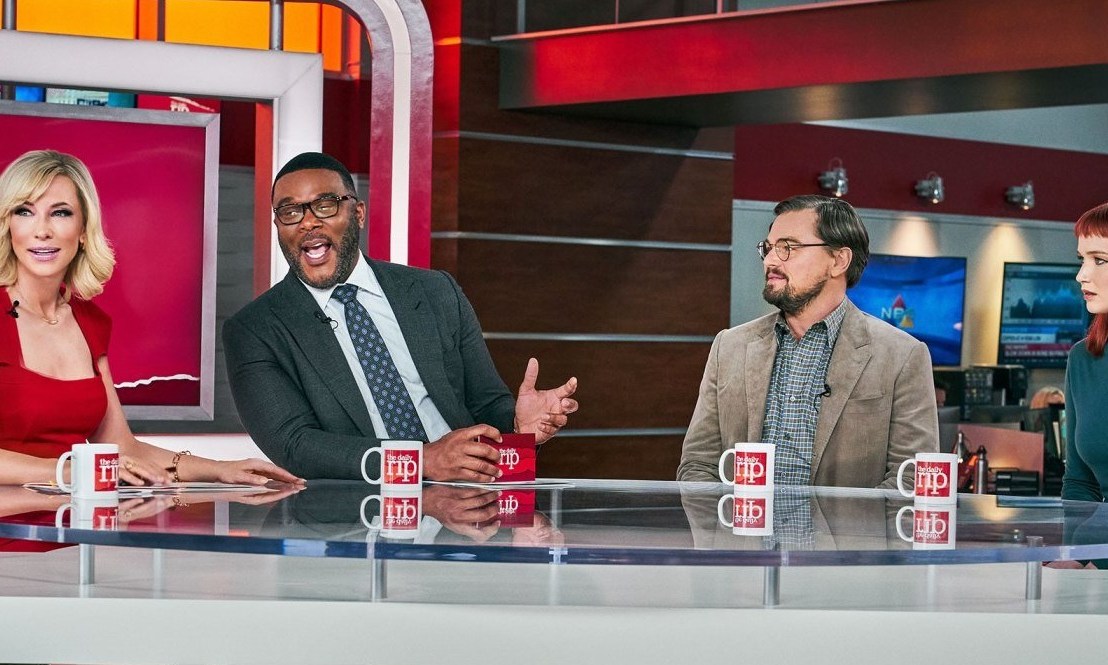
Climate Change. It’s the impending disaster where we stick our head in the sand and pretend it’s not incoming. Governments have been told for decades our carefree use of fossil fuels and slicing down of rainforests will have a cataclysmic impact. But it’s always easiest for governments and people to just say “nah” and not let those thoughts get in the way of our everyday lives. Adam McKay’s satire Don’t Look Now takes these trends of indifference, disbelief and denial climate scientists have faced their whole careers and reapplies them to a comet-hits-the-Earth disaster movie.

So, when Michigan State University astronomers Dr Randall Mindy (Leonardo DiCaprio) and Kate Diabiasky (Jennifer Lawrence) spot a hunk of ruck the size of Everest on a collision course with the Earth they are met with a chorus of… yawns, memes and flat-out denials. The Trumpian President (Meryl Streep) is only interested in her donors, the mid-terms and dodging the fall-out from a host of scandals. The media – represented by Fox News style anchors Brie Evantree (Cate Blanchett) and Jack Bremmer (Tyler Perry) – aren’t interested in a story they can’t process down into a feel-good social media meme. And even when people start to listen, plans to destroy the comet are benched in favour of a wildly risky scheme, dreamed up by Steve Jobs/Elon Musk style tech billionaire Peter Isherwell (Mark Rylance) to mine the rare ores it contains for money. What could go wrong?

I can see what Adam McKay is aiming for here, to create a sort of Dr Strangelove for climate change, where the great and the good we are counting on to get us through a crisis, turn out to be the blinkered morons who end up causing it. There are moments where it sort-of hits on a rich mixture of farce and genuine anger. Moments where first Kate then Mindy – thelatter with lashings of Howard Beale – melt down on National TV, apoplectic at the comet-denying indifference of millions of people stand out as both hilarious and also compelling.

But, like a lot of McKay’s would-be satirical attacks over the last year, on finance and politics, the message sometimes fails to land because of the heavy-handed, self-satisfied, smug tone of the delivery. Don’t Look Up frequently isn’t very funny – and yes I know it ends with the world being destroyed due to everyone’s indifference and incompetence – and it ladles most of the blame on obvious targets. It’s takedown of Trump – here represented by Meryl Streep – is basic, it hits open goals with the agenda-driven bias of American news reporters and takes pot-shots at messianic tech billionaires. A real punch would perhaps have focused in more on how all the mindless, unfocused greed and ambition of these people is fed by the bland, social media focused, sound-bite obsessed shallowness of the masses. But Don’t Look Up remains focused on the big people.

So focused in fact that, even in this satire, only America has the wherewithal to launch a mission against the comet. A joint Russian, Chinese and Indian mission fails to get off the ground and other world leaders are noticeable by their absence. We never really spend time with any normal people. While much of the blame does lie with governments not taking a lead, we do live in a world where normal people are radicalised by reading about nonsensical mush like QAnon through chat rooms. Imagine a satire that looked at how ordinary people can be made to believe wild theories rather than the evidence of their own eyes as a comet heads towards Earth? Instead Don’t Look Up wants to stick with something vaguely comforting – that there are big, selfish, elites running us who act out of greed and stupidity and they carry all the danger (and the blame).

Where the film is strongest is the doubt and nonsense thrown at scientists. Mindy and Diabasky are first ignored by the administration because they aren’t Ivy League. Attempting to leak their findings on the TV, they are overshadowed by an on-air-proposal of a celebrity DJ to his singer girlfriend and when they hit the news, the only takeaway is that Mindy is ‘cute’, while Diabasky is a freaky angry woman, ranting about the world ending (she’s a meme in minutes). At every point the science is questioned or put on the same level as gut feelings and political agendas. Even their campaign to encourage the world to “Just Look Up” to see the impending catastrophe is countered by the President’s “Don’t Look Up” campaign that persuades millions of people the comet isn’t real.

Really rule by social media and the dumbing down of humanity should be the main target here. A comet isn’t even a great metaphor for climate change – which is gradual, can’t be just blown up and needs to be prevented by society making changes to the way we live. In some ways, by replacing climate change with a comet, even the film is acknowledging its not sexy or exciting enough – and that it doesn’t want to turn its critical fire on millions of people who would rather turn the heating up or drive to the corner shop rather than push to make changes in their lives.

So, it’s easier and simple for McKay to create a cartoon freak show of easy targets and bash them rather than tackle the underlying causes of climate change – that our world and its population wants to have its cake and eat it, and governments for generations have been too focused on the here and now to ever worry about the years to come. So funny as it can be to see Streep Trump it up, or Rylance channel his softness into insanity, or Hill play another of his mindless frat boys turned power brokers, the film doesn’t feel like it really goes for the real causes of climate change: our own culture. It takes hits at our social media simpleness, but not at our short sightedness.

McKay does at least direct without much of the fourth-wall leaning flashiness of his earlier works, and there are committed – if not exactly stretching – performances from Lawrence (whose characters checks out in despair at the shallowness) and DiCaprio (who is seduced by fame, power and Blanchett into becoming an apologetic mouthpiece for the administration). But Don’t Look Up is a little too pleased with itself, a little too focused on easy targets and doesn’t do enough to spread the blame wider. It stills see many of us as victims or mislead – when really we are as to blame a everyone else.
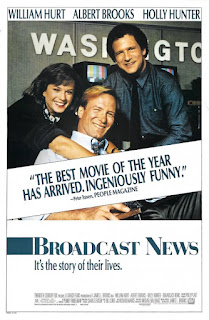
Broadcast News (1987)

Broadcast News header
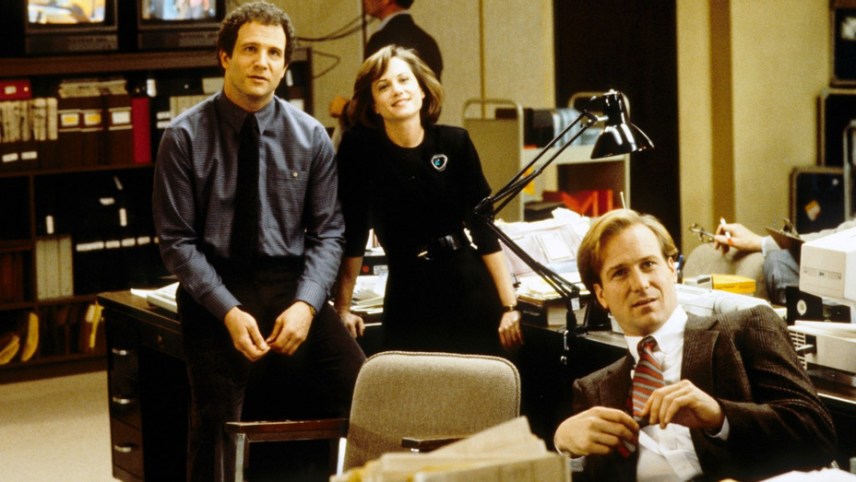
Albert Brooks, Holly Hunter and William Hurt struggle with the news and love in James L Brooks not very funny or insightful romantic media satire

Director: James L Brooks

Cast: William Hurt (Tom Grunick), Holly Hunter (Jane Craig), Albert Brooks (Aaron Altman), Robert Prosky (Ernie Merriman), Lois Chiles (Jennifer Mack), Joan Cusack (Blair Litton), Peter Hackes (Paul Moore), Christian Clemenson (Bobby), Jack Nicholson (Bill Rorish)

TV news – what is it for? To inform or entertain? It’s a debate James L Brooks tries to explore in his inconsistently toned hybrid rom-com and satire. At the end you very much intended to come out with the view that it should be about one, but is more about the other.

In the Washington branch of an unnamed network, Jane Craig (Holly Hunter) is a rising star producer, prone to daily emotional breakdowns. Her best friend is brilliant, committed reporter Aaron Altman (Albert Brooks), who longs to be the anchorman but lacks social skills. Arriving in their branch is Tom Grunick (William Hurt), handsome and full of TV savvy, set to become an anchor but lacking any real knowledge of either journalism or current affairs. Naturally a romantic triangle develops between these three, along with all sorts of debate about the purpose of TV news.

The film stacks the deck firmly in favour of the view that news should be a comment-free recitation of facts. Brooks’ film bemoans – often in heavy-handed ways – the intrusion of human interest, soft stories and puff pieces in place of hard-hitting questions and challenging coverage. Tom Grunick is the embodiment of this: charming, friendly, reassuring – and totally uninformed, interested in “selling” a story rather than telling it. Meanwhile, to the film’s disgust, the higher-ups at the network frequently value appearances and popularity over tough analysis, and looking good on TV counts for more than journalistic skills. Pity the film: if it feels this network is bad, imagine how it’d feel about Fox News today.

Of course what the film isn’t interested in is acknowledging a certain level of showmanship is an important tool in making the news accessible, engaging and interesting for the audience – making them more likely to pick up the important things in the content. It also overlooks that purists Aaron and Jane may avoid stage-manging their stories as overtly as others – but they’re more than happy to fill them with heart-string-tugging references and shots to get the audience reactions they want. In fact, you can see Tom’s point – what’s really wrong with him interjecting a shot of his own teary face while interviewing a rape victim (a moment he recreates)? Isn’t that basically the same?

Broadcast News tries to outline the difference, but I’m not sure it goes the full distance – or makes the debate accessible or interesting. That might be partly because the film can’t decide whether to give more attention to the satire or the romance – Jane is attracted to Tom (who returns her feelings), but is extremely close with Aaron, who carries a not-even-concealed passion for her. Both plots sit awkwardly side-by-side, getting in each other’s way and not adding insight to each other.

But then the film is fairly shrill. That partly stems from the two characters we are meant to relate to being tough to like. Holly Hunter is dynamic as the forceful, passionate Jane, but she’s also a rather tiresome character. Her purist demands are slightly holier-than-thou and while there are nice touches of humanity (on a date with Tom, she doesn’t want her handbag opened at a security check because she’s put a pack of condoms in it)  the film doesn’t manage to warm this control freak (so domineering she can’t get in a taxi without dictating the route). Jane also has a tendency to burst into tears – a suggestion of some underlying emotional problems the film instead treats as a joke.

That’s nothing compared to Albert Brooks’ Aaron Altman. This is exactly the sort of character beloved by film-makers, but who if you met in real life would come across an an unbearable creep. Like Jane, he’s an uncompromising idealist whose pious self-importance quickly grates. The film doesn’t appreciate the irony that its champion of professional reporting yearns to be the pretty-boy face of the network and resents that he’s neverbeen the popular kid.

His tantrums and rudeness are meant to be signs of his genuineness and the film leaves no doubt that his love for Jane should be requited because he knows what’s best for her. He’s the Nice Guy who doesn’t get the girls even though he really deserves them.  A scene where he furiously berates Jane when she confesses her feelings for Tom, then demands she leaves, then demands she stays so he can lecture her on his pain and why her feelings are wrong smacks of a thousand male script writers who didn’t get the girl they wanted and it was so unfair.

The film’s view of women is often questionable. Today, Aaron looks more like a Proto-Incel, one emotional snap away from strangling Jane because she won’t love him when she SHOULD. The film sees him as a relatable, principled hero. Jane may be smart and principled, but she’s hysterically over-emotional for no given reason (Women! They’re so crazy!), domineering and controlling. The film’s only other female character is Joan Cusack’s production assistant who spends her time either shrieking in shrill panic or talking with nervous incoherence.

So, it might be a fault of the film that the character I related to most was the one we were meant to condemn. William Hurt’s Tom is nice-but-dim, superficial but polite, supportive, hard-working and honest, self-aware enough to feel guilty that he’s not really qualified to do the job. He tolerates being mucked around by Jane far more than many others would and despite being constantly abused by Aaron, offers him no end of support. If Tom is the nightmare shape of TV news, you end up thinking “well heck, is it really that bad?”

Broadcast News overall is an underwhelming experience, not funny or romantic enough to be a comedy, or insightful enough about journalism to be thought-provoking. Brooks directs with his usual televisual lack of flair, but there are some decent comedic set pieces: Cusack has a mad-cap dash through a TV studio to deliver a taped report for a deadline that is a masterclass in physical comedy, while the film’s best set-piece is Aaron’s sweat-laden anchor appearance on a weekend news bulletin. But the film gives too many characters a pass and avoids asking itself the tough questions. It ends up a bit of a slog that probably has more appeal to insiders than audiences.

The Square (2017)

The Square header
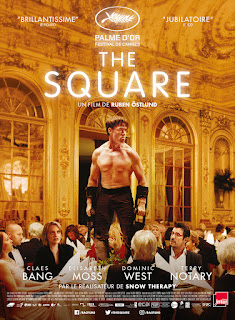
Art goes wrong in Ruben Östlund’s scattergun satire The Square

Director: Ruben Östlund

Cast: Claes Bang (Christian), Elizabeth Moss (Anne), Dominic West (Julian), Terry Notary (Oleg Rogozjin), Christopher Læssø (Michael), Lise Stephenson Engström (Daughter), Lilianne Mardon (Daughter), Marina Schiptjenko (Elna), Annica Liljeblad (Sonja), Elijandro Edouard (Boy with Letter)

Christian (Claes Bang) has it all. The respected director of a celebrated Swedish Modern Art Gallery, he’s rich, handsome and highly thought of by all. That all fractures when his phone and wallet are stolen in a confidence trick. Using the phone’s tracker, Christian identifies the working-class apartment building its in. In a burst of late-night energy, he writes a threatening letter to the thieves and posts a copy through every single apartment door demanding it’s return. It is: but Christian’s letter has a negative impact on an innocent young boy (Elijandro Edouard) whose parents now believe he must be a thief. Christian is so preoccupied with this he fails to pay attention to a YouTube video created to promote his new exhibition: the video of a homeless child being blown up outside the museum leads to national condemnation.

And that exhibit? It’s called The Square (you see!). Its main feature is a literal square on the floor, marking a safe space where everyone is equal. The exhibit is themed around trust, mutual respect and altruism. Traits which Östlund’s film reminds us time-and-time again his central characters are all sadly lacking in. It’s part of a broad-ranging satire on the self-importance of the Art World and the self-obsession of the upper classes that, while beautifully filmed, comes across as rather scattergun. Putting it bluntly, most of its targets are so obvious, the entire film might as well be footage of fish being shot in barrels.

A film like this, hinges on Christian’s self-perception being clearly shown to be very different from his reality. In effect, we need to see how Christian believes himself to be a decent, upstanding, noble fellow but also be shown he is in fact prejudiced, self-obsessed and vain. While the film does very well to show how shallow Christian’s “nice-guy” image is – he basks in the adulation of colleagues and museum patrons and carefully prepares his ‘spontaneous’ presentations for maximum effect – we never get quite enough of a sense of how he sees himself. His mystique is punctured so early, that the sense of events forcing an awkward confrontation with his true character is not developed.

This takes nothing away from the exceptional performance of Claes Bang, a charismatic and gifted actor who can pivot on a sixpence from huge charm to bullying menace. He’s completely believable as the red-spectacled, scarf wearing aesthete just as he is the sort of bully who’ll push a troublesome kid over. Matey and jovial with his employees, he’s also hesitant on their names and berates assistant Michael (Christopher Læssø) when he gets cold feet about executing his letter drop plan (on top of which, he naturally assumes as Michael is black, he’ll be better at carrying out the plan than Christian). His life is a careful performance, with every moment scripted by him, that fractures into something much messier the instant he loses control.

It’s just a shame that Östlund doesn’t delve into the opportunities this presents. He’s more interested in obvious characters like Elizabeth Moss’ Anne, a preening journalist (she inexplicably lives with a Chimp) with whom Christian enjoys a one-night stand, culminating in the two of them bickering over a used condom. (Christian seems worried she’ll pinch his sperm).

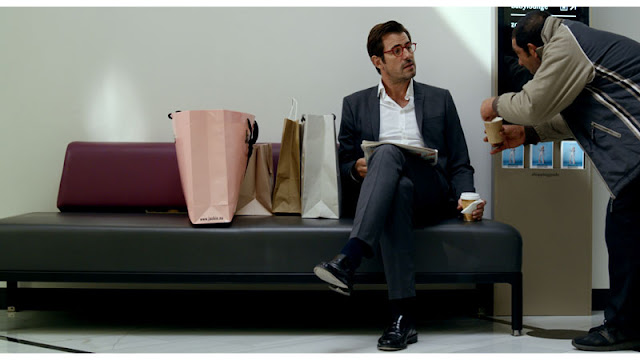
Too often Östlund contents himself with simply stating that the upper clases are vain and pre-occupied with their own needs instead of the lives of others. In case we miss this point, the film is littered with shots of beggars. It even opens with the camera focused on a beggar sleeping on the street in broad daylight while, off camera, a passionate student pushes leaflets urging people to do more to help the homeless while passers-by express irritation or disinterest to them. You see! Even the campaigner is more interested in virtue signalling than actually helping people! Interactions with beggars pepper the film: Christian is annoyed by one beggar not being grateful enough when he condescendingly offers to buy them dinner to get out of an awkward conversation with them and then later pays another to guard his shopping when he takes a phone call.

This social satire runs in parallel with a scathing-but-rather-obvious series of jokes at the expense of the preening self-importance of the Art World. The exhibition, The Square, is treated as if it’s the second coming but, other than parroting the Artist’s written vision, no one (not even Christian) seems interested in engaging in it or really has a clue what it is trying to do. The most important part of Christian’s role is in fact attracting money from rich patrons, who ooh and ahh over the art but have nothing whatsoever to say about it. The art itself is a parade of cliches – although there is a very funny recurring joke of an installation that is a series or piles of ash on the floor which the museum cleaners inadvertently slowly reduce each night.

The unwillingness of people to rock the boat in social situations is also parodied. Dominic West cameos as an American artist whose Q&A is constantly disrupted by a man with Tourettes – the discussion collapses but no one knows how to even to begin to manage the situation. This culminates in the film’s showpiece (and best scene). A Russian artist whose ‘art’ is to impersonate a monkey (played by motion-capture guru Terry Notary), performs an installation at a fund raiser dinner. The guests (and Christian) sit in increasingly awkward silence, no one willing to take the first step to intervene, as the artist progresses from humorous monkey noises to increasing acts of intimidation, violence and finally sexual assault.

It’s all interesting stuff, but it all feels a little too obvious. The advertising reps bought into design the video are such cliched social media obsessives they feel like sitcom characters. The juxtaposition of The Square’s idea that “everyone inside the square is equal” with the reality of no one being equal is made time and time and again with reduced impact.

Östlund finds a host of squares (stairways, windows etc) to frame Christian in visually to hammer this home. He makes frequent use of one-sided two shot set ups (meaning we only focus on one character during a conversation or exchange) which helps further drill down into that character’s psyche and stress their distance from whoever they are talking to. But it’s a lot of flash on an otherwise rather obvious and self-satisfied film, which never makes as many new and original points as it thinks.

If it’s a stunning realisation to you that people have a tendency to be self-obsessed, that the Art world is as much about posing and money as it is art and that social awkwardness will stop people intervening in the most disastrous circumstances, this is the film for you. Otherwise, you might find little real insight here.

The Truman Show (1998)

Jim Carrey starts to wonder if there is more to his life than meets the eye in The Truman Show

Director: Peter Weir

Cast: Jim Carrey (Truman Burbank), Ed Harris (Christof), Laura Linney (Hannah Gill/Meryl Burbank), Noah Emmerich (Louis Coltrane/Marlon), Natascha McElhone (Sylvia/Lauren Garland), Holland Taylor (Alanis Montclair/Angela Burbank), Brian Delate (Walter Moore/Kirk Burbank), Paul Giamatti (Simeon), Peter Krause (Truman’s boss), Harry Shearer (Mike Michaelson), Philip Baker Hall (Network executive), John Pleshette (Network executive)

Have you ever fantasised that your whole life was a movie? It would be great wouldn’t it? You’re the star of every scene, the story lines always have a happy ending and you always emerge as the hero. But what if your life really was a massive TV series? What if everyone you had ever met was an actor playing a role? What if every experience in your life had been carefully scripted? What if nothing you knew was a real or even remotely true? That’s no-where near as fun.

Of course the odd thing today is that I suspect there are more than a few people out there who would still consider that a decent pay-off – even if they couldn’t know that they were on television, at least they would be on it. The Truman Show predated much of the surge of reality TV that was to come in the 00s, when shows like Big Brother made putting everyday (at least at first) people into situations and simply watching what happens became TV gold. Truman Burbank (Jim Carrey) is approaching his 30th birthday. Little does he know that his entire life he’s been at the centre of an elaborate TV show and that the hometown he has never left is a giant self-contained film studio. But as incidents begin to pile up, Truman suddenly questions his reality – while the show’s cast and production team work to keep him in ignorance. After all, we can’t let this ratings cash cow die!

With a precise, sharp and intelligent script by Andrew Niccol, Peter Weir’s film is a triumph. It’s partway between drama and satire, but never lets the one compromise another. It could have become a lumpen message film about the intrusion of media into our lives. Instead it’s an acute satire of TV gone mad, with a very real, sympathetic character who we invest in. Effectively the movie works on the same premise as the fictional TV show: the viewers know the world they are seeing is larger than life, but they know the character of Truman is grounded and true. It works as it bases its satirical attacks around a heartfelt story of a man (unwittingly at first) on a quest for freedom.

It’s two horses the film rides extraordinarily well – and even effectively comments on. Throughout the action we cut to the same regular joes watching the show: people in a bar, security cops, a pair of old ladies on a sofa. These people are aware they are watching a show – and watching a man effectively imprisoned – but have their emotions manipulated with ease, first by the producers then by the excitement of Truman’s very real quest. As they gasp and cheer as Truman works his way out of his prison, there is not a shred of acknowledgement to them that buy ‘booing’ the TV network they should also be booing themselves for watching in the first place. Instead they treat it just as another episode of their favourite show, the celebrations as transient and hollow as their tears of joy as the producers reintroducing Truman’s long-lost father in an attempt to ‘explain’ the strange circumstances he’s seen.

The Truman Show itself takes place in a perfect, unintimidating slice of 50’s inspired nostalgia. It’s a perfect picture of Americana – and its conservatism is itself a satire. Of course the producers set the show in the most cosy, comforting setting they could imagine. The rose-tinted past is always something we turn to for comfort viewing (take a look at the success of Downton Abbey). Alongside that, it’s a world run by advertising: Truman’s wife frequently stops to deliver scripted adverts, singing the praises of household products; a pair of old buffers have the job of pushing Truman up against a different advert hoarding every day; Truman’s friend Marlon praises their beer with every sip.

And in the sky: we have the studio itself, run by the shows creator Christof. Superbly played by Ed Harris, as part hipster artist, part messianic genius (“I am the creator” he tells Truman near the end, his voice coming through a beam of skylight, adding after a half-beat “of a television show”), Christof has carefully plotted Truman’s entire life from birth. He partly sees himself as Truman’s father – but he as much sees Truman as a tool he can manipulate for his own ends. A hands-on show-runner, Christof believes himself a genius whose will cannot be questioned. This softly-spoken dictator is a terrifying insight into what happens when self-appointed artistic geniuses can explore their ideas with no regard for morality and no restraints.

Truman himself is a charming, sweet, decent fellow – I suppose if nothing else Christof has done a superb job of bringing him up. But his entire life is a manipulated lie. The whole town is full of subconscious messages encouraging him to stay – as is the advice from his wife and best friend. Most cruelly of all, he has been deliberately traumatised into a terror of water by being made to feel responsible as a boy for the drowning of his father. Christof even boasts of his ingenuity in this “plot line” to help insure Truman would be too scared to ever consider leaving his home.

Jim Carrey was a revelation as Truman – Weir was the first director to refocus his comic mania into something more intimate and true. The part still makes a lot of hay from Carrey’s rubbery comedic chops – its part of Truman’s charm – but he matches it with a Jimmy Stewartish decency and earnestness. As the illusion begins to crack, his bemusement turns to something between disbelief and anger, but never compromises his humanity. You can see why billions of people watched him – and also understand why a man so accommodating and decent has not questioned his life before. Witty, gentle and human it’s a great performance.

But perhaps the film’s greatest strength is Weir’s sharp, clear-eyed, largely unobtrusive direction. The film makes nifty use of all the thousands of cameras contained in Truman’s world – with shots taken from button cams, CCTV, dashboards and all sorts. Its intermixed with normal camera angles, but gives us a beautiful sense of Truman’s world, and the TV world coming together throughout. The pace of the film is perfect and its slow reveal of information delicately done. Weir’s intercutting between ‘fictional’ and real world is superbly judged and the film wears its satire very lightly as well superbly mixing what could have been a dark film of imprisonment and abuse with a lightness and charm. Above all, it manages to both be a compelling story with a sympathetic hero and a sharp-pronged criticism of the shallowness of media and its viewing public.

It might well have been far too ahead of its time when it was released. It looks smarter and smarter each passing year. Truman’s world is an Instagram paradise, and with social media we’ve got even more used to spending our leisure time looking through other people’s lives rather than our own. It’s all part of what helps make Niccol’s script so sharp and prescient. Directed superbly by Weir and wonderfully acted – perhaps most of all by Harris’ Warhol turned dictator – it keeps you entertained, invested and leaves you cheering. Just like the viewers watching Truman being manipulated. Which makes you realise: is the film attacking its audience as much as anyone else? After all, we’d all watch this stuff in real life: look at how we rubberneck at accidents. What’s wrong with us eh?

The Devil Wears Prada (2006)

Meryl Streep on demonic good form in The Devil Wears Prada

Director: David Frankel

Cast: Meryl Streep (Miranda Priestly), Anne Hathaway (Andrea Sachs), Emily Blunt (Emily Charlton), Stanley Tucci (Nigel Kipling), Simon Baker (Christian Thompson), Adrian Grenier (Nate Cooper)

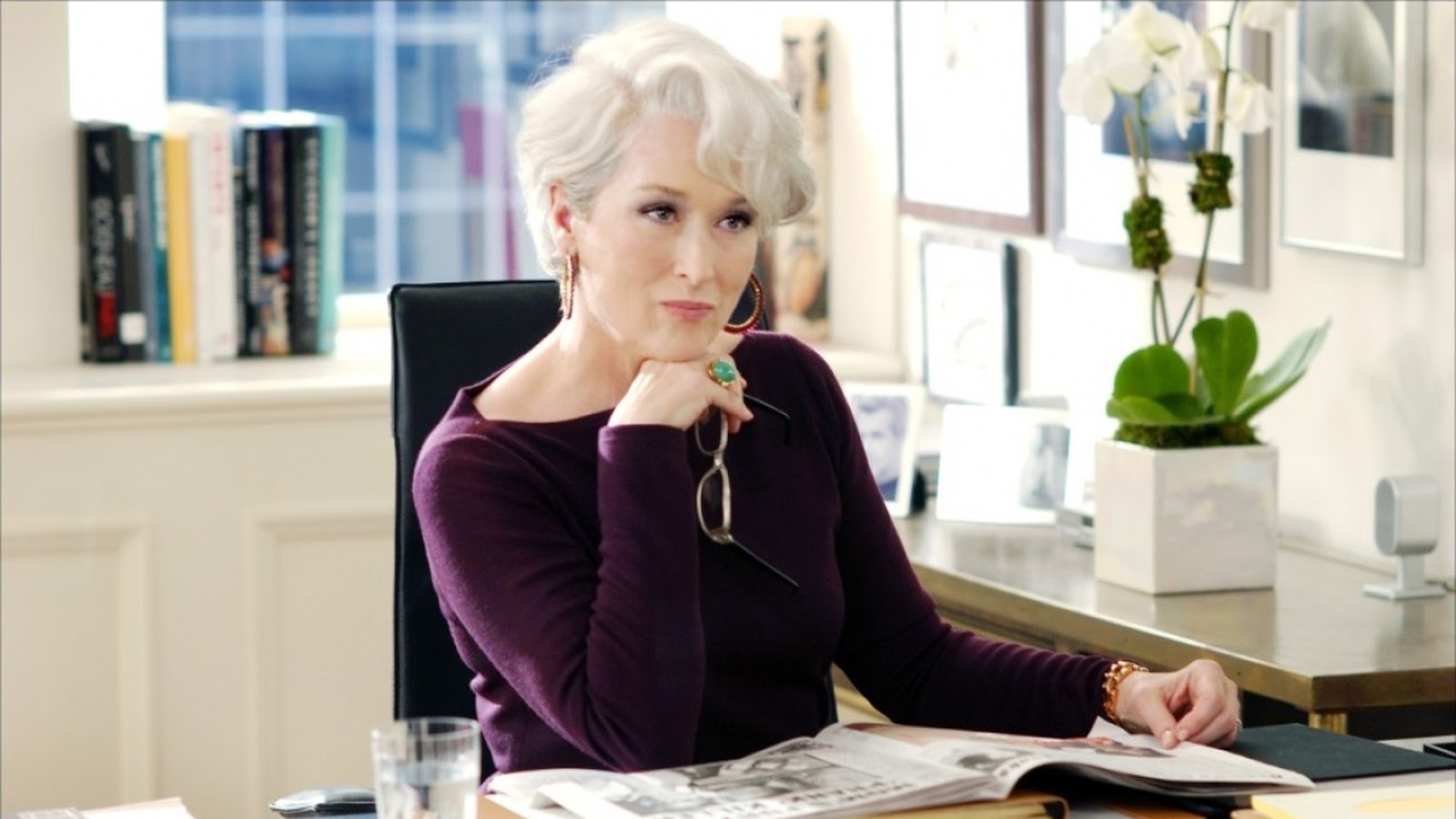
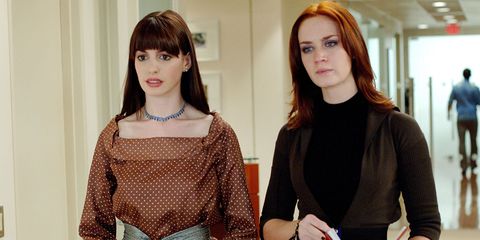
Miranda Priestly (Meryl Streep) is the lord of all she surveys. Ruling the fashion industry from the editorial office of her magazine Runaway, she can make or break careers with a pursed lip or a raised eyebrow. And, while barely raising her voice beyond a whisper, she expects total obedience and deference in the office, with her assistants little better than personal slaves. It’s a tough world for wannabe journalist Andrea (Anne Hathaway), hoping for a big break from her connection with Miranda. Andrea looks down on the world of fashion, and longs for a serious journalism career – but will her ideals survive the temptations on offer… 

The Devil Wears Prada is your pretty standard morality tale of the moth brought too close to the flame: the hero struggling to resist the temptation to jack in their principles and dreams in order to win the praise of a domineering bully and secure riches and fame. We’ve seen it all before, and to be honest TDWP doesn’t really do anything different from this formula, other than introduce it into the world of fashion and making both the tempter and tempted a woman.

And it works where it does because it has some pretty impressive women in these roles. None less than Meryl Streep, who seizes on the role with a quiet relish and has the confidence to underplay scenes that lesser actresses would tear into as if their only dinner that day was the scenery. What’s notable about Streep’s Miranda is that she is so calm, so quiet, so assured, so unflustered that she only needs the slightest gestures and hints to break people around her. It’s the ultimate confidence that comes from supreme power – she knows she never needs to raise her voice, that people will fall silent to listen to her. Streep also mines her considerable comic talent to lace her many moments of cruelty and selfishness with an arch, dry humour.

It’s no wonder poor Andrea has such a rough time in this film. Only in Hollywoodland could Anne Hathaway be considered a dumpy frump, but the styling of her as a someone with no sense of fashion whatsoever (at least initially) does at least make her stand out from the rest. Andrea’s plotline follows what so many other “moth to the flame” plots have followed, moving from snide indifference to her job to all consuming obsession as she begins to parrot the same values and opinions of her master. She even has a partner (usually the woman’s role, so very nice to see it reversed) who complains about her not being at home enough.

The film avoids cheap shots at fashion as well which is refreshing, stressing at every point that it is a world of legitimate art and expertise and has made an important contribution to the culture and society of the 20th century. No wonder so many fashion famous faces cameo. Andrea’s scornful disregard for fashion is punctured early on as being an inverted snobbery and part of her desire to project an image of herself. 

The real issues here are workplace bullying – although the film never really delves into it that much and is eager to leave no real resolution. Emily Blunt – who is extremely good, with more than a hint of desperation and depression under her cool, arch, British exterior – as Andrea’s fellow assistant shows early on how environments like this chew people up and force them to become sharks or die. It’s a suggestion the film is not keen on exploring in real depth though, preferring a far lighter, more traditional story as we wonder whether Andrea will be seduced by the darkness or will return to her roots of integrity and journalism (one guess which way she goes).

Even at the end though, Andrea is still desperate in some way for Miranda’s approval and to be acknowledged in some way by her. It’s a feeling that the film shares. It wants Miranda to turn to it and praise it, it’s scared of really calling her out on her behaviour, instead wanting to cut her as much slack as possible. It wants to see her triumph and, even at the end, to take a wry pleasure from Andrea forging her own life. It’s as besotted with her as the characters are, and for all it shows that Andrea doesn’t do well from spending time with her, it still seems to want to show that under it all “she is human”. It dodges the bullet of actually dealing with bullies and monsters, and instead takes the line of saying “yeah sure she was bad, but she had great style so you can’t not like her.” Which means, in a way, it follows the same line that in real life allows charismatic geniuses in the workplace to continue behaving any way they like.

Which isn’t to say this isn’t a fun film with decent performances and lots of good jokes. Streep gives Miranda a huge degree of depth – we have moments of her loneliness and isolation from her family – but it’s a film that could have done more to show the negatives of how working lifestyles like these affect people. I guess that would have made it less fun though.

Network (1976)

Peter Finch rants and raves in media satire masterpiece Network

Director: Sidney Lumet

Cast: Faye Dunaway (Diana Christensen), William Holden (Max Schumacher), Peter Finch (Howard Beale), Robert Duvall (Frank Hackett), Wesley Addy (Nelson Chaney), Ned Beatty (Arthur Jensen), Beatrice Straight (Louise Schumacher), Jordan Charney (Howard Hunter), William Prince (Edward Ruddy), Lane Smith (Robert McDonough), Marlene Warfiedl (Laureen Hobbs)

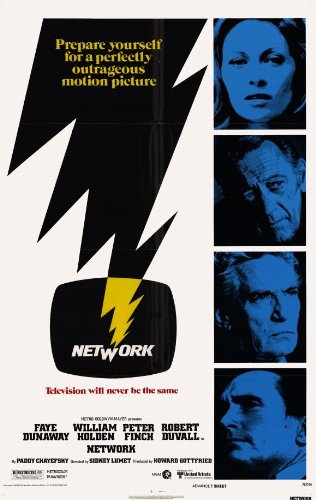
Is there any movie ever made that has been more prescient than Network? So spot-on was its vision of television becoming pushed to extremes by its obsession with ratings that when it was screened a few years ago for a group of teenagers in America, they allegedly didn’t realise it was meant to be a satire. I’m also pretty sure you would have to go a long way to find a better written movie – it’s no surprise that this has been converted into a successful play, it’s basically one already.

In the 1970s, UBS is a struggling TV network trying to find a niche among the giants. Its news show is losing its timeslot in the ratings – which is bad news for its respected anchor Howard Beale (Peter Finch). Informed he will be fired due to falling ratings, Beale goes on air and casually announces he will blow his brains out live on air next week. When this sends the ratings rocketing, the network sends him back on air, encouraging him to speak his mind more rather than just report the facts. When Beale suffers a full blown breakdown, his anti-establishment rants touch a public nerve and Beale becomes a ratings smash – with the news show taken over by ambitious Diana Christensen (Faye Dunaway), Head of Entertainment, who turns it into a bizarre light entertainment show, with the increasingly unhinged Beale the main entertainment. It’s perfect for everyone – so long as the ratings hold…

Network could so easily have become a shrill, OTT satire. Writing down the plot summary there, it even reads like that – a big, stupid, pleased-with-itself film that hits its points hard and where every character is a grotesque caricature. But that’s not the case here. This is a brilliantly written film – Paddy Chayevsky is surely one of the greatest writers in film history – a fiercely intelligent piece of satire, which most importantly crafts its characters with empathy and understanding. Some of them may be larger than life, and some of them may do things that are just this side of heightened reality, but at heart they all feel real. The film is shot through with heart and a sense of realism that underpins the razor sharp satire.

And that satire is all around the world of television. So astonishingly prescient is the film about the rise of reality TV, ratings obsessed and lacking in real soul, that many of its jokes pass by almost unrecognised today. Respected news producer Max Schumacher’s throwaway line about an hour of network TV drama being made up of films of car chases (and crashes) from the police? Done to death already. The idea (again unthinkable in the 1970s) that a news anchor could litter the air with their own opinions on the news and current affairs – half the anchors in America now run their shows like editorial pieces. The concept that the public could be entertained by watching someone clearly not completely normal, throwing crazed statements at the camera – it could only be a fantasy right? A TV network completely in thrall to its corporate masters, following the line from the bosses? Yup surely that could never happen.

What Chayevsky does so well is turn these into masterpieces of rhetoric. Some of the greatest speeches ever written in film appear here, and they work because not only do they showcase some superb writing, but also every moment is crammed with ideas and real genuine feeling. Howard Beale may well be as mad as hell and not going to take it any more – but he articulates his reasons for feeling this with an acute emotional reality. Schumacher’s paens to the changing world of television, and his own lost place in it, are beautifully done. Diana’s ratings obsessed spewing of TV related facts and figures is sharply underpinned by our awareness all the time of the emotional reality of her near-inevitable emotional breakdown (surely only a few years at most down the line).

Given these lines, the acting is extraordinary (it won three of the acting Oscars in 1967). There isn’t a duff beat or performance in this film, and the delivery of the high-blown dialogue is simply outstanding, brilliantly directed by Lumet who was always a highly skilled director of actors. In fact, Lumet is often easy to overlook here, but his understanding of the material, and handling of its message and delivery, is a big reason for why it never becomes overbearing or trying. Away from the leads, he also gets superb performances from Duvall (chilling and on the verge of rage in every scene as the corporate suit who really calls the shots), Beatty (who had basically one speech, worked a day, and got an Oscar nomination) and Straight as Schumacher’s wife (who went one better than Beatty and won the Oscar for her one scene – the shortest Oscar-winning performance ever at just a few minutes).

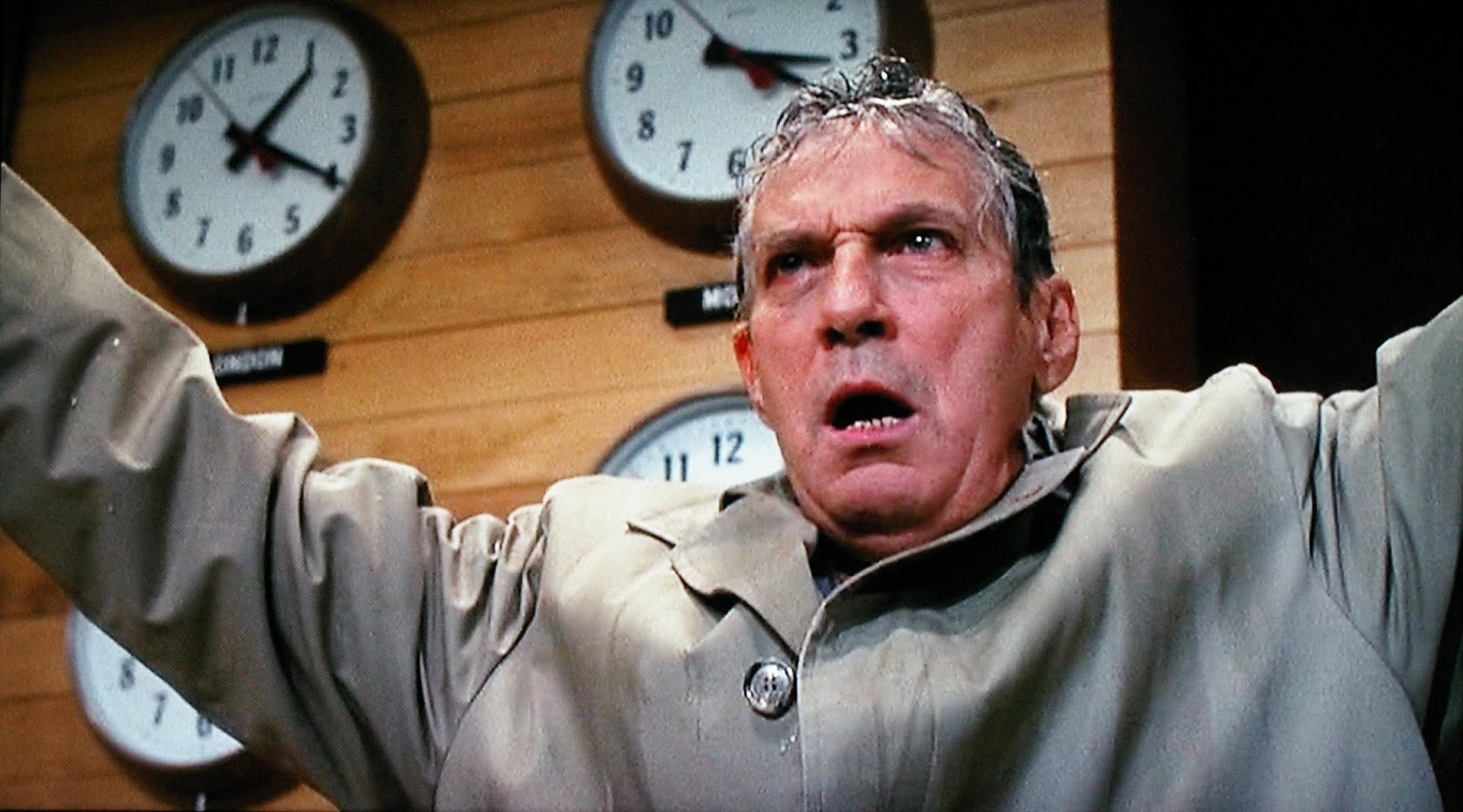
Peter Finch won a posthumous Oscar for his role in this film – ill health restricted his “mad as hell” speech into only two takes (an extraordinary thought when you watch it). Beale is a gift of a part, an intelligent, compelling piece of showmanship – but Finch’s gift is to make the part feel real and human under the genius dialogue. The early scenes showcase Beale clearly struggling with depression, under the smiles, and already starting to crack. I love the way Lumet often frames Finch during these scenes – in group scenes he’s often to the edge of events, and he only slowly comes to the fore to gain a close up. Heck most of his first outburst on television is only seen by us on a viewing monitor in the control room (only the viewer seems to be listening by the way – the technicians are either gossiping or mechanically going through the motions of running the live broadcast, including countdowns to commercials).

Finch basically steals the movie, because you can’t shake from your mind his delivery of scenes like this one:

It’s even harder to believe that so many actors turned down the role – perhaps worried that it would seem like a pantomime role. One of those actors was William Holden – and thank goodness he did, because his grounded, bitter, crumpled, but still idealistic Max Schumacher is one of the film’s highlights. Holden gives one of his greatest performances – often overlooked under the flashy roles of Finch and Dunaway – making Schumacher the still centre of the film and, by its end, something approaching its powerless voice of conscience. 

Faye Dunaway (also Oscar-winning) makes a great deal of the demonic role of Diana Christianson, the representative of the next generation of TV producers, concerned only with ratings over morals. It’s probably the least “real” of the characters, but Dunaway finds the vulnerability and fragility carefully hidden under Diana’s chilly self-confidence and ruthlessness. 

It’s Diana who drives the film, overseeing the transformation of the news hour into a bizarre variety show (including a soothsayer, amongst a host of eccentric magazine feature slots) where Beale is bought on to rant about the emptiness of our world and the horrors of our soulless age like some sort of dancing bear, his inevitable fainting fits greeted by roars of applause. (“What are you?” asks the warm up man of the studio audience “We’re mad as hell and we’re not going to take it anymore!” they delightedly cheer back).

The film runs a particularly dark streak alongside this with Diana’s plan to build a solid hour of entertainment every week from an embedded camera crew following the exploits of a gang of radical Marxist black-pantherist terrorists. The film gets a lot of slightly more obvious satirical material from this – the terrorists quickly lose their Marxist principles in hilarious fights around things like negotiating syndication rights – but its vision of television turning real-life horrors (repackaged) into entertainment for the masses is only a few degrees shy of where many channels have ended up today. 

That’s the whole film – sharply intelligent about where the world is heading, but balancing this with a genuine sense of humanity and emotional intelligence around its characters. If Chayevsky’s screenplay – or Lumet’s direction – hit us over the head with the points the film was trying to make, we’d quickly switch it off. Instead it makes its points with wit and a sense of reality that makes it both horrifying and entertaining. But then it would always have its place in film history with that dialogue and the acting it inspires from the cast. Most of the actors give their best ever work here, and the script is one of the finest around. As for the view of television – well, if we haven’t reached where Network was by now, it’s surely only a few minutes in the future.

Her (2013)

Joaquin Phoenix plays a complete prick in this unbearably pleased with itself satire Her

Director: Spike Jonze

Cast: Joaquin Phoenix (Theodore Twombly), Scarlett Johnasson (Samantha – voice), Amy Adams (Amy), Rooney Mara (Catherine Klausen), Olivia Wilde (Blind Date), Chris Pratt (Paul), Matt Letscher (Charles), Lukas Jones (Mark Lewman), Kristen Wiig (Sexy Kitten – voice), Brian Cox (Alan Watts – voice), Spike Jonze (Alien child – voice)

Every so often you start off engaged with a film and then, the longer it goes on, the less and less you like it. I couldn’t put my finger on the exact moment where I started to really take against Her, but I certainly had by the end of it. As someone once famously sort of said about Kriss Akubusi: “hard to dislike but well worth the effort”.

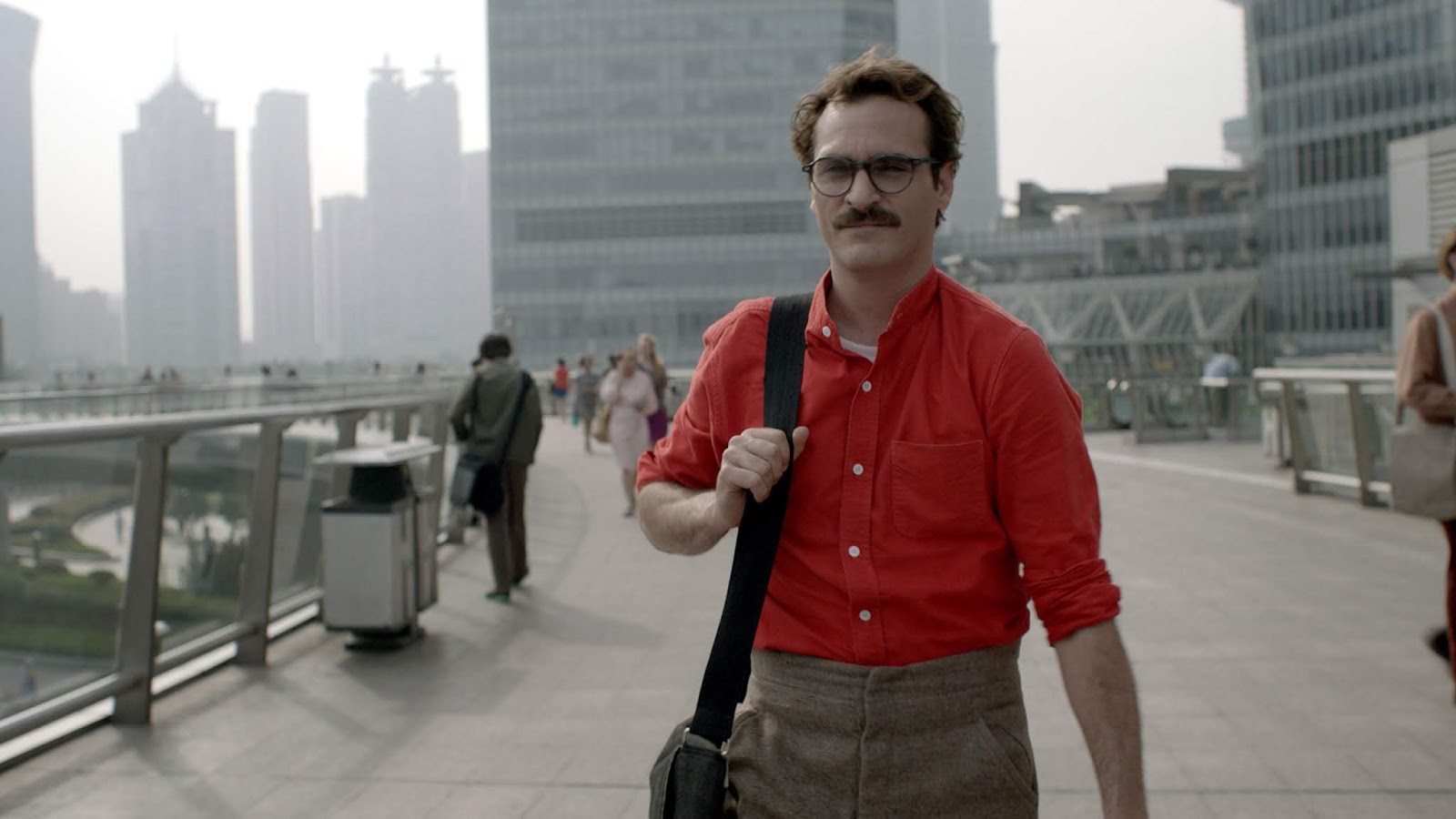
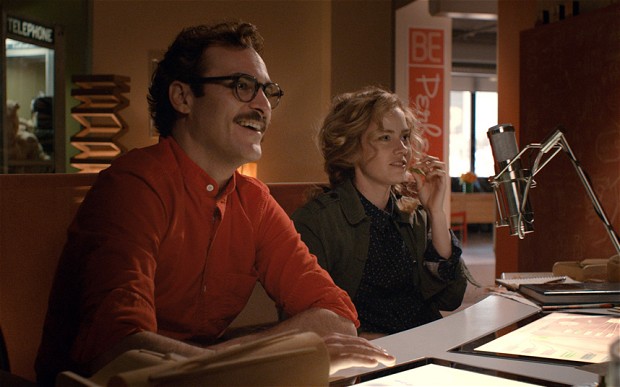
Anyway, Her is set in the near future. Theodore Twombly (Joaquin Phoenix) is a sensitive, insular man who writes personal romantic letters for other people who aren’t articulate enough (or bothered) to do it themselves. Getting divorced from his childhood sweetheart Catherine (Rooney Mara), Theodore downloads a new Artificial Intelligence Operating System for his computer. The system is designed to create a personality that appeals to the customer – and that is certainly the case here with this system, Samantha (voiced by Scarlett Johansson). Theodore, finding it hard to connect with the real world, is drawn to Samantha and, as she grows and develops, they start a relationship. But can the relationship survive the divide between realities and Samantha’s growing self-awareness and personality?

Okay. I’m going to swing hard for this film, so let’s start with what’s good shall we. Spike Jonze directs very well. It looks beautiful. There is some lovely music. The future world it shows is close enough to our own to still feel connected. Amy Adams is rather good as Theodore’s old college friend, and Rooney Mara turns in a very good performance as Theodore’s wife, a woman who doesn’t let Theodore get away with his excuses. Scarlett Johansson is perfect casting as the alluring and engaging voice of Samantha (much as I was primed to be annoyed by her post-production replacement of Samantha Morton, who had been on set with Phoenix). There are some sweet and even romantic moments.

Okay that’s it. This is a film overwhelmingly, unbearably, unbelievably pleased with the cleverness of its own concept and trite ideas (a man loves his computer – take that our modern consumerist world!). It then goes on to tell us almost nothing, bar the most basic statements about our struggles to interact with, and relate to, each other in this technology-filled world. Apparently it’s hard to create bonds with real people where we are viewing everything through our phones. Bet that has never occurred to anyone before right?

But my main problem with this film is the lead character. Now I will say that Joaquin Phoenix does a good job with this role, and his skilful acting brilliantly holds the story together. He does extremely well with a part that is almost exclusively reacting to someone not actually there. But my problem is with this characterisation of Theodore. To put it bluntly, he’s a prick.

In fact, he’s the sort of quirky nerd beloved of this genre, but take a long look and he’s basically a complete creep. And all his relationships with women seem to be based on him not wanting to engage with the problems of the other person. He requires the focus to be on his wants and needs, as if he is the only person in the world who can be sensitive or sad – no wonder he falls in love with a computer programme designed to reflect the behaviours he finds appealing.

“You want a wife without the challenges of dealing with something real” his wife accuses, eagerly pointing out his inability to deal with or even want to engage with human emotions. The film wants to give him a pass, because he is such a sensitive soul, but it’s bullshit. Theodore is a deeply selfish person, despite what the film wants, who has that geeky, arrogant, self-satisfied sensitivity that blindly says “if I struggle in the world, then it’s the fault of the world not me”.

Theodore is a constant happy victim, a whining, softly-spoken, guilt-tripping prick who only sees himself as a victim and makes no effort to change or understand his behaviour to other people. The film wants us to think that the world is a puzzle to his poetic soul, but it’s actually a maze he doesn’t want to find a way out of. He doesn’t want to engage with it and only feels justified and reinforced in these feelings by everything he does.

He is like the perfect ambassador for passive aggressive guys: “Oh I don’t get the girls because they don’t want to open themselves up to my sensitivity blah blah blah”. Theodore goes on a blind date early in the film: it goes well, they make out, sex is on the cards and then she asks “Before we do anything, will you see me again?”. Theodore can’t even bring himself to make even the smallest offer, meekly babbling about having a busy weekend. When she reacts angrily and leaves, the film wants us to side with Theodore’s timidity, rather than say “yeah it is a bit shitty to let a girl put her hand down your pants and then not even show the slightest interest in seeing her again, and then call her unpleasant”. Fuck you Theodore.

Theodore is basically a controlling arsehole and it’s where the romance of the film drains out. He clearly has no idea why his marriage ended, but while the film wants us to think he’s too sensitive for the rough and tumble, it seems clear he had no interest in, or comprehension of, his wife’s life. She is constantly subtly blamed for not having patience with Theodore – the film ends with him writing her a cathartic e-mail saying he will always love his memory of her and thanking her for being part of his life, forgiving her from leaving (again, screw you film). Instead she, like other people, doesn’t deserve Theodore because she doesn’t have the patience to delve into his life.

Theodore, though, has no depths. He’s a bland, faux-poetic guy with a nervy disposition and a disinterest in other people’s emotions, focused only on his own gratification. He wants his relationships to adjust to what he needs them to be. As Samantha grows and develops into a more fully rounded personality, his first reaction is hostility and jealousy at the thought of her talking to other people and operating systems. It’s not sweet and endearing – or Theodore again being taken advantage of, as the film wants us to think – it’s creepy, and Theodore is the sort of passive aggressive gentle guy who ends up stalking and murdering the girl who rejected him.

How can you engage with the points of this film, when the central character through whom everything is filtered is so awful? Distance in relationships in this modern world – and the lack of genuine interaction – is a point that hardly needs hammering home as it does here. The trite points about love and relationships the film makes are all wrong. The film is so on the nose about distance between people and the artificial nature of our interactions, the hero even writes other people’s love letters for them. It’s subtle as a sledgehammer.

Computers and phones are everywhere and everyone uses them, but there is less insight and heart in this story than an average episode of Black Mirror (which would have done the same thing in half the time). The film does its best to build a romance between the two, but it never quite lands or has the impact it should, because it never feels like an equal relationship: first Theo has the control, then Samantha grows beyond anything Theo is capable of but is still trapped by her initial programming of devotion to him. What point is this meant to be making about romance and commitment? Theo lives in a dream-world and does so until the end of the film. 

Her is the sort of film lots of people are going to love. It uses the conventions of romantic films very well. It has darker moments, such as a sequence where Theo and Samantha try to use a surrogate for sex (a scene where to be fair I could understand why Theo is creeped out and disturbed), but none of these ever comes together into a coherent point. And Theo remains, at all times, a block on the enjoyment of the film, an unpleasant figure hiding in plain sight that stops you from falling for the film. In love with itself, in love with its idea, in love with its cleverness, this is a film that tells you everything about the smugness of the geek and nothing about the subjects it actually wants to get you thinking about.

Sweet Smell of Success (1957)


Tony Curtis and Burt Lancaster have no scruples and no morals in the dark exploration of American culture, Sweet Smell of Success

Director: Alexander Mackendrick

Cast: Burt Lancaster (JJ Hunsecker), Tony Curtis (Sidney Falco), Susan Harrison (Susan Hunsucker), Martin Milner (Steve Dallas), Sam Levene (Frank D’Angelo), Barbara Nichols (Rita), David White (Elwell), Jeff Donnell (Sally), Joe Frisco (Herbie Temple), Emilie Meyer (Lt Harry Kello)

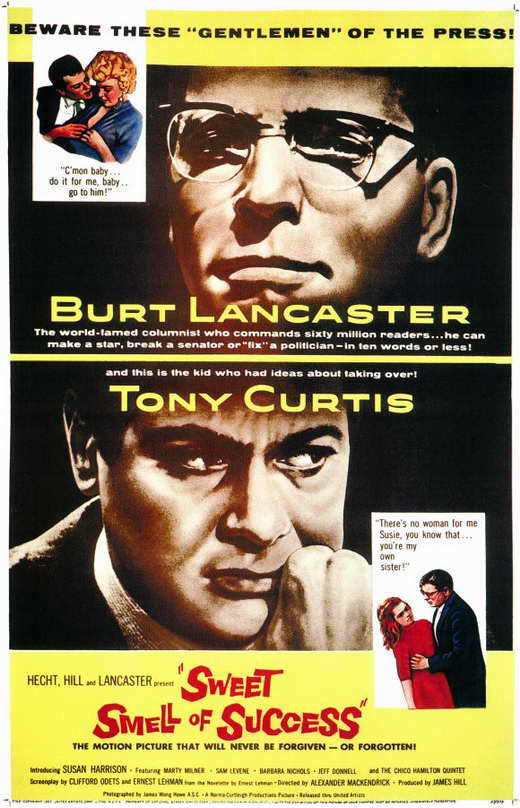
Is there a more cynical film in all the world than Sweet Smell of Success? Is it any wonder that the preview audiences, settling down to watch what they expected to be a Tony Curtis light comedy, went crazy? But Sweet Smell of Success is a film that captures the sweaty desperation of show-business, and the cut-throat ambitions of Manhattan. It’s a brutal, sharp, vicious black comedy, in which all our heroes are vile and everything can be bought and sold.

JJ Hunsecker (Burt Lancaster) is a newspaper columnist, so influential that the slightest mention in his column can make or break careers. He rules the New York politics and arts scene with a ruthless fist – and press agents like Sidney Falco (Tony Curtis) will do anything to get even the slightest sniff of a mention in the column. Hunsucker has a job for Falco: Hunsecker’s sister Susan (Susan Harrison) wants to marry jazz musician Steve Dallas (Martin Milner), and Hunsecker doesn’t approve – he wants the relationship finished. Falco may feel some qualms – but they don’t last long, and he’ll do anything he can to wreck the couple’s happiness.

Sweet Smell of Successis all about the grimy effort and lack of morals that sit under the surface of getting to that success. Because to achieve it in the big time you need to be as sinister, controlling and bullying as Hunsecker – and to try and get up there you need to be as conniving and weaselly as Falco. Both these characters are, in their own ways, almost totally reprehensible – and the film makes no attempt whatsoever to mitigate this. The film is appallingly ruthless and cynical, and its two lead characters are, to put it bluntly, complete shits and total bastards.

It’s a film that says the American Dream doesn’t even remotely exist in the way we like to think it can – that there is as much class and control in America as there ever was in the old world. And being decent and honest doesn’t get you anywhere – and sometimes even being conniving and doing whatever you’re told to do doesn’t either. It totally captures the bitter, cruel and imposing mood of New York high society at the time – unwelcoming, unfriendly, judgemental and brutal. For all its glamourous New York location, who on earth would look at this and say “I fancy a piece of that” – it’s the exact opposite of what American films often try to do.

This was Alexander Mackendrick’s first American film, and it’s perhaps his outsider’s eye that really helps the film to really go for it. Mackendrick’s Ealing films weren’t afraid to pull their punches – from the commentary on the corruption of big business in The Man in the White Suit to the dark comedy of The Ladykillers – and (working with genius cinematographer James Wong Howe) he creates one of the darkest (in every sense) film noirs ever. His camera prowls along the streets and he wonderfully captures both the bustle of New York clubs, and the menace of New York behind the glamour. He also shoots both Curtis and Lancaster in a way they never had been shot before – and both of them rise to the richness of the material to give possibly their finest performances.

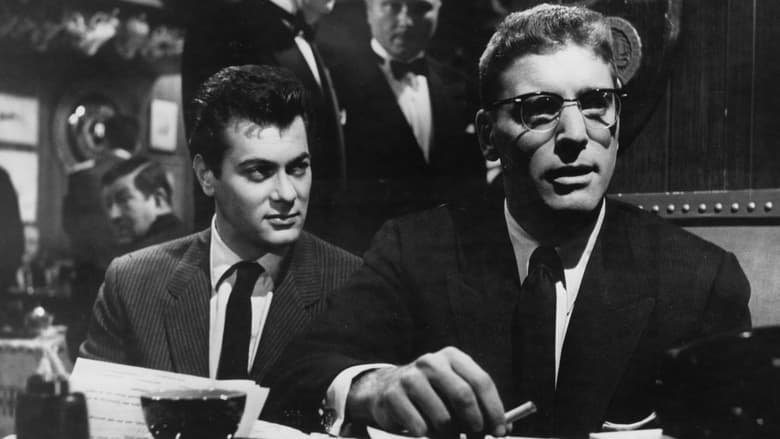
Burt Lancaster’s Hunsecker is a total monster: a bully and a sadist, vicious and aloof. Lancaster’s stillness here really sells the part – he doesn’t move, everyone else does – and the film brilliantly uses his slightly patrician voice. Hunsecker’s cold, dead-eyed stare pierces through character and desperation, and the contempt he feels for Falco (and every other character) is there in every moment, from looks to subtle physical put-downs (even lighting a cigarette is a power play, laced with an almost sexual sense of control). He “loves this city” because he owns the place, lock stock and barrel. Hunsecker only has one weak point – his clearly incestuous love for his sister – but even that is just the excuse for more controlling, domineering behaviour in which people are only objects for his manipulation.

And no-one is more willing to be manipulated than Tony Curtis’ brilliantly sycophantic Sidney Falco. Hunsecker is vile, but Falco might be worse. Is there a less likeable lead in a movie? Falco has no principles, no morals, no conscious – he’s the worst sort of follower, the sort of kid who stands behind the bully and laughs loudest at every joke. On top of that, Curtis is incompetent and untrusted – the scene where he attempts to blackmail another columnist and is firmly smacked down is wonderful for its discomfort. Curtis is twitchy, desperate, always on the move and will do anything – from lying to planting evidence to openly pimping his secretary. Far from the “young man working his way up” that you might expect, he’s a ruthless, unprincipled opportunist, perhaps the best inverted presentation of American can-do ambition you’ll see on screen.

That’s where the film really works: the scenes between Hunsecker and Falco are simply marvellous: Hunsecker savouring every verbal blow and smooth smackdown – and Falco sitting, edgy and jittery, on the edge, laughing loudly to try and make sure he doesn’t become the target. The marvellous restaurant scenes – with Hunsecker barely able to bring himself to acknowledge Falco’s existence – are the film’s heartbeat: brutal battles where Hunsecker wins everything and lives are destroyed. “A man has just been sentenced to death” Falco gleefully points out – “You’re dead son. Get yourself buried” is Hunsecker’s smoother version.

Ah yes that dialogue. Written by Clifford Odets at incredibly short notice (pages were literally taken straight from the typewriter to the actors’ hands in front of the camera), this might be one of the sharpest, waspiest films ever written. So many quotable lines, with Curtis and Lancaster relishing every dynamic and scintillating one-liner that the script gives them (and there are many). “I’d hate to take a bite out of you. You’re a cookie full of arsenic” – who wouldn’t want dialogue like that? It’s a sensationally written film, and every scene offers a new delight.

It’s not perfect of course. Milton and Harrison are as lightweight and forgettable as Lancaster and Curtis are sensational, too strait-laced and conventional to really seize the interest. The second half of the movie is weaker than the first: the pay-off doesn’t quite match the build-up. Really a film that just followed Hunsecker and Falco about as they went about their daily work, without the sister plotline, might have been even more effective. But it’s probably a quibble on a film that works every time – and has such dense, wonderful dialogue you’ll want to wind back most of the scenes to watch them again. And those two lead performances: simply perfect.

Ace in the Hole (1951)


Kirk Douglas surveys the horrors he has willingly unleashed in Billy Wilder’s bitter beyond belief media satire

Director: Billy Wilder

Cast: Kirk Douglas (Chuck Tatum), Jan Sterling (Lorraine Minosa), Robert Arthur (Herbie Cook), Porter Hall (Jacob Q. Booth), Frank Cady (Mr Federber), Richard Benedict (Leo Minosa), Ray Teal (Sheriff Kretzer), Robert Arthur (Herbie Cook)

Ace in the Hole was Wilder’s first big flop as a director. It’s not surprising that the media savaged it and claimed it was ridiculous. This is a film way, way, way ahead of its time, a stinging indictment of the ruthless obsession of the media with selling stories rather than reporting them, of spinning out crises to sell newspapers. It’s Fake News decades ahead of its time, a gutter journalism film released at a time when the media was totally trusted. Is it any wonder contemporary critics claimed they couldn’t recognise their trade here? Now it’s practically the way every journalist on film is portrayed.

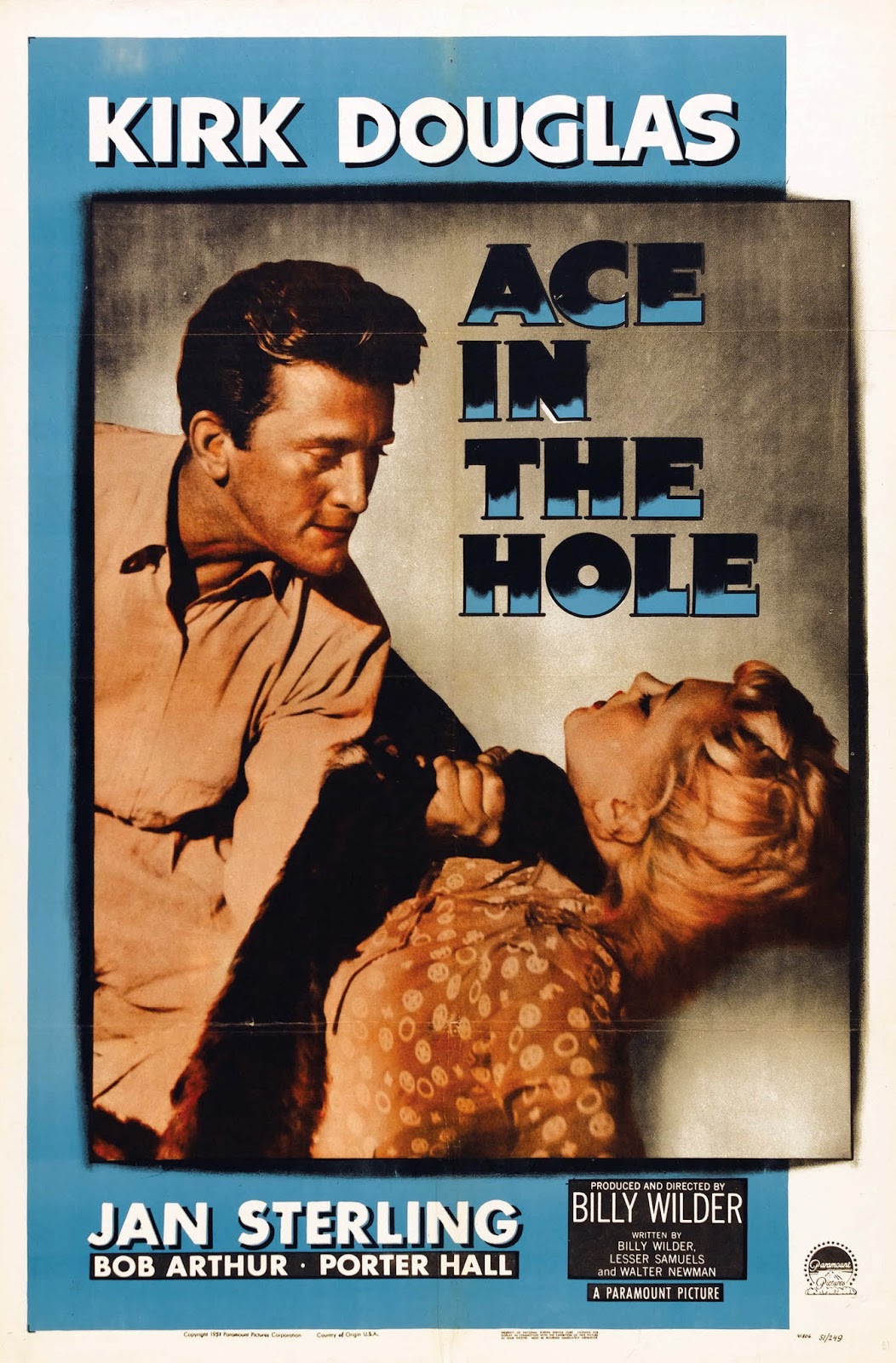
Charles Tatum (Kirk Douglas) is a big-city reporter fired by a host of newspapers for offences ranging from alcoholism to libel to sleeping with the boss’s wife. Arriving in Albuquerque, New Mexico, he wangles a job on the local paper aimed to eventually encounter a story he can spin into a national media sensation, a crisis with a “human interest story”. A year later, he stumbles upon a cave-in that has trapped a man, Leo Minosa (Richard Benedict), below the surface. Believing this is the story that he can get him back his seat at the high table, Tatum seizes control of the rescue operation, insisting a quick and easy plan is dropped in favour of a week long public drilling operation. Tatum’s reporting of the event becomes a media sensation and in days the abandoned town is full of reporters and rubberneckers.

What’s astonishing here is that this is one of the few films I can think of that is totally devoid of sentiment or hope. It’s ruthlessly cynical where virtually every character is irredeemable, and no suggestion of redemption exists. The only major character who seems normal is Leo himself, although that is largely because his bland non-descriptness (well portrayed by Richard Benedict) and childlike, homespun dependency on those around him make him a near blank anyone can project feelings onto. Wilder’s hard-bitten cycnicsm, bordering on anger with the media and their audience, pulls no punches without descending into polemic – ironically it keeps the human interest, while never compromising the dark satire.

It’s a savage attack not just on journalism and the mass media, but human nature itself. The media stirs up a storm of excitement and drama around one man’s fate solely to make money – and Tatum himself is the worst form of manipulative gutter press, with no interest in truth, investigation or even journalism, only a shark-like love of the main event. But Wilder shows that the people just lap up this exploitative press storm – the growing crush of on-lookers, the bated breath as each update comes in, the literal carnival set up on the site, specially chartered trains – everyone wants to feel part of this story, to vicariously feel the emotions of those the event is actually happening to. It’s virtually a prediction of Twitter.

At the heart of this is Tatum, played with maximum forcefulness and dark charisma by Kirk Douglas in surely one of his finest performances. What Douglas does here that is so skilful is to never make Tatum an out-and-out villain. He plays it with a subtle suggestion of self-loathing: the quietly suggested need for alcohol, the revulsion he feels for those around him whom he sees as reflections of his own moral emptiness. At the same time, if Tatum has morals he long since stopped listening to them. Every time it looks like Tatum has realised what he has done, he reverts back to keeping the story going. Douglas’s dynamism also brings Tatum’s relentless drive and determination to life with real power. Tatum is easily able to cow, bully and bribe those around him into making him the funnel of the story. Never once do you question why all around Tatum bow to his will – his force of personality is so great you have no choice. Despite the hints of self-loathing, Douglas isn’t afraid to play Tatum as a reprehensible man – not bad or evil, just totally self-serving and selfish.

Jan Sterling I was less sure of at first, but actually this is another incredibly brave performance of uncompromising hardness. Lorraine is trapped in a marriage with a man she does not love, in the middle of nowhere, having believed she was marrying into something very different. But even with those provisos, her lack of interest in her husband’s safety and her focus on getting as much cash out of the tourists as possible (to finance her departure to the city) is astonishingly ruthless. Out of all the characters, she is the one who is immediately aware of what game Tatum is playing, and (with his advice) she is the most capable of exploiting the public excitement for her own gain. While she has elements of a femme fatale, Sterling’s performance seems more bitterly cynical than manipulatively feminine.

Wilder’s cynical and hard-nosed film is a brilliantly written deconstruction of the American dream, packed with wonderful lines and sharply drawn characters. It scrapes away at the surface of its characters to reveal the rot underneath – even Tatum’s photographer Herbie degrades from idealist to acolyte – and then blames us all for the mess. It shows us the disgusting ease with which our feelings can be manipulated to sell anything, then shows how gleefully we want to be feel part of an event: shots are filled with details like spectators carrying candy-floss while praying for Leo’s safety.

And then there is a complete lack of redemption – or even suggestion of it. Decent characters are peripheral, and far outnumbered by Tatum and his like. The resolution of the crisis does not go according to Tatum’s plan. It’s almost astonishing in its bleakness and in Tatum’s confused reaction to it and his lack of clear-cut guilt. Again, it’s Douglas’ skill and Wilder’s uncompromising direction: I actually had to watch it twice to catch the shading Douglas and Wilder give Tatum’s reactions to events finally going out of his control – and I still don’t know to what extent self-loathing trumps frustration and disappointment.

This is a masterful media satire and a wonderful, thought-provoking film, surely one of Wilder’s finest. It should be a lot better known than it actually is. I haven’t stopped thinking about it in days and I’m already looking forward to seeing it again. And, if anything, it is getting more relevant every single day.

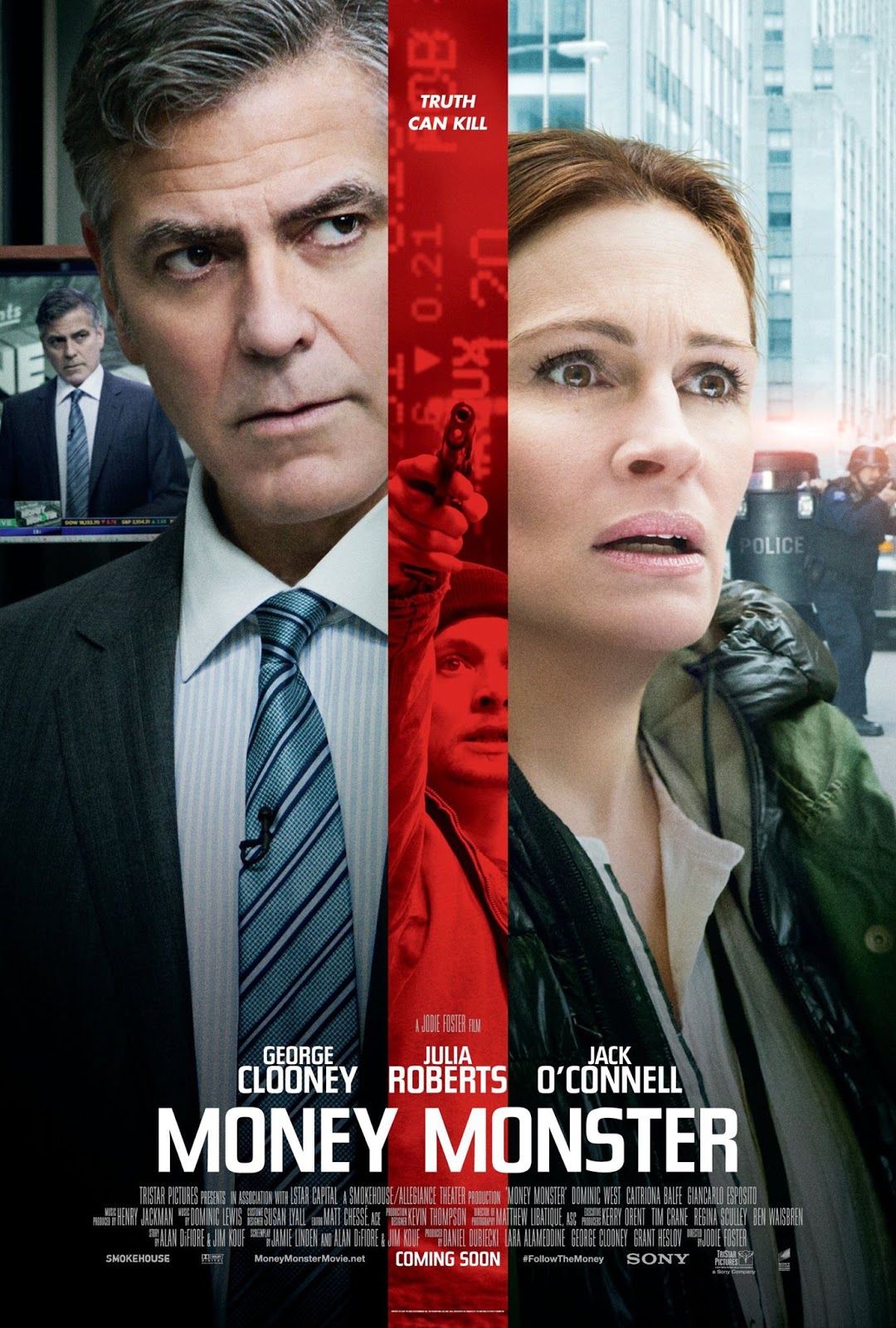
Money Monster (2016)


A bad day at the office was ahead for George Clooney

Director: Jodie Foster

Cast: George Clooney (Lee Gates), Julia Roberts (Patty Fenn), Jack O’Connell (Kyle Budwell), Dominic West (Walt Camby), Caitriona Balfe (Diane Lester), Giancarlo Esposito (Captain Marcus Powell)

For as long as there has been TV, then the world of Film has looked down its nose at the mass market medium. “It’s in your homes! It makes you dumber! It stops you caring!” Set a film in a TV studio and it’s a fair bet that, before long, some shallow media types will appear, a dramatic on-air event will take place, a shallow man will rediscover his soul and the camera will cut back to punters at home watching the drama as if they it was just part of the show.

All this is exhibited to its full in Money Monster, a passably entertaining hostage drama set in the studio of a fictional Wall Street themed entertainment and “news” show. Lee Gates (George Clooney) is a shallow, image and money-obsessed TV personality taken hostage after a desperate grief-stricken viewer Kyle Budwell (Jack O’Connell) loses his life savings on one of Gates’ tips. However, with the prodding of his director Patty (Julia Roberts), Gates slowly begins to rediscover his journalistic integrity.

Watching the film when it rather heavy-handedly enters into the world of media satire, it’s pretty hard not to remember better films in the same genre. Network covered much of this ground so well 40 years ago, it’s almost not been necessary to watch another film about the manipulation of the media. The Truman Show so successfully skewered the thoughtless collaboration of the watcher at home, that this film’s attempt feels like a rather mundane repeat.

Saying that, George Clooney does a grand job of portraying the shallow, media man re-discovering his depths – although lord knows he’s played this sort of part often enough to do it standing on his head. But he gets the dark comedy of it, and he is also able to deliver on the growing decency and integrity of the character. Julia Roberts is pretty good as a confident professional who has allowed her principles to slide for too long. In this illustrious company, Jack O’Connell more than holds his own, delivering brilliantly as a desperate and angry man.

The hostage taking sequences are quite well done, and threaded in well with the general satirical air of the film. At two key moments during the crisis, the film successfully pulls the rug out from under the feet of the viewer by delivering a different outcome than we might have expected. It’s probably when the film is most effective. It also does a good job threading many of the themes, locations and characters that will become important by the end of the film into its opening moments – many of them done so gently, you won’t even notice until they become important later.

The dark satire around the uncaring nature of big business and its lack of principles also hits more than a few familiar beats (big business being another thing multi-million film companies love to lay into), but this side of the plot is interesting enough – and I didn’t quite work out how the dodgy dealing had worked out. The final reveal and confrontation around this is well staged. It doesn’t tell you anything new, or present its old points in a unique or intriguing new way, but it does it in an entertaining way.

The film generally deserves some congratulation for its staging – Foster directs with a tightness and the flimsy conception of the film is delivered in a taut 85 minutes (almost in real time) which certainly means it doesn’t outstay its welcome. The acting is decent and the points it makes are well delivered, no matter how familiar they are. The film effectively plays with and changes your views on its characters over the course of its runtime. Honestly there are worse ways you can spend an hour and a half. It’s just not something that is going to stick with you for long.