Category: Comedy

Our Hospitality (1923)

Our Hospitality (1923)

Keaton’s feature-length debut is a masterpiece of comic invention and slapstick stunt thrills

Director: Buster Keaton (& John G Blystone)

Cast: Buster Keaton (Willie McKay), Joe Roberts (Joseph Canfield), Natalie Talmadge (Virginia Canfield), Ralph Bushman (Clayton Canfield), Craig Ward (Lee Canfield), Monte Collins (Parson), Joe Keaton (Train engineer), Jack Duffy (Train conductor)

It starts with a dark and stormy night. If that sounds like cheap melodrama that’s kind of the point. Keaton’s first feature length comedy would be different from his joke-crammed shorts. This would be plot-led comedy, a drama full of jokes. As part of that, Keaton started the film with a storm-filled, joke-free, DW Griffith-inspired opening salvo that sees the lead character’s father dead in Intolerance inspired opening. With its gun flashes and bodies, we know in this film bullets kill.

The father is John McKay and he dies along with James Canfield in a deadly exchange. It’s part of a long-running feud betwixt McKays and Canfields (any similarity to the legendary Hatfield-McCoy feud is entirely deliberate), and the rest of the Canfields swear revenge on McKay’s baby son-and-heir. Twenty-one years later, Willie McKay (Buster Keaton) has grown up in New York, ignorant of the feud. When he returns to his father’s ranch, he finds himself in the awkward position of having fallen in love with Virginia Canfield (Natalie Talmadge), daughter of his newly discovered deadly enemy Joseph Canfield (Joe Roberts). How will matters be resolved?

With a great deal of laughs and a breath-taking series of stunts. Our Hospitality is early Keaton but already it cements his legend of comic invention and physical daring as well as his dynamism and imagination as a filmmaker. Our Hospitality is crammed with comic bits of pieces that Keaton would go on to explore and finetune in even greater detail in later films, but also culminates in a (admittedly slightly tongue-in-cheek) but still surprisingly gripping action sequence as our hero battles to survive a mountainous waterfall and save his love from toppling.

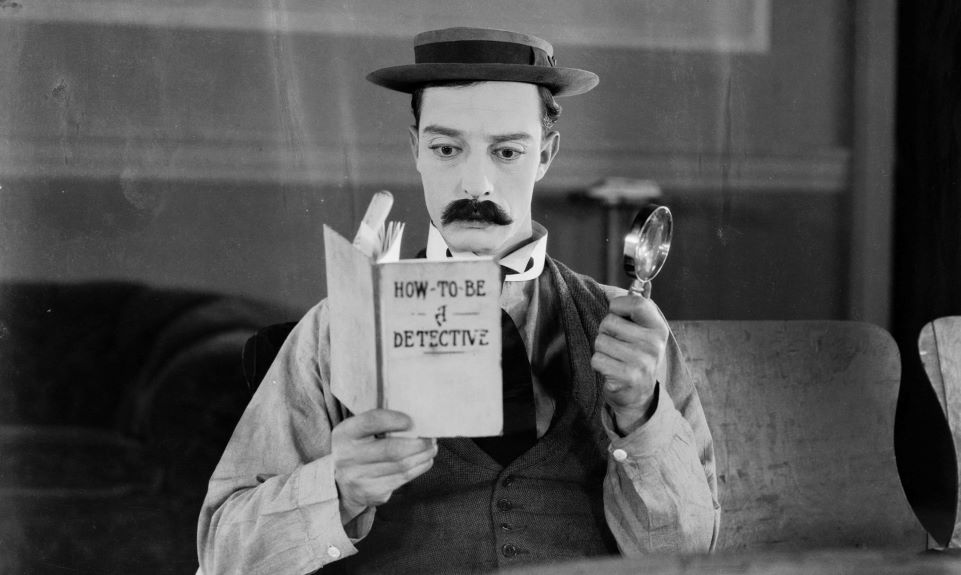
The film neatly divides into four acts, each subtly different in tone but all unified by Keaton’s creativity. Stone-faced and implacable, Keaton never mugs or goes overboard for the laugh but trusts that, with the intimacy of the camera, the smallest inflection or slightest turn of the head will raise a chuckle. He’s also charmingly innocent, refreshingly resourceful and rather brave – a perfect combination for a little guy (it helps, as always, that Keaton is literally a little guy) we root for.

That charm powers a lot of the film’s second act, a long incident-filled train journey McKay takes to the South. Keaton was fascinated by the comic potential of early technology – watching Willie, po-facedly, cycling with an early peddle-free bike, his feet alternately propelling the bike and lifted in the air is hilarious (the Smithsonian even asked if it could display this perfect replica) – and he deliberately set the film in 1831 to introduce a Stephenson-style rocket train, pulling its open carriages behind it. This vehicle not only looks hilariously ramshackle and strangely incongruous, it also opens an ocean of possibilities.

It is, for starters, hilariously slow – Willie’s dog has no problem keeping up with it. Its tracks have been laid with a rigid rule-following lack of imagination – at one point they ride up over a fallen tree log, the train and carriages bumping over it. The train is forced to stop by a donkey that refuses to leave the line (eventually the engineer simply drags the tracks around the donkey). There is an on-going feud between the Engineer (played by Keaton’s father Joe) and ticket-master about who is actually in charge of the train. At one point it veers off the tracks and down a road (everyone comments about how much more smoother this is) and later gets separated from the carriages at a junction, requiring Keaton gymnastics to bring it together. By the time it trundles into the station – and note how beautifully the train is filmed – you’ve had more comic invention than most other comedies.

During this journey Willie falls in love with fellow passenger Virginia (played, a little awkwardly, by Keaton’s wife Natalie Talmadge), little knowing she is a Canfield. The Canfields swiftly discover his identity: Willie asks one of her brother’s directions to his ranch, and the brother guides him there, all the while darting away at every opportunity to try and borrow a gun to take his revenge.

Most of the second act, which gives the film its title, revolves around Willie’s invite from Natalie to dinner at the Canfield house. Southern gentility declares the Canfields cannot take revenge on Willie while he is their guest – as soon as Willie realises this he does everything he can to remain in the house, as the (literal) instant he steps outside the door, guns come out. (Keaton also gets a lot of comic mileage from the cumbersome one-shot guns, which Willie frequently pinches to discharge to give himself a few precious moments to move outside while various Canfield’s reload).

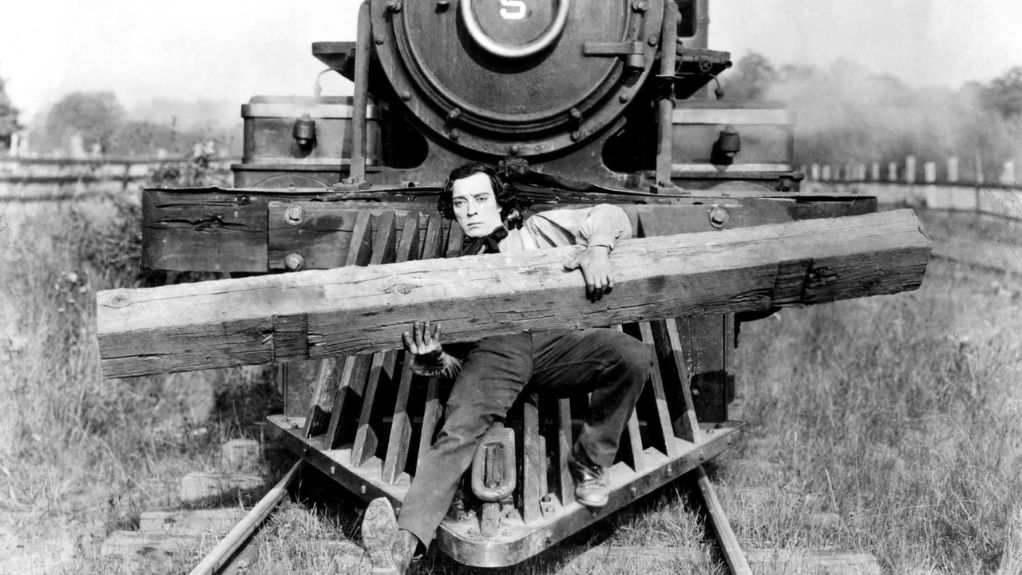
When Willie eventually flees the house – disguised as a lady – it leads into a glorious, action-packed chase scene. Scaling mountains and cliffs, shot with a vertigo inducing brilliance (in reality Keaton placed the camera on its side and made it appear with his genius physicality that he was climbing rather than crawling). There are falls into rapids, Willie is dragged behind a racing train carriage and finally bobs and floats down a rapid (including one shot, kept in the film, where Keaton’s rope snapped and he was literally washed head first down a river). It culminates in an athletic, stunt-filled, precarious balance on a log suspended over a waterfall (a brilliant backdrop shot makes this feel impossibly high), swinging desperately on a rope to save Virginia from falling.

Our Hospitality is awash with comic energy and genius touches of business but it’s also an impressively ahead-of-its-time in the skill of its plotting and structure – you could pretty much remake it exactly today (but with words) without changing a detail, and it would still be a hit. But it wouldn’t be a legend because the only thing you wouldn’t have is Keaton. And he’s the lodestone that balances the whole thing.

The Russians are Coming, the Russians are Coming (1966)

The Russians are Coming, the Russians are Coming (1966)

Ealingesque farce meets Cold War moralising in this not-quite funny enough farce

Director: Norman Jewison

Cast: Carl Reiner (Walt Whittaker), Eva Marie Saint (Elspeth Whittaker), Alan Arkin (Rozanov), Brian Keith (Link Mattocks), Theodore Bikel (Captain), Jonathan Winters (Norman Jones), Tessie O’Shea (Alice Foss), John Philip Law (Alexei Kolchin), Ben Blue (Luther Grilk), Andrea Dromm (Alison Palmer), Paul Ford (Fendall Hawkins)

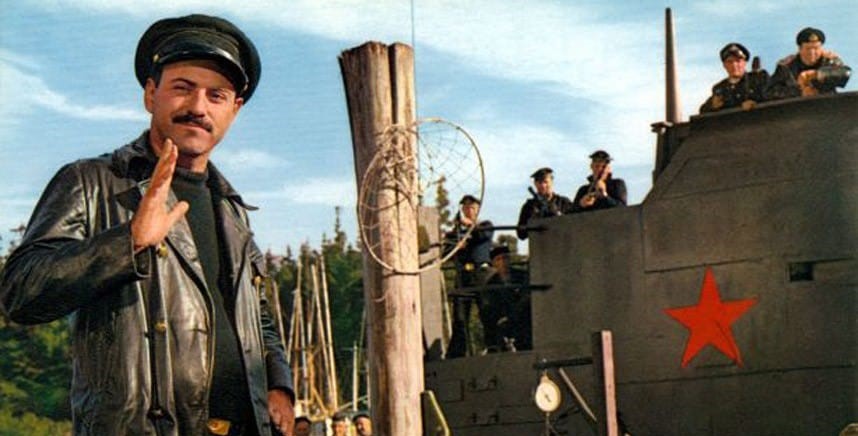
Off the coast of a New England island, a Russian captain (Theodore Bikel) wants to take a quick peek at the US of A. Bad idea. When his sub runs aground, they are forced to send a party ashore led by political officer Rozanov (Alan Arkin) to find a motor launch to get the sub back out to sea. They run into the Whittakers – playwright Walt (Carl Reiner), wife Elspeth (Eva Marie Saint) and their kids – take them hostage, steal their car, cut the telephone lines and try to save themselves. The town quickly hears news of the possible arrival of Russians, and the hysteria grows – just as Walt starts to feel his sympathies grow for the terrified Russian sailors. Can peace be reached across the divide?

The Russians are Coming, the Russians are Coming is basically an Ealing-esque comedy – written by Ealing veteran William Rose – translated not entirely successfully to America. Directed with an epic, widescreen sweep by Norman Jewison that sometimes crushes the life out of a comedy of confusion and coincidence, The Russians are Coming wants to be both a broad farce and carry an earnest message about the Cold War. It’s quite sweet that the film, made four years after Cuba nearly turned the world into an ash pile, wants to focus on what unites as humans rather than divides us, but the message is at times crow-barred in a little too forcibly.

It’s very hard not to see the Ealing influence on every single scene – and I suspect the film would have worked better as 4:3 black-and-white film full of harassed people in offices and homes, rather than the grand panoramas of the town and large crowd scenes. The Ealing influence can be seen in the townsfolk, who become a farcical panicked crowd of have-a-go heroes, making sweeping decisions based on no information at all, led by puffed up self-important, self-elected leaders determined to seize their moments of heroism. Misunderstandings abound, as tiny pieces of evidence balloon the “threat” into a full-blown invasion: the crowd are almost disappointed when they arrive at an airfield to find not a smouldering ruin but an operator blissfully unaware anything is going on.

Similarly, the Russians themselves fit nicely into the Ealing model of ordinary, decent, underdogs up against the system (in this case the townsfolk). In a brave touch, the Russian in the film is never translated – Theodore Bikel doesn’t have a line in English – meaning we only gradually learn what is going on and why, as Arkin’s character explains things to Whittaker in stumbling half-English. Arkin is, by the way, the film’s prize asset, demonstrating excellent comic timing and delivering his dialogue in a parade of Russian and fumbling English (there is a great sequence where he earnestly tutors his men on how to pass as officials clearing the street, teaching them phrases just a few degrees incorrect that will make them stick out like sore thumbs as soon as they open their mouths).

The film is never quite funny enough though and Jewison’s direction neither tight nor taut enough to keep the farcical pace up. There are one too many wrong turns taken by the Russians, one too many narrative cul-de-sacs as townsfolk barrel up and down the streets. The whole film plays out like this, many of its effective comic performers among the townsfolk lost among a sea of people and faces. Arkin and Reiner get the most impact, because their scenes tend to make place in individual rooms in set-ups that let us clearly see their faces and appreciate their comic skills.

The Russians are Coming largely struggles to keep the pace up – the best of the Ealing comedies told their farce-tinged struggles between the little-guy and the system, or confusion between two fundamentally sympathetic groups, in about 90 minutes, and this feels heavily over-stretched at a little over two hours. That’s partly because of the political statements which the film dresses up as a sub-plots. A romance between John Philip Law’s Russian sailor and the Whittakers’ babysitter Tessie O’Shea is all too obviously a plea for using love as bridge-building. The final alliance between the Russians and the townspeople, forged in their joint rescuing of an endangered child, bangs the “we are all the same” drum a little too persistently.

It makes the film today feel a little too much like it’s trying to have its cake and eat it: to be both a farce where Reiner’s playwright gets tied up to a librarian and the two struggle to free themselves in a series of pratfalls, and also a political statement about the bonds that can be built if we just let the Cold War melt a little bit. I won’t deny this must have had more impact in the 1960s, but today it makes for a film that is a little too grandiose where it should be nimble, and a little too lightweight when it should be important.

Four Weddings and a Funeral (1994)

Four Weddings and a Funeral (1994)

The phenomenon of the 90s, this charming comedy still (rightly) lies in many people’s soft spot

Director: Mike Newell

Cast: Hugh Grant (Charles), Andie MacDowell (Carrie), Simon Callow (Gareth), Anna Chancellor (Henrietta), Charlotte Coleman (Scarlett), James Fleet (Tom), John Hannah (Matthew), Kristin Scott-Thomas (Fiona), David Bower (David), Rowan Atkinson (Father Gerald), David Haig (Bernard), Sophie Thompson (Lydia), Corin Redgrave (Hamish Banks), Simon Kunz (John), Rupert Vansittart (George)

It’s 1994 and love really is all around. It certainly felt like it in the UK, as Four Weddings and a Funeral went from small Brit rom-com to national phenomenon. It was number one at the box office for ten weeks and Wet Wet Wet’s Love is All Around felt like it was number one for the whole year. The film was a huge international hit, the sort of once-in-a-lifetime movie for everyone involved, culminating in an Oscar nomination for Best Picture. For anyone who went to the movies in the 90s, it feels like an old, familiar friend. And, leaving aside the inevitable backlash, it’s still witty, charming and fun today.

Based on writer Richard Curtis’ experience of attending a never-ending parade of weddings one year (we’ve all been there), we follow Charles (Hugh Grant) through a series of disastrously different weddings (and, of course, one moving funeral) while he tries to deal with the fact he’s fallen in love with American Carrie (Andie MacDowell) – and one of the weddings he attends is hers. Around him float a phalanx of loyal friends: gregarious Gareth (Simon Callow) and his loyal, utterly reliable partner Matthew (John Hannah), dimly posh Tom (James Fleet) and his arch sister Fiona (Kristin Scott-Thomas) and zany Scarlett (Charlotte Coleman). But, when the time comes for Charles to head down the aisle, who will he find waiting for him at the end?

Four Weddings works because it’s blessed with a series of talents at the peak of their powers. Richard Curtis has never written a film script that balances so perfectly excellent one-liners, sharply sketched, engaging characters and a perfect mix of pathos and belly-laughs. Mike Newell balances the comedy with just the right touch of drama, never allowing events to tip into sitcom territory. The cast are all pretty much selected perfectly. And above all, it turned out Hugh Grant was placed on earth to play the lead roles in Curtis comedies.

Before Four Weddings, Hugh Grant was almost completely unknown: a Merchant Ivory supporting player at best. After it, he would be almost indistinguishable in the public’s eye from Charles (he’d effectively play the same role three times again for Curtis). What Grant does in this film is simply phenomenal. Curtis’ dialogue and rhythm fits his style like a glove: not since Rowan Atkinson (who delivers a Peter Sellars like performance as a nervous and shy vicar at the other end of the comic spectrum from Grant’s mix of comedy and pained earnestness) had an actor clicked so much with Curtis. There is, perhaps, no skill harder than light comedy, but Grant is a master at it.

He turns socially awkward comedy into a thing of beauty (trapped at a table with a series of ex-girlfriends, he lets the smallest inflections telegraph his desire for the earth to swallow him). He has the subtlety to not overplay pratfalls or physical gags (look at the minimalist simplicity which he plays being trapped, hiding, in a cupboard while a recently married couple have noisy sex in the same room, his face a mix of pained embarrassment and longing for escape). Grant captures better than almost any actor alive a peculiar, self-deprecating British sense of humour, the quiet rabbit-in-the-headlight horror of saying the wrong thing. He even makes you love Charles (who, in many ways, is a self-obsessed git) because Grant is so effortlessly likeable, emitting rays of little-boy lost charm.

It also works because the film crams into it a hinterland of friendship and warmth. The chemistry between the company is pretty much spot-on – you never for one moment doubt these people are lifelong friends, despite the fact we learn nearly nothing about any of them over the course of the film (even Charles – what other film would not even tell us his job?). Each of the actors seizes their role with relish. Simon Callow got to explode with red-faced bonhomie and shaggy-faced camp in a way you suspect he had been dying to do his whole career. Kristin Scott-Thomas’ arch dryness and icy posture was leavened with just the right touch of romantic yearning and wit.

In fact, the whole cast were so perfectly cast they almost became destined to spend their whole lives struggling to break out of the moulds Four Weddings placed them in. James Fleet was so skilled at nice-but-dim sweeties like Tom, he had to grow a huge beard to get serious roles. John Hannah (extremely good, with the films much touching WH Auden inspired moment) took on playing a posh twit in The Mummy. Anna Chancellor was so born to play the strangely needy ‘Duckface’, Charles’ ex-girlfriend she jokes the first line of her obituary will be “Duckface dies”. Callow and Scott-Thomas would play versions of these roles several times over – and even being arrested for picking up a sex worker wouldn’t break the public perception of Grant being Charles.

Which is all a round-about way of saying everything works here, the magic alchemy of everyone being in the right place at the right time, and every single risk paying off. You can be slightly churlish and say Andie MacDowell lacks some of the charisma and comic skill the role of Carrie needs (it’s a Meg Ryan role), but her innocent Southern exterior is needed to make the scene of her recounting her serial shagging to Charles over a restaurant table land with as much comic force as it does.

That’s one of many comic set-pieces that just plain work. From the “fuck!”-filled opening montage, which sees Charles hare, late, to a wedding where he is the best man, via the film’s many social faux pas (“She is now my wife” has never been funnier), Atkinson’s malapropism-stuffed wedding service to the film’s final comic denouement at Charles’ wedding, it’s packed with laugh-out-loud moments. But, because the characters are so well-drawn, with just the right amount of reality, we also care as well. The funeral carries real emotional impact – not least due to Hannah’s beautiful delivery of the eulogy (and let’s not forget, few other mainstream movies were as open to homosexuality at the time as this one). And every character has moments of depth: even dim Tom has flashes of real emotional insight.

You can mock it in retrospect for moments like “is it raining, I hadn’t noticed” – but films like this don’t stumble into becoming cultural phenomena. They get there because, for one glorious moment, everything comes together the way it was meant to be. A great script got just the right approach, from a series of actors perfectly cast and marshalled by a director towards warm, genuine comedy. That’s why people continue to watch – and quote it – thirty years later and it still feels like love is all around it.

The Band Wagon (1953)

The Band Wagon (1953)

The delights of putting on a show come to life in a hugely enjoyable Freed musical

Director: Vincente Minnelli

Cast: Fred Astaire (Tony Hunter), Cyd Charisse (Gabrielle Gerard), Oscar Levant (Lester Marton), Nanette Fabray (Lily Marton), Jack Buchanan (Jeffrey Cordova), James Mitchell (Paul Byrd), Robert Gist (Hal Benton), Ava Gardner (Herself)

Tony Hunter (Fred Astaire) has a glorious career behind him. Famed for top-hat-and-tails dance numbers (hang on, this is ringing some bells…), he can now ride the train unknown and contemplates retirement. But he leaps at the chance to perform on Broadway with a new script by husband-and-wife writing team Lester (Oscar Levant) and Lily Marton (Nanette Fabray) – themselves self-parodies of non-married writing team Betty Comden and Adolph Green. He’ll co-star with ballet dancing sensation Gabrielle Gerard (Cyd Charisse) and the show will be produced, directed and co-star British impresario Jeffrey Cordova (Jack Buchanan). Problem is Jeffrey wants to turn their light musical into a heavy-handed, over-produced Faust drama. Will audiences say ‘That’s Entertainment’ or will they prefer the musical? And will Tony and Gabrielle’s mutual hostility turn to love?

If you have any doubt about the answer to either of those questions, then I have to ask “where have you been and have you never seen a movie before?” The Band Wagon is the Arthur Freed machine at its peak. You get the sense that, by this point, it really was as smooth as getting the guys back together and throwing on a show. It’s what lies behind the immense charm of the film: for the majority of its run-time it’s basically people who really know what they are talking about chronicling the backstage friendships and rivalries, technical hiccups and clashes of vision when passionate, talented people get together to put on a show.

In fact, everything in The Band Wagon wants you to relax and to make sure you don’t worry or be anxious that everything isn’t going to turn out okay. It’s kind, decent and zeroes in on the glorious camaraderie of theatre. For starters, Tony Hunter is a thoroughly good-egg. Played with glorious charm and a wonderful light-tough by Astaire, he’s patient, relaxed about his declining fame and a very willing collaborator. His (very gentle) arguments with Gabrielle are based around their mutual intimidation at each other. He always feels like a regular Joe who has become a star but would be just as happy in the chorus line.

Around Astaire, a bank of cool, calm talent is called on. Minnelli was already an absolute pro at pulling spectacles like this together and The Band Wagon mixes together the deceptive simplicity of his compositional eye with a host of wonderfully designed sets. The script is full of great gags and beautiful one-liners and, while the story is effectively a remix of elements from half-a-dozen Freed movies prior to this one, it demonstrates aptly that if ain’t broke, don’t fix it. The bright and breezy fun stretches over the good-natured kindness of the script. There are no real villains: Jeffrey is over-ambitious and a touch pretentious, but when push comes to shove he does what’s best for the show. Even Gabrielle’s choreographer boyfriend is an honest professional whose main offence (other than not being Fred Astaire) is being snobby rather than mean.

The Band Wagon gets a great deal of comic mileage out of the over-blown ideas of Jeffrey Cordova. Hilariously played by Jack Buchanan with a burst-out-of-the box enthusiasm, his conversation is full of grandiose bombast, spraying ideas around and re-shaping everything in the play to match his own impressions of high art. A gentle egotist – the poster for his Broadway production of Oedipus Rex credits him no less than four times (producer, director, adapter and star) and Sophocles not at all – he is the sort of force-of-nature who wins over backers for the production by acting out the entire play in a drawing room, playing all the parts and supplying the sound effects.

The production he shapes allows Minnelli to gently parody some of the excesses of his own productions. The set is a hydraulic nightmare, with multiple platforms rising up and down from scene to scene. Needless to say, at the tech rehearsal, this turns into an obstacle course that leaves Jeffrey dangling from the ceiling by a microphone cord. At one point in rehearsal, Tony and Gabrielle have to perform a ballet (he as Faust) while endless pyrotechnics explode around them, constantly forcing them to jump out of the way. Every inch of the dialogue is re-written and (in one hilarious rehearsal scene) Tony is pushed into performing a mundane scene with ridiculous over-emphasis.

Parallel to this, we have of course the romance. Rather sportingly, the age difference between Tony and Gabrielle is not only acknowledged, it becomes a focus of their initial discomfort. Comdon and Green script a particularly juicy exchange between the two, that riffs on the subject culminating in Gabrielle bluntly telling Tony he should audition her grandmother as co-lead because “She’d be just about right for you”. Astaire actually takes a great deal of good-natured ribbing here for being past it and over-the-hill (“times have changed and you have not changed with them” Jeffrey tells him in the height of misguided enthusiasm), but there is a charming decency as he declares himself not Nijinsky or Brando but “Mrs Hunter’s little boy, song and dance man”.

And that he is. Astaire and Charisse get several show-stopping numbers, the finest being a graceful, gorgeous balletic number in the park as they ice finally melts between them, a perfect, beautifully choreographed number that sees their bodies in perfect unison. The dancing is of course flawless throughout: Astaire early tap number on getting his shoes shined is charming and when we see snippets of their professional work on stage it’s deeply impressive.

If The Band Wagon has a flaw, it is that the last twenty minutes – which shows snippets of the final show being staged across the country – has a bitty, disjointed quality to it. It’s very hard not to notice that the plot has been completed and what we are left with are a series of non-too-catchy numbers and non-too-memorable set-pieces (except for the sight of Astaire, Fabray and Buchanan as adult babies which to be honest I wish I could forget). The final film-noir spoof ballet that ends the ‘show within the show’ (and God knows what that show, a bizarre, disjointed cabaret night as far as I can see is even about) is well-staged but lacks spark.

But The Band Wagon is still enjoyable, charming and above all fun – and if you can watch it without a smile breaking across your face (particularly if you love the theatre) then there is something wrong with you.

The Private Life of Henry VIII (1933)

The Private Life of Henry VIII (1933)

Carry on Henry as Korda’s comedic historical epic cements the popular perception of the monarch

Director: Alexander Korda

Cast: Charles Laughton (Henry VIII), Elsa Lanchester (Anne of Cleves), Binnie Barnes (Katherine Howard), Merle Oberon (Anne Boleyn), Wendy Barrie (Jane Seymour), Everley Gregg (Catherine Parr), Robert Donat (Thomas Culpeper), Franklin Dyall (Thomas Cromwell), Miles Mander (Wriothesley), Laurence Hanray (Thomas Cranmer), John Loder (Thomas Peynell)

“A Great Guy With His Chopper” was the tag-line for Carry On Henry starring Sid James as a smirking, rogueish Henry. But it might as well have been the tag-line for this Oscar-winning film, that pretty much cemented the public’s perception of Henry VIII as a lusty, fun-loving king, chucking chicken legs over his shoulder when he wasn’t busy marrying wives. Korda’s handsomely filmed Tudor epic is more knock-about farce than history but was the then most successful British film ever (the first to be nominated for Best Picture) and scooped an Oscar for Laughton as the Merrie Monarch.

The Private Life of Henry VIII skips over the meat of most Henry flicks. Catherine of Aragon is dead (the films comment on her in the opening credits describes her story as being “of no particular interest”, news to scholars of the English Reformation) and with Anne Boleyn (Merle Oberon) prepping for her head to be lopped off with a sword. From there history is left firmly behind as Bluff Hal flirts with Catherine Howard (Binnie Barnes) – who has eyes for his pal Thomas Culpeper (Robert Donat) – marries Anne of Cleves (Elsa Lanchester) who uggs up to get out of it – and ends up as a hen-pecked old guy under a blanket, bossed around by Catherine Parr (Everley Gregg).

For those interested in history, don’t expect to find out anything here. Despite walk-on parts for the headline names of the Henrician reign (Cromwell, Cranmer and others dance around the margins) and some impressive sets and Holbein-influenced costumes, this is really a cheeky-comedy, popping gags at the monarch’s famed lothario. Just as well then that the gags are all pretty good, the pace kept up and the energy of all involved adds hugely to the sense of fun.

A lot of that is, of course, led by Laughton as Henry VIII. Laughton charges around, hand on hips, legs splayed and peppers every other line with outbursts of crude laughter and childish tantrums. Laughton, in short, has a whale of time, piling into every scene with lusty relish. There is a twinkle in his eye throughout even the film’s most laboured gags (the sequence of Henry spitting and throwing food over his shoulder while bemoaning “There’s no delicacy nowadays…Manners are dead!” would easily outstay its welcome without his delighted playing of it).

What’s also striking about Laughton’s performance is the depth he gives it under the humour. Korda’s film wants us to enjoy the outlandish, larger-than-life qualities of the king, but it’s not afraid to look at the darker soul below the surface of the man many call “England’s Stalin”. Laughton’s Henry is a man who greets news of Jane Seymour’s death with a few brief seconds of sadness, before a shrug of the shoulders and a cheerful enquiry about his son. His tantrums and egotism constantly dance on the edge of tyranny. He manhandles lords and servants, screams and stamps when he doesn’t get his own way and shows not a jot of remorse or guilt at the deaths he causes (he’s even seen impatiently tapping a window waiting for the sword to fall on Anne).

Despite this though, you still sort of end up feeling sorry for him. Perhaps because Laughton manages to also make him feel strangely naïve and trusting for all his school-boy bluster. Henry is torn apart with grief at the betrayal of Catherine and Culpeper (something he really should have spotted as it is almost literally going on under his nose). Korda presents a few fairly serious scenes, after a lot of comedic banter, with Henry first assaulting those bringing him the news and then collapsing into a shuddering mess of tears. A beautifully-framed shot in his chapel, shows Henry berating himself for the faults of Catherine, Laughton’s tear-stained face communicating his “mea culpas” with a soft, regret-filled quietness.

But what’s stuck in the public perception is the comedy. The film’s finest – and central – sequence covers the short marriage with Anne of Cleves, inevitably played by Elsa Lanchester. She delivers a superb performance of physical and verbal comedic charm. Henry famously was ‘unattracted’ to Anne (I’ve always believed this syphilitic, obese, gouty man just couldn’t blame himself for his inability to get it up so claimed it was the woman’s fault). Legend of Anne’s ugliness have cruelly stuck, but the film presents it as a rather amusing pantomime of fake stumbles and gurning faces used by Anne to save herself from one-day heading to the block under this tyrant.

Laughton and Lanchester’s natural chemistry (the first of their multiple collaborations on screen) sees the real-life husband-and-wife at complete ease and the wedding-night game of cards are the most relaxed and hilarious in the whole film. “The things I do for England…” Henry mutters, but there is a suspicion these two are much better suited than history assumes.

Korda pulls this altogether into a true crowd-pleaser. There is a farcical energy to the crowds providing a wry commentary on the executions. The film is crammed with some gorgeous sets – Laughton’s first entrance is a straight-restaging of Holbein. A sequence where Henry utterly fails to sneak into Catherine Howard’s bed-chamber (due to guards announcing “the King!” around every corner) is quite wonderfully staged. The cast are very fine: Merle Oberon makes a huge amount of Anne’s shrewdness (in the film’s most historically accurate sequence), Robert Donat is very charismatic as Culpeper, Binnie Barnes suitably flirty and empty-headed as a sex-pot Catherine Howard (even if she is considerably older then the real Catherine).

The Private Life of Henry VIII pulls all its material together into a luscious farce, with the odd serious moment, that might not make any sense at all when compared to history but makes a lot of sense when you compare it to stage farce. This was the first – and best – Carry On Henry.

The Lavender Hill Mob (1951)

The Lavender Hill Mob (1951)

Delightful but surprisingly subversive Ealing comedy, one of my all-time personal favourites

Director: Charles Crichton

Cast: Alec Guinness (Henry “Dutch” Holland), Stanley Holloway (Alfred Pendlebury), Sid James (Lackery Wood), Alfie Bass (Shorty Fisher), Marjorie Fielding (Mrs Chalk), Edie Martin (Miss Evesham), John Salew (Parkin), Ronald Adam (Turner), Arthur Hambling (Wallis), John Gregson (Inspector Farrow), Clive Morton (Station Sergeant), Sydney Talfer (Clayton)

It’s my personal favourite of all the Ealing comedies. It’s always surprised me it has been so warmly endorsed by the Vatican. Sure, it ends with a cursory “crime doesn’t pay” message – and it’s got a great deal of lightness, affection and wit. You want our seemingly mousey underdog to successfully take on the big banks. But this is a surprisingly dark and subversive film under its cuddly exterior. Much like its lead character, appearances can be deceptive and The Lavender Hill Mob lulls you into a false sense of security to hide its surprisingly darker heart.

Set in post-War London, Henry Holland (Alec Guinness) is a timid bank clerk, paid pocket money to monitor the delivery of hundreds of thousands in gold bullion to his bank. And he’s had enough. Holland plans a heist – he’ll steal the money, escape unsuspected and live the life of Reilly he feels he deserves on the proceeds. The inspiration for how to smuggle the money out presents itself when he befriends artist turned tacky gift manufacturer Alfred Pendlebury (Stanley Holloway) – they’ll melt down the gold and smuggle it as Eiffel Tower models. What could go wrong?

The Lavender Hill Mob fits very neatly into the classic Ealing set-up. The plucky underdog takes on the establishment, in this case the heartless bank run by public-school poshos and the police with their new-fangled technologies. It plays these cards extremely well, poking fun at the set order and building a great deal of empathy with Holland and Pendelbury, the two most unlikely criminal masterminds you can imagine. Middle-aged, middle-class professionals who have led lives of quiet, dutiful anonymity, its huge fun to see them cut loose and embrace the chance to be bad-boys. Who hasn’t wanted to say “to hell with it” and grab the opportunities you want in life?

But TEB Clarke’s superb script, matched with Charles Crichton’s dynamic direction, has a darker heart under the surface charm. Set in a bombed-out post-war London, the film’s design never lets us forget this is an upturned Britain, reeling from years of unimaginable upheaval. A country going through social and political change leaving old, deferential ideas in the past and old principles of morality might not apply. After all, when death was a nightly visitor to the capital, why should you continue to play by the rules? Holland is actually a man who has simmered with quiet, unspoken resentment for decades, who crafts the perfect heist and sees it through with obsessive, almost cold-hearted fanaticism.

Sure, he seems sweet and, yes, he doesn’t half get swept-up in childish excitement in the glamour of crime – who can forget his bashful desire to take on the criminal nom de plume Dutch. But the genius of Guinness’ performance is that he never lets us overlook the ambition, greed and willingness to go to any lengths under Holland’s meek exterior. Watch how Guinness stares with unblinking acquisitiveness at the gold as it melts down. The authoritative command he takes over Pendlebury when a small batch of gold Eiffel towers are accidentally purchased by a group of school children. The demanding perfection he insists on in every step of the heist.

This is Guinness at his absolute best and perhaps only he could combine such a criminal heart with light-comedy. Holland is an immensely endearing character because his success remains so unlikely. His scheme is low-tech and clever so it’s impossible not to end up rooting for it – especially when the resources and technology of the police and the bank are so well sign-posted. Guinness is giddy with excitement at the scheme – but also look at how quickly and coldly he lies, how smug and satisfied he can be in success and how ruthless when the situation calls for it. But yet we love him. This is dramatic and light comic acting distilled in one. He’s superb.

If anyone is a corrupted innocent, it’s Alfred Pendelbury. Played wonderfully by Stanley Holloway as a poetry-quoting dreamer, Pendlebury is the real unlikely criminal here. Holloway and Guinness have a wonderful chemistry, both enjoying the naughtiness of theft, but with Holloway’s star-struck eyes, Pendlebury is the follower, in awe of Holland’s cleverness and determination. Poor Pendlebury almost blows the heist by absent-mindedly wandering away from a newspaper stand still clutching an (unpaid for) newspaper, blithely suggests they let lost Eiffel towers go and bundles around the crime with an optimistic amateurism.

Clarke’s script has a lot of fun with questions of class. The pompous bank managers are exactly the sort of arrogant posh-boys who look down on everyone else with paternal disregard. They are blank, unthinking automatons. Class works both ways. Holland is unsuspected of the crime as he’s the sort of middle-class person who wouldn’t do this sort of thing. Holland and Pendlebury are quietly resentful of those above them – but they assume the same authority over the criminal classes they recruit for the scheme. Sid James (cementing his persona as a cheeky spiv) and Alfie Bass are natural cap-doffers who quickly accept their place in the gang’s hierarchy and even (rather sweetly) trust Holland and Pendelbury to deliver their share from Paris (naturally, as working-class lads, they are suspicious of travelling to France anyway to collect the loot).

The Lavender Hill Mob exposes the assumptions and traps of the class system in this country, and does so with a gentle, sly, subversive wit. Holland is basically the forerunner of the sort of bitter middle and lower middle class ambitious types who would drive change in Britain in the next few decades.

The film also gets a lot of comic mileage out of the smug ineffectiveness of most of the official forces. The police have a raft of technologies – radios, cars, scientific techniques – all of which do very little to help. In a late car chase through London, the radios actively work against them – Holland easily uses the radio in their stolen police car to spread disinformation, the central radio director guides several cars into a collision and eventually scrambled signals lead to “Old MacDonald” being played on all receivers. Optimistic but hopelessly inaccurate bulletins are constantly posted on their progress and only personal inspiration of the lead detective (a colourless John Gregson) and chance leads to the crime being unmasked. As well as looking at the dark bitterness of its lead character, The Lavender Hill Mob is strikingly cynical about officialdom.

Crichton’s direction is visually inventive and at times almost Hitchcockian – Holland and Pendlebury’s dizzying stairway descent from the Eiffel Tower arguably inspired Vertigo. And the film is supremely funny. The heist is planned with perfect comic timing, chase scenes are brilliantly done and there is a superb farcical set-piece as Holland and Pendlebury hurriedly try to negotiate French customs in a rush to catch a boat. Every scene has a funny line or inspired piece of comic business and Clarke’s script perfectly balances this with gentle but intelligent social commentary.

The Lavender Hill Mob is a triumph. From start to finish a delight, insightful and funny, it has superb performances from a faultlessly brilliant Guinness and a bombastically huggable Holloway. It wraps up comedy, social commentary and a surprising cynicism into a complete package. It’s a tour-de-force of charm, shrewdness and grace. It remains my best loved Ealing comedy, and possibly one of my favourite comedies ever made.

Back to the Future Part III (1990)

Back to the Future Part III (1990)

The franchise closes on a high with a fun, romantic and exciting finale, tonnes better than Part II

Director: Robert Zemeckis

Cast: Michael J. Fox (Marty McFly/Seamus McFly), Christopher Lloyd (Emmett “Doc” Brown), Mary Steenburgen (Clara Clayton), Thomas F. Wilson (Biff Tannen/Buford “Mad Dog” Tannen), Lea Thompson (Lorraine McFly/Maggie McFly), James Tolkan (Marshal James Strickland), Elizabeth Shue (Jennifer), Matt Clark (Chester), Richard Dysart (Salesman), Flea (Needles)

And we’re back. After the frankly awful Back to the Future Part II – an onslaught of bad gags, terrible performances, clumsy call-backs and a lot of sound and fury – the trilogy ended on a high with Back to the Future Part III which, by going back to the past, managed to find more heart and originality than Part II ever had. Strangely, by looking backwards in time, the series managed to look forward to new ideas. Part III is, by many degrees, a huge improvement.

We left Part II with Doc Brown (Christopher Lloyd) stranded in 1885 and Marty McFly (Michael J Fox) equally stranded in1855. How are they going to get back to 1985? Well Doc is happy where he is, and has left the Delorean buried in 1885 for Marty to dig it up in 1955 and get back to the future with the help of the 1955 Doc. But, digging the Delorean up, Marty discovers Doc’s 1885 grave: turns out he will be murdered by gunslinger Buford “Mad Dog” Tannen (Thomas F Wilson). So, Marty travels back to 1885 to save him. But with the Delorean damaged on the way, how will they get back to 1985? Will Doc or Marty be killed in a fatal gunfight with Tannen? And what about the Doc and schoolteacher Clara Clayton (Mary Steenburgen) falling in love?

Back to the Future Part III juggles all these plot themes with real expertise, all based in a hugely affectionate portrait of the Old West that drips with Zemeckis and Gale’s childhood love for the genre. I’m going to guess that Part III is inexplicably not held in the same regard as Part II because my generation and onward simply has far less of a connection to the Western than they do crudely cheesy views of an 80s tinged future.

But the sense of fun here is on point. Galloping horses, street fights, open air dances, trains, cameos from old-school Western supporting actors, the majestic score… it’s all an on-point reconstruction of the tone and style of Ford. (In particular, the entire film feels like a fun recreation of many elements of My Darling Clementine). The film also has fun with later perceptions. Marty is dressed up for his journey back to 1885 in the sort of brightly coloured, skin-tight costumes 1950s TV and B-movie western stars wore. He adopts the alias “Clint Eastwood” (and doesn’t the film have fun with that). He even (eventually) dresses not dissimilarly from the Man with No Name himself.

It doesn’t stop with the Western re-build. Back to the Future Part III has the inevitable call-back gags to events we have seen throughout the last two movies. But here they are delivered with a far more freshness. Not least because Doc and Marty largely reverse roles here (leaning into this, they even swop their catchphrases at one point). While in the previous films Marty was the impulsive one, flying by the seat of his pants with instant decisions and being assisted by the eccentric Doc, here they settle into new roles.

Because Doc here is the one being rescued and the one tempted by an impulsive decision. Namely, staying in the past because he has fallen in love. Christopher Lloyd, a much better actor than he gets credit for, is allowed to broaden out and enrich his eccentric performance as Doc with a real emotional depth in a very sweetly drawn romance. Mary Steenburgen is equally good as the kindred spirit he falls in love with. Both actors play the romance dead straight and it allows Lloyd to show an emotional depth and shade his performance has lacked elsewhere. Steenburgen’s casting is also a nice tip-of-the-hat to Time After Time (where she also played a woman who inadvertently falls in love with a time traveller). Clara is also a neatly written character, integrated far more into the plot than poor Jennifer in Part II and another welcome shake-up the buddy formula.

As Doc takes on the romantic and paradox creating role, Marty becomes the driver, urging Doc to stop getting mixed up in influencing past events and focus instead on fixing the Delorean and getting back home. Fox embraces playing (largely) the secondary role in the film. He still gets moments of fun as an actor (not least playing Marty’s Irish great-grandfather – a performance immeasurably better than all his latex covered efforts in Part II) but he’s largely the voice of sense here.

Except of course concerning his fatal character flaw: don’t call him chicken. There is nowhere more dangerous to allow someone to pick a fight with you than the Wild West. And Marty swiftly inherits the clash with Tannen (played with gruff comic gusto and impenetrably density by Thomas F Wilson). This culminates – but of course – in a face-off in a dustbowl street, with a solution to the gunfight inspired by the real Eastwood and nicely signposted in Part II.

That leads into a genuinely edge-of-the-seat exciting race to hijack a train to push the Delorean up to the desired 88 miles an hour. Zemeckis shoots and cuts this sequence to perfection – and Alan Silvestri’s score does a lot of build and sustain the tension and excitement – and it seems appropriate that the only real opponent Marty, Doc and Clara have to deal with in this sequence is time itself. Crammed with sight gags, orchestrated to perfection and perfectly paced it’s a great way to cap the series.

Much as the film itself is a perfect ending to the franchise. Its imaginative and playful, riffing on the previous events without slavishly imitating them, approaching both its characters from new angles that helps us discover new things about them and crammed with great jokes, exciting set-pieces and genuine emotion. It’s easily the second-best film in the franchise. If you want to revisit a sequel for Back to the Future do yourself a favour and pick the one in the past.

The Lost King (2022)

The Lost King (2022)

Bizarre, grudge-settling comedy-drama that celebrates amateurism and hates experts

Director: Stephen Frears

Cast: Sally Hawkins (Philippa Langley), Steve Coogan (John Langley), Harry Lloyd (Richard III), Mark Addy (Richard Buckley), Lee Ingleby (Richard Taylor), James Fleet (John Ashdown-Hill), Bruce Fummey (Hamish), Amanda Abbington (Shelia Lock)

In 2012 the world’s media descended on Leicester after the body of King Richard III was discovered in priory turned car park. Richard III had long had passionate supporters – Ricardians – who rejected the idea that the man Shakespeare turned into Britain’s most hated monarch was anything of the sort. It was one of those fans, Philippa Langley (Sally Hawkins), who researched for 20 years to find evidence for where he was buried and became the public face of the search through ratings-winning television documentaries and writing a best-selling book.

All of this is rejigged in a silly, sentimental, bizarre film that repositions Langley as an inspired amateur butting heads with the self-promoting professionals of Leicester University. I suppose there is something ironic in a film which insists someone had their reputation sullied in the name of drama, itself sullies peoples names in the name of drama. (Richard Taylor, the deputy registrar of Leicester, here portrayed as a sexist, elitest self-promoter who mocks the disabled, has openly declared his intention to sue). The Lost King wants to be an affectionate Ealingesque comedy of the triumph of the little guy. It’s actually got an uncomfortable feeling of grudges being settled and a stench of Brexity anti-intellectualism.

Fascinatingly the anti-intellectualism even extends to Langley herself. Remember that 20 years of research? All deleted in this film. Here Langley is a working mum, suffering from ME (the film draws vague parallels between this and Richard’s scoliosis) who one day stumbles into a performance of Richard III and basically falls in love with the dead king. She pops down to a second-hand bookshop, buys eight books on Richard and in a few months is digging up the car park. It’s as if the idea she spent time in archives, triple checking sources, studying maps etc. would somehow have been “cheating” – that we could only root for her if she was an amateur, “one of us” who makes her (always correct) decisions purely on gut instinct.

But it fits with a film that portrays Leicester University as a sort of scheming club of middle-managers and moustachio-curling villains. No one from the university can so much as draw breath without disparaging “that woman” as an obsessive weirdo. They batter everyone with their expertise, arrogantly dismiss any ideas they don’t have themselves and stand around growling so Langley can puncture their pretention with her common-sense wisdom. Case in point: she suggests they overlay a modern map of Leicester over a medieval map to check locations. First they object, then look at her like she’s split the atom. Of course, they are right to object: medieval maps are hand-drawn approximations often more based on aesthetics than accuracy. But that doesn’t matter to the film, which of course immediately shows the two maps lining up in microscopic detail. If only 500 years’ worth of scholars could have thought of that, eh?

Embodied by Lee Ingleby’s Richard Taylor as a number-crunching obstructive bureaucrat who does everything he can to steal the credit (honestly, if you are going to take this kind of pop at a regular person at least change his name), Leicester University are unilaterally baddies. All this score-settling seems to have come from Langley’s resentment at not being invited to speak at a couple of press conferences. No matter that TV documentaries and books made her name synonymous with Richard III to anyone who really cares (even the film can’t pretend it’s telling “an untold true story”). This is a film with an axe to grind – so much so that the eventual discovery of Richard becomes secondary to this mud-slinging as Langley rebukes Taylor publicly (inevitably shaming him into silence) for equating disability with wickedness and cutting her out of meetings.

What’s particularly odd about The Lost King is that the film ends up painting Langley as exactly the kind of un-credible crank its villains (villainously) see her as. Having removed all her rigorous research, it replaces it with Having A Feeling. This is communicated visually with Langley communing regularly with a vision of Richard III, personified by the actor from the play she saw. Langley chats to this vision with the breathless excitement of a giddy teenager, and he helps her discover reams of facts, not least a bizarre moment of ecstasy when she spots an “R” in the car park and just knows Richard is under there.

Harry Lloyd is all adrift in this bizarre part and its main impact is to raise unfortunate giggles and make Langley look exactly like the sort of person you wouldn’t invest tens of thousands of pounds in. Mind you, Langley here is way more competent than any other Ricardian society member, all of whom are portrayed as cranks and pub bores, talking as if they only discovered famous primary sources this week, and utterly unable to even tie their own shoelaces until Langley sails in and discovers the king’s body in about ten minutes.

Hawkins plays a part firmly in her wheel-house, as an eccentric but determined woman in love with a ghost, while co-scriptwriter Steve Coogan generously writes himself a “stop reading Holinshed and look after the kids” role as her supportive ex-husband. Langley, like other characters, bends and changes according to the needs of the scene but is always the hero. When the script needs her to be a determined leader, she won’t take no for an answer. When it needs her to be oppressed by those nasty Leicester professionals, she won’t say boo to a goose. (Similarly, Mark Addy’s archaeologist yo-yos between dismissive of Langley to affectionately supportive almost scene-to-scene.)

The Lost King wants to be a triumphal little-guy film, but actually it has an unpleasant air to it. It feels like a massive grudge being publicly settled. It belittles and ignores expertise, patience and research in favour of gut instinct and amateurism. It bizarrely paints its lead character as a mixture of oddball weirdo, genius and saintly crusader. It’s also neither dramatic nor funny (except accidentally). It’s a bad film.

The Wrong Box (1966)

The Wrong Box (1966)

Farce, murder, mayhem and comic energy abounds in this sometimes try-hard but fun enough knockabout comedy

Director: Bryan Forbes

Cast: John Mills (Masterman Finsbury), Ralph Richardson (Joseph Finsbury), Michael Caine (Michael Finsbury), Peter Cook (Morris Finsbury), Dudley Moore (John Finsbury), Nanette Newman (Julia Finsbury), Tony Hancock (Inspector), Peter Sellers (Dr Pratt), Cicely Courtneidge (Major Martha), Wilfrid Lawson (Peacock), Thorley Walters (Patience), Irene Handl (Mrs Hackett)

Do you know what a tontine is? For those who don’t (come on, own up!) it’s basically an investment named after the Florentine banker Lorenzo di Tonti in 1653. Investors pay into a scheme which gives a regular income while accumulating interest on the initial capital. As the investors die off, the individual payouts increase until the final surviving investor claims the full ‘pot’ of cash. It’s essentially a lottery for being the last surviving investor. That’s ripe for two things: murder and farce.

We got dollops of the latter in this slap-stick, old-school farce loosely (very loosely) based on a Robert Louis Stevenson and Lloyd Osbourne novel. A Victorian tontine sees its members fall at regular intervals until there are only two survivors: estranged brothers, cantankerous Masterman (John Mills) and almost supernaturally tedious Joseph (Ralph Richardson). With Masterman pretending to be on his own deathbed to lure his brother out (to murder him), the blithely dotty Joseph is kept in health by his greedy nephews Morris (Peter Cook) and John (Dudley Finsbury). En route to see Masterman, a train accident leads to a series of farcical misunderstandings involving mis-identity, confusion and a dead body packed into a box and delivered to the wrong house.

Directed with an, at times, slightly too overtly zany bent by Bryan Forbes, The Wrong Box oscillates between being rather funny and trying too hard. It’s all too obvious to see the influence of the Oscar-winning Tom Jones in the film’s jaunty musical score and use of flowery-lined caption cards to announce events and locations. It’s also clear in the fast-paced, at times overblown, delivery of performances and dialogue, with its mix of improvisational humour and cheeky lines. Despite this though, The Wrong Box manages to be just about be fun enough (and it’s funnier than Tom Jones).

That’s probably because it’s not aspiring to be much more than a jaunt, an end-of-term treat in which a host of famous actors and comedians put on a show. Forbes might not have the inspired flair at comedy or the sort of timing this needs. But he’s got a nifty touch with dialogue and does a decent job of translating classic British theatre farce to the screen. The Wrong Box – even the title leans into this – is all about those classic farcical tropes of things being delivered to the wrong people because they have similar names, mistaken or misheard messages being passed on and people obliviously talking at cross purposes.

We get set-ups like Mills’ fake-bed-ridden old man trying multiple times to off Richardson’s bore, each attempt obliviously foiled by coincidence and accident. A body misidentified because its wearing someone else’s coat, then packed into a crate and delivered (to the wrong house) to disguise a death that hasn’t actually happened. Undertakers mistakenly taking away a man who has fainted at the foot of the stairs rather than a body in another room. All classic farce.

It’s not a surprise that experienced theatre actors emerge best. Richardson, in particular, is a delight as a man who has made such a study of trivia that he compulsively bores anyone he encounters. Fellow passengers on a train, a farmer who gives him a lift in his cart, attendees at a funeral – all of them glaze over in despair while Richardson’s Uncle Joseph, with monotonous eloquence, expounds mind-numbing trivia (including, at one point, in Swahili). He makes a fine contrast with Mills’ angry short-man, constantly fuming at a string of slights, real and imagined.

These two leads set the standard for the rest of the cast, a mix of comedians, theatre pros and star names. Peter Cook occasionally tries a little too hard as a bossy-boots determined to inherit the tontine – it’s remarkably that, even this early, Dudley Moore looks more relaxed in front of the camera (Moore’s later stardom would be inexplicable to the jealous Cook). Tony Hancock looks rather sadly like a rabbit-in-the-headlights as an inspector. Peter Sellers, not surprisingly, shows how it’s done: his two-scene cameo as a drunken doctor of loose morals, surrounded by cats and permanently sozzled is a master-class in low-key, rambling hilarity.

Michael Caine and Nanette Newman also acquit themselves very well. Throwing themselves into the spirit of things as our romantic leads – fulfilling the requirements of the genre by being both charming and sweet but also naïve and a little dim – they strike up a romance that manages to be both rather touching and also a neat parody of costume drama flirtation. Forbes shoots a rather nice scene where they breathlessly eye each other up, the camera cutting rapidly from exposed arms to facial features one after the other. Both are very funny, with Caine striking up a lovely double-act with Wilfrid Lawson as an almost incoherently drunk butler (Lawson’s finest hour since Pygmalion).

The film keeps its comic energy flowing well, with Forbes using a good mix of interiors and some attractive Bath locations (doubling for London). It’s also a film which – surprisingly since its written by a pair of Americans – really captures a sense of British eccentricity. I really enjoyed, in particular, the opening sequence that charts the deaths of the other members of the tontine – a parade of inept empire builders (soldiers, explorers, big game hunters) meting a series of surreal (often self-inflicted) deaths.

It probably does slightly outstay its welcome – 90 minutes would have been perfect. It’s a little too pleased with its semi-surreal set-up and stylistic flourishes – the floral on-screen captions definitely are far less funny than the films thinks. There is, at times, a little too much of the “isn’t this zany!” air about the film that can grate, with set-ups groaning with their desire to amuse (a late hearse chase scene falls into this) like a pub bore telling you a story in his self-proclaimed “inimical style”.

But at least The Wrong Box does make you laugh. And when that is all it is aiming to do, its hard not to have a soft spot for it.

The Front (1976)

The Front (1976)

The Blacklist is skewered in this heartfelt comedy that turns tragedy

Director: Martin Ritt

Cast: Woody Allen (Howard Prince), Zero Mostel (Hecky Brown), Herschel Bernardi (Phil Sussman), Michael Murphy (Alfred Miller), Andrea Marcovicci (Florence Barrett), Remak Ramsey (Francis X Hennessey), Lloyd Gough (Herbert Delaney), David Marguiles (William Phelps), Danny Aiello (Danny LaGattuta), Josef Summer (Committee chairman)

The first Hollywood drama about the “the Blacklist”, the shamefully unconstitutional banning of left-leaning Hollywood figures from working as a result of the House of Un-American Activities Committee’s investigation into alleged communist subversion. If there was any doubt how personal the film was to its makers, the credits scroll with the Blacklisting dates of many of its makers including Ritt, screenwriter Walter Bernstein, Mostel, Bernardi, Gough and Delaney. The Front is a tragedy told with a wry comic grin. Perhaps the makers knew that if they didn’t laugh they’d cry.

When screenwriter Alfred Miller (Michael Murphy) is blacklisted he asks an old friend, small-time bookie and cashier Howard Prince (Woody Allen) to attach his name to Miller’s scripts and submit them. In return Prince will keep 10% of all payments. The scheme is so successful Prince becomes “the Front” for two other writers and the quality and volume of Howard’s ‘output’ wins him a lucrative job as lead writer on a successful TV show, while his ‘genius’ wins the love of idealistic script editor Florence (Andrea Marcovicci). But, as the Blacklist takes hold – driving out of work actors with tenuous links to Communism like the show’s star Hecky Brown (Zero Mostel) – will Howard take any sort of moral stand about what’s happening in America?

The Front took a bit of flak at the time for not being more overtly angry about the Blacklist – as if the only response possible was spittle-flecked fury. However, today, its mix of comedy and real, visceral tragedy looks like the perfect response. The Front embraces the Kafkaesque ridiculousness the Blacklist created. Howard locked in an office at his studio to do an emergency re-write, calling Miller who taxies round replacement pages. Howard’s general ignorance of writing in general and his desperate mugging up on Eugene O’Neill and Dostoyevsky to pass them off as ‘influences’. The fact the list hasn’t done anything to stop these writers’ work from getting out there.

It’s also strong on the sense of underground community that grew among the banished writers. As veterans themselves, Ritt and Bernstein could be nostalgic about the sense of ‘all being in it together’ that the unemployed scribblers had.That vibe comes across well form Miller, Delaney and Phelps meeting in restaurants, libraries and hospital rooms to knock ideas around. There is the espionage-tinged excitement of watching script pages being palmed across to Howard like dead-drops. The film never forgets the gut-wrenching difficulty, stress and pain of not being able to work openly. But it also remembers the family feeling of a support network, giving people the courage to keep going.

But then the Kafkaesque comedy slowly drains away, as the punishing injustice creeps to the fore. Studio fixer – and vetting officer – Hennessy (played with self-satisfied relish by Remak Ramsey) calmly pressures creatives to turn on each other. Sure, there is comedy in him telling a victim of mistaken identity that there is nothing he can do to help him as the guy has nothing to confess to – that’s Kafka – but Ritt doesn’t miss the desperation and fear in the victim’s eyes. To Hennessy everyone is guilty, innocence is something that needs to be proved – and it’s a lot less funny when he strips people of their livelihoods because their personal views don’t fit.

The film’s true tragedy is actor Hecky Brown. Beautifully played by Zero Mostel, in a performance of a jovial front placed over ever-growing bitterness, anger, self-loathing and despair, Hecky can’t work quietly behind a front. As an actor, once he’s under suspicion, he’s unemployable. Despite his jokey pleas that he only marched on May Day and subscribed to the Socialist Worker (six years ago, when as he points out the USSR were our allies) to impress a girl, he’s goes from star to begging for work at the Catskills. There the manager is all smiles and pays him $250 for a gig worth thousands (based on a real life incident that happened to Mostel – and the pain and anger of it is still in his eyes).

Mostel’s performance is the heart-and-soul of the film which follows his increasingly bleak tip into despair. He scuffles with that Catskills manager over his hypocritical sorrow. Staying in Howard’s apartment, he despises himself as he searches through Howard’s desk for incriminating evidence. In a striking scene, he berates “Henry Brownstein” (Hecky’s real name) for stopping him turning state’s evidence. It’s a sad, moving picture of the real human cost of this injustice that helps moves the film past comedy and into dark drama.

And to get an even better of how serious this human cost, what could be better than placing a self-interested, politically disengaged chancer at its heart and seeing how he responds. The casting of Woody Allen – in one of the few films he appeared in and didn’t write – is perfect. There is no-one more politically disengaged and full of pinickity obsession that Allen. Howard Prince is a decent guy but his main interests are money (his eyes light up at earning 10% for nothing), his fancy apartment, seducing Florence and the adulation from fawning producers.

What better way to show the impact of the Blacklist injustice, than to see how Howard slowly shifts from a man so disinterested he doesn’t even know what the Fifth Amendment is, to someone who feels compelled to make a stand. Slowly he finds he can’t ignore the injustice – there is a beautiful moment when Howard embarrassedly drinks and stares at a poster on the office wall at the back of the frame while Hecky begs for $500 from that Catskill’s manager. He gradually realises a fun ride for him is a dystopian nightmare for others – his self-satisfied shrugs turning into real principle.

Because, he will learn, HUAC doesn’t care for names – they care about breaking people. Being as ignorant and disinterested in politics as Howard won’t save you. That’s what Ritt and Bernstein have been driving to: this wasn’t Kafka, it was Orwell, it wasn’t about the obstructive indifference of bureaucracy but Big Brother’s ruthless rooting out of thought crime. So, when Allen tells them – in the final lines of the film – to go fuck themselves, and the film freezes so he can walk out of it, you really understand why this is a glorious cry of wish fulfilment straight from the heart of the film-makers.