Category: Costume drama

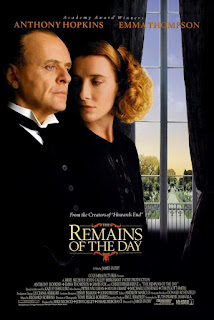
The Remains of the Day (1993)

The Remains of the Day (1993)

Hopkins and Thompson are marvellous in this masterful adaptation from Merchant-Ivory

Director: James Ivory

Cast: Anthony Hopkins (Mr Stevens), Emma Thompson (Miss Kenton), James Fox (Lord Darlington), Christopher Reeve (Congressman Jack Lewis), Peter Vaughan (Mr Stevens Snr), Hugh Grant (Reginald Cardinal), Michael Lonsdale (Dupont D’Ivry), Tim Pigott-Smith (Mr Benn), Ben Chaplin (Charlie), Patrick Godfrey (Spencer), Lena Headey (Lizzie), Pip Torrens (Dr Carlisle), Paul Copley (Harry Smith) Rupert Vansittart (Sir Geoffrey Wren), Peter Eyre (Lord Halifax), Wolf Kahler (Ribbentrop)

Kazou Ishiguro’s Booker-prize winning novel The Remains of the Day is one of my all-time favourites. So, it’s not a surprise I’m a huge fan of this masterful adaptation from the House of Merchant Ivory. I’m certain this is the apex of the team’s work. Mike Nichols had originally planned a film but, wisely, recognised when it came to making movies about repressed 1930s Brits, one team had a monopoly on how to do it best. Beautifully adapted by their regular screenwriter Ruth Prawer Jhabvala, The Remains of the Day is a wonderfully involving and deeply moving film.

Stevens (Anthony Hopkins) is a butler in a British country house purchased in 1956 by American Jack Lewis (Christopher Reeve). Keen to solve staffing problems (and for no other reason at all), Stevens journeys to the West Country to recruit the 1930s housekeeper, Mrs Benn nee Kenton (Emma Thompson). During the journey, he remembers his service for the previous owner, Lord Darlington (James Fox). An impeccable gentleman, Darlington dedicates himself to reconciliation between Nazi Germany and England, eventually tipping into an unwise dalliance with fascism and appeasement.

Stevens had no views on that though. In fact, he prides himself on his anonymity. The goal of his life is to maintain a dignified unobtrusiveness, ensuring the smooth operation of everything, leaving as little a mark as possible. Nothing can intrude on that: not his own feelings, the illness and death of his under-butler father (Peter Vaughan) and, above all, the unspoken romantic feelings between himself and Miss Kenton. The Remains of the Day is about duty and obsession and how a fixation on both can leave someone with little to show from a long life.

Stevens is living the lessons he learned from his father, an ageing powerhouse masterfully played by Peter Vaughan, who undergoes a physical collapse (from dripping nose to dropping trays) and bouts of forgetfulness, eventually dying on a night Stevens is too busy seeing to the sore feet of an illustrious French guest to spare a moment to visit him. It tells you everything about his character that this stiff-upper lipped commitment to duty is a source of pride to our hero.

There are few as curiously blank ‘heroes’ in literature than Stevens. The narrator of Ishiguro’s book is a dull, fussy, unbelievably cold man who has dedicated himself so fully to duty that he has let any emotional life wither and die on the vine – something he only realises far too late. It’s an immensely challenging role, bought to life masterfully by Hopkins. Hopkins astonishing skill here is to play all that repressed coldness on the surface, but also constantly let us see the emotion, longing and regret he is subconsciously crushing down play in his eyes and the corners of his mouth. Is Stevens even aware how much self-harm he is causing? It’s an astonishingly subtle performance.

So subtle in fact that the books conclusion – Steven’s tear-filled confession to a stranger late at night of all the mistakes he has made – was filmed but cut for being superfluous. Hopkins had done the lot, all the way through the movie, through acting skill. You can’t miss the struggle within him, not least the desperate, powerless longing he feels for Miss Kenton that, for oh-so-English reasons he can never admit to himself. Hopkins has the vocal and physical precision, but every gesture tremors with unspoken, barely understood longings. In fact, it’s a shock when he exclaims an angry “Blast” after dropping a bottle of wine (the real cause of his outburst being, of course, Miss Kenton’s announcement that she is getting married)

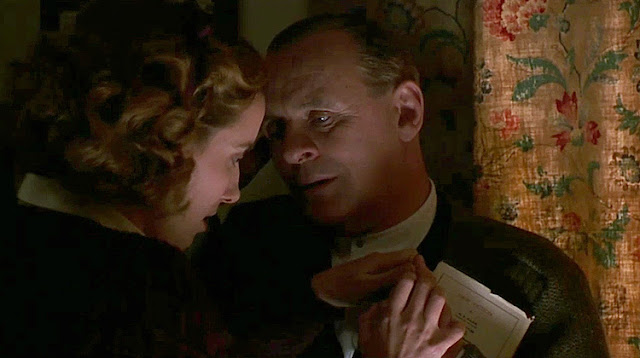
He and Miss Kenton conduct a professional relationship that blossoms into something like a friendship – but he consistently rejects her polite efforts to take it further. In the film’s most powerful scene, Miss Kenton enters his parlour and playfully tries to see the title of the novel he’s reading (a sappy romance). The playfulness tips into agonisingly awkward tenseness as Hopkins’ Stevens seems paralysed, his hand lingering inches from her hair but unable to bring himself to break decorum and fold her in an embrace – all while Miss Kenton continues her increasingly desperate semi-flirtatious banter. It of course ends with Stevens dismissing her: just as later he will take a snap of frustration as a signal to irrevocably cancel their late-night cups of cocoa together.

Emma Thompson is wonderful as a woman only marginally more in touch with her feelings and longings than Stevens is: aware that she, eventually, wants more from life, but unable to find the way of communicating the love she clearly feels for Stevens in a manner he can respond to. Instead, the two of them oscillate between a friendly, affectionate alliance and a discordant arguments (their only outlet for their passion), rooted in their inability to admit their feelings for each other. To further stress the point, both of them mentor young staffers (played by a very young Ben Chaplin and Lena Headey) who have the youthful “what the hell” to jack in all this for love.

Ivory’s wonderfully subtle film makes clear this is a turning point in history, the final hurrah for the this sort of deferential hierarchy. Stevens is the last of a generation of butlers, convinced that what their employers got up to had nothing to do with them – views not shared by Tim Piggot-Smith’s more grounded Benn, who chucks in his job working for a bullying blackshirt (who else but Rupert Vansittart?). Throughout the 1950s storyline, Stevens is constantly asked if he knew the infamous Lord Darlington (a sort of Lord Londonderry figure, hopelessly taken in by Hitler) – in fact, like Paul, he twice denies ever having known him.

And you can understand why, as the film has sympathy for Lord Darlington. As his decent, liberal god-son Reginald Cardinal (an excellent Hugh Grant) says, Darlington is a great asset for Germany precisely because he’s honest, well-meaning and motivated by a desire for peace. The fact that his leads him to consort with a host of Nazis, Blackshirts and the most appalling anti-democratic vestiges of the upper-classes (at one point, Stevens selflessly gives a performance of geopolitical ignorance so as to help demonstrate why men like him shouldn’t have the vote) is an unfortunate side-effect.

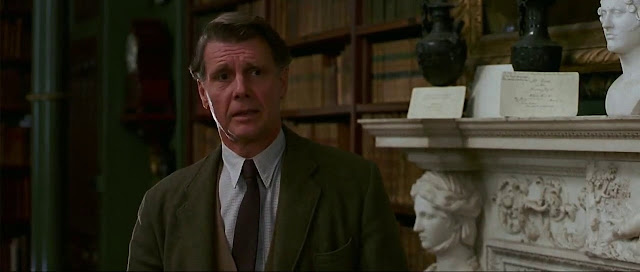
Played perfectly by James Fox, Darlington is misguided but genuine. As war approaches, he leads an increasingly hermit like life – camp-bed and paper-strewn, messy library – hosting conferences denounced by Jack Lewis (a fine Christopher Reeve) as a host of amateurs talking about a world they no longer understand. Beneath it all, Darlington is guided by fair play. So much so, it’s almost distressing to see him (under the influence of an attractive German countess) reading anti-Semitic pamphlets and sacking two refugee Jewish maids – an act he later regrets (far too late). This moment also reinforces Stevens’ compromised pig-headedness (not his place to judge!) and Miss Kenton’s fear to act (she’s horrified, but to scared of unemployment to hand in her notice).

All of this culminates in a series of scenes where emotions pour out of the actors, even while their words are banal and everyday memories and reflections. Ivory was never more confident and skilled behind the camera, and the film is a technical marvel, beautifully shot with a wonderful score from Richard Robbins. Hopkins is phenomenally good, simultaneously pitiable and smackable, Thompson is wonderful alongside him, Fox and Grant perfect – it’s a very well-acted piece. And a wonderfully perfect capturing of a classic modern British novel. No doubt: the best Merchant Ivory film.

Death on the Nile (2022)

Death on the Nile (2022)

Another all-star cast saddles up for one of Branagh’s overblown Christie adaptations

Director: Kenneth Branagh

Cast: Kenneth Branagh (Hercule Poirot), Tom Bateman (Bouc), Annette Bening (Euphemia Bouc), Russell Brand (Linus Windlesham), Ali Fazal (Andrew Katchadurian), Dawn French (Mrs Bowers), Gal Gadot (Linnet Ridgeway-Doyle), Armie Hammer (Simon Doyle), Rose Leslie (Louise Bourget), Emma Mackey (Jacqueline de Bellefort), Sophie Okonedo (Salome Otterbourne), Jennifer Saunders (Marie van Schuyler), Letitia Wright (Rosalie Otterbourne)

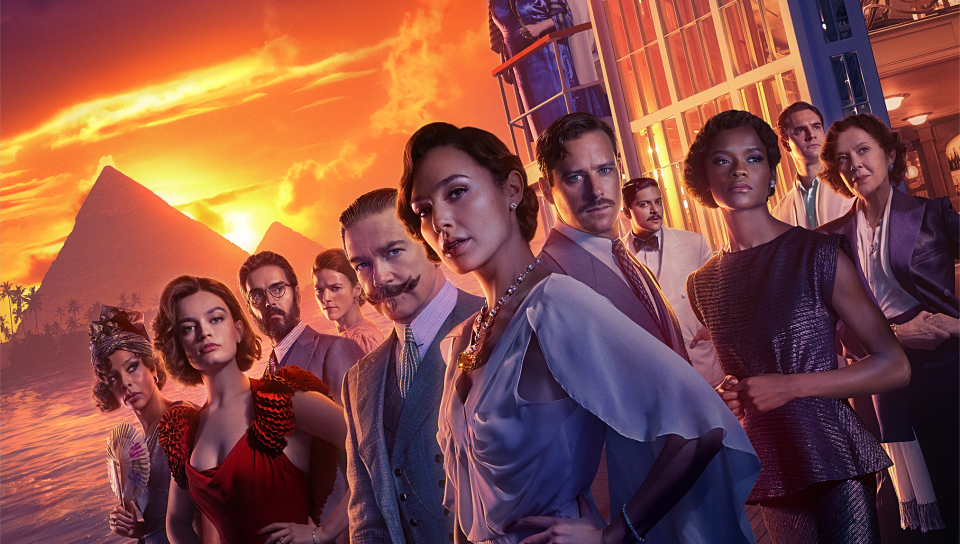
The tradition of luscious, all-star Agatha Christie adaptations continues. Following his successful 2017 Murder on the Orient Express, Branagh’s Poirot follow-up Death on the Nile finally makes it to the screen. I say finally, because this film has been sitting on a Covid-related shelf for so long that Branagh conceived, wrote, shot, edited, released and won awards for Belfast in the meantime. Death on the Nile is a much less personal film than that one, but is still an interesting (if flawed) re-imagining of Christie’s Belgian detective.

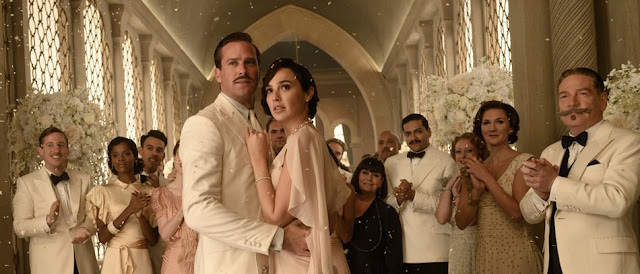
Linnet Ridgeway (Gal Gadot) and Simon Doyle (Armie Hammer) are getting married and honeymooning in Egypt. Problem is, six weeks earlier Simon was engaged to Linnet’s old friend Jacqueline de Belfort (Emma Mackey), who has not taken being jilted well and is stalking the couple throughout their honeymoon. Poirot (Kenneth Branagh) is invited to join the bash by old friend Bouc (Tom Bateman), one of a host of wedding guests on a private cruise down the Nile on luxury steamer The Karnak. But Jacqueline gatecrashes the cruise and murder strikes. With almost every passenger having a motive, will Poirot manage to unpick a case that becomes a painfully personal one?

Branagh’s Death on the Nile film has many of the same flaws and strengths of his previous Poirot epic. Shot on 70mm, it’s almost excessively beautiful. In fact, the film has such a chocolate box, Sunday-afternoon feel it frequently looks almost too perfect in its blisteringly blue skies and CGI Egyptian backdrop. It’s very clear that we’re expected to wallow as much in the costumes, sightseeing and 30s glamour as the mystery. In that way at least it’s pretty close to the 1978 Ustinov version.

Fortunately, the mystery is one of Christie’s finest and its execution is handled fairly deftly. The plot is pretty faithful, although most of the character traits of the passengers are reshuffled and reassigned to create interesting new set-ups. (For example, a rich kleptomaniac takes on instead the socialist passions of a secret nobleman who instead takes the medical qualifications of a third character. Elsewhere a character is split in two into Okonedo’s jazz singer and Bening’s rich amateur painter). The insertion of the Bouc character from Murder on the Orient Express carries across an relationship that the film richly develops to give the case a greater personal impact for Poirot.

But the film, like the first, is as much a Poirot-centric character study as it is a murder mystery. It’s easy to snigger at an opening sequence which, while handsomely done and including an impressively digitally de-aged Branagh, serves as a “moustache origins” story (Poirot grew it to hide his physical and emotional scars from WW1). But it’s a launching point for an interesting exploration of Poirot’s emotional hinterland and monk-like abstinence from attachment. A particularly rich opportunity, considering the murder’s roots are in exactly the sort of all-consuming love Poirot has denied himself. It also pays off in the film’s final sequence, with clear evidence that events have led to Poirot permanently re-evaluating and changing his character.

As in the previous film, Branagh plays this with a winning mix of comedy and larger-than-life prissiness but also manages to utilise his eyes very effectively to suggest the emotion and pain his Poirot keeps firmly under the surface. The later sections of the film see Branagh play a level of overt pain that we’ve not really seen other Poirots display in the past. Expanding the character still further beyond the focused, retentive, distanced detective of Christie’s original, this is also a Poirot who expresses shame, regret and (bashfully) a schoolboy-style crush.

Unfortunately, the rest of the cast is a more mixed bag – who would have thought Russell Brand would be not only one of the more restrained, but also one of the most quietly affecting? Tom Bateman is excellent as Bouc, full of joie de vivre and later wounded, pained innocence. Brit audiences can enjoy the joke of French and Saunders playing a pair of closeted ageing lesbians. Letitia Wright is fairly good as a headstrong young woman in love. Other members of the cast engage in a scenery chewing competition, roundly won by Sophie Okonedo as a rollingly accented blues singer with most of the best lines, while Bening and Fazal struggle to bring life to their characters.

For the principal love triangle, the film suffers under the unfortunate issue of Armie Hammer’s fall-from-grace (guess he’s never going to become that star I wrote once he was destined to become). Even without that, Hammer seems oddly constrained by his British accent and fails to bring any life or passion to the role, not helped by a complete lack of chemistry with Gal Gadot who seems hopelessly at sea, trapped in flat line readings and odd bits of business. Emma Mackey by far-and-away comes out best as a young woman dripping with danger and obsession.

It’s a shame Branagh’s film constantly seems to shoot itself in the foot. Must be easy to do, since the boat is awash with guns (everyone seems to have one!) – so much so the final reveal is bungled into a three-way Mexican stand-off that completely robs the book’s brilliant denouement of its impact. The whole film is a little like this at times: as a director Branagh can be a flashy show-off whose ambition isn’t always married with the sort of effortless grace great directors bring to cinema. So, the film is crammed with tricksy, attention-grabbing shots and loud, brash moments of drama that are as likely to raise sniggers as sighs of awe.

It’s a shame as, in many ways, this is actually a little better than Murder on the Orient Express. It’s tighter (even though it’s longer!) and it creates an emotional backstory for Poirot that not only feels much less forced but actually adds something to the original story. Many of the changes in the characters actually help to make something interesting and new. If only Branagh’s films could shake the idea that we need guns, fights and sweeping CGI to invest in a Poirot story. Because, despite some weaker performances, when the film focuses on emotion and story it’s actually a fairly engaging adaptation that, while never the best, is very far from the worst.

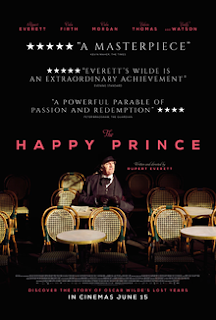
The Happy Prince (2018)

The Happy Prince header
Rupert Everett excels as Oscar Wilde in his passion project The Happy Prince

Director: Rupert Everett

Cast: Rupert Everett (Oscar Wilde), Colin Firth (Reggie Turner), Colin Morgan (Lord Alfred “Bosie” Douglas), Emily Watson (Constance Lloyd), Tom Wilkinson (Father Dunne), Anna Chancellor (Mrs Arbuthnot), Edwin Thomas (Robbie Ross), Beatrice Dalle (Café manager), Julian Wadham (Mr Arbuthnot), John Standing (Dr Tucker)

Rupert Everett has long felt an affinity for Oscar Wilde. He saw Wilde as one of the first great martyrs of the gay community, sacrificed early to the hypocrisy of conventional society (who loved everything about this flamboyantly camp, witty man right up until they found out what he got up to in bed). He spent ten years trying to find the money to film his script about Wilde’s final days in exile in Europe. (Everett eventually recounted all this in a book, To the Ends of the Earth).

The final end result is a well-made, interesting, decent film that doesn’t reinvent the wheel or radically change our perceptions or knowledge of Wilde – but does plenty of credit to Everett. He directs with an assurance and a surprising amount of visual flair. The film is attractive and uses urgent, hand-held camerawork with a great deal of skill, giving even the most basic scenes a real spark of life. There are some intelligent and intriguing visual cuts and transitions and he gets good work from the cast (Firth, an old friend, loyally did the film for nothing to help it get made). There is enough here to make you keen to see Everett have a go at another film (although I suspect, from reading the book, that’s highly unlikely to happen).

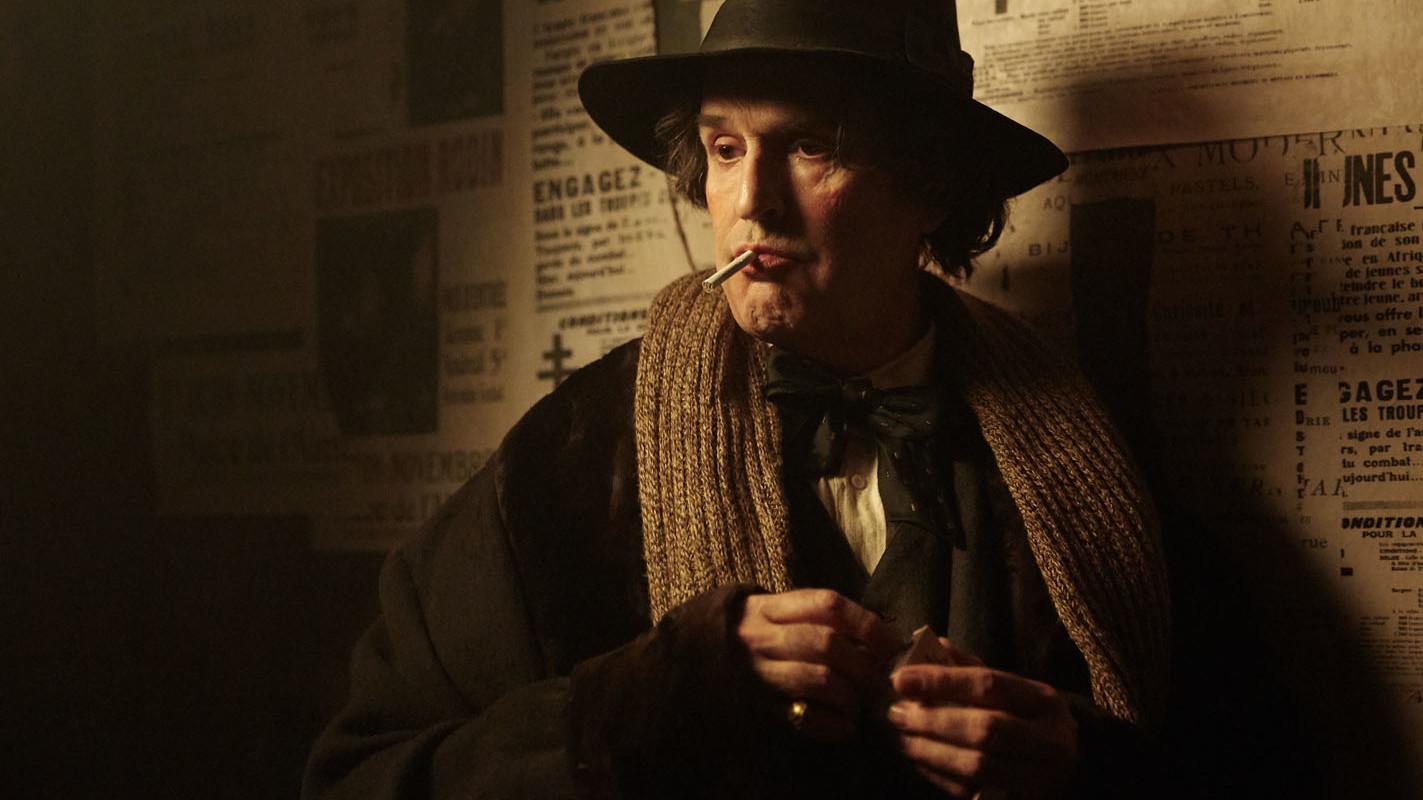
Everett also plays the lead role, and that’s the film’s main interest. He honed his performance as Wilde after the best part of a year on stage (to huge acclaim) in David Hare’s The Judas Kiss. Not to mention Everett has a natural affinity for Wildean dialogue, having proven on several occasions that maybe no actor alive better captures Wilde’s wit and pathos. His Wilde is a shattered husk, slowly realising over the course of the film that his life is effectively over. This happens not so much as a raging against the light, but the slow deflation of a man who died at a very early age (barely mid 40s), collapsing into depression, alcoholism and repeating the same mistakes over and over again.

The most prominent of those mistakes being taking up again with his lover (and root cause of his disgrace the first time) Bosie, played here with preening, incandescent selfishness by Colin Morgan. During a long sojourn in Naples, these two flirt, fight and fuck until the money runs out – like an appalling unfunny screwball comedy couple who keep being dragged back together because fighting each other is better than talking to anyone else. Bosie then turns up in floods of tears at Wilde’s grave – having cut all ties with him or face disinheritance, fobbing him off with a few hundred quid of “thank but piss off” money.

Wilde’s loyal friends stick by him – but in that typical blinkered way we sometimes behave when we are in love, Wilde oscillates between being sickeningly dependent and dismissive of them. Everett isn’t afraid to make Wilde often preening, sponging, selfish and deluded or to stress how easily his wit and intelligence could be turned cruel. Edwin Thomas is heart-breakingly earnest as Wilde’s devoted friend Robbie Ross while Firth gives sterling support as the equally loyal Reggie Turner.

The film follows Wilde into some pretty dark places and plays some quite daring cards when exploring Wilde’s psyche. Everett plainly shows Wilde deeply regretted the end of his relationship with his children, and the damage he caused them. But he isn’t afraid to show him taking on potential substitutes for them in a teenage boy and his prepubescent brother – while still paying for sex with the older brother (eagerly pimped by his street-smart younger brother). Despite this there’s something very sad about Wilde settling down to tell these kids the same stories he told his own. Or his gentle longing for the family he left behind that we hear in his voice when he sees them.

Where the film is strongest is in showing the prejudice and rage Wilde met and the suffering he endured. Wilde is spat at, chased through the street by drunken poshboys on tour (finally physically confronting them in a church with a foul-mouthed fury), threatened and generally treated like dirt by nearly everyone of any social standing. Scenes of him at his pomp show the same traits now treated as disgusting signs of his sexual preference, were celebrated as evidence of his charm. The Happy Prince has an angry and rage to it that I almost wish Everett had committed to more.

Saying that, it’s shot and edited with such pace and urgency that the film still works. If at the end it never quite coalesces into a clear message, it’s still a fine tribute to Everett’s efforts to bring it to the screen. And his own performance is a marvel – beautifully judged, empathetic but not hagiographic, critical but sympathetic, funny and also moving, angry but gentle. Its best legacy is the opportunity Everett the actor is given by Everett the director (as he confesses in the book one of his principle reasons for writing the script in the first place) and if the film is a little too much of a one-man showcase, it still has plenty of interest to it.

David Copperfield (1935)

David Copperfield header
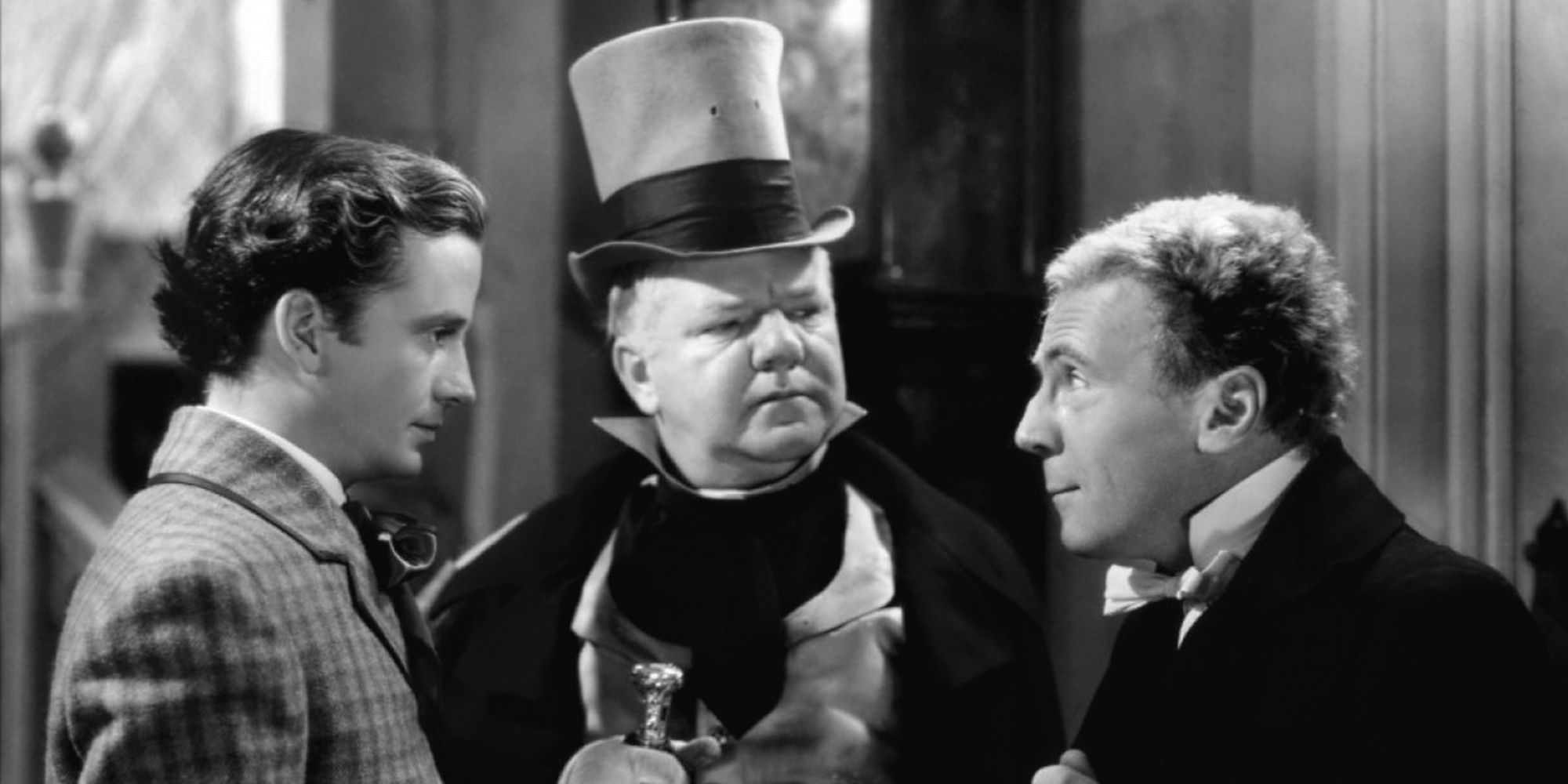
Frank Lawton, WC Fields and Roland Young bring Dickens to life in David Copperfield

Director: George Cukor

Cast: Freddie Bartholomew (Young David Copperfield), Frank Lawston (Old David Copperfield), Edna May Oliver (Betsey Trotwood), Elizabeth Allan (Clara Copperfield), Jessie Ralph (Peggotty), Basil Rathbone (Mr Murdstone), Herbert Mundin (Barkis), Jack Buckler (Ham Peggotty), Una O’Connor (Mrs Gummidge), Lionel Barrymore (Daniel Peggotty), Violet Kmeple Cooper (Jane Murdstone), Elsa Lanchester (Clickett), Jean Cadell (Emma Micawber), WC Fields (Wilkins Micawber), Lennox Pawle (Mr Dick), Lewis Stone (Mr Wickfield), Roland Young (Uriah Heap), Madge Evans (Agnes Wickfield), Hugh Williams (James Steerforth), Maureen O’Sullivan (Dora Spenlow)

You could argue David Copperfield is one of the most influential films ever made. David O Selznick was desperate to bring Dickens’ favourite novel to the screen. But the MGM suits were convinced it couldn’t be done (800 pages in two hours?! Get out of town!) and anyway who would want to come to the cinema when they could read the book at home? They were wrong, wrong, wrong and Selznick proved that classic literature (even if it was a cut-down version of a great book) could be bought to the screen and capture at much of the spirit of the book, even if you couldn’t dramatise all the events. David Copperfield remains very entertaining, not least because it also showed you can’t go to far wrong when you assemble an all-star cast who fit their characters perfectly.

The story of the film pretty much follows the novel (with exceptions, deletions and abridgements). Young David Copperfield (Freddie Bartholomew, growing up into Frank Lawton at the half-way point) grows up loved by his mother (Elizabeth Allan) and nurse Peggotty (Jessie Ralph), but loathed by his step-father Mr Murdstone (Basil Rathbone) who barely waits five minutes after his mother passes away before dispatching David to a factory in London. There David forms a bond with the charming exuberant Mr Micawber (WC Fields) before deciding to walk to Canterbury to seek the protection of his aunt Betsey (Edna May Oliver). Growing into a young man, he faces romantic problems, the schemes of the vile Uriah Heap (Roland Young) and the betrayals of his schoolfriend Steerforth (Hugh Williams). Will all turn out well?

Stylistically, David Copperfield aims to be as true to the novel as impossible. It’s designed to look as much as possible like a series of Phiz sketches bought to life and the actors have clearly studied both novel and illustrations to craft themselves as much as possible into living, breathing representations of their characters. Well scripted by Hugh Walpole (who also cameos early on as a Vicar), the film manages to be faithful without being reverential and tells an engaging story with momentum – even if the pace accelerates a little too much towards the end.

Walpole’s adaptation splits the book into two acts: the childhood of our hero and his life as young man. Giving an idea of how the momentum accelerates towards the end, this basically means the first hour of the film covers the novel’s opening 200 pages, leaving the last hour to hurry through the remaining 600. This means several characters and events are deleted, simplified or removed. However, Walpole still manages to retain all the truly vital information and iconic material, and recognises most of the striking material is found in that first 200 pages.

This childhood story is very well told, partially because Freddie Bartholomew (while he has touches of school play about him) is an affecting and endearing actor, who makes the young David a kid we care about rather than either an insufferable goodie-two-shoes or a syrupy brat. He’s a smart, kind, slightly fragile boy who we end up caring about – and it gives a real emotional impact when his mother dies (a very tender Elizabeth Allan) or to see him misused by Mr Murdstone (a perfectly judged performance of austere coldness by Basil Rathbone). Little touches of joy in his life – like the time he spends at the Peggotty’s converted ship home (a perfect representation of its description in the book) are really heartwarming, because David himself is such an endearing fellow.

It does create an obstacle for Frank Lawton when he takes over, since the audience is asked to try and bond with this new actor having already committed their hearts for just over half the run time to another. Lawton also has to deal with scenes rushing towards the conclusion rather than getting character beats like Bartholomew. Cuts impact his key relations: his school friendship with Steerforth is relayed second hand, meaning Steerforth turns up only to almost instantly let everyone down; Dora Spenlow and Agnes Wickfield get only brief screen time to establish their characters. The schemes of Uriah Heap are barely explained (he’s just a hypocritical wrong ‘un, okay?). It says a lot that the last fifteen minutes rush through the deaths of three major characters, a shipwreck, a dramatic confrontation, David travelling the world and a resolution of romantic tensions. It’s the only point when the film feels like its ticking boxes.

But it doesn’t completely matter (even if a two-part film would have helped no end – particularly allowing Lawton more room to develop a character) since the performances are so good. Expertly marshalled by Cukor – who rarely introduces visual flair, but coaches pin-perfect turns from the entire cast – every role is cast to perfection. None more so than WC Fields, for whom Wilkins Micawber became a signature part. Replacing Charles Laughton mid-filming (he claimed he looked more like he was about to molest the boy), Fields keeps his own accent and some of his own persona, but still fits perfectly into the Dickensian larger-than-life optimism and good will of Micawber. His comic timing is spot-on – watch him climbing over a roof or bantering with David and his family – and he seems like he has just walked off the page. If there had been a Supporting Actor Oscar in 1935, he would almost certainly have won it.

He’s the stand-out of a host of excellent performances. Edna May Oliver is very funny and has a more than a touch of genuine emotion as Betsey Trotwood. Jessie Ralph is excellent as Peggotty. Lennox Pawle makes a very sweet Mr Dick. Roland Young is the very picture of unctuous hypocrisy as Uriah Heap. Only the young women get a little short-changed: despite her best efforts, Madge Evans can’t make Agnes Wickfield interesting and Maureen O’Sullivan is rather cloying as Dora.

But the film itself is pretty much spot-on for the tone of Dickens, even if events are rushed. The impact of the Peggotty/Steerforth story is lost since we are never given the time to get to know any of the parties involved, and certain plot complexities are only thinly sketched out. But Cukor marshals the actors perfectly and throws in at least one striking shot, of Murdstone appearing in the distance as the camera follows a cart bearing David away from his mother. It always looks just right and the characters that do get the time are perfectly played, so much so that a few performances (Fields, Oliver, Young) may even be definitive.

David Copperfield proved you could turn a doorstop novel into a film and, even if you sacrificed some of the complexities (and might need to rush to fit it all in) you could still produce something that felt recognisable and true to the original. So, for that – with the mountain of adaptations that followed – we have a lot to thank it for.

Cavalcade (1933)

The Marryots and the Bridges face a world in motion in Cavalcade

Director: Frank Lloyd

Cast: Diana Wynyard (Jane Marryot), Clive Brook (Robert Marryot), Una O’Connor (Ellen Bridges), Herbert Mundin (Albert Bridges), Beryl Mercer (Cook), Irene Brown (Margaret Harris), Frank Lawton (Joe Marryot), Ursula Jean (Fanny Bridges), Margaret Lindsay (Edith Harris), John Warburton (Edward Marryot)

Before Upstairs, Downstairs and Downton Abbeythere was Cavalcade. Winning the Best Picture of 1933 (beating out more highly regarded films today – and King Kong wasn’t even nominated!), Cavalcade shows a romantic weakness for dramas about the struggles of the British Upper classes and their servants is nothing new. Based on Noel Coward’s play, it’s a grand, soapy drama that’s been done better since (not least by those two shows) but makes an entertaining genre template.

Carefully ticking off historical events between 1899 and 1933, the film follows the Marryot family – father Robert (Clive Brook), mother Jane (Diana Wynyard) and their two sons Joe (Frank Lawton) and John (Edward Marryot) – and their servants turned pub owners the Bridges – Albert (Herbert Mundin), Ellen (Una O’Connor) and their daughter Fanny (Ursula Jean). From the Boer War via the death of Queen Victoria, the first flight across the Channel, two characters taking an unfortunate honeymoon trip on the Titanic to the First World War, we see how events affect both families (invariably with tragic consequences) as Britain slowly changes.

You can look at Cavalcade and find it hilariously old-fashioned. The accents are so sharply clipped they could be cut-glass, while the working-class characters speak with “evenin’ guv’ner” ‘umbleness. In preparation for the film, the Studio flew a camera team over to film the London production (then hired several of the actors to repeat their roles, including O’Connor) and the film sometimes feels like a slightly stuffy stage production bought to the screen.

This is most noticeable in Diana Wynyard’s performance. She clearly has no idea to act for the camera – and Lloyd didn’t correct her. ‘Asides’ see her frequently turn towards the camera and stare into the middle distance. For the innumerable times she is called onto to weep, she throws herself to the floor dramatically. With her declamatory style, she’s constantly playing to an imaginary back row. It sticks out particularly badly when watching the far more experienced Brook relatively underplay each scene without physically telegraphing every emotion. Surprisingly Wynyard landed an Oscar nomination – but soon left Hollywood and returned to the stage.

The rest of the cast are split between the two approaches, all while balancing the stiff-upper-lipped demands of the script, with its “I must go the war/Don’t go darling/I must they won’t start without me” exchanges (to paraphrase Eddie Izzard). The younger actors – John Warburton and Margaret Lindsay as the young couple booking a berth on the Titanic – offer performances so restrained they feel strait-jacketed. The working-class characters cut lose a little. Una O’Connor is a little broad, but quite engaging while Herbert Mundin gives possibly the best performance as a landlord too fond of his own product. Ursula Jeans makes a fine romantic lead as their daughter, delivering decent renditions of several songs in particular “Twentieth Century Blues”.

Those blues are nominally what the film is about, as the world leaves the Marryots behind. It’s bookended by two New Years –in 1899 and 1933 – during which time the world has changed completely. War has shattered the cosy Victorian status quo, leaving millions dead and the Marryots struggle to recognise this new England. Cavalcade only lightly engages with themes of societal upheaval – probably because it is simultaneously wallowing in so much nostalgia, that Coward’s more sombre ideas would bring the party crashing down.

Instead, Cavalcade luxuriates in nostalgia, loving the idea of a hierarchical, old-fashioned, English world where everyone knows their place (even after leaving their employ, the Bridges treat the Marryots with deference, while the Marryots look at them with a paternal indulgence). But its soapy stories – predictable as they seem to us now – are actually rather effective, and the flashes of genuine emotion (best of all, when Brook’s Robert says farewell to his son as he heads out on “one last patrol” in the last days before the Armistice) are surprisingly effective.

Lloyd’s direction of the larger set-pieces also show an impressive flair. The domestic scenes may seem stagey, but when the camera films a crowd it feels ambitious and dynamic. A huge pier scene with hundreds of men heading to the Boer War is handled very well. Bustling street scenes feel real. Wynyard’s finest moment comes in a crowd scene as she tries to merge into a crowd celebrating the Armistice, while caught up in a personal grief. A montage covering 1918 to 1933 is effective in showing the march of change.

Best of all is a wonderful montage communicating the horrific cost of the First World War. Lloyd presents the war as a never ending stream of soldiers marching into a tunnel. Initially the backdrop around is an English town, with smoking chimneys. This morphs into No Man’s Land, with the chimney smoke becoming explosions. Super-imposed over this are images of soldiers in close-up, at first marching in smiles, then dying at an accelerated rate. Nostalgia turns into Danteish circle of hell, innumerable bodies piling up. It stands out as a moment of expressionist inspiration (and must have had a strong impact on the audience).

It’s the finest moment in Cavalcade, your enjoyment of which will be directly related to how much patience you have with Downton Abbey. Find that an enjoyable diversion (as I do), and you will certainly find something to enjoy in Cavalcade. If Downton’s rose-tinted view of Edwardian social structures puts you on edge, you will struggle. I was pleasantly surprised by how charmed I was by it. And that World War One sequence is worth the price of admission alone.

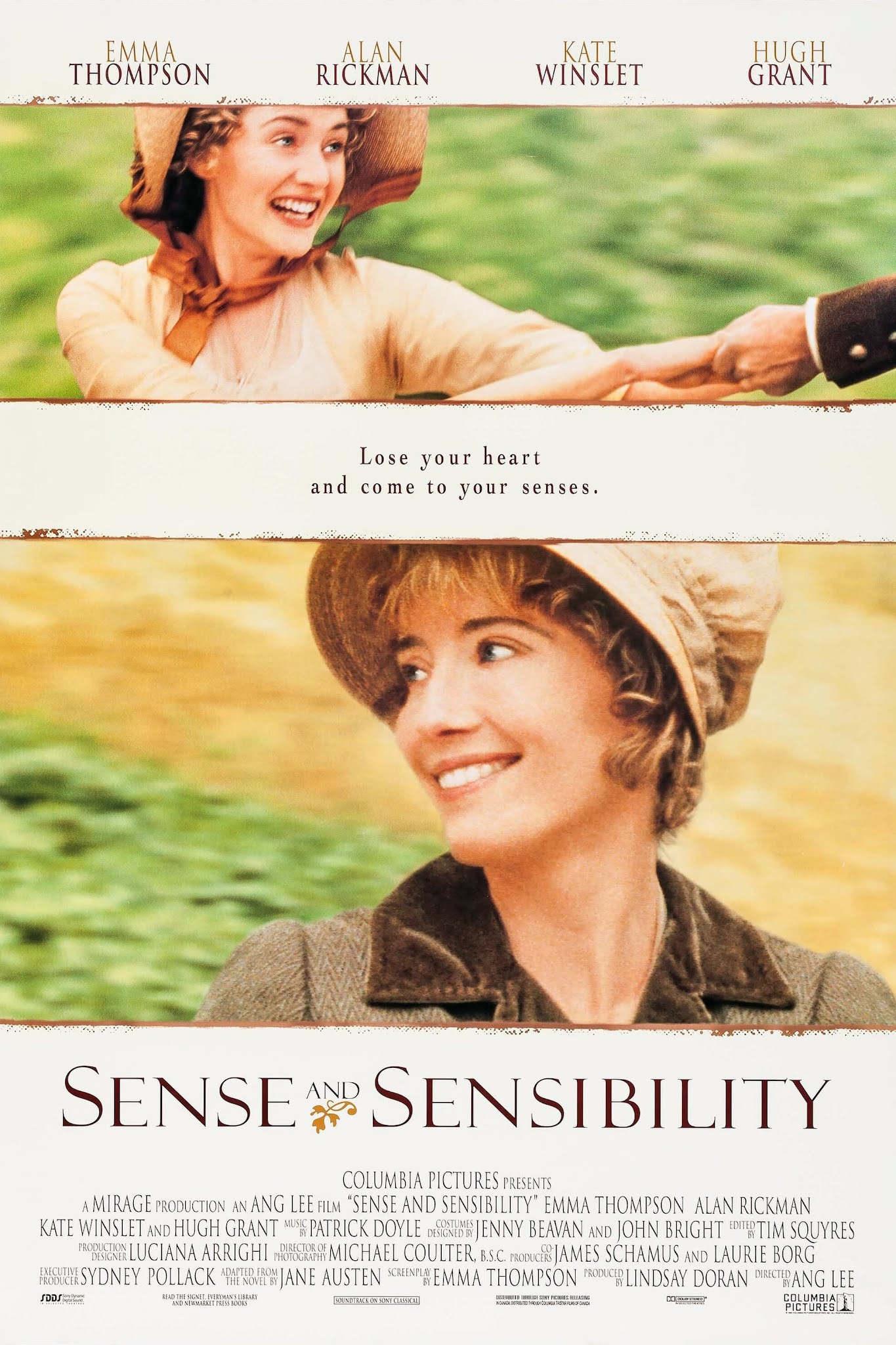
Sense and Sensibility (1995)

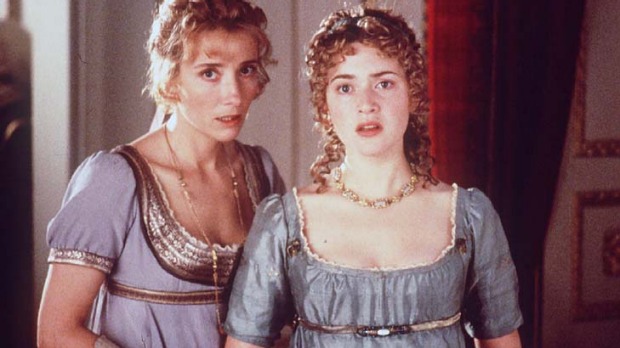
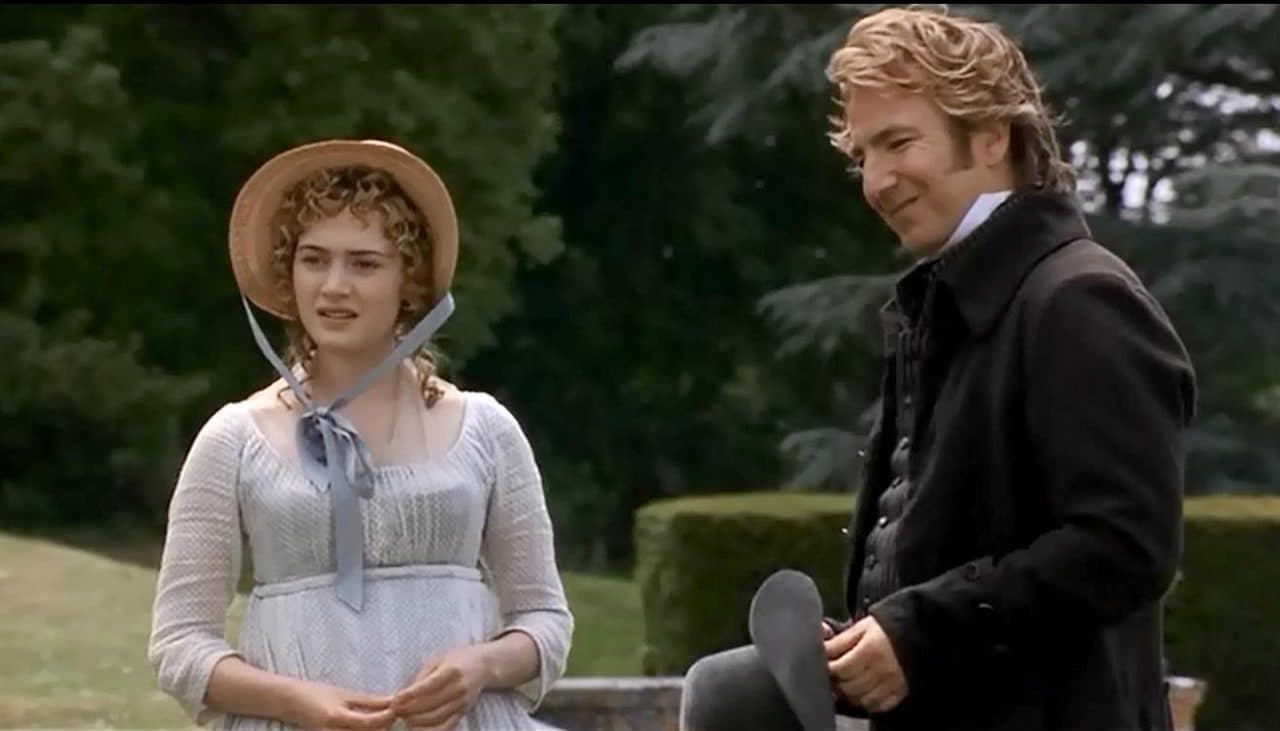
Emma Thompson and Kate Winslet are superb in probably the greatest Austen adaptation on film, Sense and Sensibility

Director: Ang Lee

Cast: Emma Thompson (Elinor Dashwood), Kate Winslet (Marianne Dashwood), Alan Rickman (Colonel Brandon), Hugh Grant (Edward Ferrars), Greg Wise (John Willoughby), Gemma Jones (Mrs Dashwood), Harriet Walter (Fanny Dashwood), James Fleet (John Dashwood), Robert Hardy (Sir John Middleton), Elizabeth Spriggs (Mrs Jennings), Imogen Stubbs (Lucy Steele), Hugh Laurie (Mr Palmer), Imelda Staunton (Mrs Palmer), Emilie Francoise (Margaret Dashwood), Tom Wilkinson (Mr Dashwood)

The world of Austen adaptations stands on two pillars – and both of them date from 1995. One is the BBC Pride and Prejudice, the other this luminous adaptation of Austen’s first novel, written by and starring Emma Thompson. It’s hard to pull together a review when a film pretty much plays its hand perfectly: and that’s exactly what Sense and Sensibility does. The film is a complete delight, in which Thompson takes surprisingly large liberties with many of the details of the novel, but brings to the screen a version that never once loses the spirit and heart of Austen’s work. It’s an immensely impressive achievement, and one of the finest literary adaptations ever made.

After the death of Mr Dashwood (Tom Wilkinson), the Dashwood estate passes into the hands of his son John (James Fleet) and John’s ambitious wife Fanny (Harriet Walter), leaving his second wife (Gemma Jones) and their daughters sensible Elinor (Emma Thompson), passionate Marianne (Kate Winslet) and giddy schoolgirl Margaret (Emilie Francoise) suddenly homeless. However, this does bring Fanny’s gentle and kind brother Edward Ferrars (Hugh Grant) into Elinor’s life, and an unspoken romance builds between the pair. There is passion in the air for Marianne at their new home, when she is rescued from a fall in the rain by the dashing Willoughby (Greg Wise). But are there secrets in the pasts of both men that could threaten the sisters’ happiness? And how did Willoughby’s life intersect with the reserved Colonel Brandon (Alan Rickman)?

Thompson’s superbly written script is a faultless adaptation that makes not a single poor choice, and expands and enriches several characters (in particular the three men) to great effect. Thompson not only brings much of the humour and wit in Austen to the fore – the film is frequently very funny – she also understands here truth and tenderness. Which is why the film is so beloved: it’s a film overflowing with empathy and heart for its characters which builds the emotional investment as skilfully as it does the comedy. It culminates in a proposal scene which I don’t think has ever not placed a lump in my throat.

To list all the excellent adaptation ideas would take forever so I’ll use one example. The film wisely expands much of the early character interactions, in particular deepening and exploring the early meeting between Elinor and Edward. A section that takes up barely one of the book’s (very short) chapters here fills the first 20 minutes of the film. It’s vital as it superbly establishes the natural warmth and intimacy between these two, and their perfectly complementing personalities.

It also allows Grant – in one of his most romantically winning performances – to display some deeply endearing light comedy, as well as establishing Edward as a thoughtful, sympathetic and decent man, who forms bonds quickly with all the family (especially young Margaret) through his genuineness. It also keeps us rooting for a relationship – and for a character – who the film often has to leave off screen for vast stretches, and leaves us in no doubt that his (later revealed) engagement to Lucy Steele (a woman he does not love, and who is interested in him solely for his position) comes from the same motives of decency, duty and the desire to do the right thing.

If that’s an example of one of Thompson’s most successful changes in her adaptation, she also unerringly identifies the things it’s most important to keep. Just like the novel, the film places the warmth of the sisters’ relationship at its heart. Helped by the natural chemistry and ease between Thompson and Winslet, the film carefully contrasts the personalities of these two sisters (one sensible and reserved, the other spontaneous and passionate) but takes no sides and also shows the sisters themselves are united by their love for each other. The film frequently features scenes of confidence and intimacy between the two, and continually brings us back to each other as the key relationship in their lives. It also shows how both need to meet in the middle ground: Elinor needs some of Marianne’s sensibility, just as Marianne needs to take on some of Elinor’s sense.

Although sense would not have necessarily helped Marianne uncover the dangerous selfishness of Willoughby. Perhaps the only wrong call in the BBC Pride and Prejudice (like most adaptations of that novel), is that it makes the rogueish Wickham insufficiently handsome and too blatantly smarmy from the start, tipping the audience the wink that this man can’t be trusted. Not so here, with Greg Wise giving Willoughby so much charm, regency handsomeness, dash and warmth that you would not imagine for a moment he could be anything but what he seems. He makes a clear contrast with Marianne’s other suitor, the older, more distant Brandon – superbly played by Alan Rickman – whose qualities of kindness and decency are hidden behind his coolness and lack of flash (Rickman is, again, wonderful here as a man hoping against hope for  a second chance at love).

But then the film is filled with perfectly cast actors. Thompson is a brilliant and natural fit for Elinor (even if she is too old for the part, something she acknowledged herself) giving her acres of emotional torment under an exterior she must keep calm and controlled for the sake of her family. Winslet became a star for her enchantingly free-spirited performance, grounded by a warmth and desire for the best for others that keeps the character from ever becoming irritating or overbearing.

Among the rest, there isn’t a bum note. Walter is hilarious as the washpish Fanny, Hardy full of bonhomie as Sir John. Elizabeth Spriggs is perfect as a gossipy old maid who is a pillar of strength when her friends are ill-treated. Hugh Laurie is hilarious in a gift of a part as the dry, cynical Mr Palmer whose nearly every line is laugh-out-loud funny, but who also proves his nobility in a crisis. Staunton is equally good as his flighty, mismatched wife. Imogen Stubbs brings out the simpering manipulative scheming of Lucy Steele perfectly.

The whole is bought together expertly by wonderfully paced and constructed directing by Ang Lee, whom it’s surprisingly easy to over-look. Lee was a considered an odd choice for the film – he barely spoke English at the time and was a stranger to Austen. But the film is an inspired match for him, tapping into his sensitivity, the warm eye he brings to families and their dramas, and also the observer’s wit he brings to social comedy and dynamics. Lee also brings an outsider’s eye to England – it’s a film that looks wonderful, but not simply romantic, with Lee not afraid of a stormy sky or a muddy street. Interiors are shot with a candlelit beauty, and there is a sense throughout of all this taking place in a real world. Patrick Doyle’s perfectly judged score also works wonders to help create the mood.

Sense and Sensibility is a masterful film and a, perfect adaptation of Austen. It’s hard to imagine that it will be bettered for some time. Indeed, like the BBC Pride and Prejudice, it feels like it has made all other adaptations of the book redundant. With a brilliant adaptation, superb acting, sensitive and insightful direction and a true understanding of the spirit and heart of Austen, this is one of the greatest adaptations ever made.

Heat and Dust (1983)

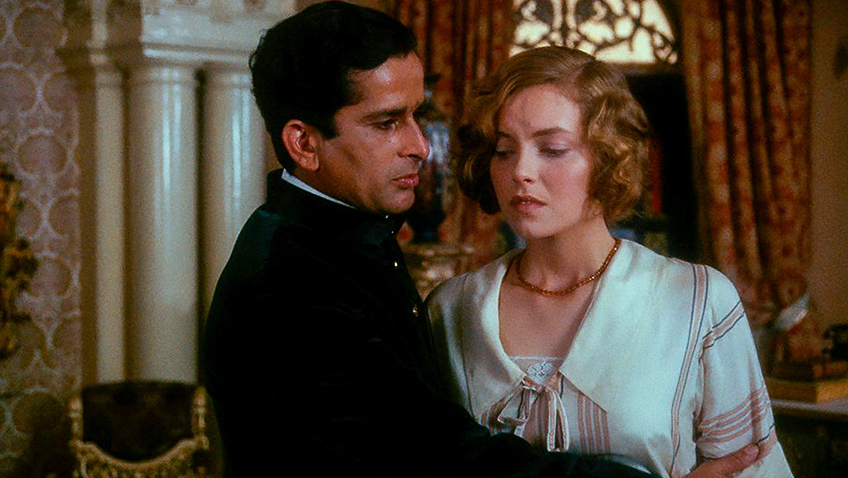
Shashi Kapoor and Greta Scacchi in a love across the divide in Heat and Dust

Director: James Ivory

Cast: Julie Christie (Anne), Greta Scacchi (Olivia Rivers), Shashi Kapoor (The Nawab), Christopher Cazenove (Douglas Rivers), Nickolas Grace (Harry Hamilton-Paul), Zakir Hussain (Inder Lal), Julian Glover (Crawford), Susan Fleetwood (Mrs Crawford), Patrick Godfrey (Dr Saunders), Jennifer Kendal (Mrs Saunders), Charles McCaughan (Chid), Madhur Jaffrey (Begum Mussarat Jahan), Barry Foster (Major Minnies)

Adapted by Ruth Prawer Jhabvala from her Booker-prize winning novel, Ivory-Merchant’s production of Heat and Dust is much like the source: precise, admirable and both faintly enigmatic and intriguingly slight. In 1982 Anne (Julie Christie) travels to India to discover more about the life of her great-aunt Olivia (Greta Scacchi). In 1923, Olivia lived in Satipur as wife to local official Douglas Rivers (Christopher Cazenove). The Nawab (Shashi Kapoor) is the local Indian prince, a charismatic man who may or may not be in league with local bandits. Enthralled by India, bored by British India but deeply in love with Douglas, Olivia still finds herself drawn to the Nawab. Scandal is round the corner.

Heat and Dust is a delicate, well-mounted adaptation, but it never quite engages as much as it should. Perhaps this is because its central plot – a white woman is fascinated by India – is a familiar trope in both novels and films of the Raj. It does take a different approach by intercutting between the present and the 1920s. This presents intriguing opportunities to show ways India has changed physically (the homes of the British Raj have become offices) but also ways it has remained the same culturally.

This carries across in the contrasting stories of two women, both of whom become intrigued by their surroundings and romantically entangled with Indian men. While Olivia is (eventually) disgraced and ostracised by her community, Anne has the freedom to make her own choices. Both women find themselves drifting into life-changes through male seduction. Perhaps this is one of the points of the film in the end – that women, no matter the timeline, are people that things (or men) happen to, rather than being the true owners of their own lives?

It seems the case with Olivia, who never feels in full control her own life, but instead moves inexorably towards a destiny she can’t really influence. Charmingly played, with a sparkle and playful innocence by Greta Scacchi in her film debut, Olivia’s motivations are almost deliberately obscured. Although Ivory uses a device at first of Olivia’s letters being dramatised by Scacchi addressing the camera, this device is swiftly dropped. The letters remain a presence, but we never hear from them. Instead most of Olivia’s actions are narrated by her friend Harry (Nickolas Grace), now an old man. It places a distance between the viewer and Olivia, making her actions harder to understand.

But then that is part of the enigma. India is a land of heat and dust, where normal rules don’t apply and people (particularly those from the West) find themselves reformed by. Olivia has no time for the stuffy, racist British population (especially the frightful woman). But she’s drawn to the Nawab partly because he’s a fusion of East and West, an Indian exotic with the charm of an English gentleman. For his part the Nawab, very well played by Shashi Kapoor, plans a seduction but his motives are as hard to read as Olivia. Is it attraction or revenge on the British for their contempt?

Perhaps it’s a film where we look for deep meaning and motivations, but it is in fact about how we don’t necessarily make grand decisions about our lives, but make a series of in-the-moment decisions. Both Anne and Olivia never seem to proactively make decisions, but instead events largely occur to them. Although this can make for a film sometimes lacking in energy, it does avoid making things obvious for the audience. Even if that can be frustrating when characters remain almost deliberately oblique.

What’s also oddly frustrating about the film is its more modern section. The commentary comparing the present and the past promises much but actually adds little. Anne is a curiously uninvolving character, played with a sweet tenderness by Julie Christie. Anne is hardly proactive and there is very little narrative drive behind her exploration of the past. Strangely the issues the more modern section deals with – including digs at Western cultural tourists – end up feeling less relevant than the issues of race and empire in the 1920s.

And its unfortunate that the 1920s plot line, although well staged and managed, seems extremely familiar – with echoes of A Passage to India and The Jewel in the Crown for starters. While it’s well acted (as well as those mentioned, Christopher Cazenove is very good) and creates an enigmatic atmosphere, you often feel you’re seeing something done better elsewhere. It starts as an investigation into the past, but becomes something more freeform, as if in the heat and dust of India, plans come to nothing. But its air of enigma and portrayal of characters buffeted by small events doesn’t come together into a compelling story or a rich insight into India.

Topsy-Turvy (1999)

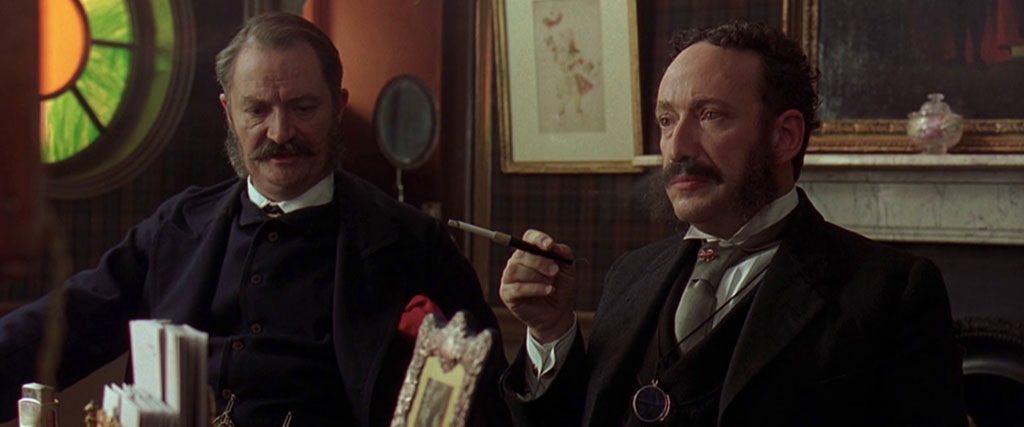
Allan Corduner and Jim Broadbent excel as the Gilbert and Sullivan’s in Mike Leigh’s superb Topsy-Turvy

Director: Mike Leigh

Cast: Jim Broadbent (WS Gilbert), Allan Corduner (Sir Arthur Sullivan), Lesley Manville (Lucy “Kitty” Gilbert), Ron Cook (Richard D’Oyly Carte), Eleanor David (Fanny Ronalds), Wendy Nottingham (Helen Lenoir), Timothy Spall (Richard Temple), Vincent Franklin (Rutland Barrington), Martin Savage (George Grossmith), Dorothy Atkinson (Jessie Bond), Shirley Henderson (Leonara Braham), Kevin McKidd (Durward Lely), Louise Gold (Rosina Brandham), Andy Serkis (John D’Auborn), Dexter Fletcher (Louis), Sam Kelly (Richard Barker)

It seems an odd-fit: Mike Leigh, auteur of working class drama, prestige period films and the music of the middle-class in Gilbert and Sullivan. But that’s to forget Gilbert and Sullivan were among the masters of theatre – and Leigh himself is a theatrical great. Topsy-Turvy, from seeing the most uncharacteristic of the director’s works, in fact perhaps an examination of the creative process Leigh has made his life. It’s a wonderfully made, superbly executed tribute to the struggles and rewards of artistic creation. A celebration of how disparate personalities come together to create something bigger than themselves. Affectionate, heartfelt, at times quietly moving, Topsy-Turvy is both one of Leigh’s most enjoyable films and one of his most tender.

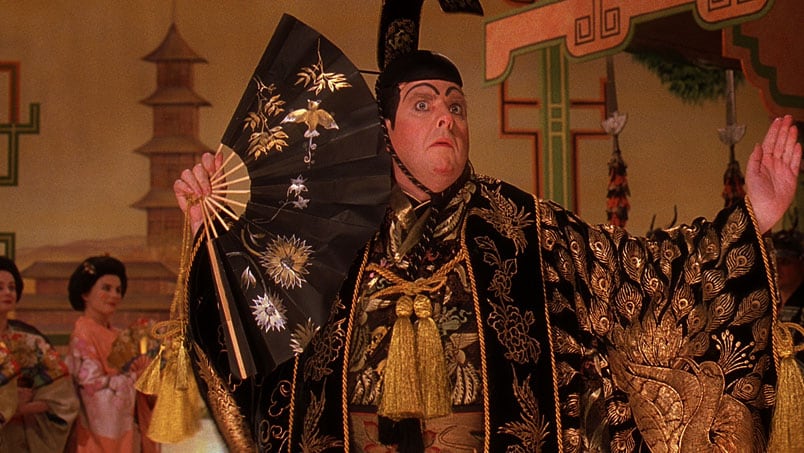
It’s 1884 and the creative partnership between WS Gilbert (Jim Broadbent) and Arthur Sullivan (Allan Corduner) is at a turning point. With their latest, Princess Ida, hardly setting the box-office alight. Sullivan feels the partnership has gone stale – and also feels under pressure to turn his attention towards more ‘serious’ composing. Gilbert refuses to change his next libretto, which Sullivan feels is effectively more of the same. Things change though when Gilbert is intrigued by an exhibition of Japanese arts and crafts, quickly creating a new libretto: The Mikado. The two geniuses, finally in unison, work together to bring the production to the stage.

Topsy-Turvy is probably Leigh’s most purely entertaining film. For anyone who has ever been involved in theatre or the arts, you’ll certainly recognise more than a few moments in this film, which is practically Leigh’s love letter to the arts. Leigh’s aim was to pay tribute to the difficulties of creativity and the demand of having to constantly refresh and reinvent your work to stay relevant and fulfilled. He succeeded: few films have so beautifully captured the struggle, pain, satisfaction and joy of creation or the strange anti-climax artistic success can bring.

Most of the second half of the film is a fascinating look at every step required to bring a production to life. From casting and contract negotiations, to costume fittings, staging and work in the rehearsal room. We get a fascinating insight into the complex backstage politics and squabbles in this small world. From actors bitching about the management (always incompetent, regardless of the situation) to the delight and playfulness of rehearsals as different opportunities are explored, it’s a wonderfully true insight into the theatre. Matched with the intricate and extraordinary detail of the reconstruction of the original production – and you have an enthralling insight into theatre. It also very appropriate for Leigh, whose organic methods of creating a film through copious rehearsal and improvisation remains very similar to theatre.

Alongside this though, the film has plenty of sympathy for the cost of creative exertion. Many of the actors lead sad and even lonely lives. Shirley Henderson’s Leonara Braham struggles with drink, Martin Savage’s George Grossmith is a drug addict (the company is too polite to mention it, but he’s clearly struggling with withdrawal at the dress rehearsal), Dorothy Atkinson’s Jessie Bond has constant pains from an unhealed ulcer. WS Gilbert and his wife lead a chaste life, he as terrified of intimacy and connection as he is of watching first nights. Sullivan juggles health problems and a long-running, regular-abortion marked, affair with Fanny Ronalds with a lingering sense of shame at not having exploited his talents more fully. These are lives that come to life when doused with creation, for all the off-stage world reveals trouble and strife.

Much of the first half is a wonderfully judged contrast between the extraverted Sullivan, keen to stretch himself but lacking the application and drive, and the repressed Gilbert, doggedly ploughing on with his (stale-sounding) original idea and unable to comprehend Sullivan’s reluctance. Leigh’s film could easily have manifested itself as a clash between two mis-matched partners. However, while the film expertly draws the parallels between the two, it also shows how much their energy comes from mutual respect. Sullivan is, after all, right that Gilbert’s first idea is a limp retread. But Gilbert’s Mikado idea is so good we don’t need a scene showing Sullivan change his mind – the simple contrast of Sullivan’s chuckles and animated striding while Gilbert reads him The Mikado’s libretto with his boredom and constant questions to the abandoned libretto speaks volumes.

Jim Broadbent is outstanding as Gilbert. He has the repressed distance, the grumpy-old-man bluntness but he mixes it with small flashes of excitement and rapture that speak volumes. His fascinated glances at the Japanese exhibition – soaking up inspiration – are beautifully judged, while his later excited larking around with a samurai sword (the very next scene sees him with a first draft) is perfect. Broadbent is both supremely funny, with several perfectly judged mon-bots, and also heartbreakingly, unknowingly lonely in his distance and fear of emotional contact. Allan Corduner makes a perfect contrast as the brash Sullivan, enjoying fame in a way Gilbert never can, but sharing with him a tortured sense of his need to fulfil his artistic potential.

The rest of the cast – a delightful mix of Leigh regulars and familiar faces – are also fabulous. Lesley Manville is wonderful as Gilbert’s wife, a gentle, eager-to-please woman who we discover has carefully buried deep regret about her emotionally repressed marriage and lack of children (Gilbert’s own difficult relationships with his parents have had a long reach on his life). Timothy Spall is wonderfully entertaining as bitchy leading actor who reacts with quiet despair when his big number is cut. Shirley Henderson’s fragility is perfect for a woman whose stage presence masks her emotional vulnerability and drink dependence. Dorothy Atkinson and Martin Savage are marvellous as two actors whose willingness to carry on under all conditions is skilfully contrasted.

Leigh’s film is also a brilliant reconstruction of time and era (rarely can a researcher be so highly billed on a film’s credits). There is a delight taken in showing how the characters react to new inventions, from Gilbert’s bellowing phone calls (“I am hanging up the phone now!”) to Sullivan’s wonder at a fountain pen (“What will they think of next?”). The design from Eve Stewart, the glorious photography of Dick Pope and the Oscar-winning costumes Lindy Hemming all are perfectly judged. The film though never becomes buried in “prestige costume drama” trappings: it’s eye for history is to acute. From alcoholism to drug addiction, broken families to the seamier streets of London, this is a film that never succumbs to easy nostalgia.

What it remains is a loving tribute to the strange families the build up around theatre. When Temple’s song is cut from the play, the chorus come together humbly but selflessly to beg for the song to be retained, because of their affection and regard for Temple. There may be disagreements, but everyone pulls together to stage the show when the time comes. Leigh’s film is full of wit, affection and a deep, loving regard for those who have chosen a life of creativity. While the film can show the cost of such a life – and the contrasting emptiness and regret away from the stage, in a life which can doesn’t always provide satisfaction – it also celebrates art in a way few other films can. One of the greatest films about the theatre ever made.

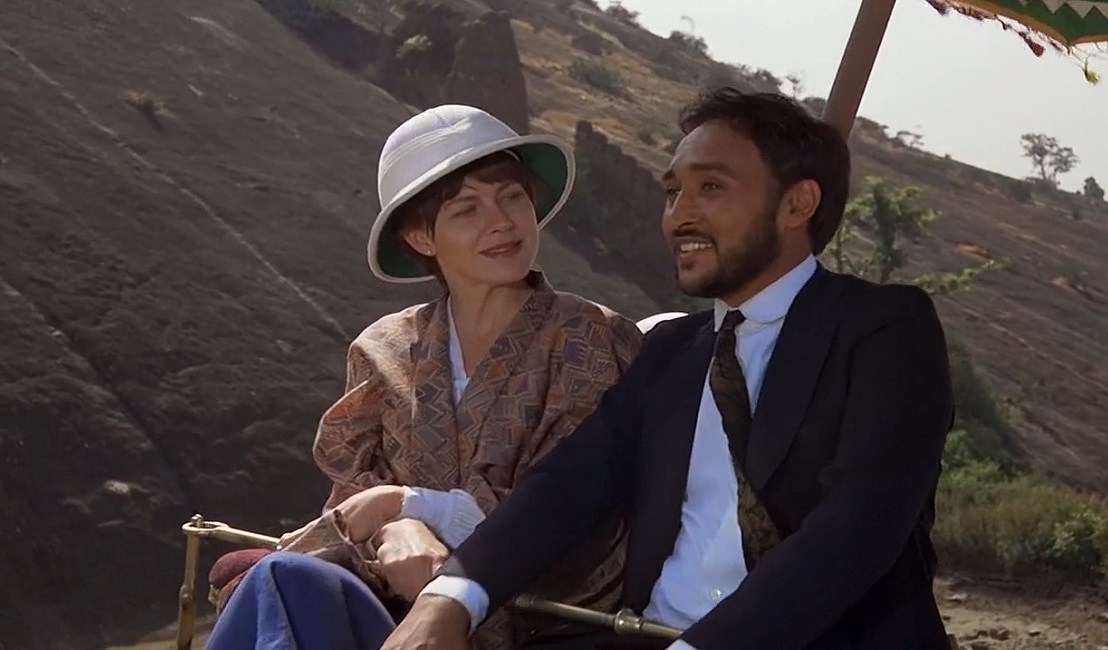
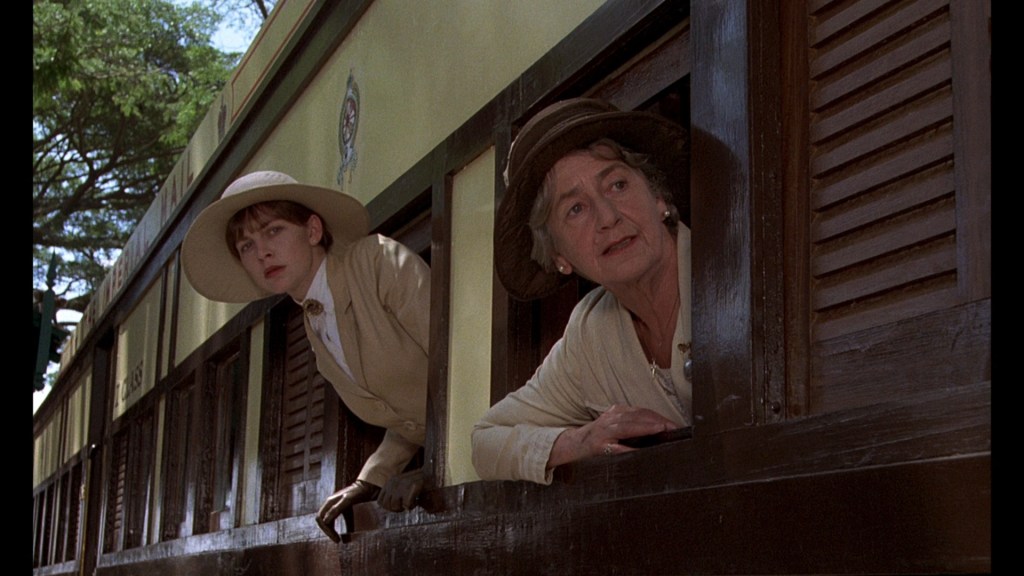
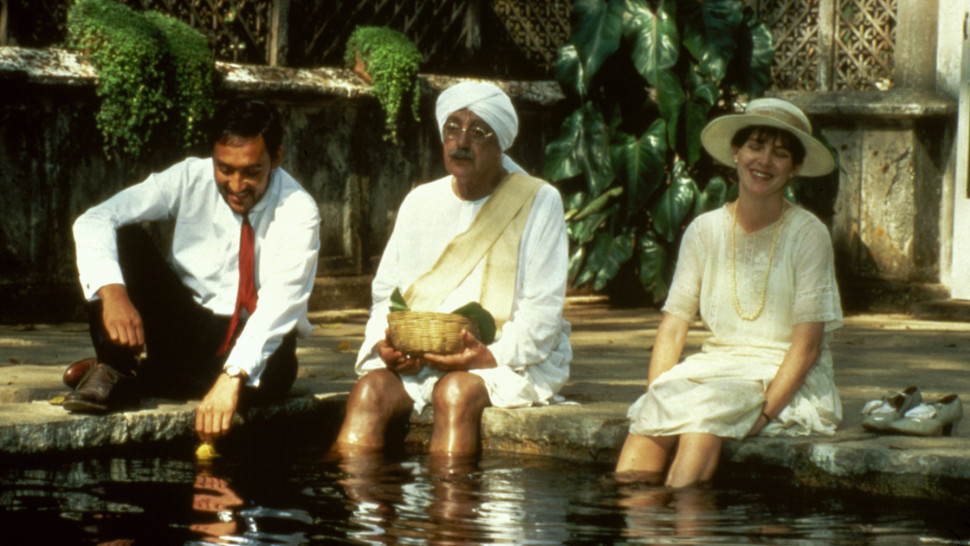
A Passage to India (1984)

A Passage to India (1984)

Lean’s final film is a visually sumptious, if not always completely successful, Forster adaptation

Director: David Lean

Cast: Victor Bannerjee (Dr Azizi), Judy Davis (Adela Quested), Peggy Ashcroft (Mrs Moore), James Fox (Richard Fielding), Alec Guinness (Professor Narayan Godbole), Nigel Havers (Ronny Heaslop), Richard Wilson (Collector Turton), Antonia Pemberton (Mrs Turton), Michael Culver (Major McBryde), Clive Swift (Major Callendar), Art Malik (Ali), Saeed Jaffrey (Hamidullah), Ann Firbank (Mrs Callendar), Roshan Seth (Amit Rao)

David Lean’s final film came after a 14 year hiatus after the overwhelmingly negative reaction to Ryan’s Daughter. (During a disastrous two-hour lunchtime with several prominent US film critics, Lean was asked outright how the director of Brief Encounter could have made “such a piece of bullshit” – the experience shattered his confidence for years). When he returned, it was with this handsome literary adaptation of EM Forster’s classic novel on the tensions in the British Raj. A Passage to India is a wonderful fusion between Lean’s later films that fill the largest canvas, and the carefully judged Dickensian adaptations of his early years.

In 1920s Chandrapore, Adela Quested (Judy Davis) has arrived from England with her prospective mother-in-law Mrs Moore (Peggy Ashcroft) to marry the local magistrate Ronny Heaslop (Nigel Havers). The two women are fascinated by India and its culture – and quickly bored with the parts of it the ex-pat community will show them (basically a sort of little-England alcove). When they befriend local Muslim doctor Aziz (Victor Bannerjee) and liberal pro-Indian school superintendent Richard Fielding (James Fox), Aziz invites them on a trip to the local Marabar Caves. During the trip, Miss Quested flees and accuses Aziz of attempted rape. Aziz pleas his innocence – Fielding and Mrs Moore believe him, Miss Quested seems confused – but the case becomes a cause celebre that will explode the tensions between the rulers and the colonised.

Lean’s production of the book (as well as directing, he also wrote the screenplay and edited the film) is a delicate and handsome adaptation, carefully capturing the events of the book and making a manful effort to bring to life its textures and complexities. Forster had worked in India for several years as the secretary to a Maharajah and for many years was in love with an Indian called Masood. He had a unique perspective of Indian/English relations (much of it filtered into the character of Fielding) which he believed was underpinned not only by misunderstanding but also unpassable barriers that Empire throws up between East and West.

A Passage to India doesn’t always quite manage to capture this – perhaps largely because the book’s third act (which focuses in particular on the strains on the friendship between Aziz and Fielding) is truncated down to about 12 minutes of the film’s 2 and half hour run time. This does mean the film’s final impact feels rushed and unclear – and that the final parting of these characters doesn’t carry the impact it should. I can see why this has been done – that section of the book is less interesting, and also shows Aziz, at times, in a less sympathetic light – but it does mean the film misses something of the book’s engagement with moral and intellectual issues in favour of delivering the cold, hard plot of the Caves and the trial.

But these sections are well-judged, carefully structured and expertly executed. Lean’s film is very good on observing the kneejerk racism (some paternal, some outright unpleasant) from the British community. The incongruity of British clubs, garden parties and middle-class homes and lawns in a foreign land. How Indians are only welcome into these settings as silent servants or repurposed into British icons, such as brass bands. The total detachment of the rulers from the ruled: the tour of India arranged by Ronny features the British barracks, court-room and culminates in some ghastly amateur theatricals. Indians exist only to be told what to do and to applaud their rulers.

This is counterpointed with the rich, vibrant, dynamic culture of the Indians. If the film sometimes tips into displaying this as a sort of Oriental mysticism, that can be partly because our experience of it is often filtered through Adela and Mrs Moore who are bewitched and intrigued by a country of colours, emotions and passions unheard of in Britain.

Lean’s film never overlooks the Indians though. Our introduction to Aziz is to see him nearly mowed down on his bike by a speeding government car. His home is kept in good condition, but cannot compare to the wealth of the British. He and his friends talk passionately of the possibility for independence. There is a natural expectation of rudeness and dismissal from the British, that is taken in their stride.

Well played – if the role is a little passive – by Victor Bannerjee, Aziz is the victim we witness events through. Proud to befriend the British women, friendly and over-eager, Aziz is a highly unlikely would-be rapist. Put-upon and dismissed by his British superiors, he’s a lonely widower whose children are living hundreds of miles away, who suggests the trip in a moment of social awkwardness and goes to absurd ends to make the trip a success.

Sadly, its doomed. Leans film does a good job of maintaining much of the book’s mystery of what happens in the caves. Lean also finds a visual way of representing much that lies implied in the book. In an invented scene before  the trip, Adela cycles into the Indian countryside eventually finding a ruined temple filled with sexually explicit statues and hordes of monkeys in heat. Its clear the exposure to sexuality both shocks and unnerves her – but also fascinates her. Later she dreams of the statues she has seen. The same overwhelming feels seem to consume her in the caves – a heightened sense bought on by claustrophobia and a fear of a moment of personal intimacy between her and Aziz, perhaps spinning off into a temporary nervous collapse.

The film doesn’t state it for sure, but the implication is carefully put there. It leads perfectly into the well-staged trial scenes. Lean’s film focuses largely on delivering the plot of the novel, rather than the depths, but in delivering this crucial encounter he finds a marvellous way to use the language of film (music, editing and photography all interplay effectively in the sequences to add to their unsettling eeriness) to dramatise a literary sequence.

It’s not a perfect film. At times languid, it could no doubt have done with a bit more tightening and pace (it takes nearly half the film to reach the caves). While the film benefits from the build of the atmosphere and the tensions between both cultures, if Lean can do Great Expectations in less than two hours you feel he could have done this book more tightly. The unfortunate decision to cast a brown-face Alec Guinness as Brahmin scholar Professor Godbole looks more uncomfortable with each passing year – not least as all other Indian roles are played by Indian actors.

The film does however have a very strong cast. Judy Davis is both fragile, uncertain and at times even deeply frustrating (in the intended way!) as Miss Quested. Peggy Ashcroft won an Oscar (part of a late boom in her screen career – she also won a BAFTA the same year for The Jewel in the Crown) as the very grounded and worldly-wise Mrs Moore. James Fox gives his finest performance as the sympathetic Fielding caught between two worlds and eventually rejected by both.

A Passage to India has a lot of Lean’s visual mastery, but it’s less a sweeping pictorial epic and more of a careful and well-judged literary adaptation. While it does focus more on the plot and less on the meaning of the novel, and it overlong and at times lacking in energy, it also has some fine performances and brings many parts of the novel triumphantly to life. His final film does not disgrace his CV.

Great Expectations (1946)

Great Expectations (1946)

Lean’s masterful adaptation is still one of the finest examples of Dickens on screen

Director: David Lean

Cast: John Mills (Pip), Valerie Hobson (Estella), Bernard Miles (Joe Gargery), Francis L Sullivan (Jaggers), Finlay Currie (Abel Magwich), Martita Hunt (Miss Havisham), Alec Guinness (Herbert Pocket), Jean Simmons (Young Estella), Anthony Wagner (Young Pip), Ivor Barnard (Wemmick), Freda Jackson (Mrs Joe Gargery), Eileen Erskine (Biddy), Torin Thatcher (Bentley Drummle)

Of all Dicken’s books there is perhaps none so popular as Great Expectations – and no Dickens adaptations are more highly regarded than David Lean’s 1946 film. Of course, just under two hours is only time to tell a simplified version of Dicken’s original. But no-one’s taking the book away. What Lean’s film did triumphantly was turn Dicken’s prose into a clear cinematic language and style, without losing the uniqueness of the author’s voice. Lean’s visual mastery is perfectly matched with his experience as an editor of telling a story to produce an endlessly entertaining film.

As a young boy Pip (Anthony Wagner) encounters an escaped convict (Finlay Currie) in a graveyard. Intimidated, Pip brings the convict food and tools to escape his chains – acts which the convict clears him of when he is caught later that day. Weeks later, Pip is invited to the home of rich spinster Miss Havisham (Martita Hunt) to provide her and her adopted daughter Estella (Jean Simmons) with company. The visits continue until Pip’s apprenticeship as a blacksmith to his brother-in-law Joe (Bernard Miles) begins. Imagine Pip’s (now John Mills) surprise six years later when he is informed by lawyer Jaggers (Francis L. Sullivan) that he has come into money – that he has become a gentlemen of “great expectations”. Assuming it is the work of Miss Havisham – and that he is destined to marry Estella (now Valerie Hobson) – he is horrified to discover his life is more complex than he believed.

The film repackages Great Expectations a bit more into a romance. While the relationship between Pip and Estella, and the bond between them, is clear in the novel – and a large part of its plot – its but one thread masterfully woven together into the final storyline. Here this thread is given prominence, at the cost of several others. It’s not a complaint as such, but it makes Great Expectations into a more traditional story: a feeling added to by the film’s more conventional “feel-good” ending (very different from the much more uncertain ending of the novel, that Dicken’s edited back and forth in different editions to increase or decrease its hopefulness). However, it works for creating a film story, even if it loses some of the depth of the novel.

Its also more than balanced by how much the film gets right. Lean brilliantly captures the novel’s atmosphere, its gothic sense of impending dread, the burden of the past and the paranoia of persecution. For decades the opening scenes of the film, with its masterfully shot and edited mist covered graveyard (simultaneously a place of peace and a place of unsettling unknowability ) bursting into life through the grasping hands of Magwich, were practically used as a textbook example of cinematic language. Lean’s work is intensely cinematic. The mis en scene of Expectations is masterful – everything from casting, to camera angles to score comes together to bring Dickens world to life. This is exactly his London as he wrote it. It’s a wonderful expression of a particular author’s style, told using a mastery of cinematic language – from camera angles to editing cuts.

The characters have that perfect sense of eccentricity laced with menace that Dickens invests them with. Francis L Sullivan’s Jaggers is an unknowable legal machine who is part man of business, part fearsome fixer. Alec Guinness (in his film debut) is good-natured kindness to a T as Pip’s faithful friend Herbert (in one lovely scene he politely and gently corrects Pip’s primitive table manners). Finlay Currie’s Magwich captures the sense of danger and threat in the book’s opening that will become a fatherly meekness in the story’s later acts.

Largest of all, Martita Hunt’s gothic Miss Havisham sits like a giant spider at the centre of a decaying web. The design of Satis House – with its rotting wedding cake, sprawling cobwebbed dinner service, the heavy curtains and lack of light – is just one of the many perfect touches in the film. Hunt herself is superb as this outwardly eccentric aunt, who in fact has been nursing a core of bile and hatred that ends up only hurting those closest to her. There is something hugely dreamlike about Miss Havisham’s home – you suspect Lean may have watched some Cocteau – with its strangely angled table and mix of intimate framing and wide-angle crane shots.

Perhaps because we only see, not read, Pip’s actions in this film it’s impossible not notice what an arrogant snob he becomes. John Mills does decent work in the part, but (much as in the book) Pip ends up feeling like a slightly colourless figure. The film doesn’t always explore in detail the negative sides of his character meaning moments like his patronising dismissal of the kindly Joe (a perfectly judged Bernard Miles), don’t do the character much favours. Mills does however make a larger impression than Valerie Hobson, left slightly adrift as Estella. She’s not helped by how outstanding Jean Simmons is as the young and preciously flirtatious Estella, the perfect picture of the little cruelties teenagers inflict on each other. (A braver film might have had her play the role throughout – but then Mills would look even older than he does!)

The film is very strong on the pain caused to these two characters – and that they cause for each other. More than any other version, we get a sense here of how Miss Havisham’s misguided aim to use Estella as a weapon of revenge on all men only manages to hurt Estella herself and Pip (her one true love as presented here). Just as a Pip’s snobbish dismissal of Joe stings. And Lean’s brilliant sense of pace and rhythm means that this plays hand-in-hand with Pip’s ever more desperate attempts in the second half to save Magwich from doom.

Many of the complexities of the plot (from Estella’s parents to Herbert’s marriage to several key characters) are cut out, but it’s striking how the film still manages to feel so faithful to the book. Lean’s understanding of Dickens mix of eccentricity and darkness is communicated in every frame. The major moments and characters from the book are beautifully bought to life, from that opening scene to Satis House. But also because small moments, like Wemmick’s “Aged P” remain in the film. Sure, the canvas has been reduced – and refocused into a love story of sorts – but the picture that emerges is still very much in the style of Dickens.

That’s what makes it one of the greatest adaptations of all time: it’s both an interpretation of the original and a beautifully judged capturing of its spirit and tone. An adaptation twice the length may have caught more plot, but would not have been such a fine movie. Because so much of this film’s imagery and drama sticks in the mind long after it is finished. Lean’s masterstroke here was to understand completely the heart of the book, and to focus the film on that. Brilliantly assembled, designed, shot and acted, it’s still one of the best literary adaptations ever made.