Category: Crime drama

Scarface (1932)

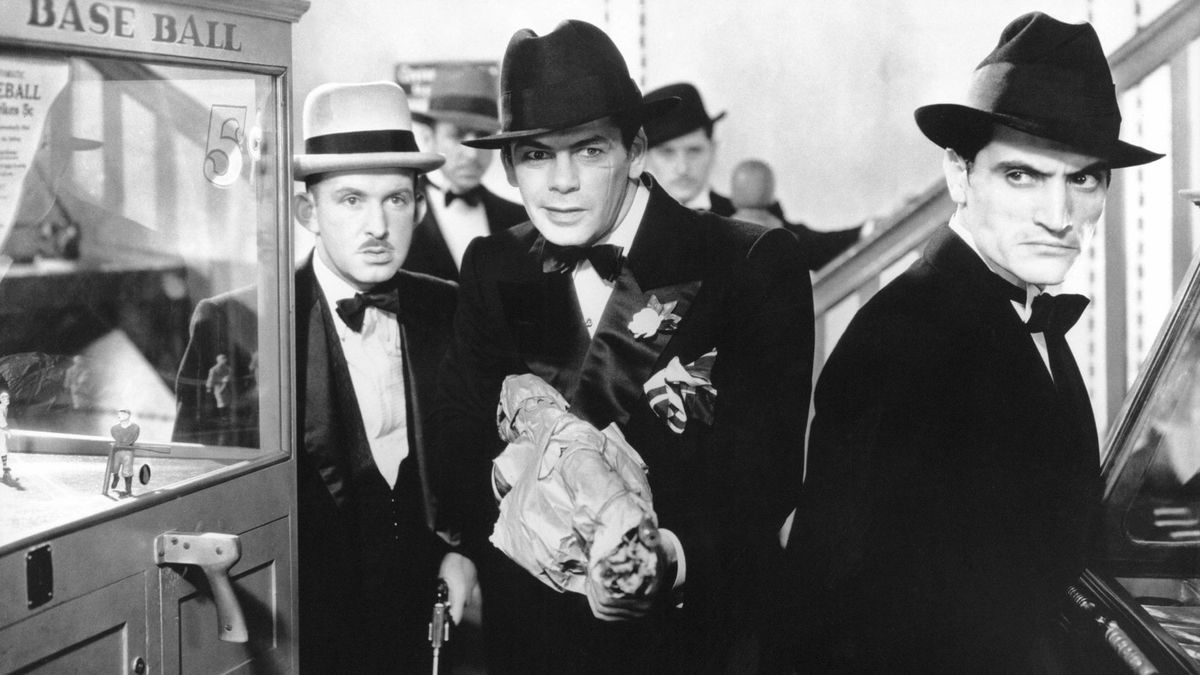
Paul Muni wants the world in Scarface

Director: Howard Hawks

Cast: Paul Muni (Tony Camonte), Ann Dvorak (Francesca Camonte), George Raft (Guino Rinaldo), Karen Morley (Poppy), Osgood Perkins (Johnny Lovo), C. Henry Gordon (Inspector Ben Guarino), Vincent Barnett (Angelo), Boris Karloff (Tom Gaffney)

Before Tony Montana there was Tony Camonte. The suits may be sharper in 30s, but the bullets are just as lethal. Howard Hawks’ gangster film, strikingly violent for the 1930s (barely a scene goes by without a slaying), showcases the rise and fall of Tony Camonte (Paul Muni) an Italian gangster embracing the mantra “The World is Yours”. Starting as a junior hood in Johnny Lovo’s (Osgood Perkins) gang, he rises through the ranks due to his capacity for violence and his willingness to break any rule. He wants it all: money, power, Lovo’s girl Poppy (Karen Morley) and he won’t be happy until he runs this town. So long as he can still control his sister Francesca (Ann Dvorak) – because not even his best friend Guino (George Raft) can even think about touching her.

Hawks’ film is a dizzying whirligig of shootings, killings, mob violence and inventive camera-work. Fast paced and violent, many scenes are soundtracked by the rat-a-tat of Tommy guns. (Not a surprise in a film where the hero looks more excited grasping one of those in his hands than he ever does holding his girlfriend). Scarface has it all: fights, shoot-ours, car-chases, drive by shootings of bars, fist fights – you name it, Tony does it. It’s told with an electric pace and some nifty little tricks (my favourite a long cross fade of a calendar ripping off days and a Tommy gun blasting bullets, like its mowing down time itself).

Hawks uses a number of neat stylistic approaches to both present death and also signpost fate. Montage is used throughout the film, it’s inexorable build-up of violence and crime helping establish the excessive violence of Tony’s world. Shootings happen in a variety of ways, from silhouette to shadow to blatant on-screen death (though Tony’s fate, shot by several police guns, is the final blast, almost Bonnie and Clyde like as his body dances from bullet wounds under the streetlights).

You can get a good sense of whose card is marked by Hawks’ witty (and not overplayed) used of Xs. Before a St Valentine’s Day style shooting, the camera focuses on an iron girder above the victims with a series of X like metal cross beams in it – the camera returns to it, the row of Xs mirroring the victims lined up against the wall. Crime boss Gaffney is killed while bowling, his strike filled card literally marked with an X. The approach is subtle and even strangely witty.

The film is a maelstrom of excess. Starting in the aftermath of a wild party – which segues immediately into a gang hit – everything is overblown. From the violence, to the parties, to the wealth Tony builds up. It’s the same with the police as well – when it’s time for them to come out shooting they don’t hold back, assembling a small army of weapons fire which practically tears apart Tony’s apartment.

At its heart is a force-of-nature in Paul Muni’s Tony. Becoming increasingly Americanised as the film goes on (he starts heavily accented and the very picture of a scarred street thug, but becomes more-and-more accent free and smoothly dressed), Tony is not only ruthlessly ambitious he has a mania for getting more. Much like Montana, this is a man who is never satisfied until he has the world. He brags to his would-be girlfriend that he will only wear each of his new shirts once. He shows off his apartment and insists one of his henchmen (who is barely able to operate a phone) describe himself as his “secretary”. Muni’s performance mixes a grimy capacity for violence with a sordid impish delight at excess, all washed down with a childish lack of morality.

He’s also got a destructive obsession with his sister. Played with a coquettish charm by Ann Dvorak, Francesca is the apple of her brother’s eye. Is Tony even aware of the incestuous underlying his obsession? Any male attention at all sparks a jealous fury that goes way beyond a protective sibling. But there is perhaps as much to control as sexuality in this. Just as Tony wants to bring the entire city under his dominance, so he wants to control every element of his sister’s life. And in many ways she’s quite like him – as in love with flirtatious sexual excess as he is with the massive landgrab of power he’s carrying out.

Tony is moving shark-like through the city at every turn. Even while nominally following the orders of his boss Johnny (a strangely pathetic Osgood Perkins – but then power eventually makes all men weak in Scarface, even Tony. Perhaps it’s the fear of losing what you have?) he always pushes for bigger and bigger scores, making enemies Johnny can’t afford to make. The others seem paralysed in the face of him – Gaffney, default leader of the Irish mob, runs from safe house to safe house; despite the vast numbers of men following him, he never looks safe.

The film was criticised at the time for not having a sufficient moral message – tacked on in a studio reshoot was a more condemning ending with Tony (real “Shame of a Nation!” stuff), traces of which can still be seen in Tony’s brief flash of cowardice at the end. But really, in its excessive violence and cycle of destruction in a which an impulsive, brutal but not too bright killer (briefly) ends up on top was probably unsettling because it was a lot closer to the grim reality of organised crime in America. A world where the gun pays and a lunatic can take over the asylum. No wonder the censors at the time couldn’t take it. But Scarface’s compulsive violence, danger and relentless energy is what still makes it a classic today.

Pickup on South Street (1953)

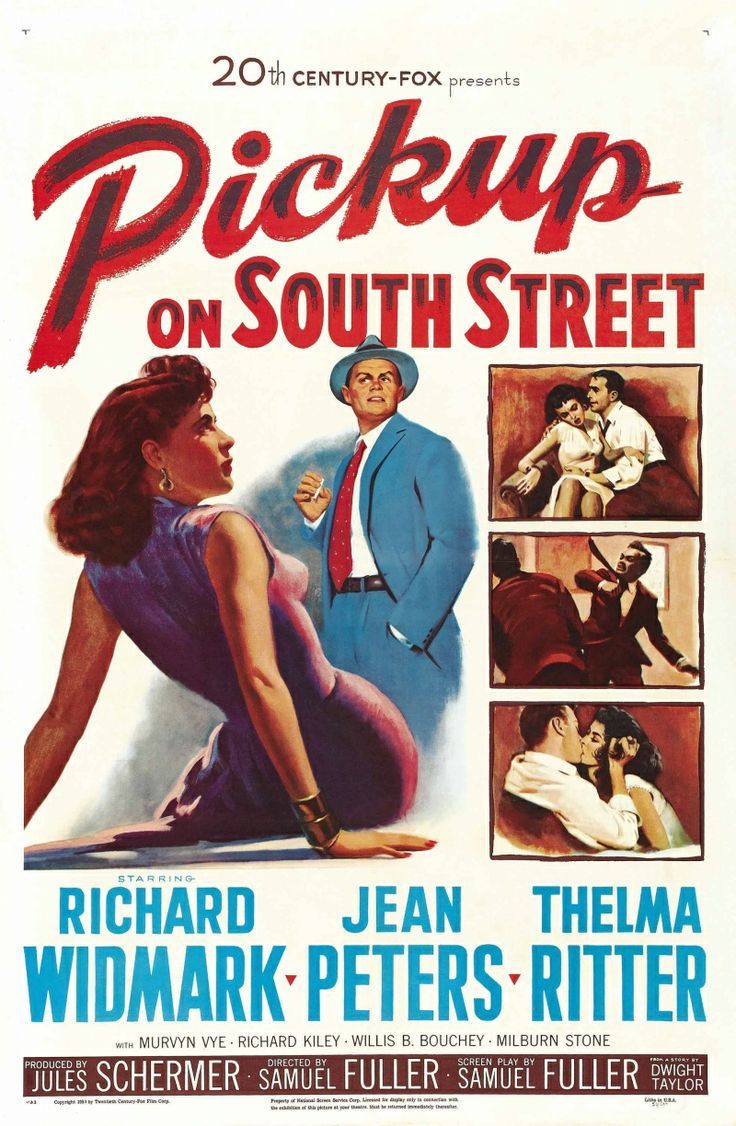
Richard Widmark and Jean Peters feel the heat from the cops, the commies and their own passion in Pickup on South Street

Director: Samuel Fuller

Cast: Richard Widmark (Skip McCoy), Jean Peters (Candy), Thelma Ritter (Moe), Murvyn Vye (Captain Tiger), Richard Kiley (Joey), Willis B Bouchey (Zara), Milburn Stone (Winoki), Henry Slate (MacGregor)

It’s 1950s, and the biggest bogeyman in America is the Commies. Candy (Jean Peters) is one of their unwitting couriers, funnelling top secret microfilm for her ex-boyfriend Joey (Richard Kiley) to pass to his Moscow superiors (poor Candy just thinks she engaged in helping Joey with some good-old All-American industrial espionage). Trouble is, while the Feds are trailing her, they watch her being pickpocketed by career thief Skip McCoy (Richard Widmark). Skip now has on his hands on some serious state secrets. Should he return the film to the police who want to lock him up? Or make a big score by blackmailing the Commies who want to kill him?

What makes Pickup on South Street so intriguing is it’s not necessarily as straight forward as you might think. Fuller’s film is an anti-communist film – the sort of “reds under the bed” scare that terrified millions in a country still reeling from Klaus Fuchs and the Rosenbergs. But this isn’t your standard Red Scare film. Because our heroes have about as much stake in the USA as they do in the USSR. They are the down-trodden, the under-class, the grifters. At the end of the day, I’m not sure Skip McCoy really cares who ends up with the MacGuffin. He’s motivated firstly by financial gain and secondly by personal revenge. No appeal to flag and country cuts any ice with him.

Making the hero this sort of anti-social career criminal was a master-touch as it not only enriches the entire perspective of the film – what has their country ever done for these people – but also adds an air of uncertainty over the whole thing. There would never be any doubt if the microfilm had fallen into the hands of a clean-cut Henry Fonda type. The fact that it’s Richard Widmark – who always looks like he’s torn between laughing in your face or punching it – means you never quite know what he’s going to do. If it works out best for him to hand that film over the Russkies, you can be sure he will.

That’s despite the heavy-handed entreaties of the cops and feds. Skip faces a barrage of hostile interrogations, vague promises, handcuffs and searches from law agents who are damn sure he has the film, but can’t prove it. Like many Fuller films, there is more than a hint of roughness and violence in every frame – and the law and order figures aren’t averse to this. Captain Tiger (what a name!) has already served a suspension for beating Skip in custody. An illegal search or two isn’t beyond them. You can see why the FBI was unhappy with this film – not least because it shows them constantly out-thought by a pickpocket.

The Commies though are a thoroughly bad lot. After all, it’s still an anti-Communist film. Richard Kiley’s snivelling coward Joey is no true believer, but the kind of low-breed opportunist tempted by a quick buck. The other communists we meet are corrupt, shady types, sitting in backrooms puffing pipes and casually handing out death sentences. Kiley’s weak-willed and increasingly desperate Joey becomes more and more despicable as the film goes on, desperation to save himself from the fury of his paymasters leading to ever lower and despicable crimes.

So the only people who really come out as truly decent – and playing by a very fixed moral code of their own – are the criminal underclass. In this world, everyone knows where they stand. Skip isn’t angry at stool-pigeon Moe, who carefully trades information with the police – everyone has to make a living he observes. Skip will pick pockets to earn his keep, and punch back when he’s attacked, but there is no sense that he has any taste for the crimes of the Communist agents. He’ll sell on the microfilm to them – but that’s only because his own government offer him nothing but hot air and empty promises. And, as the unspoken message of the film goes, what difference would it really make to Skip and his like anyway where the film ends up?

Instead Skip becomes motivated by personal feelings – specifically his feelings for Candy and Moe. There is a genuine sexual frisson between Skip and Candy from the start: Skip’s pickpocketing of Candy is shot like a sex scene, all sweaty brows, heavy breathing and close-ups (with Skip’s hands ‘penetrating’ Candy’s handbag with all the metaphorical energy of a train speeding into a tunnel). As events draw them closer together, the two maintain this electric sexual energy – whether arguing or fighting or lying to each other they seem unable to take their hands off each other – and the intimacy of close-ups and low angles Fuller uses for this brings a real sexual charge to their scenes. Widmark – superb as a heavy with a (hidden) heart – and Peters are also great, with Peters bringing a real roughened hinterland of disappointment to her role.

The other motivator for Skip becomes the stool-pigeon Moe, brilliantly played with an eccentric bag-lady energy by an Oscar-nominated Thelma Ritter. Moe is a grifter, selling ties by day and trading information on the side. She embodies the underdog nature of the criminal world, wanting nothing more than to earn enough to buy a decent funeral when she goes. Ritter has a marvellous speech on just how tied she feels from this constant scramble of scrapping by on the edge of society. A surrogate mother figure of a sort to Skip, Ritter’s performance is a classic piece of character acting.

Fuller’s scene is lean, short and fast-paced. Like many of his films there is a lot of violence – beatings, fights, shootings – all shot superbly with the camera pulling back to soak up the action. Sex and violence go hand in hand – Skip accidentally punches out Candy thinking she has broken in to kill him, and the two of them are in a passionate embrace moments later. Mixed in with touches of reality, that bring the tough urban world the characters live in, Pickup on South Street is a lean and mean film that manages to be more than just a straight anti-Communist film. It doesn’t just give us something to fight against: it also asks how we might give people something to fight for.

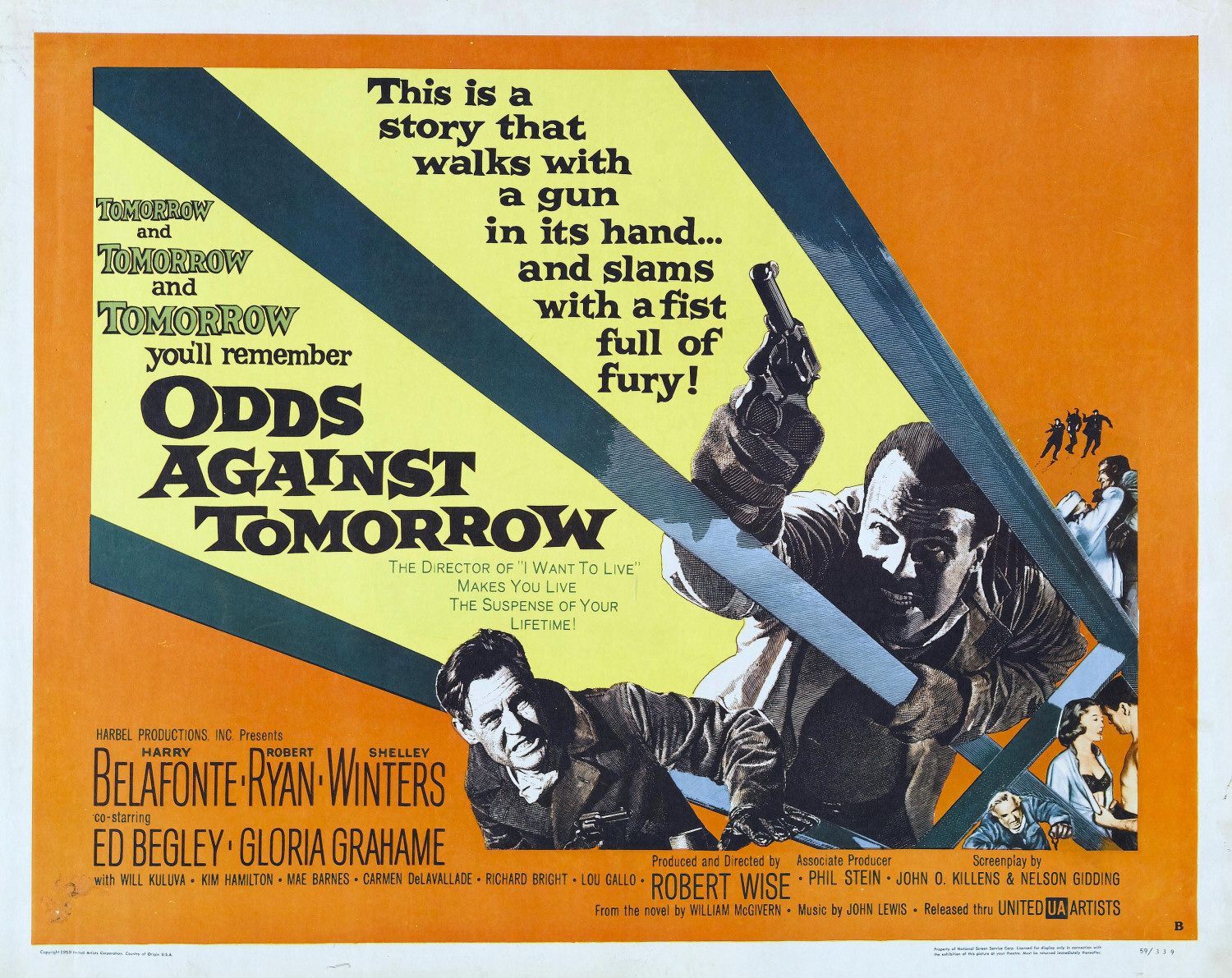
Odds Against Tomorrow (1959)

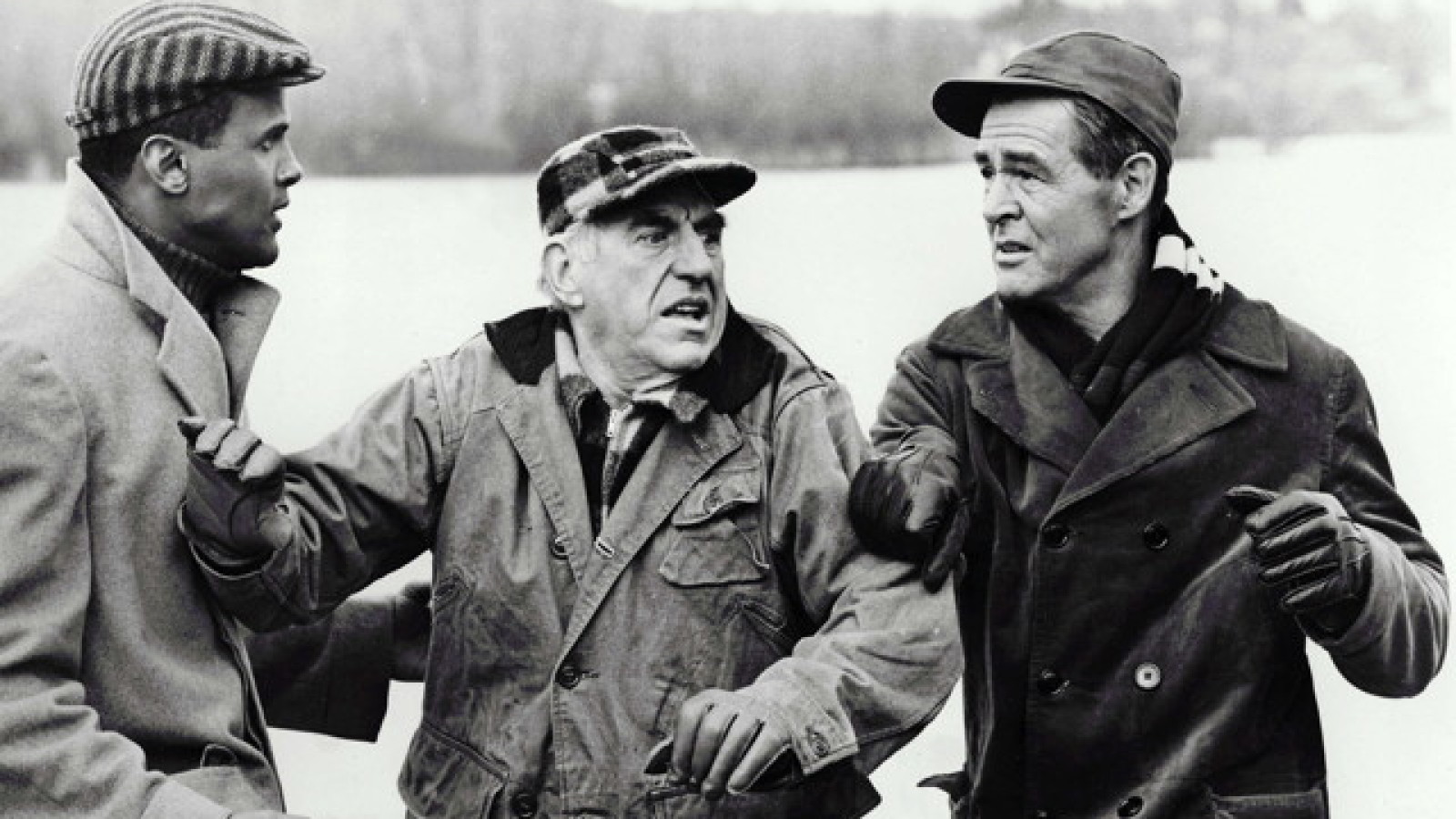
Harry Belafonte, Ed Begley and Robert Ryan are a mismatched crime team in Odds Against Tomorrow

Director: Robert Wise

Cast: Harry Belafonte (Johnny Ingram), Robert Ryan (Earl Slater), Shelley Winters (Lorry), Ed Begley (Dave Burke), Gloria Grahame (Helen), Will Kuluva (Bacco), Kim Hamilton (Ruth Ingram), Mae Barnes (Annie), Richard Bright (Coco), Carmen de Lavallade (Kitty), Lew Gallo (Moriarty)

Johnny Ingram (Harry Belafonte) life is on the skids. His career as a singer isn’t bringing in the money to fuel his gambling addiction or help support his ex-wife. Owing money to gangsters, he’s roped into taking part in a bank heist master-minded by bitter ex-cop Dave Burke (Ed Begley). It should all go smoothly. Unfortunately, Burke has also recruited Earl Slater (Robert Ryan) as muscle – and Slater has channelled all his own insecurities and resentments into virulent racism. Can Johnny and Slater work together to make the heist work?

Wise’s picture – with a script by the black-listed Abraham Polonsky – is on paper a crime drama. But it’s really hardly interested in the heist (which is almost laughably simple) the planning of which doesn’t even start until the film is nearly an hour old. Instead, the focus is on putting together a neat parable for racial divide in America. Because if even criminals are more preoccupied with feuding over the question of the colour of each other’s skin than making a score, why on Earth should we be surprised that such problems arise in every walk of life?

Attitudes are mapped out early in the film, largely thanks to Wise’s crisply efficient story-telling. Ingram playfully tips off a group of mixed-race kids to watch his car; Slater singles out a black child from this same group with a smilingly delivered racial epitaph. In the building, they both have strikingly different conversations with a black elevator attendant. Its clear tensions will abound – not least because Slater won’t work a job with a black man and Ingram is rightly disgusted with him.

Belafonte produced the film and he plays a very different type of black American than most films had seen. Black characters frequently fell into being either noble or deferential. Johnny is neither. He’s angry, bitter, drinks and has no interest in compromise of any sort. Johnny is a deeply troubled man, who seems to be making a mess of his life. Above all he doesn’t rise above racial abuse or shrug it off, but angrily confronts it. Fundamentally he’s a chippy screw-up, but he always retains sympathy because we can see he’s really a decent guy, for all his faults.

He’s just not one who’s willing to play the white man’s game to get ahead. He’s quite clear with his wife (very effectively played by Kim Hamilton) that he’s not willing to simply conform with a structurally unfair world. He’s also quite clear with Slater that he doesn’t want to hear whimsical memories of the South during the ‘good old days’. Belafonte does all this with a great deal of energy, even if you feel he doesn’t quite have the range and power for the role.

It’s interesting though that the film finds plenty of room to explore Slater. Played with a fragile self-loathing by Robert Ryan (one of Hollywood’s great liberals, whose career was made up of characters who persecuted minorities), Slater is deeply unsettled and insecure. He’s struggling to adjust to a more modern world where the man isn’t always the hunter-gatherer, and his wife (a rather sweet Shelley Winters) has the fixed job he can’t get. He doesn’t understand the world anymore.

All this makes Slater vulnerable, confused and even a bit pitiable – all qualities Ryan effortlessly brings out in the film’s finest performance – stumbling into bar fights where he responds with far too much violence. His face constantly seems to crumble into something a little like tears. He engages in a brief fling with a flirtatious neighbour (a blowsy Gloria Grahame) simply, it seems, to try and feel better about himself. The only thing that give him strength, it seems, is turning Johnny and all other black people into an alien “other” which he can lambast and attack.

This of course leads to barely concealed tensions during the robbery planning – where Slater repeatedly states he doesn’t trust Johnny to complete anything – and then during the robbery itself when the fundamental distrust between these two leads to a shoot-out and disaster. Caught in the middle, in a polished performance, is Ed Begley’s Burke, lacking the force of character to make this odd couple work together.

Wise’s film sometimes make some obvious choices – after the final climactic shoot-out, a policeman comments “which is which”, which is about as “under the skin we’re all the same” as you can get. But it’s told with a leanness and pace and by focusing on social issues rather than crime, it presents an intriguing snapshot of American attitudes. The vast majority of characters don’t share Slater’s kneejerk racism – but they also don’t even think of challenging it. No wonder Johnny Ingram’s so annoyed – and no wonder he sees that, for all the smiles, it’s a world run by and for the white man where your only chance of success is conform and shut up. Maybe the odds are against tomorrow.

Odd Man Out (1947)

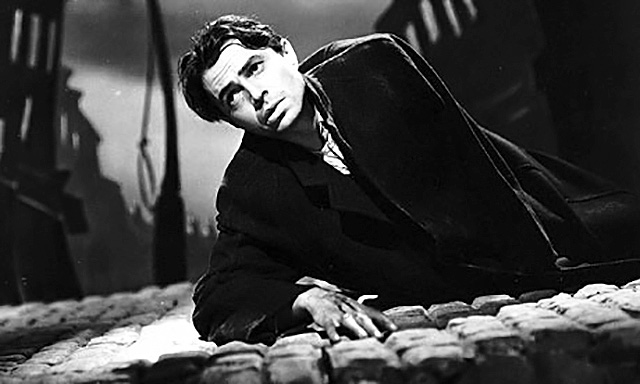
James Mason is wounded and on the run in Odd Man Out

Director: Carol Reed

Cast: James Mason (Johnny McQueen), Kathleen Ryan (Kathleen Sullivan), Robert Newton (Lukey), Robert Beatty (Dennis), Cyril Cusack (Pat), FJ McCormick (Shell), William Hartnell (Fencie), Fay Compton (Rosie), Denis O’Dea (Inspector), WG Fay (Father Tom), Maureen Delaney (Theresa O’Brien), Dan O’Herlihy (Nolan), Elwyn Brook-Jones (Tober)

Is it set in Belfast, or is it set in Purgatory? We follow in the footsteps of Johnny McQueen (James Mason), a leader of “the organisation” (the IRA by another name), on the run in an Irish city with a bullet buried in him. With the police looking to bring him to book, Johnny has to find his way to safety – easier said than done when pain and blood-loss keeps you moving between consciousness and collapse. Is this Johnny’s dying fever dream? It’s a tempting interpretation of Carol Reed’s stunning Odd Man Out (the first of a hat trick of masterpieces from Reed over three years, the others being The Fallen Idol and The Third Man).

It’s a perfect marriage of styles. It opens with a sense of documentary realism that would do Rossellini proud, the camera flying over its unnamed Irish city. As we dive into the house where Johnny and his cell are hiding out, planning a robbery for much-needed funds, the film tips into a marriage of noir and classic gangster film. After the disastrous robbery, where Johnny shoots a man dead in a scuffle, the film becomes more and more an impressionistic series of vignettes as an at-times delirious Johnny stumbles from encounter to encounter, meeting a host of people who help or hinder him, many of whom want him for their own ends (from reward to bizarre artistic inspiration). All this is intermixed with his own increasingly tenuous grip on reality, some scenes floating and soaring with Johnny’s own fantasies and visions as the bullet in him slowly drains his lifeforce.

As Reed’s film increasingly moves into a world that is a few degrees less real than our own, you could argue that perhaps Johnny was dead from the start. That this is his own journey through some sort of Dante-inspired purgatory. His own odyssey, where he will encounter some who want to save him and others who want to damn him.  Reed brilliantly helps us share Johnny’s vulnerability by taking the film ever more off-balance. From Johnny’s visions of the past in the air raid shelter where he takes shelter we spiral down into a surreal bombed out house and an ending that has the sniff of Greek tragedy.

No wonder Johnny feels disconcerted, as this is a rag-tag city with its own rules. Half under construction, half well-established, where the streets are a mix of cars and horse-drawn cabs, Johnny’s journey takes him from dotty housewives to tramps to saviour priests and Dickensian artists. As his fever takes hold, so does the bizarreness of his settings, until he finds himself in an abandoned grand house leaking snow from outside, being painted by a drunken artist who wants to capture the moment of death on his canvas. It’s a million miles from the forensic reality of the robbery that the film started with. Yet it never feels out of place.

A large part of that is because of how brilliantly the film invests us in Johnny’s journey – with Reed’s inspired camera-work and story-telling pulling us into his experience. James Mason spends large chunks of the film in silence, but his performance is extraordinary. A man who seems partly aware that he’s dying, guiltily wanting to know if the man he shot died. Who even from the start seems to have lost his purpose, doubting if violence can bring the results “the organisation” wants, dazzled by sunlight after years in prison, who leads his cell through habit rather than inspiration. Mason’s brilliance here is capturing the very essence of suffering humanity, a confused and frightened man who struggles to understand what is happening around him. Buffeted by events, he’s sympathetic because he never feels in control.

Partly that’s because death feels like its always been waiting for Johnny. You can see it from the start, as he sits in his hide out wondering what its all been for. Kathleen (well played by an impressionable Kathleen Ryan) can’t get death off her mind as she talks about finding and saving Johnny or dying with him. Sympathetic priest Father Tom (a devout WG Fay) just wants to have the chance to save his soul. There is a sense of inevitability about the film – helped by Mason’s crumbling weakness – that destruction is coming and nothing can avoid it.

Reed’s film also has a brilliant sense of the compromises and shady questions of right-and-wrong. Johnny is a murderer and a terrorist – even if he also is a man plagued with doubt. Kathleen is a romantic and a fanatic. Hotel owner Theresa plays both ends against the middle. The coppers will do their duty, but they don’t seem vindictive, just determined to do what they must. There are no clear moral answers in this film, everyone has shades of grey.

It all combines together into one of the most inventive, dynamic and compelling British films of the 1940s by a director who was entering a purple patch where he could claim to be the greatest director in the world. This is a perfect fusion of styles – part realist, part impressionist – that puts you into a cold reality before tipping us into a poetic never-world where the boundary between life and death seems blurred. With a superb performance from Mason (and the rest of the cast), this is still one of the all-time greats.

A Soldier's Story (1984)

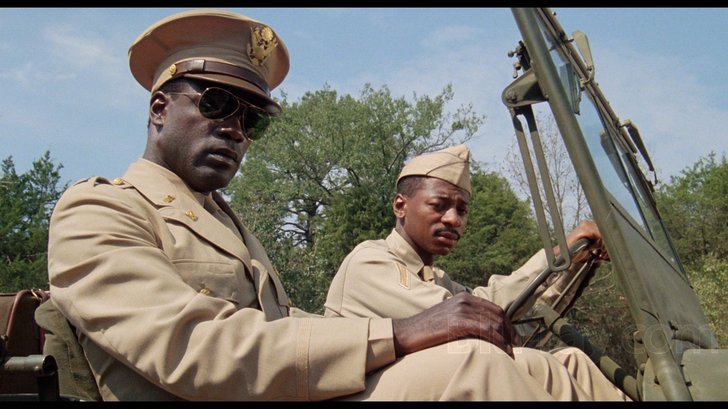
Howard E Rollins Jnr investigates a racially motivated murder with a difference in A Soldier’s Story

Director: Norman Jewison

Cast: Howard E Rollins Jnr (Captain Davenport), Adolph Caesar (Sergeant Waters), Art Evans (Pvt Wilkie), David Alan Grier (Cpl Cobb), David Harris (Pvt Smalls), Dennis Lipscomb (Captain Taylor), Larry Riley (CJ Memphis), Robert Townsend (Cpl Ellis), Denzel Washington (Pfc Peterson), William Allen Young (Pvt Henson)

A Louisiana military base, 1944. A company of black soldiers prep for Europe to fight for Uncle Sam. All that is put on hold when hard taskmaster Vernon Waters (Adolph Caesar), their sergeant, is shot outside the base. Black JAG officer Captain Richard Davenport (Howard E Rollins Jnr) arrives to investigate the murder – to the hostility of his fellow officers, who are unused to saluting a black man as the common soldiers are. But is Waters murder the result of racism from the town? Or is it due to the tensions within the platoon?

Jewison’s adaptation of a notable stage success by Charles Fuller is a professionally mounted, sharp film – nominated for Best Picture in 1984, but largely forgotten since – that while never quite inspired, does provide plenty of insightful racial commentary on America. It never quite manages to come together as a film – and at times its pace is still better suited to the theatre than the movies –but it counterbalances this with its strength of good acting and an underplayed anger at divisions in America.

Racism is at the heart of the film. Many types of it. Jewison’s opening sequence – depicting Davenport’s arrival on the bus – provides us plenty of sightings of America’s apartheid, segregation being clearly visible in shops, benches and the bus itself. Davenport is addressed as “boy” and instinctive racial unease and disgust is in the eyes of every townsperson we meet. The officers range from paternalistic to patronisingly contemptuous of their men. Every element of the base is designed to remind the soldiers of their second-class status. Davenport is only with great reluctance allowed the trappings of his fellow officers. The film ends with a march of the soldiers towards war – a war they are volunteering to fight in, to protect a country that sees them as less-than-human.

But at its heart this is a film about the real insidious horror of racism. How it can turn someone against themselves. Because the real racial villain, it becomes clear, was actually Sergeant Walters himself. Played with a tightly-wound, self-loathing resentfulness by Adolph Caesar (repeating his stage role and Oscar nominated), Walters loathes the black men under his charge. He sees them as embodying the elements of black culture that (he believes) has led to them being treated so poorly by the whites. He hates their choices in music, in food, the way their talk. Most of all he hates the late Private CJ Memphis (Larry Riley), a good-natured, music-playing, sweet soldier who he believes embodies all the casualness and simplicity that he believes his people need to put them behind them to gain respect.

It’s Fuller’s brilliant insight that the most insidious thing about racism is that it is about creating barriers and hatreds – and it can lead to a black man loathing himself and his own people for not being white. Bad enough that the rest of society is against black people: worse that it is also secretly encouraging them to turn on each other. The tensions in the company all stem from Walters barely concealed unease at his colour, and his fury that his men don’t feel the same way.

Unwrapping in a series of flashbacks as Davenport investigates, the film reveals a fascinating series of tableau that demonstrates the confusion in Walters’ psyche and the impact it has on others. In a society where everything is all against them – as Jewison’s film is at pains to show – these are people who should be sticking together. Instead Walters crusade is to turn them against themselves and each other – to deny who they are in an attempt to become their oppressors. The quest for an acceptance that Walters eventually realises will never happen.

Because, as he bitterly states, no matter how much blood a black man sheds for America, no matter what sacrifices he makes – to many he will still be an “other”. Someone who the people of Louisiana are happy to have fight for them, but wouldn’t share a park bench with. These destructive attitudes are there as well in Davenport’s attempts to investigate, butting up against resentment from junior officers who can’t stomach being spoken to like this by a black man. Howard E Rollins Jnr plays the role with a terrific cool underneath which lies a tightly-controlled fury (he rather effectively channels Poitier in In the Heat of the Night).

A Soldier’s Story is crammed with some wonderful and challenging insights into race. It has a wonderful cast – Art Evans and a young Denzel Washington also stand-out – and a real sense of moral outrage at the evil of racism. What it sometimes lacks is the energy and dynamism the story needs to carry more immediate impact. Too often the film feels a little too safe, a little too conventional to really grip. It wraps up things with a rather conventional feel-good position (with Davenport and Dennis Lipscomb’s Captain Taylor coming to a soapy ‘mutual respect’ position). With the pace slightly off, it can drag at times. However, it’s insight can’t be doubted: it will certainly make you consider that the impact of racism can be even deeper and more damaging than the obvious, initial signs.

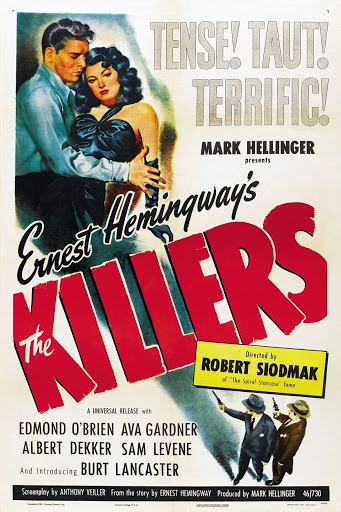
The Killers (1946)

THe Killers
Ava Gardner draws Burt Lancaster into a world of crime in The Killers

Director: Robert Siodmark

Cast: Burt Lancaster (Pete Lund/”Swede” Anderson), Ava Gardner (Kitty Collins), Edmond O’Brien (Jim Rearden), Albert Dekker (“Big Jim” Colfax), Sam Levene (Lt Sam Lubinsky), Vince Barnett (Charleston), Virginia Christine (Lily Harmon Lubinsky), Charles D Brown (Packy Robinson), Jack Lambert (“Dum-Dum” Clarke), Donald MacBride (RS Kenyon), Charles McGraw (Al), William Conrad (Max)

Ernest Hemingway’s short story “The Killers” is 3,000 words of tension and atmosphere, as a pair of hitmen turn up at a diner looking for a former Swedish boxer. They leave and a fellow diner runs to warn the Swede. He meets the news of his impending demise with a stoic acceptance that nothing can be done. That’s basically it. Siodmark’s film consumes the entire content of the source material in the first fifteen minutes. So the film basically expands and explores this set-up. The gripping opening is just our entrée into the film, that will explain to us why the killers are here, who the Swede was and why he needs to die. It makes for a tight, atmospheric and very well-done film noir.

Because there is no doubt that this is a classic film noir. The Swede’s backstory ticks all the boxes you would expect of the genre. Of course, all his troubles are rooted in a Femme Fatale (needless to say his former girlfriend is a saint). There’s a heist gone wrong, double crossing gangsters, a dedicated investigator and a range of locations from seedy nightclubs to rundown hotel rooms. The Swede (Burt Lancaster) is an easily-led handsome man, duped by a beautiful woman. Of course, it all finally leads to a series of shoot-outs, where the wicked are punished for their crimes. In many ways, the script (by Anthony Veillor, heavily polished by John Huston) simply turns the short-story into a familiar piece of genre work. What makes it work is the freshness with which it’s told.

Siodmark is not the biggest name director out there. But he’s a skilled professional and he elevates the material into something with deeper meaning. Perhaps it’s the Hemingway in its DNA, but this story plays like a Greek Tragedy. Fate intervenes at frequent moments, with chance and minor decisions circling back to reveal all. The Swede is a sympathetic heavy, out-of-his-depth, with the fateful flaw of being too trusting. Even the villains are vulnerable figures, while the femme fatale is only doing what she must to try and survive. It’s a neat structure.

And Siodmark shoots it with a beautiful, unobtrusive and pacey smoothness. Nothing in the film draws overt attention to itself, but every moment beautifully combines with those around it to create an absorbing whole. The pace works perfectly, and the film’s structure works very well. Throwing us essentially into the middle of the story increases the mystery – and also means that as we hear the story of each person who knew The Swede, we are constantly invited to rethink and reappraise events and characters we have already met.

It’s a film about the lasting impact of disappointment and disillusionment. Why doesn’t the Swede run a mile when he hears there are killers after him? Because its clear he died inside years ago – the bullet is just a formality. There is a rather touching romanticism to this. This strangely gentle boxer turned thug, who is so smitten by Kitty Collins that he can’t take his eyes off her during their first meeting. Who willing serves jail time for the stolen necklace she’s wearing. Who trashes his hotel and nearly flings himself out of a window when she leaves him. This is a shell of a man. And its not just him. Most of the crooks live out lives of disappointment and fear, while even our investigator seems to have very little in his life beyond chasing down insurance claims. If there is a message in this film, it’s that life is tough.

A lot of that impact comes from the sad-sack vulnerability in Burt Lancaster’s eyes. In his film debut here, Lancaster is at times a little raw. But what he conveys fantastically is the sense of a little boy lost. The Swede always looks out of his depth, dragged from pillar to post by other people, constantly unable to control the situations he finds himself in.

No wonder he’s so easily suckered by Ava Gardner’s gloriously savvy and fiercely determined Kitty – the character with the most drive and determination in the film. She’s smart enough to fool all the characters at least once – and ruthless enough to not give a damn about any of them. Gardner’s performance is spot-on here, with Kitty emerging as possible the most ruthless femme fatale this side of Double Indemnity – with Lancaster as much her gullible patsy as Fred MacMurray was. Gardner’s icy cool is so well done, that it adds even more weight to her performance of a last act switch to desperation, as events finally spiral out of her control.

Carrying most of the narrative is Edmond O’Brien in the slightly thankless role of the investigator piecing it all together. O’Brien however plays the role with a real savvy and drive, as well as with a growing sense of moral outrage – making his role much more than what it could have been (a feed for other characters). The rest of the cast is also very strong.

The Killers isn’t overtly flashy or eye-catching in the way of other films. But it carries with it a large degree of intrigue and more than a dash of hopeless tragedy. With sharp, efficient direction and some fine performances, it’s possibly one of the finest film noirs ever made.

Nashville (1975)

nashville header
Robert Altman’s sprawling classic takes on a whole city in the brilliant Nashville

Director: Robert Altman

Cast: David Arkin (Norman), Barbara Baxley (Lady Pearl), Ned Beatty (Del Reese), Karen Black (Connie White), Ronee Blakley (Barbara Jean), Timothy Brown (Tommy Brown), Keith Carradine (Tom Frank), Geraldine Chaplin (Opal), Robert Du Qui (Wade Cooley), Shelley Duvall (Martha), Allen Garfield (Barnett), Henry Gibson (Haven Hamilton), Scott Glenn (Pfc Kelly), Jeff Goldblum (Tricycle Man), Barbara Harris (Winifred), David Hayward (Kenny), Michael Murphy (John Triplette), Allan F. Nicholls (Bill), Dave Peel (Bud Hamilton), Cristina Raines (Mary), Bert Remsen (Star), Lily Tomlin (Linnea Reese), Gwen Welles (Sueleen Gay), Keenan Wynn (Mr Green)

Robert Altman’s magnum opus, Nashville has the city has its set and, seemingly, its entire population as the cast. Over the course of a few days, Nashville charts the interweaving lives of a host of people making (or trying to make) a living in the home of country and western and the hangers on and fans flocking around the edges. Meanwhile a presidential campaign plays out, trying to recruit stars as fund-raisers.

You could say that, on the surface, Nashville isn’t really about anything. Certainly, it’s plot (such as it is) is more based on observing our characters interacting with and responding to events. Wonderfully rich short stories overlap each other, the focus mothing smoothly from one and another. It’s not really grounded in an overarching plot, such as McCabe and Mrs Miller or The Long Goodbye. In many ways its more similar to M*A*S*H, an experience piece trying to capture the thoughts and emotions of a particular moment of time. It’s that which I think is the heart of it. Nashville is about very little, but really it’s about everything – and it’s one of the most enlightening and vital studies of twentieth century America you are ever going to see. A rich and fascinating insight into a particular point in history, in a country rife with tensions.

You can’t escape that Nashville takes place in an America under the shadow of traumatic events. The 1970s (and the legacy of the 1960s) has pulled America further apart than ever. It’s a country struggling with a wave of assassinations, still deeply scared by the sacrifice of JFK (several characters, most notably Barbara Bexley’s permanently intoxicated Lady Pearl, reflect on the loss of innocence that came with it). Scott Glenn’s uniform clad army private is only the most visual reminder that the country is being ripped apart by Vietnam. Bubbling racial tensions are captured by short-order cook Wade (a lovely performance by Robert Du Qui) who angrily denounces black country singer Tommy Brown (a suave Timothy Brown) as an Uncle Tom.

Politically, America isn’t heading anywhere. The film is continuously framed by a car literally driving around in circles, blaring out meaningless platitudes straight from the lips of Hal Phillip Walker a third-party Presidential candidate who is against a lot of stuff (lawyers in congress and the Election College) but doesn’t seem to be ‘for’ anything. His smooth advance man John Triplette (Michael Murphy, quietly unimpressed by the music stars around him) drums up musicians to appear at a benefit – not one of whom even ask about the politics of the man they are being asked to endorse. Nashville isn’t a film that feels particularly enamoured either with politics or the level of our engagement with it.

Instead there is a new religion in town: fame. The musicians of Nashville at the time were unhappy with the film, feeling that Altman planned an attack on their industry. Altman is, of course, smarter than this. Of course, there are some satirical blows landed – but the film has respect and admiration for artists with genuine talent. Its real criticism is for fakes and poseurs (of which more later). But for the talents at the centre, sure they are flawed – but there is a respect for their skills and genuineness that keeps the film relatable. (Altman would be far more vicious when he turned his eyes to Hollywood with The Player).

The artists at its heart are flawed but human. Haven Hamilton (a grandiose Henry Gibson) may be a blow-hard reactionary, but his patriotic pride and sense of personal responsibility is genuine (late in the film he will ignore a serious injury to show concern for others). At the film’s centre is fragile super-star Barbara Jean (a delicate Ronee Blakely), the beloved super-star teetering on the edge of a dangerous breakdown, overwhelmed with the pressures of fame and expectation. A lonely person, reduced to trying to communicate her unease to her audiences in rambling monologues. Looking for a human connection she’s unable to make elsewhere (this makes for a neat contrast with her rival, Karen Black’s bubbly but coolly distant Connie White who knows where to draw the line between public and private).

This humanity also makes for intriguing personal dilemmas. Singing trio Tom (a swaggering Keith Carradine), Bill (a frustrated Allan F Nicholls) and Mary (a saddened Cristina Raines) are in the middle of a love triangle (caused by Mary’s love for Tom, who loves the attention but doesn’t return the favour). Made more tense by Tom’s desire to go solo, the couple’s tensions are never firmly resolved – part of Altman’s avoiding of neat endings. Tom himself, in many ways a shallow lothario, is also shown to be feeling the same loneliness and emptiness as others.

It’s interesting that the film’s warmest character, Lily Tomlin’s Linnea, lies half-way between the world of the music and the world of normal life. A dedicated performer of gospel with an all-Black choir, Linnea also works tirelessly at home to support her two deaf children (who attract very little interest from their father, would-be fixer Ned Beatty). Linnea though is never portrayed as someone trapped in her life, in the way others are, but in complete acceptance – and even contentment – with her lot. Similar to Keenan Wynn’s grieving husband, desperate for his niece to engage with her aunt’s illness, the film’s real warmth is for those people grounded in real-life worries.

The film’s real fire is saved for the shallow wannabes that flock around the edges. The music stars may be flawed but they have talent (as witnessed by the film showcasing almost an hour of musical performance in its runtime – all the songs written and performed by the stars). Shelley Duvall’s would-be groupee is hilariously empty-headed and selfish. Ned Beatty’s greasy-pole climbing political animal is ridiculously pompous. At the top of the pile is Geraldine Chaplin’s reporter, an empty headed fame obsessive, hilariously fawning to the rich and famous and abrupt and rude to ‘the staff’, pontificating emptily in a car junkyard. Is she even a real reporter or just a fantasist?

Altman’s film also finds time for two very different women trying to find fame in this heartland of country and western. Sueleen Gray (Gwen Welles) is a waitress carefully cultivating all the patter of a star, but lacking the key attribute – talent. So desperate is she to ‘make it’ that she is willing to be exploited for a big chance, with only Wade having the decency to tell her she should cut her losses (advice she bats away in anger). By contrast, Barbara Harris’ Albuquerque, running from her husband to find fame, has the talent but never gets the opportunities – until of course at the very end (and it’s the result of the tragic fate of another woman whose doomed fate hangs over the film).

Nashville is a rich character study, but all these characters link back into an America at a turning point in its cultural history. Detached and disillusioned with politics, this is a country that is starting to see fame – and the indulgence of your own passions and desires – as the new religion. A religion that attracts both wannabes and also stalkers and dangerous obsessives (at least two of whom populate the film, one with fatal consequences). In this world, as idealism dies and is replaced by cynicism, people start to check out and either engage more with their own problems or yearn to change their lives and become something else. Altman’s film captures this moment in time personally, as well as being a compelling melting pot of stories. A rich, multi-layered tapestry – of which a review can only scratch the surface – it’s a great film.

The White Tiger (2020)

Adarsh Gourav is a willing servant (or is he?) in The White Tiger

Director: Ramin Bahrani

Cast: Adarsh Gourav (Balram Halwai), Priyanka Chopra Jones (Pinky), Rajkummar Rao (Ashok), Mahesh Manjreker (The Stork), Vijay Maurya (Mukesh “The Mongoose”), Kamlesh Gill (Granny), Swaroop Sampat (The Great Socialist)

“India is two countries in one: an India of light, and an India of Darkness”. It’s an idea that’s at the heart of Aravind Adiga’s Booker-prize winning novel, adapted here as a dynamic (if slightly overlong) film by Ramin Bahrani. Those two India’s are rooted in the country’s deeply ingrained class differences, the new caste system being simple: the haves and the have nots.

Balram Halwai (Adarsh Gourav) is very much one of the have nots. A poor young man, who missed out on his chance of a scholarship because his family needed the income he could bring them from breaking up coal. Balram sees his way out through becoming a driver for the son of the local landlord, Ashok (Rajkummar Rao) and his American-Indian wife Pinky (Priyanka Chopra Jones). With the story being recounted by an older Balram, now a successful businessman, we know he finds a way to improve his life. But at what cost? And how many lives have been sacrificed to get him there?

Bahrani’s adaptation is a sharp, cinematic, electric piece of film-making, that makes superb use of montage and dynamic camerawork, particularly in its scene setting opening acts. Bahrani also engages brilliantly with the central themes of the novel, the all-pervading corruption of modern India (financial and spiritual) and the gulf in class and mindset that exists between the rich and poor. The wealthy upper classes see themselves as nothing less than masters of the rest of the population, who they hire and fire at will and frequently mistreat. Meanwhile, Balram argues, many of the poor cannot escape the mindset of servitude (the “chicken coop” as he puts it), unable to imagine any life other than living on the bottom rung.

It’s an idea Bahrani’s film brilliantly reinforces visually. The westernised wealth of the upper classes – living in gated communities and luxurious hotels, driving western cars with no contact with anyone outside other than servants – is contrasted with the slums and poverty of the rest of the population. Their parts of the city are run-down and crumbling. Many live on the streets. Balram himself lives on a mattress in the basement of his master’s hotel – while Ashok resides in a penthouse. You can’t escape the radical inequality – nor the violence (from slapping of servants to the implied threat of murder of your family if you step out of line) that keeps the system in place.

Part of the fascination of this film is wondering half the time, how much Balram is a willing participant in this system and how much he is longing to cast off its shackles. Sure we know, from the framing device of his later life, where he is heading. But is it his aim from the start? How genuine is his humbleness? As he schemes to have a rival driver dismissed, he talks in voiceover of his sadness – but on screen he merely shrugs and downs some sweetmeats. Does his resentment develop over the film, or is it there from the start – or does he only understand it as he realises he lives in a “chicken coop”?

As in the book its rife for interpretation – and Bahrani doesn’t lay on too think the unreliable narration element of Balram. It’s also helped immensely by Adarsh Gourav’s superb, BAFTA nominated performance in the lead role. He seems genuinely naïve and innocent – the very country pumpkin the other drivers at the hotel mock – but there is always an unknowable quality to him under the affable surface Gourav presents, a ruthlessness and also an anger. Watching both these qualities develop across the film – and questioning how well we know him – is a brilliant tight-rope walk, with Gourav maintaining our sympathies even as his actions become ever more ruthless.

He becomes an embodiment of the divide in India itself, between the mindset of being nothing more than a servant and the developing entrepreneurism in the country (represented both by the side jobs the rest of the drivers carry out as well as Balram’s later business success). It’s also fascinating to see the contrasts in his employers. Rajkummar Rao creates a character who is decent enough to know he’s treating people selfishly, while being lazy and immature enough to not bother to change. His wife, very well played by producer Priyanka Chopra Jones, speaks the language of a free America but is perfectly happy to force others to take the rap for her mistakes.

The film’s energy tails off in its second half as the plot catches up with the traffic accident that opens the film. The second half of the film tends to circle around the same issues of rich vs poor and the abuse of power that the first film explores with greater energy and wit. To be honest, you can tell an act of violence or betrayal is on the way – and the film takes too long to get there. A tighter film at an hour and 45 minutes would have been more effective and maintained the drive of the first half (even if it would have meant sacrificing some good individual scenes here and there).

But when the film is on song it works very well. The ideas it tackles around modern India feel very real and vital – and still carry plenty of relevance today. Bahrani balances the dark humour very well with the moral outrage and has a brilliant lead performance from Adarsh Gourav. It would have been better tighter which would have helped keep its pace and energy up, but this is still inventive and urgent film-making, a fine adaptation of an excellent novel.

The League of Gentlemen (1960)

The League of Gentlemen (1960)

Gentlemen don’t get mad: they get even in this fun, well-structured heist movie

Director: Basil Dearden

Cast: Jack Hawkins (Lt Col Norman Hyde), Nigel Patrick (Major Peter Race), Roger Livesey (Captain “Padre” Mycroft), Richard Attenborough (Lt Edward Lexy), Bryan Forbes (Captain Martin Porthill), Kieron Moore (Captain Stevens), Terence Alexander (Major Rupert Rutland-Smith), Norman Bird (Captain Frank Weaver), Robert Coote (Brigadier “Bunny” Weaver), Nanette Newman (Elizabeth Rutland-Smith)

You throw a gentleman on the scrap heap at your peril. After a lifetime of service, Lt Colonel Norman Hyde (Jack Hawkins) has been made redundant – and, to put it bluntly, he’s pissed off. However, a gentleman doesn’t get mad, he gets even. And what better way to do that than using your army training to mastermind the finest bank heist Britain has ever seen? To pull it off, Hyde recruits a team of similarly disgruntled Army officers (all cashiered from the army for a range of offences, from theft to implied sexual demeanours) all of them highly trained specialists. What could possibly go wrong?

The League of Gentlemen was the first film from a short-lived British production company Allied Films. The company was a partnership between Dearden, Hawkins, Attenborough (who did a lot of the producing) and Forbes (who wrote the film’s witty, playful script). The film is a delight, a wonderfully executed heist movie, told with an archness that turns its criminals into sympathetic rogues. It’s really a sort of dry comedy and gets a lot of fun out of British attitudes at the time.

For starters, who would think that gentlemen like this (war heroes for goodness sake!) would ever be involved in anything so naughty as armed robbery? Especially in a country so deferential that – in a cunning raid to pinch guns from a military base – conman “Padre” (Roger Livesey, riffing delightfully on his Blimpish persona, as a conman with a shady past) simply turns up dressed as a superior officer and is instantly accepted as such. Just to complete the satire of prejudices at the time, the members of the team lifting the guns are ordered to speak with Irish accents as after all “We British never give the Irish the benefit of the doubt”, and even the a whiff of an Irish accent will whack the blame straight onto the IRA.

But this also a film having a bit of fun with demobilised fellows who have never quite found their place in civvie street – and may even miss the glamour and excitement of the war. Most of the team are clearly veterans of WW2, and many of them are struggling with demanding landlords, unfaithful wives or dismally dull jobs. How could they resist saddling up for one more grand adventure? Especially when there is a huge suitcase of money waiting for them at the end of it.

Dearden’s direction is taut, sharp but also gives more than enough room for the character comedy. He stages the heists with a briskness and efficiency that you can imagine Michael Mann being quite pleased with (the gas mask wearing, gun totting soldiers have more than a passing resemblance to the robbers in Heat – enough to make you think Mann may have watched this film somewhere along the line). Dearden’s storytelling is clear, well staged and inventive (the raid on the army base is shown to us without briefing, meaning we work out the plan as it progresses).

He’s helped enormously by Bryan Forbes’ fun and quotable script, that swiftly but skilfully distinguishes the characteristics of each man and their motivations and makes a perfect balance between affectionate comedy and the sharpness of danger (the group make clear they will “do what’s necessary” if pushed, even if they aim is no bloodshed). The film is built around several wonderful set pieces – and has a classic, almost pre-James Bond parody opening as Hawkins emerges from a manhole cover dressed in a dinner suit and climbs into a car.

Hawkins is great here, spoofing the troubled war heroes and authority figures he spent his whole career playing. Here he inverts all this straight-shooting, “Queen and country first” attitude into a man with the outside trappings of decency, but with a bitter heart and cynicism towards the world. He carries most of the film with a deceptive effortlessness, but nails the tone exactly between fun and genuine frustration at the world.

The whole cast follow his lead. Nigel Patrick is very good as a cashiered Major who enjoys mockingly parroting all the eccentric mannerisms of upper-class gentlemen. Livesey enjoys the self-parody almost as much as Hawkins (he spends nearly every seen looking like he’s only a few degrees away from giggling). Attenborough is fun as a chippy junior officer while Terence Alexander is great as a frustrated cuckold lost on civvie street. There isn’t a weak link in the whole cast.

The film is a delight, fun but with more than enough tension. It brilliantly captures a sense of the camaraderie and loyalty between these ex-soldiers, as well as their delight at being used able to use their skills one final time. It’s a film squarely on the side of these criminals thumbing their noses at the system (and who are planning as close as they can get to a victimless crime, albeit at gun point). The film has to give them some sort of comeuppance at the end – but you’ll be sorry to see it, as by then you’ll be invested at pulling off the heist as they are. Well directed, acted and written it’s a perfect entertainment.

Beat the Devil (1953)

Jennifer Jones, Gina Lollobrigida and Humphrey Bogart in the tongue-in-cheek Beat the Devil

Director: John Huston

Cast: Humphrey Bogart (Billy Dannreuther), Jennifer Jones (Gwendolen Chelm), Gina Lollobrigida (Maria Dannreuther), Robert Morley (Peterson), Peter Lorre (Julius O’Hara), Edward Underdown (Harry Chelm), Ivor Barnard (Major Jack Ross), Marco Tulli (Ravello), Bernard Lee (Inspector Jack Clayton)

Beat the Devil is a curious beast. You could argue it was ahead of its time. Huston and Bogart had started out with the intention of making a straight crime mystery, a sort of Maltese Falcon in Europe. But when they arrived on location, obviously something in the weather got to them and Truman Capote flown in to help redraft the script on a daily basis to turn it into a sort of satirical comedy. For audiences expecting a hard-boiled crime mystery, it left heads scratched and cinema seats empty. Bogart lost a packet on the film – and later claimed to hate it – and it only existed in a badly cut-about version until it was restored in 2016.

The slightly surreal plot hardly really matters. A crowd of unusual people gather in a run-down port in a small Italian town, waiting to take the ship to East Africa. Gwendolen (Jennifer Jones) and Harry Chelm (Edward Underdown) are seemingly upper-class Brits (or are they?). American Billy Dannreuther (Humphrey Bogart) and his European wife Maria (Gina Lollobrigida) might also once have been something, but they sure ain’t now. Peterson (Robert Morley) and his associates the suspiciously un-Irish Julius O’Hara (Peter Lorre), rat-faced bully Major Jack Ross (Ivor Barnard) and nervous Ravello (Marco Tulli) are almost certainly all criminals on their way to a big score in Africa. Thrown together, this unlikely grouping end-up in a heady cocktail of betrayals, schemes, affairs and lies that spools out like a demented shaggy-dog story.

Beat the Devil is really more of an experience, a series of gags and light-hearted scenes played with a grin and a wink. Nothing in it is meant to be taken seriously, and this semi-surreal group of events becomes ever more absurd as it goes on. By the time the cast are abandoning a sinking ship, trudging up a beach to be captured by Arab officials who eventually allow them to row back to port where they find their ship didn’t actually sink…you really should just decide to go with the flow.

Instead the film is about shuffling up familiar tropes from hard-boiled noir with Oscar Wildeish farce. Certainly the Chelms seem to have wandered in from something totally different (not least since Gwendolen’s name is reminiscent of Importance of Being Earnest). Harry (a superbly stiff-upper lipped Edward Underdown) is a blithely unaware would-be English gentleman, pompously aware of his social class and blithely unaware that his wife seems to immediately start an affair with Billy. Gwendolen is the exact sort of character you might expect to see in Wilde, a dreamer tipping into fantasist, who blurts out things she shouldn’t and falls instantly in love with Billy. She’s also whipper-smart – more than capable of defeating Harry at chess without looking (“usually he’s a wonderful loser” she tells Billy, by way of apology for Harry’s strop).

Billy and Gwendolen embark on an immediate affair (although of course, in deference to the Hays Code, its just kept this-side-of-implicit). Mind you the film has a zingy wife-swop feel to it, since it’s pretty clear that Maria is far more interested in the British reserve of Harry (“Emotionally I’m English” she says before eulogising tea and crumpets) than she is in the ordinary-Joe cunning of her husband (although perhaps Harry is just as oblivious to this as everything else around him).

Billy is Bogart deliberately at his most Bogart-ish, channelling every grimy-but-smart dubious-hero the star ever played. Bogart plays the entire film with a grin on his face and delights in lines like “Fat Guys my best friend, and I will not betray him cheaply”. He also sparks delightfully with Jennifer Jones, who seems to having the time of her life as a character so flighty and unpredictable that even she looks like she hasn’t a clue what she is going to do (or feel) from one moment to the next.

The supporting cast of creeps and freaks Dannreuther is conspiring with to make a fortune (its something to do with land and uranium) similarly seem to have walked in from a side-ways Dashiel Hammett universe. For all their dirty deeds – and it seems Petersen had ordered a hit in the UK, although never for a minute would you believe this looking at Robert Morley’s puffed up bluster – they are a rather sweetly naïve and incompetent. Morley’s Petersen, a sort of galloping major, carries no real threat. Peter Lorre is very funny as a suspiciously German sounding Irishman (“Many Germans in Chile have come to be called O’Hara” he comments), prone to flights of verbal fancy and a chronic lack of focus. Ivor Barnard is as close as the film comes to threat as the aggressively incompetent Major Ross, a chippy bully who resents his shortness and eulogises Hitler at the drop of a hat. These heavies are each ridiculous figures.

And it makes sense, since the plot is a great inflated balloon of nonsense. There are chases, sinking ships that stay unsunk, a moment where two major characters are briefly believed dead, obsessive conversations about hot water bottles and reveals that puncture any sense of grandeur for each character. It’s the sort of aimless story you could imagine natural raconteurs like Huston and Capote finding absolutely delightful, and the whole film feels like a dramatization of a dinner-table anecdote.

Take it on those terms and its all rather good fun, even if it makes no sense. The cast look like they are having a whale of a time, and the total lack of seriousness about the whole enterprise generally makes it glide by with ease. Take a couple of drinks, sit back, don’t think about it too much and enjoy the jokes.