Category: Female led film

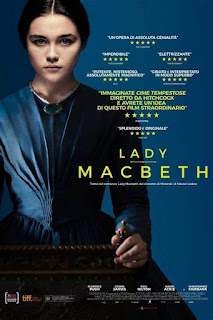
Lady Macbeth (2016)

Lady Macbeth (2016)

Florence Pugh is either a feminist icon or a ruthless monster in this Gothic drama

Director: William Oldroyd

Cast: Florence Pugh (Katherine Lester), Cosmo Jarvis (Sebastian), Naomi Ackie (Anna), Christopher Fairbank (Boris Lester), Paul Hilton (Alexander Lester), Golda Rosheuvel (Agnes), Anton Palmer (Teddy)

On a rural estate in Northumberland in 1865, Katherine (Florence Pugh) enters a loveless marriage with Alexander (Paul Hilton), son of landowner Boris (Christopher Fairbank). The marriage is a disaster, with the couple incompatible and Katherine bored and trapped with no friends or allies. When Alexander and Boris travel for business, she finally gets the chance to explore her surroundings and enters into a passionate sexual relationship with estate worker Sebastian (Cosmo Jarvis). When Boris – but not Alexander – returns, Katherine begins a chain of events that will see her commit a series of increasingly shocking crimes to hold onto the things she wants.

Oldroyd’s film is adapted by Alice Birch from a Russian short story, and is told with an icy, observatory coldness that doesn’t flinch from the increasingly sociopathic ruthlessness of its lead character. The film at first seems like it will set out a feminist fable, of a trophy wife struggling against the neglect and imprisonment of forced marriage. But, as it progresses, any pretence that Katherine is a feminist hero is stripped away: she is modern only in the most dreadful sense – a woman who will willingly commit almost any act of ruthlessness to safeguard her interests.

Playing Katherine, the film is blessed with a star-making turn from Florence Pugh. Only 19, Pugh gives a performance of such stunning depth and intelligence from a young actress that possibly hasn’t been seen since Kate Winslet in Heavenly Creatures. She’s a master of outward stillness and inscrutability, while always communicating the raging whirlpool of emotions underneath the surface. She’s fiercely intelligent, viciously ruthless, frequently observes other characters silently and can twist her face into a mocking defiance. Pugh also communicates the desperate emotional need for connection that motivates this woman, her willingness to go to such shocking lengths motivated by that yearning for a love that she has never known.

Oldroyd is careful not to present her a Gothic monster (would certainly be easy to do so!). The film is careful to outline how unwanted and ill-treated she is by Alexander and his father. Boris (a bullying Christopher Fairbank) ignores and talks down to this person-as-a-piece-of-property, basically just an unlooked-for freebie with some land, who is failing to get on with the production of an heir. Alexander (Paul Hilton, superbly weak and dripping with contemptuous bitterness) has no interest in his wife, his sexual interest restricted to ordering her to strip and face the wall while he pleasures himself. Neither of these characters ever have anything like a conversation with her, instead speaking to her like a dog or malfunctioning appliance.

So, you can see why she is so drawn to the passion of Sebastian – and also, perhaps, why she might find this cocky but not-exactly-sharpest-tool man an attractive chance for her to wear the trousers for once. Their couplings have a sexual urgency and passion to them that is lacking for anything else in the film. But we never see them as emotional or intellectual equals. There is no scene of romance, bonding or conversational or unsexual emotional connection with them. Katherine becomes obsessed with Sebastian – but it seems to be at least as much an obsession with the sex and the sense of control he brings her, as much as it is Sebastian himself.

As Sebastian, Cosmo Jarvis is initial bluster and wide-boy charm that strips away to reveal a man far more timid, scared and increasingly out-of-his-depth with what he’s got caught up in. For all his Lady Chatterley’s Lover physicality, Jarvis has a real vulnerability in his eyes and a certain little-boy lost quality. His panic and shock as event balloon become increasingly tragic.

Equally affecting is the terror of Naomi Ackie’s maid, torn between different sides. Like Pugh, Ackie is superb at suggesting emotional torment under a still surface and her character Anna frequently finds herself the mute observer of increasingly dangerous events, unable to influence them.

The film is shot with a coolness that at times makes it hard to connect with emotionally. In many ways this is a horror film, with a creeping intimidation, scoreless backdrop and a chilly aesthetic of empty rooms and muted colours. There are some bravura scenes: a life-changing breakfast scene is shot with a terrifying but suggestive stillness, just as it is played by Pugh with a chilling unreadability. Oldroyd’s film masterfully uses a number of simple and unflashy camera set-ups that build up to an overwhelming feeling of dread.

And some of this stuff is hard to watch. Two killings are shown in disturbing detail, enough to haunt your dreams. But the film wisely just presents the facts and avoids judgement – however implied that might be. It also makes for an intriguing condemnation of avarice – everyone in the film seems to be longing for something, but none of them find that struggle was worth it. And at its centre is a intriguingly unknowable and unreadable woman, who only becomes more alarming the more we find out about her.

Lady Macbeth is sometimes a little cold and distant for its own good. But its hauntingly grim and has a stunning, career-making performance from Florence Pugh. Filmed with creeping dread, it’s a cold, disturbing film that will linger with you.

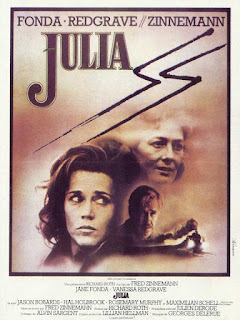
Julia (1977)

Julia header
Jane Fonda and Vanessa Redgrave play friends separated by time in Fred Zinnemann’s award-bait Julia

Director: Fred Zinnemann

Cast: Jane Fonda (Lilian Hellman), Vanessa Redgrave (Julia), Jason Robards (Dashiell Hammett), Maximilian Schell (Mr Johann), Hal Holbrook (Alan), Rosemary Murphy (Dorothy Parker), Dora Dull (Woman passenger), Elizabeth Mortensen (Girl passenger), Meryl Streep (Anne Marie), John Glover (Sammy)

Playwright Lilian Hellman (Jane Fonda) remembers her close childhood friendship with Julia (Vanessa Redgrave), the daughter of wealthy Jewish parents being bought up by her grandparents. As young women, their lives take dramatically different routes: Lilian finds eventual success with The Children’s Hour, with the support of her mentor and lover Dashiell Hammett (Jason Robards); Julia travels to Vienna and then Germany where she becomes involved in anti-Nazi activity. Eventually, the need for money leads to Julia asking Lilian to smuggle funds over the German border.

That’s the meat of Fred Zinnemann’s old-fashioned, highly-genteel memory piece that also manages to make it sound far more exciting and interesting than the dry, worthy, middle-brow story that actually ends up on screen. What’s missing from the film almost completely is passion. This is a story that required fire: a sympathy for radicalism, or anger at the targeted cruelty and injustice of fascism. It gets none of this, instead offering a handsome reconstruction of period details, all filmed with a Golden Age glow, and a narrative focus that feels like it’s aimed at the wrong character.

It’s part of why this awards-bait drama hasn’t lasted in the public perception (it’s very hard to find a copy to watch – really striking for a film nominated for 11 Oscars and winning three, including two acting Oscars). There is very little really rewarding either emotionally or narratively here. The film lacks a real sense of danger or foreboding – even a scene showing fascist thugs throwing Jewish students off a balcony in Vienna is shot with a striking lack of edge or horror. And it unbalances itself by giving more time and priority to Hellman’s struggles to come up with a play “worthy of her” than it does to the title character and the real drama of her struggles. Redgrave is on screen for about 14 minutes. It’s effectively like watching The Pianist but entirely from the perspective of Emilia Fox’s character rather than Adrien Brody’s.

What we end up with is a film that feels old-fashioned, dry and respectable. It offers everything that will impress you, and reassure you that it is important film-making: a big subject, famous names, actors giving emotional performances, period detail, a tragic ending. But it lines these factors up in a way that never ever comes to life dramatically. There is a story buried in here about friendship – and Fonda and Redgrave are very good at selling a strong personal bond, especially considering their limited time on screen together – but what should be the heart of the story gets lost in a biography of Hellman, a digression into her relationship with Dashiell Hammett, and the lack of insight the film seems to have into the fate of Jews and outsiders in an increasingly fascist Europe.

The film’s only real sequence of interest is Hellman’s dash with money across the border and illicit meeting with Julia, a sequence involving coded messages, switching of hats and double-meaning conversation which fits with a spy novel. Zinnemann films this with a fine air of tension and intrigue – but it’s the only time the film stumbles to life.

I think Zinnemann struggled to find what really compelled him to tell this story. Which is a shame as a Julia-focused story – a woman struggling against a system – would have been meat and drink to the director of High Noon, From Here to Eternity and A Man For All Seasons. Instead, his skill from those films of empathising with characters trapped in a desperate situation and forced to take a stand on principle, is lost. In the end he and the film find little to interest them in Hellman, the successful novelist who feels a middle-class intellectual’s guilt at not doing more to help, who is fundamentally a footnote in a far larger story of rising Nazi terror in Europe.

The film has also perhaps faded from public attention because subsequent controversy revealed that a large part of this true story was almost certainly self-aggrandising bull-shit by Hellman. A New York psychiatrist, Muriel Gardiner, claimed in 1983 that Julia’s story was her story and that she had never met Hellman (but they did share a lawyer). No trace of a “Julia” has been found in Hellman’s life, and no evidence at all that she ever undertook this dangerous dash into Germany. Zinnemann also fell out with Hellman, privately coming to believe she was “an extremely talented, brilliant woman, but she was a phony character” and said his “relations with her were very guarded and ended in pure hatred”. Knowing that, it’s hard not to see the same distance on the screen.

Saying that, Jane Fonda is very good in the film, surprisingly fragile, uncertain and scared, and plagued with guilt that she cannot do enough to help her friend. Redgrave won an Oscar for her committed and passionate performance, which tapped into her radicalism and gives a slight character a great deal of depth (in her speech, the pro-Palestinian Redgrave made a famously controversial political speech denouncing “Zionist hoodlums”). Robards won the film’s other acting Oscar, for a professional turn as Hammett. In a very weak year for American film, Schell also landed an Oscar nomination for a brief cameo as a go-between Hellman meets in a Parisian park.

The performances are fine and the style and manner of the film is reassuringly middle-of-the-road. There is everything here to convince you this is an important film, apart from drama, purpose or conviction. Perhaps it’s so hard to find, because so few people have looked for it since 1977?

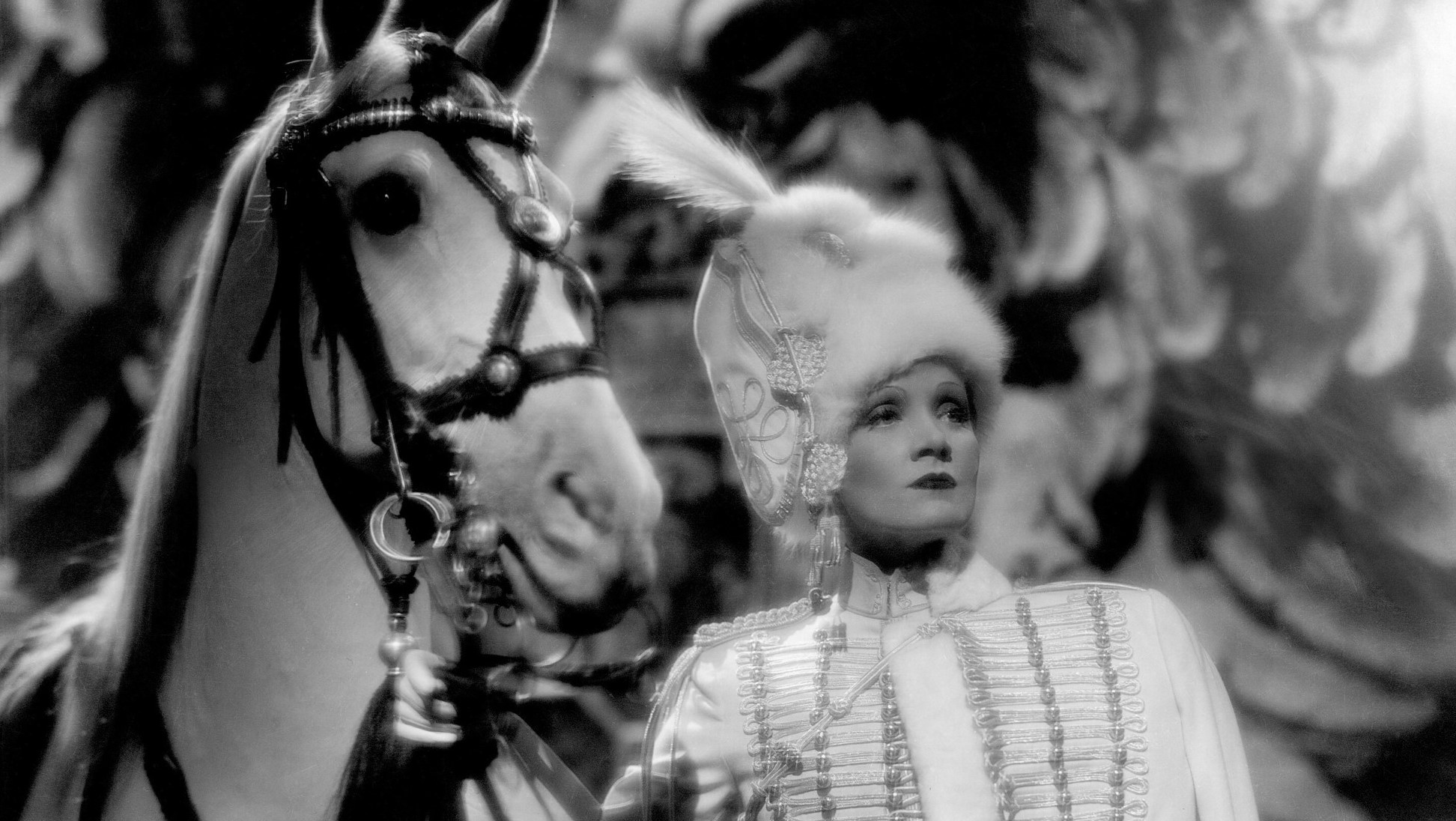
The Scarlet Empress (1934)

Marlene Dietrich with a beloved friend (and the film has fun with that rumour) in The Scarlet Empress

Director: Josef von Sternberg

Cast: Marlene Dietrich (Empress Catherine), John Lodge (Count Alexey Razumovsky), Sam Jaffe (Emperor Peter III), Louise Dresser (Empress Elizaveta Petrovna), C. Aubrey Smith (Prince Christian August), Gavin Gordon (Captain Orlov), Olive Tell (Joanna Elizabeth), Ruthelma Stevens (Countess Elizaveta), Davison Calrk (Arch Episcopope), Erville Anderson (Chancellor Bestuzhev-Ryumin)

Did von Sternberg have a bet on when he made this film? “Hey Josef, what’s the maddest film you think you could make and get away with?” Either that, or perhaps he didn’t care anymore and decided his own obsessions with visuals, sexuality and Dietrich were more important than anything else. Regardless, he made The Scarlet Empress, perhaps one of the most bizarre major releases from a 1930s Studio, a sort of camp masterpiece that contains things you just won’t see any in other film, but at the same time is a disjointed, barely plotted ramble through a fable-tinged version of Russian history. Either way, it’s a truly unique film – and how many films can you say that about?

The plot loosely follows the rise of Catherine the Great (Marlene Dietrich) to power, but any resemblance to real people (living or dead) seems to be purely coincidental. Catherine arrives in Russia to power the heir to the throne, Grand Duke Peter (Sam Jaffe), a gurning simpleton more interested in his soldiers (both toys and real ones) and his mistress Elizaveta (Ruthelma Stevens) than Catherine. Russia is ruled by his mother Empress Elizaveta (Louise Dresser), a domineering matriarch. The (initially) innocent Catherine is admired by the rakeish Count Alexey (John Lodge), but must learn to master the skills of the court – and the sensuality of her own body – to take power.

The Scarlet Empress is pretty crazy. If you are coming here for a history lesson on Catherine the Great, keep on walking. Josef von Sternberg called it “a relentless excursion into style” and that’s a pretty good description. It’s a parade of his fascinations (and obsessions), set in a Russia that never really existed but I suspect Sternberg would argue ‘shouldhave done’. This is Russia as a medieval backwater, built entirely from Cossacks, icons and gargoyles, with the Russian court a ramshackle wooden palace with a throne that wouldn’t look out of place in Game of Thrones. Much of the sense of time and place is buried under this and huge chunks of the film may as well be silent cinema, so little does dialogue matter and so skilfully are emotions and events communicated visually.

However, grab this in the right mood and this is a film it’s impossible not to admire and even fall in love with a little bit. There really is nothing like this, and like much of Sternberg’s work there is a visual sweep and drama here that few other filmmakers can match. There are some truly striking images, from Cossacks riding through the palace, to Sam Jaffe’s gargoyle like face as Grand Duke Peter, to a giant drill bit punching through the eye of a wooden icon. The jaw dropping production design – sets that dwarf the actors – is mixed with misty lighting for romantic assignations and deep shadows for (literally) backstairs court intrigue.

In all this, the story counts for very little, with the primary focus being Sternberg’s obsessions. Many of those seem to be sexual. The Scarlet Empress was released right on the cusp of the Production Code being enforced in Hollywood – and it’s hard to imagine it could ever have been passed once the code was fully enforced. The film lays it’s hand out early with an S&M tinged Russian torture montage (with naked women in iron maidens, whippings, beheadings and a giant bell with the clapper replaced by a human being) and hardly stops from there. Later montages feature explosions of Peter’s soldiers, looting, shooting and orgying across Russia.

The primary lesson Catherine needs to learn in Russia is to use the power of her own sexuality. The idea of politics is even openly rejected by Catherine in favour of mastering her seductive powers. Initially a blushing, mousy innocent, she becomes increasingly coquettish and seductive as the film unfolds. In an early scene she nervously fingers a riding crop – by later in the film she’s bending it in her hands with all the confidence of a Dominatrix. Lovers come and go, as she wins supporters over to her side (she “added the army to her list of conquests” a caption deadpans at one point). Trysts grow in confidence, as Dietrich’s performance progresses from innocence to dominant knowingness.

Dietrich is as close as she’s been to a prop here, striking a series of poses in a performance that’s largely campily two dimensional. For the first 70 minutes she’s given almost nothing to do other than strike a bemused face: for the remaining 40 minutes she’s like Sternberg’s wet dream of a sexually aggressive domineering woman. Basic notes are what most of the cast are kept to, fitting the impression that they are just props in a silent film. John Lodge scowls and poses as Count Alexey and is as wooden as most of the set. Sam Jaffe is one of the gargoyles made flesh. Louise Dresser is an older version of the sexual kingpin Catherine becomes.

But that’s because it’s all about the mood and the style. The Scarlet Empress has that in absolute spades. It’s as close as you can get in the 1930s to a director of a major Hollywood studio film, pouring money into something that maybe only he will like. It’s silent film roots can be seen not only in its vast impressionistic sets, but also in the steady parade of title cards that dance across the screen to communicate what passes for the story. Acting and story are very much secondary to the mood of sexual exuberance and craziness that dominates nearly every frame of the action. The film was a massive bomb on release – perhaps because no one else could quite work out what it was – and it’s taken decades for its overblown mad genius to be recognised. But it’s a film unlike any other and for that alone you should see it.

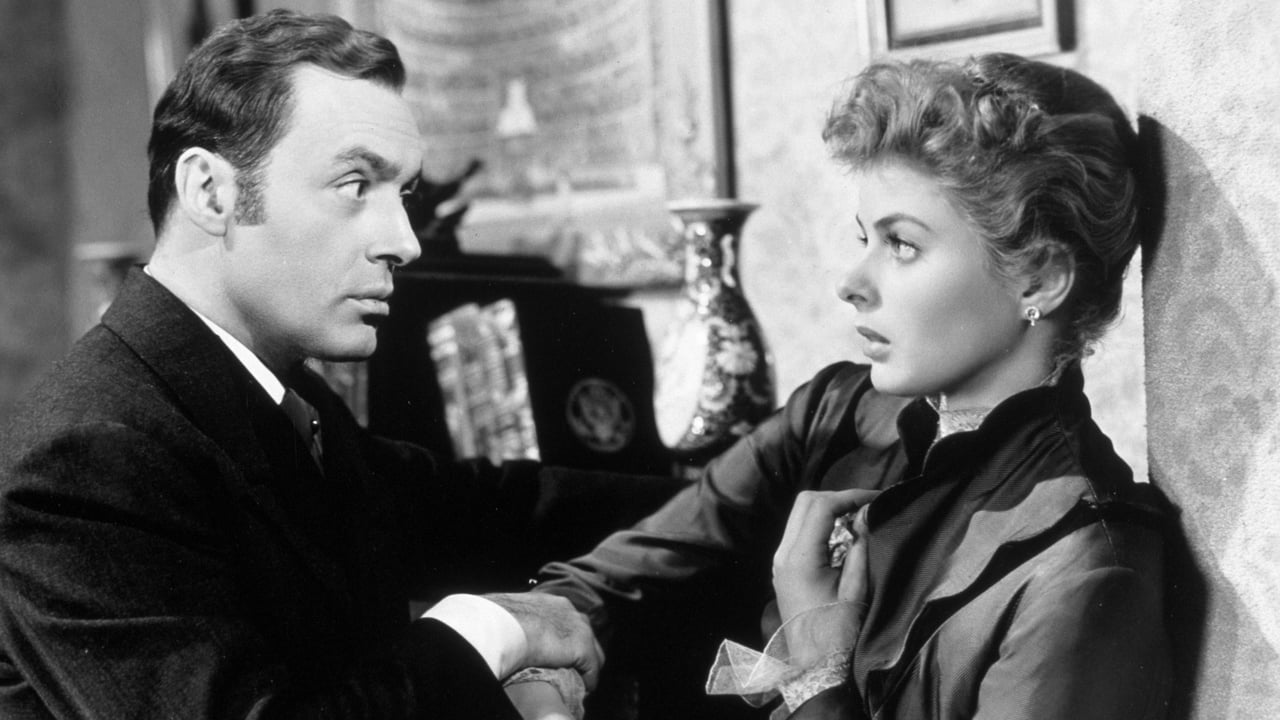
Gaslight (1944)

Charles Boyer and Ingrid Bergman excel in Cukor’s cinematic staging of Gaslight

Director: George Cukor

Cast: Charles Boyer (Gregory Anton), Ingrid Bergman (Paula Alquist Anton), Joseph Cotton (Brian Cameron), May Whitty (Miss Bessie Thwaites), Angela Lansbury (Nancy Oliver), Barbara Everest (Elizabeth Tompkins), Emil Rameau (Maestro Guardi), Edmund Breon (General Huddleston), Halliwell Hobbes (Mr Mufflin), Heather Thatcher (Lady Mildred Dalroy), Lawrence Grossmith (Lord Freddie Dalroy)

Spoilers: Spoilers here in for Gaslight both film and play

Paula Alquist (Ingrid Bergman) has terrible memories of finding her aunt, a world-famous opera singer, murdered in their home on Thornton Square when Paula was just fourteen. Years later she falls in love with, and marries, the charming Gregory Anton (Charles Boyer) who suggests she returns to London and her old home. To save his wife’s nerves, Gregory has all her aunt’s property moved into the attic. But then Alice starts to lose items, Gregory tells her she moves things and has no memory of it and at night she sees the gaslight dim and hears strange creaks in the attic. Is she slowly going mad as her husband insists? Or is she – and this is where the word comes from – being gaslit into thinking so by a husband who isn’t as nice as he seems?

Adapted from Patrick Hamilton’s play, George Cukor’s bring a sumptuous version of the iconic story of a decent wife manipulated by a bad husband to the screen (MGM allegedly tried to destroy all copies of a British version from 1940 so this could be the ‘only’ adaptation). While the original play is a claustrophobic one-set affair, using minimal characters and taking part in a narrow window of time, the film expands and deepens the stories timeframe and uses a host of locations to build-up Paula’s isolation and mounting insecurity. It’s a subtle and extremely well-handled costume-noir thriller, that holds it cards close to the chest and is powered by excellent performances.

It also makes several genuine improvements to the original play. There, the villainous husband is trying to drive the wife mad so he is no longer constrained by her presence while he searches the house he has purchased for missing jewels. It’s not clear why the villain has saddled himself with a wife (when his life would be much easier if he was a single man). The film improves this immeasurably by making marriage to the wife an essential prerequisite to the villain gaining entry to the house. This one change unknots many problems with the original play and also raises the stakes considerably, by increasing the personal connection to events from the wife.

Giving a traumatic backstory to the re-named Paula (all the names are changed from the play), also gives Ingrid Bergman far richer material in her Oscar-winning role. Bergman’s Paula is already nervous and vulnerable from the start, and her desperate need for love and security draws her inevitably towards a man who, even before we work out he’s a wrong ‘un, offers her a sort of fatherly reassurance. Bergman’s heartfelt performance also contains a streak of independence and determination: she struggles painfully with knowing she isn’t insane, even while being told she might be. The film also gives her a greater sense of agency, and Paula’s final act payback works as well as it does, because Bergman has made her gentleness so under-stated earlier, that her sudden iron and fury are even more striking.

Opposite her is an equally fine performance from Charles Boyer. Boyer inverts his charm and suaveness into a ruthless opportunist, devoid of morals, who takes a sociopathic delight in his own cleverness, even as he semi-regretfully mentally tortures and manipulates his wife. He’s never less than charming – making it all the more unsurprising that Paula places as much faith in him as he does – but the little marks of danger and control are there throughout. Cukor uses a wonderful shot early on of Paula disembarking from a train, at which point a hand enters frame and grasps her arm – it’s revealed as Anton, but a brilliant indicator of his threat and controlling nature. Truth is, Gregory is insane, and Boyer subtly suggests this throughout: there is another lovely shot from Cukor late on where studio lights are reflected in Boyer’s eyes giving him an insanely intense gaze.

It all revolves around finding those diamonds. If there is one area that film is slightly weaker is that it doesn’t actually dedicate much time to that dimming gaslight or those creaking floorboards at night. It feels like a beat that should be hit more regularly (a montage would have helped no end), a more constant presence would have helped make it a more convincing continual dread for Paula.

But its counter-balanced by the expansion of the film to multiple locations where Gregory manipulates Paula to disgrace herself in public. From a lost broach in the Tower of London to an evening soiree where she is made to appear as if she has stolen a watch, it all helps to tip Paula more and more into believing she is losing her mind. Again, Cukor keeps the focus within all this finery very much on our two leads, reproducing for us as much as possible the growing claustrophobic fear that is consuming Paula that was as at the heart of the stage production.

The moments away from this are slightly less strong. Joseph Cotton has a thankless role (with an awkward mid-Atlantic accent) as a police inspector, who smells a rat or two. The ‘investigation’ moments around this are often heavy handed, and labour under the sort of exposition that the scenes between Gregory and Paula skilfully avoid. Basically, Inspector Cameron barely has a personality, meaning he never really develops beyond being just a plot device.

Conversely, a character who takes on a great deal more presence is Angela Lansbury’s star-making turn as a sultry, defiantly sexual maid, parachuted into the house for goodness-only-knows what reason (!) by Gregory, who takes every opportunity to undermine her mistress. It’s a brilliantly pointed little performance from Lansbury, full of sass and smirk (it got her an Oscar nomination in her first movie) that adds even more to the feeling of Paula being a stranger in her home.

Gaslight is all smartly directed with Cukor, brilliant as always with actors, adding more visual flair than he often does with his fog-filled London and noir-tinged Edwardian home. With strong performances and many changes that materially improve the original material, it’s a fine adaptation.

Spencer (2021)

Kristen Stewart channels the People’s Princess in Spencer

Director: Pablo Larrain

Cast: Kristen Stewart (Diana, Princess of Wales), Timothy Spall (Major Alistair Gregory), Jack Farthing (Prince Charles), Sean Harris (Chef Darren McGrady), Sally Hawkins (Maggie), Jack Nielsen (Prince William), Freddie Spry (Prince Harry), Stella Gonet (Queen Elizabeth II), Amy Manson (Anne Boleyn)

There is no more famous fairy-tale-gone-wrong in history than Prince Charles and Diana. It’s been explored in countless books, memoirs and films. It’s the meat of Netflix’s The Crown. Interest in it has been rekindled again after Prince Harry’s royal resignation. It’s a fable (also what this film claims to be, based, it claims, on “a true tragedy”) that will only become more of a legend. At its centre is Diana, a figure idealised and enshrined by a tragic early death, who had all the warmth, lovability and public humanity the more reserved Charles lacked. Diana’s romanticism has always helped her be remembered as the hero of this tragedy, with Charles the villain. You’ll see no difference in opinion here. Spencer is a fantastia on Diana that feels like it has been squeezed out of the pages of a host of sentimental pro-Diana memoirs from the likes of Paul Burrell.

Set over a three-day Christmas holiday at Sandringham, around 1991, the film follows a disastrous holiday of psychological depression, despair and isolated crisis for Diana (Kristen Stewart) as her marriage to Charles (Jack Farthing) finally, irretrievably, collapses. Over those days, Diana hides in her room, throws up meals, is treated with stony silence from the Royal family and quietly bullied by Sandringham equerry Major Gregory (Timothy Spall). Her only friends are besotted loyal dresser Maggie (Sally Hawkins) and avuncular chef Darren (Sean Harris) and her only moments of happiness are with her two young sons, giving her the only taste she has of a normal life.

If there is one thing Spencer does very well, it is giving an insight into how overbearing and crushing depression can be. Diana is erratic, frequently tearful, prone to fantasies and suffers through prolonged periods of self-loathing, exhibiting as chronic vomiting after every meal and possible self-harm. Stress makes her sharp and waspish with those she doesn’t trust and almost overwhelmingly needy with those she does. Larrain visualises this with muted pallets and drained colours, showing this world in the same oppressive, depressing light as Diana see it, while Johnny Greenwood’s excellent score makes superb use of a series of unsettling chords to constantly put us ill at ease.

The downside is, the film so completely consumes the Diana-side only, that it feels like being crushed to death by a collapsing mountain of “People’s Princess” bargain-bucket memoirs. Diana is always the victim and never at fault. The film takes an idealised view of her as “one-of-us” chewed up and spat out by an uncaring system, with the Windsors as monstrous gargoyles. (A bit rich considering she’s the daughter of an Earl). Charles is cast firmly as a cold-fish and villain, heartlessly openly carrying on an affair, gifting the same pearls to Camilla as he does Diana. Where Diana is warm and playful with the children, Charles is cold and authoritative, angrily tutting at William’s failures at shooting. Where she has a natural touch with people, Charles is cold and dictatorial.

It is, basically a one-sided vision of this story. That would be fine if the film had suggested that what we are seeing is Diana’s depression-filtered perception of the world – her perception told her surroundings were like, cold, cruel and oppressive. But there is no suggestion that we are seeing this, no extenuating circumstances or slight doubts raised to suggest that there may be different interpretations of these events or that there were two people in this marriage, both in different ways at fault.

It’s something The Crown has carefully – and skilfully – done, by demonstrating these are two people never in love with each other in the first place, with no common interests and outlooks. Spencer could have delved more into helping us understand how this situation came about. It isn’t interested in doing this: as far as the film is concerned, Charles is an unfaithful bastard (Jack Farthing’s channels his Warleggen from Poldark, playing every scene with a razor-blade growl) intent on gaslighting his wife. It doesn’t seem fair.

And lord knows, I’m sorry for Diana who should never have agreed to marry a man she was unsuited to and in love with another woman from day one. There is a film to be made (eventually) about Diana which explores the fascinating puzzles in her identity. The woman who loathed the press but also was an expert manipulator of public opinion, who yearned for privacy but loved public and private devotion. Spencer doesn’t explore any of this, instead presenting a simplified, romantic vision of a woman exactly as you would expect to see from a cliched TV movie. At heart, in fact, that’s what Spencer is – a slushy made-for-TV-movie shot like an arthouse film.

That’s perhaps why its full of such ridiculous flourishes. We’ve obviously talked about the stone-cold Royals. We get cod psychology – “Where the fuck am I?” are Diana’s opening lines, hammering home for us (in case we are about to miss it) that her tortured psychology is the heart of the film. As the Royal Court arrives at Sandringham, their cars drive over the dead body of a pheasant – symbolism you see! Diana reads a book about Anne Boleyn – and sure enough she is soon literally communing with a ghost of the beheaded Queen, both of them claiming themselves as victims of a cruel king who loved someone else. Everything in the film is heavy-handed and designed to push Diana as the faultless victim and the Royals as scowling monsters.

Kirsten Stewart gives a decent impersonation of Diana – vocally she’s spot-on – but for me she struggles in the shadow of Emma Corrin’s extraordinarily transformative work in The Crown – a show that also gained a lot more emotional insight into this story than the film even begins to achieve. It’s shot with a real arthouse style, but at heart it’s a silly and shallow film that never tries to understand either Diana’s inner life or how her marriage became what it was.

Blonde Venus (1932)

Marlene Dietrich can only save her husband…by cheating on him in Blonde Venus

Director: Josef von Sternberg

Cast: Marlene Dietrich (Helen Faraday/Blonde Venus), Herbert Marshall (Ned Faraday), Cary Grant (Nick Townsend), Dickie Moore (Johnny Faraday), Gene Morgan (Ben Smith), Rita La Roy (‘Taxi Belle’ Hooper), Robert Emmett O’Connor (Dan O’Connor)

For their fourth outing together, von Sternberg and Dietrich made for the first time a film set in the modern era. Not that it mattered – von Sternberg would still turn the setting into his typical fever-dream of hyper-reality. It works as always though, because von Sternberg is a master of style and Dietrich is a true superstar. There might not be much more to it than that – and there isn’t really in this melodrama – but that’s still more than enough.

Ned Faraday (Herbert Marshall) is an American chemist (although he sounds more plummy than King George) suffering from radiation poisoning. Fortunately, there’s a cure (this was a simpler time, before we knew there wasn’t any dusting yourself off from a deadly dose of radium) but it will cost. Ned’s German wife Helen (Marlene Dietrich) has to take to the stage again to earn the money to pay for it – but finally finds the real money is in essentially prostituting herself to playboy businessman Nick Townsend (Cary Grant). When Ned finds out his life has been saved due to his wife becoming a kept woman he is furious – and she heads on the run with son Johnny (Dickie Moore) as she’s terrified of losing custody of him.

The Blonde Venus of the title is Helen herself, that being her stage name. Blonde Venus is frequently punctuated by prolonged musical performances by Dietrich, filmed with a flowingly smooth camera by von Sternberg, now firmly able to marry movement and dialogue in his films (in a way Morocco fails to do). The most bizarre of these is “Hot Voodoo” which features exotic African-American dances and Dietrich emerging from a huge gorilla suit wearing a blonde afro. This sort of stuff is so strange that it still works as entertainment, and it strangely fits with von Sternberg’s dreamy approach to story-telling where everything feels a few degrees off reality.

Blonde Venus riffs on this fable like atmosphere pretty openly. It starts with Helen telling a story of how Ned and her first met. This opening shows Helen and several German women skinny-dipping in a pool in the days after the First World War (oh, those pre-Code days!) when they are approached by a group of American GIs, led by the completely un-American sounding Ned. They flirt, and the entire meeting feels very much like a fairy tale – which is exactly how Johnny takes it. The film will end with revisiting this story, this time the son wanting to use it as a comforting romantic vision to escape to. It’s all part though of how Blonde Venus is very consciously framing itself as fairy tale, a group of people living in a heightened reality that’s just outside of logic.

Pretty fitting as the plot leads into an almost bizarre sequence of Helen and Johnny on the run – Ned wants paternity (since his wife is now a floozy) so Helen and Johnny had down South into a Southern States of America which are bizarrely so unspecific in their setting they could be anywhere and later a Texas that looks like it’s come straight out of the Chinese market-place of Shanghai Express. Throughout the journey, like a Princess on the run from a wicked stepmother, Helen is pursed by policeman looking to find Johnny for a reward. Like an old morality tale, she is tipped into destitution (eventually arrested for vagrancy) but then almost as suddenly decides to turn her life around – literally the next scene she is in Paris, the belle of the French night club scene. This is the sort of rapid logic of a dream, and about as likely as a fairy tale would be in real life.

Alongside this fascinating narrative dreaminess, the film also carries a proto-feminist message. It sympathetically sides with Helen, a woman who has no choice but to prostitute herself in an attempt to save her husband’s life – only to be roundly condemned for it by the old stick-in-the-mud the moment he returns. Blonde Venus hardly warms either to Nick Townsend – played by a very raw Cary Grant, still years away from creating his persona in The Awful Truth – a selfish playboy who seems uninterested in consequences. By contrast, Helen is a martyr who consistently puts other people first and as a reward is branded a harlot and a bad mother. You can’t win.

As Helen, Marlene Dietrich gives another fine performance. By this stage, she was highly experienced before the camera and knew exactly how to achieve an impact on the audience. As Helen she is continually sympathetic but also a bright, confident and determined woman with a deep love and loyalty for her family. Dietrich works extremely well with her two male stars – although she rather overshadows both of them – and has an excellent chemistry with the kid. She nails the song and dance moments and her slight air of other-worldly mysticism lends itself very well to the fairy-tale feel of much of the film.

Blonde Venus is of course crammed with beautiful images and transitions. There is a lovely opening transition from that flashback to Ned and Helen’s first meeting to the modern day, where Helen’s body thrashing through the water slowly turns into Johnny beating water in his bath with his feet. The other worldly beauty of Helen’s run from Ned is beautifully presented, and von Sternberg draws some very good performances from his leads. It’s a very slight story – a classic melodrama – but its told with an artful skill that makes it a very rewarding watch.

Vera Drake (2004)

Phil Davis and Imelda Staunton are superb in Mike Leigh’s masterpiece Vera Drake

Director: Mike Leigh

Cast: Imelda Staunton (Vera Drake), Phil Davis (Stan Drake), Peter Wight (Inspector Webster), Daniel Mays (Sid Drake), Alex Kelly (Ethel Drake), Eddie Marsan (Reg), Adrian Scarborough (Frank Drake), Heather Craney (Joyce Drake), Sally Hawkins (Susan Wells), Ruth Sheen (Lily), Lesley Sharp (Jessie Barnes), Liz White (Pamela Barnes), Martin Savage (Sergeant Vickers), Helen Coker (WPC Best), Vincent Franklin (Mr Lloyd), Lesley Manville (Mrs Wells), Jim Broadbent (Judge)

If you passed her on the street, you’d be sure to say hello and she’d be sure to ask after your family – and really mean it. She has a kind word for everyone and never thinks about herself. And, as far as the law is concerned, she’s a multiple murderer. Vera Drake mixes warmth and goodness with anger at social injustice and is stuffed with perfectly observed detail and marvellous acting. It might just be Mike Leigh’s masterpiece. Certainly, few other of his films carry such an emotional wallop.

In London in 1950, Vera Drake (Imelda Staunton) spends her life helping those around her and is a devoted wife and mother. But what her husband Stan (Phil Davis) and children Sid (Daniel Mays) and Ethel (Alex Kelly) don’t know is that for decades she has been “helping young girls out” who find themselves unwillingly in the family way. All Vera wants to do is help – but with abortion illegal, her actions are a ticking timebomb, which explodes when Vera is arrested.

Vera Drake is a film about “the family way” – in every sense. Leigh’s unique film-making technique is familiar now: long weeks of research and intensive, improvisational rehearsals help the actors to create fully-fleshed characters who they know so well, they can predict their reactions in any circumstances. During rehearsals, none of the actors in the family knew Staunton was playing an abortionist until the actors playing the police knocked on the door mid-rehearsal – and even Staunton was completely unaware she was to be arrested. The genuine shock the actors felt feeds this intensely powerful scene – and every moment that follows.

In perhaps no other film has Leigh’s technique been more successful: every single character feels completely and utterly real. You could look in any direction and find a character with such a rich hinterland you want to know their stories. Just as intriguing films could be formed around the lives of the young women Vera helps out – Sinead Matthews ‘very young woman’ (and the boyfriend who waits outside), Tilly Vosburgh as a mother of seven with a sick husband, Rosie Cavaliero as a nervous married woman or Vinette Robinson’s scared Jamaican girl – as has been about Vera.

These women have fallen through the cracks – unable to support a family, but deprived any chance of making choices about themselves and bodies. There is a clear social gap – Sally Hawkins gives a sensitive, gentle performance as an upper-class woman, raped by her boyfriend, who obtains an abortion through psychiatric loopholes available only to the rich. No fault of hers – you can imagine she’d be horrified at how others suffer – but for the poor, their only option is Vera. It’s a huge flaw in the system – and removing Vera won’t solve the ‘problem’. It only means women will turn with more desperation to the sort of uncaring sleazy abortionists Denholm Elliott played in Alfie.

The film works because of its tenderness and the raw emotion of the performances. Leigh’s camera is a largely stationary and observatory, but that immerses us in the domestic charm of the first half as much as it does the horrifying coldness of the legal system in the second half. The Drake family home is small and cramped, reflecting their poverty, but also because it feels stuffed with love. Their children – the extremely shy Ethel and her outgoing son Sid – both reflect their intensely loving home, and her husband Stan is full of kindness, generosity and decency.

Leigh carefully demonstrates the warmth of this family. There’s a tear-inducingly sweet romance between Eddie Marsan’s Reg (a beacon of human decency) and the shy Ethel. Stan’s brother Frank (Adrian Scarborough, marvellous) and middle-class wife Joyce (Heather Craney, wonderfully torn in her feelings) struggle to conceive a child. The family laugh and joke together, every day ending in smiles and expressions of love. It’s beautifully immersing and deeply moving – and makes the wait for this world to shatter even more dreadful.

As Vera, Imelda Staunton gives an astonishing performance. A quiet, polite, open-hearted lady whose greatest pleasure is other people’s happiness. Leigh’s film follows her acts of caring around the community – cleaning neighbours houses, looking after her ill mother, inviting lonely newcomer Reg to dinner – showing she applies the same heart-felt but unshowy care to those, as she does to her abortions. It’s twenty minutes before we see one of these, and what’s striking is the well-practised calmness Vera goes about this work, carefully repeating the same reassuring instructions. She never asks for anything (the posh doctor treating Sally Hawkins’ character takes £100). Lily, who puts her in touch with those in need, has no qualms charging £2 without Vera’s knowledge.

Then the arrest comes. This sequence – and the rest that follows – is frankly extraordinary. Staunton’s face when she sees police is a heart-breaking thing of wonder – a horrified realisation that what she has dreaded for decades has finally happened and the realisation that the world as she knew it is over. Throughout she is astoundingly fragile. Barely able to speak, mute with shock – and horrified to hear one of her girls nearly died (it’s never revealed what went wrong). Her first thought is the girls health and how this will ruin her family’s celebration of Ethel’s engagement. So warm and joyful has the first half of the film been, we feel the shocking coldness as the law goes about – albeit with a regret, beautifully underplayed by Peter Wight’s sympathetic detective and Helen Coker’s gentle WPC – the black-and-white business of cataloguing wrongs.

Staunton is extraordinary: she shrinks and diminish, terrified and mortified. The reactions of her family – confused then stunned and in some cases appalled – feel immensely true: some jump forward in support, others in anger. Phil Davis’ deeply moving performance sees Stan suppress his anger under love. Mays’ Sid rages, Heather Craney’s Joyce is resentful, Scarborough’s Frank is a pillar of support, Alex Kelly’s Ethel quietly holds her mother and will not her go. The emotion of this is so affecting as it feels so real: when Reg quietly shows his support and later gently says the disastrous post-arrest Christmas is the finest he has ever had, you’ll feel tears spring to your eyes.

The relentless march of the law is chronicled perfectly by Leigh. This is a director at the top of his game, creating a low-key film that switches on a sixpence from warmth and familial love to shattering emotional impact. Staunton’s performance is breathtakingly brilliant, avoiding all histrionics and will break your heart. The entire cast is astounding. The research and filming is exquisite. The film will quietly devastate you, but also remind you that nothing is more reassuring than the fundamental goodness of people. A beautiful, moving, masterpiece of a film.

Promising Young Woman (2020)

Carey Mulligan excels as a Promising Young Woman

Director: Emerald Fennell

Cast: Carey Mulligan (Cassandra Thomas), Bo Burnham (Ryan Cooper), Alison Brie (Madison McPhee), Clancy Brown (Stanley Thomas), Jennifer Coolidge (Susan Thomas), Laverne Cox (Gail), Chris Lowell (Al Monroe), Connie Britton (Dean Elizabeth Walker), Adam Brody (Jerry), Max Greenfield (Joe Macklemore), Christopher Mintz-Plasse (Neil), Alfred Molina (Jordan Green)

It’s late at night, you’ve had a few drinks and someone nice offers to drive you home. If you’re a man you probably think, what’s the problem? If you are woman, this can be just the first act of a night of sexual assault. It’s depressing to think this is the world we live in, but if there is one thing #metoo taught a lot of men, it’s that many women experience danger in situations we wouldn’t think twice about. These ideas are wonderfully explored in Emerald Fennell’s directorial debut, the striking, witty and deeply suspenseful Promising Young Woman.

Cassie Thomas (Carey Mulligan) goes out week after week to clubs. She lolls in the corner, slurs her words and waits for guys to offer her a lift home. Those taxis always swing past their own apartments, they always ask her to pop in for one more drink which swiftly turns into an attempt at sex. At which point, Cassie reveals she is entirely sober… Cassie’s revenge campaign is all about revealing to guys who think they are nice, that they are in fact not nice at all. Dealing with trauma over her past, Cassie’s only meaning in life is this campaign, at the cost of any personal life. But a chance meeting with Ryan (Bo Burnham), someone she used to go to college with, presents her with a choice – a new start or a settling of accounts with the man at the root of her trauma.

Emerald Fennell’s film is a superbly timely drama that brilliantly dances from genre to genre. It’s possibly the sweetest and most romantic revenge drama you’ll ever see, or the funniest shocking tragedy. But it’s primarily a film powered by righteous anger: the world shouldn’t be like this.

Many of the men are of course vile – and perhaps most of all because they are so superbly certain of their self-satisfied niceness. The film opens with one of these nights, Cassie pretending to be utterly wasted in a bar while three men chat about how drunk she is, but also how hot. The guy who seems the nicest pops her in an uber, takes her home, pours her a massive drink and takes her pants off. At which point Cassie, stone-cold-sober announces “What the fuck are you doing?”. Later Neil (Christopher Mintz-Plasse) will whine it’s not fair Cassie has “tricked” him into feeling bad (after he has already assaulted her). As if her not being helpless somehow makes him the victim.

But it’s not just men. Fennell’s film shows several times how many women conspire in keeping this status quo going. Cassie’s focused campaign against the people she holds directly responsible for the rape of her beloved best friend Nina starts with two women. One is the fellow student (now a self-satisfied mum-of-two, played with suburban smugness by Alison Brie) who thought that, by behaving like that, Nina basically had it coming. The second is the Dean of the university (a smoothly uncaring Connie Britton) who didn’t want to ruin the men’s careers. Both of these women are as much a part of the victim-blaming culture as the men Cassie shames on her nights out.

Fennell’s film is a brilliant expose of how toxic a certain kind of masculinity has become. And it’s not just the vile alpha-males responsible for the horror that happened to Nina (when we reach these people late in the film, their basic lack of humanity is staggering – even if Fennell strips them of any possible nuance by making them cartoonish in their Bullingdon-club vileness). The bulk of the men in the film are convinced that because they try and be nice, they therefore are nice.

But it’s still a film with a great deal of compassion. It notably isn’t a straightforward endorsement of revenge. It’s made clear what Cassie is doing is hugely dangerous – she has lucked out that the men she encounters are shamed into pleading and defensive whining. There is the distinct possibility that Cassie could be seriously hurt or worse – for all her planning and determination. That’s not to mention the psychological damage this has on her. She is a deeply disturbed, troubled and unhappy woman whose life is going nowhere.

It’s the emotional heart of Carey Mulligan’s wonderful performance. Mulligan nails the furious calm Cassie has on campaign – and her chilling authority in situations where she is on top. But she also shows Cassie’s emotional damage. She finds it impossible to open herself to any form of relationship, romantic or otherwise. She’s so shutdown she can’t even remember her own birthday. This crusade has sucked everything out of her life, and had a shattering emotional impact on her. Mulligan has never been better: a career defining performance, heartfelt and impassioned, dark and emotionally complex.

Fennell shoots the film with a real assuredness. When Cassie is in control, Fennell uses a series of carefully controlled static shots, often centring Cassie in the frame. Its only when events are out of her control that the camera shifts to greater movement and less stable shots. The confrontations are both darkly amusing but also chillingly edge-of-the-seat – because we can’t be sure whether everything will go wrong, or how far Cassie will go. Promising Young Woman is also very witty and even rather sweet – the slow, hopeful romance between Cassie and Ryan (a charmingly sweet Bo Burnham) is hugely endearing and gives the film a sense of hope. We’re torn: we want Cassie to have her revenge, but the damage to her is so huge that we also want her to move on.

It’s what makes Promising Young Woman a kaleidoscope of a film. Every time you shift it, your perspective changes. We thrill at seeing Cassie shame bad men, just as you worry for her safety every time. We never know what to expect from Ryan – after all we’ve seen so many men like him turn out to be predators – but we want him to be genuine. You’ll laugh one scene and have your stomach in knots the next. It culminates in a confrontation that shifts shockingly from black comedy to simply pure dark, more disturbing and difficult than you can imagine. Fennell – and a magnetic Mulligan – maintain all these different beats perfectly. A wonderful, and hugely timely, film.

Chocolat (2000)

Juliette Binoche changes people’s lives with sweet treats in Chocolat

Director: Lasse Hallström

Cast: Juliette Binoche (Vianne Rocher), Judi Dench (Armande Voizin), Alfred Molina (Comte de Reynaud), Lena Olin (Josephine Muscat), Johnny Depp (Roux), Victoire Thivisol (Anouk Roucher), Hugh O’Conor (Pere Henri), Carrie-Anne Moss (Caroline Clairmont), Peter Stormare (Serger Muscat), Leslie Caron (Madame Audel), John Wood (Guillaume Blerot), Elisabeth Commelin (Yvette Marceau), Ron Cook (Alphonse Marceau)

In 1950s France, expert chocolatiere Vianne Rocher (Juliette Binoche), and her six-year-old daughter Anouk (Victorire Thivisol) travel the country following the North Wind accompanied only by Anouk’s imaginary kangaroo. If that sentence alone has too much whimsy for your stomach to take, don’t invest two hours of your time in the rest of the film. Vianne and her daughter rock up in a very traditional town, run by the Comte de Reynaud (Alfred Molina), a stuffed-shirt who won’t admit his wife has left him. The austere Comte is horrified when Vianne’s sweet goodies prove super popular with the townspeople, whose lives suddenly start to change in profound and exciting ways as the quality of the chocolate helps them discover their own suppressed desires.

As if the title alone wasn’t enough of a warning, Chocolat is almost impossibly sweet, like being water-boarded by hot chocolate. Shot in a village that can only be described as chocolate box, it’s twee, sentimental and exhibits practically all the worst elements of cosy women’s fiction. With Miramax muscle behind it, this heavy-going confection briefly persuaded the world it was some sort of easy-going arthouse picture – rather than a smug fable of cliched situations and characters, coated in an unsettling number of scenes of actors eating chocolate with orgasmic grins.

It will not surprise you to hear that Vianne’s arrival in the village is the catalyst for huge change – the sort of change a trailer would surely describe as “their lives were all starters, until she showed them the importance of dessert”. Vianne is played by Juliette Binoche channelling Nigella Lawson as a yummy mummy domestic goddess. Her shop operates with the sort of business model that only exists in escapist fiction: customers spin a sort of Rorschach wheel and whatever they see in the picture decides the chocolate they will buy (no one would dare ask “Do you just have a box of milktray?”). The whimsy is nearly as thick as the molten goodies in the mixing bowl.

The village is stuffed with esteemed actors going through the motions. Judi Dench shows Maggie Smith that she can play crusty-old-women-with-hearts-of-gold as easily as her, as a grandmother who has been refused access to her grandson by his over-cautious mother. (It’s the sort of role people love to see veteran actors do, and duly landed Dench an Oscar-nomination). With some flatly written lines, Dench provides a bit of sparkle in a role she could play standing on her head. Carrie-Anne Moss is pretty good as her daughter, a repressed fusspot, who won’t let her son have fun. John Wood plays a crusty bachelor with the hots for war widow Leslie Caron. You don’t need to be a master confectioner to mix these ingredients together into the expected resolutions.

Hallström keeps events ticking gently along, in a film so soothing it seems designed to help you fall asleep. For a while Hallström was the go-to-guy for middle-brow, unimaginatively “prestige” adaptations of middle-brow, popular novels (this was his second after The Cider House Rules – and he had several to follow – each progressively a bit worse than the one before). The closest genuine emotion comes from Lena Olin’s abused wife of bullying café owner Peter Stormare. Sure, Olin’s problems are solved in about a few minutes, but the threat to her from Stormare is an intrusion of something that feels genuinely dramatic in what is otherwise a souffle. (Olin gets the film’s only memorable line, whacking her husband over the head when he attacks Vianne with the words “Who says I can’t use a skillet”, a line that’s both rather funny and bizarrely out of place.)

Naturally, the stuffy village learning needs to learn to cut lose a bit and embrace life, love and happiness. Alfred Molina’s Comte is the sort of chap who browbeats the local priest (who loves himself a bit of Elvis) into parroting the conservative sermons he’s written for him about the virtue of being miserable. Of course, the Comte is actually a decent guy (when he finds out what a bastard Stormare is, he banishes him at once), just old-fashioned and as much in need of the orgasmic power of chocolate to heal his pain as everyone else. Did Cadburys and Hersheys sponsor this film?

Just when you thought the film’s cosy warmth and supreme heritage gentleness couldn’t get more trying, it tops itself with the arrival of a punch of whimsical Romani people even more smackably smug than Vianne. Worst of all they are led by Johnny Depp at his most lazily teenage dream-boat, sporting a pony-tail and a bizarre Irish accent. He’s even more of a free-spirit than anyone else, strumming his guitar at the drop of his hat. You’ll dream of a hole in his boat taking him to the bottom of the Seine.

It all ends as you might expect: everyone discovers lovely things about themselves and each other, everyone settles down, Depp and Binoche get-it-on (and keep the relationship going as he drifts in-and-out town), the Comte becomes a top bloke and the invisible kangaroo skips away on the North Wind. Eat a box of Quality Street instead.

The Philadelphia Story (1940)

The Philadelphia Story (1940)

Three stars are at the top of their game in this classic screwball-style comedy

Director: George Cukor

Cast: Katharine Hepburn (Tracy Lord), Cary Grant (C.K. Dexter Haven), James Stewart (Mike Connor), Ruth Hussey (Elizabeth Imbrie), John Howard (George Kittredge), Roland Young (Uncle Willie), John Halliday (Seth Lord), Mary Nash (Margaret Lord), Virginia Weidler (Dinah Lord), Henry Daniell (Sidney Kidd)

In 1938 Katharine Hepburn’s career was over. After the flop of some now forgotten (wait, hang on…) screwball comedy called Bringing Up Baby, she took centre place on the Independent Theatre Owners list of “Box Office Poison”. Flops after flop hit Hepburn (all of them are classics today of course), and the studios did their damnedest to drop her. So, Hepburn returned to the stage, developing The Philadelphia Story with Philip Barry – and creating a lead role for herself that would play to all her strengths and help win back public affection. And which (with a little help from Howard Hughes) she would own the rights for: so, if and when they wanted to make a film, she could insist she starred. The rest is history.

The Philadelphia Story is perhaps the best example of the Code-approved genre, the “remarriage comedy” (because the code wouldn’t countenance the idea of a couple cheating). Daughter of a rich Philadelphia family, Tracy Lord (Katharine Hepburn) is to marry her dull fiancée George Kittredge (John Howard). George’s main attraction is he’s the complete opposite of her charismatic ex-husband C.K. Dexter Haven (Cary Grant). Dexter crashes the build-up to the wedding, bringing along reluctant society journalist (he’s really a renowned short-story writer) Mike Connor (James Stewart) and press photographer Elizabeth (Ruth Hussey), promising to introduce them as distant friends of the family so they can report on the wedding. But then Tracy finds herself drawn to Dexter and Mike and George as well – who will she end-up walking down the aisle with?

Perhaps the best thing about The Philadelphia Story is that you really don’t know who it will be – and the film successfully keeps the question both up-in-the-air and deeply entertaining. There even seems a chance (unlikely as it is) that Tracy really will stick with George (a tedious nouveau riche businessman with priggish middle-class morals who can’t even mount a house – imagine!). Directed with the sort of unfussy smoothness Cukor excelled in – and helped get the best out of actors – it’s a superb comic treat, with a sparkling adaptation by Donald Ogden Stewart.

At the heart of it, Hepburn is superb in a role that riffs considerably off her own public personality. Hepburn was smart enough to know most audiences saw her as far too clever by half. Her sharpness, acidity and no-nonsense unwillingness to suffer fools had made her hard to relate to. Quite correctly, she felt she needed a role where she could “fall flat on her face”. Which , by the way, is more or less the first thing she does – a hilarious prat fall while throwing Cary Grant’s Dexter out, him responding to her snapping his golf clubs by gently putting his hand on her face and pushing her off-balance (only Grant could have got away with that by the way).

Tracy Lord is a version of the Hepburn many people felt they knew. Tracy genuinely believes she’s smarter and better than anyone else, with unquestionable judgment and superior morals. The film is a gentle exercise in pricking her balloon, showing her she is as prone to mistakes, prejudice and, above all, getting giddy and silly in love, as anyone else. This is a fiercely practical woman, who sets high standards for those around her, suddenly finding herself falling in love with three men at once. It’s the exact flighty lack of commitment she spent years condemning her estranged father for.

This is all scintillatingly played by Hepburn, at her absolute best. The rat-a-tat dialogue (with its classic, Wildean comedy of errors and mis-identification) is under her complete control. She’s delightful when, under the influence, she flirts with Mike – Hepburn showing the world (clearly they missed it in Bringing Up Baby) that she could be as silly and vulnerable as the next girl. Hepburn knew people wanted to see her personae deconstructed, and for her character to learn that (in the words of another comedy) nobody’s perfect. It works a treat – and this remained one of her greatest (and funniest) performances.

It helps she had two of the greatest to riff off. Cary Grant is at his light-comedic best here, turning Dexter – a manipulative reformed alcoholic it would be easy to dislike – into the embodiment of sophistication, charm and playful wit, who we adore as much Tracy’s family does. James Stewart won an Oscar and matches Grant gag-for-gag in a comedic masterclass. He’s a master of hilarious comedic and physical reactions – and lovable enough to turn a chippy newspaperman into a sort of hilariously droll sage. His ‘drunk’ acting is also some of the funniest you’ll see on film (even Grant can be spotted cracking up just a little as Stewart hiccups his way through a scene).

Hepburn’s chemistry with both actors is sublime. Her romancing scenes – both the worst for wear for drink, but also empowered to say things they’ve clearly been burying all day – with Stewart are not hugely romantic, but also rather sexy (Cukor’s direction here is also exquisitely spot-on). It’s a masterclass in on-screen flirtation – and you can see why George gets as pissed off as he is. Hepburn and Grant meanwhile bicker and taunt each other with all the chemistry of a match and a fire.

Each scene has a bounce that teeters between heart-felt and farcical. The set-ups are frequently silly – but they work because they hinge on characters that feel immensely real. Every performer is spot on – credit also goes to a superb Ruth Hussey, one of the few grown-ups in this weekend of flirting, feuding children. Set in a sumptuously rich Philadelphian mansion, for all of Mike’s chippy criticism it’s a celebration of the smooth upper classes over hard-working, dull prigs like George. Its sole fault might be it’s too long (at just under 2 hours, a few scenes and set-ups outstay their welcome). But, as a classic Hollywood comedy, it’s pretty much the top of the class. Box-office poison no more.