Category: Film about friendship

Back to the Future Part III (1990)

Back to the Future Part III (1990)

The franchise closes on a high with a fun, romantic and exciting finale, tonnes better than Part II

Director: Robert Zemeckis

Cast: Michael J. Fox (Marty McFly/Seamus McFly), Christopher Lloyd (Emmett “Doc” Brown), Mary Steenburgen (Clara Clayton), Thomas F. Wilson (Biff Tannen/Buford “Mad Dog” Tannen), Lea Thompson (Lorraine McFly/Maggie McFly), James Tolkan (Marshal James Strickland), Elizabeth Shue (Jennifer), Matt Clark (Chester), Richard Dysart (Salesman), Flea (Needles)

And we’re back. After the frankly awful Back to the Future Part II – an onslaught of bad gags, terrible performances, clumsy call-backs and a lot of sound and fury – the trilogy ended on a high with Back to the Future Part III which, by going back to the past, managed to find more heart and originality than Part II ever had. Strangely, by looking backwards in time, the series managed to look forward to new ideas. Part III is, by many degrees, a huge improvement.

We left Part II with Doc Brown (Christopher Lloyd) stranded in 1885 and Marty McFly (Michael J Fox) equally stranded in1855. How are they going to get back to 1985? Well Doc is happy where he is, and has left the Delorean buried in 1885 for Marty to dig it up in 1955 and get back to the future with the help of the 1955 Doc. But, digging the Delorean up, Marty discovers Doc’s 1885 grave: turns out he will be murdered by gunslinger Buford “Mad Dog” Tannen (Thomas F Wilson). So, Marty travels back to 1885 to save him. But with the Delorean damaged on the way, how will they get back to 1985? Will Doc or Marty be killed in a fatal gunfight with Tannen? And what about the Doc and schoolteacher Clara Clayton (Mary Steenburgen) falling in love?

Back to the Future Part III juggles all these plot themes with real expertise, all based in a hugely affectionate portrait of the Old West that drips with Zemeckis and Gale’s childhood love for the genre. I’m going to guess that Part III is inexplicably not held in the same regard as Part II because my generation and onward simply has far less of a connection to the Western than they do crudely cheesy views of an 80s tinged future.

But the sense of fun here is on point. Galloping horses, street fights, open air dances, trains, cameos from old-school Western supporting actors, the majestic score… it’s all an on-point reconstruction of the tone and style of Ford. (In particular, the entire film feels like a fun recreation of many elements of My Darling Clementine). The film also has fun with later perceptions. Marty is dressed up for his journey back to 1885 in the sort of brightly coloured, skin-tight costumes 1950s TV and B-movie western stars wore. He adopts the alias “Clint Eastwood” (and doesn’t the film have fun with that). He even (eventually) dresses not dissimilarly from the Man with No Name himself.

It doesn’t stop with the Western re-build. Back to the Future Part III has the inevitable call-back gags to events we have seen throughout the last two movies. But here they are delivered with a far more freshness. Not least because Doc and Marty largely reverse roles here (leaning into this, they even swop their catchphrases at one point). While in the previous films Marty was the impulsive one, flying by the seat of his pants with instant decisions and being assisted by the eccentric Doc, here they settle into new roles.

Because Doc here is the one being rescued and the one tempted by an impulsive decision. Namely, staying in the past because he has fallen in love. Christopher Lloyd, a much better actor than he gets credit for, is allowed to broaden out and enrich his eccentric performance as Doc with a real emotional depth in a very sweetly drawn romance. Mary Steenburgen is equally good as the kindred spirit he falls in love with. Both actors play the romance dead straight and it allows Lloyd to show an emotional depth and shade his performance has lacked elsewhere. Steenburgen’s casting is also a nice tip-of-the-hat to Time After Time (where she also played a woman who inadvertently falls in love with a time traveller). Clara is also a neatly written character, integrated far more into the plot than poor Jennifer in Part II and another welcome shake-up the buddy formula.

As Doc takes on the romantic and paradox creating role, Marty becomes the driver, urging Doc to stop getting mixed up in influencing past events and focus instead on fixing the Delorean and getting back home. Fox embraces playing (largely) the secondary role in the film. He still gets moments of fun as an actor (not least playing Marty’s Irish great-grandfather – a performance immeasurably better than all his latex covered efforts in Part II) but he’s largely the voice of sense here.

Except of course concerning his fatal character flaw: don’t call him chicken. There is nowhere more dangerous to allow someone to pick a fight with you than the Wild West. And Marty swiftly inherits the clash with Tannen (played with gruff comic gusto and impenetrably density by Thomas F Wilson). This culminates – but of course – in a face-off in a dustbowl street, with a solution to the gunfight inspired by the real Eastwood and nicely signposted in Part II.

That leads into a genuinely edge-of-the-seat exciting race to hijack a train to push the Delorean up to the desired 88 miles an hour. Zemeckis shoots and cuts this sequence to perfection – and Alan Silvestri’s score does a lot of build and sustain the tension and excitement – and it seems appropriate that the only real opponent Marty, Doc and Clara have to deal with in this sequence is time itself. Crammed with sight gags, orchestrated to perfection and perfectly paced it’s a great way to cap the series.

Much as the film itself is a perfect ending to the franchise. Its imaginative and playful, riffing on the previous events without slavishly imitating them, approaching both its characters from new angles that helps us discover new things about them and crammed with great jokes, exciting set-pieces and genuine emotion. It’s easily the second-best film in the franchise. If you want to revisit a sequel for Back to the Future do yourself a favour and pick the one in the past.

The Seven-Per-Cent Solution (1976)

The Seven-Per-Cent Solution (1976)

Affectionate and faithful Holmes pastiche that shines an interesting light on the Great Detective’s character

Director: Herbert Ross

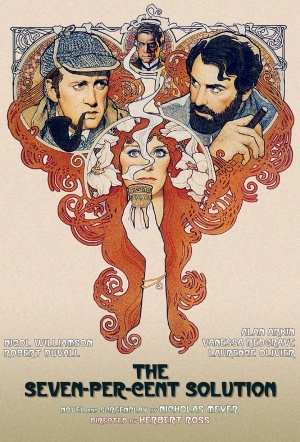
Cast: Nicol Williamson (Sherlock Holmes), Robert Duvall (Dr John Watson), Alan Arkin (Dr Sigmund Freud), Laurence Olivier (Professor Moriarty), Vanessa Redgrave (Lola Devereaux), Joel Grey (Lowenstein), Jeremy Kemp (Baron Karl von Leinsdorf), Charles Gray (Mycroft Holmes), Samantha Egger (Mary Watson), Jill Townsend (Mrs Holmes), John Bird (Berger), Anna Quayle (Freda)

The magic of Sherlock Holmes is he is immortal. Doyle’s detective has been reshaped so many times since the publication of the canonical stories, that we’re now used to seeing him presented in myriad ways. It was more unsettling to critics – particularly British ones – in 1976, who didn’t know what to make of an original, inventive Holmes story that treats the characters seriously but is playful with the canon. Was this a parody or a new story? (Why can’t it be both!) Today though, The Seven-Per-Cent Solution stands out as a Holmesian treat, a faithful slice of gap-filling fan fiction.

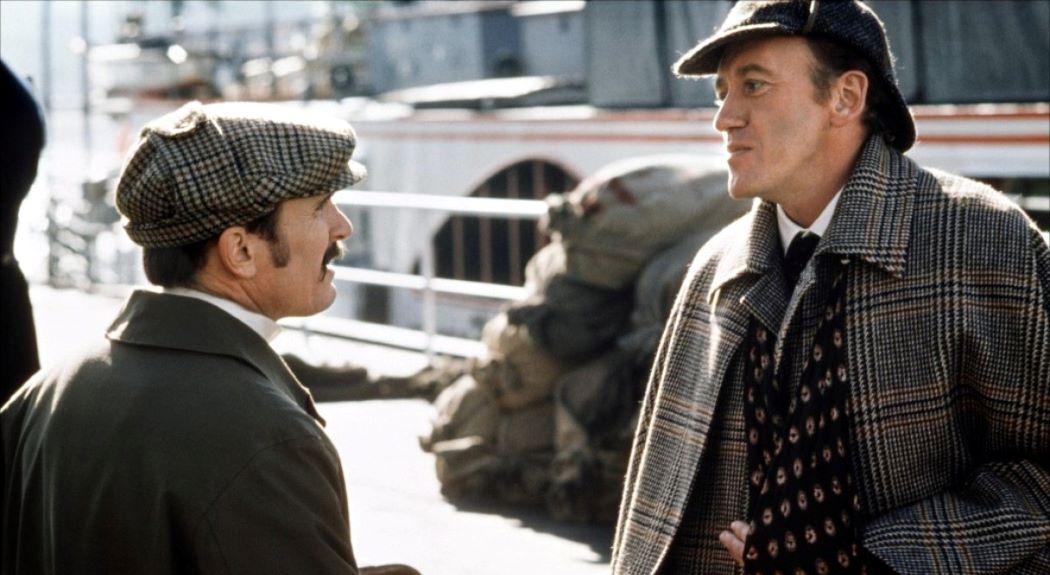
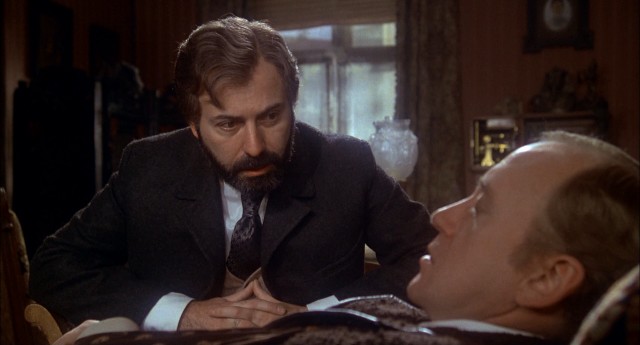
Based on a best-selling novel by Nicholas Meyer (who also adapted it), The Seven-Per-Cent Solution expertly reworks Doyle’s The Final Problem. Professor Moriarty (Laurence Olivier) is not the Napoleon of Crime, but a mousey maths tutor, the subject of Holmes’ (Nicol Williamson) cocaine-addled idée fixe. Worried about his friends dissent into addiction, Dr Watson (Robert Duvall) tricks Holmes into journeying to Vienna to receive treatment from an up-and-coming specialist in nervous disease and addiction, Dr Sigmund Freud (Alan Arkin). The treatment is a slow success – and the three men are drawn into investigating the mysterious threat to drug addicted glamourous stage performer Lola Devereaux (Vanessa Redgrave) that may or may not be linked to her fierce lover, the arrogant Baron Karl von Leinsdorf (Jeremy Kemp).

As all we Holmes buffs know, seven per-cent refers to Holmes’ preferred mix of cocaine, taken to stimulate his brain between cases and see off boredom. But what if that persistent cocaine use wasn’t a harmless foible – as Holmes tells the disapproving Watson – but something much worse? Kicking off what would become a decades long obsession with Holmes the addict – Brett and Cumberbatch would have their moments playing the detective high as a kite and a host of pastiches would explore the same ground – Meyer created a version of Holmes who was definitely the same man but losing control of himself to the power of the drug.

This short-circuited some critics who didn’t remember such things from school-boy readings of Doyle and hazier memories of Rathbone (those films, by the way, were basically pastiches in the style of Seven-Per-Cent Solution as well). But it’s a stroke of genius from Meyer, shifting and representing a familiar character in an intriguing way that expands our understanding and sympathy for him. Holmes may obsessively play with his hands and have a greater wild-eyed energy to him. He may sit like a coiled spring of tension and lose his footing. But he can still dissect Freud’s entire life-story from a few visual cues in a smooth and fluid monologue and his passion for logic, justice – as well as his bond with the faithful Watson (here bought closer to Doyle’s concept of a decent, if uninspired, man) – remain undimmed.

It helps that the film features a fantastic performance from Nicol Williamson. Few actors were as prickly and difficult – so could there have been a better choice to play the challenging genius? Williamson’s Holmes is fierce in all things. Introduced as a wild-eyed junkie, raving in his rooms and haring after leads, his behaviour oscillates between drug-fuelled exuberance to petulant paranoia. But there are plenty of beats of sadness and shame: Holmes is always smart enough to know when he no longer masters himself. When the mystery plot begins (almost an hour into the film), Williamson’s does a masterful job of slowly reassembling many of the elements of the investigative Holmes we are familiar with – the focus, the energy, the self-rebuke at mistakes and the excitement and wit of a man who loves to show he’s smarter than anyone else.

The film is strongest as a character study, in particular of Holmes. Its most engaging sections take Holmes from a perfectly reconstructed Victorian London (including a loving, details-packed recreation of 221B from production designer Ken Adam) to waking from a cold turkey slumber full of apologies for his cruel words to Watson. Seeing Watson’s quiet distress at Holmes state, and the great efforts he takes to help him, are a moving tribute to the friendship at the book’s heart. The clever way Meyer scripts Holmes’ ‘investigation’ into Moriarty (an amusing cameo from Laurence Oliver, his mouth like a drooping basset hound) sees him apply all his methods (disguise, methodical reasoning, unrelenting work) in a way completely consistent with Doyle but clearly utterly unhinged.

That first half serves as a superb deconstruction of the arrogance of literature’s most famous detective, who won’t admit the slightest flaw in himself. It’s still painful to see a frantic Holmes, desperate for a hit, causing a disturbance in Freud’s home and denounce Watson as “an insufferable cripple” (a remark met with a swift KO and later forgiven). Holmes’ cold turkey sequence is a fascinating sequence of nightmareish hallucinations, as he is plagued by visions of cases past (The Engineer’s Thumb, Speckled Band and Hound of the Baskervilles among them) and the eventual awakening of Holmes as a contrite, humbled figure very affecting.

Bouncing off Williamson we have the traditional “Watson” role split between that character and Freud. Robert Duvall is a very unconventional choice as Watson – and his almost unbelievably plummy accent takes some getting used to – but he gives the character authority without (generously) giving him inspiration. Limping from a war wound (another touch of the novels often missed until now), he’s dependable, loyal and goes to huge lengths to protect his friends.

But most of the traditional role is actually given to Freud, played with quiet charm and authority by Alan Arkin. Intriguingly the film places Freud as a combination of both men’s characters. He has the analytical mind of Holmes, investigating the subconscious. But he also chases after errands for Holmes, “sees but does not observe” during the case in the manner of Watson and eventually becomes an active partner in confronting the villains.

The actual mystery (taking up less than 40 minutes of the film’s runtime) can’t quite maintain the momentum, being a rather trivial affair (greatly simplified from the book) revolving around a cameo from Vanessa Redgrave as a fellow drug addict Holmes feels a touching sympathy for. Jeremy Kemp makes a fine swaggering bully, but his greatest moment is actually his pre-mystery anti-Semitic confrontation with Freud at a sports club, culminating in a Flemingesque game of real tennis between the two. If the film has any moment that tips into outright comedy, it’s a closing train chase that involves Holmes, Watson and Freud dismantling the train carriage to burn the wood as fuel.

But the real heart of the film is Holmes. Throughout the film we are treated to brief visions of the boyhood Holmes slowly climbing a staircase. What he saw at the top of that staircase is buried deep in his subconscious, with the final act of the film revealing all under hypnosis. It’s an intriguing motivator for all Holmes has become, just as it is surprisingly shocking. As Watson comments, the bravest act is sometimes confronting ourselves: The Seven-Per-Cent Solution treats the detective with huge respect, while pushing him into psychological waters Doyle would never have dreamed of. It’s why the film (and Meyer’s book) is a fascinating must-see for Holmes fans: it takes the material deeper, but never once forgets its loyalty to the source material.

The Whale (2022)

The Whale (2022)

Manipulative and sentimental, Aronofsky’s tear-jerker is dishonest and disingenuous

Director: Darren Aronofsky

Cast: Brendan Fraser (Charlie), Sadie Sink (Ellie Sarsfield), Hong Chau (Liz), Ty Simpkins (Thomas), Samantha Morton (Mary), Sathya Sridharan (Dan)

The Whale is the sort of film that is either going to bring you out in tears or hives. Me? Let’s just say I felt incredibly itchy as I sat through this naïve, sentimental and manipulative film. I hated its dishonesty and its disingenuousness. The only thing I felt move was my stomach.

Charlie (Brendan Fraser) is a morbidly obese, reclusive English professor who teaches online courses with the camera turned off. Nursed by Liz (Hong Chau), the sister of his deceased partner, Charlie has never processed his depression and guilt at his partner’s suicide. Now, facing death from congestive heart failure, his last wish is to finally bond with his daughter Ellie (Sadie Sink) whom he has not seen in the eight years since he left her and her mother (Samantha Morton). Ellie is now an angry, high-school drop-out teenager. But Charlie is sure he can see the good in her.

So much has been made about the morbid obesity of the film’s lead. The prosthetics coating Fraser in layers of fat are impressive. An opening montage shows Charlie struggling to move around the house. Picking something up off the floor is impossible and he has to lever himself out of the bed or into the shower. But the film is hugely pleased with itself that it dares to see a fat person as “one of us”. Aronofsky initially films him like a freak show monster – already patting himself on the back about how “humanising” it will be when we learn that obese people are just as capable of being at the heart of maudlin, self-pitying films as thin ones.

The Whale is adapted from a stage play. Not only does it really feel like it (it’s all set within Charlie’s apartment, with characters announcing their arrival in a neat four-act structure), it also sounds like it. The dialogue is forced, artificial and clumsy, making on-the-nose emotional points. Characters feel like narrative constructs. Sadie Sink’s Ellie is the sort of precocious-but-angry tear-away genius brat you never find in real life. Ty Simpkins’ hipster-turned-missionary is more a collection of quirks than a person. The script leans heavily on clumsy metaphors – a walk on the beach, bible quotes, Ellie’s childhood essay on Moby Dick – milked for all they are worth.

Worst of all, a film that prides itself on being about the power of honesty feels like a big, walloping lie. It lies about its characters and it lies about the real issues that drive them. Firstly, it never once touches on issues of mental health and addiction that have led Charlie to this state. Sure, we get a scene of him compulsively eating. But Liz, his “caring” nurse, brings him medicine and huge piles of food (a massive bucket of fried chicken, enormous sub sandwiches…). It’s like caring for an alcoholic by bringing him chicken soup and a huge bottle of whisky. How is this helping someone recognise and deal with an addiction? Which is what this level of over-eating is.

Worst of all the film treats this as a “charming friendship between two eccentrics”. It eventually touches on the fact they are both hurting from the suicide of Charlie’s partner Alan. But never once is the film brave enough to link their behaviour now to this act. Charlie failed to get Alan help, keeping him away from the world and others, believing that the isolated love of a single person would solve his depression. Liz repeats the same mistakes. She isolates Charlie, encourages him to eat, never challenges him to seek help or process his grief, and creates a safe environment for him to destroy himself. If he was a drug addict, what would we say about a carer who draws the curtains and encourages him to shoot up? We’d be calling her the villain of the piece.

That’s before we even dive into the film’s lack of honesty about Charlie. It’s sad to think of a character being so depressed he’s eaten himself to death. That’s awful – even if the film never wants to reflect on the emotional and psychological reasons for this (because that would be depressing in a film as desperate to be upbeat as this one). But by showing us Charlie at the end, full of regret and self-pity, the film white-washes his mistakes and selfishness. There are clear flaws in Charlie that contributed to this state – however much the film wants to present it as a terrible accident.

Charlie abandoned his family and made no contact with his daughter for years (he complains it was too difficult and tries to blame her mother), leaving her traumatised. The film loves its sentimental device of Charlie reading to himself Ellie’s childhood essay (which he knows by heart). But this is, basically, a selfish fantasy: an idea for Charlie to cling to that he was a good Dad and Ellie a kid with a future, radically different from the actual reality. Just like he never addresses why guilt and depression drove him to destroy himself, so he refuses to deal with the issues Ellie is facing now by simply not acknowledging that she has changed from his idealised version of her as the sweet, sensitive girl who knew Moby Dick was really about Melville’s unhappiness.

Instead, the film suggests her mother is the one who really failed. Charlie – who has spent about an hour in her company in eight years – would have donebetter. Just like Liz passing him chicken buckets, Charlie’s solution to solving his daughter’s problems is to smother her with love rather than get her to ask herself why she does and says the cruel things she does. How can the film not see he is repeating the same ghastly cycle again, encouraging a depressed, vulnerable person to stick her head in the sand and hope for the best? Well, he’s wrong. And the fact that the film doesn’t see this means it’s lying to itself as much as he is.

By the end you’ll be stuffed by sentiment, greased by the insistent score. Every single frame is like being walloped over the head while Aronofsky shouts “cry damn you”. The dreadful script is well acted, even if no-one ever makes these device-like characters feel like real people (except maybe Morton). Fraser is committed, a lovely chap and I’m very pleased he’s having “a moment”. But this is a simplistic character, that requires little of him other than to wear a fat suit and cry. He never once really delves into any complexity. It’s also true of Hong Chau, a collection of quirk and tears.

The Whale is a dreadful film, manipulative, artificial and full of naïve and dishonest emotions that avoids dealing with any complex or meaningful issues. Instead, it thinks it’s achieved something by making you see a fat person as a real person. There is almost nothing I can recommend about it.

Good Will Hunting (1997)

Good Will Hunting (1997)

Therapy saves the day in this well-written and acted, but rather earnest drama

Director: Gus van Sant

Cast: Matt Damon (Will Hunting), Robin Williams (Dr Sean Maguire), Ben Affleck (Chuckie Sullivan), Stellan Skarsgård (Professor Gerald Lambeau), Minnie Driver (Skylar), Casey Affleck (Morgan O’Mally), Cole Hauser (Billy McBride), John Mighton (Tom), Scott Williams Winters (Clark)

Two unknowns, Matt Damon and Ben Affleck, made a sensation in 1997 with their script for Good Will Hunting. It turned them into stars and the two youngest Oscar-winning screenwriters in history. Good Will Hunting is a heartfelt, very genuine film crammed with finely scripted scenes and speeches. It’s also an unashamed crowd-pleaser, a paean to friendship and opening your heart, all washed down with a bit of Hollywood-psychotherapy magic. It’s a basically familiar tale, told and performed with such energy that it made a huge impact on millions of viewers.

In Boston, orphan Will Hunting (Matt Damon) has a fiery temper and a rap sheet as long as your arm. He’s content shooting the breeze with best friend Chuckie (Ben Affleck), but he is also a preternatural genius, an autodidact with a photographic memory able to solve complex theoretical problems in hundreds of fields. It’s why he effortlessly solves the impossible proof Professor Gerald Lambeau (Stellan Skarsgård) pins up on a board at MIT, where Will works as a janitor. Lambeau is stunned, bailing out Will from his recent clash with the police – on condition he also sees a psychiatrist to resolve his anger management. Will reluctantly attends sessions with Lambeau’s old room-mate Dr Sean Maguire (Robin Williams), a recent widower – and the two of them slowly grow a father-son bond, while Lambeau pushes Will to not waste his talents.

Good Will Hunting is directed with a sensitive intimacy by Gus van Sant, with the camera frequently placed in careful two-shot, medium and close-up to bring these characters up-close with the audience. It’s an emotional story of grief, unspoken rage and trauma – but it manages to largely not present these in a sentimental or overly manipulative way. It’s gentle, patient and tender with its characters, not shying away from their rough edges, with an empathy for their wounded hearts.

Nowhere is this clearer than in Will himself. Matt Damon gives a charismatic, emotionally committed performance, as utterly convincing in genius as he is a surly, fragile young man hiding emotional trauma. He’s charming and easy to root for. He takes down smarmy Harvard types with a barrage of erudite opinions, is often self-deprecating, fiercely loyal to his friends and categorically on the side of the little guy. But he’s also aggressive, rude and capable of violence. He gets into fights for no reason, arrogantly assumes he can understand everyone better than they can themselves, and uses his intelligence as a weapon to pin-point and apply pressure to weak points.

It’s what he does throughout the film, from launching attacks at prospective therapists (accusing an illustrious MIT professor of suppressed homosexuality and mockingly supplying a string of psychobabble cliches to another) to cruelly exposing the limits of Lambeau’s intellect (which the professor is all too aware of, having to work night and day to even touch Will’s starting point). He analyses and strips down insecurities with dazzling displays of verbiage. It’s funny when he recounts doing this to an NSA recruiter: it’s less so when he reduces girlfriend Skylar to tears as she tries to get close to him, cruelly breaking down her life and personality into digestible, cliched clumps.

It’s all about pain of course. Good Will Hunting is rooted in the familiar Hollywood cliché of inner pain only being “fixed” by therapy. As always in Hollywood, sessions start with confrontation and end with a tear-filled hug as breakthroughs (that in real life take years) are hit after a dozen sessions. Will of course is using his intelligence to fuel his defensiveness – abandoned and poorly treated throughout his childhood, he pushes people away before they can get to close and holds the few people he trusts as tightly as he can. He can’t believe people want to help or care for him: Lambeau must be jealous, Skylar must be lying about loving him, Dr Maguire must be a fool.

It’s Dr Maguire who sees the lost little boy under the domineering, intellectually aggressive, angry exterior. Robin Williams won a well-deserved Oscar for a part tailor-made to his strengths. Maguire is witty, eccentric, cuddly – but also, like many of William’s best parts, fragile, tender and kind. It’s a part that allows Williams to combine his emotive acting and comic fire: he can mix grief-filled reflections on the weeping sore that is the loss of his wife, with hilarious flights of fancy on her late night farting (yup that’s Damon laughing for real in those scenes). Maguire is no push-over though: he throttles Will when he goes too far mocking the memory of his wife and gets into furious arguments with Lambeau over their differing opinions on what’s best for Will.

That’s the film’s other major thread: male friendship. Will’s friendship with Chuckie is the film’s key romance, and Benn Affleck gives a generous, open-hearted performance (although one scene of fast-talking cool when Chuckie stands in for Will at a job interview feels like a scene purely written to give Affleck “a moment”). Both these guys are fiercely loyal to each other – but it’s Chuckie who knows Will is wasting gifts and opportunities he would die to have, and who loves his friend so much he wants him to leave. Refreshingly, the slacker friends aren’t holding Will back here (he’s doing that himself) – they care so much they are trying to push him away.

If the film has a weakness, it’s the romance plotline, which feels like a forced narrative requirement to give Will something to “earn”. Minnie Driver does a decent job as a spunky, cool Harvard student – the sort of dream girl who quotes poetry but also tells smutty gags to Will’s mates – but she feels like an end-of-the-rainbow reward. Their relationship is underwritten and she bends over backwards to forgive and reassure Will at every opportunity: my wife probably isn’t the only woman watching the scene where Will punches the wall next to Skylar’s head during an argument and felt that she probably needs to get the heck out. For all the film wants a grand romance, honestly the film would probably have been better if it had focused more on the friendship between Will and Chuckie (the true love of his life).

Good Will Hunting truthfully does little that’s original. Our hero struggles with his past, guilt, anger – but learns to become a better man through the magic, sympathetic ear of therapy. What makes it work is the confident writing, which never shies away from its hero’s unsympathetic qualities and the sensitive, low-key direction of van Sant (the film never uses crashing violin-like moments to overegg emotion). It’s also superbly acted across the board – Damon, Williams, Skarsgård, Affleck and Driver are all excellent. It’s a warm tribute to the power of friendship. In short it gives you a pleasant, engaging and easy-to-relate to story. And who doesn’t want that?

Fantastic Beasts: The Secrets of Dumbledore (2022)

Fantastic Beasts: The Secrets of Dumbledore (2022)

The Potterverse goes through its death throws in this anaemic offering in a misguided franchise

Director: David Yates

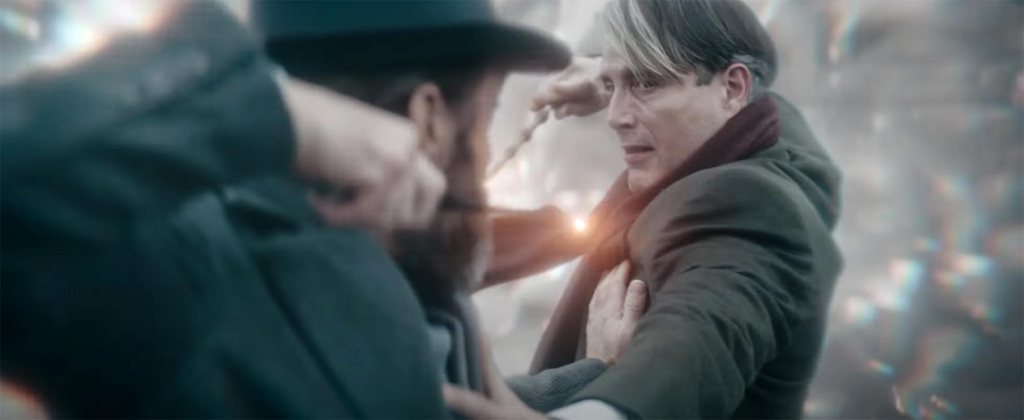
Cast: Eddie Redmayne (Newt Scamander), Jude Law (Albus Dumbledore), Mads Mikkelsen (Gellert Gindelwald), Ezra Miller (Credence Barebone/Aurelius Dumbledore), Dan Fogler (Jacob Kowalski), Alison Sudol (Queenie Goldstein), William Nadylam (Yusof Kama), Callum Turner (Theseus Scamander), Jessica Williams (Lally Hicks), Victoria Yeates (Bunty), Richard Coyle (Aberforth Dumbledore), Poppy Corby-Tuech (Vinda Rosier), Fiona Glascott (Minerva McGonagall), Katherine Waterston (Tina Goldstein)

If the House of Potter teetered after the not-very-good Crimes of Grindelwald, it collapsed with the release of The Secrets of Dumbledore to waves of indifference. It’s proof that if you super-size your series not because you have a genuine story reason but because you think a fat goose will lay even more golden eggs than a thin one, you’ll eventually end up with a dead obese goose.

A year or something has passed and Dumbledore (Jude Law) and Grindelwald (now Mads Mikkelsen, thank God) continue circling, neither quite willing to end their ‘friendship’. Grindelwald is determined though to seize control of the Wizarding World by manipulating the election for the Supreme Leader to launch his anti-Muggle war. Dumbledore recruits a team, led by Newt (Eddie Redmayne), to stop him – but with Grindelwald’s new power to see the future, seized from a Fantastic Beast, Dumbledore can’t tell anyone his plan (plus ca change). Meanwhile Credence (Ezra Miller), is groomed by Grindelwald to destroy Hogwarts’ favourite professor.

The Secrets of Dumbledore may be flabby, over-extended and frequently meander down alleyways and byways that feel frustratingly pointless – but it is a better film than The Crimes of Grindelwald. Its problem is, it’s nowhere near good enough to win back the massive loss of audience faith that complete shit-show (combined with all sorts of social media storms) caused.

The Secrets of Dumbledore’s major positive is the arrival of Mikkelsen as Grindelwald. Replacing Johnny Depp (and his “personal problems”), he gives the film an automatic upgrade. If you want an arrogant, sinister, manipulative, but also dashing, romantic villain, why in God’s name wouldn’t you have cast Mikkelsen in the first place? The film is more daring on the Dumbledore and Grindelwald relationship than any other Potter film before – we even hear the “L” word.

Anything focused on these two – either together or alone – is invariably the good stuff. The two of them (Jude Law is equally good) semi-threatening, semi-reminiscing, semi-flirting in a café at the start is the finest scene, and the genuine regret between them is rather well done. Rowling also writes in, pretty much direct from the final book, the entire tragic Dumbledore-backstory reveal which the final Deathly Hallows film bizarrely cut (perhaps she thought it was as terrible an idea as I did?). Law plays this little moment to perfection.

You end up wishing the film was a more personal story between these two. Unfortunately, we get this over-inflated mess. The most bizarre thing about Secrets of Dumbledore is that simultaneously loads is going and the plot feels incredibly slight and mostly pointless. Frequently events bend down alleys or fizzle out into pointlessness. Far from being full of secrets, Dumbledore and his brother fall over themselves to share their secrets at every opportunity to keep the plot moving forward.

After the money-grabbing decision to squeeze as much cash out of this franchise (five movies!) as possible, The Secrets of Dumbledore feels like it has taken on a lot of padding to get up to length. Rowling, to put it frankly, isn’t that great at structuring a screenplay (it’s telling Steven Kloves was bought back to help bang this into shape). It’s a reminder it’s a very different set of skills telling a coherent story, full of twists, turns and universe building over 2 hours compared to 700 pages.

Grindelwald’s plan involves the complex and poorly explained, killing and resurrection of a magic goat. There is a lot of talk of “the people getting a say” in the election: an election where no one gets a say, since the leader of this civilisation is chosen on the whim of said magic goat. Our heroes go to the German Ministry of Magic solely, it seems, so Newt’s brother can be captured. A “spy” is planted among Grindelwald’s forces who does no spying, has parts of his memory wiped for no reason and then rejoins the heroes. Two characters communicate via a magic mirror, even though they’ve never met and couldn’t know who the other is. A labyrinthine plot about an assassination has so many hastily explained twists I genuinely have no idea what was going on. At regular intervals the heroes reconvene with Dumbledore, like players in a video game being given a brief for the next level.

Even more than the last one, the “Fantastic Beasts” idea feels like a burden. They’d have done better just starting a new “Dumbledore vs Grindelwald” franchise. The plot sort of revolves around a poorly explained magic animal. Theseus is whacked in a prison guarded by a deadly scorpion. In a bizarre tonal zig-zag, Newt distracts this beast’s scorpion-y minions by doing a funny dance – interrupted every so often by it grabbing a “political prisoner”, eating them alive and then spitting out the half-chewed corpse for its minions to consume. Remember when this felt like this series was going to be about the charming adventures of a naïve zoologist?

The legacy characters stumble through with little to do. Redmayne’s Newt is a character so bizarrely ill-conceived as the lead in a prelude-to-war series he’s often quietly relegated to side missions. Dan Fogler’s Jacob and Alison Sudol’s Queenie continue a nonsensical emotional journey (she, let’s not forget, defected to Grindelwald – the man who wants to destroy Muggles – because she wasn’t allowed to marry a Muggle). Katherine Waterston’s Tina is relegated to a cameo.

Then there’s Credence. This character, the central Macguffin of the last two films, is here relegated to the role of heavy whose long-hyped clash with Dumbledore is a little more than a dull one-sided scuffle. It’s hard not to think the character has been reduced to glorified extra due to the increasingly toxic public image of Ezra Miller (has there ever been a franchise more unlucky in its casting?). But the unceremonious dumping of this entire plotline so crucial to films one and two hammers home the feeling that there is no consistent planning going on here at all.

I said in Crimes of Grindelwald this franchise in need of a new creative eye. David Yates directs his seventh Potter film and, while he does nothing wrong, I don’t think he’s got a single new idea in the tank. The look and feel of this film, its visuals, the effects, its tone, its colour palette – all of it is now achingly familiar, making it feel even more like something tipped carelessly off a production line. It also looks shockingly over-processed: I know it’s about magic but by Merlin’s Beard nothing looks real. Does it feel magic to be back at Hogwarts? No, it looks like a freaking CGI nightmare.

The lack of freshness surely contributed to its death at the box-office. No one seems to have stopped and asked “would someone who hasn’t been working on Potter full time for over 12 years care about this?”. I don’t think they did. If you work the Golden Goose night and day, demanding it produces an egg a day, eventually it will keel over. It didn’t have to be like this, but there is more chance of Depp returning than anyone making the next two films in this misbegotten series.

Nomadland (2020)

Nomadland (2020)

Poetic and surprisingly moving, this Best Picture winner is light on plot but deep on meaning

Director: Chloé Zhao

Cast: Frances McDormand (Fern), David Strathairn (Dave), Linda May, Charlene Swankie, Bob Wells, Peter Spears, Derek Endres

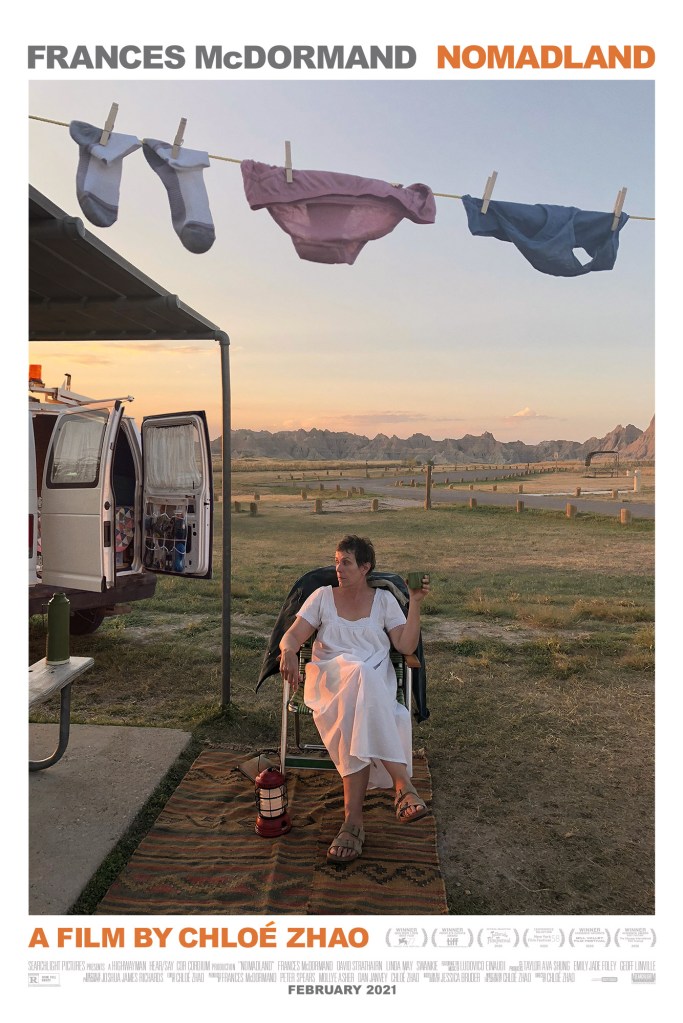
We all have ideas about what life should look like in the 21st century. Settled job, dream home, the rooted life. It’s what we are expected to be working towards – but it’s not for everyone. Nomadland, Chloé Zhao’s Malick-influenced road movie explores the lives of those who decide to live off that beaten track. The modern nomad, who chooses flexibility to move their home from place to place and don’t want to be tied down by bricks-and-mortar. It makes for a meditative, soulfully poetic film with a quietly mesmeric power.

Fern (Frances McDormand) is recently widowed, childless and has lost her job after the gypsum plant in Empire, Nevada closes. But, far from down-hearted, Fern is determined to lead a new life without the fixed commitments of her old one. She sells most of her possessions, kits out a van as a travel home and begins to drive across the country, taking seasonal jobs as and where she stops. She finds herself part of a warm and supportive community of nomads, who help to learn how to flourish in this unconventional home life.          

Nomadland winning Best Picture is as close as the Oscars have come to giving an award to Terence Malick. It’s hard not to feel his influence over the camera’s languid worship of the beauty of the Badlands, or its characters quiet searching for higher in life, via a communing with nature. Zhao’s film is a very effective and surprisingly moving character study, with only the smallest smidgen of a plot, but full of feeling. Radiantly shot by Joshua James Richards, it finds an orange-tinged beauty in a dawn and dusk and tiny moments of joy in rain falling in your face. All contrasted with the dull oppressiveness of buildings, those four walls shutting out nature.

Zhao’s film goes a long way in challenging neat assumptions we might have about this lifestyle. “I’m not homeless I’m houseless” Fern states and she politely – but firmly – turns down well-meaning offers of charity. The decision to move from place-to-place is not one enforced by poverty or failure. Instead, this is a rich, vibrant, supportive community that looks out for each other and share a legitimate (and refreshing) view of the world. Who says you need to spend your life chasing the dollar and building up a debt to have a fixed slice of real-estate you can sort of call your own?

This is particularly true in our post-recession world. Nomadland starts with the final collapse of an industrial community, now a ghost town. Many of the nomads find seasonal work that is often manual and low-skilled. Fern’s first job (of many) is working at an Amazon dispatch location, where jolly team leaders burst with enthusiasm met with smiling indifference by the (often older) staff. Fern’s travel is shaped around moving to key locations for seasonal work – Amazon, a campsite, a short-order chef job, beet processing… The economic situation is poor, but this is a way of playing the system to get a higher level of freedom, without debt or financial pressures.

It’s a key subject of a talk given to fellow nomads by Bob Wells, an influential advocate of the nomad life-style (one of any people playing versions of themselves). It’s part of a series of events at a nomad event – a sort of convention – where people gather to share experiences, advise and life-hacks. Ever needed to know how to change a tyre or what size bucket you should use for your built-in toilet? Wonder no more! On the road people come together in a way they never would in more regular life. With everything transient and nothing fixed, friendships and connections are more intense, constantly in that first glow of excitement.

That’s the pay-off of choosing this lifestyle. Everything is transient. Close friendships form, but you might not see the other person for months at a time. While phones help you to keep in touch, day-to-day you see completely different people from place-to-place. It will never be completely clear where you might be to your family. However, the short-lived intensity of connections can lead to a closeness and intimacy that might otherwise take months – a friend of Fern’s confides she has terminal cancer but regrets nothing, with a warmth and trust that would normally takes years to form not weeks.

It’s implied as well that the more short-lived intensity of friendships fits more with what the slightly taciturn and guarded Fern wants from life. Frances McDormand makes her friendly, ready with a smile, good company – but she is always slightly reserved and guarded. She will give sympathetic ears and invite confidences. But she is also a woman determined to live by her own rule. Having lived most of her life in one place in a happy marriage, a conversation with her sister (who bails her out with a loan to repair her van) reveals she was always prone to not look back when a decision was made. It’s the same with deciding to live on the road as moving to Empire – Fern knows her own heart and mind, and will fully commit to that.

This is despite temptations, the main one she faces being David Strathairn’s (the only other professional actor in the film) Dave, a fellow nomad who makes no secret of his romantic interest in her. Sweetly played by Strathairn, Dave pursues Fern and dangles the possibility of a more fixed and traditional life. They are close, but Fern has lived that life of marriage and rejected already the idea of a family. And, as McDormand makes clear in her soulful eyes, if that life was ever on the cards, it would have been with her husband not this new man, nice as he is.

Nomadland, like Fern, can see the dangers and problems. A van breaking down in the middle of nowhere is a major danger, a broken plate a potential disaster – Fern painstakingly reassembles it, not wishing to spend the money to replace it. Low temperatures and bad weather can make it uncomfortable – although she (smilingly) rejects an offer from a garage owner to sleep inside. But it also understands living this lifestyle is a legitimate choice, filled with rich possibilities. You only need to see Fern joyfully travel to the coast or get wrapped up in the embrace of the vibrant community she finds on the road to see that you could do immeasurably worse with your life.

Zhao’s film has a documentary realism to it, that comes from its deep immersion in real nomad communities. It makes copious use of real nomads playing versions of themselves, giving a rich feeling of authenticity to every moment. It also means we gain a real understanding of the idea that goodbyes are never final in this world, that there is always the prospect of seeing someone again “down the road”. The film’s poetic empathy, its warmth and the vibrant humanity of its characters makes it film that creeps up on you and has a surprising, but profound, power.

Avatar: The Way of Water (2022)

Avatar: The Way of Water (2022)

Cameron’s film makes a huge splash despite its soggy plotted, flooded run-time

Director: James Cameron

Cast: Sam Worthington (Jake Sully), Zoe Saldaña (Neytiri), Sigourney Weaver (Kiri Sully), Stephen Lang (Colonel Miles Quaritch), Kate Winslet (Ronal), Cliff Curtis (Tonowari), Jamie Flatters (Neteyam Sully), Britain Dalton (Lo’ak Sully), Timothy Jo-Li Bliss (Tuk Sully), Jack Champion (Spider), Bailey Bass (Reya), Filip Geljo (Aonung), Duane Evans Jr (Rotxo), Edie Falco (General Frances Ardmore), Brendan Cowell (Captain Scoresby), Jermaine Clement (Dr Ian Garvin)

After thirteen years it finally arrived. The sequel to a film that seemed to leave no cultural impact, Avatar. People were convinced it would flop. But they say that about all Cameron films. And, if anyone should have learned anything from Terminator 2, Titanic and Avatar it was don’t bet against Cameron. If Avatar 2’s purpose was to make an awful lot of money, it has succeeded in every level. If its purpose was to make a strong and entertaining film… I’m not so sure.

About the same amount of time has passed on Pandora and Sully (Sam Worthington) and Neytiri (Zoe Saldaña) have raised a family of four children, including Kiri (Sigourney Weaver) born from the avatar of their friend Grace. They have also raised Quaritch’s son ‘Spider’ (Jack Champion) among them. Then the humans return… a bloody war begins, with Sully leading a guerrilla campaign. The company resurrects Colonel Quaritch (Stephen Lang) as a Na’vi super soldier to fight on their own terms. After Spider is captured, Sully and his family flee to live among the Metkayina, a sea-living tribe. But they can’t escape the war and its dangers.

As Avatar: The Way of Water is garlanded with praise and Oscars nominations, I feel like we are all part of a wide conspiracy of silence. So desperate are so many to keep viewers handing over their cash at the box office, that a film completely designed to be seen on the big screen (and this really is) is being praised to the skies by some as a masterpiece. It is not. It’s not even the best Avatar film. Instead, Avatar 2 is a visually impressive but hellishly long, predictable re-tread of the first film that stuffs the eyes with CGI wonders but leaves not a jot for the heart.

I was reminded part way through the overlong runtime that Cameron once made imaginative, thrilling sequels that completely reset the table. Aliens reinvented a haunted house horror movie as a pulsating action film. Terminator 2 turned a chase story into ramped up family story that mused on destiny. Avatar 2… basically tells exactly the same story, but with a familiar generational family conflict storyline and lots of water. It has the same environmental messages and anti-corporation vibe. When this lands, it works. A whale hunt is shot in terrifying detail, a giant mother whale creature brutally trapped and eviscerated for a small cannister of fluid extracted from its brain. This is also probably the most effective sequence and the one that moved me the most.

The effects do look impressive. There is no denying that, and the motion capture that turns the actors in blue giants is totally convincing. These Na’vi look and feel like flesh and blood beings. The visual imagination that creates this world, with its sweeping vistas and eclipse-kissed sky not to mention the myriad exotic creatures that populate it are stunning. If Avatar 2 deserves praise it’s for that. Pretty much every single frame looks like it cost a million dollars.

Unfortunately, it often also has a sheen of unreality. I became desperate for something real to appear on screen. But when only one character out of ten is not an effect, you don’t get much of that. On top of which the decision to film in slick, blur-free 48 frames per second means everything glides across the screen with the perfect-focused quality of a videogame. Don’t know what I mean? Try looking at things around you while moving your head at moderate speed. What do you see? Blur. Blur is real. The perfect focus of this world clues you up in every second that nothing in it is real.

The lack of reality eventually starts to remind you of The Phantom Menace. In fact, the only thing really separating this from that disaster is that James Cameron is a master director of epic, visual cinema. The film-making here, as a technical exercise , is beyond reproach. And few directors shoot action scenes with as much skill and raw excitement as Cameron. I can’t fault anything about that, even while I struggled to care as they dragged out over a huge chunk of time.

But Cameron’s weakness as always been the writing. He is a flat and unimaginative writer of dialogue – the Na’vi dialogue is awful flicking from ponderous (“We Sully’s stick together. That is our greatest weakness. And our greatest strength!”) to painfully bad (the number of “Bros” and “Dudes” from the Na’vi teenagers is fist-bitingly awkward, like your Dad trying to be down with the kids).

That’s not mentioning the fact that it’s so similar to the first film. The earth people return, war starts and eventually our heroes travel to a new part of Pandora where, just like Jake in the first film, they go through a training montage to learn the “way of the water”. This takes up most of the middle act. That’s not forgetting the huge number of themes and characters reshuffled and represented.  We build towards a clash very similar to the first film at the end. Nothing here feels fresh, everything feels like a retread. Our villain is resurrected as a Na’vi but, despite almost being defined by his racism in the first film, he doesn’t bat an eyelid at this.

There is a vague attempt to transfer Sully’s “torn between two cultures” storyline to Spider. But this character remains terminally under-developed and the film’s attempt to explore the father-son dynamic between him and Quaritch is so rushed, you wonder if Cameron was interested (odd since it’s crucial to the final act). Instead, we get a huge amount of generational clash in the Sully family, with Jake butting heads with his second son who struggles with being “the spare” (oddly appropriate right now), a hot head who gets everyone in trouble. These play out with a reassuring predictability, so much so that if I asked you to guess the fates of those involved you probably could.

There are bizarre logic gaps. Quaritch and his soldiers have been resurrected to destroy the Na’vi resistance – but instantly drop this for a personal vendetta against Sully (no one seems to care about the resistance after the first half an hour). When Spider is captured, Sully and gang don’t give a damn or even consider rescuing him. Sully doesn’t want to put the forest Na’vi in danger by staying – but doesn’t care about moving that danger to the water people.

Above all it’s frankly hellishly long, fully of trivial culture clash stuff and just the fact that the people in at are giant and blue or that it looks fabulous doesn’t make it good. Instead, Avatar 2 is a re-tread that feels like its treading water, spinning plates and repeating rather than reinventing. I’d rather watch the original again which, while it wasn’t inspiring, at least felt new.

All Quiet on the Western Front (2022)

All Quiet on the Western Front (2022)

War is Hell in this impressively made but strangely unoriginal film, that looks the same and carries the same message as countless others

Director: Edward Berger

Cast: Felix Kammerer (Paul Bäumer), Albrecht Schuch (Stanislas “Kat” Katczinsky), Aaron Hilmer (Albert Kropp), Moritz Klaus (Franz Müller), Adrian Grünewald (Ludwig Behm), Edin Hasanovic (Tjaden Stackfleet), Daniel Brühl (Matthias Erzberger), Thibault de Montalambert (General Ferdinand Foch), David Striesow (General Friedrichs)

Perhaps no front-line fighting in history was more hellish than the mud-splattered sludge of death that were the First World War Trenches. Millions of men were fed through an industrial mincer of death, all for remarkably little gain. It was a tragedy born of ambition and pride. It’s cost on the young was beautifully captured by Erich Maria Remarque’s novel (an adaptation of which was one of the first Oscar winners) and it is bought to the screens again in this visceral German adaptation.

Paul Bäumer (Felix Kammerer) and his friends are naïve young men excited to serve in Spring 1917. Little do they know the blood-soaked, brutal reality of war. It’s soon thrust upon them when their first night in the trenches coincides with a catastrophic artillery attack. Skip forward a year and its November 1918. While Germany’s lead negotiator Matthias Erzberger (Daniel Brühl) tries to end the war, Paul and his mentor “Kat” (Albrecht Schuch) just hope to survive. But is there any hope?

All Quiet on the Western Front is raw, bloody and unflinching in its glance at the horrific realities of war. Shot with a cinematic beauty by Edward Berger that turns the mist filled world of no-man’s land into a sort of dreamscape that tips into a nightmare, it leaves no doubt about the brutal cost of war. Bodies are torn apart by explosions, shredded by bullets (even dead ones). Hand-to-hand combat is ruthless and there is not a jot of quarter given on any side. Everything is coated in a sheen of mud and blood, with dying men desperately gulping filthy water or left slumped where they fall.

The after-effects of war are horrifically shown. On their first night one of Paul’s friend is literally shredded by mortar fire. Bodies left on no-man’s land are peppered with bullets. The remains of a soldier is blasted out of his uniform, left hanging several feet up a tree. Paul and Kat discover a missing regiment of young recruits dead in an old factory, having removed their gas masks too soon. Tanks emerge from the mist, setting the ground shaking, rats fleeing before them, spewing death from their machine gun turrets, crushing screaming men under their tracks.

This is actually a fairly loose adaptation of the novel. The original prided itself on its lack of specifics: it’s never quite sure when or where it happens other than in the trenches. The soldiers fight in brutal battles in unnamed locations and simply live a day-to-day existence. This version make everything very specific: November 1918. Sub-plots around the armistice negotiations and the unwillingness of a die-hard Prussian General (a vilely arrogant David Striesow) to accept defeat expand the film beyond the novel’s original scope. However, this expansion never feels fully explored and at times detracts from the film’s richer, more intimate focus on the soldiers.

Berger’s film perfectly captures the sense of these boys being fed into a huge industrial meatgrinder in a cycle of death. The opening sequence follows a young soldier. He trembles with fear before going over the top, aimlessly fires his bullets and then grabs his spade to continue the charge and bludgeon a soldier. Cut to black before we follow the progress of Heinrich’s uniform. It is removed from his dead body, carted back to Germany, washed, repaired and then handed over to Paul as he signs up. Paul questions the name-tag inside: “Must have been too small. Happens all the time” the recruiting officer says, ripping it out. It’s all a production line.

Paul soon learns the truth. Felix Kammerer is excellent as this sensitive, enthusiastic young man (forging his father’s signature so he can join up) who sheds his innocence to become a battle-hardened warrior, succumbing to a mechanical, merciless violence in combat. He kills without hesitation and when guilt arrives – such as his killing of a French soldier in a fox hole – it leaves little long-term impact, so deadened has he become. Equally good is Albrecht Schuch, humane and worldly-wise figure as Kat. The bond – part brotherly, part father-son – is the film’s most affecting personal beat, and its most effecting scene involves Paul reading the illiterate Kat his mail.

There is much to admire here. But yet, while a technical triumph and immersive experience (even its score plays out with the organ-led heaviness of an artillery attack), I was less impressed with it than I expected. Perhaps that’s because it does or says nothing new. The original film was made by many people who were actually in the trenches. This film was made by people who grew up watching movies about wars. It’s frames of reference are subtly different, although its intentions are the same. Maybe that’s why I find it less affecting and less shocking than a film made 100 years ago.

For all its technical skill, the film is a continuation of visual grammar and thematic ideas established in countless films before. The blood-spattered immediacy of Saving Private Ryan. Tracking shots that remind you of 1917 and Paths of Glory. The on-the-streets fury of Black Hawk Down. The rumbling soundtrack of Dunkirk. It tells us War is Hell: but nothing else. Maybe that message is enough and it deserves repeating. But when the film expands the original like this, you want more.

The inclusion of the armistice works against it. The time jump means we lose any sense of the slow disillusionment of these men. Several key moments from the book – most notably Paul’s brief return to a home he can no longer relate to – have been stripped out. Setting the film in the last week of the war leads to a predictable ending that feels like its straining for even more pathos – of course there will be key deaths in the final minutes of the war. A more daring film might have looked more at how a harsh armistice and dark mutterings of betrayal led so many of these young men to hurl Germany back into war only twenty years later.

All Quiet on the Western Front is powerful, but its power is one of reiterating a familiar message. Berger’s film is wonderfully made but only follows confidently in the footprints of other (better) films. It avoids developing its message or context further and it’s expansion of the book’s plotline waters down the personal stories that made it so affecting. It’s grand, cinematic and powerful – but could have been more.

Tinker, Tailor, Solider, Spy (2011)

Tinker, Tailor, Solider, Spy (2011)

We’re going on a Mole Hunt: Le Carré’s finest book is boiled down into an atmospheric and masterful spy thriller

Director: Tomas Alfredson

Cast: Gary Oldman (George Smiley), Colin Firth (Bill Haydon), Tom Hardy (Ricki Tarr), Mark Strong (Jim Prideaux), Ciaran Hinds (Roy Bland), Benedict Cumberbatch (Peter Guillam), David Dencik (Toby Esterhase), Toby Jones (Percy Alleline), John Hurt (Control), Kathy Burke (Connie Sachs), Roger Lloyd-Pack (Mendel), Svetlana Khodchenkove (Irina), Konstantin Khabensky (Polyakov)

Anyone taking on this, Le Carré’s finest novel faced a tough challenge. After all, arguably the definitive version already exists: the masterful, slow-burn, 1979 TV adaptation (one of my favourite films ever) starring an Alec Guinness so perfect as the rotund, inscrutable spy-master George Smiley that Le Carré stated he could no longer write the character without thinking of him. I’ve long been nuts for Tinker, Tailor: I rushed to the cinema to see this with an equally keen-friend about five days before my wedding (on my wife-to-be’s birthday!) because I was looking forward to it so much. (Despite this the wedding went ahead). It can’t match that Guinness version – but it runs it close.

It’s the height of the Cold War, and the respected head of the British Intelligence Services (‘the Circus’) Control (John Hurt) is forced out, along with his deputy George Smiley (Gary Oldman) after a rogue mission in Hungary goes disastrously wrong. Over a year later, Smiley is secretly recalled to lead a mole hunt. Someone at the top of the service is a Russian agent – but who? New head Percy Alleline (Toby Jones)? Or one of the deputies – Bill Haydon (Colin Firth), Roy Bland (Ciaran Hinds) or Toby Esterhase (David Dencik)?

The first inspiration here is the screenplay. When I heard the film was two hours long I was stunned: the TV series unfolded over nearly seven hours! But the script, by Peter Straughan and the late Bridget O’Connor (who tragically died of cancer during it’s making) is a masterpiece. It brilliantly and skilfully compresses and restructures the novel, boiling down scenes to their core. But yet, it never feels rushed. The script creates composite scenes – most brilliantly a flashback to a Circus Christmas party – which allows a vast range of sub-plots and characters to simultaneously unfold.

Alongside this, the film is superbly, atmospherically directed by Tomas Alfredson. Alfredson brings a sharp, outsider’s view to this public-school nightmare turned espionage hub. These are posh boys, running an exclusive club, which plays by punishing rules. Everyone constantly spies one everyone else and there is no moment of privacy. Alfredsen brilliantly explores the social and emotional impact of spying, trapped within a grim and oppressive 70s mileu of dirt, beige, fear and loneliness.

The film is brilliantly designed, capturing a vast array of 70s designs and shades. The Circus is an industrial office – with its centre piece an orange lined, sound-proof room. Streets are lined with political graffiti – at one point we see “The Future is Female” a nifty comment on the all-male institution we are watching. Communist Hungary is a post-industrial slum, hotel rooms crowded with papers, cigarette smoke and overflowing ash trays.

At the centre is Gary Oldman, simply brilliant as Smiley. Controlled, measured and deploying only as much energy is needed, Smiley adds a hint of Guinness to his voice and always seems in control. But this lugubrious Smiley bubbles with tension, driven by twin demons. The first is Karla, the Russian spy-master Smiley let slip through his fingers years ago, the subject of a maudlin late-night recollection to his assistant Guillam. Even more important is his wife Ann, the betrayer Smiley still loves to distraction, a half-sight of her enough to make him stumble and lose breath. We never see either of these clearly in the film, reflecting their status as the only characters Smiley never understands and can’t make cool, calm, passion-free decisions about.

Cold-eyed reason guides everything else he does. Oldman’s Smiley may be grandfatherly, softly-spoken and controlled, but he’s as ruthless (if not more so) than everyone else. Smiley is precise and patient. There is a beautiful character establishing moment: Smiley, Mendel and Guillam are in a car bothered by a wasp. Guillam and Mendel flap with futile energy: Smiley waits and then lowers the window slightly at the perfect moment to let the wasp fly out. It captures in microcosm Smiley’s investigation. But he’s not afraid to use force: quietly threatening Dencik’s trembling Esterhase with deportation (not even flinching as a plane lands behind him), ruthlessly mining witnesses for evidence and verbally lashing out bitterly at the mole.

Alfredson’s film zeroes in on much of the emotional impact on spying. Smiley is a man slightly lost in the world outside of spying: retired, he seems adrift walking the streets, swims alone, sits at home in his suit. He’s so deactivated he doesn’t even speak for the first 18 minutes of the film, when he is recalled to life. Smiley has suppressed his emotions so completely only the shadow of his wife can move him. His home is a strange shrine, so much so he even keeps the gifts her lover gives her.

Each of the characters suffers under their burdens, and the demands on them for secrecy and isolation. Mark Strong’s Jim Prideaux buries himself in guilt in a caravan and forms a friendship with a young boy he later realises he is crafting into the same secretive man he is. Guillam is quietly ordered by Smiley to end his relationship with his boyfriend and acquiesces in private tears. Connie Sachs lives in retirement like a mad woman in an attic, cradling her memories. Control dies alone in a hospital bed. Later the Mole clings to having “made his mark” to supress his guilt, while a man whose career is ruined walks into oblivion blank faced not even noticing the rain around him.

Tinker, Tailor, Soldier, Spy is full of moments like this, the high-price of dogged, dedicated work like spying. Alfredson’s coolly, beautifully shot film (by Hoyte van Hoytema) with its lyrical score by Alfredo Iglesias is a masterpiece of tone. This is a dark, dangerous world and we are constantly reminded of it, in between the muttered meetings in board rooms and dark corriders. Tom Hardy’s (wonderful) Ricki Tarr and Mark Strong’s deeply emotional Prideaux are spies-on-the-ground, face-to-face with dangers. Theirs is a world of brutal throat-cuts, eviscerations in a bath and sudden executions. The decisions played out in rooms like that orange-lined sound-proof office with its methodical, intricate ship’s clock, lead to death and violence.

The film is stuffed with beautifully composed shots and brilliantly edited (Dino Jonsäter’s cuts frequently carry us over brilliantly over transitions and segues that streamline the narrative perfectly). Despite cutting back and forth over multiple timelines, it’s always clear when we are (an ingenious device sees Smiley change his glasses in retirement, instantly grounding us in the timeline based on the pair he is wearing). The Christmas party scene – exactly the sort of bizarre public-school irreverent piss-up (where spies who fight night and day to destroy the USSR raucously sing communist songs with a Lenin-dressed Santa) is a superb distillation of character and plot beats and becomes, in many ways the emotional pivot of the movie. It’s a very inventive addition.

The film assembles a superb cast. Oldman, of course, leads from the front but there is not a weak turn in the cast. Hardy is gritty, bitter and jumped-up, Cumberbatch holding his tension down under professionalism, Strong drips quiet grief, Firth swaggers with superb, assured insouciance, Hurt is the book’s arch-spy-master come to life, Jones is full of preening pride, Burke lost in memories. If I’d like the film to be longer for any reason, it would be to see more of these actors.

Full of moody, seventies beauty and creeping paranoia, it’s also crammed with beautifully judged lines and incidental moments from the book. Alfredson’s atmospheric film has a profound emotional understanding of the cost of this life of isolation and paranoia. It took a couple of viewings, but this emerges from the shadow of my favourite TV series.

Paddington (2014)

Paddington (2014)

Michael Bond’s lovable bear makes an almost perfect screen-transition in this heart-warming tale

Director: Paul King

Cast: Ben Whishaw (Paddington Bear), Hugh Bonneville (Henry Brown), Sally Hawkins (Mary Brown), Madeleine Harris (Judy Brown), Samuel Joslin (Jonathan Brown), Julie Walters (Mrs Bird), Nicole Kidman (Millicent Clyde), Peter Capaldi (Mr Curry), Jim Broadbent (Samuel Gruber), Imelda Staunton (Aunt Lucy), Michael Gambon (Uncle Pastuzo), Tim Downie (Montgomery Clyde)

If there is one thing we need in troubled times, it’s kindness. Few characters are as overflowing with warmth and decency as Michael Bond’s Paddington Bear. First introduced in 1958, the lovable marmalade-consuming little bear all the way from darkest Peru is never anything less than kind and decent – even as the well-meaning bear gets himself into a string of catastrophes.

Paddington is one of the most universally beloved figures from post-War British culture – surely no surprise he was the perfect tea-party guest for that other beloved icon of the same period, the Queen. The pressure was on for a Paddington film – could it match the tone of the books? The answer was an over-whelming yes. Paddington is an endlessly heart-warming triumph, which it is impossible to watch without a warm glow building inside you, and a goofy smile on your face.

Explorer (Tim Downie) discovers a species of intelligent, marmalade-loving bears in darkest Peru. Forty years later, after a terrible earthquake, a young bear travels to find a new home in London. He meets the Brown family – overly cautious father Henry (Hugh Bonneville), caring Mary (Sally Hawkins) and their children Judy (Madeline Harris) and Jonathan (Samuel Joslin) – who take him into their home and name him Paddington after the train station where they found him (his bear name being unpronounceable). Paddington (Ben Whishaw) works hard to settle in with his new hosts – but danger looms from an ambitious Natural History Museum taxidermist (Nicole Kidman) who longs to make Paddington the centrepiece of her collection.

Directed with a great deal of unobtrusive flair by Paul King, Paddington is a truly endearing film about the triumph of opening your heart to strangers. The Brown family don’t realise it, but they are in need of a burst of kindness in their lives to help bring them together. They get it in spades with Paddington. The film captures perfectly the little bear’s personality. This is Paddington exactly as you remember him: polite, decent, kind and hilariously accident-prone. King’s film also gets the tone exactly right – there are no pop-culture references or rude gags (although there are a few subtle double-entendres of a sort) and the film is set in a timeless mix of 1950s London and today.

The film’s CGI Paddington is gorgeously designed – a wonderful rendering of the bear’s appearance tailored with more realistic fur, but still the same as the book– and perfectly voiced by Ben Whishaw. Whishaw was a late replacement – Colin Firth voluntarily withdrew, as he felt his voice was ill-matched to this naïve, gentle young bear – but his light and gentle tones convey all the warmth you need. It’s a superb performance, humane, kind and deeply funny, and so well suited you suddenly realise in your head Paddington always sounded like this.

King creates a series of gorgeously handled set-pieces to showcase Paddington’s possibilities for well-intentioned mayhem. On his first night in the Brown household, he duels with toothbrushes, mouthwash, toilet flushes and showers, culminating in flooding their bathroom with a swimming pool’s worth of water. He gets mummified in sellotape, slips up in the kitchen and causes several marmalade-sandwich involved disasters (most hilariously a marmalade baguette-pneumatic tube mix-up). But he always means well: a caper-filled set-piece through the London streets sees Paddington finally collide with a man he’s trying to return a dropped wallet too – allowing someone we’ve known all along to be a pickpocket to be apprehended by the police.

The Brown family’s home – already a beautifully designed dolls-house made real, with a tree blossom mural that changes to reflect the mood of the scene – comes to life with Paddington in it. (Watch how the colours of their clothing change depending on how much Paddington is part of the family or not). Mary (a wonderfully warm Sally Hawkins) is already eager for him to stay. Judy and Jonathan (superbly sparky performances from Madeline Harris and Samuel Joslin) are quickly won over by him. It’s only Mr Brown – a performance of perfectly judged fussy, pinickity, rule-bound caution and stuffiness by Hugh Bonneville which flourishes into something warmer – who is unsure. But then this is a man so obsessed with his risk analysis job, he prevents his children from doing anything (34% of all childhood accidents happen on the stairs!) and has forgotten how to have fun.

Watching Mr Brown slowly warm to Paddington is a huge part of the film’s charm and warmth. Who could imagine the man who tries to leave him at the train station (and urge his family not to catch the bear’s eye, muttering “stranger danger”) would later be dressing up as a Scottish cleaning woman to help him infiltrate the Geographer’s Guild building? (This sequence is a little comic physical and verbal tour-de-force Bonneville.) It’s a larger part of the film’s wider – and most rewarding – message: the importance of treating migrants to this country with respect and care.

The pro-migration message is throughout the film – and the film is a fabulous reminder to many of what we have gained from those who have come to this land from across the seas, from NHS staff to political leaders to entertainers. Paddington’s journey to London – in a small boat, then sneaking past customs – is all-too-familiar.  Next door neighbour Mr Curry (a comically ingratiating Peter Capaldi) voices many of the “concerns” of anti-immigrant communities (let one bear in and who knows how many will follow?). Even Mr Brown voices worries about bears telling you sob stories to win your trust. The important message here is the value migrants bring us. A recurring calypso band reminds us of parallels with the Windrush generation. It’s not spoken but Jim Broadbent’s antique shop owner’s accent and memories of arriving on a train in London as a child clearly mark him as a Kindertransport child. Paddington has a subtle and truly important message for people: when we open our arms to people, we gain as much as they from the exchange.

Paddington throws in a few moments of darkness: the shock death of Uncle Patuszo is surprisingly affecting and Nicole Kidman’s taxidermist is possibly the scariest villain you’ll see in a kid’s film this side of the child catcher. But in some ways this enhances the warmth even further. By the film’s end you’ll feel your own life has been enriched by the small bear’s presence as much as the Brown’s has. We need him in times like this.