Category: Film about friendship

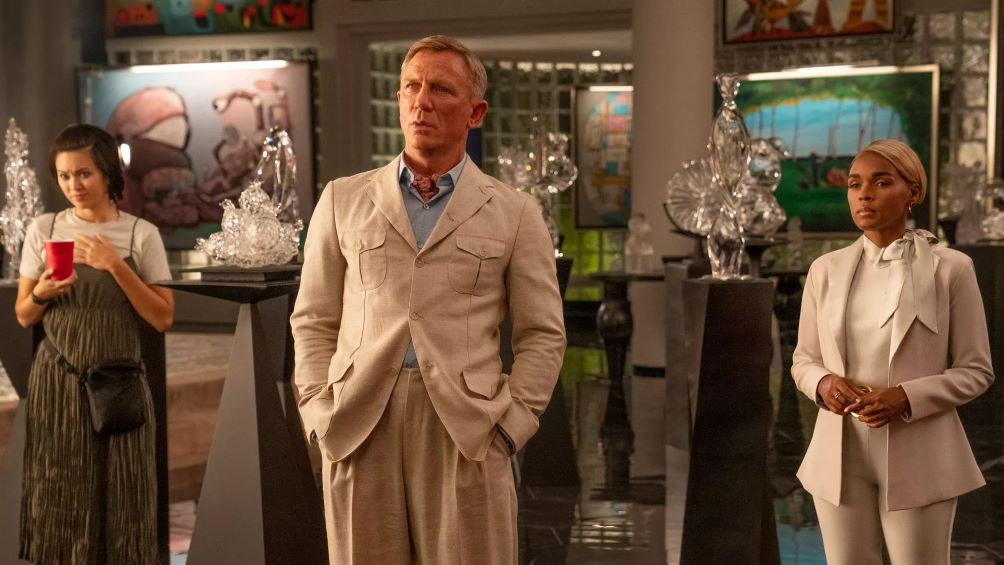
Glass Onion: A Knives Out Mystery (2022)

Glass Onion: A Knives Out Mystery (2022)

Johnson’s playful Agatha Christie tributes continue to delight in this affectionate homage

Director: Rian Johnson

Cast: Daniel Craig (Benoit Blanc), Edward Norton (Miles Bron), Janelle Monáe (Andi Brand), Kathryn Hahn (Claire Debella), Leslie Odom Jnr (Lionel Toussaint), Kate Hudson (Birdie Joy), Dave Bautista (Duke Cody), Jessica Henwick (Peg), Madelyn Cline (Whiskey), Noah Segan (Derol)

Johnson’s Knives Out reminded Hollywood that people love a good whodunnit. Netflix purchased two more films from the franchise after the first’s success: Glass Onion is the first, a wild, enjoyable and deft mystery, crammed with enough jokes, puzzles, side-mysteries and actors having a good-time to become a perfect Christmas treat.

Set in the midst of the Covid-19 pandemic – and how unusual again to see everyone wearing a facemask during the first meeting of its characters – it revolves around a weekend get-away at the Greek island mansion of a billionaire, its elaborate design centred around a huge Glass Onion dome. A stack of personalities from wildly divergent backgrounds, thrown together in a secluded location with murder on the cards? You couldn’t get more Agatha Christie unless Hercule Poirot turned up. Instead, we get Daniel Craig’s Benoit Blanc, as outrageously Southern as ever and seemingly invited by mistake to take part in billionaire Miles Bron’s (Edward Norton) murder-mystery weekend for his close friends.

Those close friends are a smorgasbord who all seem to have as much reason to hate Bron as they do for being in debt to him. All are in hock to Bron’s company Alpha and its quest to create a new hydrogen super-fuel. The guests? Kathryn Hahn’s governor of Connecticut (reliant on Bron for funding), Leslie Odom Jnr’s scientist (reliant on Bron for funding), Kate Hudson’s fashion editor (reliant on Bron for her job), Dave Bautista’s influencer (reliant on Bron for Likes), and Janelle Monáe as Bron’s ex-partner, cheated (perhaps) out of the company they co-founded. Will the murder mystery party turn into murder mystery reality?

Johnson’s playful, loving homage to Agatha Christie successfully carries over its tone and sense of fun from Knives Out, delighting in its conventions even as it subtly inverts some of them, and building a classic murder mystery in a very modern skin. It’s possible that no-one is better at this than Johnson, and it’s hard to imagine anyone else playing something as fun as this so straight. For all the jokes, it never sneers at its material or looks down on the classic Christie model. Instead, it feels like a lost Christie making its way to the screen with a solution that the author would love.

Glass Onion does make part of its effect work by concealing information from the viewer for as long as possible – some characters here are not as they appear and some know much more than they are letting on. It’s not quite the characters you might expect either, who are playing their cards close to their chest. The film dips into a non-linear structure, progressing us through to a killing before winding back to retell all the events we have just witnessed from another perspective. It’s a brilliant way of keeping us on our toes – and most successfully, never feels like cheating but a deliberate bit of rug-pulling to keep the fun going.

It also reminds us to question everything we are seeing as the film unfolds. Like an intricate onion, there are layers upon layers – and like glass when the light reflects right, it suddenly becomes transparent. Everything in Glass Onion is meant to only really become clear by its conclusion – although Johnson drops plenty of hints of what’s going to be important, not least the swiping sound of the protective glass shield that snaps down over Bron’s displayed Mona Lisa (the real one) that he pretentiously shows off to his friends.

Pretentious and self-satisfied showing-off is meat-and-drink to Bron, played with a hugely enjoyable smug smackability by Edward Norton (having the time of his life channelling every arrogant billionaire you can think of, not least Elon Musk). Irritatingly new-age in his ostentatious wealth, every act of Bron (no matter how generous it seems) is laced with self-serving. He delights in (and feeds) his reputation as an eccentric genius and the film’s elaborate set is a testament to Bron’s classless grandiosity.

His hangers-on share deeply mixed feelings about this generous man who demands (with a wining smile) that they dance to any tune that he plays. Even his murder mystery weekend is designed around a chance for him show off (his balloon being well-and-truly burst by Blanc early in the movie is one of its greatest laugh-out-loud moments). Hahn, Odom Jnr, Hudson and Bautista have huge fun with four characters all larger-than-life in their own ways. But Janelle Monáe is the film’s most striking performer: as Bron’s cast-off former partner she gives a performance brimming with complexity and hidden depths.

In all this colour and old-school mystery razzle-dazzle that Johnson serves up, it’s very easy to forget what an essential role Craig plays in holding it together. Blanc remains a loving Poirot tribute, inverting that character’s bizarre accent, dandyish clothes and exactitude but still capturing Poirot’s essential kindness and humanitarianism. Craig quietly carries a lot of the film here, while ceding much of the most striking material to his “guest stars”. It’s fine work.

Johnson’s film is a superb entertainment, the sort of film you can imagine people saying of it “they don’t make ‘em like that anymore”. It works as extraordinarily well as it does because it manages to be both cool and catchy and hugely old-fashioned. It’s an unabashed entertainment, that wants to puzzle and entertain you. It succeeds at both.

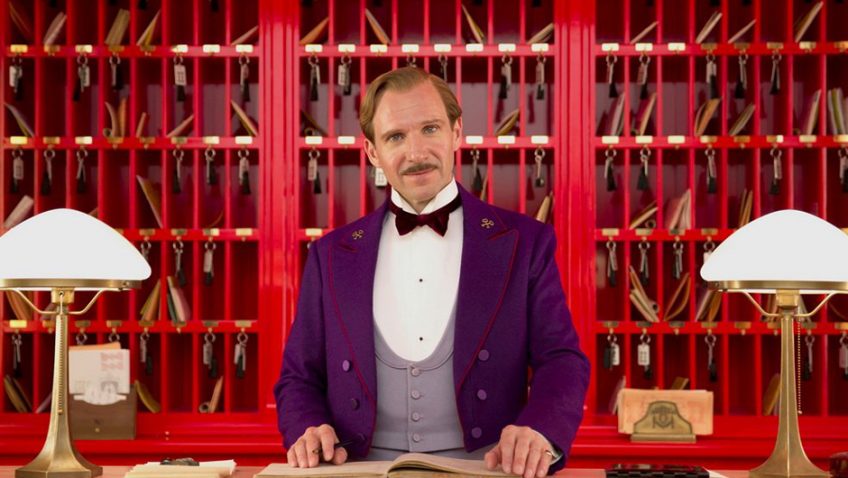
The Grand Budapest Hotel (2014)

The Grand Budapest Hotel (2014)

Luscious visuals, hilarious gags mix with an air of sadness and regret in Wes Anderson’s masterpiece

Director: Wes Anderson

Cast: Ralph Fiennes (M. Gustav), Tony Revolori (Zero), F. Murray Abraham (Mr Moustafa), Mathieu Amalric (Serge X), Adrien Brody (Dmitri), Willem Dafoe (Jopling), Jeff Goldblum (Deputy Kovacs), Harvey Keitel (Ludwig), Jude Law (Young Writer), Bill Murray (M. Ivan), Edward Norton (Inspector Henckels), Saoirse Ronan (Agatha), Jason Schwartzman (M. Jean), Léa Seydoux (Clotilde), Tilda Swinton (Madame D), Tom Wilkinson (Author), Owen Wilson (M. Chuck)

I wrote recently I could forgive the flaws I’ve found in Kurosawa’s work, for the majesty of Seven Samurai. I can totally say the same again for Wes Anderson. He is a director I’ve sometimes found quirky, mannered and artificial – but God almighty he deserves a place in the pantheon for directing a film as near to perfection as The Grand Budapest Hotel, a delight from start to finish, as beautiful to look at as it is whipper-snap funny, as heart-warming to bathe in as it is coldly, sadly bittersweet. After three viewings I can say it is, without a doubt, a masterpiece.

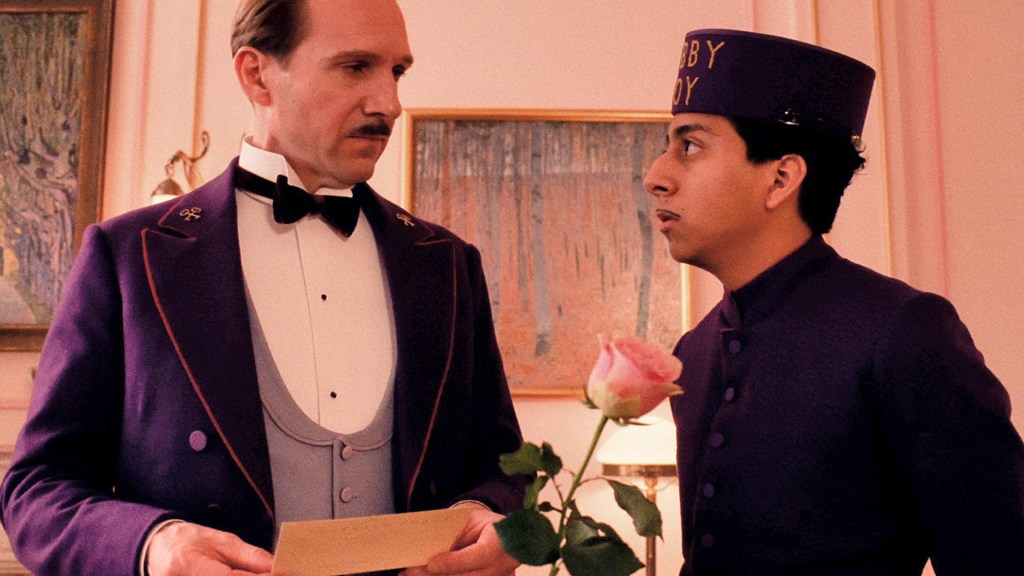
Like many Wes Anderson films, its storyline is eccentric, halfway between fantasy and absurdity. In 1932, in an opulent hotel, The Grand Budapest, concierge Monsieur Gustav (Ralph Fiennes) is the pinnacle of his trade: precise, fastidious, perfectionist, he can fix anything anywhere – opera tickets, the perfect table placement and a night of passion at any time for the elderly widows who visit his hotel. When one of them, Madame D (Tilda Swinton) dies leaving him a priceless painting, Boy with Apple he suddenly finds himself framed for her murder. Only his ingenuity, and the dedicated help of his protégé, best friend and surrogate brother/son, lobby boy Zero (Tony Revolori) will save him.

You can’t escape on the first viewing that The Grand Budapest Hotel is an extraordinarily funny film. Crammed with superb one-liners, it’s a showcase for a breathtakingly, blissfully funny performance from Ralph Fiennes whose comic timing is exquisite and whose mastery of the perfectly structured monologue of flowery language is as spot-on as his ability to deliver a crude punch-line. Anderson fills the film with clever sight-gags, bounce and a supreme sense of fun. You’ll laugh out loud (I frequently do, and I remember most of the gags) and wind back to watch them again.

But what lifts this is the wonderfully evocative, elegiac piece this beautiful film is. For all its comic zip, it unfolds in a romanticised past already a relic in 1932. We can’t escape the rise of Fascism that fills the film. Jack-booted soldiers accost and hunt Gustav and Zero. Adrien Brody’s furious heir to Madame D looks like a Gestapo officer, and his vicious heavy Jopling (Willem Dafoe so weathered, he looks like he’s been beaten by a carpet duster) has a stormtrooper menace. En route to Madame D’s funeral, Zero is nearly dragged off the train to be lynched by fascist thugs for being an immigrant and The Grand Budapest is taken over by this dreadful movement, filled with Mussolini-inspired ZZ insignia and blackshirts.

Under the jokes, the world Gustav represents has already died and been buried. We are never allowed to forget we are marching, inexorably, towards a very real-world war that will rip apart this fictional country and leave millions dead. Gustav’s gentile old-school charm ended with 1920s: and he sort of knows it. Fiennes, under the suaveness, conveys a man who falls back into potty language when he can no longer maintain his assured confidence that a straight-backed, polite assurance will solve any problem or a poetic reflection will allow them to put any unpleasantness behind them. Those days are gone and it makes for a deep, rich vein of sadness just under the surface.

It’s particularly acute because it’s made clear this is a memory piece. Anderson constructs the film like a memory box. It has no less than three framing devices. It opens and closes with a young woman in 2014 visiting a monument to a great writer, the author of the book The Grand Budapest Hotel. From there we flash back to the author (a droll Tom Wilkinson) in 1985 recounting how he met the man who inspired the novel, before heading again to a flashback to the 1960s where the young author (Jude Law) meets the man we discover is an older Zero (F Murray Abraham) who recounts the story we then watch. Each layer of the film descends deeper into Anderson’s artificial, carefully structured visual style, with its heightened sense of reality.

Old Zero – beautifully played by F. Murray Abraham – is introduced as a man of acute loneliness and sadness, who tells us early on the woman his young self loves, Agatha (a radiant Saoirse Ronan) will die and shuffles around the nearly abandoned The Grand Budapest (now a concrete nightmare of Communist architecture) with only his memories for comfort. No matter how jovial and bright the events of the 1930s are, we can’t forget that these are the reflections of a man full of regrets.

When old Zero’s narration turns to remembering Agatha, the lights around him dim: Agatha even enters the narrative almost by the side door: Gustav is arrested and imprisoned before she appears, along with a series of flashbacks-within-flashbacks to Zero and her meeting and her first meeting with Gustav, as if Zero had to steel himself to remember her (as reflected in Abraham’s tear-stained face). Later, when remembering the fates of Gustav (his best friend) and Agatha (the love of his life) he almost draws a veil over it (even their final scenes in flashback play out in monochrome). There is a deep, moving sense of humanity here, a powerful thread of grief that adds immense richness.

But don’t forget this is also a funny film! Anderson is an inventive visual and narrative director at the best of times, and here every single beat of his playful style pays off in spades. The entire 1930s section of the film (the overwhelming bulk of the narrative) plays out in 4:3 ratio, which to many other directors would be restrictive, but seems a perfect fit for a director who often composes his visuals with the skill of an expert cartoonist. The frame is frequently filled in every direction when within the grandeur of the hotel, but then feels marvellously restrictive for Gustav’s prison cell or the train compartments that seem to constantly carry Zero and him to disaster.

Anderson’s wonderfully precise camera movements also reach their zenith here. His camera is deceptively static, often placed in a series of perfectly staged compositions that places the characters at their heart, frequently looking at us. But then the camera will turn – frequently in a fluid single-plain ninety degrees to reveal a new image of character. There are Steadicam tracking shots that are a dream to watch. It’s combined with some truly astounding model shots (parts of the set are not-even-disguised animated models and miniatures, adding to the sense of fantasia) and the detail of every inch of the design (astounding work from Adam Stockhausen and Anna Pinnock) is perfection. The film is an opulent visual delight.

It’s a film of belly laughs and then moments of haunting sadness. But also, a wonderful celebration of friendship. The bond between Gustav and Zero is profound, natural and deeply moving – grounded, fittingly, in adversity from the agents of a hostile, oppressive state – and carries real emotional force. Newcomer Tony Revolori is hugely endearing as naïve but brave Zero, making his way in this new world (fitting the theme, he left his homeland after his family was destroyed by war) and sparks superbly with Fiennes and Ronan.

There is a wonderful beating heart in The Grand Budapest Hotel, amongst the farce, perfectly timed gags and cheekiness, that makes it a rich film you can luxuriate in. Anderson’s direction is faultless, Fiennes is a breathtaking revelation, both hilarious, affronted, decent and fighting the good fight. Gorgeous to look at, thought-provoking and laugh-out loud funny it’s a dream of a film.

The Banshees of Inisherin (2022)

The Banshees of Inisherin (2022)

Director: Martin McDonagh

Cast: Colin Farrell (Pádraic Súilleabháin), Brendan Gleeson (Colm Doherty), Kerry Condon (Siobhan Súilleabháin), Barry Keoghan (Dominic Kearney), Pat Shortt (Jonjo Devine), Jon Kenny (Gerry), Brid Ni Neachtain (Mrs O’Riordan), Gary Lydon (Paedar Kearney), Aaron Monaghan (Declan), Shelia Fitton (Mrs McCormick), David Pearse (Priest)

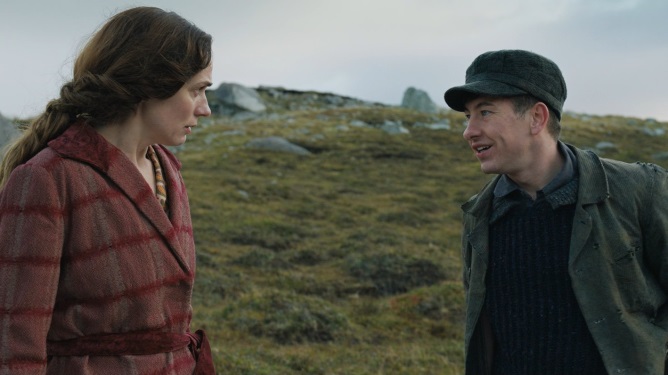
Pádraic (Colin Farrell) and Colm (Brendan Gleeson) are life-long friends on the small Irish island of Inisherin. Until one day, in 1923, Colm bluntly says he won’t speak to Pádraic again as “I just don’t like ya no more”. What on earth has led to this seemingly permanent severance? Did Pádraic do something wrong? The torment of not knowing will create a huge strain on Padraic, who prides himself on “being nice” and can’t understand why the older Colm doesn’t want to chat him. Just as Colm can’t understand why Pádraic can’t leave him alone, especially as he is almost universally agreed to be dull. Eventually this blunt stop to a friendship swiftly escalates out of all control.

McDonagh’s film is packed with the scintillating dialogue you would expect, and he combines it with an intriguing, tragedy-tinged character study where two sympathetic characters tip themselves into destruction through the unwillingness of either of them to compromise. It’s no coincidence that the film is set during the Irish Civil War. Cut off from the mainland on their tranquil island (where life feels like it hasn’t changed for the best part of 100 years), the characters are disturbed from their own civil war, every now and again, by the sound of gunfire and explosions from the mainland. The Banshees of Inisherin can be seen as a commentary on civil wars: don’t they all start, essentially, from someone deciding they have had enough and “just don’t like ya” anymore?

This marvellously rich film boils down a whole country tearing itself apart over what sort of future it wants, into one personal clash over two people’s future. The future increasingly obsesses Colm, a man preoccupied with mortality (who assumes his life can now be counted in years rather than decades), suffering from depression, worried he will disappear leaving no mark. A talented fiddle player, he wants to be like Mozart, remembered decades later – and he can’t do that wasting time every day for hours on end listening to Pádraic talking about his “wee donkey’s shite”.

It’s a perspective on the future, that Pádraic just can’t understand. For him, what does it matter what people you’ll never meet think about you? What matters to him is that the people around him like him and remember him as a “nice fella”. Not in a million years does legacy occur to him: the familiarity of everyday being the same is the most comforting thing, and change a horrific and terrifying thing to be avoided as much as possible.

You can see all this instantly in Colin Farrell’s heart-rending performance as this gentle, fragile but unimaginative soul, heart-broken at the inexplicable loss of his best friend. The film is a striking reminder that, contrary to his looks, Farrell’s best work is in embodying lost souls, the sort of people never ready for the life’s hurdles. Pádraic certainly isn’t, and his attempt to process what has happened defeats him. A man who considers his pet goat his next best friend and is as reliant as a child on his sister, doesn’t have the ability to understand what Colm is driving at about mortality, assuming instead he will stumble across the right words to be welcomed back into Colm’s company. He becomes the unstoppable object, trying to batter down Colm’s wall of silence.

He’s onto a losing battle, as Colm reveals himself to be – either due to his depression or his just not caring any more – the immovable force. Wonderfully played with a tinge of sadness and a depression-induced monomania, by Brendan Gleeson, Colm is a decent guy in many ways but fails to appreciate or consider the effect his actions will have on others. Instead he is focused on achieving at least something notable from his life. It leads to dramatic steps to drive Pádraic away, Colm threatening to cut off one of his fiddle playing fingers every time Pádraic bothers him, a threat he transpires to be more than willing to carry out.

And so civil war breaks out. As well as the parallels with Ireland’s war, I also felt strong echoes of our own poisoned social-media discourse. By his own lights, Colm believes his sudden severing of contact with Pádraic is perfectly reasonable. Many people who have “ghosted” others no doubt feel the same. Colm is reasonable when he explains it, and he still steps in with silent acts of comfort and support when Pádraic falls foul of the island’s brutish police office. But he never considers the traumatic impact this unexplained change will have on Pádraic – or how flashes of kindness can be as cruel as hours of non-acknowledgement.

Radicalism, in civil war and social media, quickly takes hold. What else can you call Colm’s threat to slice off his own fingers (the fingers he needs to live his dream of fiddle-playing legacy)? Just like people blowing hard on Twitter, he needs to deliver or lose face. Pádraic makes angry, passionate condemnations of Colm in the pub, like he’s posting rants online. Things escalate to a point where no-one feels they can step away or backdown.

That’s the tragedy McDonagh identifies here. This one decision of Colm’s – no matter the motives – ends up having disastrous effects on both men. Pádraic changes from a gentle soul to someone capable of wrathful fury and lifelong grudges. Colm literally disfigures himself, guaranteeing he will never achieve the very thing he started this for. Could there be a better parable for the destructive nature of civil combat? Neither Colm or Pádraic are willing to compromise: what if Colm said he would only see Pádraic once or twice a week, eh? Just like Ireland, they burn the world down.

This all takes place in a rich framework, with McDonagh skilfully working in clever, challenging sub-plots. The legend of the banshee, who foretold death and enjoyed watching destruction, is woven throughout, embodied by the sinister Mrs McCormick (a ghostly Shelia Fitton). The most forward-looking person on the island is Pádraic’s sister Siobhan – brilliantly played by Kerry Condon – who finds herself wondering why on earth she stays in such a self-destructive small-world. Barry Keoghan (also superb) plays the universally acknowledged village dunce, who (if you stop and listen to him) quotes French and poetry and (for all his crudeness and lack of social graces) is clearly a man stunted under the heel of his abusive father, the village policeman.

As events escalate and rush out of control – McDonagh’s pacing is very effective here – the film slows for carefully judged moments of emotional power, from the burial of a beloved pet to a character weeping in bed at the painful choices that must be made. McDonagh has created a powerful universal metaphor for the dangers of extreme, definitive choices and a total rejection of compromise by boiling it down to the smallest scale possible.

And your sympathies ebb and flow, due to the beautiful performances from its leads. Farrell is heartbreaking, a memory you carry as he becomes more vengeful. Gleeson is coldly reasonable, even as we grow to understand his crushing sense of mortality and character-altering depression. These two actors power an intelligent and thought-provoking film that achieves a huge amount with subtle and rewarding brushstrokes.

Strangers on a Train (1951)

Strangers on a Train (1951)

A man accidentally agrees to a murderous exchange in Hitchcock’s tense, seductive thriller

Director: Alfred Hitchcock

Cast: Farley Granger (Guy Haines), Ruth Roman (Anne Morton), Robert Walker (Bruno Antony), Leo G. Carroll (Senator Morton), Patricia Hitchcock (Barbara Morton), Kasey Rogers (Miriam Joyce Haines), Marion Lorne (Mrs Antony), Jonathan Hale (Mr Antony), Howard St John (Captain Turley)

Two men meet on a train: Tennis star Guy Haines (Farley Granger) and entitled playboy Bruno Antony (Robert Walker). They chat awkwardly, possibly because Guy is too polite to tell Bruno to sod off and leave him alone. They both have problems: Guy can’t marry his girlfriend, Senator’s daughter Anne Morton (Ruth Roman) because his trampy wife Miriam (Kasey Rogers) won’t give him a divorce; Bruno longs to escape from the shadow of his controlling dad. Then Bruno makes a suggestion: he’ll dispatch Miriam and Guy can kill his father. No-one will suspect a thing, as neither man has a motive. Criss Cross. Guy shakes hands and forgets all about it: until Bruno murders his wife and demands quid pro quo.

Hitchcock’s dread was to be arrested for a crime he did not commit. As a young boy, his father sent him down to the local police station with a note instructing him to locked up for a few hours to teach him a lesson. The horror stayed with Hitchcock for his whole life. Strangers on a Train was one of his best explorations of this concept (with the twist that the hero secretly wanted to but wouldn’t of course), and desperately attempts to prove his innocence and stop the psychopath he’s accidentally commissioned.

It’s a dream of a concept from Patricia Highsmith’s novel, superbly assembled into a tense thriller, where questions of whodunnit are (as so often in Hitchcock) irrelevant, with the real suspense coming from how the hero is going to get himself out of his predicament. That horrific predicament is masterfully assembled by Hitchcock into a series of striking set-pieces and shots, all of which carefully build a sense of being trapped in a terrible, oppressive nightmare as Guy realises there is no escape from the expectant glare of Bruno, determined that he fulfil his side of the bargain.

Bruno haunts Guy like a phantom. Guy sees him standing in front of an empty Lincoln memorial, Hitchcock shooting Walker like a distant black smear on the pristine white background. At a tennis match, Bruno sits fixedly starring at Guy, while every other face moves from side to side around him. Bruno inveigles his way into the home of Guy’s would-be fiancée and cheerfully sends him instructions on the best time and method for dispatching his father. The world seems to close around Guy – he’s framed through grills, trapped in rooms, never in control of his own destiny.

Bruno is relentless in his pursuit – and that feels like the right word for it – of Guy. It’s a superb performance from Robert Walker as this sexually ambiguous psychopath, chillingly amoral, fixated on his own desires and unrelenting in his sinister obsessions. Walker’s charisma and slimy, insinuating charm dominate the movie – he’s bizarrely sympathetic, so honest is he in his carefree sociopathy – and makes a great contrast with Granger. Here Hitchcock used the weakness of an actor to splendid effect. Original choice William Holden would never have been so meek and awkward talking with Bruno on a train: Granger, a less strong performer, utterly convinces as someone so inept at removing himself from an unwanted conversation he accidentally commits to murder.

The meeting between the two men on the train drips with homoerotic tension. It plays pretty much like a pick-up, Bruno smoothly working his way from sitting opposite Guy, to sitting next to him, to sharing dinner with him. Hitchcock introduces the two of them with tracking shots of their very differently shoed feet walking to a train, until they accidentally touch feet. Later a lounging Bruno stretches out his feet to touch Guy’s once more. Bruno essentially seduces Guy, Guy’s flustered awkwardness at least as much connected to a sort of sexual confusion as it is to the strange social interaction. Walker’s performance has a seductive purr and a beautiful delicate, feminine precision.

Not that it stops him committing murder. The killing of Miriam (wonderfully played with a slutty charm by Kasey Rogers) sees Bruno again as stalker, only this time with murder in mind. He prowls behind Miriam – dragging two horny lads along – as she moves through a fairground, keeping his distance but constantly catching her eye. Hitchcock tracks these flirtatious glances – this really is murder by seduction – and Bruno impresses her like a would-be lover with his prowess at the strong-man bell. It’s a dance, the two of them drifting down a tunnel in boats, one after the other.

And it culminates in an intimate killing by strangulation. Hitchcock uses a virtuoso shot: we watch the killing of Miriam reflected in the lens of her fallen oversized glasses, Bruno bearing down over her until she disappears. The perverse sexual excitement Bruno feels over the killing creeps into his fascination with Anne’s sister Barbara (played, for extra perverse points, by Hitchcock’s daughter Patricia) who wears similar glasses to Miriam. Bruno stares at her with dreadful, tingling excitement and eventually loses control of himself miming out strangulation on a guest at the Morton’s house, swept up in the thrill of it.

Of course, Guy is far too straight-laced (in every sense) to get to wrapped up in Bruno’s plot. (Rather different from Highsmith, where his equivalent character regretfully but willingly upholds his part of the bargain.) The film overplays its hand slightly as it heads into the denouement with an overextended tennis match intercut with Bruno attempting to retrieve Guy’s lighter from a drain (where he has dropped it, en route to planting it at the murder scene). It pulls it back though with a final fight on a wildly speeding-out-of-control carousel (just the right side of ridiculous).

The film is littered with little references to doubles and dark shadows and is a superbly constructed thrill ride by Hitchcock. Granger’s weaknesses as a performer are surprisingly well suited to his role, although Hitchcock failed to hide his lack of regard for Ruth Roman in a weakly written role. The film gets a superb dark momentum from Robert Walker’s marvellous performance and Hitchcock shoots it with a brilliantly unsettling stalkerish eye, with Bruno’s trailing of each of his targets tinged with a dark sexuality beneath the malicious intent. With good reason, Hitchcock called this his “first American movie” and it kickstarted a run of hits.

An Officer and a Gentleman (1982)

An Officer and a Gentleman (1982)

Classic 80s romance? Or is it, in fact, a searing kitchen-sink drama about class and depression? One of the great mis-remembered films of all time

Director: Taylor Hackford

Cast: Richard Gere (Zach Mayo), Debra Winger (Paula Pokrifki), Louis Gossett Jnr (Gunnery Sergeant Emil Foley), David Keith (Sid Worley), Lisa Blount (Lynette Pomeroy), Robert Loggia (Byron Mayo), Lisa Elbacher (Casey Seeger), Tony Plana (Emiliano Santos Della Serra), Harold Sylvester (Lionel Perryman), David Caruso (Topper Daniels)

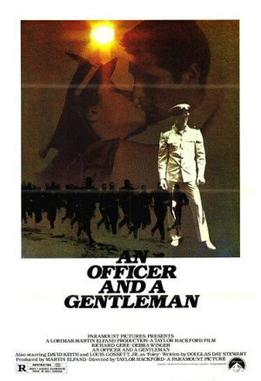
An Officer and Gentleman is remembered as a sweep-you-off-your-feet romance, with power-ballads underplaying attractive Hollywood stars passionately proclaiming their love. It ain’t anything like that. This proto-Top Gun – a film it has strong similarities to in structure and design – is actually a kitchen-sink drama masquerading as a feelgood movie, with a final romantic image and “Up Where We Belong” leaving a deceptive memory behind. Where Top Gun is loud, brash and fundamentally reassuring and straight-forward, An Officer and a Gentleman is jagged, surprisingly difficult and unsettling. Put it this way: Tom Cruise doesn’t call anyone the c-bomb in Top Gun.

Zach Mayo (one of Richard Gere’s legendary performances, the memory of which guided much of the rest of his career far more than its reality) is a Navy-brat determined to be nothing like his alcoholic, whoring dad (Robert Loggia). He’s going to graduate from Naval Flight Candidate school and become “an officer and a gentleman”. Zach is a damaged soul, defensive, closed-off and selfish, a smarmy, cruel loner interested only in what he can get out of any relationship. The film is about whether Zach will learn to become a sympathetic, caring person, rather than a resentful douche.

There are three influences that might just change him. Firstly, fellow trainee Sid (David Keith), from a Naval officer family, attending because his deceased brother can’t. The second is training officer and uncompromising disciplinarian Sgt Emil Foley (Louis Gossett Jnr). And, finally, factory worker Paula (Debra Winger), one of the local women officer candidates are warned are intent on bagging a husband by fair or foul. Each will play a different role in making Zach a fully rounded person.

Hackford’s film is a tough, hardened one that takes a long hard look at mental health, guilt, suicide, parental resentment and a host of other complex issues. Any romantic moment is matched with one of pain, fury or characters doubled over with guilt and shame. It dives deep into its flawed hero and shows how someone can, almost unwittingly, be reconstructed into something warmer. It does all this in grimy, scruffy settings with characters making desperate choices motivated by poverty and lack of choices.

It opens with a shaggy-haired, scruffy Gere starring into a mirror in a dark motel room while his father is passed out in bed with two prostitutes. We are constantly reminded of Zach’s working-class background, his life growing up trailing behind his (largely indifferent) father after the suicide of his mother, left to fend for himself in the rough and tumble of the Philippine streets. At naval school, the same chippy resentment of how people perceive his roots persists – along with the lessons he has spent his whole life learning: that he should count on no-one but himself.

Zach doesn’t believe he’s worth loving. Facing abandonment issues (of different kinds) from both his parents, he doesn’t give a toss about anyone and expects them to feel the same. He sets up a grift selling pre-polished buckles and boots to his fellow candidates, only helping them for a price. He completes exercises alone, cheats in aeronautical class, and gloats as he passes anyone on physical trials. When dating Paula, he frequently retreats into cold rudeness when conversation turns to anything emotional, and repeatedly claims he wants nothing more than a bit of fun. It all stems – as Paula realises – from a defensive hostility, pushing people away before they can leave him.

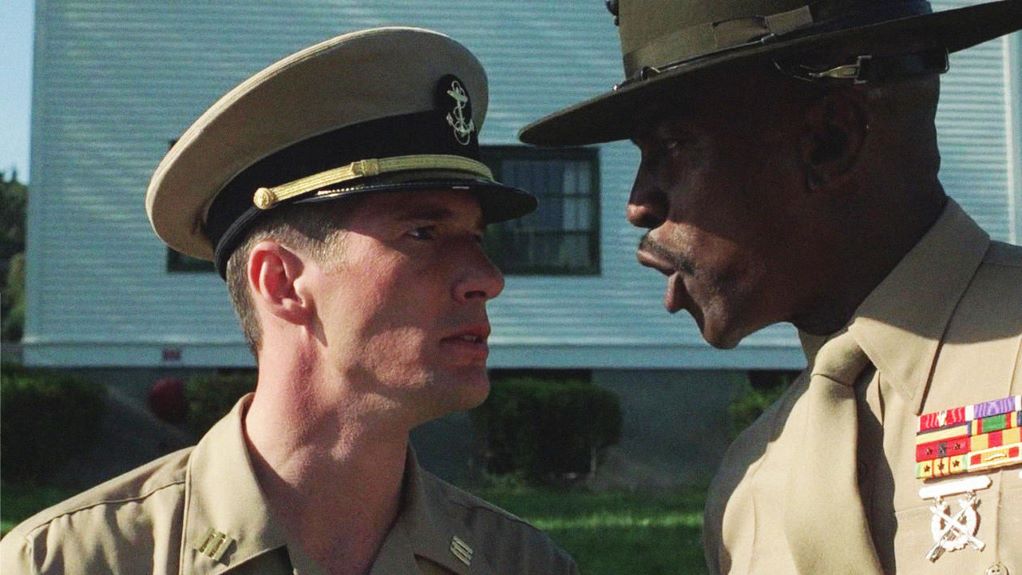
His lack of team-playing is identified early by Foley as his Achilles heel. Louis Gossett Jnr won an Oscar for his impressively nuanced work here. At first Foley seems an almost unbelievably horrible man, a bully dropping racist and homophobic slurs with casual ease, who makes it his mission to drive his candidates out of the programme (right down to bragging that he chisels a mark on his swivel stick whenever another one drops out).

However, Hackford and Gossett Jnr skilfully show this is, to a degree, a show: Foley is tough because the military is tough, and deep down he does care. Candidates slowly earn his respect (female candidate Seeger may fail to climb a wall, but goddamn he respects her guts) and he quietly goes to great lengths to support them. Foley’s act is intended to get them to excel – and he’ll be proud of them when they do, just as they will be grateful to him. The strength of Gossett Jnr’s performance mean his scenes dominate the narrative (at the cost of the romance), but this is to the film’s benefit.

Interestingly, that romance is often the least effective part of the film. Gere and Winger have fine chemistry (despite, allegedly, not getting on) but the narrative often takes sudden time jumps. From one scene to another they’ll go from together to split up, and the film never quite manages to show us naturally how this is changing Zach. Instead, it frequently stops to tell us this, with on-the-nose conversations. Winger is good, but the relationship feels forced – as if it a film couldn’t exist without a romance, when actually Paula could be removed altogether and it wouldn’t really change the film.

It’s forced perhaps because what really feels like it changes Zach is the friendship with Sid. Played very well by a sensitive David Keith, Sid is everything Zach is not. Confident, happy to help others, a natural leader and team player. Under the surface he isn’t – doubtful and insecure – but the friendship between them is the spark that changes Zach. Sid is, much like Goose in Top Gun, the sacrificial pal, but this sacrifice promotes real growth in Zach. The parallel romance between Sid and gold-digger Lynette (a fine Lisa Blount) is also an effective commentary on Zach and Paula, both characters being mirror images of the leads.

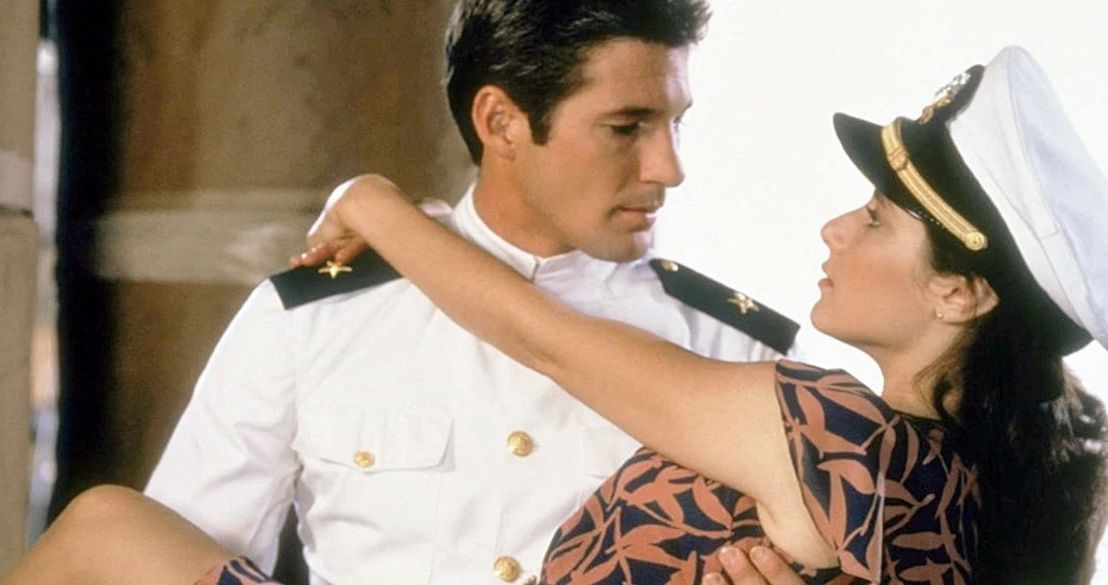
The film culminates in that romantic sweep-you-off-your-feet moment in the factory: but that feels like it belongs in a different film than the hard-boiled one we’ve been watching of a man confronting his fear of failure and lack of self-worth. Gere, by the way, is very good as Zach – his smirk a defensive screen for a host of psychological problems (few actors would have been willing to be as unlikeable as Gere is here). An Officer and a Gentleman is really a character study in working-class resentments, but somehow is mis-remembered as the quintessential 80s romance. It truly isn’t. Instead Hackford’s film – flawed as it is – is smarter and pricklier than that.

The Woman King (2022)

The Woman King (2022)

Punchy historical action epic is very entertaining (if not hugely original narratively) as well as being a triumph of representation

Director: Gina Prince-Bythe

Cast: Viola Davis (General Nanisca), Thuso Mbedu (Nawi), Lashana Lynch (Izogie), Sheila Atim (Amenza), John Boyega (King Ghezo), Hero Fiennes Tiffin (Santo Ferreira), Adrienne Warren (Ode), Jayme Lawson (Shante), Masali Baduza (Fumbe), Angélique Kidjo (The Meunon), Jimmy Odukoya General Oba Ade), Thando Dlomo (Kelu), Jordan Bolger (Malik)

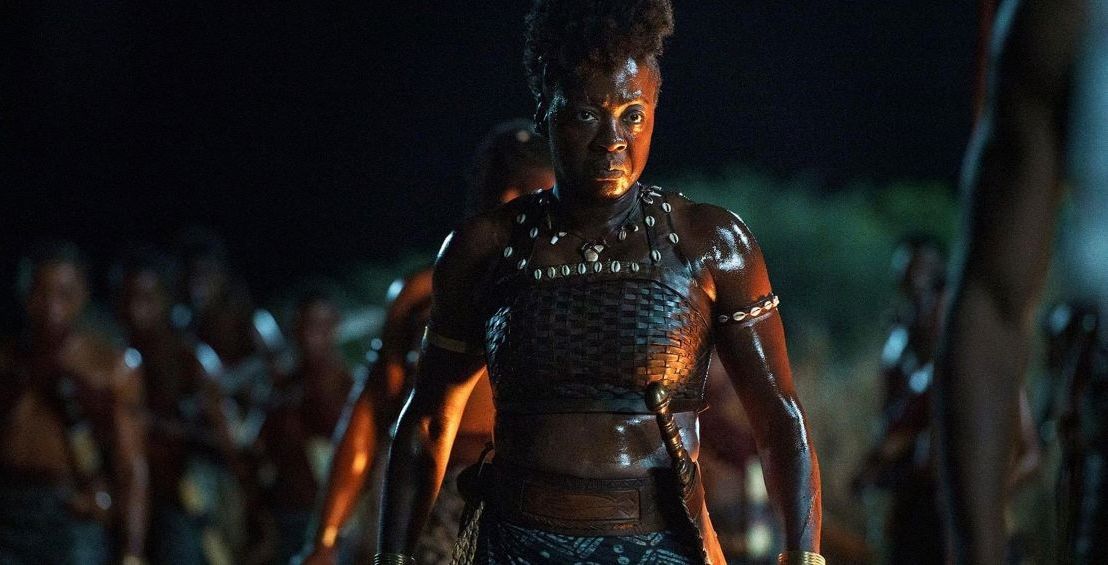
It’s 1823 in the West African Kingdom of Dahomey. The kingdom is trapped in the middle of a host of competing interests: most notably the rival Oyo empire and the European slavers controlling the region’s main port. Dahomey depends for its security on the Agojie, an elite group of women warriors commanded by their respected general Nanisca (Viola Davis). War brews between Dahomey and Oyo, and Nanisca is pushing King Ghezo (John Boyega) to end Dahomey’s involvement in the slave trade. At the same time, a new Agojie recruit, Nawi (Thuso Mbedu) brings memories of past traumas flooding back to Nanisca – might she and Nawi have some lost bond?

The Woman King is a pulsating action film, a mixture of Braveheart and Black Panther (it even has a cold open, as the Agojie storm an Oyo village to save captured Dahomey citizens bound for the slave ships, that feels like a straight lift from the latter film’s opening). Proudly celebrating both women and black people (men are very much in secondary roles, while the only white character is a hypocritical slaver played with relish by Hero Fiennes Tiffin), it’s a punch in the solar plexus for what’s been a male-dominated genre.

Watching it I suddenly realised, half-way through, that if the film had been made 10 or 15 years ago, the plucky new recruit having to prove she belonged among the Agojie would have been played by a white actress. There would have been a flashback to the child being found by the Agojie and then a montage of her searching from fear to longing to emulate the women around her. Like Cruise in The Last Samurai, she would have become the best-of-the-best, accepted by her new black sisterhood. It’s a triumph that Hollywood no longer needs stories like this filtered through white eyes before they would even consider bringing them to the screen.

Instead, the focus is strongly on a story that wants to celebrate the rich culture and history of African kingdoms. Dahomey’s civilisation, advanced farming and irrigation, egalitarian culture and humane religious and spiritual practices, are shown in loving detail. Their tenuous position as a small kingdom surrounded by rivals is carefully presented, just as the corrupting nature of European powers is made clear. It is they who have turned slavery – an ever-present in African history – into an industry that dominates the African economy and has led to a subtle devaluation of human lives that many Africans openly collaborate in.

In this, Prince-Bythe’s tightly directed film juggles a coming-of-age story for Nawi with a coming-to-terms story for Nanisca. It’s a film that manages to present both in the context of a series of action set-pieces and exciting training montages (the Agojie effectively have to complete a massive obstacle course to qualify as a member of the sisterhood). To be honest, much in the film isn’t really that original, more a remix of set-pieces and ideas from similar films. What makes it stand out is the representation and the context where it is taking place.

It also allows impressive actors to take on roles way outside of public expectations. None more so than Viola Davis, whose pumped up physique shatters any perceptions of what you might expect. This is a tour-de-force role from Davis, as she plays a defiant and strong woman, secretly terrified of trauma in her own past (and worries about her own weakness) who leads by charismatic example, but is just as capable of unjust slap-downs. She’s a woman struggling to embrace all facets of herself, doing so in the spotlight of a whole country looking to her for leadership. It makes for a powerful performance from Davis, perfectly fusing her skill at playing matronly warmth, imperious distance and deep reserves of determination and courage.

There are similarly excellent performances from a uniformly strong cast, with Lashana Lynch a stand-out as a courageous fighter who surprises herself with her mentorship abilities. Thuso Mbedu gives a star-making turn as Nawi, a young woman who matches Nanisca for bull-headedness and suppressed self-doubt, who reveals herself as a natural leader. Shelia Atim is excellent as Nanisca’s level-headed trusted number two, while John Boyega walks perfectly a fine-line of a man teetering between being a wise leader and a playboy.

They are helped by a film that may lack originality in its plotting and structure, but makes up for that with its warmth for its characters, and the gritty, involving realism of its shooting. Prince-Bythe keeps the pace of the film running smoothly and stages each of the film’s many set-pieces with a dynamism that keep you on the edge of your seat. She also successfully manages to incorporate some searching material around Nanisca’s past traumas without being exploitative.

Historically, the film is a little dubious, walking a carefully curated line on Dahomey’s involvement in slavery (in many ways it might have been better if the film was set in a fictional kingdom inspired by Dahomey). It doesn’t dwell on the Agojie chaining up their captives to be shipped to the slavery markets. It pushes an anti-slavery message strongly – but ignores the historical fact that the real Ghezo continued in the trade until the bitter end. (Legitimate points could have been made about his right to the same compensation as plantation owners elsewhere.) There is a complex, difficult story here that the film romanticises into something with cleaner rights and wrongs.

But, with a history of poor representation and white-only-lens view on African culture in film, you can forgive a film aiming to redress that balance. Strongly directed, exciting and crowd-pleasing, with well-drawn characters played with real skill by a very strong cast, it might recycle many ideas from other films, but it does it with a compelling freshness.

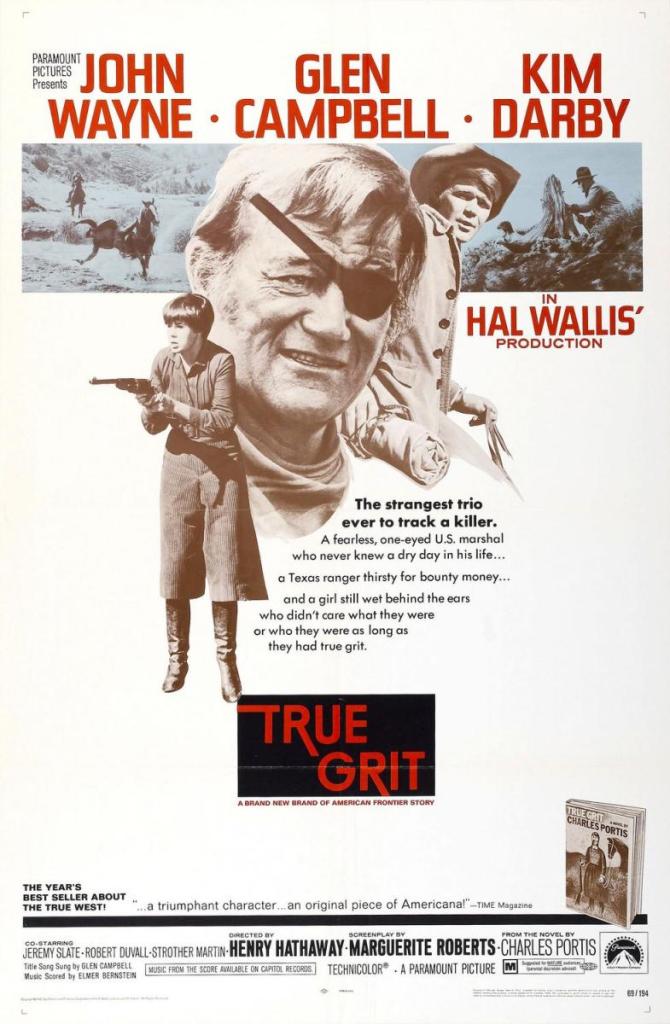
True Grit (1969)

True Grit (1969)

The Duke wins an Oscar in this solid Western (already old-fashioned in 1969) put together with a professional solidity

Director: Henry Hathaway

Cast: John Wayne (Reuben “Rooster” Cogburn), Glen Campbell (La Boeuf), Kim Darby (Mattie Ross), Jeremy Slate (Emmett Quincy), Robert Duvall (Lucky Ned Pepper), Dennis Hopper (Moon), Alfred Ryder (Goudy), Strother Martin (Colonel Stonehill), Jeff Corey (Tom Chaney), John Fiedler (Daggett)

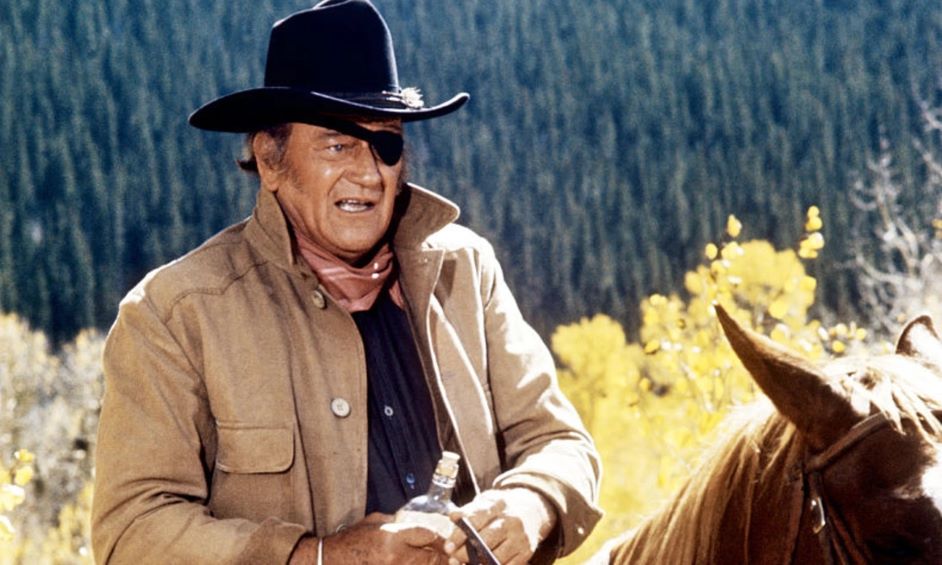
By 1969 John Wayne had been pulling his six shooters against rascals and rapscallions for thirty years, ever since making one of the all-time great entries in Stagecoach. He’d been an American icon, box-office gold and practically the Mount Rushmore of Hollywood. What he never really had was recognition that, underneath the drawl, he was a fine actor who knew his business. He’d only had the single Oscar nomination in 1949, so by 1969 there was a sentimental urge to correct that – especially since illness had already seen the Duke (one of the first major stars to be open and frank about his cancer and urge others to get checks) lose a lung a few years previously.

And correct that they did, as Wayne beat out two respected thespians (the perennially unlucky Burton and O’Toole) as well as the whipper-snapper stars of Midnight Cowboy (the sort of cowboy film the Duke would never even consider making!) to scoop the Best Actor prize for taking a character-role lead (all Wayne roles are lead roles) in True Grit. Wayne was “Rooster” Cogburn, a hard-drinking but hard-riding, always-gets-his-man US Marshal, hired by Mattie Ross (Kim Darby) the teenager daughter of a murdered father to track down his killer Tom Chaney (Jeff Corey). Rooster develops an avuncular relationship with Mattie, despite his penchant to get pissed and (of course!) eventually proves he has the ‘true grit’ that made Mattie hire him in the first place.

True Grit is a traditional yarn, directed with a smooth competence (but lack of inspiration) by Henry Hathaway. It must have felt quite a throwback in 1969: you could imagine it pretty much would have been shot-for-shot identical if it had been filmed in 1949 (especially since Wayne had been playing the veteran since at least Fort Apache). Compared to other major Westerns made that year – Butch Cassidy and the Sundance Kid and, especially, the grim nihilism of The Wild BunchTrue Grit looks like the cosiest film imaginable. It even shies away from the book’s ending where Mattie loses an arm after a snake bite (something the, frankly superior, Coen Brother’s remake would not do 40 years later).

It does feel odd to see Wayne, that bastion of old-school Hollywood, sharing the screen with New Hollywood icons like Dennis Hopper (playing a yellow-bellied squealer at the baddies hideout) and Robert Duvall (a belated villain, looking uncomfortable in this genre saddle-flick as a bad-to-the-bone gang leader). But Hathaway makes sure it’s The Duke’s show. Which it is from start-to-finish.

Rooster isn’t really a stretch for Wayne. Compared to his work in The Searchers and Red River, Cogburn is a cosy and straight-forward hero, a straight-shooter who always holds to his word. But it’s a perfect showpiece for his charisma. Wayne shows a decent comic-timing (he has a nice line in deadpan reactions, particularly when he meets Mattie’s famed lawyer Daggett for the first time, discovering far from the imposing figure he imagined he’s actually the mousy John Fiedler) and there’s just a little hint of lonely sadness in Rooster as he talks about the family who left him or the homes he’s never known.

Wayne also has a lovely chemistry with Kim Darby, the relationship flourishing in a rather sweet big-brother-“little sister” (as Rooster calls her) way. Although of course it takes time to form: Rooster spends most of the first half of the film trying his best to shrug her off so he can hunt down the gang Tom Chaney runs with (and collect the bounty for them) unencumbered. The two of them form a tenuous alliance with Texas Ranger La Bouef, who is far keener to deliver Chaney to another state for a higher bounty than that offered for the killing of Mattie’s father.

La Bouef is played with try-hard gameliness by singer Glen Campbell, largely hired to commit him to singing the film’s best-selling theme tune. To be honest, he makes for a weak third wheel – but it’s hard not to hold it against Campbell when he charmingly later said he’d “never acted in a movie…and every time I see True Grit I think my record’s still clean!”. Far better is Kim Darby, who gives a spunky tom-boyish charm to the shrewd and persistent Mattie who is far too-smart to either by cheated by short-changing landlords or to be ditched from the trail by Rooster and La Bouef.

It’s Wayne’s film though, and a final act face-off with the villains shows that there were few people better with a gun on screen (his one-handed shotgun twirling reload while riding a horse is surely the envy of Schwarzenegger’s similar move in Terminator 2). The whole enterprise is carefully framed to showcase Wayne and he rises to the occasion. Think of it like that, and it hardly matters that Hathaway offers uninspired work behind the camera and fails to provide either any moments of visual interest or dynamism (or work effectively with the weaker actors).

True Grit is an entertaining, second-tier Wayne film, lifted by his charisma and enjoyment for playing a larger-than-life gravelly cool-old-timer and cemented in history by his reward with that sparkling gold bald man. Compared to other Westerns – both before and at the time – it’s traditional, straight-forward and unchallenging. But it’s fun, has some good jokes and offers decent action. And it’s a reminder that no one did this sort of thing better than the Duke.

See How They Run (2022)

See How They Run (2022)

Smug, semi-spoof murder mystery which can’t decide whether it loves or scorns the genre

Director: Tom George

Cast: Sam Rockwell (Inspector Stoppard), Saoirse Ronan (Constable Stalker), Adrien Brody (Leo Köpernick), Ruth Wilson (Petula Spencer), Reece Shearsmith (John Woolf), Harris Dickinson (Richard Attenborough), David Oyelowo (Mervyn Crocker-Harris), Charlie Cooper (Dennis), Shirley Henderson (Agatha Christie), Pippa Bennett-Warner (Ann Saville), Pearl Chandra (Selia Sim), Paul Chahidi (Fellowes), Sian Clifford (Edana Romney), Lucian Msamati (Max Mallowan), Tim Key (Commissioner Harrold Scott), Jacob Fortune-Lloyd (Gio)

It’s the 100th performance of Agatha Christie’s The Mousetrap (“how much longer can it run”, the characters ask. If only they knew…) and producers are in talks for a big movie adaptation. At the party, boorish American film director Leo Köpernick (Adrien Brody) offends absolutely everyone – and promptly gets murdered. Not only are the cast (including Richard Attenborough – wittily impersonated by Harris Dickinson) suspect, but also the film producers which, contractually, can only go into production when the play closes. Investigating: dishevelled Inspector Stoppard (Sam Rockwell) and his super enthusiastic sidekick Constable Stalker (Saoirse Ronan).

See How They Run desperately wants to be a witty commentary on Agatha Christie style locked-room mysteries. It even opens with a voiceover from Brody’s Köpernick, full of scorn for the medium and its cliches before revealing, as per form, that as the least sympathetic character he himself is about to be knocked off. To be fair, there are one or two decent jokes. But the presence of Reece Shearsmith just made me think: Shearsmith and Steve Pemberton’s anthology dramady Inside No. 9 would have pulled off the same idea, but with far more wit and better understanding of Christie, in half an hour. And certainly with better jokes.

Instead See How They Run feels like it has only the most superficial understanding of Christie, based more on watching a few scenes of Poirot rather than reading the books. Rian Johnson’s Knives Out made a wittier, smarter and more enlightening commentary on Christie in its updating of the form, than this comedy ever manages. It’s never quite clear whether the makers want this to be a genuine Christie-style mystery or an inversion. Stoppard and Stalker go about their investigation in a traditional manner. The suspects all have motives of a sort. There is a definite mystery.

But it’s all lightweight and uninformed. Christie tropes are nudged and then ignored, as if the writers don’t understand them. What better opportunity could you have for Christie’s love for one mysterious character in the story turning out to be an actor in the group in disguise (invariably summarised by Poirot as “the performance of his/her life!”). There actually is a mysterious character here – but it turns out to be another person. Christie tropes around red herrings, secondary crimes, poison – all of them go unexplored.

The film ends with a deliberately counter-intuitive action sequence: but it’s not clear to me why. It’s neither particularly funny, nor does it feel like it has anything to say about the form other than offering an ending we might not expect. There is a nudge on the fourth wall (it’s the ending Köpernick wants) but what point is being made here? Is the action ending endorsing Köpernick’s belief that Christie-style mysteries are formulaic or boring, or is the shoot-out meant to look excessive and ridiculous? Is it implying everything we are watching is Köpernick’s dying fantasy? Is it a gag? I have no idea at all, and that sums up this tonal mess.

It’s a film that wants to have its cake and eat it. It tries to present a genuine murder mystery – and to be fair, when it does this, it does make for a good guessing game – but also wants to take potshots at the genre. It ends up doing neither particularly successfully. And there’s something a bit unlikeable about a film that wants to feed off the audience’s love of a Golden Age detective mystery, but also kinda wants to tell you how the thing you like is actually a bit stupid – and by extension so are you.

Its humour all too often feels a little studenty and obvious – the naming of Rockwell’s character as Stoppard being a case in point (although it does make for one good gag when Pearl Chandra’s charming Shelia Sim denounces another character as “a real hound, inspector”). It eventually feels like a rather smug film, which just goes to show how hard it is to make a Christie-style mystery.

If there is a decent joke in the thing, it’s that it manages to build a film where the plot of The Mousetrap is vital to the outcome, without ever revealing anything about what happens in The Mousetrap. (Presumably, the Christie estate would have had their guts for garters if they did.) Any moment where it looks like we might learn a major event in the play, a character interrupts or someone says “I already know”. These narrative gymnastics are the most inventive thing about it.

The other thing it’s got going for it is a performance of immense charm and comic likeability from Saoirse Ronan, who has rarely been as sweet, bubbly and adorkable as she is here. Ronan’s comic timing is excellent, and Stalker’s mixture of dogged determination and chronic over-enthusiasm provides virtually all the film’s highlights. Rockwell ambles through a (perhaps deliberately) under-written role, but most of the rest of the excellent cast feel under-utilised. Who casts Shearsmith and gives him not a single joke? Sian Clifford to deliver about three lines? David Oyelowo and Ruth Wilson do a lot with very little, but it’s telling that the final act appearance of Lucian Msamati and Paul Chahidi as a master-and-servant double act provides almost as much humour as the rest of the cast put together.

See How They Run passes the time – but that’s really about that. It doesn’t really have anything smart or funny to say about murder mysteries and it never offers anything truly unique or striking to justify itself (other than Ronan’s lovely performance). It’s straining as hard as it possibly can to ape the Coens or (most of all) the quirk of Wes Anderson, but totally lacks the skill and finesse of either. It feels like a film commissioned off the back of Knives Out success: but to be honest if you want to see something that brilliantly riffs off Christie while also being a bloody good mystery, just watch that instead.

Il Postino (1995)

Il Postino (1995)

A friendship (of a sort) across the divide in this sentimental, overtly charming romantic comedy drama

Director: Michael Radford

Cast: Massimo Troisi (Mario Ruoppolo), Philippe Noiret (Pablo Neruda), Maria Grazia Cucinotta (Beatrice Russo), Renata Scarpa (The Telegrapher), Linda Moretti (Donna Rosa), Mariano Rigillo (Di Cosimo), Anna Bonaiuto (Matilde Urrutia)

Pablo Neruda (Philippe Noiret) arrives on an Italian island in 1950, exiled from his home in Chile. He brings celebrity to the small community: but also transforms the life of local Mario Ruoppolo (Massimo Troisi). Mario, a quiet and slightly lost man who doesn’t want to follow in his father’s fishing footsteps, takes a job delivering Neruda’s mail. He becomes fascinated by poetry and idolises Neruda with whom he forms a friendship, after he enlists him to help woo Beatrice (Maria Grazia Cucinotta), daughter of the local café worker. Mario becomes more and more influenced by Neruda’s communism and love of language. How will he cope when Neruda’s exile ends?

A massive box office success – one of the biggest foreign language hits in the USA – Il Postino is a film born from tragedy. Troisi had long wanted to adapt the novel by Antonio Skarmeta. So much so, he delayed urgent heart surgery to make the film. With filming due to start, Troisi was so ill he could work little more than an hour a day. Many of his scenes were done in a single take. Radford re-worked scenes to allow Troisi to sit as much as possible, while a body double did all long shots, medium shots and any close-up where Troisi’s face didn’t need to be seen. Troisi recorded all his dialogue before filming – and tragically died the day after shooting completed.

It’s a moving story: and it’s hard to separate your reaction to it from your reaction to the film. Perhaps influenced by Troisi’s illness, Radford turns Il Postino into a quiet, gentle and mediative piece, crammed with restrained camerawork and thoughtful pacing. There is a gentle, easily digestible warmness to Il Postino, with relatable themes around love, friendship and the power of poetry. But you can’t help but feel subtitles made some feel they were watching something arty, rather than something that is essentially a bit of popular fiction turned into a film.

Don’t get me wrong, there are plenty of positives. Radford perfectly captures the warmth and eye-opening wonder of a man discovering intellectual horizons he never imagined. Mario at first seems not particularly bright – but we discover he is simply a man who has grown up without intellectual stimulation of any sort. No one ever leaves his island and the only ambition anyone has is to become a fisherman. Watching a newsreel of Neruda’s arrival in Italy, the villagers seem as stunned by seeing these magic moving pictures as they do the famous poet’s arrival.

Into this tiny world drops a magic figure: someone who makes Mario discover that the functional words that only ever dropped hesitantly from his mouth, can actually be crafted into gorgeously elaborate sentences, full of power and beauty. Poetry at first just seems like a great way to get girls – Mario is stunned by the amount of mail from ladies Neruda receives – but then becomes an end in itself. Slowly Mario appreciates things around him – the moon, the lapping of waves on the shore, the sound of the wind in the hills – in a way he never even thought about before. Similarly, he begins to question the quiet acquiescence the village shows to all-too-obviously corrupt local politician Di Cassimo.

This largely works due to a quiet, unforced and gentle performance from Troisi. Shyly muttering his lines and rarely raising his head up to look directly at the person he is talking to, Troisi’s performance has an unaffected naturalness to it. He’s quiet, abashed and shy, also childlike, worshipping Neruda with a puppy-dog intensity (that never wilts, even after Neruda leaves the island) and reacts to things around him with an awe-filled wonder.

Opposite him, Noiret soaks himself in artistic confidence as Neruda, a man very aware he’s a huge fish in a small pond. Perhaps because he’s lonely, perhaps because he finds Mario’s childlike openness endearing, he indulges and encourages Mario’s attempts to befriend him. But, despite appearances, I’m not sure Il Postino wants to commit to the fact that this is not a friendship of equals. Neruda is fond of Mario – but he never, truly, sees him as an equal. Mario is, at heart, a distraction Neruda is fond of. He indulges Neruda’s clumsy attempts to win his attention, and there is a slight quiet background air of fatherly condescension in his treatment of him.

It means people overlook the more interesting parts of Il Postino. Because, despite the way it’s presented, this isn’t a story of a friendship over a divide. The final act is in fact more interesting in showing, after Neruda leaves, that a relationship that changed Mario’s life forever was just a brief, fond distraction to Neruda. Neruda remains the most important person in Mario’s life – but he wouldn’t even make the top hundred in Neruda’s life. Neruda makes little effort to keep in touch, gets a secretary to write a functional letter to Mario and takes years to even consider a visit.

The real point of interest here is how Mario flew, Icarus like, close to the sun – but found he could only get so close. He will only ever be a footnote in Neruda’s life, while Neruda is his life. Even when faced with evidence of Neruda’s affectionate disregard, he will still insist on naming his child after him. Similarly, poetry is something he can love but never quite master himself. This is interesting stuff. Il Postino avoids it.

Instead, it’s a film that settles on sentiment. You can’t argue with the skill Radford directs the film, or the quiet power of a late sequence when Mario records the sounds of the island for Neruda. Radford’s unobtrusive direction – partly influenced by working around Troisi’s illness – works to wring the maximum emotion from it. But it’s still a sentimental package: a package skilfully presented to Academy voters by Miramax (Luis Bacalov’s Oscar win for score was surely connected to Weinstein mailing a recording to every member of the Academy) and presents a pleasant fantasy story for the masses, that veers away from its more complex parts to present something far more reassuring and gentle.

Good Luck to You, Leo Grande (2022)

Good Luck to You, Leo Grande (2022)

Questions of intimacy and sex are explored but not in depth in this theatrical two-hander

Director: Sophie Hyde

Cast: Emma Thompson (Nancy), Daryl McCormack (Leo Grande)

A widowed, retired former RE teacher “Nancy” (Emma Thompson), hires a high-class escort “Leo Grande” (Daryl McCormack) to explore the opportunities in life she feels she has missed: namely, any sexual experience that doesn’t involve functional, passion-free couplings with her deceased husband; the positions and acts she’s heard about that he considered “demeaning” to all involved; and, above all, something called an orgasm. Over multiple meetings, the fragile Nancy and the smooth, charming, but personally guarded Leo tentatively explore physical and emotional barriers.

Hyde’s film could very easily be a theatre piece. Largely taking place in a single location – the hotel room Nancy has hired for their meetings – across four “acts”, it’s a film that relies heavily on the skill and chemistry between the two actors. On that front, it’s very blessed to have such skilled performers who play off each other with such generous and dynamic performances.

They’re helped by a witty script from Katy Brand, crammed with good lines. Nancy is a fusspot, sheltered and deeply self-conscious, who approaches everything from a teacherly angle, including drawing up a sexual “checklist” for their session (“attainable goals” as she puts it). Her middle-class, middle-age hesitancy around sex as something to feel ashamed about casts its mark over everything she says and does (“I don’t like anything going in places where things are meant to come out”) and she can’t shake her own shame and fears that she is exploiting someone (she worries she feels like “Rolf Harris” – a reference that hilariously flies over the head of Leo).

It’s a gift of a role for Emma Thompson, who delights in the witty (if theatrical) dialogue, but also sells speeches full of personal discontentment, bitterness and profound regret. Her early nerves – with a little pinch of guilt – at hiring this sex worker, slowly tip into an outpouring of painful regrets. Nancy is a woman who has lived her life by strict rules – rules that have left her deeply unhappy and desperate for a meaningful intimate relationship with someone to confide in.

Thompson, in a way that I’m not entirely sure the film does, also understands that Nancy is not as nice a person as she might believe she is. Her sadness is often counterpointed with bitterness, rudeness and a tendency to judgementalism. It’s a defensive shield for her deep unhappiness within – but it also perhaps suggests why she is as lonely as she is. This is Thompson at the top of her game, effortlessly funny, heart-rending and frustrating almost from moment to moment.

Her unease, and near-Catholic guilt at sexual intimacy and satisfaction, contrasts neatly with the smoothly professional Leo. It can’t be easy for a young actor to go toe-to-toe with a heavyweight, but McCormack plays Leo with a huge subtlety. Eager to put Nancy at her ease in their first meeting, we see him carefully but skilfully move between several different, possible, personas in search of something she will like. Flashes of personal intimacy and friendship he gives her always leave you guessing how much is real, and how much settling on a persona for his client. Brief moments of thoughtfulness show Leo reflecting on his own past – issues that will come to the surface in later sessions. McCormack skilfully walks the tightrope of playing a man with an invented personality, who adjusts his persona from moment to moment to best please someone else.

The main delights of Good Luck to You, Leo Grande are in the (sometimes funny, sometimes sad, sometimes excruciatingly embarrassing) exchanges between these two, as Nancy constantly puts off what she paid for, partly due to not knowing if she wants it and partly being ashamed to ask for it. At its strongest moments the film uses this to explore our own societal feelings about the entwining between sex, shame and guilt.

After all, sex is something we all have very clear ideas about. And, just like we do with our bodies, often end up judging ourselves harshly against some imagined standard. The film gently argues that perhaps a world of high-class, shame-free, professional sex with someone who knows what they are doing – and can help a client enjoy something that many find quite stressful – might not be a bad thing. It says a lot that Nancy’s first assumptions about Leo tie into a fear that he might be being exploited or vulnerable in some way. It’s also interesting that Leo (at least as he claims – he of course may not be telling the complete truth) enjoys his work, because he sees it as a sort of ultimate people pleasing.

It would be a stronger film if it was able to do more of this thoughtful societal commentary. It never quite manages to really grapple with the issues it raises though, partly because it becomes a little preoccupied with the personal hang-ups of its characters (it would have also helped with Leo didn’t have his own past problems to deal with as well, which rather undermine part of the film’s point that we shouldn’t feel ashamed or that choosing a life like this isn’t always linked to past problems).

It also, by making it very clear that Leo is working at the very expensive end of the sex industry, perhaps takes a slightly rosy view of sex work, glossing over the risks and exploitation experienced by others in the industry with a couple of breezy lines. However, it’s also a very strong two hander, well-written with two excellent performances from McCormack and Thompson, both of whom are superb. It just could have been a little more.