Category: Films about obsession

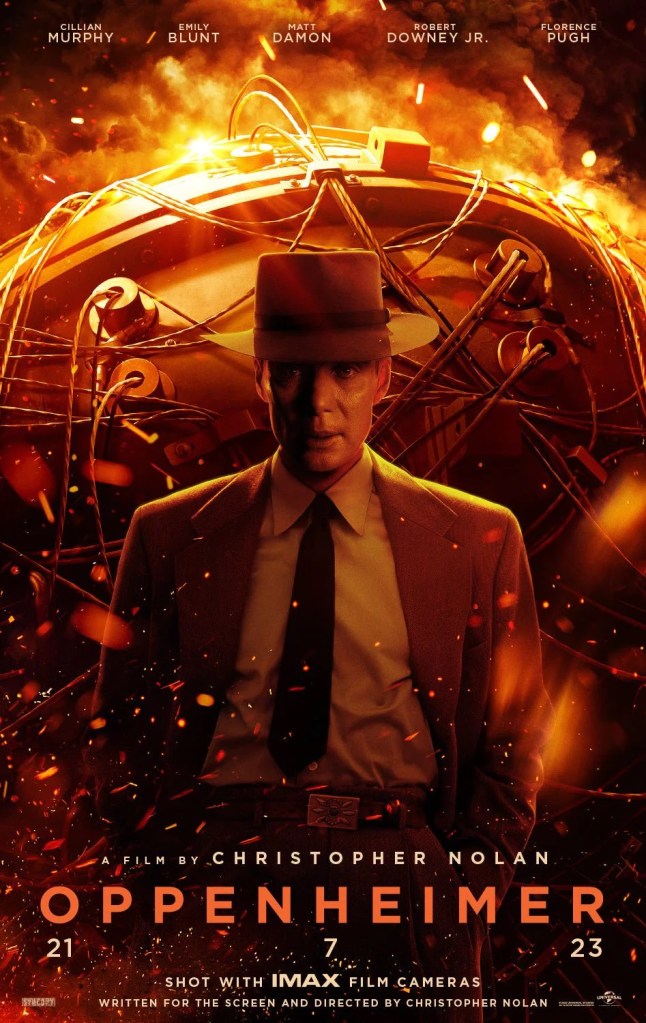
Oppenheimer (2023)

Oppenheimer (2023)

Nolan’s masterful musing on the morality of science is both challenging and compelling

Director: Christopher Nolan

Cast: Cillian Murphy (J Robert Oppenheimer), Emily Blunt (Kitty Oppenheimer), Matt Damon (General Leslie Groves), Robert Downey Jnr (Lewis Strauss), Florence Pugh (Jean Tatlock), Josh Hartnett (Ernest Lawrence), Casey Affleck (Colonel Boris Pash), Rami Malek (David Hill), Kenneth Branagh (Niels Bohr), Benny Safdie (Edward Teller), Dane DeHaan (General Kenneth Nichols), Jason Clarke (Roger Robb), David Krumholtz (Isidor Issac Rabi), Tom Conti (Albert Einstein), Alden Ehrenreich (Strauss’ aide), Gary Oldman (President Truman), Jefferson Hall (Haakon Chevalier)

“I am become Death, the destroyer of worlds”. These words from The Baghavad Gita are synonymous with J Robert Oppenheimer, director of the Manhattan Project as he witnessed the destructive force of his creation, the atomic bomb. Fittingly, Nolan’s fascinating and ambitious film opens with a reference to Oppenheimer as Prometheus: the man punished for all time for stealing fire from the Gods. Oppenheimer uses everything from thriller to courtroom drama, to explore the moral responsibilities of science: if we can do a thing, does it follow that we must?

J Robert Oppenheimer (Cillian Murphy) is a Renaissance man and leading theoretical physicist who dabbled more than a little in left-wing politics. The woman he loves, Jean Tatlock (Florence Pugh), is a die-hard communist, the woman he marries Kitty (Emily Blunt) is a former party member, his closest friends are all members. Associations like these will later haunt him after he is approached by General Leslie Groves (Matt Damon) to use his organisational skills, political savvy and charisma to run the WW2 nuclear programme where maverick scientists work hand-in-hand with the army. Despite his position, Oppenheimer remains untrusted by many. In the aftermath of the war, these suspicions will be used by his opponents, among them Lewis Strauss (Robert Downey Jnr) ex-head of the Atomic Energy Committee, to bring about his downfall as Oppenheimer preaches disarmament.

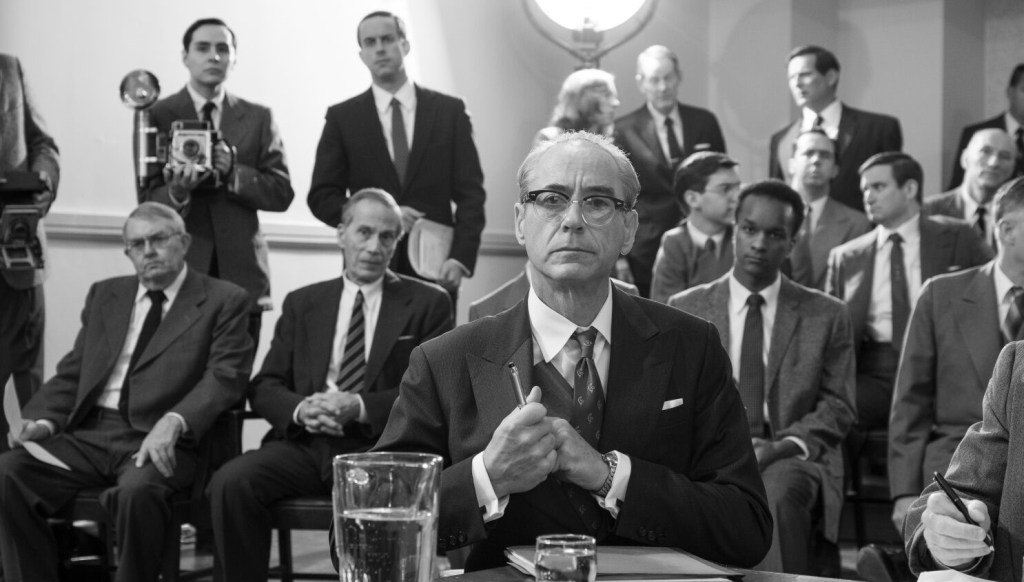
Much like Dunkirk, Oppenheimer is told in two timelines, intersecting with scenes replayed from different perspectives in subtly different ways. In “Fission” we see Oppenheimer, effectively on trial in 1954 for his security clearance, recount his life story, chronological flashbacks taking us through the development of the bomb. In “Fusion”, shot in gorgeous black and white, we follow the 1959 senate hearings to confirm Strauss in a cabinet post, and see his reminiscences of Oppenheimer’s post-war struggles to control the monster he has unleashed.

Oppenheimer is a brilliantly made, cinematically adventurous film: you would, of course, expect nothing less from a distinctive talent like Nolan. Brilliantly intercutting multiple timelines, it’s a film that is as much an experience as a story. This is a behemoth, filled with moments of flair and breath-taking use of sound and vision to affect mood. In particular, the film’s oppressive sound design bears down on the viewer like the pressure of the bomb itself. This means moments when we are released from its grip carry real impact. As Oppenheimer – already plagued with doubt – triumphantly announces the successful use of the bomb, the war-like celebratory pounding of scientists’ feet disappears from the soundtrack leaving Oppenheimer’s words echoing impotently around the room.

The pounding score and epic, sweeping camerawork (even more striking, since so much of the film takes place in small rooms filled with conversation) help Nolan to build up Oppenheimer’s mythic status and simultaneously strip him bare. Literally so at one point as, when questioned on his sex life in his hearing, Oppenheimer is seen naked in the room (as exposed as he must be feeling) answering questions with a naked Jean Tatlock astride him, staring into his wife’s eyes.

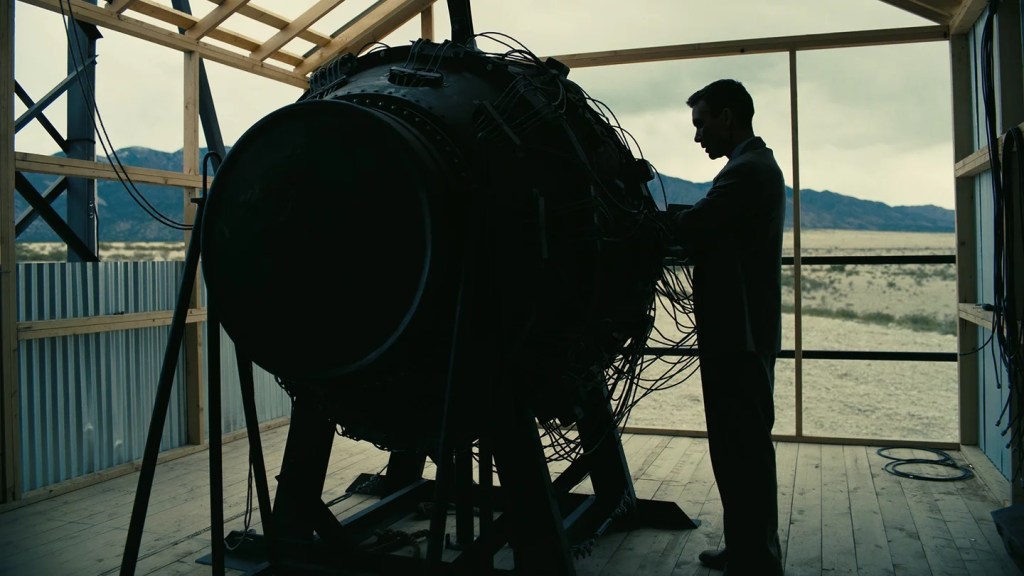
Oppenheimer labours, with the best intentions, to create a weapon before the Nazis. In its middle act, Nolan’s film focuses on the propulsive excitement of creation. The thrill of obstacles being overcome and solutions being found. The joy of a diverse team coming together for a single goal. We find ourselves longing for problems to be overcome, swept up in the desire for the endgame, as anxious as the scientists when it looks like rain will prevent the vital first Trinity test of the bomb.

Oppenheimer feels the same. Powerfully, intelligently and magnetically played by Cillian Murphy, this is a man who is a host of flaws crammed with impossible genius. A charismatic room leader, who is awkward in personal interactions. A charmer who rudely fails to remember his brother’s girlfriend’s name at a party. An inspiring leader who alienates people with ease. Murphy captures every inch of Oppenheimer’s staggering intellect and delight in intellectual problems, just as he also embodies the man’s arrogance and crushing self-belief.

So, it’s as crushing to him as it is terrifying to us, when the bomb explodes and the realisation hits us. Nolan’s sensory experience of a film fades down to silence as Nolan lets the camera float across the all-consuming fire of the silent explosion (the noise only comes when the shockwave hits) and suddenly the chilling implication of this terrible weapon becomes clear. This is a device that will kill millions. Oppenheimer knows it: he slowly shrivels into haunted guilt, Murphy seeming to shrink into himself as he finally understands what he has done.

Images of nuclear destruction both obvious (ashen bodies and nuclear flashes) and subtle (the out-of-focus vibration of background around Oppenheimer, as if sensing an approach shockwave) will haunt him and us for the rest of the movie. While many scientists – foremost among them Benny Safdie’s bull-headed Edward Teller and Josh Hartnett’s WASPish but decent Ernest Lawrence – feel little guilt. But Oppenheimer, and we, can no longer avoid questions of moral responsibility raised by those such as Niels Bohr (a quietly effective Kenneth Branagh).

Are there some discoveries better not made? Because once the genie is out of the bottle, it cannot be stuffed back in again. In this new world every world power must always have more. More bombs, bigger bombs, better bombs. And it explains why, like Prometheus, Oppenheimer must be punished. The tool of his punishment being his communist sympathies, embodied in his yearning attraction to Jean Tatlock (an under-used Florence Pugh). Nolan’s film is very strong on the terrifying paranoia of the secret state, where every word or association can be collected into a terrible portfolio of witnesses you cannot question, evidence you cannot see, testimony you cannot hear.

“Why don’t you fight” cries his wife Kitty, played with a dynamic, intelligent forcefulness by Emily Blunt. I could have done with a third act built more around Blunt’s starkly honest betrayal of a woman ill-suited to being a wife and mother, trapped in a world where that is all women can achieve (and which also trimmed a few witnesses from Oppenheimer’s trial). Why doesn’t Oppenheimer fight? Nolan has his theories, carefully seeded and confidently revealed.

Oppenheimer’s post-war clashes cover much of “Fusion”, anchored by a superbly under-playing Robert Downey Jnr (his finest work since Chaplin) as the outwardly avuncular, but inwardly insecure and bitter Strauss, who sees Oppenheimer as the embodiment of all the elitists who turned their noses up at him (no matter that Oppenheimer himself is an outsider, in a world of science run by WASPish types like Lawrence). Nolan’s film explores how morality is forgotten in an environment so rife with paranoia that the slightest expression of doubt is seen as treason.

Nolan’s film needs its vast runtime to keep as many balls in the air as it tries to. It’s probably a few too many balls. I would have loved more on Oppenheimer’s outsider status, as a Jew in American science (its not mentioned that the J stands for Julius, despite his claims it stands for nothing). Similarly, I would have welcomed more time to explore Oppenheimer’s complicated emotional life, in particular the fascinatingly complex relationship of some love, a fair amount of mutual respect and a large measure of mutual convenience with his wife Kitty.

But the film’s chilling musing on the horrors science can accidentally unleash while focused on progress is superbly explored and leaves a lasting impact. It’s a feeling that continues to be sharply relevant while we struggle with the implications of AI. Was there a need for the bomb? Perhaps there was. Were we ready for the bomb? No. And it is the failure of anyone, including Oppenheimer, to even consider this until it was too late that is the coldest warning in Nolan’s epic film.

Rocco and His Brothers (1960)

Rocco and His Brothers (1960)

Visconti’s realistic family epic simmers with the dangers of split loyalties, but is mixed on gender politics

Director: Luchino Visconti

Cast: Alain Delon (Rocco Parondi), Annie Girardot (Nadia), Renato Salvatori (Simone Parondi), Katina Paxinou (Rosaria Parondi), Roger Hanin (Duilio Morini), Spiros Focas (Vincenzo Parondi), Claudia Cardinale (Ginetta), Paolo Stoppa (Tonino Cerri), Max Cartier (Ciro Parondi), Rocco Vidolazzi (Luca Parondi, Alessandro Panaro (Franca), Suzy Delair (Luisa), Claudia Mori (Raddaella)

Visconti was born into a noble Milanese family: perhaps this left him with a foot in two camps. He could understand the progress and achievement of northern Italy in the post-war years, those booming industry towns which placed a premium on hard work, opportunity and social improvement. But he also felt great affinity with more traditional Italian bonds: loyalty to family, the self-sacrificing interdependency of those links, and the idea that any outsider is always a secondary consideration, no matter what. It’s those split loyalties that power Rocco and His Brothers.

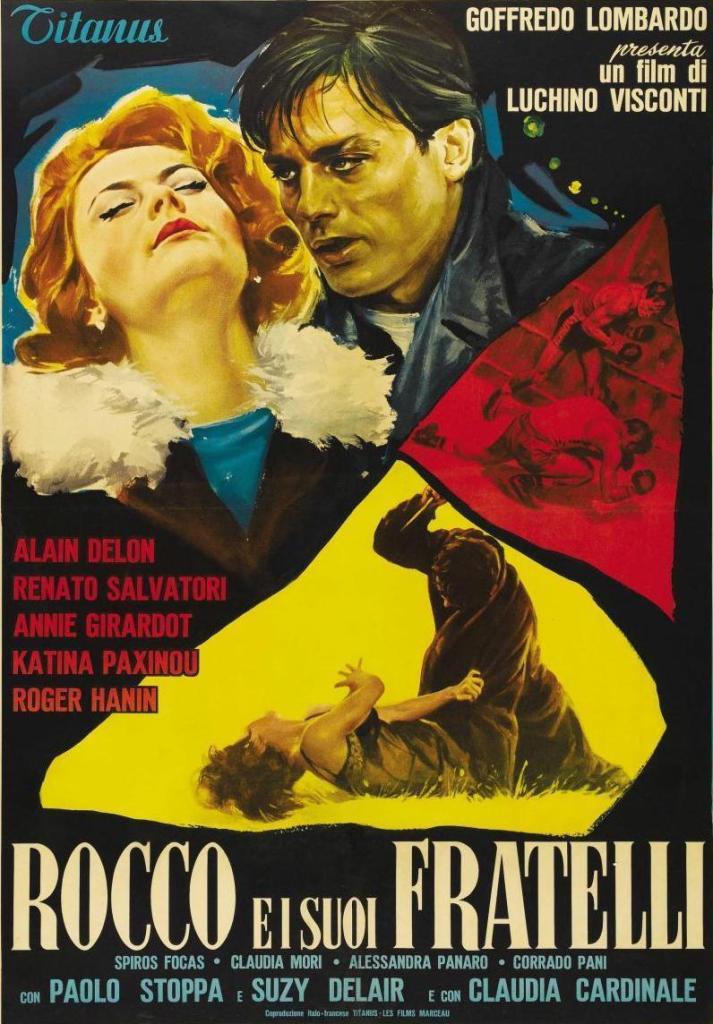
Rocco (Alain Delon) is one of five brothers, arriving in Milan from the foot of Italy looking for work with his mother Rosaria (Katina Paxinou). The hope of the family is second brother Simone (Renato Salvatori), a sparky pugilist destined for a career as a boxing great. But Simone can’t settle in Milan, too tempted by the opportunities he finds for larceny and alcohol. He falls in love with a prostitute, Nadia (Annie Girardot), until she rejects him and then he drifts ever downwards. Rocco, always putting family first, inherits his place first as a boxer than as Nadia’s lover. Problem is, Simone is not happy at being replaced, and the three head into a clash that will see Nadia become a victim in the twisted, oppressive, family-dominated loyalty between the two brothers.

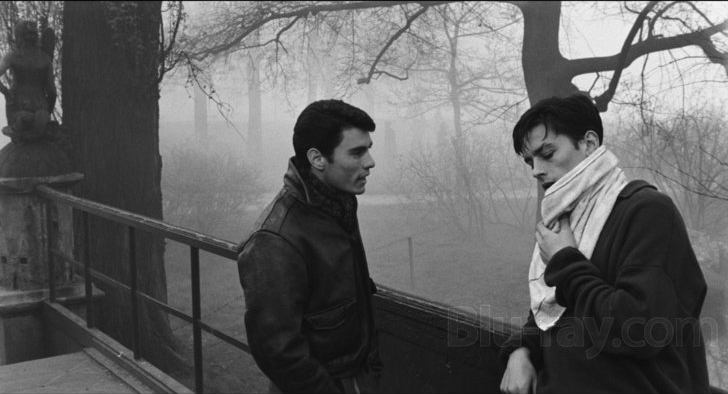
Rocco and His Brothers is a further extension of Visconti’s love of realism – but mixed with the sort of classical themes and literary influences that dominated his later period pieces, themselves in their stunning detail a continuation of his obsession with in-camera realism. Filmed in the streets of Milan, where you can feel the dirt and grit of the roads as much as the sweat and testosterone in the gym, it’s set in a series of run-down, overcrowded apartment blocks and dreary boxing gyms that you could in no way call romantic.

This ties in nicely with Visconti’s theme. Rocco and His Brothers is about the grinding momentum of historical change – and how it leaves people behind. In this case, it’s left Rocco and Simone as men-out-of-time. Both are used to a hierarchical family life, where your own needs are sacrificed to the good of the family and every woman is always second best to Momma. While their brother Ciro knuckles down and gains a diploma so he can get a good job in a factory, Simone drifts and Rocco bends over backwards to clean up the mess his brother leaves behind. Naturally, Simone and Rocco are the flawless apples of their mother’s eye, Ciro an overlooked nobody.

The film focuses heavily on the drama of these two. And if Visconti seems split on how he feels about the terrible, destructive mistakes they make, there is no doubting the relish of the drama he sees in how it plays out. Rocco, by making every effort to make right each of the mistakes his brother makes, essentially facilitates Simone’s collapse into alcoholism, criminality and prostitution. Simone flunks a boxing contract? Rocco will strap on the gloves and fulfil the debt. Simone steals from a shop? Rocco will leave his personal guarantee. Simone steals from a John? Rocco will pay for the damage.

Caught in the middle is Nadia, a woman who starts the film drawn to the masculine Simone but falls for the romantic, calm, soulful Rocco. Wonderfully embodied by Annie Girardot, for me Nadia is the real tragic figure at the heart of this story. Whether that is the case for Visconti I am not sure – I suspect Visconti feels a certain sympathy (maybe too much) for the lost soul of Simone. But Nadia is a good-time girl who wants more from life. Settling down to a decent job with Rocco would be perfect and he talks to her and treats her like no man her before. Attentive, caring, polite. He might be everything she’s dreaming off, after the rough, sexually demanding Simone.

Problem is Nadia is only ever going to be an after-thought for Rocco, if his brother is in trouble. Alain Delon’s Rocco is intense, decent, romantic – and wrong about almost everything. He has the soul of a poet, but the self-sacrificing zeal of a martyr. He clings, in a way that increasingly feels a desperate, terrible mistake, to a code of conduct and honour that died years ago – and certainly never travelled north with them to the Big City. When Simone lashes out at Nadia with an appalling cruelty and violence, making Rocco watch as he assaults her with his thuggish friends, Rocco’s conclusion is simple: Simone is so hurt he must need Nadia more than Rocco does. And it doesn’t matter what Nadia wants: bros literally trump hoes.

Rocco does what he has done all his life. He wants to live in the south, but the family needs him in the north. He wants to be a poet, but his brother needs him to be a boxer. He loves Nadia but convinces himself she will stabilise his brother (resentful but trapped, she won’t even try, with tragic consequences). All of Rocco’s efforts to keep his brother on the straight-and-narrow fail with devastating results. Naturally, his mother blames all Simone’s failures on Nadia, the woman forced into trying to build a home with this self-destructive bully. Rocco’s loyalty – he sends every penny of his earnings on military service home to his mother – is in some ways admirable, but in so many others destructive, out-dated indulgence.

And it does nothing for Simone. Superbly played by Renato Salvatori, he’s a hulk of flesh, surly, bitter but also vulnerable and self-loathing, perfectly charming when he wants to be – but increasingly doesn’t want to. His behaviour gets worse as he knows his brother is there as a safety net. It culminates in an act of violence that breaks the family apart: not least because Simone crosses a line that Ciro (the actual decent son, who Visconti gives precious little interest to) for one cannot cross and reports him to the police.

That final crime is filmed with a shocking, chilling naturalism by Visconti, horrific in its simplicity and intensity. But I find it troubling that Visconti’s core loyalties still seem to be with the out-of-place man who perpetrates this crime and his brother who protects him, rather than female victim. Rocco and His Brothers could do and say more to point up the appalling treatment of Nadia, or at least make clearer the morally unforgiveable treatment she receives from both brothers (she’d have done better disappearing from Milan after Simone’s attack and never coming back, not playing along with Rocco’s offensive belief that Simone’s assault was a sort of twisted act of love).

Saying that, this is a film of its time – perhaps too much so, as it sometimes feels dated, so bubbling over is it with a semi-Marxist view of history as a destructive force. But it’s shot with huge vigour – the boxing scenes are marvellous and their influence can be felt in Raging Bull – and it ends on a note of optimism. The film may have disregarded Ciro, but there he is at the end – happy in his choices, settled, making a success of his life. Rocco and Visconti may see the drama as being exclusively with the old-fashioned brothers, making their counterpoint a paper tiger, but it ends with him – and (I hope) a reflection that Ciro’s path may be duller and safer, but also nobler and right.

Escape from Alcatraz (1979)

Escape from Alcatraz (1979)

Siegel’s quietly observed prison break drama masters the small details

Director: Don Siegel

Cast: Clint Eastwood (Frank Morris), Patrick McGoohan (The Warden), Fred Ward (John Anglin), Jack Thibeau (Clarence Anglin), Larry Hankin (Charley Butts), Frank Ronzio (Litmus), Roberts Blossom (Chester “Doc” Dalton), Paul Benjamin (English), Bruce M Fischer (Wolf Grace)

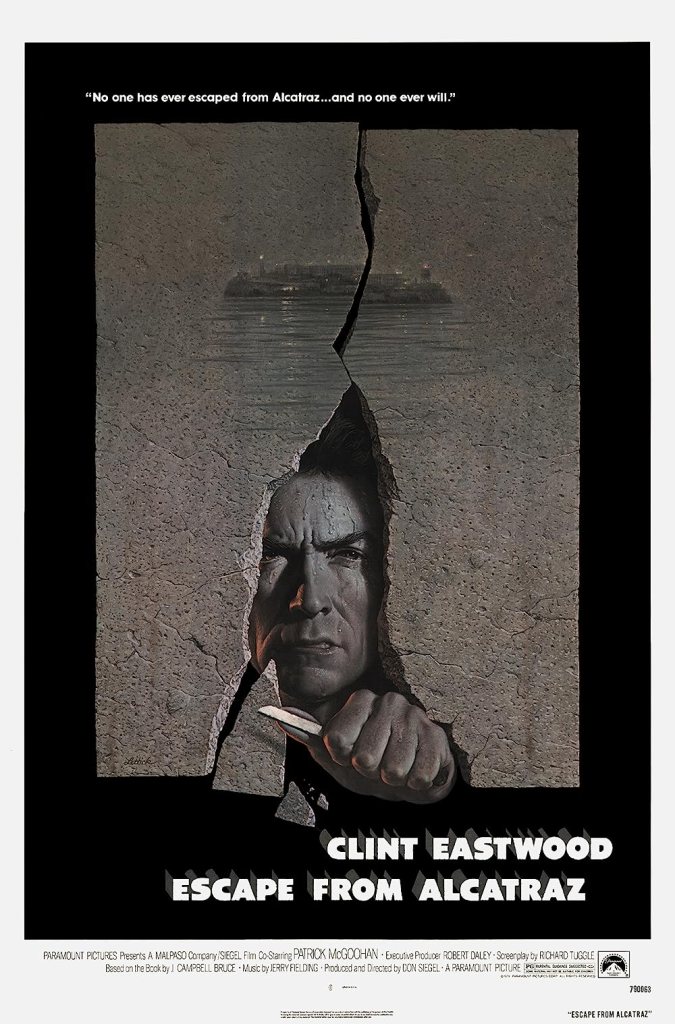
In 1962, three men dug their way out of the cells in Alcatraz, climbed into a raft made of raincoats and sailed into San Francisco Bay and mystery. Not a trace was ever seen again of Frank Morris (Clint Eastwood), John Anglin (Fred Ward) or Clarence Anglin (Jack Thibeau), but their story became a cause celebre. Some say they disappeared to South America – many more believe they drowned in the freezing cold water of the Bay. Siegel’s film covers the details of the escape attempt – and leaves more than a hint that they escaped.

Escape from Alcatraz is a quintessential prison movie. It’s got the complete genre checklist: sadistic wardens, bullying in the courtyard, the threat of rape in the showers, solitary confinement, boring routines and jobs, unfair access to privileges, cagey alliances, the little details of a plan coming together, hair’s-breadth escapes from being caught and a “we go now or not at all” climax. It’s all mounted extremely well by Siegel, shot on location with such a searing coldness you can practically feel the chill the prisoners suffered all the time.

Alcatraz is made up of two things: quiet and time. Siegel’s film therefore delves into both of these things. From its opening montage detailing Morris’ arrival at the prison – on the boat, checking-in, cavity searches and tramping naked down to his cell – images and silence tell their own story. For the guards, words are formulaic and repetitive. Eastwood as Morris is barely ever out of shot but doesn’t speak for ten minutes. It’s the same for many other sequences, detailing prison life: quiet conversations in the yard, the pointless moves from place to place, the grinding procedure.

Time stretches without meaning in Alcatraz, so it’s no great sacrifice for Morris to work out that he can scratch away the brickwork around the drain in his cell and create a hole large enough to allow him to get to the unguarded ventilation corridors on the other side. (He works out it connects – eventually – to the outside by observing a cockroach crawl out of his cell.) Morris then reckons he’s got nothing better to do than to scratch away at that wall with a stolen nail pick, a labour that will take him months to extend the hole to something he can climb through.

Siegel also makes a great deal of this through his long-earned knowledge of how best to work with his star. This is one of Eastwood’s finest performances, a slate of determined, dry-witted stillness that communicates great thoughtfulness and ingenuity behind a stoic exterior. Morris maybe a compulsive thief, but he’s no fool – and he doesn’t suffer them either. He’s contemptuous of the self-importance of many of the warden and unrelenting in his determination to use whatever he can lay his hands on to help facilitate his escape attempt.

You’d be desperate to escape from Alcatraz too. Grim, very cold and crowded with bullies like Wolf (Bruce M Fischer), a puffed-up psychopath looking for a new punk (though as Quentin Tarantino said in a recent book, no one alive would look at Clint Eastwood and believe he’d be an easy shower victim). Meals are vile and the punishment of solitary is beyond tough: pitch black cells, only interrupted by the door being flung open so a high-pressure hose can ‘shower’ you with cold water (even Morris is reduced to something close to trembling wreck after a month of this treatment in the hole). It all leads into his determination to use anything he can to get out.

Siegel’s film loves the tiny details of small, inconsequential items converted into the means to escape. Unwanted magazines from the library become papier-mache to craft dummy heads to disguise the gang’s absence from their beds while they make preparations the other side of their wall. An accordion case smuggles goods around the prison. Makeshift candles are assembled. A set of portrait paints are used to paint the dummies and create a cardboard fake wall to place over the newly created hole. We see the painstaking effort to assemble enough coats to create their life-raft, the puzzling out of what is needed to get them from the ventilation roof to the other side.

Escape from Alcatraz presents these Herculean labours with simplicity but a patient eye for detail that makes them become strangely noble and hugely tense. You put aside your knowledge that these are hardened criminals – the film does everything it can to downplay their offences – and instead focus on them as victims of an unjust system, with “the man” crushing any hope from them.

As such, Patrick McGoohan has a huge amount of fun in a lip-smacking role as the prison warden. (It’s fun to see the world’s most famous Prisoner as the man handing out the numbers.) McGoohan’s unnamed warden has everything the men have not – not least words. He’s not starved by silence, but pontificates at pompous length about his theories of incarceration and the inevitable pointlessness of rehabilitation. Just to make sure our sympathy for the prisoners is complete, he’s also a vindictive bully, stripping prisoner “Doc” (Roberts Blossom) of his painting privileges because he doesn’t like a portrait made of him (tipping Doc into depressive self-harm), then provoking old-timer Litmus (Frank Ronzio) into a risky physical altercation. He’s unjust, unfair and mean.

So when he says at the end that he’s certain the prisoners died, of course we don’t want to believe him. Not least since we’ve been with the prisoners every minute of their desperate throw of the dice. In real life, they almost certainly froze to death in the Bay, their raft not being strong enough to help them complete the mile long swim before the icy water paralyzed them. But Escape from Alcatraz makes you want to believe they could have got away.

Hardcore (1979)

Hardcore (1979)

Familiar ideas from better films are mixed together in this revenge thriller

Director: Paul Schrader

Cast: George C Scott (Jake van Dorn), Peter Boyle (Andy Mast), Season Hubley (Niki), Dick Sargent (Wes De Jong), Leonard Gaines (Bill Ramada), Dave Nichols (Kurt), Gary Graham (Tod), Larry Block (Detective Burrows), Ilah Davies (Kristen van Dorn), Marc Alaimo (Rattan)

A man prowls the urban streets, his face fixed with disgust at their degeneration, looking for a soul to save, the whiff of potential violence strong on him. He hunts for a lost family member, in an obsessive quest where it’s not even sure he will want to take her back even if he finds her. If that makes Hardcore sound like a remix of Taxi Driver and The Searchers… well that’s because it is. Schrader’s film is a well-made, initially well-executed riff on familiar themes that eventually tries to settle for something far easier to digest, with an ending that stinks of a shallow Chinatown.

Jake van Dorn (George C Scott) is a devoutly Calvinist businessman in Michigan. A single father, whose wife has left him, his beloved daughter Kristen (Ilah Davies) disappears one day after a church-sponsored visit to California. Van Dorn leaves no stone unturned to investigate, eventually hiring sleazy PI Andy Mast (Peter Boyle), who discovers an 8mm porno film starring Kristen. Was she kidnapped? Is she in danger? Van Dorn will find her, throwing himself into the seedy world of porn in an obsessive quest where no line will be uncrossed until he brings his daughter home.

There are many things to admire in Hardcore. Shot by Taxi Driver veteran Michael Chapman, it’s immersive seedy view of the underbelly of California is extremely striking. Schrader also quite neatly counterpoints this with the picket-fence conservatism of van Dorn’s stomping grounds at home. Van Dorn starts as a man who expresses hesitation that a shade of blue in his office might be too garish, and ends donning fake wig and moustache alongside loud shirt to pass as a porn baron.

What’s interesting about Hardcore is that, even though its actually Schrader’s second film, it feels like an over-anxious debut. It’s blatant stylistic and thematic call-backs to Taxi Driver­ – hammered home as we watch van Dorn cruise the streets of California, the porn shops and theatres neon signs reflected in his windows – makes you feel Schrader wished he had held on to the rights to direct that film himself. It’s extremely on-the-nose pinching of most of the structure of The Searchers feels like a loving tribute from a director yet to find his own voice.

Schrader however does an excellent job with much of the film’s first half. The oppressive tension build-up from the moment Mast arrives (Boyle’s casting, of course, being another eerie reminder of Taxi Driver) really grips. Scott’s stunned, shattered and increasingly appalled, primal reaction to watching his daughter in a porno is delivered with the sort of gusto and commitment that only a great actor can pull off. His increasingly-obsessive, won’t-take-no-for-an-answer delve into the world of porn – from knocking shops to porn film sets – has just the right sense of van Dorn slowly developing into a time bomb that could go off, while never losing our sympathy.

Hardcore is contemptuous of porn. Sharing van Dorn’s perspective of the industry, the film cements the industry as being based in a Danteish circle of hell, with violence, exploitation and misery round every corner. Schrader also enjoys poking fun at the porn industry and the film industry (a flashy porn director trained at UCLA, much like Schrader’s contemporaries). Searching for witnesses, van Dorn sets up fake auditions for a new porn movie, attended by a series of optimistic, hopeful guys with show reels and CVs. The money-first producers look and sound like any other Hollywood executive – it’s just they openly trade in skin.

The problem is Hardcore can’t settle for this: as if worried that poking some fun at the seedy industry might get in the way of us relating to the gut-punch horror van Dorn feels. In the second half, Schrader sets up (out of the blue) a snuff film premise, with an anonymous big bad behind it all (a figure so undeveloped that the most interesting thing about him is he’s played by Marc Alaimo who played Deep Space Nine’s villain Gul Dukat) just so we can have someone so obviously unspeakable that we have no mixed feelings at all when the violence kicks off.

Which is a shame because Hardcore looks, for a moment, like it is about to go somewhere more interesting. Van Dorn is broken from his obsessive focus only by meeting with Niki (played with just enough ballsy cuteness by Season Hubley), a girl on the margins of the industry dreaming of an escape. The two of them are drawn together in unexpected ways: she respects his religion in a way no-one else does, while van Dorn becomes the only man who doesn’t see her as a sex object, treating her with a fatherly gentleness you suspect he never showed his actual daughter. The film’s ruthless jettisoning of this plotline strives for hard-nosed reality, but ends up feeling like a too obvious attempt at pathos.

Despite all this Hardcore has its moments, not least thanks to George C Scott’s fire-cracker performance in the lead. Scott may have hated Schrader (allegedly begging him to never direct a film again), but he breathes life into this Ethan Edwards-Travis Bickle clone, making van Dorn just the right mix of pained, aggrieved and dangerous. Unfortunately, the film settles for something far more conventional, a revenge thriller with an obvious and inarguably horrible character created solely to make us feel good when he is dispatched.

The Piano (1993)

The Piano (1993)

Searing emotion, passions and fascinating enigmas abound in Campion’s brilliant landmark masterpiece

Director: Jane Campion

Cast: Holly Hunter (Ada McGrath), Harvey Keitel (George Baines), Sam Neill (Alisdair Stewart), Anna Paquin (Flora McGrath), Kerry Walker (Aunt Morag), Genevieve Lemon (Nessie), Tungia Baker (Hira), Ian Mune (Reverend), Peter Dennett (Head seaman), Cliff Curtis (Mana)

What’s really striking about The Piano is how literary it feels, despite the fact it’s an entirely original cinematic work. Every moment of Campion’s intelligent, beautifully constructed, often enigmatic and unreadable film feels like it has been plucked from the pages of a lost Booker Prize winner. Juggling themes of feminism and sexual awakening alongside colonial and masculine thinking, it’s a richly beautiful film awash with superb performances and a heightened, literary reality buried inside a film grounded in the mud and squalor of reality. It remains Campion’s finest achievement.

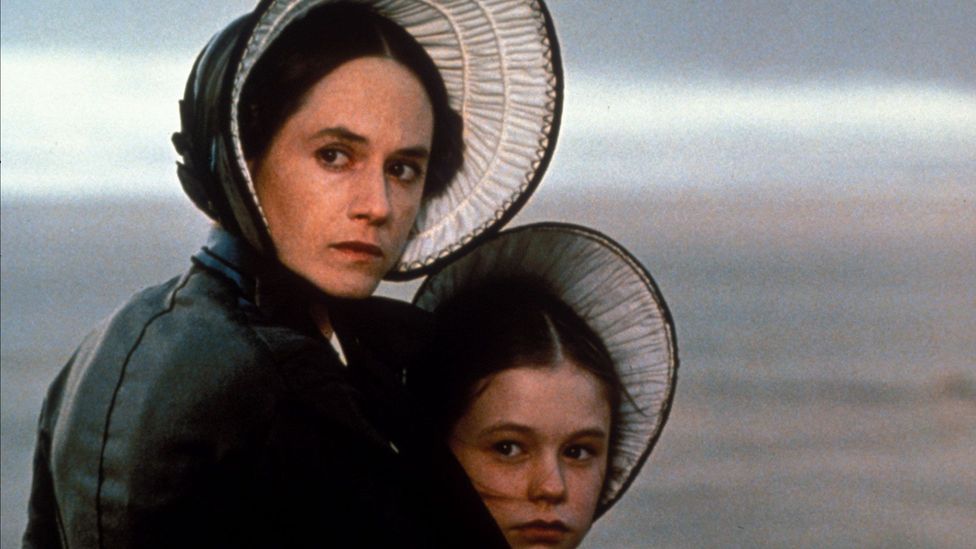
Ada McGrath (Holly Hunter) and her nine-year-old daughter Flora (Anna Paquin) arrive on the coast of nineteenth-century New Zealand. Having refused to speak since the age of six, Ada communicates through sign language and the precocious Flora. Silent in person, her treasured piano gives her a voice and allows her to express passions she otherwise keeps carefully controlled. Ada is to marry landowner Alisdair Stewart (Sam Neill), but he baulks at carrying the huge piano from the shore to his home through the forest. Instead, it falls into the possession of neighbour George Baines (Harvey Keitel). George, besotted with Ada, offers her the chance to earn it back one key at a time, in return for allowing him to “do things” while she plays it in his house. The arrangement leads to a complex, sexual love triangle between Ada, George and Alisdair that will see passions explode.

I wonder sometimes if The Piano is a bit of a problem for some campaigners today. You can discover plenty of retrospective reviews that find it hard to mask their disappointment that the film doesn’t offer a more pointed condemnation of its two male characters. Many want The Piano to show Ada rejecting Alisdair as a repressed potential rapist and George as a manipulative sexual predator. But Campion is telling a far more nuanced, feminist story than this easy-to-swallow structure. The Piano is not about pigeon-holing people into easily definable roles. Rather it looks at how unexpected bonds can rise and how darker, deeper passions can flair in unexpected ways.

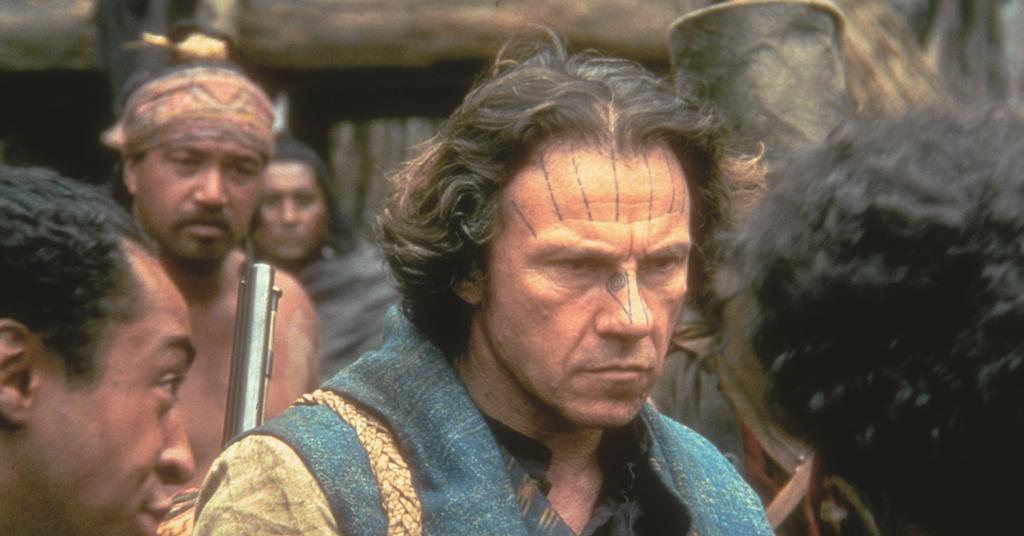
Because George’s at-first manipulative, outrageous offer actually awakens something unexpected in Ada. George is perfectly played by Keitel as outwardly a lump of inarticulate, labouring flesh but inwardly far more sensitive and strangely poetic – and his desire is based as much on a curious romantic longing and a sensitive fear of rejection. His requests are often based around the briefest of physical touches, the desire to see Ada’s shoulders and legs. He’s timid, shy and becomes increasingly open about his feelings for her.

Even more strikingly, Ada discovers that (after initial shock) she enjoys the bartering negotiation of the arrangement (offering more in-depth contact for a higher number of keys) and finds her ability to provoke desire in George both sexually liberating and exciting. So much so that, when George ends the arrangement (recognising that he cannot get what he really wants – Ada’s love – as long as it stands), her reaction is one of anger, more like a spurned lover, then a relieved victim.

This simmering desire is at the heart of Campion’s passionate work. Rewatching it’s striking how vital touch is in the film, how much it is linked to emotional and sexual connection. Campion focuses in extreme close-up on George stroking Ada’s skin through a tiny hole in her stockings – to her initial shock and increased pleasure. The slightest contact of hands between these two carries an emotional and sensual charge. It’s exactly the lack of this that becomes impossible not to notice in the relationship between Ada and Alisdair. Contact between them is minimal and when it occurs it carries darker meanings: most obviously the impotent, frustration Alisdair half-heartedly uses with Ada, then in the rain-soaked fury he will unleash when her betrayal is revealed.

Ada increasingly uses touch to control. She caresses and strokes Alisdair’s naked body at night – never allowing him to touch her in return – both to manipulate him but also, partly, to satisfy her own newly-discovered itch for sexual power, just as she grew to give herself over totally to the hold she had over George. Dressed in restrictive black, that covers almost her whole body, The Piano is about a flowering of a newly confident and sexually awakened woman from a repressed shell.

The language of the body ties into this. Campion reverses the expectations of nudity. Instead, it’s the male form of George we first – and almost predominantly – see. It turns this physically imposing man into someone vulnerable and sensitive. Like a romantic lover, he cleans the piano naked. He will reveal his body to Ada with shyness. When they first make love, he focuses on her pleasure rather than his own. He contrasts with the stiff-backed Alisdair, trapped in his formal clothes (compared to George’s indigenous tattoos and garments) who, even when Ada seduces him, uncomfortably tries to pull his trousers up over his bare buttocks.

Alisdair – superbly played by Sam Neill in a challenging role – is not a bad man, just a deeply unimaginative, repressed and self-satisfied one. He sees a woman’s duty as wife and nothing else. Just as he can only see the Māori on the land around them as simple savages, clinging to naïve superstitions (he cannot understand why they do not wish to sell or farm the land their ancestors are buried on), so he can find no common ground with Ada. He’s even subconsciously aware the piano is a means of emotional expression she refuses to share with him, causing him to do everything he can to remove it from his house with the same loathing he would have for a rival. But he’s also a timid, needy soul – witnessing George and Ada coupling, he watches from his concealment with a curious mix of envy, longing and sadness at something he will never have.

The Piano places Ada at the centre of this complex junction of feelings and emotions. Played with awards-laden brilliance (including the Oscar) by Holly Hunter, this is a woman who never speaks but whose complex emotional journey is always clear. Stubborn, difficult and demanding, we learn this is defence mechanism against a world she has so cut herself off from, so much so she has literally refused to speak for decades. Her piano is the only outlet she allows herself in a world with strict rules for women. Finding something alternative to this is a frightening and alluring prospect.

It’s one not necessarily understood by her daughter Flora (a brilliant Oscar-winning performance by Anna Paquin) who is so precocious in some ways – forcefully communicating her mother’s wishes – and so young in others. Flora understands little – with fateful consequences – of the emotional and sexual tangles around her and, like a child, often accepts the path of least resistance. She also sees the strong bond between mother and daughter as threatened by the presence of George – in a way she cannot comprehend, even after spying their intimacy together.

Campion’s film superbly ties these literary themes into a film of complex enigma and aching beauty (it’s beautifully filmed by Andrew McAlpine). The film is aided enormously in its emotional charge by the radiantly lyrical score by Michael Nyman (his distinctive sound makes the film sound like the finest film Peter Greenaway never made). The Piano offers challenging, thought-provoking and intriguing scenes at every turn, powered by a brilliant script and wonderful performances. Avoiding the obvious, it’s power and reputation has rightly only grown in the decades since its filming.

Manhunter (1986)

Manhunter (1986)

Mann’s visually striking thriller doesn’t have quite the dark subversiveness it needs but is an unsettling thriller

Director: Michael Mann

Cast: William Petersen (Will Graham), Kim Griest (Molly Graham), Dennis Farina (Jack Crawford), Brian Cox (Dr Hannival Lecktor), Joan Allen (Reba McClane), Tom Noonan (Francis Dollarhyde), Stephen Lang (Freddy Lounds)

Before The Silence of the Lambs, there was an earlier attempt to bring the twisted world of Thomas Harris’ gothic thrillers to the screen. Michael Mann’s Manhunter has grown in reputation since its release, along with an increased regard for the visually stylised and cold modernism of Mann’s work. Truthfully, Manhunter lacks the Hitchcockian dark wit, and is far less effective at exploring the dark links between investigator and psychopath, than Silence of the Lambs. But it remains an intriguing – and often disturbing – curiosity.

FBI profiler Will Graham (William Petersen) is called out from extended leave by Agent Jack Crawford (Dennis Farina) to investigate chilling serial killer, the Tooth Fairy. The killer breaks into family homes and brutally murders the occupants, leaving bite marks and broken mirrors behind. Graham has an empathetic gift for understanding the mindset of killers, something he used to capture cannibalistic serial killer Hannibal Lecktor (Brian Cox), now imprisoned in a mental institute. Graham’s quest to catch the Tooth Fairy leads to him becoming ever more obsessive, including reconnecting with Lecktor to help profile the killer. Meanwhile the Tooth Fairy, Francis Dollarhyde (Tom Noonan), a lonely photo developer obsessed with William Blake’s Red Dragon and desperate to ‘become’ something greater begins his first meaningful relationship with blind colleague, Reba (Joan Allen).

Manhunter is set in a crisp, modernist world of clean, soulless buildings, glass fronted houses and offices and precise, featureless rooms. Mann and cinematographer Dante Spinnotti film everything with a series of tinges – strong, cool blues, drained out and striking whites, murky greens. All is designed to give the film a deliberately forensic feeling, like we watching something play out in a crime lab. It fits with a film that is fascinated with the procedures of investigating and profiling and delights in the intuitive, deductive leaps Graham makes.

Mann’s film attempts to draw parallels between Graham and Dollarhyde, both men uncomfortably in touch with their darkest, twisted impulses. As Hannibal Lecktor observes, Graham can so completely inhabit the interior world of killers, because he secretly longs for the buzz of killing himself. That’s easy to see in William Petersen’s focused, intense performance. Reluctantly dragged back in, Graham is noticeably unphased by the horrific crime scenes he witnesses (however much he is furious at the loss of life) and becomes ever more fixed and lean as the hunt continues, increasingly more-and-more like the obsessive prey-hunting psychopath he is investigating.

In doing so he sidelines his family – even putting them in danger – and increasingly cuts off human connections to feed his laser-focused quest. This contrasts him with Dollarhyde, a damaged, isolated and self-loathing man who flirts with the last vestiges of humanity. A man who sees nothing in himself that anyone could love, Dollarhyde becomes as giddy as a schoolboy when Reba sees him as a kind, attractive and decent man. Behind his eyes, Tom Noonan shows a quiet struggle between the obsessive monster, driven to destroy, and a man considering changing his path. This intriguing contrast between the family-man who leaves tem to hunt killers and the killer who flirts with settling down is a thread you wish the film had more patience to explore among its neon-lit, filtered style.

But Mann doesn’t quite have the patience to draw these threads together. Perhaps not helped by, skilled and intelligent as Noonan’s performance is, always presented Dollarhyde as an imposing, Frankenstein-monster style heavy rather than someone we invited to feel the sort of twisted empathy for that the film needs. We should be feeling something of what Graham says when he talks about feeling pity for the abused child and disgust for the twisted killer that child grew up to be. We never truly do.

Perhaps that’s partly because Dollarhyde is a character the film can never build up the same interest in, as it does with the looming shadow of Hannibal Lecktor (the spelling was unique to this film). Appearing only in three scenes, Lecktor dominates the film. Basing his performance on Scottish serial killer Peter Manuel, Cox brings the part a chillingly studied delight at his own intelligence with an air of quiet politeness which only vaguely masks his malice and cruelty. A ghost of a smile is behind every cruel, hurtful word and action he carries out and his every action is motivated only by a desire to harm. It’s a mesmerically terrifying, low-key performance that overwhelms the film.

It contributes to the film’s second half never really matching the first. As Lecktor recedes and Graham focuses on the Tooth Fairy, the lack of personal connection between hunter and hunted (and the film’s unease to draw too distinctive a comparison between them) makes the final hunt less compelling ironically than when the Tooth Fairy was an unknown, unseen adversary. Noonan’s most effective scene is his terrifyingly soft-spoken interrogation of smart-aleck reporter Freddy Lounds (a braggart Stephen Lang), but the film isn’t brave enough to give him enough potential humanity to make the character really interesting – or the Satanic charisma that Lecktor has.

Manhunter culminates in a disappointingly run-of-the-mill shootout (edited with a curiously ham-fisted jaggedness) and an unsatisfactory Graham family reunion that feels like it hasn’t got the energy or desire to explore any of the lasting impact the darkness we’ve discovered in our lead character would surely have. Manhunter not only changes the title of Harris’ book (there was fear that Red Dragon was too easy to mistake as a martial arts film), but it also benches the emotional and psychological obsession of Dollarhyde (even the character’s famous tattoos don’t appear in the film). It becomes a strikingly shot, intriguingly fast-paced thriller which doesn’t manage to make the psychological complexities its striving for either as fascinating or unsettling as it should. It has plenty to haunt you – its creepy POV home-invasion opening is nightmare-inducing – but Harris was better served by Lambs mix of playful dark-horror and focus on acute psychological insight.

Beau Travail (1999)

Beau Travail (1999)

Denis poetic, art-house classic is intense, searing and transformative, crammed with beautiful images

Director: Claire Denis

Cast: Denis Lavant (Adjudant-Chef Galoup), Michel Subor (Commandant Bruno Forestier), Grégoire Colin (Légionnaire Gilles Sentain), Richard Courcet (Légionnaire), Nicolas Duvauchelle (Légionnaire)

I think it’s fair to say Beau Travail will not be to everyone’s taste. For every person (a bit like me) who comes out of the film humming ‘Rhythm of the Night’, they’ll be another who will never have made it far enough into the film to even understand why anyone would. Denis’ poetic film, shot like a combination of art project and choreographic exercise almost wilfully foregoes plot and character in favour of experience. Framed around a voiceover that could be almost anything from a diary, to a letter to a suicide note, Beau Travail is a film that wants you to be as uncertain about its aims and intents, as its lead character is about his own.

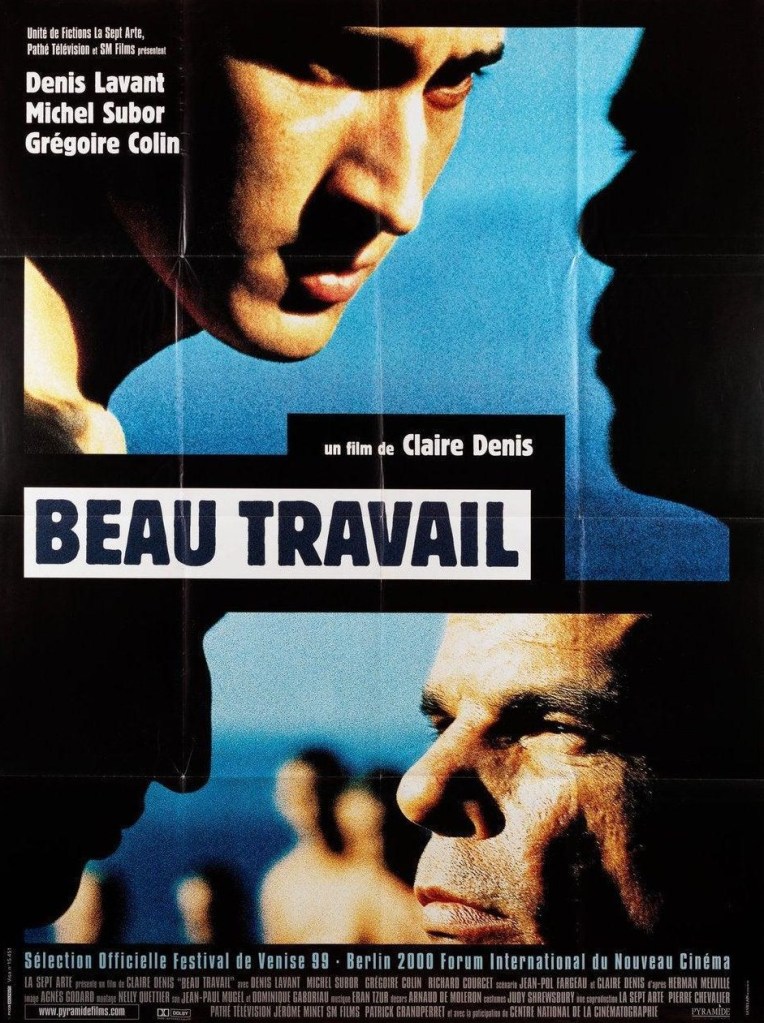
Denis’ film is a remix of several literary sources, most notably Melville’s Billy Budd – though you can also make a case that there is more than a trace of Othello in there. Set in a French Foreign Legion unit based in Djibouti under the command of veteran Forestier (Michel Subor), our focus is his Adjudant-Chef Galoup (Denis Lavant). Galoup is a rigid stickler for duty and an obsessive legionnaire, distant from those around him. He takes an almost instant, irrational, dislike for new recruit Sentain (Grégoire Colin) who can form easy rapport with those around him. Galoup schemes to destroy Sentain. In a framing device, Galoup recounts the story having left the Foreign Legion.

It should probably be restated that this brief summary of the plot pretty much covers every detail in this brief but poetically open-ended film. It takes over a third of the film’s runtime for the unexplained conflict at the film’s heart to even begin and Denis scrupulously avoids anything you could categorically call an answer. Which in a way is an answer in itself. Because Beau Travail is, it is easy to forget, a memory piece. It’s framed with Galoup remembering his career in the Foreign Legion, and everything we see in the film is filtered through his recollections. How reliable are these? How much do the strangely intricate, beautifully choreographed desert training sequences reflect reality and how much are they the result of an unreliable narrator?

Perhaps Galoup’s motiveless loathing for Sentain is rooted in his own inability to understand himself and his own longings. Embodied in a performance of immense physical exactitude by Denis Lavant, Galoup is a tightly drawn spring, a mass of careful, well-chosen movements. He’s naturally content with the labours of the French Foreign Legion: scrupulously ironing creases into his clothes, making his bed with careful perfection, striding through the desert wilderness. At the nightclub with his men, he’s a distant observer – he can’t even really take part in their campfire sing-alongs. He only finds physical ease in their ritualised training sequences.

These training sequences are extraordinary, more like Gene Kelly dance sequences than anything you might associate with training. While in the dance clubs the men are awkward movers, on the training field they have sinewy grace. Ritualised fight training sees their bodies move through pre-set positions with a striking, musical beauty. Even back and leg stretches see twenty men moving with perfect co-ordination in the desert sand, leaving matching trails in the dust.

There is a reason why the title translates as Beautiful Work. The film is a continual stream of military tasks in the desert, most of which seem pointless. Camps are built, holes are dug, rocks are smashed. It’s combined with a series of domestic tasks treated with an equal almost fetishistic relish. Men whip water from their laundry as they peg it up to dry. In unison they iron their shirts into a perfect finish. Potatoes are peeled with casual ease. The training they undertake, powering through assault courses, sees them move with a graceful physical ease. There may never seem to be a point to all the things they do but it’s done with a real beauty. You can totally imagine this idealised vision of unison is exactly how Galoup would want to remember his days in his beloved Legion.

Denis’ transformation of Galoup’s memories of the Legion’s work into unspoken dance sequences, also points towards the increasing homoerotic undertone. This feels like more than a clue about Galoup’s undefined hostility to Sentain who is in many ways a spiritual brother-in-arms. But Lavant’s simmeringly intense, buttoned-up (literally) Galoup could never express such feelings. Is that why some of these training sequences that he remembers feel oddly sexualised? A wrestling practise session, bare-chested, feels like nothing less than aggressive competitive hugging. In one training session Galoup and Sentain walk around in an ever-decreasing circle in what feels like the entrée to a tango or a romantic clinch.

It’s not just Galoup. Michel Subor’s professional soldier Forestier watches the topless training sessions with an unspoken (unrealised) fascination. Galoup’s idolisation of his commander – he even carries a dogtag bracelet of Forestier’s in his exile like a totem – is another motivation, jealousy clearly on his mind as his commander takes a shine to the brave new soldier. Galoup it’s suggested is a man who barely understands himself, let alone others, lashing out with violence and aggression at others due to longings he barely feels or understands in himself.

All of this plays in Denis’ slow, observant, film full of carefully composed cross-cuts taking us in and out of the camp and nearby town and throws up a chorus of Djiboutian women who observe the men and interject at crucial points. Beautifully shot by Agnes Godard, it’s a film of striking images often beautifully composed into intriguing montages that go from nightclubs, to deserts, to seemingly abandoned military vehicles. It is I think vital, at every point, to remember that everything we are seeing is being framed through the memories of a man who, Denis implies, is deeply repressed in (possibly) several ways.

Frequently we see scenes Galoup can have no knowledge of. Others– like Sentain finally provoked into striking his senior officer – are played out with a near-dream like unreality. The eventual fate of a character in the desert could be wish-fulfilment for Galoup – after all he could have no idea. Does he imagine his Legionnaires singing to him as he boards his flight to exile? Above all, as he wanders without purpose through the streets of Marseilles, what is he intending to do? Why is he writing his reflections (if you can call such vague narrative interjections that)? Is it an elaborate suicide note?

All of this comes to a head in Denis’ fascinating and beautifully striking final scene. As Galoup lies on his bed – perfectly made – gun in hand, the camera pans across his body to focus on one of his arm muscles twitching rhythmically. Then we cut to Galoup in that Djubati nightclub: but now he looks like a different man, casually dressed, relaxed – and he explodes into a no-holds-barred dance to Rhythm of the Night, full of the frentic, effortless, improvisationary energy he’s denied himself utterly. Is he imagining a fraction of the life he could have had if he was able to embrace feelings and emotions in himself he can barely understand? (A critic observed, Galoup may be so repressed the closest he can get to imagining being gay is relaxed dancing.) Denis told Lavant to dance ‘as if between life and death’. Is this his idea of an afterlife?

Beau Travail won’t be for everyone – and even at its slim 93 minutes, it’s refusal to interject much in the way of pace or characterisation (aside from Galoup, almost every other character is a cipher and Galpoup has crushed almost any trace of personality in himself). But go into it expecting not a throbbing tragedy (as I did at first) but instead something almost akin to a half-remembered dream and it will provide an experience you will be eager to revisit and explore.

Further reading

Fight Club (1999)

Fight Club (1999)

Hugely popular, I find it widely misunderstood but also a little too in love with its own cleverness

Director: David Fincher

Cast: Edward Norton (The Narrator), Brad Pitt (Tyler Durden), Helena Bonham Carter (Marla Singer), Meat Loaf (Robert Paulson), Jared Leto (Angel Face), Holt McCallany (Mechanic), Zach Grenier (Richard Chessler), Eion Bailey (Ricky), Peter Lacangelo (Lou), Thom Gossom Jnr (Detective Stern)

When Fight Club was made, the studio didn’t get it. You can’t blame them. Studio suits sat down and just couldn’t understand what on earth this primal cry of anger, giving voice to the disillusioned and dispossessed, was going on about. Fight Club was categorically not for them. I’d managed to miss it for decades, so it’s an odd experience watching this angry millennial film for the first time when I’m now exactly the sort of punch-clock office drone its characters despised. I think I missed the boat.

Our narrator (Edward Norton) is cynical, bored and feels his life is going nowhere. Suffering from crippling insomnia, he takes to attending support groups for various terminal illness survivors, releasing his own ennui among the pain there. It’s where he meets fellow ‘suffering tourist’, Marla (Helena Bonham Carter), whom he’s attracted to while resenting her intrusion on his own private therapy. Shortly after he meets Tyler Durden (Brad Pitt), a charismatic rebel with whom he founds an underground bare-knuckle fight group for men who can’t express themselves in the modern world. But Durden’s charismatic, anti-corporatist rhetoric tips more and more into radicalism and he starts an affair with Marla. What will our Narrator do?

Sometimes I think Fight Club might be one of the most misunderstood films ever. So many people who have fallen in love with it talk about it being an attack on conformity in our cold modern world. Of its celebration of people leaving the oppressive, mindless 9-5 grind to find something true and real that makes them feel alive. To be fair, Fight Club is partly this. But how do our heroes do this? By starting a cult where the bitter, resentful and inadequate search for meaning through violence and becoming part of a monolithic organisation that bans independent thought. Essentially, it’s a cult movie, exploring what makes people who can’t relate to the monotony of the “real life”, embrace an oppressive set of rules simply because those rules make them feel important.

This misreading by many is a tribute to the brilliance of Fincher’s direction. Fincher’s film is radical, sexy, pulsating and exciting. It’s shot like a mix of music video and experimental feature and crammed with cutting, witty lines that skewer and puncture the ”grown up” ideas that so many find weary and tiresome. It’s a modern Catcher in the Rye and it pours all its functional, dynamically written anti-establishment rhetoric into the mouth of one of the world’s most charismatic stars in Brad Pitt and allows him to let rip.

Fincher’s Fight Club is really, to me, about the intoxicating excitement of anger, of how easy it is to pour your frustrations into actions that are destructive and selfish but which you can invest with a higher meaning. School shooters, incels – many of them see themselves as stars in their own Fight Clubs, as cool anti-establishment rebels who see some higher truth beyond the rest of us. Fight Club is a brilliantly staged exposure of how this mindset is created and how damn attractive it can be.

Because when Pitt lets rip with this mantra on finding truth and purpose, turning your back on Ikea and Starbucks and all the other soulless “stuff” people find important, you want to stand up and cheer with him. You can see that the attraction of forming a secret brotherhood with a series of other similarly frustrated men, who feel emasculated and purposeless in a world where they can’t do something meaningful like fight Nazis or hunt deer. How they could find satisfaction and a sense of masculine validation in punching seven shades of shit out of each other. Because, as the adrenalin and the blood flows, and the teeth go flying, you feel alive.

It’s certainly a lot more fun than trying to actually deal with your problems. Fight Club is really about this sort of toxic, masculine anger and bitterness leads us to fail to deal with our problems. The Narrator needs Durden, because he can’t manage to process his own feelings of insecurity and inadequacy. He can’t deal with ennui – except through a constant stream of cynical, privately spoken, bitter remarks – and when he meets a girl he likes, he can’t cope with that either.

Durden comes into his life straight after Marla does, and Durden does everything with Marla the Narrator can’t. He flirts with, impresses and fucks her. That’s the sort of thing the Narrator (literally) can only dream about doing. The film builds towards the Narrator realising that, by embracing Durden, he is denying himself the possibility of something real with an actual kindred spirit (screwed up as Marla is, she has decency and empathy). Fight Club – much as many of its fans who find the final act “disappointing” don’t want to admit it – is about putting away childish resentments and growing up. Even if the Narrator is culpable for the things Durden does – and only threats to Marla awaken his acknowledgement that he should do something – he recognises the aimless, irresponsible and dangerous anger of Durden is not healthy.

Because Fight Club centralises a group of terrorists who tell themselves they are plucky anarchists who don’t want to hurt anyone – but we know it never stops there. Especially when you have a mesmeric, Hitlerish figure like Durden driving people on. Pitt is superb as this raving id monster, a hypnotic natural leader who delivers rhetorical flourishes with such intense and utter belief he essentially brainwashes a legion of men into following his orders without question – acid burns, bombs and death don’t even make them blink, just even more willing to follow his orders.

Fincher works so hard to make us understand the attraction of all this that sometimes Fight Club – with its flash filtered look set in a nearly perpetual night – is more than a little pleased with its impish menace. It also takes a little too much delight in teasing its infamous twist – it’s a little too delighted with the “ah but when you watch it back” ingeniousness with which it presents a melange of scenes (the twist also makes you realise later just how brainwashed and dangerous the men in this cult must be, once we realise what they saw and how little they reacted to it). Fight Club also, for all its cool lines and winning gags, has an air of pop psychology to it. (I am very willing to overlook its cheap anarcho-socialism as we are very clearly invited to see this as empty nonsense – for all many people watching the film don’t.)

Edward Norton is extremely good in a challenging role, a stunted and bitter dweeb who dreams of being a player and barrels along with ever more dangerous events. He walks a fine line between a sheltered follower and true acolyte, in several moments showing more than a flash of Durden’s ballsy, take-no-chances, sadism-tinged determination when you least expect it. It’s the sort of performance designed to make sense in the whole, not in the moment – and on that score it’s exquisite. He also makes a wonderful pairing with Helena Bonham Carter, exploding her bonnet reputation with a part that’s rough-edged, unpredictable but surprisingly humane and vulnerable.

Is Fight Club a masterpiece? I’m not sure. It’s a very clever, sharp and dynamic piece of film-making designed to pull the wool over your eyes (in more ways than one). But it can also be overly pleased with itself and does such a superb job of getting you to empathise with the deluded and violent that when it gear changes in the final act it never quite lands as it should. It feels like an angry teenager’s idea of the greatest film ever made (and you can’t deny it digs into the same “loner who sees the deeper truth” vibe that helped make The Matrix a phenomenon later that year). It’s Fincher at his young, punk best – and maybe Fight Club got all this out of his system (you can’t believe the same man made this and Curious Case of Benjamin Button), but for me it lives in the shadow of Fincher’s dark and dangerous Seven, a film which explores similar themes but with more humanity and greater depth than Fight Club.

The Red Shoes (1948)

The Red Shoes (1948)

Ballet and obsession go hand-in-hand in this beautiful, triumphant film

Director: Michael Powell, Emeric Pressburger

Cast: Anton Walbrook (Boris Lermontov), Marius Goring (Julian Craster), Moria Shearer (Victoria Page), Robert Helpmann (Ivan Boleslawsky), Léonide Massine (Grischa Ljubov), Albert Bassermann (Sergei Ratov), Ludmilla Tchérine (Irina Boronskaya), Esmond Knight (Livingstone Montague), Austin Trevor (Professor Palmer), Jean Short (Terry), Gordon Litmann (Ike), Eric Berry (Dimitri)

If there was a moment when “ballet” and “obsession” became synonymous in people’s minds, it might just have been the premiere of Powell and Pressburger’s The Red Shoes. The founding text in the cult of en pointe, The Red Shoes mixes technicolour beauty and fairy-tale darkness with an elaborate meditation on the struggle to balance life and art. For many it’s the peak of The Archer’s cinematic artistry. While I don’t place it that high – I have too much fondness for the beauty of A Matter of Life and Death, enjoyment for the bonkers madness of Black Narcissus and too much respect for the pleasures of The Life and Death of Colonel Blimp – there is no arguing that this is vibrant, beautiful filmmaking, two masters firing on all cylinders.

The Red Shoes is the ballet battleground for the conflicting demands of three people. Boris Lermontov (Anton Walbrook) is a Diaghilevish impresario for whom everything is secondary to art, demanding complete obedience from his protégés. Julian Craster (Marius Goring) is a gifted young composer who values life and love over art. Between them is Victoria Page (Moira Shearer), graceful once-in-a-generation ballerina talent who wants to both dedicate herself to Julian but also dance herself into legend with Boris. These three will make and break alliances on and off tour, touring Craster’s Red Shoes about ballet shoes with a mind (and dance) of their own.

On its release The Red Shoes became the most successful British film ever released in America (it even topped the end-of-year box office chart). Its popularity added even greater momentum to the wave of Hollywood musicals that turned into a tsunami. Would Gene Kelly have had the guts to end An American in Paris with a fifteen-minute ballet if Powell and Pressburger hadn’t stuck a 17 minute one in the middle of The Red Shoes first? Where The Red Shoes differs from Hollywood musicals that pirouetted in its footsteps, was it darkness and surprising bleakness, it’s clear, cold-eyed look at the limits of opportunity and the dangers of following your dream.

Because Victoria Page – played with a great deal of honesty and affecting vulnerability by professional ballet dancer Moira Shearer – is severely damaged by doing so. Inveigling her way into Lermontov’s company (despite Lermontov’s distaste at her mother’s forceful pushiness) she proves her spurs by a sensational performance in a small-scale Swan Lake at the Mercury Theatre (dancing to a recording rather than a live band) and is parachuted into a leading role in Lermontov’s productions. Vicky dreams of leaving the sort of mark few do – but she’s also human, unsuited at heart to the fierce, all-consuming obsession Lermontov expects from his stars. Shearer makes her vulnerable, gentle, lacking the force of personality to resist peer pressure.

Pressure is what Lermontov trades in. Played with a vampiric intensity by Walbrook, Lermontov is pale, Germanic and frequently retreats behind sunglasses. He commands there is no God but art and that he alone is its unquestionable high priest. He holds court in his office, where his staff come and go, rotating around his every whim and opinion. He lurks in the shadows at the rear of the theatre during rehearsals, quietly passing judgement. Vicky’s predecessor is dismissed for daring to get married. And there is the constant expectation that should he ask you for a sacrifice, it should be made in seconds.

He doesn’t care for conflict. In fact, any disagreement is met with summary dismissal. It doesn’t matter how much he’s invested in you. As Julian Craster discovers to his cost. Goring does fine work as the enthusiastic young composer (even if he is clearly a little old for the role) who we are introduced to excitedly watching his professor’s new composition for Lermontov only to discover all the melodies are his. While Lermontov is reluctant to do anything to ensure Craster gains the credit for his work (a sign of his own need to control all patronage and praise) he takes Craster on, who proves himself no flash in the plan. But no amount of time invested in Craster matters when the young composer dares to fall in love with Vicky. And even worse, she dares to love him back.

Because love and a life outside of the dance isn’t part of the plan. These ideas are all captured in The Ballet of the Red Shoes, the piece Craster composes for Vicky (the preparation for which is the catalyst for their burgeoning love affair). Based on the Hans Christian Anderson tale of the dancing shoes that had a life of their own, it neatly encapsulates Vicky’s problem. As Lermontov says summing up the story, it’s the tale of shoes that at first delight a young woman and then literally dance her to death. The entire ballet, like the film, is a grim reminder of the horrific price all-sacrificing excellence in the arts can lead to.

It’s fitting that this story is placed at the heart of such a hugely beautiful and fascinating film. Powell and Pressburger’s film are virtually a by-word for technicolour beauty. Jack Cardiff excels himself here as a photographer (only a reluctance to give this Brit outsider an Oscar two years running surely prevented even his nomination). The Red Shoes is crammed with exquisite imagery, gorgeous photography and striking, unforgettable colours. Hein Heckroth’s sets are magisterial (and Oscar winning), not least in the staging of the ballot that dominates the centre of the film.

The ballet is filmed quite unlike any other dance sequences in films. Powell in many ways breaks the cardinal rules of shooting dances. The ballet is a combination of quick edits and intricate camera moves. It is defiantly non-realistic: despite the setting, it is clearly (with its use of slow motion, super-imposed images and effects like the red shoes lacing themselves onto Vicky’s feet) not a faithful theatrical staging but highly cinematic. It beautifully, subtly suggests that we are at a tipping point between reality and imagination, that Vicky’s identification with the lead role has partially shifted her perception of the whole piece into a fairy tale turned real.

Is that partly why the whole film feels like we are walking in her own personal Hans Christian Anderson story? With Julian as the romantic prince, the theatre as a mix of enchanted forest and mysterious castle – and Lermontov as the beast who may be a prince in disguise or the wolf dressed as granny. It leads into the finales tragic ending, which blurs the line between reality, imagination and trauma into an undefinable mass. Do those red shoes exert a terrible, profound power of Vicky she hardly understands? Or are they just physical representations of her own ability to choose between the demands placed on her?

The Red Shoes is in some ways a traditional melodrama, not to mention another fable of a woman being unable to have both career and family (in the way, of course, that a man can). It is also a slim story, and the ballet – impressive as it is – depends on your relationship to that artform to work or not (I confess I find it drags slightly). But it’s also full of delightful behind the scenes sequences, from rehearsals to design meetings with Albert Bassermann’s Germanic designer to Craster’s coaching of the orchestra.

Visually rapturous, its directed with a great deal of flair and sympathy from Powell who draws some superb performances from his cast of mostly professional dancers. Although Shearer has no real chemistry with Goring, her performance as Vicky is beautifully observed and highly sympathetic and The Red Shoes is blessed with a definitive performance from Walbrook who is powerfully, imposingly domineering as Lermontov. The Red Shoes may at time dress its melodramatic heart in a little too much on-the-nose artiness, but it is also a sensational, ravishing film that lingers as long in the memories as Vicky’s prodigious dance steps.

Through a Glass Darkly (1961)

Through a Glass Darkly (1961)

Faith, family and femininity are put to the test in Bergman’s bleak meditation on religion and love

Director: Ingmar Bergman

Cast: Harriet Andersson (Karin), Gunnar Björnstrand (David), Max von Sydow (Martin), Lars Passgård (Minus)

Bergman’s Through a Glass Darkly marks a new era in the Master’s filmography. It was the first of three thematically connected films about faith and religion (although you could argue The Virgin Spring really makes this a quartet). It saw Bergman make a firm commitment to seemingly theatrical chamber pieces, with small, focused casts of trusted collaborators handling complex (joke-free) and searching themes. It was also first of his films set on Fårö, a place that would become so associated with him it would effectively be rechristened Bergman Island.

Through a Glass Darkly (Bergman’s second consecutive Oscar winner for Best Foreign Language Picture) is a brooding, intense chamber piece set entirely in a house and beachside jetty on Fårö. It’s a family reunion. Author David (Gunnar Björnstrand) returns to Sweden from Switzerland to see his children. They are 17-year old son and aspiring writer Minus (Lars Passgård) and Karin (Harriet Andersson), now married to respected older doctor Martin (Max von Sydow). The real purpose of the gathering is to monitor the recovery of Karin, a schizophrenic whose condition has (without her knowledge) been declared inoperable. Karin is drawn to obey the commands of voices only she hears which she believes emanate from an abandoned bedroom, covered in cracked wallpaper. There she believes God calls for her to join him on the other side of the wall.

There is much to admire about Through a Glass Darkly, not least the striking, haunting, cinematography of Sven Nykvist. In a film that takes place on an almost silent island – there is no music, other than a few bars of Bach on the soundtrack, and barely any natural sound, so much so that a late arrival of a helicopter seems (deliberately) like an almost demonic visitor – light becomes the main force. It beats down from the sun, wraps across rooms, seems to transform spaces in front of an eye (there is a beautiful stationary shot of it flooding an abandoned boat where Minus and Karin sit in shocked horror). It picks out every feature of the scarred wallpaper in Karin’s room and casts searching shadows and stark, interrogative beams across the character’s faces.

It greatly expands both the intensity and claustrophobia of a challenging chamber piece, exquisitely directed by Bergman. The acting of the four leads – three trusted collaborators and a newcomer – is faultless. Andersson, in particular, tackles an almost impossibly difficult character who we first meet as a carefree young woman and leave as a huddled, shattered figure hiding from the light behind sunglasses. Andersson’s raw and searching performance avoids all overblown histrionics, becoming a detailed and compassionate study of a woman losing control over her actions. Bergman holds the camera on her for long takes, while Andersson lets a multitude of emotions play across her face.

Björnstrand is equally impressive as a (disparaging) Bergman stand-in, an artist neglecting his children in a quest for perfection, coldly distant to others, guilty at his selfishness (at one point he excuses himself to privately weep at his inadequacy as a father, then returns unchanged) but quite happy to take what he can from his family to use in novels. von Sydow takes a quietly restrained role as a sombre, somewhat dour man, hopelessly in love with his wife but clearly little more to her (and he accepts this) than a surrogate father. Passgård more than matches them as a depressed teenager, yearning for approval and frustrated at learning how difficult life is.

Bergman’s family follows this complex and challenging family, which becomes a filter for understanding if love is where God is in our world. The family is distant and uncommunicative with each other – the opening scene sees them laughingly return from a swim, but the second any of them split into pairs for conversations, resentments about the others come bubbling out. Is any love here real or performative? And if it’s performative, where is love and therefore where is God?

In this world, has Karin’s schizophrenia may have emerged as an attempt to insert an acceptable love that is otherwise missing from her life. Her father is a cold-fish, who immediately announces at their reunion dinner he will soon leave for Yugoslavia, then produces a series of gifts “from Switzerland” all too obviously purchased at an airport and unsuitable for the recipient (such as gloves that don’t fit Karin). Her husband overflows with desire for her, but she can hardly raise a flicker of interest in him sexually and behaves him with more like an affectionate daughter.

The most affection filled relationship she has is also the most inappropriate. She and Minus have a relationship of physical intimacy, and she kisses and strokes him with an affection that from the start feels uncomfortably close. They confide in each other emotionally in a way they never would do with others, and Minus is the first witness of one of her schizophrenic breaks, invited by her to view the room she believes is a passageway to God. This unhealthy intensity builds, through confidences and whispered confessions into a terrible encounter in a ruined boat, where Karin is commanded by her voices to seduce Minus into crossing a terrible line.

Perhaps this is a search for love and meaning “to see but through a glass darkly” as St Paul wrote. Karin is searching endlessly for love – and therefore God – but her search seems fruitless. Her family only slowly adjust, she shatters her closest relationship and eventually even her visions in her wallpapered room tip into nightmares. Bergman never lets us see the visions Karin witnesses or hear the voices she does (this places more pressure on Andersson whose controlled and measured performance is more than capable of delivering on) but we see all the traumatic impact on her as they prove as incapable of delivering confirmation of love in her world as anything else.

It’s surprising, for a film which starts as a family drama and becomes a quietly nihilistic drama, that Bergman ends on a moment of hope as David and Minus share a moment of closeness. Bergman later said he regretted this, and the moment does feel forced at the end of a downbeat drama. It may be a reflection of the fact that Through a Glass Darkly, intriguing as it is, is perhaps a little too serious and leans a little too heavily into artistic intensity. It lacks the touches of warmth, hope and humanity that makes Wild Strawberries a masterpiece and at times hits its notes of intense brooding a little too hard (its more or less from here that the Gloomy Swede label stuck).

It’s frequently an artistic triumph, but in some ways I find it less complete than other Bergmans. It’s exploration of its themes of faith and love don’t always coalesce quite as sharply as I would wish. It strains a little too much for profound importance at the cost of some of its humanity and the characters – brilliantly performed as they are – feel a little too much like puppets in the hands of God-like Bergman, going as and when according to his needs. But then, a Bergman film that doesn’t quite make it, would be the crowning achievement of other directors – and Through a Glass Darkly haunts the mind, turning over and over again in your thoughts, for days after you’ve seen it.