Category: Historical epic

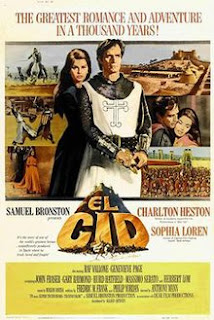
El Cid (1961)

El Cid (1961)

Epic history with just the right amount of seriousness among the scale and thrills

Director: Anthony Mann

Cast: Charlton Heston (Don Rodrigo Díaz de Vivar/El Cid), Sophia Loren (Doña Ximena), Herbert Lom (Ben Yusuf), Raf Vallone (García Ordóñez), Geneviève Page (Doña Urraca), John Fraser (Alfonso VI), Douglas Wilmer (Al-Mu’tamin), Frank Thring (Al-Kadir), Michael Hordern (Don Diego), Andrew Cruickshank (Count Gormaz), Gary Raymond (Prince Sancho), Ralph Truman (King Ferdinand), Massimo Serato (Fañez), Hurd Hatfield (Arias)

Its 11th century Spain, and the country is a mass of feuding Christian and Muslim kingdoms. All that could end if the invasion plans of warlord Ben Yusof (Herbert Lom) come to fruition. To defeat him, the Christians will need Muslim allies in Spain. But of course, none of their leaders have the vision to imagine such a thing: except Don Rodrigo Díaz de Vivar (Charlton Heston) who, after releasing rather than executing two Emirs, is known as “El Cid”. Problem is Don Rodrigo falls continually in and out of favour at court, not helped by his unbending principles. These principles even alienate the woman he loves, Doña Ximena (Sophia Loren), when Don Rodrigo regretfully kills her father in a duel. Will El Cid be able to unite the forces of Castille and his Muslim allies to defeat Ben Yusof?

El Cid was shot on location in Spain, and no expense was spared. Its location footage is beautiful and combined with some impressive sets. Producer Samuel Bronstein was determined to get the best money can buy. The ancient city of Valencia was rebuilt and thousands of soldiers from the Spanish army recruited into the two opposing sides. Thousands of costumes, pieces of armour and weapons were made. Bronstein’s dream cast was assembled (hilariously of course not a Spaniard or Arab among them), led by Hollywood’s biggest stars Charlton Heston and Sophia Loren.

What we get is an at times rather po-faced, sombre even slow epic that still succeeds because it is delivered with such absolute commitment and luscious beauty. Anthony Mann is not the most inventive of directors – and so much of this sort of film is really about producing rather than visionary direction – but he pulls together a collection of visual styles into something that feels wonderfully coherent and suitably dramatic. The castle interiors could have stepped out of Adventures of Robin Hood (Heston and Cruickshank even fight their duel on a winding staircase), the Spanish exteriors rival Ben-Hur and the medieval pageantry brings back memories of Ivanhoe.

It’s pulled together in a script that manages to juggle just about enough action – duels, fights to the death, ambushes, battles, sieges, murders – to sit alongside its earnest attempts to plead for a little love and understanding. Heston’s El Cid is radically ahead of his time, preaching messages of equality and arguing that anyone can kill but only a leader can grant mercy. It’s a film that refreshingly urges that there is more that unites us, than divides us. Yes, it casts Arab characters in most of the villainous roles – while the Christian opponents of El Cid all eventually see the error of their ways – but it still makes several Arab characters (especially Douglas Wilmer’s wonderful Al-Mu’tamin) pinnacles of honour and decency, far more so than most of the bitter and feuding Christians.

At the heart of the film is Charlton Heston, in possibly his most interesting and intelligent ‘epic’ performance. His El Cid is principled to the point of self-harming, but there is a little boy innocence to him that can’t seem to understand why he keeps landing himself in the shit. Duelling with his fiancée’s father, he genuinely can’t understand why he won’t stand down and let the matter rest. Later he marries Ximena with the sad-sack hope that she might remember why she loved him in the first place. He vainly tries to support both sides in the feud to succeed King Ferdinand, because he swore to support all the King’s children. It never occurs to him that Castille might turn down the assistance of the Muslim Emirs he’s recruited. He can understand military nuances, but can’t seem to find the way to translate this effectiveness into courtly politics. And he seems to know it.

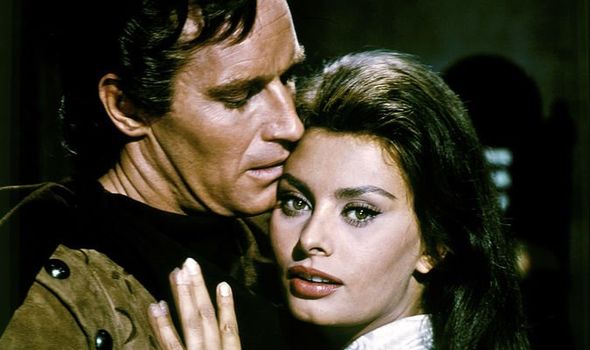
But we know he’s a good guy – so it’s also why we know Sophia Loren’s hatred for him won’t really last. To be honest the chemistry isn’t quite there between them – the two of them famously didn’t get on (Heston famously refused to look at her in many of the romance scenes, hence the odd side-to-side faces in several shots) – and the part of Ximena is incredibly thinly written (she changes her mind about Rodrigo seemingly on a sixpence). But you can’t argue with Loren’s charisma (and she looks ravishingly stunning here) or the force which she can act the hell out of these straightforward scenes (all shot in a few weeks, due to Loren’s availability and Borstein’s determination to get her for the role).

Besides she needed to be the goodie so we could have a dynamic Geraldine Page as the scheming villainous, the Princess of Castille scheming to support her brother Alfonso (a wonderfully fecklessly weak John Fraser), to whom she’s offering more than sisterly love. What chance does headstrong but not-so-bright Gary Raymond’s Sancho have against them? Elsewhere in the cast, Herbert Lom’s voice is used to superb effect as Ben Yusof (like all the actors playing Arabs he’s browned up) and Douglas Wilmer strikes up a wonderful bromance with Heston as an Arabic version of El Cid.

The film is long an often gets slightly bogged down in questions of politics and questions of succession that, at the end of the day, are less interesting than whether Loren will forgive Chuck or our long wait for that Muslim invasion. It is a very long wait: the film opens with Rodrigo a young man – by the time Ben Yusof arrives he’s an old one with two children. Enough events occur sprinkled through the story that it never feels too slow – and you have to admire its attempt at even-handed justice to all.

It culminates as well in a superb sequence covering the siege of Valencia, where all narrative threads are skilfully bought together towards a satisfying conclusion. Mann stages a handsome beach battle here and culminates the film in a long night of the soul that ends with El Cid riding into history in an ironically unique way. The film’s final act is an outstanding mix of epic themes and personal tragedy and loss, that brings the film to a superb finish.

El Cid takes itself seriously – I’m pretty sure there isn’t a joke in it – but it’s well made and acted with a great deal of flair, looks fabulous and never squeezes the life out of itself. As an example of Hollywood’s late epics, there are few that can match it.

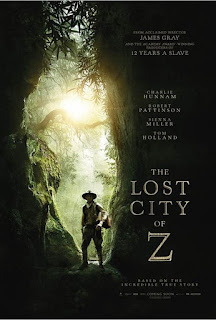
The Lost City of Z (2016)

The Lost City of Z (2016)

An obsessive explorer plunges into the Amazon in search of a lost city in this imaginative epic

Director: James Gray

Cast: Charlie Hunnam (Percy Fawcett), Robert Pattinson (Henry Costin), Tom Holland (Jack Fawcett), Sienna Miller (Nina Fawcett), Edward Ashley (Arthur Manley), Angus MacFadyen (James Murray), Clive Francis (Sir John Scott Keltie), Ian McDiarmid (Sir George Goldie), Franco Nero (Baron de Gondoriz), Harry Melling (William Barclay)

For as long as parts of a map so unknown, that all we write on them is “Here Be Dragons”, there have been explorers yearning to uncover their secrets. Exploring in the nineteenth and early twentieth century was a dangerous, sometimes fatal, call, as explored with a near-mystical thoughtfulness in James Gray’s ambitious film The Lost City of Z. Percy Fawcett (Charlie Hunnam) was the courageous soldier, whose whole life was a campaign to prove he had nothing in common with his disgraced father. Fawcett became obsessed with discovering the secrets of the Amazon, principally the existence of a lost civilisation built by the indigenous people of Brazil, which he called The Lost City of Z. It was to become a quest that would dominate his life.

Based on a true story, Gray’s film taps deeply into a Herzog-by-way-of-Lean view of the Jungles of South America, a place of great awe and danger which creeps inside the soul of Fawcett until, as one tribesperson says, he seems to be of both the West and the Jungle. Shot on location, the Jungle becomes a place of great beauty, but also unknowable mystery and menace. As Fawcett and his companions hack their way through it, on what could be a fool’s errand, their growing respect for it and the indigenous people, is matched only by their increased awareness of its dangers.

The Golden Age of Exploration is a difficult subject to tackle today, with many seeing (in some cases correctly) it as underpinned by a Westernised Imperialism, that earnestly believed the best thing that could happen to these lands (and the ‘savages’ who populated them) was that they should gratefully concede their land and culture to Western ‘civilisation’. Gray’s film is careful to show that Fawcett acknowledged he didn’t always understand the world he was in and learned some hard lessons. But the key difference is that acknowledgment and, as presented here, the humility and respect he recognised the rights and skills of the indigenous people. It marks him out from several of his contemporaries who see them only as contemptable savages and simpletons.

Indeed, Gray’s film positions Fawcett as an admirable egalitarian. His belief that the people of Brazil were not only capable of building in the Jungle, but that they could create an advanced society of pottery and irrigation ahead of those in the West is laughed out of court by many of his fellow members of the Royal Geographical Society (as we see in an involving debate sequence). While staying with a tribe in the Amazon, he marvels at their ability to cultivate and farm the land – something he had been assured was impossible. Encountering a tribe whose custom is to eat parts of their dead (so as to preserve their spirit in themselves), he reacts not with kneejerk disgust but understanding and respect.

The respect he shows for the environment and those he finds there is contrasted with the reaction of famed explorer James Murray, who joins him for his second expedition. Played with a puffed-up self-satisfaction and rigid believe in his own righteousness by Angus MacFadyen, Murray (a noted polar explorer) proves a serious handicap on the expedition. Unfit, unprepared for the tropical environment and treating all he encounters with hauteur, Murray slowly alienates the rest of the party by displaying the imperialist confidence Fawcett and his companions avoid. Stealing supplies, nearly overtipping a raft and ruining some of their stores, Gray uses Murray as the picture of the arrogant classic explorer and a great contrast with Fawcett, who swears thereafter to never again judge a man on his standing and reputation rather than on his character.

Gray’s film has rather a good ear for the pressures and hypocrisies of post-Edwardian Britain. The film opens with Fawcett successfully shooting a leading stag during a state visit by Archduke Franz Ferdinand. It’s a feat that wins him praise – but not any form of meeting with the Archduke since Fawcett is, as a Lord puts it, “unwise in his choice of ancestors”. It’s a stigma Fawcett has to deal with at almost every turn, from being pooh-poohed for his advocation of the Amazonian tribes to dealing with the criticism of the entitled establishment figures.

Gray marshals this all rather effectively, bringing the film into a neat balance of acknowledging modern issues with exploration while still giving an excellent idea of why motivated these men. It all plays out within a dream like aesthetic that leaves a haunting impression. During his first expedition, Fawcett emerges from the bushes into a make-shift opera house built in the jungle (how Fitzcarraldo is that?), on a plantation ruled by a Portuguese landowner dripping with the greed of his class (Franco Nero in a delicious cameo). During his time at home – and at the front during the First World War – elements of the jungle creep into frame, reflecting Fawcett’s longing to return to this mysterious exotic land which makes him feel alive in ways the stifling life at home never does.

Gray’s sense of atmosphere is so well done in the film – its mesmeric shots and sense of unreality will linger – that it’s a shame Charlie Hunnam isn’t quite the right actor to play the role (he took over from Benedict Cumberbatch, who would have been perfect for the obsession, decisiveness and desire to prove himself). Hunnam gives a solid performance, and he really understands the egalitarian humanity of Fawcett, who treats all men and women as equals. But there is a deeper unknowability and mystical longing in Fawcett that is beyond his grasp.

Interestingly, Robert Pattinson – here grimy, eccentric and almost unrecognisable as Fawcett’s best friend Henry Costin – would have been a better call. This is an intensity and soulfulness in Pattison that Hunnam can’t quite bring to Fawcett. Tom Holland gives a heartfelt performance as Fawcett’s hero-worshipping son and Sienna Miller a sensitive and intelligent one as his devoted wife. Clive Francis and Ian McDiarmid play with aplomb sympathetic senior RGS men.

There are many more virtues than faults in The Lost City of Z. The photography by Darius Khondji is wonderful – no one has filmed the jungle better since The Mission. Gray’s intelligent and thoughtful film addresses questions of colonialism and prejudice, while also not shying away from the danger and aggression of some of these tribes. The portrayal of Fawcett’s final expedition is wonderfully done, culminating literally in a dream like sequence where reality, hope and fate merge. It’s a fascinating film.

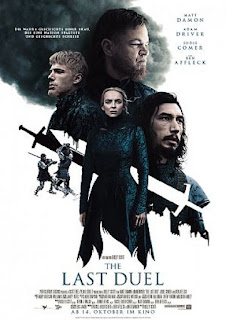
The Last Duel (2021)

The Last Duel header1
Adam Driver and Matt Damon fight The Last Duel in medieval France

Director: Ridley Scott

Cast: Matt Damon (Sir Jean de Carrouges), Adam Driver (Jacques Le Gris), Jodie Comer (Marguerite de Carrouges), Ben Affleck (Count Pierre d’Alencon), Harriet Walter (Nicole de Buchard), Alex Lawther (King Charles VI), Marton Csorkas (Crespin), Željko Ivanek (Le Coq), Tallulah Haddon (Marie), Bryony Hannah (Alice), Nathaniel Parker (Sir Robert de Thibouville), Adam Nagaitis (Adam Louvel)

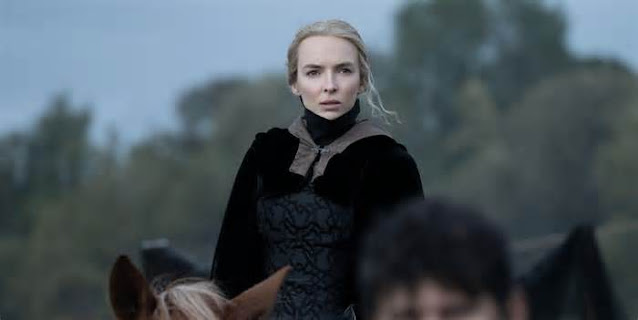
The medieval era had its own solution for “He said, She said”. Let God decide via a fight to the death. After all, He would never let the injured party lose, would he? Scott’s The Last Duel is a dramatisation of one of the last French judicial duels, in December 1386, between Sir Jean de Carrouges (Matt Damon) and his former friend Jacques le Gris (Adam Driver), after Le Gris is accused of raping Carrouge’s wife Marguerite (Jodie Comer). Scott’s Rashomon-inspired film shows the events leading up to the duel from all three characters’ perspectives.

The three different stories we see are not radically different. Unlike Rashomon – which presented totally different versions of the same events, according to the prejudices or agendas of the storytellers – The Last Duel’s versions stress subtly different reactions or presents different fragments of an overall story. So, for instance, Le Gris and Carrouges remember different elements of a battle. Carrouges recalls the noble charge to save the innocent, saving Le Gris’ life in the final stages of combat. To Le Gris it’s a suicidal charge, in which he saves an unhorsed Carrouge’s life. After the rape, Carrouge remembers offering his wife sympathy; she remembers his anger and demand they have sex at once to “cleanse her” of the stain.

These mixed recollections work best when we see each of them remember a fateful reconciliation meeting between Le Gris and Carrouges (where Le Gris and Marguerite first meet). A wedge has been driven between them ever since Carrouges believed Le Gris cheated him out of both land and his father’s former position. When the two agree to try and put the past behind them, Carrouge asks Marguerite to give Le Gris a kiss of peace. He remembers her surprise and timidity. Le Gris remembers her as being quietly excited with a kiss that lingers. Marguerite remembers a kiss from Le Gris that lingers too long. Small moments like this are where the film is at its strongest, making its concept feel very relevant today in our world of accusation and counter accusation.

But these moments are few and far between. Most of the time there isn’t this subtle variation. Where the film is weakest is when we (frequently) see the same events, presented the same way, three times. While our perception of Carrouges changes – from the ill-treated noble he sees himself to the sullen, self-entitled whiner everyone else sees – our idea of Le Gris is fundamentally the same (blissfully self-entitled). Fundamentally, when we see events the first time, later versions only really tweak our perception of them rather than challenge it.

You can see this in the rape itself, which we first see from Le Gris’ perspective. The film shows Le Gris’ understanding of consent has been twisted by most of his sexual experience being court orgies with playfully protesting prostitutes. His pursuit of a genuinely unwilling Margeurite around her room echoes exactly the pretend-chases and “chat up lines” he’s used in those earlier scenes, so we understand it’s possible he doesn’t actually understand he’s raped her. But no viewer can see Le Gris’ version as anything other than rape. In fact, the only tangible difference when we see the event from her perspective is that her screams of “No” and “Stop” are louder and the camera focuses more on her anguished face. If the film is presenting any tension about whether this is a consensual encounter or rape, it ends the second we see Le Gris’ story.

This negatively effects the drama – and actually makes Marguerite’s version seem strangely superfluous. You start to feel we might as well see all three perspectives at the same time, as the narrative trick ends up adding little to the film – especially since the film categorically states Marguerite’s version is the truth. Why not just tell the whole film from her perspective in that case? It also doesn’t help that Marguerite goes last – which means until an hour into the film, the character we should be most engaged with and sympathetic towards has stood on the side-lines.

This is particularly unfortunate as the film is striving for a feminist message. The men are callous and self-obsessed, treating women as sex toys or assets – and are praised for it. Marguerite though is intelligent and principled, marginalised by her husband and condemned as a whore when she protests her rape. She pushes her case with determination, despite discovering she will be condemned to burn if Carrouge loses (he of course is only in his own honour). Her word is only good if backed a man, and she is powerless to defend her innocence.

It’s the lot of medieval women. Harriet Walter (rocking a bizarre appearance, straight out of David Lynch’s Dune) as Carrouge’s mother tells Marguerite the same thing happened to her, but she considered it pointless (and dangerous) to press charges. What we see of the judicial system is ruthlessly unjust and misanthropic, with women harangued to confess their guild for tempting men.

But it doesn’t quite click together. It’s a shame, as many scenes are highly effective. The rape – both times we see it – is alarming. The final duel is brilliantly shot and hugely tense, not least because Marguerite stands literally on the top of an unlit bonfire watching every blow. Scott’s shoots the film with the same blue-filtered beauty he gave to the early scenes of Kingdom of Heaven.

There is of course an oddness in seeing such American actors as Damon, Affleck and Driver in period setting. The accents are an odd mix: Comer basically uses her regular (non-Scouse) performance voice, Damon does a gravelly version of his own, Walter an American twang to match Damon, Affleck is halfway to plummy Brit, Driver flattens his Californian tones. Damon is pretty good as the sulky, surly Carrouge who gets less sympathetic the more we see him, Driver is suitably charming on the surface but selfish. Comer plays wounded injustice extremely well and brings a lot of emotion to a difficult role. Affleck has the most fun, flouncing around in a blonde wig as a lordly, hedonistic pervert who likes nothing more than belittling Carrouge.

The Last Duel is part way to a decent film, but it just lacks that little bit extra to make it really come to life. Its alternative versions of the truth don’t illuminate as much as they need to – even if they are at points pleasingly subtle in their differences. It has an admirable feminist message, but defers most of it to the second half of the film (were they worried about sidelining the famous male actors?) and it’s concern that we should not doubt Marguerite at any point does undermine its drama. Handsomely filmed, it doesn’t make the impact it should. Perhaps that’s why it was one of the leading box office disasters of the Covid Pandemic?

The Greatest Story Ever Told (1965)

Greatest Story Ever Told header
Max von Sydow carries a heavy burden in Steven’s far-from The Greatest Story Ever Told

Director: George Stevens

Cast: Max von Sydow (Jesus), Dorothy McGuire (The Virgin Mary), Charlton Heston (John the Baptist), Claude Rains (Herod the Great), José Ferrer (Herod Antipas), Telly Savalas (Pontius Pilate), Martin Landau (Caiaphas), David McCallum (Judas Iscariot), Donald Pleasance (“The Dark Hermit”), Michael Anderson Jnr (James the Less), Roddy McDowell (Matthew), Gary Raymond (Peter), Joanna Dunham (Mary Magdalene), Ed Wynn (Old Aram), Angela Lansbury (Claudia), Sal Mineo (Uriah), Sidney Poitier (Simon of Cyrene), John Wayne (Centurion)

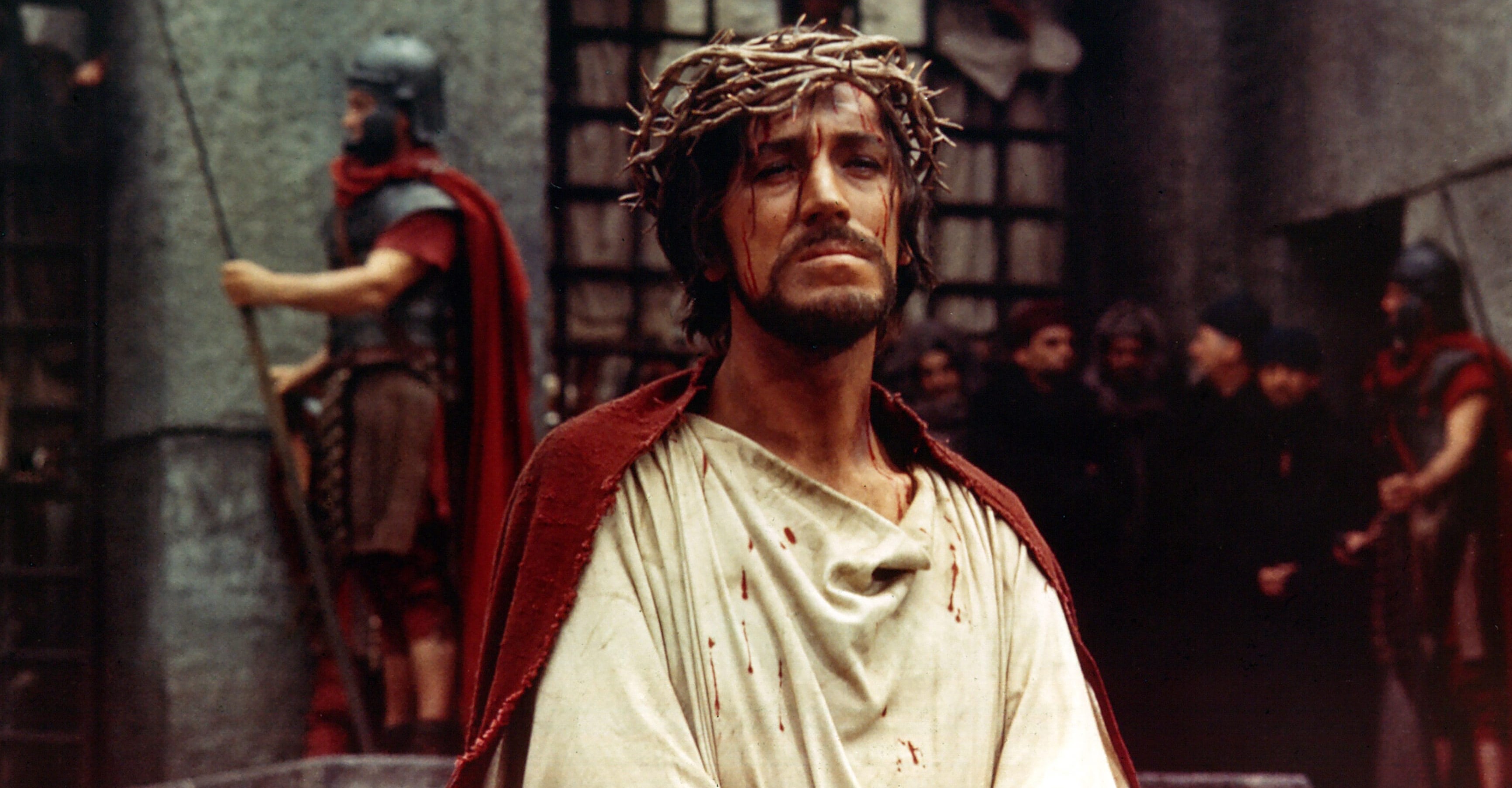
You could make a case to prosecute The Greatest Story Ever Told under the Trade Descriptions Act. In a world where we are blessed (cursed?) with a plethora of Biblical epics, few are as long, worthy, turgid or dull as George Stevens’ misguided epic. Just like Jesus in the film is plagued by a Dark Hermit representing Satan, did Stevens have a wicked angel whispering in his ear “More wide shots George, and even more Handel’s Messiah. And yes, The Duke is natural casting for a Roman Centurion…”. The Greatest Story Ever Told has some of the worst reviews Christianity has ever had – and it’s had some bad ones.

The plot covers the whole life of the Saviour so should be familiar to anyone who has ever seen a Gideon’s Bible. It was a passion project for Stevens, who spent almost five years raising the cash to bring it to the screen. When he started, the fad for self-important Biblical epics was starting to teeter. When it hit the screen, it had flat-lined. It didn’t help that The Greatest Story Ever Told was first released as an over four-hour snooze fest, laboriously paced, that managed to drain any fire or passion from one of (no matter what you believe) the most tumultuous and significant lives anyone on the planet has ever led. The film was cut down to about two hours (making it incomprehensible) and today exists as a little over three-hour epic that genuinely still feels like it’s four hours long.

Stevens gets almost nothing right here whatsoever. Self-importance permeates the entire project. The film cost $20million, double the largest amount the studio had ever spent. Ordinary storyboards were not good enough: Stevens commissioned 350 oil paintings (that’s right, an entire art gallery’s worth) to plan the picture (which probably explains why the film feels at times like a slide show of second-rate devotional imagery). The Pope was consulted on the script (wisely he didn’t take a screen credit). Stevens decided the American West made a better Holy Land than the actual Holy Land, so shot it all in Arizona, Nevada and California. It took so long to film, Joseph Schildkraut and original cinematographer William C Mellor both died while making it, while Joanna Durham (playing Mary Magdalene!) became pregnant and gave birth. Stevens shot 1,136 miles of film, enough to wrap around the Moon.

There’s something a little sad about all that effort so completely wasted. But the film is a complete dud. It’s terminally slow, not helped by its stately shooting style where the influence of all those paintings can be seen. Everything is treated with crushing import – Jesus can’t draw breath without a heavenly choir kicking in to add spiritual import to whatever he is about to say. Stevens equates grandeur with long shots so a lot of stuff happens in the widest framing possible, most ridiculously the resurrection of Lazarus which takes place in a small part of a screen consumed with a vast cliff panorama. Bizarrely, most of the miracles take place off-screen, as if Stevens worried that seeing a man walk on water, feed the five thousand or turn water into wine would stretch credulity (which surely can’t be the case for a film as genuflecting as this one).

What we get instead is Ed Wynn, Sal Mineo and Van Heflin euphorically running up a hilltop and shouting out loud the various miracles the Lamb of God has bashfully performed off-screen. Everything takes a very long time to happen and a large portion of the film is given over to a lot of Christ walking, talking at people but not really doing anything. For all the vast length, no real idea is given at all about what people were drawn to or found magnetic about Him. It’s as if Stevens is so concerned to show He was better than this world, that the film forgets to show that He was actually part of this world. Instead, we have to kept being told what a charismatic guy He is and how profound His message is: we never get to see or hear these qualities from His own lips.

For a film designed to celebrate the Greatest, the film strips out much of the awe and wonder in Him. It’s not helped by the chronic miscasting of Max von Sydow. Selected because he was a great actor who would be unfamiliar to the mid-West masses (presumably considered to be unlikely to be au fait with the work of Ingmar Bergman), von Sydow is just plain wrong for the role. His sonorous seriousness and restrained internal firmness help make the Son of God a crushing, distant bore. He’s not helped by his dialogue being entirely made-up of Bible quotes or the fact that Stevens directs him to be so stationary and granite, with much middle-distance staring, he could have been replaced with an Orthodox Icon with very little noticeable difference.

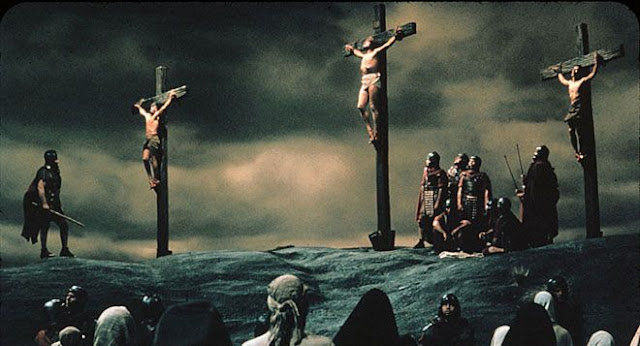
Around von Sydow, Stevens followed the norm by hiring as many star actors as possible, some of whom pop up for a few seconds. The most famous of these is of course John Wayne as the Centurion who crucifies Jesus. This cameo has entered the realms of Filmic Myth (the legendary “More Awe!”exchange). Actually, Stevens shoots Wayne with embarrassment, as if knowing getting this Western legend in is ridiculous – you can hardly spot Wayne (if you didn’t know it was him, you wouldn’t) and his line is clearly a voiceover. In a way just as egregious is Sidney Poitier’s wordless super-star appearance as Simon, distracting you from feeling the pain of Jesus’ sacrifice by saying “Oh look that’s Sidney Poitier” as he dips into frame to help carry the cross.

Of the actors who are in it long enough to make an impression, they fall into three camps: the OTT, the “staring with reverence” and the genuinely good. Of the OTT crowd, Rains and Ferrer set the bar early as various Herods but Heston steals the film as a rug-chested, manly John the Baptist, ducking heads under water in a Nevada lake, bellowing scripture to the heavens. Of the reverent, McDowell does some hard thinking as Matthew, although I have a certain fondness for Gary Raymond’s decent but chronically unreliable Peter (the scene where he bitches endlessly about a stolen cloak is possibly the only chuckle in the movie).

It’s a sad state of affairs that the Genuinely Good actors all play the Genuinely Bad characters – poor old Jesus, even in the story of his life the Devil gets all the best scenes. That’s literally true here as Donald Pleasence is head-and-shoulders best-in-show as a softly spoken, insinuating but deeply sinister “Dark Hermit” who tempts Jesus in the wilderness and then follows Him throughout the Holy Land, turning others against Him. Also good are David McCallum as a conflicted Judas, Telly Savalas as weary Pilate (he shaved his head for the role, loved the look and never went back) and Martin Landau, good value as a corrupt Caiaphas (“This will all be forgotten in a week” he signs the film off with saying).

That’s about all there is to enjoy about a film that probably did more to reduce attendance at Sunday School than the introduction of Sunday opening hours and football being played all day. A passion project from Stevens where he forgot to put any of that passion on the screen, it really is as long and boring as you heard, a film made with such reverent skill that no one seemed to have thought about stopping and saying “well, yes, but is it good?”. I doubt anyone is watching it up in Heaven.

Reds (1981)

Reds Header
Warren Beatty brings his passion to life in Ken Loachesque Reds

Director: Warren Beatty

Cast: Warren Beatty (John Reed), Diane Keaton (Louise Bryant), Edward Herrmann (Max Eastman), Jerzy Kosinski (Grigory Zinoviev), Jack Nicholson (Eugene O’Neill), Paul Sorvino (Louis C Farina), Maureen Stapleton (Emma Goldman), Nicolas Coster (Paul Trullinger), William Daniels (Julius Gerber), Jan Triska (Karl Rodek), Gene Hackman (Pete van Wherry)

Reds is the film only Warren Beatty could have made. Imagine the pitch meeting: I want to make a three hour long biopic about American communists, with the hero being the only American buried in the Kremlin, and I need $30million dollars to do it. Only Beatty had the force of personality to get major companies to invest greenbacks into a film celebrating a man who would have happily cheered their demise. Reds is a tribute above all to the dedication of its multi-titled director and his refusal to compromise. It’s a big piece of serious minded, educational but also dramatic and romantic storytelling. Not many people could have pulled it off.

In 1915 Louise Bryant (Diane Keaton), a young would-be journalist and suffragette, meets and falls in love with left-wing journalist John Reed (Warren Beatty). The two of them tun off together to Reed’s bohemian circle in Greenwich Village, New York then to Massachusetts, becoming the centre of a community of anarchists, socialists and artists. Their mutual love is damaged by affairs – in particular Bryant’s heartfelt affair with the sensitive Eugene O’Neill (Jack Nicholson) and Reed’s own (off-screen) infidelities – but is rekindled as they are swept up in the Russian Revolution, an event that motivates Reed to try and build a similar communist party in America (with very little success). But, when Reed is trapped in Soviet Russia, how far will Bryant go to reunite with him?

Beatty’s dream of making a film on Reed’s life had been knocking around in his head since the 1960s, but it took the success of Heaven Can Wait in 1978 for him to finally have the muscle to get the film made (when Studio execs, having signed the deal, begged him to consider another subject Beatty stuck to his guns). He originally planned only to produce: that quickly expanded into also writing the script (with Marxist British playwright Trevor Griffiths, a hilarious personality mismatch with the Virginian millionaire Beatty), then directing it and finally, to be completely sure the project went where he wanted it to go, playing Reed as well. It would result in Beatty joining the short list of people nominated in four different categories for one film at the Oscars (but he won only Best Director, Reds losing out the big one to Chariots of Fire).

The real strength of Reds is probably Beatty’s producing. This is a huge epic, filmed across multiple countries in Europe (standing in for each other and for America), marshalling a vast number of sets and locations. Much like Attenborough’s Gandhi, it’s a film directed with a smooth, professional competence, but stage-managed to the screen with the flair of a master producer. Each department was staffed by an expert: Vittorio Storaro shot the film with a Golden Age beauty; Stephen Sondheim contributed to the score; Dede Allen assembled thousands of hours of footage, and dozens and dozens of takes of every scene, into a coherent, pacey movie that effectively balances politics and romance.

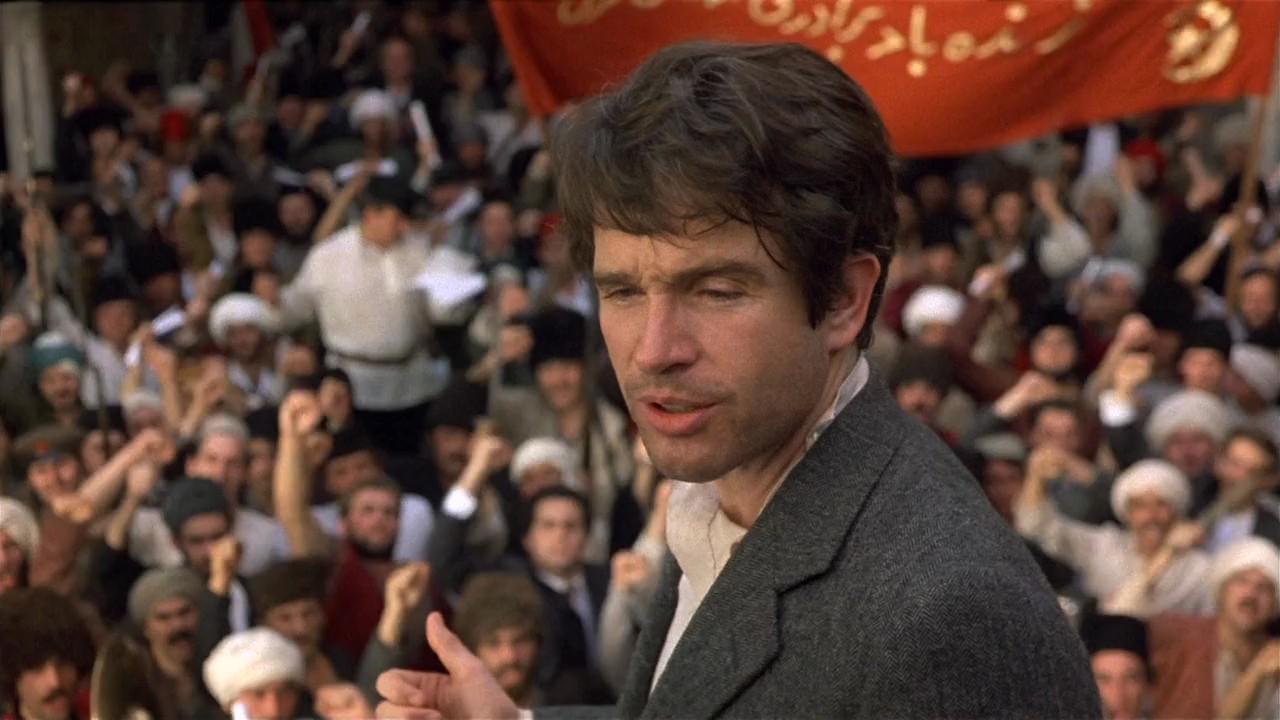
In many ways, Reds is like the mirror image of Lean’s Doctor Zhivago (it even has a late train ambush set-piece, chugging through the Spanish wheat fields, that could have come out of Lean’s epic). That film was a romance-for-the-ages that used politics and revolution as a backdrop. Reds uses romance and personal stories as a context-setting background, to push to the forefront politics and revolution. This is perhaps the most earnest and impassioned exploration of the history of American left-wing politics in film history. Giving a lot of time  – particularly in its second half – to scenes made-up entirely of impassioned socialists sitting in a room arguing at each other over the minutia of party rules and ideology, this is the sort of epic Ken Loach would have been proud of making.

The politics are also genuinely interesting, quite a feat in itself. Beatty is unafraid to look at the fundamental weaknesses of Western left-wing politics: its own worst enemy is always itself. People who agree on 90% of the issues, swear themselves to become life-long enemies because of differences over the remaining 10%. In one dynamically filmed sequence, Bryant is a frustrated and resigned observer as Reed oversees the split of the American Socialist Party into no less than three factions, two of which set up rival claims to be the “official” Communist party of America.

Not that Reds has any sentiment for Russia: Beatty is savvy enough to know (I wonder if Griffiths was?) that the USSR is about a million miles away from ideal. Factionalism is just as prevalent there, with the difference being the main faction happily uses, suppresses and crushes the others. Reed’s time in Russia sees him becoming increasingly disillusioned and homesick, as he realises a dictatorship isn’t made palatable just because it’s a Communist Dictatorship. As the representative of that system, author Jerzy Kosinski makes for a grippingly stone-faced and ruthless Zinoviev, brow-beating any deviation from the party line.

Beatty makes all this political theorising and left-wing political infighting palatable, by framing it carefully around a genuine romance between Bryant and Reed. For all the unconventionality of their open-ish relationship (their feelings on this change from infidelity to infidelity), these are two people who share a deep and lasting bond on both an emotional and a political level. Both skilled writers, we are shown time and again that they bring out their best work from the other and that when they are focused on each other, they have a mutual understanding few can hope to match.

As Bryant, Beatty (who was in a relationship with her at the time – which didn‘t survive the epic shooting schedule) cast Diane Keaton. It’s a stroke of genius – and this is certainly Keaton’s finest performance. In a way no other role has allowed her, this looks past Keaton’s comedic skills and allows her to match her intelligence and spark with a woman who challenged norms, as a skilled writer and journalist. Keaton can play heart-rending emotion just as well – her breakdown fury at discovering Reed’s infidelity is fully-committed without being OTT – and she’s perfect as the increasingly disillusioned observer of left-wing failures. She believably flourishes from a woman uncertain of who she is to become a determined intellectual willing to cross continents to find what she wants. It’s a brilliant performance, smart, sharp and moving.

Beatty fronts-and-centres her so much, he slightly short-changes himself – playing Reed he doubles down on the boyish charm and enthusiasm (and he feels really young here), making Reed an enthusiastic, vulnerable, naïve figure. We just don’t quite get a real sense of who he is beyond that. You can’t say the same for Nicholson’s Eugene O’Neill, delivering a remarkably low-key, restrained and sensitive performance. He’s loving, emotionally vulnerable and eventually devastated, in one of his finest acting performances. Maureen Stapleton won the Best Supporting Actress for her Earth-mother anarchist Emma Goldman, the cuddly aunt of firey, confrontational anarchic politics.

Reds is marshalled by Beatty into an epic that powers along effectively. The first half of the film gets its narrative balance right: contrasting personal and political growth with a backdrop of War and Revolution. The second half leaves a little too much to chew, a vast amount of political debate rushed through with a series of increasingly short and sometimes disconnected scenes. Beatty balances the narrative with extensive “witness” interviews, from real-life contemporaries of the characters. (These are never identified, which is a bit of shame as it never allows to really know what their perspective was). It adds a feeling of earnestness to a project that gets an effective balance between politics and the personal, between showmanship and details and between scale and intimacy. While it is more of a producer’s film – and rushed in its second half – than a triumph of directorial imagination, it’s still an impressive – and informative – achievement.

The Scarlet Empress (1934)

Marlene Dietrich with a beloved friend (and the film has fun with that rumour) in The Scarlet Empress

Director: Josef von Sternberg

Cast: Marlene Dietrich (Empress Catherine), John Lodge (Count Alexey Razumovsky), Sam Jaffe (Emperor Peter III), Louise Dresser (Empress Elizaveta Petrovna), C. Aubrey Smith (Prince Christian August), Gavin Gordon (Captain Orlov), Olive Tell (Joanna Elizabeth), Ruthelma Stevens (Countess Elizaveta), Davison Calrk (Arch Episcopope), Erville Anderson (Chancellor Bestuzhev-Ryumin)

Did von Sternberg have a bet on when he made this film? “Hey Josef, what’s the maddest film you think you could make and get away with?” Either that, or perhaps he didn’t care anymore and decided his own obsessions with visuals, sexuality and Dietrich were more important than anything else. Regardless, he made The Scarlet Empress, perhaps one of the most bizarre major releases from a 1930s Studio, a sort of camp masterpiece that contains things you just won’t see any in other film, but at the same time is a disjointed, barely plotted ramble through a fable-tinged version of Russian history. Either way, it’s a truly unique film – and how many films can you say that about?

The plot loosely follows the rise of Catherine the Great (Marlene Dietrich) to power, but any resemblance to real people (living or dead) seems to be purely coincidental. Catherine arrives in Russia to power the heir to the throne, Grand Duke Peter (Sam Jaffe), a gurning simpleton more interested in his soldiers (both toys and real ones) and his mistress Elizaveta (Ruthelma Stevens) than Catherine. Russia is ruled by his mother Empress Elizaveta (Louise Dresser), a domineering matriarch. The (initially) innocent Catherine is admired by the rakeish Count Alexey (John Lodge), but must learn to master the skills of the court – and the sensuality of her own body – to take power.

The Scarlet Empress is pretty crazy. If you are coming here for a history lesson on Catherine the Great, keep on walking. Josef von Sternberg called it “a relentless excursion into style” and that’s a pretty good description. It’s a parade of his fascinations (and obsessions), set in a Russia that never really existed but I suspect Sternberg would argue ‘shouldhave done’. This is Russia as a medieval backwater, built entirely from Cossacks, icons and gargoyles, with the Russian court a ramshackle wooden palace with a throne that wouldn’t look out of place in Game of Thrones. Much of the sense of time and place is buried under this and huge chunks of the film may as well be silent cinema, so little does dialogue matter and so skilfully are emotions and events communicated visually.

However, grab this in the right mood and this is a film it’s impossible not to admire and even fall in love with a little bit. There really is nothing like this, and like much of Sternberg’s work there is a visual sweep and drama here that few other filmmakers can match. There are some truly striking images, from Cossacks riding through the palace, to Sam Jaffe’s gargoyle like face as Grand Duke Peter, to a giant drill bit punching through the eye of a wooden icon. The jaw dropping production design – sets that dwarf the actors – is mixed with misty lighting for romantic assignations and deep shadows for (literally) backstairs court intrigue.

In all this, the story counts for very little, with the primary focus being Sternberg’s obsessions. Many of those seem to be sexual. The Scarlet Empress was released right on the cusp of the Production Code being enforced in Hollywood – and it’s hard to imagine it could ever have been passed once the code was fully enforced. The film lays it’s hand out early with an S&M tinged Russian torture montage (with naked women in iron maidens, whippings, beheadings and a giant bell with the clapper replaced by a human being) and hardly stops from there. Later montages feature explosions of Peter’s soldiers, looting, shooting and orgying across Russia.

The primary lesson Catherine needs to learn in Russia is to use the power of her own sexuality. The idea of politics is even openly rejected by Catherine in favour of mastering her seductive powers. Initially a blushing, mousy innocent, she becomes increasingly coquettish and seductive as the film unfolds. In an early scene she nervously fingers a riding crop – by later in the film she’s bending it in her hands with all the confidence of a Dominatrix. Lovers come and go, as she wins supporters over to her side (she “added the army to her list of conquests” a caption deadpans at one point). Trysts grow in confidence, as Dietrich’s performance progresses from innocence to dominant knowingness.

Dietrich is as close as she’s been to a prop here, striking a series of poses in a performance that’s largely campily two dimensional. For the first 70 minutes she’s given almost nothing to do other than strike a bemused face: for the remaining 40 minutes she’s like Sternberg’s wet dream of a sexually aggressive domineering woman. Basic notes are what most of the cast are kept to, fitting the impression that they are just props in a silent film. John Lodge scowls and poses as Count Alexey and is as wooden as most of the set. Sam Jaffe is one of the gargoyles made flesh. Louise Dresser is an older version of the sexual kingpin Catherine becomes.

But that’s because it’s all about the mood and the style. The Scarlet Empress has that in absolute spades. It’s as close as you can get in the 1930s to a director of a major Hollywood studio film, pouring money into something that maybe only he will like. It’s silent film roots can be seen not only in its vast impressionistic sets, but also in the steady parade of title cards that dance across the screen to communicate what passes for the story. Acting and story are very much secondary to the mood of sexual exuberance and craziness that dominates nearly every frame of the action. The film was a massive bomb on release – perhaps because no one else could quite work out what it was – and it’s taken decades for its overblown mad genius to be recognised. But it’s a film unlike any other and for that alone you should see it.

The Longest Day (1962)

John Wayne leads the charge on The Longest Day

Director: Ken Annakin, Andrew Marton, Bernhard Wicki

Cast: John Wayne (Lt Col Benjambin Vandervoot), Henry Fonda (General Theodore Roosevelt Jnr), Robert Mitchum (General Norman Cota), Richard Burton (FO David Campbell), Eddie Albert (Col Lloyd Thompson), Sean Connery (Pvt Flanagan), Curd Jurgens (General Gunther Blumentritt), Richard Todd (Maj John Howard), Peter Lawford (Brig Lord Lovat), Rod Steiger (Lt Com Joseph Witherow Jnr), Irina Demick (Jeanine Boitard), Gert Frobe (Pvt “Coffee Pot”), Edmond O’Brien (General Raymond Barton), Kenneth More (Capt Colin Maud), Robert Ryan (Gen James Gavin), Red Buttons (Pvt John Steele), Christian Marquand (Cpt Philippe Kieffer), Jean-Louis Barrault (Fr Louis Rolland), Arletty (Mdm Barrault), Paul Hartmann (Field Marshall Gerd von Rundstedt), Werner Hinz (Field Marshall Erwin Rommel), Wolfgang Priess (General Max Premsel), Peter van Eyck (Lt Col Karl Williams Ocker)

Darryl F Zanuck wanted to make the War Film to end all War Films. So, what better way than to restage D-Day itself, with a cast (as the poster brags) of 42 International Stars, playing out almost in real-time. It’s a grand ‘mock-documentary’ shot in black-and-white (so that actual war footage can be integrated into the film) and aims to show the perspectives of the four main combatants (the Americans, the British, the French and the Germans – with all their scenes played in their respective languages). Adapted from a definitive D-Day book by Cornelius Ryan, it makes for huge, now slightly old-fashioned, Sunday afternoon fun and one of the most iconic second world war films.

To make his dream come true, Zanuck left no stone unturned. Pretty much every single part is played by a ‘name’ actor (although, rather like Around the World in 80 Days, time has left some of them less recognisable than others) no matter how small the role. And I mean no matter how small. Many of the actors appear in no more than one or two scenes. Steiger chips in a brief speech as a Naval officer. Burton has two scenes as an RAF officer, one of the last of the “Few”. Fonda contributes a few minutes of heroism as Theodore Roosevelt Jnr. Robert Ryan briefs The Duke as General Gavin. Jean Servais makes a grand speech as a French Admiral. Gert Frobe doesn’t even speak as a (what else?) bullying German soldier. This parade of stars does though does mean you pay a lot more attention to every single part and it makes it a lot easier to keep track of who’s who.

It’s certainly a ‘producer’s’ film. Zanuck held complete creative control, splitting the directorial duties between three hired hands. Annakin directed all the British and French scenes (and most of the American ‘briefing room’ scenes). Martan, an experienced second unit director, was hired to shoot most of the battle sequences. Wicki looked after the German sequences. With the brief being to replicate the documentary style of actual footage, naturally this basically led to a film that doesn’t have the feel of being ‘authored’ (in the way, say, Saving Private Ryan does), but it’s functional shooting style and design does make it fairly easy to follow.

And it needs to be easy to follow, as this is a very long film indeed – and with the cast frequently changing from scene to scene, can become overwhelming. The quick changes of location – and the lack of time spent with any single character – often means it’s hard to connect to strongly to any of the individual characters. Most of the more prominent characters gain their personality solely from the actors playing them: so I don’t really know what the real Colonel Vandervoot is like, but I know his character here is basically ‘John Wayne’.

The more prominent roles in the script rely on these personality parts. Wayne probably has the largest individual role as the Paratrooper commander who breaks his ankle on landing, but doesn’t let that slow him down from hitting his objective. (Wayne also gets a great little speech, the sort of thing much missed in Ryan, where he praises Brit fortitude under the Blitz, which is a lovely moment of Allied brotherhood). Mitchum gets the juiciest action as General Cota, the highest-ranking soldier on Omaha Beach, who leads the first break out. At the other end of the ranking, Red Buttons brings charm and heartfelt emotion to the most memorable sequence as Pvt John Steele, the paratrooper who landed on top of the church spire at Sainte-Mère-Église, deafened by bells and forced to watch the rest of his platoon slaughtered on landing.

The scale is really what it’s all about. The recreation of the D-Day landings is stunning (the first boats, though, don’t hit the beaches until well over two hours into the film), and its genuinely hard to tell the difference between what is recreated and what is actual war footage. The film doesn’t shirk from showing the cost of war, or the slaughter on that beach (although of course, it looks reserved compared to Ryan). But the combat and operations elsewhere are also perfectly recreated. Richard Todd is very good as Major John Howard, in an expert reconstruction of the seizing of the Orne Bridges near Caen (in real life, Todd himself was one of the commandos serving under Howard and even has a scene where Todd as Howard talks to another actor as Todd).

These battle sequences make for compelling viewing. Slightly less so is the long build-up of the Allies to the attack. There are many, many scenes in various briefing rooms and for every delight (such as Jack Hedley’s briefing around “Rupert” a model paratrooper, dropped as a distraction) there are po-faced actors staring into the middle distance and discussing how important everything is. By far and away the most interesting content in the first half is less the Allies (waiting to leave) than the Germans (trying to work out how and where the Allies will arrive). These scenes feature a range of German officers, from the quietly resigned to die-hard, head-in-the-sand Fascists, and revolve around a series of fascinating debates on where, when or even if at all the Allied attack will come. With a cast of excellent German actors – Jurgens, Preiss, Hartmann, Hinz and Wolfgang Buttner are particularly fine – these scenes stand out as they present a perspective we don’t often get to explore. (Even though the film squarely accepts the German military view that the defeat was all Hitler’s fault and the army was completely blameless of any of the crimes of Nazism.)

After the slow-build, the explosion of tension and action is done really effectively. Sure, the film is long and episodic, but the ever-changing locations do frequently help with the pace. The film’s documentary style also lends it a great deal of authority that a more ‘fictional’ film would not have. After all, pretty much everyone in the film is ‘real’ and while the film could be seen as a collection of D-Day anecdotes, strange moments – such as a platoon of Germans and Americans passing each other on opposite sides of a low wall without noticing each other – have the ring of truth. The script was doctored by a host of major novelists and playwright (including Noel Coward) to brush it up, but really this is a producer’s triumph.

And it is a triumph for Zanuck. Everything he sought to do, he accomplished here – and the doubts that he could pull it off were moved as wrong, as those who doubted whether the Allied plan to cross the Channel would work. Hugely impressive in its staging, detailed in its recreation and with a cast of stars and top actors giving every scene a fresh bit of life, this makes for one of the all-time classic war films.

Michael Collins (1996)

Liam Neeson is outstanding as Irish revolutionary leader Michael Collins

Director: Neil Jordan

Cast: Liam Neeson (Michael Collins), Aidan Quinn (Harry Boland), Stephen Rea (Ned Broy), Alan Rickman (Eamon de Valera), Julia Roberts (Kitty Kiernan), Ian Hart (Joe O’Reilly), Brendan Gleeson (Liam Tobin), Sean McGinley (Smith), Gerard McSorley (Cathal Brugha), Owen O’Neill (Rory O’Connor), Charles Dance (Soames), Jonathan Rhys Meyers (Assassin), Ian McElhinney (Belfast cop)

Britain’s colonisation of Ireland left a poisonous historical legacy that blighted much of the twentieth century. The story of Irish independence, is also one of guerrilla and political brutality, civil war and terrible lost opportunities. Jordan’s biopic of Michael Collins is a study of the man who did more than any other to turn the IRA into an effective guerrilla fighting force – only to be consumed by the very same uncompromising ruthlessness he had set in motion. It’s a powerful and beautifully made film that seeks to explore just how and why violence and politics ended up hand-in-hand in Ireland for almost 100 years.

It opens with the 1916 Easter Uprising, an ignominious failure which the British managed to turn into a glorious one by executing rather than imprisoning its leadership. It’s one of many misjudgements in our occupation. It also the impetus for the young Michael Collins (Liam Neeson) to realise that playing by conventional military roles simply means defeat for the Irish time and again. Put simply, the IRA needs to stop trying to be a field army and instead become a guerrilla army, launching targeted hit-and-run terrorist attacks on the British. It’s a hugely successful campaign – despite the doubts of Sinn Fein leader Eamon de Valera (Alan Rickman), who favours more conventional conflict (“They call us murderers!” he cries, with some justification). But after the British agree a Treaty that divides Ireland, the IRA splinters into pro- and anti Treaty factions. Can Collins put the cork back in the bottle of violence, before the country tears itself apart?

Of course, anyone with a passing knowledge of history knows that he can’t. Hanging over the entire film is the knowledge that Collins’ new methods of political assassination, plainclothes soldiers, bombs and bullets in the middle of the night will eventually expand into the indiscriminate bombing and shooting that consumed Ireland for decades. Not that Collins will live to see it, as he was assassinated aged 31 attempting to negotiate an end to Civil War. What makes Collins such an engaging and intriguing figure is that he (or at least the version we see in this film) was a man forced into methods he knew were wrong, to achieve an end he knew was right.

Neeson is superb as the charismatic, blunt yet poetic Collins who is noble enough to know that training young men to quickly and efficiently commit murder is an ignoble legacy. Jordan’s film doesn’t condone Collins use of violence, but establishes why it was necessary. Playing by more conventional rules simply wasn’t going to work – and Ireland didn’t see why they had to wait for British politics to shift. Unlike, say Gandhi in India (and Michael Collins makes a dark companion piece with Attenborough’s Gandhi, two charismatic campaigners choosing radically different paths to independence), Collins believed Britain had to be forced to see holding Ireland wasn’t worth the blood sacrifice and emotional cost. (Jordan’s film is also clear that Britain’s hands were equally dirty, the British conducting their own counter-campaign of assassination and violence).

The tragedy that Jordan finds in all of this is that, when the British were gone, Ireland had become so used to dealing with political problems with violence that they couldn’t imagine solving their disagreements with anything else. Collins is in fact too successful: and the film demonstrates that in radicalising his followers, he’s unable to gearshift them towards compromise. His attempts to get Sinn Fein to accept a Treaty that offers a workable compromise (as opposed to an unwinnable full-scale war), leads to him becoming a victim of exactly the sort of insurgency he pioneered in the first place. To Jordan he is a man trapped in a world of his own making, unable to remove the gun from Irish politics.

Michael Collins makes some compromises with history – something that was bound to get it attacked when dealing with events of such earth-shattering controversy – but it always feel spiritually accurate. The British Black and Tans really were as brutal as they seem, and while they didn’t use an armoured car on the pitch at the “Bloody Sunday” massacre at Croke Park, they did shoot indiscriminately at the crowd and fire at the stadium from an armoured car outside causing 14 fatalities (including two children) and 80 serious injuries. Similarly, in the aftermath of Collin’s assassination of most of the British intelligence operation in Dublin, three IRA leaders were “killed while trying to escape” (even if these were different men than the one who suffers this fate in the film). Just as IRA killings in the street were swift and brutal, so interrogations in Dublin Castle could stretch way beyond what the Geneva Convention would suggest was acceptable.

Much of the first half of the film is structured in the style of an old-fashioned gangster film, with hits and street gangs. Plucky IRA under-dogs (and Neeson’s Collins is so charming, you immediately root for him), take-on the more hissable baddies in British intelligence (led first by a bullying Sean McGinley and then a suavely ruthless Charles Dance). But the romance slowly drains out of this as lifeless bodies hit the floor – and Jordan always gives the focus to the dead after they fall, regardless of their ‘side’. The film has an infectious momentum, which makes its final acts, with their air of tragedy, even more sad and moving. It’s all also quite beautifully shot by Chris Menges, the film bathed in some of the most luscious blues you’ll see.

While Michael Collins is more sympathetic to the Irish (as you would expect), it clearly shows the psychological damage of killing. Hesitant shooters become increasingly ruthless at the cost of their humanity. Collins spends a ‘dark night of the soul’ openly confessing that he hates what he is making young men do and knows it is morally wrong. In the end this explains why methods were chosen, but doesn’t praise them – just as it doesn’t outright condemn them, considering what the Irish were up against. It’s a difficult balance, but very well walked.

There are flaws. Excellent as Liam Neeson (at the time 15 years older than Collins was when he died) and Aidan Quinn as his number two Harry Boland are, the film’s insertion of a love triangle between them and Collin’s eventual fiancée Kitty Kiernan often descends into weaker “Hollywoodese”. It’s not helped by having Kitty played by an egregious Julia Roberts, who struggles gamely with the Irish accent, and who never transcends her star status.

Additionally, while the film has an excellent performance by Alan Rickman (in a pitch perfect vocal and physical impersonation) as Eamon de Valera, it also repositions de Valera as an antagonist. Although de Valera certainly was a prima donna who associated his interests and Ireland’s as being one and the same, the film implies that de Valera’s actions are motivated as much by jealousy as principle and lays most of the blame for the civil war on him. Not to mention implying de Valera’s complicity in Collins eventual death (a heavily disputed assertion, strongly denied by de Valera).

Michael Collins though is a thoughtful, complex and engaging film that brings a tumultuous period of history successfully to life. Jordan’s film manages to wrestle an enthusiastic admiration for Collins, with a questioning exploration of how his actions (however well motivated) led to a legacy of violence. But it doesn’t lose sight of how Collins was aware he was using wicked methods for a noble aim, or that his goal was to bring peace. Wonderfully acted by a great cast (every Irish actor alive seems to be in it), with Neeson sensational, it’s an essential watch for anyone interested in this period of history.

Doctor Zhivago (1965)

Julie Christie and Omar Sharif are star cross’d lovers in Lean’s epic but flawed Doctor Zhivago

Director: David Lean

Cast: Omar Sharif (Dr Yuri Zhivago), Julie Christie (Lara Antipova), Geraldine Chaplin (Tonya Gromeko), Rod Steiger (Victor Komarovsky), Alec Guinness (Lt General Yevgraf Zhivago), Tom Courtenay (Pasha Antipov/Strelnikov), Siobhan McKenna (Anna Gromeko), Ralph Richardson (Alexander Gromeko), Rita Tushingham (The Girl), Bernard Kay (Bolshevik), Klaus Kinski (Amoursky), Noel Willman (Razin), Geoffrey Keen (Professor Kurt), Jack MacGowan (Petya)

Boris Pasternak’s Doctor Zhivago is one of the seminal 20th century novels. Smuggled out of the USSR after being refused publication, it became an international sensation and led directly to Pasternak winning the Nobel Prize (although the USSR insisted he turn it down). A film was only a matter of time – and who else would you call but David Lean, master of the pictorial epic, to bring the novel about the Russian Revolution to the screen. Lean – with his masterful Dickensian adaptations – was perfect in many ways but Doctor Zhivago, for me, is the least satisfying of his ‘Great Films’. It’s strangely empty and sentimental, lacking some of the novel’s strengths zeroing in on its weaknesses.

Yuri Zhivago (Omar Sharif) is training to be a Doctor in the years before the outbreak of the First World War. Married to Tonya (Geraldine Chaplin), the daughter of his father’s old friend Gromeko (Ralph Richardson), Yuri is part scientist, part poetic free-thinker. Events throw him together with Lara (Julie Christie), a young woman whose fiancé Pasha (Tom Courtenay) has ties to the revolutionaries, while she is trapped in an abusive relationship with the amoral Komarovsky (Rod Steiger). But are all these troubles worth a hill of beans in a country about to tear itself apart?

There are many things you can’t argue with in Lean’s film. It is of course unfailingly beautiful. Ironically filmed in Fascist Spain, it’s gorgeously lensed with a luscious romanticism by Frederick Young (who won his second Oscar for a Lean film). It’s not just pictorial beauty either: Young frequently makes wonderful uses of splashes of Monet red to dapple the frame. From poppies in a field to the ubiquitous communist imagery on uniforms and walls. There are some wonderfully cool blues employed for the snow, while slashes of light pass across eyes with a gorgeous lyricism.

Romance is the name of the game, with everything working overtime to stress the star cross’d lovers plot. Maurice Jarre’s score – in particular its balalaika inspired Lara’s Theme – mixes Russian folk inspirations with an immortal sense of longing. It plays over a film that, while very long, often feels well-paced, even if (just as the novel) its episodic and at times rambling. Lean’s direction of epic events revolving around personal loves and tragedies is still exquisite in its balance between the grand and intimate. The film is wonderfully edited and a fabulous example of long-form storytelling.

So, what’s wrong with Doctor Zhivago? In a film with so much to admire, is it possible Lean and co spent years working on something only to bring the word but not the spirit to the screen? The key problems come round to Zhivago himself. This is man defined by his poetic soul. His poetry becomes a sensation after his death. His balalaika is a constant companion, and his playing of it an inherited gift (which even has major plot implications). Inexplicably, the film has not a single word of poetry in it (when it had Pasternak’s entire back catalogue to work with) and Zhivago never so much as strums the strings of his balalaika. It’s like filming Hamlet and then making him a mute.

The problem is, removing the character’s hinterland makes him a rather empty character. Zhivago is a liberal reformer, in sympathy with the revolution but not it’s methods. This should be at the heart of understanding his character, but like his poetry the film has no time for it. Instead, Zhivago is boiled down into a romantic figure, nothing more. He has no inner life at all, a blank canvas rather than an enigma.

Suddenly those long lingering shots of Sharif’s puppy-dog eyes end up carrying no real meaning. They aren’t the windows to his soul, only a big watery hole with not much at the bottom. Sharif is awkwardly miscast – and lacks the dramatic chops O’Toole bought to Lawrence – but it’s not completely his fault. His character has had his depth removed. When we see him struggling at the front, trapped on a long train ride to Siberia or forced to work with partisans, he’s not a man who seems to be considering anything, but just buffeted by fortune, neither deep or thoughtful enough to reflect on the world around him. That’s not really Pasternak’s intention.

Instead, the film boils the novel down to his plot-basics and, in doing so, removes the heart of what got the book banned in the first place. Lean misunderstood the future of Soviet Russia so much, he even chose to end the film with a romantic rainbow at the foot of a waterfall. The horrors of the civil war and the revolution are largely there briefly: a gang of deserting soldiers unceremoniously frag their officers and Zhivago frequently stares sadly at villages burned out by Whites or Reds (or both). But the film is more of a romance where events (rather than politically and social inevitability) gets in the way of the lovers – like Gone with the Revolution.

By removing the more complex elements – and the poetic language of Pasternak – you instead have the rather soapy plotline (with its contrivances and coincidences) left over. Again, it’s Hamlet taking only the events and none of the intellect or language. (And Pasternak’s novel didn’t compare with Hamlet in the first place.) Both Zhivago and Lara are shot as soft-focus lovers, with Julie Christie styled like a perfectly made-up slice of 60s glamour. It’s a grand scale, but strangely empty romance, because both characters remain unexplored and unknowable – in the end it’s hard to care for them as much as we are meant to do. For all the epic scale, small moments – such as an aging couple sharing a cuddle late at night on a train floor – carry more impact. How did the director of Brief Encounter – a romance that speaks to the ages for its empathy – produce such an epic, but empty, posture filled romance as this?

Julie Christie does fare better than Sharif – she’s a better actor, and her character has a bit more fire and depth to her. But she’s not in the picture enough, and Lean quietly undersells the terrible trauma of her eventual fate. Ironically, the smaller roles are on surer ground. Geraldine Chaplin is rather affecting as Zhivago’s wife, a dutiful and caring woman who her husband loves but is not besotted with. Ralph Richardson is witty and moving in a tailor-made role as her eccentric father. Tom Courtenay landed the films only acting Oscar nomination as the reserved and conflicted Pasha. Rod Steiger is very good as the mass of greed, selfishness and barely acknowledged shame as Komarovsky. Alec Guinness is bizarrely miscast as Sharif’s younger brother (!) but handles some of the film’s duller scenes well (Lean’s decision to have him never speak on screen except in the film’s framing device works very well).

There is a lot of good stuff in Zhivago, but this is a neutered and even slightly shallow film, that’s far more about selling a romance than it is telling a true adaptation of the themes of the novel. In Lawrence, Lean showed us multiple aspects of a conflicted personality to leave us in doubt about who he really was. In Zhivago, he just presents a rather empty person and seems unsure if he wants to use to ask who he is. The film concentrates on making the romance sweeping and easily digestible. What it doesn’t make us do is really care for them as people.