Category: Relationship film

Call Me By Your Name (2017)

Timothée Chalamet and Armie Hammer are lovers drawn together in Call Me By Your Name

Director: Luca Guadagnino

Cast: Timothée Chalamet (Elio Perlman), Armie Hammer (Oliver), Michael Stuhlbarg (Professor Perlman), Amira Casar (Annella Perlman), Esther Garrell (Marzia), Victoire Du Bois (Chiara)

First love is a story everyone can relate to. Call Me By Your Name unfolds an engrossing early romance, where precocious 17-year old Elio (Timothée Chalamat) discovers his bisexuality through his deep attraction to his professor father’s (Michael Stuhlbarg) summer research assistant, 24-year old Oliver (Armie Hammer). An attraction which, over a long hot summer in Northern Italy in 1983, finally leads to a deep romantic and sexual bond forming between the two.

Refreshingly, Guadagnino’s film is relentlessly positive and devoid of tension or disapproval. You’d expect a romance such as this – especially a gay one – to lead to an eventual outburst of furious disapproval from someone or tear-filled remonstrations that what the couple have isn’t wrong. These are avoided completely, for something that feels intensely real and convincingly grounded, especially as it follows Elio’s stumbling attempts to identify his own sexuality and understand how his feelings affect him. 

This is also a showcase for acting, a film like this living or dying on the chemistry between the two lead actors, and Chalamet and Hammer have this in spades, suggesting from the very start a deep bond, that grows in emotional intensity. The relationship is a slow dance, with both of them blowing hot and cold at different times. Oliver’s first tentative approach is resoundingly rebuffed by Elio, only for Elio’s fascination with Oliver to grow into a deep unexpressed longing, which Oliver is nervous about responding to for a host of factors, from the age difference to his residence in Elio’s parents’ house. Even after the two come together, Elio’s confusion about his own feelings leads him to turn colder before the two finally find an equilibrium that works. 

It’s also a classic coming of age story, as Elio moves out of adolescence and into adulthood. Elio never feels like a traditional teenager in the first place, a musical prodigy and talented autodidact who seems to have read nearly everything (“Is there anything you don’t know?” Oliver jokingly says at one point after Elio explains the detailed history of a war memorial). But in other ways he is the same as any other teen: sex-obsessed and confused, spending a lot of time with two female friends who he seems to be unsure of his feelings are towards, indulging in explorative sexual fantasies and fumbled exploration of his own and others’ bodies, working out what he likes and what he doesn’t.

It leads to a superb performance from Chalamet (youngest ever nominee for Best Actor at the Oscars), who perfectly captures both the intelligence of Elio, and his confused lack of understanding of who or what he is. Chalamet’s body language – a mixture of awkward teen and assured adult, is a perfect physical expression of his part-adult, part-child psyche. Like any teenager, he’s at times selfish, greedy or plain annoying. But at many others he’s sensitive, delicate, vulnerable and desperate to express his love. Chalamet juggles all these competing emotions and hormonal drives brilliantly, and his face is a true instrument of expression, a sliding kaleidoscope of confused urges that compels your attention.

It’s a perfect match-up with Hammer, who is superb as just the sort of boisterous, confident, exciting and sexy presence you can imagine being drawn towards. But Hammer also laces Oliver with a tenderness, a concern and a gentleness beneath his joie de vive that really expands the character’s soul and makes him not just a force of vibrancy but also a genuinely lovely man. Hammer is very careful (as is the film) to avoid the possibility of Oliver being seen as a seducer, and it does this by giving him a touching restraint as well as manipulation-free openness, an honesty and an emotional freeness that helps make him more often the pursued rather than the pursuer.

Guadagnino lets this gentle love story unfold over a luscious, gorgeous Italian summer, with his camera drifting contentedly around the two lovers and their environment, as much a part of the dance of their initial attraction. The film is resolutely “in the moment” and has no flashbacks, flash forwards or any real reference to any narrative events outside of what we see on screen. It unfolds gracefully and naturally, with the camera work largely taking an unflashy but still warm view on everything we see.

Guadagnino deliberately treats much of the central romance element with reserve, avoiding too much nudity and panning discretely away from sexual encounters between the two. (I will say though, that he has no such reserve with Elio’s heterosexual encounters, where female nudity and sex are shown in full.) It does successfully preserve a sense of innocence and purity in the relationship – and keeps the focus on the fact that this love between the two is about them becoming better people, who understand themselves better, through the relationship. 

This positive message is reinforced by the acceptance of Elio and Oliver from all in the film, including Elio’s parents. Michael Stuhlbarg in particular has a scene near the end of the film of wonderful power – cementing his status from this film as a dream dad – with a speech to his son so full of acceptance, encouragement and love that you’ll feel your heart melt. Both Elio’s parents are very aware of the relationship and tacitly encourage it: according to this film at least, if you’re young and gay, growing up in a Bohemian, academic household does make your life easier! (Even Oliver comments that Elio has no idea how lucky he is.)

This film is also refreshing for its lack of casualties. Sure the two girls Elio and Oliver flirt with are disregarded swiftly, and the film gives only a little time to their rather shabby treatment, but generally it’s a film about learning who you are by spending time with someone else. And if that includes a few moments of teen awkward sexual exploration that are almost unbearable to watch (a scene with a curious Elio and a peach is a case in point, replete with queasy sound effects) then so be it.

Call Me By Your Name is a terrific coming-of-age tale, emotionally honest, true and mature and directed with a graceful ease and unshowy skill that is a testament to the deep confidence and grace of its director. With two superb performances and some excellent support work, it’s a glorious summer movie of love that will speak to you regardless of sexuality.

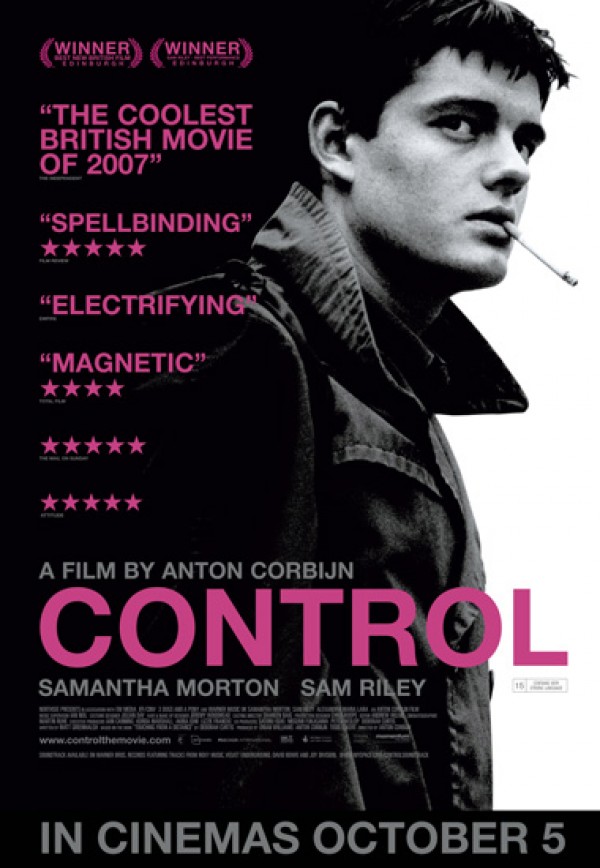
Control (2007)

Sam Riley excels in this heartbreak life story of Ian Curtis

Director: Anton Corbijn

Cast: Sam Riley (Ian Curtis), Samantha Morton (Deborah Curtis), Alexandra Maria Lara (Annik Honoré), Joe Anderson (Peter Hook), Toby Kebbell (Rob Gretton), Craig Parkinson (Tony Wilson), James Anthony Pearson (Bernard Sumner), Harry Treadaway (Stephen Morris), Andrew Sheridan (Terry Mason), Matthew McNulty (Nick Jackson)

Depression is no respecter of fame or success. You can have everything many people would give their right arm for, and still find the prospect of life overwhelming. Control is a heartfelt, deeply affecting film about Joy Division lead singer Ian Curtis, who committed suicide shortly before a career-changing tour of America. Anton Corbijn knew Curtis and the band personally, and his deep connection with this story is obvious in every frame of this beautifully shot film.

In 1975, fresh out of school, Ian Curtis (Sam Riley) marries Deborah Woodruff (Samantha Morton). Curtis is a would-be poet, but finds his interest piqued when he attends a gig by the Sex Pistols and quickly forms a band – Joy Division – with a group of friends. Powered by Curtis’ imaginative lyrics, the group starts to make a name for itself, taking on a manager Rob Gretton (Toby Kebbell) and winning the attention of the influential Tony Wilson (Craig Parkinson). However, all is not well with Curtis: beginning to suffer increasingly from epilepsy, Curtis is also falling in love with a young Belgian journalist Annik Honoré (Alexandra Maria Lara) while still in love with – although increasingly lacking in mutual understanding with – Deborah. These pressures slowly build up on Curtis.

Control is a film about a person’s longing to have security and a sense of mastery over their own life, but finding they lack both this and the emotional strength to deal with the consequences. Curtis is a man buffeted by competing pressures and desires, as well as a paralysing fear that epilepsy will eventually claim his life. He is frequently unable to relax, and tries his utmost to divorce himself from the reality of his situation by living as much as he can in the moment, ignoring until it is impossible the burdens of making choices about his life and relationships.

Living in the moment is what, for Curtis, makes it all possible. You can see it in reflection in his performances of Joy Division songs – the intense focus, mixed with the channelling of his own epileptic fits into a series of mesmeric on-stage dances, filled with wild and jerky movements. The entire film suggests much of Curtis’ output could be retrospectively seen as a cry for help, many of his lyrics about concerns that would eventually lead to him taking his own life. At one point, Curtis sings heartbreakingly of his isolation in a recording studio booth – with Corbijn cutting straight to the rest of the band and studio technicians talking and going about their business in the studio, oblivious to the underlying desperation that runs through it.

Because the film makes clear no one knew how to help Curtis or even how to identify his problem. To his manager and the band, its all part of the rough and tumble of rock ‘n’ roll. To his studio, it’s the artistic personality. Doctors seem to barely understand how to treat his epilepsy and miss all the signs of the personal stress it places on him. Neither his wife nor girlfriend can imagine that his guilt and self-loathing run as deep as they do. 

Corbijn’s beautifully evocative black and white photography adds hugely to this sense of dream-like non-reality around Curtis’ life, against the backdrop of some beautifully rendered Macclesfield locations. It helps wonderfully capture the sense of Curtis’ life somehow never coming fully into colour, as well as adding a deeply affecting air of melancholy over every frame. It’s also perfect for capturing the atmosphere of the 1970s clubs and bars that the band experienced.

The photography gives the film a feeling of the classic kitchen-sink dramas of the 1960s, and that is no bad thing, adding a certain depth to the tragedy of a working-class lad swept up by success and largely unable to cope with the burdens of expectation. Curtis is shown to be constantly overwhelmed by the pressure of live performance and the expectations of fans and viewers, yet also desperate to continue to have this channel to express himself.

Corbijn doesn’t give him a free pass though, and shows how he deliberately distanced himself from Deborah and their child. Often silent and disengaged, with a glazed look of a man who would rather be anywhere else than having to support a wife and child before he was 20, Curtis and Deborah’s marriage is one of affection but no shared interests of outlook. Deborah clearly provides Curtis with no kindred-spirit feeling, but he uses her as an emotional prop. Simultaneously he uses Annik for the same, while conducting an affair that clearly gives him a deep sense of shame, but finds impossible to resist. It’s living in the moment again: clearly, at every point, he would rather forget the other woman altogether, and is incapable of making the final life-altering decision needed.

This balance works so well because Sam Riley is astonishingly good as Curtis – real, pained, gentle, tender, selfish, with eyes that seem to have the life and will to go on drain out of them as the film goes on. Riley’s performance is pitch-perfect, and his empathetic brilliance for this man who did not know how to express his own feelings clearly is deeply moving. Over the film you see a sensitive man slowly fall apart in self-loathing, feeling trapped in his own life and unable to break free.

The film is stuffed with excellent performances, with Samantha Morton very good as Curtis’ deeply caring wife who unwittingly smothers him with demands – demands that are more than fair considering she is left frequently to hold the baby while her husband disappears for days on end. Alexandra Maria Lara has less to work with, but does a lot with Annik. Toby Kebbell provides some much needed lightness as Joy Divison’s manager, a blistering, foul-mouthed force of nature who can’t even begin to entertain the idea that his lead singer might consider ending his life.

The final sequence of the film, as Curtis (off camera) decides to follow-through on committing suicide (his second attempt to do so, another clear sign of those around him being totally unable to respond to the signals) is unbearably sad, ending with a beautifully evocative, tear-inducing shot of the crematorium releasing its ash – the last vestige of this lost life – into the sky to drift and disperse freely in a way Curtis never could. Control is a modern classic of British realism and possibly one of the finest music biopics ever made. Corbijn has the soul and eye of an artist, and brings all this to bear on a deeply heartfelt and moving film.

Cold Mountain (2003)

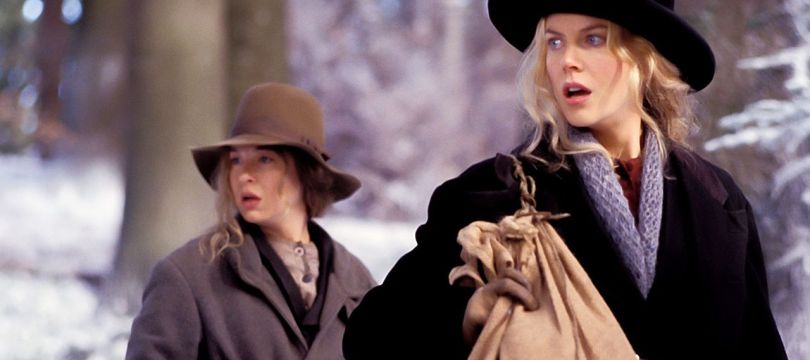
Nicole Kidman and Jude Law are souls in love separated by war in Cold Mountain

Director: Anthony Minghella

Cast: Jude Law (WP Inman), Nicole Kidman (Ada Monroe), Renée Zellweger (Ruby Thewes), Eileen Atkins (Maddy), Kathy Baker (Sally Swanger), James Gammon (Esco Swanger), Brendan Gleeson (Stobrod Thewes), Philip Seymour Hoffman (Reverend Veasey), Natalie Portman (Sara), Giovanni Ribisi (Junior), Lucas Black (Oakley), Donald Sutherland (Reverend Monroe), Cillian Murphy (Bardolph), Jack White (Georgia), Ray Winstone (Teague), Melora Walters (Lila), Charlie Hunnam (Bosie)

There was no difficult novel Anthony Minghella couldn’t adapt for the big screen. Cold Mountain is as beautiful and handsome a film as any he made, and his masterful scripting of a complex story is testament to his skill. So why is Cold Mountain not more loved? Is it because it’s almost too well made, too handsomely mounted, too literary and intelligent? Is it, actually, trying a little too hard? Is it a Cold Mountain itself, a giant structure of beauty but with an icy heart?

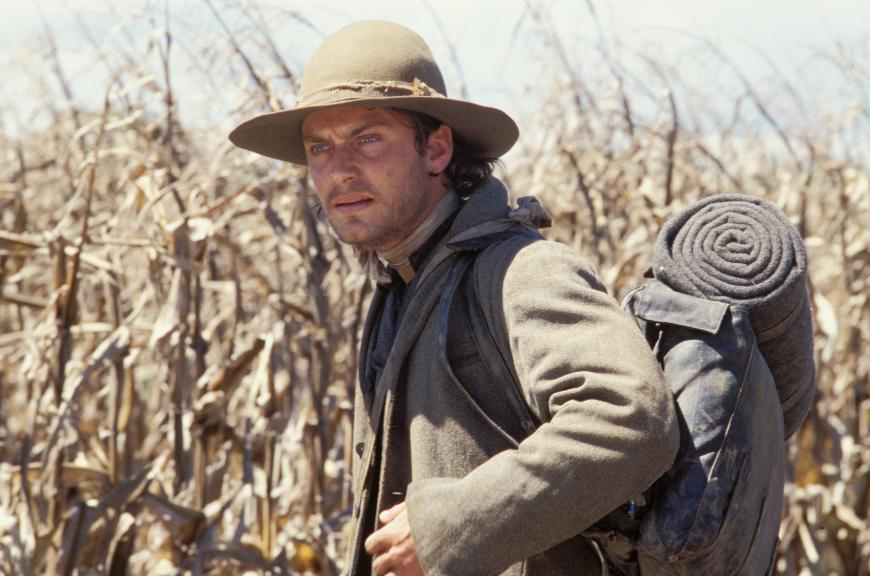
Based on Charles Frazier’s novel, set in the final days of the American Civil War, confederate soldier Inman (Jude Law), knowing the war is lost, deserts to return to the woman he loves, Ada Monroe (Nicole Kidman). The two of them have only spoken a few times but they feel a deep personal bond. During the years of war, poverty has hit preacher’s daughter Ada, although she has crafted a life-changing friendship with 18th century trailer trash Ruby Thewes (Renée Zellweger) which has helped her survive. As Inman’s odyssey home leads to him encountering a number of different vignettes that show the despair Civil War has brought to America, Ada struggles to survive and avoid the sinister attentions of home guard enforcer Teague (Ray Winstone).

There is so much to admire in Cold Mountain I want to start there. The photography is beautiful, and the film is assembled with a striking grace and skill. Walter Murch’s editing and sound design is perfect, with each shot of the film being fabulously composed and each carrying a specific message and purpose that contributes to the overall impact. The use of music – a collaboration between T Bone Burnett and Gabriel Yared – is perfect, a series of wonderful period compositions and impactful orchestral pieces. 

Everything about how Minghella captures the feel of the time, the mood of the South heading into war, and the disintegration of social conventions as the war takes hold and lays waste to the land, rings completely true. From the celebrations of the young men at the film’s start, to the increasingly haunted, tragic look of Jude Law’s Inman as he discovers new horrors at every point in his journey, you know war is hell. Minghella ironically opens the film with a catastrophic defeat for the North – but the slaughter disgusts Inman, and his burial under mounds of rubble during an explosion leads to a spiritual rebirths with Inman deciding senseless killing isn’t worth the candle any more. In a war of willing volunteers, how do we respond when these volunteers don’t want to keep fighting?

And why should they, as each of the various vignettes Inman walks through is a wasteland of moral collapse? From a sex-obsessed preacher (an amusing performance by Philip Seymour Hoffman) who has lost his morals to a tragic widow desperately trying to feed her baby (Natalie Portman, effectively stealing the whole show with an intense performance of utter desolation), everything Inman sees shows that nothing is worth all this. The film gets a very good sense of the drive that pushes Inman forward: constantly moving, he’s rarely seen sitting or resting. Each of the Odyssey-inspired stories gives him something to reflect on, or another opportunity for moral and emotional torment , from dragging bodies in a chain gang to avoiding the lustful advances of a group of hillbilly sirens who trap deserters for money.

Meanwhile, things ain’t much better on the homefront, where corrupt bullies like Teague (a slightly too obvious Ray Winstone) are enforcing their own law at the expense of justice. Poverty is also the impact of war, and poor Ada suffers hugely from this, as supplies run low and eventually out. Minghella’s swift and skilful establishment of character shows from the start how Ada is a stranger in a strange land, a middle-class town girl who is completely unsuited for country life and utterly unready to fend for herself when the chips are down without support. 

Is it any wonder in this world, that Inman and Ada cling to memories? Part of the film’s effect depends on how you respond to the romantic bond between these two clinging to a few brief moments (a few exchanges and one immensely passionate kiss on the day of Inman’s departure). It’s an old-fashioned, sweeping, love story and it depends on you relating to that old-fashioned mythic love story. I’m not sure that the film quite sells this as effectively as it could do. Somehow, perhaps because Inman is so insular and Ada a little too difficult to relate to, the passion between them can’t quite carry the sweep that the film demands, even as Minghella skilfully intercuts between them.

Nicole Kidman in particular feels miscast as Ada. Kidman is too intelligent, too determined and strong a performer to convince as a woman who is unable to look after herself and nearly succumbs to fear – she’s just not an actress I can picture cowering in fear in front of an angry rooster. Kidman does her best, but the character never really wins the sympathy that we need for the performance to work. Jude Law has much more to work with as Inman, brilliantly communication a whole world of feeling with very little dialogue. 

What works less well with Law is that his plotline just doesn’t quite grip enough. The vignettes are often entertaining, but feel like episodic sketches, and the sense of a building picture of the despair of the South doesn’t quite come into shape as much in practice as it does in theory. Frankly, after a while, you are ready for Inman’s journey to come to an end and for him to intersect with Ada’s plotline back at Cold Mountain (which is built around a consistent group of characters who engage our interest).

In the home front storyline you’ll be relieved with the entrance (almost an hour into the film) of Renée Zellweger’s blowsy Ruby, a loud-mouthed, trailer-trash woman with a heart of gold and a mastery of farming who effectively saves Ada’s life. It’s a loud, big, Oscar-winning performance from Zellweger that plays with being a little broad, but is skilfully balanced by the slow reveal that this personality is a cover that Ruby uses to hide her own pain. Added to this depth, her heart-warming presence carries such simple pleasure and colour compared to the more muted performances from the leads that you welcome it. 

Because Inman and Ada don’t quite work as a romantic couple. There is something slightly cold about them, slightly hard to relate to. And for all the intense and brilliant construction and filming of the film – and the mastery of Minghella’s writing and direction – it never makes them into the sort of classic romantic couple you care for. You want to connect with it more than you ever really do, and whether that is down to miscasting or the lack of intense chemistry between them I’m not sure, but it means Cold Mountain never becomes the great romantic tragedy it should be. You want a film this good to be as good as it feels – and it never quite is.

The Illusionist (2006)

Ed Norton, Paul Giamatti and Jessica Biel are wrapped up in the tricks of The Illusionist

Director: Neil Burger

Cast: Edward Norton (Eisenheim), Jessica Biel (Sophie), Paul Giamatti (Inspector Uhl), Rufus Sewell (Crown Prince Leopold), Eddie Marsan (Josef Fischer), Jake Wood (Jurka), Tom Fisher (Willigut), Aaron Taylor-Johnson (Young Eisenheim), Eleanor Tomlinson (Young Sophie), Karl Johnson (Doctor)

In 2006, The Illusionist was the other film about nineteenth-century magicians that wasn’t Christopher Nolan’s The Prestige. As such it got rather overlooked, which is unfair as this is a handsomely made, intriguing little puzzle which doesn’t reinvent the wheel but does what it does with a fair amount of invention and beauty.

In turn-of-the-century Vienna, the illusionist Eisenheim (Edward Norton) is a revelation – a mystery character whose past is investigated by Police Inspector Uhl (Paul Giamatti) under the orders of Crown Prince Leopold (Rufus Sewell). The Crown Prince feels Eisenheim’s illusions – which suggest at times dark truths in the Prince’s own personal life – are a serious risk to his position. On top of which, there is a secret past romance between Eisenheim and the Prince’s intended wife Countess Sophie (Jessica Biel), and the Prince is not a man to be crossed. So begins a cat-and-mouse game of trick and illusions between Uhl and Eisenheim.

The greatest thing about Neil Burger’s period piece is the grace and beauty with which it has been filmed. Dick Pope’s mixture of sepia tones and candlelit blacks makes for a series of gorgeous images, contrasted perfectly with Philip Glass’ beautiful score. Both contribute hugely to creating an atmosphere of mystical unknowingness around the Vienna locations, and give the film something in every scene to delight the senses.

What works less well is the slightly routine scripting and filmmaking that pulls the film together. For all the beauty with which it is presented, there isn’t quite enough of the original or – for want of a better word – the magical about what we see on the screen. The story is just ever so slightly too familiar, the points it intends to made – be it about the nature of power, or magic, or love, or hope – never quite coalesce into a coherent and clear message that really feels like you are being told something or shown something you haven’t seen in several movies before. 

Instead we see that behind the eyes of even the most obscure and unreadable conjurer there is deep and abiding love – love that will push them to do wild, even morally questionable, things. For others like the Crown Prince, that love is tied in altogether with possession and power and that there is no place for truth. Illusion is in all things: from Eisenheim’s entire life to the Prince’s front as a man of the modern world and his desire to become a dictator. Maybe that might be as close as the film gets to a deeper meaning – that illusion hides and protects our truths. 

As Eisenheim’s tricks get closer and closer to mesmerism and séance, the film suggests that it is a human need to want to see the truth behind tricks. The crowds who see Eisenheim raise the dead in flickering images want to believe it, that they could talk to their own deceased loved ones. Even in his early magic tricks, the less poetic characters of the film see value in the tricks only when they feel they have worked out the illusion behind it. Both are looking for a form of truth in the illusion, but the truth behind the trick is often deeper and more complex than the mechanical process by which it is done.

It’s a shame the film doesn’t tackle these ideas more, and settles for a more traditional “love across the divide” romance, but perhaps it doesn’t quite engage because Eisenheim and Sophie aren’t really interesting enough characters. Edward Norton plays Eisenheim with grace and intelligence, and draws a lot of depth and emotion from scenes that often require him to wordlessly stare. But juggling a character who deliberately conceals the truth and his intentions at every single turn seems slightly to have straitjacketed Norton, an elliptical actor at the best of times. There is something unknowable about him in this film which, while perfect for the character, makes him one you can’t really invest in. Similarly, Jessica Biel (a last minute replacement for Liv Tyler after filming had started) certainly looks the part, and gives Sophie a warmth, but she never really makes an impression as a character. Rooting for these two star-crossed lovers is difficult because we never get a sense of who they are.

Instead the film is dominated by hard-nosed rationalist Inspector Uhl, a man with a curiosity for conjuring, an appetite for power, a determination to get things done, but finally more than a bit of humanity. Paul Giamatti is excellent in the part, playing a role that emerges as the audience surrogate, trying as hard as we are to work out what is real and what is illusion. He doesn’t put a foot wrong with Uhl’s affable professionalism nor his ability to switch to business-like harshness. He’s also adept at playing a man who is the third smartest character in the film, but believes himself to be the smartest. You could also the same for Rufus Sewell’s (also great and clearly having a ball) Crown Prince, a bully who thinks he is an enlightened man.

It’s Uhl whom the film finally bonds with the most, and it’s his attempts to piece together what’s going on that becomes the most engaging thing in the second half of the film. For all the beauty of its making, and the skill that has gone into creating the optical illusions (some of Norton’s sleight of hand tricks in this movie are extraordinary), it’s a film that doesn’t quite satisfy. When the final reveal occurs in the film’s closing moments, you won’t quite be as satisfied as you would expect, perhaps because you won’t really care about Eisenheim or Sophie. Burger has made a handsomely mounted but strangely cold film.

Magnolia (1999)

Family dramas come together in Paul Thomas Anderson’s beloved Magnolia

Director: Paul Thomas Anderson

Cast: Jeremy Blackman (Stanley Spector), Tom Cruise (Frank TJ Mackey), Melinda Dillon (Rose Gator), April Grace (Gwenovier), Luiz Guzman (Luiz), Philip Baker Hall (Jimmy Gator), Philip Seymour Hoffman (Phil Parma), Ricky Jay (Burt Ramsey), William H Macy (“Quiz Kid” Donnie Smith), Alfred Molina (Solomon Solomon), Julianne Moore (Linda Partridge), Michael Murphy (Alan Kligman), John C. Reilly (Officer Jim Kurring), Jason Robards (Earl Patridge), Melora Walters (Claudia Wilson Gator), Felicity Huffman (Cynthia), Eileen Ryan (Mary), Michael Bowen (Rick Spector)

After the success of Boogie Nights, Paul Thomas Anderson landed a terrific deal: he could make what he wanted, about anything at all, at any length he liked. “I was in a position I will never ever be in again” is how Anderson remembers it. And thus was born Magnolia, a beautifully assembled labour of love, an imaginative remix of Robert Altman’s Short Cuts with biblical imagery. A sprawling collection of short stories, which leans into high tragedy and melodrama, Anderson’s Magnolia is the sort of film that is always going to find a special place on a film buff’s list of favourite films.

The film follows the lives of several people over a single day in LA. Legendary host of long running quiz show What Do Kids Know? Jimmy Gator (Philip Baker Hall) is dying of cancer and desperate to reconcile with his traumatised daughter Claudia (Melora Walters). Claudia is tentatively starting a relationship with devout and kindly police officer Jim Kurring (John C Reilly). Former champion of Gator’s show, “Quiz Kid” Donnie Smith’s (William H Macy) life is a disaster after his parents stole his winnings, and he’s struggling to hold down even the most basic of jobs. Former producer of the show Earl Partridge (Jason Robards) is also dying  of cancer, cared for by his dedicated nurse Phil (Philip Seymour Hoffman). Earl’s wife Linda (Julianne Moore) is wracked with guilt, while Earl himself is desperate to reconcile with his estranged son Frank Mackey (Tom Cruise), now a self-help guru who coaches men on how to pick up women. 

If you can’t see the links between the works of Robert Altman here, then you clearly need to look again. But it’s well worth it, as Anderson is a worthy successor to the master. He directs with a fluid confidence that comes from a director making a picture to please himself. Magnolia is frequently self-indulgent in its style and quirks, but it doesn’t matter when the effect of watching the film is so rewarding. From long takes to having the characters (all of them in different locations) sing along with Aimee Mann’s “Wise Up” at a key moment in the film, there are flourishes here that will annoy some but will be precisely what others fall in love with the film for.

And that love is deserved as this is a thoughtful and intelligent film about the impact the past (and specifically our parents) can have on us. As the man said, “they fuck you up, your Mum and Dad”. Certainly the case here. From “Quiz Kid” Donnie Smith to Claudia Gator, the film is crammed at every level with children (young and old) who have had their lives negatively affected by their upbringings. The past is a heavy burden, and it’s near impossible to shake-off – and in the cases of Donnie and Claudia brings with it a heavy dose of self-loathing. 

But what’s striking is that problems with the past don’t result in the same outcomes for people. Who would have thought that seemingly misogynistic motivational speaker Mackey’s beef with his dad is that Earl walked out on him and his dying mother when Mackey was a teenager? Part of the fascinating psychology of the film is how a son who loved and cared for his mother grew up to encourage men to treat women just as his father treated his mother. Is this some sort of perverse way to feel closer to the father who abandoned him? Perhaps Mackey has defined his life around hatred for his father, along with a deep longing for love – and perhaps his inability to deal with these feelings led to a professional career espousing the exact opposite? One of the neat things about Anderson’s film is that it largely avoids pat answers to this sort of thing. It’s left up to us to decide for ourselves – and perhaps reflect on how every person is an unanswerable riddle.

Whatever the answers are, it’s clear that parental problems are being paid-forward. The new Quiz Kid champion Stanley Spencer is a precocious child genius, being treated as an ATM by his father, who brags about his son while passive-aggressively demanding Stanley keep winning to continue funding his failing acting career. Stanley is a desperately unhappy child, more than smart enough to realise he is a performing monkey but unable to escape. And how can you get out of knots like that? After all, the film shows us one possible future for Stanley with Donnie – but walks a deft tightrope on whether the same life of loneliness and disappointment is inevitable for Stanley or not.

These familial clashes are introduced in the first hour and then simmer with exquisite timing during the film’s second hour. Anderson’s brilliant decision to build the film around a live recording of Gator’s quiz show means we are constantly reminded (as the show plays in the background throughout other scenes) that everything we are seeing is happening at the same time. The second hour of the film is a superbly deft cross-cutting from storyline to storyline, each building in tension. The desperation and entrapment in each scene beautifully spark off and contrast with each other. The sequence is at times marginally undermined by a slightly oppressive music score, but it’s beautifully assembled and shot and carries a real power – a superb balancing act of almost real time action that plays out for a nearly the whole of the second act. 

And Anderson knows skilfully to balance the gloom with real sparks of humanity and decency. Two characters in the film – Reilly’s cop and Hoffman’s nurse – are decent, kind and generous souls who have an overwhelmingly positive impact on every character they encounter. Both characters – and both actors are superb in these roles – are quiet, low-key but humane people who offer a quiet absolution to a host of characters, and opportunities to move on from the burdens of the past. Hoffman’s Phil is a genuinely kind person, who puts others before himself while Reilly’s Jim (surely the best performance of the actor’s career) is such a sweet, well-meaning, honest guy, that you understand why so many people feel bound to unburden themselves to him.

There is a lot to unburden in this film, and some of these moments tip over into melodrama at points. There are tear stained deathbed confessions, and angry, tearful moments of resentment and guilt bursting to the surface. At times, Magnolia is a little in love with these big moments, and indulges them too much, but it offers so many moments of quiet pain that you forgive it.

Not that the film is perfect. Today, even Anderson says it’s too long – and it really is. Unlike Altman, Anderson is less deft at pulling together all the threads in an overlapping story. This is effectively a series of short films intercut into one – the plot lines don’t overlap nearly as much as you might expect, with only Jim moving clearly from one plotline to another. It’s also a film that is driven largely by men. Of the few female characters, all are defined by their relationship to a man (and an older dying man at that), and not one of the female characters isn’t some form of victim. 

Anderson’s failure to really wrap the stories together means you can imagine unpicking the threads and reducing the runtime. Julianne Moore’s role as Earl’s guilty, unfaithful trophy wife (is she unaware of Earl’s own past of infidelity?) could have been easily shed from the film. Moore, much as I like her, gives a rather hysterical, mannered performance that feels out of touch with some of the more naturalistic work happening elsewhere in the film. The most melodramatic of the plots (every scene features Moore shouting, weeping, shrieking or all three), it also ends with the most contrived pat “hopeful ending”. It’s a weaker story that lags whenever it appears on screen.

Magnolia starts with a discussion of coincidence, but it’s not really about that – and the coincidence of all these people seems largely in the film to be reduced to the fact that they are all living in the same city with similar problems. It’s a slightly odd note to hit, as if Anderson slightly shifted the focus away from lives moving into and out of each other, in favour of a series of more self-contained linear stories. (That opening montage discussion of three (fictional) moments of fate and chance, while beautifully done, could also easily be trimmed from the film).

But then, these tweaks wouldn’t change the fact that Magnolia is a superbly made film, or that Anderson is a great filmmaker, even if he doesn’t quite manage to create the sprawling, interweaving, state of the nation piece he’s aiming for here. But as a collection of beautifully done short stories, it’s great. And the acting is superb. Tom Cruise drew most of the plaudits for an electric performance of egotism and triumphalism hiding pain and vulnerability near the surface, Anderson using Cruise’s physicality and intelligence as a performer better than perhaps any other director. Among the rest of the cast, Hall is superb as the guilt ridden Gator, Macy very moving as the desperate Donnie and Melora Walters heartrending as the film’s emotional centre, who ends the film breaking the fourth wall with a tender smile, that is perhaps one of the most beautiful final shots of modern cinema.

All this and it rains frogs at the end as well. But that introduction of biblical bizarreness is both strangely profound and fitting for Anderson’s stirring and inspiring film.

Public Enemies (2009)

Johnny Depp rides into action as John Dillinger in Michael Mann’s underwhelming Public Enemies

Director: Michael Mann

Cast: Johnny Depp (John Dillinger), Christian Bale (FBI Special Agent Melvin Purvis), Marion Cotillard (Billie Frechette), Billy Crudup (J Edgar Hoover), Stephen Dorff (Homar van Meter), Stephen Lang (Agent Charles Winstead), Stephen Graham (Baby Face Nelson), Jason Clarke (Red Hamilton), David Wenham (Harry Pierpont), Spencer Garrett (Tommy Carroll), Christian Stolte (Charles Makley), Giovanni Ribisi (Alvin Karpis), Bill Camp (Frank Nitti), Branka Katic (Anna Sage)

Michael Mann has an affinity for crime films. With Heat as one of his calling cards, Public Enemies is his attempt to do the same in the classic prohibition and bank robbery era of the 1920s. The guys going head-to-head this time?  John Dillinger (Johnny Depp), coolest robber there is, an icon of the criminal classes, and Melvin Purvis (Christian Bale) rigid and committed FBI agent. Public Enemies however fails to match Heat, falling part way between history lesson and action thriller. Covering the last few years of Dillinger’s life, and the rise of the FBI, it’s a cold, strangely uninvolving film mixed with a few stand out action scenes where tommy guns go blazing.

One of the first things it impossible to miss about the film is Mann’s decision to shoot the film using HD video cameras. The advantages of this is it gives much of the film an immediacy and modern look that throws the viewer into the middle of the action and makes this at times look and feel like a piece of news reel footage rather than a period piece. The camera choice allows Mann to put the camera right into the action, capturing every detail at a fast pace. The film has the look at times of a genuine documentary, and removing the richness of film also gives it the air of being caught on a phone, like some of this was some sort of found footage. Or rather, a phone that has been handled by a gifted cinematographer for perfect framing.

The downside of the choice of HD camera is that it makes the film at times look rather like a behind-the-scenes DVD documentary, with its untextured shadows and lack of lighting. Frankly at points it makes the film look bizarrely a little bit dull in places, or unusually unprofessional. Personally, I feel the benefits it gives in immediacy are cancelled out by this. But that’s just me.

Away from Mann’s shooting style – and his usual high octane skill of cutting and assembling action scenes – the film showpieces a strange lack of insight into its characters or any real developments of their hinterland. This is particularly so in the case of Purvis who never comes to life either in the film’s staging of him, or in Bale’s firm jawed, muted performance. When the final film caption throws up news of his later resignation and years later possible suicide it doesn’t make you question things you have seen in the film or feel like a logical progression: it just doesn’t tally up at all. 

The film does get some material out of how both sides play the media game. Purvis is a reluctant but fairly skilled player. His boss J Edgar Hoover (rather well played by Billy Crudup in one of the films best performances) is obsessed with spinning the nascent FBI to the media – half his scenes are bookended by press conferences – and his primary motivation is to exhibit himself to the media as the only logical choice for leading the FBI and the essentialness that it gains the powers it needs. Similarly, Dillinger and his fellow criminals delight in their media profile and do their damnedest to build up images of themselves as Robin Hoods (without the giving to the poor of course).

This is captured in Johnny Depp’s charismatic performance as Dillinger, a brooding, intense figure who would like to see himself as a sort of poet of the underworld. Dillinger talks about the banks money being their only interest and is frequently charming with an edge with regular people. He prefers bloodless robberies as they are cleaner and demonstrates a genuine sense of romantic openness with his girlfriend Billie. However, he is no angel. While he does not use violence as a first resort, he has no hesitation about using it as a second and will happily put bystanders at risk and rough up bank staff to get what he wants. He talks of escaping, but it’s clear that the game is an addiction for him and the danger is enjoyable – he takes an illicit thrill at one point of sitting in a cinema while his mugshot appears on the screen, wondering if anyone will dare spot him.

Depp’s performance is the finest thing in the film, a subtle and intelligent tightrope walk that teases depths that are perhaps not there, and suggests sympathies and agendas he perhaps does not have. While the character remains unknowable, you sense a great complexity and conflict there somewhere. He’s helped by being given a great actress like Marion Cottilard to play off, who makes Billie much more than just a gangster’s moll.

There is potential in the film, but it never really comes to life. For all the exciting shoot outs and drama, none of its characters are engaging or really interesting. The rest of the supporting cast feel like pieces to be moved around the board – many disappear with no real trace – and their fates pre-ordained by the demands of the plot. It makes for a rather flat experience, full of style, but never making you invest in it.

American Hustle (2013)

Glamour and confidence tricks in David O. Russell’s flashy American Hustle

Director: David O. Russell

Cast: Christian Bale (Irving Rosenfeld), Amy Adams (Sydney Prosser), Bradley Cooper (Richie DiMaso), Jennifer Lawrence (Rosalyn Rosenfeld), Jeremy Renner (Mayor Carmine Polito), Louis CK (Stoddard Thorsen), Jack Huston (Pete Musane), Michael Peña (Paco Hernandez/Sheik), Elisabeth Röhm (Dolly Polito), Shea Whigham (Carl Elway), Alessandro Nivola (Anthony Amada), Robert De Niro (Victor Tellegio)

In 2013, American Hustle was nominated for ten Oscars and won none of them. Somehow, being invited to the big party but not receiving any prizes was strangely fitting for a film about small time grifters forced into a big game way beyond their control. Russell’s film is like a celebration of his strengths and weaknesses as a director: it’s stuffed with some very good (if rather mannered) performances, offers lots of dynamic film making, but is still basically a rather cold and arch film that’s hard to really invest in – rather like a con game in itself.

In 1978, Irving Rosenfeld (Christian Bale) is a small-time grafter, running scams with his partner and lover Sydney Prosser (Amy Adams), who uses the identity of a young English aristocrat “Lady Edith Greenslly”. Rosenfeld longs to leave his unstable, selfish wife Rosalyn (Jennifer Lawrence) for Sydney, but fears he will lose all his access to his adopted son. Rosenfeld and Prosser’s career of clever investment frauds is brought to an end when Prosser is caught red-handed by FBI agent Richie DiMaso (Bradley Cooper). DiMaso forces the pair into his entrapment operation, targeting New Jersey politicians with offers of bribes as part of a Fake Sheik investment. Initially it targets Mayor Carmine Polito (Jeremy Renner), but the operation quickly expands, as the ambitious and impulsive DiMaso constantly follows every connection and the operation expands to dangerous levels, taking in the mafia. Scared, Rosenfeld and Prosser desperately try to play both ends against the middle.

American Hustle is a decent film, which pulls together the sort of capers, turmoil and antics that you would expect from a film about a long con. It throws into the melting pot the vibes of several other films, from The Sting to Goodfellas, and asks us to admire the results. Russell encourages the actors to play it with an edgy verisimilitude that pretty much works as a metaphor for con men. Each performance is an effective display of high-wire character acting work laced with arch, studied tricks. But only rarely do you get a sense of something that’s real.

That’s part of a film that wants to have a cake and eat it as well. It’s striking in the entire story that the most sympathetic character is the initial target, Jeremy Renner’s well-meaning, passionate New Jersey politician, bamboozled into taking a bribe (money he mostly uses in the local community) because he is convinced it’s a crucial part of getting Arab investment. It’s even more striking that the most honest, subdued (and deadly) character is the Mafia kingpin Victor Tellegio, played with chilling menace by an unbilled Robert DeNiro. Nearly everyone else on the side of the entrapment operation is pretty much a selfish prick or verging on the unhinged.

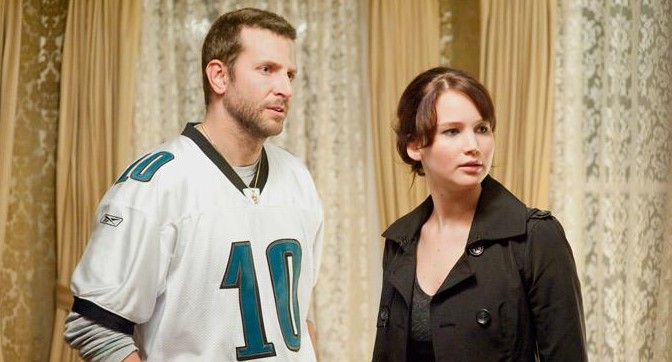
But then that’s part of the point of the film, which throws two people who know what they are doing (Rosenfeld and Prosser) at the mercy of people playing with fire (Roselyn and in particular DiMaso, a permed, tightly-wound powderkeg). This is one hell of a performance from Bradley Cooper – and a sign again after Silver Linings Playbook that Russell and he have a natural understanding. Cooper is a force of nature, a bundle of terrible impulses combined with an utter lack of shame or self-control, who is quite happy to trample over everyone to get what he wants and has no regard whatsoever for the danger he puts himself and others into. Utterly unpredictable, he never sticks to a plan, veers between rage and hysterical laughter and, worst of all, is always convinced he’s right.

It’s DiMaso who spins the operation into dangerous waters with his vaulting ambition to land yet another big fish, recklessly peddling insubstantial, unprepared lies on top of each other – to the terror and horror of practised peddlar of bullshit Rosenfeld, whose whole successful schtick is based on saying “no” and having the mark do all the desperate work. DiMaso’s approach not only puts the operation at risk, it puts lives at risk – not that DiMaso cares, preoccupied as he is with his childish one-upmanship with his boss and a teenage sexual obsession with Prosser.

What chance do the (mostly) small-fish politicians and local figures have, whose lives are placed on the altar of DiMaso’s ambition? It’s no wonder that, late in the film, our conmen heroes start to feel guilt and remorse – none more so than Irving Rosenfeld. Played by Christian Bale with the sort of tricksy, Olivier-ish disguises that he so loves (in this case increased weight, a balding comb-over and a pair of tinged glasses he obsessively fiddles with), Rosenfeld is an operator happy with the level he is working at and incredibly wary of stepping up into the dangerous big leagues. Justifiably convinced of his own professionalism at fleecing money and winning trust, Rosenfeld has no problem with taking money from the selfish but every problem in the world with destroying the life of a fundamentally honest man. Bale’s performance, for all the tricks, manages to successfully build a picture of a selfish man who believes himself in his way to be honest in a way and is just trying to make his way.

That way also involves balancing between two very different women. Amy Adams does decent work as a blowsy fake-aristocrat, sporting a series of tops with neck lines that literally plunge down to her waist, although she is perhaps a little too “nice girl next door” to really convince as the love-em-to-manipulate-them Prosser. She’s not also helped by the script giving her an ill-defined arc of self-doubt linked to pretending to be someone else. Sweet as the genuine love can be her between her and Rosenfeld – and excellent as her chemistry is between Bale and Cooper – it’s the character who remains the least knowable in the film.

Also not helping is the fact that Jennifer Lawrence burns through the film as Rosalyn, the sort of electric, larger-than-life but still very real performance of arrogance, selfishness, dangerous stupidity and greed that marked her out as a major actress. Whether inadvertently putting Rosenfeld’s life at risk through blabbing details she’s half-overheard and half-understood, cleaning the kitchen while singing an aggressive rendition of Live and Let Die or nearly burning the house down because she won’t believe metal can’t go in “the science oven” (aka microwave), Lawrence is the film’s MVP.

Russell’s film showcases all these actors brilliantly, but his overall story remains a little cold and not as clever as it thinks. With a film about conmen you expect a final rugpull – and this film sort of manages one – but the story telling to take us there isn’t quite as articulate and clever as it needs to be in order to be really satisfying. Perhaps it’s the film’s ragged, hip, indie style of telling – or the air that the actors are making a lot of this stuff up as they go with edgy, semi-improvised performances – but the film never really engrosses or engages. For all that we see the inner worlds of Rosenfeld and Prosser, I can’t say I really, truly cared what happened to them. 

Instead Russell focuses on the marshalling of his resources, and cool, slick film-making. He uses expert camera work and editing, mixed with a superbly chosen soundtrack, overlaid with voiceover, sudden transitions, some narrative jumps and a vibrant sense of cool to make a story that finally feels a little too much like a style-over-substance trick – in fact a con game all of its very own, as enjoyable and entertaining as the rest of the film, but when it finishes you realise your pockets are empty.

The Miseducation of Cameron Post (2017)

Re-education classes turn out to be not for the good in The Miseducation of Cameron Post

Dir: Desiree Akhavan

Cast: Chloë Grace Moretz (Cameron Post), John Gallagher Jnr (Reverend Rick), Jennifer Ehle (Dr Lydia March), Sasha Lane (Jane Fonda), Forrest Goodluck (Adam Red Eagle), Marin Ireland (Bethany), Owen Campbell (Mark), Kerry Butler (Ruth Post), Emily Skeggs (Erin), Quinn Shepherd (Coley Taylor)

In 1993 teenager Cameron Post (Chloë Grace Moretz) is dispatched to a church-run sexual re-education camp after she is found to be in a same-sex relationship with a classmate. At the camp, her quietly cynical attitude quickly finds her aligned with the sceptical students Jane (Sasha Lane) and Adam (Forrest Goodluck) as they push up against the regime installed by Dr Lydia Marsh (Jennifer Ehle). How dangerous is the world of sexual re-education for its students?

Not surprisingly, the answer is very. The Miseducation of Cameron Post is a rather self-consciously indie film that sets up easy targets and then happily spends 90 minutes knocking them down. It’s often made with sensitivity, and has an excellent performance from Chloë Grace Moretz as its lead, a character you really root for, but this is a fairly empty viewing experience.

The film does get a lot of material out of the awful, cringing re-education programmes. It lands some blows against the hypocritical nature of the organisation, with at least one of the teachers (John Gallagher Jnr’s earnest Rick) also barely suppressing his homosexuality – and it re-enforces the cruelty of forcing people into becoming something they are not. But this is hardly news to any right-thinking person, and it doesn’t always make for good drama.

This is partly because Cameron herself never feels isolated in this re-education camp. She almost immediately falls in with like-minded rebel friends, and several of the other students are openly struggling with doubts. While the film perhaps wants to show that this sort of social engineering is never going to work, it does mean that our heroine never really feels at a disadvantage. You can’t help but feel a more effective film would isolate Cameron among people professing they are true believers (even if it turns out later they’ve been pretending), and show her struggling against conformity and clinging to her individuality. Instead, there seems no threat or any danger at all that she will ever drink the Kool Aid here at this camp – not for one second do you feel any chance that she is going to conform.

It makes for a major weakness for the film. It also makes Jane and Adam rather boring characters. They don’t challenge Cameron’s viewpoint at all, but merely echo her inner views with an added spice of rebellion. It makes for uninteresting scene constructions, and it’s not helped by the lack of chemistry between the three characters. By contrast, her relationship with roommate Erin, who is desperate to overcome her sexuality, makes for a far more interesting dynamic. Two characters with very different inner struggles, trying to find a common ground but frequently failing. Emily Skeggs is also heartbreaking as Erin, a young woman deeply unhappy and seemingly destined to remain so.

But there isn’t enough of this sort of thing. Nor is the viewer really challenged to consider the viewpoints of those running the camps. Jennifer Ehle, as the doctor running the camp, is a domineering Nurse Ratched figure, in a role which needed more shades of grey. She’s never a woman honestly doing what she believes is best, just a bully enjoying the power. John Gallagher Jnr’s conflicted worker doesn’t come into focus as a fully rounded human being, and his torment is touched on but his reasons for the decisions he has made are never explored.

It all contributes to a disappointing viewing experience. The film is too often shot with a self-conscious indie coolness, which gets on your nerves after a time, with its constant moody fall backs and gloomy set-ups. But it’s also a film that is taking a bit too much delight in making rather obvious and safe points over and over again, and failing to invest itself with enough drama to make for a compelling story. It’s a disappointment.

The Pumpkin Eater (1964)

Anne Bancroft and Peter Finch in an unhappy marriage in the overlooked The Pumpkin Eater

Director: Jack Clayton

Cast: Anne Bancroft (Jo Armitage), Peter Finch (Jake Armitage), James Mason (Bob Conway), Cedric Hardwicke (Mr James), Richard Johnson (Giles), Eric Porter (Psychiatrist), Rosalind Atkinson (Mrs James), Frances White (Older Dinah), Alan Webb (Mr Armitage), Cyril Luckham (Doctor), Yootha Joyce (Woman at Hairdressers), Maggie Smith (Philpot)

Released in 1964, The Pumpkin Eater was rather unfairly seen as too strongly aping the new-wave of European film-making, in particular Michelangelo Antonioni and Ingmar Bergman. It’s a strange trend in British culture to ruthlessly lambast anything seen to be too good or too well made, as if trying too hard is vulgar and flies in the face of our love for the amateur. This is supremely unfair for The Pumpkin Eater (which I will say is weighed down by a pretty terrible title – Scenes From a Marriage would have been better, but that one got nabbed by Bergman) which is a little classic of a film.

Based on a semi-autobiographical novel by Penelope Mortimer about her marriage to lawyer-turned-writer John Mortimer (creator of Rumpole), Anne Bancroft (with an impeccable British accent) plays Jo Armitage: an intelligent woman, suffering from depression, with a huge number of children from three marriages. Her new husband, Jake (Peter Finch), is a charming man, a hard working screenwriter, an excellent father to all the children – and, alas, a selfish serial adulterer. The film charts the ups and downs of their marriage, often in a non-linear way, including Jo’s battle with depression and the fallout from Jake’s affair with the wife of a film producer Bob Conway (James Mason).

Shot in sumptuous black-and-white, The Pumpkin Eater is so well made by Jack Clayton it became almost a stick to beat it with. One contemporary review even mentioned it was “irritatingly without flaws” in its film-making, as if this was a bad thing! Clayton’s direction is detailed, precise and beautifully done and throws a host of fascinating images at the screen, as well as drawing out some simply superb performances from the cast. Clayton chooses interesting angles and visual mirrors – events from scenes are reflected and repeated, in different contexts, in later scenes. The camera takes up unusual positions, not least a zoom in on James Mason’s mouth as his character spits out vile insinuations.

Clayton’s direction also captures a superb sense of empathy with his characters. His depiction of depression and ennui in Jo Armitage captures the sense of drift beautifully. Early in the film, she is captured in shot aimlessly standing in the shade of a car port. At her lowest she seems to get almost stuck in the frame. The film’s most famous moment features Jo breaking down in despair in Harrods – a wonderful sequence that uses a combination of POV, overhead shots, a camera attached to Anne Bancroft as she works, and a crashing close up on Bancroft’s face (also repeated later in the film) that all serve to stress her isolation, her despair and the mixed to hostile reaction to her tears from the shoppers around her. 

But the film doesn’t solely take Jo’s side. It’s interesting how many contemporary reviewers – men and women – found Jo a tiresome and selfish woman (she’s not, just an unhappy one). That’s partly due to the film’s success in making Jake a fully rounded character. Sure he’s charming and fun, but he’s also clearly a great dad and genuinely cares for Jo – it’s just that he can’t help himself doing things that end up hurting her. The film is also careful to suggest that, deplorable as some of his actions are, he has a point about the pressure of adding another child to a family which already has about seven (two of them at least have been farmed off to boarding schools, and it’s clear in one late sad scene that Jo now hardly knows them). How are they meant to cope? How are they going to be able to support another baby?

The film works as well because both Bancroft and Finch give extraordinary, fully rounded performances in the lead roles. Bancroft had just won the Oscar for Best Actress, and it’s quite something to think that committing to this British picture was her next gig. But she immerses herself in the character, and sells every single one of the complex emotional ups and downs Jo goes through. She’s perfect at drawing us deeply into Jo’s sorrow and uncertainty, but also her brittleness and anger. She’s not afraid to acknowledge that sometimes depressed people are immensely difficult and frustrating – or that they are also intensely vulnerable and fragile. Peter Finch is equally good as a hail-fellow-well-met, whose selfishness doesn’t quite fit into his self-image as a good guy but who is overflowing with good intentions and small moments of kindness.

Both actors are helped immeasurably by a very strong script by Harold Pinter. Pinter’s structure intelligently draws out great depths from the material, as well as playing smart games with structure and timeline that provoke thought. He is the master of the stand-out scene, and the film is crammed with smaller moments that stand out in the memory. Maggie Smith has a brilliant cameo as a shallow, gossipy house guest who may or may not be having an affair with Jake. In one extraordinary sequence, Jo is accosted at a hairdressers by a total stranger (played by Yootha Grace) who recognises her from a magazine article about Jake, who oscillates between wanting to be her friend and vicious bitterness that she isn’t. 

It’s a sign of the gift parts that this film gives to actors. Stand-out amongst the remaining cameos is the great James Mason, whose cuckolded husband at first seems to be a decent, if overly bombastic life-of-the-party type, who reveals himself to have unending reserves of bitterness and poison and delights in pouring anger and suspicion into Jo’s ears.

Clayton and Pinter’s work dovetails perfectly here into a sharply intelligent, haunting film which throws you into a marriage that refuses to paint either side as either completely wrong or completely right (Clayton was even concerned the film may have gone too far in making Jake sympathetic to the detriment of Jo). A compelling storyline, in a beautifully made film crammed with intelligent lines and wonderful moments, The Pumpkin Eater can rightly claim to be an overlooked classic of British cinema.

A Letter to Three Wives (1949)

Linda Darnell, Ann Sothern and Jeanne Crain read over the eponymous Letter to Three Wives

Director: Joseph L. Mankiewicz

Cast: Jeanne Crain (Deborah Bishop), Linda Darnell (Lora Mae Hollingsway), Ann Sothern (Rita Phipps), Jeffrey Lynn (Brad Bishop), Paul Douglas (Porter Hollingsway), Kirk Douglas (George Phipps), Thelma Ritter (Sadie), Barbara Lawrence (Babe Finney), Connie Gilchrist (Ruby Finney), Florence Bates (Mrs Manleigh), Hobart Cavanaugh (Mr Manleigh), Celeste Holm (voice of Addie Ross)

It’s strange to think that, back in 1949, this slight story of three women one of whose husbands might have run off with another woman (the film’s narrator, the omnipresent Addie Ross, coolly voiced by Celeste Holm) was garlanded with multiple Oscars. It’s the sort of material you half expect would make an episode of Desperate Housewives– although of course today the whole thing would have been sorted out in a few minutes with mobile phones (A WhatsApp to Three Wives?). What makes it work so well is Mankiewicz’s dialogue, which lifts this slight melodrama of suburban couples into something that feels like it has more weight and intelligence than it really does.

Anyway, our wives are a mixed bag living in a commuter town “just outside the city”, all from middle-class or lower upper-class backgrounds. Seconds before taking some underprivileged children for a boat trip and picnic, insecure Deborah Bishop (Jeanne Crain), blowsy Lora Mae Hollingsway (Linda Darnell) and ambitious Rita Phipps (Ann Sothern) receive a goodbye letter from their “friend” Addie Ross, who announces she has left town with one of their husbands. But which one? Is it Addie’s ex-boyfriend, privileged Brad Bishop (Jeffrey Lynn), her school-yard sweetheart, academic George (Kirk Douglas), or her admirer, businessman Porter Hollingsway (Paul Douglas)? As the poster says, “While they wondered, one of them wandered”!

If that sounds to you like a rather small-scale storm in a teacup – well you’d probably be right. To be honest, it’s pretty hard to care which of these husbands might have headed into the sunset with the arch Addie Ross, since most of the characters seem at first rather smug, self-centred or tiresome. It takes time to warm up to these guys, but eventually Mankiewicz’s sparkling dialogue starts to work some magic and you invest in a clichéd little story (based, bizarrely, on a glassy magazine short story).

At one point the film was entitled A Letter to Four Wives – until studio executives decided that was one too many (bad news for Anne Baxter who had been cast as the final wife). That speaks to the episodic nature of the film. It has a clear five act structure – the set up, an act establishing the backgrounds of each of the marriages, and a final act that reveals who went where and wrapping the plot up. It’s a simple structure, and today it’s hard to see what all the fuss was about.

Mankiewicz’s framing device for his flashbacks may be a bit contrived, but he puts it together with skill. Each flashback is cleverly introduced with an intriguing device where various mechanical items near the women slowly take on a voice of their own, echoing their inner dread back to them. It sounds a bit odd – and it is at first – but it sort of works as an unsettling reflection of the unease of the central characters.

Once we get into the flashbacks themselves they are a mixed bag. The weakest by far is the first, focusing on Jeannie Crain’s Deborah Bishop. Rather plodding and dated – and forced to also introduce all the characters – it’s a shapeless section of reflection in which Deborah comes across unengaging, sulky, insecure and tiresome. Mind you that’s as nothing compared to her husband Brad, played with utter forgettability by Jeffrey Lynn, who is nothing more than a self-important idiot. Frankly, you end up thinking Deborah might be better off without him. The sequence focuses on the possibility that Brad might think Deborah is a little beneath him – compared to his old love Addie – but basically serves as a teaser for the next two flashbacks and an intro to the more interesting couples we are going to spend time with.

Our second sequence offers several comic highlights as it follows Ann Southern and Kirk Douglas (both very good) as the Phipps, middle-class intellectuals. George is an academic, Rita a writer for radio soaps, and the flashback revolves around their dinner party for Rita’s bosses, two radio-and-advert obsessed moneybags who demand the meal is interrupted so they can listen to episodes of assorted radio shows (accompanied by a long discussion of their advertising slots). Plenty of comic mileage comes out of George’s irritation at their vulgarity, but also serves to demonstrate the tensions in the Phipps marriage – George believes his wife is wasting her talent, Rita thinks her husband isn’t taking her career seriously. But underneath that is a nice little commentary on the insecurity of men returning from the war to find their wives have made professional lives of their own – and in this case, even become the main breadwinner in the household.

Our final flashback is probably the finest, around white-goods factory owner Porter Hollingsway (a bombastic Paul Douglas, with a touch of self-loathing) and his secretary turned wife Lora Mae (Linda Darnell, brassy self-confidence hiding vulnerability). Largely set in Lora Mae’s family home, a house on the wrong end of the tracks which hilariously has a train track running past its window (which at frequent occurrences leads to the whole house shaking, an action the family responds to with a casual familiarity). The drama here revolves around the couple’s feelings for each other – Porter can’t believe Lora Mae isn’t a gold digger, Lora Mae can’t believe her husband genuinely loves her for herself – but it’s told with a real sense of comic vibe laced with emotional truth. It’s the finest – and funniest – sequence and leads to a pay-off that really works.

A Letter to Three Wives maybe a little too soapy and frothy to be much more than an entertainment, but it is at least a very entertaining one. At all times this is due to Mankiewicz’s witty, sparkling and truthful dialogue that hums in every scene and gives all the actors some of the best opportunities of their career. Linda Darnell in particular is outstanding – warm, witty, fragile – but each wife has her moments, and Kirk Douglas is charm itself as George with Paul Douglas’ fragility under the surface eventually quite moving despite his bullying exterior. There is also fine support from Thelma Ritter among others. It’s a fine film, handsomely mounted and offers more than enough laugh-out-loud moments and moments of sweetness to make it really work.