Category: Relationship film

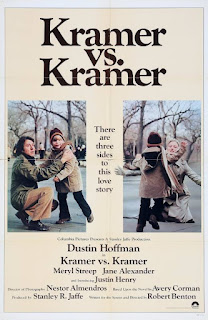
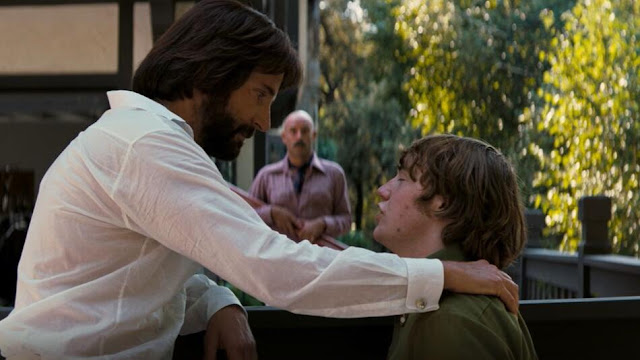
Kramer vs Kramer (1979)

Kramer vs Kramer (1979)

Father and son post divorce are explored in this Best Picture winning look at the state of marriage in the 1970s
Director: Robert BentonCast: Dustin Hoffman (Ted Kramer), Meryl Streep (Joanna Kramer), Justin Henry (Billy Kramer), Jane Alexander (Margaret Phelps), Howard Duff (John Shaunessy), George Coe (Jim O’Connor), JoBeth Williams (Phyllis Bernard), Howland Chamberlain (Judge Chamberlain)

Kramer vs Kramer is a near perfect example of how time changes the perception of a film. On its release, it was the smash-hit of the year, scooping five Oscars. It took a sympathetic look at divorce and explored the then unthinkable idea that a single father could find fulfilment in taking on the woman’s role of caring for a child. Today, it’s more likely to be seen as a thinly veiled attack on feminism and a promotional video for Fathers4Justice. But a film can be a warm celebration of a father building a relationship with his child and an implicit criticism of women who want it all.

The film opens with Joanna Kramer (Meryl Streep) tucking her 7-year-old son Billy (Justin Henry) into bed, telling him she loves him, and then walking out of her New York apartment for good. She tells husband Ted (Dustin Hoffman) – a workaholic advertising executive – she is deeply depressed and has to find what she wants from her life. Ted, a loving but distracted father, has no idea either how to raise his son or run a household. At first, he resents Billy for distracting him from his career, just as Billy resents him for being unable to care for him as Joanna could. Eventually though, Ted and Billy build a loving relationship, with Ted placing Billy’s needs first. At which point Joanna returns and demands custody, a clash that will lead to the courts.

Benton’s film, adapted from a successful novel, is shot with a chamber-piece richness by Nestor Almendros and signposts its art-house credentials with a Vivaldi string score. It’s superbly acted. Hoffman (winning for Best Actor) is hugely committed, running a gamut of emotions from anger and despair to a joyful devotion for his son. Streep won Best Supporting Actress as the deeply-torn and conflicted Joanna. Hoffman and Benton draw superbly natural work from Justin Henry as Billy, an unaffected, completely unmannered performance. Benton marshals these three actors through a series of simply shot but often surprisingly affecting scenes, alternating between raw hurt, anger and tender forgiveness.

But this is a film that needs a sister film. Specifically, one that shows events from Joanna’s perspective. Although the film – at Streep’s insistence – tries to avoid demonising her feminist desire for more in her life than cooking and cleaning, it still gives short shrift to her departure. With the film’s focus on the heart-warming relationship between father and son, it’s very hard not to implicitly see Joanna as first a selfish abandoner and then a hypocritical antagonist trying to steal Billy. There is little attempt to not stigmatise Joanna as, on some level, a bad parent.

For all the film opens with a long hard look at Joanna’s face, struggling with the conflict between her depression and leaving her beloved son, there is no real effort to explain or understand what motivates Joanna to do the things she does. There are some half-hearted justifications very late in the film, during its courtroom sequences – but these only dip lightly into any turmoil Joanna must have been feeling. Worst of all, it’s all presented as something Ted has to learn to “forgive” rather than understanding it was a crisis he played a role in causing.

The film’s main focus is on Ted learning to become a father. Ted is a classic workaholic dad of the 1970s. He stays late at the office boozing with his boss, has literally no idea about Billy’s everyday schedule and is so inept at home that cooking French toast is completely beyond him. He has no idea about how to enforce rules with Billy, alternating between showering him with ice cream to keep him quiet and then vainly trying to re-enforce rules. (In a great scene, Billy slowly and deliberately sees how far he can push these rules as he first refuses dinner, fetches ice cream from the freezer and then starts eating it, all while Ted lamely states “Don’t you dare do that” – it ends of course with mutual screams of “I hate you”.)

What Ted does is learn to become a parent. Or rather, learn how to become a 1970s mother – since it’s a joke made time again that he is the only man dropping his son off at school, taking him to the park or attending his school play. Benton’s film takes some decent pot shots at the poisonous masculine world of work, as Ted eventually loses his job for letting his single-minded focus shift towards his son – his boss offers no sympathy at all for a man whose mistakes are due to his distraction by “woman’s work”. And the Ted at the start of the film would have agreed.

The relationship between Hoffman and Henry is beautifully played, a gently paced but very naturally flourishing of love and acceptance between two people who have had their lives shattered in different ways. The Ted we met at the start could never have run several blocks to the emergency ward, carrying an injured Billy (shot with a one-take urgency by Benton) – and then point-blank refused the doctor’s suggestion he needn’t bother staying with his son while the wound is stitched up. That Ted wouldn’t have taught Billy to ride a bike or helped him learn his lines for the Halloween play. For all its dated attitudes at times, the film deserves praise for the way it stressed that men could – and should – be this involved in the lives of their children.

It should be noted that Hoffman, at the height of his method dickishness, smashed a glass in this scene without warning Streep he was going to do it – her shock was real. Hoffman also made Henry cry for camera at one point by telling him, when filming was done, he would never see any of his new ‘friends’ on the set again. You see now why he was perfect for Tootsie?

But it’s not perfect. The final act, with the return of Joanna, sees both parents gearing up for a paternity battle– and having watched Ted and Billy spend nearly an hour and 20 minutes build a heart-warming relationship, we know where our sympathies lie. Even at the time, lawyers denounced the viciousness and one-sided result of this court case, which seems inexplicable given these two parents live only a short-distance apart with similar salaries. Not that it matters as the film ends with a puff-piece Hollywood fiction moment, as Joanna bravely sacrifices her custody because she recognises she can’t take Billy from his home.

Of course, what the film doesn’t do is acknowledge that Joanna spent essentially seven years doing the sort of all-consuming parenting Ted has only just discovered in the last 18 months. Neither does it do much to avoid suggesting Ted taking these tasks on is an astonishing act of character, just as Joanna abandoning them is an act of calculated selfishness. That’s not to attack the obvious love Ted discovers for his son. He even – eventually – confesses to his son that Joanna’s leaving was his fault for taking her for granted. But the film is so taken-up with the (admittedly beautifully done) relationship between father and son, that it neglects any exploration of the wife and mother beyond her (twice) being a cataclysmic event in their lives.

But it’s a film of its time. And in trying to at least show a divorce where no one was too much at fault and stressing a father could be as much of a parent as a mother, it was trying to do a good thing – even if it sometimes looks like an elderly relative who clumsily says something offensive while trying hard to be open-minded. The three leads are superb and the film has some genuinely heart-warming moments. It looks more and more flawed at times today, but this was trying to do something very daring. And nothing dates worse than daring.

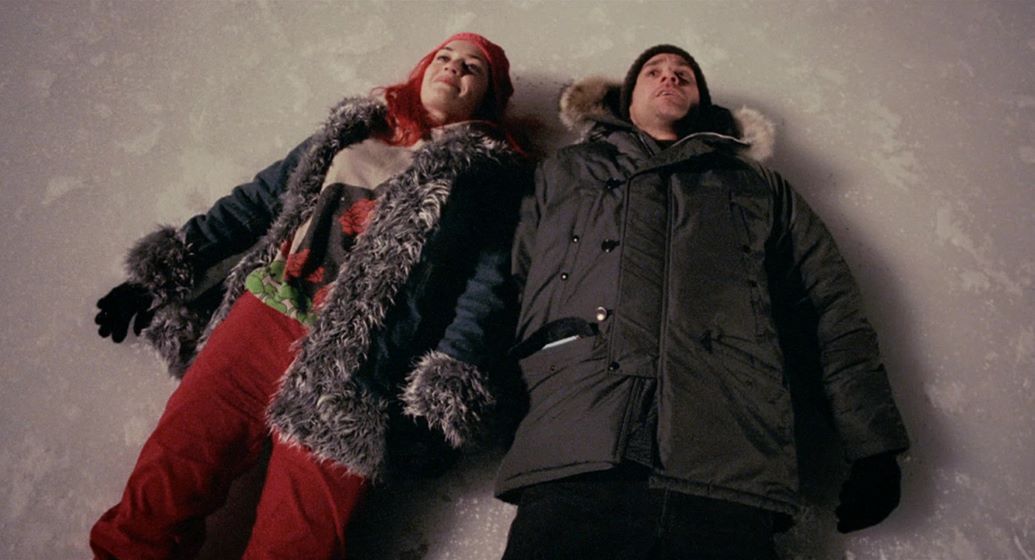
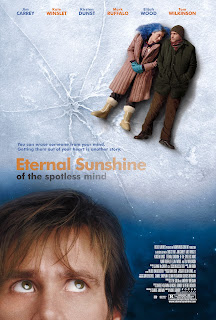
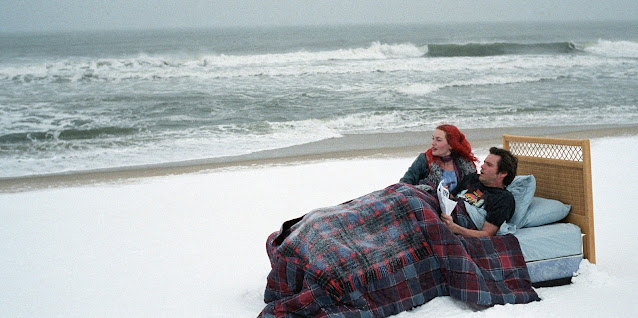
Eternal Sunshine of the Spotless Mind (2004)

Eternal Sunshine of the Spotless Mind (2004)

An impulsive decision leads to a wild tour through mind and memory in this mind-bending, desperately romantic classic

Director: Michel Gondry

Cast: Jim Carrey (Joel Barish), Kate Winslet (Clementine Kruczynski), Kirsten Dunst (Mary Svevo), Mark Ruffalo (Stan Fink), Elijah Wood (Patrick Wertz), Tom Wilkinson (Dr Howard Mierzwiak), Jane Adams (Carrie Eakin), David Cross (Rob Eakin), Dierdre O’Connell (Hollis Mierzwiak)

What makes us who we are? If it’s anything, it might just be the sum total of our experiences. The events of our lives, and the emotions they cause in us, shape and define us. If we cut some of them away, what would we be? Is losing painful memories worth it, if we also cut away memories we cling to as treasured possessions? What makes us love someone: instinct or the sum total of our memories with them? Ideas around this and how love works are at the centre of Michel Gondry and Charlie Kaufman’s extraordinarily inventive, imaginative but also romantic and heartfelt Eternal Sunshine of the Spotless Mind, a truly original film crammed with rewarding moments.

Joel Barish (Jim Carrey) wants to make-up with his electric but troubled girlfriend Clementine Kruczynski (Kate Winslet). Imagine his pain when he goes to see her and she seems not to recognise him – and how much worse that might be when he discovers Clementine has erased him from her memory. An experimental surgery, Lacuna, run by Dr Howard Mierzwiak (Tom Wilkinson), offers its clients an unmatchable service: they will erase a person from your memory. Struggling to get over the loss of a partner, wife, friend, child or even dog? No problem, they’ll be gone from your mind and you never need worry about their memory causing you pain again.

Hurt and angry, Joel decides to undergo the same surgery to forget Clementine. While the procedure takes place over night – supervised by techs Stan (Mark Ruffalo) and Patrick (Elijah Wood) and Stan’s girlfriend (and Dr Mierzwiak hero-worshipper) Mary (Kirsten Dunst) – Joel comes to realise in his sub-conscious that he doesn’t want his memory stripped of Clementine. The cost of losing so many good memories isn’t worth it. In his sub conscious he tries to protect his memories – while in the real world the team battle to complete their contract and erase them.

Not many films like that are there? Gondry’s film could have been a slave to its concept. Instead though, it manages to juggle its deeper meanings with a truly heartfelt, winning and very sweet human story about two people who, for all their faults, become people you completely invest in. Kaufman’s script, as you would expect, triumphs as a complex and inventive magic tour but it’s also a wonderfully placed romance and heartfelt relationship story. Effectively the film manages to have something for everyone to invest in, from sci-fi nerds to lovers of romcoms to philosophy students.

It’s also a triumph of style. Set largely in Joel’s mind, the film reflects the fractured nature of the surgery as his memories are assaulted, deconstructed and destroyed. Lights fade, buildings disassemble and disappear, faces melt away from bodies and memories start to crash into each other. In his mind Joel walks through a door in a library to find himself on a beach, or rounds a corner to find himself back in his childhood memories. All of this is filmed with a series of stunning in-camera effects that make characters disappear, duplicate or seem to be in several places at once, all shot in a series of one-take effects that sees buildings disappear in front of us or fascinating memory loops. Visually the film is a feast, a tribute to Gondry’s playful imagination.

But it sticks with people because of the heart at the centre of it. Joel and Clementine become people we care about. We root for Joel to defy the odds and preserve some of his memory. Because, the film makes clear, being consciously aware of his memories being deleted is basically like going through the pain of losing her a second time – only this time knowing you won’t even be left with the parts you want to hold onto. In fact – re-enforced by the distress we see in Clementine when we see her undergoing the panic of being subconsciously aware of memory loss in the real world – Joel’s horror of what he has asked for is likely what all the other patients of Lacuna’s ‘brain damage for your own good’ surgery have gone through.

Superbly played by Jim Carrey and Kate Winslet in cast-well-against-type performances, Joel and Clementine might at times be selfish, frustrating, even irritating people – but it’s clear their love for each other is real. Jim Carrey, dialling down his gonzo mania to an unprecedented degree, is perfect as the shy and gentle Joel, bewitched by this explosive presence in his life. Winslet is electric – cranky, brittle, damaged but also caring and playful. Kaufman’s film shows they hurt and snap at each other, but also that they bring each other happiness they can’t get anywhere else.

So, it comes back to that question: do we accept that part of the price of loving and living is pain? That the people who we love the most, are the ones that may also hurt us the most. The film is also clear that love can’t be forced or replicated. In the ‘real world’ Clementine is being wooed by Elijah Wood’s creepily needy techie, using his records of her romantic memories of Joel to replicate their special moments. The falseness of this isn’t a remote match for the true emotion of the real event: and it’s a testament to the film’s commitment that you can’t forge or force love, and that eventually it might just find a way.

Because, even without our memories, will we still be drawn towards the same people? Can love in fact survive, even if you don’t know who the person who love is anymore? It’s another fascinating thread in this film. Romantic couples throughout find themselves drawn to each other continually, a subconscious emotion surviving the purging of actual memories. It adds even more to the horrific trauma of seeing what’s happening to Joel here. His obvious distress as he realises the implications of what he rashly asked for – and there is plenty of suggestion Clementine feels the same – gets worse and worse as he realises he has signed away his own rights to decide who he loves.

Those ethical questions – is it even possible to make an informed decision here about lobotomizing your memory – mix with those philosophical questions of what makes us what we are. Will Joel and Clementine be the same people or not after this operation? How will they adjust to losing such a hugely important part of their histories? Especially as they won’t even know that they have. Kaufman’s script explores this all carefully, but never once losing track of the emotional story driving it.

So Eternal Sunshine becomes a touching love story, about two people going to huge ends against impossible odds to stay together. That, I think, is what lies behind its appeal. What makes it one of the most lasting films of the 00s is the invention and flair the story is told with – Gondry’s direction and its non-linear structure all only add to the fabulous script from Kaufman and Gondry – and the way it very lightly tackles a whole host of fascinating ideas while never losing track of its nature as an entertainment. It’s a brilliant film.

Grand Hotel (1932)

Grand Hotel (1932)

A hotel has an all-star check-in desk in this Best Picture winning drama

Director: Edmund Goulding

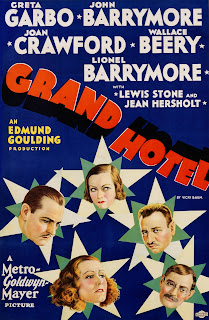
Cast: Greta Garbo (Grusinskaya), John Barrymore (Baron Felix von Gaigern), Joan Crawford (Flaemmchen), Wallace Beery (General Director Preysing), Lionel Barrymore (Otto Kringelein), Lewis Stone (Dr Otternschlag), Jean Hersholt (Head Porter Senf), Morgan Wallace (Chauffeur)

Grand Hotel: “People coming, going. Nothing ever happens”. Of course, despite those opening remarks by war-scarred veteran and permanent resident Dr Otternschlag (Lewis Stone), nothing could be further from the truth. In this, one of the first “All-Star-Extravaganzas” (every MGM mega-star in one movie!) the eponymous Berlin hotel is the host to an ocean of drama over the course of one twenty-four hour period. Scooping an Oscar for Best Picture (setting a surely-never-to-be-equalled record of being the only Best Picture winner to only be nominated in that category), Grand Hotel was a huge hit, and great-big-old-fashioned soapy fun.

Confidently directed by Edmund Goulding, the film threads together its plots very effectively, moving smoothly from star-to-star. The five stars take up nearly 90% of the dialogue just by themselves (with all those egos there wasn’t time for anyone else to have so much as a line) but what stars: three then-and-future Oscar winners and two legends in John Barrymore and Garbo.

Each of them has more than enough to sink their teeth into. Garbo is a maudlin ballerina, teetering on the edge of depression, who falls in love with Raffles-like jewellery thief Baron von Gaigern (John Barrymore). The penniless Baron – who steals to live – befriends Otto Kringelein (Lionel Barrymore), a deceptively spry old-man, suffering from a terminal disease and using his savings to see how the other half lives. Kringelein’s former employer Preysing (Wallace Beery) is desperately trying to negotiate a merger to save his job. His stenographer is would-be-actress-part-time-glamour-model Flaemmchen (Joan Crawford), who is flirting with the Baron and also befriends Kringelein. Inevitalby there are life-changing consequences.

If you are a sucker for grand, soapy, old-fashioned drama like this, you’ll find much to enjoy in Grand Hotel. The plots it peddles were pretty cliched and predictable even then, but they are delivered by a series of stars at the top of the game who invest the film with every inch of their glamour. They make the hodge-podge of stories work rather well, and the film even manages to pull out a late shock death that’s genuinely a surprise, both in its suddenness and brutality.

But then Grand Hotel is a pre-code film, so it’s not afraid to acknowledge sex exists and violence has nasty consequences. Crawford’s Flaemmchen is a confirmed flirt, not ashamed to accept an invitation to an ‘adjoining’ room with Preysing to secure her job. Neither is the supremely sexy Crawford (light, winning and possibly the best thing in the film) afraid to all but proposition the Baron. Not surprisingly Crawford was worried more censorious States would cut large parts of her role (she was right). But sex still runs through Grand Hotel: the Baron creeps into Grusinskaya’s room to rob her, and ends up sharing the night (and certainly not in separate beds).

As Grusinskaya, Greta Garbo gets possibly her most iconic line (“I want to be alone”) though her matinee idol pose-striking at times more than a little artificial today. However, what does come across is the power of her personality as a performer (like Marlene Dietrich at this time, there is something utterly fascinating about her). In other hands, the role (with its pity-me dialogue giving way to flashes of youthful, passionate abandon) would look a bit silly, but Garbo makes the whole thing work though force of personality alone.

She’s well matched with John Barrymore at the height of his powers as America’s greatest actor. Barrymore has a matinee idol swishness here, a relaxed romanticism that always makes us sympathise with him, even though he’s a self-confessed liar, cheat and thief. This gentlemen thief may be penniless, but he’s far from ruthless: he treats Kringelein with respect, is genuine in his feelings for Grusinskaya (although his repeated assurances that he will definitely make it the train station to meet her tomorrow is enough of a flag that something is bound to go wrong) and despises the bullying Preysing.

As Preysing, Wallace Beery plays the only unsympathetic character (naturally, despite the film’s German setting, he’s the only one with a Teutonic accent) with a bravado that dances just-this-side of OTT. By contrast, Lionel Barrymore (brother to John – and its very nice seeing these two play so many scenes together) is the film’s heart as a sweet, gentle and endearing old man who is just delighted to be living the dream, even if only for a few days.

It’s all shot in a revolutionary 360° set. The hotel foyer, where the film opens, was one of the first completely constructed sets (many films before constructed their sets like traditional proscenium theatre sets) and Goulding’s camera takes advantage of this in the opening sequence by moving fluidly in a series of long takes that introduces each character and sees them first interacting with each other. There are some other striking images, including a Jason Bourneish wall climb John Barrymore’s Baron carries out to bridge the gap between one balcony and another – although many of the scenes in hotel rooms go for traditional straight-on set-ups.

The film is focused on being a grand entertainment – and, to be honest, little more. Perhaps that’s why, despite being set in Berlin in 1932, there is no mention of any events in the country at that time. Even more surprisingly, there is no mention of the depression – despite it surely being a major factor in Preysing’s desperation, the Baron’s loss of his wealth and Flaemmchen’s need for a job. But that would add weight to a film that wants a light, fun tone. Grand Hotel has inspired a legion of Mills and Boon style stories. It might look an odd Best Picture, but it’s had plenty of influence.

Drive My Car (2021)

Drive My Car (2021)

Time struggles to heal wounds in Hamaguchi’s meditative, carefully paced and exquisite film

Director: Ryûsuke Hamaguchi

Cast: Hidetoshi Nishijima (Yūsuke Kafuku), Tōko Miura (Misaki Watari), Masaki Okada (Kōji Takatsuki), Reika Kirishima (Oto Kafuku), Park Yoo-rim (Lee Yoo-na), Satoko Abe (Yuhara), Jin Dae-yeon (Gong Yoon-soo), Sonia Yuan (Janice Chang)

They say time heals all wounds: that’s not always the case. It’s certainly something you begin to appreciate in Hamaguchi’s beautiful elaboration of Ozu-style classicism, Drive My Car. Grief and loss do not adjust and correct themselves after the elapse of many months and years. Instead, they can allow pain to fester, ferment and bubble with further questions, regrets, resentments and sorrows. The world becomes a loop, we drive endlessly through, hoping to maintain some semblance of control over ourselves and our feelings.

That echoes the loops through Hiroshima the car of the title drives in this delicate, throught-provoking and mesmerising film, that expands a Murakami short story into three hours of meditative screentime. Yūsuke Kafuku (Hidetoshi Nishijima) is a celebrated theatre director, specialising in multi-lingual productions of classic Western plays. One day when his flight is delayed, he returns home unannounced to find his wife, screenwriter Oto (Reika Kirishima), making love to an unseen man. Unnoticed, Kafuku quietly leaves and says nothing. Their relationship seems to continue unchanged for a few weeks, with Oto clearly distressed and concerned when Kafuku is in an accident. But she seems to notice a new reticence in Kafuku and, one day, asks that they have a conversation when he returns home for work. When he does, he finds Oto has died from a sudden brain haemorrhage. What was she going to say to him?

Marking the leisurely pace of Hamaguchi’s film, this takes up the opening 40 minutes at which point the opening credits roll. It’s sprinkled with the details of an elaborate backstory: we discover the couple lost a child aged 5 several years ago and decided to not have another (though Kafuku may regret this). There is a suspicion her lover may have been young actor Takatsuki (Masaki Okada). Two years later, Kafuku agrees to direct a production of Uncle Vanya at a Hiroshima theatre festival. Events there will lead him to confront his conflicted feelings about the loss of his wife he both still adores and also, on some level, resents.

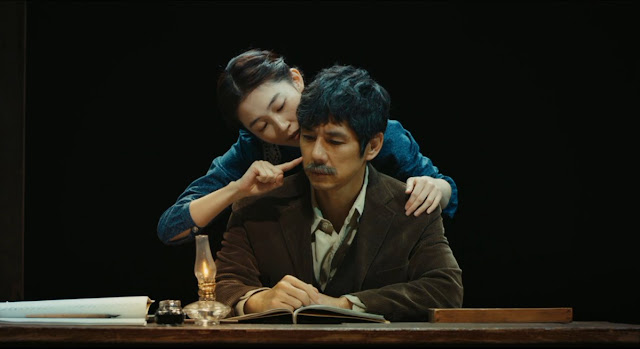
Kafuku has carefully constructed his life to maximise his control. He seems to have abandoned acting his signature role of Vanya. Later in the film Kafuku states that Chekhov’s words reveal our true selves – and its clear, from the snatch we see of his performance shortly after Oto’s death, that true self is one Kafuku is in no position to face. Vanya’s grief, resentment, pain at his lost love, anger at the chances in life he has missed – all of these bring to the surface Kafuku’s feelings about his own life. Hamaguchi’s choice of play is a masterstroke: as we listen to Chekhov’s words they shade and deepen the themes in the film: Chekhov’s autumnal sadness is a perfect reflection of the film.

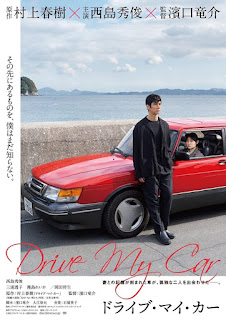
We hear a lot of Uncle Vanya, as Kafuku’s last link to his wife is a cassette recording she made of the dialogue for Kafuku to play in the car (there are gaps for Vanya’s lines, which he fills with a monotonous flatness). He plays this constantly in his car, an aged Saab he has kept beautifully conditioned for fifteen years (meaning he purchased it at the time of his child’s death, adding to its emotional importance). A key part of his sense of control over his life, is the driving and reciting of these lines: hence his request for a hotel an hour’s drive from the theatre.

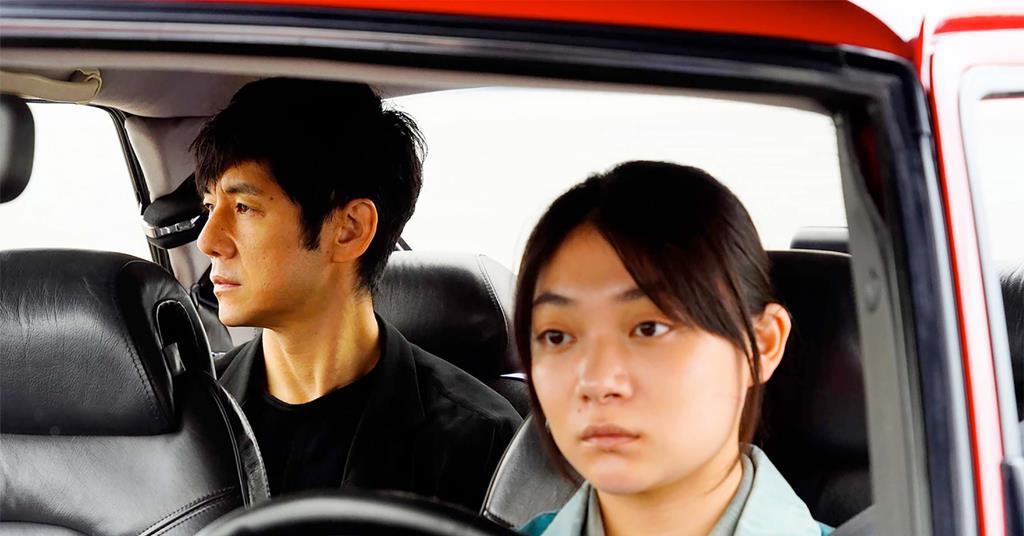
The isolation and control of driving the car is so important, that it’s a major shock for Kafuku to discover that, for insurance reasons, he has to have a driver for the duration of the production. This is a young woman, Misaki Watari (Tōko Miura), who prides herself on her driving skills (she states it is the only thing she can do well) and who Kafuku reluctantly agrees to hand the keys over to. She wins his eventual trust by her competence and skill – she cares for the car just as he does – and her willingness to sit in silence and let Kafuku continue his ritual of reciting the lines from Vanya.

The growing closeness of these two characters becomes the engine (if you can call it that for a film that luxuriates so much in taking its time) of this thought-provoking and eventually very affecting masterpiece. Both characters find similarities and contrasts in each other: both are dealing with processing the loss of a loved one and, most painfully of all, the questions about who they truly were and what they truly felt that can now never be answered. This plays out in almost the exact opposite of heartfelt conversations: instead long, patient scenes as trust grows not always through words but through mutual comfort, the sharing of a cigarette, discussion of other issues and the impact of time spent in each other’s company.

Time is vital to this. The barriers both these characters have built in themselves to process their feelings would never come down quickly. Hamaguchi’s patience is vital for us to understand how tightly they have wound up their emotions. Kafuku directs with a rigid control, his multi-lingual technique (with at least five languages in the company) demands clarity and long sessions of reading around a table so that actors absorb the flow of the play. It does not allow for flexibility and improvisation. Similarly, Misaki’s driving follows pre-ordained routes and a schedule, that seems to prevent her thinking about other things.

Throughout Hamaguchi avoids sign-posting. Kafuku’s feelings about his wife seem confused and conflicting from scene-to-scene – the Chekov dialogue reflects this, sometimes tinged with intense sorrow and regret, at others bitterness and fury. Kafuku recruits the man he thinks his wife’s lover for the play – casting him in his signature role of Vanya. But why? Does he even know? It could be to accuse him, to control him, to destroy him, to get closer to his wife – or it could be parts of all of them. Definitive answers are kept to a minimum – but then that reflects life.

The relationship between the two comes to a head (such as it is in a film where long conversations slowly reveal buried emotional truth) in a long, late-night car journey shot by Hamaguchi in a carefully controlled one-shot/two-shot that has a classic simplicity that lets the emotion and acting come to the fore. Drive My Car is as unflashy a film as you can get, but its restraint, beautiful but serene imagery and gentle pace add to its slow-burn effect. The moments of emotional catharsis, when they come, are all the more affecting for it – and truly carry a sense of life-changing impact.

The performances are beautiful. Nishijima is quiet, reserved but conveys oceans of conflicted emotion below the surface which he keeps patiently bottled-up. It’s a low-key, highly expressive and tenderly gentle performance. He plays exquisitely with Tōko Miura who at first makes Misaki seem like any number of slightly-surly hirelings, but in turn unveils emotional depths and pain that constantly surprise. Reika Kirishima is both radiant, tender and unknowable as Oto. Masaki Okada is perfect as the lost Takatsuki. Park Yoo-rim is a stand-out among the ensemble as a mute Korean actress communicating through sign language (her acting in the play-within-the-play is stunning).

Originally intended to be filmed in Korea, there is a beautiful serendipity about the pandemic forcing a location change to Hiroshima. No other city on Earth carries such an association with pain and the slow recovery over time. Drive My Car takes the time it needs to explore how grief seeps into us and is only addressed through great care and strength. It’s profoundly engrossing and moving for all of its length – you wouldn’t want to change a thing about it.

Rocky (1976)

Rocky (1976)

Doubters and some very steep steps are conquered in the Best Picture winning Granddaddy of Sports movies

Director: John G. Avildsen

Cast: Sylvester Stallone (Rocky Balboa), Talia Shire (Adrian Pennino), Burt Young (Paulie Pennino), Carl Weathers (Apollo Creed), Burgess Meredith (Mickey Goodmill), Thayer David (Miles Jergens), Joe Spinell (Tony Gazzo), Tony Burton (Tony “Duke” Evers), Pedro Lovell (Spider Rico)

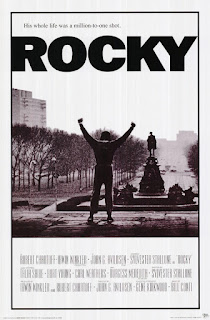
How many people have run up those steps to the Philadelphia Museum of Art? So many, they’ve renamed them “the Rocky Steps” – and placed a statue of Stallone (from Rocky III) there. You can be sure everyone hummed Gonna Fly Now while they did it. It’s all a tribute to the impact of Rocky, the iconic smash hit that led to no less than seven sequels (and counting!) and, arguably, kickstarted the 80s in Hollywood (a decade Stallone would stand tall across with both Rocky and Rambo). The original Rocky mixes genre-defining delights and a feel-good, crowd-pleasing story with a surprisingly low-key setting that deals in a bit of Loachesque reality and social commentary.

Rocky Balboa (Sylvester Stallone) is a journeyman southpaw boxer, fallen on hard times. He’s making ends meet with a bit of loan shark enforcement (although of course he’s far too nice to actually break any bones) and getting seven bells knocked out of him at low-key fights. His trainer Mickey (Burgess Meredith) thinks he’s wasting his talent, and Rocky spends the day casting puppy dog eyes at Adrian (Talia Shire) sister of Rocky’s chancer best friend Paulie (Burt Young). But Rocky’s life changes overnight when Heavyweight Champion of the World Apollo Creed (Carl Weathers) picks him at random as the nobody he will fight in a title bout (to get Apollo some free publicity). Can Rocky dedicate himself to training so he can “go the distance”?

Surely everyone knows by now, don’t they? The big fight only takes up the last ten minutes of the film. What we’ve spent our time doing beforehand is watching possibly the one of the best ever packaged feel-good stories, full of lovable characters and punch-the-air moments, directed with a smooth, professional (but personality free) charm by Avildsen. Rocky genuinely looked and felt like a little slice of Capra, a fairy tale triumph for the little guy struggling less against the world and more against his own doubts.

And it overcame some real heavyweights to win Best Picture: it knocked aside All the President’s Men, Taxi Driver and Network in a shock win. Is Rocky better than those films? No. But is it more fun to watch? Yes, it probably is – and I would be willing to bet many more people have come back to it time and time again. It was also a triumph for Stallone, a jobbing actor, who produced a first draft of the script in three days and fought tooth and nail to make sure he played the lead.

And Stallone’s performance is absolutely central to its success (can you imagine what it would have been like with, say, James Caan in the role?). Stallone gives Rocky exactly the sort of humble, shy, sweetness that makes him easy to root for. Rocky is no genius, but he’s loyal, polite, well-meaning and Stallone taps into his little-used qualities of softness and naivety. Rocky is lovable because, for all the punching, he’s very gentle – just look at him make a mess of money collecting or the way he talks like a little kid with his pets. Stallone has a De Niroish – yes seriously! – quality here: he absent-mindedly shadow boxes throughout and gives a semi-articulate passion to his outburst at Mickey. His romance with Adrian is intimate and gentle. The whole performance feels lived in and real.

Real is actually what the whole film feels like – despite the fact it’s a ridiculous fairy tale of a boy who becomes a prince for a day. It helps that its shot deep in the streets of Philadelphia, on the cheap and on the fly in neighbourhoods and locations that feel supremely unstaged (Avildsen avoided the cost of extras by frequently shooting at night or very early morning). Even that run up the stairs was a semi-improvised moment. Rocky’s world is a recognisable working-class one that for all its roughness, also feels like a community in a way Ken Loach might be proud of (even the loan sharks are easy-going). Day-to-day the film manages to capture some of the feel of a socio-realist film with a touch of working-class charm.

It also makes a lovely backdrop to the genuinely sweet romance that grounds the film: and a recognition of the film’s smarts that a great crowd-pleaser needs a big dollop of romance alongside a big slice of action. Very adorably played with Talia Shire (original choices Carrie Snodgrass and Susan Sarandon were considered too movie-star striking), Adrian feels like a slightly mousy figure (and she is as sweet as Rocky) but also has a strength to her. She’s led a tough life as sister to the demanding Paulie (and Burt Young does a great job of making a complete shitbag strangely lovable and even a bit vulnerable), but it’s not stopped her feeling love. She and Rocky complement each other perfectly – gentle, shy people, who have something to prove to themselves and the world.

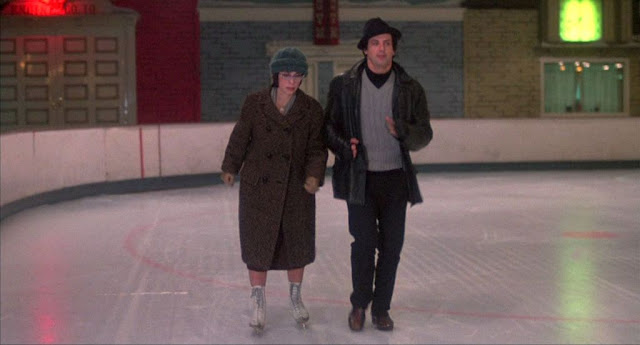
Is there a sweeter first date in movies than that solo trip to the ice rink? Cost cutting saved the day here (it was intended to be packed), that stolen few minutes skating while Rocky hurriedly tries to find out a much about Adrian as he can (an attendant counting down the time they have as they go), Adrian both charmed and bashful. It’s a lovely scene and goes a long way to us giving these characters the sort of emotional devotion that would keep audiences coming back for decades.

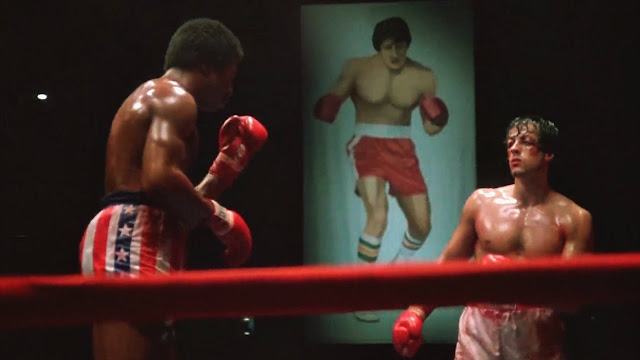
That and those boxing fights of course. Rocky’s final fight sets a template most of the rest of the films would pretty much follow beat for beat. But it’s still fun watching Rocky go toe-to-toe against all odds. Particularly as we know what is important to Rocky is not victory but proving something to himself. It helps as well that Stallone still looks like an underdog of sorts (over the next ten years he would turn himself into a slab of muscular stone).

Opposite him is Apollo Creed, with Carl Weathers channelling his very best Mohammad Ali. The underdog story makes for fine drama, and Rocky is superably packaged: there is a reason why so many other films essentially copied it. From montage, to an “against all odds” fight to Burgess Meredith’s grizzled trainer (a part you’d see time-and-again in the future from different respected character actors) there is a superb formula Rocky takes and repackages from classic films of the 40s and 50s and re-presents to huge and successful effect.

And it works because it’s so entertaining. Stallone is hugely winning in the lead role – more sweet and sensitive than he would be in later Rocky films (traits he would allow himself to rediscover in the more recent films) and it’s a perfectly packaged feel-good entertainment. But it’s also got a grounded sense of realism and reality, with an affecting love story. It’s one of the first – and best – films of the 80s, where formula and crowd-pleasing would be king.

Sayonara (1957)

Sayonara (1957)

Racism gets exposed at clumsy length in this heavy-handed social issues drama

Director: Joshua Logan

Cast: Marlon Brando (Major Lloyd “Ace” Gruver), Patricia Owens (Eileen Webster), James Garner (Captain Mike Bailey), Martha Scott (Mrs Webster), Miiko Taka (Hana-Ogi), Red Buttons (Airman Joe Kelly), Miyoshi Umeki (Katsumi Kelly), Kent Smith (Lt General Mark Webster), Ricardo Montalban (Nakamura), Douglass Weston (Colonel Crawford)

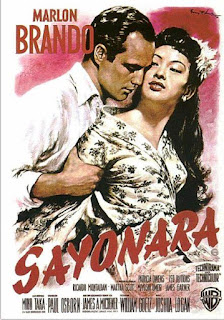
It’s post-war Japan and the American occupation forces have got very strict rules about what their soldiers are allowed to do with the native population: namely not marry them. Any suggestion of American soldiers finding themselves Japanese wives is frowned on at the very highest level. Something flying ace Major “Ace” Gruber (Marlon Brando) is about to find out when he’s transferred from shooting down commies in Korea. Airman Joe Kelly (Red Buttons) is determined to marry Katsumi (Miyoshi Umeki) – and nothing commanding officer Gruber or anyone else can say will dissuade him. Meanwhile, Gruber finds himself falling in love with Japanese actress Hana-Ogi (Miiko Taka) – and facing the exact same pressures to chuck her overboard as Kelly meets.

Sayonara is very much a Hollywood message film: that being interracial marriage is a fact to celebrate not condemn, with a subsidiary message focused on rehumanising the Japanese people for American audiences still holding strong memories of the Second World War. Like a lot of message films from the era though, its also slow, stuffy, self-important and more than a little dull – something its multiple Oscars can’t hide.

Shot on location, it often come across as a sort of Japanese travelogue which, for all its efforts to make the Japanese sympathetic, can only interpret them and their culture through a selection of cliches and generic expectations. The film is a parade of kimonos, lotos blossoms, tea ceremonies and geisha girls, all shot with a laboured flatness by Joshua Logan. Logan’s direction overflows with middle-brow earnestness, pleading for a little love and understanding, while shuffling together a series of stereotypical and predictable plot events. Logan also seems to struggle with the cinemascope frame, which frequently dwarves this intimate story.

It’s all told at a very slow pace: it’s remarkable that such a slim story manages to fill almost two and a half hours. Much of this is taken up with the romantic entanglements of Ace, half-heartedly engaged to General’s daughter Eileen Webster (a saintly understanding Patricia Owens, who practically asks to be thrown over), before a chance sighting on a bridge (of course it’s a soribashi bridge) leads to him falling head over heels in love with Hana-Ogi, hanging around the bridge every day and struggling his way through a Japanese phrase book so he can ask her out on a date (the dates, when they come, are like a travelogue of the most Japanese events you could imagine).

The languid lack of drive isn’t helped by Brando’s curious performance. Sayonara is the perfect example of what a mystifying actor Brando could be: here he was in a project that clearly meant a lot to him personally (he was a long-standing social campaigner), but he drifts through it with a lazy off-the-cuffness that suggests he’s only doing the film under protest. Only Brando could act in a passion project with such surly indifference (allegedly motivated by his lack of regard for Logan’s direction). Brando uses a non-descript Southern drawl, which he uses as an excuse to dial his mumbling up to 11. He slouches and ambles through every scene, barely raising his voice or lifting a finger unless it’s essential.

Because Brando seems so disengaged and bored by the whole thing (the only spark of energy he gives is when he playfully bangs his head on a low Japanese ceiling) it makes the film drag on without the stakes ever seeming to really mount. Ace is told repeatedly that he will have to chuck Hana-Ogi, but he shrugs it off with all the indifference of a laid-back hipster. I think Brando is straining to suggest that Ace has the soul of a poet, trapped inside his father-mandated time in West Point – there is a moment where he airily mumbles something about his dreams as a young man of finding something more. But the overall effect is more of an actor drifting through a long role with minimum effort.

You can’t say the same for Red Buttons, who plays Kelly with a great deal of commitment. Winning an Oscar, this first role was also his best, with Kelly having Button’s good-natured lightness but mixing it in with a fierce defiance and a touching pain when his wife suggests surgery to try and alter her facial features to appear more Western. Umeki also won a generous Oscar for a brief performance which gives her very little scope to do much beyond playing the quiet wife (I suspect the Oscar was partly for the film’s theme and reflects a weaker year of candidates). Miiko Taka is more impressive (and given more scope) as Hana-Ogi, all too aware of the pressures on her not to get involved, torn between her feelings and what she sees as her duty.

Sayonara as a whole though remains a flat, often rather uninvolving film that holds its liberal conscience so close to its chest that it manages to squeeze any trace of life out of it. Its liberalness only goes so far: Logan casts two Japanese actresses but has no concerns about recruiting a pale-faced Ricardo Montalban to play the only Japanese male with lines. It’s exploration of mixed-race relationships is solely focused on white guys marrying who they want. A truly daring film would have thrown in a flirtation between Montalban’s Japanese actor and Patricia Owen’s patrician General’s daughter. A Japanese man marrying the daughter of one of America’s own? Now that is a vision that would have really shook up 1950s America.

It’s not to be though. Instead, this is an overlong, overly serious, pleased with itself melodrama, coated in lashings of social awareness that is cursed with a languid central performance that helps make the whole film seem to drag on forever. Logan is unable to provide either any dramatic or political fire to the film and it settles all to often for safe, picture perfect shots of Japan. While you can admire the motives behind it, there is little to admire in the film itself.

The Turning Point (1977)

The Turning Point (1977)

Two women struggle to have it all in a film that wouldn’t have looked out of place in the 1940s

Director: Herbert Ross

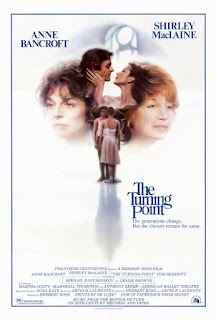
Cast: Shirley MacLaine (DeeDee Rodgers), Anne Bancroft (Emma Jacklin), Tom Skerritt (Wayne Rodgers), Leslie Browne (Emilia Rodgers), Mikhail Baryshnikov (Yuri Kopeikine), Martha Scott (Adelaide), James Mitchell (Michael Cooke), Alexandra Danilova (Madame Dakharova), Anthony Zerbe (Joe “Rosie” Rosenberg), Lisa Lucas (Janina Rodgers), Antoinette Sibley (Sevilla Haslem)

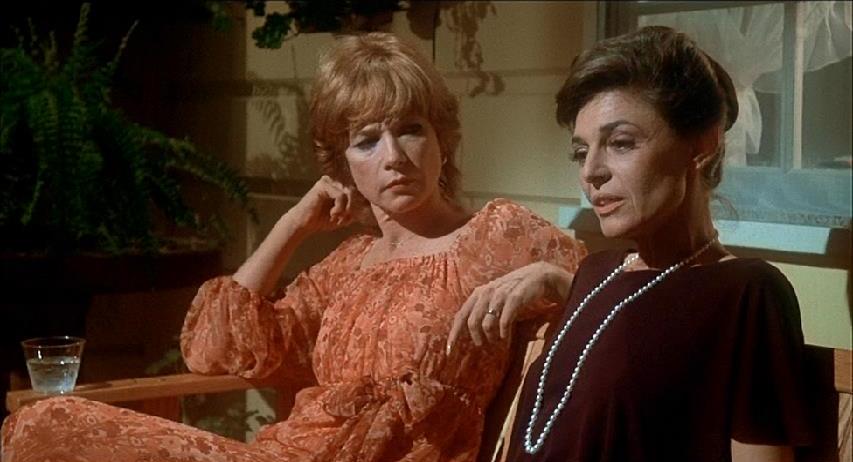
The demands of ballet are unlike any other artform there is. Complete physical and emotional commitment is needed to master it – so that means you got to make choices. The Turning Point is all about those choices. You might even call them ‘turning points’. DeeDee (Shirley MacLaine) and Emma (Anne Bancroft) were two young ballerinas who took radically different paths: DeeDee had a child with fellow dancer Wayne (Tom Skerritt) and left the profession behind; Emma remained with the company to become its prima ballerina. Now DeeDee’s teenage daughter Emilia (Leslie Browne) has joined the company: will she become the new prima ballerina? Or will she decide to focus on a relationship with playboy dancer Yuri (Mikhail Baryshnikov)? Will Emma and DeeDee resolve the tensions between them – and the conflict from their shared parental interest in Emilia?

The Turning Point was a big hit in 1977. That, and the fact that it was about (and featured a lot of) an artform as graceful as ballet seems to have convinced the Academy it merited a haul of eleven Oscar nominations. Come awards night, the film set a record for most unsuccessful nominations, converting none of them into Oscars. Perhaps that’s because, on closer inspection, The Turning Point is a fairly run-of-the-mill soap opera, that mixes in various clichés from backstage, traditional ‘women’s pictures’ and family drama to come up with a plotline that’s eventually very familiar.

For all its positioning as a female-led drama, it essentially boils down to the same old patterns that for decades such films have circled. Turns out women can’t have it all: you can have that successful career, but forever sacrifice the joy of being a mother or you can settle down and have the family but face a life of career unfulfillment. Twas ever thus, ‘tis one or t’other. Essentially the film boils down into a soapy drama about resentments and illicit backstage affairs and little more than that. It doesn’t even really double down on the fun this sort of set-up could provide, instead framing the whole thing as a very serious drama.

But then, the film was an autobiographical affair for those involved. Emma is based on Nora Kaye, who was married to the director Herbert Ross. DeeDee is based on Kaye’s childhood friend Isabel Mirrow Brown, who made the exact same choice as DeeDee, marrying a fellow dancer (just like Tom Skerritt’s character). Her daughter (and Kaye’s goddaughter) was Leslie Browne, who here plays a fictionalised version of herself based on her own experience of starting her ballet career. Characters based on Jerome Robbins, Lucia Chase and other leading figures from ballet and theatre appear. Only Mikhail Baryshnikov’s Yuri is purely fictional (although the character has more than few similarities with Baryshnikov himself, being a Soviet defector).

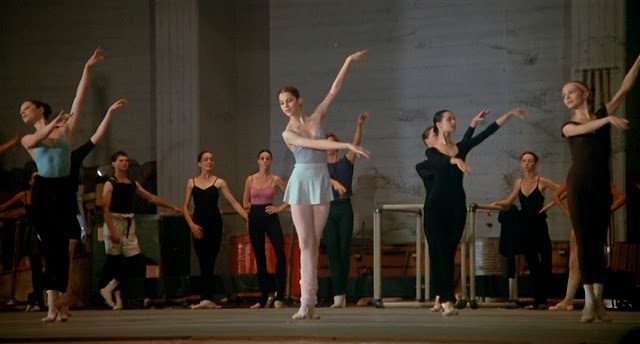
It does give an additional layer of interest to the film. Ross also mixes in a host of extended ballet sequences which showcase actual professional ballet dancers, with snippets from Swan Lake, Cinderella and The Nutcracker among others. The dancing is breath-takingly good. Not least from Baryshnikov and Browne, who are given multiple opportunities to showcase their skills. Baryshnikov in particular is at the height of his powers, a graceful artiste who moves with an astonishing finesse. Both landed Oscar nominations, one suspects largely on the basis of their dancing.

The acting is left to MacLaine and Bancroft as the leading ladies. There is something a little perverse that MacLaine, the former dancer, doesn’t so much as trot a step, while Bancroft (totally unexperienced) struts parts of Anna Karenina. However, the two actresses rip into these thinly written parts, giving them a lot more force than the film deserves. MacLaine balances motherly pride with bubbling feelings of something uncomfortably close to envy for her daughter’s success, spending time in New York trying to recapture some of her past (including a brief fling with Anthony Zerbe’s lecherous choreographer). Bancroft balances coming to terms with the end of her career as a ballerina with a growing regret that she has been left without a family. She becomes increasingly close to Emilia, mentoring her, dressing her and coaching her through a performance after relationship problems lead to Emilia getting roundly pissed in a bar before the show.

Needless to say, this unspoken squabble for ownership over Emilia – not helped by Emilia’s fury over her mother’s infidelity – only exacerbates tensions between the two women. It builds towards the film’s true climax (but unfortunately not its actual climax, as fifteen minutes remain for Emilia to be coached for her star-making performance) as the two women down drinks and exchange angry words and slaps, leading to a full blown cat fight outside the theatre. The fight later descends into cathartic giggling – and pity the two actresses who filmed it in ballroom dresses in what looks like a gale – but is acted with a great deal of attack by both, who bounce off each other (literally) hugely effectively.

But the scene is also a further confirmation that what we are really watching is a sort of high-brow family soap, that uses ballet as a backdrop for family feuds, scuffles, sexual escapades and tear-filled reunions. And it boils down to that struggle between career and family, the sort of struggle Bette Davis and Joan Crawford films were dealing with in the 1940s. Which is possibly another reason so many took to The Turning Point: even in 1977 it was an old-fashioned piece of entertainment, that did very little new.

That carries across to its whole execution: Ross competently directs the film (this was his annus mirabilis as he directed two Best Picture nominees, this and The Goodbye Girl) but really it gets all the force it has (and more than it perhaps deserves) from the two leads and a fine supporting cast (Tom Skerritt is very good as DeeDee’s laid-back, understanding father who perhaps masks secrets of his own). It’s a soap opera, solid but not spectacular, that really outside its showcase of ballet, doesn’t stand out from several other films of the same genre.

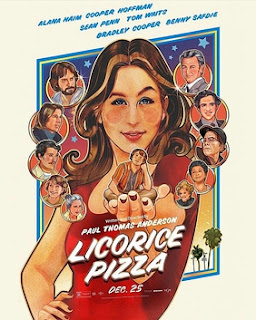
Licorice Pizza (2021)

Licorice Pizza (2021)

Young romance in a changing time in Paul Thomas Anderson’s unconventional love story

Director: Paul Thomas Anderson

Cast: Alana Haim (Alana Kane), Cooper Hoffman (Gary Valentine), Sean Penn (Jack Holden), Tom Waits (Rex Blau), Bradley Cooper (Jon Peters), Benny Safdie (Joel Wachs), Skyler Gisondo (Lance), Mary Elizabeth Ellis (Momma Anita), John Michael Higgins (Jerry Frick), Christine Ebersole (Lucy Doolittle), Harriet Sansom Harris (Mary Grady)

Is there a force harder to understand than love? That’s basically the theme of Paul Thomas Anderson’s delightfully whimsical film, which explores an unlikely relationship in Los Angeles in 1973, played out to a backdrop of the OPEC gas crisis. Told with a dreamlike grace and overflowing with affection and warmth for its characters, it’s a deceptively simple film that is a masterpiece of heartfelt craft.

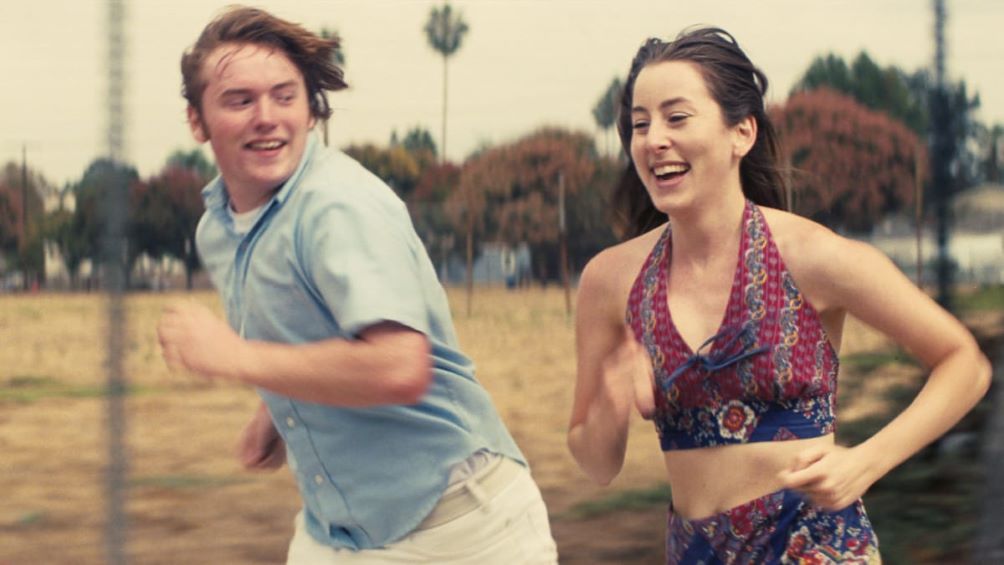
Standing in line to have his photo taken for his High School picture, 15-year-old Gary Valentine (Cooper Hoffman) is instantly smitten with cynical photography assistant, 25-year-old Alana Kane (Alana Haim). Much to her surprise, his claim to be a child actor in the movies is actually true – he’s co-starring with Lucille Doolittle (Christine Ebersole, in a thinly veiled spoof of Lucille Ball) in a movie. He’s also a budding entrepreneur, setting up a business selling water beds in LA. Alana still doesn’t know what she wants to do with her life, but finds herself drawn to Gary, despite her acute awareness of their age difference. The two of them become business partners and drift in and out of friendship, never quite sure exactly how they feel about each other.

Now I guess you might well have checked yourself there at the thought of a romance between a teenager and a 25-year-old. But there is no prurience here, no masturbatory coming-of-age fantasy with an older woman or sleazy grooming. This is instead a very genuine, sweet and moving romance between two people who only really have numbers keeping them apart. It particularly works because Gary in many ways feels about 5 years older than he actually is and Alana often feels about 5 years younger than she is. In many ways they are both twenty-year-olds – and it’s only the fact that they are not which puts a barrier between them being together. As such it becomes very easy to accept their potential relationship, and even root for it.

That’s massively helped by the fact that these two characters are marvellously embodied by two first-time actors. Anderson specifically wrote the role for Alana Haim, member of family rock group Haim (Anderson has directed several of their music videos, and was taught by Haim’s mother). She’s stunning: prickly, quick-witted, cynical but also vulnerable and sensitive. She’s desperate to find some sort of purpose in her life: exploring the role of trophy girlfriend, businesswoman and political campaigner, but always seems like she’s slightly lost, for all her defiance. Haim is also wonderfully exasperated and befuddled by the interest she feels for this younger guy, barely able to acknowledge she might have feelings for him. Haim is superb.

Gary, played by the son of regular Anderson collaborator the late Philip Seymour Hoffman, is equally well bought to life by Cooper Hoffman. Gary’s career as a child actor is coming to an end: as we see through a disastrously over enthusiastic audition, which the casting directors watch out of a polite respect. But Gary has the go-getting hustling skills of someone much older. He’s got an eye for business opportunities – water beds, film productions, pinball machines – that would be the envy of others. He’s smart, confident, frequently cocky, assured – but at times also staggeringly immature (like a teenage boy he’s obsessed with boobs and Alana watches with frustrated despair as he and some friends drag out miming a wanking gag for what seems forever). He’s also still sometimes just a kid: mistakenly arrested at one point, he sits in terror in a police station and, even when uncuffed and released, is too scared to leave the station without Alana’s encouragement.

That arrest scene is yet another moment that reaffirms the deep bond and love between these two people. Wrongly arrested for nominally fitting the description of a suspected killer – “Look forward to Attica!” the police taunt him – he’s hauled from an Expo. Alana follows, running full pelt after the squad car – even though at this point they’ve not spoken for weeks – and then holds him for what feels like forever when he is released (before, of course, slapping him and saying “What did you do?”). Later, when Alana falls while taking part in an ill-advised late-night motorbike stunt, Gary will run the length of a golf course to make sure she is alright (despite, again, the two of them having cut ties before this). Moments like this sing with a real romantic force.

Particularly as this is such a love-hate film. Alana and Gary constantly hurt each other, finding ways to get into perfect sync only to screw it up. Gary is heartbroken when Alana starts to date his older co-star (a smug atheist, played wonderfully by Skyler Gisondo). Alana is overcome with jealousy and pain when Gary flirts and kisses a school crush his own age at the launch of their water-bed business. After auditioning for a movie role, Alana delights in making Gary uncomfortable when he walks into the bar where she is enjoying a drink with the movie’s male star. Through it all, these two are drawn back to each other time and again – and when the chips are down their loyalty and love to each other is absolute, even if they can’t always admit it to either themselves or each other.

Around the two outstanding central performances, Anderson constructs a series of scenes and skits that drift from one to the other. The whole film has a curiously dreamlike transition structure: it’s frequently hard to tell how much time has passed and the narrative omits overly functional scenes, so we frequently see a situation has changed but only an implication of why (example: Gary’s mother tells him she can’t chaperone him to New York for a TV appearance – next shot Alana and Gary are on a plane. How was this agreed? Who cares!). Each of the sequences plays out with a shaggy-dog story charm, directed with the confidence and brilliance of a director who is happy to make it look easy. And let me tell you, very few could pull off something as light and charming.

The film is stocked with delightful cameos. John Michael Higgins is very funny as the owner of a Japanese restaurant, with two successive Japanese wives who he “translates” for by repeating in ludicrously Japanese accented loud English whatever has just been said. Harriet Sansom Harris is very funny as a plugged-in agent. Ebersole is a monstrous attention-hungry star. Sean Penn is funnier than he’s ever been playing a version of William Holden, pissed and barely able to distinguish between his film roles and real life, cajoled by an equally pissed director (Tom Waits on top form as a sort of Peckinpah-Huston combo) to perform a motorbike stunt late at night. Best of all is Bradley Cooper, who burns through his brief scenes as an unhinged Jon Peters, a whipper-cracker of unpredictability and insatiable horn.

But it’s the two leads that give this heart, and Licorice Pizza is an amazingly sweet, tender, endearing and deeply charming love story about a couple who can’t quite understand why they want to be together and spend most of the movie making sure they’re not. Anderson brings it altogether with immense homespun charm – this is almost a home movie, Haim’s family play he character’s family, the cast is stuffed with Anderson’ family and friends – and Licorice Pizza is the sort of delight that shouldn’t work, but very triumphantly does.

Lady Macbeth (2016)

Lady Macbeth (2016)

Florence Pugh is either a feminist icon or a ruthless monster in this Gothic drama

Director: William Oldroyd

Cast: Florence Pugh (Katherine Lester), Cosmo Jarvis (Sebastian), Naomi Ackie (Anna), Christopher Fairbank (Boris Lester), Paul Hilton (Alexander Lester), Golda Rosheuvel (Agnes), Anton Palmer (Teddy)

On a rural estate in Northumberland in 1865, Katherine (Florence Pugh) enters a loveless marriage with Alexander (Paul Hilton), son of landowner Boris (Christopher Fairbank). The marriage is a disaster, with the couple incompatible and Katherine bored and trapped with no friends or allies. When Alexander and Boris travel for business, she finally gets the chance to explore her surroundings and enters into a passionate sexual relationship with estate worker Sebastian (Cosmo Jarvis). When Boris – but not Alexander – returns, Katherine begins a chain of events that will see her commit a series of increasingly shocking crimes to hold onto the things she wants.

Oldroyd’s film is adapted by Alice Birch from a Russian short story, and is told with an icy, observatory coldness that doesn’t flinch from the increasingly sociopathic ruthlessness of its lead character. The film at first seems like it will set out a feminist fable, of a trophy wife struggling against the neglect and imprisonment of forced marriage. But, as it progresses, any pretence that Katherine is a feminist hero is stripped away: she is modern only in the most dreadful sense – a woman who will willingly commit almost any act of ruthlessness to safeguard her interests.

Playing Katherine, the film is blessed with a star-making turn from Florence Pugh. Only 19, Pugh gives a performance of such stunning depth and intelligence from a young actress that possibly hasn’t been seen since Kate Winslet in Heavenly Creatures. She’s a master of outward stillness and inscrutability, while always communicating the raging whirlpool of emotions underneath the surface. She’s fiercely intelligent, viciously ruthless, frequently observes other characters silently and can twist her face into a mocking defiance. Pugh also communicates the desperate emotional need for connection that motivates this woman, her willingness to go to such shocking lengths motivated by that yearning for a love that she has never known.

Oldroyd is careful not to present her a Gothic monster (would certainly be easy to do so!). The film is careful to outline how unwanted and ill-treated she is by Alexander and his father. Boris (a bullying Christopher Fairbank) ignores and talks down to this person-as-a-piece-of-property, basically just an unlooked-for freebie with some land, who is failing to get on with the production of an heir. Alexander (Paul Hilton, superbly weak and dripping with contemptuous bitterness) has no interest in his wife, his sexual interest restricted to ordering her to strip and face the wall while he pleasures himself. Neither of these characters ever have anything like a conversation with her, instead speaking to her like a dog or malfunctioning appliance.

So, you can see why she is so drawn to the passion of Sebastian – and also, perhaps, why she might find this cocky but not-exactly-sharpest-tool man an attractive chance for her to wear the trousers for once. Their couplings have a sexual urgency and passion to them that is lacking for anything else in the film. But we never see them as emotional or intellectual equals. There is no scene of romance, bonding or conversational or unsexual emotional connection with them. Katherine becomes obsessed with Sebastian – but it seems to be at least as much an obsession with the sex and the sense of control he brings her, as much as it is Sebastian himself.

As Sebastian, Cosmo Jarvis is initial bluster and wide-boy charm that strips away to reveal a man far more timid, scared and increasingly out-of-his-depth with what he’s got caught up in. For all his Lady Chatterley’s Lover physicality, Jarvis has a real vulnerability in his eyes and a certain little-boy lost quality. His panic and shock as event balloon become increasingly tragic.

Equally affecting is the terror of Naomi Ackie’s maid, torn between different sides. Like Pugh, Ackie is superb at suggesting emotional torment under a still surface and her character Anna frequently finds herself the mute observer of increasingly dangerous events, unable to influence them.

The film is shot with a coolness that at times makes it hard to connect with emotionally. In many ways this is a horror film, with a creeping intimidation, scoreless backdrop and a chilly aesthetic of empty rooms and muted colours. There are some bravura scenes: a life-changing breakfast scene is shot with a terrifying but suggestive stillness, just as it is played by Pugh with a chilling unreadability. Oldroyd’s film masterfully uses a number of simple and unflashy camera set-ups that build up to an overwhelming feeling of dread.

And some of this stuff is hard to watch. Two killings are shown in disturbing detail, enough to haunt your dreams. But the film wisely just presents the facts and avoids judgement – however implied that might be. It also makes for an intriguing condemnation of avarice – everyone in the film seems to be longing for something, but none of them find that struggle was worth it. And at its centre is a intriguingly unknowable and unreadable woman, who only becomes more alarming the more we find out about her.

Lady Macbeth is sometimes a little cold and distant for its own good. But its hauntingly grim and has a stunning, career-making performance from Florence Pugh. Filmed with creeping dread, it’s a cold, disturbing film that will linger with you.

Being the Ricardos (2021)

Being the Ricardos (2021)

I Love Lucy is bought to life in this behind-the-scenes drama that bites off more than it can chew

Director: Aaron Sorkin

Cast: Nicole Kidman (Lucille Ball), Javier Bardem (Desi Arnaz), JK Simmons (William Frawley), Nina Arianda (Vivian Vance), Tony Hale (Jess Oppenheimer), Alia Shawkat (Madelyn Pugh), Jake Lacy (Bob Carroll), Clark Gregg (Howard Wenke), John Rubenstein (Older Jess Oppenheimer), Linda Lavin (Older Madelyn Pugh), Ronny Cox (Older Bob Carroll)

A film about I Love Lucy is always going to lack cultural cache outside of the US: it would be the same if a British film about Dad’s Army or Hancock’s Half Hour played there. Without a legacy of growing up on endless re-runs, I think a lot of British audiences (like me) will be left playing catch-up working out who the stars are and what the show is about.

Sorkin’s Being the Ricardos follows one week in the making of I Love Lucy in 1952. It’s a big week. There are rumours of infidelity (from him) in the lives of the married co-stars Lucille Ball (Nicole Kidman) and Desi Arnaz (Javier Bardem). On top of that, the media is running stories that Ball is a card-carrying communist (not completely true). And finally, she’s pregnant, something the network can’t imagine would be acceptable to include in a family show. All these problems come to a head as that week’s show is finalised, rehearsed and shot.

Sorkin’s film is by far and away at its best when dealing with the backstage mechanics behind bringing a TV show to the screen. Which perhaps isn’t a surprise, as that is obviously material he’s very familiar with. The film is fascinating at showing the technical side of things like rehearsals, and it’s very illuminating on the dedicated perfectionism Ball bought to making the comedy work. We see every single gag being worked on over and over to mine the maximum number of laughs from it. There are long back and forth conversations on timing, positioning and nuances of line delivery.

There are similarly fascinating ideas during scenes in the writers’ room. A huge board maps out the details of future episodes. The writers – a neatly squabbling but fundamentally loyal Alia Shawkat and Jake Lacy, headed up by executive producer Tony Hale – are constantly pushed to fine-tune their ideas, while passionately defending many of their own jokes to the sceptical stars.

A sequence essentially showing Ball and the writers spit-balling ideas that will develop into future set-pieces is particularly well done. Sorkin also comes up with a neat visual concept showing how Ball considers the impact of the gags: events from the show play out in black-and-white then switch to colour as the action pauses and Ball considers what to do next to get the most laughs. It’s all part of the film’s primary strength: a fascinating look at the energy and passion required to produce a half-hour sitcom, be it arguing over camera placement to a sleepless and worried Ball calling her co-stars to the studio in the wee small hours to fine-tune a pratfall.

Where the film is less certain is all the other stuff it tries to cover. Being the Ricardos is almost the dictionary definition of a film biting off more than it can chew. It tries to cover: the making of a TV show, McCarthyism, a biography of the marriage of the two stars, the sexism of network TV, racial unease at the Cuban Arnaz playing Ball’s husband, the sexual prudishness of the 1950s, and expectations around gender roles. On top of which, Sorkin’s film trumpets continuously that this was the “most difficult week ever”. It’s an onslaught of stakes the film finds hard to deliver on.

For starters, most of the action focuses on the mechanics of making the show – mechanics that surely would be the same every week. The communist plotline is introduced then largely dropped for most of the film until the final rousing hurrah. McCarthyism is barely tackled, other than a new perspective from Arnaz, who remembers being forcibly driven from Cuba by Communists. Awkward flashbacks fill in some of the backstory around Lucille and Desi’s meeting but end up feeling like superfluous additional information that adds nothing to anything other than the runtime.

Tensions in their marriage bubble away before finally coming to a head, as if Sorkin didn’t want to spoil the rat-a-tat dialogue with some deeper content. The film is very good at showing what a great team they made: Ball’s creativity and comic genius matched with Arnaz’s business-sense and ability to plan every aspect of the show’s technical and financial set-up. But again, more could have been made of this – too often it’s an idea crowded in amongst others, with a tone that can’t decide how it feels about Arnaz’s possible betrayal or Ball’s fixation on it.

More could have been made about the prudish and sexist struggles Ball and Arnaz went through to get her pregnancy integrated in the show. It’s a fascinating realisation that the implication that a happily married couple must have had sex to produce a baby was anathema to TV networks in the 50s. A film that focused on the battle to get this integrated into the show – and the impact that doing so had on America and television – would not only have been more focused, it would also have played into the film’s real strengths: the mechanics of actually making television. As it is, this sense of the struggle Ball had to get due recognition in a male-dominated industry is lost.

As the two stars Nicole Kidman (under layers of latex to transform her facial features into Ball’s) and Bardem are very good, Kidman in particular brilliantly conveying Ball’s comedic genius as well as her self-doubt and insecurity, expressing itself in worries about her marriage to making sure her female co-star looks less attractive than her on the screen. Kidman pounces on Sorkin’s fast-paced dialogue and provides much of the film’s drive and focus. There are also neat supporting turns by JK Simmons and especially Nina Arianda as their co-stars.

In the end though, yet again, it feels like Sorkin the writer is ill-served by Sorkin the director. While the film is more sharply directed than his others, it lacks focus, discipline and drive, like Sorkin can’t bear the idea of cutting some of his own words and ideas so tries to include them all. It ends up meaning nearly all of them lack the impact they should have.