Category: Romance

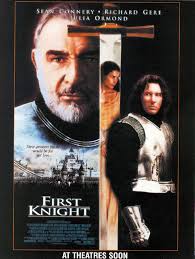
First Knight (1995)


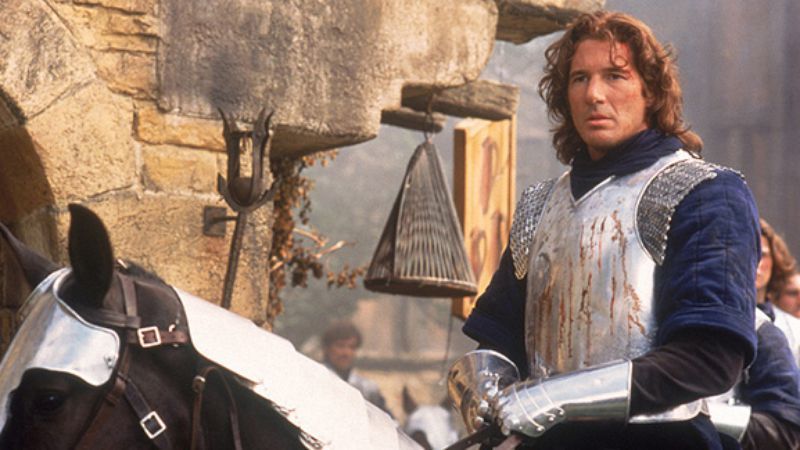
Casting choices only Hollywood producers could make #473: Richard Gere IS Lancelot du Lac

Director: Jerry Zucker

Cast: Sean Connery (King Arthur), Richard Gere (Lancelot), Julia Ormond (Guinevere), Ben Cross (Prince Malagant), John Gielgud (oswald), Liam Cunningham (Sir Agravaine), Christopher Villiers (Sir Kay), Valentine Pelka (Sir Patrise), Colin McCormack (Sir Mador), Alexis Denisof (Sir Gaheris), Ralph Ineson (Ralf), Stuart Bunce (Peter)

First Knight continues a proud tradition of Hollywood adaptations of British legends, with full-blown action and romance mixed with an anachronistic modern-ish vibe which clashes completely with the design of the rest of the film. Think anything from Ivanhoe to Robin Hood: Prince of Thieves. At heart these films are ridiculous, but to be a success they need to embrace this and create something with a bit of heart. First Knight is almost wholly absurd from start to finish – but it’s still remarkably good fun. Even when you laugh at the bizarre sequences that pepper the film, it’s still somehow entertaining. It doesn’t take itself seriously – so I feel people who lambast it are missing the point.

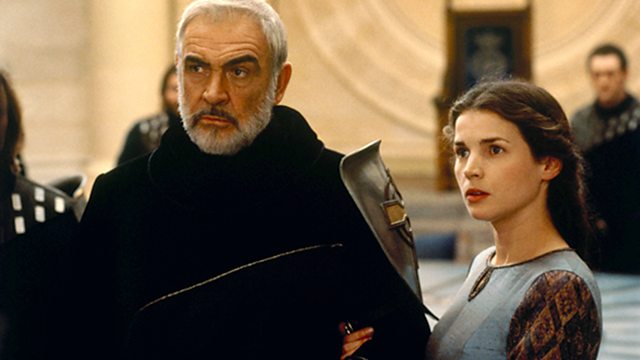
Anyway, it retreads the story of King Arthur (Sean Connery) with a modern mix. Here Arthur is an old man, marrying Guinevere (Julia Ormond) to seal a truce between Camelot and Guinevere’s home of Lyonesse. While being escorted to Camelot, an attempt is made by the villainous Malagant (Ben Cross) to kidnap Guinevere, but she is saved by charismatic chancer and expert swordsman Lancelot (Richard Gere). Returning to Camelot, she marries Arthur while Lancelot finds himself inducted into the Knights of Camelot. But their adventure together has led to a deep romantic bond between Lancelot and Guinevere – one that threatens to tear apart the harmony of Camelot.

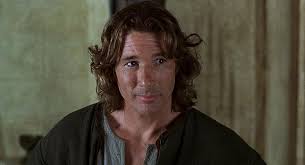
Something stupid or horrendously anachronistic happens in every scene of First Knight. Many of these moments are thanks to Richard Gere. Gere is at his most smirky here as Lancelot, an American Gigolo in King Arthur’s Court. There are few more modern actors than Gere – so seeing him in armour and cod-medieval garb jumps straight out as completely incongruous. Rather like Costner in Robin Hood, he makes no concessions to period whatsoever, and behaves more or less as he does in Pretty Woman. Every event in the film is met with his trademarked smirk-cum-grin and a twinkle in his eye. And while he clearly spent a lot of time on his sword work for this film, you literally never forget you are watching Julia Robert’s sugar daddy pretend to be a knight.

But then why should be really have made an effort to adjust his manner, accent or style for this film? After all this is a film where Lancelot takes part in a Total Wipeout competition – and on the basis of his performance in it is basically offered a spot at the round table. As a travelling entertainer, Lancelot woos the crowd with the sort of patter not out of place on a New York street corner. Later, the baddies hook up a boat with a pulley system that turns it into a super-fast speedboat. The baddies are all armed with pistol sized cross bows. It’s the sort of film where the lead villain rides into Camelot and shouts “Nobody move! Or Arthur DIES!”. Anyone watching this expecting a faithful exploration of Thomas Mallory seriously needs to change the channel.

So instead embrace the film for what it is. And enjoy the production values! The music score is swellingly impressive (now hugely familiar to any fans of Sky’s Ryder Cup coverage). The Camelot location looks brilliant. The costumes are wonderful – even if the knight’s armour (basically little more than a shield on the shoulder) looks horrendously inefficient. There is a very effective night-time battle excitingly filmed. The photography looks luscious. It’s shot with an old school, chocolate box, romance that makes everything look like a grand renaissance painting. The final battle between Malagrant and Lancelot is terrific.

I’ve also got to say that it offers an actually fairly interesting role to Sean Connery as Arthur. Considering that four years after this film he made Entrapment, a film in which he boffed Catherine Zeta-Jones, in a way it’s fairly daring for him to make a film that puts so much prominence on his age making him an unsuitable lover for Guinevere. His age is prominent in every scene (especially when counter poised with the modern vibrance of Gere). Half the time he’s with Guinevere he reminds her that he knew her as a child (yuck). He takes no part in any of the action – it’s Lancelot who (twice) rescue Guinevere, while Arthur commands from the rear. His relationship with Guinevere is almost devoid of sex and passion (they share only one remotely passionate snog). He even plays the poor cuckold, the man unable to excite his wife. Has Connery ever played such an unflattering part?


Julia Ormond – an actress who achieved a certain run of prominent roles in the 1990s – plays Guinevere. Despite the fact she seems to frequently find herself in distress, Ormond does manage to make Guinevere not feel like a damsel in distress. She’s proactive, she saves others, she’s defiant and (by and large) she knows what she wants and tries to get it. She also is an effective leader of her people. Ormond is also a fine, generous actress – she manages to convey a lot of chemistry with both Gere and Connery, two actors very different in style.

The film remains charged through with silliness. Ben Cross’ snarling villain has big speeches about how he wishes to escape from “the tyranny of Arthur’s Law”. The LAW is a major theme throughout the film – the characters bang on about it with an earnest insistence. Arthur falls back on it to make sense of his life. Lancelot struggles to understand and embrace the values it brings. Guinevere is determined to match law and duty together. Sure there are some silly grandstanding speeches about it – and the film runs with gleeful pride of Camelot as some sort of Socialist Utopia – but I suppose there’s a kernel of an idea at the centre here about justice and its importance in the world. It might mean we get a scene where Camelot is left totally undefended while everyone gathers for an open trial of Guinevere (guess what happens!), but at least it’s got an idea.

Of course that doesn’t get in the way of the silliness, the high blown acting, the silly events and the overblown dialogue. The heroes are all clean cut, and chiselled of jaw with perfect teeth, the villains all dressed in black, forever scowling and rugged of shave. It never for one minute feels remotely like it is happening in a truly medieval world. Richard Gere is, frankly, completely wrong as a medieval knight. But he’s strangely completely right for a film that is a chocolate box entertainment, a soufflé of a romance with swords and passion, that provides a few stirring moments and an interestingly different part for Connery. Gere is a perfect measure for the film – it’s a silly entertainment for those with an affection for Mills and Boon not Henry V. And there’s nothing wrong with that – it knows what it is, and knows what it wants to be taken as. Enjoy it. After all Camelot Lives!

Stardust (2007)

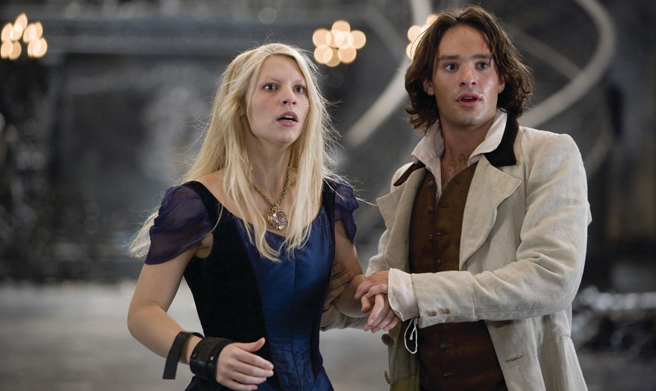
Claire Danes plays a star and Charlie Cox a village boy in charming adventure fairy-tale Stardust

Director: Matthew Vaughn

Cast: Claire Danes (Yvaine), Charlie Cox (Tristan), Michelle Pfeiffer (Lamia), Mark Strong (Prince Septimus), Robert De Niro (Captain Shakespeare), Sienna Miller (Victoria Forester), Jason Flemyng (Prince Primus), Rupert Everett (Prince Secundus), Kate Magowan (Una), Ricky Gervais (Ferdy), Peter O’Toole (King of Stormhold), Joanna Scanlan (Mormo), Sarah Alexander (Empusa), Nathaniel Parker (Dunstan Thorn), Henry Cavill (Humphrey), Dexter Fletcher (Skinny Pirate), Ian McKellen (Narrator)

Stardust is loosely adapted from Neil Gaiman’s novel of the same name, an adult fairy tale refashioned into a crowd pleasing family film: a warm and genuine adventure story, stuffed with romance, excitement and drama.

Tristan (Charlie Cox) is a dreamy young man in the village of Wall, which neighbours the mystical and forbidden world of Stormhold. In love with the selfish Victoria (Sienna Miller), Tristan vows to travel to Stormhold and bring her back a fallen star. However, the star has landed in the form of a beautiful young woman, Yvaine (Claire Danes), and the two of them find themselves on a difficult journey to return to Wall. Along the way they must dodge the witch Lamia (Michelle Pfeiffer) who wishes to sacrifice Yvaine to regain her beauty, and the surviving sons of the late king of Stormhold, particularly the ruthless Septimus (Mark Strong), who need Yvaine’s necklace to claim the throne.

What works about Stardust is that it has an air of whimsy about it, without ever feeling whimsical or corny. It’s a grown-up fairy tale, in the sense that it has some black humour and acknowledgement of sex, but really it’s more of a charming adventure story in a fantasy setting, which manages to keep its tongue in its cheek and not take itself too seriously. Matthew Vaughn’s direction has a very light touch and never allows this soufflé of a film to either puff itself up too much, or to deflate. Instead it rolls along with a giddy charm, with a delightful odd-couple love story at the centre. It’s a film that totally gets its tone spot-on, helped by confident direction and a wonderful score.

Charlie Cox plays romantic lead Tristan with a great deal of charm and really captures the romance at his centre. He also manages that extremely difficult task of being likeable – you can’t help but warm to him despite the fact that his self-awareness is completely off for a large chunk of the film. Claire Danes is equally good as the prickly Yvaine, hiding a great capacity for emotion and longing under a defensive exterior. Their romance is of course highly traditional – they bicker because they love each other! – but both actors carry it off with a great deal of style. You can’t help but want them to get over their problems and get together.

The romantic plotline is also never overwhelmed by the faintly Pythonesque comedy that surrounds it, particularly from the ghostly chorus of deceased Princes of Stormhold. Vaughn produces a great cast of comic actors for this group, while entrusting Mark Strong with the lion’s share of the screentime as the dashing decoy antagonist. In fact, the construction of the film’s narrative is rather neatly done, as this plotline of the inheritance of Stormhold is largely kept separate narratively from the romantic Tristan/Yvaine storyline, with the intersections only occurring at key points.

The real antagonist of the film however is Michelle Pfeiffer’s witch Lamia, Pfeiffer offering a neat portrait of vanity intermixed with cruelty. It’s a very decent inversion of a “movie star” glamour performance, and Pfeiffer’s heartless ruthlessness is a very nice contrast with Tristan’s altruistic openness. In fact Pfeiffer is very good in this film: she gets the balance so right that Lamia constantly keeps you on your toes as to how villainous or not she may be. I’m not quite sure that the film quite manages to completely bring the two characters plot lines together to provide a really effective narrative drive to the film, but she certainly works as an effective antagonist.

The film’s structure is a combination shaggy dog story and classic quest structure, which allows each sequence to take on its tone and structure, from thriller to comedy, depending on the characters involved. What threads this together is the growing (and very sweetly structured) love story between Tristan and Yvain which keeps the momentum up as the film moves from location to location, with cameo roles sprinkled throughout, without the film losing momentum (though it is probably 15 minutes too long). The film’s comfort with letting it sequences expand is clear with Robert De Niro’s Captain Shakespeare, a feared cloud pirate whose secret desires are not so secret as he might think. The film delights in essentially extended jokes like this – but it gets away with it because these jokes manage to be quite funny (De Niro in particular turns in a very good comic performance).

It’s a film that manages to remain distinctive and original, while appealing to a wide audience, which is quite some trick to pull off. It also manages to do this without losing its distinctive rhythm, which is both endearing and enjoyable. The “rules” of its world are clearly established, and while many of the actors are slightly tongue in cheek, they never laugh at their characters but only gently tip the wink at the audience. This freedom largely comes from the conviction and honesty Danes and Cox endow the central characters with, to ground the film. It alsohas a great sense of emotional intelligence to it, and brings a lot of depth to the characters. It also helps that it’s brilliantly designed, looks ravishing and is full of several delightful performances.

There’s lots of terrific stuff in this film, with a very sweet story at its centre. In fact this sweetness is probably the secret of its success: it never takes itself very seriously, it dances lightly from scene to scene and never allows itself to become too overblown. It’s got a terrific cast and is well directed, with a snappy bounce. At moments it does feel a little long, and some sequences overstay their welcome a bit too much – but the central characters are so winningly played that you don’t really mind. Sure this is not a masterpiece, but it has a sort of magic about it, the charm, excitement, adventure and romance, all mixed together with such confidence that it’s a pleasure to watch.

Rust and Bone (2012)


Matthias Schoenaerts and Marion Cotillard in an unusual romantic drama

Director: Jacques Audiad

Cast: Marion Cotillard (Stéph), Matthias Schoenaerts (Ali), Armand Verdure (Sam), Corinne Masiero (Anna), Céline Sallette (Louise), Bouli Lanners (Martial)

Audiad’s films combine cinematic artistry with profound, sometimes elliptical, character studies that provoke great work from talented actors. Rust and Bone is no exception.

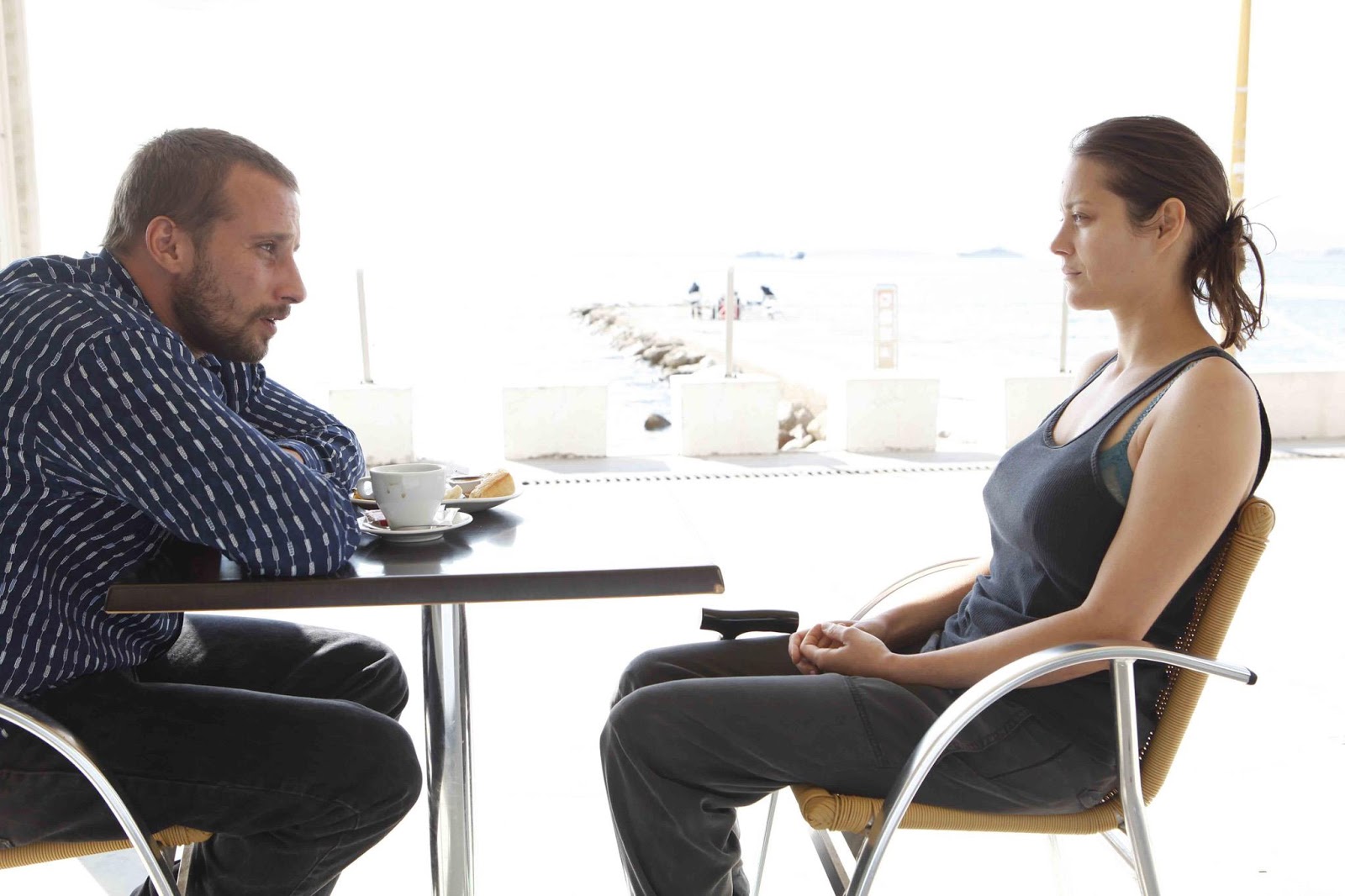
It’s the plot of a melodrama, staged like social-realism. Written down it sounds like the purest Hollywood schlock: crippled killer whale trainer Stéph (Cotillard) enters into a friendship that grows deeper with would-be kickboxer Ali (Schoenarts), who has a troubled relationship with his 5-year-old son. But the realistic portrayal of the pain of losing your limbs (in a scene of raw intensity from Cotillard) and Ali’s troubled homelife, penchant for casual sex and occasional resorting to violence when frustrated, pegs the film style farcloser to a hard-edged Bicycle Thieves. The film also has a lyrical poetry about it, as their relationship gently develops from friends with benefits to genuine feeling, which stops it from feeling gritty or hard-edged.

The film’s main strength is the brilliance of its two leads. Cotillard is outstanding as a passionate free-spirit whose entire world ends overnight. Her expressive face carries a host of confused feelings which shift and reform across her like a human kaleidoscope. Stéph’s vulnerability is married with a great strength of character, but Cotillard avoids many of the clichés of movie paraplegics by making her a woman who adapts without anger to her new condition. Instead, after overcoming depression, Stéph is looking actively (and with a curiosity) for something new to fill her life with.

Cotillard is so wonderful in the role, it’s very easy to overlook Schoenaerts’ skilful underplaying and Brandoish physical mastery. Ali is, I’ve got to be honest, a hard character to like – selfish, childish, in many ways thoughtless, blunt and fixated on himself. He’s also a terrible dad. Not malicious or cruel, just easily bored and frustrated with his kid. This frustration appears with anyone who doesn’t react the way he wants – “You’re so annoying!” he whines at both Stéph and Sam. Despite this, Schoenaerts’ is the heart of the movie. The film is his story, and he makes a difficult character engaging enough to carry the audience with him.

Rust and Bone is a film constructed around brilliant scenes and striking moments. In a wonderful sequence, Stéph repeats the arm signals she used to train the whales: at first she seems sad, then a warmth of enjoyment crosses her face. It’s the prompt for her to revisit the zoo, but the visit seems bittersweet: we see hugs with her friends, but Audiad cuts out the dialogue, adding to Cotillard’s own confused feelings about her return. Later she visits the whale that crippled her. Her mood here (with the camera to her back) is hard to read – is she forgiving the whale? Is she saying goodbye to this part of her life? Moments like this work so well because of the brilliance and humanity of the performances of both leads and Audiad’s patience and control as a filmmaker.

Audiad packs this beautiful film with moments like this. I particularly liked the bookend images he uses for each act. Each sets up the act thematically, from a bloodied tooth spinning on a pavement to the cover of a transit van flapping in motion. Audiad bathes the film in a series of cool blue colours, interspersed with flashes of light at moments of suggested revelation. He also has the discipline not to belabour the points of scenes or hammer home the feelings of characters (sometimes leaving you wanting more definition for the emotions they experience).

For a film immersed (to a certain degree) in a social realist world, there are odd gaps in logic: after throwing Ali out of her home (at gun point!) over his serial disregard for Sam, his indirect responsibility for her losing her job and his stroppy temper, would Anna really happily allow Sam to visit him a few months later? The disappearance of Stéph for much of the final reel of the film also pulls the focus from the central relationship and makes the final ending both rather sudden and slightly pat, out of step with the rest of the movie.

Audiad does bring a degree of engaging ambiguity to the story. The relationship between Ali and Stéph is intriguingly hard to define. She seems drawn to him for his lack of guile and his treatment of her disability with a matter-of-factness free of pity or embarrassment (qualities that linger around many of her other interactions). However, shifts in her character over the course of the film are deliberately kept low-key and open-ended, allowing moments where she surprises herself and the audience with the strength of her feeling. Similarly, the lack of depth in Ali’s personality makes his emotional development halting and discordant – he is attracted to her physically, but which qualities in her cause those feelings to deepen? It’s not immediately clear watching it – and I suspect many viewers would have different opinions from watching this curiously inscrutable film.

It’s a thoughtful film, but somehow never quite as moving as you expect. I think a lot of your connection with it depends on how much you feel Ali deserves redemption, or if you can forgive the constant stream of selfish and thoughtless things he does. I’m not quite sure I did. Similarly Stéph remains, for all the expressive humanity Cotillard brings to her, strangely unknowable.

That’s partly the problem with the film. Despite its beauty, it’s a little too enigmatic to be completely engaging. Wonderfully shot, and strangely haunting as it is, I think this is one every viewer will have a personal reaction to. I can imagine many would be deeply moved by its blue-tinted mystery and fragile dissection of damaged souls. For me it didn’t quite have the impact I think the film needs, and I didn’t feel this love story quite coalesced into a something truly profound in itself. It’s a beautifully made and intelligent film but not one I fell in love with – though I can imagine many people have.

Carol (2015)


Rooney Mara and Cate Blanchett in a moving dance of love and romance

Director: Todd Haynes

Cast: Cate Blanchett (Carol Aird), Rooney Mara (Therese Belivet), Sarah Paulson (Abby Gerhard), Kyle Chandler (Harge Aird), Jake Lacy (Richard Semco), John Magaro (Dannie McElroy), Cory Michael Smith (Tommy Tucker), Carrie Brownstein (Genevieve Cantrell)

It’s the way of things that gay love-stories in Hollywood are invariably relegated to a sub plot – often one that has a certain tragical element to it. This is not the case here in Todd Haynes’ superlative romance, which places a lesbian love story at its centre, sensitively building the characters and romantic journey between them.

Therese Belivet (Rooney Mara) is a lost department store worker, drifting through life. One Christmas, working on the toy stall, she recommends a toy for the daughter of socialite Carol Aird (Cate Blanchett). A spark of attraction between the two is immediately apparent, and Carol invites Therese first to dinner, then to spend an evening together and finally a Christmas road trip across America, during which their attraction grows and deepens into a flourishing love.

This wonderful love story, almost a twist on Brief Encounter, is a brilliantly done, extremely engrossing and moving romantic film, a film that manages the rare feat in Hollywood movies of not making a homosexual relationship something that requires narrative punishment. Haynes’ luscious 1950s filming style, stressing the aesthetics and manners of the era, combines brilliantly with a subtly murky photography style that darkens and lightens at different points to create an immersive fairy-tale quality. It’s a perfect tapestry for a deeply caring and sensitive story, anchored by a superb script and wonderful performances.

It has now got to the point where it is axiomatic to say Cate Blanchett gives a wonderful performance – she is, after all, one of the best actresses in the world right now. She is quite simply perfectly cast as Carol, her features having the flexibility to appear both cold and distant and soft and caring, a switch she is able to make with the slightest of gestures. Her patrician manner is deconstructed brilliantly. Her character is initially established as an almost predatory figure, a determined and manipulative woman; it’s only over the course of the film that this persona is slowly taken apart, revealing waves of emotion and pain from years of denial, loneliness and a sense of being trapped. Each scene slowly prompts us to reassess and reevaluate her character, and Blanchett handles this journey with astounding skill, revealing a hinterland of pained, self-doubting isolation and desperation to experience real love behind her cool and confident exterior. It’s a performance of phenomenal skill and emotional force.

It’s matched brilliantly by Rooney Mara as the object of Carol’s affections – and it must be said at the very least a co-lead of the film. Therese is a woman sleepwalking through life when we first see her, trotting through the motions of her interactions with others – a clear void in her, waiting for something to happen to her, but clearly with no idea of what that might be. Similar to Blanchett, Mara’s gentle and sensitive exterior deepens over the course of the film as she becomes more assertive to those around her, more of a determiner of what she wants from her own life. Mara’s soulful eyes and gentle face make her a perfect audience surrogate, creating a character whose feelings, doubts, anxieties and growing confidence we become immersed in. The film is in many ways her story, and Mara’s expressive gentleness is vital to our investment in the story.

The road trip at the heart of the movie’s plot is a charming, lyrical dance between two people juggling an unspoken attraction: one of them on the edge of all times of saying it, the other drawn towards an attraction she is still trying to understand and express. Haynes perfectly captures the small playful moments of first love that pepper these scenes, the camera intimately placed to make us part of this growing partnership of equal minds and hearts. Slowly they grow physically closer – both in their ease of body language, and through their slow progress towards sharing hotel rooms and finally (in an achingly romantic scene) a bed.

It’s a film about romantic longing between two people, the instant attraction. Therese’s first glance of Carol is across a crowded room, with the camera panning past Carol in a POV shot and then returning to her, before cutting back to Therese, now seemingly alive with an attraction she doesn’t quite understand. The Brief Encounter structure of the film is established with the film opening with Carol and Therese’s (possible) last meeting in a dinner. We see their interrupted conversation leading to Carol’s departure, leaving after touching a hand on Therese’s shoulder – the camera lingering on Therese’s back and her unseen reaction (and contrasting it with a meaningless similar touch from a male friend). When this scene is replayed later, we see it more from Carol’s perspective – and her pulsating emotion and longing.

The reason these scenes work so well is that the film continually shows Carol and Therese struggling to hide their growing attraction in plain sight, to maintain the balance between expressing their feeling and keeping a plausible deniability. This feeling grows because the film has the patience to take its time with building this relationship– and because we are aware of Therese’s feelings earlier than she is.

The film’s sensitivity extends to the sympathy it feels for all its characters. As useless as many of the men in the story are, they are confused, distressed or lonely rather than malicious or cruel. Carol’s husband Harge could have been a bullying monster, but he actually comes across as a frustrated and deeply hurt man, who understands on some level his wife’s sexual preferences, but is unable to fully comprehend the implications of this. On paper it’s a thankless part, but Kyle Chandler is superb, his Mad Men features perfectly suited to the role of floundering masculine figure. Many of Therese’s would-be suitors are similarly drawn reasonably sympathetically, however laddy, over-keen or dull they may be – Haynes’ film has an understanding that they are products of their time. In a lovely scene Therese talks about homosexuality with one of her male suitors, who can barely countenance its existence, as if she was talking about the man in the moon.

Haynes’s mastery of the aesthetics of the material is present throughout. Haynes increases the feelings of being trapped or surrounded by a number of shots through windows, using mirrors, from the other side of doors – divides that stress the characters’ sense of being trapped and enclosed in their lives. He also carries across just a small teasing touch of the melodrama of 1950s films – though I would argue this is no way a melodramatic film – with a gun making a deliberately misleading appearance, and a few beats that briefly suggest the film is heading in an entirely different direction.

Carol is a wonderful, soulful and entrancing film. It’s about two people showing each other hidden depths about themselves, uncovering truths and building each other’s capacity for love and ability to admit and understand their feelings. It makes this a tender and endearing film, with two characters whose fates we become completely involved with. It also avoids passing any form of judgement over any of the characters. Filled with subtle moments, open to interpretations (even their first meeting is full of code, from the recommendation of a non-gender-conforming train set to Carol’s gloves left invitingly on the counter) that constantly ask us to review how open we feel the characters are being with themselves and others. With brilliant performances by Mara and Blanchett (backed by Chandler and a very sensitive performance from Sarah Paulson as Carol’s former lover), this wonderful film is both profoundly moving and very uplifting.

Annie Hall (1977)


Diane Keaton and Woody Allen on the quest for love and romance. How much of this is autobiographical eh?

Director: Woody Allen

Cast: Woody Allen (Alvy Singer), Diane Keaton (Annie Hall), Tony Roberts (Rob), Carol Kane (Allison Portchnik), Paul Simon (Tony Lacey), Janet Margolin (Robin), Shelley Duvall (Pam), Christopher Walken (Duane Hall), Colleen Dewhurst (Mrs. Hall), Donald Symington (Mr. Hall)

Why is love so damned difficult? And, as it is, why do we keep setting ourselves up for a fall with it? Why are we all such relationship addicts? These are questions that Woody Allen tackles in Annie Hall, the film that elevated him from comedian to Oscar-winning cinematic super scribe (he won three Oscars for the film – Picture, Director and Writer). Does it deserve its reputation? You betcha.

Alvy Singer (Woody Allen) is a neurotic New York comedian (is it any wonder he was seen as synonymous with Allen himself?), twice divorced and incapable of maintaining a relationship. He meets Annie Hall (Diane Keaton, Allen’s ex-girlfriend playing Allen’s character’s eventual ex-girlfriend, using Keaton’s real name as a character name – confused?) over a game of mixed doubles tennis, and their immediate chemistry and shared sense of humour leads to a romantic relationship. Their only problem? Their innate neurotic self-analysis that stands forever in the way of maintaining a relationship.

Annie Hall is a deliriously funny film – I actually think it might be one of the funniest I have ever seen – with an astounding gag-per-minute hit rate. Allen uses multiple techniques to deliver gags: commentary, voiceover, celebrity cameos, an animated interlude, “what they are really saying” subtitles, flashback, direct to camera address – and the blistering parade of delivery styles never seems jarring, but ties together perfectly. Large chunks of the film are inspired high-wire dances where a punch-line is a few beats away, and the film never settles into a style or becomes predictable. So many of the jokes have become so familiar due to their excellence that it’s almost a shock to see them minted freshly here – and the fact they all land so effectively is a tribute to the performers. 

In many ways, Annie Hall is a series of sketches loosely tied together with an overarching plot line. In fact Alvy’s constant commentary on events (a brilliant playing with conventional cinematic storytelling form), add to the feeling this is in some ways an illustrated stand-up routine by a gifted self-deprecating comedian. The material seems so synonymous with Allen’s personae (and the characters of Alvy and Annie so close to what we know about the actors who play them) it’s very easy to see the whole film as auto-biographical. Not that there’s anything wrong with that – particularly as the hit rate of the gags here is so phenomenally high. 

But what makes this film such a classic is that it is more than a collection of excellent jokes. Allen is also telling a story about romance – or rather or need for romantic connection, and how easily we can sabotage or undermine this through our own mistakes, errors and (above all) neuroses. Alvy Singer is almost chronically incapable of embracing happiness and contentment, with every good thing merely an interlude between crises. Annie is the most promising opportunity he has had for long-term contentment – and still his neurotic self analysis gets in the way. As such the film is about the quest for love – and the title Annie Hall(not the character) is a metaphor for this – to Alvy Annie Hall represents the perfect relationship, something he (and indeed she as well) will never accomplish. 

The film perfectly captures the dance of first meeting – the shy, stumbling early conversations of people who are attracted to each other but are both trying too hard (the subtitles here are a brilliantly funny choice – we’ve all thought to ourselves “what am I saying?” in that situation!). There is a wonderfully playful scene where Alvy panics over the cooking of lobsters – clearly playing up for Annie’s delighted engagement in it, as she photographs his distress. These photos appear in the background, framed on their wall, as their relationship breaks up relatively amicably later. At another point, Alvy attempts to recreate the same moment (same location, lobsters again) with a new girlfriend – only to be met with unamused, annoyed confusion. It’s a perfect little vignette that captures the magic of chemistry – and the difficulty of finding it or holding onto it.

Because what is striking is that Allen allows the relationship to break apart surprisingly early. Roger Ebert has written about Annie almost “creeping into” the film – and this is true. She is only briefly seen in the first 25 minutes (the first third of the film almost!) as the focus is on Alvy’s discussion of his background and childhood, and his past romantic failings and sense of disconnection from people. Then very swiftly after its establishment, the relationship is past its prime, with both parties finding it hard to keep the interest going. The second half of the film follows them amicably drifting apart – meaning this is probably the most romantic film about a long break-up ever made.

The film has a beautiful little wistful coda of Alvy and Annie meeting outside a cinema, each with new partners. In long shot we see them engage in an animated and engaged conversation while their new partners look on, nervously smiling. The magic link between them hasn’t faded away, and their importance to each other, and natural chemistry, hasn’t changed – but, the film seems to be saying, their natures work against them. It’s one of several touching moments in the film that demonstrate the heart that underpins the jokes. After their first break up, Annie calls Alvy round to get rid of a spider in the bath. He does so with comic incompetence, then in a still medium shot he comes to Annie in the corner of the frame sitting on the bed. They reconcile and then embrace tenderly – it’s a beautiful, moving, gag-free moment, all the more effective as its reality is contrasted with the humour throughout the rest of the film.

The film is a full of tender and real moments like these in between the jokes: it’s a nearly perfect balance between them. The parts are perfectly written for the actors: Allen is so brilliantly good here as Alvy that the character has essentially become the public persona of Allen (and allegedly his desire to never make a sequel was linked to his unease with the association between Alvy and himself). Diane Keaton (her real surname being Hall and her nickname Annie) also had this part perceived as a loose self portrait (her past relationship with Allen not helping). Truth told, it’s a very simple part and Keaton actually has to do very little in the picture beyond react (the focus is so strongly on Alvy) and deliver the role with charm – but she captures the sense of an era shift, a woman stuck between transitioning from the hedonistic 60s to the ambitious 80s, an ambitious free-spirit. The Oscar for the role was generous, but not undeserved.

For all the film’s emotional understanding and complexity, it’s the jokes though that you will remember, and they are glorious: Alvy’s schoolfriends telling us what they are doing now as adults; Alvy’s description of masturbation; the accident at the cocaine party; Christopher Walken’s monologue on driving; the puncturing of the pretention of a loud-mouth know-it-all in a cinema queue – it’s a blistering array of comic genius and it will have you coming back for more and more. It’s Allen’s most garlanded movie and it’s certainly the best balance he ever made between “the early funny ones” and his “later serious ones”. It’s simply shot, but told with heart, feeling and emotional intelligence and with dynamic, comic wit – it’s one of Allen’s greatest movies.

Arrival (2016)


Amy Adams tries to build an understanding with Earth’s visitors in this thinking man’s sci-fi film

Director: Denis Villeneuve

Cast: Amy Adams (Louise Banks), Jeremy Renner (Ian Donnelly), Forest Whitaker (Colonel Weber), Michael Stuhlberg (David Halpern), Tzi Ma (General Shang), Mark O’Brien (Captain Marks)

Aliens in Hollywood movies don’t often seem to mean well. For every ET you’ve got a dozen Independence Day city destroyers. But few films have really dealt directly with the complexities that might be involved in engaging with a species for the first time. How would we talk to them? How could we find out what they want?

Those are the questions that Dr Louise Banks (Amy Adams), the world’s leading linguist, has to juggle with after she is called in by Colonel Weber (Forest Whitaker) to establish communication with the inhabitants of an alien ship, one of 12 that have appeared across the globe. Working with physicist Ian Donnelly (Jeremy Renner), Banks strives to build trust and a basis for common language with the aliens. Throughout, she must deal with her military superiors’ lack of understanding of the painstaking nature of her work, the paranoia and fear of the nations of the world, and her own increasingly intrusive dreams and memories.

This is grown-up sci-fi, directed intelligently by Denis Villeneuve, whose confidence and artistry behind the camera oozes out of every shot. It’s a film that wants us to think, and urges us to consider the nature of humanity. Communication between humans and the “heptapods” is the film’s obvious focus, but it is equally interested in demonstrating how distrust and paranoia undermine how we talk to each other. Not only is this in the clashes between nations, but on a smaller scale by the communication between military and science, the uniforms in charge largely failing to grasp the slow and painstaking nature of Banks’ work. On a personal and emotional level, we see the slow growth of understanding between Banks and Donnelly, their increasing ease with each other as they break down the barriers between them, and between humanity and the aliens. 

Far from the bangs and leaps of inspiration that science normally sees itself represented by onscreen, this film attempts to follow the methodical process of building an understanding of a concept from nothing, and the careful hours of work that underpin sudden revelations. The film is very strong on the complexities of linguistics and the difficulty of conveying exact translations, including intent, context and meaning, from one language to another. In fact it’s a wonderful primer on the work of linguistics experts, offering a fascinating breakdown of how language is understood, translated and defined between two groups without a common tongue. 

This is also helped by making the aliens truly alien: I can’t remember a set of Hollywood aliens as otherworldly as these are. Not only is their language completely different (based on symbols and strange echoes like whale song), but physically they bear no resemblance to humans at all (I confess that I was momentarily distracted here, as their tentacles and residence in a gas-filled box rather reminded me of The 465 in Torchwood: Children of Earth). They lack clear arms, legs or even faces. Their technology is advanced and immediately unsettling. Jóhann Jóhannsson’s wonderfully eerie and imposing score brilliantly helps to capture this otherworldly sense, as does the crisp photography and unique production design of the alien ship. The film walks a brilliantly fine line between wonder at the aliens and a sense of unsettling dread that means we (like the characters) are never comfortable in making assumptions about their motives.

Much of the film’s success as a viewing experience also depends on knowing very little about it. For me this film delivered one of the most effective late-plot re-evaluations I’ve seen: I had no inkling of this gear shift, or how a late piece of information demands that we adjust our understanding of everything we have seen so far in the film. This is actually one of the best done examples I’ve seen of a twist (calling it a twist seems somehow a little demeaning, as if this was a Shyamalan thriller, but a twist it is) – I in no way saw it coming, but it suddenly makes the film about something completely different than you originally believed it would be. I won’t go into huge details, but the film raises a number of fascinating questions around pre-determination and fate that challenge our perceptions of how we might change our lives if we knew more about them. To say more would be to reveal too much, but this twist not only alters your perceptions of the films but deeply enriches its hinterland.

I would say the film needs this enrichment as, brilliant and intellectual as it is, it’s also a strangely cold film that never quite balances the “thinking sci-fi” with the “emotional human drama” in the way it’s aiming for. Part of this is the aesthetic of the film, which has a distancing, medical correctness to it – from sound design to crisp cinematography – and which, brilliant as it is, does serve to distance the viewer emotionally from the film. Despite the excellence of much of the work involved, I never quite found myself as moved by the plights of the characters, or as completely wrapped up empathetically with Adams’ character, as the film wanted me to be. While the ideas in the film are handled superbly, it doesn’t have quite as much heart as the plot perhaps needs to strike a perfect balance.

What emotional force the film does have comes from Amy Adams. It’s a performance that you grow to appreciate more, the longer you think about it. It’s a subtle understated performance, soulful and mourning, that speaks of a character with a deep, almost undefinable sense of loss and sadness at her core. You feel a life dedicated to communication and language has only led to her being distanced from the world. Adams is the driving force of the film – though very good support is offered from Renner as a charming scientist who also convinces as a passionate expert – and the film’s story is delivered largely through her eyes, just as the aliens’ perception of humanity becomes linked to her own growing bond with them. I will also say that Adams also has to shoulder much of the twist of the film – and it is a huge tribute to her that she not only makes this twist coherent but also never hints at the reveal until the film chooses to. 

Arrival is a film that in many ways is possibly easier to respect than it is to love: but I find that I respect it the more I think about it. It does put you in mind of other films – the aliens have more than a touch of 2001’s monolith to them and Villeneuve’s work is clearly inspired by a mixture of that film and Close Encounters. But this is a challenging, thought-provoking piece of work in its own right and one that I think demands repeat viewings in order to engage the more with its complexity and the emotional story it is attempting to tell. It may well be that on second viewing, removed from puzzling about the mystery in the centre, I will find myself more drawn towards it on an emotional rather than just intellectual level. That is something I am more than willing to try and find out from a film that I think could become a landmark piece of intelligent sci-fi.

Brief Encounter (1945)


Love and life at a crossroads: Celia Johnson and Trevor Howard in one of cinema’s greatest love stories

Director: David Lean

Cast: Celia Johnson (Laura Jesson), Trevor Howard (Dr Alec Harvey), Stanley Holloway (Albert Godby), Joyce Carey (Myrtle Bagot), Cyril Raymond (Fred Jesson), Everley Gregg (Dolly Messiter)

Brief Encounter is often hailed as one of the most romantic films ever made. This is astonishing really, as it’s actually a film about an affair where two married people with young families toy seriously with the idea of walking out on these families to run off together. Put like that, you can imagine thinking, how could I sympathise with this situation? The film’s magic is that you do.

Laura Jesson (Celia Johnson) is a middle-class woman, married to loving but dull husband Fred (Cyril Raymond) with two young children. Every Thursday, Laura travels to Milford for the day for shopping and a trip to the cinema. One day she meets Alec Harvey (Trevor Howard), a married doctor who works one day a week at the Milford hospital. Enjoying each other’s company they agree to meet again, but quickly find their ease and comfort with each other developing into a deeper relationship – with infidelity on the cards.

Brief Encounter in many ways gets close to a perfect film. Its impact on people seems to be pretty near to universal. Perhaps because the film speaks to a certain universal truth: who hasn’t, at some point in their life, found themselves attracted to someone they shouldn’t be, and who hasn’t been tempted at some point to throw their life up in the air and embrace something new and exciting? The film carefully presents these temptations in a totally non-judgemental and empathetic way, and acknowledges the romance and enticement of the forbidden.

The film also perfectly captures the magical discovery of falling in love, the tingling excitement of every second spent in the company of that new found love-interest. It’s there throughout Johnson and Howard’s interactions: their smiling eagerness, the way their eyes light up and body language opens out when they speak to each other (compare to how closed off they are when speaking to anyone else). There is a relaxed pleasure about it – an innocence and spring-time joy that makes you forget that this is a couple toying with shattering their families in a passionate affair. There is a reason the film is set in a train station – it has a transient, chance-meeting sense about it, with the station being a “neutral” ground far away from both characters’ homes where it is easier for them to pretend to be “other people” – it removes many of the possibilities for the film’s would-be affair to be perceived as sordid or wrong.

The plot also hinges effectively on fleeting moments of chance that cause either joy or pain (usually the latter). Most obviously we have Doll’s interruption of their final moments – enough to make any of us scream at the screen – but their very first meeting is caused by the random chance of a piece of grit flying up at the right place at the right time. The relationship is only unconsummated due to Alec’s friend returning to a flat early (and his sneering contempt for Harvey’s planned adultery is the only scene where a third party shatters the illusion of a perfect romance that could cause no harm to anyone). The lovers encounter friends and have to concoct unconvincing spur-of-the-moment reasons for why they’re together. It’s this constant feeling of chance and chaos around the edges of the drama that provides the sense of danger that keeps this relationship alive and empathetic.

Laura and Alec are grown-up and intelligent adults, aware of the consequences of their actions, and the film keeps this constantly at the forefront. Part of the reason we can “relax” into this would-be affair is that we have already seen at the start that the relationship will end, meaning we can simultaneously root for this meeting of hearts and minds, while knowing that no one (other than the couple themselves) will be hurt. Imagine if the film had opened with Fred’s tear-stained face? Would all the romantic boat rides and illicit kisses on a country bridge still have made us feel warmly towards Laura and Alec?

Watching this film again, I actually started to think about how Lean developed as a director from these smaller scale, script-led Coward films to the sweeping, grandiose epics that he is best remembered for today. In Brief Encounter his command of mise-en-scene is so complete – and in Celia Johnson he has such an expressive actor – that the dialogue in voiceover (for all of Johnson’s excellent delivery) often feels superfluous; it tells us nothing that simply looking at the picture hasn’t already communicated. 

Look at the scene after Laura flees Alec’s borrowed apartment: Johnson’s stunned, panicked, guilty face is the camera’s focus, as we follow her, head down, moving fast through the streets without aim or direction, the score swelling behind her. Later she sits smoking on a park bench. Her conflicted emotions of guilt, shame and shock that she should do such a thing are clear, not just from the acting, but also the construction of the scene. Although the score helps, you could watch the scene silent and know exactly what was happening and what Laura was thinking about. But the film continues with Laura’s voiceover as she details everything her face is telling us. Take a look at the sequence here (64minutes and 42 seconds in):

Was it at points like this that Lean started to move towards his later films, where the language of cinema took the place of the language of speech? Later he would place so little information about the real Laurence of Arabia in that film’s script that nearly everything is interpreted from O’Toole’s expressive face. I think you can see the roots of it here – brilliant visual touches that capture the immediate intimacy between Alec and Laura, or the way the camera holds itself steadily on Laura while she prepares her evening make-up and calmly lies for the first time in her life to her husband. In the entire construction of this film, its detailed and perfectly paced building of a sense of Greek tragedy around a slim story, you see a master film-maker, a genius of visuals and compositions. You don’t need the extra explanation, it’s all there on the screen for us. 

Camera choices are sublime: look at the staging of Alec/Laura’s final meeting: first time round, the camera moves lightly past them, focused on Holloway and Carey’s characters. Despite that, we get an overwhelming sense that something important is happening just out of shot – reinforced when Dolly interprets them. Flash forward to the end of the film, as the scene is restaged – now Dolly practically forces herself into the frame (in one great shot, the camera watches Alec leave through the door before Dolly literally walks in front of the shot to sit down at the table). The careful, comfortable composition of Alec and Laura sharing the frame together – and the way she never does so with her husband (until the very end of the film) alone tells us visually as much about the relationships as any dialogue could.

What is fascinating is that this is remembered by so many people as being about the control of emotions. Watching it again, I remembered how far this was from the truth. Alec and Laura speak their feelings for each other with an almost wild abandon once the floodgates are open – Alec’s expression of devotion while they dry off in the boat house is as frank and heartfelt a declaration of love as you are likely to hear. Laura’s emotions – her joy and her pain – are not only written across her face, but spilled out across the screen in voiceover. The characters button this up when with others, but alone they are as high on love as a pair of first-date teenagers. Throughout, the writing of their dialogue is spot-on – from their initial slight shyness to the way their lines interlock and complement each other. Again, compare how Laura talks with Alec – naturally, freely, each line developing smoothly from the other – with how she communicates with everyone else in the film (haltingly, distant, talking at cross purposes, subject matter changing from line to line). I could do without chunks of the voiceover, but the dialogue is sublime, both in its style and its construction.

You can’t go far wrong either when you have actors as good as this, with such chemistry. Celia Johnson gives one of the most perfect, iconic performances in the history of cinema. Does she strike a wrong note once? I’ve already waxed lyrical about her expressiveness – but watch her in every scene, you always know what she is thinking. Her understanding of Laura is complete, and she brilliantly shows throughout the torn loyalties between the life she has and the one she could have – between making herself happy and doing “the right thing”. The film is really her story and Johnson creates a character I can’t imagine someone not relating too. Her voice is in a way ripe for parody with its crisp 1940s tones, but along with her beautifully expressive eyes under the surface of that stiff-upper lip sharpness, there are wonderful beats of emotion and desperation.

Trevor Howard is equally good as Alec Harvey – it’s amazing to think this was only his second film role. Harvey is a character we are slightly distanced from in comparison with Laura – it’s arguable that, since the film is delivered through Laura’s voiceover, we only see him (except in the opening moments) as Laura perceives him. Howard has a charm, a gentleness and an honour about him that make him a man we can relate to, but the actor also brings an edge of danger to him that make him a plausible would-be adulterer. Early in the film it’s Alec who makes the running, pushing for dinners and bunking off work for cinema trips. It’s he who sets up the possibility of consummating the relationship, and makes the first formal declaration of affection. In fact you can see, in that slight edge that Howard gives it, why some have plausibly argued that Harvey could be a serial seducer. But that’s subtext – like Johnson, Howard is perfect.

Brief Encounter is one of those films that rewards constant reviewing. It’s a brilliantly told, tightly structured and beautifully shot story that is also deeply moving and emotional, because it feels so real. It’s possibly one of the best expressions on film of falling in love, and all the excitement and danger that it brings. Perhaps that is why it moves us, and continues to have such appeal – all of us have had that excitement of spending every moment you can with someone else, of sharing everything with them. It’s an addictive and exciting feeling, and this film captures it perfectly. It also moves us because, deep down, we like sad tragic endings – they have real impact when we have related so strongly to the characters, and they stick with us. Because, you always remember when you have been heartbroken – and seeing it so vividly brought to life by Celia Johnson in a truly great performance helps to make this film permanently rewarding.

Fifty Shades of Grey (2015)


Dakota Johnson and Jamie Dornan struggle with their obvious discomfort in this ghastly, hellish, joyless film

Director: Sam Taylor-Johnson

Cast: Dakota Johnson (Anastasia Steele), Jamie Dornan (Christian Grey), Eloise Mumford (Kate Kavanagh), Jennifer Ehle (Carla Wilks), Marcia Gay Harden (Dr. Grace Trevelyan-Grey)

For some reason, about ten years ago everyone got wildly turned on by reading a series of books ripped off from Twilight, which followed the adventures of a timid student and her induction into the world of sexual spanking by a controlling billionaire. It was like tepid porn you could read in the open and talk about in the office. The entire genre of “mom porn” (now to be spotted in every supermarket book section) was born.

Anyway, it came at last (so to speak): the film of the book. With it came EL James’ atrocious dialogue (full disclosure here: I’ve not read the book, but I looked up some quotes and read the synopsis on Wikipedia, so I reckon that’s probably better than reading it), paper thin characters and event-less action. Along, of course, with the sex. Anastasia Steele (Dakota Johnson) is a young student who encounters Christian Grey (Jamie Dornan), a mysterious billionaire. He likes spanking. She’s never done anything down there (“You’re a virgin”, “yes”, “but you’ve done other stuff?” “no” “oh my god” – goes one classic exchange between the two). Bless, she doesn’t even know what a butt-plug is. I guess she will find out.

I’ll be blunt. This is possibly one of the worst, most offensive, horrible films I’ve ever seen. I’m actually rather angry I watched it. Nearly everything about it stinks: the acting and film-making craft are as vile, tasteless and revolting as the ideas behind it. First and foremost, Jamie Dornan honestly looks like he vomited with shame after completing every scene. Dakota Johnson does a reasonable job with a character who is as well-developed as the stains on Grey’s bedding, but since she is merely required to look alternately sad, timid or (god help us) “aroused” (expressions which bear a distinct resemblance to each other, mostly involving biting her lip and opening her eyes really wide beneath her “frumpy geek girl” fringe), she hardly needed to be much more than competent to bring this sad excuse for a protagonist to life. Ehle and Harden hopefully picked up big paycheques for selling their talents to this dreck.

As a relationship film, this is awful. Imagine Pretty Woman, but if Richard Gere could only get it up by smacking Julia Roberts in the mouth. It’s that charming. Factor in if their sex scenes had been shot with all the creativity of high-end porn, with the actors unconvincingly panting and sighing throughout and you get an idea of how sexy this film is.

The original author of the novels, EL James, had unprecedented creative control, and the tension between her demands for the film and the film-makers’ ideas is evident throughout. The film is a real hotch-potch: James had rejected one script by Patrick Marber (of Closer fame) for deviating too strongly from the book. That script presumably attracted Taylor-Johnson’s involvement as director – she wanted, it seemed, to make a serious relationship drama. EL James wanted an illustrated edition of her book. While I respect James’ insistence to get what she wrote on screen, I would also say she’s not a film-maker, and has no idea about what works on screen. What ends up here is a compromised mess – about half a Taylor-Johnson/Marber style “serious exploration of an unsuitable relationship” film, half James’ soft-porn spankathon shit.

The sex is one of the main problems with this film – there is nothing remotely enjoyable, titillating or even amusing about the joyless couplings in this film. Jamie Dornan looks like he’d rather be literally anywhere else during the sequences, a constant expression of embarrassment behind his eyes. The poor guy looks like he’s desperate to take Anastasia home to meet his mother. Both the sex and the spanking in this film are pretty tame, but he sets about both with a grim eyed determination, as if he was already thinking of getting back to his trailer and phoning his real life wife and kids. In fact, the film would make a perfect cold bath – I simply can’t imagine ever wanting to have sex again watching this film, let alone indulge in any of the “erotic” games it features, which it manages to make look as enticing as root canal.

The big thing missing from this film is any fun whatsoever. A large slice of the blame for this must go to Taylor-Johnson. I suspect she wanted to make a film that was a serious examination of relationships, and the unexpected dangers desire can lead us into. However, she was pushing against the source material (and the all-powerful author), and her efforts were always going to be doomed. This is taken from a book that is, to put it bluntly, a piece of sub-Cinderellesque shit with extra spanking. What it really needed was not an artistic approach, but more of the camp “I know this is rubbish, just enjoy it” direction – in other words, it needed an efficient (even knowing) hack director, not an artist at the helm.

By trying to look at the dynamics of power relationships in a serious way at least part of the time, Taylor-Johnson (assisted by Dornan’s fantastically awkward performance) manages to highlight what a humourless, manipulative, controlling wanker Christian Grey is. By any objective measures, he is clearly a controlling and abusive boyfriend. Filmed entirely seriously, with moody music in the background half the time and none of book-Anastasia’s laughably cheesy descriptions of the latest antics of her “inner goddess” (usually to be found dancing the hula or turning cartwheels), this film throws into sharp relief what is actually happening in this story: an experienced, controlling man finds a naïve, inexperienced younger woman and coerces her into servicing his desires. The “negotiation” talk is one of the most uncomfortable examples of this: “we can negotiate” says the man who holds all the cards, to the girl who doesn’t even know what she can or should ask for. 

Throw in the fact that he is multi-billionaire who gets his rocks off by fucking his girlfriends the same way he (presumably) fucks his business rivals, only makes him seem even more of an unredeemable asshole. His ostentatious gifts of new cars, his controlling forbidding of Anastasia to drink on her nights out with friends, his insistence on coming to remove her from one of these nights out when she’s only met him twice and has not asked for his help or his presence, his demand for her to sign a contract, his following her to her parents’, his not taking no for an answer…  Need I go on? The more the film focuses on these darker sides of the relationship, the more you look at Grey less as a messed up Prince Charming, and more like an abusive predator. 

Grey is also clearly purchasing his new part-time live-in mistress like a piece of meat, and he treats her like a piece of property throughout. Tragically (and I’m not sure the film realises this) Anastasia is so sweet and vulnerable she seems to think that she just has to accept all this spanking and rope game malarkey as just part and parcel of having a boyfriend (“Do we still get to go to the theatre” she rather sadly asks when enquiring into the new rules of their relationship). I don’t get overwhelmed with sympathy with her though: every hesitancy is overcome by a new extravagant display of Grey’s wealth. The film does build towards her walking away – but she hardly does this with any decisiveness. Despite the film’s best efforts, she in no way comes across as an equal partner or a strong character. 

So the film’s serious tone is a major problem in that sense. It’s also a major problem as Taylor-Johnson just ends up turning this into a totally dull, lifeless film. Almost nothing happens in this film. Trivial events and dull conversations are interrupted occasionally by the actors rutting with all the passion of two people eating a microwave meal. The film’s sex scenes are, incidentally, totally unbalanced: throughout his session in the red room, we see endless shots of Johnson’s assets but Dornan politely keeps his jeans on almost throughout. The camera’s perfunctory, joyless efforts to capture Johnson’s nipples in every scene it can (never miss a chance to edge them in at the corner of a shot!) just builds this feeling of no-one enjoying their work, but shovelling onto the screen what the readers might want so they can all go home.

The only way this fucking piece of garbage could ever have really worked on the screen is if someone had basically accepted it for what it was: a steaming pile of manure written to titillate those scared of searching the Internet for real porn. If it had been treated like the ghastly, campy piece of crap it was, then the film itself could have been the ultimate “bad” film. But Taylor-Johnson’s attempt to create a serious relationship drama crashes up against EL James’ dire, pig-eared prose and depthless characters, and instead creates a film both tedious in the extreme and offensive. 

Honestly, not even as a camp watch will this work – it is dull, horrible and awful. It thinks it’s a dark Cinderella tale. It’s just a dark story about a horrible man. Avoid, avoid, avoid.

An Education (2009)


First love: Never as smooth as you think it will be

Director: Lone Scherfig

Cast: Carey Mulligan (Jenny Mellor), Peter Sarsgaard (David Goldman), Dominic Cooper (Danny), Rosamund Pike (Helen), Alfred Molina (Jack Mellor), Cara Seymour (Marjorie Mellor), Emma Thompson (Miss Walters), Olivia Williams (Miss Stubbs), Sally Hawkins (Sarah), Ellie Kendrick (Tina)

The education in question is the first sexual relationship of a girl who is 16 going on 17. Jenny (Carey Mulligan) is a schoolgirl and prospective Oxford candidate who finds herself winning the attention of charming older man David (Peter Sarsgaard). Jenny is swept off her feet by the world of classy bars, art and culture David introduces her to and begins to lose interest in her literal education: if all education can do is turn women into either lawyers’ wives or teachers what is the point?

Strangely for a film based on a man approaching middle-age taking advantage of a naïve and excited teenager, it’s strangely cosy and charming, with the whiff of “safe” family viewing. Nothing wrong with that of course, but the whole confection is just a little too slight, a little too well packaged, a little too carefully and thoughtfully put together to really leave a lasting impression. Instead it’s an enjoyable enough 90 minutes which doesn’t really have anything that stays with you.

What it does have going for it above all is the marvellous lead performance from Carey Mulligan. At the time best known for appearing in the Blink episode of Doctor Who, Mulligan cements her early promise by demonstrating what a charismatic and vibrant performer she is. Jenny delights in the ease with which David deceives everyone without it ever occurring to her that he might be lying to her, and this teenage arrogance could easily be smackably annoying – but Mulligan makes her deeply engaging and loveable. You want to protect her from making an irrevocable decision that will ruin her life at 16 (sort of the opposite to Bella in Twilight). But Mulligan’s endearingly engaging performance sweeps the audience up into Jenny’s fascination with the exciting life David seems to be offering, and makes you understand why she believes it to be a viable option. She’s a radiant centre to the film and it’s almost impossible to imagine it working at all without her.

It is in fact very well-acted throughout. Sarsgaard underplays the role, suggesting the underlying shallowness and weakness to David which is far clearer to the audience than the characters. The supporting cast are knock-outs: Rosamund Pike is hilarious as a sweet airhead, Alfred Molina embodies the gullibility of the striving middle-classes mixed with great reserves of unspoken love and affection, Olivia Williams is terrific in an underwritten part as Jenny’s concerned teacher.

It’s strange watching the film to see how it romanticizes the sort of behaviour that, if we encountered it today, would be denounced as grooming at best, paedophilia at worst. In fact, the film soft-peddles a lot of the unpleasantness of its characters: David and Danny, it is clear, are conmen and swindlers, though I suspect the film wants us to think of them more as charming rogues. I suppose it’s the impact of seeing the story from Jenny’s perspective, but some more outside commentary would perhaps have been interesting: it also might have been more interesting to see Jenny actually having to deal with the moral consequences of some of the actions that happen around her. 

This is a slight affair, almost a shaggy dog story. There are many more things it could have explored (the swindling career of David, the role of women in the 1960s, the changing perceptions of “blue stockings” and their career options) but instead it settles for being a charming period piece. It makes no secret of the fact that, deep down, we are not meant to trust David and nothing in the plot ever really surprises you. It’s a gentle amble through an ill-advised teenage romance. But, despite all that, it’s very well acted and Carey Mulligan proves she was set to become a star.