Category: War film

Top Gun (1986)

Top Gun (1986)

Cruise flies into movie super-stardom in this fun-but-much-worse-than-you-remember flying film

Director: Tony Scott

Cast: Tom Cruise (Lt Pete “Maverick” Mitchell), Kelly McGillis (Charlie Blackwood), Val Kilmer (Lt Tom “Iceman” Kazansky), Anthony Edwards (Lt Nick “Goose” Bradshaw), Tom Skerritt (CDR Mike “Viper” Mitchell), Michael Ironside (LCDR Rick “Jester” Heatherly), John Stockwell (Lt Bill “Cougar” Cortell), Barry Tubb (Lt Leonard ”Wolfman” Wolfe), Rick Rossovich (Lt Ron “Slider” Kerner), Tim Robbins (Lt Sam “Merlin” Wells), James Tolkan (Cdr Tom “Stinger” Jardian), Meg Ryan (Carole Bradshaw)
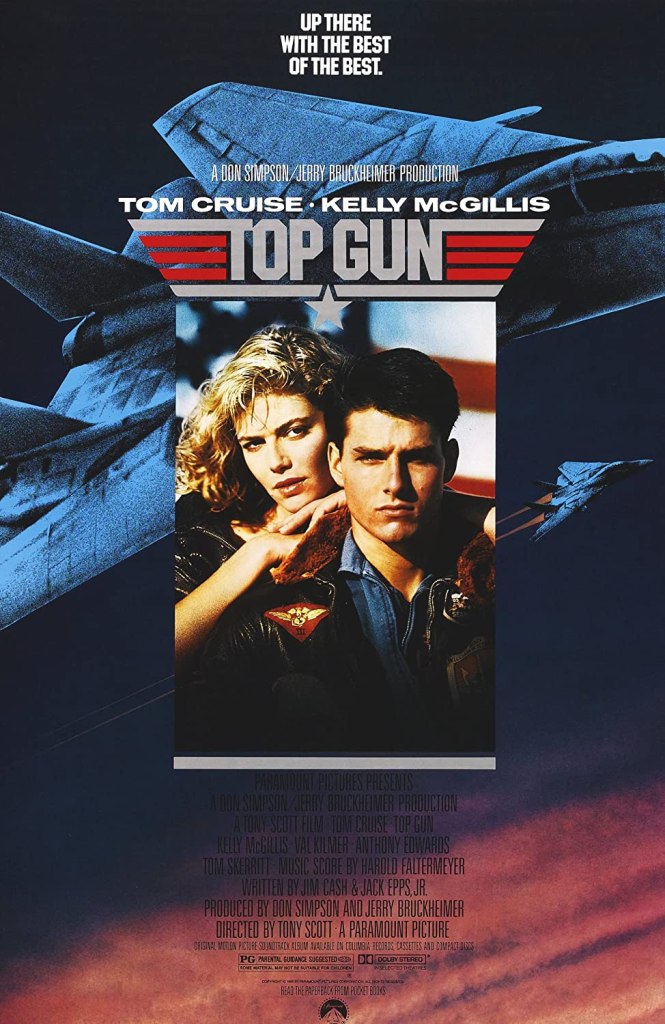
“I feel the need: the need for speed!” Those words lit up mid-80s cinema screens with one of the biggest hits of the decade. Top Gun is still one of Cruise’s most iconic films, its blasting rock-and-roll soundtrack, beautifully backlit romance and cocksure go-getting self-confidence making it one of the definitive Reaganite 80s films ever made. Its legacy is so all-consuming, it’s always a surprise when you sit down to watch it what a fundamentally average it is.

Its plot, such as it is, can be summarised thus: Tom Cruise cockily flies planes and romances Kelly McGillis until Goose dies. Then he flies planes with the same level of skill but slightly more humility and commits to Kelly McGillis. It all takes place in TOPGUN, the navy’s dog-fight training school for elite pilots. Cruise is Pete “Maverick” Mitchell, super-confident best-of-the-best. Kelly McGillis is the astrophysicist and civilian instructor on the course whose heart melts for Tom’s boyish charms. Anthony Edwards is the doomed Goose (he might as well have a skull and crossbones hanging over him – he’s even got a loving wife and son back home). Val Kilmer is Cruise’s rival pilot, super-professional “Iceman”. The training is fast-paced, macho and culminates in a clash with a (conveniently unnamed) country that definitely isn’t the USSR.

There are three things undeniably great about Top Gun. The songs from Kenny Loggins and Berlin are top notch, full of soft-rock sing-along bombast. Scott shoots the hell out of scenes and the sun-kissed beauty framing the various airplanes and aircraft carriers is superb. With its fetishistic worship of the manly glory of the navy and its equipment, the film had full military backing, a huge boon it exploited for wonderfully executed scenes of dogfights and faster-than-sound planes (Scott even paid $25k to get an aircraft carrier to change course – writing a cheque there and then – so a sunset shot would look better). And of course there is Tom Cruise.

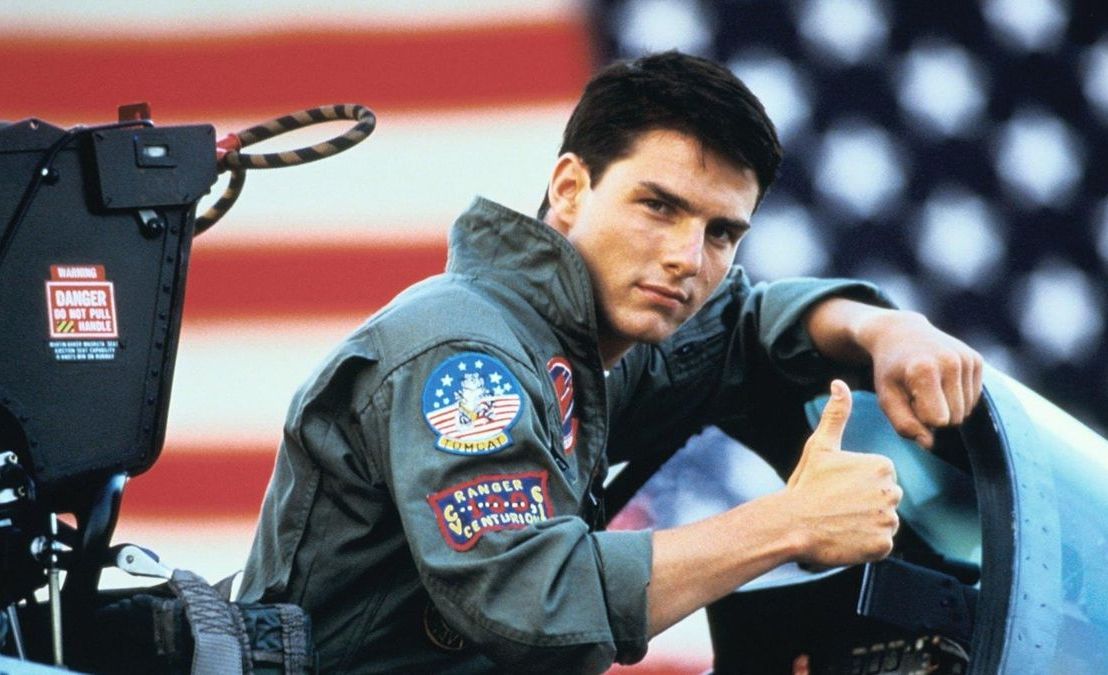
Top Gun is the foundation stone in the Church of Tom Cruise, defining a persona Cruise would effectively riff on for huge chunks of his career. Pete Mitchell is so cocksure he’s even called Maverick. But, as well as being arrogant and over-confident, he’s preternaturally skilled, boyishly enthusiastic, strangely vulnerable, yearns for affection, wins people over with a grin and goes through a crisis of confidence that sands down his negative qualities while never touching his courage, skill and likeability. Cruise cemented his eye-catching charisma and relatability: audiences wanted to be him or be with him. A huge chunk of its massive success is down almost exclusively to what a star Cruise is and how easily he makes this hackneyed stuff work.

The rest is a bizarre mix of half-formed plot ideas, weakly sketched characters and a plot so shallow it almost doesn’t deserve the name. Top Gun is all about a cool guy flying planes accompanied by some excellent songs. There is no depth to its character exploration. There is a dim suggestion Maverick needs to mature (with Goose as the sacrificial lamb to prompt that development) but it’s barely explored. It has no shrewdness in its look at the risk-taking intensity of flying or the type of personalities it might attract. The training is awash with familiar tropes: hotshots, grizzled trainers (two of them in Skerritt and Ironside!) mixing growls with behind-his-back grins at Maverick’s pluck. His rival is the anthesis of Maverick, but (gosh darn it!) he eventually learns to respect him.

The central romance seems thrown in because a film like this needs it – it’s very much An Officer and a Gentlemen in the skies. Maverick’s true emotional love story is with Goose – this surrogate brother/uncle providing Maverick’s only friendship and the vicarious family this Cruise archetype character secretly longs for. But gosh darnit, it’s Hollywood so gotta have a beautiful woman for our hero to manfully seduce. Poor Kelly McGillis looks rather uncomfortable in her ill-shaped and poorly developed character, while her love scenes with Cruise are acted with a slobbering over-intensity that suggests both of them are trying too hard (he constantly kisses her tongue first, which is gross). Perhaps they wanted to really go for it in the hope viewers would overlook the obvious homoerotic tensions of most of the film.

Oh those tensions! Top Gun drips with gleaming, tanned half-naked men squaring up to each other in dressing rooms – and that’s not even mentioning the infamous volleyball sequence (where only Edwards, bless him, wears a t-shirt). Characters forever utter variations on “I’ll nail his ass” lines. Iceman and Maverick take part in a homoerotic-tension fuelled rivalry that culminates in an explosive dog-fight climax and a loving embrace on the deck of an aircraft carrier.

It’s hard to tell how much all this was a joke, and how much Scott, Bruckheimer and Simpson just didn’t notice in the middle of all their glistening, back-lit, fast-paced shooting of military muscle (in every sense) how gay it might look. Maybe they thought people wouldn’t notice either amongst all the military machinery (this must be Michael Bay’s favourite ever film). Top Gun’s aerial footage is super impressive (though it is funny noticing now that famous daredevil Cruise clearly does all his cockpit shots in front of a green screen) even if the whole film feels like an MTV video to promote its knock-out songs.

Top Gun is still fun, even if that’s mostly mocking the nonsense and emptiness it’s built upon. Nothing much really happens, its plot so flimsy it barely stands up against the Mach-9 force of its planes. But it’s got Cruise at his blockbuster best – and when you’ve got that you don’t really need anything else. It’s poorly written, junkfood trash all framed in a fetishistic beauty – but it’s sort of goofy, stupid, empty fun.

Ran (1985)

Ran (1985)

Kurosawa’s epic version of King Lear places style over substance, but offers many glorious visual treats

Director: Akira Kurosawa

Cast: Tatsuya Nakadai (Hidetora Ichimonji), Akira Terao (Taro Ichimonji), Jinpachi Nezu (Jiro Ichimonji), Daisuke Ryu (Saburo Ichimonji), Mieko Harada (Lady Kaede), Yoshiko Miyazaki (Lady Sué), Mansai Nomura (Tsurumaru), Hisashi Igawa (Kurogane), Peter (Kyoami), Masayuki Yui (Hirayama Tango)

An ageing Lord lays down the burdens of office to his three children. Two flatter the old man: the third tells him he’s a fool. The lord banishes the third child and treasures the other two, who betray him tipping him into a lonely madness, screaming on a moor. Sound familiar? Kurosawa takes Shakespeare’s King Lear and transposes it to the final days of Samurai Japan. Lear becomes Hidetora (Tatsuya Nakadai) and his daughters become sons, Taro (Akira Terao), Jiro (Jinpachi Nezu) and Saburo (Daisuke Ryu), with the latter two taking on Hidetora’s land.

Ran translates as “Chaos”. That’s really what the film is about. Kurosawa’s Lear is strikingly nihilistic. Anything from the original play that could be called remotely optimistic – there is no good servant figure, no sensible Albany and no Edgar caring for, and avenging, his blinded father – is removed. Instead, Hidetora’s decision leads to unrelenting death and destruction, a carnival of bodies piling up in burnt out, ruined castles. This is Lear, tinged with the sort of Beckettian-wasteland theorists like Jan Kott would love: bleak and hopeless with only suffering at its heart.

As you expect with Kurosawa, its filmed with poetic beauty. The more frantic, Western-action, stylings of Kurosawa’s youth are gone, a victim perhaps of his auteur reputation. Ran is a self-consciously important film, an epic taking place in a series of stately medium and long-shots (I can barely remember more than a few close-ups), in luscious Japanese countryside, peopled by hundreds of colour-coded extras. Kurosawa’s fault is that he sometimes focuses on this, at the cost of the thematic complexity of Lear.

But what he certainly gets right is the bleakness at its heart. Kurosawa is not remotely seduced by any glamour in Hidetora. Played by Tatsuya Nakadai in a deliberately classical noh­-style (full of elaborate poses and declamatory, plot-heavy dialogue) designed to stress how out-of-touch he is, compared to the more modern styles of the other actors. A vain, proud man who expects to be obeyed without question, Hidetora is never a truly sympathetic figure until his final moments.

Everything we learn about him hammers home his past of violence and brutality – he wiped out of the families of both of his daughters-in-law to steal their lands, he blinded Ran’s prince-turned-beggar Tsurumaru, who wanders the wilderness and gives Hidetora shelter. Falling from power, he’s as stubborn and arrogant than ever, leading his retainers to their death in an ambush. There is none of the “very fond, foolish old man” about him (there isn’t much of that about Lear either), just a tyrant who brings himself low.

Hidetora’s greed has also introduced a serpent into his own nest. Many have seen Taro’s wife Lady Kaede (Mieko Harada) as a Lady Macbeth figure, but really she’s a sort of Edmond or Iago. Seductive, vengeful and interested only in furthering the chaos, she lives in her murdered father’s castle, married to the son of the man who killed him. She schemes to turn both brothers against each other, seduces Jiro and pushes him to murder his wife. Using her body and her brain, she works to destroy the clan, her hatred motivated by Hidetora’s past cruelty.

Chaos is the perfect time for her schemes to take hold. Kurosawa’s setting of Ran near the end of the Samurai era, adds an additional blood-tinged brutality to the film’s battles. This was the time when the Samurai were learning their swords and arrows were poor defence against muskets. The battles are massacres: massacres of people fighting two different kinds of war. One is that of guts and honour: another the brutal long-distance finality of the bullet. Samurai are mowed down in their dozens on futile charges, while two of Hidetora’s sons are shot down from a distance, never seeing their killer’s faces. It’s a million miles from the traditional boar-hunt that opens the film – and it’s a world none of the characters manages to adjust to.

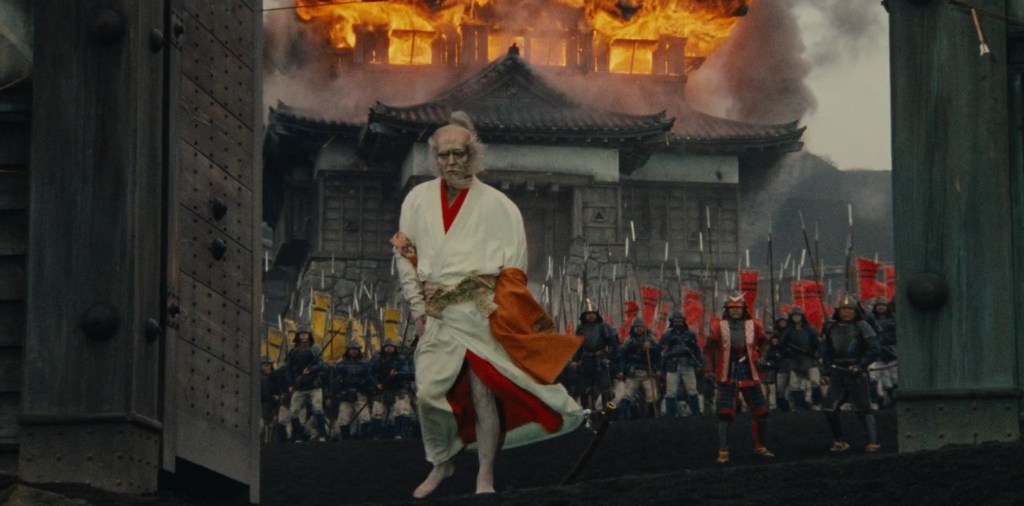
The violence of these battles is the central touch of mastery in Kurosawa’s epic. A whole castle was built – out of plywood – solely so it could be burned down during the pivot sequence at the centre of the film. Hidetora’s last castle is surprised by the armies of both sons, whose soldiers spray it with a never-ending stream of bullets and fire arrows. Playing out in silence under a haunting score, this is a chilling showpiece for Kurosawa’s visual mastery, a terrifyingly nihilistic view of the horror and destructiveness of conflict.

Inside Hidetora’s men are ripped apart or punctured like pin cushions, leaking gallons of crimson blood. His harem commits seppuku. The castle burns down around him. All while Hidetora sits in stoic disbelief at the top of a tower, his connection with reality collapsing. He eventually leaves the castle – walking through the parting invading forces (a shot that could only be attempted once as the set literally burned down around him) and out of the smoking gates. It’s an extraordinary sequence, the finest in the film: wordless, poetic and terrifyingly, hauntingly, brutal.

From here, Kurosawa’s Ran embraces the bleakness of Lear: Hidetora loses all trace of sanity, rages in self-loathing in the same fields he lorded over in the film’s opening sequence, is reduced to pathetically begging for food from the man he blinded and ends the film cradling the body of his murdered son. Around him his fool – an extraordinary performance from Japanese variety performer Peter – mocks his actions and tells bitter jokes about the savagery of the world while despairing and raging at the horrific position he has been reduced to in caring for his master.

Kurosawa embraces that bleakness: but how much does of Shakespeare’s depth does Kurosawa grasp? I’m not sure. In stressing the cruelty and madness of Hidetora, he robs him of Lear’s growing self-realisation about the emptiness of power and his own failings as a ruler. Hidetora is a two-dimensional character, as are most of the others. Kurosawa’s simplification of Lear removes the destructiveness of fate, the grotesqueness of chance and the punishments of loyalty (there is no Gloucester character, while the Kent figure is largely sidelined – both I feel is a real loss).

In making Ran, Kurosawa focused on two things: a depressingly post-Nuclear age vision of the world as a wasteland in waiting, and the pageantry of grand-settings and beautiful imagery. Compare Ran to the faster-paced dynamism of his earlier films (Seven Samurai may be nearly as long, but it doesn’t feel like it compared to the slow-paced Ran). There is a self-important artiness about Ran: it’s more stately style feels like Kurosawa showing he could do Ozu as well as he could Ford, while it’s indulgent run-time (there are many moments of near-silent nihilistic wilderness, that add length and import but not always depth) can test your patience.

Ran is basically a simplification of Lear that takes the core of the story, strips out many of its themes and contrasting sub-plots, and focuses on a single message, of man’s inhumanity to man. In doing that it loses the scope of a play that astutely looks at the personal and the political, the intimate and the epic, that understands the self-deceiving flaws of good and bad men. It’s large and important, but it’s not as powerful a tragedy as Lear because its fundamentally a simple film.

Which is not to say it is a bad film. But it is to say that Kurosawa had perhaps become seduced by his status as a legendary “Great Director” into believing that long and beautiful were synonymous with quality and importance. Ran is a fascinating and chilling film, with many striking and haunting moments. But it also misses some of what made its source material great, and it’s a triumph of moments and visuals than it is of intellect and depth.

Black Hawk Down (2001)

Black Hawk Down (2001)

Ridley Scott’s immersive combat film is politically simple but one of the great combat films

Director: Ridley Scott

Cast: Josh Hartnett (SSG Matt Eversmann), Ewan McGregor (SPC John Grimes), Eric Bana (SFC Norm ‘Hoot’ Gibson), Tom Sizemore (LTC Danny McKnight), Sam Shepard (General William F Garrison), Ron Eldard (CWO4 Michael Durant), William Fichtner (SFC Jeff Sanderson), Jeremy Piven (SW4 Clifton Wolcott), Ewen Bremner (SPC Shawn Nelson), Gabriel Casseus (SPC Mike Kurth), Hugh Dancy (SFC KURT Schmid), Jason Isaacs (CPT Mike Steele), Tom Hardy (SPC Lance Twombly), Orlando Bloom (PFC Todd Blackburn), Nikolaj Coster-Waldau (MSG Gary Gordon), Johnny Strong (SFC Randy Shughart)

On 4 October 1993, the US won a pyrrhic victory supporting UN efforts to prevent genocide in the Somalian Civil War. A mission in Mogadishu to capture the lieutenants of rebel leader Mohamed Farrah Aidid collapsed into a desperate overnight street battle as Aidid’s forces rose up en masse (up to 4,000 of them) in an attempt to cut off and wipe out the c. 160 US troops.

Although the majority escaped, it was one of the most costly American operations since Vietnam, with the loss of 18 dead and 73 wounded and two Black Hawk helicopters shot down. As many as 2,000 Somalians were also killed. Pictures of the bodies of American soldiers dragged through the streets by Somalian rebels led to a major realignment of US foreign policy, with a reluctance to join future peace keeping operations (most notably the Rwandan genocide).

This is bought to the screen in a virtuoso directorial achievement by Ridley Scott, one of the most immersive and gripping war films ever made. Black Hawk Down doesn’t shirk on an inch of the war experience. Combat is loud, sudden, all-consuming and a barrage on the senses. It’s scary, confusing and always unforgiving. Mud, blood and dirt are flung into a camera that runs through streets alongside the soldiers, embedded with them under siege. The slightest lack of focus or mistake is punished by horrific injury or death. The battle is a nightmare of confusion and desperate improvisation in which neither side (especially the Americans) really knows what’s going on.

It’s not surprising they don’t. The film expertly demonstrates how a multi-approach plan (helicopters delivering ground forces, an armed convoy to collect prisoners) was effectively a rashly planned house of cards, which collapsed when the hornet’s nest of an uncontrolled city, crammed with thousands of potential hostiles, roadblocks and a prepared and dedicated enemy (willing to suffer a level of loss the Americans were not) was unleashed. Ground forces are stranded, helicopters shot down, the exposed convoy becomes a slow-moving hospital, all under constant fire in a dusty, urban centre where every single civilian could be a enemy combatant.

Scott shoots and edits this with pulse-pounding intensity, aided by the dizzying camera work of Sławomir Idziak and the high-octane cutting of Pietro Scalia, whose work grips you by the throat and never lets go. It’s a “grunt’s-eye” view of the war, that puts the viewer very much in the trenches with the soldiers. We pretty much join them running through gauntlets of bullets, ducking into foxholes and desperately trying to stay alive. Scott’s work is outstanding here, a brilliant depiction of the chaos of battle in which events are both intimidatingly out of control but also crystal clear to the audience, assembled with a never-lets-up energy leaving the viewer tense and breathless.

As Eric Bana’s fiercely professional Hoot says “it’s about the man next to you”. That’s very much what Black Hawk Down is about. There’s very little context about the American operation in Somalia, the Somalian people, the impact on long-term American politics…  The film believes the whys and wherefores are less important than protecting the lives of your colleagues.

Argument has raged about whether Black Hawk Down is pro-war or not. I’m not convinced it is. Can a film which shows soldiers maimed, disfigured and literally torn in two, really be a celebration of war? But, what it clearly is, is pro-the American fighting man. The training and expertise of these soldiers – trained to make every shot count and keep their cool in terrifying situations – is crucial to their survival. (The scattergun indiscipline of the Somalian rebels is noticeable by comparison – and it’s fair to note that Black Hawk Down gives very little focus to the Somalians at all, other than as a faceless hostile mass).

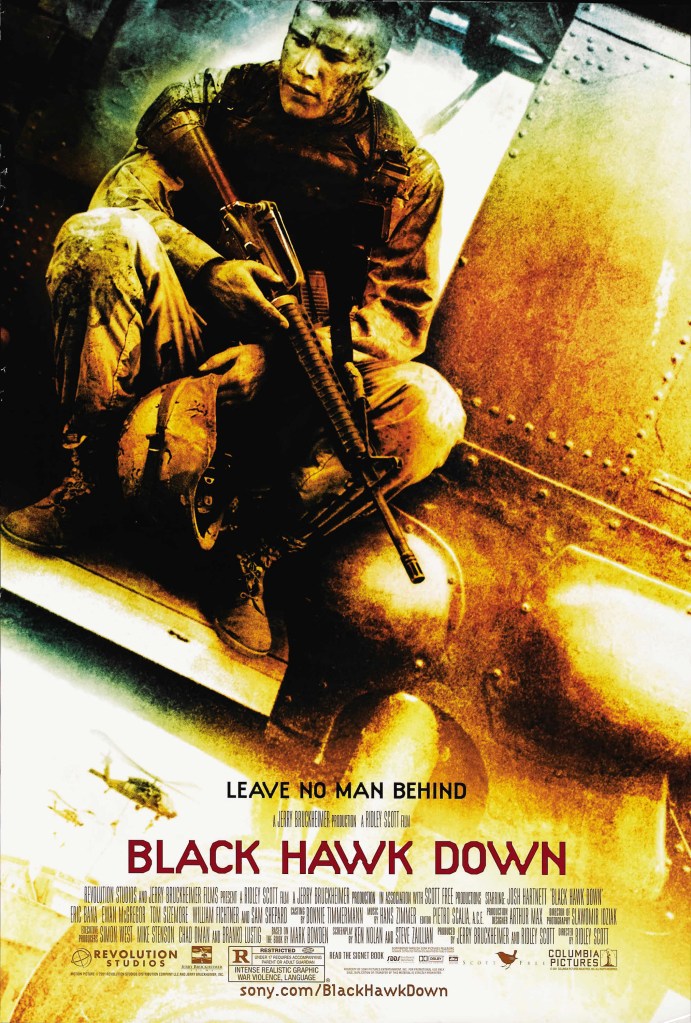
The film is in awe of the soldiers’ willingness to sacrifice themselves for each other: the dramatization of Gary Gordon and Randy Shughart’s request to be dropped in to provide some sort of cover to one of the downed Black Hawk pilots (a request they know is a suicide mission) exemplifies “leave no man behind” bravery. Black Hawk Down is a tribute to soldiers.

Interestingly though, that also means it’s a film where characters are more important for what they do rather than who they are. We learn very little personal information about any of them. Hartnett’s newly-promoted SSG has sympathy for the Somali people and is nervous about his first command mission. McGregor’s admin officer is unsettled by his first field operation. Sizemore and Isaacs are professional officers, executing orders to the best of their ability; Fichtner and Bana experienced Rangers, samurai trained to adapt and improvise. But their personalities are only hooks to hang their deeds on. Each melts into the large cast as needed. Black Hawk Down is the triumph of the unit – be that fighting together or some member volunteering to die to help protect others.

It is fair to argue the film should have done more to contextualise events. Black Hawk Down focuses so much on celebrating the bravery of soldiers, it skips any political impact: it’s not made clear in the end captions that the US effectively withdrew from its peace-keeping responsibilities for years afterwards (only shocked back into it by 9/11). It never mentions the UN were slow to respond as they had been caught in an almost identical disaster a few weeks before (a lesson the US didn’t bother to learn from). It never mentions the cost of non-intervention in places like Rwanda. It never explores how these events – and American complacency, not least in the committed-but-unengaged soldiers – were a step toward a terrorist world that would culminate in 9/11.

Scott was aiming to make an immersive film. Perhaps his work on films like Body of Lies (and even Kingdom of Heaven) later was about adding more shading and depth to his presentation of world affairs (and critique of American policy). But, in its intent, Black Hawk Down is a triumph, one of the most unrelenting and compelling combat films ever made. You can argue it turns the Somalis into bogey men fighters – but it’s trying (rightly or wrongly) to be a representation of a single military action, from a single side’s perspective. And there is no doubt this is one of Scott’s finest achievements – and one of the great war films.

La Grande Illusion (1937)

La Grande Illusion (1937)

Friendship, class, warfare and change are explored superbly in Jean Renoir’s masterful war film

Director: Jean Renoir

Cast: Jean Gabin (Lt Maréchal), Marcel Dalio (Lt Rosenthal), Pierre Fresnay (Captain de Boëldieu), Erich von Stroheim (Major von Rauffenstein), Dita Parlo (Elsa), Julie Carette (Cartier), Gaston Modot (Engineer), Georges Péclet (Officer), Werner Florian (Sgt Arthur), Jean Dasté (Teacher)

“Cinematic Public Enemy Number 1”. That’s what Joseph Goebbels called Renoir’s La Grande Illusion on its release in 1937. It’s easy to think it’s because of its pacifist stance – the idea that war itself is the Grande Illusion – but perhaps it’s because Renoir’s masterpiece isn’t easy to dismiss as polemic. It’s intelligent enough to present soldiers who believe in fighting a war on different levels, but don’t see that as a reason to hate the enemy. La Grande Illusion is as much about the passing of an era and the important links that bring us closer together rather than tear us apart. And that of course was anathema to a Nazi regime, intent on crushing freedom of any sort in Europe.

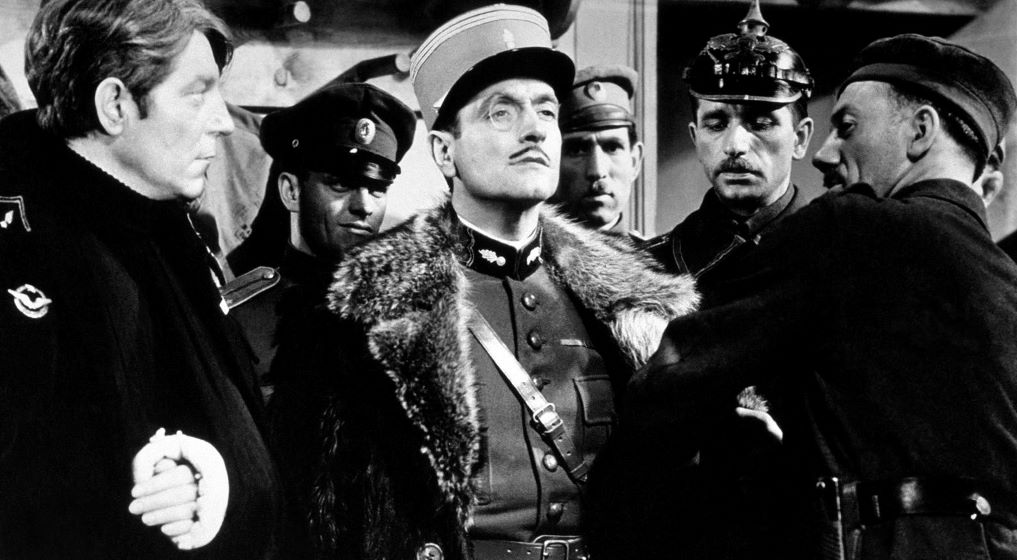
Renoir’s film is one of the foundational war films, the first great POW drama. Two French officers are shot down while flying a reconnaissance mission over enemy lines. One is working class pilot Lt Maréchal (Jean Gabin), the other aristocratic Captain de Boëldieu (Pierre Fresnay). Moving from camp to camp, the two finally find themselves in a camp run by the German officer who shot them down, aristocratic Major von Rauffenstein (Erich von Stroheim). Von Rauffenstein and de Boëldieu have more in common with each other than the soldiers on their own side – though von Rauffenstein’s Victorian, romantic view of the world differs from de Boëldieu pragmatic awareness of the advance of change. When Maréchal and fellow prisoner, Jewish officer Rosenthal (Marcel Dalio) plan an escape, will de Boëldieu help them?

La Grande Illusion is a beautifully thought-provoking and gorgeous piece of film-making, a wonderful and hugely influential film. (It inspired, among others, The Great Escape with its tunnel digging escape exploits and Casablanca’s famous La Marseillaise scene). It’s a pacifist film, masquerading as a war film – but one where we never see any fighting. A polemic would have shown us the horrors and slaughter of the trenches. La Grande Illusion shows us men proud to be soldiers, praises their bravery, centres the cavalry-style dignity of the air-force and features just one death. What makes it more pacifist is the lack of anger or rage of its characters, their lack of rancid nationalism.

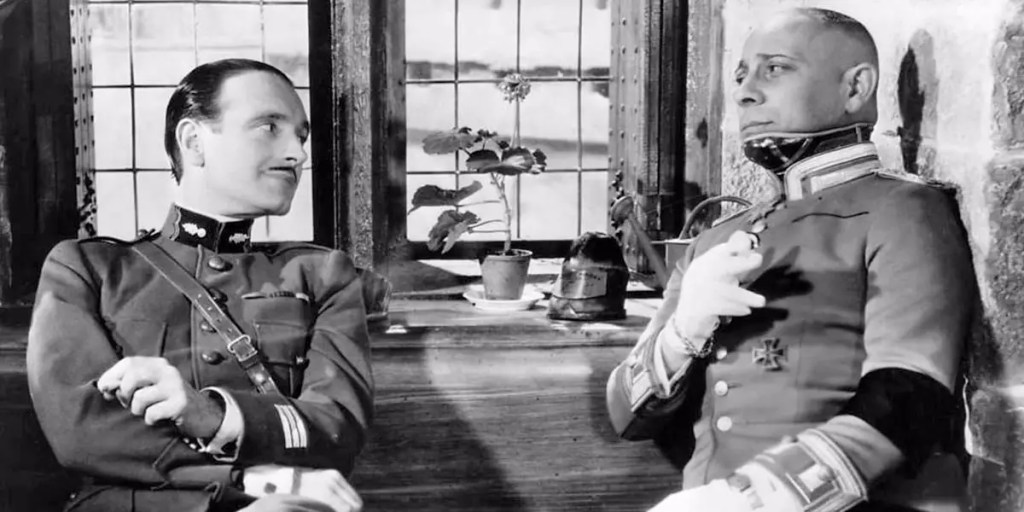
This is partly because the film explores a war at the cusp of societal change. The nineteenth century era of ‘gentleman’s war’ is passing away, as are the old societal hierarchies. Maréchal and de Boëldieu are on the same side, but when they are shot down it’s striking that they have more in common with their supposed enemies. Invited to a commiseration dinner by the victorious German pilots, the aristocratic de Boëldieu bonds with flying ace von Rauffenstein (they speak in English together, something that immediately separates them from the others, about horse racing) while Maréchal is delighted to find a German working-class pilot was, just like him, a car mechanic in Marseilles. There is no hatred here, just mutual respect.

On arrival in the camp these class differences are magnified. Maréchal (the magnificently charismatic Jean Gabin) fits in far easier with the other French prisoners, all of them either professionals (engineers, teachers and the like) or outsiders, like Jewish officer Rosenthal (a heartfelt Marcel Dalio). Maréchal is inducted, enthusiastically, into their escape attempts (including the tunnel digging) as well as the social events, like the cabaret shows. de Boëldieu is a different case: there is a faint air of distrust (one prisoner even questions whether he should be told about the tunnel), and he gently refuses to take part in any cabaret and indulges the escape attempt through a sense of fair play.

But de Boëldieu is aware his world is moving on. Superbly played by Pierre Fresnay, with a wry, breezy upper-class distance that masks an acute insight, de Boëldieu knows the future belongs to commoners like Maréchal. His world – and his counterpart von Rauffenstein – is one of horse-racing, society dinners and grand houses, where a gentleman never lets a person’s nation affect his perception of them. He takes part in the war as a final grand gentleman’s sport, but also knowing that a glorious death is “a way out” of the difficult social changes that will follow.

It’s an understanding not shared by von Rauffenstein, played by an iconic preciseness by Erich von Stroheim. Von Rauffenstein respects the word of a gentleman (during a search, he tears apart the beds of every prisoner but de Boëldieu, taking his word for it that he has no contraband), sees war as a glorious expression of masculinity but never something that should come between friends. Locked within a neck brace, his posture stiff and his hands forever in trapped in tight white gloves, there is more than a hint of the closet to von Rauffenstein – and his faintly homoerotic attraction to de Boëldieu, who he sees as a natural brother-in-arms is both sad and slightly touching.

Where do de Boëldieu’s loyalties lie though? To his social equal and contemporary with whom he shares a lifetime of upperclass pursuits, or his fellow countrymen with whom he shares nothing? It’s the core of the second act of the film, as Maréchal and Rosenthal plan their escape and ask for de Boëldieu’s help. Goebbels was no doubt also unhappy with the presentation of Rosenthal. Sure, he fits many of the Jewish stereotypes: he’s a rich foreigner whose family has bought up French land. But he’s also decent, kind, shares his food and sheds a tear when Maréchal is released from solitary confinement. Maréchal and the others aren’t above befriending him despite his Jewishness, but here Rosenthal is a hero.

He’s also part of the melting pot of characters who, though they have moments of prejudice, are fundamentally all in it together. A black French prisoner goes more or less uncommented on. In solitary confinement, a distraught Maréchal is bought a harmonica by a friendly German guard, which he then delightedly plays. The French officers join in a mutually teasing relationship with an officious German guard. The various nationalities in the prison camp all muck in on their cabaret show (and escapes – a blackly comic language barrier prevents a departing Maréchal from informing a newly arrived British officer there is an escape tunnel finished and ready to go in the camp). Despite the world is tearing itself apart, but that’s not a reason for people to hate each other.

Indeed, on the run from the prison camp, Rosenthal and Maréchal find refuge on the farm of a German mother, Elsa, and her daughter, her husband having been killed in the war. (War victories get remarkably little airtime in La Grande Illusion – the famous singing of Les Marseillaise after Maréchal announces a French victory is followed in the next scene by the Germans winning it back. In the camp the soldiers grow increasingly cynical about the shortage of promised easy victories). Maréchal and this woman form a romantic bond – with Rosenthal as translator – that again transcends national boundaries. Can you imagine Goebbels being thrilled at that paragon of Aryan maidenhood, falling in love with a lunking Frenchman whose fellows killed her husband?

Neither would he be thrilled by von Rauffenstein’s desperation to save the life of de Boëldieu, the man abetting an escape. Dancing through the POW castle, pipe in hand, literally leading the guards a merry dance, de Boëldieu stage-manages his own death to leave a legacy and avoid facing the future he knows he has no place in. There is a fatalism about de Boëldieu not present in any other character: and certainly not von Rauffenstein who can’t imagine his world is ending.

But life will go on for others. Every character has a longing for life outside of the demands of war. During the cabaret, a French officer dresses (convincingly) in drag: there is something touching about the stunned, longing silence that falls across these men as they stare upon the closest thing to a woman any of them have seen in years. Maréchal plans for a future with Elsa, Rosenthal one of acceptance in his French home. War is an encumbrance, but one people understand is a burden on all regular people.

The film is beautifully made by Renoir, who uses a series of striking long-takes and intricate camera moves to create a feeling of time and place that is completely convincing, but also hugely engaging and immersive. Characters constantly stare out of windows, stressing their isolation, or are framed seemingly encased by their surroundings. Leaving aside the technical achievements and artistry, La Grande Illusion is a heartfelt, complex and moving film that challenges and questions as much as it feels regret for a time being left behind. By avoiding polemic, and stressing simple humanity and the madness of hate, it’s one of the most powerful anti-war films ever made.

Clear and Present Danger (1994)

Clear and Present Danger (1994)

Tom Clancy’s door-stop thriller is turned into an involving conspiracy thriller that makes masterful use of Harrison Ford

Director: Philip Noyce

Cast: Harrison Ford (Jack Ryan), Willem Dafoe (John Clark), Anne Archer (Dr Cathy Ryan), Joaquim de Almeida (Colonel Felix Cortez), Miguel Sandoval (Ernesto Escobedo), Henry Czerny (Bob Ritter), Harris Yulin (James Cutter), Donald Moffat (President Bennett), Benjamin Bratt (Captain Ramirez), Raymond Cruz (Domingo Chavez), James Earl Jones (Jim Greer), Tim Grimm (Dan Murray), Hope Lange (Senator Mayo)

Tom Clancy’s Jack Ryan has always been the All-American hero (his slimy, besuited CIA rival even frustratedly snarls “you are such a Boy Scout”). Ryan is almost too-good-to-be-true: pure as the driven snow, incorruptible, a success at everything he does and a devoted family man. What chance does someone like that have in Washington? In Clear and Present Danger, Ryan is dragged into the War on Drugs, unwittingly becoming the front man for an illegal military assault team against the Columbian cartels, ordered by a US President on a vendetta for the death of a friend. When the truth comes out, you’ve got one guess who takes it on himself to save the soldiers who are hung out to dry by the suits in Washington.

We know he’ll do the right thing as well, because he’s played by Harrison Ford. Ryan is basically a blank slate as a character, so Ford’s straight-as-an-arrow everyman decency does most of the heavy lifting to establish who he is. As an action hero, Ford has the chops but his real strength is his ability to look frazzled, scared and muddling through – rather like the rest of us would. Ryan gets in some real scrapes here, from dodging missiles in an attack on a diplomatic convoy to desperately fighting for his life in a timber factory. Ford’s strength as an actor is to be both authoritative and also vulnerable – his willingness to look scared but determined works wonders.

Clear and Present Danger also gives plenty of scope for Ford to employ his other major empathetic weapon: the clenched jaw and pointed figure of moral outrage. He does a lot of both here, a central scene seeing Ryan confronting besuited rival Ritter (played by a weaselly, bespectacled Henry Czerny, the polar opposite of Ford’s clean-cut everyman-ness) earnestly telling him he broke the law and is heading to jail (laughed off). There can’t be an actor more skilled at getting you to invest in someone, to both simultaneously worry about him while being confident he will do the right thing. It’s a rare gift, and Clear and Present Danger exploits it to the max.

Ford is the centrepiece – and main strength – of a competent, well-made conspiracy thriller, directed with a professional assurance by Philip Noyce. It makes a good fist of translating Clancy’s doorstop novel – with its huge complexities – to the screen (although you might need a couple of viewings to work out the twisty-turny, backstabby plot, where wicked schemers turn on their own schemes). Noyce has a special gift for keeping dense technical and exposition scenes lively. At one point he cross-cuts a parallel investigation into a fake car bombing between Ryan (who flicks doggedly through textbooks) and his Cartel rival who employs gadgetry and computers. Plot heavy scenes like this are well-shot, pacey and capturing plenty of reaction shots, even if they only feature characters messaging each other on clunky 90s computers or walking-and-talking in shadowy metaphors.

Clear and Present Danger also successful juggles its Washington shenanigans, with parallel intrigue in its Columbia setting. There ruthlessly charming Cortes (played with a wonderful cocksure suaveness by Joaquim de Almeida) is scheming to takeover his boss’ (a blustering Miguel Sandoval) operation. These plot unfold both together and in parallel, allowing for a little bit of neat commentary contrasting the cartels and Washington. The film manages a bit of critique of America’s thoughtlessly muscular intrusion into the affairs of other countries, with a President turning a blind eye after passing on implicit instructions (but still with a boy scout hero who will sort it all out).

Noyce also pulls out the stops for a couple of brilliantly executed scenes. Great editing, sound design and committed acting makes a scene where Luddite Ryan races to print off incriminating evidence from a shared drive while technically assured Ritter deletes the files, edge-of-the seat stuff. Never before has racing to fill a printer with paper seemed more exciting.

That pales into significance with the film’s centre piece, a genuinely thrilling Cartel ambush on a US diplomatic convoy, with Ryan stuck in the middle. With perfect build-up – from James Horner’s tense score to the skilful editing – the attack (with Oscar nominated sound design) is hugely tense, leaves our heroes terrifyingly powerless and is flawlessly executed by Noyce and his crew. It makes the whole film a must watch all on its own.

It’s surrounded by several other well-handled action set pieces, featuring the Marines sent on a covert mission (and then hung out to dry). As the operation leader, Willem Dafoe plays very successfully against type as a (ruthless) good guy, as Clancy’s other regular character, uber-fixer John Clark. Dafoe also has the chops to go toe-to-toe with Ford, and like de Almedia’s charmingly wicked Cartel-fixer also serves as another neat contrast to Ryan’s decency-with-a-fist.

The film is rounded out by a troop of reliable actors. Anne Archer has little to do as Ryan’s supportive wife, but Donald Moffat is good value as the shifty President (communicating both intimidating authority and Nixonian survival instinct), Harris Yulin perfectly cast as a President-pleasing apparatchik and Raymond Cruz as an ace but naïve marine sharp-shooter. Clear and Present Danger has few pretensions to be anything other than an involving thriller – but that also helps make it a very enjoyable one.

Belfast (2021)

Belfast (2021)

Kenneth Branagh pays tribute to his early years in Northern Island in this autobiographical film

Director: Kenneth Branagh

Cast: Jude Hill (Buddy), Caitríona Balfe (Ma), Jamie Dornan (Pa), Judi Dench (Granny), Ciarán Hinds (Pop), Lewis McAskie (Will), Colin Morgan (Billy Clanton), Michael Maloney (Frankie West), Lara McDonnell (Moira), Gerard Horan (Mackie), Conor MacNeill (McLaury), Turlough Convery (Minister), Olive Tennant (Catherine)

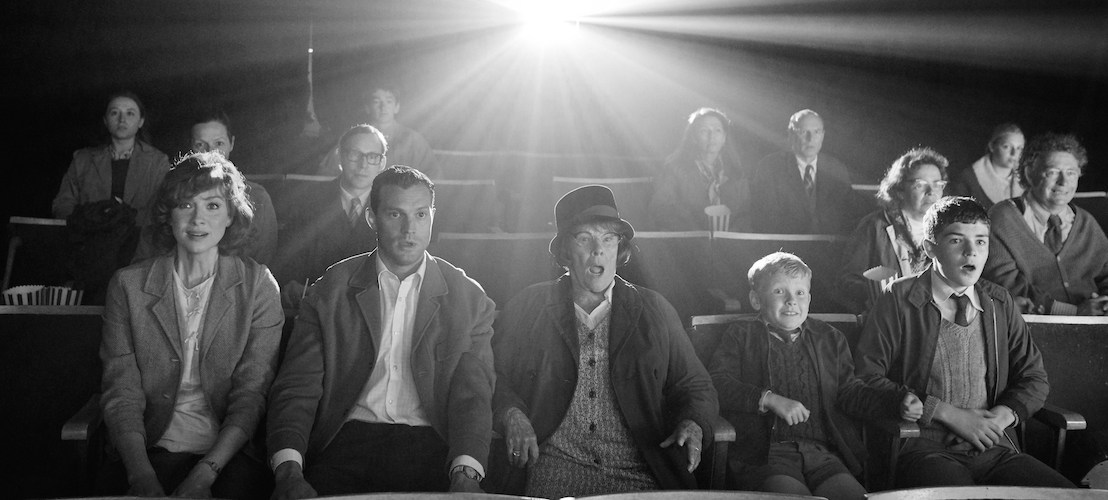
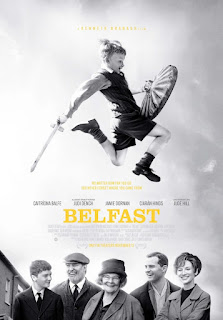
Directors making films about their childhood is a well-established sub-genre. Fellini got the ball rolling, a few years ago Alfonso Cuarón made his own black-and-white look at growing up in troubled political times in Roma and this year Pablo Sorrentino has released a film focused on his own teenage years in The Hand of God. Huge admirer of Kenneth Branagh as I am, I can’t deny he’s not a unique visionary in the vein of those filmmakers. But, Belfasthas a heartfelt, genuineness and a sweetness that verges just the right side of sentimentality and is a loving tribute not only to the city he grew up in but also to his parents, making it Branagh’s most personal project since In the Bleak Midwinter and possibly his finest non-Shakespeare film.

Branagh’s substitute is 9-year-old Buddy (Jude Hill), the child of a protestant family, living on a cross-community street in August 1969. His main concerns in life are friends, films, football and a classmate he has a crush on at school. But for his parents (Caitríona Balfe and Jamie Dornan), their worries are much more about the growing sectarian violence in the city. Pa has an offer of a job in England, which could bring them a new life. But it means the whole family leaving behind it everything it has ever known, including Buddy’s beloved grandparents (Judi Dench and Ciarán Hinds). As the city becomes more dangerous, what will the family decide to do?

If there is a memory piece Belfast reminds me of most, it’s John Boorman’s Hope and Glory. That film was true to Boorman’s memory, that growing up during the Blitz was also an exciting time, because as a child he never realised that death could be seconds away. It’s the same with Belfast. Branagh is keeps the film as much as possible from the child’s perspective. A child might be aware of the news playing on the TV, see the growing number of soldiers stopping and searching people on the streets and be wrapped up in riots, while never really understanding what exactly is going on.

The film has been unfairly attacked by some for not focusing on the accepted narratives of this era of Belfast’s history: misery, killing and brutality. What Belfast instead brings to the fore is the warm community. Streets where everyone knew your name, people sat outside their homes and chatted with neighbours, shared celebrations together and looked after each other. You can understand why it was such a wrench to leave this behind – even with soldiers patrolling the street. How scary it was for a person of any age – from Buddy to Ma, who has known nothing but Belfast her entire life – to even consider going to a place where no-one would know you and you would be an outsider.

Belfast is dedicated to those who stayed behind, those who left and all the lives who were lost. It’s a tribute to a community spirit and family, that has chimed with a great deal of people who lived in the city at the same time and place. The film is fundamentally hopeful because, under the violence and danger, it makes a plea – and demonstrates – that many people in Ireland just wanted to live their lives and didn’t care which church their neighbours went to. The opening few moments of the film is a snapshot of these halcyon days, kids from different communities playing together on the streets and their families gossiping and laughing together.

It’s shattered by the film’s first outburst of violence, as a Unionist gang attacks the street and hurl Molotov cocktails at the houses of Catholic residents – with Buddy, confused and terrified, caught in the middle and dragged into his house and safety by his frantic Ma. It’s a threat that will hang over the film for the rest of its runtime, embodied by Colin Morgan’s bullying enforcer, but only vaguely understood by Buddy – and considerably less important to him than whether he gets to sit next to the girl he has a crush on at school.

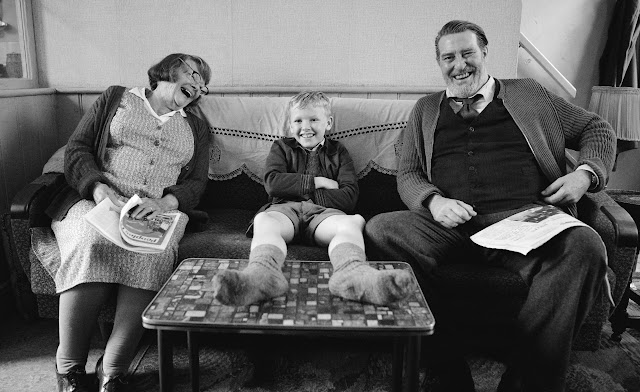
That crush is one of many things he gets advice on from his Grandad, played with a genuinely heart-warming twinkle by an Oscar-nominated Ciarán Hinds. Hinds is the picture of the perfect Grandad, wise, attentive, patient and full of homespun advice and wisdom – dialogue that Hinds brings to life with an expressive warmth. He’s paired to wonderful effect with Judi Dench (also Oscar-nominated) as Buddy’s Granny, who’s got a sharper tongue (and most of the funny lines) and has a cold-eyed realism about what it might be best for her son and his family.

You could check yourself and ask if Branagh is idealising his memories. But I think this is partly the point of the film. At several moments there is a slight air, not so much of fantasy, but of a childhood’s perception and memory being restaged. Jamie Dornan’s hard-working, caring Dad is frequently shot by Branagh in a way reminiscent of the Western heroes in the film buddy watches (High Noon in particular). A late confrontation between Dornan and Morgan plays out like a child’s romanticised memory of how something might have played out – as does a sequence where Dornan and Balfe sing and dance to Everlasting Love. I think Branagh is asking us to consider this might not be exactly what happened, but a fantasy tinged, child’s idealised memory of an event.

And Branagh’s film – shot in a luscious black-and-white – is told with a sharply edited pace and economy. It frequently allows us to see the ‘true’ situation in the background or on the edge of Buddy’s perception. Ma – beautifully played by Caitríona Balfe as grounded, moral but vulnerable and scared – has genuine worries not only about the violence but also the couple’s financial situation. There is an argument, and a later sad half-ultimatum, between Ma and Pa that we understand but Buddy is only vaguely aware is happening. Branagh’s film is full of half moments like this, where he trusts we are intelligent enough to see exactly what the child is seeing and also see more.

Branagh also draws a superb performance from Jude Hill as Buddy. This is a kid who is wide-eyed, natural, unforced and gets the balance just right between sweetness and a childish selfishness and vulnerability. There are real moments of terror and distress for Buddy, which are immensely well-done, and Branagh proves again there are few better directors of actors out there.

In among this there are some lovely moments where we see Branagh’s passion for the arts and film-making take hold. These are shown in splashes of pure colour: from clips of Chitty Chitty Bang Bang which an enraptured Buddy watches in the cinema, to actors performing A Christmas Carol in the Belfast theatre appearing in perfect colour. That’s not to mention touches of everything from Westerns to Star Trek to a shot of Buddy reading a Thor comic-book (sadly no Shakespeare).

Belfast is above all warm-hearted and loving tribute from a son to his parents and the impossible decisions they needed to take to give him opportunities in life they never had. Branagh’s script is crammed with some wonderful lines and plenty of hard-earned sentiment and the cast play each of these moments to perfection. It’s a passion project that really communicates its passion and shows how love, family and hope are universal. Cynics will sneer, but it’s a lovely film.

El Cid (1961)

El Cid (1961)

Epic history with just the right amount of seriousness among the scale and thrills

Director: Anthony Mann

Cast: Charlton Heston (Don Rodrigo Díaz de Vivar/El Cid), Sophia Loren (Doña Ximena), Herbert Lom (Ben Yusuf), Raf Vallone (García Ordóñez), Geneviève Page (Doña Urraca), John Fraser (Alfonso VI), Douglas Wilmer (Al-Mu’tamin), Frank Thring (Al-Kadir), Michael Hordern (Don Diego), Andrew Cruickshank (Count Gormaz), Gary Raymond (Prince Sancho), Ralph Truman (King Ferdinand), Massimo Serato (Fañez), Hurd Hatfield (Arias)

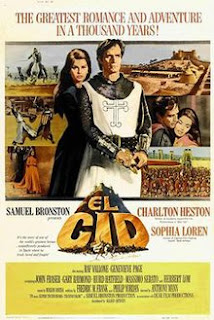
Its 11th century Spain, and the country is a mass of feuding Christian and Muslim kingdoms. All that could end if the invasion plans of warlord Ben Yusof (Herbert Lom) come to fruition. To defeat him, the Christians will need Muslim allies in Spain. But of course, none of their leaders have the vision to imagine such a thing: except Don Rodrigo Díaz de Vivar (Charlton Heston) who, after releasing rather than executing two Emirs, is known as “El Cid”. Problem is Don Rodrigo falls continually in and out of favour at court, not helped by his unbending principles. These principles even alienate the woman he loves, Doña Ximena (Sophia Loren), when Don Rodrigo regretfully kills her father in a duel. Will El Cid be able to unite the forces of Castille and his Muslim allies to defeat Ben Yusof?

El Cid was shot on location in Spain, and no expense was spared. Its location footage is beautiful and combined with some impressive sets. Producer Samuel Bronstein was determined to get the best money can buy. The ancient city of Valencia was rebuilt and thousands of soldiers from the Spanish army recruited into the two opposing sides. Thousands of costumes, pieces of armour and weapons were made. Bronstein’s dream cast was assembled (hilariously of course not a Spaniard or Arab among them), led by Hollywood’s biggest stars Charlton Heston and Sophia Loren.

What we get is an at times rather po-faced, sombre even slow epic that still succeeds because it is delivered with such absolute commitment and luscious beauty. Anthony Mann is not the most inventive of directors – and so much of this sort of film is really about producing rather than visionary direction – but he pulls together a collection of visual styles into something that feels wonderfully coherent and suitably dramatic. The castle interiors could have stepped out of Adventures of Robin Hood (Heston and Cruickshank even fight their duel on a winding staircase), the Spanish exteriors rival Ben-Hur and the medieval pageantry brings back memories of Ivanhoe.

It’s pulled together in a script that manages to juggle just about enough action – duels, fights to the death, ambushes, battles, sieges, murders – to sit alongside its earnest attempts to plead for a little love and understanding. Heston’s El Cid is radically ahead of his time, preaching messages of equality and arguing that anyone can kill but only a leader can grant mercy. It’s a film that refreshingly urges that there is more that unites us, than divides us. Yes, it casts Arab characters in most of the villainous roles – while the Christian opponents of El Cid all eventually see the error of their ways – but it still makes several Arab characters (especially Douglas Wilmer’s wonderful Al-Mu’tamin) pinnacles of honour and decency, far more so than most of the bitter and feuding Christians.

At the heart of the film is Charlton Heston, in possibly his most interesting and intelligent ‘epic’ performance. His El Cid is principled to the point of self-harming, but there is a little boy innocence to him that can’t seem to understand why he keeps landing himself in the shit. Duelling with his fiancée’s father, he genuinely can’t understand why he won’t stand down and let the matter rest. Later he marries Ximena with the sad-sack hope that she might remember why she loved him in the first place. He vainly tries to support both sides in the feud to succeed King Ferdinand, because he swore to support all the King’s children. It never occurs to him that Castille might turn down the assistance of the Muslim Emirs he’s recruited. He can understand military nuances, but can’t seem to find the way to translate this effectiveness into courtly politics. And he seems to know it.

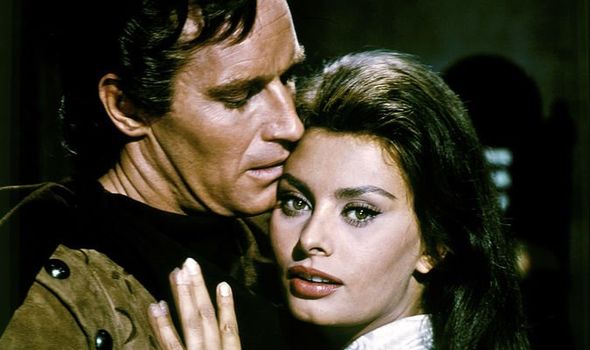
But we know he’s a good guy – so it’s also why we know Sophia Loren’s hatred for him won’t really last. To be honest the chemistry isn’t quite there between them – the two of them famously didn’t get on (Heston famously refused to look at her in many of the romance scenes, hence the odd side-to-side faces in several shots) – and the part of Ximena is incredibly thinly written (she changes her mind about Rodrigo seemingly on a sixpence). But you can’t argue with Loren’s charisma (and she looks ravishingly stunning here) or the force which she can act the hell out of these straightforward scenes (all shot in a few weeks, due to Loren’s availability and Borstein’s determination to get her for the role).

Besides she needed to be the goodie so we could have a dynamic Geraldine Page as the scheming villainous, the Princess of Castille scheming to support her brother Alfonso (a wonderfully fecklessly weak John Fraser), to whom she’s offering more than sisterly love. What chance does headstrong but not-so-bright Gary Raymond’s Sancho have against them? Elsewhere in the cast, Herbert Lom’s voice is used to superb effect as Ben Yusof (like all the actors playing Arabs he’s browned up) and Douglas Wilmer strikes up a wonderful bromance with Heston as an Arabic version of El Cid.

The film is long an often gets slightly bogged down in questions of politics and questions of succession that, at the end of the day, are less interesting than whether Loren will forgive Chuck or our long wait for that Muslim invasion. It is a very long wait: the film opens with Rodrigo a young man – by the time Ben Yusof arrives he’s an old one with two children. Enough events occur sprinkled through the story that it never feels too slow – and you have to admire its attempt at even-handed justice to all.

It culminates as well in a superb sequence covering the siege of Valencia, where all narrative threads are skilfully bought together towards a satisfying conclusion. Mann stages a handsome beach battle here and culminates the film in a long night of the soul that ends with El Cid riding into history in an ironically unique way. The film’s final act is an outstanding mix of epic themes and personal tragedy and loss, that brings the film to a superb finish.

El Cid takes itself seriously – I’m pretty sure there isn’t a joke in it – but it’s well made and acted with a great deal of flair, looks fabulous and never squeezes the life out of itself. As an example of Hollywood’s late epics, there are few that can match it.

Twelve O'Clock High (1949)

Twelve OClock High header
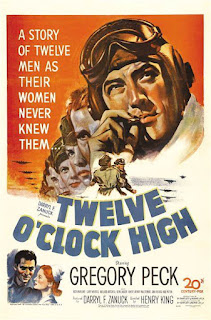
Gregory Peck takes on the burden of command in Twelve O’Clock High

Director: Henry King

Cast: Gregory Peck (Brg General Frank Savage), Hugh Marlowe (Lt Colonel Ben Gately), Gary Merrill (Colonel Keith Davenport), Millard Mitchell (Mj General Pritchard), Dean Jagger (Major Harvey Stovall), Robert Arthur (Sgt McIllhenny), Paul Stewart (Major “Doc” Kaiser), John Kellogg (Major Cobb)

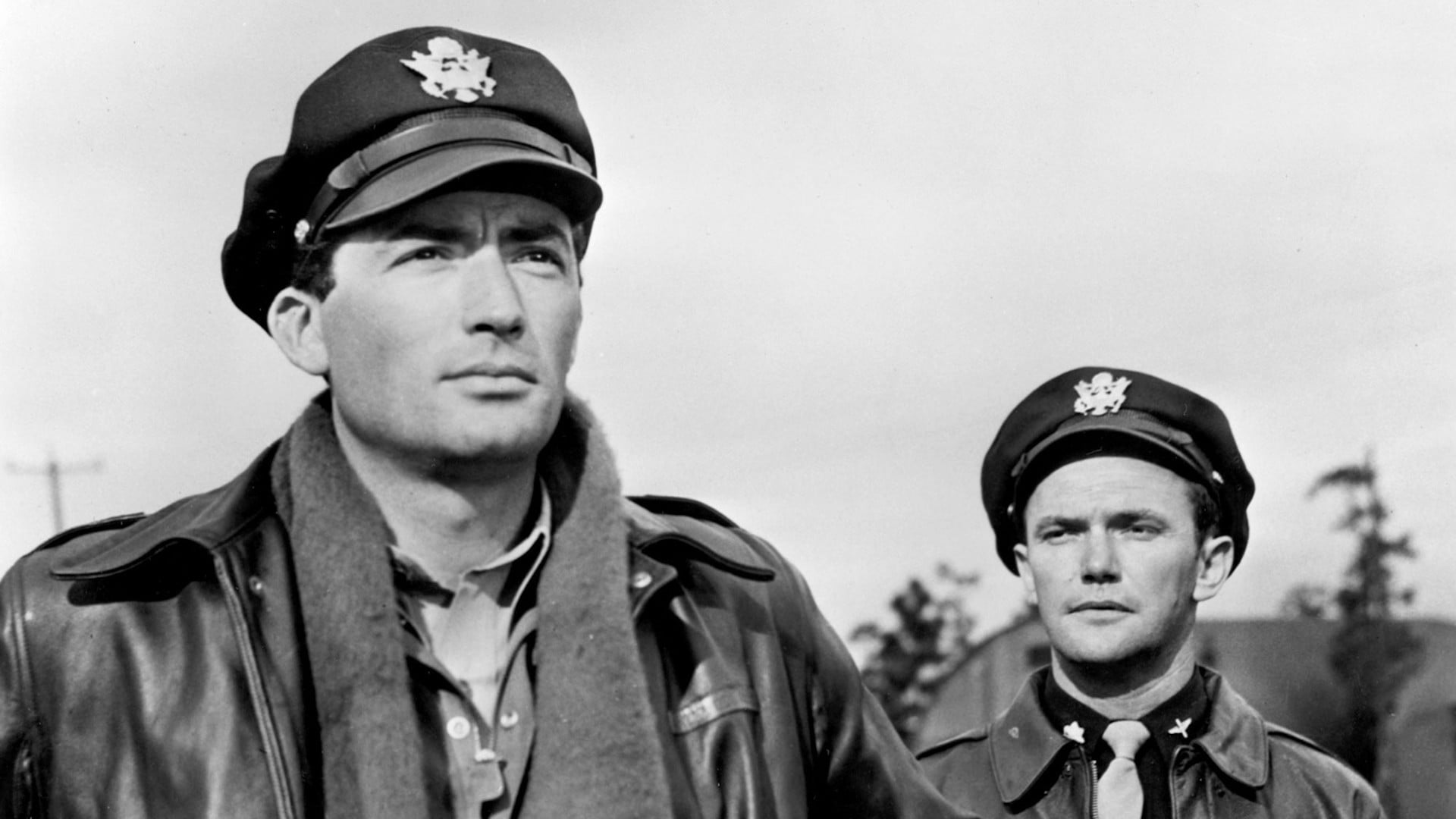
It’s tough at the top. Imagine how much tougher it would be if you job involved pushing people to their limits, and then a little bit further, in a job that puts their lives at daily risk? It’s the sort of burden commanders of American Bomber wings faced during the Second World War. It’s already got to Lt Colonel Keith Davenport (Gary Merrill), a decent guy and much-loved officer, who has grown so close to his men he can’t face sending them off to get killed over Europe any more. He’s replaced by Brigadier General Frank Savage (Gregory Peck), a by-the-book tough son-of-a-bitch who won’t tolerate men who can’t or won’t do their duty. But will the pressure of constant action, escalating casualties and a growing bond with his men also get to Savage?

With Peck at the top of his game, in one of his finest performances of stoical dependability and Lincolnonian authority concealing a carefully nurtured warmth and humanity, Twelve O’Clock High is a very different war film. Here the focus is much less on derring-do and heroism and more on the unbearable psychological pressure a life on the front lines brings. It’s all presented with a documentary style realism – so much so, that the film was used for decades in the USAAF as a training film on successful styles of command.

It’s about the impact that sustained trauma has – how it can make even the toughest man eventually paralysed by over-thinking, uncertainty and doubt. Davenport is a very popular CO – and good in the job in many ways – except the key one: he’s lost the ability to push the men and his willingness to sacrifice them. Essentially, in the nicest possible way, he’s damaging morale by letting the company reflect his own exhaustion, depression and amiable defeatism. He’s lost the ability to push men to want to achieve everything they can for the cause: meaning they are now doing the military equivalent of punching the clock, delivering the barest minimum an attack requires. Mistakes and errors are tolerated and, perversely, casualty rates are rising.

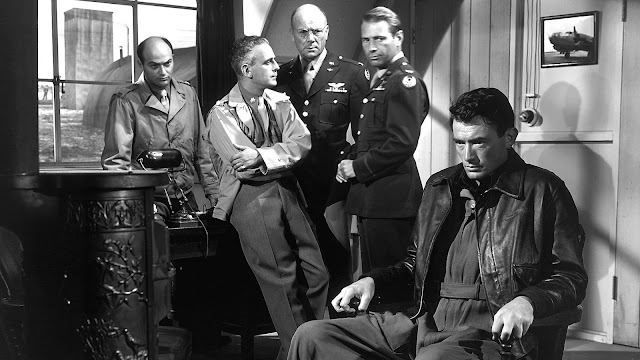
It’s what Savage is sent in to fix. Which he does by essentially blowing apart the cozy, boys-club feel of the Bomber Group. Air Exec, Lt Colonel Ben Gately (a great performance from Hugh Marlowe), is stripped of his command (for not leading from the front) and assigned to commanding the “The Leper Colony” a plane crewed by those Savage believes least likely to pull their weight. Drills are bought in and under-performance is no longer tolerated. Dropping out of formation for whatever reason – a move that puts the rest of the Bomber Group at risk – is punished harshly (a pilot is demoted to the “Leper Colony” for breaking formation to support another a plane, a decision that could have doomed the Group to death). Savage is the ultimate heartless drill sergeant.

Only of course he’s not: as Peck makes clear, the burdens of command weigh as heavy on him as they did on Davenport. But Savage is a professional who knows tough love is what’s going to keep most of the Group alive, accomplishing their missions and bringing the war to an end. And Savage’s policies work: the Bomber Group starts to achieve well above their previous performance. The pilots greet Savage by handing in a group transfer request, but by the time the request is heard by the army (Savage’s adjutant Stovall having delayed the requests with red tape) as a man they back the General. Savage gets then to take pride in themselves and their unit – so much so that, during their first strike on German soil, off duty men smuggle their way onto planes to be part of the mission. (Savage of course doesn’t let slip his pride, rebuking men for abandoning their posts on the base).

Underneath it all, Savage is starting to feel closer to his men. A young pilot, decorated but starting to get worried about flying, is mentored and encouraged by him. Gately responds to the tough love from Savage by aiming to prove to him he is indeed the best pilot in the squadron – winning Savage’s respect, not least when he flies several missions concealing a spinal injury. The pressure inevitably builds on Savage as he finds it harder and harder to maintain his professional demeanour while becoming closer and closer to his men (he even refuses a transfer back to his original job in HQ, as he feels the group isn’t ready for him to leave yet).

It all builds to one of the most famous breakdowns in film, as Savage goes from physically unable to climb into the cockpit to a confused state on the runaway and then catatonic until the Group returns home. This is beyond daring stuff for a 1940s Hollywood film, a true portrait of the effects of wartime pressure on a hero, which never once questions his competence and cowardice but in fact holds up the qualities that led to his breakdown as admirable ones. Peck plays all this with great power and control – and if Savage shrugs off his catatonic state later and the film doesn’t really explore the long-term impacts, the very fact that it showed someone as admirable, competent and professional as this suffering psychological damage from war was quite something.

It’s not a perfect film. King’s shooting style is often unimaginative and the film takes too long to get going – much of the first half an hour is a slow chug towards Davenport being relieved and Savage taking the post. More could be made of the impact of the war on the rest of the men on the group: it’s telling that only Jagger’s Stovell gets a scene where he also is allowed to let off steam against the pressure, getting drunk the night of a big raid, and he won an Oscar for it. But as something very different in Hollywood’s approach to the War, it really stands out as a companion piece to The Best Years of Our Lives.

The Longest Day (1962)

John Wayne leads the charge on The Longest Day

Director: Ken Annakin, Andrew Marton, Bernhard Wicki

Cast: John Wayne (Lt Col Benjambin Vandervoot), Henry Fonda (General Theodore Roosevelt Jnr), Robert Mitchum (General Norman Cota), Richard Burton (FO David Campbell), Eddie Albert (Col Lloyd Thompson), Sean Connery (Pvt Flanagan), Curd Jurgens (General Gunther Blumentritt), Richard Todd (Maj John Howard), Peter Lawford (Brig Lord Lovat), Rod Steiger (Lt Com Joseph Witherow Jnr), Irina Demick (Jeanine Boitard), Gert Frobe (Pvt “Coffee Pot”), Edmond O’Brien (General Raymond Barton), Kenneth More (Capt Colin Maud), Robert Ryan (Gen James Gavin), Red Buttons (Pvt John Steele), Christian Marquand (Cpt Philippe Kieffer), Jean-Louis Barrault (Fr Louis Rolland), Arletty (Mdm Barrault), Paul Hartmann (Field Marshall Gerd von Rundstedt), Werner Hinz (Field Marshall Erwin Rommel), Wolfgang Priess (General Max Premsel), Peter van Eyck (Lt Col Karl Williams Ocker)

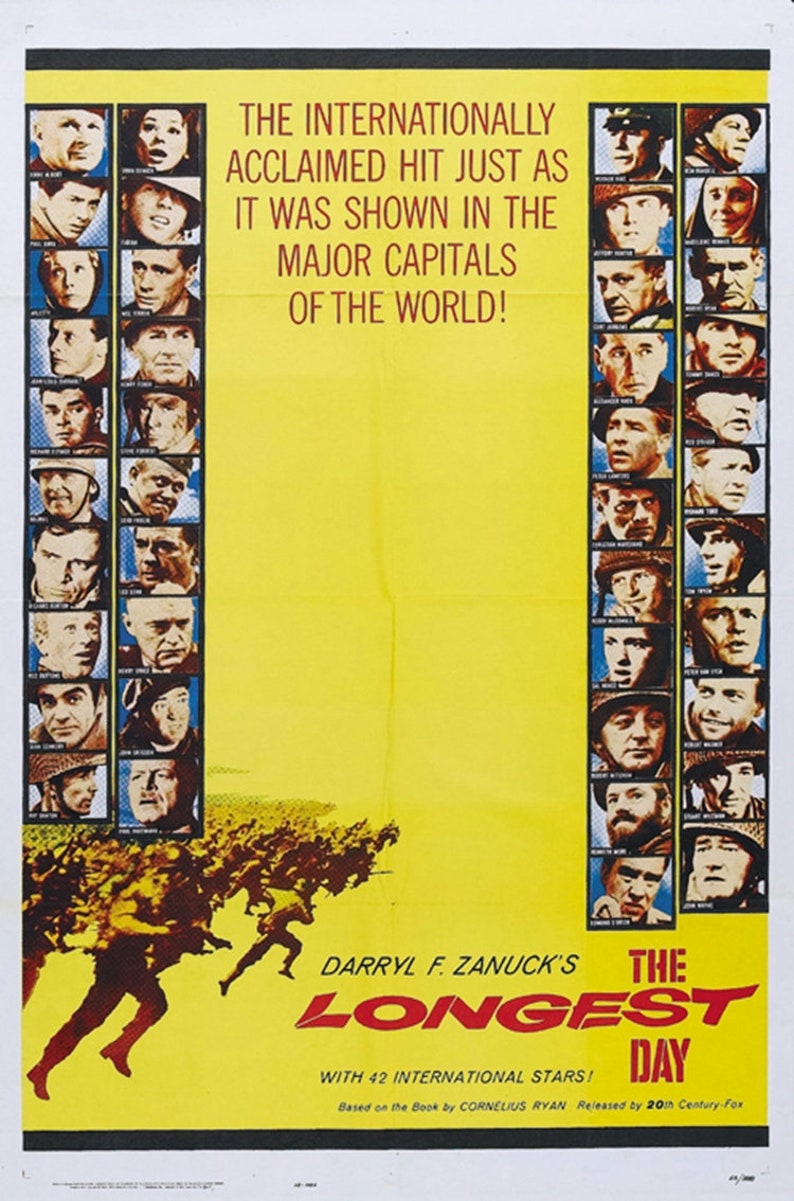
Darryl F Zanuck wanted to make the War Film to end all War Films. So, what better way than to restage D-Day itself, with a cast (as the poster brags) of 42 International Stars, playing out almost in real-time. It’s a grand ‘mock-documentary’ shot in black-and-white (so that actual war footage can be integrated into the film) and aims to show the perspectives of the four main combatants (the Americans, the British, the French and the Germans – with all their scenes played in their respective languages). Adapted from a definitive D-Day book by Cornelius Ryan, it makes for huge, now slightly old-fashioned, Sunday afternoon fun and one of the most iconic second world war films.

To make his dream come true, Zanuck left no stone unturned. Pretty much every single part is played by a ‘name’ actor (although, rather like Around the World in 80 Days, time has left some of them less recognisable than others) no matter how small the role. And I mean no matter how small. Many of the actors appear in no more than one or two scenes. Steiger chips in a brief speech as a Naval officer. Burton has two scenes as an RAF officer, one of the last of the “Few”. Fonda contributes a few minutes of heroism as Theodore Roosevelt Jnr. Robert Ryan briefs The Duke as General Gavin. Jean Servais makes a grand speech as a French Admiral. Gert Frobe doesn’t even speak as a (what else?) bullying German soldier. This parade of stars does though does mean you pay a lot more attention to every single part and it makes it a lot easier to keep track of who’s who.

It’s certainly a ‘producer’s’ film. Zanuck held complete creative control, splitting the directorial duties between three hired hands. Annakin directed all the British and French scenes (and most of the American ‘briefing room’ scenes). Martan, an experienced second unit director, was hired to shoot most of the battle sequences. Wicki looked after the German sequences. With the brief being to replicate the documentary style of actual footage, naturally this basically led to a film that doesn’t have the feel of being ‘authored’ (in the way, say, Saving Private Ryan does), but it’s functional shooting style and design does make it fairly easy to follow.

And it needs to be easy to follow, as this is a very long film indeed – and with the cast frequently changing from scene to scene, can become overwhelming. The quick changes of location – and the lack of time spent with any single character – often means it’s hard to connect to strongly to any of the individual characters. Most of the more prominent characters gain their personality solely from the actors playing them: so I don’t really know what the real Colonel Vandervoot is like, but I know his character here is basically ‘John Wayne’.

The more prominent roles in the script rely on these personality parts. Wayne probably has the largest individual role as the Paratrooper commander who breaks his ankle on landing, but doesn’t let that slow him down from hitting his objective. (Wayne also gets a great little speech, the sort of thing much missed in Ryan, where he praises Brit fortitude under the Blitz, which is a lovely moment of Allied brotherhood). Mitchum gets the juiciest action as General Cota, the highest-ranking soldier on Omaha Beach, who leads the first break out. At the other end of the ranking, Red Buttons brings charm and heartfelt emotion to the most memorable sequence as Pvt John Steele, the paratrooper who landed on top of the church spire at Sainte-Mère-Église, deafened by bells and forced to watch the rest of his platoon slaughtered on landing.

The scale is really what it’s all about. The recreation of the D-Day landings is stunning (the first boats, though, don’t hit the beaches until well over two hours into the film), and its genuinely hard to tell the difference between what is recreated and what is actual war footage. The film doesn’t shirk from showing the cost of war, or the slaughter on that beach (although of course, it looks reserved compared to Ryan). But the combat and operations elsewhere are also perfectly recreated. Richard Todd is very good as Major John Howard, in an expert reconstruction of the seizing of the Orne Bridges near Caen (in real life, Todd himself was one of the commandos serving under Howard and even has a scene where Todd as Howard talks to another actor as Todd).

These battle sequences make for compelling viewing. Slightly less so is the long build-up of the Allies to the attack. There are many, many scenes in various briefing rooms and for every delight (such as Jack Hedley’s briefing around “Rupert” a model paratrooper, dropped as a distraction) there are po-faced actors staring into the middle distance and discussing how important everything is. By far and away the most interesting content in the first half is less the Allies (waiting to leave) than the Germans (trying to work out how and where the Allies will arrive). These scenes feature a range of German officers, from the quietly resigned to die-hard, head-in-the-sand Fascists, and revolve around a series of fascinating debates on where, when or even if at all the Allied attack will come. With a cast of excellent German actors – Jurgens, Preiss, Hartmann, Hinz and Wolfgang Buttner are particularly fine – these scenes stand out as they present a perspective we don’t often get to explore. (Even though the film squarely accepts the German military view that the defeat was all Hitler’s fault and the army was completely blameless of any of the crimes of Nazism.)

After the slow-build, the explosion of tension and action is done really effectively. Sure, the film is long and episodic, but the ever-changing locations do frequently help with the pace. The film’s documentary style also lends it a great deal of authority that a more ‘fictional’ film would not have. After all, pretty much everyone in the film is ‘real’ and while the film could be seen as a collection of D-Day anecdotes, strange moments – such as a platoon of Germans and Americans passing each other on opposite sides of a low wall without noticing each other – have the ring of truth. The script was doctored by a host of major novelists and playwright (including Noel Coward) to brush it up, but really this is a producer’s triumph.

And it is a triumph for Zanuck. Everything he sought to do, he accomplished here – and the doubts that he could pull it off were moved as wrong, as those who doubted whether the Allied plan to cross the Channel would work. Hugely impressive in its staging, detailed in its recreation and with a cast of stars and top actors giving every scene a fresh bit of life, this makes for one of the all-time classic war films.

Michael Collins (1996)

Liam Neeson is outstanding as Irish revolutionary leader Michael Collins

Director: Neil Jordan

Cast: Liam Neeson (Michael Collins), Aidan Quinn (Harry Boland), Stephen Rea (Ned Broy), Alan Rickman (Eamon de Valera), Julia Roberts (Kitty Kiernan), Ian Hart (Joe O’Reilly), Brendan Gleeson (Liam Tobin), Sean McGinley (Smith), Gerard McSorley (Cathal Brugha), Owen O’Neill (Rory O’Connor), Charles Dance (Soames), Jonathan Rhys Meyers (Assassin), Ian McElhinney (Belfast cop)

Britain’s colonisation of Ireland left a poisonous historical legacy that blighted much of the twentieth century. The story of Irish independence, is also one of guerrilla and political brutality, civil war and terrible lost opportunities. Jordan’s biopic of Michael Collins is a study of the man who did more than any other to turn the IRA into an effective guerrilla fighting force – only to be consumed by the very same uncompromising ruthlessness he had set in motion. It’s a powerful and beautifully made film that seeks to explore just how and why violence and politics ended up hand-in-hand in Ireland for almost 100 years.

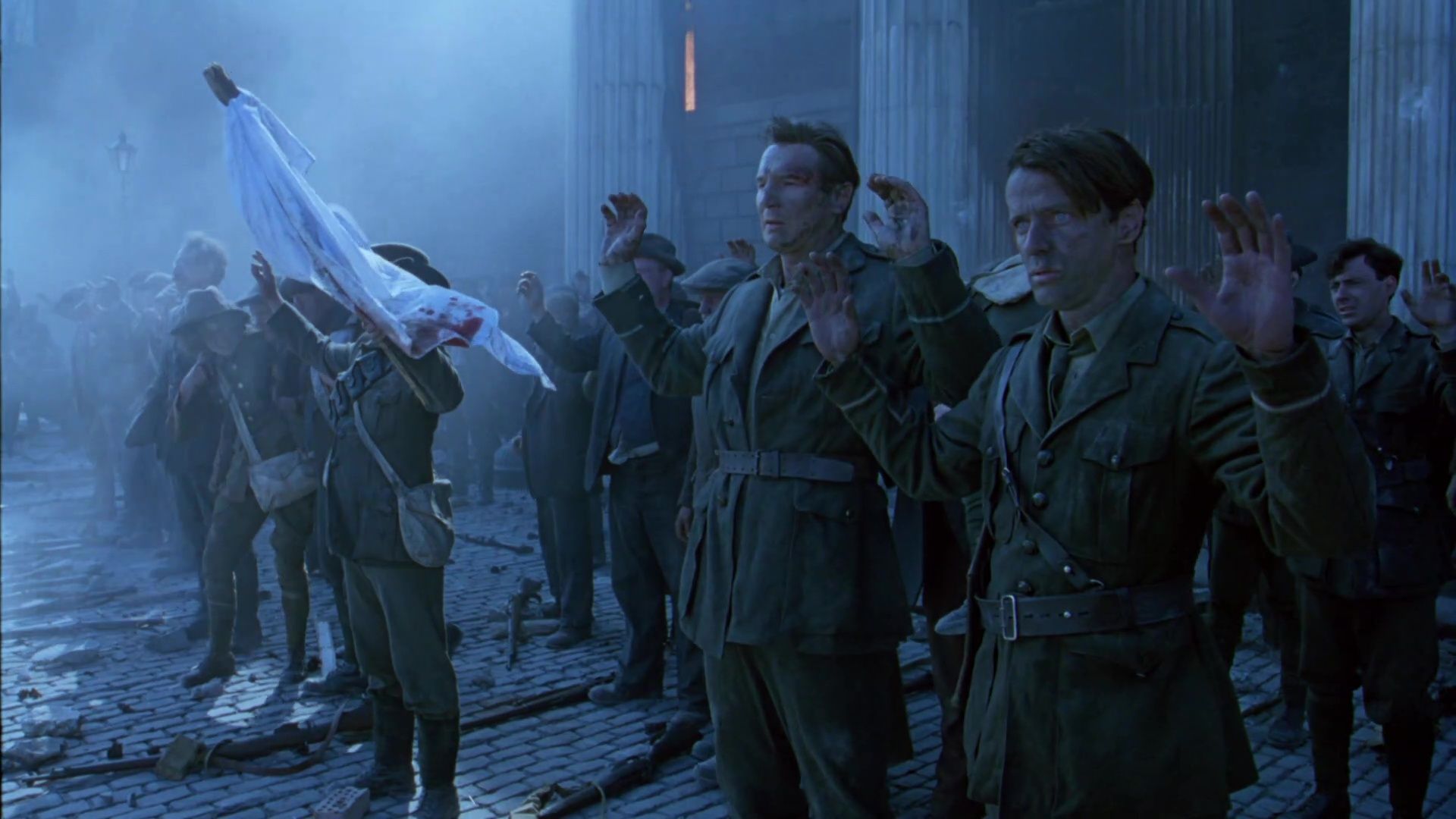
It opens with the 1916 Easter Uprising, an ignominious failure which the British managed to turn into a glorious one by executing rather than imprisoning its leadership. It’s one of many misjudgements in our occupation. It also the impetus for the young Michael Collins (Liam Neeson) to realise that playing by conventional military roles simply means defeat for the Irish time and again. Put simply, the IRA needs to stop trying to be a field army and instead become a guerrilla army, launching targeted hit-and-run terrorist attacks on the British. It’s a hugely successful campaign – despite the doubts of Sinn Fein leader Eamon de Valera (Alan Rickman), who favours more conventional conflict (“They call us murderers!” he cries, with some justification). But after the British agree a Treaty that divides Ireland, the IRA splinters into pro- and anti Treaty factions. Can Collins put the cork back in the bottle of violence, before the country tears itself apart?

Of course, anyone with a passing knowledge of history knows that he can’t. Hanging over the entire film is the knowledge that Collins’ new methods of political assassination, plainclothes soldiers, bombs and bullets in the middle of the night will eventually expand into the indiscriminate bombing and shooting that consumed Ireland for decades. Not that Collins will live to see it, as he was assassinated aged 31 attempting to negotiate an end to Civil War. What makes Collins such an engaging and intriguing figure is that he (or at least the version we see in this film) was a man forced into methods he knew were wrong, to achieve an end he knew was right.

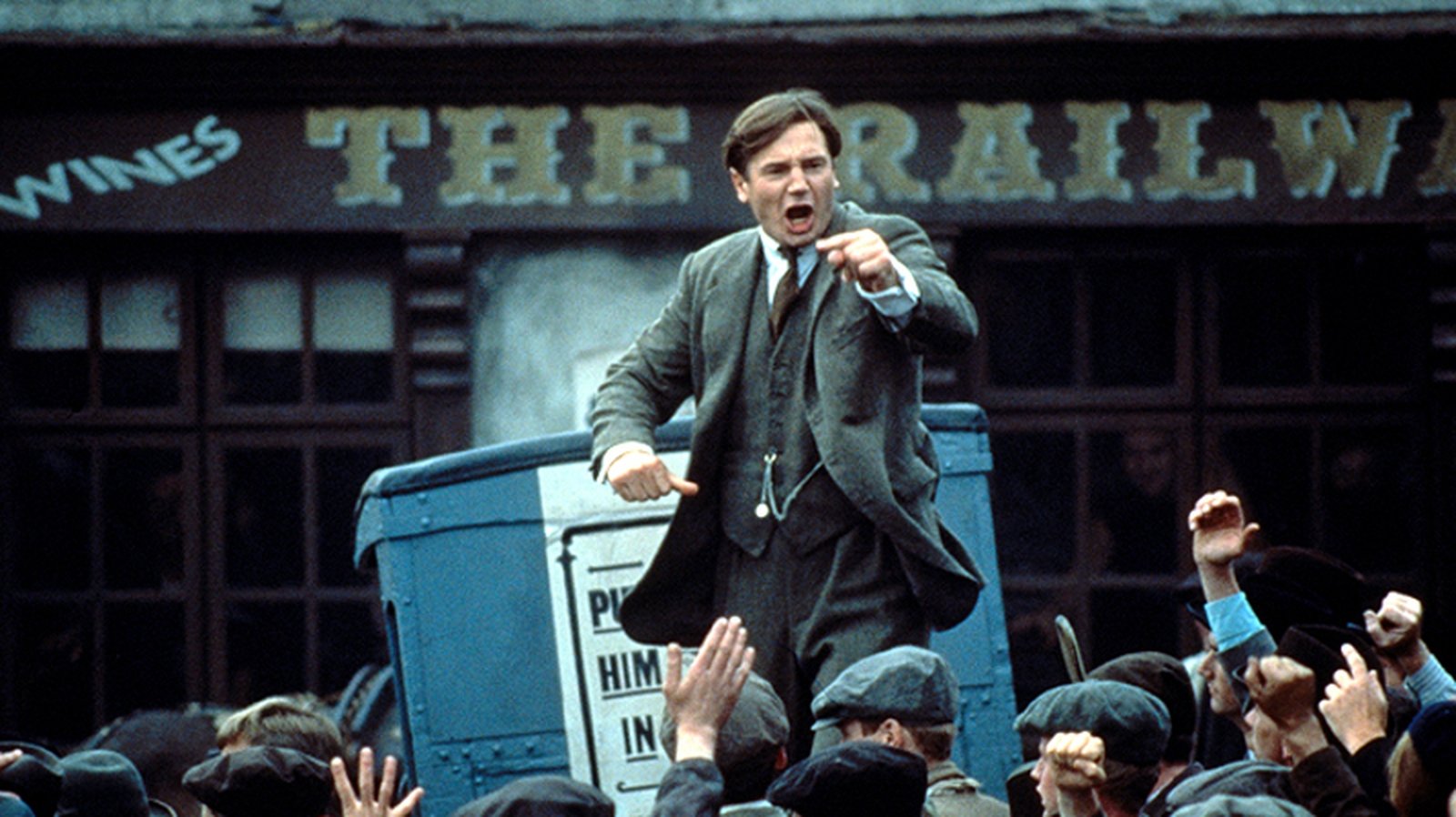
Neeson is superb as the charismatic, blunt yet poetic Collins who is noble enough to know that training young men to quickly and efficiently commit murder is an ignoble legacy. Jordan’s film doesn’t condone Collins use of violence, but establishes why it was necessary. Playing by more conventional rules simply wasn’t going to work – and Ireland didn’t see why they had to wait for British politics to shift. Unlike, say Gandhi in India (and Michael Collins makes a dark companion piece with Attenborough’s Gandhi, two charismatic campaigners choosing radically different paths to independence), Collins believed Britain had to be forced to see holding Ireland wasn’t worth the blood sacrifice and emotional cost. (Jordan’s film is also clear that Britain’s hands were equally dirty, the British conducting their own counter-campaign of assassination and violence).

The tragedy that Jordan finds in all of this is that, when the British were gone, Ireland had become so used to dealing with political problems with violence that they couldn’t imagine solving their disagreements with anything else. Collins is in fact too successful: and the film demonstrates that in radicalising his followers, he’s unable to gearshift them towards compromise. His attempts to get Sinn Fein to accept a Treaty that offers a workable compromise (as opposed to an unwinnable full-scale war), leads to him becoming a victim of exactly the sort of insurgency he pioneered in the first place. To Jordan he is a man trapped in a world of his own making, unable to remove the gun from Irish politics.

Michael Collins makes some compromises with history – something that was bound to get it attacked when dealing with events of such earth-shattering controversy – but it always feel spiritually accurate. The British Black and Tans really were as brutal as they seem, and while they didn’t use an armoured car on the pitch at the “Bloody Sunday” massacre at Croke Park, they did shoot indiscriminately at the crowd and fire at the stadium from an armoured car outside causing 14 fatalities (including two children) and 80 serious injuries. Similarly, in the aftermath of Collin’s assassination of most of the British intelligence operation in Dublin, three IRA leaders were “killed while trying to escape” (even if these were different men than the one who suffers this fate in the film). Just as IRA killings in the street were swift and brutal, so interrogations in Dublin Castle could stretch way beyond what the Geneva Convention would suggest was acceptable.

Much of the first half of the film is structured in the style of an old-fashioned gangster film, with hits and street gangs. Plucky IRA under-dogs (and Neeson’s Collins is so charming, you immediately root for him), take-on the more hissable baddies in British intelligence (led first by a bullying Sean McGinley and then a suavely ruthless Charles Dance). But the romance slowly drains out of this as lifeless bodies hit the floor – and Jordan always gives the focus to the dead after they fall, regardless of their ‘side’. The film has an infectious momentum, which makes its final acts, with their air of tragedy, even more sad and moving. It’s all also quite beautifully shot by Chris Menges, the film bathed in some of the most luscious blues you’ll see.

While Michael Collins is more sympathetic to the Irish (as you would expect), it clearly shows the psychological damage of killing. Hesitant shooters become increasingly ruthless at the cost of their humanity. Collins spends a ‘dark night of the soul’ openly confessing that he hates what he is making young men do and knows it is morally wrong. In the end this explains why methods were chosen, but doesn’t praise them – just as it doesn’t outright condemn them, considering what the Irish were up against. It’s a difficult balance, but very well walked.

There are flaws. Excellent as Liam Neeson (at the time 15 years older than Collins was when he died) and Aidan Quinn as his number two Harry Boland are, the film’s insertion of a love triangle between them and Collin’s eventual fiancée Kitty Kiernan often descends into weaker “Hollywoodese”. It’s not helped by having Kitty played by an egregious Julia Roberts, who struggles gamely with the Irish accent, and who never transcends her star status.

Additionally, while the film has an excellent performance by Alan Rickman (in a pitch perfect vocal and physical impersonation) as Eamon de Valera, it also repositions de Valera as an antagonist. Although de Valera certainly was a prima donna who associated his interests and Ireland’s as being one and the same, the film implies that de Valera’s actions are motivated as much by jealousy as principle and lays most of the blame for the civil war on him. Not to mention implying de Valera’s complicity in Collins eventual death (a heavily disputed assertion, strongly denied by de Valera).

Michael Collins though is a thoughtful, complex and engaging film that brings a tumultuous period of history successfully to life. Jordan’s film manages to wrestle an enthusiastic admiration for Collins, with a questioning exploration of how his actions (however well motivated) led to a legacy of violence. But it doesn’t lose sight of how Collins was aware he was using wicked methods for a noble aim, or that his goal was to bring peace. Wonderfully acted by a great cast (every Irish actor alive seems to be in it), with Neeson sensational, it’s an essential watch for anyone interested in this period of history.