Category: War film

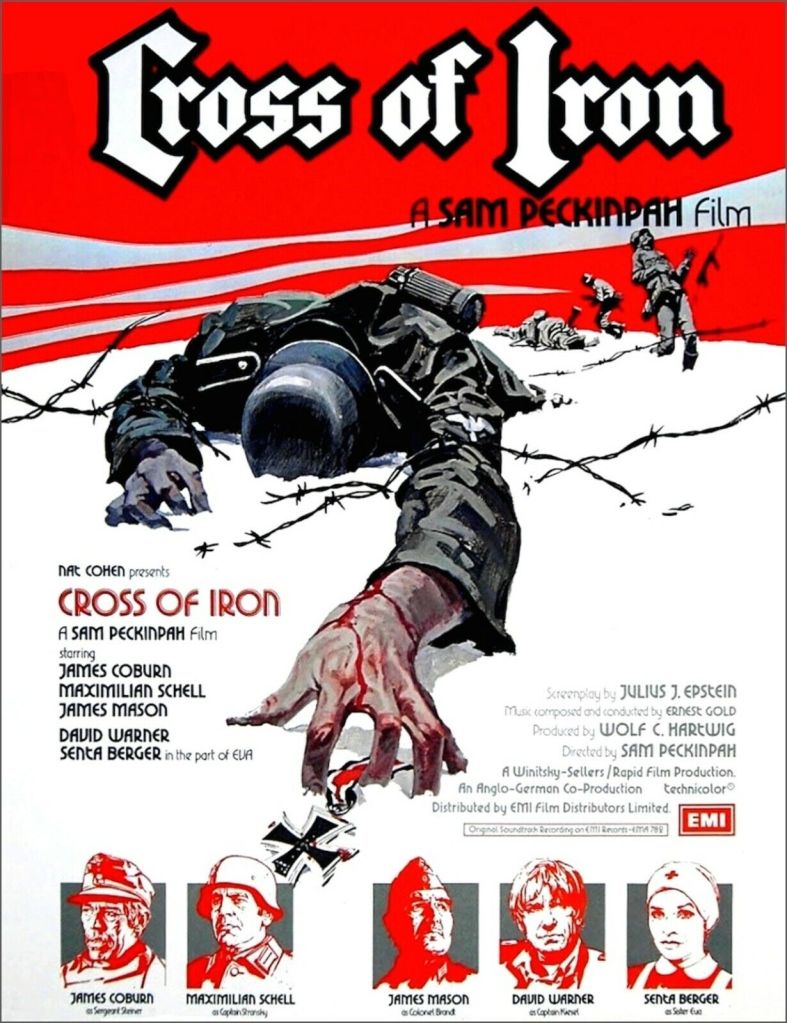
Cross of Iron (1977)

Cross of Iron (1977)

Grim war film, full of blood and horror, but lacking the depth it needs to really make an impact

Director: Sam Peckinpah

Cast: James Coburn (Sergeant Rolf Steiner), Maximilian Schell (Captain Stransky), James Mason (Colonel Brandt), David Warner (Captain Kiesel), Klaus Löwitsch (Krüger), Vadim Glowna (Kern), Roger Fritz (Lt Triebig), Dieter Schidor (Anselm), Burkhard Driest (Maag), Fred Stillkrauth (Reisenauer), Michael Nowka (Dietz), Arthur Brauss (Zoll), Senta Berger (Eva)

If War is Hell, it makes sense that Sam Peckinpah eventually bought it to the screen. Cross of Iron is, perhaps surprisingly, his only war film. But, in a sense, Peckinpah’s grim explorations of the brutal realities of violence made all his films war films. And what better setting for his grim eye than the gore and guts of World War Two’s Eastern Front. If war has any rules they fell silent in this hellish clash where no quarter was given and no decency could be found.

Sgt Steiner (James Coburn) knows this. A grizzled soldier, who despises war, Nazism and officers, he fights through the horrors of the front to protect his men. As the Wehrmacht flees, crushed by the late 1943 advance of the Russian army, the only hope is the vain chance of staying alive. But Steiner’s new commander, Captain Stransky (Maximilian Schell) has other ideas: a Prussian elitest, he’s here for an Iron Cross and the fact he’s inept, cowardly and inexperienced isn’t going to stop him. The clash between Steiner and Stransky will leave a trail of futile bodies in its wake.

Cross of Iron may well just be the grimmest war film this side of Come and See. Shot on location in Yugoslavia, Peckinpah films the Eastern Front as a muddy, chaotic mess where no one seems to have the faintest clue why they are there or where they are going. Soldiers huddle in shallow trenches, officers sit in dusty, crumbling bunkers, the sound of machine guns and the explosion of artillery forms a constant backdrop. Battles are smoky, horrific events with bullets flying, ripping through bodies that explode in squippy mess. Bodies are strewn across the battlefield. Even in the progress to the front lines, tanks absent-mindedly roll over bodies left ground into the muddy dirt.

Peckinpah brings his unique eye for violence to bear. Violence frequently takes place in slow motion, bodies twisting and turning in a crazed dance that seems to go on forever as bullets rip through them. The camera never flinches from the blood of war and the films throws us right into the middle of brutal firefights, tracking through smoky, muddied fields full of bodies. The soundtrack is punctuated by distant artillery gun fire. There is no heroism and the sole focus is staying alive. The soldiers have no interest in politics, no passion at all for the war – only one of them, the smartest dressed, is a Nazi. It’s simply something they vainly hope to survive to see the end of. Even the grizzled veteran Steiner hates the killing, hates the violence, hates the waste.

It makes us loath even more Maximilian Schell’s puffed-up braggart Stransky, a man born wearing an officer’s uniform but hopelessly ill-suited for it. Under fire at his first attack, Stransky is hopeless, reduced to bluntly stating the obvious (“My phone is ringing!”) and confusedly rambling about attacking, withdrawing and counter-attacking all in the same breath. Schell was born to play Prussian primma donnas like this, and he gives Stransky a real cunning and survival instinct. Despising Nazism – he sees himself as above the crudeness of the party – he’s a born manipulator, skilfully deducing the sexuality of his aide to blackmail him, but also a rigid stickler for the rules unable to comprehend a world where he isn’t on top.

He’s the antithesis of Steiner, who has everything Stransky wants: respect, glory, guts. Coburn is, to be honest, about ten years too old for the role (his age particularly shows during his brief respite in a base hospital, where he has a convenient sexual fling with Santa Berger’s nurse), but he’s perfect for the hard-as-nails humanitarian, who hides under the surface deep trauma at the horror he’s seen. Steiner is the natural leader Stransky wants to be and has the Iron Cross Stransky wants. Worst of all, Steiner doesn’t give a shit about the medal, when it’s the be-all-and-end-all for Stransky.

Stransky is so out of step, even the veteran front-line officers think he’s despicable. Colonel Brandt (a world-weary James Mason) scoffs “you can have one of mine” when he hears of Stransky’s dreams while his cynical aide Kiesler (a scruffy, shrewdly arch David Warner) takes every opportunity to show his disgust. Stransky is ignored by the soldiers and is rarely filmed away from his bunker, where he reclines on his bunk like an emperor and avoids any trace of conflict.

So, he knows nothing of the horrors of Steiner’s war. We however do. Cross of Iron opens with a successful raid on a Russian encampment. One of the victims, a young soldier his body torn apart by a mortar, is met with barely a reaction by the soldiers (“We’ve seen worse” says Steiner). Another captured Russian boy is later released by Steiner – and promptly machine-gunned in front of him by advancing Russian soldiers. Caught behind the lines, Steiner’s men are picked off one-by-one despite his desperate efforts to keep them alive.

Cross of Iron went millions over budget – largely due to Peckinpah’s chronic alcoholism (he binge drank every day while shooting and spent days at a time unable to work) – and as a result the ending is abrupt and overly symbolic. (Peckinpah and Coburn had about an hour to cobble it together and shoot it before the filming wrapped up). Peckinpah throws in some clumsy fantasy sequences (especially during Steiner’s fever dreams in hospital) and overly heavy-handed reaction shots from Coburn, overlaid with quick cuts to various horrors or shots of lost friends, which over-stresses the horror of war.  Much as Cross of Iron skilfully shows the grimness of conflict, it doesn’t balance this with real thematic weight and depth like, say, The Wild Bunch does.

It’s part of Cross of Iron’s flaws. Under the surface, I’m not sure that Cross of Iron has much more to say, other than war is hell. And with Peckinpah’s work here, there is a sort of satanic, indulgent glee in all that mayhem and slaughter, the bodies riddled by bullets. Peckinpah is a sadistic preacher, the sort of sermoniser who is so keen to tick off the evils of the world, that he doesn’t want to miss a thing. The film feels a little too much at times as a grungy, exploitation flick yearning for art.

But it still has a visceral impact that makes it stand out as grizzled war-film, helped by a granite performance by Coburn, with just enough vulnerability beneath the growls. A tough watch and a flawed film, that lacks the real insight and psychological depth it needs, but with some compelling – and shocking – moments.

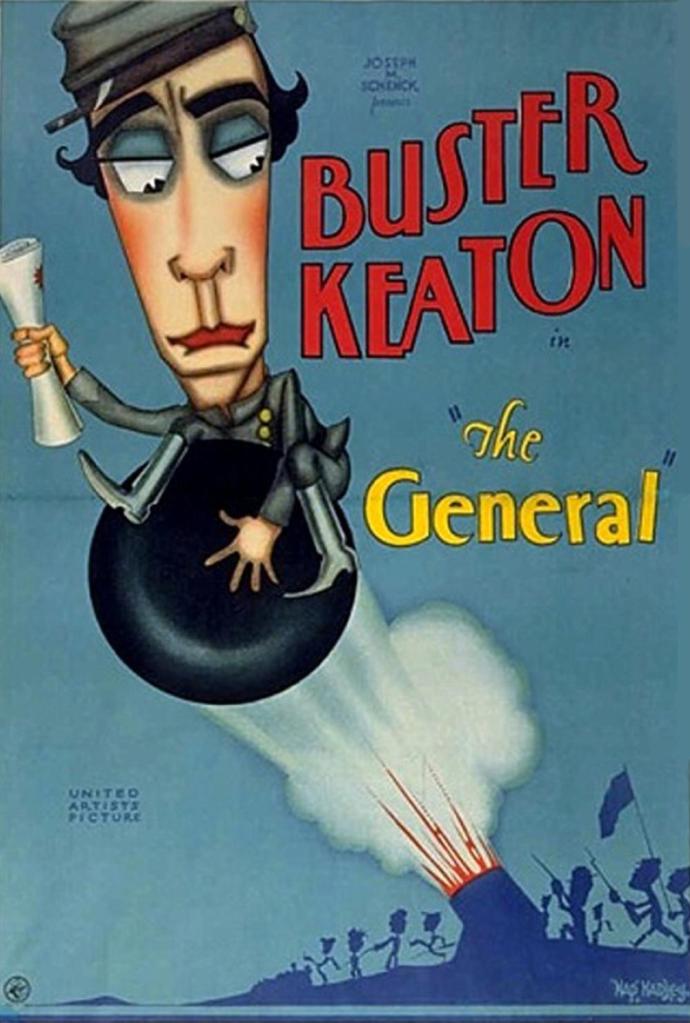
The General (1927)

The General (1927)

Keaton’s masterpiece, less of a comedy and more an inspiration for hundreds of action films

Director: Buster Keatson & Clyde Bruckman

Cast: Buster Keaton (Johnnie Gray), Marian Mack (Annabel Lee), Glen Cavander (Captain Anderson), Jim Farley (General Thatcher), Frederick Vroom (Southern General), Charles Smith (Mr Lee), Frank Barnes (Annabel’s brother), Joe Keaton (Union General)

The General frequently features in the lists of greatest comedies of all-time. It’s a bit of a misnomer: while The General has its fair share of jokes, it’s really a sort of action film. A Mad Max: Fury Road with gags, the greatest chase you’ll ever see and one of the most dynamic stunt spectaculars ever made. It’s Keaton’s apogee, one of the most influential and greatest films ever made. If you’ve ever seen a stunt-filled epic, you’ve seen something that takes inspiration from the tireless physical tricks Keaton pulled here and the stunning, cinematic grace he films it with. The General is a classic that is instantly, and constantly, rewarding.

Keaton plays Johnnie Gray, a respected engine driver of the South with two loves in his life: Annabel (Marian Mack) and his steam engine The General. He’s about to propose to Annabel when the Civil War breaks out. She wants him to enlist: he tries his best but is rejected, unbeknownst to him, because the army considers him more valuable as a train driver. Mistakenly seen as a coward by Annabel, she vows never to speak to him again. A year later The General is hi-jacked by Union soldiers as part of a surprise offensive. Johnnie gives chase in a second engine, The Texas, unaware Annabel is aboard the kidnapped General. The wild chase takes Johnnie North then South again to bring Annabel home and report to the Confederate army the approaching attack.

The General was the most expensive film Keaton’s company had ever made. No expense was spared in bringing two period-accurate engines to the screen, with everything shot in location (in Oregon, admittedly, due to the Tennessee not being keen on staging a Civil War Keaton comedy) and all executed in perfect period detail. The film contained the most expensive single shot ever mounted – costing a whopping $42,000, it would show a real bridge collapse and hurl a real engine into a real river (Keaton filmed in long shot, with real horses moving around near the bridge, to stress this was a real stunt not a model). Despite all this, the film was a box-office disappointment.

Why? Well frankly, I’m not sure the world was ready for something that promised itself as being a comedy set during what was still a raw scar in the American psyche. The marketing material also promised more laughs than you can shake a stick at – a misrepresentation of a film that is more a stunt-filled poem than a slapstick riot. For those expecting The Navigator, The General was a disappointment. For us today, it is one of the great American films, a piece of cinematic mastery.

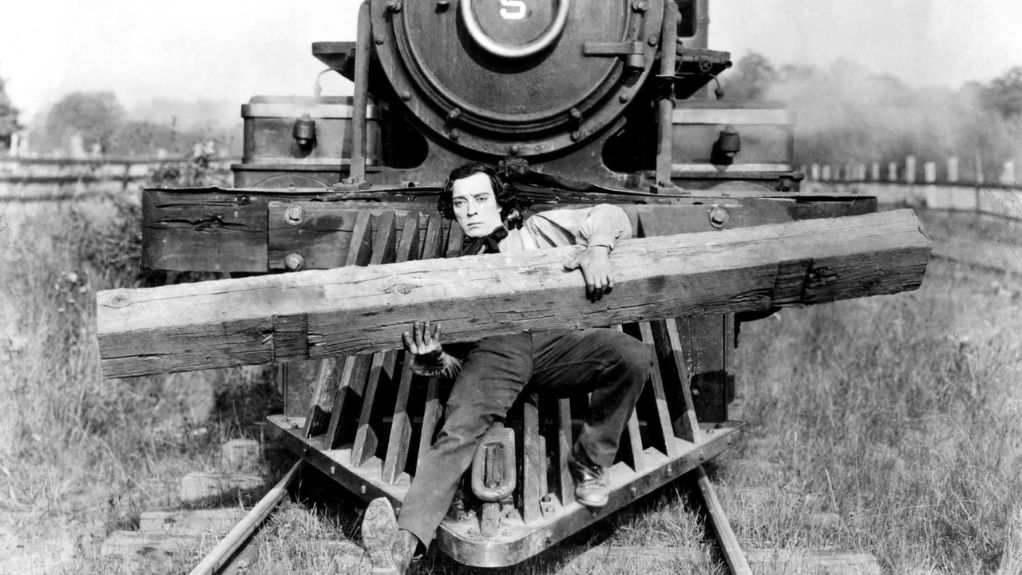
The General is for a large chunk of its run-time (almost 40 of its just under 80 minutes) a glorious chase, in which every sequence show-pieces invention at high-speed. The majority of the stunt filled tricks were executed by Keaton himself, surely at some considerable risk to life and limb. As you watch him bound over railway carriages, dive through port holes, sprint alongside steaming trains or sit atop the hurling railway sleepers to remove obstructions, you can only marvel at his physical dexterity and commitment.

Keaton’s character is also subtly, and impressively, different from his other roles. These were often defined by their haplessness – would-be detectives and empty-headed heirs. But within his professional sphere, Johnnie is a master. He knows the capabilities of engines and dynamics of the railroad better than anyone. He is relentless and endlessly inventive in overcoming myriad problems just as he can use his knowledge to place near-insurmountable barriers in the way of his pursuers.

The opening of the film stresses the respect people hold him in – he’s hero-worshipped by children, greeted warmly by all and has no doubts about asking Annabel to marry him. Sure Johnnie can get pre-occupied and miss the bigger picture – a few times, he is almost left behind by the steaming train while resolving problems on the line – and away from the train, especially when he joins the soldiers in the film’s finale, he suffers from the same clumsy, cluelessness as Keaton did fighting to defend his ship in The Navigator. But he’s also brave, indefatigable, ingenious and relentless. He’s more of a model for every action hero maverick since than you could imagine.

And those stunts! Keaton was a master film-maker, framing the action to accentuate its speed, scale and reality. The camera runs alongside the train, demonstrating its speed by showing objects move by. The action is frequently framed in medium and long shot to demonstrate its scale and the grandness. This goes for Keaton bounding across carriages and for simple gags, such as the famous shot of a forlorn, jilted Johnnie sitting on a drive rod of the moving train, lifted up and down as it shunts forward. The complexities of this chase are always made clear and camera angles are key to the various attempt each train makes to stop the other. This is placed above the standard comedic reaction close-ups audiences expected – but make for a richer, more rewarding film.

In fact, watching the film, you can grow to admire Johnnie so much you start to wonder what he sees in Annabel. Perhaps Keaton, to an extent, wondered the same. Annabel is kidnapped, tied up, caught in a bear trap, tossed around in a sack and doused in engine water. Is this woman being partially punished by the film? After all, it’s her demand that Johnnie turn his life upside down to fight in (what we know) will be a brutal war – and her kneejerk condemnation of him – that sets events in motion. Does she need this humbling to learn her lesson? It perhaps helps her and Johnnie become an ever more effective partnership on their flight back South, setting traps and keeping the engine going (with the odd comic misunderstanding, one of which sees Johnnie running down then back up a hill to reboard the train) that leads to their eventual reconciliation.

Interestingly, what’s less comfortable with The General today is its avoidance of the core issues of the civil war. Slavery never rears its head, and the film takes a largely sympathetic view of the romantic Southern gentlemen vs the nefarious Northerner, with their under-hand schemes. Peter Kramer, in an excellent BFI book, lays out a compelling argument that The General exposes, especially through its final battle sequence which sees real people die and a hapless Johnnie charging into heroics like a lost child, the dangerously blind embrace of violence in the South and a subtle criticism of a horrific war that led to so many needless deaths. While there might be beats of that under the surface here (especially if you are familiar with the shocking death toll of the war), it’s not enough to overcome the generally sympathetic view of the Confederacy and its leaders.

But politics is not at the heart of Keaton’s film. The appeal for him, just as for Johnnie, was that engine and, by extension, the glory of the chase. Only someone who loved trains as much as Keaton could have made such a guilty pleasure of plunging one thirty feet to its doom on camera. And in Johnnie Flynn he created a genuinely little-guy hero, a character who shared his dynamism and pluck and, above all, his love for all things mechanical.

The General isn’t a comedy really – there are few real belly laughs in it, and the film is played straight by all and sundry, devoid of reaction shots. Its laughs come in shock at its audacity, its epic scale and from how much it causes you to invest in the trials and tribulations of its lead character. It’s an action film that you embrace with fervent love, because it’s pure, unadulterated, cinematic beauty. It’s a masterpiece.

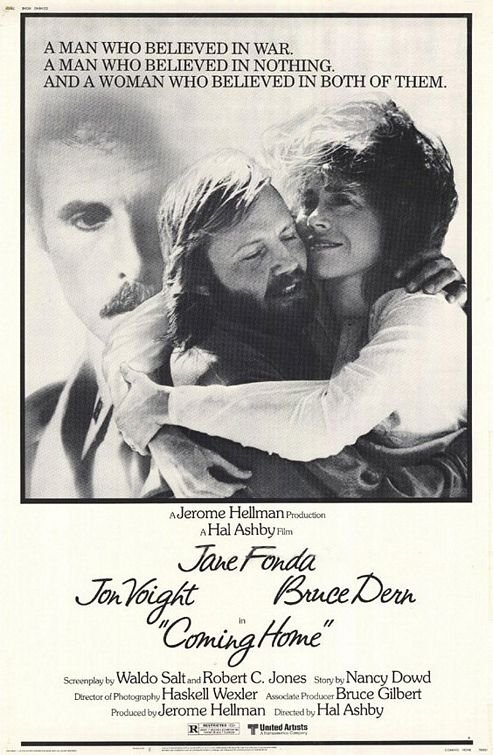
Coming Home (1978)

Coming Home (1978)

Emotional but a little too worthy Vietnam message movie, well-directed with great performances

Director: Hal Ashby

Cast: Jane Fonda (Sally Hyde), Jon Voight (Luke Martin), Bruce Dern (Captain Bob Hyde), Penelope Milford (Vi Munson), Robert Carradine (Robert Munson), Robert Gintu (Sgt Dink Mobley), Mary Gregory (Martha Vickery), Kathleen Miller (Kathy Delise)

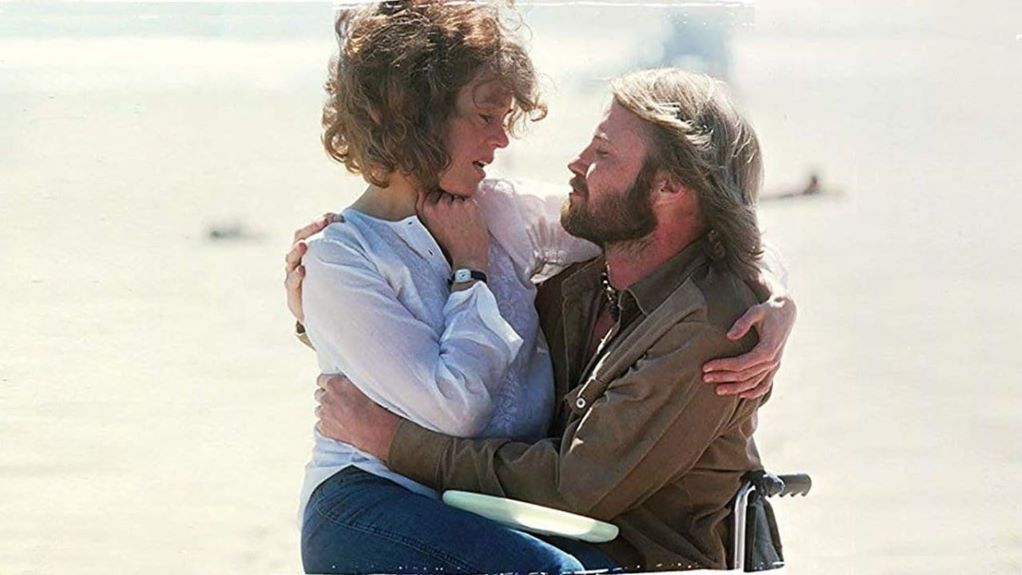
Vietnam is a jagged scar on the soul of America but, more than that, it’s been a literal scar for the veterans. Luke Martin (Jon Voight) was a college athletic star, now returned from the frontlines as an angry paraplegic, struggling with post-traumatic stress. Helping him – eventually – is old school-friend Sally Hyde (Jane Fonda), married to a Marine captain Bob (Bruce Dern) who has himself shipped out to Vietnam. Sally and Luke find themselves growing closer and closer emotionally, as their hostility towards the brutal war grows. But how will Bob – still loved by Sally and himself ever more scarred by trauma – react when he returns from the front?

Coming Home was released in the same year as The Deer Hunter and makes for an interesting comparison. While Cimino’s film is a horrific plunge into the grisly horrors of war, combined with a sort of mesmeric epic poetry, Ashby’s Coming Home is a quieter, more domestic piece, an earnest attempt to explore trauma. There is no doubting the passion of all those involved: but Coming Home is at times a little too earnest. Despite its moments of undeniable emotional impact, its sometimes feels a little too pointedly like a “message” film, worn a little too heavily on its sleeve.

But, saying that, there are many positives. It’s shot with a skilful casualness by Ashby, whose unobtrusive camera makes us a witness to events (at one crucial point it is even half obstructed by a door). Ashby has a poetic sensibility that flies in the face of what could have been its soapy roots. He lets scenes unfold with such ease and gentleness of touch that you only slowly notice how extremely well assembled the film is. There is a whimsical, lyrical sadness about the whole thing – matched with a striking lack of condemnation of people, only for a system that bends and twists human beings into killing machines.

It uses a parade of hit songs, but the songs play not as snippets but as full performances, playing out over several scenes, scenes which at first seem to be directly counter to the lyrics and tone of the song itself. Then you notice the skill with which the film has been edited to the beat of the music, and how much The Rolling Stones, The Beatles, Hendrix, Simon & Garfunkel, Bob Dylan and many others set the tone for a whole era. Coming Home captures this tone, an era of optimism crushed by brutal contact with the cold, dark realities of the world. The songs weave themselves in and out of scenes, capturing an overwhelming sense of a nation lost and confused.

It’s in this framework the relationship between Luke and Sally flourishes as Luke begins finding purpose in his life. Heavily based on the life of Ron Kovic, Jon Voight won an Oscar for his extraordinarily committed performance. From early outbursts of naked fury and pain, wheeling himself around on a hospital bed, his outbursts seemingly only prevented by medication, Voight charts the development of Luke as a humanitarian and compassionate man, committed to helping others overcome their pain and loss.

He also develops an attachment to Sally that transcends physical attraction: the two are kindred spirits. Fonda (effectively the film’s producer), generously takes on the film’s least interesting role as the disengaged, homespun Sally, increasingly horrified by the war’s impact on veterans – and the lack of interest from others (capturing the whole sweep-it-under-the-carpet attitude of the armed services, her military wives’ club refuses to include a report from Luke’s hospital in their newsletter because it’s too depressing). This translates into a deep attraction for Luke, the only other person who truly shares her growing resentment for the war.

Coming Home gained much attention at the time for its frank depiction of sex, with Luke and Sally tenderly overcoming the barriers of his disability. (Although today, their coupling – with Fonda replaced by a body double – culminating in Sally’s first ever orgasm feels a little too obvious in its comparisons with her passionless flings with Bob). But sex is less important than sharing their feelings, from Luke’s talk of dreams where he can still walk to Sally’s doubts about her life choices.

If there is a problem with Coming Home, it’s that the film doesn’t really know what to do with these characters other than showcase their pain. It tends to make sharp jumps – Luke’s recovery from initial rage to tender, thoughtful man feels very swift. And although Penelope Milford is good value as Sally’s best friend, struggling to deal with her veteran brother’s collapsing mental health, her plotline and performance is a little too obviously designed to contrast with Sally’s.

The basic problem with Coming Home is that in its rush to establish the fundamental decency of its characters – and the appalling horror of the war they are wrapped up in – it often avoids drama of struggle. It makes an interesting contrast with Zinnemann’s The Men which turned Brando’s paraplegic veteran’s psychological recovery into an entire movie: here Luke’s finding of a new purpose is as swift as his mood shift is.

The film’s most interesting plotline actually follows Dern’s Bob Hyde. Dern gives the film’s most complex performance as a dedicated solider, struggling with deep denial about his growing disaffection and unacknowledged PTSD, confronting his wife’s infidelity with a mix of anger and desperation to receive a comforting hug from her. Hyde’s discovery of the affair is its most melodramatic moment, but also strangely its most unpredictable – and a film exploring this character’s switch in perspective might just have been a little more challenging.

But Coming Home has plenty to recommend it. Voight has never been better, warm, tender and throbbing with emotion, his closing speech to a roomful of students exhorting them not to fight and choking back tears that taking another life is never worth it, is worth the price of admission alone. Ashby’s film has a poetic sensibility to it and if it sometimes feels a little too self-righteously earnest about its anti-war credentials, and a little too aware of its status as a “message movie”, at least it is a message that needs to be heard.

Alexander Nevsky (1938)

Alexander Nevsky (1938)

Eisenstein offers one of the great battle scenes in an epic that abandons his earlier style

Director: Sergei Eisenstein

Cast: Nikolay Cherkasov (Alexander Nevsky), Nikolay Okhlopkov (Vasili), Andrei Abrikosov (Gavrilo), Dmitry Orlov (Ignat), Vasili Novikov (Pavsha), Nikolai Arsky (Domash), Valentina Ivashova (Olga), Aleksandra Danilova (Vasilisa), Vladimir Yershov (Hermann von Balk), Sergei Blinnikov (Tverdilo)

And we think directors are under pressure in modern Hollywood. Eisenstein hadn’t made a film in ten years after an ill-fated tour in America, that largely left him under suspicion back home in the USSR. He’s patented montage directing style had been denounced as ideologically unsound. His last film had ended in over-budget disaster, in the aftermath of which the head of Mosfilms had been arrested, tried and executed for treason. Eisenstein was in the last chance saloon and told he could make one film. Imagine having Stalin breathing down your neck.

He picked, from a bundle of possible projects, Alexander Nevsky. A medieval Russian hero, Alexander Nevsky led Russia to historic military victories over the Germans and the Swedes. (He also had the freedom of history knowing almost nothing about Alexander beyond that). Alexander Nevsky would zero in on his victory over the invading Teutonic knights in the “Battle of the Ice” and present Nevsky (Nikolay Cherkasov) as a Russian Henry V, a legend who knew only victory, leading a unified Russia against a barbaric and cruel (German) foe. What better subject when Hitler was on the door?

Eisenstein was given a team of Stalinists to work with (to ensure he never strayed into his “formalist” style) as well as trusted cinematographer Eduard Tisse and legendary Soviet composer Sergei Prokofiev. The film would essentially be the build-up to the central battle, a propagandist celebration of the strength and unity of the Russian spirit against wicked invaders. (It’s easy to forget that Eisenstein was one of the greatest propagandaists ever.) Nevsky – seven-foot, shot often from below so he towered over the frame and played by Stalin’s favourite actor, the charismatic Nikolay Cherkasov – would be a clear stand-in for the USSR’s leader.

Alexander Nevsky is strikingly different from Eisenstein’s earlier films. Obeying strict instructions, it is shot in a more formal, almost operatic, style with longer takes and a greater dependency on camera set-ups than Potemkin or October’s use of editing and montage. This translates into the battle that makes vivid use of speed, motion and immediacy in front of a camera, with carefully timed-cuts rather than fast-editing ala Potemkin. It doesn’t prevent this being one of the most influential battles ever placed on screen. It serves as a clear structural inspiration for Olivier’s Henry V (right down to Nevsky and the knight’s leader taking part in a mano-a-mano fight in the middle of the battle) and its DNA runs through countless films that followed, right up to Jackson’s Lord of the Rings.

This is an all-out brawl, a mass of bodies and weapons piling into each other with the camera (and the viewer) in the middle. The soundtrack is drowned out in a barrage of clashing swords, and we frequently see our Russian heroes framed centrally and slightly from below in mid-shot, hewing away on all sides with swords, axes and spears. At times Eisenstein employs faster film – particularly for the movement of troops – but it’s striking how clear and lack in impressionism the editing is. There are no cuts to suggestive details or the sort of flexing hands on straining horse’s reins you might expect from his other work. Instead, narrative clarity and masculine patriotism is to the fore.

None of this stops the battle from being compelling. A furious back and forth on the ice which culminates (inevitably) in the ice breaking and many German foes sinking to the bottom of the river in their heavy armour. Eisenstein, the master propagandist, makes no attempt to humanise the Germans. The Teutonic knights are nearly to a man, steel-bucket-headed stormtroopers, impersonal robots who cruelly follow any orders. At the sack of Pskov, they toss children and babies into bonfires without a backward glance and think nothing of slaughtering the helpless. Their leader is an arrogant sadist, who faces capture with a whimper. He serves alongside hypocritical churchmen who bless the slaughter of innocents and conspire with turncoat Russian monks to subvert Novograd.

On the flip side, the Russians are united in nobility and determination. They are led from the front by Nevsky who places weapons in the hands of the peasants and motivates all around him with his wisdom, humility and courage. Cherkasov is hugely charismatic as this idealised leader – even if little is called of him as an actor other than inspired speeches and standing hands-on-hips in manly determination. He forms a bond with a brave-but-Falstaffian blacksmith (Dmitry Orlov) standing in for the ordinary Russians, who jokes about but (unlike Falstaff) fights like a tiger.

As do all the Russians. All disagreements are put to one side. Two nobles feuding over their love for the same woman form a bond of brotherly mutual respect on the battlefield. The bereaved daughter of a Pskov noble, straps on chainmail and fights in the frontline. Peasant and noble hold the line together. The most despised character is Russian traitor Tverdilo (a snivelling Sergei Blinnikov) who betrays Pskov, wheedles for advantage and (literally) stabs people in the back.

The battle – and the rest of the action – plays out to a stunning score from Prokofiev. At turns martial, terrifying, tension-filled and triumphant, Eisenstein cut portions of the film to directly match Prokofiev’s rhythms. He’s equally well-served by Tisse, who shoots the film with a mix of epic stateliness and visceral immediacy. Interestingly it’s in the editing that the film looks most primitive today. At one point in the battle the Germans move from right-to-left charge to left-to-right (a strangely disconcerting switch) while the clash between Nevsky and the Teutonic leader is disjointedly cut with obvious, jarring, jumps.

But then Eisenstein didn’t want to be accused to succumbing to this formalist style. Stalin was showed the film and loved it. Allegedly apart from one reel which was promptly utterly destroyed (or it was destroyed before he saw it, his acolytes anticipating his dislike – the story varies). The film was a huge hit – until Stalin signed a pact with Germany in 1939, at which point it was banned. When the Germans broke the pact in 1941, it was back with a vengeance, a stirring example to all Russians of the glory of fighting back against the aggressor, with it’s “don’t tread on me” message (which Eisenstein throws up in text on the screen) a rallying cry in a new patriotic war.

There isn’t much to Alexander Nevsky outside of the battle – it’s all build-up, battle and then tiring up of loose ends. There isn’t much in the way of characters – never a major interest to Eisenstein. But he did creep some things under the wire, not least an effecting end-of-battle sequence that sees the dead and dying Russians on the field whisper or call out the names of their loved ones quietly before they expire. But in a film as triumphant as this one about the indomitable might of the Russian people, Stalin could let that slide. Alexander Nevsky might be a simpler, less striking film than Eisenstein’s earlier work – but it’s still an influential piece of cinema.

Watch Alexander Nevsky here (why this video has a full colour image fronting it I have no idea…)

Further reading

As a quick note… A new feature I’m trying out here. Probably more for classic films than recent releases.

Salvador (1986)

Salvador (1986)

Oliver Stone’s passionate denunciation of American policy, highly politicised but electrically made

Director: Oliver Stone

Cast: James Woods (Richard Boyle), Jim Belushi (Doctor Rock), Michael Murphy (Ambassador Thomas Kelly), John Savage (John Cassady), Elpida Carrillo (Maria), Cindy Gibb (Cathy Moore), Tony Plana (Major Maximiliano Casanova), José Carlos Ruiz (Archbishop Oscar Romero)

To many countries the Cold War was very hot. The USA and USSR may not have crossed swords personally, but they were happy to funnel money and arms to governments and resistance groups in other countries to fight for them. The Salvadoran Civil War became another proxy battleground for East vs West – or rather Capitalism vs Communism. The US backed the military dictatorship, the USSR the left-wing revolutionaries. Caught in the middle? The people of El Salvador and their shattered human rights.

It’s not surprising this attracted the attention of Oliver Stone. Released in the same year as Platoon, Salvador is the second half of a one-two punch against the failures of American intervention. It was considerably less palatable to the masses though: Salvador is a furious, spittle-mouthed denunciation of American policy. Unlike Platoon where the victim is basically the innocence of a whole generation of Americans (an American tragedy), here you can’t fail to notice America is one of the bad guys. To Stone, El Salvador (as Richard Boyle points out in the film) was America’s chance to fight Vietnam again, only this time “right”: win it while sacrificing the lives of another country instead. It’s a considerably less easy to digest message.

Salvador is based on a fictionalised version of gonzo-journalist Richard Boyle (played with mesmeric intensity by an Oscar-nominated James Woods) who escapes from the mess of his life in San Francisco to cover the war first hand in El Salvador. There he finds himself growing increasingly sympathetic to the left-wing rebels, as the US-backed government forces commit atrocity after atrocity: mountains of corpses, assassinations and out-of-control death squads. And no-one in the embassy wants to admit to it, not when they are more concerned about keeping El Salvador from going Red. To stop that, any price is worth paying.

It makes for a passionate, angry but not subtle film. But then is Oliver Stone known for anything else? It hectors, it bellows, it hammers its points home. Stone’s writing is often a touch simplistic. There are traces of the unpleasant racism of Stone’s scripted Midnight Express in the scruffy, lecherous vileness of many of the government troops while death squad leader Major Max (Tony Plana) struts around like a mix of Tony Montana and Henry II, all but saying “who will rid me of this turbulent priest?” as he plots the murder of leading protestor Archbishop Oscar Romero.

It’s a film that lands punches that would have been better pulled. I could have done without the all-too-detailed recreation of the rape and murder of four American missionaries by a government death squad. Changing the names, doesn’t change the fact that these are fundamentally real people whose final moments are staged with a little too much queasy detail (or close-ups of their mistreated, bullet ridden bodies). But then, Stone is equally unafraid – and perhaps rightly so – to show us mountains of dead Salvadoran bodies, including children, so maybe it’s hypocritical of me to argue restraint for American victims.

Stone shoots the film with a real urgency and immediacy. Boyle frequently makes his way to the heat of the action and the camera follows him right in there. It ducks and sways among panicked mobs of people. It sees charges of horse-backed revolutionaries head towards it. It follows Boyle through devastated streets and scenes of despicable human carnage. It doesn’t flinch from executions and murders and when Boyle is thrown to the ground by explosions and gunfire, it goes down with him. Stone allows bombastic excess into the film, twinned with a score that adds a little too much classical self-importance, but at least his reasoning behind making this an overwhelming film makes sense. The whole ghastly civil war is overwhelming.

And so is America’s part in it. Aside from the ambassador – a Carter-ish hangover, played with ineffectual decency by Michael Murphy – the figures we see from government are heartless, cold warriors, interested only in the ends and caring nothing for the means. They pour money into death squads, provide air support and tanks for rebels to be strafed on the ground and are totally indifferent to morality. The media largely backs them all the way, parroting the government line and painting the revolutionaries as terrorists. They even suggest those dead missionaries were either foolish or mixed up with the rebels – either way fundamentally responsible for their deaths.

The government contrasts with the “ordinary” Americans we see. Missionaries down here to do good. And, of course, the cryptic figure of Richard Boyle. Boyle is, in many ways, a deeply unsympathetic character. Woods makes him selfish, sleazy and self-interested, constantly letting people down and taking what he can get from friendships and situations. But the things he sees in El Salvador reawakens his sense of right and wrong. He’s vile but he’s kind of brave. He will call out what he sees as wrong. He will protect others, instinctively covering those he loves when bullets fly.

And, finally, he tries to do something right, smuggling his girlfriend Maria (sweetly played by Elpidia Carrillo) and her young son back to America (needless to say, the authorities do not react well). Part of Salvador’s success is in seeing Woods perfectly craft a character arc that takes a man interested only in himself through to putting himself at risk for innocents. It’s a long road from the gonzo washout who drives down to the country stoned with drinking buddy Dr Rock (Jim Belushi, rather good as grungy stoner, sweeter than he appears, who grows to love the country and its people).

He’s a complex hero though, superbly bought to life by Woods in a performance that’s like a raw wound in a complex film. While Platoon could be seen, for all its loss of innocence, as a film where America was the victim, Salvador casts the country as the villain sharing morally responsibility for the piles of corpses Boyle picks his way through. Stone acknowledges the crimes of the revolutionaries – Boyle furiously denounces them for their shooting of unarmed soldiers pleading for the lives – but his real anger in this passionate, vibrant polemic is America itself. It’s delivered with verve, commitment and drama and helps make Salvador one of his best and most overlooked films.

Under Fire (1983)

Under Fire (1983)

Well-filmed but politically naive Nicaraguan revolution film that pulls its punches and settles for melodrama

Director: Roger Spottiswoode

Cast: Nick Nolte (Russell Price), Gene Hackman (Alex Grazier), Joanna Cassidy (Claire Stryder), Ed Harris (Oates), Jean-Louis Trintignant (Marcel Jazy), Richard Masur (Hub Kittle), René Enríquez (President Anastasio Somoza Debayle), Hamilton Camp (Regis)

In 1979 Nicaragua was torn apart by revolution as the regime of right-wing President Somaza was challenged – and eventually overthrown – by the Sandinata National Liberation Front (FSLN), a coalition of left-wing revolutionaries. The US largely threw in its lot with the Somaza government until its appalling human rights record – and the outrage at the murder of journalist Bill Stewart, which was caught on camera – led to it withdrawing aid and the collapse of the regime. Not that it led to peace in the country, as Raegan’s government promptly began supporting the right-wing Contra rebels (but that’s another story).

A version of this is bought to the screen in Roger Spottiswoode’s earnest but slightly naïve film which tries to walk the walk but largely pulls its punches. Here Bill Stewart is translated into Alex Grazier (Gene Hackman) whose journalist ex-wife Claire Stryder (Joanna Cassidy) is in love with his best friend war photographer Russell Price (Nick Nolte). Price and Stryder are embedded in Nicaragua and find their sympathies growing for the left-wing revolutionaries – and their hackles rising at some of the actions of their country.

That “some” is the key here. For all Under Fire would like to be a firebrand political film – a sort of Battle of Algiers by way of All the President’s Men – it’s a film that continually pulls its punches. When compared to the brutal honesty Missing (a year earlier) looked at America’s bungled, self-serving and short-sighted foreign policy in Latin America, bashing any communist leaning revolutionary, even if meant propping up blood-soaked dictators, Under Fire looks very tame indeed.

Only the barest information and context is given to American policy. The only two villainous representatives of American policy we see are carefully distanced from the government. Oates, played with empathy-free gusto by Ed Harris, is a mercenary as happy driving trucks as he is executing POWs. The CIA’s man-on-the-ground is not even American – instead he’s a supercilious, lecherous Frenchman played with awkwardness by Jean-Louis Trintignant. Trintignant gets the closest anyone gets to a political speech, pointing out today’s sympathetic left-wing revolutionaries are tomorrow’s Stalinist purgers. But he’s always a degree separate from official American policy.

Instead, America remains the innocent here. The implication is the true decision makers don’t realise what’s going on, on the ground. It’s only the murder of Alex – and the smuggling out of Russell’s photos showing his execution – that leads to America having its eyes opened and withdrawing its support. This neatly lets everyone off the hook. Neither does the film dare suggest the hypocrisy of a country pouring money and arms into the bloody Somaza regime for years, only stirring when one innocent American journalist is killed. Not once does the film challenge the unpleasant truths that lie behind a statement made by a Nicaraguan: “if we had killed an American journalist years ago perhaps you might have done something”.

Instead, the film settles for a slightly naïve romance of the largely decent, young and sympathetic rebels vs brutish Government soldiers. The rebels are all plucky kids – like the young man and would-be baseball player Russell and Claire follow through a street battle in Leon (naturally, he’s shot by Oates, in the back of all places). Either that or decent, wise figures who would never consider sullying their hands the way the government forces do. It all feels a long way from the mutual brutalities of Pontecorvo’s Battle of Algiers or the (admittedly spittle-mouthed) fury of Oliver Stone’s Salvador.

After a while you start to feel Nicaragua is really a backdrop for a half-hearted romance between two journalists who re-discover their idealism under fire. The sense that the film could be set anywhere really is backed up by it’s opening in the Chad civil war, which is explored in fifteen minutes in the same cursory depth as the Nicaragua revolution. It’s all exotic backdrop for a drama about whether Russell and Claire can get over the guilt of sort-of betraying Alex (although Claire and Alex are already separated by the time they get it-on) and convert their affair into something more meaningful.

Truth be told all three journalists are thin characters, invested with more depth than they deserve by three very strong actors. Nolte is at his gravelly best, scruffy but impassioned, righteous anger bubbling not far under the surface. Cassidy turns a character that could have easily been “the woman” into a dedicated, intelligent and inspiring professional. Hackman finds beats of self-doubt and sadness in an anchorman worried he’s left what he’s loved (personally and professionally) behind.

Spottiswoode films with sweep and energy – helped by a very good score by Jerry Goldsmith and some impressive recreations (sanitised as they are) of street clashes in Nicaragua. But the story never takes flight and its political edge gets far too blunted. Even the murder of Alex is turned into melodrama, the focus quickly shifting to a wild chase for Russell to smuggle his film out of the country to end the Somaza government claims that the killers were the rebels not his soldiers.

It’s where the film goes wrong, settling for melodrama and romance where it should be angry. In the end it’s a romantic film, where American policy is misguided for the right reason and good triumphs. The cheering crowds that end the film ring especially hollow considering the continued violence that plagued the country throughout most of the 80s. It’s a solid thriller, but a flawed film.

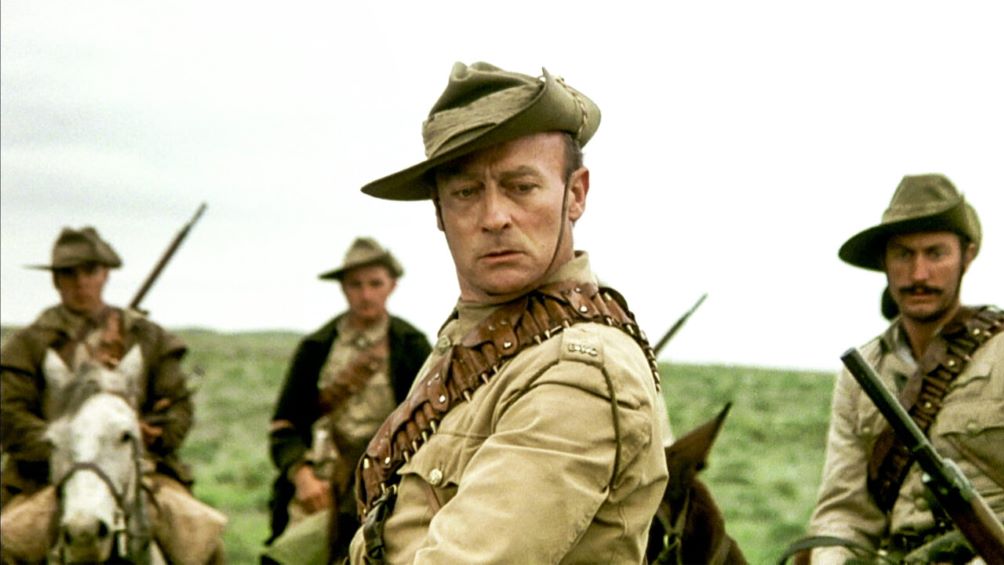
Breaker Morant (1980)

Breaker Morant (1980)

Complex moral issues are brilliantly explored in this superbly made attack on war and its consequences

Director: Bruce Beresford

Cast: Edward Woodward (Lt Harry “Breaker” Morant), Bryan Brown (Lt Peter Handcock), Lewis Fitz-Gerald (Lt George Ramsdale Witton), Jack Thompson (Major James Francis Thomas), John Waters (Captain Alfred Taylor), Rod Mullinar (Major Charles Bolton), Charles ‘Bud’ Tingwell (Lt Colonel Denny), Alan Cassell (Lord Kitchener), Vincent Ball (Colonel Hamilton)

To some the case is still a cause celebre. In 1902, near the end of the Boer War, three Australian officers were put on trial (effectively, but the term didn’t exist) for war crimes – the murders of two German missionaries and the execution of six Boer. Two of them – Captain Harry “Breaker” Morant (Edward Woodward) and Lt Peter Handcock (Bryan Brown) were shot – the third, Lt George Witton (Lewis Fitz-Gerald) was sentenced to life (later commuted). But were they guilty or scapegoats? Fighting in a guerrilla unit, ordered to use the same tactics as their Boer opponents, were the men simply taking their blame for decisions made by their (British) superiors?

Beresford’s superb film is far more complex and challenging than a simple polemic. These men are sympathetic, but no martyrs. A defence of “just following orders” sounds queasy in a post-Nuremberg world. The film makes abundantly clear that all three are guilty of the crimes they have been accused off. Ironically, the one charge they are acquitted of (the underhand, unordered murder of a German missionary) is the one Handcock (the trigger man) and Morant (who ordered it) are most deserving of being shot for. But these are still junior officers, taking the fatal blame, while policy makers tut-tut and distance themselves from the consequences of their actions.

What Breaker Morant does, in an intelligent and impassioned way, is attack imperialism, arrogance and the way war twists ordinary men into carrying out deeds they would never have thought themselves capable of. War turns a poet and lover of horses like Morant into an angry, impulsive murderer; a happy-go-lucky chancer like Handcock into an assassin; a decent, naïve man like Witton into a triggerman. This, Beresford’s film argues, is the consequence of military aggression and imperial overreach. It’s impossible not to think of Vietnam, Afghanistan or other wars, where initial intentions are lost in a sea of hit-and-run attacks, mutual brutality and a comfort with the dea that any deed is excused if carried out in service of the conflict.

Breaker Morant manages to pull off a difficult trick. It’s a film about an unfair trial, rigged from the start to product a verdict of guilty, which never whitewashes the accused but always reminds us through flashbacks that they are definitively guilty (but not solely responsible for) the crimes they have been accused of. It asks a challenging question: who should we punish more, the soldier on the ground who commits the crime, or the general miles away who decided on the order of combat that allowed it? It’s a film that argues both are guilty, both corrupted by war. Kitchener (played with a surprising dignity by Alan Cassell) isn’t presented as a monster, but a man who feels sacrificing these men to a firing squad to bring the Boers to the negotiating table is as valid (if regretful) a military tactic as ordering them to charge a machine gun emplacement would have been.

The trial takes up the bulk of the film and is a display of inventive camera-work and editing to present a small location in a constantly dynamic and interesting way. Beresford uses a rich combination of close-up, deep-focus, reaction cutting and fluid cameras to alternately expand and contract the space according to the pressures of the scene. A senior officer gives his oath in extreme close-up, the court blurred behind him, his tense face giving a visual image that defines the fact we know he’s come to lie. Later the opposing counsels conduct an angry exchange with the tribunal in perfect deep focus behind them, never letting us forget who really makes the decisions.

The trial has been set up for the Australians to lose. Their defence counsel, an under-prepared solicitor turned army major with limited trial experience, clutches his notes in the first few minutes of the trial. Major Thomas’ main experience is with wills (“Should come in handy” Handcock drily comments). Nevertheless, Thomas emerges as a brilliant, passionate advocate. It’s a superb performance from Jack Thompson, full of courtroom fireworks but underpinned by both moral outrage but also a suppressed certainty that everything he is doing is in vain. His defence skewers the army’s case in several key places (it certainly swings some of the tribunal, two of whom vote to acquit) but he’s pushing boulders up slippery hills.

Every witness statement is underpinned by flashbacks showing the actions play out more or less as stated. Sure, witnesses lie, absolve themselves and colour the narrative, but on the essentials its true. The accused – apart from the assassination of the missionary – don’t deny their crimes. They also show not a shred of remorse. After all they were just holding up the British way. As the pieces of imperial memorabilia – paintings of Victoria, British flags (including one towering over the men in the field as they eat) and the constant refrain of a military band playing outside during the trial – remind us, while their decisions are their own they are very much part of a wider system (“We’re the scapegoats for Empire” Morant says before he’s shot).

If there is a case for anger, it’s there. These men remain so dedicated to the army, they even volunteer to come out of their prisons to help defend against a Boer attack. Their decisions were their own but the expectations on them were clear. If the Nuremberg Trial had focused on corporals and platoon commanders, while Field Marshals and Ministers were treated as negotiating partners, would that have been justice? The film also makes clear colonial arrogance makes the Australian officers easy sacrifices – a witness at the trial even tries to paint Australians as naturally inclined to violence and indiscipline (before he is dismantled by Thomas).

The film (despite how its remembered by some) makes very little case for them as martyrs. The final sequence of the execution is the only point the film leans into an “epic martyr” angle. Morant and Handcock are shot on a red-sun kissed hill, holding each other’s hands as they march to their final resting place, refusing a blindfold with Morant defiantly shouting at the squad “Don’t make a mess of it!” before being squashed into ill-fitted coffins (in another sign of the film’s dark wit, Handcock comments they haven’t even been measured for these coffins “I shouldn’t think they’ve had any complaints” Morant replies dryily).

It’s that closing sequence that has probably led some to see this as making a case for the men. Far from it. This is a sensational, gripping and intelligent trial drama that manages to both represent injustice and also about make the guilt clear. It’s superbly acted. Woodward is quietly, authoritatively marvellous as a difficult, socially awkward, would-be-marionet with a poetic soul. Brown is charismatic in the film’s flashiest part, Fitz-Gerald quietly disbelieving at what fate has bought him. Breaker Morant bubbles with anger and sadness but makes its target far wider and more challenging. Its target is war and the mentality that leads us to applaud soldiers for what we ask them to do until we are told what they have done. One of the greatest films of the 1980s.

Things to Come (1936)

Things to Come (1936)

HG Wells ultra-serious view of the future is stilted but also visionary

Director: William Cameron Menzies

Cast: Raymond Massey (John Cabal/Oswald Cabal), Edward Chapman (‘Pippa’ Passworthy/Raymond Passworthy), Ralph Richardson (The Boss), Margaretta Scott (Roxana Black), Cedric Hardwicke (Theotocopulos), Maurice Braddell (Dr Edward Harding), Sophie Stewart (Mrs Cabal), Derrick De Marney (Richard Gordon), Ann Todd (Mary Gordon), John Clements (Enemy pilot)

Alexander Korda was thrilled. He’d secured the rights to the legendary HG Well’s new novel. Even better the Great Man would work, hand-in-glove, with Korda’s team to bring The Shape of Things to Come to the screen. It would be a grand science-fiction hit, that would echo the success of American films based on Wells’ work (films, to be fair, Wells pretty much hated apart from The Invisible Man). It became a continual struggle before the final flawed-but-fascinating film arrived in cinemas.

Things to Come opens in the (then) near future in 1940 as war tears “Everytown” on Christmas Day and flies 100 years into the future. Bombing destroys the city and hurtles the world into over twenty years of never-ending war that leaves civilisation wrecked by carnage, advanced weapons and poisonous gases. A legacy of the war, “the wandering sickness” devastates the survivors, killing half the remaining population. In the ruins of Everytown in the 1960s, the Boss (Ralph Richardson) rises to take power, one of many warlords across the world being challenged by the “World Communications” alliance of engineers and scientists in Basra, Iraq. When they reshape the world, decades of progress lead to a new civilisation in 2036 aiming at the stars.

HG Wells saw Things to Come as a polemic, an ambitious and optimistic look at how mankind should progress, leaving behind war and politics to embrace rational thought and the quest for knowledge. Written at a time when tensions were high in Europe, it would show the world torn apart, devastated and reborn greater than it ever was before. Never-the-less at every point, the unambitious, myopic and power-hungry gather to hold back progress. What he didn’t really see it as was a conventional “drama” or those involved as “characters” more devices, ciphers and mouthpieces for his viewpoints.

Which helps explain the curious project that made it to the screen. Wells was guaranteed approval over the dialogue, which remains flat and heavy handed. Actors felt constrained within the sonorous phasing and over-written prose. It wasn’t helped by director William Cameron Menzies’ discomfort with dialogue scenes. Whenever two people stand around (which sums up the blocking) and chat, the film is frequently a little dull, settling for a semi-disguised lecture on humanity, science and progress. Korda correctly identified the dialogue problems and cut as much of it as possible.

In doing so, he snipped away much of the narrative framework of the film. In a film that flies forward through time and world-changing events, we frequently get confused about the exact details of who goes why and where and what makes characters do the things they do. Characters disappear and reappear, fly across the world in seconds, form and break alliances and argue and drop cases all on a sixpence. Raymond Massey later talked about how hard he found his character (a man and his grandson, bridging all timelines) to bring to life with dialogue largely devoid of emotion. Much of Things to Come can be dry-as-a-bone.

But yet… Away from the weaknesses of the script, much of Things to Come is quite awe-inspiring. While the characters might be a little flat, the energy of the film’s first two acts (in 1936 and 1966) offers a host of striking scenes and images. Things to Come remains powerful and horrifying when it looks at the darkness and damage of war. The 1936 bombing attack on Everytown still shocks with its superbly assembled shots of buildings exploding, crowds panicking, dead bodies slumped in cars, terrified faces and dead children in the rubble. Imagine watching this with the Blitz just a few years away. Menzies may not direct acting or dialogue with much inspiration, but his skill with visuals and editing is clear. The montage carrying the world over the next thirty years is a masterful mix of fake news-footage and technological innovation as ever more advanced tanks and airplanes roll past the screen. The film’s use of design and visuals is frequently haunting and impressive.

It carries across to the bombed-out design of Everytown in the 1960s. A shell of a city, where wrecks of cars are pulled by horses. Those suffering from “the Wandering Sickness” move like zombies through the city. Homes and buildings are gutted remains. Newspaper headlines – of newspapers that become ever more basic in printing and more expensive in price – had previously helped communicate the passage of events. Now the news is chalked up onto a board outside the home of the Mussolini-like Boss (the film’s finest performance of charismatic swagger and delusional power-mad greed by Ralph Richardson). Clothing is basic and functional, pulled together from scraps leftover from the war, in a world largely devoid of all technology.

This wasteland makes the futuristic designs even more striking. The “Wings Over the World” organisation – growing from the cradle of civilisation in Iraq – is sleek, metallic and efficient in its construction. When John Cabal (Raymond Massey) lands back in the 60s ruin of Everytown, he looks like a spaceman. He might as well be. His fleet of unimaginably vast airplanes have inspired visions of futuristic flight right up to the mighty airbases the Avengers operate in the MCU.

While you can snigger a little at the utopiaish version of the future – very Star Trek in its flowing robes and shoulder pads – it’s vision of subterranean cities full of everything from wrist communicators to widescreen TVs feels quite prescient. Everything is clear, polished and perfect – much of it doesn’t look a million miles away from an Apple store. While the villains of the future (a band of luddites led by Cedric Hardwicke) may be little more than paper tigers, given only the vaguest motivations, the grand engineering accomplishments of the future and their glances at the stars feel inspired in their detail and ambition.

It’s where Things to Come triumphs. It might not often have much to listen to, but every single scene carries a slice of design or visual interest. Its frequently assembled into effective – and even terrifying – montages. And its design of the future – based on Wells vision and bought to life by Menzies and his technical team – is a perfect mix of striking and prescient. Things to Come isn’t always the best drama, but as a forward-looking piece of design it’s truly memorable.

All Quiet on the Western Front (2022)

All Quiet on the Western Front (2022)

War is Hell in this impressively made but strangely unoriginal film, that looks the same and carries the same message as countless others

Director: Edward Berger

Cast: Felix Kammerer (Paul Bäumer), Albrecht Schuch (Stanislas “Kat” Katczinsky), Aaron Hilmer (Albert Kropp), Moritz Klaus (Franz Müller), Adrian Grünewald (Ludwig Behm), Edin Hasanovic (Tjaden Stackfleet), Daniel Brühl (Matthias Erzberger), Thibault de Montalambert (General Ferdinand Foch), David Striesow (General Friedrichs)

Perhaps no front-line fighting in history was more hellish than the mud-splattered sludge of death that were the First World War Trenches. Millions of men were fed through an industrial mincer of death, all for remarkably little gain. It was a tragedy born of ambition and pride. It’s cost on the young was beautifully captured by Erich Maria Remarque’s novel (an adaptation of which was one of the first Oscar winners) and it is bought to the screens again in this visceral German adaptation.

Paul Bäumer (Felix Kammerer) and his friends are naïve young men excited to serve in Spring 1917. Little do they know the blood-soaked, brutal reality of war. It’s soon thrust upon them when their first night in the trenches coincides with a catastrophic artillery attack. Skip forward a year and its November 1918. While Germany’s lead negotiator Matthias Erzberger (Daniel Brühl) tries to end the war, Paul and his mentor “Kat” (Albrecht Schuch) just hope to survive. But is there any hope?

All Quiet on the Western Front is raw, bloody and unflinching in its glance at the horrific realities of war. Shot with a cinematic beauty by Edward Berger that turns the mist filled world of no-man’s land into a sort of dreamscape that tips into a nightmare, it leaves no doubt about the brutal cost of war. Bodies are torn apart by explosions, shredded by bullets (even dead ones). Hand-to-hand combat is ruthless and there is not a jot of quarter given on any side. Everything is coated in a sheen of mud and blood, with dying men desperately gulping filthy water or left slumped where they fall.

The after-effects of war are horrifically shown. On their first night one of Paul’s friend is literally shredded by mortar fire. Bodies left on no-man’s land are peppered with bullets. The remains of a soldier is blasted out of his uniform, left hanging several feet up a tree. Paul and Kat discover a missing regiment of young recruits dead in an old factory, having removed their gas masks too soon. Tanks emerge from the mist, setting the ground shaking, rats fleeing before them, spewing death from their machine gun turrets, crushing screaming men under their tracks.

This is actually a fairly loose adaptation of the novel. The original prided itself on its lack of specifics: it’s never quite sure when or where it happens other than in the trenches. The soldiers fight in brutal battles in unnamed locations and simply live a day-to-day existence. This version make everything very specific: November 1918. Sub-plots around the armistice negotiations and the unwillingness of a die-hard Prussian General (a vilely arrogant David Striesow) to accept defeat expand the film beyond the novel’s original scope. However, this expansion never feels fully explored and at times detracts from the film’s richer, more intimate focus on the soldiers.

Berger’s film perfectly captures the sense of these boys being fed into a huge industrial meatgrinder in a cycle of death. The opening sequence follows a young soldier. He trembles with fear before going over the top, aimlessly fires his bullets and then grabs his spade to continue the charge and bludgeon a soldier. Cut to black before we follow the progress of Heinrich’s uniform. It is removed from his dead body, carted back to Germany, washed, repaired and then handed over to Paul as he signs up. Paul questions the name-tag inside: “Must have been too small. Happens all the time” the recruiting officer says, ripping it out. It’s all a production line.

Paul soon learns the truth. Felix Kammerer is excellent as this sensitive, enthusiastic young man (forging his father’s signature so he can join up) who sheds his innocence to become a battle-hardened warrior, succumbing to a mechanical, merciless violence in combat. He kills without hesitation and when guilt arrives – such as his killing of a French soldier in a fox hole – it leaves little long-term impact, so deadened has he become. Equally good is Albrecht Schuch, humane and worldly-wise figure as Kat. The bond – part brotherly, part father-son – is the film’s most affecting personal beat, and its most effecting scene involves Paul reading the illiterate Kat his mail.

There is much to admire here. But yet, while a technical triumph and immersive experience (even its score plays out with the organ-led heaviness of an artillery attack), I was less impressed with it than I expected. Perhaps that’s because it does or says nothing new. The original film was made by many people who were actually in the trenches. This film was made by people who grew up watching movies about wars. It’s frames of reference are subtly different, although its intentions are the same. Maybe that’s why I find it less affecting and less shocking than a film made 100 years ago.

For all its technical skill, the film is a continuation of visual grammar and thematic ideas established in countless films before. The blood-spattered immediacy of Saving Private Ryan. Tracking shots that remind you of 1917 and Paths of Glory. The on-the-streets fury of Black Hawk Down. The rumbling soundtrack of Dunkirk. It tells us War is Hell: but nothing else. Maybe that message is enough and it deserves repeating. But when the film expands the original like this, you want more.

The inclusion of the armistice works against it. The time jump means we lose any sense of the slow disillusionment of these men. Several key moments from the book – most notably Paul’s brief return to a home he can no longer relate to – have been stripped out. Setting the film in the last week of the war leads to a predictable ending that feels like its straining for even more pathos – of course there will be key deaths in the final minutes of the war. A more daring film might have looked more at how a harsh armistice and dark mutterings of betrayal led so many of these young men to hurl Germany back into war only twenty years later.

All Quiet on the Western Front is powerful, but its power is one of reiterating a familiar message. Berger’s film is wonderfully made but only follows confidently in the footprints of other (better) films. It avoids developing its message or context further and it’s expansion of the book’s plotline waters down the personal stories that made it so affecting. It’s grand, cinematic and powerful – but could have been more.

Seven Samurai (1954)

Seven Samurai (1954)

Superb, archetypal action-adventure men-on-a-mission film: Kurosawa’s masterpiece, brave, bold and thrilling film-making

Director: Akira Kurosawa

Cast: Toshiro Mifune (Kikuchiyo), Takashi Shimura (Kambei Shimada), Daisuke Katō (Shichirōji), Isao Kimura (Katsushirō Okamoto), Minoru Chiaki (Heihachi Hayashida), Seiji Miyaguchi (Kyūzō), Yoshio Inaba (Gorōbei Katayama), Yoshio Tsuchiya (Rikichi), Bokuzen Hidari (Yohei), Yukiko Shimazaki (Rikichi’s wife), Kamatari Fujiwara (Manzō), Keiko Tsushima (Shino), Kokuten Kōdō (Gisaku)

I’ve often been a Kurosawa sceptic. But it’s hard to stay critical, when he made a masterpiece as near perfect as Seven Samurai. It’s one of those films that is long (the favoured cut is nearly three and a half hours) but never once drags. Kurosawa directs with such intelligence, skill and pace, you can’t help but be swept up in it. It’s one of the finest action epics ever made, but also has a rich vein of sadness and melancholy. After all, the samurai may fight the good fight, but they always lose.

In the sixteenth century, a farming village is under-threat from a bandits, rogue samurai turned ronin, who plan to steal the harvest. To protect themselves, the village elder (Kokuten Kōdō) declares they need samurai of their own (and since the farmers have little to offer, they better “hire hungry samurai”). They recruit a team of seven, led by experienced Kambei (Takashi Shimura), who accepts out of nobility. Among the team is wild-card peasant-turned-wannabe-Samurai Kikuchiyo (Toshiro Mifune). The seven arrive in the village and prepare for battle: but, even when working together, no one ever completely forgets the rigid societal boundaries of Japanese culture.

Seven Samurai is a wonderful character study, a sublime action film and complex and engaging exploration of Japanese history and society. It also has a perfect three act structure, it’s run time expertly divided into the samurai’s recruitment, preparation and defence of the village. This careful construction counters that epic run time – each act tells an almost self-contained story, meaning the film’s momentum never slackens.

It’s bought together by a director making a perfect fusion between Japanese cinema and his American and European influences. Kurosawa had never been shy about his admiration for directors like Ford and Hawks. You see elements of cowboy flicks throughout: from the set-up of the villagers as homesteaders, the samurai as the cavalry and the rogue ronin as the Indians, down to sweeping camera shots and vistas straight from Ford (the kinetic energy of Stagecoach is surely an influence). His Western influences always made Kurosawa more digestible than (for example) Ozu.

Seven Samurai is an also electric employment of Eisenstein style techniques of skilful editing, dissolves, fast cutting and an embracing of the language of cinema. Kurosawa accentuates action with slow motion: when Kambei dispatches a bandit (in his superb introduction scene), the body falls seemingly forever, death building in impact. Zoom cuts introduce locations, bringing us closer and closer to events. Kurosawa shot the battles with three cameras (a master and two roving cameras) allowing him to capture the kinetic action of his rain-soaked finale. Brilliant montages introduce concepts, characters and themes. It’s a masterclass.

It’s also masterful at quickly sketching character. We know from his first introduction – a brilliant cold-open fifteen minutes or so into the film – that Kambei is a man of both shrewd tactical awareness and puts duty before superficial pride, by his willingness to shave his hair so he can pass as a monk to rescue a child. (The gasps of those watching say it all at this willing acceptance of a cultural mark of shame). Kyūzō is introduced duelling with wooden swords. Why don’t we swop to real blades says his opponent: because you’ll die, Kyūzō matter-of-factly describes, his matter-of-fact bluntness and lack of bragging backed up by his immense skill when the chap dies seconds later. Gorōbei’s shrewdness is shown by the ease he dodges Kambei’s ambush test, just as Kikuchiyo’s rawness is when he blunders straight into it (and promptly loses his temper). Little moments like this abound, in a film stuffed with clever character beats.

The film presents a Japanese culture where concepts of honour and self-sacrifice sit awkwardly alongside regimented hierarchical and societal rules. The samurai can’t help but look down on the peasants – even while they see it as their duty to protect the weak. The villagers, in turn, look at the samurai as barely-to-be-trusted potential oppressors or dangerous parasites who steal their land and daughters (or both). Much of the film’s second act, as the samurai train the villagers to resist the attack, is about these two communities learning to respect each other. But it’s a tenuous alliance, held together by circumstance: when the dust settles, the surviving samurai are no longer welcome.

The samurai are a dying breed. Kambei knows the future belongs to people who provide industry and food. Samurai principles of honour and duty, pride in their skill, is also increasingly irrelevant in a world where the gun decides conflict. The ronin have three rifles and these deadly weapons are no respecter of skill or honour (none of the seven are bested in conflict, but all who fall do so to a bullet). Perhaps this is why the samurai cling to their principles and their honour. They know the world they knew is dying away and that there may be no place for them in the new.

This conflict is given a human shape by Kikuchiyo. Played with an electric, charismatic wildness by Toshiro Mifune (allowed to let rip, he’s a breath-taking explosion of jagged movements, eccentric line deliveries and unbound energy), Kikuchiyo is neither peasant nor samurai. Bought up from working stock – carrying stolen papers of nobility to try and pass himself off as samurai – he’s also rejected by his farmer peers for his warrior status. This makes him a character who can expose hypocrisies on both sides: denouncing the farmers pleading for help but cowering from the samurai; then angrily arguing samurai selfishness and pride have left the peasants with little choice but to horde food and riches to survive.

Not that Kurosawa is shy of admiration for the samurai. Yes, the flaws of their class are exposed – and we see more than enough their potential for arrogance, pride and violence. But the seven also contain a collection of their best traits. Takashi Shimura is brilliant as Kambei: selfless and honourable who takes on the task to honour the peasant’s offering all they can (however little that be). Heihachi (played by an ebullient Minoru Chiaki) represents generosity and warmth. Kyūzō (an enigmatic Seiji Miyaguchi) is awash with self-effacing warrior skill, shrugging off his feats with simple matter-of-fact statements. Shichirōji and Gorōbei are loyal and thoughtful warriors, Katsushirō (a charming Isao Kimura) a decent man eager to prove his worth. These are the best of their class.

They’ll need to be to win in this desperate action. Their preparation carefully outlines the obstacles facing to defence of this village – and to corral the villagers to defend their property. Houses outside the village walls are abandoned (Kambei seeing down a near rebellion on this, with threats of immediate justice), a raid on the ronin’s base aims to reduce their numerical advantage, the difficulty of turning the terrain against superior numbers repeatedly made plain. Kurosawa’s visual storytelling means the action when it comes is not only captivating, but completely understandable.

And what action. Seven Samurai can take its place on any list of the greatest war films ever made. The final hour features attack-after-attack on the village, interspersed with raids, skirmishes and derring-do. Both Kyūzō and Kikuchiyo take solo missions out of the village, though Kikuchiyo’s hunt for glory, even while he captures a rifle, leaves part of the wall undefended and leads to tragedy (Kambei is furious at this failure in discipline). It culminates in a rain-soaked final stand, shot with an all-absorbing power and engrossing kinetic energy.

The samurai sacrifice much for the village. But for what thanks? A peasant disguises his daughter as a boy, because he assumes, if discovered, the samurai will instinctively rape her. When the ronin don’t arrive as expected, the peasants grumble that the samurai are eating more than their fair share. As the samurai fall, their deaths are marked with a decreasing lack of notice (the final deaths don’t even gain on-screen funerals). With victory assured, the peasants return to their crop and don’t even lift a hand to wave the samurai goodbye.

It seems like poor reward for people who have sacrificed so much. But then that’s part of the point Kurosawa is making. Some samurai chose honour. Some choose the opposite. But they are always relics of a feudal system that is being left behind by events and the modern world. Its not just guns that will take them eventually. It’s a sadness that adds an even richer vein to this gripping, superb action drama. Kurosawa’s films may have flaws – but he doesn’t put a foot wrong in Seven Samurai.