The Wild Bunch (1969)

William Holden and Ernest Borgnine lead The Wild Bunch into one last adventure

Director: Sam Peckinpah

Cast: William Holden (Pike Bishop), Ernest Borgnine (Dutch Engstrom), Robert Ryan (Deke Thornton), Edmond O’Brien (Freddie Sykes), Warren Oates (Lyle Gorch), Ben Johnson (Tector Gorch), Jamie Sánchez (Angel), Emilio Fernandez (General Mapache), Strother Marin (Coffer), LQ Jones (T.C.)

SPOILERS: Discussion of The Wild Bunch is pretty much impossible without discussing its ending – but then it does have a pretty famous ending. Well you’re warned…

It’s easy to look back the Wild West with rose-tinted glasses. To remember it as being when the American spirit was at its best and a romance ruled. To basically take the “Wild” out of the picture. Peckinpah’s The Wild Bunch is all about putting that “Wild” front and centre, a stunning exploration of the closing days of the Wild West that replaces sentiment and nostalgia with violence and a group of men who know nostalgia is just the vanity of hardened, brutal killers.

In 1916 Pike Bishop (William Holden) is the leader of a notorious gang of criminals, ruthless killers all, wanted by the law – and the rail company they have been robbing for years – at any price. Pike’s latest bank job winds up being a trap, with a deadly shoot-out taking place in the middle of a town (with the population lethally caught in the crossfire) as the rail company tries to kill Pike’s crew, their efforts led by Pike’s former partner Deke Thornton (Robert Ryan), forced to work against Pike or return to the hellish jail at Yuma. The massacre sees only a few members of the gang survive – Pike, his best friend Dutch (Ernest Borgnine), the Gorch brothers Lyle (Warren Oates) and Tector (Ben Johnson), Mexican gun-slinger Angel (Jamie Sánchez) and old-timer Freddie Sykes (Edmond O’Brien). The gang flees to Mexico, with Deke and his posse dispatched on their heels by the furious railway company. In a Mexico ripped apart by civil war, the gang are hired by would-be warlord General Mapache (Emilio Fernandez) to hijack guns from the American army – but there are other dangers when Angel has friendly contacts with the Mexican revolutionaries.

Peckinpah’s film is a stunning exploration not only of the dying dreams and way of life of old men in the West – Pike, Deke, Dutch and Freddie are all old men while the Gorch brothers are hardly in the first flush of youth – but also the endemic nature of violence. Peckinpah’s film is unfailingly brutal in its depiction of violence, an infection that runs through every level of society. Everyone from the children – the film opens with a gang of children laughingly feeding two scorpions to a mass colony of ants, before setting all the animals on fire (look in vain for the “no animals were harmed in the making of this picture” message) – to the men themselves. The film’s opening shoot-out – a technical marvel and also a masterpiece of slow tension building by Peckinpah – is shocking in its brutality.

Unlike Leone, to whom violence is shocking in its suddenness, Peckinpah slows down the action so that we can see (and feel) the horror of each bullet. The Wild Bunch set some sort of record – in its final shoot-out sequence – for blood squibs used. It’s not a surprise after watching the opening shoot-out between the Bunch and the railway forces. With the Bunch using a passing Temperance march to cover their retreat, bullets are fired indiscriminately, killing passers-by and men from both sides alike. No one, aside from a furious and appalled Deke (the only character who has suffered himself from violence in prison) expresses a moment’s guilt for this massacre.

But then Pike and the bunch are hardened killers to a man. Pike cares nothing for the members of the gang lost – even forgetting until late on that he left a man guarding the bank staff while the gang rode out of town – and when a wounded survivor can’t ride and agrees that Pike should finish it, he doesn’t pause for a second. Any ideas of these men as being rogues or there being any charm to living a life on the margins of the law are rapidly dispelled. 

And this violence isn’t just an American thing – it dominates life in Mexico as well, where the drunken, bullying General Mapache is a brutal would-be dictator, whose soldiers frequently terrorise, steal from and murder the villagers around them. In Mexico, the gun is law even more than the US, and these guys have even closer to being criminals in uniform, just as Deke’s posse could just as easily be working with the Bunch as against them.

So what motivates these men? What is brilliant about Peckinpah’s film is acknowledging that these violent killers may feud and fight, but they are still stretching for some sort of meaning in their life. These are world-weary old men with little to live for, who are trying to work out what – if anything – is left in their lives. And that life has to have some sort of code, some sort of grounding basis, even if everything else is up for grabs. Pike says when you “side with a man, you stay with him and if you can’t do that you’re finished”. It’s a flexible rule for these guys – and they frequently shirk it in the film when events are dangerous – but it’s a code they need to believe they would keep.

It’s that code that comes into play late in the film as Angel falls increasingly foul of Mapache’s anger and whims. It takes the gang a while to stand by it, but when they do it’s also partnered by a sad realisation that for these old men what else is there? Their lives have been ruled by the gun and shoot-out after shoot-out. Peckinpah views the West with no nostalgia, but he understands that men need to view their own lives with nostalgia at times, to understand that they may yearn to point at something and say that was what their lives were for.

And what else is there? Everyone in the film knows it’s over. They’re old men, and the world is moving on and leaving them behind. At one point the gang look on at wonder at a car owned by Mapache, and the Gorch brothers flat out can’t believe in the existence of an aeroplane. The modern world is ending the world of these guys, and Pike knows it: “We need to start thinking beyond our guns” he says at one point, but offers no solutions at all about what that might be. The modern world is the real deadly bullet that’s taking out the gang: in the final shoot-out, the key weapon even turns out to be a modern machine gun, spraying death at a level ordinary shooters can’t even begin to match.

That final shoot-out sees all these themes come together brilliantly. It could almost be a rebuttal of Butch Cassidy and the Sundance Kid (released the same year) that sees our heroes captured in romantic sepia freeze frame, charging into certain death against the Bolivian army. Here we effectively see the battle, with additional machine guns and thousands of blood squibs as the Bunch take on Mapache’s army in fury at Mapache’s murder of Sanchez. In a furious shoot-out lasting almost ten minutes, it’s a blood bath as the Bunch mow down dozens and dozens of Mapache’s army while themselves being repeatedly shredded by bullets, adrenalin alone keeping them going. Peckinpah even has the final fatal bullet that takes out Pike coming from a child soldier.

But the Bunch are taking this suicidal last stand because it’s their last –  their only – chance to have stood for something, to have a code they stuck by. To stand by their partner and if that means going down in a hail of bullets, at least there is some sort of glory to it. And besides – what else have they got? The modern world has drained all purpose from their life, so why not at the end wordlessly agree to leave behind the greed that has dominated their lives and die for something?

Peckinpah’s film is simply brilliant, fabulously made and brilliantly shot and edited. The cast of pros is simply excellent. Holden’s world-weary faded glamour now leaving only a cold ruthlessness and a wish that he had more to show for it is perfectly partnered with Borgnine’s easy-going sidekick who wants to do the right thing but needs to find the reasons. Ryan is excellent as a guilt-ridden Deke, who finally has begun to understand the impact of violence. The rest of the cast also excel. The Wild Bunch may be the least nostalgia infected Western ever made, a grim reminder that the West really was Wild. But it’s also a stunningly well-made and challenging picture.

In the Heat of the Night (1967)

Sidney Poitier and Rod Steiger confront racism In the Heat of the Night

Director: Norman Jewison

Cast: Sidney Poitier (Virgil Tibbs), Rod Steiger (Chief Bill Gillespie), Warren Oates (Sam Wood), Lee Grant (Mrs Colbert), Larry Gates (Endicott), James Patterson (Purdy), William Schallert (Mayor Schubert), Beah Richards (Mama Caleba), Peter Whitney (Courtney)

A slim, tight thriller with a social message, In the Heat of the Night won Best Picture in 1967, beating out Bonnie and Cyde and The Graduate (both films with a revolutionary impact on films making) as well as another Sidney Poitier starrer, the even-more message heavy Guess Who’s Coming to Dinner. An unflashy, cleanly made, efficient film, In the Heat of the Night is in some ways a surprising winner – but the shocking depiction of racism in the Deep South at the time still hits home today.

In Sparta, Mississippi a wealthy industrialist from Chicago is found murdered in the street. Who committed the crime? Well surely it’s the well-dressed black man with a wallet full of money waiting to get out of town at the train station. The man is hauled in – only for him to reveal he is an expert homicide detective from Philadelphia named Virgil Tibbs (Sidney Poitier). Tibbs is sucked in to assist local police chief Gillespie (Rod Steiger) to investigate the crime, partly on the order of his boss, partly due to his disgust at the police department’s racism and incompetence, and partly at the pleading of the victim’s widow (Lee Grant) who recognises him as the best officer for the case. But will Tibbs’ expertise crack the case in a town where the idea of a black man in a suit, asking questions and taking no shit, is a still a surefire recipe for a lynching?

Nominally In the Heat of the Night is a murder mystery, but you’ll be hard pushed to remember much about the case after you finish the film. The eventual killer emerges from left field and the steps of the investigation are often unclear. While the film is trim, it does mean the tension around the killer’s identity never really builds up and we never get a real sense of the personality of the suspects (apart from the uniform racism).

Where its real strength is, is in the mis-matched “buddy” movie structure of two men forced to work together, the difference being that both casual and violent racism underpins every interaction Tibbs has in the town. Poitier was seen as a calm and graceful figure, but In the Heat of the Night finally gave him the chance to mix dignity with resentment and anger that had never been seen in a black character on screen before. The film works due to Poitier’s inherent toughness, his lack of compromise and anger at injustice. Poitier was never more hard-edged, defiant and determined to get what he deserves. Unlike Poitier’s other racial buddy movie The Defiant Ones, you can’t imagine Tibbs jumping off the train to freedom to try and save Tony Curtis.

Tibbs isn’t just the smartest, toughest policeman on the screen – he demands to be treated like it. The film’s most famous scene – and shocking at the time – is during Tibbs’ questioning of genteel racist Endicott in his orchid greenhouse. Endicott – whose home resembles nothing more than a plantation, loaded with black workers – is well spoken but inherently racist, and slaps Tibbs when his questions go on too long – only to immediately receive a backhand from Tibbs in return. Endicott is as shocked as audiences were – the idea of a black man striking back was on unheard of.

It’s terrifying and sickening to realise however that the American South at the time was genuinely like this. The slap is a proud moment – but it marks Tibbs for retribution. There is a genuine danger Tibbs will get lynched in this film (twice he narrowly escapes murder at the hands of a gang of furious rednecks). In real life, Poitier was very hesitant to film in the South, and for the brief location shooting in Tennessee slept with a gun under his pillow. The film is littered with casually dropped racial slurs, the politest of which is “boy”. It leads to the famous line from Tibbs that back home “they call me Mister Tibbs” – but you forget that it follows from Gillespie asking him what an n-word copper is called in Philadelphia. And even after that Gillespie only calls him Virgil, as if still not quite able to compute the idea of a black man who can be a “mister”.

The relationship between Tibbs and Gillespie is the heart of the film. And the film is brave to not have this turn into “they were opponents but then they became the best of friends”. Instead there is a sort of grudging respect that grows, even though Tibbs clearly thinks Gillespie is an impulsive racist and Gillespie thinks Tibbs is a stiff-backed but brilliant n-word. Rod Steiger won the Oscar for Best Actor, and he does some fine work as the complex Gillespie. Keeping his explosive energy in check (despite the inevitable outbursts), Steiger sketches out a character who is smart enough to know he isn’t smart enough, who can respect Tibbs’ professionalism and understand on some level that racism is beyond all sense but still drop racial words with an instinctive ease.

Steiger’s Gillespie is a tough-talking, stereotypical cop but he’s also got a sad little hinterland – a late dinner at his home with Tibbs has him confess that Tibbs is his only guest for years – and while he arrests no fewer than three innocent people for the crime, there is no doubting his dedication to justice. Steiger doesn’t apologise for Gillespie’s appalling attitudes, but also does enough to suggest that his racism is learned rather than innate. While never completely sympathetic, especially today, the film lays hints of hope that a racist cop from the South could work side-by-side with a black officer – and that was considerable progress at the time.

But it’s Poitier’s movie, and while in many ways he has the simpler part (and Poitier generously ceded his admiration for Steiger’s skill and craft pushing him to a level he felt he not reached before), Tibbs is the centre of the film. Jewison skilfully shoots Poitier as always the outsider, from his looks and Sherlock Holmes style skills, to the way the camera focuses on his hands touching things – from dead bodies to door knobs – to the visible discomfort of the white men watching him. Tibbs may be arrogant but he’s right and Poitier’s refusal to compromise or offer any concessions is a striking thing – Tibbs is who he is and he won’t change a thing to be accepted by the white man. At the end, he may respect the steps Gillespie has taken – but I doubt he’d consider the man a friend and certainly not a professional equal. 

In the Heat of the Night is still shocking for the openly displayed racism and menace of violence that black people faced in the Deep South in sixties America. Jewison’s film is efficiently assembled and tightly edited – not a single minute is wasted in one of the shortest Best Picture winners ever – and while its mystery is little to write home about, its portrait of racism in America is still shocking and stirring and its two lead performances are things to linger in the memory.

A Clockwork Orange (1971)

Malcolm McDowell burns up the screen in Kubrick’s masterful but cold A Clockwork Orange

Director: Stanley Kubrick

Cast: Malcolm McDowell (Alex DeLarge), Patrick Magee (Mr Frank Alexander), Michael Bates (Chief Guard Barnes), Warren Clarke (Dim), Adrienne Corri (Mrs Mary Alexander), Carl Duering (Dr Brodky), Paul Farrell (Tramp), Clive Francis (Joe the Lodger), Michael Gover (Prison Governor), Miriam Karlin (Catlady), James Marcus (Georgie), Aubrey Morris (PR Deltoid), Godfrey Quigley (Prison Chaplain), Sheila Raynor (Mum), Madge Ryan (Dr Branom), Anthony Sharp (Minister), Philip Stone (Dad)

For decades, A Clockwork Orange was unseen in Britain. After a number of copycat crimes led to a backlash, Kubrick – who had complete control over the rights of the film in the UK, his adopted country – essentially refused to let the film be shown anywhere in the country during his lifetime. This gave Clockwork Orange a sort of mystique for UK audiences that it has only slowly worn off, the air of the banned product, impossible to see other than through a dodgy knock-off or by travelling to another country. Released from the vaults this century, the film still carries a chilling pull, even if it’s a compelling but still muddled piece of intellectualism.

Adapted faithfully from Anthony Burgess’ novel, the film follows the life of violent young man Alex DeLarge (Malcolm McDowell), leader of a gang of street thugs who delight in evenings of “ultra violence”, with a bit of “the old in-out” thrown in for good measure. Which, in the invented Ingsoc style dialogue Burgess came up with, basically means Alex is essentially a psychotic rapist, albeit one with a huge degree of anti-authoritarian charm and cheek. Alex’s crimes eventually catch up with him however, whereupon he is imprisoned and volunteers for what he assumes is an easy option: an experimental psychiatric aversion treatment, designed to make him incapable of taking parts in acts of violence and sex. Released back into the world, Alex finds it and himself unchanged – the only difference being that violence makes him feel sick, which is poor defence as he encounters all his victims yet again, all bent on revenge.

Did something about the film scare Kubrick? Was part of his later mixed feelings about the film based around the fact the film is seduced by Alex, that it indulges his awfulness and utter lack of morality and makes points comparing the authoritarian government with the murderer they are trying to deal with. Yes, Kubrick makes clear that Alex feels nothing but pleasure about his awful acts, and the distorted fish-eyed lens he uses to capture much of this really hammers home the awfulness of his actions. But it’s also a film that takes a giddy delight in Alex’s charm and larger-than-life persona, and makes it easier for us to find him an attractive figure.

Of course part of this is through the way Kubrick seizes upon a once-in-a-lifetime performance from Malcolm McDowell, who roars through the film with such giddy power, such perverse force of nature electricity that he never captured it again. McDowell’s impish delight is what powers the film, and Kubrick’s clear admiration for the actor’s improvisation, his pushing of boundaries (the film’s most famous sequence, Alex singing Singin’ in the Rain while assaulting and – off camera – raping a woman, was McDowell’s own improvisation). McDowell’s performance is a magnet, his sneering contempt for authority and his sexy confidence and cultured intelligence makes Alex a character far more attractive than he should be.

And quite possibly to Kubrick as well. The film’s moral force loses some of its direction from the novel, by its skill in presenting in such a bravura way Alex’s horrors and because McDowell charges through the film. Kubrick was always the ultimate technician of film, so it’s not a surprise that A Clockwork Orange is a triumph of style and design; perhaps that is at the heart of its enduring power and impact. Kubrick’s design pushes the film a few degrees into the future from 1971, with a grimy, rundown look at Britain mixed with primary colours and garish 70s design. The look of Alex and Droogs is inspired, the sort of cos-play triumph that was way ahead of its time.

The film wants to make points about morality and free will, but these ideas get lost in the mastery of the film-making and the technical triumph of Kubrick (and John Alcott’s) camerawork. The film makes extensive use of fish-eyed, wide angle lenses that distort the world around Alex, hammering home the ultra-realism of the film. At several points Kubrick uses slow pan outs that go from tight shots to reveal more and more of the world of the film, granting an epic status to this squalid world (and increasing the status of Alex all the more). It’s sublimely made, but this is part of the problem.

The main problem is that Kubrick as a director is all technocrat genius, and no heart at all. He loses himself in what he can do, and forgets what he should do. It’s a film where it’s easy to sympathise with the anti-hero, as no voice is really given to the victims. Kubrick seems able to overlook the horror of the events, in his admiration for the actor and the technique. It muddies as well the questions of morality around the mind-altering control of the state – and these ideas are less thought-provoking than Kubrick might have thought anyway. It wants us to ask if a repressive state that prevents someone from committing violent acts – but does nothing to change their basic personality or desire to change, only forces them to do so – can really take the moral high ground? The film argues not – and the Kubrick’s general misanthropy is focused as much on how violence from one naturally begets violence in others – but this is pretty basic stuff.

Perhaps if Kubrick had invested more time in the reality of moments, to off-set the ultra-realism of Alex’s violence and the epic grandeur of McDowell, the film might have been able to explore this further. We see all of Alex’s victims respond with anger and fury and violence when given their chance for revenge in the second half of the film, but we don’t get a sense of the internal journey that takes them there. What we get is the look of horror (and later the near panicked reaction when he realises he has given shelter to his wife’s rapist) from Patrick Magee’s Mr Alexander, but that’s it. Otherwise, the focus places the victims on the outside of the drama and zooms in on the perpetrator and the government trying to control him.

It makes for a misbalanced film, which fails to make the points you wish it could make. Kubrick’s film is an electric piece of filmmaking, dynamic and skilled behind the camera, but the film lacks the heart it needs to counterbalance its coldness and slightly smug satire. It grips and envelops you when watching it – not least due to McDowell’s genius in the lead role – but it’s not a film that works as well as it should. You admire it and then realise its lack of soul.

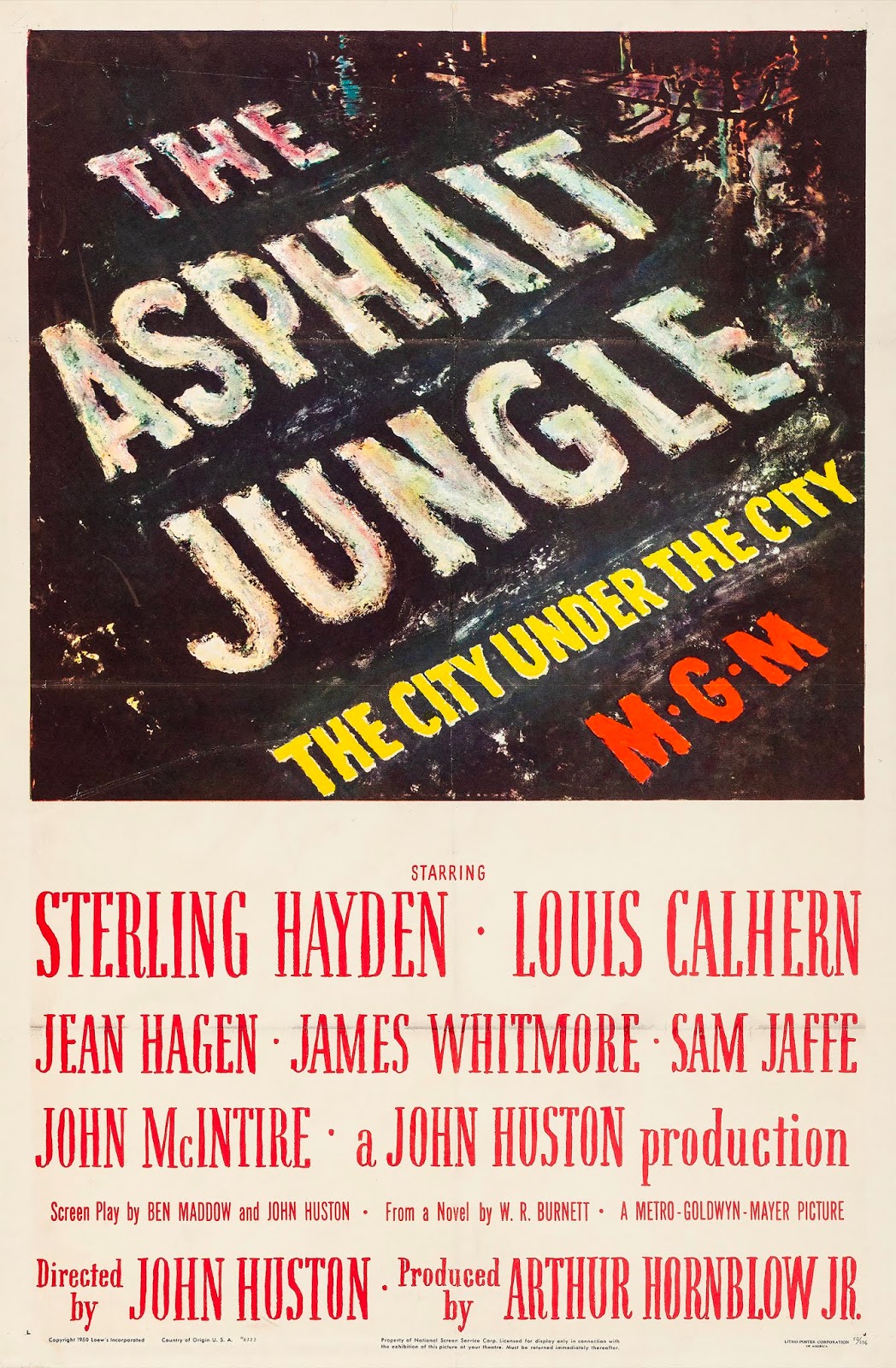
The Asphalt Jungle (1950)

A masterplan goes wrong in John Huston’s crime drama The Asphalt Jungle

Director: John Huston

Cast: Sterling Hayden (Dix Handley), Louis Calhern (Alonzo D Emmerich), Jean Hagen (“Doll” Conovan), James Whitmore (Gus Minissi), Sam Jaffe (“Doc” Erwin Riedenschneider), John McIntire (Police Commissioner Hardy), Marc Lawrence (Cobby), Barry Kelley (Lt. Ditrich), Marilyn Monroe (Angela Phinlay), Brad Dexter (Bob Brannom)

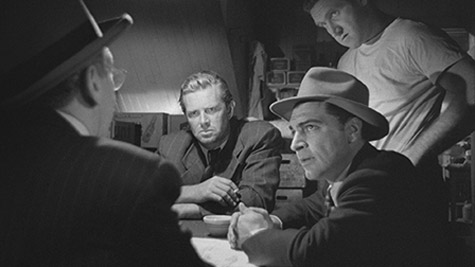
“Doc” Erwin Riedenschneider (Sam Jaffe) is out of the slammer after seven years, and the self-proclaimed “Professor” of criminal plans has a scheme for one final job. But rather than sell it to the highest bidder, Doc approaches crooked lawyer Alonzo Emmerich (Louis Calhern) to fund the crime and then split the proceeds with Doc. To carry out his robbery on a jewellery safe in a bank, he’ll need a gang including get-away driver Gus (James Whitmore) and Gus’ pal and “hooligan” Dix Handley (Sterling Hayden). But even the best laid plans of criminals can fall foul of events and the basic untrustworthiness of criminals themselves.

John Huston surprised some by turning his attention – Oscar in hand from The Treasure of the Sierra Madre – to noir cops and robber’s thrillers, but that was to forget he had made his name with his masterful adaptation of Dashell Hammett’s The Maltese Falcon. And in The Asphalt Jungle he created a small scale but almost perfect slice of criminalise noir, a brilliantly paced and acted film beautifully assembled that effortlessly chronicles the disastrous fall out of a robbery where it seemed everything was going perfectly.

Huston’s direction of the piece is, as nearly always, superlative. His painterly framing of scenes is dead on the money here, his framing of the actors within the scene absolutely without fault. Huston has an uncanny scene for arranging his actors in the minimum number of shots necessary, reducing dramatically the need for clumsy cut aways. Instead multiple actors are often artfully arranged in the frame, allowing the performers to react in the moment and the camera itself to capture the complete story in one smooth shot. It also allows for some great character intros, not least a shot of the Police commissioner in the background of the frame while foregrounded are the hands of his subordinate Dietrich, nervously fondling his hat. Straight away we get the mood of the scene.

This is all part of the brilliant noirish construction of a film that largely features sympathetic criminals – and it’s clear that the film’s sympathy is with the robbers here, the cops either incompetent, bureaucrats or corrupt themselves – either turning on each other, crumbling under pressure, making rudimentary errors that wind up getting them caught or failing into tragic fates that are left questioning what the point of it all was. This is all superbly caught in the moody darkness and shadows that soak over the picture, and highlighted further by the superb script, that packs some excellent lines and beautiful thematic points throughout the film.

It’s also helped by some great performances. Sam Jaffe (Oscar-nominated) is terrific as the cunning calm and businesslike “Doc” who seems unable to understand why things are not quite panning out as he planned, but is heartily sorry that it’s the case. He at least has honour among thieves, refusing to abandon his fellow criminals and quietly disappointed when betrayal raises its head. I love as well his screamish apology that the crime will involve one “hooligan” – or heavy – since he’s not the sort of guy who likes to resort to messy crimes (no matter that things quickly slide out of hand). He’s the sort of professional who expects everyone to play by the same rules, but that doesn’t stop him having his own private passions, particularly for the fairer sex, that will wind up catching him out.

He’s especially proved wrong since Sterling Hayden’s ‘hooligan’ Dix turns out to be the moral force of the gang, despite his down-on-his-luck scruffiness. Hitting crime as a way to finance his dream of buying back his family’s horse farm – and sadly losing most of that finance on the horses – Hayden is gloomy faced and gruff but has his own clear moral code in an affectingly gentle performance of vulnerability beneath the toughness. Debts and betrayal are anathema to him, and he winds up far more of the decent crook than any of the rest – he’s also the only one of the lot who can hold down a loving relationship, forging a genuinely sweet relationship with Jean Hagen’s Doll. Huston’s sympathies are clearly with the down-on-his-luck Dix, a decent guy who has just lost at life.

Of course the crook they can’t trust is the lawyer, a fine performance of snivelling weasliness under a veneer of culture from Louis Calhern. Puffed up, arrogant but desperate for the money and fundamentally weak and easily led, Calhern is excellent as the money man who only adds to the gang’s troubles, led on by Brad Dexter’s wonderfully impatient and ruthless hired gun. Calhern’s sad air of corrupted authority is only enhanced by his lecherous delight in his lusciously young mistress, a radiant early performance from Marilyn Monroe (shot like a classic painting by Huston).

Huston’s film throws this gang together flies together into a superbly detailed and gripping drama of the planning, execution and dreadful fall out of a robbery that clearly inspired the (perhaps even better) Rififi (so much so that it practically has the same story and structure), The Asphalt Jungle is a fabulously made and written pleasure, unpretentious but wonderful story telling marshalled expertly by a director at the top of his game.

Taxi Driver (1976)

Robert De Niro embodies dangerous loners everywhere in Taxi Driver

Director: Martin Scorsese

Cast: Robert De Niro (Travis Bickle), Jodie Foster (Iris), Cybill Shepherd (Betsy), Albert Brooks (Tom), Harvey Keitel (Sport/Matthew), Leonard Harris (Charles Palantine), Peter Boyle (Wizard), Harry Northup (Doughboy), Steven Prince (Easy Andy), Martin Scorsese (Passenger)

A grungy taxi ploughs through the neon-lit back alleys of New York, the glow of stop signs and tail lights washing the car in a hellish red glare. Inside that taxi, the interior monologue of its driver tips ever closer towards paranoia and fantasy. It’s no surprise that something is going to give. Martin Scorsese’s influential Taxi Driver is the definitive exploration of fractured psyches, the key text in film for exploring how isolation, loneliness and an inability to connect with people can tip someone into being a danger to others.

Travis Bickle (Robert De Niro) is our taxi driver, an honourably discharged Vietnam vet who can’t sleep so works the night shifts. He’s seemingly quiet, shy, self-contained but this hides a desperation to connect with the world, a horror at what he sees around him that he can’t understand, a paranoid disgust at the crime and dirt he feels infect the street and a desire to be someone or do something. His failure to understand to or relate to the world on any level will eventually lead to a gradual collapse as Bickle determines that he must lash out at something, must attack something, to make himself a place in the world.

Taxi Driver is such a brilliant analysis of disaffection and confusion at the world, such an insightful understanding of how feeling separate and locked out from events around them can make a person feel they must act to make their mark, that it profoundly influenced the motivations of Ronald Reagan’s would-be-assassin John Hinckley Jnr in 1981. The film was even screened for the jury as part of Hinckley’s (successful) defence that he acted due to insanity (Hinckley claimed he was trying to impress Jodie Foster). Tragic as that is, it speaks something to the power of the film and its acute understanding (but not excuse) for lonely, fractured, potentially violent souls like Hinckley.

Scorsese’s direction is pitch-perfect. The film uses a series of tightly held shots – and some go on for a very long time, staring at trivial events (such as the shot of an empty corridor while we hear Bickle being rejected on the phone by his stalking target Betsy) – or stately intercutting between actors that brilliantly serve to establish both Bickle’s isolation and his lack of connection. This is intermixed with tighter editing that captures Bickle’s undirected fury and paranoia towards the real world, presented as he drives as a concussive collection of sounds and images that seem to hammer down on the taxi, combined with Bernard Herrmann’s superb classically tense score, lyrical but haunting. 

Every scene Scorsese constructs is designed to show Bickle’s isolation, his weakness and continual succumbing to fantasy and false perspectives. His internal monologue has a monotone fluency to it, but talking to people he’s tongue tied, clumsy or prone to tip into the rantings of a crazy man. Slow motion camera tracks show Bickle moving through crowds like an alien, unable to comprehend or understand what he is seeing, later prowling the frame like a misguided hunter. New York is a hellish underworld – although you are certain we are seeing it largely as Bickle sees it, every scene filtered through his disturbed POV (Michael Chapman’s photography by the way is faultless). 

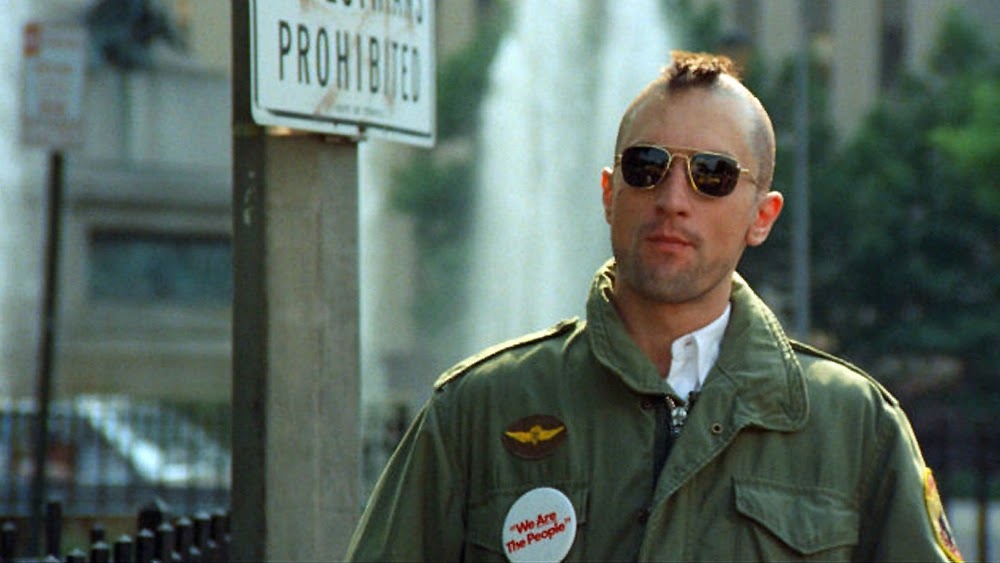
It works so well because De Niro himself is so restrained, and at first feels rather sweet, even handsome, like someone who you want to look after or feel sorry for – a million miles from the mohawked gun totter he will become by the film’s end. He’s quiet, shy and desperate for friends. He can manage bursts of seeming like a compelling person – his fooling of Cybil Shepherd’s Betsy into a date is a tribute to his ability in short bursts to appear charmingly eccentric. The date of course flounders on his inability to understand human norms (buys her a record she says she has, takes her to a porn film, points out he has a taxi when she tries to get into one to leave), and his response to it is of course to get angry and make a scene, to blame the other person for his own failings.

De Niro immersed himself in the dark psyche of this man, and never loses touch of the gentleness and vulnerability that underpin his violent actions. Bickle talks the talk often of a crazy person, but by his own lights he’s a well-meaning man. It’s just that his well-meaning actions involve multiple murders, and it’s only by a twist of fate that he guns down a house full of pimps and gangsters rather than putting a bullet through a Presidential candidate.

And that’s the scary thing about the film: Bickle is strangely sympathetic, for all his obvious psychosis. Who hasn’t felt alone and lost in the world? Who hasn’t felt scared by events around them or dangers unknown? Who hasn’t wondered “why don’t people like me”? We just deal with it a lot better than Bickle and his messianic sense of mission that he develops.

Bickle channels what human emotions he can muster or understand into ciphers he barely knows. These people become totems, or stalking targets, who he becomes persuaded must be “saved”. With Cybil Shepherd’s Betsy, the delusion is clear: here is a confident, career woman, independent and smart, for whom Bickle can feel an attraction but clearly no understanding at all beyond her being an object he cannot have. The awkwardness and later stunningly poor judgement and reactions he shows when around her mark him immediately as a weirdo and danger to others.

But the film’s smarts – and it has a terrific script by Paul Schrader, whose understanding of dark psyches was never better captured than here – is that these fixations have a totally different impact when targeted on a child prostitute. Suddenly, Bickle’s unwanted attentions have the air of righteousness, even though intellectually he makes no distinction between either Betsy or Jodie Foster’s Iris (a performance of staggering emotional maturity from an actress barely 12 at the time). For all Iris is clearly a victim of society and abuse (in a way Betsy isn’t), for Bickle she’s pretty much the same, someone he must ‘rescue’ – and from her pimp Sport (a disturbingly fey and incestuous turn from Harvey Keitel).

So Bickle takes up the guns, and eventually does what we all wish we could do sometimes. Because who hasn’t stood in front of the mirror and dreamed about saying “you talkin’ to me” to our enemies – the difference being most of us don’t fantasise about blowing them away, let alone actually go on to do it. De Niro’s brilliance is the chilling emptiness behind the exterior, the way he captures universal fears and doubts but shows us a character who has no personality of his own but only collects titbits from those around him (like his would-be murderous passenger – played by Scorsese himself – who eagerly talks about how he wishes he could murder his cheating wife).

So the violence comes – and it is horrific – as Bickle shoots up a lowlife prostitute den with sickening graphicness (nothing this violent had really been seen before). But it’s only fate that has turned him away from his real target, Senator Palatine (George Lucas must have had this film in the back of his mind when naming his Evil Emperor!), reverting to his secondary target and killing a group of people far more acceptable to Joe Public to be wasted.

Scorsese’s genius final epilogue asks us questions about truth but also perceptions. The camera takes on a “God’s view” POV overhead shot as Bickle’s slaughter ends (and De Niro’s jerky, terminator like physicality here is stupendous), tracking back through the house. Is this his soul leaving a dying body? But then we flash forward and there is Bickle in the taxi again, hailed as a hero by society for rescuing the girl – the same society that would have condemned him as psychopath if he had taken his first target. He even gets a sympathetic conversation with Betsy.

But he hasn’t changed. And the world hasn’t changed. And Bickle may be a hero now but the same dark impulses still ride within him – and they will, the film suggests, lead him to kill again. Scorsese’s film is a masterpiece of alienation and disaffection, a brilliant analysis of what makes a killer kill – and how vagaries of fate can see us miss the signs – with a wonderful script and a superb performance from De Niro, a landmark turn that manages to tap into such existential fears we all have on our place in the world that we completely miss we are starting to relate to a psychopath. Dark and brilliant, a landmark.

The Good, the Bad and the Ugly (1966)

Clint Eastwood is the Man with no Name in The Good, the Bad and the Ugly

Director: Sergio Leone

Cast: Clint Eastwood (“Blondie”/The Man With No Name), Lee Van Cleef (“Angel Eyes”), Eli Wallach (Tuco), Aldo Giuffrè (Union Captain Clinton), Mario Brega (Corporal Wallace), Luigi Pistilli (Father Pablo Ramírez), Al Mulock (Elam, one-Armed Bounty Hunter), Antonio Casas (Stevens), Antonio Casale (Jackson/Bill Carson), Antonio Molino Rojo (Captain Harper)

The Good, the Bad and the Ugly closed out Sergio Leone’s “Man with No Name” Western trilogy, the role that turned Clint Eastwood into a star. Unlike the other two films in the Dollars series, TGTBTU was shot on a larger and more expansive budget, and showed Leone stretching himself into something more than a peddler of Americana pulp. This was a film that was as much an artistic statement as it was an entertainment – perhaps more so. 

The plot of the film is very simple – considering its extended runtime. Three bandits and hired guns are on a quest for buried gold, while all around them the American Civil War rages. The bandits are: “The Good” (Clint Eastwood) – the taciturn “man with no name” who has more of heart than he lets on; “The Bad” (Lee Van Cleef) – known only as “Angel Eyes”, a stone-cold killer with no soul at all; and “The Ugly”, Tuco (Eli Wallach), a larger than life Mexican bandit, scruffy, scuzzy but with plenty of joie de vivre. The money is hidden somewhere out in a graveyard in the West – but who is going to get there first?

TGTBTU is Leone at a midway point of his career. Tonally the film falls between the more straightforward thrills of the first two Dollarsfilms, and leans closer towards the artistic epic canvasses that Leone would paint in his Once Upon a Time… films. Perhaps this is why TGTBTU is possibly the most popular of all Leone’s films, it’s more entertaining than either of the latter two but has more thematic depth than the earlier two. But that doesn’t change the fact that, watching it, I feel this is reaching for a moral and thematic richness and complexity that is just beyond Leone’s grasp. He’s straining for this film to be something more than his earlier films – and I’m not sure that’s something he manages to do. 

But let’s focus on what the film does right, which is a hell of a lot. This is the film where Leone really found his voice and ran with it. It’s a hyper real world he creates of the Old West, with a tone of artificiality about it. Part of that comes from the odd disconnect you get from the European actors and the dubbed voices that overlay them (not always completely accurately), but it’s there in every inch of the style of the film.

It’s an explosion of style, with artificiality frequently alongside reality, all thrown together into a sort of crazy Western world where everything seems to be happening at once (from bandit towns to the Civil War), and you could turn a corner and end up in either a desert, a battle field or a town under siege. His style is heightened, and makes for some wonderful shots, not least the way first Blondie and later Tuco’s banditos seem to drop into a wider frame, expanding the world suddenly as we watch it. 

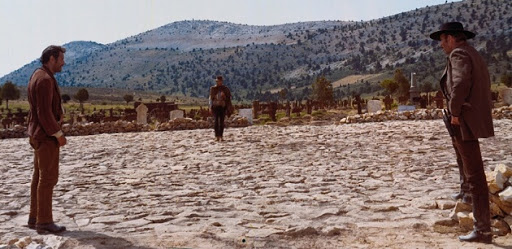
Leone’s a director who practically invented the term “operatic” for cinema. His gun battles are 99% build up and 1% action, and it’s the simmering tension of those build-ups that really make his films stick in the mind. If you think of it, you’ll imagine that iconic Ennio Morricone score (recorded before the film was shot, so Leone could shoot the film to match it – composers dream of having such licence today!), followed by slow series of escalating cuts. Leone will cut to hands approaching triggers, then close ups of faces, then long shots for context, then all of these again and again, each time the hands getting closer, the close-ups getting tighter, the long shots being more prolonged, all of it about building the tension and then BANG the shooting is done in seconds.

The film was criticised for being violent at the time, but it’s more like extremely tense. You can see why Tarantino sites Leone as his master. Watch that introduction sequence for Angel Eyes, a long, quiet scene where he eats a peasant’s food while questioning him and then ends by a sharp series of shootings that leave the family devastated. It’s the style Tarantino was going for in Inglourious Basterds and a tone establisher for Leone. You always know the violence is coming, and you know it will be quick and merciless when it does, but the film makes you sit tensely waiting for it for minutes at a time. The violence when it comes is often cold and those who carry it out are cynics and thieves rather than heroes and villains.

It makes for a sprawling, epic, even rather unfocused film at times – and it means the runtime is hopelessly overextended at over three hours uncut – but it’s also what interests Leone. He sees a world where killers are cool, calm, calculating and don’t go in guns blazing. Where intimidation is an art and micro-calculations occur before any trigger is squeezed. 

And these ruthless killers are in a world of violence all around them. Around the edges of the film’s narrative, the world of the Civil War rages, claiming lives left, right and centre. It’s here that Leone targets a thematic richness that I don’t feel is completely successful. There are elements that work – and the Union prison camp that Blondie and Tuco end up in (staffed by sadistic guards under the guidance of Angel Eyes) is the best of them. Clearly paralleling Nazi extermination camps in the herding of prisoners, the trains that carry them to certain death, the brutal beatings and the Yankee soldiers who are forced to play music (literally for their lives) to cover the noise of those beatings, you can feel Leone’s anger at the horror mankind unleashes on itself. 

But it’s heavy handed at places and makes its points too bluntly, dropping them into the film rather than weaving them neatly into the overall narrative. Towns and villages are bombed out and dead men lie on the edge of roads, but it doesn’t really get tied into an effective contrast with the central treasure hunt narrative. This is Leone straining for greatness, but not having the chops to get there yet. Blondie may bemoan the pointless slaughter of civil war – and even comfort a dying soldier – but these beats could be removed from the film without affecting its overall impact. Leone’s real love is Americana pulp, and his focus on this sometimes gets in the way of achieving his wider aims.

Perhaps that’s also because the impact gets lost slightly in the film’s great, sprawling length – and Leone’s lack of discipline, his insistence in taking everything at his own pace (often a slow dawdle through details), while it works really well for some sequences it also gives us others (such as Tuco running through a graveyard) that seem to last forever for very little impact.

Leone also increasingly became more a director with epic visuals in which characters are only details, with this film. Eastwood – reluctant to return in any case – especially feels like a much blanker presence in this film, coasting through his role almost on autopilot. Although you could say he generously cedes much of the limelight to Eli Wallach, who roars through the film as Tuco. Wallach’s eccentric but heartfelt performance – full of odd mannerisms but underscored with a genuine emotional vulnerability at points matched with a childlike enthusiasm – becomes central to the enjoyment of the film (he’s really the lead character). Van Cleef meanwhile drips demonic, cold menace behind unflinching (Angel) eyes.

Leone’s epic work is a sprawling, over extended, self-indulgent epic that mixes moments of pure cinematic entertainment with heavy handed digressions into man’s inhumanity that are a little too on-the-nose and unthreaded into the central plot to carry as much impact as they should. But it remains one of the most popular films of all time partly because what it does well, it does better than almost anyone – those long, tense build-ups, that electric energy that Wallach represents, the otherworldly artificiality mixed with cold reality. The Good the Bad and the Ugly is Leone’s crowning achievement, and for all its flaws, it still packs a punch.

Marty (1955)

Betsy Blair and Ernest Borgnine are two shy people out on a date in Marty

Director: Delbert Mann

Cast: Ernest Borgnine (Marty Piletti), Betsy Blair (Clara), Esther Minciotti (Mrs Piletti), Augusta Ciolli (Aunt Catherine), Joe Mantell (Angie), Karen Steele (Virginia), Jerry Paris (Tommy)

Strange to think today, but until Parasite, only one other film had won both the Palme d’Or at Cannes and the Oscar for Best Picture. That film was Marty and if that fact seems odd today when you watch the film, it’s easy to forget how revolutionary a film about a regular guy with an average job and boring life was back then. Films were about larger than life guys doing big manly things. They weren’t about butchers who lived with their mamas and can’t get girls.

Our butcher is Marty Piletti (Ernest Borgnine) and one night he meets Clara (Betsy Blair), an equally shy chemistry school teacher. They spend the whole night talking, and Marty excitedly plans to call her the next day. Problem is, a brief meeting with his mother (Esther Minciotti) is a disaster – not least because she’s worried Clara could mean her being thrown out of Marty’s home like her sister (Augusta Ciolli) has been – and Marty’s best friend Angie (Joe Mantell) doesn’t think Clara is much to write home about. Under these peer pressures will Marty make that call or not?

That plot summary by the way effectively covers 95% of the film. Today Marty seems so lightweight and slight it’s almost a puff of air. The film was adapted from a one hour TV play, and beat a host of Broadway adaptations (Picnic, The Rose Tattoo and Mister Roberts) to the big one. Today of course a TV play would never be adapted into a movie (in fact if anything Paddy Chayefsky’s play would probably be expanded into a ten episode Netflix drama), but in 1950s America a TV play would have been screened once and then disappeared forever. What better for Hollywood but to assume the one-off delights of TV could be as mined as easily as the best work on Broadway?

So Marty was made and won and it’s a decent, reasonably charming movie even though it’s really hard to see what the fuss is about now. The main delights lie in the script by Paddy Chayefsky, one of the greatest screenplay writers of American film history here winning the first of his three Oscars. The script is simple, well observed, full of cracking little lines, creates some marvellously rounded characters and is careful not to overbalance the overall low-key effect of the film. 

Chayefsky has teed the whole film up so well that most of those involved simply run with the great material they have been given. None of the actors – or Delbert Mann, who received a generous Best Director Oscar – ever hit these heights again. But then that’s about right for a film that is all about the triumph of the little guy (or at least the little guy getting a small day in the sun). Mann marshals the actors (some of whom were in the original TV production) to good effect and basically doesn’t get in the way of the script.

The story itself covers just two days in the life of Marty, but it’s still a gift of a part for Ernest Borgnine, who won an Oscar (surely to the chagrin of Rod Steiger who played the role on TV). The role subtly subverts Borgnine’s persona – Marty has the build for muscular action that matches the series of smarmy, working-class heavies Borgnine had played up to this point (characters much like some of his friends in the drama) but he moves with the nerves of a timid man. Borgnine is as gentle and careful as the picture itself, a shy man who has given up on good things happening to him but comes alive when he meets someone who sees him for who he is rather than what he is not.

That first long date – it takes up well over half the film’s runtime – sees him slowly go through stages from nerves, to stumbled confessions to an excited jabbering as he is so excited to be with Clara he keeps failing (accidentally) to let her speak so keen is he to share everything with her, through to a protective regard and a euphoric celebration. The only slight dated misstep is Marty’s reaction when denied a kiss – which he goes for with the entitlement of a Mad Men era male – but it’s swiftly course corrected in the film as another sign of Marty’s clumsy lack of knowledge of how relationships work. Throughout all this Borgnine is charming, heartfelt, tender and sweet and deserving of recognition for the role.

Opposite him for most of the film is Betsy Blair, who won the role after vigorous campaigning from her and her husband Gene Kelly (who announced he would refuse to do his next film if she was not cast). Mousy, timid and shy but looking for warmth and affection in life, Clara is just like Marty: a woman who isn’t sure what the next step in her life is but is certain that she doesn’t want to spend it growing old alone. It’s another heartfelt performance. The cast is rounded out by the sort of solid minor supporting players who don’t usually stand out, with Joe Mantell getting an Oscar nomination repeating his role as brash best friend Angie from TV. Stand out though is Esther Minciotti (also repeating her role) as Marty’s loving but domineering mother.

It all comes together into something very small, sweet and low-key and if it’s strange to see what the fuss is all about, it’s probably because there have been so many more movies made about ordinary people since then that this first trend setter now looks like nothing too special. But with a marvellous script and some wonderful performances from actors who never got an opportunity like this again, it’s truly a magic moment for all concerned, a once in a life-time film before most of them returned to jobbing roles once more.

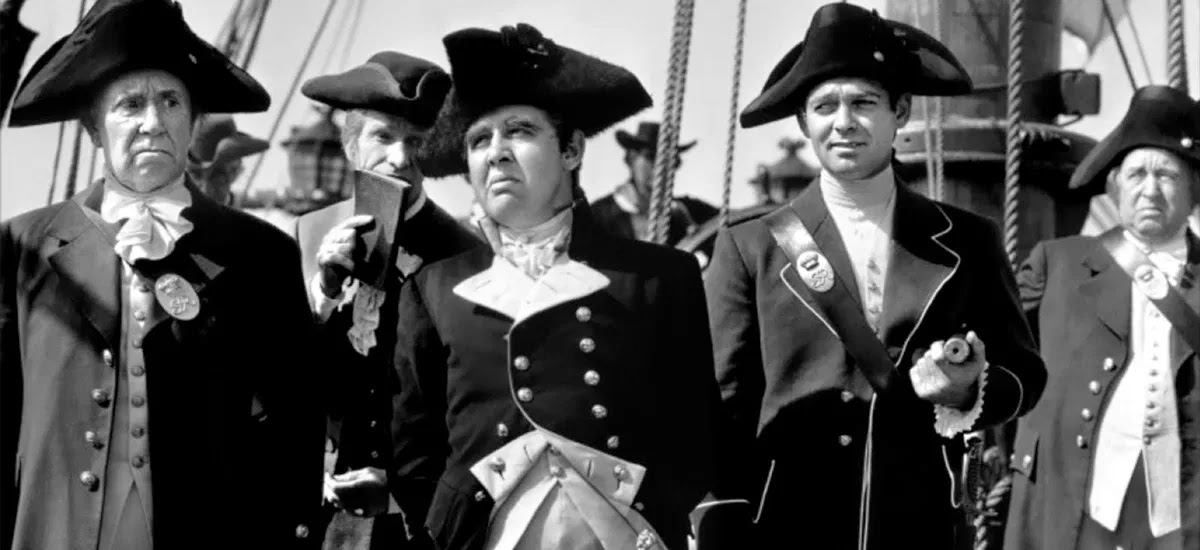
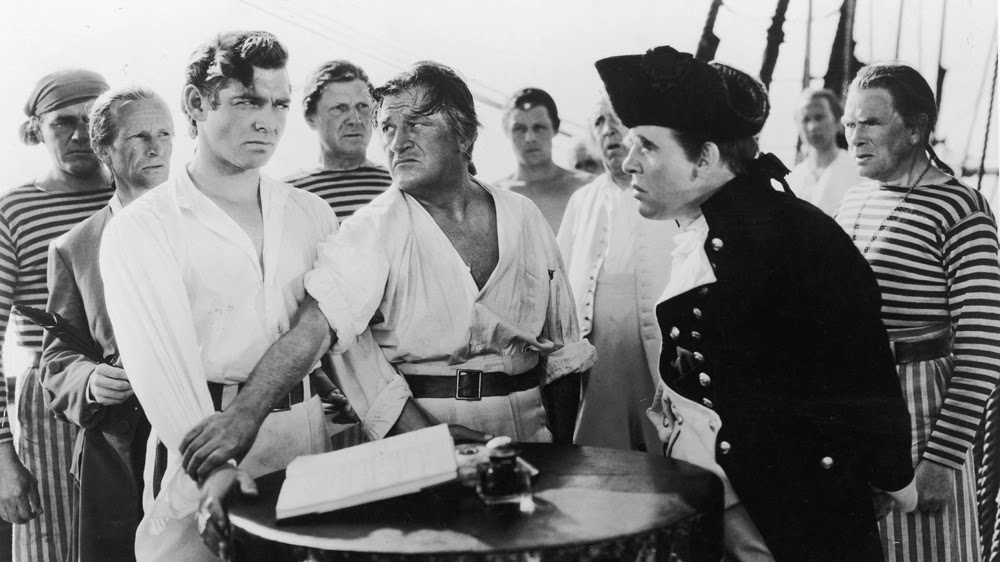
Mutiny on the Bounty (1935)

Laughton and Gable go head to head in Mutiny on the Bounty

Director: Frank Lloyd

Cast: Charles Laughton (Captain Bligh), Clark Gable (Lt Fletcher Christian), Franchot Tone (Roger Byam), Herbert Mundin (Smith), Eddie Quillan (Ellison), Dudley Digges (Bacchus), Donald Crisp (Burkitt), Henry Stephenson (Sir Joseph Banks), Francis Lister (Captain Nelson), Spring Byington (Mrs Byam), Movita Castaneda (Tehani), Mamo Clark (Maimiti), Byron Russell (Quintal), David Torrance (Lord Hood)

“They respect but one law – the law of fear…”. So hisses Charles Laughton as the definitively monsterish Captain Bligh in this Oscar-winning version of the most famous mutiny ever. It’s the quintessential adventure on the high-seas motion picture (never mind that the actual ship used could only get a few miles off the coast), but it’s also a feast of good acting and Hollywood class: the only picture to get three nominations for Best Actor, as well as the last Best Picture winner to only win one Oscar. It cemented the ideas around Bligh and Fletcher for generations.

Heading out on a two-year voyage in 1787 to transport breadfruit from Tahiti to the West Indies, the Bounty sets sail from Portsmouth with several members of the crew freshly press-ganged. In command is self-made man Captain William Bligh (Charles Laughton), while his second-in-command is gentleman Fletcher Christian (Clark Gable). A pair of fine sailors, the two of them are separated only by their methods. Fletcher is a man of the people, a motivator with a firm hand. Bligh is a man with just a firm hand, who never uses a dozen lashes of the crew when two dozen will do. Fletcher becomes more and more alienated by Bligh’s ruthless methods.

Frank Lloyd bought the rights to a novel that fictionalised the mutiny (introducing Roger Byam, a fictional version of Peter Heywood who later become a Post-Captain in the navy) with the intention of directing and playing Bligh himself. Fortunately he was persuaded to step aside on the acting front for Laughton, who is seized the part with relish.  Shoulders scrunched and neck jutting his head forward, with his lip curled, this is a Bligh constantly on the look-out for offence, a martinet whose anger stems from a self-loathing within. A chippy middle-class boy made good, he’s determined to enforce the letter of the law, and while a bully with no empathy he’s not exactly a bad man, just a bad captain. Laughton’s performance simmers with bitterness and a relish for being obeyed.

He makes a neat contrast with Clark Gable at his matinee idol finest. Worried about taking the role because it demanded the shaving of his lucky moustache (no facial hair in the navy), Gable gifts Laughton the flashier role to play the decent hero with only the best for his fellow man at heart. Gable’s Christian is decent, understanding, a natural leader who has a firm eye for justice. Not even bothering with the British accent, but settling for a mid-Atlantic ease, Gable is the Hollywood superstar to his core, his Christian the quintessential romantic ideal.

Between the two of them runs Franchot Tone’s Midshipman Roger Byam. Tone is the often forgotten third nominee for Best Actor, but he has in many ways the trickier part, which he handles with aplomb: the naïve young man who wants to serve his captain and his country, but also understands that his captain is not a man of justice. Tone gets the film’s highlight, a final speech to the court martial that helps make everything turn out alright, but his tortured pleading for justice and moral righteousness is delivered with a humble and effective forthrightness.

Lloyd has these fine performances (plus some great work from Mundin, Crisp, Digges, Quillan and others as assorted ship’s crew) and sets them all out perfectly on a film that captures the heart of the epic. The ship is brilliantly constructed and assembled, and Lloyd’s film reconstructs everything from day-to-day travails on sea to the impact of storms. The mutiny when it comes is shot with an Eisensteinesque immediacy, while he also manages to shoot Tahiti with a dreamlike paradise sheen. He paces perfectly the growing sense of tension and unresolvable fury between Bligh and Christian. 

And he certainly gets a brilliant sense of the cruelty and sustained violence of Bligh’s rule on the boat, as floggings come thundering down on the backs the sailors – often for the very meanest of reasons. A keelhauling (despite one moment of laughably bad model work) is brutal in its harshness. Bligh’s first act on boat is to flog a dead man (after all death doesn’t wipe out the need for punishment) and he goes from there. The film does give time to admire Bligh’s seamanship – and reconstructs surprisingly well his awe-inspiring open boat trip over 4,000 miles to take him and loyalists back to a safe port. Meanwhile Christian heads for the safety of Tahiti, a blissful series of images of our decent sailors enjoying homespun pleasures and hot Tahitian wives.

Of course it’s not actually what happened really. Bligh was a difficult, priggish and rather cold person with low personal skills but he wasn’t the monster he seems here. Christian had a certain aristocratic pull over the men, but he was also probably far more twitchy, young and stupid than the assured, experienced sailor he is here. Bligh’s ship wasn’t the bastion of cruelty it is here (punishments seemed in line with the rest of the navy, or even a little less according to the log), but Bligh’s lack of understanding of how men work and his endless drive, matched with his sailors’ seduction by the charms of an easy life on Tahiti perhaps led to the outbreak. Either way Bligh definitely didn’t command the HMS Pandorato hunt the sailors down, nor did the investigation into the matter end with him being snubbed as a wrong ‘un by Lord Hood.

But hey, if you know that this is legend printed as fact it’s fine. Because Lloyd’s film is still superbly entertaining, has three excellent performances among a fine ensemble cast and while its version of Bligh may be a monster made up, Laughton invests him with enough humanity and self-loathing you’ll despair at his poor choices as much as you’ll hate his cruelty. Prime Hollywood entertainment, perfect for any time.

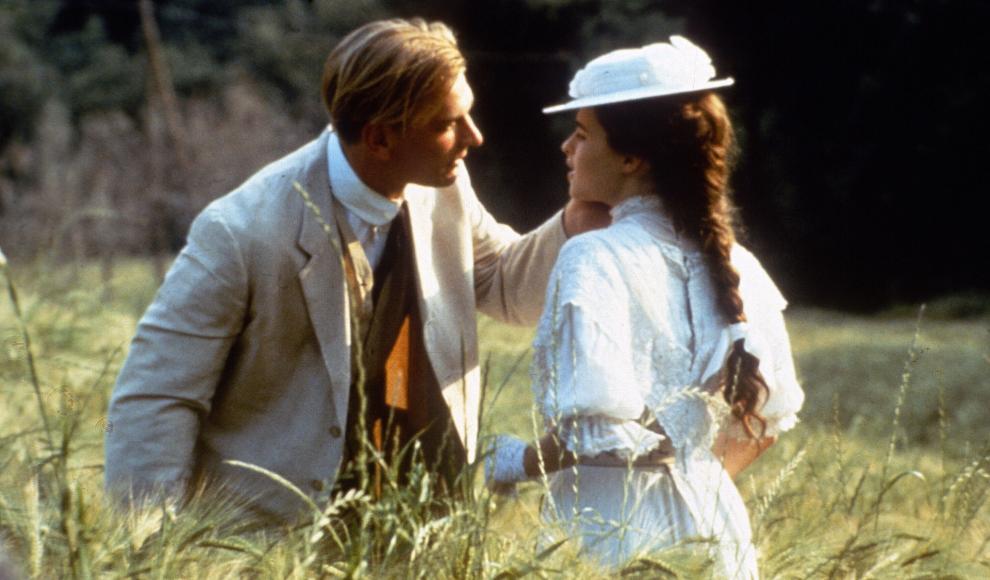
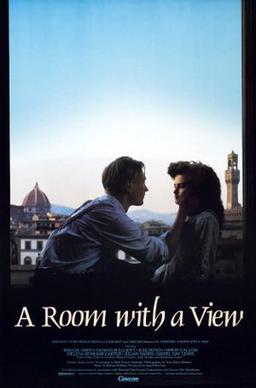
A Room with a View (1985)

Julian Sands and Helena Bonham Carter find romance from A Room with a View

Director: James Ivory

Cast: Helena Bonham Carter (Lucy Honeychurch), Julian Sands (George Emerson), Maggie Smith (Charlotte Bartlett), Denholm Elliott (Mr Emerson), Daniel Day-Lewis (Cecil Vyse), Simon Callow (Reverend Beebe), Rosemary Leach (Mrs Honeychurch), Rupert Graves (Freddy Honeychurch), Patrick Godfrey (Reverend Eager), Judi Dench (Eleanor Lavish), Fabia Drake (Miss Catherine Alan), Joan Henley (Miss Teresa Allan), Amanda Walker (Cockey Signora)

Merchant-Ivory are the gold standard, practically synonymous with costume drama in the 80s and 90s. This really began with A Room with a View, their first true sensation, a box-office smash that won the BAFTA for Best Film and three Oscars. It practically defined what to expect from a Merchant-Ivory production: a classily made slice of English literature, with a wonderful cast of top British talent, tastefully directed with a sly observational wit for the foibles of the British class system. No one does such things better than Merchant-Ivory, and maybe only Howards End and The Remains of the Day did Merchant-Ivory better than A Room with a View.

Based on EM Forster’s novel (and that novel, largely thanks to this film, is probably now his best loved work), the film is set in Italy and England during the early 1910s. Holidaying in Florence, Miss Lucy Honeychurch (Helena Bonham Carter) and her chaperone cousin Charlotte Bartlett (Maggie Smith) are given poor rooms in their hotel – and accept an offer to swap (for the eponymous room!) with Mr Emerson (Denholm Elliott) and his romantic son George (Julian Sands). George, a free spirit, finds himself romantically drawn towards Lucy (and she to him), but something about the free Italian air frightens Lucy, and she withdraws and returns to England where she becomes engaged to the prig’s prig Cecil Vyse (Daniel Day-Lewis). However, when the Emersons rent a house near her home in Surrey she finds herself slowly drawn back once again towards George.

A Room with a View is the perfect expression of delicate, well-judged film-making, with James Ivory marshalling his precise judgement to create a luscious and involving reconstruction of the novel, which carefully layers its social and emotional observation with a dry wit. Ivory is a master of allowing the novel – and the film – to speak for itself, not intruding with flourishes but allowing the camera to hold moments. He captures wonderful moments of slightness: who can forget the camera holding on a rejected Cecil as he takes a moment to calm himself, then sits and begins to systematically retie his shoe laces? It’s a gentle, unforced moment of direction but it’s what makes the film work. 

And the careful grace and stateliness of much of A Room with a View is part of the film’s point. All this taste and manners, all this finery and wonderful design, is of course a trap. It’s precisely this pristineness and neatness that inhibits people from following their hearts, from actually having a bit of carpe diem. It’s telling that one of the film’s most striking moments involves George, Lucy’s brother Freddy and churchmen Mr Beebe going skinny-dipping (with long-shot full frontal nudity). There is something joyous for these men to literally cast off (for a few minutes) the shackles of society to just muck around in the all-together. And it’s a sort of exuberant liberal freedom you just don’t see in other parts of the film.

The film’s main theme is to see if Lucy will discover – and accept – enough about herself to follow the sort of romantic longings she feels within herself or if she is going to knuckle down and conform. Italy is a perfect sign of this – it’s hot, temperamental, the people wear their passionate hearts on their sleeves (whether that’s making-out in a carriage in front of uptight churchmen or stabbing each other in the piazza) – and it’s all that energy and lust for life that Lucy seems unsure about, but which George is chasing after. And it’s difficult to cast aside the rules you have grown up with – and scary – to find something a bit freer. Although I think you could criticise Ivory’s neat competence for failing to really visually get a contrast in look between Italy and England.

The film is blessed with a superb cast of British character actors. Helena Bonham Carter is excellent (in only her second film role) as a young woman who knows her mind but doesn’t want to follow it to its logical ends, part independent and free-thinking but also putting a constant block on her own instincts. Julian Sands as George does a decent job, although already the film (by far and away the best part he ever got) exposes his studied woodenness and flat, uninteresting voice and he often seems straining for a sort of depth and Byronic passion that is slightly beyond his range.

Maggie Smith and Denholm Elliott were both Oscar nominated, and both bring their A-game to the roles. Smith is perfect as a spinster who slowly reveals she has more sense of life’s lost opportunities than expected (even if the part is one she could play standing on her head), while Elliott gets lot of scene-stealing mileage from a sweetly eccentric Mr Emerson. Simon Callow, also in his second film role, probably gives his best (and most intriguing performance) as Mr Beebe the affable but subtly sleazy clergyman.

The film is however stolen by Daniel Day-Lewis as Cecil Vyse (originally offered his choice of parts between George and Cecil). A Room with a View opened the same day as My Beautiful Laundrette in the States and audiences were amazed that the same actor could play a self-important prig and a gay, punk fascist. Day-Lewis is the embodiment of fastidious preciseness, a man so studied in every second that each movement seems planned, with no touch of spontaneity. He even kisses Lucy with a carefully placed precision. He’s arrogantly certain of his place in the world and every moment of his life has been planned in advance with careful exactitude.

It’s the jewel in the crown of this perfect costume drama. Merchant and Ivory had longed to film the works of EM Forster for decades, and had to wait until King’s College, Cambridge (the rights holders) had someone in place who actually liked films until it was considered. They expected the main interest to be around Howards End (don’t worry its time would come!) and A Passage to India. But in A Room with a View, Merchant Ivory felt there was an unappreciated gem. They were right.

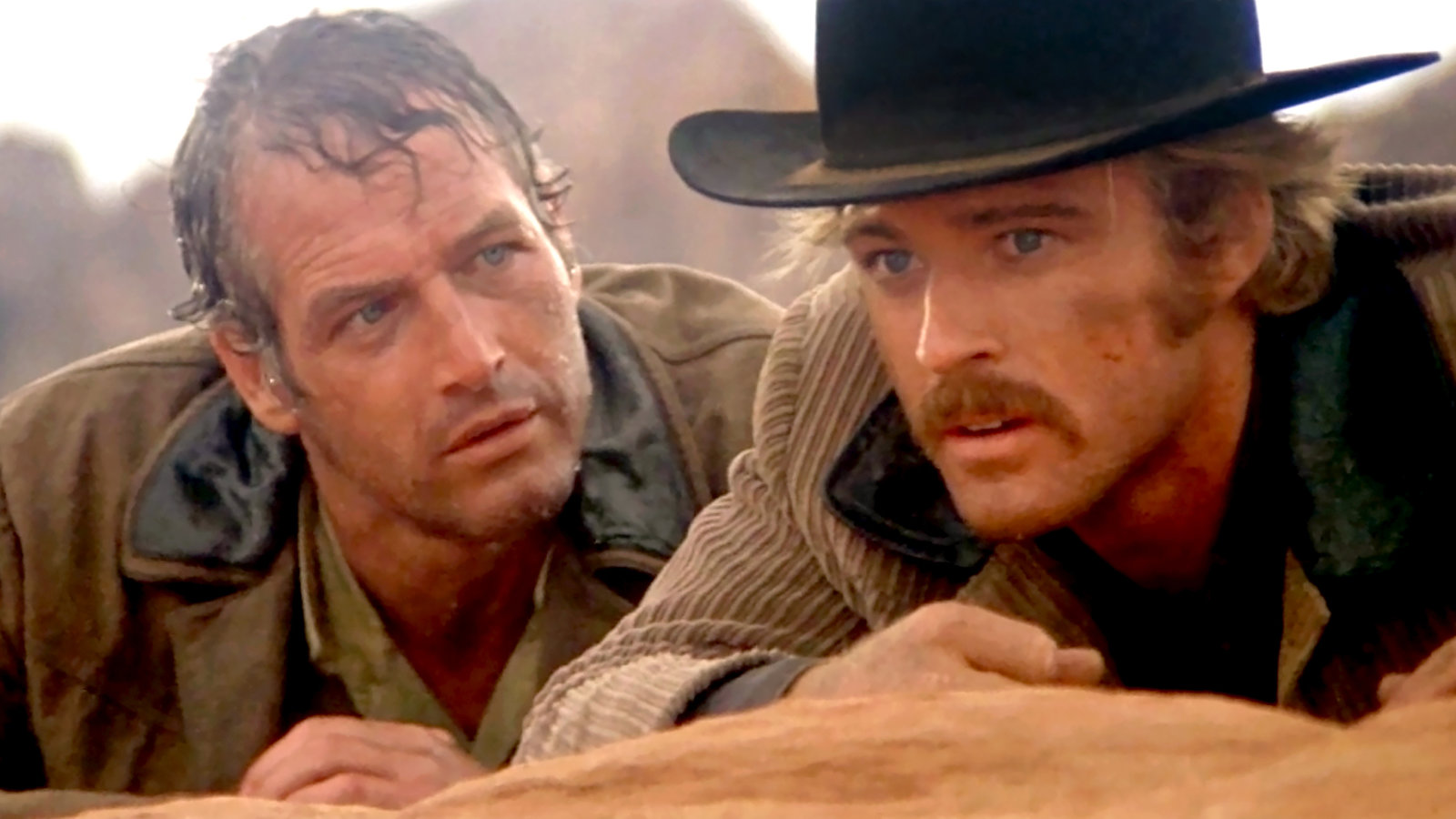
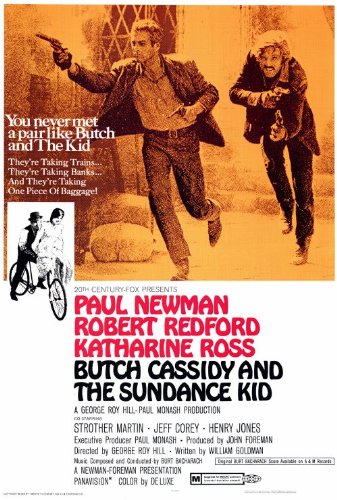
Butch Cassidy and the Sundance Kid (1969)

Paul Newman and Robert Redford in the perfect partnership in Butch Cassidy and the Sundance Kid

Director: George Roy Hill

Cast: Paul Newman (Butch Cassidy), Robert Redford (The Sundance Kid), Katharine Ross (Etta Place), Strother Martin (Percy Garris), Henry Jones (Bike Salesman), Jeff Corey (Sheriff Bledsoe), George Furth (Woodcock), Cloris Leachman (Agnes), Ted Cassidy (Harvey Logan), Kenneth Mars (Marshal)

Butch Cassidy and the Sundance Kid was a monster hit in 1969. It struck cinematic gold by combining Newman (originally first choice for the Sundance Kid) and Redford (fourth choice at best after Jack Lemmon – and what a different film that would have been! – Warren Beatty and Steve McQueen) and got the tone just about spot on between old school charm and hit 1960’s chic. It reinvents no wheels, but it’s a prime slice of classic Hollywood entertainment.

In the dying days of the Old West, the Hole in the Wall Gang is finding trade tough. The banks are wising up to how easy they are to rob, and the new idea of holding up trains is fraught with danger. Not least from the powerful backers who don’t like to see their money and goods being half-inched off the tracks by a gang of desperados. The leader of the gang, affable, fun-loving Butch Cassidy (Paul Newman) and his sidekick sardonic ace-shot the Sundance Kid (Robert Redford) continue to ply their trade of stealing, but they are fighting a losing battle. Hounded out of the states by a crack squad of lawman they make their way to Bolivia – but find the life of crime isn’t easier there either, what with no one speaking English and the Bolivian army being even more trigger happy than the American law and order forces. What’s a couple of guys to do?

Butch Cassidy and the Sundance Kid is really a celebration of nostalgia, repackaged with a wry sense of 60s cool that merrily seizes on its lead characters as the sort of anti-authoritarian, free-spirited, jokers who were bucking the rules of Vietnam-era America. But fundamentally at heart, it’s a joke filled sad reflection on a lost America and a lost sense of freedom – even if it was the freedom for two basically decent guys to make a living from robbing banks – that even shoots most of its opening segment in a romantic sepia. 

Because this is all about Butch and Sundance being two guys left behind by progress. Their way of life is dying out around them – the opening sequence sees Butch walk around a new bank, with its impressive new security measures. What happened to the beautiful old bank? Asks Butch: “People kept robbing it” comes the cold response. This follows on from a recreation of old sepia newsreal footage that states that the entire membership of the Hole in the Wall Gang is now dead – meaning that we know where the film is heading from day one. It’s a world where the train and modern communications are leaving our heroes behind. Even the humble bicycle is a sign of the future – “the horse is dead!” crows a bike salesman to a crowd of red necks.

The film may be cool and whipper-sharp in its style and the characterisation of its lead characters, but it’s a firmly nostalgic film that sentimentalises the Wild West and our heroes. No wonder at its conclusion it freeze frames (famously) as the heroes charge out to certain death in a shoot-out with the Bolivian army. It’s like Hill can’t bear seeing these guys torn apart ala Bonnie and Clyde or The Wild Bunch by the cold hard truth of a bullet. 

The film makes an interesting comparison with The Wild Bunch released the same year. In many ways the latter is a more traditional western, both in its style and its content. But in every other way it’s a far more radical piece, really embracing the lack of rules, the cruelty and the lack of glamour of life in the west – and ending with its heroes being shot to pieces on screen in a prolonged bloody shoot out that set a new record for use of squibs. Compared to this, Butch Cassidy is very light stuff, with its final image almost hopeful in its sepia toned romanticism.

Not that it’s not entertaining for all that. Its sense of sixties defiance is perfectly captured in the film’s lightness and playfulness – and in the fine lines and gags in William Goldman’s well structured (and Oscar winning) script. From its opening lines “Most of what follows is true” through the offbeat wisecracks of its lead, it’s a lot of fun. Newman and Redford are both just about perfect. Newman is the very picture of relaxed, casual cool while Redford’s style of handsame smartness works perfectly for the more plugged in Sundance. The two of them also form a very swinging sixties sexfree-Thruple with Katharine Ross as Sundance’s girlfriend, but essentially a companion to both men.

Not that Etta isn’t aware that the good times are coming to end. She makes it clear she won’t stick around to watch them die, and when (late in the film) she announces she will return to the US, it’s a clear sign to everyone that things are near the end. But then Butch and Sundance have already faced the cold realities, as an attempt to go straight protecting bank money from robbers see them gun down a group of bandits (the first real bloodshed in the film), an action that leaves them both slightly stunned.

It’s very different from the hijinks of the film’s first three quarters. The two of them spend a chunk of the film trying to evade the lawmen chasing them, each attempt failing, ending in them making a desperate jump off a cliff into water (because no one would follow unless they had to) and even their early career robbing banks in Bolivia is hampered by their inability to speak Spanish (cue a series of lessons from Eta on the rudiments of larceny in Spanish). The film’s lightness and warmth early on lies behind its popularity.

Butch Cassidy is a film that is designed to please and for you to love it. It has two fine actors giving superbly entertaining performances. It has some wonderful scenes, not least the introduction of each character, two superb scenes (Butch’s facing down of a challenge against his leadership of the gang is a scene so good I don’t think the film bests it). But Hill’s film is also a cosy and safe picture, that drips with sentimentality towards its leads and nostalgia for its era. It’s successful because it’s such an unchallenging and safe film.