Tag: Chester Morris

The Divorcee (1930)

The Divorcee (1930)

In its way ahead of its time, a liberated but melodramatic look at women’s freedom in relationships

Director: Robert Z Leonard

Cast: Norma Shearer (Jerry Martin), Chester Morris (Ted Martin), Conrad Nagel (Paul), Robert Montgomery (Don), Florence Eldridge (Helen), Helene Millard (Mary), Robert Elliott (Bill), Mary Doran (Janice), Tyler Brooke (Hank), Zelda Sears (Hannah), Judith Wood (Dorothy), George Irving (Dr Bernard)
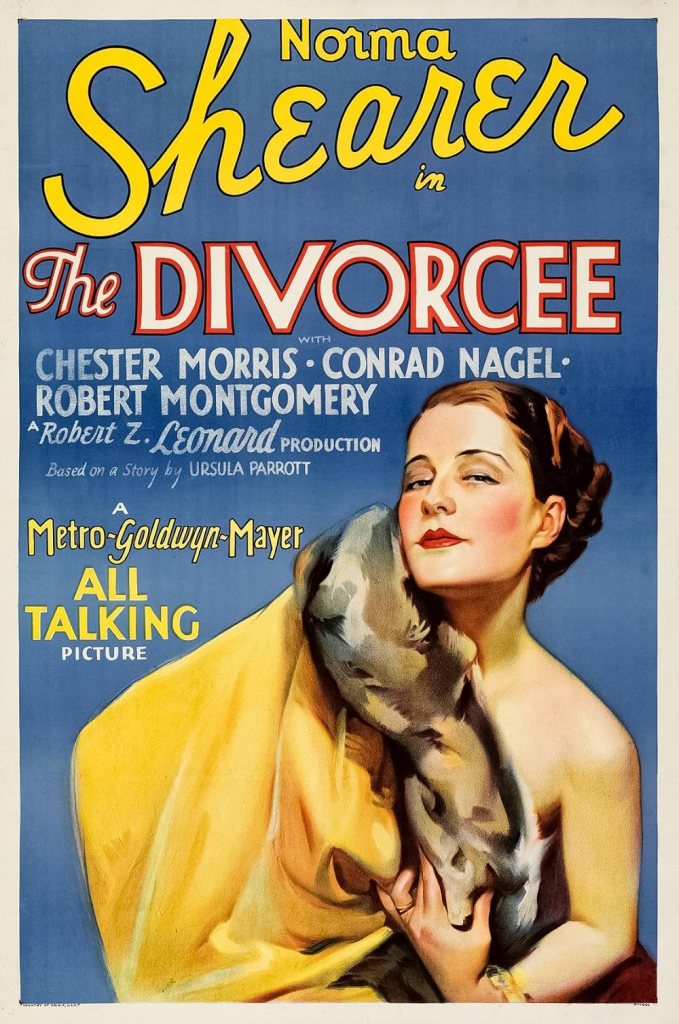
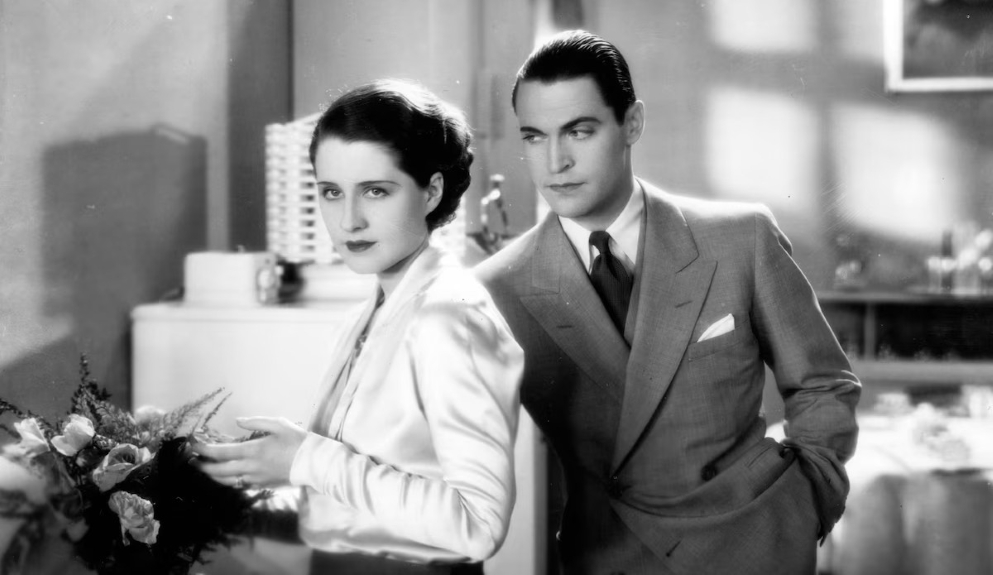
Jerry (Norma Shearer) and Ted (Chester Morris) are young, in love and have been married for three years. It’s not ideal then, that Ted’s ‘pal’ Don (Robert Montgomery) brings a surprise guest to their anniversary party: Janice (Mary Doran) who also happens to be Ted’s illicit squeeze. When Jerry catches them in a clinch, the truth comes tumbling out. Ted says, of course, it didn’t mean anything and he’d be perfectly happy for a bit of freedom in marriages especially in these modern times. Jerry, after a lifetime of being a good girl, promptly ‘balances accounts’ with Don – only for Ted to reveal that what’s good for the gander was very much not for the goose. Divorced, Jerry finds a new life of wild sexual adventures while Ted sinks into bitter alcoholism. Will Jerry take up the offers of the other man who wished to marry her, Paul (Conrad Nagel)? Or will she decide Ted was her real love?

It’s hard to imagine a film like The Divorcee being made even a couple of years later. It’s remarkably open about sex in a film where everyone is pretty much unashamedly at it. Nor can you really imagine a film from Hollywood’s Golden Age where we would be invited to sympathise with Jerry for engaging in tit-for-tat infidelity, especially after Ted’s fury (screw you Ted, you hypocritical wanker). Or where Jerry’s series of conquests across New York – rather wittily told through a montage of close-ups of hands clasped while we hear the voices of a Jerry and a parade of exotic sounding men – doesn’t see her being punished by public shaming, horrific illness or any other of the wallopings a woman behaving like this in a film made a few years later would have faced. In its own way it makes The Divorcee a bit of a landmark – albeit a landmark Hollywood would spend most of the next thirty years running away from.

It also makes The Divorcee rather refreshing, even if it’s a slight film shot with a mix of stagy theatricalism and some sharp-paced editing. It’s also a film that, despite the amount of sex going on, isn’t exactly awash with sensual chemistry between its various leads. It’s hard to put your finger on, but Leonard’s film never quite manages to bring out a real sense of connection, despite the devotedly puppy-dog eyes Nagel’s Paul shoots Jerry or the protestations of adoration between Morris and Shearer. In fact, it’s the lack of steamy flirtatiousness that actually makes The Divorcee seem old-fashioned, despite all its liberal openness about extra-marital sex. (Compare it The Awful Truth, the closest – comic – film to this from the Code Era, where you are never in doubt that no matter who they screwed, Grant and Dunne were crazy for each other.)

The Divorcee makes it mark on history as the film Norma Shearer won one of the first Best Actress gongs for. Shearer’s head-girl looks and slightly plummy voice is perfect for the good-girl life Jerry has been leading as the devoted wife, thrilled and excited at Ted’s proposal. But she also brings a heartbroken fury to her discovery of Ted’s betrayal – and a coolly determined energy to her conscious decision, in that case, to take advantage of Don’s attraction to her. From there, Shearer embraces the hedonistic joy of a woman determined to enjoy the bad side for the first time in her life – without ever letting us forget there is a good girl bubbling below the surface. It’s a good performance, the finest in the film – good enough to make it sad that Shearer was pretty much from here on straight-jacketed into stiff prestige roles in frequently self-consciously ‘noble’ pictures.

It’s also nice that the men in this story are frequently shown as inadequate, whining, self-pitying, cowardly or some combination of all four. Chester Morris gives one of his patented performances of smug roguishness, collapsing into pathetic self-pity at a series of worse-for-wear appearances at various posh parties. Robert Montgomery is energetic and funny as the appallingly selfish and shallow Don, rather funny in his blatant cowardice (fleeing to Europe the second he works out Ted is not exactly thrilled at knowing another man has bumped uglies with his wife). Conrad Nagel does what he can with a terminally dull role as Paul, cursed with a series of needy glances.

Paul is at the centre of the film’s main sub-plot. Jilted potential husband of Jerry, Paul leaves the hunting lodge party where Ted and Jerry get engaged, deeply pissed (in both senses) hitting the roads with a fury. As the back-projection swings from side-to-side like it’s been attached to a whirligig, the car overturns and Dorothy (Judith Wood) is left ‘hideously deformed’. (We never see what happens to her, only a shrieking reaction of someone else; in her later appearances she’s behind a shroud). Paul marries her out of guilt but is convinced she loathes him for the accident and can’t wait to be shot of him, meaning she need not be an obstacle for a reunion with Jerry.

But that would mean – even though they get divorced – Jerry turning her back definitively on Ted. And, as modern as the film is – it even gives Jerry an actual job, at which she is so successful she is promoted and moved to the London office – it’s not crazy enough to escape the idea that, at the end of the day, all girls really want is to be settled and married with the man of their dreams. The Divorcee settles in the end of a resolutely conservative ending. Much as you might want Jerry to carry on having a whale of a time and kick her drunken louse of a husband back to the kerb for his hypocritical one-sided views of sexual freedom, she of course doesn’t.

Naturally, Dorothy in fact is devoted to Paul (she even, pathetically, begs Jerry not to take him from her since, as she is so ‘deformed’ no other man will ever look at her). Naturally Jerry doesn’t want to be a home wrecker. Naturally, a happy ending looms. Even before the code, Hollywood was only ever going to go so far, wasn’t it? After all women really would rather be wives and mothers, wouldn’t they?
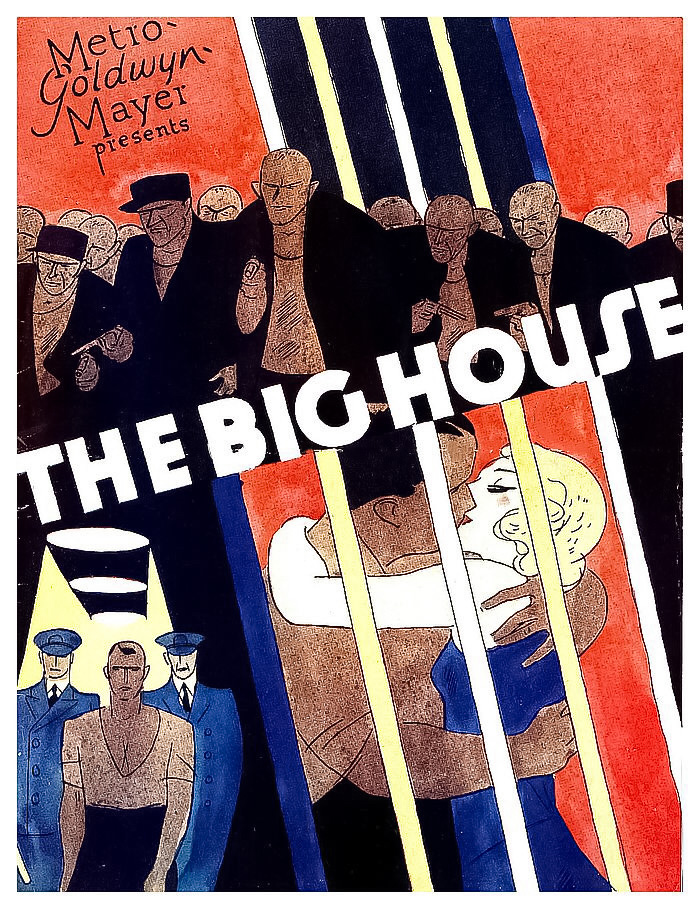
The Big House (1930)

The Big House (1930)

Foundational Hollywood prison film, not only establishes many genre tropes but does it with genuine style

Director: George W Hill

Cast: Chester Morris (Morgan), Wallace Beery (Butch), Lewis Stone (Warden), Robert Montgomery (Kent), Leila Hyams (Anne), George F Marion (Pop), JC Nugent (Marlowe), Karl Dane (Olsen), DeWitt Jennings (Wallace), Matthew Betz (Gopher)

We’re all familiar with the prison movie: cell yards, newly arrived prisoners, old lags, gangs, exercise yards, tough wardens, snitches, shivs, escape plans, betting on insect races, coolers, bad food, riots… many of these now age old cliches first sprang into life in The Big House, the first major prison movie released in Hollywood. And it’s a good one, a well-paced mix of character study and morality tale with a surprisingly action packed ending.

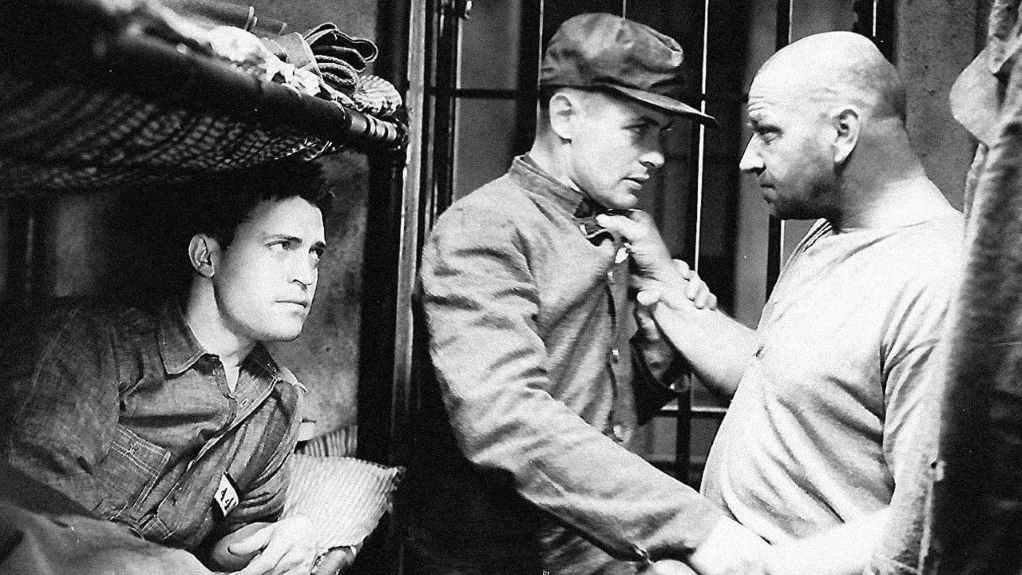
In an overcrowded prison, where conditions are as tough as the inmates, new arrival Kent (Robert Montgomery) is nervous. He’s a rich guy struggling to adjust to spending the next seven years in the slammer after he drove the car in a fatal hit-and-run. He’s chucked into a cell with two tough inmates: Morgan (Chester Morris), a strong-and-silent type who takes no nonsense, and Butch (Wallace Beery), his best friend who swings between friendly and threatening. As mutterings about escape plans and prison feuds heat up, Kent goes to increasingly selfish attempts to save his skin, against the advice of Morgan, who is dreaming of his imminent parole.

“Prison doesn’t give a man a yellow streak, but if he has one it brings it out.” Those are the wise words of Lewis Stone’s gruff, patrician warden. It’s fair to say Kent doesn’t listen. One of the neatest tricks The Big House pulls off is the decoy protagonist. As we watch Kent’s intimidating arrival and processing, the ferrying him from room-to-room as he is reduced to another overall-clad number (48642), our natural instinct is to feel sorry for him as Robert Montgomery’s eyes widen in shock and horror. But Kent isn’t our hero. In fact, if anything, he’s the villain.

The more we see of Kent, the more we realise he’s a spoilt rich kid who, uniquely among the main prisoners, takes no responsibility for his crime (even the sociopathic Butch does that). He will betray anyone or anything to try and lesson his sentence: and as a seasoned old-timer tells him, the best material for that is snitching on other prisoners. It’s not long before Kent is nervously planting a shiv in Morgan’s bed (leading to the cancellation of Morgan’s parole), and his utter lack of any sense of principle beyond protecting himself is directly responsible for the concluding prison riot blood bath.

Instead, The Big House’s real hero is Morgan. Played with stoic firmness by Chester Morris, Morgan may well be a criminal (tellingly, of the three principles, he’s a professional thief giving him the most ‘sympathetic’ crime, with no body count) but he has a code of loyalty to his fellows. That doesn’t mean he won’t step in against bullying – he orders Butch to return the cigarettes he wrestles from Kent – but it does mean he’ll turn a dutiful blind eye to their misdemeanours. He sticks firmly to the code of the prison – don’t snitch – even while he planning to go straight. In The Big House, it’s fascinating that is the stool pigeon and snitch who is morally the lowest-of-the-low.

That’s arguably even lower than Butch, even though he’s a sociopathic murderer who wistfully talks about his crimes with slight regret only because they got him caught. But, despite this – and even though, when the riot comes, Butch proves himself absolutely, ruthlessly, without morals – Butch is strangely likeable. Perhaps because Wallace Beery (Oscar-nominated) plays him with a mix of childish innocence as well as brutish bullying. Butch, with his illiteracy and delight in games like racing insects, along with his affectionate readiness to trust (and his blinding rage when he feels betrayed) is like a big kid. He bounds around the yard like the king of the playground.

The heart of The Big House is the close friendship (and, while surely unintentional, it’s hard not to see a homoerotic undercurrent) between Butch and Morgan. These two are inseparable, trust each other completely, tell each other everything and won’t hear a word against each other from someone else. They are both familiar with the slammer, a dark corridor with several tiny, dark cells. Butch gets chucked in there after leading a dinner hall protest at the terrible food – the protest that will lead to him passing his shiv to Kent who then plants it on Morgan to gain favour with the guards. This leads to Morgan’s spell there – where, in a fixed shot of the empty corridor, Hill has us overhear the shouted conversation between the two as Morgan vows revenge and Butch naively argues he can’t believe Kent would do that.

Morgan’s rejected parole leads to his own escape. It’s a slightly forced touch of melodrama that, on escape, he of course meets and falls in love with Kent’s sister Anne (Leila Hyams) who recognises him. It’s, of course, the silver bullet that sees Morgan vowing to go straight and allowing him to tick the film’s crucial moral boxes: he forswears crime (and willingly returns to prison when caught) but without sacrificing his loyalty to the prison code of no snitching. Once again, this is contrasted with the yellow Kent, who won’t admit his guilt and has no honour at all among the thieves.

The Big House culminates in Butch’s bungled escape attempt, made infinitely worse by Kent’s cowardly actions and Butch’s capacity for violence when crossed. You have to question the competence of the prison: crowded or not, Butch and his gang manage to smuggle in several guns, and the Warden’s refusal to even consider negotiating a release of captured guards Butch is hopefully not standard practice. This is probably the only prison film you’ll see where a tank rolls in to settle the matter (one possible cliché no one picked up), but the real heart of the clash is Morgan’s attempt to both stick to his new-found determination to do the right thing, without betraying his brotherly love for Butch.

It makes for a tense, high-octane, surprisingly ruthless final act in a prison film that sets out the rules but also tells a compelling, exciting and engaging story. With very good contrasting performances from Morris, Beery and Montgomery, it’s snappily directed with real verve by Hill, whose camera soaks up the impressively grand sets and then throws in to the midst of the violence. It’s interesting to see its moral judgements on its characters: loyalty prized above all other virtues – would that still be the case today?

Alibi (1929)

Alibi (1929)

Early talkie as flashes of interest here-and-there as it awkwardly adapts to sound

Director: Roland West

Cast: Chester Morris (Chick Williams), Harry Stubbs (Buck Buchanan), Mae Busch (Daisy Thomas), Eleanor Griffin (Joan Manning Williams), Regis Toomey (Danny McGann), Purnell Pratt (Sergeant Pete Manning), Irma Harrison (Toots)

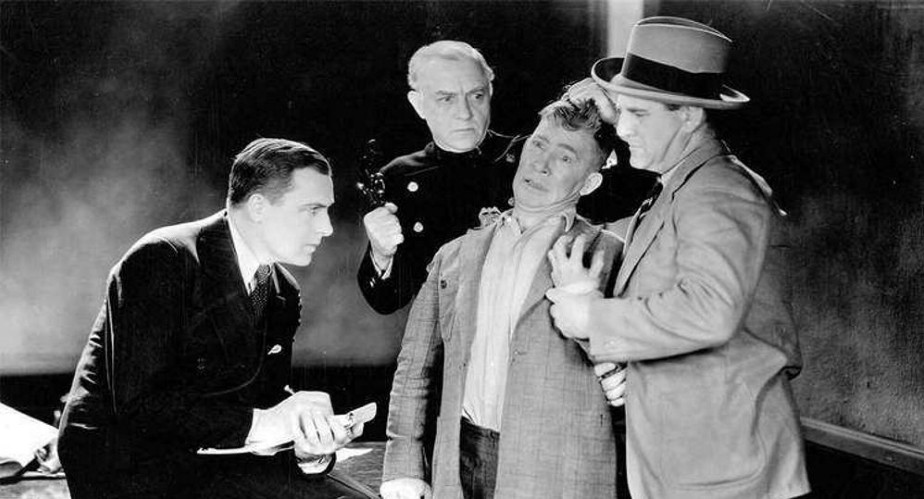
After a long stretch, Chick Williams (Chester Morris) is finally out of the slammer – and he’s celebrating by getting married to Joan Manning (Eleanor Griffin), who just happens to be the daughter of Police Sergeant Pete Mannings (Purnell Pratt). But it’s all fine, because Chick is going straight. And when the police are convinced Chick killed a police officer during a bungled burglary, Joan is certain he didn’t. In fact, she can give him a cast iron alibi – they were at the theatre together and, even if the killing did happen when they were separated during the interval, he definitely didn’t do it. Or did he?

Alibi (an early nominee for Best Picture) is another classic example of both Hollywood adapting a melodramatic Broadway murder-drama hit to the screen and a silent film hurriedly (and sometimes awkwardly) retrofitted to sound. It makes it a strange beast, a hodgepodge of different acting styles with scenes ranging from dynamic and experimental camera movement with flashes of intriguing sound usage to painfully awkward dialogue scenes where most of the actors stand very still and enunciate very slowly and clearly to make sure the mics pick up every word.

We get an explosion of sound at the start – films of this era knew audiences were gripped by such humdrum audio marvels as prisoners marching out of cells, bells ringing and police rhythmically tapping nightsticks against a wall. West does shoot this with quite a bit of interest – in particular the sudden appearance of the prisoners from behind a row of doors that swing shut. It’s handsomely designed by William Cameron Menzies and there are the odd moments of flair: a camera that tracks from a low-angle into the hotel Chick and his associates use for their base of operations; a stool pigeon crumbling into panic with a nightmare vision of his interrogator’s heads swirling around him; a drunk leaning in towards a massive bottle in close-up; shadows are cast behind doors; there are some dynamic fights and punches and an impressive rooftop flight.

But it’s mixed with some painfully stilted dialogue scenes, with most of the cast shown up in a bad light. Scenes involving Sergeant Manning and his police cronies seem to take hours as the actors trudge painfully slowly through the dialogue, their voices at time sounding like the film has been caught in a projector reel. You really notice the difference when the actors do something silently, their bodies moving with a swift confidence they lose as soon as they speak. Several actors – most notably Eleanor Griffin – still rely on tried-and-trusted silent reactions, signposting reactions they are also communicating with dialogue.

It stands out when the film does use dialogue well. The stool pigeon interrogation sees the interrogators repeat “Who killed O’Brien” and “Come on, come on” over and over again with an increasing rhythmic pace which really captures the mood of relentless interrogation. A scene involving a police switchboard sees a line of operators all speaking, but each sentence we catch forms a coherent narrative whole. There are some relatively ambitious song and dance numbers in Chick’s club. It’s just a shame so many of the core dialogue sequences are so dire.

Alibi does throw in a few decent twists here and there. Today we are not a jot surprised that Chick is in fact a villain, but the film manages to play its cards fairly close to its twist. That’s largely due to Chester Morris’ (an Oscar nominee) very effective performance, easily the finest in the film. Morris has the air of a cocky James Stewart, a false small-town bonhomie covering his greed and arrogance. He plays the humble suitor well – but his smug grin to Sergeant Manning when Joan reaffirms her complete faith in Chick is a great insight to who he is. He’s also a bully and, it transpires, a complete coward – Morris nails a great breakdown scene late in the film where his assurance disappears in a cloud of begging.

Morris is probably slightly better than much of the film deserves. He’s also luckier than Regis Toomey, whose ‘drunken acting’ as booze-hound criminal (truly some of the worst bits of alcoholic acting I’ve ever seen) is still not really excusable, even when you find out it’s a double bluff on his character’s part. (It’s so awful I’m amazed anyone is fooled). Toomey is also the centre of a death scene so ridiculously overblown, maudlin and sentimental it’s far more likely to illicit laughs than tears today as it stretches out over almost five minutes of screentime.

There is the odd intriguing idea in Alibi. It’s remarkable how critical of the police it is – even if it defaults to framing them as heroes in the end. Joan tells her father she could never marry the copper suitor he favours, because she believes cops to be corrupt bullies. An idea you can see partially borne out when our stool pigeon is made to put his fingerprints on a gun and threatened with judicial fake-self-defence murder unless he confesses. Bullets are fired freely at criminals, who left alone to be roughed up and threatened when arrested. It’s not exactly the most flattering view of law enforcement, who (despite reverting to heroes at the end) are constantly shown to be willing to bend the word of the law.

These moments of interest just about sustain it, added to Morris and West’s touches of flair. But it’s also got some painfully dated, awkward moments as Hollywood still struggled to stumble from silence to sound.