
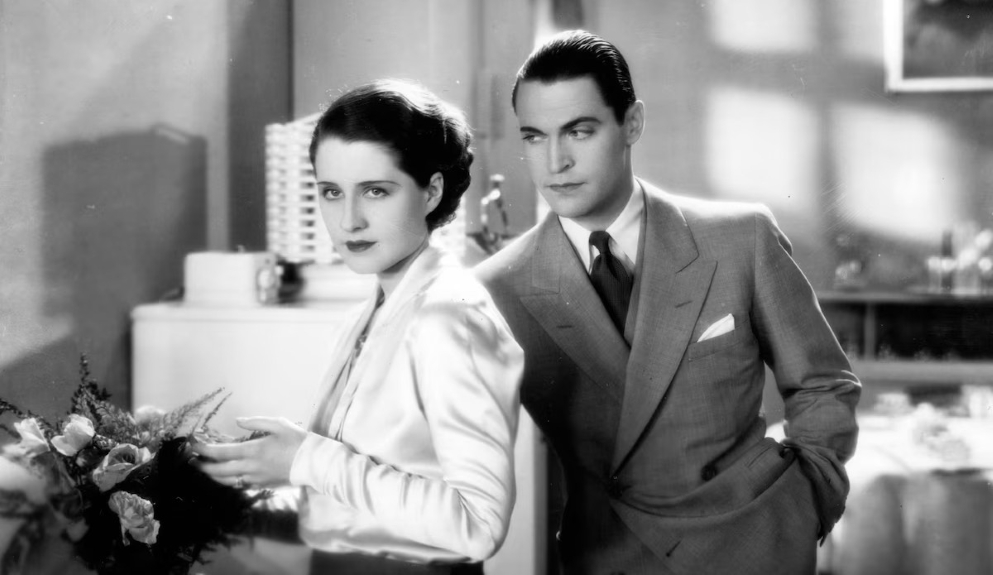
In its way ahead of its time, a liberated but melodramatic look at women’s freedom in relationships
Director: Robert Z Leonard
Cast: Norma Shearer (Jerry Martin), Chester Morris (Ted Martin), Conrad Nagel (Paul), Robert Montgomery (Don), Florence Eldridge (Helen), Helene Millard (Mary), Robert Elliott (Bill), Mary Doran (Janice), Tyler Brooke (Hank), Zelda Sears (Hannah), Judith Wood (Dorothy), George Irving (Dr Bernard)
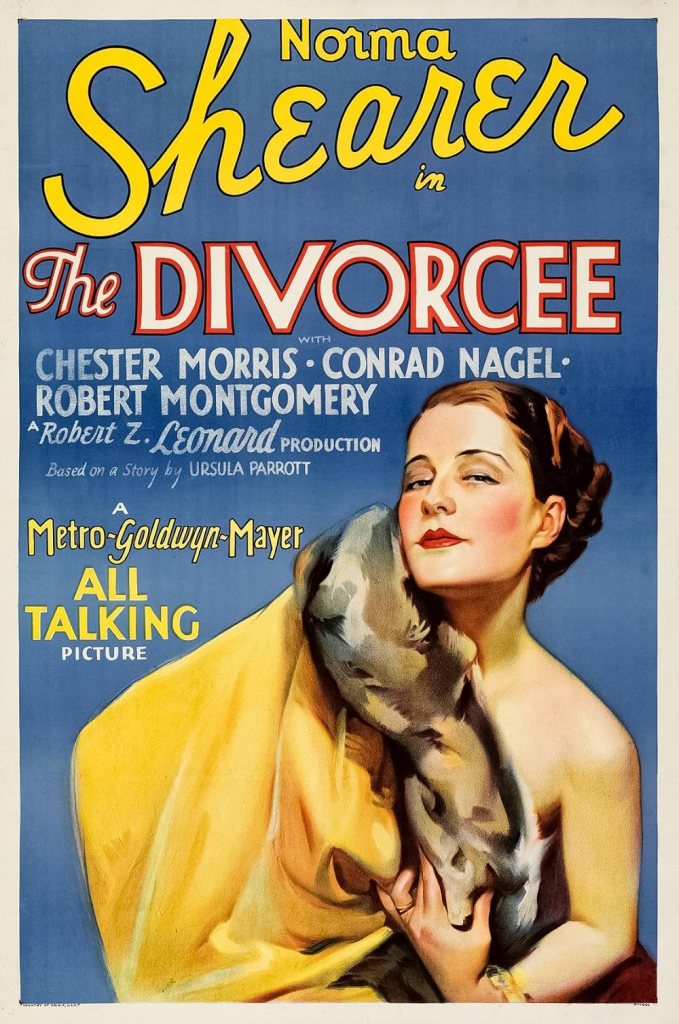
Jerry (Norma Shearer) and Ted (Chester Morris) are young, in love and have been married for three years. It’s not ideal then, that Ted’s ‘pal’ Don (Robert Montgomery) brings a surprise guest to their anniversary party: Janice (Mary Doran) who also happens to be Ted’s illicit squeeze. When Jerry catches them in a clinch, the truth comes tumbling out. Ted says, of course, it didn’t mean anything and he’d be perfectly happy for a bit of freedom in marriages especially in these modern times. Jerry, after a lifetime of being a good girl, promptly ‘balances accounts’ with Don – only for Ted to reveal that what’s good for the gander was very much not for the goose. Divorced, Jerry finds a new life of wild sexual adventures while Ted sinks into bitter alcoholism. Will Jerry take up the offers of the other man who wished to marry her, Paul (Conrad Nagel)? Or will she decide Ted was her real love?
It’s hard to imagine a film like The Divorcee being made even a couple of years later. It’s remarkably open about sex in a film where everyone is pretty much unashamedly at it. Nor can you really imagine a film from Hollywood’s Golden Age where we would be invited to sympathise with Jerry for engaging in tit-for-tat infidelity, especially after Ted’s fury (screw you Ted, you hypocritical wanker). Or where Jerry’s series of conquests across New York – rather wittily told through a montage of close-ups of hands clasped while we hear the voices of a Jerry and a parade of exotic sounding men – doesn’t see her being punished by public shaming, horrific illness or any other of the wallopings a woman behaving like this in a film made a few years later would have faced. In its own way it makes The Divorcee a bit of a landmark – albeit a landmark Hollywood would spend most of the next thirty years running away from.
It also makes The Divorcee rather refreshing, even if it’s a slight film shot with a mix of stagy theatricalism and some sharp-paced editing. It’s also a film that, despite the amount of sex going on, isn’t exactly awash with sensual chemistry between its various leads. It’s hard to put your finger on, but Leonard’s film never quite manages to bring out a real sense of connection, despite the devotedly puppy-dog eyes Nagel’s Paul shoots Jerry or the protestations of adoration between Morris and Shearer. In fact, it’s the lack of steamy flirtatiousness that actually makes The Divorcee seem old-fashioned, despite all its liberal openness about extra-marital sex. (Compare it The Awful Truth, the closest – comic – film to this from the Code Era, where you are never in doubt that no matter who they screwed, Grant and Dunne were crazy for each other.)
The Divorcee makes it mark on history as the film Norma Shearer won one of the first Best Actress gongs for. Shearer’s head-girl looks and slightly plummy voice is perfect for the good-girl life Jerry has been leading as the devoted wife, thrilled and excited at Ted’s proposal. But she also brings a heartbroken fury to her discovery of Ted’s betrayal – and a coolly determined energy to her conscious decision, in that case, to take advantage of Don’s attraction to her. From there, Shearer embraces the hedonistic joy of a woman determined to enjoy the bad side for the first time in her life – without ever letting us forget there is a good girl bubbling below the surface. It’s a good performance, the finest in the film – good enough to make it sad that Shearer was pretty much from here on straight-jacketed into stiff prestige roles in frequently self-consciously ‘noble’ pictures.
It’s also nice that the men in this story are frequently shown as inadequate, whining, self-pitying, cowardly or some combination of all four. Chester Morris gives one of his patented performances of smug roguishness, collapsing into pathetic self-pity at a series of worse-for-wear appearances at various posh parties. Robert Montgomery is energetic and funny as the appallingly selfish and shallow Don, rather funny in his blatant cowardice (fleeing to Europe the second he works out Ted is not exactly thrilled at knowing another man has bumped uglies with his wife). Conrad Nagel does what he can with a terminally dull role as Paul, cursed with a series of needy glances.
Paul is at the centre of the film’s main sub-plot. Jilted potential husband of Jerry, Paul leaves the hunting lodge party where Ted and Jerry get engaged, deeply pissed (in both senses) hitting the roads with a fury. As the back-projection swings from side-to-side like it’s been attached to a whirligig, the car overturns and Dorothy (Judith Wood) is left ‘hideously deformed’. (We never see what happens to her, only a shrieking reaction of someone else; in her later appearances she’s behind a shroud). Paul marries her out of guilt but is convinced she loathes him for the accident and can’t wait to be shot of him, meaning she need not be an obstacle for a reunion with Jerry.
But that would mean – even though they get divorced – Jerry turning her back definitively on Ted. And, as modern as the film is – it even gives Jerry an actual job, at which she is so successful she is promoted and moved to the London office – it’s not crazy enough to escape the idea that, at the end of the day, all girls really want is to be settled and married with the man of their dreams. The Divorcee settles in the end of a resolutely conservative ending. Much as you might want Jerry to carry on having a whale of a time and kick her drunken louse of a husband back to the kerb for his hypocritical one-sided views of sexual freedom, she of course doesn’t.
Naturally, Dorothy in fact is devoted to Paul (she even, pathetically, begs Jerry not to take him from her since, as she is so ‘deformed’ no other man will ever look at her). Naturally Jerry doesn’t want to be a home wrecker. Naturally, a happy ending looms. Even before the code, Hollywood was only ever going to go so far, wasn’t it? After all women really would rather be wives and mothers, wouldn’t they?

