Category: British Films

The Queen (2006)

Helen Mirren reigns supreme as her Majesty in The Queen

Director: Stephen Frears

Cast: Helen Mirren (Queen Elizabeth II), Michael Sheen (Tony Blair), James Cromwell (Prince Philip), Helen McCrory (Cherie Blair), Alex Jennings (Prince Charles), Roger Allam (Robin Janvin), Sylvia Syms (Queen Elizabeth, the Queen Mother), Tim McMullan (Stephen Lamport), Mark Bazeley (Alistair Campbell), Julian Firth (Jonathan Powell)

It’s easy to assume The Queen is a cozy piece of film-making, not least because writer Peter Morgan’s exploration of the Royal Family has become every one’s favourite costume drama viewing thanks to his series The Crown on Netflix. But that’s to forget the acute sense of the personal and the public Morgan has, and his ability to write himself into the minds of his participants. And he’s perfectly matched here with the wry eye of Stephen Frears. Together they create a film that uses a single moment of history to explore the nature of our institutions and the particular characters of the people that fill them.

The film follows the death and aftermath of Princess Diana, and especially the dramatic public reaction to the death that expressed itself both in unparalleled scenes of national public mourning and hostility to the Royal family. Both are things a lifetime of duty and service have failed to prepare Queen Elizabeth II (Helen Mirren) for – but are also things intrinsically understood by her new Prime Minister Tony Blair (Michael Sheen). As the public clamour for the Royals to join the public in an exhibition of public grief rises, it’s mixed with a furious demand for a royal ‘mea culpa’ for ruining the life of the “People’s Princess”. Could the Royal Family be finished?

Well of course it wasn’t, and perhaps it’s hard to understand for those who didn’t live through those crazy days of 1997. But there was never anything like it before – people wept in the streets as if they had lost a family member of their own. Princess Diana – a tireless campaigner for charities, who did a great deal to change public perceptions on AIDS among many other issues – was also a brilliant master of public opinion, far more attuned to the countries drift away from stiff-upper-lip reticence towards celebrity-worship sentimentality than the family she married into. As skilful a manipulator of the press, as she was a victim of their hounding, she’d made herself into someone larger than life. It’s the sort of modern cult of celebrity, that few others mastered – and certainly not in the Royal Family.

Diana hangs over the family in the film like a ghost, an embodiment of their sense that the country is drifting away from them. It’s a film where pace and speed are vital, Frears and Morgan brilliantly contrasting the rushing onslaught of events from the car crash to distraught, increasingly angry, crowds gathering outside Buckingham Palace with the relatively sedate official response, which was effectively a private retreat to Scotland and say and do very little. The film has a brilliant sense of the momentum of those crazy days, and of the clash between an institution straitjacketed by tradition and a world where the public exhibition of emotion is de rigour.

What the film finds however is the value in both, and in doing so perhaps becomes one of the greatest adverts for the monarchy – or at the very least for Elizabeth II – you will ever see. A lot of this comes from Helen Mirren superb performance as the Queen. It’s a role Mirren performs with a combination of Sphinx-like genius and a genuine fragility under a veneer of exactitude. Mirren’s Elizabeth is a woman whose sense of duty has led to a lifetime of living as a symbol, a profession that has demanded the avoidance of any sort of personal opinion what-so-ever (something Morgan leans on with his Alan Bennettish early scene, where the Queen chats with a maid about the recent General Election and regrets she never had the chance to tick a box for something). She’s a woman certain that she has performed her duty in the finest tradition of her family.

Her tragedy in the film is the bewildered sense of suddenly finding the country she thought she knew being completely different. Put simply, the destructive Diana, a difficult person privately but loved publically, is a woman she can’t understand – and a country that embraces her is one she struggles to understand as well. Mirren’s Queen has a sharply defined sense of her place and person, but finds herself questioning all that. While sharply refusing to be treated as fool, she has a distressed sense of suddenly being adrift in the world.

Morgan captures all this in a series of engaging “behind the scenes” moments, but his real trick is his sure touch with symbology. A magnificent stag on the grounds, being hunted by all and sundry, could easily have been a clumsy parallel with the Queen, but it’s delivered with real grace and serves as a true emotional catalyst for the Queen (twice!) as she finally begins to understand both her own situation, and the necessity for her to bend her own firm principles and tradition to meet the requirements of this new age.

It’s the main theme of the film, this conflict between tradition and modernism, but the film sees merit in both. Many of the formalities of court life are humoursly spoofed in their intricate pomposity, but the overblown sentimentalism and knee-jerk judgamentalism of the modern world are hardly much better. As Blair himself, the arch modernist, observes there will always be a place for a head of state who gives us a symbol to aspire to. Not least, because the burden of standing for things and being driven to play to the masses will eventually lead to the destruction of most political careers (the film mines a fair bit of material between the implicit comparison of Blair’s saint-like popularity in 1997 to the wreckage of his “Bliar” reputation in 2006).

Frear’s film is a gentle critique but also a sharp defence of the institution of the monarchy, as practiced by the Queen. It may pain her, but she will get on with it. Morgan’s script also suggests her quiet wisdom – the film’s coda has her suggesting that Diana, like all things popular today, will pass. 

The film is less sure footed elsewhere. It’s portrayal of New Labour at times leans a bit too heavily into public perception – Campbell (played by a bullying Mark Bazaely) as a brash blow-hard, Labour as being obsessed with spin and image, Cherie Blair as a judgemental Shrew. Other members of the Royal family sometimes bend into parody – by the time of the Crown, Peter Morgan was to find Prince Philip as a far more fascinating and richer character than he is here. But the performances are strong across the board, as if following their head of state in Mirren. Sheen’s re-creation of Blair is pitch perfect, and he also aptly understands the difficult balance in Blair between genuine decency and ambition. Roger Allam also provides a wonderfully dry cameo as the Queen’s old fashioned secretary, while Alex Jennings does a neat impersonation of a Charles desperate to be seen to be doing the right thing.

The Queen’s main interest though is showing that tradition and modernism can sit side-by-side – and that a leaning too far in either direction is harmful for all involved. It sprinkles in intriguing levels of criticism for Diana, but matches that with a respect for the Queen, that makes her real while keeping her a symbol. Helen Mirren’s performance deserved every price going, and the film itself rewards with each new viewing.

Misbehaviour (2020)

What price progress in Misbehaviour?

Director: Philipa Lowthorpe

Cast: Keira Knightley (Sally Alexander), Gugu Mbatha-Raw (Jennifer Hosten, Miss Grenada), Jessie Buckley (Jo Robinson), Greg Kinnear (Bob Hope), Lesley Manville (Dolores Hope), Rhys Ifans (Eric Morley), Keeley Hawes (Julia Morley), Phyllis Logan (Evelyn Alexander), Loreece Harrison (Pearl Jansen, Miss Africa South), Clara Rosager (Marjorie Johansson, Miss Sweden), Suki Waterhouse (Sandra Wolsfield, Miss USA), John Heffernan (Gareth Stedman Jones)

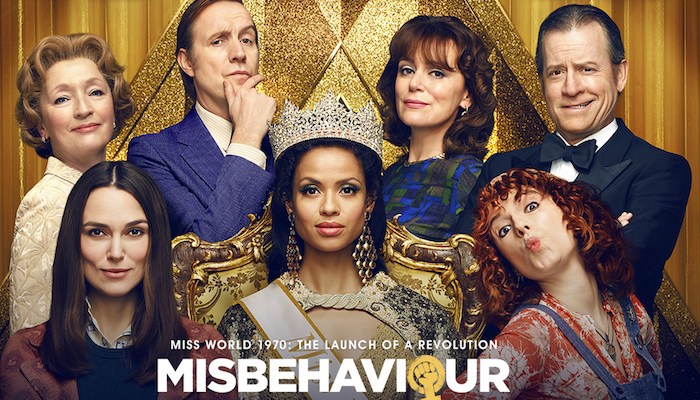
In 1970, the Miss World Competition in London was disrupted before a world-wide TV audience by Women’s Liberation campaigners, furious at the competition being the public face of a world that judged women on appearance rather than personality. The disruption was led by post-graduate UCL student Sally Alexander (Keira Knightley) and commune radical Jo Robinson (Jessie Buckley), and rather overshadowed for many the fact that, for the first time in history, black female competitors like Miss Grenada Jennifer Hoosten (Gugu Mbatha-Raw) were treated as genuine contenders for the title. Misbehaviour recreates all this wonderfully, but also makes an intriguing exploration of the different ways women can make themselves a place in the world.

It would have been very easy for Philipa Lowthorpe’s engaging film to have designated villains – after all with the casual sexism and objectification of the Miss World competition, you could easily have assigned the competition runners as baddies. Instead the film is richer than that, full of people who genuinely feel they are doing their best in the roles they’ve been given in life. If there is a villain, it’s society itself which traps women into certain roles, and doesn’t allow them to grow.

The film follows three plot lines – the women’s liberation movement, the background of staging the Miss World Competition, and the lives and expectations of the contestants themselves. Of these three plots, the women’s liberation movement is surprisingly the least engaging. Keira Knightley and Jessie Buckley do decent jobs, but their characters are more one-dimensional and lack real development (they start the film as passionate rebels and end the film the same way), with this lack of plot being padded out by movie clichés of the “you’re off the protest” variety. 

The real interest surprisingly is the competitors themselves. Like the protestors, the film is keen to not blame the contestants. The ones we follow are smart, intelligent, passionate women who are, by and large, willing to play the game to get their future ambitions realised. We see this most of all for Miss Grenada and Miss “Africa South” (a black South African shoe-horned into the competition to counter accusations of legitimising apartheid): the competition places them in the position of representing victimised minorities, groups that have their options sharply restricted. Having spent their lives being told that only being white, blonde and blue-eyed is beautiful, the chance to set an example to others is important to them – and the film doesn’t downplay or demean this at all.

This is captured particularly in the exploration of Gugu Mbatha-Raw’s Miss Grenada, Jennifer Hoosten. A woman willing to use the competition as a springboard to try and build herself a professional career, she is an intelligent and dedicated woman who understands the nature of her competition. Hoosten however rejects being positioned as a victim, as well as the way Women’s Liberation crams all women’s aims into a single homogenous goal. Why should another group of women tell her what is best for her – isn’t that what men have been doing all her life? As a black woman, her only way to get the opportunities that someone like Sally Alexander has – education and career – is to play the hand that nature has given her the only way she can. Mbatha-Raw captures this all extremely well in a quietly judged and affecting performance.

Similar feelings motivate the rest of the competitors. Miss Africa South (an engaging Loreece Harrison) just wants to keep her head down and get home to her family, letting her presence alone make her statements. Miss Sweden (a fiery Clara Rosager) rails against the control and management of the organisers on every aspect of her life while at the competition. It’s a film where women are working to find their place in the world, but accepting that not all those goals will be the same. Keeley Hawes does excellent work as Julia Morley (co-runner of the competition with her husband, a brash Rhys Ifans), a woman trying her best to reform the competition from within.

Lowthorpe juggles these interesting themes – giving oxygen to all these points of view – within a fascinatingly precise reconstruction of the competition itself and the protest. As part of this Greg Kinnear contributes a spot-on performance as Bob Hope, here a sexist comedian from a different era who can’t understand the changing world. The film gets a lot of comic mileage as well from the jaw-dropping sexism of the BBC coverage and the drooling perviness of the reporters rushing to interview the competitors.

“This isn’t the end of anything, but this could be a start” says Lesley Manville in her waspishly delightful cameo as Hope’s wife. She’s right, the world didn’t change overnight. But as the film captures it started getting people thinking, even if it accepted that not all women will have the same view. Sally Alexander and her mother can disagree on women’s roles – “Why would I want to grow up like you?” Sally berates her housewife mother (very well played by Phyllis Logan) – but the two characters can still come together and agree that having opportunities is still better than not. And perhaps that’s what the film is arguing for: all these women are stretching for opportunities. And if that means the world needs to change so half the population gets the same chances as the other half, so be it.

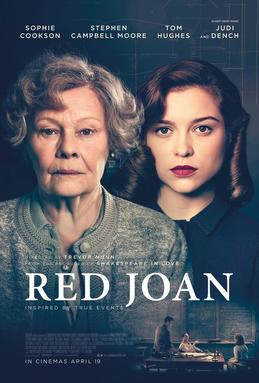
Red Joan (2018)

Judi Dench coasts through this weak spy drama Red Joan

Director: Trevor Nunn

Cast: Judi Dench (Joan Stanley), Sophie Cookson (Young Joan), Tom Hughes (Leo Galich), Tereza Srbova (Sonya), Stephen Campbell Moore (Max), Ben Miles (Nick), Laurence Spellman (Patrick Adams)

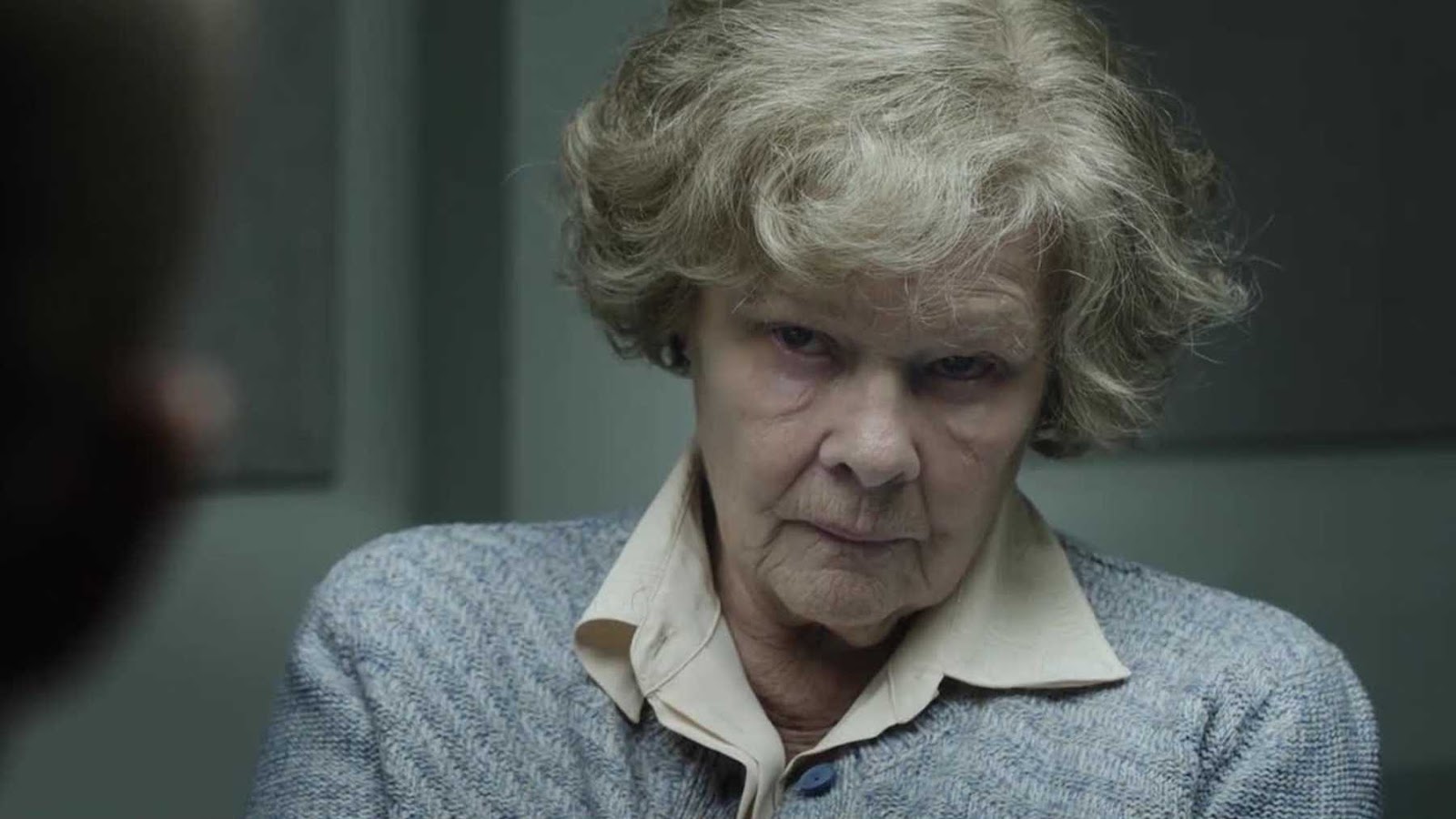
Red Joan is based on the true-life story of Melitta Norwood, the British civil servant who from 1937 passed piles of top-secret intelligence documents to the KGB. These documents helped the Soviets create their own bomb. This feeble dramatization has Joan Stanley (Judi Dench) arrested in the late 90s, with flashbacks showing her recruitment and spy work as a young woman (Sophie Cookson), motivated by her desire to “level the playing field” and by her love for shadowy KGB recruiter Leo (Tom Hughes), a German Jew.

Trevor Nunn’s flat, dull spy story has all the freshness and imagination of an ITV Sunday night drama. Tedious, dragging and very silly, it takes a ludicrous view of 1930s and 1940s espionage. The film is obsessed with downplaying the impact of Joan’s actions, and stressing that handing over these sort of secrets was fine really because the poor Russians – Stalin’s boys lest we forget – were likely to fall victim to those Imperialist Western powers that would soon be throwing their nuclear weight about.

On top of that, the film has an almost insultingly crude idea of Cold War politics, with the world neatly divided it seems into goodies and baddies and the moral implications of actions made as simple and clean-cut as possible. Joan means well, so we can’t have any problem with what she’s doing can we? 

It’s a miracle she isn’t caught anyway since her espionage skills are so lamely ham-fisted. Maybe that’s because the investigation into the leak is handled so incompetently by the authorities, with heavy-handed arrests and quick and sudden lock-ups. But then that’s in keeping with the film’s view of British authorities as trigger-happy bullies, with even Clement Attlee reimagined as a “let’s drop one on ‘em” nut, desperate to have the bomb to threaten the Russkies with.

This simplistic vision of the past is made all the more clumsy by its feeble romance plot between young Joan and her romantic German spy and lover Leo (Tom Hughes, channelling his performance as Prince Albert in ITV’s Victoria). This romance should be the drive of events, but instead falls back on the usual clichés of young love on film, making some obvious points along the way about the lies we tell for love. 

Joan herself is absurdly reinvented as a science expert, more adept than the men she works with (who typically look down on her as little better than a tea girl). The real Melitta was indeed little more than an office worker, but Joan here is reinvented as a pioneer of physics, a genius it seems far more evolved than the mediocre men around her. Yawn, we’ve seen it all before.

Nunn’s direction is flat beyond belief – he has never really adjusted well to film, where his (even in theatre) lack of sense of pace is often exposed – but there is a decent performance from Sophie Cookson as the young Joan, a confused idealist who struggles to do the right thing. She carries the film very well – and certainly has more to do than Judi Dench.

Dench only infrequently appears, largely for a series of “I am reflecting on the past” reaction shots. These are intercut with tediously clumsy narrative-establishing interrogation scenes, which largely serve as intros to more flashbacks (“Tell us about X now…”). There is a feeble continuation of the theme that passing nuclear secrets can’t be that serious after all, with Ben Miles as her son going through a painfully obvious arc of disbelief, anger and acceptance culminating in a “nick of time” appearance at Joan’s press conference (based on Melitta’s real life front-garden press conference to the press announcing her guilt).

Red Joan has an interesting idea, but it’s told with trivial obviousness and dramatic flatness. It’s got all the inventiveness and spark of a fairly run-of-the-mill TV drama, and despite a good performance from Sophie Cookson, it’s got little to recommend it.

Tom Jones (1963)

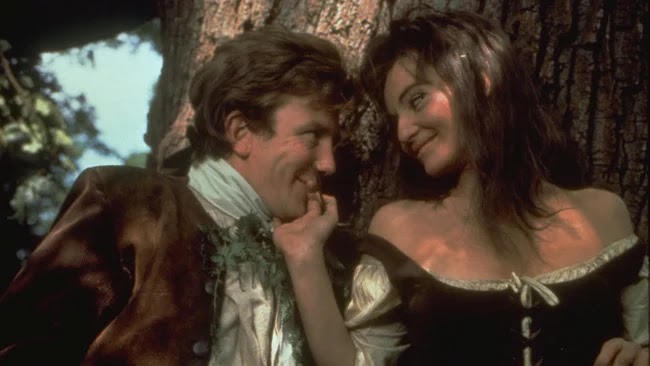
Albert Finney flirts with Diane Cilento (among many, many others) in Oscar winner Tom Jones

Director: Tony Richardson

Cast: Albert Finney (Tom Jones), Susannah York (Sophie Western), Hugh Griffith (Squire Western), Edith Evans (Miss Western), Joan Greenwood (Lady Bellaston), Diane Cilento (Molly Seagrim), George Devine (Squire Allworthy), David Tomlinson (Lord Fellamer), Rosalind Atkinson (Mrs Millar), Wilfrid Lawson (Black George), Rosalind Knight (Mrs Fitzpatrick), Jack Macgowan (Patridge), Freda Jackson (Mrs Seagrim), David Warner (Blifil), Joyce Redman (Mrs Waters/Jenny Jones), Rachel Kempson (Bridget Allworthy), Peter Bull (Thwackum), Angela Baddeley (Mrs Wilkins), Julian Glover (Northerton)

In early 1964, America was at the height of Beatlemania. Everything about Swinging Sixties London was the height of cool, so what better way to reflect that at the Oscars than naming Best Film of the previous year as being Tom Jones, the film that turned Henry Fielding’s work into the epitome of the era’s vibe. Watching Tom Jones today is a cruel reminder that generally nothing dates as hard or as fast as cutting-edge film techniques, and that time is often not kind to comedy. But Tom Jones was the first truly British film to lift Best Picture since Olivier’s Hamlet in 1948, so it was a sign of the short-lived all-conquering cool of British culture.

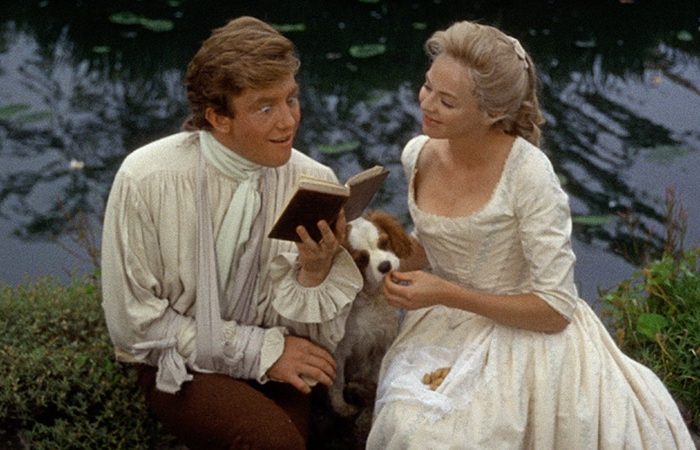
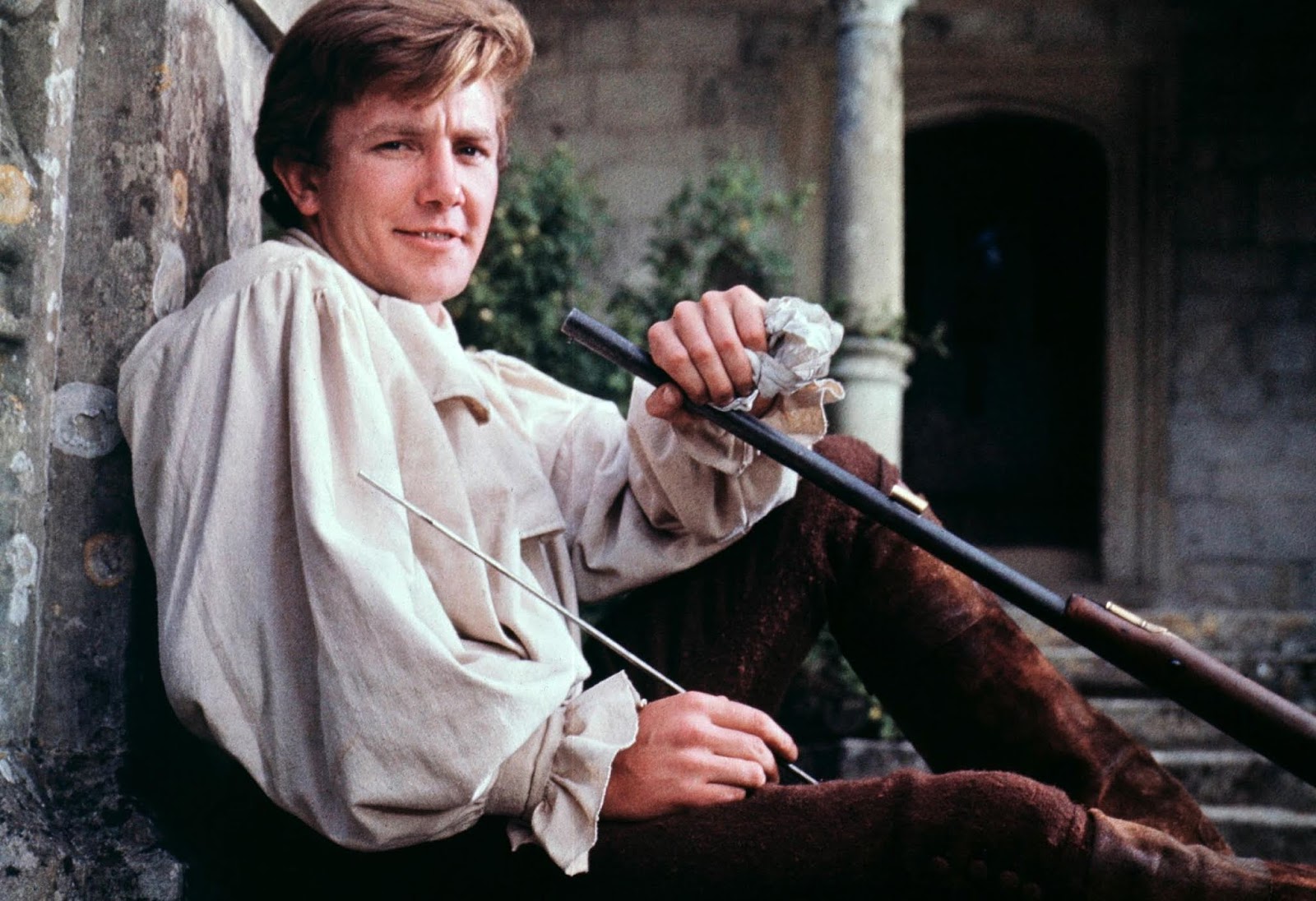
Adapted with a frenetic style from Henry Fielding’s novel, the film follows the trials and tribulations of Tom Jones (Albert Finney), adopted by Squire Allworthy (George Devine) after he is found abandoned on Allworthy’s bed as a baby. Growing up, Tom is a roisterer and rodgerer (especially keen on rodgering) but fundamentally decent, in love with Sophia Western (Susannah York) and the target of jealous rumours from his cousin Blifil (David Warner, looking a bit lost in his film debut). Banished as a result of Blifil’s schemes, he journeys to London encountering adventures along the way, not least a night of bliss with a Mrs Waters (Joyce Redman) who may (or may not) be his mother. Will Tom be able to prove his innocence, win the love of Sophia and escape his destiny of being “born to hang”?

Tony Richardson came to Tom Jones fresh from directing several searching, morally complex kitchen-sink dramas – and basically seemed determined to cut loose with this film by having fun. What he comes up with is an explosion of multiple different styles, from silent film to sped-up Benny Hill chases. Not a single editing or camera trick is unused, with the film stuffed to the gills with fades, wipes and freeze frames. Richardson basically used every single trick in the book. He was also lucky to have a perfectly judged score from John Addison (winning an Oscar).

It makes for a frenetic and fast-paced film, in love with its own 60s cool of anarchic comedy, sexual liberation and tongue-in-cheek lack of reverence all washed down with a bucket load of thigh-slapping bawdiness. It’s a film that’s inordinately pleased with itself, using Fielding’s interventionist narration style as the licence to break the fourth wall frequently and introduce a dryly hammy voiceover from Michael MacLiammóir. All of this was seen as the height of daring film-making back in the day – especially since Hollywood expected literary adaptations to be treated with reverence rather than as a high-brow Carry-On. But it’s dated badly.

Its smug, overbearing sense of zeitgeist cool comes across terrifyingly passé today, and the film’s daring use of every single cinema style makes it tonally feel like a complete mess. Richardson will segue from farce straight to an immersive hunting sequence where we are invited to feel every moment of the blood lust and violence, straight to a pastoral sequence showing the courtship of Tom and Sophia in glorious countryside.

Richardson himself – despite winning Best Director for his very self-consciously flashy work – also had mixed feelings about the film, recutting it shortly after its Oscar win into a shorter version which remains the version most people have seen today. He said of it that it “felt incomplete…and botched in much of its execution…whenever someone gushes to me about Tom Jones, I always cringe little inside”.

It’s a fair assessment of a film that is all flash – and way too much of it – and so little substance that it frequently becomes trite, smug and unpleasant to watch. John Osborne’s script (which apparently he submitted than refused to redraft) is in all honesty a mess (much of it was rewritten on set while the narration was a post-production addition to make it all make sense), with barely any quotable lines, and whatever skill the film has is all in the telling and the editing. 

Did Richardson take the whole thing as a lark and then work out later on that comedy is harder than it looks? The entire film was a complete mess on set – several errors were in fact left in the film (such as Western falling off his horse due to Griffith’s drunkenness) and then turned into jokes through the voiceover. There is a slight air from all involved that this isn’t proper film-making, that this is just one to flog for a bit of cash. Its Oscar win is inexplicable, but can be chalked up to a horrendously weak year at the Oscars.

Albert Finney goes through the entire film on autopilot – little matter than it made him a star – and he seems a curious choice for a young lover, throughout the film he channels instead a sort of horny Arthur Seaton. Finney thought the entire thing bosh and a waste of his talents – an attitude that does come across on the screen. Lightness is not always Finney’s strength, and his distant disengagement with the film becomes more striking with every viewing. 

Many of the rest of the cast mug shamelessly. Hugh Griffith bizarrely landed an Oscar nomination for a performance of gurning over-the-top mania. The film had three nominations for Best Supporting Actress: Edith Evans emerges best, although she could play this domineering Mrs Western standing on her head; Diane Cilento brings an attractive lightness to buxom Molly while Joyce Redman is good value and gets the film’s most famous sequence, a slobbery eating sequence with Finney where food is consumed in a very suggestive way as foreplay. Arguably the best supporting roles come from Joan Greenwood as the sexual but cruel Lady Bellaston and George Devine as the decent Squire Allworthy (the only character who isn’t some sort of caricature).

Tom Jones is most of all a memento of a particular brand of fast-paced, technique heavy, manic sixties comedy. It made a lot of money and won a lot of awards, so led to a torrent of similar films from bawdy Hogarthian costume dramas to sex comedies in modern London with naïve but well-endowed young men. Richardson and co. should have credit for catching this vibe first – but it makes for an odd experience today, like a slightly uncomfortable museum piece.

The Third Man (1949)

Orson Welles is the dark heart of The Third Man

Director: Carol Reed

Cast: Joseph Cotton (Holly Martins), Alida Valli (Anna Schmidt), Orson Welles (Harry Lime), Trevor Howard (Major Calloway), Paul Hörbiger (Karl the porter), Ernst Deustch (“Baron” Kurtz), Erich Ponto (Dr Winkel), Siegried Breuer (Anna), Bernard Lee (Sergeant Paine),Wilfrid Hyde-White (Crabbin)

It’s regularly held up as one of the cornerstones of classic 1940s film-making – and it has frequently won polls of the Greatest British Films of all time. Does The Third Man live up to expectations? No it excels them. I doubt there has been a film more perfectly assembled than this, one where all the component parts click together to make one perfect whole. No matter how many times you see The Third Man, it weaves its spell every time.

In immediate post-war Vienna, the city is divided into four zones, each run by a different great power (the UK, US, France and USSR). The black market is rife between the zones. Into this city arrives pulp Western writer Holly Martins (Joseph Cotton), here to visit his old school friend Harry Lime (Orson Welles) – only to find on arriving that Lime died in a traffic accident, with British policeman Major Calloway (Trevor Howard) insisting that he was a black marketeer. Holly can’t believe Harry was a crook, and decides to investigate himself – on the way falling in love with Harry’s girlfriend Anna (Alida Valli) and finding that nobody’s story on what happened to Harry matches up. Could the accident actually be a murder?

Carol Reed’s atmospheric film is beautifully, perhaps flawlessly directed – so well made that for years there were fevered efforts to assign its brilliance to Welles himself. Which was studiously unfair to Reed, a director at the top of his game in the 40s.  The Third Man was the crowning glory of a run of superbly stylish thrillers that matched thought provoking themes with striking film-making. The film is soaked in the atmosphere of post-war Vienna, a city half shelled out of existence. The film was shot on location, and Reed’s camera captures the “bombed about a bit” shambles of the city, its long shadows, cobbled streets and mysterious alleys.

The Third Man’s filming style also plays into this truly distinctive look. Working with (Oscar-winning) cinematographer Robert Krasker, the film is shot with a luscious almost German impressionistic style, with murky shadows and noirish lighting. Reed uses huge numbers of Dutch Angles to constantly present both this shattered city, and it mysterious story, from disconcerting angles. This visually represents the uncertainty and mystery that drip from every scene, making Vienna look like some sort of sinking ship, disappearing into a mire of crime and guilt. Reed’s camera fills the edges of the frames with tramps, beggars, the dispossessed and the plain scared – a brilliant snapshot of post-war Europe unsure about the future and ripe for exploitation.

The film looks simply stunning, with Reed’s visuals throwing up images that have stuck in film heritage, from fingers poking through a sewer grill, to the iconic entrance of Harry Lime itself (possibly the most famous entry ever). Shadows loom with gigantic proportions over the streets. A final sewer chase seems to take place in a nightmare world of water, false turns and foreboding architecture. And that final shot! Sublime cinema, the stillest shot in the film, and also a superb capturing of the film’s themes of loyalty, duty and betrayal.

The film was scripted by Graham Greene, and occupies a wonderful corner of Greene-land. His original concept was for Holly (or Rollo in the original script) and Harry to be British public schoolboys – a plan rejected when Hollywood co-funding came to call – but it did allow Holly to be transformed into a naïve American, lost in the cold realities of post-war Europe. Holly believes in the world of black and white, and writes stories where good triumphs over evil in the Wild West. He’s adrift in a Europe where everyone lies habitually, morality is flexible, and nothing is as it seems.

Holly is bound by old chains of loyalty to Harry – but how far does that loyalty stretch? What price personal loyalty when confronted with the impact of what a person has done? Joseph Cotton’s performance is pitch perfect, a middle-ranker who has orbited his whole life around brighter stars like Harry. How one-way was the relationship? Can Holly ever think for himself? 

And is the right thing to do to walk away or try and correct the wrongs done by another?This divide is shown in the relationship between Cotton’s Holly and Alidi Valli’s sensational turn as Harry’s ex-girlfriend. A woman who has seen the harshness of the world, and been through a war-torn life that Holly would struggle to even comprehend, she’s a woman to whom personal loyalty trumps all things. Should you be loyal to the man you know, your experience of him – or do you have a higher loyalty that trumps that? Anna is firmly of the belief that she knows all that she needs to know of Harry and she needs to learn no more. It’s the sort of European post-war compromise that Holly can’t adapt to, the ideas of morality becoming mired in shades of grey.

It’s a world he struggles to adapt to, but is a cold hard reality for Trevor Howard’s Major Calloway – a superb performance of cool reserve that hides a strong sense of justice. Howard’s wry half-smile and control is perfect for the film, and his disgust at the actions of black marketeers is subtly and brilliantly conveyed by both the actor and Reed’s restrained direction – a visit to a children’s ward full of victims of Lime’s penicillin, is notable for leaving everything to our imagination and communicating another loss by showing a Teddy bear being dropped into a box.

And the cause of all this suffering? Why it’s none other than Harry Lime himself. No film ever captured Orson Welles’ impish charm as well as this, his shy grin and air of an enfant terrible turned terrible are brilliantly captured in the boyishly young but demonic Harry. A Mephistopheles placed on earth to tempt men like Holly, Lime argues what do a few people (or dots) here and there really matter in the long run? After all governments sacrifice them all the time – look at Vienna! – why shouldn’t we? What’s the problem? Lime grins and casually outlines a demonic view of the world, casually uses a cheap historical justification or two, and then saunters off never suspecting that he could lose the argument. Like Welles himself, he has all the glamour and magnetism that we could never have, and to live a few moments in his shadow, as Holly and Anna do, is to live a lifetime.

So Holly has to make a choice – the friend he knew, or the strangers he has seen harmed. The film charts the slow passage to making this hard choice, presenting us with a man who refuses to believe his friend could be anything other than the victim of persecution, to the man who is destined to turn him in. With the framework of Carol Reed’s superb filmmaking, it’s still an absolute treat.

And finally, The Third Man is blessed with perhaps the most perfect film score of all time. Recorded by Anton Karas – literally discovered playing the zither on the streets of Vienna – the score is jaunty, lyrical, schoolboyish even but can switch subtly to something quite disconcerting. It perfectly captures the schoolboy bravado of Holly and the childish lack of morals of Lime. As a match with the bombed out Vienna and its rundown, cynical citizens, it’s perfect. Like all things with The Third Man, it just works better than you could ever have hoped.

A Room with a View (1985)

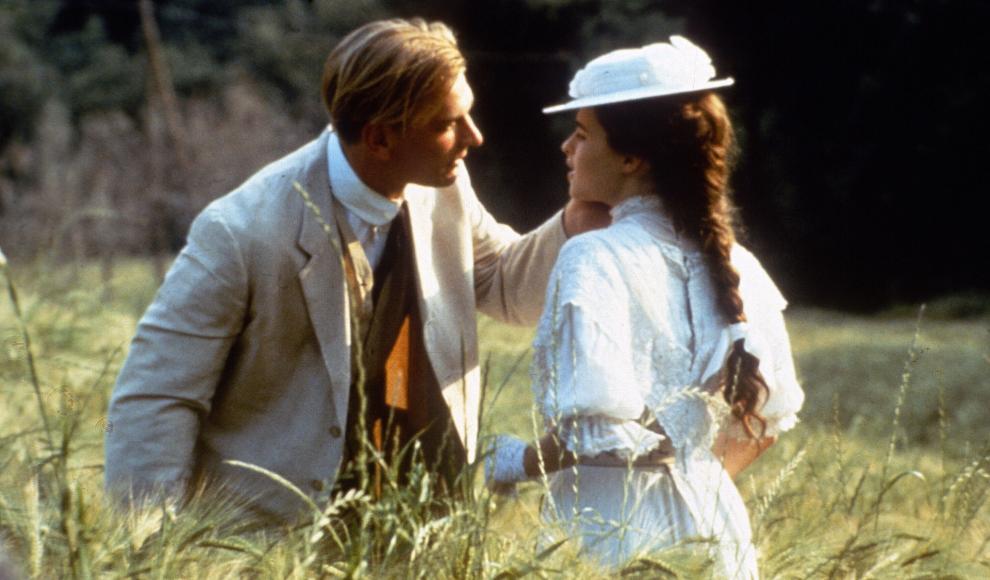
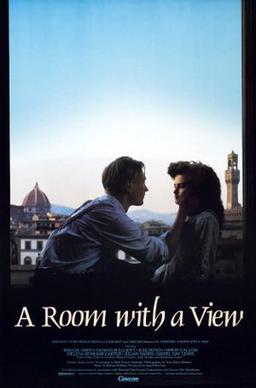
Julian Sands and Helena Bonham Carter find romance from A Room with a View

Director: James Ivory

Cast: Helena Bonham Carter (Lucy Honeychurch), Julian Sands (George Emerson), Maggie Smith (Charlotte Bartlett), Denholm Elliott (Mr Emerson), Daniel Day-Lewis (Cecil Vyse), Simon Callow (Reverend Beebe), Rosemary Leach (Mrs Honeychurch), Rupert Graves (Freddy Honeychurch), Patrick Godfrey (Reverend Eager), Judi Dench (Eleanor Lavish), Fabia Drake (Miss Catherine Alan), Joan Henley (Miss Teresa Allan), Amanda Walker (Cockey Signora)

Merchant-Ivory are the gold standard, practically synonymous with costume drama in the 80s and 90s. This really began with A Room with a View, their first true sensation, a box-office smash that won the BAFTA for Best Film and three Oscars. It practically defined what to expect from a Merchant-Ivory production: a classily made slice of English literature, with a wonderful cast of top British talent, tastefully directed with a sly observational wit for the foibles of the British class system. No one does such things better than Merchant-Ivory, and maybe only Howards End and The Remains of the Day did Merchant-Ivory better than A Room with a View.

Based on EM Forster’s novel (and that novel, largely thanks to this film, is probably now his best loved work), the film is set in Italy and England during the early 1910s. Holidaying in Florence, Miss Lucy Honeychurch (Helena Bonham Carter) and her chaperone cousin Charlotte Bartlett (Maggie Smith) are given poor rooms in their hotel – and accept an offer to swap (for the eponymous room!) with Mr Emerson (Denholm Elliott) and his romantic son George (Julian Sands). George, a free spirit, finds himself romantically drawn towards Lucy (and she to him), but something about the free Italian air frightens Lucy, and she withdraws and returns to England where she becomes engaged to the prig’s prig Cecil Vyse (Daniel Day-Lewis). However, when the Emersons rent a house near her home in Surrey she finds herself slowly drawn back once again towards George.

A Room with a View is the perfect expression of delicate, well-judged film-making, with James Ivory marshalling his precise judgement to create a luscious and involving reconstruction of the novel, which carefully layers its social and emotional observation with a dry wit. Ivory is a master of allowing the novel – and the film – to speak for itself, not intruding with flourishes but allowing the camera to hold moments. He captures wonderful moments of slightness: who can forget the camera holding on a rejected Cecil as he takes a moment to calm himself, then sits and begins to systematically retie his shoe laces? It’s a gentle, unforced moment of direction but it’s what makes the film work. 

And the careful grace and stateliness of much of A Room with a View is part of the film’s point. All this taste and manners, all this finery and wonderful design, is of course a trap. It’s precisely this pristineness and neatness that inhibits people from following their hearts, from actually having a bit of carpe diem. It’s telling that one of the film’s most striking moments involves George, Lucy’s brother Freddy and churchmen Mr Beebe going skinny-dipping (with long-shot full frontal nudity). There is something joyous for these men to literally cast off (for a few minutes) the shackles of society to just muck around in the all-together. And it’s a sort of exuberant liberal freedom you just don’t see in other parts of the film.

The film’s main theme is to see if Lucy will discover – and accept – enough about herself to follow the sort of romantic longings she feels within herself or if she is going to knuckle down and conform. Italy is a perfect sign of this – it’s hot, temperamental, the people wear their passionate hearts on their sleeves (whether that’s making-out in a carriage in front of uptight churchmen or stabbing each other in the piazza) – and it’s all that energy and lust for life that Lucy seems unsure about, but which George is chasing after. And it’s difficult to cast aside the rules you have grown up with – and scary – to find something a bit freer. Although I think you could criticise Ivory’s neat competence for failing to really visually get a contrast in look between Italy and England.

The film is blessed with a superb cast of British character actors. Helena Bonham Carter is excellent (in only her second film role) as a young woman who knows her mind but doesn’t want to follow it to its logical ends, part independent and free-thinking but also putting a constant block on her own instincts. Julian Sands as George does a decent job, although already the film (by far and away the best part he ever got) exposes his studied woodenness and flat, uninteresting voice and he often seems straining for a sort of depth and Byronic passion that is slightly beyond his range.

Maggie Smith and Denholm Elliott were both Oscar nominated, and both bring their A-game to the roles. Smith is perfect as a spinster who slowly reveals she has more sense of life’s lost opportunities than expected (even if the part is one she could play standing on her head), while Elliott gets lot of scene-stealing mileage from a sweetly eccentric Mr Emerson. Simon Callow, also in his second film role, probably gives his best (and most intriguing performance) as Mr Beebe the affable but subtly sleazy clergyman.

The film is however stolen by Daniel Day-Lewis as Cecil Vyse (originally offered his choice of parts between George and Cecil). A Room with a View opened the same day as My Beautiful Laundrette in the States and audiences were amazed that the same actor could play a self-important prig and a gay, punk fascist. Day-Lewis is the embodiment of fastidious preciseness, a man so studied in every second that each movement seems planned, with no touch of spontaneity. He even kisses Lucy with a carefully placed precision. He’s arrogantly certain of his place in the world and every moment of his life has been planned in advance with careful exactitude.

It’s the jewel in the crown of this perfect costume drama. Merchant and Ivory had longed to film the works of EM Forster for decades, and had to wait until King’s College, Cambridge (the rights holders) had someone in place who actually liked films until it was considered. They expected the main interest to be around Howards End (don’t worry its time would come!) and A Passage to India. But in A Room with a View, Merchant Ivory felt there was an unappreciated gem. They were right.

The Personal History of David Copperfield (2019)

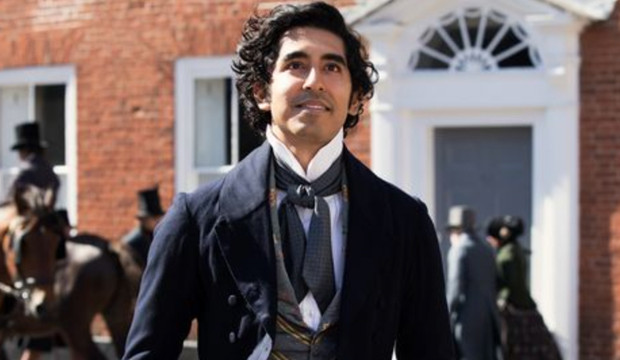
Dev Patel makes a charming lead in this Dickens adaptation that finds the comedy but misses the heart

Dir: Armando Iannucci

Cast: Dev Patel (David Copperfield), Tilda Swinton (Betsey Trotwood), Hugh Laurie (Mr Dick), Peter Capaldi (Mr Micawber), Ben Whishaw (Uriah Heep), Paul Whitehouse (Mr Peggotty), Aneurin Barnard (James Steerforth), Daisy May Cooper (Peggotty), Morfydd Clark (Dora Spenlow/Clara Copperfield), Benedict Wong (Mr Wickfield), Darren Boyd (Mr Murdstone), Gwendoline Christie (Jane Murdstone), Anthony Welsh (Ham Peggotty), Rosalind Eleazar (Agnes Wickfield), Nikki Amuka-Bird (Mrs Steerforth), Anna Maxwell Martin (Mrs Strong)

If Charles Dickens ever had a favourite child, it was probably David Copperfield. His novel – heavily inspired by events in his own life and upbringing – is an epic masterpiece, part coming-of-age story, part heart-warming family saga, part social satire. It’s quite a challenge to boil down its hundreds and hundreds of pages – and multiple plot points and characters – into less than two hours, but that’s the task Armando Iannucci takes on here. Does it work?

Well, to be honest, not quite. There is a lot to admire here, I’ll say that straightaway. And maybe I’m hard on it as I’ve read (or listened to) the novel at least three times. But for me this version drains out the heart of the novel. It zeroes in on the comedy – and there are several scenes and characters that are inarguably funny – but in doing so it removes or peels away anything bittersweet or with even a hint of sadness. It’s funny, but also a strangely empty and unengaging version of the story that it’s hard to get invested in and finally seems to drag.

Iannucci uses a terrific framing device, inspired by Dickens’ own public readings of his work. The film opens with Copperfield (a wonderfully jovial and engaging Dev Patel) publically introducing his novel to a theatre full of people which, with a flourish, disappears as he walks into the scenery and into his own past. Iannucci sprinkles his film with little flourishes like this to remind us of the semi-created nature of what we are watching, from Mr Murdstone’s hand looming into the Peggottys’ boat to pluck Copperfield into the next scene, through to the use of projected imagery at key points to fill in visually backstories the characters in the scene are relating.

The book has been well pruned and structured – and this is in some ways a triumph of compression, since it ticks off nearly all the main storylines of the plot (with some changes) and includes all the main characters. The real purist will decry such things as the loss of Barkis and Mr Micawber’s famous lines, or the translation of Mr Creakle into a factory owner or Rosa Dartworth into Steerforth’s mother. But these are necessities of adaptation and much of the storyline remains the same (if abbreviated). The script punches up the comedy a great deal – Iannucci has been vocal in his feeling that Dickens does not get the appreciation he deserves as a comic writer.

The script also digs up a few gems in the novel – Copperfield’s nervousness in reading, his inability to read to Murdstone’s gaze, is imaginatively reinterpreted as dyslexia. The semi-Freudian longing he feels for the warmth and innocence of his lost childhood is neatly captured by casting Morfydd Clark (very endearing and charmingly ditsy) as both his mother and his first love Dora. There are several laugh-out loud moments and a charmingly freewheeling love for absurdity.

But what doesn’t work is that the heart and soul of the novel has been stripped out. There is, to put it frankly, no pain or difficulty here. The tears in Dev Patel’s eyes at the end of the film as he closes his recital with the audience and reflects on the triumphs and losses of his life feel unearned. Put frankly nothing seems that hard, for all poverty rears its head at time. Even the Murdstones are less fearsome and cruel than they need to be. Worst of all, anything of any real emotional depth or tragedy from the book is removed. The two key tragic deaths of the book are actively reversed here, with both Dora and Ham surviving at the end. The complexities of Copperfield’s feelings for Dora and Agnes are resolved with immense ease for a traditional happy ending in a garden of the heroes surrounded by friends and families (exactly the sort of happy ending that Greta Gerwig gently poked fun at in Little Women). 

It’s all boiled down and told for jokes and the emotional engagement just isn’t there. Dev Patel enters the film too early – Copperfield is a young adult before he even heads to his aunt’s house – meaning the lost, vulnerable sense of sad childhood turning into a happy one is completely lost, and Copperfield’s fragility is too quickly brushed aside. Mr Micawber (a funny turn from Capaldi, but far too wheedling) is played so much for laughs that his essential decency and kindness is lost in favour of a man who spends his life borrowing cash. Too often humour is the first and only port of call, and finally it crushes the heart out of the story.

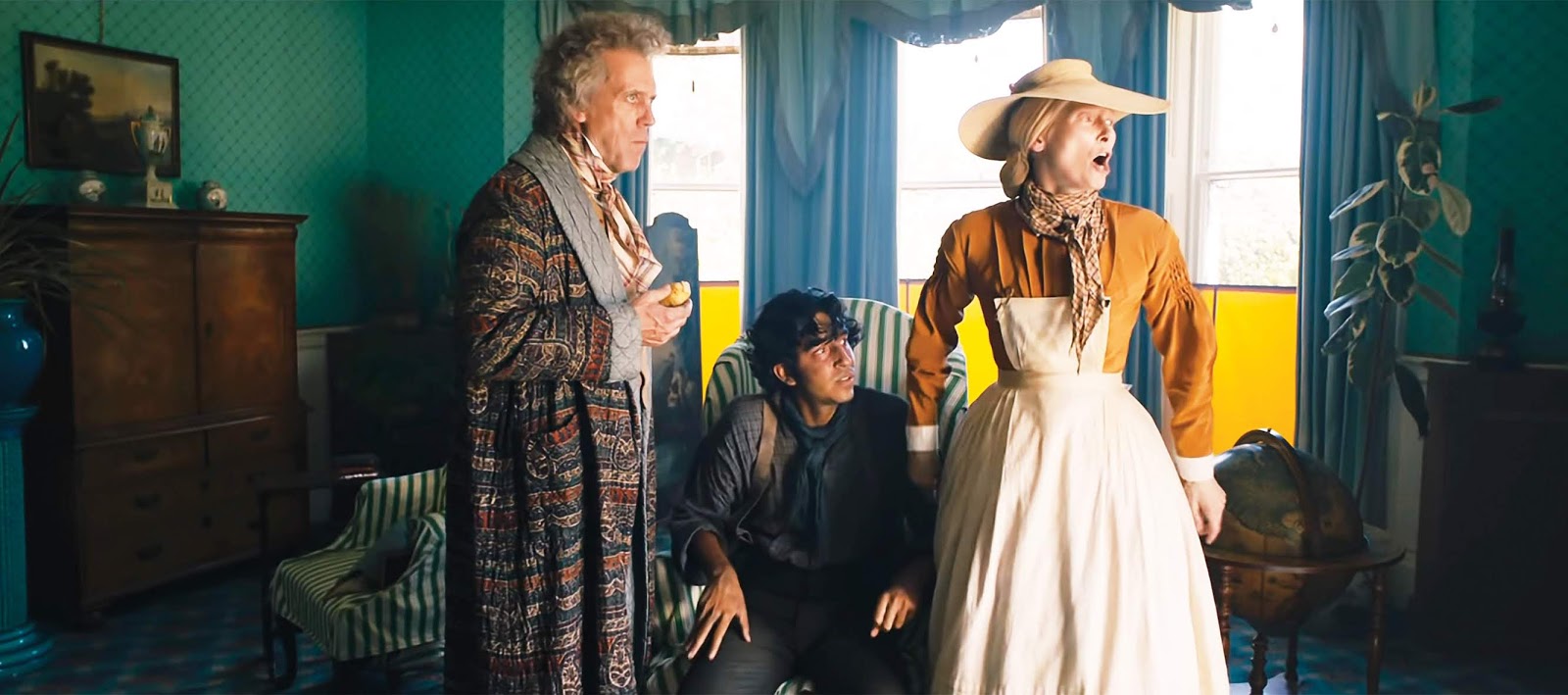
There are triumphs in the film’s cast. Hugh Laurie is simply outstanding as Mr Dick – warm, funny, wise, surreal, eccentric, half a philosopher, half an engaging and excited child – it’s Laurie’s finest performance ever on film. Benedict Wong is very funny as the alcoholic Mr Wicklfield. Tilda Swinton has great fun as a battleaxe but wise Miss Trotwood. Nikki Annuka-Bird could cut glass as Mrs Steerforth. Aneurin Barnard makes for a charmingly dissolute Steerforth. Ben Whishaw is terrific as the unctuous and ambitious Uriah Heep. The colour-blind casting works a treat to bring a range of wonderful actors in.

It’s just a shame the story doesn’t translate as well. There is a theme somewhere in here of Copperfield trying to work out his identity (much prominence is given to his multiple names and nicknames) but it never really takes flight, serving as a fig leaf of an arc rather than an actual arc. It’s a film full of jokes and fine moments – but with no heart, and no real engagement with the audience, it ends up feeling far longer than reading the book.

Room at the Top (1959)

Room at the Top (1959)

An ambitious man chooses between a damaging love affair and career in this fabulous kitchen-sink drama

Director: Jack Clayton

Cast: Laurence Harvey (Joe Lampton), Simone Signoret (Alice Aisgill), Heather Sears (Susan Brown), Donald Wolfit (Mr Brown), Donald Houston (Charlie Soames), Hermione Baddeley (Elspeth), Ambrosine Phillpotts (Mrs Brown), Allan Cuthbertson (George Aisgill), Raymond Huntley (Mr Hoylake), John Westbrook (Jack Wales), Richard Pasco (Teddy)

If there is one thing that preoccupied British cinema of the late 50s and early 60s it was class. How was a working class boy from the wrong end of the tracks supposed to pull himself up and make himself some room at the top? That’s certainly one of the many themes that you find in Jack Clayton’s sensational hit, nominated for a string of Oscars, but it’s also as much about how the search for that mystical nirvana that sees you invited for tea and crumpets at the conservative club, also means sacrificing huge shards of your own soul.

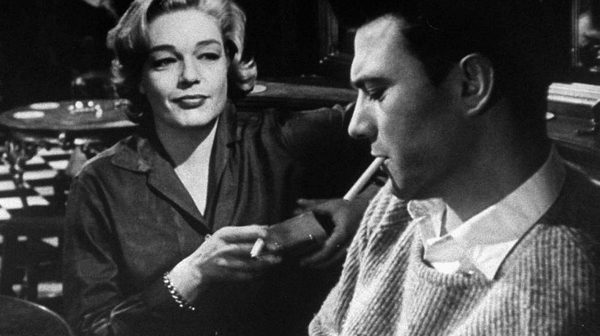
Joe Lampton (Laurence Harvey) arrives in the a Yorkshire town to take on a dreary, poorly-paid post in the Treasurer department of the local council – but has the bonus of being office work that gives him a chance at working his way up to the top. To that end he sets his ambitious cap at Susan Brown (Heather Sears), daughter of major local business magnate Mr Brown (Donald Wolfit). But Joe is also a man of his own passions, which fly in the face of his ambition, and he finds himself drawn towards married older French woman Alice Aisgill (Simone Signoret), who he meets at the local amateur drama club and who encourages him to surrender his ambitions and instead lead a life of contentment and happiness with her. Which possible life will Joe choose?

Perhaps the very first of what became the kitchen-sink genre, Room at the Top is beautifully filmed by Jack Clayton (as you would expect), but also brings the other major strength of this overlooked director to the fore, his ability with actors and to wring all-encompassing tragedy from the most everyday of circumstances. That’s what he does here, creating an almost epic scale of internal struggle for its hero, prickly as he is, drawn between two deeply conflicting goals, that asks what profits a man who gains the world at the cost of his soul?

Because, Room at the Top is that uniquely British film, that shows ambition and desire to better yourself often comes hand-in-hand with the sort of ruthless disregard of your roots, backgrounds and those around you in order to find your own path. Joe Lampton is a former POW, chippy, insecure, bitter, angry and determined to gain the sort of life he deserves. Of course it’s not hard to agree that he is more deserving than some of the tweedy, chinless fools around him and the sneers and condescension he receives from the officer class (his rival for Susan’s affections delights in calling him Sergeant, and reminding him constantly of his superior war record) is more than enough to motivate Joe.

What’s really striking about Joe therefore as how weak the character is. In undoubtedly the finest performance of his career, Laurence Harvey (a difficult and unreadable actor, with a style bridged between minimalism and woodenness) bravely shows both the bullish determination and the fundamental insecurity and weakness of Joe. A character who defines himself solely around what he feels he can achieve, he’s also a man completely unaware of what happiness is and how he to get it – and the thawing of her personality into something warmer and more loving with Alice, only serves to highlight how misguided and weakly he suppresses and kills such feelings in order to seize opportunities in life he feels entitled to.

It’s a rich contrast to Alice herself, a woman who is far braver and more certain about what she wants, and willing to fly against the conventions expected of her if it means she can gain happiness. The novel was adapted to turn Alice into a French ex-pat (married to a brutally cold RAF type played with an imperious selfishness by Allan Cuthbertson) solely so Signoret could be cast in the role – and it’s a match made in heaven. Simply wonderful, Signoret brings the part not only an imperious sexuality, but also a deep and lasting vulnerability under the surface of Euro-chill, a woman who we see opening herself up to the possibility of an affair becoming something truly lasting and deep, who has the courage to understand who and what she wants in a way Joe never can. 

The tragedy is in that inability of Joe to understand his yearnings. Clayton’s brilliantly subtle film demonstrates time and time again, contrasting its romantic freedom laced with passion when Joe and Alice are together with the stilfed, contained suppression and chill that the more buttoned up, angered Joe meets elsewhere. If Joe had the will and strength he would top fighting for the things he should want in order to seize the opportunities he actually wants. His tragedy is that he can’t – and can’t begin to understand himself, or acknowledge his desires, until it is too late.

This was all a deep shock – and carried real power – at the time when Britain was shifting out of post-war hierarchies into the freer 60s, and Room at the Top was a massive hit at the box office. But it made such impact because its attitudes feel so deep and real, and the simple, everyday tragedy it details of two relationships doomed for different reasons, bound together by the self-defeating ambition of its lead character. Because wherever he goes, Joe will have people like Mr Brown (Donald Wolfit is very good by the way, in a role far outside his usual style) constantly reminding him of his oik status, so any victory in inbuilt with failure. Joe’s ambition and intelligence serve largely to blind and deflect him from the things he really wants. A lesson for us all.

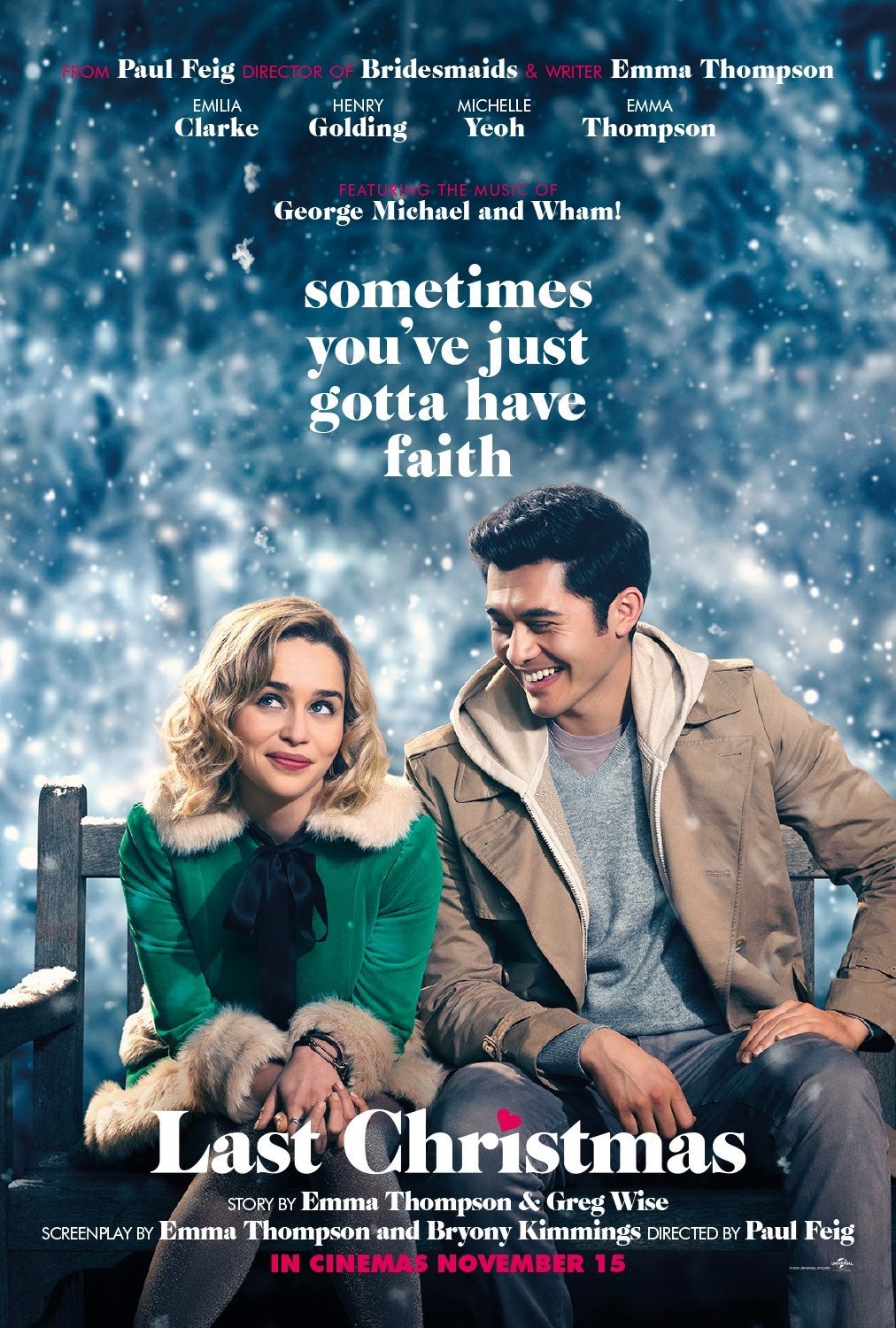
Last Christmas (2019)

Emilia Clarke and Henry Golding in a Christmassy romance with a twist

Director: Paul Feig

Cast: Emilia Clarke (Kate), Henry Golding (Tom Webster), Michelle Yeoh (“Santa”), Emma Thompson (Petra), Lydia Leonard (Marta), Peter Mygind (“Boy”), Rebecca Root (Dr Addis), Patti LuPone (Joyce), Ingrid Oliver (PO Crowley), Laura Evelyn (PO Churchill), Rob Delaney (Director), Peter Serafinowicz (Producer)

Last Christmas has been savaged by critics and held up by many like it was some sort of embodiment of everything that’s wrong with cinema. Jeez louise guys, take a chill pill why don’t you? Feig’s London based comedy, working with an Emma Thompson script, does exactly what it says on the tin – an It’s a Wonderful Life-inspired Christmassy story, that ticks all the Christmas boxes. It has no pretentions for doing anything else. And there is nothing wrong with that!

Kate (Emilia Clarke) is recovering from a heart transplant last year, and she’s heading off the rails. She takes no responsibility for anything, she’s selfish, lazy, demanding and making a car-crash of her life and health. Working as a full-time Elf in a Covent Garden Christmas store (run by Michelle Yeoh as “Santa”), Kate’s life is heading down the toilet until one day she meets Tom Webster (Henry Golding), an almost supernaturally decent guy, kind, considerate, friendly and caring. With his guidance can Kate start to turn her life around?

Well there is a twist in Last Christmas and, to be honest, it’s pretty easy to see coming. Anyone with half an eye on costumes or numbers of interactions will see it coming and anticipate what they are going to get. But you know, that’s fine. This is a film that knows what it is, a fairly unchallenging rom-com that’s spiced with a little touch of Capra-esque whimsy and a conventional morality tale of a selfish person turning round their life.

There are some good jokes, there are some reasonably charming performances, there is a good sense of fun driving through the whole film and it manages to capture at least a little touch of that Christmas-movie alchemy (a la Love Actually) where you can imagine people happily sitting down to watch it, in a light, fun, unchallenging way, for years to come. Its Feig’s offering for the Christmas movie cannon and it’s a perfectly acceptable entry. In fact its cosy predictability and familiar structure is pretty much a key part of its appeal. Because at Christmastime we don’t really want anything that’s going to stretch us or demand things from us. We kind of want to sit around and watch something a little predictable, a little fluffy but basically well-meaning and fun.

Emilia Clarke does a terrific job as light comedienne in the lead role, a role perhaps far more suited to her quirky, klutzy, off-the-wall charm than years of playing Daenerys Targaryen on Game of Thrones ever was. She throws herself into it here, happy to be silly, and shows both a good skill for pratfalls and also for drawing out a vulnerability from her character as well as being extremely charming. Henry Goulding makes a very good match as a character who could very easily tip over into smugly perfect, but again remains just the right side of charming.

Thompson writes herself a decent role as Kate’s Yugoslavian mother, a typical sort of nightmare domineering mother from films of this time, but laced with a sadness and isolation in the modern world and her adopted country. Moments that show the reaction of the characters to Brexit and the growing hostility to immigrants sometimes lean a little too heavily on the liberal conscience of the audience, but it fits in with the generally gentle, liberal attitudes of the film.

It’s a film that knows it’s a guilty pleasure, but it seems to have been designed to give you a sort of pre-Christmas glow. Catch it in the wrong mood and you will consider it one of the worst things you have seen. Take it in the right mood and you might even be charmed by it.

The Aeronauts (2019)

Redmayne and Jones go up, up and away in The Aeronauts

Director: Tom Harper

Cast: Felicity Jones (Amelia Rennes), Eddie Redmayne (James Glaisher), Himesh Patel (John Trew), Tom Courtenay (Arthur Glaisher), Phoebe Fox (Antonia), Vincent Perez (Pierre Wren), Anne Reid (Ethel Glaisher), Rebecca Front (Aunt Frances), Tim McInnerny (Sir George Airy), Robert Glenister (Ned Chambers), Thomas Arnold (Charles Green)

When you have found two actors with such natural and easy chemistry as Felicity Jones and Eddie Redmayne, it makes sense that you would seek other projects for them to star together in. Let’s try and recapture that Theory of Everything magic in the bottle! The Aeronauts brings these two actors back together, but the law of diminishing returns applies in this impressively mounted but rather uninvolving epic that has more in common with Gravity that it does Theory of Everything.

James Glaisher (Eddie Redmayne) is a scientist, one of the first meteorologists, determined to prove that man can predict the weather. While his theories are laughed at by fellow members of the Royal Society, Glaisher raises the cash for a private balloon trip to the heavens to take meteorological readings. But he needs a pilot: who better than Amelia Rennes (Felicity Jones) a famous balloonist and show-woman, the widow of a fellow balloonist (Vincent Perez) who fell to his death in an attempt to break the record ascent. Will the two mismatched aeronauts – the uptight scientist and the freespirit with tragedy at her core – reach an understanding amongst the clouds?

If you got the sense that the story of the film is rather predictable from that paragraph well… you’d be right. It’s the sort of film that has bookend scenes: an early one where our hero desperately tries to make himself heard during a speech at the Royal Society while his colleagues walk out in contemptuous laughter, and then another near the end with the same hero being applauded to the rafters by those same colleagues. Even his harshest critic claps politely – because it’s that sort of film. Meanwhile our other hero overcomes her survivor guilt by heading into the skies. Whenever the story, written by workaholic Jack Thorne, focuses on these personal stories, the film falters into cliché and dull predictability.

It’s told mostly in real time, following the just over 1 hour and 40 minutes of the pair’s ascent in the balloon, with flashbacks to their first meeting and their own backstories plugging the gaps in conversation. No major revelations happen in these flashback sequences, and a host of respected actors go through the motions, filling in the paint-by-numbers stories of bereavement, scientific isolation, an inspirational father with early onset dementia, and pressures to just conform to what women are expected to do. The two leads do their very best to animate these rather dull and tired plotlines but with very little success.

In fact, both actors are largely struggling the whole time to add breadth and depth to thinly sketched characters. Tom Harper leans heavily on their pre-existing chemistry and there is certainly very little in the characters to challenge them, particularly Redmayne who can play these stiff-necked, all-business, shy science types standing on his head. Felicity Jones has by far the better part as a natural adventuress who has locked herself in isolation and guilt (and in a dress) due to her guilt at her husband’s death. Jones gets the best material – and also the best vertigo inducing action sequences – in a film that is most successful when it is far away from the ground.

Harper’s film is by far at its most interesting when extreme altitudes, cold temperatures and reduced oxygen induce crisis in the balloon’s ascent. As Amelia has to go to extreme and dangerous lengths in order to force the balloon to begin its descent, the film finally comes to life. With several terrifying shots of the huge drop to the ground (they certainly made me squirm in my seat) and a compelling feat of bravery and physical endurance to force the balloon to start releasing gas (combined with some horrifyingly close slips and falls) the film works best from this moment of crisis, through to the hurried and panicked attempt of both aeronauts to control the descent of the balloon safely to the ground. The sense of two people struggling with the very outer reaches of mankind’s connection to the Earth – and their terrifying distance from the safety of the ground – really brings Gravity to mind far more than any other film.
It’s a shame then that I came away from the film to find most of it is not true. Glaisher did take to the skies – but with a male companion, Henry Coxwell. Amelia Rennes never existed (and most of the events in the sky never happened), although she is heavily based on a real female aeronaut and professional balloonist who had no connection with Glaisher or science. It shouldn’t really matter, but it kind of does as the film doubles down on Glaisher’s tribute to Rennes at the Roya Society and its general attitude of female pioneers in science. As one critic said: there were genuine pioneering women in science, why not make a film about one of them?

But it’s an only a minor problem really for a film that is impressively made when it is in the air, but dull and uninvolving when it is on the ground. At heart it’s an experience film – you can imagine as one of those immersive rides at Disney it would be amazing – but as a piece of storytelling it’s dull, predictable and uninvolving and largely fails to make the science that was supposed to be at the heart of it clear or significant. Jones and Redmayne do their best but this story never really takes flight (boom boom toosh).