Category: Conspiracy thriller

JFK (1991)

Kevin Costner goes on a quest for the truth in Oliver Stone’s crazy but brilliant JFK

Director: Oliver Stone

Cast: Kevin Costner (Jim Garrison), Sissy Spacek (Liz Garrison), Kevin Bacon (Willie O’Keefe), Tommy Lee Jones (Clay Shaw), Jack Lemmon (Jack Martin), Walter Matthau (Senator Russell B Long), Gary Oldman (Lee Harvey Oswald), Joe Pesci (David Ferrie), Donald Sutherland (Colonel X), Laurie Metcalf (Susie Cox), Michael Rooker (Bill Broussard), Jay O. Sanders (Lou Ivan), Edward Asner (Guy Banister), Brian Doyle-Murray (Guy Banister), John Candy (Dean Andrews), Sally Kirkland (Rose Cheramie), Wayne Knight (Numa Bertel), Priutt Taylor Vince (Lee Bowers), Tony Plana (Carlos Bringuier)

When great events happen, it’s hard for us to accept they might take place for random reasons. Rather than freak occurrences or boring individuals, we’d rather see them taking place due to an impenetrable web of shadowy figures. There is something in us that rejects randomness and embraces order. Conspiracy theories are the (ironic) result of these, with their exponents often the most passionate believers in the all-pervading genius of big government. Events like the death of President Kennedy can’t be because some nobody shot him. Instead it must be part of a wider junta of baddies, with every man you see merely a front for a cabal of the wicked. It’s hard not to be swept up by the lure of the conspiracy theories (they invariably have the best stories after all) – and Oliver Stone’s JFK is perhaps the definitive mainstream conspiracy theory essay.

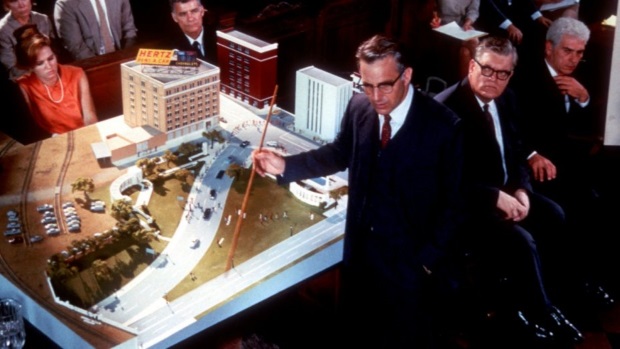
Taking the campaign of Louisiana DA Jim Garrison (Kevin Costner) to find out the “truth” about the murder of President Kennedy, Stone’s film is part a fascinating presentation of half-truths and “might-have-beens” and part a sprawling mess of irresponsible nonsense. Either way it’s assembled with astonishing panache, a level of filmic skill that makes it (literally) almost impossible to tell whether what you are seeing is true and what is invention. Stone’s film superbly interweaves a variety of film stocks and effects to seamlessly splice together newsreel footage, Zapruder film and his own reconstructions so brilliantly it frequently becomes hard to tell which is which.

The same logic also applies to the script. JFK is frequently engaging and fascinating. But you have to remember that it is the equivalent of meeting the most literate and articulate street corner “End-of-the-Worlder”. Such is Stone’s skill he could, I am sure, have created an equally compelling film which would have you questioning the Moon Landings or the shape of the Earth. JFK throws an army of questions, objections and theories at the screen. And while it rarely provides much in the way of answers, only points that it wants you to think about, these theories frequently fascinate. Imagine JFK as a sort of video essay, linked together with dramatic scenes, with its points delivered by authoritative and trusted actors like Donald Sutherland, Jack Lemmon and Walter Matthau.

There is absolutely no doubting the technique of Stone here, or his mastery of the language of cinema. The work of Robert Richardson’s photography, with its myriad styles, and of Joe Hutshing and Pietro Scalia’s editing, pulling together a host of images, snapshots and flash cuts into an insidiously convincing whole, is breathtaking. Light in particular is superbly used, casting some characters in shadow, flaring up to (literally) blind others – light frequently plays across Garrison’s glasses, a visual metaphor for his own struggle to see the light. The speeches he writes for his characters are superbly done, and make their points with great skill – Sutherland (superb) has a hugely convincing story of military black ops action (and inaction) before and after the assassination that fills almost 20 minutes of screentime.

There are compelling arguments made about the ability of Oswald to fire the shots, the triangulation of fire, the spurning of an easier shot before the fateful turn, Oswald’s seemingly illogical movements after the shooting etc. etc. There is decent reasoning behind all of this, and the points are marshalled very well. But, like all extremist theories, suddenly it will turn into something just a little batshit (Lyndon B Johnson ordering the hit or some sort of cabal of Cubans, CIA, FBI and Secret Service working together to conduct a coup).

Much of Stone’s passion for finding the truth (the film’s mantra) is rooted in his own romantic view of Kennedy, as some sort of lost “Prince Who Was Promised”. To Stone, Kennedy would have withdrawn us from Vietnam (news I am sure to the President who started and escalated America’s involvement in it), ended the military industrial complex (contrary to his platform when elected of a stronger US military), bought the Cold War to an end (again, running against his sustained opposition to the Soviet Union) and introduced full Civil Rights (a cause he was lukewarm on at best – unlike his brother or his successor Johnson).

But Kennedy was a romantic figure who had the ability to invite people to invest him with whatever qualities they wanted (both good and bad), a magic cemented forever by his untimely murder. In reality there is no indication that JFK would do (or want to do) any of the things JFK argues he was assassinated for. But that’s all part of the magic of the conspiracy. Facts and events can be marshalled into whatever you want them to be. (Tellingly the only member of Garrison’s investigative team who questions these theories is shown to be a creep in the pay of the conspirators.)

So Kennedy can be a saint, and the film can outline (with no evidence at all beyond a series of coincidences and unlikely or random events) a grand vision of master schemers reshaping America over the body of a dead President. Does it really stand up? Well no of course not. But I will say it is compelling viewing – even if it is essential to keep an open mind about it. Stone later wished he had made clearer that much of the work here was pure fiction (and speculative at best). Certainly it’s a point to keep in mind.

Perhaps Stone should also have looked again at some of the other beats in the film. The film’s version of Jim Garrison as a kind of saintly campaigner for justice flies in the face of many (then and later) who believed the Louisiana DA a shameless self-promoter – an argument made easier to believe by the real Garrison’s cheeky cameo in the film as his ‘nemesis’ Earl Warren. No mention is made in the film that the case he brings against Clay Shaw was dismissed by the jury after less than an hour, and the film avoids explicitly showing his lack of evidence. Costner delivers the final speech, with its famous “back and to the left” commentary on what seems like Kennedy’s unnatural movement after being hit by a bullet and breakdown of the “magic bullet” (both theories now largely discredited), with aplomb, but the film puts a halo on Garrison which doesn’t really stand up.

But again at least it’s entertaining. Other parts of the film don’t even manage that: the baseline narrative that links up the various compelling conspiracy lectures is frequently dull, insipid and lamely written. Sissy Spacek has perhaps the most thankless role in film history as Garrison’s wife whose nearly every line is a variation on “Honey please stop reading the Warren Report and come to bed”. Even that though pales against the exploration of the 1960s gay scene in Louisiana (which Clay Shaw and his “fellow conspirators” were leading members of) which has an unpleasant stink of homophobia, playing into a host of deeply unpleasant (and false) stereotypes of gay people as perverted, promiscuous and preying on the straight. One suspects there was more than a little truth in the idea that Garrison’s fury at Shaw was at least partly motivated by homophobia.

These sequences work considerably less well today – and frequently go on far too long – but when the film focuses on its Kennedy theories it is at least compelling, even if it’s all rubbish. The film made it mainstream to believe Kennedy was killed by a conspiracy in which Oswald was, if he was involved at all, only a patsy. How different would the world have been if Oswald had lived and been made to explain why and how he killed Kennedy? But then chances are, being such an average an unremarkable man, people wouldn’t have believed him anyway.

Stone’s film is a triumph of agenda-led fantasy. Stuffed with faults it makes you at least ask questions – even if you wisely use those questions to affirm many of its points are questionable at best. But any film buff will love the skill it’s told with and the beauty of its technical assembly. Costner was perhaps a little too bland to drive the thing along (although the film uses his innate morality very well), but there are several good performances not least from Gary Oldman who is brilliant as put-upon, used but unknowable Oswald. Nuts, crazy and packed with compelling nonsense, it at least always encourages you to find out more about the actual history.

Chinatown (1974)

Jack Nicholson struggles against the system – and loses – in Chinatown

Director: Roman Polanski

Cast: Jack Nicholson (JJ Gittes), Faye Dunaway (Evelyn Cross Mulwray), John Huston (Noah Cross), Perry Lopez (Lt Lou Escobar), John Hillerman (Russ Yelburton), Darrell Zwerling (Hollis Mulwray), Diane Ladd (Ida Sessions), Roy Jenson (Claude Mulvihill), Roman Polanski (Man with Knife), Joe Mantell (Lawrence Walsh), Burt Young (Curly), James Hong (Kahn)

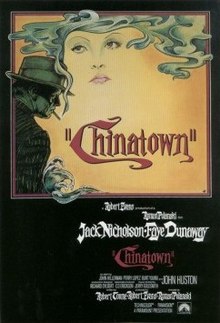
“Of course I’m respectable. I’m old. Politicians, ugly buildings and whores all get respectable if they last long enough.” So says Noah Cross in the superlative Chinatown, the sort of the film you’ll want to start watching again the second it ends. Cross is of course a respectable businessman and an absolute monster. And his mantra applies just as much to Los Angeles as envisioned by Polanski and writer Robert Towne. It’s a corrupt, dirty place where terrible, appalling things are regularly allowed to happen but everyone pretends the place is fabulous. It’s such a sublime film, while also so bleakly, despairingly dark that you are surprised you fall in love with its excellence.

In 1937 private detective JJ “Jake” Gittes (Jack Nicholson) is hired – or so he thinks – by the wife of Water Board director Hollis Mulwray (Darrell Zwerling) to investigate his infidelity. When he does seem to uncover it, he founds not only was his client not Evelyn Mulwray (Faye Dunaway), but that shortly after his pictures appeared in the press (without his knowledge), Hollis himself winds up dead, having drowned in a dry river bed. What does this all mean? And how does Evelyn’s father (and Hollis’ business partner) Noah Cross (John Huston) play into this all? Gittes investigates further, to uncover shady schemes to manipulate the cities water supply for profit, under-handed business deals and unspeakable family crimes that leave lives shattered.

Polanski’s film has such a timeless wonder about it, perhaps because it was filmed with such careful and beautifully designed classicism that it has never dated. Seen at the time as a film told in the style of the classic film noirs (although it is of course full of blazing LA sunshine), but crammed with a darkness and corruption classic Hollywood shied away from it now seems to take its place as the most masterful of Hollywood mysteries. It’s recreation of 1930s detail is perfect, while its film making is restrained, controlled, unflashy but creates an atmosphere of simmering mystery and tension behind every frame. It’s a masterfully restrained piece of film-making that deals with matters of shocking horror.

And tension there should be as this explores the darkest underbelly of America. With Jerry Goldsmith’s sublime music score under every beat – riffing on classic Hollywood tunes, but with a haunting faded grandeur that suggests a whole melancholic world going to the wall – the film looks like classic, beautiful America but uses that to counter-frame terrible, heartless acts. LA is corrupt from top to bottom. Businessmen are asset stripping the city and its surroundings to line their own pockets. Wealth brings total immunity from all sorts of crimes, regardless of how foul they are. Even family ties are polluted by terrible lusts and greed. And for Gittes, Chinatown is representative of this – a one word reference to his career as a cop, where his ability to do any good at all was forever compromised by corruption.

Jack Nicholson’s performance as Gittes is central to the film’s success. He’s in every scene and the story is told entirely from his point-of-view – so much so that when he is knocked out, Polanski slowly fades out sound and picture. Nicholson is best known for his flamboyance, but here he brilliantly underplays too present a complex picture of an idealist disguised as a cynic. Gittes tries his best to coolly accept the world is what it is, and even that he is just trying to get what he can out of it. But he’s in fact a decent and honourable man with a deep-rooted sense of morality, who struggles in the world because it’s ill-suited for a guy who just wants to do the right thing. He has a sort of outdated charm and nobility about him, an almost courtly gentleness at times, and only lashes out in anger when he feels is either being lied to or his sense of honour impugned. He has a natural sympathy for the little guy and for all he may try to spin the sort of cynical Marlowesque dialogue, you don’t feel his heart is really in it. He is a dreamer who wants to believe.

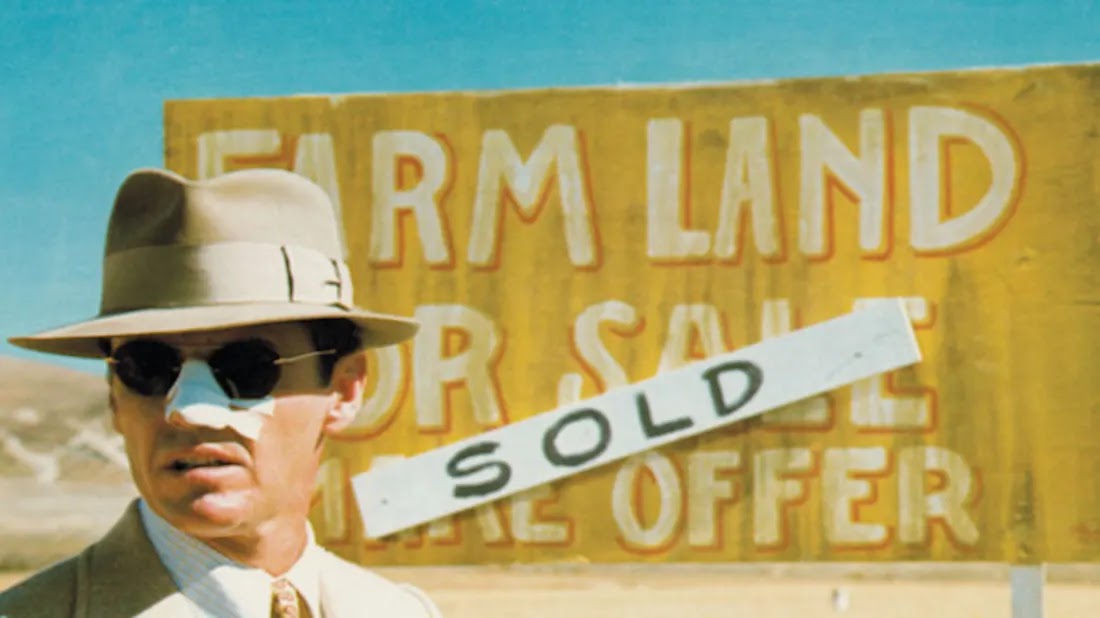
And he’s totally ill-suited to this world he ends up with. Gittes uncovers every inch of the mystery – but nothing he does has any positive impact. He completely fails to protect anyone, his attempts to ensure happy endings end in disaster, he’s regularly beaten to a pulp (most famously having his nose slit by a cameoing Polanski as a weasily little hoodlum) and he’s at sea when dealing with most of the characters of the film. Even his carefully built emotional armour breaks down, leaving him vulnerable to making even more mistakes. There are perhaps few characters so ineffective – and again it’s a credit to Jack Nicholson’s charisma that he makes this character feel like such a proactive figure.

Gittes senses at all times that there is some dark secret underpinning all these events he encounters. But he’s too innocent to begin to suspect the horrors that Evelyn has put up with at the hands of her abusive father. Faye Dunaway brings a marvellous fragility and vulnerability to a character who transcends the traditional femme fatale. (Dunaway famously hated both Polanski and working on the movie). At first seeming imperious and even suspicious, the film slowly breaks her character down into a wounded and vulnerable woman putting on a front, determined to try and protect herself but doomed to forever be the victim.

And Noah Cross is the dark heart of this. Played with a sensational sense of gentility masking supreme corruption and greed by John Huston, Cross is genteel and polite while being ruthless and grasping. He also reveals himself capable of huge, destructive acts, indifferent to the pain this causes and utterly implacable in his vileness. Huston’s performance – he’s only in three scenes – embodies the terrible dark heart of America, where money and power it seems can let you get away with anything you want, no matter who knows. (And I love the way he persistently mispronounces Gittes name, turning it into a growling Anglo-saxon “Gits”.)

Robert Towne’s superb screenplay is perfectly paced and pieces together an intricate and fascinating plot where every small detail mounts together into a devastating whole. It’s a film that demands careful watching, and that revels in small details and character beats that gain greater impact the more you see the film. Brilliantly, the macguffin here is water – the control of a substance that should be a right for every man, becoming a superb metaphor for the theft from ordinary Americans of justice and their country. 

The film culminates – as you feel it must when watching it – in a nihilistic ending where evil triumphs and good loses out. “Forget it Jake – it’s Chinatown”, goes the famous closing line. It works so superbly, because in Towne’s and Polanski’s vision of America here, there is no chance of the right thing winning out if the powers that be would have otherwise. With Jake’s Chinatown career in the police force becoming emblematic of everything that’s wrong in American justice, sure it makes sense that his return there as a private eye would see the same outcome. Towne pushed for a more upbeat ending, but Polanski knew – correctly – that only the shock of murder could end this tale, especially a murder that would have no repercussions.

Polanski’s direction is faultless, cool, calm, wonderfully observant with a superb sense of the 1930s – the film looks beautiful – and using the sunlight and brightness of LA to stress that just because we can see clearly, doesn’t mean we understand what we are looking at. With one of the greatest scripts ever – and a superb performance by Jack Nicholson in one of his finest roles – this is one of the best mysteries in Hollywood history, a timeless classic.

The Program (2015)

Ben Foster is the disgraced Lance Armstrong in this functional but insight free biopic The Program

Director: Stephen Frears

Cast: Ben Foster (Lance Armstrong), Chris O’Dowd (David Walsh), Jesse Plemons (Floyd Landis), Lee Pace (Bill Stapleton), Guillaume Canet (Michele Ferrari), Denis Menochet (Johan Bruyneel), Dustin Hoffman (Bob Hamman), Edward Hogg (Frankie Andreu), Elaine Cassidy (Betsy Andreu), Laura Donnelly (Emma O’Reilly), Sam Hoare (Stephen Stewart)

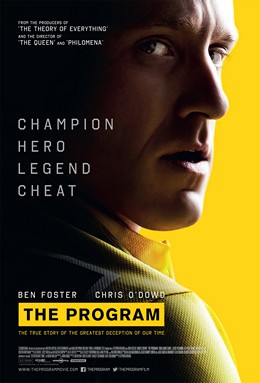
In sports there has probably never been an icon who fell so far as Lance Armstrong. Stephen Frears’ film reconstructs the story of Armstrong’s – played by Ben Foster – career, from finding his natural build and ability isn’t enough to win the Tour de France, through cancer diagnosis and recovery and then into his record-breaking run of Tour victories, all achieved off the back of running a comprehensive and professional doping system, and his final fall from grace.

Frears’ film is well-made and stylish and good at capturing the freedom and excitement of professional cycle racing. It’s also a skilled reconstruction of its time period, and a fairly well structured chronicle of events, which it reconstructs from journalist David Walsh’s (played here with a fine sense of moral outrage by Chris O’Dowd) book Seven Deadly Sins. Walsh had written stories for several years questioning Armstrong’s achievements, and Frears’ film puts together the events and testimonies that convince Walsh of Armstrong’s cheating with a documentarian skill.

Where the film fails though is its lack of drama and, crucially, its willingness to use dramatic and creative licence to attempt an exploration of Armstrong’s personality. What drove this cancer survivor to abuse his body with a parade of substances? How did Armstrong balance his passionate campaigning for a cure for a cancer with the lie he was presenting the world of how he didn’t just recover from cancer, he used it as a springboard to become the greatest endurance athlete in the world? Basically, what the film doesn’t really try to do, is get inside the head of its lead character.

Instead, the film follows its title: The Program. There is greater interest in the how of this cheating regime, not the why. Now perhaps in real life Armstrong is the shallow, narcissistic bully he often seems here, obsessed with winning at all costs with no moral quandaries at all. But it hardly makes for entertaining or satisfying drama. Foster is a brilliant physical match – and he captures the ruthless forward-drive of Armstrong very well – but this is a film that doesn’t really scratch the surface of what made Armstrong. We never get a sense of his motivations – or really his reactions as the world tumbles around him.

There is a fascinating story to tell here, but it’s almost as if the film is worried about giving this sinner some feet of clay we can sympathise with (to mix a few metaphors). Instead Armstrong is all chilled front and nothing underneath, and his villainy is so central from day one that we get neither a satisfying sense of a hypocrite unmasked nor of a Promethean fall from grace. 

Actually, Frears may well have been more interested in making a film where Jesse Plemons’ Floyd Landis was a central character – the devout Christian persuaded to take part in the doping scheme, who becomes Armstrong’s successor only to be immediately discredited in a way Armstrong would not be for years. It’s the tragedy of Landis that really has dramatic potential – a decent man who is well aware what he is doing is wrong, but is too weak to not accept the easy path to glory. It’s this story that has real dramatic potential – and might well have made a better focus for the movie.

The Program isn’t a bad film. It captures the drama of its sport well, and it brings together the events that led to Armstrong’s fall with professional skill. But it’s more of documentary than a drama and to be honest there isn’t much in it that couldn’t be picked up better from actually reading Walsh’s book. There was a lot of potential here – but it needed a film more willing to explore and understand its central character rather than just condemn him as a monster and move on.

Ministry of Fear (1944)

Ray Milland and Marjorie Reynolds take on Nazi agents in Ministry of Fear

Director: Fritz Lang

Cast: Ray Milland (Stephen Neale), Marjorie Reynolds (Carla Hilfe), Carl Esmond (Willi Hilfe), Hillary Brooke (Second Mrs Bellane), Percy Waram (Inspector Prentice), Dan Duryea (Cost/Travers), Alan Napier (Dr Forrester), Erskine Sanford (George Rennit)

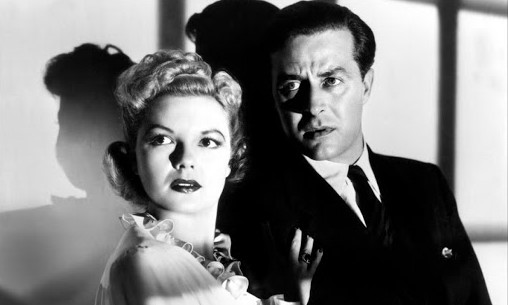
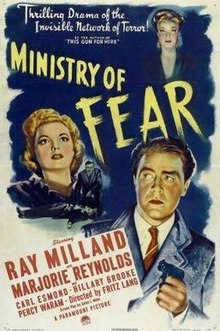
Neither Fritz Lang nor Graham Greene (the author of the original book) cared much for Ministry of Fear. Both of them thought that the film they ended up with was only a shadow of the original novel, with both of them largely blaming the script by Seton I Miller and the producers for turning Greene’s novel into a more simplistic B-movie. And yes the film is at heart just a B-movie, that races through a conspiracy thriller – and you’d have no idea that it ever came from Greene-land unless you were told so – but it’s put together with such professionalism that you admire its skill, even while it’s no Third Man.

At the height of the Blitz Stephen Neale (Ray Milland) is released from an asylum only to find himself immediately embroiled in a load of shady goings-on with suspicious séances, hidden microfilm and Nazi sympathisers. Can the fragile Stephen get to the heart of it?

Ministry of Fear has a slightly dream like quality to it – probably because it’s a fragmented narrative that makes quick jumps from event to event, sometimes with very few links between them. Stephen emerges from an asylum straight into a charity fete, hence to a train, the centre of London and a séance, with all the speed of a logic-skipping dream. Everything is swift and somewhat low in logic. The plot of the film becomes sheer B-movie fluff, with the typical spy hijinks you might expect, lacking any of the complexity of the book. 

Greene was particularly disappointed by the deletion of the guilt Stephen feels around the death of his wife – and the film indeed skims over this very swiftly, leaving the reasons for Stephen’s being in an asylum in the first place largely unexplored and dispatched as swiftly from the film as possible. It’s not a film that has the time to explore the complexity of personalities of characters – instead it’s all about turning the content of the novel as much as possible into a high-flung spy thriller.

It’s why Lang was so disappointed with the script – and he became more and more dismissive of the film as he got older, claiming it to be bad film that he fell asleep in during a later showing – but he still bought to it a visual magic. The film is crammed with beautiful expressionistic images, present right at the start with Stephen watching a ticking pendulum through to some of its beautiful later images, in particular a shooting through a door that allows a beam of light to shine through a bullet hole in a door. Lang crams the film with striking images that help lift it above its B-movie roots.

Which is just as well because the general drift of the plot isn’t always that special, playing like the off-cuts from several Hitchcock films. Despite the artistry with which Lang presents it, he can’t hide the basically generic stuff that Greene’s book has been turned into. And its fast pace and logic jumps can perhaps find their root in the general contempt Lang had for the material he had to work with. Nothing in this feels particularly right – the England it presents is laughably wrong on several counts – while as always much of the mystery is reduced from the small cast list and tiny selection of possible suspects. 

There are some good sequences, don’t get me wrong. A séance is beautifully made and carries a fair degree of tension. The final confrontation with the architect of the misdeeds makes for a decent scene. It’s just a shame it’s counterbalanced with clumsy “this is what’s going on” scenes, such as Stephen’s briefing from British Intelligence. 

There are some good performances among the cast. Milland gives a well-judged performance of vulnerability, confusion and growing strength. He has just the right good-looking-but-not-drop-dead-handsome look to him to make him someone you can sympathise with but not completely trust (if the film hadn’t dropped some of the more interesting questions around Stephen’s guilt or innocence for past crimes this casting would have really worked to strengthen that). But he gives a fine performance. The array of suspicious characters around him are confidently performed, with Hillary Brooke a particular stand-out as a manipulative, seductive medium.

But Lang’s film is a covering of class and technique other soil that isn’t rich enough. The complexities of Greene has been lost and the film’s general plot and content doesn’t give much more than the sort of cheap thrills you could expect from a well-made B movie. With those involved this could have been more, but it never becomes a classic.

North by Northwest (1959)

Cary Grant is on the run in the sublime North By Northwest

Director: Alfred Hitchcock

Cast: Cary Grant (Roger Thornhill), Eva Marie Saint (Eve Kendall), James Mason (Phillip Vandamm), Jessie Royce Landis (Clara Thornhill), Leo G. Carroll (The Professor), Martin Landau (Leonard), Josephine Hutchinson (“Mrs Townsend”), Philip Ober (Lester Townsend)

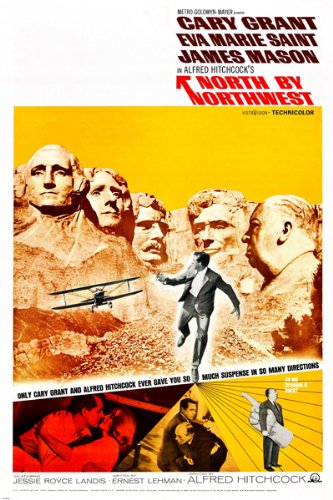
What is it about? Ernest Lehman went in wanting to write the “ultimate Hitchcock film”. And I think you can say he pulled it off. North by Northwest is the perhaps the most electric, fun, dynamic and nonsensical of all Hitchcock’s action-adventures, a neat bookend with The 39 Steps for Hitchcock’s career. It’s such good fun you scarcely notice the plot makes very little sense and the film is barely about anything at all other than a man getting chased. It has the most Macguffiniest MacGuffin in the whole Hitchcock career, an item of such little interest to the viewer that it never appears on screen and is only cursorily discussed. 

Cary Grant is Roger Thornhill, nifty Mad Man-esque ad executive (you can imagine that Don Draper dreamed of being Roger Thornhill) who accidentally gets mistaken by shady goons for the mysterious “Mr Kaplan”, actually a non-person used as a distraction by the FBI. Cue Thornhill’s kidnapping, interrogation by the goon’s suave leader (James Mason, never more James Mason than here), escaping a murder attempt, getting embroiled in the murder of a UN official and fleeing New York in the train compartment of smart and sexy Eve Kendall (Eva Maria Saint). And that’s before we even mention killer crop dusting planes, faked shootings, auction house shenanigans and a vertigo inducing game of cat-and-mouse on Mount Rushmore. Is there a more fun film in the world?

North by Northwest gained its Hamlet inspired title (“I am but mad north-north-west. When the wind is southerly, I know a hawk from a hawksaw”) and it’s pretty meaningless – Lehman basically liked it and throws in a fictional “Northwest airline” so Thornhill can fly ‘North’ at one point (geddit?!) – but it also captures a sense of manic powerlessness in the film. Thornhill spends a good slice of the film telling anyone who will listen he is notKaplan, while every action he carries out seems to serve only to convince his pursuers he definitely is. The film’s echo of madness in its title carries across to the frantic energy of the film, and Thornhill’s belief that he must surely be the only sane man in a world of lunatic chaos. 

And it’s prime Hitchcock chaos here in his most engaging, fast-paced and funny action adventure. The sort of prime piece of entertainment assembled with such skill, energy and excellence it looks really easy (but of course isn’t). Hitchcock keeps the momentum of this crazed chase perfectly pitched, and stages each of the set pieces so well that all of them have become icons of adventure cinema. Who can look at a crop dusting plane without thinking of Thornhill running in desperation, in the middle of nowhere, from a lethal plan swooping down on him from above? Who can look at Mount Rushmore without imagining Grant and Saint climbing all over it with Landau in pursuit?

It’s Grant as well that really makes the film work. He’s such an accomplished screen presence, so smooth and practised, it’s very easy to see this as a film where he is barely acting. But that would be to do him a major disservice. Not only is such a balance of light comedy and action so hard to pull off (so much so that Harrison Ford as Indy is possibly the only one who can get close – and that character is chalk and cheese with Thornhill) – but Grant builds a character who develops perceptively and clearly over the course of the film. 

Initially the typical Grantish stereotype – so suave, confident and shallow that even his middle initial “O” literally stands, Harry Truman like, for nothing – Thornhill begins as a man who blithely assumes he can drift through his life and getting anything without question. Events – and his embroilment in them – however see him develop from a deeply selfish and lazy man into one who carries moral force, loyalty, determination and dedication to duty and an increasing sense of confidence and derring-do. From the man who is the victim of circumstance at the start of the film, failing to get anyone to believe him, he becomes a man who saves himself and everyone else with his pluck, daring and resourcefulness. And he does it all while never losing his light, almost put-upon, wit and playfulness. It’s a truly great personality performance with real depth and development: a hollow man who becomes a real man of standing and purpose.

He’s backed superbly by the cast who seize their roles with gusto. James Mason drips British superiority and suaveness (has there ever been two such cool actors facing off?) as VanDamme, Eva Marie Saint is every ounce the brave, resourceful, daring and clever lady that prompts Thornhill to man-up. Jessie Royce Landis gets some lovely comic mileage from Thornhill’s pecking-hen mother (hilariously she’s only 8 years older than Cary Grant). Martin Landau simpers rather effectively as VanDamme’s fey sidekick.

The script is crammed with great lines from Lehman, all of which delivered superbly by the cast. But it’s a director’s treat, and Hitchcock delivers it brilliantly. I’ve mentioned that MacGuffin – it’s some microfilm or something in a statue that’s the root of the all the problems – but it hardly matters. The film powers forward with the dynamic energy of a comic farce crossed with action adventure. Thornhill’s initials spell out “ROT” and in an affectionate thing that’s what the film is – something that doesn’t take it self seriously but sets out to entertain at all costs. 

So we get Hitchcock splicing in rom-com flirtations between Grant and Saint (and no less than two shots of trains speeding down lines and into tunnels, just to hammer home exactly what they are doing to kill time on the ‘sleeper’ train) with edge-of-the-seat sequences (the slow tension build at an abandoned bus station while Grant waits for “Kaplan” only to fall victim to assault from crop duster) then segues back into comedy (the hilarious “pretend to be drunk” to escape assassination at an auction) it’s perfectly assembled. And that end sequence at Mount Rushmore – a near perfect mix of comedy, action, adventure, suspense, thriller and romance. It’s flawless.

William Goldman famously stated North by Northwest had the finest, most economical ending of all time – and it ties up perfectly and beautifully about six plot threads and cliffhangers in less than 70 seconds – but the entire film is a perfect package. Hitchcock’s glossiest chase adventure is wonderfully directed and in Cary Grant it perfectly married up possibly the only actor in the history of film with both the charisma and the acting chops to play the part with one of the greatest entertainments in the history of film. It’s mad, meaningless nonsesense – but who cares, it’s a great, great, great film.

Inception (2010)

Leonardo DiCaprio caught between dreams and reality in Inception

Director: Christopher Nolan

Cast: Leonardo DiCaprio (Dom Cobb), Joseph Gordon-Levitt (Arthur), Marion Cotillard (Mal Cobb), Ellen Page (Ariadne), Tom Hardy (Eames), Ken Watanabe (Saito), Dileep Rao (Yusof), Cillian Murphy (Robert Fischer), Tom Berenger (Peter Browning), Pete Postlethwaite (Maurice Fischer), Michael Caine (Professor Stephen Miles), Lukas Haas (Nash), Tallulah Riley (Disguise woman)

What is reality? It’s a question that for many of us never comes up. But in the artificial and exciting world of film, it’s a legitimate question. These worlds we watch unspooling before us on the cinema screen, so large, so real, so exciting. Could we get lost in them? And how much do the films we love echo the dreams that fill our nights, the movies we create in our mind to keep our brain active during those hours of complete physical inactivity? And what happens when the world of imagination and possibility becomes more compelling, more comfortable – and perhaps more real – to us than the actual flesh-and-blood world around us? These are ideas tackled in Inception: the blockbuster with a brain. 

Set in some unspecified point in the not-too-distant future, Dom Cobb (Leonardo DiCaprio) and his partner Arthur (Joseph Gordon-Levitt) are “extractors”, shady corporate espionage experts who use experimental military technology to enter shared dream states with their targets. While in their dreams, they have complete access to their subconscious mind, where secrets can be extracted. A wanted man in the States, Cobb is forced to ply his trade despite his yearning to return home to his children. After a job goes wrong, their would-be target Saito (Ken Watanabe) hires the pair to take on a far more challenging role: rather than extract an idea he wants them to plant one – a technique called “inception” – into the mind of a business rival (Cillian Murphy) to get him to dismantle his father’s empire. To do the job, Cobb needs a new team, including dream “architect” Ariadne (Ellen Page), dream identity forger Eames (Tom Hardy) and dream compound chemist Yusof (Dileep Rao) – and needs to try and control his own dangerous subconscious version of his late wife Mal (Marion Cotillard) who is determined to destroy his missions.

Just a plot summary should give an idea of the twisty-turny world of imagination and ideas that Christopher Nolan mixes in with big budget thrills and excitements, in the most original sci-fi/philosophy film marriage since The Matrix. Of course it helps when you have the clout of having directed a hugely successful comic book series, but Nolan was brave enough to trust that an audience for this sort of action-adventure caper wanted to have their brains stretched as far as their nerves. So he creates a dizzying and challenging piece of escapism that plays around with the audience’s perceptions and understanding of the nature of dreams. 

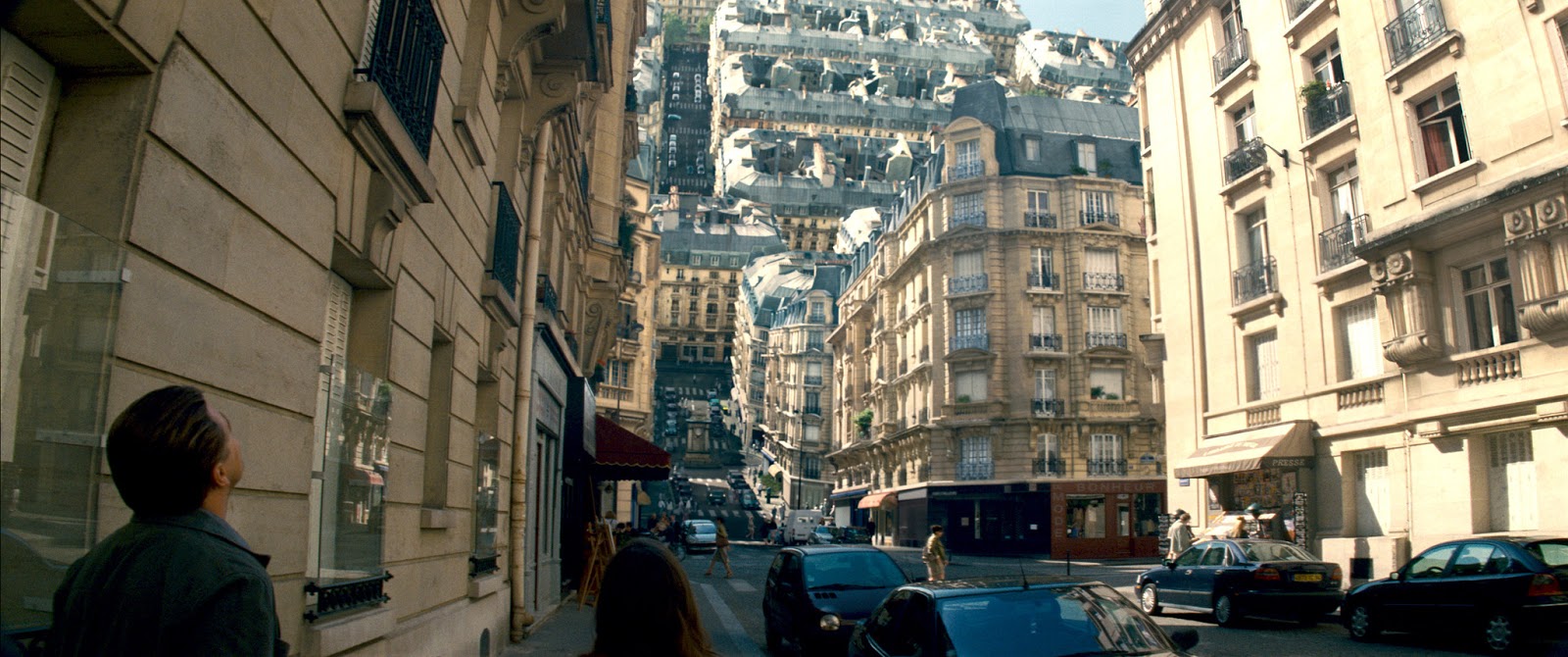
In the world of dreams, the film is a fabulous tight-rope-walk of dazzling concepts. Here everything is possible, with Nolan throwing at us worlds from film fantasy: intricate Samurai houses, brawling third-world streets, luxurious hotels, Bond-style winter bases and entire cities that literally fold, bend and reinvent themselves around the film’s dreamers, worlds that defy conventional rules of physics and time. This world is presented with genuine visual panache at every point, Nolan’s mastery of the language of film leading to a sensational series of slight-of-hand tricks and compelling set-pieces, all the while making you question which events are real and which are dreams or even dreams within dreams. In these worlds, the characters have the ability to literally shape a world to meet their needs, and the dangerous attraction of these worlds – even if they are not real – is the dark temptation that hangs over every frame. 

Because it’s those ideas beneath the action that give the film depth as well as excitement, that ability to ask questions and openly invite the audience to begin theorising themselves to fill in any blanks. Within the world of Inception, characters can create dream states within dreams, to share one person’s dream while simultaneously all being inside the dream of someone else. These multiple levels are cleverly established as being as much of a risk for the characters in getting confused as they are for the audience, with the characters carrying personal “totems” to help them judge if what they are seeing is reality or not. This is made all the more difficult by the establishment that your subconscious will manifest people to populate the dream worlds – and these will turn on invaders they detect in the dream.

All of this tunnels down into the deep limbo of our subconscious – and also introduces as a concept Nolan’s fascination with time. In dreams, time moves at a different pace, and this differential becomes all the greater as you descend down levels in dreams within dreams. A few minutes can become an hour in a dream and become almost a day in the dream within it – and years within the dreams beyond that. This is brilliantly demonstrated by Nolan in the film’s dazzling central sequence as the film intercuts between three timelines in three different dreams – each impacting the other.

It’s another masterful touch – the impact of actions on dreamers’ bodies in the level above can be felt in their world. A slap to the face in the real world can send someone in the dream flying across a room. A bucketful of water turns into a tidal wave in the dream. The dreamer falling in the world above removes gravity in their dream (giving Joseph Gordon-Levitt a cult fight scene in a gravity free world that sees him gracefully leaping from floor to ceiling to wall). The visuals are extraordinary, but the intriguing logic of the inter-relation between reality and the dreams – and the way dreams struggle to explain external effects – lend all the more credence to the mixing of reality.

But then, as Nolan suggests, isn’t that film after all? In dreams we move from location to location and struggle to remember the journey in between. We find ourselves doing tasks and not knowing how we started. Chases, faulty logic, sudden reversals and changes – these are the rules of film, it’s editing slicing out the boring bits and focusing on the reality. We are dropped into the middle of Cobb’s story and only slowly find the backstory, a gun filled chase through an African city is almost indistinguishable from similar sequences in the dreams. The final sequence of the film is a purposefully cut series of images that are very true to the rules of film, but feel alarmingly close to the rules of dream (unsettling us about whether what we see at the end is truth or dream, a debate that continues today). It makes for fascinating stuff, as well as a commentary on film itself.

Nolan’s film is gloriously entertaining, even if in its haste at points it does fail to explain how certain events and concepts truly work – but doesn’t really matter so compelling is the journey. The cast, enjoying the chance to mix action hijinks with genuine characters and dialogue are very strong, with DiCaprio anchoring the film wonderfully as the conflicted, lonely, defensive and daring Cobb. Hardy made a name for himself in a cheekily flirtatious performance, which sparks wonderfully with Gordon-Levitt’s more po-faced Arthur. Page creates a character both naïve and at times almost gratingly intrusive. Cotillard makes a difficult balance look easy playing a character part real and part dream figure. Watanabe is archly dry as the investor. There isn’t a weak link in there.

It may at times move too fast and not always make itself completely clear. It might be a bit too long in places and take a little too long to make its point – but it’s ambitious, challenging, intriguing film-making that rewards repeated viewing. Not least with its cryptic ending in which we are forced to ask how much of what we have seen is real and whether – like Cobb perhaps? – we should even care at all if the end result is so positive. With the fascinating world of dreams – and the rules there that we encounter – it gives us a firm grounding for the its meditation of the dark attraction of fantasy, embodied by the genial wish fulfilment of the movies where adventure lies around each corner and the heroes triumph.

Nixon (1995)

Anthony Hopkins triumphs as Nixon in Oliver Stone’s surprisingly sympathetic biopic

Director: Oliver Stone

Cast: Anthony Hopkins (Richard Nixon), Joan Allen (Pat Nixon), James Woods (HR Haldeman), Powers Boothe (Alexander Haig), Larry Hagman (“Jack Jones”), Ed Harris (E. Howard Hunt), Dan Hedaya (Trini Cardoza), Bob Hoskins (J. Edgar Hoover), Madeline Kahn (Martha Mitchell), EG Marshall (John Mitchell), David Paymer (Ron Ziegler), David Hyde Pierce (John Dean), Paul Sorvino (Henry Kissinger), Mary Steenburgen (Hannah Nixon), JT Walsh (John Ehrlichman), Sam Waterston (Richard Helms), Brian Bedford (Clyde Tolson), Tom Bower (Francis Nixon), Kevin Dunn (Charles Colson), Annabeth Gish (Julie Nuxon), Tom Goldwyn (Harold Nixon), Saul Rubinek (Herbert G Klein)

In 1995, there was one person the chronicler of the 1970s American experience, Oliver Stone, hadn’t covered: Richard M Nixon. The man who was the embodiment of the dark scar on the American consciousness, the grim, unlovable presence behind the war in Vietnam, the protests and the deep, never-ending wound of Watergate, who seemed to drag the country further and further into the abyss. The man who besmirched the office, the least popular president ever, the national shame. With Stone’s searing attacks on everything from Vietnam policy to the conspiracies behind the Kennedy assassination, you’d expect his film on Nixon to be a condemnation. What people didn’t expect was a film as strikingly even-handed as this, which recasts Nixon not as a gloating villain, but a Shakespearean figure, a Greek tragedy of a man destroyed by chronic character flaws.

Opening with a crushed Nixon, like a drunken Gollum cradling his precious, listening to his precious tapes in the bowels of the White House during his final days in office, the film is told in a fascinatingly non-linear style – loosely falling into two acts, cutting backwards and forwards in time. The first act covers most of Nixon’s career up to the presidency, focusing on his Quaker childhood and the influence of his mother Hannah (Mary Steenburgen), his defeat in the 1960 election to Kennedy and his years rebuilding his political standing. The second half takes a more linear approach, covering a Presidency becoming increasingly bogged down in the inept cover-up of Watergate and increasingly desperate attempts to save his presidency, intermixed with foreign policy successes.

What is really striking is that Stone’s movie finds a great deal of sympathy for this troubled and complex man. He’s a man who has greatness in his grasp, dedicated, intelligent and with vision – but fatally undermined by self-loathing, self-pity and a bubbling resentment about not having the love of the people. Like Lear raging against the storm, or Macbeth bemoaning the impact of his vile deeds, Stone’s Nixon becomes a sympathetic figure, even while the film makes no apologies for his actions, his aggressive bombing of Cambodia (the film notes at its end the bombing led directly to the massacres of the Khmer Rouge) or his failures to claim any responsibility for how he caused his own end.

Stone’s empathetic vision of Nixon is shaped largely by Anthony Hopkins’ titanic performance in the lead role. Hopkins makes no real effort – beyond teeth and hair – to look like Nixon, but brilliantly embodies Nixon’s awkward physicality and, above all, his angry, bitter, resentful personality. It’s not an imitation, but it totally captures him. Hopkins has got it, and the disintegration of Nixon over the course of the film into the shambling, miserable, twitching, even slightly unhinged mess he became in the final days of his presidency is astounding. 

It works because Hopkins never loses sense of the potential for greatness in Nixon – sure he’s socially awkward (Hopkins superbly captures Nixon’s awkward grin, his stumbling nervousness in conversation), but politically he’s assured, confident and has huge insight into realpolitik. His flaw is that he wants to be both the master politician and the people’s champ, to be Nixon and JFK, to have the people cheer him to the rafters. It’s a longing that turns to resentment, fuelling insecurity and fear, that causing him to be so afraid of being cheated that he cheats first and bigger.

It’s that potential for greatness that swims through Stone’s masterfully made, electric film. Stone’s love for mixing film stock, fake newsreel footage, snazzy camerawork, switching colour stock, stylistically eclectic sound and music choices and bombastic lecturing comes to the fore here – and I accept it won’t be for everyone. But for me it works. It’s a big, dramatic movie because it covers an epic theme. From its early echoes of Citizen Kane – the White House as Xanadu, those missing 18 ½ minutes of the tape Nixon’s “Rosebud” – through to the accelerated pace and film stock as events spiral out of the President’s control, it’s an explosion of style that really works, even if there are points which are too on-the-nose (a scene where Nixon’s dinner talk of war is interrupted by a steak that leaks gallons of blood as he cuts into it, is clumsy in the extreme).

Stone’s theories revolve around the true villain being the government-financial power system itself, a grindingly oppressive beast chews up and spits out the men who think they can ride it. Nixon may know about the danger of the system, but he’s as powerless as anyone else. Its tendrils extend everywhere, from the creepily domineering CIA chief Helms (Sam Waterston, unsettlingly intimidating in scenes restored in the director’s cut) to the shady Texan money interests (led by an excellent Larry Hagman of all people) who sure-as-shit want to get rid of that liberal, Cuban surrender monkey Kennedy, by any means necessary (“Say Kennedy dont run in 64?”). 

Nixon wants to control it, to do some good – and the film is excellent at stressing how Nixon’s poverty-filled Quaker background gave him a drive to achieve but also a chippy insecurity and moral standards from his imperious mother he can never hope to meet – but what hope does he have? In any case, his own deep moral failings doom any chance of forging his own goals, sucking him into a quagmire where long-running dirty deeds, shady deals and unedifying company consume him. “When they look at you they see what want to be. When they look at me they see what they are” Nixon complains to the painting of Kennedy, the rival whom he can never eclipse, the man born with all the advantages Nixon never had, the millionaire embraced by the people while the working-class Nixon is reviled. It’s these resentments that consume and destroy Nixon, and Stone presents this as an epic tragedy of a great politician, crushed by his fundamentally human flaws.

Around Hopkins, Stone assembles a brilliant cast. Joan Allen is superb as Nixon’s loving but insightful wife who won’t shy to speak truth to power. James Woods is perfect as the bullishly aggressive, fiercely loyal Haldeman. Paul Sorvino does a wonderfully arch impersonation of Kissinger, always keeping his distance. David Hyde Pierce makes a smoothly innocent but determinedly self-preserving John Dean, Powers Boothe a wonderful cold Alexander Haig. Only Bob Hoskins gives a performance slightly too broad as Hoover – but he still laces the role with a crackling menace.

Nixon is a great film, an explosion of style (perhaps at times a little too much), which painstakingly strips bare the President’s psyche – his doubt, guilt, bitterness, resentments and finally overwhelming self-pity. Powered by a titanically well-observed performance by Anthony Hopkins, who is just about perfect in every frame – every nuance feels real – Nixon is a wallow in the dark underbelly of America, which hints throughout at the even greater dangers that lie under the surface, the powerful system maintaining the status quo that sees presidents come and go, but never allows any real change. It’s a remarkable film.

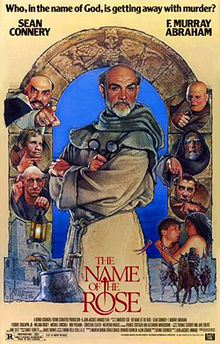
The Name of the Rose (1986)

Sean Connery taps into his inner Sherlock Holmes in The Name of the Rose

Director: Jean-Jacques Annaud

Cast: Sean Connery (William of Baskerville), F. Murray Abraham (Bernardo Gui), Christian Slater (Adso of Melk), Michael Lonsdale (The Abbot), Helmut Qualtinger (Remigio de Varagine), Elya Baskin (Severinus), Volker Prechtel (Malachia), Feodor Chaliapin Jnr (Jorge), William Hickey (Ubertino de Casale), Michael Habeck (Berengar), Urs Althaus (Venantius), Valentina Vargas (The Girl), Ron Perlman (Salvatore)

Umberto Eco’s erudite medieval murder-mystery was about the wonderful power of books, as much as murder mayhem in a medieval abbey. A surprise bestseller, the story is a perfect mix of intellectual playfulness and Agatha Christie whodunit, with suspects left, right and centre and bodies piling up faster than you can count. Jean-Jacques Annaud fought for years to bring the book to the screen, and his vision of it might well sacrifice much of the depth of the original (it even cheekily refers to itself as a “palimpsest” of the original novel – something reused but still bearing traces of the original) but brings enough to the table to have its own life.

In 1327, monks and high churchmen assemble at a Benedictine abbey in Northern Italy, famed for its voluminous library. However, all is not well at the Abbey with one monk already dead in mysterious circumstances, and soon many others join him in death, each of the later victims with mysteriously blackened fingers and tongues. The Abbot (Michael Lonsdale) asks renowned Franciscan monk William of Baskerville (Sean Connery) to investigate – and his efforts will reveal the dark truths at the heart of the abbey and place him and his novice Adso (Christian Slater) on a collision course with Inquisitor Bernardo Gui (F. Murray Abraham) who sees not a human hand, but the hand of Satan, in the murders.

Annaud’s film perfectly captures the mud and grime of the medieval world, with its murky visuals of the cold and damp in a building like this in winter. To be fair, the film is helped in its sense of oppressive medievalism by its frequently choppy editing and less-than-obvious camera angles (at times making it hard to tell what is happening), while James Horner’s score may hit its notes hard at points, but does sound like a successful pastiche of choral music of the time and creates an ominous air.

Annaud searched far-and-wide for his ideal cast to populate the monastery – and he seems to have assembled actors based on the closeness of their resemblance to Holbein, Bosch and Brugel grotesques. The monks are a distinctive set of oddball weirdos, often pale of face (non-more so than obese albino Beringar, whose effete campness tips a little uncomfortably into homophobia today), with oddly tonsued facial hair, and prominent facial features. To be honest it makes the movie-stardom of Connery (and Slater) stand out even more, as practically the only members of the cast who don’t look like they could audition for the Addams family. Ron Perlman in particular labours under such carefully applied make-up, matched with a faultlessly committed performance of physical and verbal childishness mixed with animal instinct, it was a shock to find out from other films that he was not hideously deformed!

William of Baskerville, as imagined by Eco, was a mix of William of Occam (him of Occam’s razor) and Sherlock Holmes (hence the Baskerville) – the book even matched almost word for word, Watson’s first description of Holmes from A Study with Scarlet with Adso’s first description of William. (Adso himself is also basically W-atso-n). The film is at its strongest when focused in William’s deductions, his lightening intellectualism and his ability to bring even the smallest fact or note to bear in order to shape a conclusion. The film front-and-centres William’s investigation over and above the other themes of the book (around faith, books and intellectual freedom), but this works for the requirements of a film’s narrative.

t also helps that William is played by Sean Connery in one of his finest performances. Heading into the film, Connery’s career was in a seemingly terminal decline (indeed the Great Scotsman was seen as such box-office poison, a Hollywood Studio pulled their funding after he was cast). Connery had to work hard to persuade Annaud – but thank god he did, as he plays on his fatherly and intellectual strengths here. In real life a committed autodidact, Connery perfectly captures the curiosity and love-of-learning of William, and also invests him with a profound moral sense, shaded by his guilt at past failings and playful understanding of how the moments when we fail to live up to expectations do not mean we are damned. It’s one of Connery’s finest performance – and unarguably changed his career, as he headed into a five year purple patch of increasingly impressive performances. 

Connery’s compelling performance is the real meat of the film, and he creates a character who feels warm, rounded and a perfect mix of contemporary and of-the-period. He’s also well supported by a young Christian Slater as his sidekick novice, who also gets a surprisingly raunchy sex scene. It’s unfortunate the rest of the cast don’t get as much to play with. The rest of the monks are oddballs, or drift out of the film as the plot requires (Michael Lonsdale’s abbot simply disappears, despite hints of a darker role in the plot early in the film).

In particular F Murray Abraham devours most of the impressive set as a lip-smackingly cruel inquisitor who delights in handing out the judgement of God. The film repositions him as a hissable villain, and reduces his impact accordingly, including placing him in an “you’re off the case William!” role. The final, murkily done sequence (featuring fires, heretics punished and a couple of nasty accidents) does tip into the sort of Grand Guignol gothicness that the book itself more or less avoids. But then it’s part of the general boiling down of the novel – making it that palimpsest – and also part of Annaud’s Euro-epic style, with its melting pot of accents and touches of clumsy editing and filming.

The balance of the original novel between ideas and sensation gets more or lost in sensation here – indeed the book that all this murderous behaviour is all about gets rushed over and its impact poorly explained, as are the motives of the eventual killer – but it all still kind of works because it looks more or less perfect and because of that Connery performance. Annaud was probably not quite the director to successfully marry the two parts of the book – and his direction is adequate in many places rather than inspired, with too many awkward handbrake turns – but this is still a film I have enjoyed many times over and will do so again.

The Last King of Scotland (2006)

Forest Whitaker dominates as Idi Amin in The Last King of Scotland

Director: Kevin Macdonald

Cast: Forest Whitaker (Idi Amin), James McAvoy (Nicholas Garrigan), Kerry Washington (Kay Amin), Gillian Anderson (Sarah Merrit), Simon McBurney (Stone), David Oyelowo (Dr Junju)

Forest Whitaker won every award going for his performance as Idi Amin. A film can perhaps only begin to scratch the surface of what a megalomaniac nutjob Amin was, and the depths of his depravity and corruption. But The Last King of Scotland is perhaps less focused on that, and more on the pull that people as charismatically self-absorbed and larger-than-life like Amin can have on the weak-minded and, on a wider basis, how this can end up with him leading an entire country on a not-so-merry dance, everyone desperate to gain the love and approval of a single dominant personality.

That weakling is Dr Nicholas Garrigan (James McAvoy) a young medical graduate from Edinburgh, who is arrogant, cocksure over-sexed and over-here in Uganda, keen for adventure and to get as much sex and experiences in as he can while he’s over here. A gap-year student with a desire for the easy life, after a chance meeting Garrigan becomes chief-physician and confidant to Amin, a man with a deep love for Scotland and who likes to think of himself as a father to those around him. It takes Garrigan a long time to realise that this indulgent, if bad-tempered, charismatic father-figure  is in fact a brutal dictator, his eyes eventually opened by the experiences of one of Amin’s wives Kay (Kerry Washington) who pays a heavy price for mothering an epileptic and adultery. Will Garrigan escape from Uganda?

Macdonald’s film gets a brilliant sense of both the exotic appeal of Uganda at the time (and or Amin) and it’s heat-embroiled danger. The camera work is flooded with yellows and grimy details, that makes every scene feel like its bathed in heat (and later danger) as well as giving it a documentary realism (helped by its use of handheld and immediate footage). The story of the film itself is a fairly basic morality tale, but these stories work because of their universality and it’s clear that Garrigan’s selfishness, shallowness and self-interest is going to lead to a terrible awakening.

The film’s real strength is Whitaker’s tour-de-force as Idi Amin. Whitaker is an actor who has been straining at the leash for an explosive roll, and he gets one here. If ever there was a part that would allow an actor to let rip it’s the one, with Amin part Hannibal Lector, part decadent Roman emperor, a low-rent Hitler with an ego larger than his country. But the bombast and childish fury work because it is built within the framework of a sort of puffed-up magnetism, a charismatic “hail-fellow-well-met” bonhomie that suggests this guy could be the best fun in the room. So dripping in assurance and confidence is Amin that he becomes strangely attractive – and the sort of all-powerful force of nature that would have most of us smiling if we caught a word of approval from him.

The trick of the film is to front-and-centre this lighter, fun-loving aspect. It’s easy to enjoy it like Garrigan as Amin charms the audience as much as he does its lead character. Sure there may be violence at the margins, but good-old-Amin is just doing what needs to be done. He’s brilliant with the people. It’s funny when he on-a-whim appoints Garrigan to decide a major architectural pitch from several countries. He’s playful and enthusiastic. When he’s cross with people he seems at first more disappointed than angry. It’s only as the film goes on that we realise we have been gaslit as much as Garrigan, that Amin may be a fun guy but he also cares nothing for anyone and that the more his focus shifts away, the more we see his callous paranoia and lack of any moral scruples.

Certainly we start getting a sense of the ruthlessness he is prepared to exhibit to enforce his rule in Uganda and the brutality with which he will suppress any resistance. Aides killed in a failed assassination attempt illicit no sympathy. He feels no guilt or responsibility for anything he does. In one brutal moment he berates Garrigan for failing to counsel him against expelling all Asians from Uganda. When Garrigan protests he did, Amin only responds with “Yes, but you did not persuade me Nicholas!” the sort of inverted logic practised only by the insanely self-obsessed.

Whitaker’s performance powers all this, a magnetic masterclass in insanity, charisma and paranoia. He’s well matched by James McAvoy (the film’s real lead) whose performance is similarly a masterclass is shallowness and petty triteness. If anything the film is almost too successful in this. A Garrigan is such a little arsehole it takes quite a force of will to build up any sympathy for this serial shagger playboy. It’s capable to think as the fire turns on him that perhaps he deserves this – and the number of (mostly black) characters who lay down their lives to protect him starts to get a bit wearing after a while.

Because this in part is a film where actual Ugandans are not heard that much. The two principle characters we see are both victims: Kerry Washington in a thankless part as the attractive young wife you just know from day one Garrigan will climb into bed with and David Oyelowo as the sort of noble doctor you only seem to find in movies. For all its horror at Amin’s crimes, it’s still largely filtered through the eyes of a young, white, innocent abroad who sees up-front the dangers but the real victims of Amin, the Ugandans themselves, are clichés or elevated clichés.

While you could say that was not the point of the film, it still means we miss some of the real danger and psychopathy of the leading character, so absorbed are we in seeing the increasing peril of the white man caught up in it all. It’s why The Last King of Scotland doesn’t quite work as well as it should, any why it settles in the end for a being a morality tale plot-boiler about a monster at the heart of the forest, rather than a deeper and more intelligent film about the tragedy of an African state. It’s still enjoyable for all that, but it could have been more.

The Passenger (1975)

Maria Schneider and Jack Nicholson hit the road in Antonioni’s partly frustrating, partly masterful The Passenger

Director: Michelangelo Antonioni

Cast: Jack Nicholson (David Locke), Maria Schneider (The Girl), Ian Hendy (Martin Knight), Jenny Runacre (Rachel Locke), Charles Mulvehill (David Robertson), Steven Berkoff (Stephen)

Ever wanted to jack in your life and have a go at being someone else? It’s a temptation we’ve all felt at one time or another, that chance to make a completely fresh start free of all those burdens and expectations of our own lives. 

It’s a temptation thrown in the way of David Locke (Jack Nicholson) a British-American journalist, trying to make contact with rebel groups in the deepest Sahara deserts of Chad. Returning, after a failed excursion, to his ‘hotel’ in the tiny, beat-up village in the middle of the desert he finds that the only other resident, an Englishman, has died of a heart attack. The two man have a physical similarity, enough for Locke to decide to swop places with the dead man and leave Chad under a new identity as David Robertson. Curious to follow the details left in Robertson’s appointment diary, Locke finds that he has taken the identity of an arms dealer – making sense immediately of why Robertson was also in the hotel at the time – forcing Locke to stay one-step ahead of both the arms dealers and his wife Rachel (Jenny Runacre) and producer Martin (Ian Hendry) keen to talk to him about ‘Locke’s’ death.

If that sounds like it might be an action packed thriller – you’d be wrong, because let’s not forget that this is an Antonioni film, and if there is one thing you can expect from the revered auteur of the Art-House, it’s that his films are mysteries wrapped in enigmas. The Passenger is no exception, a slow, intriguing mood piece that only partially allows the audience even half a chance to puzzle out what it’s about, mixed with striking images and haunting sequences of fundamental unknowingness. Despite the paragraph above there is almost no plot in The Passenger, with the film instead focused on themes of alienation, existentialism, destiny, fate and identity. In other words all the big stuff.

Much of this is captured in the character of Locke. Played by Jack Nicholson in a stripped-down, purged style a million miles away from the “Jack” of legend, Locke is a blank. We spend almost the entire film with him, but learn virtually nothing about him. What desires or miseries or depressions drive him to abandon his life and head out into a new life? We have only vague whispers about an unhappy marriage (with a wife having an affair with someone else) and a general listless dissatisfaction with his own life and career. Locke is a character yearning for some kind of release, some kind of higher meaning – the happiest he seems to be in the movie, is hanging over the side of a cable car, arms outstretched, pretending to fly over the waters below. It’s a freedom like that – some sort of total unshackling from the modern world altogether – that he seems to want or need.

So why doesn’t he go for it? Why doesn’t he just junk Robertson’s appointment diary and escape properly into the wide world, well beyond the reach of Chad rebels, curious wives and BBC Producers? Perhaps because he is a Passenger himself, a man who lacks the essential will and freedom of purpose to make his own destiny, to escape the structure of a world he finds so constricting? Instead, he seems bound of a wheel of fire, compelled somehow to continue following some sort of structure unable to yank himself fully free of the chains of this modern world. He wants to be a free spirit, but he remains a little man, to whom events happen, who is approached by people, who follows directions not forging his own path.

He gets as close as he can to opening up by talking to a passenger of his own, a mysterious girl (played with an unaffected naturalness by Maria Schneider that is part graceful reality, part wooden stiffness but works perfectly) he encounters while following Robertson’s trail. He first spots her sitting on a bench in London, then sees her again atop Guadi’s La Pedrera in Barcelona. Is this coincidence? Is this fate? Destiny? Or is this a curious suggestion that the girl may be more than she seems? None of these questions is answered by the film, but it fits perfectly in with the unknowing vagueness and quizzical unpredictability of its events. Hammering home the blank unknowability of Schneider’s character, she isn’t even named in the film. She joins Locke on his journey, but her motivations are as vague as his – is it escape, a bohemian lark, a curiosity that guides her? Who knows?

The film continues in this vein, showing Locke drifting from Chad to the UK to Berlin, Barcelona and Seville, never seeming to allow Locke more than a few seconds of freedom. Is the film asking if there is any such thing as true freedom, that even after swopping lives Locke still finds himself locked down into following a series of pre-arranged duties, like a train on a line? It’s not clear, but it’s beautifully filmed. Antonioni’s mastery of the camera shines throughout the film, and it’s full of haunting and immersive imagery, not least in his skilful use of locations and framing, with Locke and the Girl frequently positioned oddly or even dwarfed by the architecture and locations around them, from the plains of the desert to the towers of Gaudi.

Antonioni also saves for this film some sequences which are simply breathtaking in their cinematic mastery and beauty. His control of technique is near faultless – while his art house vagueness might have you pulling your hair out at points, these sequences will have you winding the film back just to relax in their skill and confidence again. Early in the film, we see Locke sit and fake his passport in his Chad hotel – oh for the days when identity theft was as simple as glueing a new photo into a passport – the camera smoothly moves around him, while he listens to recordings of Robertson and he meeting, until it settles onto the balcony (all this in one take) at which point Robertson walks into frame and continues the conversation, Locke following him and, there we go, Antonioni has taken us suddenly into the past. Without a single cut, the camera follows the conversation before panning back round to Locke sitting once again writing.

It’s a sequence that cineateases would be raving about, if it wasn’t dwarfed by the film’s penultimate shot, a stunning seven-minute single take that would be simplicity itself to make with CGI and Steadicam today, but was somewhere achieved without the invention of others. Starting on a single shot of Locke’s Seville hotel room, the pan slowly focuses on events outside the grilled window, the camera slowly zooming in on the outside until it passes through the grill and rotates 180 degrees back to see the room from the outside, while the Girl and other mysterious people arrive and leave outside. It’s a beautiful, brilliant, sublime, masterful piece of cinema. It’s compelling, surely one of the greatest “one-take” shots in all of cinema. Simply perfect. Directors could sit and dream of making such a shot. 

Antonioni’s masterful direction and wilfully obtuse exploration of his themes makes for a film that is at time frustratingly unreadable, but also crammed with opportunities for the viewer to insert their own views and interpretations, something that is only going to become more tempting (and rewarding) with repeated viewings. Alongside that, it’s a simply beautiful and sublimely made piece of cinema – and if for no other reason deserves your time.