Category: War film

A Bridge Too Far (1977)


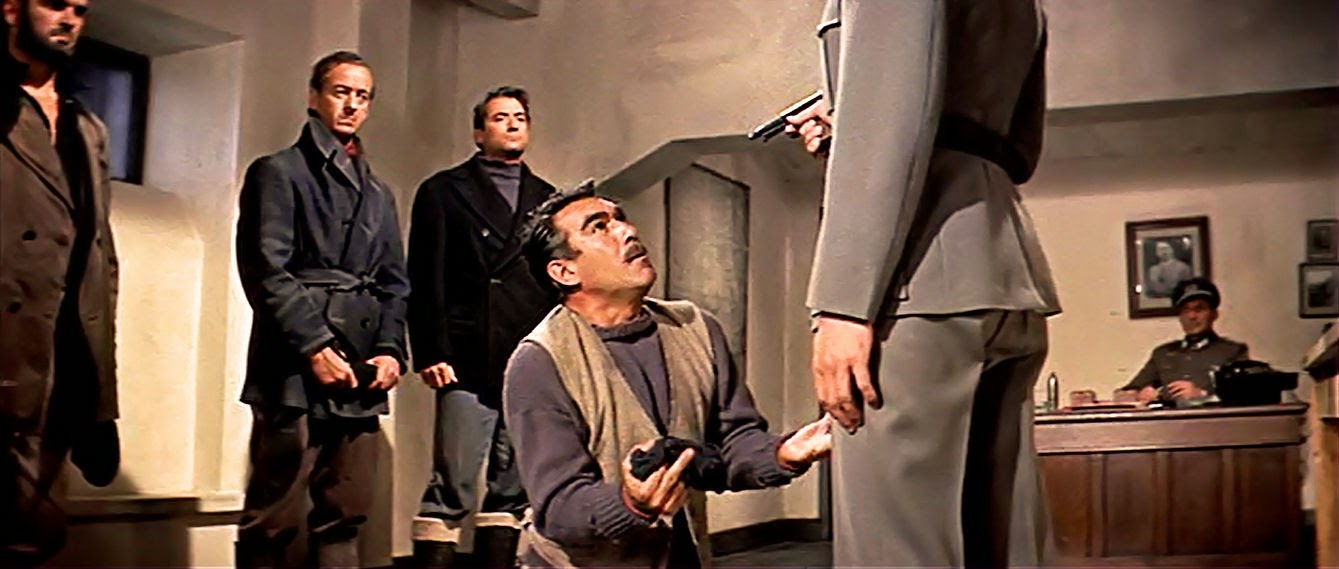
Dirk Bogarde, Sean Connery, Ryan O’Neal and Gene Hackman are among the Generals aiming to go A Bridge Too Far

Director: Richard Attenborough

Cast: Dirk Bogarde (Lt-Gen Frederick “Boy” Browning), James Caan (Staff Sgt Eddie Dohun), Michael Caine (Lt-Col J.O.E. Vandeleur), Sean Connery (Maj Gen Roy Urguhart), Edward Fox (Lt Gen Brian Horrocks), Elliot Gould (Col Robert Stout), Gene Hackman (Maj Gen Stanislaw Sosabowski), Anthony Hopkins (Lt Col John Frost), Hardy Krüger (SS Maj Gen Karl Ludwig), Laurence Olivier (Dr. Jan Spaander), Ryan O’Neal (Brig Gen James Gavin), Robert Redford (Major Julian Cook), Maximilian Schell (SS Gen Wilhelm Bittrich), Liv Ullman (Kate ter Horst), Michael Byrne (Lt Col Giles Vandeleur), Denholm Elliott (RAF Officer), Jeremy Kemp (Briefing Officer), Wolfgang Preiss (Feldmarchall Gerd von Rundstedt), Stephen Moore (Maj Robert Steele)

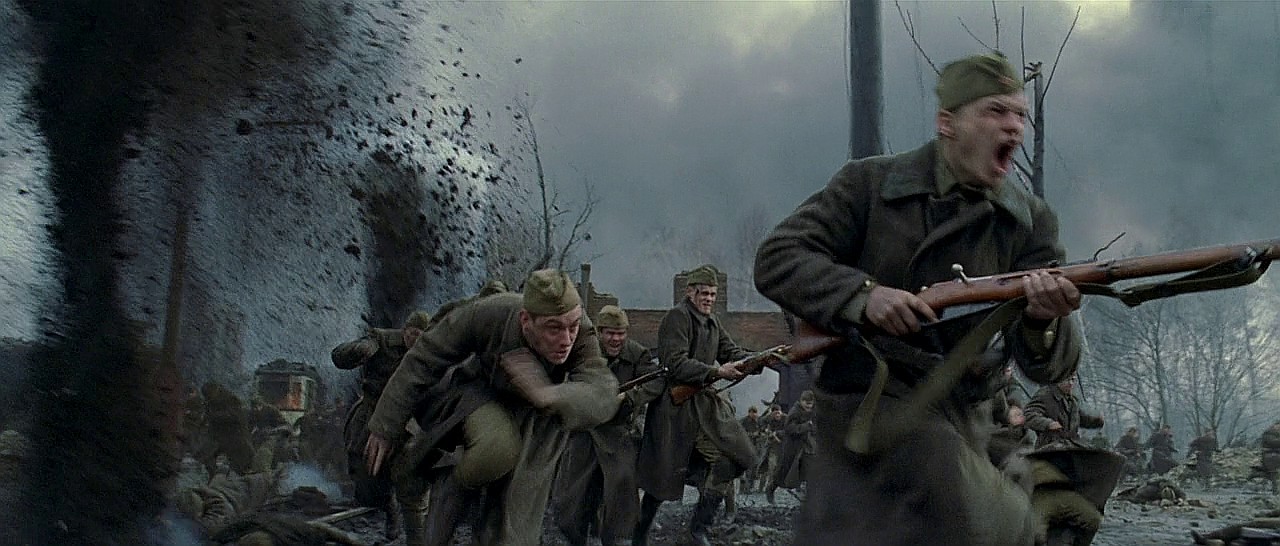
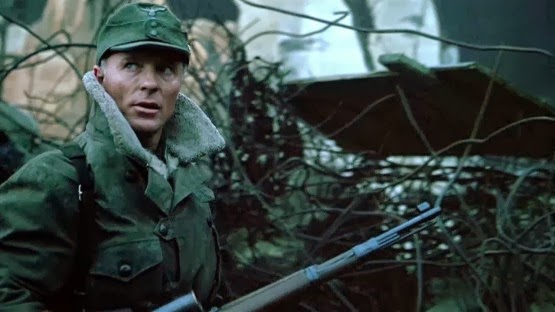
You’ve got to love a good war film. In fact, there are few things more cinematic than the old-school, star laden Hollywood war film. A Bridge Too Far is for me one of the finest examples of this genre, and it’s a film I come back to time and time again. Is it perfect? No of course it isn’t – in fact I probably love this film more than some of the people actually in it do. But it’s a damn fine piece of big-screen, big-budget film-making, and it’s got a cast of stars. And more than perhaps any other film of this genre, it’s a film about how overwhelmingly awful and gut-wrenching war is. This is a film about a defeat – and not the sort of triumphant defeat that Dunkirk feels like. It’s just a gut-punch. The Allies threw the dice big time, and they lost.

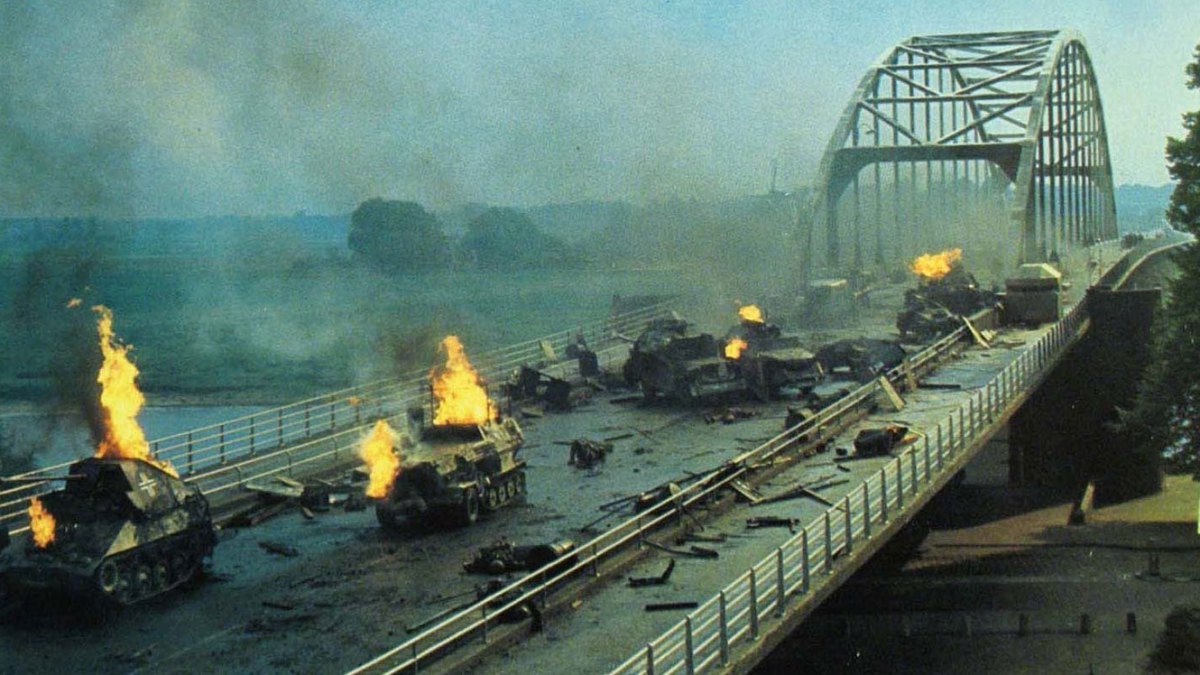
The Battle of Arnhem was one of those “end the war by Christmas” plans. The brainchild of British war-hero Field Marshall Montgomery (noticeably absent from the film), Operation Market Garden was a lightning strike into the heart of the Ruhr to capture Germany’s industrial capability. This involved a series of paratrooper drops into towns in the Netherlands, culminating in Arnhem, to cross the Rhine. While the paratroopers seized key bridges, British Tank Division XXX Corp would power through, cross the bridges and into Germany. It was bold, daring and radical. It was a disaster. Arnhem, far from being undefended, was being used as a rest place for a Waffen-SS Panzer division. The British paratroopers found themselves not seizing a lightly defended bridge, but fighting a tank division with machine guns and limited supplies. Meanwhile XXX Corp’s progress became bogged down in traffic jams and higher than expected German resistance. 

It’s quite something to make a war film about possibly the biggest military disaster on the Western Front during the Second World War. The entire plan is a misconceived tactical blunder, and the film never shies away from this, demonstrating time and again the numerous errors that led to it: from Generals ignoring reconnaissance that suggests this won’t be a cake walk, to paratroopers failing to seize bridges quickly, to tanks crawling down crowded roads, fighting every step of the way. Alongside all this, the film never loses track of the horrifying impact of war on both soldiers and civilians caught in the crossfire. It’s a huge budget, all-action, anti-war film.

Richard Attenborough is the perfect marshal for this film. He has the experience and understanding of scope to handle the action scenes. At the time, this film was possibly the most expensive film ever made. Not only that, it was independently funded – producer Joseph E. Levine thought the film was so important he pumped millions of pounds of his own money into it. The attention to detail is extraordinary – the film consulted nearly every single surviving commander from the battle on the script – and all the stops were pulled out creating the military features of the film. 

This is of course particularly striking now as we know everything in the film is real – no special effects in those days. If you see it in the film, then you know that it was really there. In the sequence showing the planes taking off to deliver the paratroopers to their destinations, there were so many planes in the air that Attenborough could literally claim to command the world’s seventh largest air force. Every military blow of the battle is carefully reconstructed. The tactics are carefully explained and followed. Attenborough can shoot compelling action.

But what makes the film so good (for me anyway) is the way the heart-breaking horror of war never gets lost. In all this action, we are always shown the cost. Attenborough will frequently cut back to the after-effects – several times we hear wounded soldiers whimpering on smoke-filled, body-littered battlefields. Many acts of courage (on both sides) by individual soldiers result only in pointless, gut-wrenching deaths. Arnhem isn’t just damaged by the battle, it’s flattened. The impact on the civilian population is terrible – in a powerful sequence, we see characters we were introduced to earlier mercilessly caught in the crossfire of the German tanks. We return continually to locations increasingly shredded by weapons fire. More and more soldiers are wounded – some horrifically.  Near the end, the remaining British paratroopers, encircled and surrendering, sing a deeply moving quiet rendition of Abide With Me. No one could come out of this wanting to go to war.

Attenborough’s humanity is key to the film’s success. It helps as well that he is a brilliant actor’s director. Want to dispel any doubt on the horrors of Arnhem –then train the camera on the Laurence Olivier’s tear-stained face as he drives through the destroyed streets. Want to understand the sacrifices and the courage? Well just let Anthony Hopkins – simply excellent as the commander of the only forces to reach the bridge at Arnhem – with calm, restrained Britishness request support and supplies late in the film as his men are butchered around him. It’s a film full of brilliant moments of acting like that, where Attenborough points the camera at them and lets them act. 

The sequences around Arnhem and the British paratroopers there are the heart of the film. Sean Connery is terrific as Major General Roy Urquhart, commander of the British paratroopers. His growing frustration as events spiral far out of his control is a great contrast with his initial professional confidence. Gene Hackman, as commander of the Polish forces (slightly odd casting but good once you tune up to it), gets the role of the “one man talking sense” who can smell disaster early on, but works harder than anyone to get the plan to work. A number of the regular soldiers in Arnhem are faces the film returns to again and again – giving us people to relate to as their numbers are increasingly decimated by the savage, desperate combat. John Addison’s score also helps a huge amount with building the emotion in these scenes.

The Arnhem sequences are so good that the other sequences around the American paratroopers feel like they come from a slightly different movie. It doesn’t help that the likes of Elliot Gould are playing slightly clichéd “Brooklyn Yankee” types, chomping cigars and ribbing the stiff-upper-lip Brits. Ryan O’Neal as General Gavin is slightly dull. The XXX Corp material is a little dry (essentially driving up a road or waiting), although Edward Fox is superb (and BAFTA-winning) as their charismatic commander Lt Gen Brian Horrocks. Attenborough puts together at least one terrific set-piece tank battle on the road – but it’s not quite enough.

The two biggest American stars are also given the feel-good, up-beat material. James Caan gets the best part in what is effectively a stand-alone story of a Staff Sergeant going to impossible lengths to save the life of his Captain (Caan had his choice of part and chose well). Robert Redford is a little too starry (bizarrely in a film full of stars!) as a Major tasked to seize the vital bridge at Nijmagen via a daylight river-crossing. This sequence feels like it’s been put in the film to (a) give us something to cheer and (b) to allow an American victory for the box office. Of course, we need the biggest star in the world at the time to play the most straight-forward heroic part!

The film does have a tendency to shuffle its characters into “good” and “bad”. So after Redford seizes the bridge, the character sent to tell him that XXX Corp won’t be rushing across to Arnhem after all isn’t Caine’s Vandeleur, but a nameless Colonel played by Polanski’s villainous Ross from Macbeth himself, John Stride. The most sympathetic generals and commanders are all (coincidentally) the people who served as military advisors on the film.

On the other hand, the film ends up laying most of the “blame” on Dirk Bogarde’s Lt Gen Browning. Browning’s widow, Daphne du Maurier, threatened to sue the film-makers for the portrayal of Browning here (she got an apology). Browning is portrayed as the ultimate “non-boat rocker” – over-confident and arrogant, he disregards intelligence suggesting the Arnhem plan is dangerous, seems shocked and clueless once the scale of the disaster is revealed, and by the end of the film seems to be most interested in positioning himself as always opposed to the plan in the first place. Bogarde (the only actor in the film who actually served in Market Garden) was similarly angry when he saw the film – and he has a point. It’s grossly unfair.

It’s a problem with this film and it does annoy me. The parts not set in Arnhem are not as memorable or compelling as the rest. But huge chunks of the film are brilliant, and never fail to move or (sometimes) excite me. Its anti-war stance is striking. The acting from the cast is very good across the board – say what you like, cast every part with a star and you never get confused about who is who. Attenborough also draws great performances from the non-stars – Stephen Moore is a particular stand-out as a signals man unwilling to voice his doubts about the equipment (and who pays a heavy price). 

I can watch A Bridge Too Far at any time. I always love it. It’s a film of great moments and performances. It carries real emotional weight. Attenborough is a very good director of actors, but also a skilled commander of scale. It’s a film that gets emotion in there. It’s a film that isn’t afraid to present a military disaster. It doesn’t demonise the Germans. Sure it plays goodies and baddies with the Allies, and parts of it to drag on a bit too much or deal with cliché. But at its best is the core of a great film. I love it. It’s a favourite. And always will be.

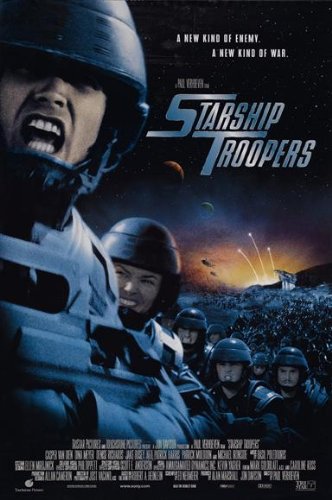
Starship Troopers (1997)


Earth’s military might goes up against space bugs in Paul Verhoeven’s militaristic satire

Director: Paul Verhoeven

Cast: Casper Van Dien (Johnny Rico), Dina Mayer (Dizzy Flores), Denise Richards (Carmen Ibanez), Jake Busey (Ace Levy), Neil Patrick Harris (Carl Jenkins), Patrick Muldoon (Lt Zander Barcalow), Clancy Brown (Sgt Zim), Michael Ironside (Lt Jean Rasczak), Seth Gilliam (Cpl Sugar Watkins)

Every so often, a film uses the tropes of bad films so well, and makes such effective satirical digs, that people initially miss the point of what the film is trying to do. This is pretty much what happened with Paul Verhoeven’s Starship Troopers. On the surface a terribly acted, deeply stupid sci-fi actioner about soldiers killing space bugs, Verhoeven actually created a sharply intelligent, wry satire on the very bombastic militaristic fascism it seems to celebrate. This satirical bent was missed not only by the critics, but also the producers of the straight-to-video sequels the film spawned.

In the 23rd century, mankind has reached the stars. But it’s done so by creating a militaristic, aggressive society, where the young are encouraged to join up to the military in order to become “citizens”. Leaving high-school, hotshot would-be-pilot Carmen Ibanez (Denise Richards) joins up – followed by her boyfriend Johnny Rico (Casper van Dien), in turn followed by Dizzy Flores (Dina Mayer), the girl in love with him. Joining the ground soldiers, Ricco and Flores find themselves as the point of the spear in mankind’s war with the Arachnids (the Bugs), a race of (it becomes clear) intelligent and savage insects on a distant planet.

Starship Troopers isn’t really like anything else: it might well be Verhoeven’s American masterpiece, the perfect mix of his love for extreme gore, violence and sex (filmed with lashings of comic colour and playful glee) with keen social satire, the very ideas he had explored in everything from Robocop to Total Recall. At first glance, Starship Troopers serves up the all-action, gun-toting space battle excitement you would expect from its genre. But Verhoeven not only ramps everything up to 11, he also laces the dialogue and action with a keen satirical bent that hammers home the underlying theme of how war essentially (as Verhoeven puts it) “makes fascists of us all”.

The action is regularly interrupted by propaganda newsreel footage, which stresses the importance of sacrifice for the military effort. The military training camps are almost obsessively focused on brainwashing and reducing the young people in them to cogs in the machine, with safety and welfare as very much a secondary concern (the death of a recruit in an exercise is a concern only because it shows careless leadership rather than because of the death itself). Everyone in the film seems to be a perfect physical specimen. Military lives are thrown away through a combination of arrogance (they’re just bugs, this will be easy!) and incompetence, but never with any feeling of responsibility or expression of regret (though the media works hard to adjust all casualty figures wildly downwards).

The film fires shots at everything in the industro-military complex. The foreign policy of this world is ludicrously aggressive and jingoistic. Despite the spin of the propaganda, it’s pretty clear that humanity has started the war itself. The army is like Hitler’s wet dream – sleek perfect bodies, suicidal self-sacrifice, a complete lack of questioning of any orders or directives, a willing acceptance of corporal punishment. This attitude of violence and unthinking aggression is at every point of society – newsreel footage shows children holding guns with grinning soliders, who then proceed to hand out live ammunition. Later children are shown stomping cockroaches, to cries of the “the only good bug is a dead bug!”. Trials are routinely praised for the brevity (one day between arrest, conviction and execution!). It’s a terrifying world.

What Verhoeven does so well is that, while aware of the multi-leveled nastiness of the world of Starship Troopers, he also makes it a pretty effective straight-war movie. It’s exciting and the action quotient is high. Just like the soldiers in the picture, it’s very easy to see the bugs as faceless opponents which it is easy to feel little regret over killing. The battle scenes are high scale – and of course blackly comic in their extreme gore and bloodlust. But you can still enjoy the action – which is why the film works so well as satire. And also perhaps why so many at the time missed the point. Verhoeven makes this as an enjoyable B-movie, by really effectively using the tropes of B-movies. He turns the trashy B-movie into a sort of art exhibit.

That surely also explains some of the casting. I’m not sure how many of the actors are in on the joke. Certainly Casper van Dien and Denise Richards seem blissfully unaware of the satirical bent under the film. These two wooden actors trot through the sort of banal, by-the-numbers plot arcs and dialogue that fill films like these, with van Dien’s jaw as chiselled as granite and Richards grinning no matter the content of the scene. But their honest woodenness is perfect for the film: a smarter actor would have wanted to tip the wink to the audience, but these guys play it totally straight without even a hint that they are aware of the message underneath.

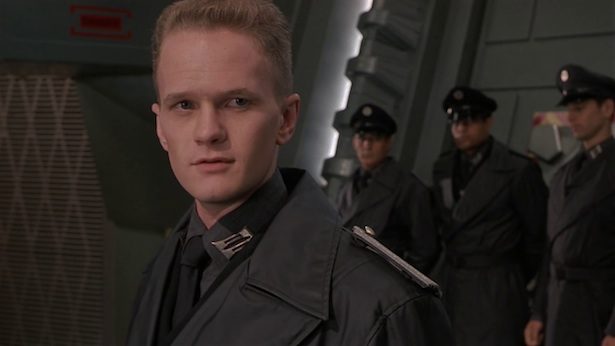
The more satirical element is left to other members of the cast: Michael Ironside has great fun as an almost absurdly fanatical solider, first introduced as a teacher lecturing his students on how the state must come before everything else and violence is the solution to all the world’s problems. Neil Patrick Harris tips a slight nod to the audience as a young man who rises so swiftly through the ranks that by the time we reach the end of the film, he’s a Gestapo-coated secretive colonel. He fits right into the grey militaristic, Nazi design of the military. You can watch all this stuff and simply enjoy the silliness – teenage boys will love this. And when they mature they’ll realise how awful the world it’s presenting is.


Starship Troopers is the ultimate military satire, a film that pushes every single fascist, militaristic society cliché to the limit. The news comes only from state propaganda. Military training involves brainwashing, maiming and slaughter. Education praises anger and violence as a solution to all problems. Verhoeven shoots this all with a grandeur, that pushes the celebration of militaristic violence to the max. 

It’s a film which is brave enough to make its militaristic sequences exciting, to shoot and cut this fascist wet dream with a stirring sense of excitement underpinning all the action. At the end you can celebrate the small victory our heroes celebrate in what is clearly going to be an ongoing war – until of course you realise it’s the victory of a Nazi organisation. The fascist world of the future may bring us sexual and racial equality – but that’s because it’s worked out everyone is needed to feed the grinder. It’s a super-smart satire film that disguises itself as a completely trashy action flick. It’s actually rather brilliant.

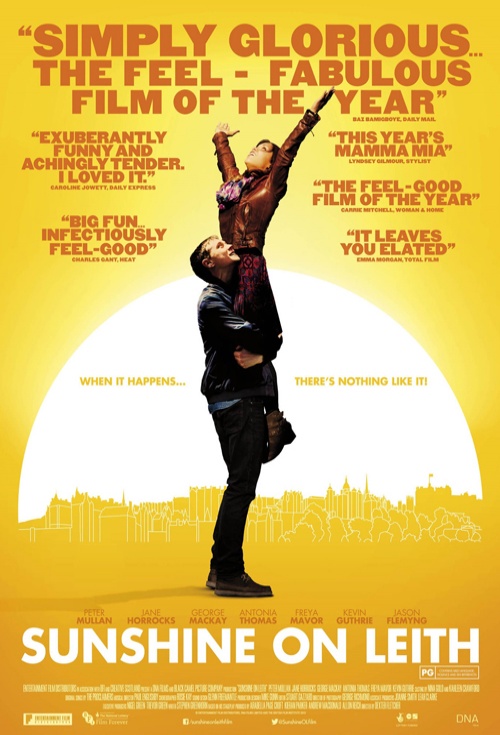
Sunshine on Leith (2013)


Peter Mullan hits the right notes in crowd-pleaser Sunshine on Leith

Director: Dexter Fletcher

Cast: George MacKay (Davy Henshaw), Kevin Guthrie (Ally), Freya Mavor (Liz Henshaw), Antonia Thomas (Yvonne), Jane Horrocks (Jean Henshaw), Peter Mullan (Rab Henshaw), Jason Flemyng (Harry Harper), Sara Vickers (Eilidh)

Sunshine on Leith is a jukebox musical that really works, because its story feels natural, its characters are engaging and the songs don’t feel too shoehorned in (even if, of course, we have a character called Jean to allow Oh Jean to be sung, and another moving to Florida which will of course require a Letter from America). It’s a really good reminder of how many really toe-tappingly, hummable, great songs The Proclaimers came up with. It’s not a masterpiece of course – but as a piece of solid, competent, crowd-pleasing cinema it’s hard to beat. 

The plot follows two soldiers returning from Afghanistan. Davy (George MacKay) is keen to start a new life, Ally (Kevin Guthrie) wants to marry Davy’s nurse sister Liz (Freya Mavor). Davy founds himself drawn to Liz’s colleague Yvonne (Antonia Thomas), while Liz struggles to reconcile her love for Ally with her desire to spread her wings and see more of the world. Meanwhile Davy and Liz’s father Rab (Peter Mullan) discovers, on the eve of his 25th wedding anniversary to Jean (Jane Horrocks), that a brief affair in his early marriage led to the birth of a daughter (Sara Vickers) he never knew he had. Love and family problems play out to a string of Proclaimers hits.

Sweeping camera-work from Dexter Fletcher helps to create a romantic, vibrant image of Edinburgh – you’ll want to book your tickets as soon as the film ends, this is such a good advert for the city – and he draws some wonderful performances from the cast, all of whom I suspect had the time of their lives making this film. How lovely is it to see Peter Mullan moving away from gruff hardmen, to play a man as sensitive and humane as Rab – and also to hear him croon with feeling some top songs? He makes a superb partnership with Jane Horrocks, who not surprisingly is the most accomplished singer, and who channels her natural bubbly mumsiness into a genuinely moving portrayal of a wife dealing with completely unexpected betrayal.

The film keeps the humanity of its characters very much at the centre, never over-complicating the plot or overloading us with extraneous detail or drama. The quietly tense opening sequence of Davy and Ally on tour in Afghanistan (with a rendition of Sky Takes the Soul) swiftly helps us invest in their safety – and sets us up to really feel their release once they return to the safety of civilian life. Nothing hugely unexpected happens in the film at all – it can be pretty accurately predicted from the start – but the whole thing is told with genuine warmth and feeling.

There are some stand-out musical sequences. Over and Done With, told as a pub story-telling session, works really well – it’s wonderful up-beat, vibrant sequence. Jason Flemyng has a great dance cameo during a fun-filled number set in the Scottish National Gallery (Should Have Been Loved). Davy and Ally dance thrillingly down the street to I’m On My Way as they celebrate their discharge. The final number – it’s not a surprise – sees what seems like most of Edinburgh corralled into a massive rendition of a song about walking a very long distance…

George MacKay demonstrates he’s a pretty decent song and dance man – and he also has the every-day ordinariness that makes him a perfect audience surrogate. His chemistry with Antonia Thomas is also fantastic. As the secondary couple, Freya Mavor is headturningly watchable as Liz, while Kevin Guthrie gives a nice air of bemused immaturity to Ally.

Sunshine on Leithis a brilliant crowd-pleaser, and has clearly been made with love and affection for the material and the songs, which seeps off the screen. It’s a perfect advert for everything in it. I would say that I am not sure Fletcher is the perfect film director – he’s afraid to let the camera stand still for too long in the larger dance set-pieces, which means we lose the impact of some of these numbers (or the chance to really appreciate the choreography). But he totally gets the tone of the film, and delivers that in spades.

It’s much pretty guaranteed that you’ll laugh, you’ll cry, you’ll fall in love. And you’ll want to watch it over again.

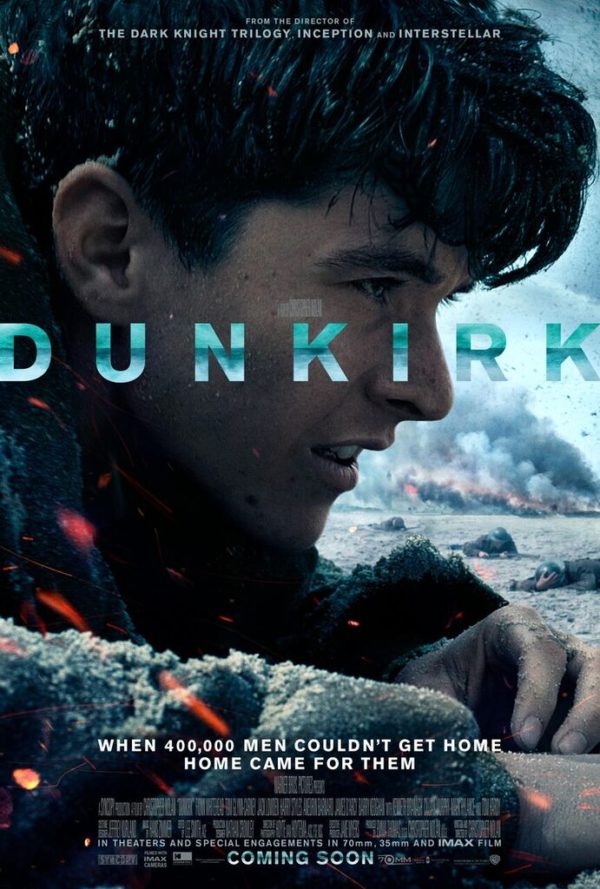
Dunkirk (2017)


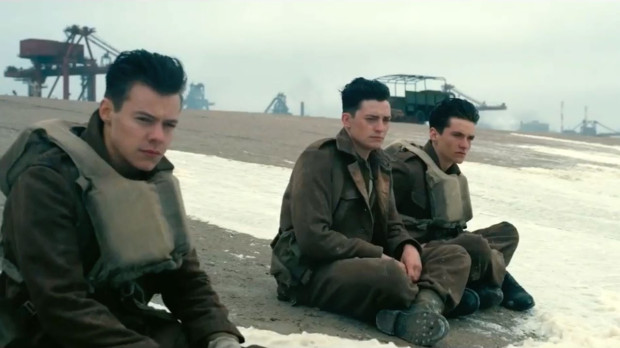
Harry Styles, Aneurin Barnard and Fionn Whitehead are three ordinary soldiers trying to get home in Christopher Nolan’s epic Dunkirk

Director: Christopher Nolan

Cast: Fionn Whitehead (Tommy), Tom Glynn-Carney (Peter Dawson), Jack Lowden (Collins), Harry Styles (Alex), Aneurin Barnard (Gibson), James D’Arcy (Colonel Winnant), Barry Keoghan (George Mills), Kenneth Branagh (Commander Bolton), Cillian Murphy (Shivering Soldier), Mark Rylance (Mr Dawson), Tom Hardy (Farrier)

“We must be very careful not to assign to this deliverance the attributes of a victory. Wars are not won by evacuations. But there was a victory inside this deliverance, which should be noted.” – Winston Churchill

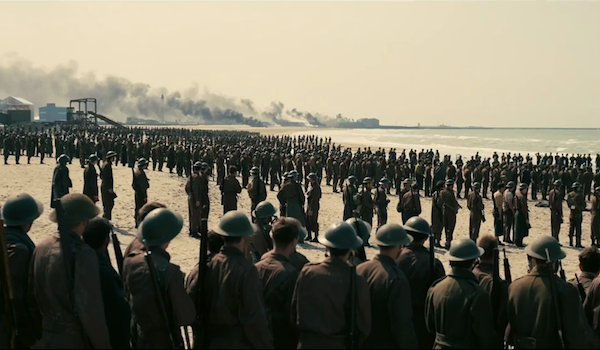
The evacuation of Dunkirk is a very British triumph. Beaten and encircled by the Germans, British forces were stranded in a small pocket around Dunkirk. The country looked certain to lose almost 400,000 men to death or imprisonment – the core of its professional army. The fact that almost 340,000 soldiers were evacuated was more than a triumph: it was almost a miracle. Christopher Nolan’s epic new film brings the triumph and adversity of this campaign to the big screen.

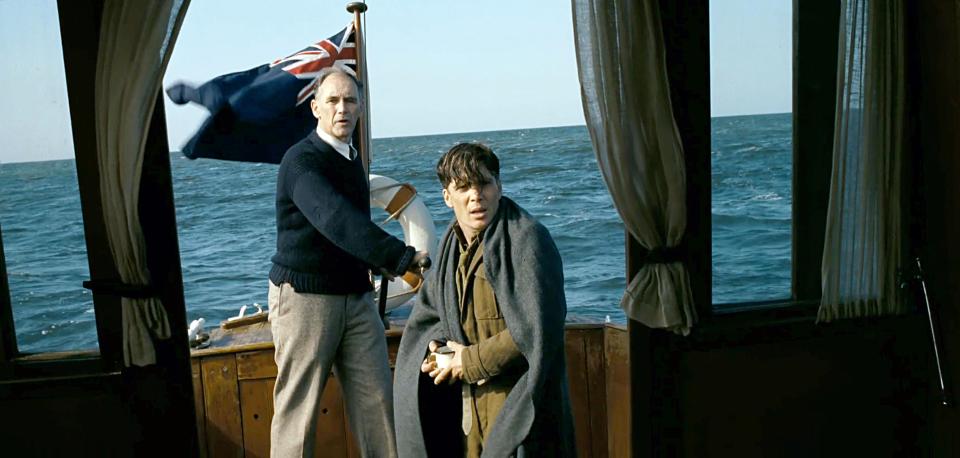
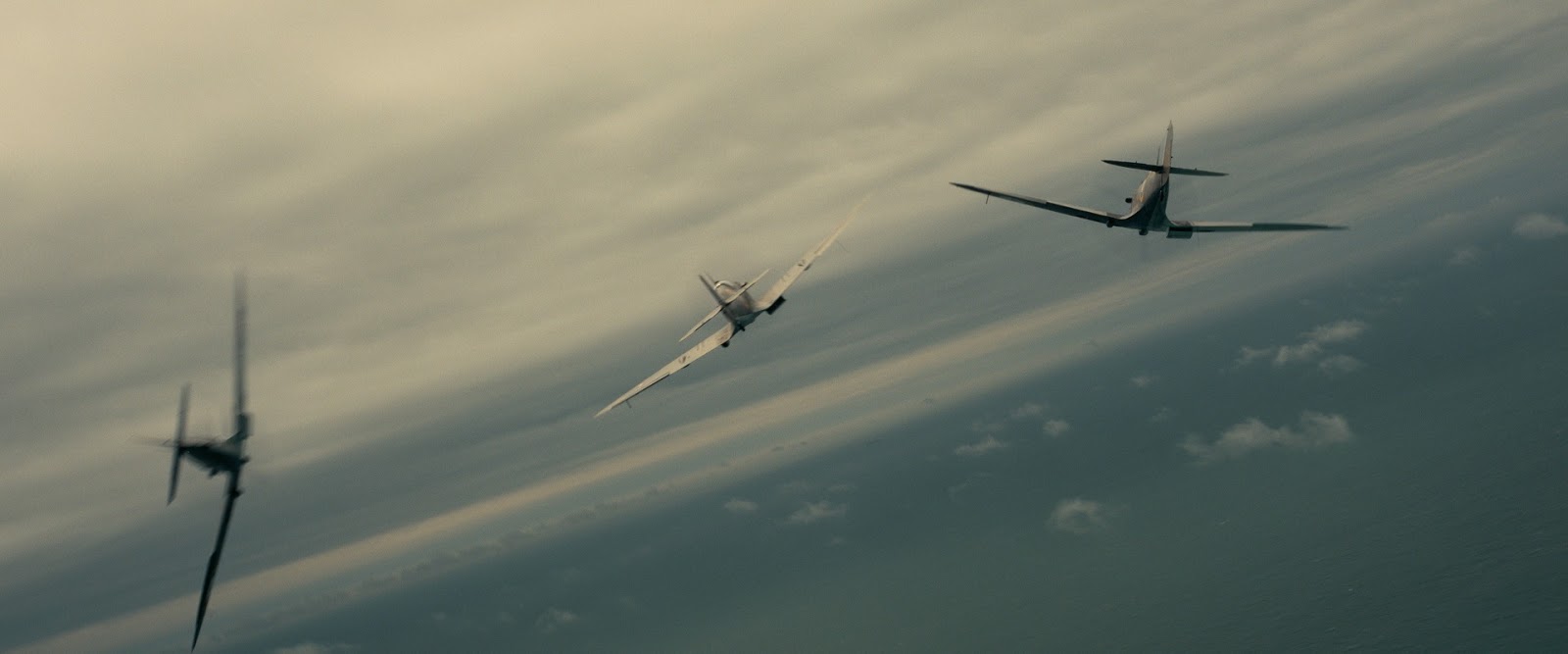
The action unfolds over a week around the evacuation of Dunkirk. On the beach Tommy (Fionn Whitehead), Gibson (Aneurin Barnard) and Alex (Harry Styles) are desperate to escape the chaos on the beach, where the evacuation is being managed from the one standing pier by Commander Bolton (Kenneth Branagh). On the sea, Mr Dawson (Mark Rylance) and his son Tom (Peter Dawson) head to Dunkirk in their small pleasure boat to help with the evacuation, picking up a traumatised soldier on the way (Cillian Murphy). In the air, Farrier (Tom Hardy) and Collins (Jack Lowden) fly a one-hour mission over Dunkirk to provide air support to the stranded soldiers.

As a director, Nolan’s calling cards are playing with narrative forms and timelines, while allowing personal stories play out on extremely grand canvases. Dunkirk feels like a summation of some kind of his career: its multi-layered timelines are gracefully and intelligently threaded together, and while the canvas is enormous, the human stories don’t get lost. The human interest running through the film is particularly impressive, as there is so little dialogue. It’s pretty close to “experience cinema” – it throws the audience into an immersive explosion of events, giving as much of an impression as it’s possible to give of the claustrophobia, tension and terror of being trapped on that beach.

The film-making is impeccable in creating this overbearing feeling. Hans Zimmer’s score thunders over the film, bearing down with a constant pressure and making excellent use of metronome ticking to keep hammering home the time pressure. Nolan brilliantly inverts scale in his filming to create a sense of claustrophobia – we constantly see sweeping shots of but the scale of our surroundings only forces home the seeming impossibility of what the British are trying to do. Individual soldiers seem tiny – how can one man possibly have a chance of escaping? It’s a brilliant mixture of sound and imagery to make the large seem small, the epic seem entrapping.

What Nolan does really well in this grand scale is to create a series of “ordinary soldier” characters. Despite the fact that we learn virtually nothing about them, these characters feel human and desperate. Again, they are such small, ordinary Everyman cogs in the giant machine of the army, that they become hugely relatable. It’s a hugely neat trick by Nolan, another brilliant inversion – just as he turns epic to claustrophobic, he turns ciphers into characters.

Recognising the need for balance between the overbearing impact of the Dunkirk beach sequences, the film allows a mix of story-telling and character types in its other two plotlines. So Mark Rylance’s boat captain voices much of the film’s humanitarianism, in a sequence that plays like a chamber piece – four people discussing duty and the impact of war in a confined space. Meanwhile Tom Hardy’s Spitfire pilot carries more of the traditional “war film” man-on-a-mission dynamics, engaging in a series of dog fights in the sky. Interweaving these stories offers not only relief to the audience, but also narrative contrast.

The interwoven storylines are also brilliantly done since they all take place in very different timespans. The plot at “the Mole” takes place over a week, “the sea” in one day, and “the sky” in one hour. Each of these timelines interlocks and unfolds in the film simultaneously, and characters move at points from one timeline to another.

Okay, writing it down, it sounds impossibly confusing and difficult to follow right? Who could keep track of all that? But the film is so brilliantly assembled that it always make perfect sense. Nolan uses several key markers – a boat, the fate of certain characters – to constantly allow us to see where we are in the story’s timeline. So we understand when we have moved from one timeline to another when we see a ship still on the beach that we’ve seen sinking elsewhere. This also increases the tension – we know at points what will happen before the characters do, because we’ve already seen the after-effects. Again, put it into words it sounds wanky and difficult to follow, but it really isn’t – and the film is put together with such confidence that it never feels the need to show off its narrative gymnastics. Nolan is confident enough to be clever without drawing our attention to it – a very difficult trick to pull off.

All this forceful story telling never prevents the story from also being at many points immensely moving and stirring. The arrival of the boats at Dunkirk is a genuine “lump in the throat” moment. The simple decency of Rylance’s boat captain gives a low-key impression of a very British sort of heroism, of quietly doing one’s duty while valuing every life and wearing your own grief lightly.

The film’s more action-based sequences are equally stirring and moving, because Nolan brilliantly establishes character with only a few brief notes. It’s made clear early on that Hardy’s pilot has only a limited fuel supply: every second he stays above Dunkirk protecting the men and ships below, he reduces his chances of getting home. It’s another sort of heroic self-sacrifice, and in a film that generally doesn’t shy away from showing the deadly consequences of war, Nolan is happy to give us some more traditional, fist-pumping heroics.

Nolan gets the maximum emotion from the more dialogue-heavy parts by hiring some terrific actors: Rylance, as mentioned is superb, and Cillian Murphy is very good as a shell shocked captain. Kenneth Branagh is perfect for conveying the weight of responsibility on the shoulders of the naval commander in charge of the evacuation. And elsewhere, Whitehead, Bernard and Styles all invest their ordinary Tommies with a great deal of emotion and empathy.

Dunkirk is a marvel of cinematic technique and accomplishment, which brings enough moral and emotional force to the drama to keep you engaged in the plights of its characters. You can marvel at the film making tour-de-force of its executions, but you never feel disengaged from it. It’s a marvellous film.

War for the Planet of the Apes (2017)


Andy Serkis goes to war as Ape Leader Caesar in the final entry in the new Planet of the Apes saga

Director: Matt Reeves

Cast: Andy Serkis (Caesar), Woody Harrelson (The Colonel), Steve Zahn (Bad Ape), Karin Konoval (Maurice), Terry Notary (Rocket), Ty Olsson (Red), Michael Adamthwaite (Luca), Toby Kebbell (Koba), Judy Greer (Cornelia), Sara Canning (Lake), Gabriel Chavarria (Preacher)

The Planet of the Apes trilogy of the past few years is so far superior to the original films (bar the first) that even decent efforts still stand tall over their forebears. War isn’t quite the classic you want, but it is a worthy companion to the two previous films, and sets a tough act to follow for (inevitable) sequels and remakes.

Caesar (Andy Serkis) is nearing the end of a long war with humanity, desperate for peace to allow the apes to set up their own home. But after a night attack by demagogue rogue soldier The Colonel (Woody Harrelson) leaves Caesar suffering a huge personal loss, he finally succumbs to his rage and anger and goes on a quest for vengeance, accompanied only by his oldest and closest companions. Along the way he discovers the doom of mankind has already begun, with a virus slowly robbing them of the power of speech and reason.

It’s a slight shame that the final film in an excellent trilogy isn’t quite the knock-out I hoped it would be. It’s a good film, but not a great one. It won’t exactly leave anyone disappointed, but it doesn’t quite send the entire trilogy out on as triumphant a high as hoped. Part of the problem is that I just found it a slightly more straightforward, less thematically rich than the other films. It’s more of a simple “revenge” story, married up with a host of film genre references from Apocalypse Now to Westerns to old-school Hollywood Biblical epics.

The title suggests a bit more action than the film actually offers. The war, such as it is, turns out to be almost a macguffin – a feud between rival groups of humans rather than an ape-human smackdown. It’s actually the most internalised conflict yet – the war to decide the sort of planet the apes will inherit is in the soul of the sort of leader Caesar will decide to be. Like all revenge dramas around sympathetic characters, the big question is will our hero decide to lay aside vengeance – to be the better man. It’s a tribute to the film that the answer is as difficult and unclear-cut as you expect the question would be.

As this film, more than any other, is ape-centric (there are at best three human characters), it rests even more than on the strength of Serkis’ acting. It feels unoriginal to say it now, but what Serkis has achieved is astonishing. He has turned a special effect with an actor behind it into a living, breathing character – someone you never doubt is real. His performance is a complex internalisation, as far away from flashy as you can get – it’s all about the eyes, and Serkis’ shine with life.

It’s lucky that Serkis is  here, as he elevates the entire film to a higher level, where otherwise it can occasionally  feel like a careful assembly of bits and pieces of other films. Caesar and gang’s journey through the snowy depths of North America looks and feels like a spaghetti western. By the end of the film, Caesar feels like a Moses figure leading his people to the promised land. The biggest influence by far however is Apocalypse Now. The soldiers all feel like angry Vietnamese war vets, the opening battles through the forest have a definite air of the jungle, while Woody Harrelson’s slightly underpowered villain is so reminiscent of Kurtz, he even does a Brando impersonation at points. The structure of the film even matches Heart of Darkness, Caesar on a trek “down river” to confront a rogue soldier turned cult leader.

It’s not exactly unique and recycles much of its content, but Reeves is still a damn fine director and not only shoots with dynamism, but also ensures there is heart and depth behind everything. There is a subtle understory of ape civil war, with the followers of Koba now serving the humans out of an “enemy of my enemy” mentality. Making the Colonel the leader of a maniacal cult also makes him a good contrast with Caesar’s standing with the apes. At least two characters develop in ways far different than you are led to expect, due to clever playing with the viewer’s expectations of how movies are “supposed” to pan out.

So why doesn’t it all quite work as well? If it’s so full of good stuff, why doesn’t it sing like the others? Well maybe it’s a little too long. Maybe the Colonel isn’t quite a good enough antagonist for Caesar. Maybe the grim mood and focus on the revenge arc mean some of the thematic richness of the previous films has been lost. Maybe there just isn’t quite enough “humanity” in this story of apes. It’s hard to put your finger on – but it’s just not quite as good as the others, not quite as memorable. It’s a strong well-made film, very well directed and superbly acted by Serkis and the other motion capture artists – but it’s not quite the classic it feels like it could be. You’ll be slightly unsatisfied but find it hard to work out exactly why.

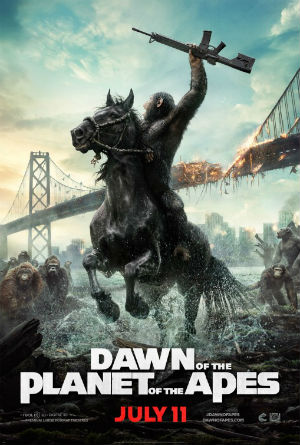
Dawn of the Planet of the Apes (2014)


Andy Serkis becomes the Ape Caesar in a triumphal marriage of performance and special effects

Director: Matt Reeves

Cast: Andy Serkis (Caesar), Toby Kebbell (Koba), Jason Clarke (Malcolm), Gary Oldman (Dreyfus), Keri Russell (Ellie), Kodi Smit-McPhee (Alexander), Kirk Acevedo (Carver), Judy Greer (Cornelia), Terry Notary (Rocket), Karin Konoval (Maurice)

In 2011, Rise of the Planet of the Apes was another attempt to relaunch the money-spinning ape vs. human franchise. Unlike Tim Burton’s disastrous 2001 effort, it took a stance that felt truly unique. Sure, it still felt the need to reference back to the original film in places, but it was a terrific piece of story-telling. Anticipation was high for this sequel – and it met those expectations.

Ten years after the outbreak of a virus that has decimated the human race, the apes have built their own community in the forests near San Francisco, led by Caesar (Andy Serkis). A human party, led by Malcolm (Jason Clarke), enters the forest looking to restart a hydroelectric dam to supply power to the human’s San Francisco community. As the two communities collide, Caesar and Malcolm must work out a truce, despite the doubts of human leader Dreyfus (Gary Oldman) and Caesar’s lieutenant, former lab-chimp Koba (Toby Kebbell).

Dawn is an intelligent and visceral piece of film-making, which enrichens the first film in the series, as well as offering a surprisingly deep analysis of human (and ape) nature. Marry this  up with some quite astonishing special effects, and staggering work from the actors creating the apes through motion capture, and you have a hugely rich science fiction film that helps to cement this trilogy as the finest version of the Apes story so far. It’s also damn good fun.

Even more than the first film, Dawn places apes front-and-centre. The film is book-ended with close up shots of Caesar’s eyes, the determination and resolve in them springing from very different causes. The questioning of the nature of humanity revolves around Caesar – the leader balancing the urge to protect his own people against a willingness to support the needs of his people’s only potential threat. Caesar is the most humanitarian character– yet his determination to view other apes as does himself prevents him from seeing Koba’s treachery. It’s his own generosity that is his Achilles heel.

Andy Serkis, the Master of Motion Capture, has mastered this art like few other actors, but his performance as Caesar is his triumph. The degree of emotion he is able to communicate is astounding, while his physicality is extraordinary – it’s a perfect marriage of ape traits and human characteristics. It’s a triumph as well of special effects, but you quickly forget this and embrace the character you are watching. Serkis gives Caesar a deep hinterland of warmth and emotion, a desperation to protect what he has built, touched with a hint of blindness to the reactions his dismissal of Koba’s concerns will have on someone so damaged.

What’s interesting is that, although the film swings heavily in favour of the Apes, it’s the humans who become the victims of aggression, and the humans who are the most open (or desperate) to negotiation and co-operation. A simpler film would have turned Gary Oldman’s Dreyfus into a despotic counterpart to the traumatised Koba. Instead, Dreyfus proves surprisingly open to negotiation, demonstrates great affection for his followers, weeps ecstatically over finally being able to turn his tablet back on and look at photos of his family and only resorts to drastic measures after the human colony seems doomed.

The villain of the piece is Koba (remarkable work from Toby Kebbell). The film, though offering many indicators of Koba’s ruthless lack of regard for any life but his own, gives us reasons (even though these are sometimes stated directly for his feelings and the trauma that lie underneath them. The film doesn’t short change us on Koba’s obvious bravery in battle or his ability to inspire troops. Koba’s inability to adjust his thinking (unlike any other character in the film) leads to the violence. Just as Caesar’s urge to see all apes as meeting his own standards allows violence to grow around him, so Koba’s urge to judge all humans by the standards he has given them leads him to sacrifice countless ape lives in a bloody attack.

These themes of divided loyalty and the damage our own urges (for both good and evil) play out in a cracking storyline, packed to the rafters with action, shot with a confidence and skill by Matt Reeves. Despite being a film that always feels about larger themes, it wears this rather lightly, and offers more than enough popcorn thrills to please any Ape action fan. Koba’s assault on the human stronghold is both grippingly exciting, but also unbearably tense – the film embraces the grim sacrifice and slaughter of war. The final confrontation between Caesar and Koba is shot with a giddying, vertigo-inducing sharpness.

The ape effects are, it goes without saying, extraordinary. These are expressive, living, breathing characters – a brilliant meeting of some wonderful acting and brilliant special effects. Could you imagine a few years ago a film being anchored by a special effect ape played by motion capture? You quickly forget that they are not ‘real’ and accept them as genuine characters. Even more so than Rise, Caesar and the apes are front-of-centre and this is Caesar’s story. Serkis is of course a huge part of this – his influence and dedication to the motion capture and ape portrayal is superb.

Dawn of the Planet of the Apes is a terrific and thought provoking epic film, one that deepens, darkens and enriches the previous film and leaves an audience with not only a lot to consider but also highly thrilled. Unlike the previous film it doesn’t shoe-horn in weak references to earlier films, but concentrates on telling a terrific and character-led story. It’s another terrific entry into a series that feels like it could become one of the great science fiction trilogies.

Rogue One: A Star Wars Story (2016)


The characters of Rogue One. I struggle to remember their Dingly-Dang sci-fi names.

Director: Gareth Edwards (Tony Gilroy)

Cast: Felicity Jones (Jyn Erso), Diego Luna (Cassian Andor), Ben Mendelsohn (Director Krennic), Donnie Yen (Chirrut Imwe), Mads Mikkelsen (Galen Erso), Alan Tudyk (K-2SO), Riz Ahmed (Bohdi Rook), Jiang Wen (Baze Malbus), Forest Whitaker (Saw Gerrera), Genevieve O’Reilly (Mon Mothma), Jimmy Smits (Bail Organa), Guy Henry (Grand Moff Tarkin), Alistair Petrie (General Draven)

When Disney got hold of the complete rights for Star Wars, they were motivated by one thing above all: making a shitload of cash. In that goal, they’ve been very, very successful. Rogue One fills out (pads out) the story of how the Rebels got hold of the Death Star plans, something the original film (correctly?) reckoned could be covered in a few lines of dialogue. Anyway, for complex, muddily explained reasons, the rebels needs Jyn Erso (Felicity Jones), daughter of chief designer on the Death Star Galen (Mads Mikkelsen), to rescue a pilot from a rogue general to get a message from her father. Or something. Anyway, things eventually lead to a major space battle as our heroes try to steal the plans from a giant computer database.

Rogue One is hugely popular. You’ll go a long way before you meet someone willing to say a bad word about it. It’s been hailed as a far superior dip into the franchise ocean than JJ Abrams’ The Force Awakens. This is inexplicable to me. I genuinely can’t understand it. As far as I can tell, Rogue One is little more than a fair to middling action film, hugely reliant on ramming in as many references and easter eggs from previous films as it can, rather than actually doing anything new or unique with the franchise. 

For me it’s a sprawling, rather dull film with no depth or patience. The first hour is genuinely quite boring, with each over-designed location blending into the next. The whole film seems designed to require as little attention as possible: short scenes, planet to planet, each having little real impact on the next emotionally. The battles are designed and shot like things intended to be cut up into YouTube clips. No-one talks during the fights, we rarely learn anything about characters during the prolonged action – instead it’s a series of moments, straining at the leash to be cool, with personal sacrifices determined by plot requirements rather than by natural character growth. 

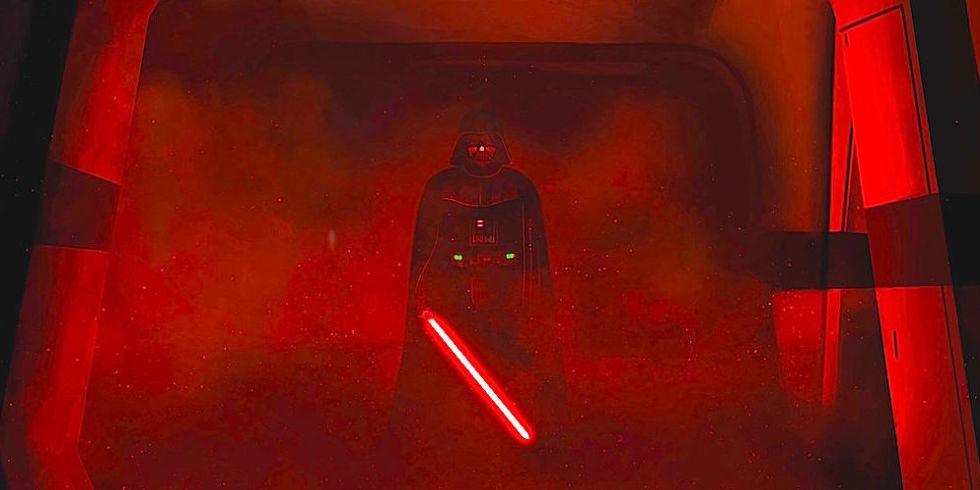
Watching parts of it you can enjoy the moments: a blind man taking out Stormtroopers, or Darth Vader cutting down rebels. But there is little to tie these moments together. Plot and characterisation are treated in the same chunked way – events grind to a halt so Mads Mikkelson can tell us what happens next, or Cassian can bluntly talk about how being a rebel is tough on the nerves. In the original Star Wars, plot, character and action were woven together so we learned about all three together. Here they are silos, with action the focus. It feels like a film made for YouTube, more interested in pop culture references with only the flimsiest story propping it up, designed to be spliced up online.

Darth Vader lets rip in a section that seems designed as a YouTube moment of the future

Now the lead character, Jyn Erso. I don’t understand this character. Who is she? What is it she actually wants? For the first hour or so of the film she makes no decisions at all, but does what a series of older male characters tell her to do. There is nothing in the film that allows us to get to know her. Her actions aren’t dictated by character, or even logic, she simply shuttles around the carousel of ever-changing planets whenever the plot needs her to, mouthing whatever sentiments the film needs in order to move on. The film needs her to be a disaffected criminal? She is. The film needs her to be a distraught daddy’s girl? There we go. The film needs her conversion into a rebel freedom fighter? Boom. What does she feel about this? What awakes her idealism, and converts her from criminal to self-sacrificing hero? Nobody knows, the film doesn’t care. It doesn’t help that Felicity Jones’ headgirlish primness is a total mismatch for a gritty, tough-as-nails fighter from the wrong-end-of-the-tracks.

There are many people in this film, but precious few characters. It’s quite damning that the person who makes the biggest impact isn’t a person at all but a robot – and K-2SO is basically a walking cynical punchline, a battle-ready C3PO. Diego Luna’s Cassian is so thinly sketched it’s hard to invest in him at all: the film has no interest in character development so we are bluntly told his characteristics in ham-fisted dialogue. He has a vague speech about how he’s Seen Bad Things, and that’s deemed sufficient to explain all his actions. The worst is Riz Ahmed’s pilot, whose motivations are so unaddressed he spits out some final words to supply his motivation just as he snuffs it. Donnie Yen and Jiang Wen are little more than a collection of cool sounding quirks – Blind One, and Blind One’s Friend. Can you even remember their names? 

On the plus side, Ben Mendelsohn is pretty good as an ambitious Imperial officer edging his way up the greasy pole – most of the more interesting dialogue scenes feature Death Star office politics. Mads Mikkelson mines every inch of humanity and compassion from his role. At the other end of the spectrum, an unrestrained Forest Whitaker lets rip as a plot mouthpiece, delivered in his most overripe manner. (There’s some kind of backstory to his relationship with Jyn, but the film never bothers to go into this, because that time is better spent with Whitaker spouting bland, faux-epic, lines like “Save the rebellion. Save the dream”, round mouthfuls of scenery.)

There has been a lot of discussion of the digital recreation of Peter Cushing as Grand Moff Tarkin – I’ve no real moral problem with it (lord knows, a glance at his CV tells you Cushing would probably have loved to have been in this film), and Guy Henry does a pretty good vocal recreation of Cushing. It looks a little odd the more you watch it – it’s probably going to date the film quite badly in ten years time – with more than a hint of the “uncanny valley” in Tarkin’s face. It makes sense, though, including the character in the film – and at least we get some characterisation and motivation.

Edward’s visual ability allows him to film his toy collection in a way that at least feels a bit fresh, but it’s a film made by a fanboy, more interested in getting as many references from the past in than creating something new. Edwards rams in everything from Blue Milk to AT-ATs. Now there is a certain pleasure in spotting this stuff, don’t get me wrong. But will it reward future viewing? The final space battle sequence might as well be a child filming smashing his toys together.

My point is, remove all the vast amount of Star Wars ephemera from this, and what do you have left? Once you’ve exhausted the pleasure of seeing that bloke Obi-Wan cuts the arm off in the bar in the first film, or you’re no longer excited by admiring the recreation of the Rebels’ base, what is there left in the film for you to enjoy? Imagine this was a stand-alone story – what would really make you come back? It’s so shrunken and dependent on Star Wars that it stops almost exactly 5 minutes before Star Wars starts – and, I would argue, means the start of that film makes much less sense.

That’s the final problem – for all the talk of Star Wars being a huge universe, this film only stresses how small it is, how reliant it is on events that have already happened or spinning its plotlines off from references in other films. No matter where we go, the same people keep popping up, the same beats keep getting hit. The film is daring, I suppose, in killing off nearly the entire cast over the course of the film – but these characters have been so poorly developed that their deaths lack any impact. It’s a film overwhelmingly fascinated by surface and fan-wanking over the old films, than showing anything new. 

Now I know you could level some of these charges against The Force Awakens – but that was a film with engaging characters and fresh, enjoyable dialogue that introduced a few new concepts for the films to go forward with. Within moments of their first appearances, you knew what kind of person Rey was (bold, determined, wistful, searching) or Finn (conscience-stricken, inventive, desperate) – hell the dinky robot had more character than the cardboard cutouts here. The internet obsession with shipping Finn & Po shows how much these characters came alive. Can you imagine anyone spinning out theories of backstory or subtext about any of the people here? No, because they’re not people, they’re plot devices. 

If a truly inventive director had got hold of this material, we could have ended up with something that felt really fresh. Instead we have something that is basically juvenile and dim: front row seats at a child’s game that jumps from set-piece to set-piece with no interest in weaving them together. Possibly only the 6th best Star Wars film.

Eye in the Sky (2015)


The great Alan Rickman is an exasperated General, in drone-strike moral fable Eye in the Sky

Director: Gavin Hood

Cast: Helen Mirren (Colonel Katherine Powell), Aaron Paul (Lt. Steve Watts), Alan Rickman (Lt. General Frank Benson), Barkhad Abdi (Jama Farah), Jeremy Northam (Brian Woodale), Iain Glen (Foreign Secretary), Monica Dolan (Angela Northman), Richard McCabe (George Matheson), Phoebe Fox (Carrie Gershon), Babou Ceesay (Sgt. Mushtz Saddiq), John Heffernan (Major Howard Webb)

As Shakespeare said, sometimes we are urged: “to do a great right, do a little wrong”. Eye in the Sky is a film about that dilemma. Numbers 2, 4 and 5 on the terrorist “Most Wanted” list are meeting in a house in Kenya. They are preparing suicide bombers. A series of attacks could be minutes away. A drone strike will probably save hundreds of lives. Seems obvious doesn’t it? Unfortunately, sitting in the fatality zone is an innocent young girl, just trying to sell bread. Take out the bombers and you’ll save dozens of other children – but you’ll almost certainly kill this one child.

Your initial reaction to this sort of situation would probably be “thank goodness that’s not my decision”. Problem is, you get the feeling many of our elective representatives feel the same: as the situation escalates (from capture, to kill, to controlled strike, to a certainty of civilian casualties) so does the buck-passing, from politician to politician all unwilling to make a call.

Guy Hibbert’s well researched and thought-provoking script combined with Gavin Hood’s taut direction make this a gripping conversation thriller about the impossibility of moral debates. Hibbert’s script brilliantly piles moral debate on moral debate – just as we accept the desirability of one action, the circumstances change with bewildering speed. Everything, from a change of travel plans to battery failure on a vital piece of equipment, amps up the pressure and makes the situation more morally unpalatable.

The buck-passing becomes almost a dark farce in this expert script. A put-upon civil servant is repeatedly sent to communicate with a string of senior leaders, from the Foreign Secretary to the Prime Minister. Later a crucial decision takes place over a conference call, with an ever-expanding series of international attendees. It’s like a deadly serious Yes, Minister, with Jeremy Northam’s junior minister a flummoxed and vacillating Jim Hacker.

The military seems equally divided – senior officers focus on the big picture, aware of the evil they must do but seeing it as a necessity to prevent worse acts, but the junior ranks actually executing the strikes push back with increasing distress. Mirren’s colonel pressures a sergeant into effectively falsifying a fatality prediction for the girl, to push her superiors into authorising the strike on this vital target. A shallower film would have played great play of this. But Hood and Hibbert never take that easy route.

The film also explores distance conflict. Nearly all the participants are based thousands of miles away, watching on screens and pushing buttons. Rickman’s General has a knock-out final speech about his first-hand experiences of the horror of suicide bombings – and compares this to the moral objections of the greatest opponent of military action in the film, who has watched it all play out with “coffee and biscuits”. Remote warfare is neither in itself good or bad – and those objecting to actions are not angels, just as those pushing for action have their own moral reasons for doing so, and the film demonstrates that amidst all this, the “right answer” (if there is such a thing) can be almost impossible to identify.

Conversation thrillers like this are dependent on the quality of the actors – so it’s lucky we’ve got a great cast here. A gimlet-eyed Helen Mirren is as tough as you’ve seen her as the field commander who suppresses all doubt in pursuit of the greater good. In his last on-screen role, Alan Rickman gives one of his best performances as a wry, humane general who has come to terms with the hideous moral cost soldiers have to bear. His increased exasperation at the procrastination of his political masters adds some black comedy, but he also gives the character a wonderful humanity (a prologue in which he struggles to buy his grandchild a present is not only wonderfully witty, but humanises the character immediately).

Few actors do tortured conscience under the surface better than Aaron Paul – and his drone pilot turned reluctant killer provides much of the moral force of the film. Paul’s sensitive and anguished divide between following orders and living with the knowledge he’s wilfully condemning a child to death is beautifully done. Barkhard Abdi grounds his field operative not only with much of the film’s more conventional derring-do, but also layers the character with dedication and selflessness.

Eye in the Sky is a marvellous piece of tense and layered film-making. It makes high drama out of moral quandaries, and really makes us pause to stop and think about the impact of our decisions both in a wider context, and a very painful immediate one. The professional military figures – even Mirren’s cold Colonel Powell – are motivated by a painful familiarity with acceptable loss, rather than gung-ho aggression. The politicians struggle to reach a decision not only through reluctance, but with empathy for their potential victims. It overeggs the pudding with its final shots of the young girl who has unwittingly been at the centre of a major international incident, but other than that it hardly puts a foot wrong.

In Which We Serve (1942)


Noel Coward takes command in stirring British wartime drama In Which We Serve

Director: Noël Coward, David Lean

Cast: Noël Coward (Captain E.V. Kinross), Bernard Miles (CPO Walter Hardy), John Mills (Shorty Blake), Celia Johnson (Alix Kinross), Joyce Carey (Kath Hardy), Kay Walsh (Freda Lewis), Michael Wilding (Flags), Leslie Dwyer (Parkinson), James Donald (Doc), Philip Friend (Torps), Frederick Piper (Edgecombe), Richard Attenborough (Young Stoker)

Only the British would make a wartime propaganda film about a sunk ship where over half the crew gets killed (the Navy nicknamed the film In Which We Sink). It says something about this endearingly muddle-headed country that the stories that appeal most to us are those that celebrate our struggles against adversity. It was filmed in the aftermath of the Battle of Britain but before the Battle of El Alamein – the British considered themselves safe from invasion, but still saw victory was a long way off. In that climate, the film’s attitude of knuckling down and doing your duty to achieve a distant dream must have resounded profoundly with millions of people.

Based on the early war career of Louis Mountbatten, this “story of a ship” revolves around the Torin, a destroyer captained by E.V Kinross (Noël Coward). The ship is dive bombed and sunk by the Luftwaffe, and the captain and survivors cling to a lifeboat, waiting for rescue. While they wait, the crew remember their lives back home in flashback – in particular the captain, CPO Hardy (Bernard Miles), and able seaman ‘Shorty’ Blake (John Mills). Can you imagine an American propaganda film with a plot like that?

It’s easy to mock a film like In Which We Serve today. Its stiff-upper-lipped, duty-led, hierarchical world has been lampooned countless times since Peter Cook’s pitch-perfect Bernard Miles impersonation in Beyond the Fringe. (Early in the film, watching Kinross at home, I remembered Eddie Izzard’s spoof: “Don’t go to the war Daddy / I must they won’t start without me…”). The first 30 minutes, with its clipped dialogue, fast-paced delivery and stiff-backed, formal playing style takes a while to tune into. But it’s worth it, as the establishment of this carefully controlled exterior is what makes the later sections, with strong emotions just below the surface, so moving.

Coward was of course primarily a man of the theatre, and this was his only original film script. His collaboration with experienced film-makers produced a stirring, skilfully crafted epic that reflects on several levels of British rank and society, and not only shows us “why we fight” but also “why we should fight”. Coward is credited as the principal director, but much of the direction (and the film’s skilfully constructed structure in the editing suite) comes from his co-director David Lean, here making his directing debut.

Lean’s expressive hand is clear in the brilliantly composed sequences on board the ship itself, both in action and at ease. An example of the fluid editing, is where the camera follows the progression of a missile through the ship, passed from crew member to crew member, each given some brief moments to show their quiet determination and resolve. Similarly, the sequences on the drifting lifeboat have a claustrophobic intensity about them. The flashbacks are carefully placed to allow our understanding of the characters and their backgrounds to grow each time.

The scenes back home are remarkable for their dramatic simplicity. Coward understood the stories that move are those of normal people. The sailors’ home lives – from the captain down – are domestic, calm, happy and above all normal. Very little happens: one sailor gets married, the captain plays with his children, the Petty Officer teases his wife. This regularity makes their courage under fire all the more stirring: truly ordinary people doing the extraordinary. Some critics have called Coward’s attitude to the working classes snobbish, but there is no disdain at all here – instead there’s a paternal admiration with genuine warmth.

This warmth extends even to a stoker who cuts and runs during action. It would be easy to use this moment to amplify the braveness of the others. Instead, in a moving speech to the men, the captain takes the blame onto himself for not supporting the young man earlier. The mortified stoker, in a wonderful little scene, struggles to express his shame to a barmaid, not in anger but in a quiet, confused guilt. The film never condemns or judges him – he is quietly shown returning to his duties. There is no explicit moment of redemption, just a sense of a man who has let himself down, resolving quietly to do better.

The opening sequence covers the lifespan of the ship – from its construction and commissioning, to its launch, early actions and sinking, with the implication of a nation coming together. Later scenes mix theatrical touches with documentary realism. A marvellous sequence covers Dunkirk, which feels incredibly real but also showcases a few wonderful flourishes, from Kinross’ speech praising the soldiers’ bravery to Shorty’s affectionately wry remark on the rivalry between soldiers and sailors. The final sequence brings us full circle, with the construction and launch of another battleship under Kinross’ command. We may lose a battle, but we are never beaten.

Coward takes on the lead role. To be honest, it’s a striking piece of miscasting that somehow works out – Noël Coward is no-one’s idea of a hard-nosed naval veteran. He lacks the range in particular for his scenes of domestic life, coming across as too detached and distant – particularly noticeable since his wife is played brilliantly by the radiant Celia Johnson, conveying layers of emotion under a controlled exterior. But, his quiet, buttoned-up professionalism and clipped Englishness work perfectly for the quietly emotional speeches he delivers. These he nails perfectly, his voice just giving the hint of cracking. It’s a curiously stagy, and in no way naturalistic, performance – but as a representation of a particular type of Britishness it’s perfect.

And Kinross is just the sort of man you would follow to the end – distant and authoritarian, but just and warm. Rescued from the ocean, he goes immediately to his men, moving quietly from wounded man to wounded man, collecting addresses, issuing quiet words of unexpressive comfort (“I’ll tell her you did your duty”). His closing speech (heavily based on Mountbatten’s own address to his crew) throbs with emotion just below the surface as he thanks his men – and it’s hard not to feel it as he shakes the hand of each man and is overcome with emotion, he can only nod a brief acknowledgement to his officers. Lean trains the camera on his back, as we see his shoulders seem to swell to support the pride, respect and love for his men. It’s peculiarly British, but this unspoken affection is hugely powerful.

The more naturalistic performances from the rest of the cast help to anchor the film – and also allow Coward’s more stylised acting to work effectively. John Mills is wonderful as Gunner “Shorty” Blake, a plucky, kind and witty man. He’s just the sort of unexpressive hero we’d all like to be, and his homespun love story with Kay Walsh is genuinely engaging and moving for its everyday normality. Mills also carries much of the film’s humour.

It’s the final sections of the film that really, really work. I can’t get through the scenes of the surviving crew being saved, the quiet courage of the dying men and the austere warmth of the captain, the speeches that burst with pride and respect under a reserved veneer, without feeling a lump in the throat. It’s a masterful piece of quietly powerful film-making, that pays off precisely because so much of what has gone before has been so normal. The fact that we’ve seen the lives of these people – and can see what, in their quiet way, they are fighting for – I found increasingly moving.

In Which We Serve is a wonderful piece of film-making, very well written by Coward and strongly directed (largely) by Lean. Coward himself, in the lead role, is far better at the speeches than as either a captain or husband, but the rest of the cast is excellent with Mills and Johnson both outstanding. It’s truly the stuff of spoofery in many ways today, but tune yourself up to the accents and the repressed Britishness and this is a heartfelt and deeply moving film. Perhaps one of the finest propaganda films you’ll ever see – and still so very British.

Battle Los Angeles (2011)


The aliens are coming! Get ready to fight! High-octane nonsense in Battle Los Angeles

Director: Jonathan Liebesman

Cast: Aaron Eckhart (Staff Sgt. Michael Nantz), Michelle Rodriguez (TSgt Elena Santos), Ramon Rodriguez (Lt William Martinez), Bridget Moynahan (Michele), Ne-Yo (Cpl Kevin J. “Specks” Harris), Michael Peña (Joe Rincon), Lucas Till (Cpl Scott Grayston), Adetokumboh M’Cormack (HM3 Jibril A. “Doc” Adukwu)

We are not alone, and the visitors do not come in peace. But then in films like this they rarely do. They don’t even want to be taken to our leaders. They just want to kill us. An alien invasion strikes, and Los Angeles is one of several cities on the frontline against the seemingly indestructible alien hordes. Staff Sgt. Michael Nantz (Aaron Eckhart), a veteran whom many blame for leading members of his platoon to their deaths on his last tour, is hurriedly reassigned to a platoon of fresh recruits and sent into the city to rescue a group of civilians. But they quickly find themselves trapped behind enemy lines, fighting a rear-guard action against the invaders.

Battle Los Angeles has received little love from the critics. It’s not hard to see why. The characters (such as they are) are a collection of ill-defined military types, who give voice only to the purest of clichés. Literally nothing in it is new or original, with Liebesman combining the offcuts of Saving Private Ryan, Black Hawk Down and District 9 into an alien urban shoot-‘em-up cocktail. The plot is so predictable it could be comfortably guessed in advance with only a brief description of the characters. Will Aaron Eckhart’s Distant-but-Dedicated-Haunted-Sergeant win the respect and love of his men? You betcha.

So why, despite this, did I actually quite enjoy this film? Possibly because it has no pretensions at all but solely sets out to entertain. It presents its clichés with such steel-jawed commitment, it makes them fairly entertaining. It has more heart in its affection for its staple characters than a host of other, bigger blockbusters and certainly more fun. It’s a short and high-energy ride. Despite its Michael Bay-ish, fetishistic love for the military, it’s not afraid to present the marines suffering from fear and anxiety. It’s a simple, unbloated story. Sure it’s not very good at all, but it’s not offensively bad, and catch it in the right mood and you’ll enjoy its corny heroics and “man on a mission” dynamic.

Part of this probably comes from Aaron Eckhart’s acting, which is at least several degrees better than the movie deserves. Replace him with an action lunk and it would slip into militaristic tedium, but Eckhart gives his performance a certain humanity – and inspires, I think, some decent, realistic work from his fellow actors. They more than service the “Men/Women gotta do” structure – and rather winningly the film shows all the characters as competent and all willing to go the distance to help each other.

So we get a decent, B-movie cutting of a modern war film, with the frame full of bangs, crashes and chaos. Sure, many of the characters remain indistinguishable and the plot is nothing at all to write home about, but there is an unabashed, unpretentious simplicity about the film I found strangely winning. Liebesman is no artist, but he is a solid craftsman and while he lacks any originality, he does have a schlocky sense of fun that really works here.

It’s not fit to lace the boots of any of the films it’s ripping off (you can chuck in Independence Day, Aliens and almost any war film made this century) but it’s perfectly content with being a bootroom reserve. It wants to entertain you: sit back and let it do so and it probably will. Critical thinking off!