Category: War film

Paths of Glory (1957)

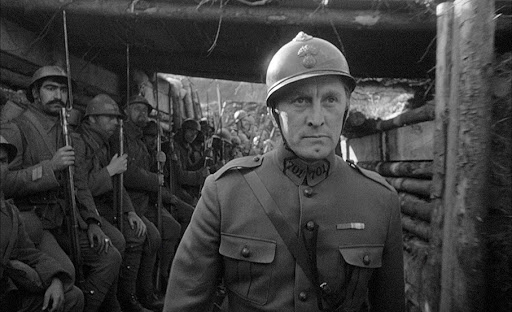
Kirk Douglas leads men into pointless battle in Kubrick’s Paths of Glory

Director: Stanley Kubrick

Cast: Kirk Douglas (Colonel Dax), Ralph Meeker (Cpl Philippe Paris), Adolphe Menjou (Major General Georges Broulard), George Macready (Brigadier General Paul Mireau), Wayne Morris (Lt Roget), Richard Anderson (Major Saint-Auban), Joe Turkel (Pvt Pierre Arnaud), Timothy Carey (Pvt  Maurice Ferol), Emile Meyer (Father Duprée), Bert Freed (Sgt Boulanger), Susanne Christian (German singer)

Kubrick’s fourth film is one that often gets overlooked when running over his CV – and it’s had less cultural impact than, say, A Clockwork Orange, 2001 or The Shining – but out of all of his films (except maybe The Shining) it’s the one I’ve come back to the most often, and is certainly his first stone-cold classic. This Word War One tragedy simmers with anti-war sentiment, and it’s so beautifully made and assembled you can see its influence in films right up to 1917.

In 1916 the war is bogged down into trench warfare. Command wants results, an action they can point to, so General Broulard (Adolphe Menjou) is sent by the General Staff to instruct General Mireau (George Macready) to launch an attack on a well defended German position called “the Anthill”. Mireau says any attack would be suicide – until the prospect of his promotion being directly linked to it is mentioned, at which point he becomes the attack’s most passionate advocate. Mireau passes the order onto regiment commander Colonel Dax (Kirk Douglas), who protests that the attack is pointless, but is ordered to lead it or be relieved of his command. The attack is a costly farce, and the humiliated Mireau (with Broulard’s tacit agreement) demands a blood sacrifice – one man from each company will be placed on trial for cowardice and shot as an example for the whole French army. Dax deplores this injustice – but with the administrative meat-grinder as deadly as the one on the front, what hope does he have?

Kubrick believed passionately in the project but also needed a commercial hit in order to bolster his career. So he recruited Kirk Douglas to get the funding – Douglas took a third of the film’s budget as his salary, so it wasn’t all charity – and he rewrote the ending of the book to allow Dax to come up with a last minute solution to get the soldiers off. Douglas, to his credit, was having none of that and demanded a rewrite that restored the book’s original bleak ending. 

So it’s largely thanks to Douglas we get the shape of the film that we end up with – but it’s clear that it’s Kubrick’s genius that makes it the film it is. Actor and director were a perfect combination here, so much so that Douglas got Kubrick on board to direct Spartacus (an unhappy experience for them both). But Paths of Glory was where both actor and director were working in perfect partnership, both pushing the other to give of their very best. Dax is the perfect Douglas role – decent, intelligent, well-spoken, passionate, a natural leader, but the film undermines all this with his ineffectiveness. Each of his crusades goes wrong, and he fails at every goal he sets himself. Douglas brilliantly captures both sides of this in his generously low-key but committed performance.

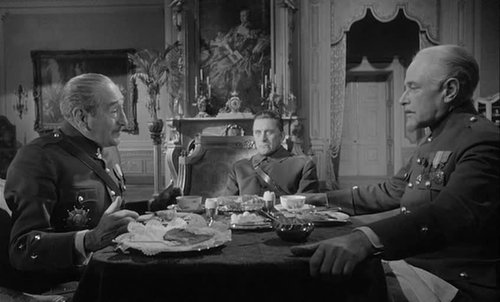
He has a great framework of a film around him from Kubrick. The director uses several longs shots, extended takes and tracking shots to throw us into the world. The opening sequences at the military HQ, taking in the palatial setting of Mireau’s campaign office, have a stately construction and technical formality which then contrasts superbly with the lower angle, tracking shot-laden, POV sequences set in the trenches. Kubrick’s camera glides through these trenches, low angles seeming to make them tower over the viewer, the mud and filth only worse in the body-strewn no-man’s land that stands between the French and the Germans.

It culminates in the attack sequence, one of the greatest battle sequences ever placed on film. Following the doomed advance at a methodical pace, matching the speed of the soldiers, the camera tracks over no man’s land as explosions rend the ground and bodies are thrown to the mud under a hail of bullets. At the front is Dax, vainly blowing on his whistle and encouraging the men forward, while all around him devastation and slaughter win out. Any thought that this wasn’t a pointless enterprise from start to finish is completely dispelled, and our sympathies are completely with Dax and the soldiers, whose lives are superfluous to the ambitions of the generals.

Both generals cut appalling figures for different reasons. Mireau, played with a trumpeting, vain bombast by Macready, is a “blood and guts” soldier who never places his own blood and guts anywhere near the line. Proudly bragging about the skills of his soldiers, then furiously denouncing their cowardice, one telling shot has him in the trenches staring through binoculars at the German positions, oblivious to the wounded men filing past him. Later he orders the shelling of these very trenches in fury at their failure to advance far enough. Broulard is hardly better, Menjou’s “hail well met” bluster hiding a chilling lack of empathy.

The Germans are never seen, because the real enemies here are war itself (and we are kidding ourselves if the same thing wasn’t happening on the other side) and the authorities who push us into it. The film is almost like some sort of black satire, with the generals confidently telling their soldiers they are right behind them, before retreating several miles to the rear to watch the battle unfold. Dax is middle-management, caught between trying his best to deliver orders he knows are impossible, and protecting men he knows are doomed, and failing at both tasks.

The system demands blood sacrifices from the lowest possible rungs, so the hierarchy can reassure themselves they are not blamed (Dax’s offer to take all the blame is promptly rejected by Broulard – no question of any of the officers being at fault!), so the men are chosen by their company commanders. One is chosen by lottery (he of course is a decorated war hero, but that cuts no ice), one because he’s an “undesirable” and the third because he has witnessed his own commanding officer’s cowardice. None of them deserve it, but their guilt is “proved” in a kangaroo court that lasts less than 15 minutes, and in which Dax is barely allowed to put a defence case.

Kubrick’s film becomes a surprisingly fast (it’s less than 90 minutes) but inexorable march towards those three stakes in the ground and the firing squad. Questions of justice and courage are completely pointless – any brave acts in the film are pointless, two of the victims are cited for their courage and the most cowardly character in the film, Wayne Morris’ snivelling Lt Rouget, ends up commanding the firing squad – and the message we are left with is that the institution of war and man are the real villains here.

War has no heroes, only survivors. Victories are important to the generals only in the sense of being tools to jockey for position, and the common soldier is an expendable puppet who can be killed on a whim to fill any political reason. It’s a harsh and chilling view of the military – and leaves very little hope – but it’s superbly made and controlled by Kubrick, in a film surprisingly with more heart in it than any film he ever made before or since. It’s a film that leaks with sorrow and disgust at the victims of the military machine, a film with emotion as well as a technical marvel. It might be Kubrick’s most complete film.

The Good, the Bad and the Ugly (1966)

Clint Eastwood is the Man with no Name in The Good, the Bad and the Ugly

Director: Sergio Leone

Cast: Clint Eastwood (“Blondie”/The Man With No Name), Lee Van Cleef (“Angel Eyes”), Eli Wallach (Tuco), Aldo Giuffrè (Union Captain Clinton), Mario Brega (Corporal Wallace), Luigi Pistilli (Father Pablo Ramírez), Al Mulock (Elam, one-Armed Bounty Hunter), Antonio Casas (Stevens), Antonio Casale (Jackson/Bill Carson), Antonio Molino Rojo (Captain Harper)

The Good, the Bad and the Ugly closed out Sergio Leone’s “Man with No Name” Western trilogy, the role that turned Clint Eastwood into a star. Unlike the other two films in the Dollars series, TGTBTU was shot on a larger and more expansive budget, and showed Leone stretching himself into something more than a peddler of Americana pulp. This was a film that was as much an artistic statement as it was an entertainment – perhaps more so. 

The plot of the film is very simple – considering its extended runtime. Three bandits and hired guns are on a quest for buried gold, while all around them the American Civil War rages. The bandits are: “The Good” (Clint Eastwood) – the taciturn “man with no name” who has more of heart than he lets on; “The Bad” (Lee Van Cleef) – known only as “Angel Eyes”, a stone-cold killer with no soul at all; and “The Ugly”, Tuco (Eli Wallach), a larger than life Mexican bandit, scruffy, scuzzy but with plenty of joie de vivre. The money is hidden somewhere out in a graveyard in the West – but who is going to get there first?

TGTBTU is Leone at a midway point of his career. Tonally the film falls between the more straightforward thrills of the first two Dollarsfilms, and leans closer towards the artistic epic canvasses that Leone would paint in his Once Upon a Time… films. Perhaps this is why TGTBTU is possibly the most popular of all Leone’s films, it’s more entertaining than either of the latter two but has more thematic depth than the earlier two. But that doesn’t change the fact that, watching it, I feel this is reaching for a moral and thematic richness and complexity that is just beyond Leone’s grasp. He’s straining for this film to be something more than his earlier films – and I’m not sure that’s something he manages to do. 

But let’s focus on what the film does right, which is a hell of a lot. This is the film where Leone really found his voice and ran with it. It’s a hyper real world he creates of the Old West, with a tone of artificiality about it. Part of that comes from the odd disconnect you get from the European actors and the dubbed voices that overlay them (not always completely accurately), but it’s there in every inch of the style of the film.

It’s an explosion of style, with artificiality frequently alongside reality, all thrown together into a sort of crazy Western world where everything seems to be happening at once (from bandit towns to the Civil War), and you could turn a corner and end up in either a desert, a battle field or a town under siege. His style is heightened, and makes for some wonderful shots, not least the way first Blondie and later Tuco’s banditos seem to drop into a wider frame, expanding the world suddenly as we watch it. 

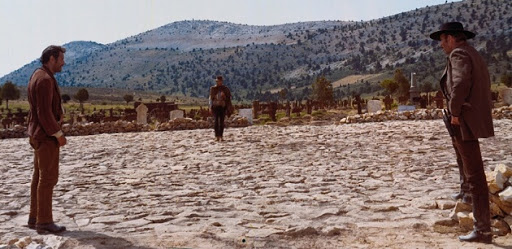
Leone’s a director who practically invented the term “operatic” for cinema. His gun battles are 99% build up and 1% action, and it’s the simmering tension of those build-ups that really make his films stick in the mind. If you think of it, you’ll imagine that iconic Ennio Morricone score (recorded before the film was shot, so Leone could shoot the film to match it – composers dream of having such licence today!), followed by slow series of escalating cuts. Leone will cut to hands approaching triggers, then close ups of faces, then long shots for context, then all of these again and again, each time the hands getting closer, the close-ups getting tighter, the long shots being more prolonged, all of it about building the tension and then BANG the shooting is done in seconds.

The film was criticised for being violent at the time, but it’s more like extremely tense. You can see why Tarantino sites Leone as his master. Watch that introduction sequence for Angel Eyes, a long, quiet scene where he eats a peasant’s food while questioning him and then ends by a sharp series of shootings that leave the family devastated. It’s the style Tarantino was going for in Inglourious Basterds and a tone establisher for Leone. You always know the violence is coming, and you know it will be quick and merciless when it does, but the film makes you sit tensely waiting for it for minutes at a time. The violence when it comes is often cold and those who carry it out are cynics and thieves rather than heroes and villains.

It makes for a sprawling, epic, even rather unfocused film at times – and it means the runtime is hopelessly overextended at over three hours uncut – but it’s also what interests Leone. He sees a world where killers are cool, calm, calculating and don’t go in guns blazing. Where intimidation is an art and micro-calculations occur before any trigger is squeezed. 

And these ruthless killers are in a world of violence all around them. Around the edges of the film’s narrative, the world of the Civil War rages, claiming lives left, right and centre. It’s here that Leone targets a thematic richness that I don’t feel is completely successful. There are elements that work – and the Union prison camp that Blondie and Tuco end up in (staffed by sadistic guards under the guidance of Angel Eyes) is the best of them. Clearly paralleling Nazi extermination camps in the herding of prisoners, the trains that carry them to certain death, the brutal beatings and the Yankee soldiers who are forced to play music (literally for their lives) to cover the noise of those beatings, you can feel Leone’s anger at the horror mankind unleashes on itself. 

But it’s heavy handed at places and makes its points too bluntly, dropping them into the film rather than weaving them neatly into the overall narrative. Towns and villages are bombed out and dead men lie on the edge of roads, but it doesn’t really get tied into an effective contrast with the central treasure hunt narrative. This is Leone straining for greatness, but not having the chops to get there yet. Blondie may bemoan the pointless slaughter of civil war – and even comfort a dying soldier – but these beats could be removed from the film without affecting its overall impact. Leone’s real love is Americana pulp, and his focus on this sometimes gets in the way of achieving his wider aims.

Perhaps that’s also because the impact gets lost slightly in the film’s great, sprawling length – and Leone’s lack of discipline, his insistence in taking everything at his own pace (often a slow dawdle through details), while it works really well for some sequences it also gives us others (such as Tuco running through a graveyard) that seem to last forever for very little impact.

Leone also increasingly became more a director with epic visuals in which characters are only details, with this film. Eastwood – reluctant to return in any case – especially feels like a much blanker presence in this film, coasting through his role almost on autopilot. Although you could say he generously cedes much of the limelight to Eli Wallach, who roars through the film as Tuco. Wallach’s eccentric but heartfelt performance – full of odd mannerisms but underscored with a genuine emotional vulnerability at points matched with a childlike enthusiasm – becomes central to the enjoyment of the film (he’s really the lead character). Van Cleef meanwhile drips demonic, cold menace behind unflinching (Angel) eyes.

Leone’s epic work is a sprawling, over extended, self-indulgent epic that mixes moments of pure cinematic entertainment with heavy handed digressions into man’s inhumanity that are a little too on-the-nose and unthreaded into the central plot to carry as much impact as they should. But it remains one of the most popular films of all time partly because what it does well, it does better than almost anyone – those long, tense build-ups, that electric energy that Wallach represents, the otherworldly artificiality mixed with cold reality. The Good the Bad and the Ugly is Leone’s crowning achievement, and for all its flaws, it still packs a punch.

The King (2019)

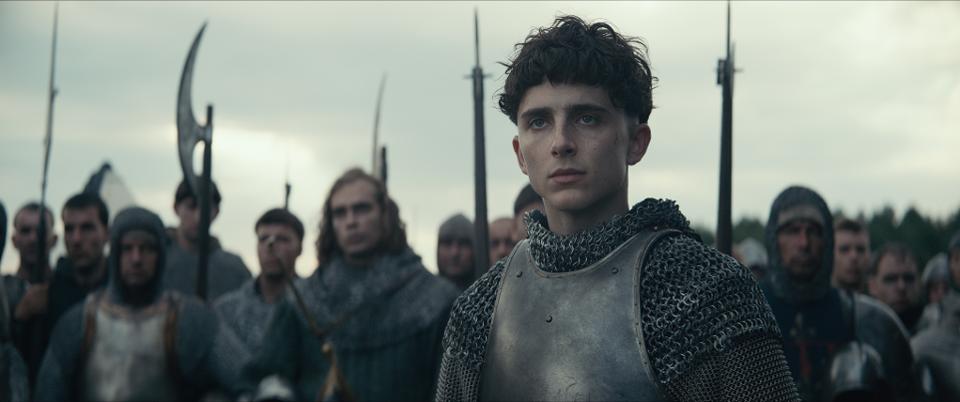
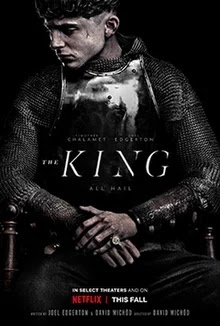
Timothée Chalamet is the war like Henry V in the confused The King

Director: David Michôd

Cast: Timothée Chalamet (King Henry V), Joel Edgerton (Sir John Falstaff), Robert Pattinson (The Dauphin), Sean Harris (William Gascoigne), Thomasin McKenzie (Queen Phillippa), Ben Mendelsohn (Henry IV), Tom Glynn-Carney (Henry “Hotspur” Percy), Lily-Rose Depp (Princess Catherine), Dean-Charles Chapman (Thomas, Duke of Clarence), Thibault de Montalembert (King Charles VI), Tara Fitzgerald (Hooper), Andrew Havill (Archbishop of Canterbury)

This is a story that is pretty familiar to most people now – after all, Shakespeare’s play has probably been being played somewhere in the world for most of the last 500 years. Edgerton and Michôd collaborated on the story and script of this restaging, or reimagining, of Shakespeare’s epic of the wayward fun-loving prince turned hardened warrior king. Despite being handsomely filmed, and impressively shot, this makes for an odd and unusual film which falls between the two stools, as it is faithful to neither history nor the Shakespeare original.

The rough concept remains the same. Prince Hal (Timothée Chalamet) is not just a young man who has fun in the taverns of London, he’s also quite forward looking in his attitudes, and just can’t understand why he should be made to carry on the rivalries of his father, the fearsome Henry IV (a broodingly miffed Ben Mendelsohn) or why he should continue the wars that the council pressures him into. When he becomes king, however, Henry is persuaded by his counsellor William Gascoigne (Sean Harris), that the path to peace for the realm – and safety for his subjects – can only be through unifying the kingdom by war with France. Appointing the only man he trusts – his old drinking companion and famed soldier Sir John Falstaff (Joel Edgerton) – as the Marshal of his armies, Henry heads to France where destiny awaits.

Michôd’s film is at its strongest when it focuses on the visuals and the aesthetic of its age. It’s beautifully shot, with several striking images, from execution courtyards to the battle of Agincourt itself, which takes place in an increasingly grimy field. The battle itself ends up feeling more than a little reminiscent of ideas from Game of Thrones – in fact a few core images are straight rip-offs from the famous “Battle of the Bastards” episode – but it at least looks good, even if there are few things new in it. The costumes and production design don’t feel like they strike a wrong note either with the grimy, lived-in feel.

More of the issues come around the script. The film’s concept of Henry initially as this rather woke modern king – he just wants peace and to give up these tiresome obsessive conflicts of his father – who slowly becomes more colder and ruthless as the film progresses does at least make thematic sense in the film, but it still rings a little untrue. Much as I would like, it’s hard to believe that any prince like this could ever have existed at the time, and so cool and calculating is Chalamet’s performance from the first that he never feels like a genuine, young, naïve princeling whom we can sympathise with early on. 

It makes the film’s arc rather cold, and Hal an even more unknowable character than the film perhaps even intends. There is very little warmth or genuine friendship between Hal and Falstaff, and Hal moves so quickly to the imagining (and enacting) of war crimes during his time in France that his descent towards potential tyrant feels far too sharp to carry impact. Even in the early days of his reign he’s swift to have potential destablisers in his court executed with no mercy. Where is the fall, if he is such a cold fish to start with? And with Chalamet at his most restrained (like the royal baggage and the accent are a straight-jacket around him), how can an audience invest in him? 

And what are we supposed to be making of this anyway, since the film is at equal pains to suggest that the king may be the subject of manipulation and lies that force his hand into war? This Henry, we learn, values truth and honesty highest – but this doesn’t stop him getting pissed when met with counter-arguments from his advisers (even Falstaff) or reacting with cold fury and disavowal when things don’t go his way. It’s a confusing attempt to add an ill-fitting modern morality to a king who essentially in real life spent most of his life at war, and was to die on campaign in France still trying to cement his rights at a young age.

Edgerton and Michôd’s script fails to really square this circle, and all the attempts to have its cake and eat it (the peace loving king still manages to kick arse, including killing Hotspur in single combat thus averting the Battle of Shrewsbury from ever happening) don’t quite pan out. Edgerton writes himself a decent role as Sir John Falstaff, here reimagined as a million miles from the drunken, cowardly knight into a courageous and hardened soldier who has no time for the compromises and deceit of court (in contrast to Henry’s other advisor, the Machiavellian Gascoigne played with a playful archness by Sean Harris). Making Falstaff a respected figure like this rather flies in the face of the logic of why Henry IV is so annoyed about his son spending time with him, but never mind.

It’s not really Shakespeare and it’s not really history. It sticks closest perhaps to Shakespeare in its portrayal of the French as arrogant fops – led by Robert Pattinson going delightfully OTT as the Dauphin – but it never really quite works out what it wants to be. With its Game of Thrones look and feel, and prince who is both great warrior and reluctant warlord, peace-lover and ruthless executor of his enemies, it feels scattergun and confused rather than coherent and whole.

The Beguiled (2017)

Nicole Kidman struggles to resist the charms of Colin Farrell in The Beguiled

Director: Sofia Coppola

Cast: Nicole Kidman (Miss Martha), Kirsten Dunst (Edwina), Elle Fanning (Alicia), Colin Farrell (Corporal McBurney), Oona Laurence (Amy), Angourie Rice (Jane), Addison Riecke (Marie), Emma Howard (Emily)

A remake of Don Siegel’s adaptation of the original novel, The Beguiled throws a feminist slant on a story of a confederate soldier, Corporal McBurney (Colin Farrell) who, in the later years of the Civil War, is found injured in the grounds of a girl’s school, where the women have continued to run the operation while the menfolk are consumed with (and by) the war. The school is run by the distant Miss Martha (Nicole Kidman), with the lead teacher Edwina (Kirsten Dunst) and five students of varying ages. All of the girls and women find themselves entranced (beguiled!) with the deceptively gentlemanly McBurney, whose true aims may be darker than assumed.

Sofia Coppola’s version of the story shifts the attention onto the women of the piece, and their plight and emotional journeys. This is a perfectly legitimate stance to take – and showing effectively a colony of girls and women in the 1860s living some sort of structured commune life is interesting and different – but Coppola’s film has a coolness and distance to it that ironically makes it far less than beguiling than it should be.

Beautifully filmed as the film is, it’s slow pace and meditative tone – as well as the rather obvious points it seems determined to make about male and female relations – actually serve to make the film less engaging than it should be. Wonderfully framed and painterly in its execution, with an effective mix of classical and 1970s style, it still never quite sparks into life.

The cast also struggle to bring a heartbeat to their characters. Nicole Kidman brings her customary reserve and elegance to a woman who has hints of a mysterious past that troubles her to this day, but the role remains distant and difficult to read – more than the film really requires. A clash or seduction between her and Colin Farrell’s corporal keeps promising dynamite but the explosions never really seem to come. Farrell laces his role with charm and a gruff masculinity, but the role misses a sense of his own darkness or manipulative nature until quite late, with the final act revelations making him appear more angry and bitter than the role really requires. It all kind of sums up the film that gets lost in its artifice and fails to uncover its heart.

The film, you could argue, does its best to beguile the audience with McBurney as the film’s character are. We are shown at every angle his vulnerability and tender politeness, and hidden from us for too long are his more manipulative elements. Coppola’s film becomes an intense study instead of sexual feelings and relations within a confined space. From sensual hand washes from Miss Martha, to intense declarations with lonely teacher Edwina, to not-so-innocent flirtations with the pupils, there is more than enough evidence that McBurney’s desire to stay may well be as much linked to seeing the school as having the potential to be his own private harem. The film’s failure in this intense sexual politics is that, while it captures moments of the simmer of attraction, it fails to really establish the danger that McBurney could suggest, as a violent man of action with complete control over a group of women.

Indeed the final moments of the film even suggest that the school itself may be a sort of siren’s bay – although lord knows McBurney is no Odysseys – which I found a rather confusing beat. Effective as the final images, or the film’s last supper betrayals, may be, they don’t carry quite enough wait because the film never quite nails the sexual tension it is aiming for, or the sensual danger it is trying to establish as a theme within the film. 

Other changes make less sense as well. Coppola deliberately changes the race of Edwina, from a mixed-race young woman to someone white enough to be played by Kirsten Dunst. While Dunst’s performance is fine, many of the themes of Edwina’s lack of confidence, her self-loathing, her feeling of having no place outside of the school, of being somehow less than other women are left in place. These themes of course make perfect sense for a mixed race woman in the 1860s who has landed a job through the connections of her father, but they make less sense for an attractive young schoolteacher with a privileged background. Coppola made the change because she felt that she could not do the theme justice, but she misses the fact that the very appearance of the character is the context needed for her to make sense.

The Beguiled is beautiful to observe and has its moments, but it never really comes to light the way it should. Thoughtful and poetic a director as Coppola is, she has created a film here that feels all artifice and no depth, that wants to paint a picture of the life of women in the civil war but never really has the energy and fire to make this come to life in a way to make the audience as engaged as they should be.

M*A*S*H (1970)

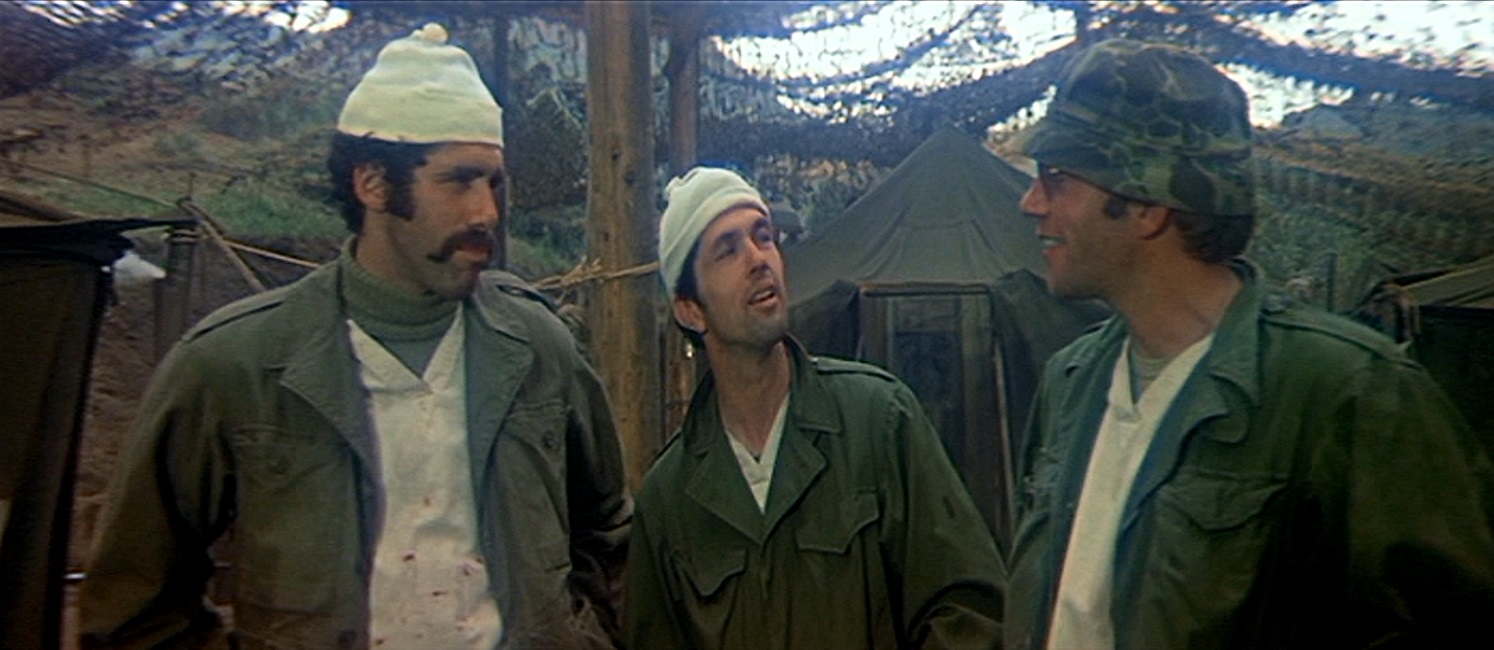
Elliott Gould, Tom Skerritt and Donald Sutherland are three madcap surgeons in Robert Altman’s M*A*S*H  a film that looks less screwball and more misogynist every day

Director: Robert Altman

Cast: Donald Sutherland (Captain “Hawkeye” Pierce), Elliott Gould (Captain “Trapper” John McIntyre), Tom Skerritt (Captain “Duke” Bedford), Sally Kellerman (Major Margaret Hoolihan), Robert Duvall (Major Frank Burns), Roger Bowen (Lt Col Henry Blake), Rene Auberjonois (Father Mulcahy), David Arkin (SSgt Wade Vollmer), Jo Ann Pflug (Lt Maria “Dish” Schneider), Jon Schuck (Captain “The Painless Pole” Waldowski), Carl Gottlieb (Captain “Ugly John” Black)

Robert Altman’s counter-culture M*A*S*H was his first (and probably only) unreserved smash hit, the film where Altman cemented his style as a director. Although set in the Korean War, the film was clearly more about attitudes towards Vietnam. Today M*A*S*H is probably more well known as the filmic spring board for the extremely long-running TV show starring Alan Alda (which, at 11 years, lasted seven years longer than the war it was set in). 

M*A*S*H (like the series) covers the mad-cap antics of the doctors at the 4077thmedicine outpost near the frontlines of the Korean war, a casualty clearing station where young men are patched up and either sent back to the front line or sent home. While the base is a military operation, most of the doctors serving there are drafted civilian doctors rankled by rigid military discipline. The leaders of this prickly bunch are “Hawkeye” Pierce (Donald Sutherland), “Trapper” John (Elliot Gould) and “Duke” Bedford (Tom Skerritt), with their targets ranging from generals to the stiff-backed military figures on the base, specifically the officious but less-competent surgeon Frank Burns (Robert Duvall) and Head Nurse Major Hollihan (Sally Kellerman).

M*A*S*H is the first expression of what became Robert Altman’s signature style as a director. The film has a grimy immediacy that throws the audience into the middle of the action, and is cut with an edgy lack of artifice that at the time was seen as barely competent film-making. That didn’t outrage people as much as Altman’s willingness to allow a lack of conventional discipline in dialogue delivery, with actors overlapping wildly, some dialogue drifting out of earshot or not being captured on screen, no real story being developed through it. It’s a deliberately scrappy, scratchy, almost clumsy film shot with a great deal of artistic discipline (including a spot on The Last Supper parody) but cut and sound-edited with a casual precision that makes it feel extraordinarily experimental.

It infuriated its screenwriter Ring Lardner Jnr (no doubt the Oscar that he received soothed his pain), and Altman’s loose, improvisational style and unwillingness to go for conventional framing and style also alienated his leading actors. Altman and Sutherland (with Gould’s support) each pushed for the other to be dismissed from the film (Sutherland has claimed to have never seen the film, and ton have never understood its success; Gould later apologised by letter to Altman and worked with him several times again) and the whole film’s final style – its influential fly-on-the-wall vibe and nose-thumbing lack of formal discipline – can be attributed completely to Altman’s vision and artistic independence.

The film is important as a key landmark in film-making style and in Altman’s development as a director – but there is no other way of saying it, it has dated extraordinarily badly. For those more familiar with the TV show, its tone is going to come as quite a shock. The TV show is a lighter, sillier, more socially conscious creation (increasingly so in its later years) where the tone was more japery and deadpan silliness. The film is cruel, and its lead characters are swaggering, alpha jocks and bullies, whose meanness and astonishing levels of misogyny are constantly celebrated and rewarded. For those who remember Alan Alda as Hawkeye, Donald Sutherland’s viciousness is coming to come as quite a shock!

Hawkeye and Trapper John’s vileness at frequent intervals is pretty hard to stomach (the less said about the racist, unpleasant Duke the better). The film is really keen to show that all this rampant cruel practical jokery is a survival mechanism against the horrors of war, and the difficulty of dealing with patching young soldiers up to send them back out to die. But the film never really gives us a sense of the war, and the surgery scenes (while effective in their bloodiness and counterpointing the frat house atmosphere of the rest of the film) fail to create that ominous sense of senseless never-ending conflict that the film needs to balance out the vileness of the humour. Further, while Hawkeye and Trapper John are both shown to be dedicated and gifted professionals, they also remain two-dimensional figures, never really shown to have an emotional hinterland that expands their work. They are instead more like Wall Street stockbrokers: excellent at their job, but still a pair of arseholes.

Their attitude to women – and the film’s attitude – is beyond troubling today, it’s flat out offensive. The nurses on station are treated as no more than snacks for the men to enjoy, that they are entitled to pick up as often as they like, and who are barely given any character at all. Sex is as much an entitlement as rations. On his promotion to Chief Surgeon, Trapper John demands (half-jokingly) sex, while Hawkeye “volunteers” a woman to help “cure” another character who fears he has turned homosexual and is considering suicide. Counter culture against the war is celebrated throughout – but it shown in this film to be overwhelmingly a masculine campaign, in which women have no place and no equality. Men can feel the war is terrible, and men can rebel against authority, but women exist only to service their needs.

All of this boils down into a real bad taste in the film’s treatment of ultra-professional Major Hoolihan. Reviled by Hawkeye, Trapper John and Duke for the twin crimes of taking her military career seriously and not being interested in sex with Hawkeye, Hoolihan is systematically degraded and humiliated throughout the film. From having her sex with humourless prig and fellow disciplinarian Frank Burns broadcast around the camp (giving her the nickname “Hot Lips” from her pillowtalk, a title she never escapes) to having the shower tent collapsed around her in front of the whole camp to settle a bet about whether she is a “real blonde” or not – her reaction to which we are misogynistically encouraged to view as hysteria, as dismissed by her commanding officer – it’s tough to watch. The one compliment she gets in the film on being a good nurse is accompanied by her insulting nickname, and by the end of the film she has been reduced to being depicted as an air-headed cheerleader at a football game. Even her credits picture shows her ultimate moment of humiliation. She’s seen as a Blue Stocking, unnatural because she is attractive but not willing to be sexually available to men. This is the sort of treatment that could drive a person to suicide, here treated for laughs. It’s impossible to watch with a smile today.

And it’s the dated part of the film as Hawkeye and Trapper are never questioned for this behaviour – indeed they are celebrated and encouraged throughout as fun, cool guys – when in fact they are the worst sort of jock bullies and their antics the sort of tedious frathouse rubbish that blights too many all-male clubs. They are working class Bullingdon boys, who value nothing, with the film giving them passes because they are great surgeons. Sutherland in particular isn’t charming, he’s creepy and unsettlingly cruel, while Gould at least has a madcap goofiness with touches of humanity. 

Two hours with these arseholes is a long time, and the film just plain isn’t funny enough for what it is trying to do – neither does it convey the horrors of war enough, or the men’s understanding of it. More time shown on the surgeons at least acknowledging the horrors might have helped wonders – but the film assumes that we know what they are feeling and just rolls with it. You could generously say they are cruel in a cruel world. But the film never acknowledges the essential meanness of the humour here, and tries to involve us all in it with no sense of conflict or concern. It’s a troubling film to watch today, its rampant sexist cruelty is offensive and its lack of charm purely unintentional. Time will continue to be cruel to it.

The Wind That Shakes the Barley (2006)

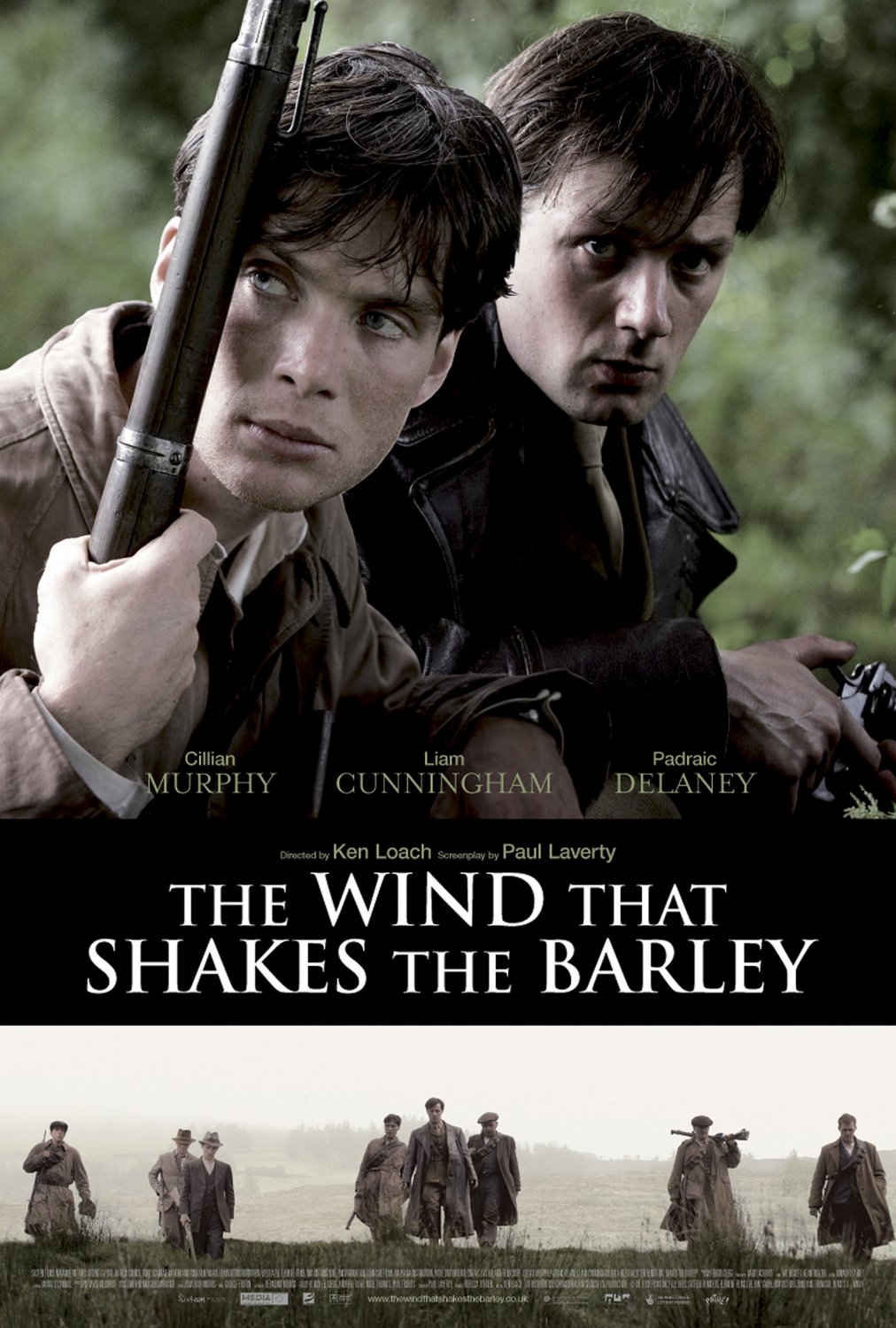
Cillian Murphy and Padraic Delaney take on the British in The Wind That Shakes the Barley

Director: Ken Loach

Cast: Cillian Murphy (Damien O’Donovan), Pádraic Delaney (Teddy O’Donovan), Liam Cunningham (Dan), Orla Fitzgerald (Sinéad Ní Shúilleabháin), Laurence Barry (Micheál Ó Súilleabháin), Mary Murphy (Bernadette), Mary O’Riordan (Peggy), Myles Horgan (Rory), Martin Lucey (Congo), Roger Allam (Sir John Hamilton), John Crean (Chris Reilly)

There are few directors in British cinema who have such impeccable left-wing credentials as Ken Loach. Each of his films is powered by a social and political conscience and chronicles the travails of those on the left, those struggling for the down-trodden and unfortunate, or those on the bottom rungs of society’s ladder. It was perhaps only a matter of time before he made a film about that blistering sore on the British conscience, Ireland (just as he is surely destined to eventually make a film about Palestine). It’s not a surprise that Loach’s film, with its vicious denunciation of British policy in Ireland, was met with a vitriolic response by much of the UK media, just as it was scooping Loach the first of his two Palme d’Ors at Cannes.

The film opens in the immediate aftermath of the First World War. Many of the Irish are in open revolt for independence, with Teddy O’Donovan (Pádraic Delaney) a leading IRA figure in Cork. His younger brother Damien (Cillian Murphy), a doctor, is persuaded to join the cause by his horror at the actions of the British “Black and Tan” troops in Ireland, vicious flying squads empowered to act with impunity. When the war eventually leads to a negotiated peace and the Anglo-Irish Treaty of 1922 that divides Ireland in two as a Dominion in the British Empire, the two brothers are divided. Teddy sees this as a stepping stone to peace for further gains later; Damien sees it as betrayal of the socialist message he and many others fought for, which will change only “the accents of the powerful and the colour of the flag”. A civil war across Ireland is inevitable between the government “pro-treaty” troops (supported by the British) and anti-treaty former-IRA members.

The history of Ireland is one of tragically missed opportunities, of poor British policy decisions throughout the nineteenth century (including delaying emancipation for Catholics, and a refusal to grant any level of Home Rule to Ireland for over 70 years, despite three votes on the issue in Parliament) eventually leading to many “peaceful” political movements in Ireland becoming completely discredited and the bullet seen as the only way to self-government. There is no doubt at all – as the film is not shy showing – that British policy in Ireland was often shameful, brutal, repressive, and helped enforce lasting bitterness and resentment, the impact of which is still felt today.

So, despite the furious backlash against the film as being anti-British in the press, it’s clear that The Wind That Shakes the Barley tells hard truths of the violence on both sides – of ransacked homes, murders, shootings and repression. Loach’s film unquestionably favours the Irish perspective and places their actions within a heroic context, while the British soldiers are nearly to a man foul-mouthed, arrogant, violent louts (although an officer does get a speech saying what do they expect since the black and tans are all bitter ex-front liners from France who have nothing else in their lives to come home to). But it makes a legitimate point, and it’s hard not to agree that British occupation of Ireland was, at best, a mistake and worst case a crime.

Loach’s film is harrowingly well-made, expertly shot by Barry Ackroyd, a testament once again to what a vivid and engrossing director Loach can be. Shoot-outs and violence are shot with icy-cold camerawork, mixed with handheld confusion. Political debates (of which there are many) are shot with passionate intimacy, the camera roving between the faces of those on both sides. The film’s reconstruction of Ireland in the 1920s is brilliantly done, and its engrossing recreation of the guerrilla warfare tactics of the IRA is fabulous. The acting is very good, with Cillian Murphy excellent and passionate in the lead role. Loach’s earnestness, married to his cinematic skill, is clear.

The real problem with the film is Loach’s left-wing politics, not his anti-British-establishmentism. To Loach the real tragedy in Ireland was not the civil war, but the compromise that large parts of the country made to sign the treaty with Britain and turn their back on aiming to turn a poor country into something closer to a socialist one, with collectivised industry, less power to the church and a greater equality between the rich and the poor. Loach’s film is squarely stacked in favour of the left-wing firebrands who continue the fight with the IRA, and firmly against those who support the treaty and look to gradually build a lasting peace.

To Loach, it feels like there is little real difference between the British and the pro-treaty forces. The They are both moral cowards and bullies who are fighting to maintain a status quo. There is no legitimate case made for the treaty. Those who support it in the film – like the increasingly nervous, twitchy pro-Treaty Teddy (as if Loach wanted to show him physically weighted down with guilt) – are either mealy-mouthed and guiltily shifty or hectoring bullies (like the priest who preaches pro-treaty/anti-socialism from the pulpit).

Loach is right that independence was a cause that bought everyone together, and in his argument that that the lack of a unifying idea of what the country would become next would inevitably lead to fracture and collapse. But never once in the film do we hear the voice of the ordinary Irish people, and what they wanted. Inconveniently, when put to the ballot, pro-treaty parties won the election of 1921, so the film has to have Damien (as is often the case with those on the extreme of both ends of politics I find) claim that the people didn’t understand what they were voting for, and if they did they would have agreed with him. The film’s final scene ends at a ruined house, but never once does the film (or Loach) reflect on how this embodies the catastrophic harm simple, everyday people were suffering over this period – and that they may have wanted a chance for the fighting to stop and a shift to peaceful progress towards greater independence rather than die in a ditch for nebulous political goals.

The film’s main enemy is actually compromise. Compromise is what Teddy and his gang accept when they plead for the chance for the fighting to stop, and for the country to settle for 80% of their demands now, and the rest later. Compromise is what Damien won’t settle for, and why he’ll restart a war to the death for his beliefs. Maybe it’s just me, but the art of living seems to be one of compromise and peace is built on agreements and a statesman-like acceptance that complete victory is often impossible without unacceptable loss. It’s a belief the film has no time for, and Loach seems to be advocating that the IRA should have completely rejected the treaty and instead fought to the bitter end (an action that would have probably turned Ireland into a wasteland) in the name of the socialist dream, rather than deal with reality.

It’s that which is the real problem with the film: its hard-headed clinging to the belief that any form of compromise is anathema, that death is preferable to altering your beliefs one iota, that prolonging a bloody civil war is the right thing to do rather than accept any agenda that doesn’t completely match your initial dream. Loach’s faith in his politics is admirable, but The Wind That Shakes the Barley sets out a didactic vision of Irish politics that gives no legitimate argument to the pro-treaty side, and only listens to the socialist wing of the anti-treaty group. It’s a one-sided view of history and, increasingly, a dangerous one.

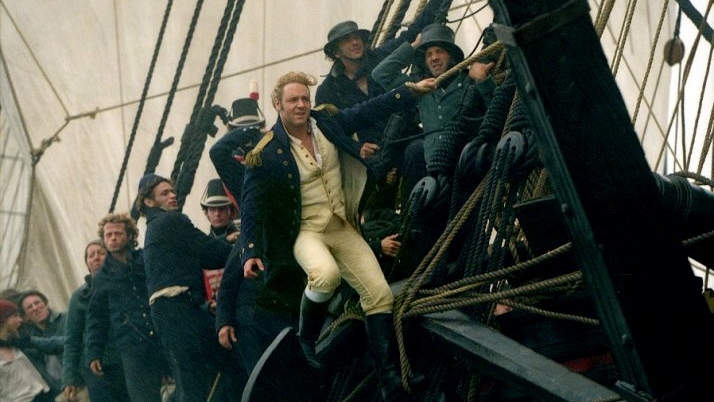
Master and Commander: The Far Side of the World (2003)

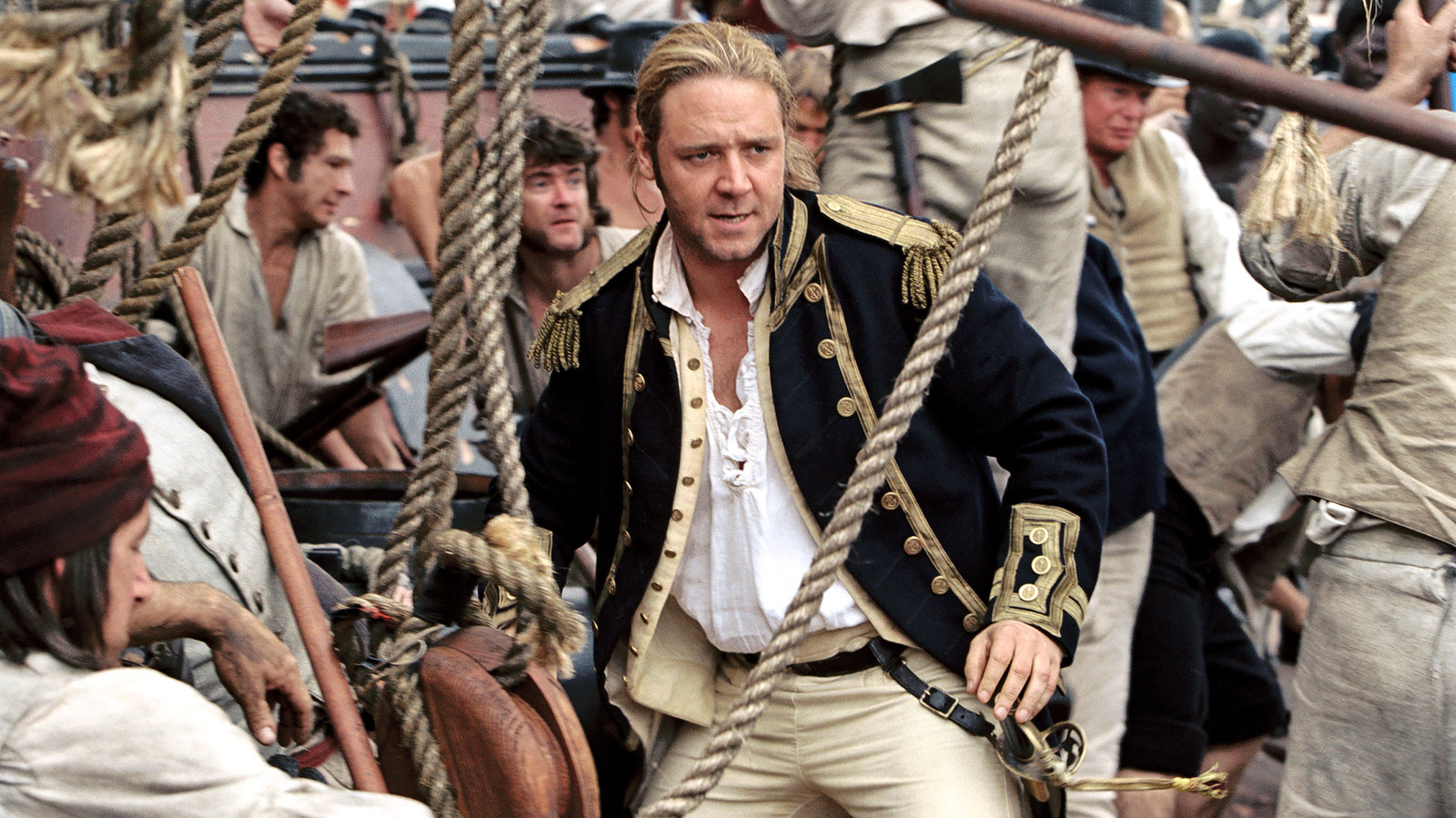
Russell Crowe captains in the marvellous Master and Commander: The Far Side of the World

Director: Peter Weir

Cast: Russell Crowe (Captain Jack Aubrey), Paul Bettany (Dr Stephen Maturin), James D’Arcy (First Lt Thomas Pullings), Robert Pugh (Master John Allen), Max Pirkis (Midshipman Lord William Blakeney), Max Benitz (Midshipman Peter Myles Calamy), Lee Ingleby (Midshipman Hollom), Richard McCabe (Mr Higgins), David Threlfall (Preserved Killick), Billy Boyd (Barret Bonden), Bryan Dick (Joseph Nagle), Joseph Morgan (William Warley), George Innes (Joe Plaice), Mark Lewis Jones (Mr Hogg)

There’s a reason so much of our everyday language comes from naval terms. There was a time when Britannia ruled the waves: and for almost as long we’ve had a history of stories of great fictional sailors. If your archetype is Hornblower, then following close behind is Patrick O’Brian’s 21-novel sequence following the career of Captain Jack Aubrey and his surgeon/spy friend and colleague Stephen Maturin. There have been many, many attempts to bring this series to the screen, but you could never have expected that the eventual film would be as triumphant as this. I saw this film on my birthday years ago – the same day I was thrown a surprise birthday party – and I enjoyed it so much that just seeing that would have been treat enough, even without the surprise party (which was also marvellous).

It adapts elements from several O’Brian books – principally elements of the first, Master and Commander,and the tenth, The Far Side of the World, (hence the unwieldy title). The film throws us into the mid-point of Aubrey’s (Russell Crowe) career, with the captain of the Surprise tasked with protecting British interests in the Southern oceans from the onslaught of the French ship Acheron during the Napoleonic wars. Early skirmishes find Aubrey and the Surprise on the back foot, out-matched and out-gunned by the more modern, sleeker, more powerful French ship (quickly known as “the Ghost” by the crew, stunned at her ability to catch the Surprise on the hop). As well as following Aubrey’s struggle to best the Acheron, the film also explores the complex relationships on board during the dangerous mission, and specifically Aubrey’s close friendship with Stephen Maturin (Paul Bettany), ship’s surgeon, naturalist, sceptic and his confident.

Peter Weir’s film is, I’ll say it here, a masterpiece of both boys-own adventure and action, but also of the intriguingly warm and human relationships (and also the stresses and strains) that come when you throw a group of nearly two hundred men in close confines together for months at a time. It’s also a masterclass in authentic world creation. You can see in seconds the time, effort, research and imagination that have gone into recreating the world, the rules and the structure of the ship and its crew – and it has paid off in spades. There is not a foot put wrong, either in the recreation of the ship described in the books (the early shots of the film, the camera panning through the decks of the ship, capture everything from the geography of the ship to the names of the individual cannons) or the world of the navy. 

Weir’s film is technically superb. The photography is beautiful, the sound and editing totally immersive. Weir understands the detail counts for nothing, if the actual action of sailing, the dramatization of man’s struggle with the wind and water, isn’t engrossing. Not a single sequence in the film that shows the ship at sea – struggling with wind, tides, storms, fog and mist – falls flat. You feel like you are there, being buffeted by wind and rain, living every beat of the dangers the men face from the elements. The professionalism and skill of the sailors is brilliantly captured by the actors – who practically lived as sailors for the months of filming – and, with the music superbly worked to complement the adversity the sailors overcome, the scenes of naval skill are brilliantly done. I love them – it almost makes me want to become a sailor (almost). 

Master and Commander also works as a superb study of men, and brilliantly brings to life the two heroes from the book. Russell Crowe is wonderful as Aubrey, the film expertly using his charisma. Aubrey is a natural leader who adjusts and adapts his style to meet the needs of the men he deals with. He’ll share pun-filled gags at the dining table about his personal encounters with Nelson – but follow it up with a sincere anecdote of Nelson’s patriotism when he sees that something else is needed to avoid disappointing a young midshipman. With some men he’ll take a firm line, with others he will try words of encouragement. He’s an inventive and flexible thinker, able to adapt his plans and ways of working to meet new challenges and shows no pride or rigidity in his planning.

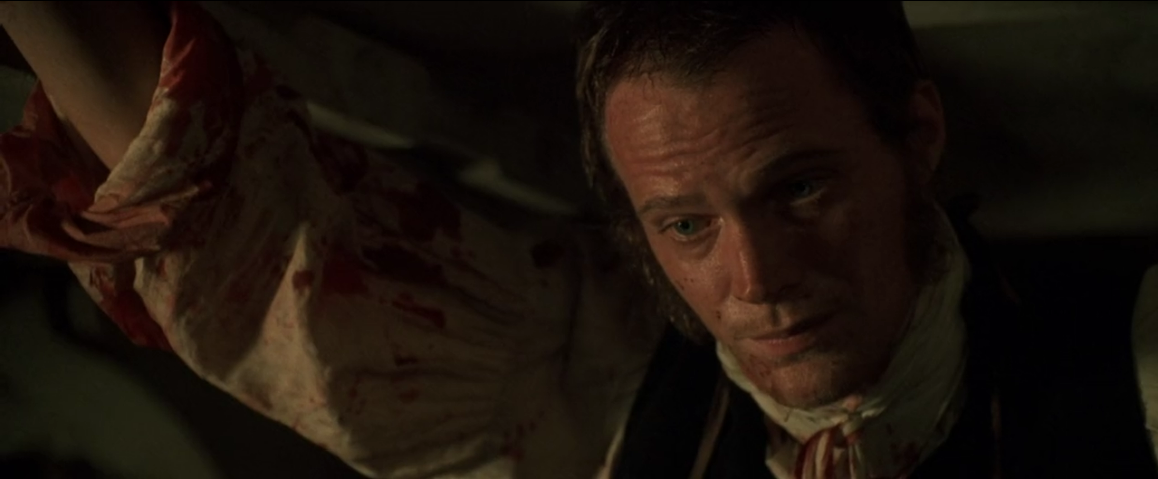
We also find out much about him from his genuine, heartfelt friendship with Stephen Maturin, his intellectual surgeon. Embodied damn-near perfectly by Paul Bettany, in one of those performances that feels like the character has literally walked from the pages of the book. Maturin and Aubrey’s friendship gives the film its heart. Genuinely close, with the one often teasing the other (usually around naval rules and regulations, around which Maturin displays a playful lack of understanding) they also speak freely to each other, and with honesty. When Maturin feels Aubrey is pushing the crew too hard in his obsession to best the Archeron he will speak up; when Aubrey feels the need to remind Maturin that a promised naturalist trip to the Galapagos will need to be cancelled due to the demands of war (“We do not have time for your damn hobbies sir!”) he feels no reluctance to say so. It’s a friendship that bobs and weaves through the tensions that come from almost permanent contact, but it’s a true, very strong bond that sees both men going to great lengths in the film to make sacrifices of the things they hold dearest for the sake of each other. 

And we see a lot of how they think in their shared mentorship of young midshipman (barely a teenager) Lord Blakeney, played with a superb assurance by Max Pirkis. From Aubrey, Blakeney learns the confidence, authority and flexibility needed for command. From Maturin he learns the intellectual curiosity and humanity that broadens and widens his horizons. It’s a reflection that, as a team, the two men make one marvellous man. 

Weir’s film also shows that the pressures of command and responsibility, worn so lightly (it seems at times) by Aubrey, can also crush men. As if in contrast to Blakeney’s growing confidence, the film also throws in Midshipman Hollom (played with tragic weakness by Lee Ingleby), a man approaching his thirties who has missed all the opportunities to become the man he would want to be. Nervous, weak, eager to please but insecure and uncertain of himself – exactly the qualities that automatically alienate sailors yearning to put their faith and trust into a leader – Hollom is a man who can listen to everything Aubrey has to say about becoming a leader, but has not the strength of character to implement it. And, strikingly, the film also shows that this weakness alienates not only the men who look to him for leadership, but also his companions and even (to a degree) Aubrey himself. In a single storyline, the weaknesses and dangers of this self-contained world (and the impact it can have on people) are superbly captured.

The film works alongside all this because its sense of adventure, of derring-do, of gripping, fist pumping bravery, skill and excitement of high-seas adventure grip the audience completely. There has never been a better film made about naval warfare or ships at sea (and there probably never will be). Mix that in with a superb story of personal relationships and men under pressure at sea (and the cast is uniformly brilliant), with sacrifice and also good fellowship at every turn, and you’ve got a simply faultless film. Master and Commander failed to launch a new franchise – and that has to be one of the greatest losses to film history that I can imagine. Weir’s direction is simply superb, Crowe and Bettany are perfect and the film is a brilliant adventure. I could watch it every day and never get tired of it.

American Sniper (2014)

Bradley Cooper takes aim as the American Sniper in Eastwood’s surprisingly thoughtful war film

Director: Clint Eastwood

Cast: Bradley Cooper (Chris Kyle), Sienna Miller (Taya Kyle), Luke Grimes (Marc Lee), Jake McDorman (Ryan “Biggles” Job), Cory Hardrict (D), Kevin Lacz (Dauber), Navid Negahban (Sheikh Al-Obodi), Keir O’Donnell (Jeff Kyle), Sammy Sheik (Mustafa), Mido Hamada (The Butcher), Eric Close (Agent Snead)

All war films walk a fine line: too far one way, and you glorify the violence of conflict; too far the other way and demean the bravery of the soldiers sent to fight it. It’s a tricky balance, but one American Sniper handles with real confidence, astutely putting together a film that can celebrate the bravery, skill and professionalism of its lead character but deplore the psychological impact killing has on him, while subtly suggesting the war he was fighting was scarcely worth the sacrifice.

Chris Kyle (played by an almost unrecognisably beefed up Bradley Cooper) is a Navy SEAL sniper stationed in Iraq. Kyle’s role as a sniper is to protect the troops on the ground from threats they can’t see, and it’s a job he treats with immense seriousness, believing he has a duty to protect others. Kyle soon builds up an astonishing number of kills (a record for US soldiers), but increasingly the burden of killing from a distance impacts Kyle more and more. Over the course of four tours in Iraq, Kyle becomes distant and withdrawn at home from his wife Taya (Sienna Miller) and children. Only after his final tour does he begin to seek help, finding a new purpose in life in helping other veterans suffering from post-traumatic stress. Which, tragically, leads to Kyle’s death, as he is killed in February 2013 by a veteran whom he was trying to help.

Eastwood directs with his expected unfussy smoothness and American Sniper is one of his finest films, a largely unsentimental, gritty look at the true cost of war physically and emotionally. Eastwood balances respecting Kyle’s skill and deploring the impact using that skill had on him. The film stresses the perverse necessity for empathy the role of sniper demands. Kyle is so good at the role because he will go the extra mile to protect his brothers-in-arms on the ground. The psychological impact is heavy because this man, hard-wired to protect others, has to do so by gunning down hundreds of people. Is it any wonder it has such a huge impact on him?

The sequences set in Iraq have the grimy air of reality to them, with dust, dirt, sweat and glare dominating every frame. Eastwood pulls no punches on the impact of bullets from distance on bodies, the violence of direct combat, the terror of being pinned down by enemy fire or the waste of lives (both civilian and military). While the film celebrates the bravery of frontline soldiers, it’s telling we see very few officers at all, but stay with the grunts, and the film is one of their stories and their choices. The politics behind why the soldiers are even there are barely touched upon and, as the tours tick by, the feeling of being there because they are there permeates the film. There is always another insurgent leader to take out, another target to find, and the soldiers make so little progress towards their actual target (locating al-Zarqawi) that he’s barely even mentioned.

Eastwood still subtly suggests our cause in Iraq hardly helps to win over hearts and minds. The soldiers’ interactions with the population are consumed with tension and violence, usually involving scared soldiers shouting at unarmed people, cable-tying men on the floor and failing to relate to or understand the cultures they are in. Any attempts to do so usually end with poor consequences, and the closest to a bond Kyle forms with someone outside of the soldier circle leads to a tragic ending. It’s not a film that has an affinity with the consequences of war, or the impact it has on lives.

If you have any doubt about that, then watching the slow breakdown of Kyle over the course of the film (manfully shrugged off and denied for as long as possible by the man himself) should shake that. Much of the impact of this comes from the excellent performance of Bradley Cooper, who slowly turns the light, fun and intelligent man we meet at the start of the film into someone sullen, withdrawn and permanently on the edge of anger, unwilling to even to begin to think about the possibility that anything he has seen has had any lasting impact on him. There is even some questioning of the damage extreme masculinity and an unwillingness to be open about your problems has on people (themes that Eastwood has always been far more interested in than he is given credit for). 

In fact, excellently assembled as the sequences in Iraq are (especially the tension around a semi-duel between Kyle and an insurgent sniper known only as “Mustafa”), I could actually have had more time given over at the end of the film to exploring how this man with such a warm empathy in him discovered a new purpose in his life. Kyle’s other heroism – and perhaps the secret to the regard he was held in by so many when he was murdered – was his commitment to helping people any way he could. His refocusing his life to help veterans deal with PTSD and physical disabilities could have been brought out into greater focus. Kyle’s greatest strength was his empathy and he became so open about his own problems, and his struggle to readjust, that it helped inspire many others to do the same – and it’s a plot thread I feel deserved a few more minutes at the end of the film.

It does however make a wise call by ending the morning of the day that Kyle was killed, with him leaving his family to spend a few hours with the veteran who killed him. Kyle had been involved in the development of the film, and it stands as a fitting, honest, tribute to him. Powered by Cooper’s superb performance, well supported by Sienna Miller as the wife who wants him to acknowledge the impact war is having on him, Eastwood assembles a fine war film, that acknowledges the sacrifices and heroism of soldiers, but also deplores the horrors conflict enacts on their psyche. It’s a mature, intelligent and well-handled film and well worth your time and effort.

Cold Mountain (2003)

Nicole Kidman and Jude Law are souls in love separated by war in Cold Mountain

Director: Anthony Minghella

Cast: Jude Law (WP Inman), Nicole Kidman (Ada Monroe), Renée Zellweger (Ruby Thewes), Eileen Atkins (Maddy), Kathy Baker (Sally Swanger), James Gammon (Esco Swanger), Brendan Gleeson (Stobrod Thewes), Philip Seymour Hoffman (Reverend Veasey), Natalie Portman (Sara), Giovanni Ribisi (Junior), Lucas Black (Oakley), Donald Sutherland (Reverend Monroe), Cillian Murphy (Bardolph), Jack White (Georgia), Ray Winstone (Teague), Melora Walters (Lila), Charlie Hunnam (Bosie)

There was no difficult novel Anthony Minghella couldn’t adapt for the big screen. Cold Mountain is as beautiful and handsome a film as any he made, and his masterful scripting of a complex story is testament to his skill. So why is Cold Mountain not more loved? Is it because it’s almost too well made, too handsomely mounted, too literary and intelligent? Is it, actually, trying a little too hard? Is it a Cold Mountain itself, a giant structure of beauty but with an icy heart?

Based on Charles Frazier’s novel, set in the final days of the American Civil War, confederate soldier Inman (Jude Law), knowing the war is lost, deserts to return to the woman he loves, Ada Monroe (Nicole Kidman). The two of them have only spoken a few times but they feel a deep personal bond. During the years of war, poverty has hit preacher’s daughter Ada, although she has crafted a life-changing friendship with 18th century trailer trash Ruby Thewes (Renée Zellweger) which has helped her survive. As Inman’s odyssey home leads to him encountering a number of different vignettes that show the despair Civil War has brought to America, Ada struggles to survive and avoid the sinister attentions of home guard enforcer Teague (Ray Winstone).

There is so much to admire in Cold Mountain I want to start there. The photography is beautiful, and the film is assembled with a striking grace and skill. Walter Murch’s editing and sound design is perfect, with each shot of the film being fabulously composed and each carrying a specific message and purpose that contributes to the overall impact. The use of music – a collaboration between T Bone Burnett and Gabriel Yared – is perfect, a series of wonderful period compositions and impactful orchestral pieces. 

Everything about how Minghella captures the feel of the time, the mood of the South heading into war, and the disintegration of social conventions as the war takes hold and lays waste to the land, rings completely true. From the celebrations of the young men at the film’s start, to the increasingly haunted, tragic look of Jude Law’s Inman as he discovers new horrors at every point in his journey, you know war is hell. Minghella ironically opens the film with a catastrophic defeat for the North – but the slaughter disgusts Inman, and his burial under mounds of rubble during an explosion leads to a spiritual rebirths with Inman deciding senseless killing isn’t worth the candle any more. In a war of willing volunteers, how do we respond when these volunteers don’t want to keep fighting?

And why should they, as each of the various vignettes Inman walks through is a wasteland of moral collapse? From a sex-obsessed preacher (an amusing performance by Philip Seymour Hoffman) who has lost his morals to a tragic widow desperately trying to feed her baby (Natalie Portman, effectively stealing the whole show with an intense performance of utter desolation), everything Inman sees shows that nothing is worth all this. The film gets a very good sense of the drive that pushes Inman forward: constantly moving, he’s rarely seen sitting or resting. Each of the Odyssey-inspired stories gives him something to reflect on, or another opportunity for moral and emotional torment , from dragging bodies in a chain gang to avoiding the lustful advances of a group of hillbilly sirens who trap deserters for money.

Meanwhile, things ain’t much better on the homefront, where corrupt bullies like Teague (a slightly too obvious Ray Winstone) are enforcing their own law at the expense of justice. Poverty is also the impact of war, and poor Ada suffers hugely from this, as supplies run low and eventually out. Minghella’s swift and skilful establishment of character shows from the start how Ada is a stranger in a strange land, a middle-class town girl who is completely unsuited for country life and utterly unready to fend for herself when the chips are down without support. 

Is it any wonder in this world, that Inman and Ada cling to memories? Part of the film’s effect depends on how you respond to the romantic bond between these two clinging to a few brief moments (a few exchanges and one immensely passionate kiss on the day of Inman’s departure). It’s an old-fashioned, sweeping, love story and it depends on you relating to that old-fashioned mythic love story. I’m not sure that the film quite sells this as effectively as it could do. Somehow, perhaps because Inman is so insular and Ada a little too difficult to relate to, the passion between them can’t quite carry the sweep that the film demands, even as Minghella skilfully intercuts between them.

Nicole Kidman in particular feels miscast as Ada. Kidman is too intelligent, too determined and strong a performer to convince as a woman who is unable to look after herself and nearly succumbs to fear – she’s just not an actress I can picture cowering in fear in front of an angry rooster. Kidman does her best, but the character never really wins the sympathy that we need for the performance to work. Jude Law has much more to work with as Inman, brilliantly communication a whole world of feeling with very little dialogue. 

What works less well with Law is that his plotline just doesn’t quite grip enough. The vignettes are often entertaining, but feel like episodic sketches, and the sense of a building picture of the despair of the South doesn’t quite come into shape as much in practice as it does in theory. Frankly, after a while, you are ready for Inman’s journey to come to an end and for him to intersect with Ada’s plotline back at Cold Mountain (which is built around a consistent group of characters who engage our interest).

In the home front storyline you’ll be relieved with the entrance (almost an hour into the film) of Renée Zellweger’s blowsy Ruby, a loud-mouthed, trailer-trash woman with a heart of gold and a mastery of farming who effectively saves Ada’s life. It’s a loud, big, Oscar-winning performance from Zellweger that plays with being a little broad, but is skilfully balanced by the slow reveal that this personality is a cover that Ruby uses to hide her own pain. Added to this depth, her heart-warming presence carries such simple pleasure and colour compared to the more muted performances from the leads that you welcome it. 

Because Inman and Ada don’t quite work as a romantic couple. There is something slightly cold about them, slightly hard to relate to. And for all the intense and brilliant construction and filming of the film – and the mastery of Minghella’s writing and direction – it never makes them into the sort of classic romantic couple you care for. You want to connect with it more than you ever really do, and whether that is down to miscasting or the lack of intense chemistry between them I’m not sure, but it means Cold Mountain never becomes the great romantic tragedy it should be. You want a film this good to be as good as it feels – and it never quite is.

Reach for the Sky (1956)

Kenneth More fights disabilities and the Gerries in Reach for the Sky

Director: Lewis Gilbert

Cast: Kenneth More (Douglas Bader), Muriel Pavlow (Thelma Bader), Lyndon Brook (Johnny Sanderson), Lee Patterson (Stan Turner), Alexander Knox (Dr Leonard Joyce), Dorothy Alison (Nurse Brace), Michael Warre (Harry Day), Sydney Tafler (Robert Desoutter)

There are few stories of the Battle of Britain that captured the public imagination than Douglas Bader, fighter pilot ace whose exploits in the battle – and later in Nazi captivity – were all the more extraordinary because he had no legs. It’s one of the best examples around of good old fashioned British pluck helping overcome something – and Bader is without doubt a stirring hero, whose inspiration was so great he still frequently pops up in longlists of Greatest Ever Brits.

At least part of that continued inspiration is probably connected to this film. In fact Bader himself said his own public persona had been almost completely consumed in the public perception by Kenneth More’s performance of him. Needless to say Bader’s foul mouthed real personality (which left the briefing room littered with f-bombs) and abrasive difficultness (he refused to watch the film for almost ten years after a trivial dispute during its making about whether he would be allowed to double for More in long shots) was largely forgotten.

Indeed, the real Bader is washed away in Reach for the Sky by Kenneth More at his most charming, rogeuish and light. More (by his own admission) was not the actor with the greatest range in the world, but he was perfect for the sort of maverick, plucky, never-say-die Brit Bader was presented as in the film. Reach for the Sky ticks all the boxes of the events in Bader’s life as you might expect. From initial accident, to learning to walk again, to getting back in the sky, More plays it all with a brash bonhomie and British character that makes Bader charming and engaging – rather than the difficult egotist he reportedly was in real life. So much so that you kind of forget that Bader’s initial accident is largely caused by his own arrogance and stupidity attempting a dangerous manoeuvre to show off to a range of new pilots. 

But then that’s because Bader’s ruthless determination to get back in the sky is inspiring. Reach for the Sky isn’t the film that’s going to make you question anything to do with the war or the dangers or costs of the work we do. Putting it simply, this is practically an advert for the British war effort made ten years after the war finished. It actually feels a bit odd that this film hit the cinemas and because a smash hit in the same year as Suez showed Brits that all the Empire-first, Britannia rules the wavesness the film celebrates was a pile of outdated guff. 

But that isn’t to say that what that this film tries to do, it does badly. It lacks the sense of narrative adventure as stuff like, say, The Dam Busters or the importance of working together like Ice Cold in Alex or the bitter cost of war like The Cruel Sea. But as a portrait of a maverick doing his own thing and keeping the British end up its pretty much bang on. There isn’t really room for any other characters in the film’s narrative. It’s nominally narrated by a training colleague of Bader, but he’s barely a presence – the film zeroes in on Bader alone.

It makes for some decent scenes and there is a fair bit of inspirational feeling from watching Bader persevere – while never losing his temper – with walking again or taking up golf with a bullish determination. More’s Bader never shows a flash of anger or bitterness at things that have happened to him, instead carrying on with a jolly “Britain can take it” matey-ness. It makes him an entertaining person to follow around, even if the film itself isn’t particularly dramatic and offers a fairly safe version of an age-old “overcoming all odds” plot. Certainly enough to explain the films continued popularity and lifespan on Sunday afternoon TV. 

And it touches a nerve because, even if he was a fully paid up member of the awkward squad in real-life, what Bader did – and the force of personality required to do it – were extraordinary, the sort of thing only 1 in a hundred could even consider doing. To not only walk again having lost both legs, but to fly – and to become a decorated war hero – is way beyond (thankfully!) the imagining of almost everyone watching the film. And, for all the weaknesses of the film, you can’t ignore or disregard the fact that Bader is an inspiration. More is excellent in a lead role tailored completely to his strengths, and the film has a charming boys-own adventure feel to it. It’s not a smart film, but it’s a crowd pleaser and nothing wrong with that.