The Westerner (1940)

The Westerner (1940)

Entertaining but unspectacular Western fun as odd-couple friends turn rivals

Director: William Wyler

Cast: Gary Cooper (Cole Harden), Walter Brennan (Judge Roy Bean), Doris Davenport (Jane Ellen Matthews), Fred Stone (Caliphet Mathews), Forrest Tucker (Wade Harper), Paul Hurst (Chickenfoot), Chill Wills (Southeast), Lilian Bond (Lillie Langtry), Dana Andrews (Hod Johnson)

In 1882, Cole Harden (Gary Cooper) arrives in the town of Vinegaroon in Texas. The town is ruled by “Judge” Roy Bean (Walter Brennan), a corrupt, self-proclaimed justice of the land, who collects unfair fines and hands out “suspended sentences” (i.e. hangings). Nearly hanged, Harden escapes by peddling a story of his (fake) friendship with Lillie Langtry, the obsessive focus of Bean’s love. Over time the two men find themselves drawn to each other, forming a friendship – which is challenged by Bean’s favouring the violent cattle ranchers over the homesteaders.

The Westerner is a well-constructed, decent old-style Western that doesn’t do anything particularly radical – as if those making it needed a bit of downtime between more demanding projects, so put together something quite enjoyable to fill their time. It’s nominally a film about the clash between cowboys and homesteaders, but this plotline actually gets very little play – and is pretty unclear.

What it really is, is a sort of romance between Harden and Bean. They are two people surprisingly drawn together, who have a similar outlook on the world, and share a very natural and immediate bond. They have very real chemistry. In fact their chemistry is so strong there is barely room for anyone else to get a look in. 

So the film is a sort of bromance tragedy, because of course it’s clear that they will end up on opposite sides. Because Bean has principles of control which Harden cannot allow to stand. Because the same instincts that lead Bean to champion the cowboys, are the same ones that lead Harden to champion the homesteaders. Both men think that they are basically in the right. The main difference between them is probably that, if push comes to shove, Bean would rather win than be right, while Harden is more concerned with meeting his moral standards than anything else.

Wyler brings all this together with professional crispness, shooting the action and more chamber-piece moments with skill. He draws a real playfulness from Brennan and Cooper – could many other directors have thought about including a scene where Cooper wakes up slightly confused in a bed with Brennan’s arm around him after a night of drinking? Confrontations throughout the film have a playful edge to them, even when guns are on the table. Even the final gun fight between the two has a reluctant edge to it, as if this was a game with a few more consequences than normal. 

The bond between Bean and Harden is so strong, and so central to the film, that the relationship between Harden and Jane Ellen Mathews never quite clicks into gear. There is a charming scene where Cooper (with an honest flirtatiousness) cuts a lock of Jane Ellen’s hair – but the film isn’t really interested in this relationship. It feels like it exists for plot and scripting reasons – that the writers felt a romantic plot was needed, and wanted to give Harden a very clear personal motivation above and beyond his sense of justice. Doris Davenport is fine as Jane Ellen, but it’s not a performance you really remember.

Gary Cooper is rather good as Cole Harden, despite his reluctance to do the film. Cooper identified that Brennan had the best role and the best lines, and felt that he would actually be playing the support rather than the lead. Contractual obligation got him into the film. And it’s a good thing, as Cooper is actually very good. He has a light comedic touch which you don’t often associate with him, which he matches with his upright honesty and unflinching decency. But there is a playful grin behind his eyes throughout, and you get a real sense of his conflicting loyalties.

But Cooper was right – Judge Roy Bean is the role in this film, and Walter Brennan (who won his third supporting actor Oscar in five years for this) is quite simply terrific. His Bean is a wily, slightly crooked, maverick bully with a warped sense of personal justice – but he’s also a charming, rather sweet old man with a tough streak. The script gives a lot of focus to Bean’s obsessive love for the actress Lillie Langtry, which not only humanises him, but turns someone who we first see carrying out a ruthless judicial murder into some sort of teenage, love-struck rogue. That’s the genius here – Bean could be awful, but actually we (like Harden) end up loving him. Brennan’s effortlessly charismatic performance is central here – he is terrific in the role.

Take away these performances though and you probably only have flashes here and there of class alongside. Scenes are well constructed, and the entire film is very well filmed by the great Gregg Toland, but it’s very much a solid piece of professional work rather than a great classic. Brennan is brilliant and Cooper impressive, but not much more of the rest of the film really settles into the memory.

Mad Max: Fury Road (2015)


George Miller’s Mad Max: Fury Road – a crazy car chase film

Director: George Miller

Cast: Tom Hardy (Max Rockatansky), Charlize Theron (Imperator Furiosa), Nicholas Hoult (Nux), Hugh Keays-Byrne (Immortan Joe), Rosie Huntington-Whiteley (The Splendid Angharad), Nathan Jones (Rictus Erectus), Riley Keough (Capable), Zoë Kravitz (Toast the Knowing), Abbey Lee (The Dag), Courtney Eaton (Cheedo the Fragile), Josh Helman (Slit)

Sometimes films seem designed to give you a visceral thrill, to throw you into an experience and see whether you sink or swim. To pull off that sort of hard-edged momentum, you need a film-maker skilful enough to create an addictive energy that never slackens and never gives you a second to question the film while it’s going on. Mad Max: Fury Road has such a director in George Miller, and its demented, high-octane excess, married with a film-making style that felt modern, vibrant and grounded in reality, surprisingly made it one of the most acclaimed films of 2015.

In a post-apocalyptic future Australia, the world is a ruined desert and basic requirements like water, greenery and fuel are more valuable than anything. In a rocky outcrop, cult-leader Immortan Joe (Hugh Keays-Byrne) rules one of the few populations by controlling access to the water. “Road warrior” Max Rockatansky (Tom Hardy) is captured by Immortan Joe’s warriors and put to work as a “blood bag” to transfuse into Immortan Joe’s warriors. However, this coincides with a planned escape by Immortan Joe’s wives (the few remaining women capable of conceiving children). Led by road warrior Imperator Furiosa (Charlize Theron), the women flee to find a mysterious paradise in the wilderness. Cue an almighty chase and running battle between Furiosa’s road carrier and Immortan Joe’s forces, desperate to reclaim the wives.

Mad Max: Fury Road is a bizarre, extreme, surreal thrill ride, a high-octane road chase, crammed with action, thrills and dynamism. It’s directed with extraordinary vibrancy by George Miller, who makes it fresh and scintillating. Miller crams the action and design with an explosion of style. Everything is amped up to 11, from the look to the characterisations and motivations. But what makes this such a well-directed film is that Miller shoots much of it with careful, professional clarity: so many other films would be cut with a frantic craziness, but this has a polished traditionalism to it. Basically Miller knows the actual content of the story is “insane” enough that he doesn’t need to gild the lily with bizarre, swooping camera angles or choppy editing. 

That’s partly why this film has had such a strong positive reaction. While being insanely OTT, it’s actually quite an old-fashioned piece of film-making, and it looks like a lot of it was shot for real on location, using real practical stunts. This may or may not be the case, but it certainly looks like this. And in an era where so many action films are about superheroes, and crammed with special effects, to have a world where things feel grimy and real, where the objects we are watching feel like they exist, is like a breath of fresh air. The design throughout the film accentuates this sense of reality. It makes things feel like they have depth and force. It immediately adds stakes to the action.

That action takes place in a unique looking world. The visuals in this film are crazy. The design of Immortan Joe’s half-nude soldiers, with their silver paint aerosol and petrol smeared faces, is terrifyingly cultish. The look of the many different vehicles is immediately striking, with each being clearly of the same world, but each distinctive in look, like some Wacky Races. The steampunkish mix of cobbled-together remains of technology to create the cars and trucks is brilliantly done. It’s a film that looks like nothing else, and shot with radiant streaks of yellows and blues, mixed with scenes shot in almost painterly black and white. It’s an explosion of style, but not straining too hard to force itself upon you like so many films do. 

The film also has a simple structure and storyline, that allows it to focus on the action. It’s slick, steamlined and very focused. The villains are clear, and their motivations easy to understand. They are presented with a certain depth, but their essential villainy is easy to have a gut instinct against. This also helps us bond with our heroes – despite the fact that most of the wives have only the most briefly sketched of characters. But we totally understand their position, fear and desire for freedom. Just as the film is a primal explosion of “fight or flight”, so are the feelings our heroes carry. Everyone can relate to them.

It’s also great that this is an action film where the women largely drive (literally!) much of the action. The film may have the Mad Max name on it, but the true lead of the film is Furiosa. It’s her actions that drive the film, it’s her conflicts that are at its heart, the film is her journey and Max is largely along for the ride (again literally!). Charlize Theron is very impressive in the lead, a strong warrior woman, but also someone with a buried poetic soul and a clear emotional arc. Tom Hardy delivers as the grizzled Max, but this is very much Theron’s film.

Mad Max: Fury Road is an exciting and engrossing film. But it’s made with such professional inspiration on the visuals that it invites people to read into it a lot more depth than I think is actually there. It’s got such old-fashioned control and brilliance to it, while being so explosive and vibrant, that it’s tempting to read into it a thematic complexity. Let’s be honest, this is a chase movie. It’s a hell of a chase movie, but it’s a chase movie.

It may be set in a world of post-apocalyptic totalitarianism, but it’s not trying to tell us anything hugely original about what such a world may be like. It creates such a world with huge inventiveness, but it’s not an enlightening film. Similarly, this is a film that places women at the centre of its action, but I’m not sure you could call it a film that has much to say about feminism. Most of the women in this film are still defined primarily by their breeding abilities. Furiosa may be the leader, but most of the rest of the women are under her protection. The film does something different with gender, but it also does a lot of quite traditional things. 

It’s really tempting to see great symbolism in such a dynamic and striking piece of film-making. But thematically there isn’t much there. Miller directs a film that is brilliant too experience, so brilliant you expect there to be more at its heart. In truth there isn’t really – it’s largely what it appears to be on the tin. There’s nothing wrong with that though. You just need to know what you are going to get. This is not some great game changer of a motion picture, that will reinvent and reposition the genre. It is a skilfully made and compelling chase movie, where a group of people run to a point, turn around and head back, being chased all the way. It’s shot with a near poetic, old-school brilliance – but it’s still just a chase movie. Accept it as that – a high-octane action thriller – and you will be swept away. Look to it for the thematic depth some have claimed it carries and you will be disappointed.

A Bridge Too Far (1977)


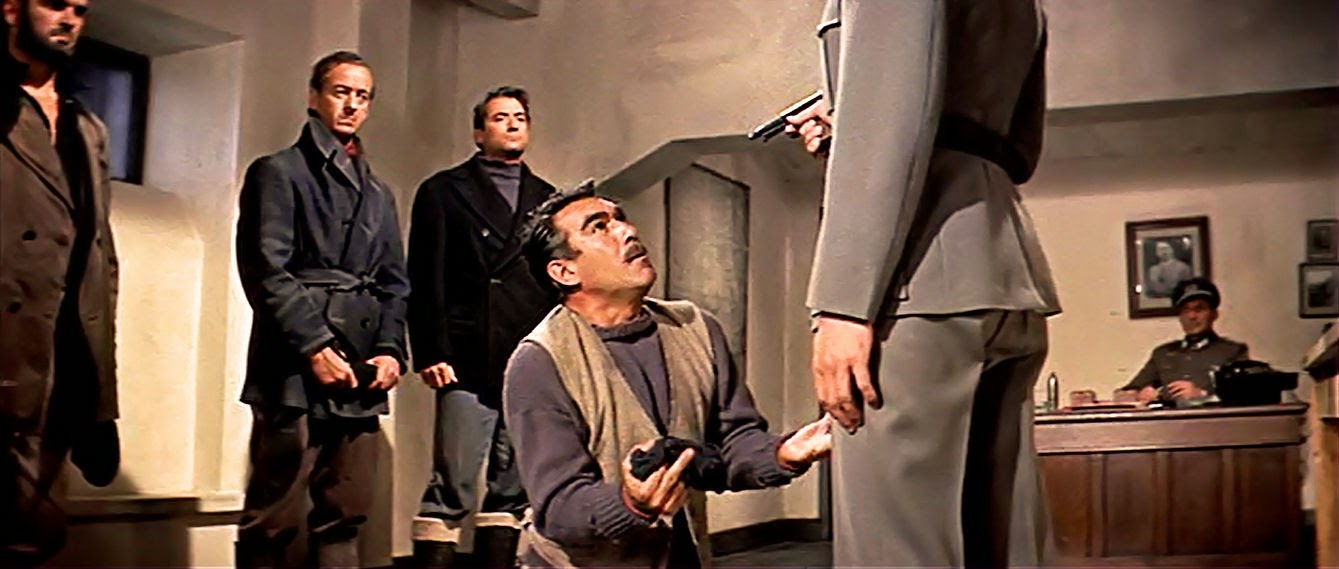
Dirk Bogarde, Sean Connery, Ryan O’Neal and Gene Hackman are among the Generals aiming to go A Bridge Too Far

Director: Richard Attenborough

Cast: Dirk Bogarde (Lt-Gen Frederick “Boy” Browning), James Caan (Staff Sgt Eddie Dohun), Michael Caine (Lt-Col J.O.E. Vandeleur), Sean Connery (Maj Gen Roy Urguhart), Edward Fox (Lt Gen Brian Horrocks), Elliot Gould (Col Robert Stout), Gene Hackman (Maj Gen Stanislaw Sosabowski), Anthony Hopkins (Lt Col John Frost), Hardy Krüger (SS Maj Gen Karl Ludwig), Laurence Olivier (Dr. Jan Spaander), Ryan O’Neal (Brig Gen James Gavin), Robert Redford (Major Julian Cook), Maximilian Schell (SS Gen Wilhelm Bittrich), Liv Ullman (Kate ter Horst), Michael Byrne (Lt Col Giles Vandeleur), Denholm Elliott (RAF Officer), Jeremy Kemp (Briefing Officer), Wolfgang Preiss (Feldmarchall Gerd von Rundstedt), Stephen Moore (Maj Robert Steele)

You’ve got to love a good war film. In fact, there are few things more cinematic than the old-school, star laden Hollywood war film. A Bridge Too Far is for me one of the finest examples of this genre, and it’s a film I come back to time and time again. Is it perfect? No of course it isn’t – in fact I probably love this film more than some of the people actually in it do. But it’s a damn fine piece of big-screen, big-budget film-making, and it’s got a cast of stars. And more than perhaps any other film of this genre, it’s a film about how overwhelmingly awful and gut-wrenching war is. This is a film about a defeat – and not the sort of triumphant defeat that Dunkirk feels like. It’s just a gut-punch. The Allies threw the dice big time, and they lost.

The Battle of Arnhem was one of those “end the war by Christmas” plans. The brainchild of British war-hero Field Marshall Montgomery (noticeably absent from the film), Operation Market Garden was a lightning strike into the heart of the Ruhr to capture Germany’s industrial capability. This involved a series of paratrooper drops into towns in the Netherlands, culminating in Arnhem, to cross the Rhine. While the paratroopers seized key bridges, British Tank Division XXX Corp would power through, cross the bridges and into Germany. It was bold, daring and radical. It was a disaster. Arnhem, far from being undefended, was being used as a rest place for a Waffen-SS Panzer division. The British paratroopers found themselves not seizing a lightly defended bridge, but fighting a tank division with machine guns and limited supplies. Meanwhile XXX Corp’s progress became bogged down in traffic jams and higher than expected German resistance. 

It’s quite something to make a war film about possibly the biggest military disaster on the Western Front during the Second World War. The entire plan is a misconceived tactical blunder, and the film never shies away from this, demonstrating time and again the numerous errors that led to it: from Generals ignoring reconnaissance that suggests this won’t be a cake walk, to paratroopers failing to seize bridges quickly, to tanks crawling down crowded roads, fighting every step of the way. Alongside all this, the film never loses track of the horrifying impact of war on both soldiers and civilians caught in the crossfire. It’s a huge budget, all-action, anti-war film.

Richard Attenborough is the perfect marshal for this film. He has the experience and understanding of scope to handle the action scenes. At the time, this film was possibly the most expensive film ever made. Not only that, it was independently funded – producer Joseph E. Levine thought the film was so important he pumped millions of pounds of his own money into it. The attention to detail is extraordinary – the film consulted nearly every single surviving commander from the battle on the script – and all the stops were pulled out creating the military features of the film. 

This is of course particularly striking now as we know everything in the film is real – no special effects in those days. If you see it in the film, then you know that it was really there. In the sequence showing the planes taking off to deliver the paratroopers to their destinations, there were so many planes in the air that Attenborough could literally claim to command the world’s seventh largest air force. Every military blow of the battle is carefully reconstructed. The tactics are carefully explained and followed. Attenborough can shoot compelling action.

But what makes the film so good (for me anyway) is the way the heart-breaking horror of war never gets lost. In all this action, we are always shown the cost. Attenborough will frequently cut back to the after-effects – several times we hear wounded soldiers whimpering on smoke-filled, body-littered battlefields. Many acts of courage (on both sides) by individual soldiers result only in pointless, gut-wrenching deaths. Arnhem isn’t just damaged by the battle, it’s flattened. The impact on the civilian population is terrible – in a powerful sequence, we see characters we were introduced to earlier mercilessly caught in the crossfire of the German tanks. We return continually to locations increasingly shredded by weapons fire. More and more soldiers are wounded – some horrifically.  Near the end, the remaining British paratroopers, encircled and surrendering, sing a deeply moving quiet rendition of Abide With Me. No one could come out of this wanting to go to war.

Attenborough’s humanity is key to the film’s success. It helps as well that he is a brilliant actor’s director. Want to dispel any doubt on the horrors of Arnhem –then train the camera on the Laurence Olivier’s tear-stained face as he drives through the destroyed streets. Want to understand the sacrifices and the courage? Well just let Anthony Hopkins – simply excellent as the commander of the only forces to reach the bridge at Arnhem – with calm, restrained Britishness request support and supplies late in the film as his men are butchered around him. It’s a film full of brilliant moments of acting like that, where Attenborough points the camera at them and lets them act. 

The sequences around Arnhem and the British paratroopers there are the heart of the film. Sean Connery is terrific as Major General Roy Urquhart, commander of the British paratroopers. His growing frustration as events spiral far out of his control is a great contrast with his initial professional confidence. Gene Hackman, as commander of the Polish forces (slightly odd casting but good once you tune up to it), gets the role of the “one man talking sense” who can smell disaster early on, but works harder than anyone to get the plan to work. A number of the regular soldiers in Arnhem are faces the film returns to again and again – giving us people to relate to as their numbers are increasingly decimated by the savage, desperate combat. John Addison’s score also helps a huge amount with building the emotion in these scenes.

The Arnhem sequences are so good that the other sequences around the American paratroopers feel like they come from a slightly different movie. It doesn’t help that the likes of Elliot Gould are playing slightly clichéd “Brooklyn Yankee” types, chomping cigars and ribbing the stiff-upper-lip Brits. Ryan O’Neal as General Gavin is slightly dull. The XXX Corp material is a little dry (essentially driving up a road or waiting), although Edward Fox is superb (and BAFTA-winning) as their charismatic commander Lt Gen Brian Horrocks. Attenborough puts together at least one terrific set-piece tank battle on the road – but it’s not quite enough.

The two biggest American stars are also given the feel-good, up-beat material. James Caan gets the best part in what is effectively a stand-alone story of a Staff Sergeant going to impossible lengths to save the life of his Captain (Caan had his choice of part and chose well). Robert Redford is a little too starry (bizarrely in a film full of stars!) as a Major tasked to seize the vital bridge at Nijmagen via a daylight river-crossing. This sequence feels like it’s been put in the film to (a) give us something to cheer and (b) to allow an American victory for the box office. Of course, we need the biggest star in the world at the time to play the most straight-forward heroic part!

The film does have a tendency to shuffle its characters into “good” and “bad”. So after Redford seizes the bridge, the character sent to tell him that XXX Corp won’t be rushing across to Arnhem after all isn’t Caine’s Vandeleur, but a nameless Colonel played by Polanski’s villainous Ross from Macbeth himself, John Stride. The most sympathetic generals and commanders are all (coincidentally) the people who served as military advisors on the film.

On the other hand, the film ends up laying most of the “blame” on Dirk Bogarde’s Lt Gen Browning. Browning’s widow, Daphne du Maurier, threatened to sue the film-makers for the portrayal of Browning here (she got an apology). Browning is portrayed as the ultimate “non-boat rocker” – over-confident and arrogant, he disregards intelligence suggesting the Arnhem plan is dangerous, seems shocked and clueless once the scale of the disaster is revealed, and by the end of the film seems to be most interested in positioning himself as always opposed to the plan in the first place. Bogarde (the only actor in the film who actually served in Market Garden) was similarly angry when he saw the film – and he has a point. It’s grossly unfair.

It’s a problem with this film and it does annoy me. The parts not set in Arnhem are not as memorable or compelling as the rest. But huge chunks of the film are brilliant, and never fail to move or (sometimes) excite me. Its anti-war stance is striking. The acting from the cast is very good across the board – say what you like, cast every part with a star and you never get confused about who is who. Attenborough also draws great performances from the non-stars – Stephen Moore is a particular stand-out as a signals man unwilling to voice his doubts about the equipment (and who pays a heavy price). 

I can watch A Bridge Too Far at any time. I always love it. It’s a film of great moments and performances. It carries real emotional weight. Attenborough is a very good director of actors, but also a skilled commander of scale. It’s a film that gets emotion in there. It’s a film that isn’t afraid to present a military disaster. It doesn’t demonise the Germans. Sure it plays goodies and baddies with the Allies, and parts of it to drag on a bit too much or deal with cliché. But at its best is the core of a great film. I love it. It’s a favourite. And always will be.

Rob Roy (1995)


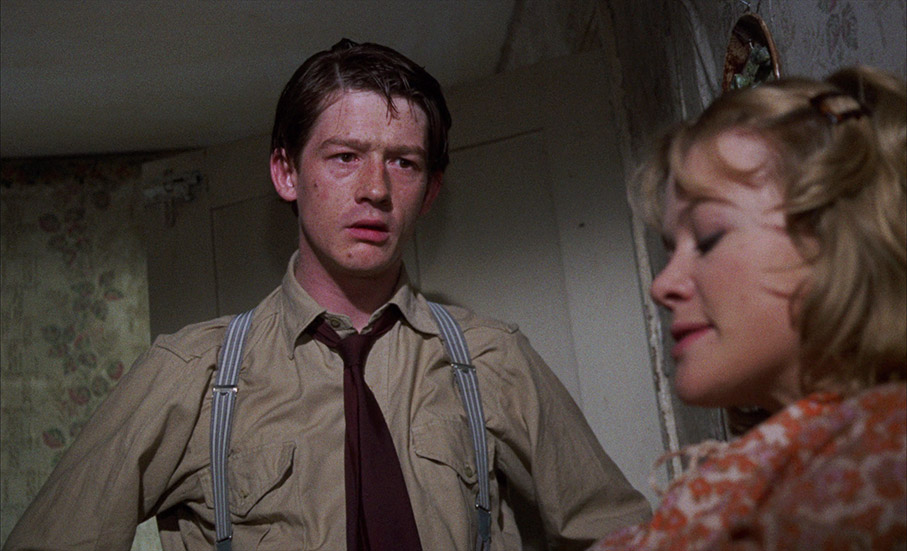
Tim Roth and John Hurt are the villainous aristocrats taking advantage of Liam Neeson’s honour in Rob Roy

Director: Michael Caton-Jones

Cast: Liam Neeson (Rob Roy MacGregor), Jessica Lange (Mary MacGregor), John Hurt (Marquess of Montrose), Tim Roth (Archibald Cunningham), Eric Stoltz (Alan MacDonald), Andrew Kier (Duke of Argyll), Brian Cox (Killearn), Brian McCardie (Alasdair MacGregor), Gilbert Martin (Guthrie), Ewan Stewart (Coll), Jason Flemyng (Gregor), David Hayman (Tam Sibbalt), Shirley Henderson (Morag)

In the mid-1990s there was one of those bizarre Hollywood coincidences that saw two similarly filmed Scottish-based dramas head into production at the same time: Braveheart and Rob Roy. Braveheart stole the headlines, and the Oscars, and turned William Wallace from a footnote in history into an icon of Scottish independence. However, it’s arguable that the over-looked Rob Roy is the better, richer, more involving film.

In 1713, Rob Roy MacGregor (Liam Neeson) is the Chief of the Clan MacGregor, in a loving marriage to Mary (Jessica Lange), and supports his clan through protecting the cattle of the gentry. Knowing that this is not enough to help their poverty, Rob borrows £1,000 from the Marquess of Montrose (John Hurt) to start a cattle trading business. However, on collecting the money, his friend Alan MacDonald (Eric Stoltz) is murdered by Archibald Cunningham (Tim Roth), a foppish playboy and ruthless fencer, who is staying with Montrose and wants the money to clear his debts. Montrose demands Rob falsely testifies that his rival the Duke of Argyll (Andrew Keir) is a Jacobite in return for forgetting the debt – when he refuses, he is named an outlaw and a rebel.

Rob Roy works so damn well because it is thrillingly told, well-scripted, shot with a romantic sweep in some terrific Scottish locations and uniformly excellently acted. It’s perfectly constructed as a classic melodrama, because the heroes are pretty much completely upright, admirable and inspiring (without ever being tiresome or sanctimonious), while the villains are intriguingly shifty and vile, running the gamut from cowardly opportunist to vicious sociopath. Chuck this in with a tightly focused plot, and it works extremely well.

Liam Neeson is perfect casting as the upright Rob. Few people do nobility and decency better than Neeson, and Rob is just about the most stand-up guy you can imagine. You can totally understand why every one of his clan seems to worship the ground he walks on. Neeson’s classical physicality and stance totally sell him as the ultimate highlander, while his kindly eyes and gentle manner make him an obvious fit as an inspiring leader. 

Caton-Jones directs the action with zip, even if the film does perhaps go on a fraction too long. He sets Rob’s decency and honour at the centre of the film, and brilliantly builds the thematic story around the shifting world where old-school honour and decency is being left aside for the more ruthless realpolitik of Montrose. Rob’s old-school decency makes him the kind of hero figure you see in a traditional Western – and Caton-Jones is clearly inspired by the scope and sweep of John Ford Westerns, making excellent use of the mist and the hills. 

The Scottish highlands are our wild plains, the traditional values are those of the homestead – and the communities Rob protects are presented with a warmth and glow that is never galling. A lot of this is due to Jessica Lange’s excellent performance as Mary, a woman of warmth, tenderness but also hard-hearted realism mixed with a sharp strength of will. Lange (and her lilting accent is quite lovely to listen too) handles the events that occur to her as the wife of a rebel with a dignity, but also a fierce rage just below the surface. If Rob is defending honour, she represents it.

But the real strength the film has is its villains. It has three very different but terrific antagonists, each of them brilliantly brought to life by three very good actors. John Hurt brings Montrose a brilliant sense of slightly perverted corruption, the arrogant insouciance of a man who works out there is more going on than he is being told, but not caring so long as he can turn it to his advantage. Brian Cox is excellent as the cowardly, greedy, shallow and bullying land property manager, snivelling and timid beneath his bluster. 

The real swagger through comes from Tim Roth, who is quite superb as the flamboyant sadist and sociopath Archibald Cunningham. Roth marches off with the film, pitching it just right as a man who presents (and lives) a performance to the entire world: a foppish playboy who seems light and disposable, but is in fact a ruthless, dangerous man with no principles and a horrifying capacity for violence. The character has enough humanity to prevent him from becoming a caricature – he’s bitter at being a bastard, he has a strange affection for his mother. He’s aware that he’s the baddie – he just doesn’t care. In fact he loves it. He invites people to underestimate him – and takes a sadistic delight in proving them wrong. He’s a perfect dark reflection to Rob.

The film introduces him demonstrating his terrifying skill with a sword in a sporting duel: and you don’t need a PhD in storytelling to guess that the film is heading towards a second, closing sword duel between our noble hero and his sadistic opposite. When it comes, it’s a belter of a sword fight, brilliantly choreographed, that sums up the whole movie: Rob fights with a broadsword (and the film demonstrates how exhausting swinging one of those can be) and depends on directness and fairness. Cunningham fights with a rapier, is quick, indirect and gleefully delights in inflicting a number of glancing wounds. It’s one of the best sword fights (and uses of combat to communicate character) on film – and it’s engrossing.

Rob Roy is easily overlooked – but it’s a fine film, full of memorable moments and above all stuffed with terrific performances. Caton-Jones shoots the film very well, and works brilliantly with the actors. You’ll remember them all – and you’ll invest in their stories. Yes it is a little too long, and yes sometimes it’s a little too in love with the romance of the highlands – but it’s a smashing, exciting and engrossing film and you’ll certainly find plenty in it to enjoy: not least Roth’s showboating menace.

The Ipcress File (1965)

Michael Caine changes the face of spy films in The Ipcress File

Director: Sidney J. Furie

Cast: Michael Caine (Harry Palmer), Guy Doleman (Colonel Ross), Nigel Green (Major Dalby), Sue Lloyd (Jean Courtenay), Gordon Jackson (Carswell), Aubrey Richards (Dr Radcliffe), Frank Gatliff (Eric Grantby)

In the 1960s, the spy world was defined almost completely by the James Bond films. People had this idea of spies as glamorous, exciting people dealing with action and adventure in exotic locations. John Le Carré had started a counter-trend, but few alternative glances at the world of espionage landed with such skill as this adaptation of Len Deighton’s The Ipcress File.

Harry Palmer (Michael Caine) is a British agent in the secret service. Re-deployed to a section of the secret services headed up by Major Dalby (Nigel Green), he is tasked to investigate the disappearance of a number of leading scientists. But how does this link with mysterious Ipcress file?

The Ipcress File has dated very little – it’s still got a real sense of counter-culture cool, it’s engrossing and exciting, and it still makes comments that ring true about the lack of glamour in the world of espionage. It helps that it’s very well directed and designed, and that it has a star-making turn from Michael Caine (one of three he did in a row, with Zulu and Alfie). The Ipcress File looks and sounds great. It’s got an intriguing plot with twists and turns that still feel surprising and unexpected. It’s a great little spy thriller – and its deliberately small scale helps to keep it feeling fresh and inventive.

The British secret services are low-tech and underfunded. The offices are bare. Dalby’s operation is run out of what seems to a recruitment office. Cars are kept pretty basic. When Palmer is offered a new role, his first question is about a pay rise (he will get an extra £100 per year). There are no gadgets or glamour. Agents are partly selected not for their special skills but for their level of dispensability. The missions they undertake are confused or murky. The division line between allies and enemies is often unclear. Jobs are often boring or of minimal value (or both) – they’re more filing and paperwork than guns and glory.

Harry Palmer is about as opposite to Bond as you can get. He’s insolent. He’s chippy. He’s got a wry sense of humour. He struggles to hide his contempt for the toffs running the secret services. He’s a sergeant from the ranks. But he’s also cultured, well-read, intelligent and charming. He’s a great chef (surely the first film hero who cooks a detailed meal on screen – the shots of the hands were Len Deighton’s by the way). He cracks gags (more for his own amusement), often with a deadpan delivery. He has an eye for the ladies, but is hardly a Bond-style player. He’s a man of depth, who buys decent food, appreciates music and theatre, and carries a slightly bitter counter-culture grin just behind his eyes. He’s probably also the only film hero you’ll see shopping in a supermarket.

Michael Caine is perfect for this role (he went on to play it four more times). It’s a star-making role because he just drips charisma off the screen, while actually often doing very little. He underplays the role extremely effectively, using his natural calm and minimalism in front of the camera. It’s probably hard to appreciate how different it was at the time to see a man with a cockney accent play a lead role in a movie like this – other British film stars at the time had cut-glass RP accents. But Caine has a cheeky, insolent vibe that made him seem like the sort of hero you could relate to – the guy who is just working here, who could probably do a better job of running the show, but will never get that chance. Caine is also stubborn and bloody-minded, a squaddie at heart with a screw-you attitude just below the surface. He fits the role perfectly – and Palmer’s insubordination and sense of not being given his due matches up perfectly with Caine’s own (well publicised) attitudes to his place in this country’s film industry (who can forget his chippy collection of a BAFTA fellowship?).

John Barry’s score has a moody sense of cool that really helps to establish the tone of the film – its humour, its wry bitterness and its mystery thriller status. It’s an endlessly hummable series of refrains that perfectly matches up with the film’s part Third Man, part adventure fable structure. Sidney J Furie’s direction is very sharp and off-kilter, and he shoots many of the scenes as if from the perspective of an observer – the camera is positioned behind objects, or shots take place through cars or phone booths. Objects slightly obscure parts of shots. It gives us a constant feeling of being under surveillance. It increases the sense of tension and paranoia. And it makes the film look really distinctive.

If the film has a major flaw, it’s that its actual plot isn’t that strong. The reveal of the villain is made rather suddenly (and to be totally honest doesn’t really make a lot of sense). The plot line around the kidnap of the scientists is pretty unclear in both its intentions and the threat it poses to the country. The final sequence of Palmer captured and interrogated is a little underwhelming. The overall narrative never quite coalesces into something really compelling. But it somehow doesn’t quite matter, because the film is really a character study around a very cool leading character.


And it’s Caine himself who ends up carrying the movie. He’s a very different type of character. “What is he, some sort of fag?” producer Harry Saltzman apparently asked when he saw the sequence where Palmer gently cooks a proper meal for a potential girlfriend. Perhaps Palmer’s gently eyeing up of a number of women was added to counterbalance the fact that Caine plays him in this sequence as someone genuinely trying to form an emotional relationship. There are beats throughout of him as more Bond-style hero (he wakes up in his flat, and pulls a gun from the bedsheets, a visual slightly countered by the fact we’ve watched him make coffee and flick through the racing news). But really he’s a competent but slightly resentful professional, who knows he has hit a class-based glass ceiling.


The Ipcress File is a terrific movie, that looks unique and has a great soundtrack. It feels like a film that changed how heroes were perceived in British cinema – for all that films like Saturday Night and Sunday Morning had placed working class men at the centre of pictures, The Ipcress File not only made one a hero of a spy thriller, but did so while making him insubordinate and chippy rather than openly rebellious. Caine is quite superb in the lead role, and he never looked back after this – while Harry Palmer is surely a character who deserves some sort of place in a list of great film spies.

Invasion of the Body Snatchers (1978)


Donald Sutherland is lost in the soulless world of Invasion of the Body Snatchers

Director: Philip Kaufman

Cast: Donald Sutherland (Matthew Bennell), Brooke Adams (Elizabeth Driscoll), Leonard Nimoy (Dr David Kibner), Jeff Goldblum (Jack Bellicec), Veronica Cartwright (Nancy Bellicec), Art Hindle (Dr Geoffrey Howell), Don Siegel (Taxicab Driver), Kevin McCarthy (Running Man)

Sometimes, as we look around our office-based world, it’s hard not feel that most of it is taking place on a weary treadmill. That we are going through the motions with no engagement or feeling, that we are all cogs in the same machine. Invasion of the Body Snatchers, like all great science fiction films, taps into this sense of individuality being lost in our modern age, and mixes it with a brilliant dose of Cold-War paranoia. Like much brilliant science-fiction, it offers a window on our world that makes us pause and reflect on our own lives.

Matthew Bennell (Donald Sutherland) is a health inspector (has there been a less sexy job for a hero?) in San Francisco. One day his colleague Elizabeth Driscoll (Brooke Adams) confesses to him that her boyfriend, dentist Geoffrey (Art Hindle), has changed so much that he feels like a completely different person. Turns out she’s not alone in the city – many people are reporting their loved ones have become distant and changed. While Matthew’s friend, celebrity psychiatrist Dr David Kibney (Leonard Nimoy), laughs off their concerns, Jack (Jeff Goldblum) and Nancy (Veronica Cartwright) Bellicec are keen to listen – especially when they find a copy of Jack growing in their home. Can the people of San Francisco really be being replaced by copies in an alien invasion?

Invasion of the Body Snatchers is not just a great remake, it’s a great piece of film-making in its own right. It takes the ideas of the original and ramps them up into a Nixon-era paranoia fest, to create a creepy and unsettling film. It’s a film that perfectly understands the one thing all people value, perhaps more than any other, is their individuality and ability to feel and experience emotions. These are the two things the Pods take from you – in all other respects, the people are unchanged, they’re just unfeeling drones. 

What Philip Kaufman does really well is fill the film from the start with unsettling moments, and hints that things are wrong. The film opens with eerie visuals as the Pods arrive from space and slowly infect the vegetation of the planet. Unusual camera angles and lingering shots pick out people in the frame, behaving suspiciously robotically. Robert Duvall has a wordless (uncredited) cameo as a priest on a creaking swing in a playground – the sound and visuals both insanely unnerving, especially considering Duvall’s wordless intense stare. 

Pod people go about their work of taking over the earth with a relentless, eerie silence. Do they cling to silence so much, so that their piercing screams when they detect a rogue human can be heard? Late in the film, we see several instances of Pod people, freeze, point rigidly at an unconverted human, and then let out an inhuman shriek (it’s unsettling beyond belief). When pursuing humans, the run with a wild pack abandon. Throughout the film, the camera hovers on moments or scenes, asking us to wonder what’s going on. A floor cleaner mindlessly moves his cleaner across the floor and the camera lingers on him for what feels like ages – is he a pod person? Or is he just an ordinary Joe going about his work? Kaufman sprinkles moments like this throughout the film.

He and screenwriter WD Richter also tap into a sadness of the late 1970s – the world of the hippie, where it felt the world might change, is passing. Matthew, David and Jack all feel like old college buddies – you can imagine the three of them hanging out at Woodstock. Jack and Nancy have clung to their hippie lifestyle, but are reduced to running a mud-bath and trying to peddle Jack’s poetry to the bored and uninterested. David has repackaged himself into a soulless, impossibly vain and self-important TV psychiatrist, dishing out cod-advice and lapping up praise at swanky book launches. Matthew is a slightly grubby civil servant. Kaufman and Richter do a great job of suggesting the younger, more idealistic roots of these characters with minimal dialogue and action. It adds a rich theme to the film – are the Pod people and their mechanical, soulless routine just where the human race is going anyway? Is it any coincidence that the invasion takes places in hip San Francisco?

Kaufman shoots the film with an eerie off-kilterness, helped a lot by Michael Chapman’s excellent cinematography. Ben Burtt’s soundscape is also brilliant – from the creak of the swing at the start and the shriek of the Pod people, to the deafening silence late in the film of the almost completely converted San Francisco, as the Pod People go through the motions of their old lives, devoid of emotion. The design of the pods, and the growing replacement humans, is horribly eerie. This creepiness helps hammer home the sense of paranoia as more and more people are replaced by Pod people – leaving us, like the characters, constantly questioning who is “real” and who isn’t? Who can we trust?

Donald Sutherland is the perfect lead for this – he has both a slightly ground-down world-weariness but also a strong sense of maverick individuality. He’s an interesting, challenging actor and he’s very easy to empathise with. A lot of the film’s emotional force comes from the deep friendship (which could perhaps be more) between him and Brooke Adams (also very good). Leonard Nimoy offers a subtle inversion of his Spock persona, taking elements of Spock’s logical coldness and inverting them for both maximum smarm and creep. Goldblum and Cartwright are just about perfectly cast, with Cartwright especially good (and reaffirming her scream-queen skills) as a woman with a surprisingly sharp survival instinct.

Kaufman’s Invasion of the Body Snatchers is easy to overlook in the list of great American 1970s thrillers due to being both (a) a remake and (b) a science-fiction film. But this is an unsettling investigation of an America on the verge of changing from one type of generation to another. It’s unsettling, intriguing and gripping – wonderfully made and very well acted. It’s a film that understands paranoia, isolation and our love of our own individuality more than many others I can think of. It’s one of the great American 1970s films.

The Golden Compass (2007)


How did it all go wrong? The disastrous production of Philip Pullman’s The Golden Compass

Director: Chris Weitz

Cast: Dakota Blue Richards (Lyra Belacqua), Nicole Kidman (Mrs Coulter), Daniel Craig (Lord Asriel), Sam Elliott (Lee Scoresby), Eva Green (Serafina Pekkala), Jim Carter (John Faa), Clare Higgins (Ma Costa), Tom Courtenay (Farder Coram), Derek Jacobi (Magisterial Emissary), Simon McBurney (Fra Pavel), Jack Shepherd (Master of Jordan College), Ian McKellen (Iorek Byrnison), Freddie Highmore (Pantalaimon), Ian McShane (Ragnar Sturlusson), Kathy Bates (Hester), Kristin Scott Thomas (Stelmaria)

After the success of The Lord of the Rings, bookshops were stripped of all epic fantasy novels with a cross-generational appeal by film producers, their mouths watering at the prospect of having another billion-dollar licence to print money. Nearly all of these projects bombed, but I’m not sure any of them bombed harder than this, an attempt to kick-start a trilogy of films based on Philip Pullman’s both loved and controversial His Dark Materials books. What went so completely wrong?

Pullman’s trilogy is set in an alternative-Oxford, where people all have Dæmons, part of their soul that lives outside their body in animal form. It’s a world where the Magisterium, a powerful organisation, suppresses all free thought, in particular all investigation into the mysterious particle dust. Lyra Belacqua (Dakota Blue Richards) is an orphan raised in Jordan College, who saves the life of Lord Asriel (Daniel Craig), who is investigating Dust in the North. Leaving the college with the mysterious Mrs Coulter (Nicole Kidman), who may or may not be involved in a series of child kidnappings, she eventually finds herself drawn more and more into setting right the problems of her world.

The Golden Compass is a film that pleased no-one. Fans of the book generally hated it. The people who hated the books hated it. The people who hated what they had been told the book was about hated it. Why did the studio decide to make a film in the first place about a book series they seemed to know was controversial from the start? If they didn’t really want to embrace the themes of the books, why bother? Pullman’s books are partly adventure stories, partly intricate world building, partly spiritual discussions – and yes partly atheist tracts with a strong anti-Establishment-church bent (with a more general regard for genuine faith). To put it bluntly, that’s a lot of ideas to try and squeeze into a film – particularly a film well under two hours.

So The Golden Compass is a mess that feels like it’s been put together by committee. It’s been cut to within an inch of its life – scenes jump incredibly swiftly from event to event, often with the barest of clunky explanation voiceover (“We’re going to see Lord Faa, King of the Gyptians”) to tell you what’s going on. Pages and pages of dialogue and character seem to be lost. We are constantly told Lyra is “special” but never shown anything that supports or explains this. An Eva Green-voiced infodump opens the film: clearly the producers were thinking about Peter Jackson’s masterful opening to The Fellowship of the Ring, which skilfully introduces everything. This introduction though is about removing all the mystery and magic of the story as soon as possible by stating it bluntly up-front.

The biggest mess is of course the way the film avoids all reference to Pullman’s religious themes. No reference is made at all to the Magisterium being a church. No reference is made at all to religion or faith. Iorek is clearly being held in a Russian Orthodox painted church – but the building is referred to throughout as an “office”. Derek Jacobi plays one of the principal Cardinal antagonists of the third book – no reference is made to his office. The Magisterium is instead just a “shady organisation” – a controlling gestapo-type organisation, with black uniforms and creepy Albert Speer style buildings. The questions of Dust and original sin – so central to the motivations of the story – are completely unexplained, meaning the child kidnapping and sinister intercission the villains are carrying out makes no sense at all. How on earth they planned to continue not talking about religion in their planned third film is a complete mystery.

This rushing is the problem throughout the film. Stuff just happens really, really quickly for no real reason. Characters pop up to introduce themselves for later films, or to drop clunky exposition. Tom Courtenay explains what an aleitheometer is for us (the film constantly brings up this “Golden Compass” and its future-telling properties, without ever really making them feel important for anything that happens in the film). Eva Green flies in to say she’s a witch and how pleased she is to meet Lyra and promptly flies off. Daniel Craig name checks Dust, gets captured then disappears. Sam Elliott introduces his rabbit Dæmon and shoots a couple of things. None of this gets any chance to grow and develop – and you end up not caring about any of these characters. Nearly every plot event from the first book is kept in – but so rushed you don’t give a toss.

The structure of the film has also been changed from the book, and not for the better. The film (probably thinking about later films) increases the presence of the Magisterium throughout – but without really making their antagonist role clear. Lyra and Iorek’s defeat of Iorek’s usurper Ragnar is moved to before the final defeat of the Gobbler’s ice base – this doesn’t make a lot of sense. If Iorek now commands an army of bears, why doesn’t he bring them along for the final battle? Lyra instead wanders up to the base like an idiot, and the film extends the release of the children from the ice base into a big battle in order to give us a Lord of the Rings style finish. It doesn’t matter that nothing in the film feels like it’s building plotwise or dramatically towards this battle – it’s there you feel, because Lord of the Rings had battles and people loved that, so let’s get one in here. 

In fact the film builds towards nothing, because it has been cut so poorly, and is such a terrible compromised product, that everything the books are building towards has been removed from it. So the entire thing makes no bloody sense. The clash with the church and organised religion doesn’t work because all reference to faith has been cut. There are mutterings about a “war” coming, but no one says what it might be about. There is a loose crusade to save the kidnapped children – but we don’t understand either side of this. The cruelly ironic ending of the book, with Lord Asriel’s real plan revealed, is deleted altogether from the film – because the studio didn’t want a “downer” ending. As a result the film just suddenly ends (after a clunky “We’ll go home one day after this, and this, and this, and this, and this, and after we’ve solved all the problems of the world” speech).

Studio interference reeks off this whole film. It’s been cut to ribbons. Ian McKellen and Christopher Lee were parachuted into the cast in order to make the film feel more like Lord of the Rings. McKellen sounds completely wrong as a mighty armoured bear (original casting Nonso Anozie would have been perfect). Lee chips in a single line in what is painfully obviously an addition from re-shoots. Anything potentially different or interesting is cut out. In fact anything that was unique about Pullman’s original books is cut out: as much is done as possible to make Pullman’s story as identikit and standard as hundreds of other bland fantasy dramas. As if they hadn’t realised the book was potentially really controversial in the more traditional parts of the US market, it seems like the studio only really read the books once the film was shot, suddenly realised they had made a massive mistake, and tried to reduce the danger as much as possible by making the film as bland as they possible could.

Chris Weitz is completely unsuited for directing it – and he actually feels like a hostage the more you read about the film’s turbulent production – but it’s not all bad. Dakota Blue Richards is actually pretty good as Lyra – she’s got a certain magic charisma. The set design is pretty terrific – even if it is a lot more steampunk than I pictured the novel as being. The special effects are pretty goods – the Dæmons are well done, and the puff of gold Dust they turn into when someone dies is striking. Some of the adult casting is pretty good – Kidman is just about perfect, Craig is pretty good, Sam Elliott stands out as Lee Scoresby. There are some neat cameos as well – I would have liked to see Jacobi get to tackle the third book, Eva Green is wasted, Tom Courtenay is pretty good. It just all rushes by so quickly. You don’t get the chance to get to know anyone fully. If the book was a bit episodic, this takes that worst element of it and ramps it up to eleven.

The Golden Compass tanked. It tanked so hard, New Line Cinema didn’t really recover. All plans for future films were scrapped. However, it is important in another way. In presenting such a horrifically neutered, stripped-down version of the story, it persuaded a lot of people that books rich in world building and content like this needed much longer than a traditional film to be brought to life. It helped persuade George RR Martin that TV was the way to go when selling the rights for Game of Thrones. And His Dark Materials will now live again as a 10 part TV series in the near future. For all its many, many failures – we owe it something.

Triple 9 (2016)


An all-star cast fail to make Triple 9 a classic, or even a decent watch

Director John Hillcoat

Cast: Casey Affleck (Chris Allen), Anthony Mackie (Marcus Belmont), Chiwetel Ejiofor (Michael Atwood), Clifton Collins Jnr (Franco Rodriguez), Woody Harrelson (Jeffrey Allen), Aaron Paul (Gabe Welch), Kate Winslet (Irina Vlaslov), Gal Gadot (Elena Vlaslov), Norman Reedus (Russell Welch), Michael K Williams (Sweet Pea), Teresa Palmer (Michelle Allen)

Triple 9 that never gets anywhere near fulfilling its potential. You look at the cast and you think “Wow! That has got to be one of the films of the year! Right?” Wrong. Triple 9 is another journey into the macho bullshit of the criminal underworld, where the “good” thieves have honour, the bad thieves are unscrupulous, the cops are all sorts of shades of grey, and the real baddies are foreign gangsters exploiting American criminals. All told with a backdrop of shouting, shooting and doping. You feel, and I suspect the filmmakers feel as well, that the film must be about something – but it really isn’t, it’s a super violent, dark Rififi with none of that classic’s touch.

Michael Atwood (Chiwetel Ejiofor) is a crack crook, leader of a gang that executes difficult jobs on demand for their Russian paymaster, mob boss’ wife Irina (a showboating Kate Winslet). Atwood’s crew includes dirty cops Marcus Belmont (Anthony Mackie) and Franco Rodriguez (Clifton Collins Jnr). Tasked to steal federal investigation data on Irina’s husband, Michael and his crew decide their only chance is to distract the police with a Triple 9 call out – the shooting of a cop. Their target? Belmont’s new partner, hotshot honest cop Chris Allen (Casey Affleck).

Triple 9 isn’t particularly inventive or unique. The problem is it also isn’t very interesting. This is largely because you don’t engage with any of the characters. Atwood is a blank, played by a disengaged Chiwetel Ejiofor. He has a standard sub-plot of a son he isn’t allowed to see. But it’s not enough to get us caring about him. Chris Allen isn’t particularly likeable (Casey Affleck is not the most relatable of actors) so it’s hard to get worked up over whether he’s going to be killed or not. The most interesting character is Anthony Mackie’s Belmont – but he has been saddled with an “I feel growing guilt” sub-plot that you’ve seen dozens of times before.

Perhaps aware that a lot of the writing was paper-thin, the film recruits a number of familiar actors to “do their thing” so that we can shortcut to what sort of person the character is meant to be, by seeing crude drawings of their more famous, nuanced roles. Aaron Paul’s performance will be familiar to anyone who has seen Breaking Bad; Norman Reedus essentially reprises his role from The Walking Dead. Woody Harrelson does his grizzled half-genius, half-dope fiend, difficult man schtick he’s done many times. Only Kate Winslet is cast against her type – and her scenery-chewing enjoyment of the role makes her feel like an actress doing a guest turn, rather than a real person.

Hillcoat’s direction doesn’t bring any of the film’s threads together. It never feels like a film that is about something. Where is the depth, where is the interest? It’s not even a particularly exciting film to watch, with the heist moments not particularly exciting or interesting, and its shot with a wicked darkness that never gets the pulse going. After some initial build-up, the plot never really goes anywhere unexpected, and the final pay-off is stretching for a narrative weight it just doesn’t have. 

Hillcoat and crew obviously feel they are making a higher genre film – but this is really just a pulp thriller, with actors acting tough but never convincing. None of the major events make a massive amount of sense: characters run into each other in a way that stretches credulity, the Russian mob runs its business with a counter-productive brutality, the dirty cops alternate between super cunning and horrendously dumb.  It’s a dumb, badly written movie that never comes to life. It doesn’t even have the real moments of excitement you need to at least grab you while the rest of the film drifts along. Not good. Not good at all. Triple 9? Not even triple stars.

Addams Family Values (1993)


The Addams Family Values: Goth meets summer camp fun in this engaging comedy

Director: Barry Sonnenfeld

Cast: Anjelica Huston (Morticia Addams), Raúl Juliá (Gomez Addams), Christopher Lloyd (Uncle Fester), Joan Cusack (Debbie Jellinsky), Christina Ricci (Wednesday Addams), Carol Struycken (Lurch), Jimmy Workman (Pugsley Addams), Carol Kane (Grandma Addams), David Krumholtz (Joe Glicker), Peter MacNicol (Gary Granger), Christine Baranski (Becky Martin-Granger)

The Addams Family was a serviceable family comedy about a bizarre group of Halloween style characters, who delighted in leading lives of cartoony horror. It drifts along, and was a big hit, but its sequel Addams Family Values is several times smarter, more confident and funnier. As a comedy family saga mixed with cartoon creepiness, it’s hard to beat.

Celebrating the birth of their new child (“He has my father’s eyes” / “Take those out of his mouth”), Morticia (Anjelica Huston) and Gomez (Raúl Juliá) hire a new nanny, Debbie Jellinsky (Joan Cusack) to care for the baby. On her advice, they also decide to send the insanely jealous Wednesday (Christina Ricci) and Pugsley (Jimmy Workman) to a summer camp – needless to say they do not fit in with the All-American, Apple-Pie ideals championed there. Debbie meanwhile has wicked designs on becoming the widow of their rich Uncle Fester (Christopher Lloyd).

Addams Family Values gets a lot of comic juice out of some very witty set-ups. Everyone involved in the film feels more relaxed and happy to let the comedy breathe. Sonnenfeld lets the set-ups come naturally and allows the characters to come to the fore. Every joke in the film comes from watching the characters bounce off their circumstances. Of course, a lot of this comes from the fact the film doesn’t need to do any of the heavy lifting of introducing the world or the characters – it rightly assumes we know what we are getting from the start – but it still makes the film hugely entertaining.

A lot of the humour comes from the brilliant summer camp plotline, with its passive-aggressive, jolly-hockey-sticks owners (a very funny Peter MacNichol and Christine Baranski) and their naked favouritism for the popular kids. Placing the Addams children into a world of normal teenage politics and the forced jollity of adults who would rather still be one of the popular kids at school is a brilliant touch. This clash of values makes for no end of comic glory, culminating in a disastrous Thanksgiving play, which is a triumph of the sad and overlooked over the popular kids (because who watching any film favours the popular kids?).

Christina Ricci is brilliant in this – her deadpan sense of comic timing is spot-on. Every scene and every one-liner is stand-out. The film even finds time for a sweetly semi-romantic plotline between her and loser Joe Glicker (David Kumholtz, also very good as the kind of kid who likes to read A Brief History of Time). Ricci ends up carrying a lot of the film’s comic material, and she’s so perfect in the role that to a lot of us she will always be Wednesday Addams, never mind what she does.

The summer camp plotline is so drop-dead funny and memorable, it rather overshadows the film’s actual plot about Debbie’s attempts to seduce and murder Fester. Sonnenfeld struggles to make this main plot come to life – his real delight is in the sketch-based comedy of the summer camp and the Addams’ love for the grotesque and the extreme. Having said that, Joan Cusack is wickedly sexy and funny as a heartless social climber.

Anjelica Huston and Raúl Juliá remain divinely perfect as a couple so besotted they can barely look at each other without bursting into a steamy tango, or an avalanche of flirtatious foreign language banter. Juliá rips into the dialogue with a flamboyant gusto, and he’s a perfect foil for Huston’s supercool, arch one-liners. Sonnenfeld never lets the introduction of a baby affect their comic darkness in any way, which is a perfect set-up for comedy.

Addams Family Values is terrific good fun and always keeps you laughing. It’s a load better than the original, and has some terrific comic set-pieces in. Sure it’s got a pretty basic plot, but it’s directed with a wicked dryness by Barry Sonnenfeld and its cast are now completely comfortable in their eccentric characters. The tone always seems spot-on between the surrealist darkness and the childish, cartooney horror. It’s a very entertaining film.

Starship Troopers (1997)


Earth’s military might goes up against space bugs in Paul Verhoeven’s militaristic satire

Director: Paul Verhoeven

Cast: Casper Van Dien (Johnny Rico), Dina Mayer (Dizzy Flores), Denise Richards (Carmen Ibanez), Jake Busey (Ace Levy), Neil Patrick Harris (Carl Jenkins), Patrick Muldoon (Lt Zander Barcalow), Clancy Brown (Sgt Zim), Michael Ironside (Lt Jean Rasczak), Seth Gilliam (Cpl Sugar Watkins)

Every so often, a film uses the tropes of bad films so well, and makes such effective satirical digs, that people initially miss the point of what the film is trying to do. This is pretty much what happened with Paul Verhoeven’s Starship Troopers. On the surface a terribly acted, deeply stupid sci-fi actioner about soldiers killing space bugs, Verhoeven actually created a sharply intelligent, wry satire on the very bombastic militaristic fascism it seems to celebrate. This satirical bent was missed not only by the critics, but also the producers of the straight-to-video sequels the film spawned.

In the 23rd century, mankind has reached the stars. But it’s done so by creating a militaristic, aggressive society, where the young are encouraged to join up to the military in order to become “citizens”. Leaving high-school, hotshot would-be-pilot Carmen Ibanez (Denise Richards) joins up – followed by her boyfriend Johnny Rico (Casper van Dien), in turn followed by Dizzy Flores (Dina Mayer), the girl in love with him. Joining the ground soldiers, Ricco and Flores find themselves as the point of the spear in mankind’s war with the Arachnids (the Bugs), a race of (it becomes clear) intelligent and savage insects on a distant planet.

Starship Troopers isn’t really like anything else: it might well be Verhoeven’s American masterpiece, the perfect mix of his love for extreme gore, violence and sex (filmed with lashings of comic colour and playful glee) with keen social satire, the very ideas he had explored in everything from Robocop to Total Recall. At first glance, Starship Troopers serves up the all-action, gun-toting space battle excitement you would expect from its genre. But Verhoeven not only ramps everything up to 11, he also laces the dialogue and action with a keen satirical bent that hammers home the underlying theme of how war essentially (as Verhoeven puts it) “makes fascists of us all”.

The action is regularly interrupted by propaganda newsreel footage, which stresses the importance of sacrifice for the military effort. The military training camps are almost obsessively focused on brainwashing and reducing the young people in them to cogs in the machine, with safety and welfare as very much a secondary concern (the death of a recruit in an exercise is a concern only because it shows careless leadership rather than because of the death itself). Everyone in the film seems to be a perfect physical specimen. Military lives are thrown away through a combination of arrogance (they’re just bugs, this will be easy!) and incompetence, but never with any feeling of responsibility or expression of regret (though the media works hard to adjust all casualty figures wildly downwards).

The film fires shots at everything in the industro-military complex. The foreign policy of this world is ludicrously aggressive and jingoistic. Despite the spin of the propaganda, it’s pretty clear that humanity has started the war itself. The army is like Hitler’s wet dream – sleek perfect bodies, suicidal self-sacrifice, a complete lack of questioning of any orders or directives, a willing acceptance of corporal punishment. This attitude of violence and unthinking aggression is at every point of society – newsreel footage shows children holding guns with grinning soliders, who then proceed to hand out live ammunition. Later children are shown stomping cockroaches, to cries of the “the only good bug is a dead bug!”. Trials are routinely praised for the brevity (one day between arrest, conviction and execution!). It’s a terrifying world.

What Verhoeven does so well is that, while aware of the multi-leveled nastiness of the world of Starship Troopers, he also makes it a pretty effective straight-war movie. It’s exciting and the action quotient is high. Just like the soldiers in the picture, it’s very easy to see the bugs as faceless opponents which it is easy to feel little regret over killing. The battle scenes are high scale – and of course blackly comic in their extreme gore and bloodlust. But you can still enjoy the action – which is why the film works so well as satire. And also perhaps why so many at the time missed the point. Verhoeven makes this as an enjoyable B-movie, by really effectively using the tropes of B-movies. He turns the trashy B-movie into a sort of art exhibit.

That surely also explains some of the casting. I’m not sure how many of the actors are in on the joke. Certainly Casper van Dien and Denise Richards seem blissfully unaware of the satirical bent under the film. These two wooden actors trot through the sort of banal, by-the-numbers plot arcs and dialogue that fill films like these, with van Dien’s jaw as chiselled as granite and Richards grinning no matter the content of the scene. But their honest woodenness is perfect for the film: a smarter actor would have wanted to tip the wink to the audience, but these guys play it totally straight without even a hint that they are aware of the message underneath.

The more satirical element is left to other members of the cast: Michael Ironside has great fun as an almost absurdly fanatical solider, first introduced as a teacher lecturing his students on how the state must come before everything else and violence is the solution to all the world’s problems. Neil Patrick Harris tips a slight nod to the audience as a young man who rises so swiftly through the ranks that by the time we reach the end of the film, he’s a Gestapo-coated secretive colonel. He fits right into the grey militaristic, Nazi design of the military. You can watch all this stuff and simply enjoy the silliness – teenage boys will love this. And when they mature they’ll realise how awful the world it’s presenting is.


Starship Troopers is the ultimate military satire, a film that pushes every single fascist, militaristic society cliché to the limit. The news comes only from state propaganda. Military training involves brainwashing, maiming and slaughter. Education praises anger and violence as a solution to all problems. Verhoeven shoots this all with a grandeur, that pushes the celebration of militaristic violence to the max. 

It’s a film which is brave enough to make its militaristic sequences exciting, to shoot and cut this fascist wet dream with a stirring sense of excitement underpinning all the action. At the end you can celebrate the small victory our heroes celebrate in what is clearly going to be an ongoing war – until of course you realise it’s the victory of a Nazi organisation. The fascist world of the future may bring us sexual and racial equality – but that’s because it’s worked out everyone is needed to feed the grinder. It’s a super-smart satire film that disguises itself as a completely trashy action flick. It’s actually rather brilliant.