The Matrix (1999)

Keanu Reeves and Hugo Weaving defy gravity in ground-breaking sci-fi The Matrix

Director: The Wachowskis

Cast: Keanu Reeves (Neo), Laurence Fishbourne (Morpheus), Carrie-Anne Moss (Trinity), Hugo Weaving (Agent Smith), Joe Pantoliano (Cypher), Marcus Chong (Tank), Anthony Ray Parker (Dozer), Julian Arahanga (Apoc), Matt Doran (Mouse), Gloria Foster (The Oracle), Belinda McClory (Switch)

In 1999 we all waited for the release of a science-fiction film that would change the genre forever. Problem is we all thought it would be Star Wars: The Phantom Menace, when in fact the entire world went crazy for The Matrix. It helped that The Matrix was everything The Phantom Menace wasn’t: tight, exciting, brilliantly made and above-all endlessly, effortlessly and completely cool. And it still is: not even its dreadful, dreadful sequels could dent its genius or legacy. The Matrixis a flash of counter-culture: anarchic, teenage fantasy taking over the main-stream. It’s still brilliant.

Thomas Anderson (Keanu Reeves) is an office-working drone by day, hacker Neo by night, who wishes there was more to life than this. He’s going to get more than he wished for when he’s offered a choice between the “Red Pill and the Blue Pill” (truth or fantasy) by Morpheus (Laurence Fishbourne), leader of a mysterious hacker group with super-human athleticism and strength. Choosing the Red Pill, Neo wakes up to find himself plugged into a massive machine – and that the world he knows is nothing more than a post-apocalyptic cage, a computer simulation known as The Matrix, used by the all-conquering machines to keep humanity docile while they use their bodies as batteries for their empire. Even more than that, Morpheus is convinced Neo is “The One”, a prophesied saviour who will bring an end to the Matrix. Can Neo accept his destiny?

The Matrix is a superb fusion of a whole host of questions that clearly fascinate the Wachowski siblings. Questions of identity come flying to the fore, as well as the battle for individualism in a conformist society. The Matrix has very earnest points to make about learning to embrace the people we really are, which it delivers with a host of references to philosophy and psychology. It could have become indulgent and self-important (a trap the sequels would fall into), but it delivers the story with a crowd-pleasing burst of energy, mixing in film noir, kung-fu and some rather endearing characters that we end up really caring about.

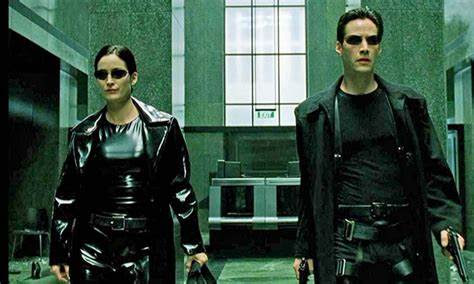
It’s also of course super, super cool. Everything about it passes the test: from the leather trench coats and shades to the high-octane action and the sense that the film is speaking directly to the alienated, authority-nose-thumbing teenager in all of us. This is a film for the people, the under-dog, with something for anyone who has ever felt trapped, bored or oppressed by their fate (i.e. nearly everyone) and reassures them that their dreams of having a special destiny might actually come true. It tapped into people’s joy and fantasy in a way The Phantom Menace totally failed to do.

This is a classic slice of mysticism. It’s not a film as clever as it thinks it is – it’s main calling card is still Alice in Wonderland the go-to for all films musing on dreamlike fantasy worlds – but it still throws a host of fun little questions and thinking points at the audience. Today, its also easier to see how the film is a celebration of counter-culture and sexual fluidity in a way that had to be snuck under the wire in the 90s. It asks (in a simple) way questions about who we are and what is it all about, in a way that really appeals to rebels. It’s the sort of film a Camus-loving teenager who is fed up with their parents, dreams they had the skill to make.

Skill is the key here. This is a superb achievement by the Wachowskis. It’s brilliantly directed, fast-paced and electric. The camera-work frequently makes use of a flurry of flashy tricks (reflections are a common theme), but which never over-whelm the narrative. It’s revolutionary use of freeze-frame camera work – an ingenious invention created “bullet time” where a series of cameras each taking one shot seem to allow us to rotate at normal speed around actors caught mid jump – introduced something we’d never seen before (and was much imitated and parodied later). The action sequences are stunning – a series of high-stakes, super-cool kung-fu-laced punches and kicks that are shot with a fluid camera that manages to seem both classic and deeply immersive.

It also works because our heroes are really underdogs. We are told again and again that they are vulnerable in the Matrix – that for all their gravity defying feats of strengths, when they come up against the “Agent” sentient programmes, they stand little or no chance of surviving. The goodies die with astonishing regularity in the film, and even the leads are shown to be extremely vulnerable in combat. Our empathy for them is so well crafted, that we even forgive the fact that they gun down countless numbers of their fellow humans during the film (it’s handwaved that anyone can become an agent at any time, so the slaughter of dozens of regular Joes is pretty much essential to prevent this).

A lot of that is also down to the excellence of the main performers. The film channels Keanu Reeves instinctive sweetness and gentleness in a way few other films managed to do as successfully before – he’s brilliantly convincing as both the kick-ass hero, but also the endearing fish-out-of-water who says “woah” as Morpheus jumps over a building. Carrie-Anne Moss is determined, assertive and very humane as Trinity while Laurence Fishbourne’s natural poise and authority are perfectly utilised as Morpheus. Opposite them we have a performance of such dastardly, lip-smacking, Rickmanesque consonant precision from Hugo Weaving, that Agent Smith becomes an iconic villain.

It all comes together into a film that delicately weaves a plucky under-dog story of a hero trying to find his purpose around a few perfectly staged, edge-of-the-seat action set-pieces, that hits a perfect balance between a wider-audience and a cool and pulpy indie vibe. It’s the sort of film that will please the masses, but many people will still feel is speaking very personally to them. Hugely influential, it remains a masterpiece of action and science fiction cinema which, while never as clever as it thinks it is, is hugely vibrant in its filming and endlessly, repeatedly exciting when watching.

Dune (2021)

Timothée Chalamet and Rebecca Ferguson excel in Denis Villeneuve’s marvellous Dune

Director: Denis Villeneuve

Cast: Timothée Chalamet (Paul Atreides), Rebecca Ferguson (Lady Jessica), Oscar Isaac (Duke Leto Atreides), Josh Brolin (Gurney Halleck), Stellan Skarsgard (Baron Valdimir Harkonnen), Dave Bautista (Glossu Rabban), Charlotte Rampling (Gaius Helen Mohiam), Jason Momoa (Duncan Idaho), Javier Bardem (Stilgar), Stephen McKinley Henderson (Thufir Hawat), Zendaya (Chani), Sharon Duncan-Brewster (Dr Liet-Kynes), David Dastmalchian (Piter De Vries), Chang Chen (Dr Wellington Yueh)

In the history of “unfilmable novels”, few are perhaps as “unfilmable” as Frank Herbert’s epic science-fiction novel Dune. In fact, in case we were in any doubt, we even have the evidence with David Lynch’s curiosity Dune (either a noble attempt or an egregious mess, depending on who you talk to – I fall between the two camps depending on the time of day). Denis Villeneuve – fresh from his glorious reinvention of Blade Runner – is one of the few directors with the vision and the clout needed to bring this fictional universe to the screen. He delivers a visually stunning slice of cinematic story-telling, that remains faithful to the novel while carefully calculating how much of the story to focus on. It makes for a sweeping, spectacular film.

The set-up in Herbert’s books is labyrinthine, but one of the film’s great skills is to boil it down to something digestible and understandable. It helps as well that, unlike Lynch’s film, this focuses on roughly the first half of the novel only. 10,000 years in the future, mankind travels through space – but space travel is dependent on a spice that can only be mined on a sand-covered planet called Arrakis, populated by colossal worms and a race of mysterious sand-dwellers called the Fremen. Control of the mining operation of the planet is taken from the brutal House Harkonnen, and its patriarch (Stellan Skarsgard), and granted to the more moderate House Atreides and its head Duke Leto (Oscar Isaac). However, this is just a ruse to trap and destroy House Atreides, whose popularity endangers the Emperor. On arrival on the planet, Leto’s son Paul (Timothée Chalamet) is believed by the Fremen to be a long-promised messiah – and Paul is plagued with strange visions of his future. Can he, and his mother Jessica (Rebecca Ferguson), survive and fulfil their destinies?

Dune is a complex, sprawling piece of world-building – the sort of book so stuffed with unique words, concepts and language that it includes a full glossary to help the reader work out what’s going on. Villeneuve’s genius here is to work out exactly how much of that world building to build into the script, and how much to leave out. Where the Lynch Dune tried to cover everything in this universe and seemed to introduce new characters and concepts in every scene (right up to the end), Villeneuve’s Dune is far more focused. It gives enough tips of the hat to readers of the book to be faithful, but doesn’t bother the more casual viewer with what, say, a mentat is or who the Space Guild exactly are. The overload of information that crushed Lynch’s Dune is skilfully avoided here.

What we get instead is a wonderfully focused, coming-of-age story that places the young hero front-and-centre – and filters our experience through his eyes. This not only helps give us a very clear human engagement with this world, it also makes for a highly relatable central arc to build the rest of the world building around. After all, we understand the “chosen-one-finds-his-destiny” story: using that as a very clear framework, allows the wider universe to be slowly and carefully drip-fed around that. It also plays very well to the reader (who will know the unspoken detail and enjoy subtle references to it on screen) and to the initiate (who won’t need to know every last detail of every last character’s background and won’t be overwhelmed by those references).

On top of which, Dune is, in itself, a sumptuous and visually beautiful example of expansive world-building. Fitting a series that has spawned dozens of novels and an entire universe of expanded storylines, endless care and loving attention has gone into creating every inch of this world. Jacqueline West’s costumes brilliantly capture the mix of medieval and space-punk futurism in the world’s design (this is after all a universe which is effectively Game of Thrones in space – one of many franchises to owe a huge debt to Dune) and Patrice Vermette’s set design superbly contrasts the different planets aesthetics. The imagery carefully contrasts the greens and blues (and water!) of the other worlds with the striking yellows and dryness of Arrakis – it’s beautifully filmed by Grieg Fraser – and the scale is epic, re-enforced by Zimmer’s gothic choir inspired music.

Villeneuve marshals this all into a story that is part world-building set-up, part conspiracy thriller and eventually becomes a full-on chase movie. Each shift in story-telling style flows naturally into the next, and Villeneuve keeps the pace and sense of intrigue up highly effectively. He also understands that films like this need a touch of wit and human warmth: Herbert’s book, for all its strengths, is also a po-faced and slightly pretentious read, with every event and character consciously carrying a massive sense of importance. Dune recognises this, and makes sure to mix lightness and touches of humour to avoid the operatic seriousness tipping into being a little silly (as it did in Lynch’s version).

Villeneuve is helped in this by a well-chosen cast. Chalamet is perfectly cast as the naïve Paul, growing in statue and wisdom as the film progresses: he is effectively vulnerable but also a determined and mentally strong hero, one we can have faith in but still feel concerned about. Ferguson is the film’s stand-out performance as his conflicted mother, determined to protect her family. Isaac is perfect as the charismatic and noble Leto, as is Skarsgard as the viciously bloated Vladimir. Sharon Duncan-Brewster is terrific as an official with split loyalties. Charlotte Rampling has a highly effective cameo as a mysterious priest while Jason Momoa gives possibly his finest performance (certainly his warmest and wittiest) as a larger-than-life warrior.

The film glosses over certain elements – in particular the plot against House Artreides, and Leto’s suspicions of it are wisely simplified and stream-lined – and wisely revises or avoids elements of the book that have dated (most notably the slight stench of homophobia around the bloated, predatory Vladimir). In some ways it’s a beautiful coffee-table version of the story, but it’s careful enough to suggest anything we are not seeing from the book is still happening, just off-camera (I await the inevitable Director’s Cut with even more Mentats, Conditioning and Weirding!). However – based on the cinema I sat in – this has worked a treat to win converts over to the story.

A sweeping, impressive and epic version of a huge novel, it’s a triumph of directorial vision and skilful compression and adaptation. By trying to make Dune work for a larger audience, without sacrificing its heart, rather than laboriously include everything and everyone, it successfully makes it into a crowd-pleasing space opera with depth. Catch it on the big screen!

Midway (1976)

Charlton Heston fights in one of the great naval battles at Midway

Director: Jack Smight

Cast: Charlton Heston (Capt Matt Garth), Henry Fonda (Adm Chester W Nimitz), James Coburn (Capt Vinton Maddox), Glenn Ford (Rear Adm Raymond Spruance), Hal Holbrook (Comm Joseph Rochefort), Toshiro Mifune (Adm Isoroku Yamamoto), Robert Mitchum (Adm William Halsey), Cliff Robertson (Comm Carl Jessop), Robert Wagner (Lt Comm Ernest L Blake), Robert Webber (Rear Adm Jack Fletcher), James Shigeta (Vice Adm Chuichi Nagumo)

On 4th June 1942, the fate of the Pacific naval war was arguably settled. The Japanese plan to invade the American base on the island of Midway and, crucially, wipe-out the American aircraft carrier force, instead saw a near total US victory and all four Japanese aircraft carriers destroyed. The story is re-told here as a classic all-star Hollywood epic, with the first hour dedicated to the planning and the second hour to the events of 4th June.

After its – successful – run in the cinemas, Midway was re-edited into a two-part TV mini-series. To be honest, that feels more like its natural home. It’s competently directed by Jack Smight – but no more than that – and revolves around several scenes of star-actors pushing models around maps and less famous actors pretending to fly planes in front of blue-screen. The film makes a proud statement at the start of how it has chosen to use only actual archive combat footage to “honour those who fought” – but this actually, you suspect, was motivated more by the fact it’s much cheaper to purchase and clean up piles of stock footage than it is to shoot things afresh.

The main narrative covers the planning and the crucial day of the battle itself. A brief “human interest” story is introduced via Charlton Heston’s (fictional) Captain Matt Garth, an aide of Admiral Nimitz. Will Chuck improve his relationship with his fighter pilot son, who has fallen in love with a Japanese girl? Whadda you think? Saying that, this rather clumsy human-interest story (which features the only female character in the film) does make some interestingly critical points about the policy of internment against Japanese Americans – stressing both the injustice and explicit racism (American Germans and Italians faced no such fate) behind the policy.

In fact, Midway is very sympathetic in general to the Japanese – as Nimitz even says at the end, perhaps it was less a question of skill than luck that led to the final outcome. The Japanese navy is presented as an honourable and thoughtful opponent, respectful of human life and conducting the war via a code of honour (the kamikaze runs of cliché are completely absent). In particular Admiral Naguma (well played by James Shigeta, in possibly the film’s stand out performance) is a decent man caught-out continuously by horrendous luck and timing, who pays a heavy price. Midway is strong in stressing there is no leeway at sea – get caught out there and it’s the bottom of the briney for you.

The Japanese planning is even slightly tragic in its flawed assumptions – crucially they are totally unaware that their codes are broken and that, far from launching a surprise strike, they are actually sailing into something of a trap – while Toshiro Mifune brings a lot of nobility to Yamamoto even if all he really does is pensively stare at a series of maps.

On the American side, Fonda leads the way, giving Nimitz more than a touch of Fordian home-spun heroism. Heston’s presence does well to link together the various true-life characters and location. Most of the rest of the all-star cast are restricted to one or two scenes: Coburn rocks up to handover a report from Washington, Wagner briefly pushes models across a table in a planning room and (hilariously of all) Mitchum delivers both his tiny scenes from a hospital bed, coated in skin cream.

When the action gets going though, it’s done pretty well with the po-faced, stodgy seriousness these war-time later 70s epics nearly all seemed to have in common. The stock footage does actually look pretty good and the drama of the battle – and the tactics – are captured fairly well. It’s intermixed with some real ships and all scored with a great deal of punch by John Williams. It’s all really B-movie, TV-movie-of-the-week stuff but it’s also far from obviously flag-waving either, instead doing its best to be even-handed and even a little bit critical. You’ll learn what happened and also have a bit of fun into the bargain.

All Quiet on the Western Front (1930)

All Quiet on the Western Front (1930)

War is hell in one of the greatest and most influential war films ever made

Director: Lewis Milestone

Cast: Lew Ayres (Paul Baumer), Louis Wolheim (Stanislaud Katczinsky), John Wray (Himmelstoss), Slim Summerville (Tjaden), Arnold Lucy (Professor Kantorek), Ben Alexander (Franz Kemmerich), Scott Kolk (Leer), Owen Davis Jnr (Peter), William Bakewell (Albert Kropp), Russell Gleason (Muller)

Franklin Roosevelt once said “War is young men dying and old men talking”. Perhaps no film shows that more truly than All Quiet on the Western Front. The first truly great film to win Best Picture at the Oscars, it’s a profoundly influential and unflinching look at the horrific cost of war. Specifically, it looks at how a younger generation buys into dreams of glory and destiny, only to arrive at the front lines and discover they’ve been sold a pup. A sense of glorious purpose collapses into death, mud and misery. War, it turns out, is hell.

All Quiet on the Western Front follows a company of German soldiers during the First World War, plucked from their college to lay down life and limb for the Kaiser. Their unofficial leader is Paul Baumer (Lew Ayres), an intelligent and thoughtful young man. They soon find the frontline is a world away from what they expected, and death moves through the boys like a flu. Over time Paul, with the mentorship of experienced soldier Stanislaud Katczinsky (Louis Wolheim), finds his naïve view of the world torn away with each bullet and failed attack.

In many ways it was brave to make such a large-scale Hollywood epic that placed the side America had actually fought against in the sympathetic role (on the other hand, much easier to look at the losing side and say “you’re fighting for a hopeless cause”). But that makes the film’s message even stronger: it doesn’t matter about sides, war claims young men regardless. The deaths come thick and fast on the Western front – and the gains are negligent. While the boys’ Professor (a pompous Arnold Lacy) sings a familiar hymn of glory and success by Christmas, life on the front line is actually continual terror. Mud, rats, debris and the constant chance the next step you take could be your last. Shelling is non-stop and every inch of the rickety, ramshackle trenches shakes with each explosion. Never mind going over the top, just being there shreds the nerves.

When the attacks come, the film is striking in its modernism and visual invention. Milestone frequently uses intriguing angles and long tracking shots to present an uninterrupted vision of hellish conflict. The film is full of crane shots, urgent camera movements and judicious cutting. The horrors are shown clearly – at one point a soldier literally explodes while cutting through barbed wire, his hands left clinging to the wire, the rest of his body gone. Milestone intercut shots of machine guns firing an arc with the camera moving in a smooth tracking shot as men run towards it and collapse in death. The film is literally shredding its soldiers.

The debris filled, fox-hole spotted no-man’s land the film presents is hellish. It’s a literal minefield of death, with bodies charging backwards and forwards depending on the tide of battle, the camera moving alongside them. For hand-to-hand fighting in the trenches, Milestone shoots the action with a tracking crane shot above the trenches, which stretch like a jagged flesh wound in nature, overflowing with people trying desperately to kill each other. During one charge, Paul lands in a fox hole with a French soldier, who he mercilessly wounds with his bayonet – then spends a dreadful night watching him slowly die. There isn’t any glory here and attack and retreat are both equally pointless. All that really happens is the body count ticking slowly up.

Most of the company are dead well before the film hits the half-way point. After the first big attack, the company goes behind the lines for a meal. Their meal is almost denied them as it was made for a company twice the size of the one that actually reports. It’s a sign of the suffering and hardening to death, that the reaction of the survivors is joy at the unexpected double rations. Later Milestone follows the fate of a single pair of boots, in a beautifully edited sequence that constantly visually focuses on a pair of good boots, while their successive owners meet their deaths.

It’s all so different from how we started, with an Eisenstein-inspired series of cuts to cheering faces as the students sign up. The horseplay at the training camp – where they deal with an officious postman turned corporal Himmelstoss (a puffed up and preening John Wray), overly aware of his own rank and determined to rub the boys faces in it – in no way prepares them for what is to come. This is all too clear from their confused faces at the staging post, a chaos of mud, soldiers and shelling. No wonder no one at home understands what’s happening here – as Paul discovers on leave, when he is repeatedly shocked and disgusted by the casual triumphalism of old-armchair-Generals utterly ignorant of the realities at the front.

All Quiet on the Western Front is so beautifully shot and edited – you can see its influence on so many war films to come – that it’s a shame some of its dialogue and ‘acting’ scenes are now either a little too on-the-nose or overstay their welcome. There are some big themes handled in the dialogue: why are we fighting, what is the point of war, how do we live our lives when they could end at any time – but the dialogue is sometimes a little stilted. It’s also where the film reverts to something more stagey and theatrical and less cinematic and visual. It’s also a slightly overlong film – already a sign that Hollywood had a tendency to equate “important” with “long”. Most of the films’ points are well made by the first hour, and the second hour or so often repeats them.

However, those concerns are outweighed by how much there is admire. Lew Ayres is very good as the noble Paul – the film had such a profound effect on him he became a life-long pacifist, a conscientious objector in WW2 who served as a front-line medic. Louis Wolheim is superb as the rough-edged but decent and kind Kat, a senior soldier taking the new company members under his wing and teaching them nothing is more important than the next meal and no unnecessary risks.

All Quiet on the Western Front takes place in a naturalistic quiet, with no hint of music to interrupt the mood. It is an overwhelmingly powerful movie about the pointlessness and cruelty of war – and the lies that young men are told to fight it. When Paul returns to the homefront – and sees another class of boys being inspired to die for their country by his Professor – he denounces the whole thing (and is promptly branded a coward). War is a cycle that eats everyone it comes into contact with and has no logic behind it. Directed with verve and imaginative modernism by Milestone, this is a brilliant picture, one of the first sound masterpieces – and still one of the greatest war films ever made.

The Edge (1997)

Anthony Hopkins and Alec Baldwin take on nature (and a bear) in The Edge

Director: Lee Tamahori

Cast: Anthony Hopkins (Charles Morse), Alec Baldwin (Robert Green), Harold Perrineau (Stephen), Elle Macpherson (Mickey Morse), LQ Jones (Styles), Bart the Bear

During a trip to a remote part of Alaska to celebrate his birthday, millionaire Charles Morse (Anthony Hopkins) is stranded hundreds of miles from rescue after a plane crash. The only other survivors are Robert (Alec Baldwin), a photographer Charles suspects of having an affair with his much younger wife Mickey (Elle Macpherson), and Robert’s assistant Steve (Harold Perrineau). Their best chance for survival may well be Charles’ photographic memory and his recall of all sorts of knowledge, recently topped up by reading a survival book. They’ll need it if they are to defeat and kill a man-hunting grizzly bear that swiftly dispatches Stephen.

With a script by David Mamet and some tight, tension-filled direction from Lee Tamahori, The Edge is a well-above average survival film where the main interest is less on the methods of survival than on the spiky, punchily-written interplay between Hopkins and Baldwin. The style of both actors – Hopkins channelling a zen-like calm, while Baldwin goes for a spiky flamboyance masking vulnerability – makes them a very well-matched pair and ensures The Edge constantly has something to entertain and intrigue in every scene.

The Alaskan outback is beautifully filmed, but still oppressively dangerous – a vast canopy of nothing but trees, mountains and snow. The film conveys a brilliant sense of the intense cold – our heroes almost die immediately due to exposure, after crashing into ice cold water – as well as the never-ending difficulties of navigating and surviving in the wilderness (almost inevitably their first day is spent walking in a large circle).

That’s before you even take into account the bear. Much of the film is taken up with Charles and Robert setting aside their differences to take on this killer creature, dodging its advances and finally laying a trap to slay it. Played by experienced acting bear Bart – who even gets an extra special credit all of his own – this creature serves as a superb embodiment of all the natural obstacles our heroes are facing, a running and clawed representation of the dangers of the wild made flesh. It also makes for a series of very tense confrontations.

What’s fascinating about the film though is that the real outback hero who emerges is not the jet-setting Robert, but the bookish and reserved Charles. This is one of the few films where a photographic memory and an ability to stay calm and collected make for practically superhuman skills. Hopkins is very good as Morse, a thoughtful man who surprisingly finds a greater sense of purpose and drive in the wilderness than he ever had in his business life. Mamet’s script delights in the titbits he has memorised, from building compasses to celestial navigation and the psychological requirements for staying alive in the wilderness.

Hopkins’ coolness is used to great effect – even if Charles seems an unlikely millionaire businessman – and contrasts wonderfully with Baldwin’s energy in the showier role as a weaker man. The Edge – originally titled by the even less inspired name of Bookworm – rather sweetly celebrates the virtues of wide-reading, education, curiosity and intellectual magpieism and shows how these qualities can be turned to life-saving effect. Charles turns out, to a certain extent, to be in his element – and without a doubt without him everyone would have died long before the inevitable rescue helicopter.

The Edge also covers a neat line in psychology. A constant refrain is that psychological collapse – a sense of giving up, rooted in ‘shame’ and assumptions that their fate must be deserved – is the key danger to survival. It’s a theme that the film constantly returns to (perhaps a little too much at times), but also ideas that I’m not sure survival films have focused on so keenly before. Usually in these suggestions gruffness and manly qualities are celebrated, but The Edge suggests that the wilderness is a great leveller and sometimes skills we did not expect become crucial to our survival. Sure, Charles sets about killing the bear with a ruthless determination – but his plan to do it is rooted in his learning and mastery of trivia.

The Edge doesn’t rework the wheel, but it’s a lovely piece of B-movie film-making, full of tension, fine dialogue and some impressive acting.

Schindler's List (1993)

Liam Neeson and Ben Kingsley excel in Spielberg’s masterpiece Schindler’s List

Director: Steven Spielberg

Cast: Liam Neeson (Oskar Schindler), Ben Kingsley (Itzhak Stern), Ralph Fiennes (Amon Goth), Caroline Goodall (Emilie Schindler), Jonathan Sagall (Poldek Pfefferberg), Embeth Davidtz (Helen Hirsch), Malgorzata Gebel (Wiktoria Klonowska), Mark Ivanir (Marcel Goldberg), Beatrice Macola (Ingrid), Andrzej Seweryn (Julian Scherner), Friedrich von Thun (Rolf Czurda)

It was the film Spielberg spent over a decade building up the courage to make. Schindler’s List not only marked a new era for him as a film-maker, it also helped a wider audience directly confront the horrors of the Holocaust. At a time when Holocaust denial was starting to rise, Schindler’s List straight-forwardly but powerfully placed the reality of this crime firmly in the eyes of the world. Schindler’s List today remains one of the most emotionally powerful Holocaust movies, the standard to which all others are judged – and peerless example of committed and passionate film-making.

Based on Thomas Keneally’s Booker-prize winning “non-fiction novel” Schindler’s Ark, the film is set in Krakow during the Second World War. As the German occupying force crowds the Jews into the overcrowded Ghetto in the first step of what will become systematic extermination, Oskar Schindler (Liam Neeson) arrives in town looking to make his fortune. Charming, gregarious and quick with a bribe, Schindler soon makes friends with senior SS members. Setting up an enamelware factory to supply the Wehrmacht, it is staffed entirely by cheap Jewish labour (supplied by the SS) and run by skilled Jewish accountant Itzhak Stern (Ben Kingsley) while Schindler handles ‘public relations’ (bribes and schmoozing) with the SS. But, over time, Schindler struggles more and more to close his eyes to the murder of the Jews – a fact made even more prominent with the arrival of brutal SS commander Amon Goth (Ralph Fiennes).

Schindler’s List is chillingly, shockingly honest in its depiction of the horrors of the Holocaust. But it’s easy to forget how cunningly and gently it eases you into the nightmare you are about to watch. This is after all a film that uses Schindler as its POV character. What we are experiencing is his perception of the Holocaust, and through that trying to grasp what could potentially have made this opportunist and profiteer into a humanitarian. As such, the film is careful to give a slow build to the monstrous genocidal fury of Nazism.

In fact, much of the first thirty minutes could almost play out as a sort of triumphant against-the-odds success of a morally flexible charmer. There are a surprising number of laughs in that opening thirty minutes, at Schindler’s chutzpah and weakness for a pretty face. The opening sequence is a delightful demonstration of his confidence: we know he has nothing but the clothes he stands up in and what cash he can scrape together when he enters a nightclub frequented by the SS bigwigs we needs to impress. When he walks in no-one knows who he is: by the end of the evening a waiter is dumbfounded another guest doesn’t know who Oscar Schindler is. Much of the first act is a chronicle of Schindler playing the angles, crossing the right palms with silver and charming left right and centre to make himself a somebody from nothing.

Imagine you didn’t know what the Holocaust was. You’d think this could be a very different film. There are clues: the unspoken loathing Ben Kingsley’s Itzhak Stern clearly feels for this man who smilingly hires cheap Jewish workers from the SS (the workers get nothing) to staff his factory. The fear any Jewish character expresses when confronted with a German officer. The desperation and dirt of the Ghetto. But, like Schindler, there is enough there for you to think “yeah, it’s tough on the Jews, but it’s could be worse, it’s not my problem”.

Schindler wants to be thought of as a good man, but deep down he knows he isn’t: you can see his discomfort when he’s thanked by a one-armed man Stern has inveigled into working in the factory. He already knows he doesn’t deserve thanks – guilt that expresses itself at anger against Stern for hiring a one-armed ‘machinist’ in the first place. After all he’s running a business here.

That one-armed man is the first death we see, executed at a roadside for not being able to shovel snow from the road. Any chance of turning your face away again is lost with the arrival of Amon Goth to liquidate the Krakow Ghetto and build a new concentration camp. Played with a bloated, dead-eyed sadistic sadness by Ralph Fiennes (Goth bitches constantly about his workload, drinks to excess and is as desperate to be liked as he is uncaringly brutal), Goth oversees acts of inhumanity that leave the viewer shocked and appalled.

Spielberg films the liquidation of the Krakow Ghetto like a documentary observer and doesn’t flinch from the brutality: summary executions, dead bodies left in the street, the late night slaughter of any hiding in the Ghetto. Doctors euthanise their patients (who drink the poison with thanks in their eyes) before SS guards can machine gun them in their beds. Spielberg embodies this in a single red-coated girl (one of the few splashes of colour in the film), who walks through this nightmareish hell, witnessed from a hill by the horrified Schindler. Later the same red-headed girl will be wheeled on a cart of twisted, exhumed bodies to be thrown onto a bonfire of rotting corpses.

It’s but an entrée into the nightmare of Goth’s camp and the later hell of Auschwitz. In the camp, Goth snipers those not ‘working’ from the balcony of his hilltop villa. Anyone can be executed at any time. Selections see naked inhabitants of the camp running in circles, the weak pulled out to be dispatched to the death camps. Mountains of corpses are burnt, their ashes falling like snow on Krakow. Later, a misdirected train of Schindler Jews arrives in Auschwitz where human ashes form a constant mist. Terrified the women are stripped, their hair removed and herded into a shower room: the terror of this sequence alleviated only when water not gas falls from the shower heads. Spielberg shoots all this with a careful but horrific immersiveness, which never lingers on horrors but always acknowledges them while moving you onto the next terror.

You can criticise Schindler’s List for focusing on the few thousand who survived this senseless barbarism rather than the millions of dead – but the film offers a cause for hope. That, even when things are at their worst, people can decide to do good. Itzhak Stern (a beautifully judged, deeply humane performance from Ben Kingsley) calls the list “an ultimate good”, with everything around it evil. Faced with such horrors, perhaps we need to know that a man like Oscar Schindler can turn the skills he used to enrich himself towards saving lives: bribing officials, spinning stories, presenting a front to his SS partners of an uncaring businessmen while saving as many lives as he can.

Played with huge charm and authority, mixed with a fascinatingly unknowability by Liam Neeson, the film bravely never offers a definitive answer as to what turned Schindler into a man dedicated to others rather than himself. There is no single moment where he makes the conscious turn, instead the film presents the shift as a gradual but inevitable change: as the real-life Schindler himself said, in such a situation there was no other choice.

Schindler’s List isn’t perfect. Despite his best efforts, Spielberg’s sentimentality creeps in. Neeson’s final scene takes things too far, culminating in a blatantly manipulative breakdown, weeping that he did not do more – as if Spielberg is worried we didn’t get the point. Some moments lean into Hollywood convention, from Goth’s gun repeatedly misfiring when attempting to execute a worker (who survives) to Goth and Schindler cutting cards to decide the fate of Goth’s brutalised maid Helene (a sensitive and heartfelt Embeth Davidtz). But what it gets right far outweighs this.

Spielberg presents the Holocaust with unflinching emotion and a carefully controlled sense of moral outrage. Beautifully (some argued too beautifully) filmed by Janusz Kaminski in cool black-and-white with a sensitive score from John Williams, it introduced the Holocaust to an entire generation. No other director could perhaps have done that.

In a sense Spielberg’s career was building towards this, his mastery of cinematic language (this is a superbly edited film by Michael Kahn) utilised not for thrills but to illuminate one of the darkest hours of history. But with that, it also provides hope for humanity, perhaps the key to its emotional impact. The acting is sensational – Neeson has never been better, Fiennes is extraordinary, Kingsley far too easily overlooked as the film’s heart. Traumatising, horrifying but vital and essential, Schindler’s List brings to life with deep respect the worst of history.

Downfall (2004)

Bruno Ganz excels as Adolf Hitler in Downfall

Director: Oliver Hirschbiegel

Cast: Bruno Ganz (Adolf Hitler), Alexandra Maria Lara (Traudl Junge), Ulrich Matthes (Joseph Goebbels), Juliane Kohler (Eva Braun), Corinna Harfouch (Magda Goebbels), Heino Ferch (Albert Speer), Christian Berkel (Professor Ernst-Gunther Schenck), Matthias Habich (Professor Werner Haase), Thomas Kretschmann (Hermann Fegelein), Michael Mendl (General Weidling), Andre Hennicke (General Mohnke), Ulrich Noethen (Heinrich Himmler), Birgit Minichmayr (Gerda Christian), Rolf Kanies (General Hans Krebs), Justus von Dohnanyi (General Burgdof)

Few people had such an impact on the 20th century than Adolf Hitler. Countless dictators unleashed genocide and war, but few on Hitler’s scale. His dark presence lingers like a cancer on German history, an existential guilt the country has spent generations trying to exorcise. Chronicling the final days of Hitler in his Berlin bunker, told with cinematic verve and documentary realism, Downfall was the first German film to directly tackle Hitler. Perhaps it needed a German film to present a Hitler who felt real rather than an under-the-bed monster – and was able to look into his darkness, and the horror of his world, in a way few films have ever done.

Downfall was controversial on release for ‘humanising’ Hitler. Certainly, the film shows a man capable of consideration and even moments of warmth. But it’s never in doubt a man can be kind to a secretary or affectionate to a dog and still be a sociopath who greets news of young soldiers dying with the words “that’s what young men are for”. Can still be so wickedly egotistical he decides the entire German population should join him in immolation while manipulating with quiet emotional pressure as many of his followers as possible to join him in suicide. Watching the film, you cannot escape Hitler’s monstrous destructiveness, his complete lack of empathy and his instinctive, brutality.

Much as we might not want to face it, Hitler was human: a ruthless, megalomaniac and genocidal one. Part of the fascination of the film is watching those closest to him – Eva Braun, his secretaries, his immediate staff – try to reconcile the kinder private man they know with the one they hear screaming for his Generals to be shot and ranting about Jews and his desire to annihilate entire populations. At one point Eva Braun tells Junge that when saying those things “he is being the Fuhrer” – as if Hitler and the Fuhrer are some hideous Jekyll/Hyde monster.

Downfall charts the final spiral of Hitler as he goes through the stages of grief at his impending defeat. Self-confidence turns into carpet-chewing anger, when reality becomes unavoidable. Grief mixes with fury as Hitler blames everyone – his Generals, his followers and finally the German people themselves – except himself. Never once does the film offer the slightest shred of sympathy for Hitler, this nightmare being all his own creation, consuming him just as it consumed tens of millions before.

As Hitler, Bruno Ganz is quite simply phenomenal. Studying for months film of Hitler, Ganz captures his physicality perfectly – adding Hitler’s likely (undiagnosed) Parkinson’s, a twitching hand he constantly hides behind his back like a nervous expression of his doubt. In private conversation, Ganz’s Hitler is polite and even a little warm, but never anything less than a monster of self-absorption. His favourite topic is himself, and his quiet expectation that everyone should join him in death is matched only by his cold dismissal of those who fail to live up to his twisted standards.

This is nothing to his furious outbursts at those perceived to have betrayed him. His spittle-fuelled rants perhaps only come close to the true carpet-chewing bawlings Hitler was apparently capable of, but they are tour-de-forces of relentless fury and self-pity. Ganz plays Hitler with empathy, but makes it very clear Hitler was incapable of such an emotion himself. The suffering of others is nothing to him. He sheds tears over the death of his dog and barely bats an eyelid at the deaths of thousands: instead they are a perverse monument to himself.

Nazi Germany is the country he created, and Downfall is exceptional in showing how the last days of the Reich were like the final hours of a cult. Few things display this better than the Goebbels themselves. Ulrich Matthes chilling Goebbels is so consumed with devotion for his leader, weeping when ordered to survive and continue the fight, that he cannot imagine living without him. Like Hitler, his fury is reserved for the German people – to him the German people chose their fate and cannot complain that their throats are now being cut.

This is matched by the devotion of his wife Magda, played with a chilling, twisted sadness by Corinna Harfouch, so devoted to Nazism and Hitler she decides (with the logic of a twisted fanatic) her children should die rather than live in a world without them. In a quietly devastating, almost impossible to watch, scene she feeds them ‘medicine’ (actually a sleeping agent) – her eldest daughter, sensing something is wrong, resists desperately before being force fed – then silently breaks a cyanide capsule in each of their mouths, with a kiss to each forehead. Everyone in the bunker knows this happening, but no one stops her. In this cultish world, where death is normalised and suicide expected, it’s only natural.

The second half of the film is a rash of suicides. A German doctor, his hands filthy with the euthanasia programme, detonates two grenades at a dinner, killing his whole family. The Goebbels shoot themselves and order their bodies cremated in a grim echo of Hitler’s own fate. As survivors plan a breakout, an officer calmly states he’s not leaving and shoots himself in the mouth – no one bats an eyelid. Hitler hands out cyanide capsules like candy, the unspoken expectation constant.

This callous brutality and nihilistic embracing of death is constant during the grim, pointless, desperate battle for the city. Indoctrinated children are press ganged into the front-lines and then choose suicide over surrender. Lynch mobs prowl the streets, executing anyone not seen to be fighting – mostly old men, disabled veterans and anyone not holding a gun. The film never suggests the German people are victims, but suggests the final target of the Nazis was Germany itself.

The film is a long spiral into an anti-chamber of hell. After the opening half hour, the Russian advance means the action retreats almost entirely underground into the bunker. In this subterranean world, the cast slowly thins out as people seize their chance to flee, leaving only the most deluded, hard-boiled and fanatical. Generals may protest Hitler’s denunciations of the ordinary soldiers, but will pull their guns on anyone who even suggests the idea of surrender.

In a country where Hitler has encouraged a denial of reality, the scheming and jockeying for position continues even in this madness. Even those who see the end is here are still deluded: Himmler firmly believes a brief chat with Eisenhower will be enough for the SS to be entrusted with maintaining the peace against Bolshevism. Only Speer (played perhaps with too much sympathy by Heino Ferch, in the film’s one mis-step) is clear eyed about what is happening.

Downfall is relentless and eye-opening in destruction of the final days of the Reich. Its reconstruction and research is faultless and acting breathtaking. Framing the device through the experiences of naïve secretary Traudl Junge (an excellent Alexandra Maria Lara), we get a sense of how the scales slowly and painfully fell from the eyes of the German people. It’s atmosphere of oppressive claustrophobia and bleakness is expertly done, with events swiftly and awfully spiralling down into one where death becomes an unremarkable inevitability. No one could come out of this either admiring Hitler or seeing anything in Nazism other than a twisted cult that consumed its followers with the same blood-curdling carelessness it did its millions of victims. Hitler may have been a human, but Downfall makes clear he was never humane.

Picnic (1955)

William Holden stirs up a small-town – and Kim Novak – in Picnic

Director: Joshua Logan

Cast: William Holden (Hal Carter), Kim Novak (Madge Owens), Rosalind Russell (Rosemary Sydney), Betty Field (Flo Owens), Susan Strasberg (Millie Owens), Cliff Robertson (Alan Benson), Arthur O’Connell (Howard Bevans), Verna Felton (Helen Potts), Reta Shaw (Irma Kronkite)

In a small Kansas town in the early 1950s, everything is sweet as apple pie. But under the surface, tensions bubble – and it only takes a stranger changing the status quo to make them explode. In William Inge’s Pulitzer-Prize-winning play – bought to the screen by original Broadway director Joshua Logan – that stranger is Hal Carter (William Holden), failed sportsman, actor and college drop-out, drifting into town looking for a new start from old friend Alan (Cliff Robertson). But Hal, an amiable screw-up, quickly puts himself in the middle of a love triangle between Alan and his girlfriend Madge (Kim Novak), the local beauty tired of being judged only by her looks.

All this eventually explodes into a series of furious confrontations where the true colours of various participants are revealed. In the 1950s Picnic looked like a criticism of the cosy conservatism of small-town America. But today, it actually feels more than a little nostalgic for the lost innocence of those times. Sure, some people in the town are less than sympathetic, or their lives have been crushed by the expectations of others. But generally, with its pastel colour palette and its generally fundamentally well meaning characters, it now feels a rather reassuring watch.

Like many films that pushed the envelope at the time, it also looks rather tame today. The film is strong on demonstrating the impact of the sexuality of a topless Holden on the women of the town – nearly all of whom go weak at the knees. But generally, the film’s sexual content now looks remarkably safe and gentle. A sense of powerful longing for something missing from their own lives does comes across strongly – Russell’s Mrs Sidney, worse for wear from drink, ends up feebly trying to pull up Holden’s trousers to look at his legs while dancing. But the sexual outbursts largely restrict themselves to that and a few passionate clinches.

Logan’s film throws in a few big visuals (such as the closing helicopter shot as a bus drives out of town) and clearly enjoys its location shooting, but remains stage-bound. Several scenes translate across exactly to backyard locations, the same sets in all but name that appeared on stage. It also struggles to fill the cinemascope screen, for all that James Wong Howe’s photography has a certain Autumnal beauty to it (you won’t see any vibrant greens, reds or yellows). In addition, many of the actors go for somewhere between naturalism and a mannered Broadway show-boating.

Perhaps the main issue is that film dwarves this slight and intimate story. Moments of intimacy that on stage you feel carry impact – heartfelt declarations and tortured confessions – don’t carry nearly so much on screen. In fact, the story ends up feeling rather slight and even predictable: the drifter has depths, but the town unfairly turns against him, the old-maid schoolteacher is deeply frustrated, the local beauty juggles depression, the good natured son of the local bigwig is a self-entitled bully. None of this really feels revelatory and, on screen, easily drifts by with little impact.

Logan’s stagy style also has a mixed impact on the acting with some going for a cinematic underplaying, and others inspired by a theatrical grandness to embrace the big moments. Leading the way in that camp is Rosalind Russell who gives a strong performance as the frustrated schoolteacher, but frequently allows herself to go a little too far in moments of emotional outburst. It’s particularly noticeable as she’s paired with Arthur O’Connell (reprising his Broadway role, and getting an Oscar nomination) who underplays with a quiet wit and honesty.

One of the film’s principle problems are with the two leads. William Holden gives a fine performance – fun-loving and kind but also cutting a rather sad and tragic figure behind the bonhomie – but is blatantly too old for the role. Hal is probably meant to be in his 20s – Holden was 37 and, with his craggy face, actually looks older. While it does add a level of Hal being increasingly irresponsible for his age, the part really means a charismatic youngster dripping sex appeal (think James Dean – Paul Newman was turned down for the part). Opposite him the inexperienced Kim Novak does, at times, give her line readings a striking genuineness but at others comes across as slightly wooden.

A stagy and slightly old-fashioned watch today, Picnic was nominated for several Oscars, but increasingly looks rather like a celebration rather than a gentle criticism of the small-town values it depicts.

The Awful Truth (1937)

Irene Dunne and Cary Grant flex their comic muscles to outstanding effect in The Awful Truth

Director: Leo McCarey

Cast: Irene Dunne (Lucy Warriner), Cary Grant (Jerry Warriner), Ralph Bellamy (Dan Leeson), Alexander D’Arcy (Armand Duvalle), Cecil Cunningham (Aunt Patsy), Molly Lamont (Babara Vance), Esther Dale (Mrs Leeson), Joyce Compton (Dixie Belle Lee), Robert Allen (Frank Randall), Robert Warwick (Mr Vance), Mary Forbes (Mrs Vance), Skippy (Mr Smith)

Lucy (Irene Dunne) and Johnny (Cary Grant) Warriner divorce because both of them are constitutionally incapable of being faithful. But yet, they also pretty much can’t stand the idea of the other being with anyone else. Can they face The Awful Truth that they are, in fact, perfect for each other? This is a feuding husband and wife who enjoy the horrified looks on the faces of other people as much as they enjoy seeing how far they can push each other.

When winning the Oscar for Best Director for this film, Leo McCarey believed he actually deserved it for his more serious melodrama about the struggles of the elderly, Make Way for Tomorrow. While Make Way for Tomorrow might well be a more serious work, and not the souffle of The Awful Truth, I’m pretty sure far fewer people over the past 80 odd years have found revisiting it such a delight as going back into The Awful Truth. Perhaps the eponymous truth for McCarey was that we are never the best judges of our own work.

The Awful Truth is possibly the best, funniest, remarriage comedy ever made. It was pulled together almost from nothing onset. Nominally an adaptation of a play by Arthur Richman, McCarey effectively dumped almost the entire plot and instead largely improvised the film and its plot on set as he went, throwing in jokes, plot developments and bits of business depending on what worked with the actors on the day. Producer Harry Cohn would arrive on set to find McCarey plinking on a piano, swopping stories and coming up with ideas for what they would shoot that day. From this the director would decide on the structure of the scene, the jokes and most of the dialogue. No wonder Cohn was pulling his hair out.

Sounds like chaos right? The stars certainly thought so. Grant was terrified. Prior to this a reliable Studio actor, used to being given the lines and standing where he was told. Finding out here that McCarey wanted something loose and improvisational, at first he was all at sea – even offering instead to buy himself out of the film. But McCarey saw something in him: in fact what he saw was “Cary Grant”. The Awful Truth is the moment the Grant we all know came to be: sophisticated, arch and a masterfully relaxed light comedian (rumour has it, at least partly based on McCarey himself). From hating the experience, Grant suddenly realised it was inspired. The same went for his co-stars: Dunne, Bellamy and the rest all excitedly contributed their own ideas and business into what became one of the greatest comedies of all time.

The Awful Truth is frequently laugh-out loud funny, a perfect combination of witty lines delivered with pin-point perfection. Many of the best lines fall to Irene Dunne’s Lucy, from denying an affair with her latest beau (“That’s right Armand. No one could ever accuse you of being a great lover. That is, I mean to say…”), to archly responding to Jerry’s “I know how I’d feel if I was sitting her with a girl and her husband walked in” with a “I’ll bet you do”. Grant though gets plenty of his own – “The car broke down? People stopped believe that one before cars started breaking down.” – and only he could make “I only just met her” a laugh-out loud moment. Nearly every scene has a perfect bon mot, brilliantly delivered.

McCarey’s direction also adds hugely to the comic effect. The Awful Truth is so smooth, polished and assured you can overlook how skilfully and brilliantly it’s been put together to accentuate the comic effect. From cuts that reinforce or set up gags, to characters entering and leaving at the edges of frames at the perfect moment for a laugh, the entire film is a masterclass in how to shoot and frame comic business. The film is a triumph of reaction shots: watch Grant, Dunne and Bellamy respond to the appalling singing of Jerry’s new girlfriend Dixie Bell (Lucy: “I guess it was easier for her to change her name than her whole family to change theirs”). Best of all a superb sequence where we hear Jerry and Armand fight off screen (with crashes aplenty) while Lucy attempts to maintain a banal ‘nothing to see here’ conversation with Daniel and his mother.

The entire film is a triumph of comic set-pieces, with Grant and Dunne sparking off each other like two whirligigs of static electricity. Both actors are absolutely sublime. Grant manages to make everything not only funny, but also effortlessly cool and his archness and confidence are hilarious. Dunne throws herself comedy with a full-blooded commitment and a total willingness to look silly. Like Grant, she also has the ability to tip the wink to the camera and flag up just how ridiculous many of these situations are. Ralph Bellamy, on paper, has the dullest role as the straight man but as well as being winningly naïve, he also has two show-stopping moments, most strikingly his hilariously enthusiastic dancing (made even funnier by Dunne’s increasingly uncomfortable efforts to keep up with him).

It’s all wrapped up in a plot light as air, perfect for the jokes to latch themselves onto. You’ll laugh almost from the first, but you’ll also care about these two dotty eccentrics who are clearly perfect for each other. With Grant creating his entire screen persona in front of your eyes and Dunne absolutely radiantly hilarious, The Awful Truth will carry on entertaining the masses for decades to come. Hopefully McCarey doesn’t regret that Oscar decision too much.

Black Widow (2021)

Scarlett Johansson crashes through a film that seems to exist by contractual obligation, Black Widow

Director: Cate Shortland

Cast: Scarlett Johansson (Natasha Romanoff), Florence Pugh (Yelena Belova), David Harbour (Alexei Shostakov), O-T Fagbenle (Rick Mason), Olga Kurylenko (Antonia Dreykov), William Hurt (Thaddeus Ross), Ray Winstone (General Dreykov), Rachel Weisz (Melina Vostokoff)

After the events of Captain America: Civil War, Natasha Romanoff (Scarlett Johansson) is on the run, when she receives a mysterious parcel from her “sister” – or rather the young girl she spent a few years with as a “family” of Russian agents undercover in America in the 1980s – Yelena Beloba (Florence Pugh). The parcel contains a drug that can be used to break the mind-control that nasty General Dreykov (Ray Winstone) has over his army of Widows: young girls like Natasha and Yelena, forced to become assassins in a torture chamber/training room called The Red Room. Natasha and Yelena team up to free the other assassins, but they will need the help of their “parents”, Russian super-soldier Shostakov (David Harbour) and genius inventor Melina (Rachel Weisz).

As the credits rolled on this formulaic slice of Marvel adventurism, I couldn’t for the life of me work out why it even existed in the first place. For a film centred around Scarlett Johansson’s Black Widow character, I expected to come out of this epic with some new understanding of her character. Not only do we not learn anything about her at all, we get no additional insight into what makes her tick, no deeper look into her character. We learn nothing about her that we don’t know already: and the film isn’t even smart or profound enough to reflect on the fact that we all know that the character died in the last film we saw her in. Does it exist solely so Marvel can say “Look we made a film about the only female Avenger, so shut up already!”

The film is stuck between being a greatest hits celebration of Johansson’s work elsewhere and providing as much focus as possible for Florence Pugh to take up the mantle in future films. In fact, the focus is so much on Pugh – who is terrific and gets all the best lines – that Johansson becomes a bit of a straight-man in her own damn movie. It’s Black Widow who has to say all the unhip, dull things (“We can’t steal that car!”) while her sister snipes, swears and plays devil-may-care with the consequences. For what should be her moment in the sun, Johansson gets rather short-changed here. But then perhaps she didn’t really care – it certainly never feels that she had anything she was determined to say or do here, other than cash a huge cheque.

The film is framed around a back story of villainy involving the nasty Dollshouse-style assassin school that both sisters were forced to attend, here revealed to still be in operation with a team of brainwashed female assassins. At the centre, like a creepy Charlie with brain-washed Angels, is General Dreykov, played by a barely-even-trying Ray Winstone (his accent is laughably atrocious). Dreykov is such a peripheral figure in the film that he never feels like either a threat or a dark manipulative force and his “plan” is such an after-thought, Winstone has to hurriedly state it for the first time in a final act monologue.

The film is supposed to be about misogyny, and how Dreykov has left a poisonous legacy of abuse of young women for his own ends. This includes forcing his daughter (a thankless mute role under a helmet for Olga Kurylenko) into a killer robber-suit as the sort of uber-assassin. Natasha is plagued with guilt about harming this character in the past – a guilt that would have way more impact on the viewer if we had seen even one bloody scene of them together to establish a relationship. How much more interesting, too, would the film have been if we had seen Kurylenko’s character as the new head of this abusive ring of spies, having taken up her father’s mantle and absorbing his poisonous world view. But no, such nuances are beyond this film.

There are a few moments of emotion and comedy gained from Natasha’s fake family – the parents who are not her parents, the sister who is not her sister. This odd group reunion makes for some laughs, but its noticeable that the main emotional impact is on Pugh’s younger, less settled character rather than the confident, assured Natasha. It’s another major flaw in the film: at the end of the day, I can’t imagine this had any real impact on the character at all. Does Natasha really change her view of herself at the end? No: she talks the talk about having “a new family” but her level of connection with them (certainly with her parents) doesn’t seem to go much beyond patient affection. Again, the real emotional impact is on Pugh’s character who has finally found something to base her life on: this would have worked so much better as an origins story.

Instead, this seems to exist solely to answer a trivia question I’m not sure anyone was asking: “What did Black Widow do in between Captain America: Civil War and Avengers: Infinity War?” If your life really was lacking without the answer to that, this is the film for you. Otherwise, there is little at all to make any of this stand out from any of the other 20+ Marvel films. Its action scenes are cookie-cutter (naturally everywhere Natasha goes, the place is destroyed), the emotional beats are completely unrevealing, the baddie so forgettable you might even miss it when he dies, and we get a few actors (Harbour and Weisz) coasting on a couple of decent lines and bit of comic business. Apart from anything involving Florence Pugh, this film is totally and utterly forgettable.