Category: Epic

Gladiator II (2024)

Gladiator II (2024)

Gonzo sequel sits firmly in the shadow of the illustrious predecessor it tries to imitate time and time again

Director: Ridley Scott

Cast: Paul Mescal (Lucius Verus/Hanno), Pedro Pascal (Marcus Acacius), Connie Nielsen (Lucilla), Denzel Washington (Macrinus), Joseph Quinn (Emperor Geta), Fred Hechinger (Emperor Caracalla), Derek Jacobi (Gracchus), Tim McInnerny (Thraex), Alexander Karim (Ravi), Peter Mensah (Jubartha), Lior Raz (Viggo), Matt Lucas (Master of Ceremonies), Rory McGann (Tegula)

There’s nothing particularly wrong with Gladiator II. In many ways, it’s a big, silly, perfectly inoffensive swords-and-sandals flick, with the violence dialled up. But as a sequel to Gladiator – a film that married scale with a hugely relatable emotional story about one man’s quest to avenge his family and unite with them in the afterlife – it’s not even in the same league. Gladiator II’s biggest problem is that when it tries to do something different from Gladiator it usually fails and when it hues close to the original, it only reminds you what a good film that was and how you’d honestly much rather watch that again.

Gladiator II picks up 16 years after the first film. The nephew of the late Commodus, Lucius (Paul Mescal) lives with his wife in the last free city of Numidia. That ends when the city is taken by a Roman army, under the command of General Marcus Acacius (Pedro Pascal) and Lucius’ wife is killed. Lucius, taken as a slave, of course arrives in Rome and becomes a gladiator in the service of the ambitious, unscrupulous wheeler-dealer Macrinus (Denzel Washington). Macrinus has schemes to exploit the fragile Empire, ruled by brothers Geta (Joseph Quinn) and Caracalla (Fred Hechinger). General Acacius and his wife, Lucius’ mother Lucilla (Connie Nielsen), also plan to overthrow the Emperors. And Lucius also plans revenge against Acacius and all of Rome in that order.

Gladiator II is awash in echoes from the first film. It gives Lucius mostly the same motivation as Maximus. It opens with a big Roman battle. It rushes to get Lucius back into the Colosseum, via a few reluctant bouts in the provinces. He is accepted as a leader by the other gladiators, marshalling them like troops. Connie Nielsen gets the same plot and versions of the same “visiting the hero in prison” scenes. There is a lot of talk about the power of the mob. Hands are frequently rubbed in the dirt. The famous quotes (“Strength and honour!”) are paraded out. Lucius cos-plays as Maximus for the film’s big ending. The final scene shows a survivor searching in the dirt of the Colosseum. Just when you think the film has at least not shown us a shot of a hand stroking some wheat… Gladiator II even chucks that in. It’s a big bit of nostalgia IP dressed up as homage.

But Gladiator II only seems to understand the surface elements of what made the first film successful – not the heart. Gladiator was a very simple story: it was a film about a man who deeply loved his late wife and son, determined to carry on living until he avenged them. Sure there were plot mechanics about the future of the Empire and “The Dream of Rome” – but this was window dressing to a plot focused on very real emotions, about caring for your loved ones. Maximus was carefully crafted as an honourable, decent man, a reluctant warrior who fought because he must. This narrative simplicity is completely lost in Gladiator II, a film so awash with subplots, schemes and shady deals that it becomes hard to follow – and eventually to care – who is on whose side and why.

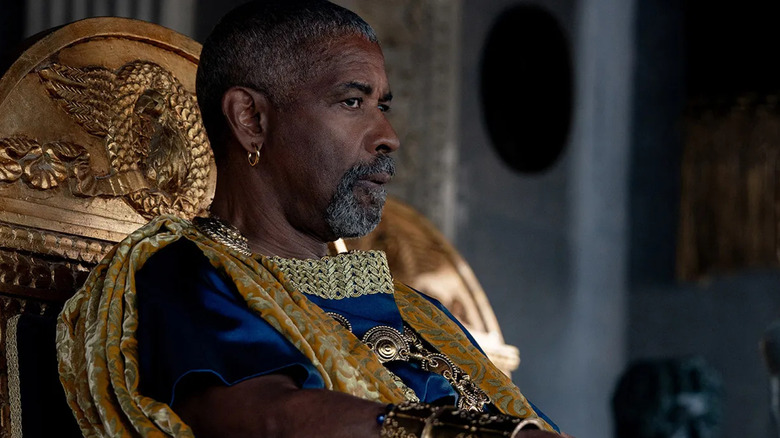
There are at least four competing schemes at play in Gladiator II, each fighting for screen time like rats in a trap. It’s at best a bloody stalemate. The character who emerges best from all this is Macrinus. Based on the first Moorish Emperor of Rome (a fascinating, if short-lived, figure) he’s played with a meme-courting bombast by a clearly having-fun Denzel Washington (his rolling pronunciation of the word “Pol-leetic-sah!” designed to launch a thousand GIFs). A flamboyant figure, he effectively mixes elements of both Proximo and Commodus from the first film with the larger-than-life amorality of Washington’s Alonzo Harris (if Harris was a slightly camp Roman aristocrat). Most of the film’s enjoyable moments revolve around his increasingly brazen manipulations, first of a corrupt senator (an enjoyably sleazy Tim McInnerny) then the two deranged and incompetent Emperors. Every other plotline eventually falls into the shadow of Washington’s scenery-chewing excess (by the time Macrinus is using a character’s severed head as a prop to intimidate the Senate, you realise you just have to go with it).

Gladiator II though needs to split its focus between these multitudinal plot lines, to the detriment of all of them. The emperors fiddle and feud while Rome burns. Various soldiers and senators line-up familiar plots to restore the republic. Lucius, the character we are supposed to relate to the most, is the one who starts to lose our interest. Paul Mescal does an effective job as this growling, surly figure, even if he doesn’t quite have the force to pull off his final late-act speeches. But the film rushes his elevation to leader among the gladiators so quickly it feels unearned – as well as stuffing the film with a multitude of sidekicks so anonymous they blur into one, so much so you won’t even notice (or care) when they start to bite the big one.

On top of which, Lucius zigs-zags through motivations with all the logic of a charging rhino. He goes from wishing he was dead, to fighting desperately for life, to vowing revenge on one man to suddenly changing his mind, to leading a proto-Spartacus inspired revolt to ditching the idea, to denouncing his mother and birth-right until suddenly he doesn’t, to half-heartedly resenting Macrinus to announcing he only lives to see him die, from rejecting Maximus to cos-playing him – how are we supposed to keep up with this? The fact he’s a man of very little words doesn’t help.

When he does speak it’s never particularly punchy. Scarpia’s workman-like dialogue gives him a clumsy rallying cry – “Where we are not where death is. Where death is, we are not” – which manages to be both leaden word-soup and spectacularly unrallying. The film recognises this by having Lucius ditch it late on for a rousing cry of – what else? – “Strength and honour”. Scarpia’s script, along with its muddy plotting, is full of deathly, forgettable pap; as well as riffing so determinedly on Gladiator that you’d think not a day went by in the bowels of the Colosseum without a wistful discussion about Maximus. Gladiator II also manages to pee across several ideas at the heart of Gladiator, from the potential implication that Maximus may have cheated on his wife to father Lucius (even Russell Crowe questioned that one) to the idea that at the end of the film they buried him in the Colosseum, which seems like the last thing they’d do.

In fact, I started to think that Ridley Scott’s main motivation for doing Gladiator II was to chuck in all the gonzo ideas he couldn’t make work (or find the budget for) in the first film. A fight with a mad rhino. A flooded arena full of ships (with added sharks – how these were caught and conveyed in-land to the arena just doesn’t even bear thinking about). Lucius and his fellow prisoners take on man-eating poorly-CGI’d baboons (Lucius’ position as leader largely stems from him biting one of these beasts before strangling it to death). Outside the arena, heads, hands and arms are hacked off and Scott effectively opens the film with a re-stage of the battle of Jerusalem from Kingdom of Heaven – only the siege towers this time are on ships charging the sea walls.

All of this is pretty well done, don’t get me wrong. Scott can do historical epic on screen like few others. But Gladiator II actually suggests that where he lucked out on Gladiator was keeping it simple with a strong story. Gladiator II feels something where attention has been lavished on the scale and the bombast, but that plot and character have been rushed. The film is about 15 minutes shorter than Gladiator while telling a story twice as complex, a mixture that doesn’t work well. In fact, the main feeling I had coming out from it was that I didn’t need to see it again and if I could re-watch Gladiator and pretend this didn’t exist at all, I might be a happier man. Gladiator II lives so absolutely in the shadow of its predecessor, that its flaws become more apparent through the constant invitation the viewer is made to compare and contrast them. This one won’t echo to 2030 let alone eternity.

War and Peace (1967)

War and Peace (1967)

Legendary Soviet Tolstoy adaptation, awe-inspiring in its scale and creative amibition

Director: Sergei Bondarchuk

Cast: Sergei Bondarchuk (Pierre Bezukhov), Ludmila Savelyeva (Natasha Rostova), Vyacheslav Tikhonov (Andrei Bolkonsky), Boris Zakhava (Mikhail Kutuzov), Anatoly Ktorov (Nikolai Bolkonsky), Antonina Shuranova (Maria Bolkonskaya), Oleg Tabakov (Nikolai Rostov), Viktor Stanitsyn (Ilya Rostov), Kira Golovko (Natalya Rostova), Irina Skobtseva (Hélène Kuragina), Vasily Lanovoy (Anatole Kuragin), Irina Gubanova (Sonya Rostova), Oleg Yefremov (Fyodor Dolokhov), Eduard Martsevich (Boris Drubetskoy), Aleksandr Borisov (Uncle Rostov), Nikolai Rybnikov (Vasily Denisov)

During the Cold War, the superpowers had to fight with things other than nukes. They raced to space. They were gripped by chess matches. And they made rival film productions of Tolstoy’s epic novel. War and Peace, a gargantuan production (it’s really four films and took literally years to make) was the Soviet answer to King Vidor’s War and Peace. If Hollywood thought it could own the greatest Russian novel ever written by making it an Audrey Hepburn vehicle, Mosfilm would take it back. The Soviet War and Peace would treat Tolstoy with the respect it deserved, honouring its literary richness, and putting it on a scale no film had ever seen before.

War and Peace was made with the state’s full backing. Its director would have anything he needed. Rebuild Moscow on the backlot (then burn it down)? Sure. Have historical artifacts from dozens of museums shipped to the film set? Boxed up and ready. Use tens of thousands of troops – and three war-hero Generals as assistant directors – to restage the battles of Austerlitz and Borodino? Thousands of horses were shipped to the set, while seamstresses worked on over ten thousand costumes. Moscow even created an arsenal of functioning cannons which shot 23 tons of gunpowder for the recreated battles. It’s no exaggeration that no film before or since could match this for scale. Avengers: Endgame eat your heart out.

To direct this gargantuan operation, Mosfilm and the Ministry of Cuture selected Sergei Bondarchuk, relatively young in his early 40s, over the seasoned veterans who expected the gig. Bondarchuk was by all accounts a hard taskmaster, who fought, bickered and bullied practically everyone on set (burning through three cinematographers), but also had a gift for marshalling effectively a small nation for years (though not without at least two heart attacks, one of which left him clinically dead for five minutes). He also had the chutzpah to audition nearly every actor in Russia before deciding the best man for the leading role of Pierre Bezukhov was none other than… Bondarchuk himself (for good measure, Bezukhov’s seductive screen wife would be played by his own wife Irena Skobtseva).

War and Peace could have gone two ways: its scale could have flattened a lesser director or led to the sort of middle-brow, stale traditionalist fare Hollywood hacks churned out for years. Instead, Bondarchuk was fascinated by the possibility of the medium and swept up in playing with the cinematic tricks explored by his heroes and contemporaries. War and Peace is a strikingly unique, often discordant, meditative film, full of visual invention that pushes the boundaries in the most inventive ways to present its colossal scale.

You can see traces of Abel Gance’s Napoleon in its evocative use of double exposure images (showing ghost like echoes of people appear in frame, most notably the near-death experience of Andrei Bolkonsky) and its extreme close-ups, not to mention the more obvious triptych homages for key moments (such as Napoleon and Alexander III’s meeting at Tilsit). Bondarchuk’s influences went wider than that: there is a social realist immediacy in several scenes, with their jittery camera-work, throwing us into confusing battles, that wouldn’t look out-of-the-ordinary among the Italian Neorealists. There are patches of Welles and Lang in the sweeping camerawork that stress the scale and geography of the sets. Panoramic aerial shots dial up the most ambitious work of Murnau and Gone with the Wind. Bondarchuk’s decision at key emotional moments to fade out all sound except for ambient noises, such as drips, breathing or birdsong feels like he’s been studying Tarkovksy – as does the beautiful, lingering shots of nature. Bondarchuk wasn’t just going to make a stately coffee-table book: he fused distinctive flourishes from the great film-makers, to wonderful effect.

In addition, Bondarchuk (also the co-screenwriter – did his chutzpah influence that similar wunderkind Kenneth Branagh, both obsessed with tricksy, inventive camerawork) wanted to pay tribute to Tolstoy. What’s remarkable about War and Peace is how much of Tolstoy’s meditation on the meaning of life is in the film. Sure, there are cuts – Nikolai Rostov, Sonya and Maria Bolkonskaya are reduced to the bare bones – but this film finds a great deal of time for its characters to muse (either in sometimes portentous voiceover, or a deep-voiced omniscient narrator) over the meaning of life, the quest of happiness and the nature of decency and nobility.

In fact, this is a particular surprise since this version War and Peace had its roots as a patriotic demonstration of Soviet film-making might. It’s particularly striking then that it ends with a sequence that stresses how ordinary soldiers (French and Russian) have more in common than not and how much links mankind together than drives them about. This is not pro-Soviet propaganda.

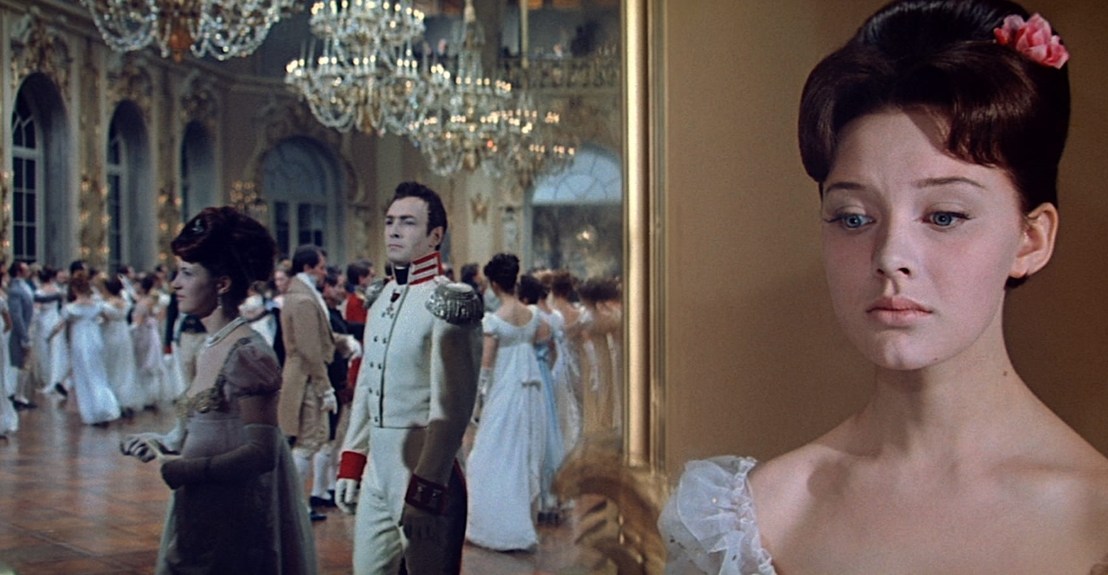
Not that War and Peace doesn’t take a few potshots at the effete, selfish rich, sitting in comfort while soldiers fight at the front. But it also finds time for the Rostov’s decency and self-sacrifice for and it doesn’t stint on the grandiosity of Tsarist Russia. A ballroom scene, site of Natasha’s meeting with Andrei Bolkonsky, is stunningly staged. In a huge mirror-laden ballroom, Bolkonsky’s camera bobs and weaves between dancers. Cinematographer Anatoly Petritsky suggested he filmed it while roller-skating, a genius innovation which creates a visual dancing effect as well as allowing us to be right among the literally hundreds of grandly costumed dancers (Bolkonsky skated alongside Petritsky, at times holding a fan slightly before the camera, to add to the effect).

The magnificence of this often gets forgotten in the awe-inspiring spectacle of the Russian military backed battles. Bondarchuk enlisted the Soviet Air Force for stunning, wide-angled aerial shots that revealed the stunning dimensions of the recreation. Petritsky also introduced a series of diving crane shots – like the camera has been set on a zip wire – that fly down from the heights into the battle’s chaotic maelstrom. (The battles are, as per Tolstoy, confusing messes where no one knows what’s going on but everyone pretends to be in charge). These battle images virtually redefine epic, mind-blowing in their scale – and the managerial and artistic force that must have been needed to organise and capture them all on screen as exquisitely as they are.

The same goes for the burning of Moscow, a dizzying outburst of flame, co-ordinated tracking shots (following Pierre through the burning wreckage) while crowds of extras run and panic. War and Peace also follows Tolstoy in being perhaps one of the grandest scale, anti-war films ever made. There are no real moments of heroism in the battle, soldiers march into injury and death and Bondarchuk frequently pans the camera across mounds of bodies or soldiers left mauled and dying on the ground. The retreat from Moscow sees Hellish suffering for the French, but that is balanced by the horrifying executions of civilians they carry out in Moscow, terrified men and boys led to stakes and gunned down in hard-hitting slow-motion. War and Peace doesn’t shy away from the suffering, pain and death that war brings, with very little glory or pride to show for it.

It’s also a film that’s often strikingly well-acted. Bondarchuk may be too old for Pierre, but his thick-set frame is perfect and his soulful eyes beautifully capture the character of a would-be-philosopher with no purpose. Vyacheslav Tikhonov makes Bolkonsky an imposingly distant man hiding his fragility. Perhaps most strikingly, ballet dancer Ludmila Savelyeva is a radiant Natasha, waif-like but bursting with energy and life, who tackles better than almost anyone else an impossibly difficult character. Bondarchuk frames her perfectly, back-lit to focus on her expressive eyes.

At times there is almost too much to everything in War and Peace. Bondarchuk is at times almost constitutionally incapable of shooting a simple scene, a relentless inventive energy that is perfect for the war but sometimes exhausting for the peace. The all-consuming screentime given to the scale of the battles and balls does eat into the time allowed to character and plot. But this is like complaining about being uncomfortably full after a generous rich meal. There is so much in War and Peace Bondarchuk gets right: from its respect to Tolstoy, but as an intellectual not as heritage figure to its stunning visuals, in every minute of its great length there is something to admire, thrill and strike you with awe. In this instance, the Soviets proved they could do Tolstoy better than the Yanks.

Titanic (1997)

Titanic (1997)

Cameron’s film is easy to knock, but is a triumph of romance, scale and real-life tragedy

Director: James Cameron

Cast: Leonardo DiCaprio (Jack Dawson), Kate Winslet (Rose DeWitt Bukater), Billy Zane (Cal Hockley), Frances Fisher (Ruth DeWitt Bukater), Kathy Bates (Molly Brown), Gloria Stuart (Old Rose), Bill Paxton (Brock Lovett), Suzy Amis (Lizzy Calvert), David Warner (Spicer Lovejoy), Danny Nucci (Fabrizio De Rossi), Victor Garber (Thomas Andrews), Bernard Hill (Captain Smith), Jonathan Hyde (J Bruce Ismay)

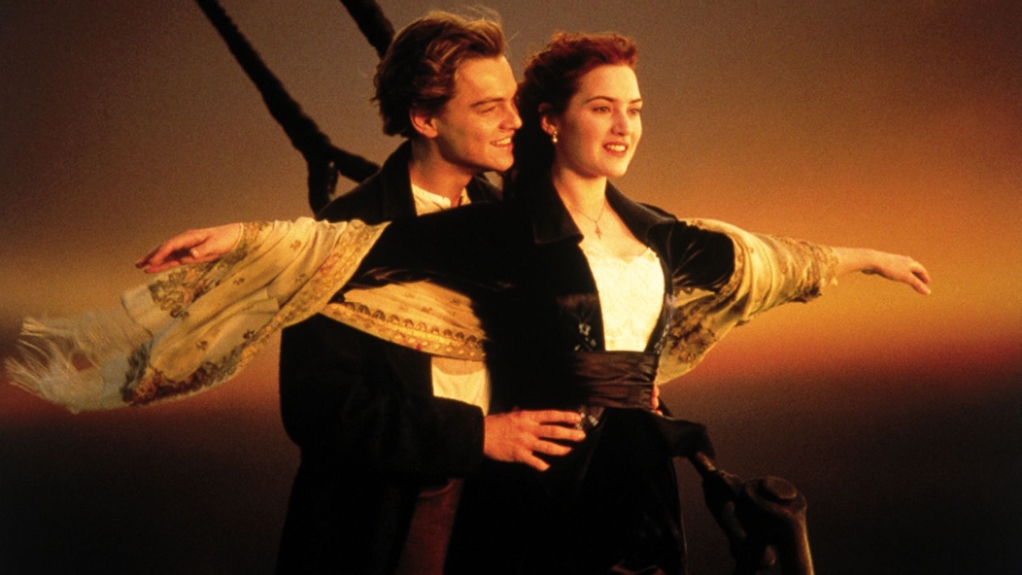
Get on any ship, and I guarantee you’ll see two people at the bow standing, one in front of the other, with their arms stretched out. If that doesn’t tell you something about the lasting impact of Titanic nothing will. Titanic was a sensation: top of the box office for months with the sort of repeat-viewing producers dream of; My Heart Will Go On went platinum and half the world was in love with Leonardo DiCaprio. It won 11 Oscars, made a billion dollars and is a film everyone knows even if (hard to believe) they ain’t seen it. James Cameron took an enormous punt on TitanicRomeo and Juliet meets disaster movie on legendary ship – and it paid off in spades. Because, no matter your cynicism, you can’t deny he created a film millions of people invested in to an extraordinary scale, staged with the epic sweep, gorgeous detail and pounding disaster thrills that channelled David Lean, Luchino Visconti and Irwin Allen all at once.

Rose DeWitt Bukater (Kate Winslet) is destined for a life of dutiful, unimaginative marriage with spoilt millionaire Cal Hockley (Billy Zane) when she boards Titanic as a first-class passenger in Liverpool on 10 April 1912. Also boarding the ship (but in steerage) is drifter and would-be artist Jack Dawson (Leonardo DiCaprio). When he saves her from taking her own life by jumping from the ship, they form a bond which flourishes into a love that will change both their lives. But not as much as the iceberg the ship is ploughing relentlessly towards across the Atlantic.

It’s very easy to take a pop at Titanic. Its romance sometimes succumbs to Mills and Boon cliché and Cameron’s script has more than its fair share of clunky lines (it’s one of those rare Best Picture winners with no screenplay nomination). Plenty of people hated it in a fit of inverted snobbery as a whole generation took this modern romance to its heart. But Titanic reveals the truth of the magic of movies: it uses a traditional romance to build our emotional investment in the sinking and the lives of ordinary passengers, more successfully than any other Titanicfilm had before or since.

Cameron knew the mountain he had to overcome. After all, this was the most famous disaster since Pompeii: where was the tension? So, he opens with a modern-day setting, a treasure hunt among the real ship’s ruins, with the hilariously named Brock Lovett (a game Bill Paxton in a thankless role) searching for a priceless diamond, the Heart of the Ocean. His only link: the older Rose (a plucked-from-retirement performance of charm and hidden fire from 87-year-old Gloria Stuart), who becomes our window to the past. This allows the audience to be told the geekily excited “ain’t it cool” details of the sinking with the same sort of distance we’re used to thinking about it. The film then becomes a lesson in making us learn, like Brock, this wasn’t an anecdote but a horrific disaster that killed 1,500 real people (made worse because we know exactly what’s going to happen to this ship every step of the way). The MacGuffin is intended to look as trivial as it does by the film’s end.

His key tool for this was his Romeo and Juliet love story told, for all its airport-novel lack of originality, with a vibrant, earnest intensity. Helped by fantastic chemistry between two talented actors, you have to work hard not to care for Rose and Jack (no accident those initials). And through their eyes, the whole ship comes to life, Just as the special effects camera sweep through the ruins, turns it from a ghost shop into a living breathing place, where ordinary, real-life dramas play out in every corner. It’s a perfectly judged entry point for bringing history to compelling life, playing on emotions we’ve all felt: love and fear of death.

The film splits neatly into two acts. The first is the romance and, whatever you say, it’s a cinematic romance for the ages in its old-school sweep. As we watch them bounce round the ship, make each other laugh, dance and fall in love, the utter lack of cynicism is really winning. It’s so overwhelmingly genuine and heartfelt, you can’t help feeling it yourself. Both help each other find new depths: for Rose, the willingness to embrace her own choices, for Jack a maturity and responsibility he’s lacked. Bathed in golden cinematic light and backed by James Horner’s superb score, they become two people we really invest in being together. It’s so earnest and honest it even gets away with otherwise ridiculous scenes like “draw me like one of your French girls Jack”.

Both the leads carry-off it off superbly. No mean feat considering the challenge of making the film – not least being submerged for weeks in freezing cold water during night shoots. Kate Winslet makes Rose burst with life from the depths of fear and doubt, effortlessly carrying much of the movie. It’s often overlooked that Rose drives much of the pace of the romance, as well as clearly being the more sexually and romantically experienced partner. Leonardo DiCaprio – who found it a burden for years, as it turned him from proto-DeNiro to heartthrob pin-up – gives an infectious energy to Jack’s fortune-cookie mantras, while growing in authority as the film progresses towards disaster.

Cameron fills his golden-hued recreated Titanic with the sort of detail we’ve not seen since The Leopard. Sure, his view of the haves and have-nots is hardly subtle (from ruthlessly posh, heartless Brits to plucky, happy-go-lucky Irish working-class), but it makes it very easy to relate to the injustice, bullying and casual snobbery. In Rose’s fiancée Cal, Billy Zane unselfishly plays an utter rotter: a coward, a snob who mocks Picasso and has never heard of Freud, a bully who treats Rose like a pet dog and puts his own needs (and safety) first at every turn. Titanic might be a ship of goodies and baddies (most egregiously in its clumsy slandering of First Officer Murdoch, a clumsy mis-step Cameron later apologised to Murdoch’s family for), but it’s undeniably alive.

It’s that quality of life which makes the sinking of the ship so horrifyingly intense. Cameron’s extraordinary second-half of the film – effectively a souped-up, horrifying remake of A Night to Remember (including quoting shots from that film) – never lets us treat this like a historical curiosity. Instead, it hammers home in intense, tragic detail, the shocking loss of life and the desperate, futile attempts of so many people to survive. Told in close to real-time, superbly edited and practically dripping in freezing water, it’s terrifying in its unstoppable intensity. Suddenly the scale of this mighty ship shrinks into an ever smaller world of fear. Events advance with horrifying speed, as the ship slowly then terribly quickly, disappears, made worse by our knowing in advance every step.

Cameron breathes life into dozens of small tragedies that surround Titanic. The band that played on. The Irish mother who puts her children to bed, knowing they cannot escape. The wealthy elderly couple who lie together while the water washes up around them. The hysterical children separated from their weeping father who remains on board. The priest who spends his dying moments comforting his flock. The camera catches moments of terror in the eyes of people we have seen fleetingly in the film. Titanic drains any sense of perverse excitement at the disaster from you. By the time the survivors are pleading for rescue in the freezing Atlantic, you’ll be as shell-shocked and shaken as the witnesses in the lifeboats.

Watch Titanic with your cynicism parked, and it is an extraordinary piece of epic, romantic film-making. The cinematography, production design, costumes and editing are all perfect and James Horner’s inspiring score takes the film’s slightly mushy romance to a higher level. There are great performances from the likes of Kathy Bates and Victor Garber. And the second half grips like a horrific vice, never letting go. There’s a reason this film gripped the hearts of the whole world in 1997: it knows exactly what it is trying to do and excels at doing it. And never, in any film, has a historical disaster hit a viewer with as much punch as Titanic does.

Throne of Blood (1957)

Throne of Blood (1957)

Kurosawa’s Macbeth adaptation beautifully captures much of the spirit of Shakespeare

Director: Akira Kurosawa

Cast: Toshiro Mifune (Taketoki Washizu), Isuzu Yamada (Lady Asaji Washizu), Minoru Chiaki (Yoshiaki Miki), Takashi Shimura (Noriyasu Odagura), Akira Kubo (Yoshiteru Miki), Yōichi Tachikawa (Kunimaru Tsuzuki), Takamaru Sasaki (Lord Kuniharu Tsuzuki), Chieko Naniwa (Forest witch)

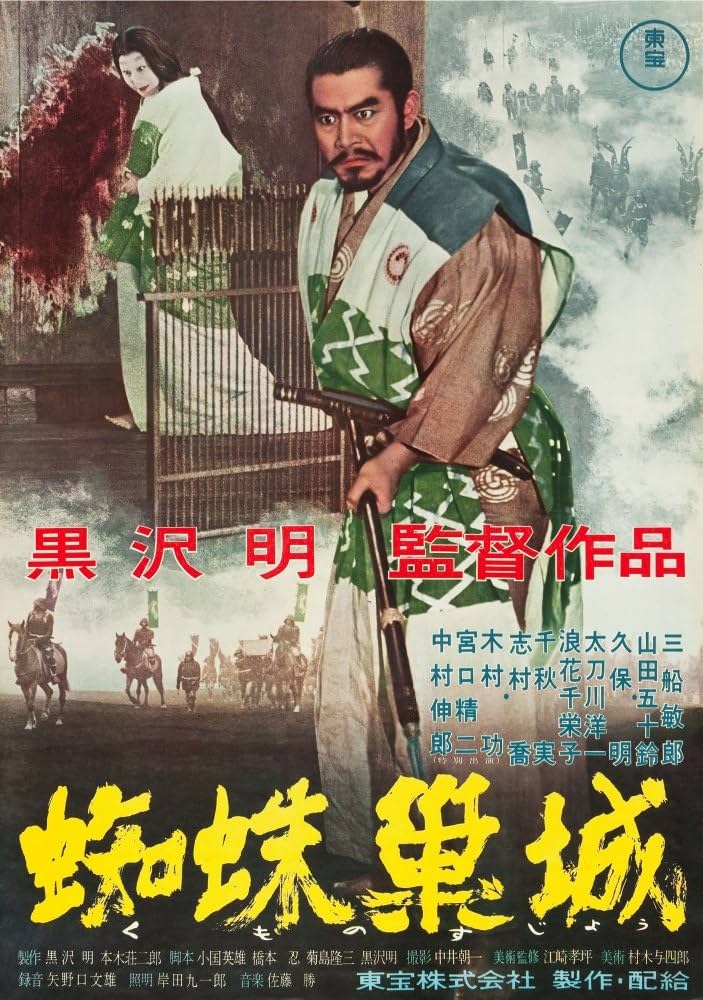
Shakespeare is universal. What more proof do you need, than to see Macbeth very much present in Throne of Blood, Kurosawa’s samurai epic version of the Bard’s Scottish play. Kurosawa’s film takes the plot of Shakespeare’s tragedy, with touches of Japanese Noh theatre, told with his distinctive visual eye. It makes for truly great cinema, one of Kurosawa’s undisputed masterpieces – even if it loses some of the greatness of Shakespeare along the way.

You can though see Shakespeare from the beginning in Kurosawa’s mist filled epic (bringing back memories of the Scottish Highlands). A badly-wounded soldier brings news to Lord Tsuzuki (Takamaru Sasaki) of the defeat of his traitorous former friend thanks to the brilliant generalship of Washizu (Toshiro Mifune). Meanwhile, in the forest, Washizu and his fellow general Miki (Minoru Chiaki) encounter a witch (Chieko Naniwa) who prophesies that Washizu will one day be the Lord. When other prophesies proof true, Washizu starts to think how he could make the last true as well. His ambitions are encouraged by his wife Lady Asaji (Isuzu Yamada), who persuades him murder is the best tool for succession. But can they live with the consequences of their crime?

So much, so Shakespeare right? Throne of Blood ingeniously translates Shakespeare’s plot to an entirely different setting, one of feudal Japan. It also translates some of the Bard’s most striking verbal imagery into visuals: the strange mixture of rain and sunshine (‘so foul and fair a day’) that Washizu and Miki wade through before they meet the witch; Miki’s horse thrashing wildly through the courtyard like Duncan’s; the lamps that light the way to Tsuzuki’s chamber (like Macbeth’s dagger). Kurosawa’s visual transformation of the play’s imagery is breathtakingly original.

On its release Throne of Blood was savaged by Western critics for its cheek, before critical consensus shifted to proclaim it one of the greatest of all Shakespeare adaptations. But do you still have Shakespeare without the language (and by that, I don’t mean from English into translation, but its complete removal). Kurosawa’s film makes no attempt to replicate the poetry of Shakespeare (most strikingly, its equivalent of the “Tomorrow and tomorrow and tomorrow” speech is Washizu shrieking “Fool! Fool” as he sits in frustration, a neat image but one where you’d wish Mifune had been given more to play). But Throne of Blood may not be a complete Shakespeare adaptation, but it’s possibly one of the greatest adaptations ever made of a Shakespeare story.

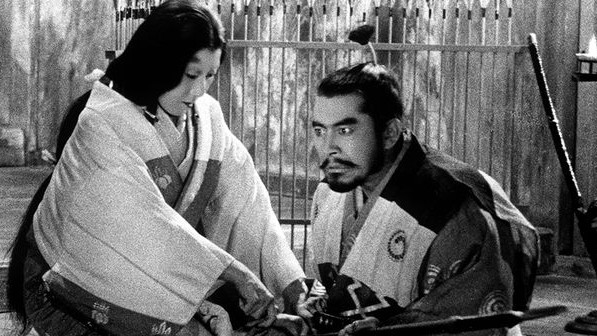
This is because Throne of Blood captures so many of the core thematic concepts of Macbeth, not least its destructive, nihilistic force and the terrible, crushing burden self-imposed destiny and ambition sets. Toshiro Mifune’s Washizu may more of a brute than Macbeth, but his blustering, aggressive exterior hides a weak man, insecure and dependent on others. His weakness is in fact a lack of imagination, his inability to picture a life outside of the tracks laid down before him by the witch. His lack of independent thought is recognised by his wife, Asaji who nudges and pushes Washizu in the direction she (and he, deep down) wishes at every opportunity.

Washizu is soon trapped in a cycle of murder and disgrace he can’t escape. The walls of the room where he and Asaji plot the murder of Lord Tsuzuki is still smeared with the blood from the seppuku of its former owner who also betrayed Tsuzuki. Whenever he enters the forest, Washizu seems almost wrapped inside its branches, unable to find his way. Before a dinner to host the murdered Miki, Washizu listens (like Claudius) to a noh actor recount details of a crime all too similar to his own. As Lord, Washizu cowers powerlessly in it just as its previous owner did. Even the film itself is a grim cycle of the inevitability of destruction: Kurosawa’s open mist rolls away to reveal a monument to the castle before the castle itself emerges to take its place, the film returning at its end to the same mist-covered monument. These bookends also stress how transient (and pointless) this grappling for power is – nature will eventually claim all.

But it also suggests a world where death is so inevitable, that you might as well seize what power you can when you can. Even Miki – the film’s finest performance from Minoru Chiaki, full of subtle reactions of resignation and disgust – turns a blind eye (despite his sideways glances of disgust at key moments) to Washizu’s crimes, to further his son’s promised hopes for the throne. Asaji is motivated by her belief that there is no sin in seizing what you can from our brief time in this world, firmly telling Washizu that not only is it his duty to deliver the prophecy but – in a world where Tsuzaki gained power by murdering the lord before him – he would hardly be the first and that no previous killer trusts a potential new rival in any case.

Asaji is strikingly played by Isuzu Yamada, a quiet, scheming figure who sees everything and has an inner strength her husband lacks. Like Mifune, she uses the striking poses of Noh theatre to fabulous effect – Asaji herself moves, on the night of the murder, in a noh dance craze – and to communicate the dance of power between them throughout that long night. Kurosawa also uses silence beautifully with Asaji, most strikingly of all her silent, almost supernatural, collecting of drugged saki for Tsuzaki’s guards: as she walks into, disappears into darkness, then reappears carrying the drink all that is heard is the squeak of her robes across the floor. Yamada’s controlled, Noh-chill makes her brief collapse into futile hand-washing madness all the more striking.

After the long night of the murder, Kurosawa presents a world that grows more and more uncontrolled. In a brilliant innovation, Asaji provokes the murder of Miki by lying (perhaps?) about being pregnant, making Washizu desperate to protect the chance of a royal line. Miki’s murder leads to his terrifying pale ghost silently challenging an increasingly wild Washizu, who thrashs weakly around the room seemingly without any control. Mifune’s powerfully gruff Washizu becomes increasingly petulant and desperate, lambasting his troops and clinging to the letter of the prophecies rather than their more detailed meaning. Mifune’s striking poses – inspired by noh theatre – seems to trap him even more as hyper-real passengers in a pre-determined story. If Kurosawa’s adaptation has rinsed much of their complexity out, he firmly establishes the couple at its centre as trapped souls in an inescapable cycle.

Kurosawa innovates further by introducing a sort of Greek chorus of regular soldiers, ordinary warriors under Washizu’s command whose faith in their commander (they clearly know he murdered Tsuzaki) shrinks as Washizu’s grip on the situation fails. Washizu clings to belief in his invulnerablity – even after the prophecy about the impossible circumstances needed for his defeat (as if a forest can ever move!) is told to him in a fit of mocking laughter by the androgynous witch and a string of suspicious woodland spirits.

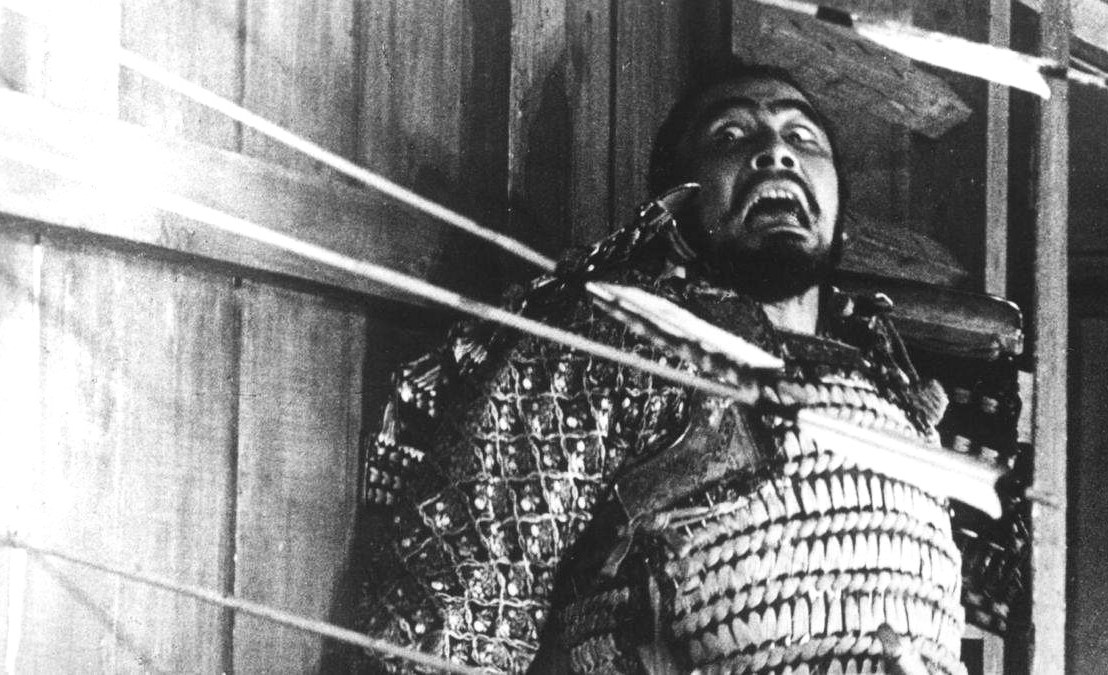
It culminates in Washizu instigating his own destruction, bragging to his men about the obscure circumstances that will lead to his defeat – leading to his own disillusioned men fragging the panicked lord the second the situation comes to pass. Kurosawa’s ending is visually extraordinary, Washizu pierced with so many arrows he resembles a human porcupine (Mifune’s terror was real, the actor dodging real arrows). Just as Asaji collapses into madness, Washizu’s fate is ignoble – Kurosawa doesn’t even afford him Macbeth’s brave duel against Macduff, this great warrior instead going down without so much as inflicting a scratch on Throne of Blood’s Malcolm and his forces.

Throne of Blood focuses beautifully on some (not all) of the key themes in Macbeth. It presents a fatalistic world where choices are few and the deadly cycle of death never seems to stop. Kurosawa interprets this all beautifully, transferring Shakespeare’s verbal imagery into intelligent, dynamic imagery. Sure, in removing the text it removes the core thing that makes Shakespeare Shakespeare – and also leads to the simplifying of its characters, in particular its leads who lose much of their depth and shade. But as a visual presentation reinvention of one of Shakespeare’s stories, this is almost with parallel, a triumphant and gripping film that constantly rewards.

Furiosa: A Mad Max Saga (2024)

Furiosa: A Mad Max Saga (2024)

Deliriously overblown and full of demented imagination even if it never quite feels necessary

Director: George Miller

Cast: Anya Taylor-Joy (Furiosa), Chris Hemsworth (Dementus), Tom Burke (Praetorian Jack), Lachy Hulme (Immortan Joe), Alyla Browne (Young Furiosa), George Shevtsov (History Man), John Howard (People Eater), Angus Sampson (The Organic Mechanic), Nathan Jones (Rictus Erectus), Josh Helman (Scotus), Charlee Fraser (Mary Jabassa), Elsa Pataky (Mr Norton)

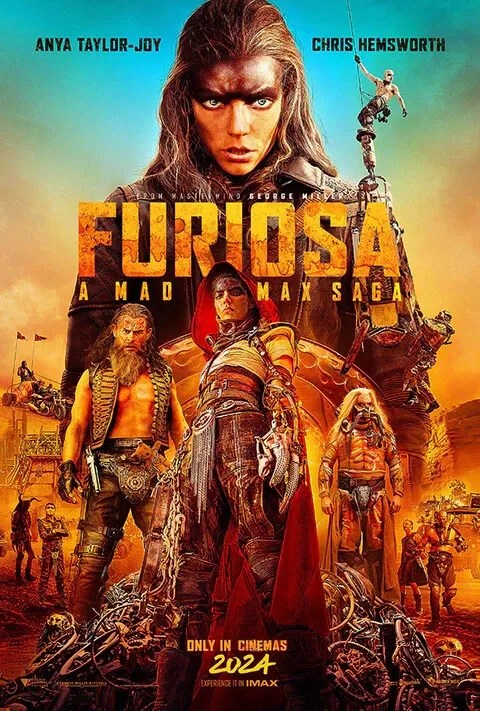
Is there a more demented mainstream film series than Mad Max? Furiosa follows the balls-to-the-wall excess of Mad Max: Fury Road with more of the same and a mythic atmosphere of Godfather Part II-backstory deepening. What you end up with might feel slightly odd or self-important – over two and a half hours of direct build-up for a pay-off we saw almost ten years ago (perhaps that’s why Furiosa ends with a cut-down play-back of the major events of Fury Road spliced into the credits, so we can all be reassured the villains left alive here got their comeuppance later). Furiosa is frequently overlong, a little too full of its love of expansive world-building and never quite convinces you that we actually need it – but then it’s also so bizarre, Grand Guignal and totally nuts perhaps we should just be happy that, in a world of focus-grouped content, it even exists.

We’re back on the desert wasteland of post-apocalyptic Australia as motorbike riding goons kidnap young Furiosa (Alyla Browne) from the Green Place hoping to use her to persuade crazed war lord Dementus (Chris Hemsworth) to lead his forces there. Despite the heroic efforts of her mother (Charlee Fraser), Furiosa remains a captive with only a secret tattoo on her arm (guess what’s going to happen to that…) to guide her home. Dementus provokes a resources war with cult-leader Immortan Joe (Lachy Hulme), with Furiosa traded, then escaping a hideous fate as one of Joe’s wives, instead growing up secretly-disguised as a boy (becoming Anya Taylor-Joy) as part of Praetorian Jack’s (Tom Burke) War Rig crew. Then the war between Immortan Joe and Dementus explodes again, foiling Furiosa and Jack’s plan to escape and giving Furiosa a change at revenge against Dementus.

That sprawling plot outline hopefully gives an idea of the ambitious bite George Miller is taking out of his world. While Fury Road took place over, at most, a few days, Furiosa stretches well over twenty, so gargantuan in scale and newly invented locations (as well as the mountainous citadel, we get the oil-rig nightmare of Gas Town and the Mordor-like Bullet Town) that it squeezes most of the entire Act Five war between Dementus and Immortan Joe into a brief, tracking-shot, montage. Furiosa is actually rather like a fever-dream Freud might have had after reading an airplane thriller, split into on-screen chapter titles – each with portentous (and sometimes pretentious) names like ‘The Pole of Inaccessibility’ – and a self-important narration dialling up mythic importance. If Fury Road was like someone stabbing an adrenalin-filled syringe straight into your heart, Furiosa is a like being told a detour-crammed story by someone a bit the worse-the-wear after a long night.

Not that Furiosa shirks on the banging madness of Fury Road’s slap-in-the-face action. It features a mid-film War Rig vs motor-bike raiders pitched-driving battle that is so extreme you wonder no one got crushed under wheel while making it, perfectly capturing the addled madness of Fury Road. A Chapter 4 pitched battle at one of Furiosa’s Dystopian-on-speed locations sees destruction, devastation and disaster on an even grander scale than anything else Miller has done before in this series, with an entire mining crater turned into a whirligig of firey destruction. That’s not forgetting three desperate desert chases – the finest of which is the film’s opening sequence, which see Furiosa’s mother track down and ruthlessly dispatch Furiosa’s kidnappers with a velociraptor-like ruthlessness and efficiency. No wonder Miller can put a whole war into a single shot – and why he feels comfortable ending Furiosa with a surprisingly personal and small-scale confrontation.

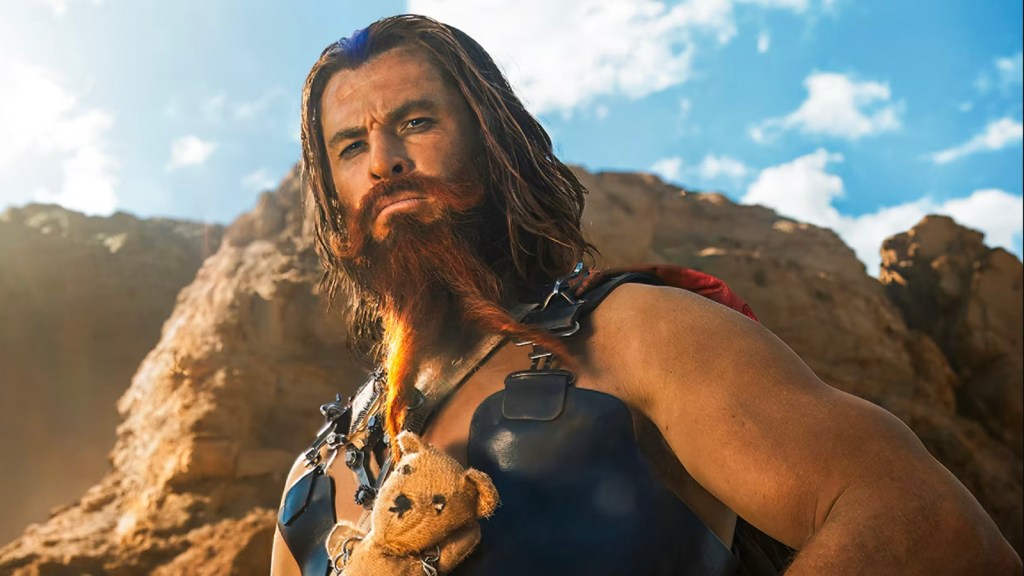
The main confrontation is between Furiosa and her self-proclaimed warlord – and would-be surrogate Dad – Dementus. Furiosa gives Chris Hemsworth the opportunity he’s been waiting for, allowing to flex his comic muscles, chew hilarious lumps out of the scenery and still show his menace. He makes Dementus an overgrown child, brilliant at stealing but with no idea about how to use them, obsessed with self-improvement (his dialogue is full of verbose, overwritten phrases, like a psychotic thesaurus) and only really happy when he’s smashing something. Introduced framing himself like a zen-like messiah, it doesn’t take long until he’s charging around on a chariot drawn by motorbikes, tasting other people’s tears and giving self-aggrandizing speeches while torturing Furiosa’s nearest-and-dearest. It’s a gift of a part, funny, scary, loathsome but strangely likeable even when he does awful things.

Opposite him, Anya Taylor-Joy actually has less to work with as Furiosa (she only takes over the part almost an hour into the film). Although this is meant to be a Furiosa film, it rarely feels like its telling us much more than we already know, especially since much the skills that ‘makes’ Furiosa what she is in Fury Road takes place in montage and her desire for freedom and to protect others are swiftly established so that any new-comers can unhesitatingly root for her. If Dementus is all talk, Taylor-Joy’s Furiosa is silent and simmering, her humanity either shrinking or quietly growing from moment-to-moment. She has a quiet romance with Tom Burke’s world-weary Praetorian Jack, but this really about converting her into a mythic figure of vengeance rather than making her a personality.

A vengeance we’ve already seen pan-out in Fury Road. I’ll be honest, for all the grand scale of Furiosa, I don’t really feel I learned anything about its central character here I hadn’t already picked up from Theron’s brilliantly expressive performance in the first film. For all the impressiveness of the scale, a lot of Furiosa boils down to physically showing us things that were implied in the first (second?) film – from locations, to the reasons why Furiosa lost her arm to giving us clear reasons for her motivations. But all this is already there – and with brilliant economy – in Fury Road. Telling us all again feels like Miller giving us the footnotes (Furiosa Silmarillon perhaps?) rather than anything truly new and the Homeric backdrop Miller is going for never really clicks into place.

So the most successful swings are not narrative but visual. Furiosa reminds you what an absolutely insane extreme world Mad Max is. Death cults of radiation-deformed albinos? Villains who bottle milk straight from the nipple (not a cow’s), while another obsessively fondles his exposed, pierced ones? A villain who straps a battered old Teddy bear to himself? Action set-pieces that throw in everything – flying bikes, lava lakes and arms stoically lopped off? Even time-jumps are done imaginatively, like a wig, caught in a branch, decaying in front of our eyes. Every single design decision in this – and the gorgeously sun-kissed photography – is dialled up to eleven for George Miller’s very personal vision of pulpy, dystopian chaos.

You can wonder at times – as I did – whether we really needed a two-and-a-half hour film that’s expands the thematic depth of a chase movie which already outlined its characters motivations and personalities with impressive economy. But then, there are moments in Furiosa that just feel like they’ve been pulled out of someone’s crazy dreams. It’s put together with such a good mix of pulp poetry and head-banging craziness by George Miller that after a while you just go with it. And it sticks with you in a way focus-grouped Marvel films never seem to.

Mutiny on the Bounty (1962)

Mutiny on the Bounty (1962)

Epic retelling that sticks with the same melodrama and nearly destroyed Brando’s career

Director: Lewis Milestone (Carol Reed)

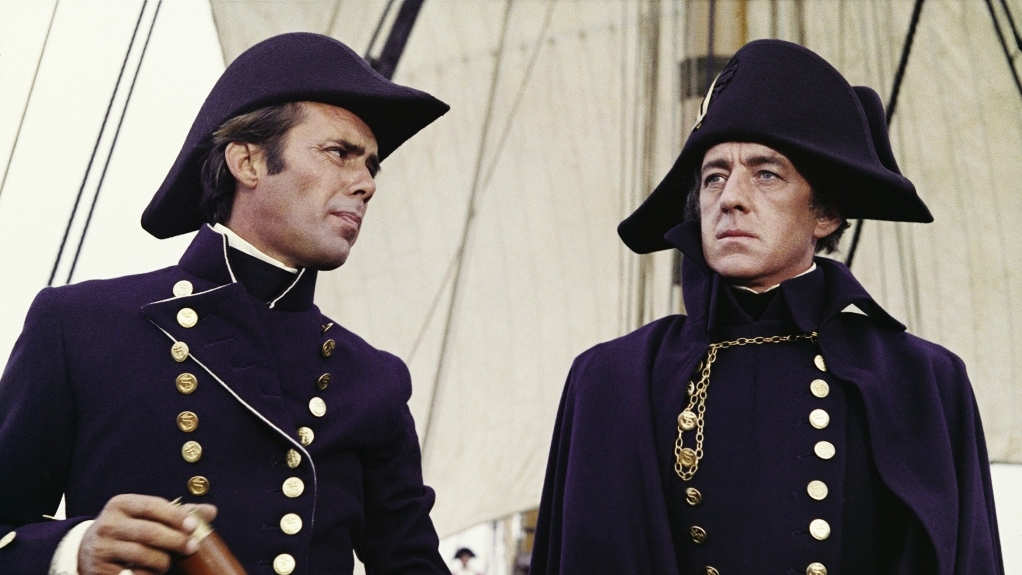
Cast: Marlon Brando (Lt. Fletcher Christian), Trevor Howard (Captain William Bligh), Richard Harris (John Mills), Hugh Griffith (Alexander Smith), Richard Haydn (William Brown), Tarita Teriipaia (Princess Maimiti), Matahiarii Tama (Chief Hitihiti), Percy Herbert (Matthew Quintal), Duncan Lamont (John Williams), Gordon Jackson (Edward Birkett), Chips Rafferty (Michael Byrne), Noel Purcell (William McCoy), Tim Seely (Midshipman Ned Young), Henry Daniell (Admiral)

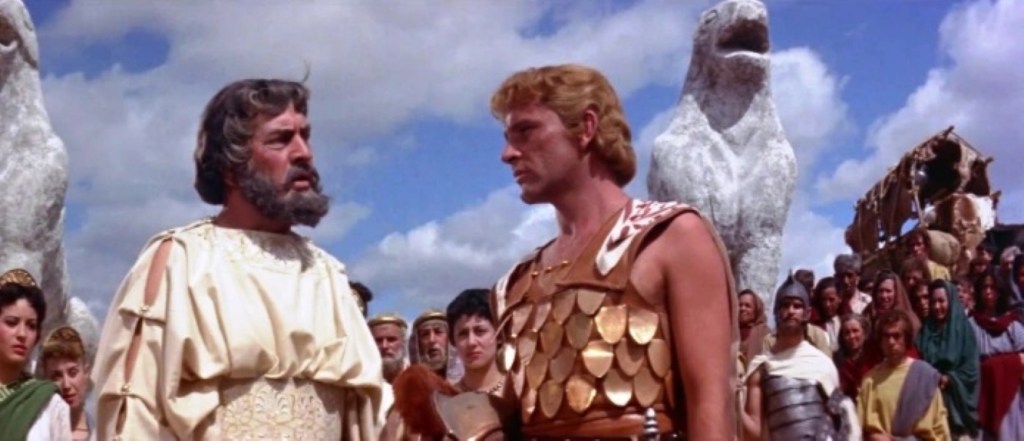
After the success of Ben-Hur, MGM thought it had cracked the mystery of making those cash-registers go ring-a-ding: massive historical pictures, with scale and run-time dialled up to “epic”. Mutiny on the Bounty was one of the most famous stories of all time and they’d had signed up Marlon Brando, universally seen as the greatest actor alive. It couldn’t go wrong, could it? Months of shooting and a disastrous box-office release later (despite a MGM campaign that landed this a Best Picture nomination), and Mutiny on the Bounty effectively destroyed Brando’s career for the next ten years and became a by-word for star excess.

Brando played mutineer Fletcher Christian – but in a manner completely different from Clark Gable (who, Brando disparagingly stated, only played himself minus the moustache). Brando’s Christian would be British and then-some: posh, foppish, a gentleman torn between the rules of society and those of fair play. Bligh – played with a constant sneer by Trevor Howard – would follow in the footsteps of Laughton, but Brando wanted to make something more serious, more historical. Less of a blood-and-thunder naval drama and more a character study that would give a fair crack of the whip (so to speak) to the Tahitian natives the mutineers lived among.

The film we ended up with though is no more historically accurate than the 1935 Best Picture winner. Part of the film’s disastrous reception might well be that this epic tells more-or-less exactly the same salacious story of a devilish sadist scowling as he whips men to death (far from the truth of the real Bligh, a poor leader but not a monster) until his noble number two steps up (the real Christian was a spoilt weakling) but in what feels like twice the time with half the fun. If you want to watch this version of the Bounty story, why would you want to choose this one? (We’d have to wait until the 1984 version for a more fair-handed telling.)

Not that Mutiny on the Bounty is as terrible as its reputation suggests. It touches – particularly in its thoughtful post-mutiny coda on Pitcairn island – on an interesting character study of the mixed motivations of Christian, filled with regrets and self-pitying sulking. It wants to explore where the balance lies between what is right by the letter of the law and by its spirit. Nothing Bligh does in the film is wrong as such, but his relish and zeal in doing it are. Christian isn’t a conventional hero, but a smirking, foppish character prone to snide remarks and affecting an air of disconnected duty for large chunks of the film. If the film had allowed Bligh more sympathy, rather than the two-dimensional monster he’s portrayed as here, it might have made for an interesting character clash.

Instead, it tends to be slow, self-important and pompous, not helped by Brando’s indulgent performance which sacrifices drama for portentousness. For all the film offers a cartoonish villain, it’s resolutely unfun and deathly serious. Shot with a professional, disengaged widescreen flatness by Milestone (called in from decades of retirement as a “safe-pair of hands”, after the sacking of Carol Reed), it’s uninspired and mistakes size for visual interest. The ship, in particular, is shot with a wide-angled spaciousness which feels completely wrong for a location supposed to be ripe with claustrophobic tension.

The drama attempts to make up for this with its parade of lashings, keel-haulings and bodies (or obvious dummies) tumbling to their death from the rigging. Trevor Howard delivers exactly what’s asked fork here, sneering and constantly in the wrong. It’s one of the film’s failings that it leans into psychological complexity in some places, while most of its events and its second lead are presented with cartoonish silliness. Its location shooting in Tahiti looks great (although the all-too-obvious intercutting of this with scenes on sound stages, sometimes from one cut to another, jars) but a widescreen image of glistening sea would look gorgeous in even the most workmanlike hands.

Perhaps the film is, at times, a chore because it all too clearly was for many involved. Reports of Mutiny on the Bounty have regularly focused on its disastrous making, with directors fired, location shoots awash with dysentery, shooting months over schedule. Above all, Brando rewriting the film on the fly, muscling a disinterested Milestone aside to direct certain scenes. Not a surprise that the studio decided all the blame would be dropped on him not them (they were also stung by the contract they gave him, at $5k a day overtime, Brando’s perfectionism becoming one of the main factors of the film going months over schedule), leaving him virtually unemployable for a decade.

But is that fair? Brando arguably become the awkward, unlikeable, misunderstood Bligh with the cast and crew as the mutineers, all of them intent on a voyage of mutual self-destruction. Put simply, this was a clash between Brando’s immersive, deep-dive acting style and Old Hollywood. To Brando “professional” meant something very different to the “hit-your-marks-say-your-words” attitude of Milestone and the crew: it meant searching over time for the heart of a character. The sort of psychological depth Brando was aiming for was just anathema to many of those he was working with, coming across as the unprofessional self-indulgence of a spoilt star. Combine that with Brando’s stand-offish shyness and professional selfishness and you had a recipe for disaster.

Severed from any director he respected (he made it all too clear he considered Milestone a hack studio Yes-Man) and with no-one having either the power or inclination to restrain him, Brando threw every idea he had at the screen, no matter how awful. So we got Christian with a ludicrous, giggle-inducing accent, a performance stuffed with foppish eccentric touches (and awful costume choices) that aims at thoughtful re-invention but comes across as a camp, bizarre mess. The tragic thing is Brando is clearly passionate about the project, putting more thought and commitment into this performance than he ever offered in barely-bothered turns in films like Sayonara.

Brando was also working with a group of Reed-recruited actors with no sympathy for him. This group of macho British and Irish heavy-drinkers (Hugh Griffith, in a crucial role, frequently disappears for no reason as his alcoholism eventually became such a burden he was fired mid-shoot) had no sympathy for the fey Brando or his acting style. Richard Harris’ loathing of his co-star – who responded to their open dislike with petty on-set power-plays, only making the whole problem grow – in particular is all too-clear. Brando looks most comfortable working with the Tahitian actors (he had long been a passionate anti-racist campaigner) and later married Tarita Teriipaia. It’s one of the few times where he makes Christian feel fully human rather than a mixed bag of conflicting actorly tricks.

Mutiny on the Bounty has its moments: unfortunately it’s all the wrong ones. For a film that wanted to be a more serious, historical exploration of the mutiny, its best parts revolve around Howard’s lip-smacking villainy, combined with flashes of its on-location shooting. Problem is, that’s not dissimilar from what we got in the 1935 original – and really you’d just be better off watching that.

Die Nibelungen (1924)

Die Nibelungen (1924)

Wagnerian epic is crammed with gorgeous, dramatic imagery and relentless pace

Director: Fritz Lang

Cast: Paul Richter (King Siegfried of Xanten), Margarete Schön (Kriemhild of Burgund), Hans Adalbert Schlettow (Hagen of Tronje), Theodor Loos (King Gunther of Burgund), Hanna Ralph (Queen Brunhild of Isenland), Rudolf Klein-Rogge (King Attila), Bernhard Goetzke (Volker of Alzey), Rudolf Rittner (Margrave Rüdiger of Bechlarn), Georg John (Mime the Goldsmith/Alberich the Dwarf/Blaodel)

Fritz Lang wanted to create a film that would help a shell-shocked Weimar Germany start to feel proud of its heritage and culture. He would do this with a film of the legend of Siegfried. It’s not really Lang’s fault that this Aryan feel-good stuff, coupled with Lang’s flawless visual compositions dripping with power and authority, would turn into the wet dreams of the Nazi party Lang fled Germany to escape. Die Nibelungen has unfortunate associations, but it stands as a towering pinnacle of Lang’s visual artistry. An adaptation of the legend, not the Wagner operas, Lang created something both mystic but also subtly questioning the idealistic figures it celebrates.

He would do all this in two (epic of course) films, totalling almost five hours. In the first Siegfried, the hero (Paul Richter) overcomes dragons and murderous dwarves to gain powers of almost (that almost is key) total invulnerability, strength and invisibility. Powers he puts to the test to win the weak King Gunther of Burgundy (Theodor Loos) the hand of Brunhild (Hanna Ralph) by invisibly aiding Gunther best this Valkyrie at a series of challenges. He even takes on Gunther’s form to help lead Brunhild to the bridal bed. Brunhild however discovers the truth from the loose lips of Siegfried’s wife (and Gunther’s sister) Kriemhild (Margarete Schön). Brunhild’s tricks Gunther and his loyal heavy Hagen (Hans Adalbert Schlettow) to murder Siegfried via a spear in his one weak spot. In Kriemheld’s Rache, Kriemheld plots the destruction of everyone who conspired in the death of her husband, via a marriage with the warlord Attlia the Hun (Rudolf Klein-Rogge).

The first thing that strikes you about Die Nibelungen – aside from its surprisingly electric pace – is the powerful, undeniable beauty of nearly every single frame. Lang composed each image as if it was a painting, from Siegfried introduced in steaming smoke at the forge, to the formalist imperialism of the castle of Burgandy and the rigid order and symmetry of its soldiers. Locations, from grand castles to mystic forests, underground caverns full of scheming, wicked creatures are superbly bought to life. There is a martial power Lang’s composition of so many of these images, their perfect angles and symmetrical blocking: parts of Die Nibelungen are some of the greatest pageantry displays in movies.

There is a wonderful sense of overblown, geometric, artificiality in all this – Lang deliberately creates a world larger than life and full of the unworldly and impossible. Buildings tower over crowds, courts that hold thousands to view events of grand importance, sieges of burning halls that fill the frame, staircases up impossibly high buildings. The sort of world of medieval excess where Gunther and Kriemheld disembark from a boat by walking across a bridge of shields created by half-submerged knights. Power and magnificence come from every frame.

It’s matched with an impressive creation of the bizarre and magical. Of course Siegfried kills a giant, animatronic dragon (strangely it’s obvious – even then surely – fakeness works in a film where everything is a heightened, from the emotions to the buildings to the costumes). Siegfried trains in something not far off from Vulcan’s forge and the forest feels like a sort of fairy-tale wonderland. Lang pioneered cross-fades and double exposures to make extraordinary effects, as Siegfried disappears under a veil of invisibility and jumps impossible distances. There is an extraordinary shot where Brunhild, still in the midst of her Valkyrie-like super-powers, seems to jump straight into the camera lens at full force. A beautiful edit sees a tree seem to reform itself into a skill in front of the eyes of the grieving Krimhild.

But Die Nibelungen places its world of power and magical forces in an increasingly costly human world of realpolitik and conspiracy, where its mystical but naïve and simple hero is out of step. Even before then, Siegfried’s status as a hero is subtly questioned. The dragon he kills seems a peaceful, inoffensive creature for all is scale, sitting placidly when Siegfried attacks and stabs it in the eye. Lang introduces a lovely touch where it’s dying tail flick will send the leaf that shields a crucial spot of Siegfried’s back from the torrent of invulnerability-granting dragon’s blood he bathes in. Siegfried is easily manipulated by the dwarf Albereich (a Gollum-like, uncomfortably antisemitic in appearance) before a large dose of luck allows him to defeat his opponent and gain the treasure of Nibelungen.

At the court of Burgundy, for all his courage and blunt honesty, Siegfried is at sea among the subtle power dynamics. The kingdom is ruled by chronically indecisive weakling Gunther (a snivelling Theodor Loos), easily manipulated by Wagnerian-costumed Hagen (an imposingly arrogant and faintly psychotic Hans Adalbert Schlettow). Siegfried’s main acts are to trick and then break the resistance of Brunhild (a dynamic Hanna Ralph) while impersonating the weakling – hardly acts to brag about, which doesn’t stop Siegfried doing exactly that to his wife who then blurts it out to Brunhild in a fit of pique. This isn’t a hero covering himself with glory, just as even the formally idealistic Brunhild (much to her later self-disgust) is reduced to scheming and plotting revenge, a far cry from the noble actionee she prided herself on being.

It’s not a surprise to find Part 2 heads into a Götterdämmerung as Kriemhild’s obsessive, destructive desire for revenge against Hagen (her husband’s murderer) meets with Gunther’s own stubborn-short-sighted protection of his controlling vassal. Nearly half of Part 2 is dedicated to the prolonged siege of the King and his followers by the massed armies of Kriemheld’s new husband Attila the Hun, her manipulations of him helped a great deal by Hagen’s arrogant, impulsive violence against Attila’s people. This extended battle sequence is astounding in its scale, violence and excitement – you can see the influence it had on The Two Tower’s Helm’s Deep – and is shot with the same visual mastery as the more stately first half, even as it seeks into bloody desperation.

It must be stated that Die Nibelungen does feature more than its share of clumsily presented racism. As mentioned, the hook-nosed, gold-obsessed, murderous dwarf Albereich is a painful antisemitic stereotype. Rudulf Klein-Rogge is caked under layers of make-up as the ugly, Slavic Attila while his Hun army resemble crouching Orc like figures, frequently ripe for the sword edge of the relentless German soldiers. It’s the uncomfortable flip side of the Aryanism idealism and romantic framing given to Siegfried, that these un-German figures are painted so monstrously.

But Die Nibelungen’s subtle criticism of the flaws in its German leads – it would go some to call them heroes – balances this out. From the flawed, empty-headed, foolishness of Siegfried to the increasingly sadistic, unrelenting cruelty of Kriemheld (Margarete Schön’s performance is excellent, going from sweetly retiring to unblinking fanaticism over the course of the film) the Germanic characters are compromised, weak and cruel: Hagen and Gunther are no one’s ideas of admirable figures. Compared to them, for all his clumsy racist appearance, Atilla feels like a reasonable figure, loving his family, caring for his people and refreshingly free of vindictiveness and cruelty.

It makes for an intriguing complex undercurrent in a film which, of course, the Nazis interpretated entirely on surface-appearance as a celebration of Aryan super-might. Or at least they did for Part 1 – even they couldn’t kid themselves that Part 2 didn’t quite fit that bill. Today Die Nibelungen provokes the same interesting thoughts. But above all it’s a visual marvel from a gifted film director, a truly painterly masterpiece that, for all its great length, never flags and offers a new marvel, camera trick or miraculous composition with every frame. This is silent cinema at its best.

Napoleon (1927)

Napoleon (1927)

Gance’s monumental film takes the breath away, packed with innovation, invention and drama

Director: Abel Gance

Cast: Albert Dieudonné (Napoléon Bonaparte), Edmond Van Daële (Maximilien Robespierre), Alexandre Koubitzky (Georges Danton), Antonin Artaud (Jean-Paul Marat), Abel Gance (Louis de Saint-Just), Gina Manès (Joséphine de Beauharnais), Vladimir Roudenko (Young Napoléon), Marguerite Gance (Charlotte Corday), Yvette Dieudonné (Élisa Bonaparte), Philippe Hériat (Antoine Saliceti), Max Maxudian (Barras), Annabella (Violine Fleuri), Nicolas Koline (Tristan Fleuri)

There is a marvellous quote from Victor Hugo when he wrote about the young life of the most famous Frenchmen who ever lived: Déjà Napoléon perçait sous Bonaparte. Which roughly translates as ‘already Napoleon was bursting through Bonaparte’ – or to put it another way, the man was already being consumed by the legend. That idea dominates Abel Gance’s extraordinary, epic, retelling of the Young Napoleon’s life, an origins story that sees a young man become increasingly distant and legendary before our eyes. Gance’s film may be resolutely old-fashioned in its historiographical approach, but is revelatory in its cinematic flair and invention, with almost every scene demonstrating Gance pushing the medium in new directions.

Napoleon was planned as only the first of no-less-than six films that would cover the cradle-to-grave story of the man who defined his whole era. Such was Gance’s ambition through, that even across five hours he felt he had only scratched the surface of the first 27 years of Napoleon’s (Albert Dieudonné) life from his childhood education (snowball fights and all) at Brienne – where he is seen as a Brutish Corsican outsider – via the French revolution, his failed attempt at revolution in Corsica, his successful siege of Toulon and promotion to General at 24, nearly losing his life in The Terror, Thermidor and his crushing of the Vendemaire uprising, marriage to Josephine (Gina Manès) and the beginning of his campaign in Italy.

Gance unfolds this in a film brimming with cinematic verve and invention. Much like its lead character, it is a seismic and larger-than-life (literally so in its most famous innovation, the three frame wide-screen effect achieved for its final twenty minutes). Napoleon practically defines the notion of historical epic, reproducing many at historical events at a 1:1 ratio. At its centre is a magnetically hypnotic (almost literally) performance from Albert Dieudonné (so enamoured with the role, he was buried in his costume) juggling the impossible by suggesting some of the many shades of this fascinating figure, part revolutionary, part tyrant, part romantic, part war-monger.

There is something truly striking and original in every frame of Napoleon. Gance presents a picture of the famous general more than touched with an old-fashioned Great Man theory of history, but still suggests he is almost two men in one. He is Bonaparte, the slightly-chippy, awkward young man who clumsily woos Josephine (barely sure where to do with hands, tugging shyly at his sash), struggles to get noticed in a map-making office and finds it challenging to make friends, either at school (where he is a painfully serious outsider) or as an adult. But he is also Napoleon, the totem of history who Gance frequently frames as almost communing with a historical version of himself.

This Napoleon bursts from the awkward Corsican shell of Bonaparte. Gance frequently frames him almost confronting the camera, light shimmering around him to form halos, with a piercing stare that freezes people into place. He comes to identify himself with the flag and the revolution. So much so that, in his escape from Corsica, he will be borne across the seas by a tricolour jerry-rigged into a sail and visualise himself being hailed by the executed ghosts of the revolution as its natural heir. Indeed, the film ends with Napoleon atop a mountain starring into a montage of his future achievements, as if he was bending history around him.

Which isn’t to say Gance sees him as a constantly sympathetic figure. While there is no question he is a force of nature – he controls the frame, frequently centred and when the camera moves (such as the careering gallop that takes him to Italy) he is always at the eye of its propulsive tracking shots – he is also an imposing, even scary figure, distant and cold. In dyed red frames, he looks positively demonic, such as when he looms forward out of the rain in Toulon, his face filling the frame to demand relentless attack. His self-identification with the revolution becomes monomaniacal.

Gance re-enforces his distance from normal human reaction by returning constantly to the Fleuri’s, a working-class family who shadow the Great Man (Violine loves him hopelessly and her father and brother worship him) but whom he never notices. It’s part of him being crafted into marble before us – with all the terrifying lack of human understanding that suggests. Throughout he’s shadowed by an eagle, a visual representation of his mystical, greater-than-human nature, a bird of destiny that drives him relentlessly on. He’s contrasted constantly with other would-be leaders: the itchy Marat, the empty windbag Danton and (most noticeably) the curiously ineffectual Robespierre, an uncharismatic man who can’t control a crowd, is lost behind darkened glasses, follows the orders of others and is comically dwarfed by an eagle statue not elevated by it.

Gance’s history has a slight school-book Victorianism to it. He’s very proud of “historical” facts – quotes and events are frequently branded with the on-screen phrase “(Historical)” so we can see his behind-the-scenes research – and has more than a little love for irony. Of course, the final island covered in school-boy Napoleon’s geography class is “St Helena”! Of course, the English sailor who spots him escaping from Corsica (and is refused a request to sink his ship) is Nelson! The film is littered with cameo appearances from later Napoleon rivals and allies. There is also a darker irony playing here: we know that when Napoleon is praised by the ghosts of the revolution that, far from protecting it, he will in fact become its final destroyer.

But what really singles out Napoleon is it’s intense, cinematic inventiveness. It’s an explosion of unique, fascinating images packaged into a single film. Gance reinvented the wheel multiple times on this one, not least on his of ghostly images and cross-fades. To achieve this – such as the ghostly appearance of the Great Revolutionaries in an otherwise empty Assembly Hall, he re-exposed the same film multiple times (sometimes as many as twenty) to achieve the effect. The same for Napoleon’s schoolyard fights, a single sequence with the screen split into nine squares each showing a different moment in time achieved by covering different parts of the frame for each exposure.

Gance’s camera is strikingly mobile, his editing frequently thrilling and thought-provoking. The famous sequence of Napoleon’s escape from Corsica is superbly intercut with the clash in the Assembly that will lead to the execution of the Gironists. The swaying of the ship is increasingly echoed by the swaying and eventually full-blown swinging of the camera in the Assembly room. Both events merge together through cross-fades. The camera whips through some scenes with real pace and aggression – witness the fast-paced tracking shots that follow Napoleon to Italy.

That’s matched as well with imaginative scenes of quiet beauty. The young Napoleon quietly communing with his pet eagle. The marvellous “shadow marriage” Violine conducts with a cardboard doll of Napoleon, positioned to cast a full-length shadow on the wall. There are moments of black humour – the coffin Robespierre and Saint-Just keep the death sentences they’ve passed in – and moments of soaring, lyrical inspiration such as the first singing of the Marseilles which takes on a mystical quality. To achieve this, Gance pushed the camera places it had never been before, patenting new techniques and devices to achieve frames, angles and cross-fades never seen before.

The most stand-out being the astonishing three-frame wide-screen effect. Perfectly mapped, with the small distortion in the joins almost adding to the power, this creates Panavision decades before Hollywood had even coined it. It creates awe-inspiring vistas of Napoleon’s Italian army – although the battle scenes Gance shoots are often cruel and dirty, with bodies twisted and crushed by the violence of war – but it also allows Gance to present three different images side-by-side, something he exploits to maximum effect in the closing moments that presents a giddyingly cut (it’s Eistensein-influence is clear) montage of past moments in the film that have led up to the Napoleon we see standing on a mountain before us starring into the future.

For Gance through, it is a future that wouldn’t come. Napoleon was not a success – perhaps people couldn’t quite process the scale of it, perhaps the money-men were terrified that Gance had spent the budget of six films on one and still hadn’t got round to Austerlitz, Borodino and Waterloo. The film was butchered and tinkered with for decades before it was reborn. And what a relief, because this is a stunning epic, which (for all its narrative simplicity) has something to wonder at in every frame. An extraordinary film, which everyone should see at least once.

Dune: Part 2 (2024)

Dune: Part 2 (2024)

Villeneuve’s triumphant sequel continues to raise the bar for science fiction films

Director: Denis Villeneuve

Cast: Timothée Chalamet (Paul ‘Muad-Dib’ Atreides), Zendaya (Chani), Rebecca Ferguson (Lady Jessica), Javier Bardem (Stilgar), Josh Brolin (Gurney Halleck), Austin Butler (Feyd-Rautha Harkonnen), Florence Pugh (Princess Irulan), Dave Bautista (Rabban Harkonnen), Christopher Walken (Emperor Shaddam IV), Léa Seydoux (Lady Margot Fenring), Souheila Yacoub (Shishakli), Stellan Skarsgård (Baron Vladimir Harkonnen), Charlotte Rampling (Gaius Helen Mohaim)

Denis Villeneuve had already taken on the near-impossible in adapting the unfilmable Dune into a smash-hit admired by both book-fans and initiates. In doing so he set himself an even greater task: how do you follow that? Dune Part 2 (and this is very much Part 2, picking up minutes after the previous film ended) deepens some of the universe building, but also veers the story off into complex, challenging directions that fly in the face of those expecting the sort of “hero will rise” narrative the first Dune seemed to promise. Dune Part 2 becomes an unsettling exploration of faith, colonialism and cultural manipulation, all wrapped up in its epic design.

Paul (Timothée Chalamet) and his mother Jessica (Rebecca Ferguson) have escaped the clutches of their rivals House Harkonnen and it’s corrupt, sadistic leader Baron Vladimir (Stellan Skarsgård). Escaping into the deserts of Arrakis, they take shelter with the Fremen, vouched for by tribal leader Stilgar (Javier Bardem). It transpires Paul fits many of the conditions of the prophecy of the Mahdi or Lisan al Gaib, the promised messiah of the Fremen. Paul is uncomfortable with this – and the growing devotion of the likes of Stilgar – but also recognises the potential this has for marshalling the Fremen for his own revenge on the Harkonnen’s. Its further complicated by his knowledge the prophecy was embedded into their culture by the mysterious Bene Gesseri, the religious order that quietly controls much of the Empire, not to mention the hostility of Chani (Zendaya) the woman he loves, as she believes the Fremen should save themselves not rely on an outsider.

These complex ideas eventually shape a film that avoids simple good-vs-evil narratives and subtly undermines the very concept of the saviour narrative. Dune’s roots in a mix of Lord of the Rings and Lawrence of Arabia have rarely been clearer. Not least in the perfect casting of the slightly androgenous and fey Timothée Chalamet as Paul (with more than a hint of Peter O’Toole), barely knowing who he is, drawn towards and standing outside an indigenous community based on strong tribal loyalty, tradition and the grim reality of life in a hostile environment. 

A large part of Dune 2 deconstructs Paul’s heroism and his (and Jessica’s) motives. When Jessica – who takes on a religious figurehead role with the Fremen – starts stage-managing events to exactly match the words of the prophecy, does that count as a fulfilment? Paul is deeply uncomfortable with positioning himself as messianic figure for an entire race, effectively weaponising their belief for his own cause. But he’s also nervous because he is also an exceptionally gifted person with powers of persuasion and prophetic insight that mark him out as special. As Paul allows himself to more-and-more accept the role he has been groomed for, how much does it corrupt him? After all, he gains absolute power over the Fremen – and we all know what that does to someone…

Paul’s messianic possibility is also spread on very fertile ground. Javier Bardem’s Stilgar represents a large portion of the Fremen population, who belief in this prophecy with a fanatical certainty. The dangers of this is subtly teased out by Villeneuve throughout the film. At first there is a Life of Brian comedy about Stilgar’s wide-eyed joy as every single event can be twisted and filtered through his naïve messiah check-list (“As is written!”) – even Paul’s denial he is the messiah is met with the response that only a messiah would be so humble! This comedy however fades as the film progresses and the militaristic demands Paul makes sees this same belief channelled into ferocious, fanatic fury that will leave a whole universe burning in its wake.

Much of Paul’s hesitancy is based on his visions of a blood-soaked jihad that will follow if he indeed “heads south” and accepts the leadership of the Fremen’s fanatical majority. The question is, of course, whether the desire for revenge – and, it becomes increasingly clear, a lust for power and control – will overcome such scruples. Part of the skill of Chalamet’s performance is that it is never easy to say precisely when your sympathy for him begins to tip into horror at how far he is willing to go (Villeneuve bookends the film with different victorious armies incinerating mountains of corpses of fallen foes), but in carefully calculated increments the Paul we end up at the end of the film is a world away from the one we encountered at the start.

Villeneuve further comments on this by the skilful re-imagining of Chadi, strongly played by Zendaya as an intelligent, determined freedom-fighter appalled at the Fremen exchanging one dogma for another. In the novel a more passive, devoted warrior-lover of Paul, in Dune Part 2 she becomes effectively his Fremen conscious, a living representation of the manipulation Paul is carrying out on these people. In her continued rejection of worship – even while she remains personally drawn to Paul – she provides a human counterpoint to Paul’s temptation to follow his father’s instructions and master “desert power” to control the worlds around them.

Deplorable and evil as the Harkonnen’s are, do Paul’s ends justify his means? And where does it stop? Dune Part 2 sees the Harkonnen’s subtly reduced in status. Dave Batista’s brooding Raban proves an incompetent manager of Arrakis. Stellan Skarsgård’s Baron is crippled by an assassination attempt and increasingly buffeted by events rather than controlling them. The film’s clearest antagonist becomes Austin Butler’s chillingly psychopathic junior Baron Feyd-Rautha, a muscle-packed bald albino, obsessed with honour and utterly ruthless towards his own subordinates. (Introduced in a stunningly shot, black-and-white gladiatorial combat scene that showcases his insane recklessness and twisted sense of honour.) But increasingly they feel like minor pawns in a game of international politics around them.

Villeneuve allows Dune’s world to expand, delving further into the cultural manipulations of the Bene Gesserit. This ancient order not only controls the Emperor – a broodingly impotent Christopher Walken – but also manipulates the bloodlines of great houses for their own twisted breeding programme, as well as inject cultures like the Fremen with perverted, controlling beliefs. While Villeneuve still carefully parses out the world-building of Dune – you could be forgiven for not understanding why the Spice on Arrakis is so damn important – it’s a film that skilfully outlines in broad strokes a whole universe of backstairs manipulation.

Among all this of course, Dune remains a design triumph. Grieg Fraser’s cinematography ensures the desert hasn’t looked this beautiful since Lawrence. The production and costume design are a triumph, as is Hans Zimmer’s imposing score. Above all, the film is brilliantly paced (wonderfully edited by Greg Walker) and superbly balanced into a mix of complex political theory and enough action and giant worm-riding to keep you more than entertained.

Dune Part 2 is a rich and worthy sequel, broadening and deepening the original, as well as challenging hero narratives. It turns Paul into an increasingly dark and manipulative figure, whose righteous anger is only a few degrees away from just anger (he’s no Luke Skywalker), who starts to see people as tools and moves swiftly from asserting Fremen rights to asserting his own rights (overloaded with different names, its striking when Paul chooses to use which names). In a film that provokes thoughts and thrills, Villeneuve’s Dune continues to do for fantasy-sci-fi what Lord of the Rings did for fantasy, creating a cinematic adaptation unlikely to be rivalled for decades.

Napoleon (2023)

Napoleon (2023)

Scott’s epic of the most famous Frenchman of all time looks good but is empty at heart

Director: Ridley Scott

Cast: Joaquin Phoenix (Napoleon Bonaparte), Vanessa Kirby (Josephine Bonaparte), Tahar Rahim (Paul Barras), Ben Miles (Caulaincourt), Ludivine Sagnier (Thérésa Cabarrus), Matthew Needham (Lucien Bonaparte), Sinéad Cusack (Letizia Bonaparte), Édouard Philipponnat (Alexander I), Ian McNeice (Louis XVIII), Rupert Everett (Arthur Wellesley, Duke of Wellington), Paul Rhys (Talleyrand), Catherine Walker (Marie-Antoinette), Mark Bonnar (Jean-Andoche Junot)

Is Bonaparte cinema’s White Whale? Filmmakers have often tried and failed to bring this epic life – who else so dominated their era that’s its literally named after them? – to the screen. Abel Gance’s silent epic could only squeeze his early years into five-hours and the planned five sequels never materialised. Famously, Kubrick spent decades planning a Napoleon film (he had a veritable library of Napoleonic research) but could never deliver. Napoleon has popped up in films as wide ranging as Time Bandits and Waterloo, but the definitive film has never been made. Is Scott’s Napoleon it?

Napoleon takes a rather old-fashioned approach to the biopic. The fashion now is to focus on a single event that becomes a window into its subject’s life. Napoleon, in its two and a half hours, takes a far more cradle (or revolution) to grave approach. We join Napoleon Bonaparte (Joaquin Phoenix) as an anonymous artillery captain and leave him (via 13 Vendémiaire, Egypt, the 18 Brumaire coup, self-coronation, Austerlitz, Borodino, Moscow, St Elba, Waterloo and Helena) dying in exile. It’s as swift and pacey a run-down of his life and times as it sounds like, with the film’s main focus being on his complex, love-loath relationship with Josephine (Vanessa Kirby).

Scott’s film is a visual treat – don’t those uniform’s look gorgeous! – and it works best as a coffee-table book of the life-and-times of one of History’s most controversial figures. What it doesn’t work as is as film where you feel you gain any real understanding of what motivated Napoleon or where the charismatic energy that made millions of soldiers flock to him time-and-time again came from. Scott’s Napoleon emerges as a maladjusted, emotionally-stunted oddball, apt to glower and sulk who is never the master of events or people. It’s a revisionist view that doesn’t ring true.

It’s not helped by a surprisingly low-key performance by Joaquin Phoenix, bulked up and lumbering, playing up the “Corsican Brute” angle that so alienated the Emperors he negotiated with. Phoenix’s performance is all pout and emotionally inarticulate self-pity, with small flashes of domineering force that come across as childish sulks. But it’s never the performance of a man who looks like he could motivate a nation to march with him into a mincer (several times!). Nor a performance that brings a sense of the fierce-ambition of a man who wanted to control and reshape the world. It focuses instead on one small aspect of his personality and misses vast swathes of his rich, autodidact personality.

It doesn’t help that filtering Napoleon’s life through his relationship with his wife feels like a gossipy approach used because tackling Napoleon’s complex attitudes towards his Corsican ancestry, contradictory interests in instituting democratic systems in a dictatorship and desire to bring peace to Europe via a series of destructive wars would be too tricky. Instead, we get a Napoleon who plans his movements and campaigns to compensate for his sexual inadequacy at being cuckolded by his wife, rushes back from Egypt to confront his cheating wife and seemingly escapes from exile because he’s pissed at his wife flirting with the Tsar. It’s not helped that the most interesting mechanism in their relationship – she was older and more experienced than him, with two children already – is compromised by Vanessa Kirby clearly being far younger than Phoenix.

Saying that Kirby is good in the film, conveying a complex set of emotions towards a husband who sometimes amuses her but, just as often, repels her with his bullying possessiveness (not to mention his militaristic sexual technique). Napoleon uses their relationship as a constant frame to interpret events, not only as motivation but also as a narrative device, letters between them constantly updating us on events off-screen. But the film only lightly sketches what drew them together in the first place (basically his attraction and her use of her sexuality to win protection) and the film ends up stuck in the same cycle of fall-out followed by Napoleon’s desperation to possess her again.

The time given to sketching out the broad strokes of this relationship means we never get a sense of history behind events or where the qualities, that made Napoleon the guy who governed most of Europe, came from. Scott’s film is (which, with its stressing of the deaths caused in his wars, settles for an anti-Napoleon stance) plays up his negative qualities and gifts him few positive ones. Phoenix’ performance is almost perversely anti-charismatic: he never laughs, is constantly shown as a pompous windbag who only children are wowed by, loses all his raconteur charm and is frequently victim to events – be that panicking at his attempted coup (where he’s bailed out by his brother) or only at Austerlitz looking like he has any particular military skill.

Still the film bowls along, too fast to ever really engage with events. A host of strong British Actors pop-up (their character names and functions plastered on the screen), but their appearances and dialogue are often so truncated it’s hard to really understand why they are there. Julian Rhind-Tutt’s Sieyes pops up to announce he plans to seize power with Napoleon and is never heard of again. Ben Miles and Paul Rhys rush through exposition as Caulaincourt and Talleyrand. A host of actors playing Generals stand in the background and snatch lines when they can. There are a few inadvertently comic casting choices – I did snigger when former News Quiz host Miles Jupp pops up as Francis I.

This historical gallop means years frequently pass between scenes and we often get very little idea why developments are taking place: for example, Napoleon seems to become Emperor on the basis of a half-muttered suggestion from Talleyrand. Conquests of whole countries are skipped over in seconds. Josephine’s offspring appear as children and are next seen as adults. Other than them, no one ages at any point over the film’s near 20 year span, with Phoenix and Kirby in particular looking little different at the end as they did at the start. (The film also rewrites heavily the comparative ages of its two leads – Josephine was in fact several years older, partly why conceiving an heir became such a problem.)

The battles are impressive though – even though they take up not quite as much screen time as you might think. The campaign in Egypt boils down to essentially a single cannon ball pot-shot at the Great Pyramid (never happened of course). Borodino is a cavalry charge. Austerlitz and Waterloo are the only battles that get real screen time, with both offering remixes of the actual history (Waterloo, incidentally, looks less impressive and smaller in scope than the Bondarchuk film managed). The photography is beautiful (as it is throughout) and the film doesn’t flinch on showing the impact of bullets and cannon balls. But it has no interest in understanding Napoleon’s actual strengths as a general (essentially, skilful movement of forces from a distance) substituting them with him leading not one but two cavalry charges – a suicidal risk he never took.

“At least it looks good” pretty much sums up the strengths and weaknesses of Napoleon. It’s enjoyable enough and buffs might enjoy the odd Historical Easter Eggs, but it never gets to the heart of understanding its subject and settles for a ticking off events and personalities rather than placing them into an informative context. You’d come out of this wondering how this guy got to where he was – and that makes you feel the film has failed to answer its implicit question in the tag line “He came from nothing. He conquered everything.” How, eh? How?