Category: Romance

Licorice Pizza (2021)

Licorice Pizza (2021)

Young romance in a changing time in Paul Thomas Anderson’s unconventional love story

Director: Paul Thomas Anderson

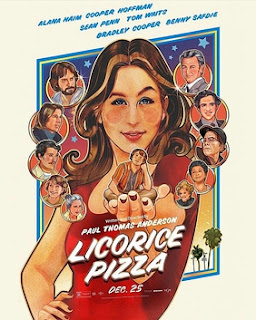
Cast: Alana Haim (Alana Kane), Cooper Hoffman (Gary Valentine), Sean Penn (Jack Holden), Tom Waits (Rex Blau), Bradley Cooper (Jon Peters), Benny Safdie (Joel Wachs), Skyler Gisondo (Lance), Mary Elizabeth Ellis (Momma Anita), John Michael Higgins (Jerry Frick), Christine Ebersole (Lucy Doolittle), Harriet Sansom Harris (Mary Grady)

Is there a force harder to understand than love? That’s basically the theme of Paul Thomas Anderson’s delightfully whimsical film, which explores an unlikely relationship in Los Angeles in 1973, played out to a backdrop of the OPEC gas crisis. Told with a dreamlike grace and overflowing with affection and warmth for its characters, it’s a deceptively simple film that is a masterpiece of heartfelt craft.

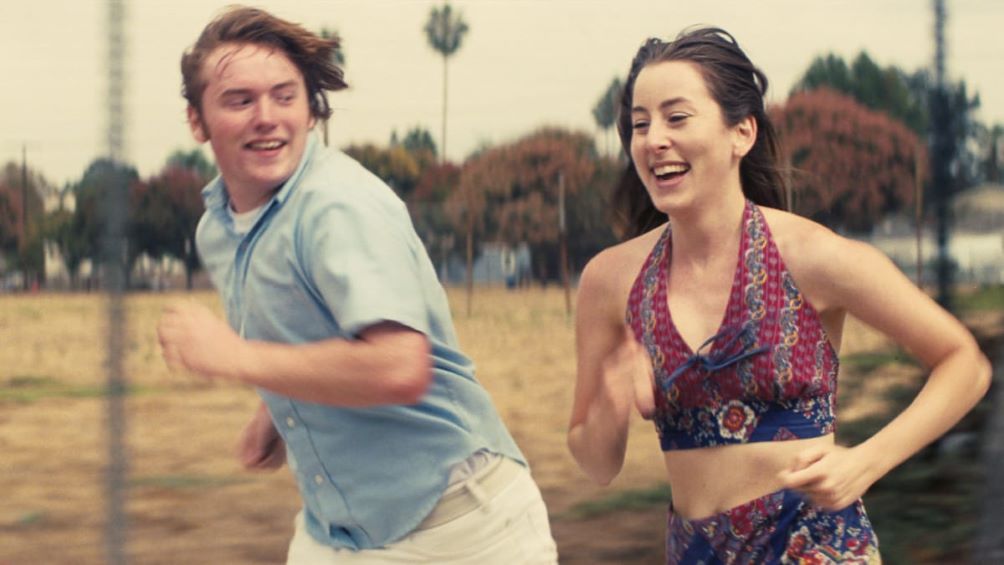
Standing in line to have his photo taken for his High School picture, 15-year-old Gary Valentine (Cooper Hoffman) is instantly smitten with cynical photography assistant, 25-year-old Alana Kane (Alana Haim). Much to her surprise, his claim to be a child actor in the movies is actually true – he’s co-starring with Lucille Doolittle (Christine Ebersole, in a thinly veiled spoof of Lucille Ball) in a movie. He’s also a budding entrepreneur, setting up a business selling water beds in LA. Alana still doesn’t know what she wants to do with her life, but finds herself drawn to Gary, despite her acute awareness of their age difference. The two of them become business partners and drift in and out of friendship, never quite sure exactly how they feel about each other.

Now I guess you might well have checked yourself there at the thought of a romance between a teenager and a 25-year-old. But there is no prurience here, no masturbatory coming-of-age fantasy with an older woman or sleazy grooming. This is instead a very genuine, sweet and moving romance between two people who only really have numbers keeping them apart. It particularly works because Gary in many ways feels about 5 years older than he actually is and Alana often feels about 5 years younger than she is. In many ways they are both twenty-year-olds – and it’s only the fact that they are not which puts a barrier between them being together. As such it becomes very easy to accept their potential relationship, and even root for it.

That’s massively helped by the fact that these two characters are marvellously embodied by two first-time actors. Anderson specifically wrote the role for Alana Haim, member of family rock group Haim (Anderson has directed several of their music videos, and was taught by Haim’s mother). She’s stunning: prickly, quick-witted, cynical but also vulnerable and sensitive. She’s desperate to find some sort of purpose in her life: exploring the role of trophy girlfriend, businesswoman and political campaigner, but always seems like she’s slightly lost, for all her defiance. Haim is also wonderfully exasperated and befuddled by the interest she feels for this younger guy, barely able to acknowledge she might have feelings for him. Haim is superb.

Gary, played by the son of regular Anderson collaborator the late Philip Seymour Hoffman, is equally well bought to life by Cooper Hoffman. Gary’s career as a child actor is coming to an end: as we see through a disastrously over enthusiastic audition, which the casting directors watch out of a polite respect. But Gary has the go-getting hustling skills of someone much older. He’s got an eye for business opportunities – water beds, film productions, pinball machines – that would be the envy of others. He’s smart, confident, frequently cocky, assured – but at times also staggeringly immature (like a teenage boy he’s obsessed with boobs and Alana watches with frustrated despair as he and some friends drag out miming a wanking gag for what seems forever). He’s also still sometimes just a kid: mistakenly arrested at one point, he sits in terror in a police station and, even when uncuffed and released, is too scared to leave the station without Alana’s encouragement.

That arrest scene is yet another moment that reaffirms the deep bond and love between these two people. Wrongly arrested for nominally fitting the description of a suspected killer – “Look forward to Attica!” the police taunt him – he’s hauled from an Expo. Alana follows, running full pelt after the squad car – even though at this point they’ve not spoken for weeks – and then holds him for what feels like forever when he is released (before, of course, slapping him and saying “What did you do?”). Later, when Alana falls while taking part in an ill-advised late-night motorbike stunt, Gary will run the length of a golf course to make sure she is alright (despite, again, the two of them having cut ties before this). Moments like this sing with a real romantic force.

Particularly as this is such a love-hate film. Alana and Gary constantly hurt each other, finding ways to get into perfect sync only to screw it up. Gary is heartbroken when Alana starts to date his older co-star (a smug atheist, played wonderfully by Skyler Gisondo). Alana is overcome with jealousy and pain when Gary flirts and kisses a school crush his own age at the launch of their water-bed business. After auditioning for a movie role, Alana delights in making Gary uncomfortable when he walks into the bar where she is enjoying a drink with the movie’s male star. Through it all, these two are drawn back to each other time and again – and when the chips are down their loyalty and love to each other is absolute, even if they can’t always admit it to either themselves or each other.

Around the two outstanding central performances, Anderson constructs a series of scenes and skits that drift from one to the other. The whole film has a curiously dreamlike transition structure: it’s frequently hard to tell how much time has passed and the narrative omits overly functional scenes, so we frequently see a situation has changed but only an implication of why (example: Gary’s mother tells him she can’t chaperone him to New York for a TV appearance – next shot Alana and Gary are on a plane. How was this agreed? Who cares!). Each of the sequences plays out with a shaggy-dog story charm, directed with the confidence and brilliance of a director who is happy to make it look easy. And let me tell you, very few could pull off something as light and charming.

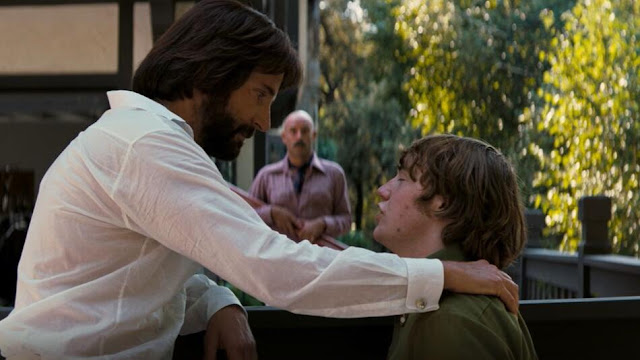
The film is stocked with delightful cameos. John Michael Higgins is very funny as the owner of a Japanese restaurant, with two successive Japanese wives who he “translates” for by repeating in ludicrously Japanese accented loud English whatever has just been said. Harriet Sansom Harris is very funny as a plugged-in agent. Ebersole is a monstrous attention-hungry star. Sean Penn is funnier than he’s ever been playing a version of William Holden, pissed and barely able to distinguish between his film roles and real life, cajoled by an equally pissed director (Tom Waits on top form as a sort of Peckinpah-Huston combo) to perform a motorbike stunt late at night. Best of all is Bradley Cooper, who burns through his brief scenes as an unhinged Jon Peters, a whipper-cracker of unpredictability and insatiable horn.

But it’s the two leads that give this heart, and Licorice Pizza is an amazingly sweet, tender, endearing and deeply charming love story about a couple who can’t quite understand why they want to be together and spend most of the movie making sure they’re not. Anderson brings it altogether with immense homespun charm – this is almost a home movie, Haim’s family play he character’s family, the cast is stuffed with Anderson’ family and friends – and Licorice Pizza is the sort of delight that shouldn’t work, but very triumphantly does.

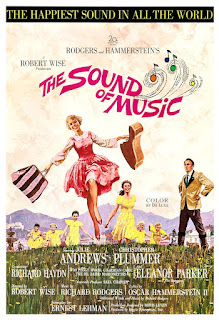
The Sound of Music (1965)

The Sound of Music (1965)

It’s the classic, feel-good film that seems to divide people than few others

Director: Robert Wise

Cast: Julie Andrews (Maria von Trapp), Christopher Plummer (Captain van Trapp), Eleanor Parker (Baroness Elsa von Schraeder), Richard Haydn (Max Detweiler), Peggy Wood (Mother Abbess), Charmian Carr (Liesl), Nicholas Hammond (Friedrich), Heather Menzies (Louisa), Duane Chase (Kurt), Angela Cartwright (Brigitta), Debbie Turner (Marta), Kym Karath (Gretl), Daniel Truhitte (Rolfe)

Has there been any film in history that has aroused feelings as strong as this one? Busloads of tourists conduct pilgrimages to Salzburg to follow in its footsteps – it’s a bigger draw than Mozart. Sing-along performances are attended by people in costume who know every nuance of Do-Re-Mi. On the other side, those who loath this musical, do so with the burning heat of a thousand suns, practically cheering the Nazis on or choking back vomit at the opening note of Edelweiss. It was ever thus: The Sound of Music was slaughtered by critics – Pauline Kael called it “the sugar-coated lie people seem to want to eat” – but became a box-office phenomenon, one of the most popular films ever and gilded with Oscars aplenty.

It’s loosely based on the real-life experiences of the von Trapp family. Maria (Julie Andrews), a young novice, arrives at the home of the widowed Captain von Trapp (Christopher Plummer) to serve as nurse for his seven (count em!) children. Von Trapp runs his house (literally) with military precision, but Maria introduces some fun into the children’s life. And, to his surprise, the Captain’s life as he finds himself drawn towards the wholesome and sweet Maria instead of his initial intended, the Baroness von Schraeder (Eleanor Parker). Marriage is inevitable – but then the family finds itself in a terrible position as the Anschluss weds Austria to Germany and the Captain is ordered to take up office in the Nazi navy. Will he do so – or will the family escape over those hills?

You would probably be fair to call The Sound of Music one of the most manipulative films of all time. But then aren’t films supposed to be about manipulating our emotions for effect? On that score you could possibly call it the greatest film ever made. I won’t, but there is a sentimental, feel-good charm to The Sound of Music that – in small doses (and some people watch this multiple times a year – once every few years is surely enough!) – can really hit the spot in the way few other films can. Sure, it tugs on your heart strings with never a trace of subtlety, but basically it’s heart is very much in the right place. It’s a kind, gentle music that, for all its treacle, is a tribute to warmth, love and family. Perhaps that’s why it’s been so embraced by so many.

Even the cast were aware it could all tip over the edge into outright sentimentality. Julie Andrews was worried it might be a little too similar to Mary Poppins (she was right in a way – Poppins is a darker film, but the success of this cemented Andrews in people’s mind as the World’s nanny). Most famously Christopher Plummer overcame huge uncertainty to star, partly to practise his singing for a Broadway musical (as it happened he got dubbed), partly on the promise he could add a tougher edge (no sign that happened). Plummer’s hate-tolerate relationship with the film is famous (he called it The Sound of Mucus) and at several points in it he is all too obviously only just avoiding sinking his head into his hands, but he even he eventually acknowledged any film that moved people as much as this, must have done something very right indeed.

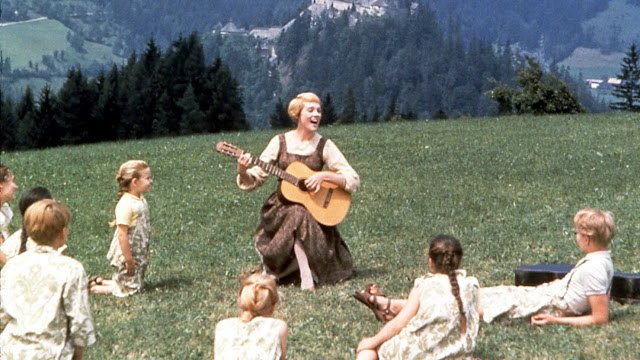
It’s that emotional investment people make in this film that lifts it eventually above criticism. It’s a long film, with a slender plot. But it mines this plot for every single touch of emotional investment. It’s the ultimate triumph of one of Hollywood’s most reliable middle-brow directors, Robert Wise. Taking over from William Wyler (who just couldn’t get interested and left to make the almost diametrically opposite The Collector), Wise successfully keeps the momentum flowing and shoots the film in an economical way that lets the songs do their work. He still finds room for classic shots: that helicopter shot sweeping into Julie Andrews running up the hills is just about perfect (Andrews was literally blown over every time by the helicopter, explaining the sudden jump cut edit for her famous twirl and burst into song). Wise’s editing skills really come into play with Do-Re-Mi that cuts the song across several locations and he makes excellent use of a number of Salzburg locations (for which the tourist board thanks him).

A major part of the film’s success though must surely be directly connected to Julie Andrews. This is a career – perhaps even a life – defining performance. And even the most cynical watcher can’t help but admit Andrews is a superb, gifted performer. Her singing is beautiful, and very, very few performers could have managed to make Maria charming, sweet and someone who want to hug, rather than twee or slappable. Andrews makes you really invest in every single event in the film: she’s hugely endearing (from singing in those hills, to her little stumble of excitement as she runs from the Abbey to take up a job at the von Trapps), she’s completely unaffected and when she’s hurt (by her seemingly hopeless love for the Captain) you just want to give her a hug.

No wonder the children love her. Who wouldn’t? Sure, the film’s weakest beat might well be its romance between Andrews and Plummer (for which Plummer is mostly to blame), but it captures a wonderful sense of family loyalty and protection. Everyone, at some point, is a sucker for stories where sad and lonely children are introduced to a life where they can mess around and have fun – and get that emotional investment the Captain has (accidentally) denied them. After spending the first two hours of the film getting to know this family and seeing it come together, we feel even more intently their fear and panic at being forced into goose-stepping line with Hitler’s war machine.

The film’s final sequence around the Abbey is also surprisingly tense: the family sheltering behind tombs and trusting in the half-truths of the Nuns and the wavering loyalties of wannabe SA officer Rolfe to make their escape. Wise’s films successfully communicates the stakes. It also mixes in some comedy even here: the final lines going to the Nuns confessing their sins of sabotaging those Nazi cars. All this before we go back to where we started – Maria walking the hills, full of music, this time accompanied by a beloved new family.

It’s that desire to be part of a loving family that perhaps explains why The Sound of Music has been so popular – and why so many people turn to it for comfort time and again. With its heart-warming songs and themes, it’s a warm comfort blanket that makes people feel part of its loving family. You can’t argue against it being manipulative – but that’s the nature of films, and manipulation as effective and good-natured as this is a sort-of triumph of film-making art.

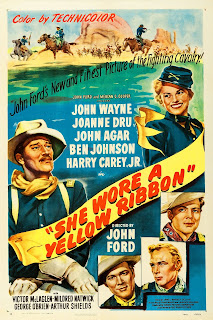
She Wore a Yellow Ribbon (1949)

She Wore a Yellow Ribbon header
John Wayne embodies the honour and duty of the American man in She Wore a Yellow Ribbon

Director: John Ford

Cast: John Wayne (Captain Nathan Brittles), Joanna Dru (Olivia Dandridge), John Agar (Lt Flint Cohill), Ben Johnson (Sgt Tyree), Harry Carey Jnr (Lt Ross Pennell), Victor McLaglen (Sgt Quincannon), Mildred Natwick (Mrs Abbey Allshard), George O’Brien (Major Mack Allshard), Arthur Shields (Dr O’Laughlin)

If there is a film that marks John Ford as the great American Artist of the West, it might just be She Wore a Yellow Ribbon. Shot in glorious Techicolour on location in (where else?) Monument valley by Oscar-winning cinematographer Winton C Hoch, it’s a gorgeously lit celebration of everything that made the American West a legend. Streaking red sunsets, rolling plains, lightening that slices through the sky, masculine military ruggedness beautifully bought to the screen. It’s Ford’s biggest push to become a Winslow Homer or Edward Hopper of the wide-open American space.

Nuzzling in the middle of Ford’s unofficial Cavalry trilogy (either side of Fort Apache and Rio Grande), John Wayne plays Captain Brittles (who might as well be Kirby York again, since he shares the same personality and most of the same backstory), is counting down the last few days until retirement. After Custer and his men are slaughtered at the Battle of Little Big Horn, he’s ordered to lead a cavalry patrol to fly the flag and help prevent a new war with the Indians. At the same time, he’s to escort his commander’s (George O’Brien) wife (Mildred Natwick) and niece Olivia (Joanna Dru) to an eastbound stagecoach (and safety). Olivia herself is in the middle of a love triangle with the two lieutenants eying taking on Brittle’s command, Cohill (John Agar) and Pennell (Harry Carey Jnr).

The film tells the story of that patrol and the subsequent follow-up mission to save those caught protecting the rear guard (needless to say Brittles continues the mission after his supposed retirement, bending the rules). There isn’t actually much in the way of plot in She Wore a Yellow Ribbon. Instead, Ford’s intention is to front-and-centre those particular American qualities of loyalty, honour, dedication to the cause and self-sacrifice. The men of the cavalry always put their country and fellow soldiers first, willing to sacrifice themselves to the greater good and show not one jot of hesitation in doing so. Ford shoots all this with real beauty and more than a touch of whimsical wit, coming particularly (where else?) from the Irish American contingent among the soldiers.

At the film’s heart is Wayne himself, now cemented in Ford’s films not as the traditional romantic action hero, but an elder statesman, wiser and less trigger-happy than his fellows, an unflappably experienced man who guides and inspires, shrugging off praise with an aw-shucks-just-doing-my-duty nobility. If Fort Apache and Red River were first steps towards Wayne – at this time only just past 40 – starting to act as if he was ten years older than he actually was (and in Red River’s case a little bit older than that!) – She Wore a Yellow Ribbon cemented him as the grizzled, inspiring man of action, a role he would play in variation for most of the rest of his career.

And he’s very good in She Wore a Yellow Ribbon. Ford had of course been impressed by the depth and shade of his performance in Red River. This is a simpler role – it would be a few more years before Ford used the darkness in Wayne as well as that film – but it shows Wayne slotting into place as part of What Made America Great. Wayne plays Brittles with a sadness – he’s a touching grieving husband, who takes a familiar chair out every night to talk to his wives tombstone – and a fatherly concern for his men, but tolerating no selfishness or greed. He mentors and pushes Cohill and Pennell like a second father, and has a brotherly banter with his loyal sergeant (inevitably Victor McLaglen as a hard-drinking, extremely Irish drill sergeant). He will do his duty, but he also respects Indian culture, will fight but prefers a peaceful option, will follow orders but never blindly. He’s all that’s good about the American fighting man, and this is one of his finest performances (and a personal favourite of his).

The yellow ribbon wearer is Joanna Dru as Olivia, the sort of spunky young woman Ford’s films frequently feature in key roles. Dru is just about the archetype: brave, determined, smart – much smarter than both of the rather dull men playing court to her. She’s also sensitive and understanding of Brittle’s grief and can hold her own with the men out in the field. Dru’s very good in the role, bringing it a great deal of depth and more than a touch of heart.

She Wore a Yellow Ribbon, plot wise, is more of a day-in-the-life movie. At heart not a lot actually really happens in it other than following the cavalry on two missions (one of which fails) and far from averting the war, it’s explicitly suggested they are just delaying it. The status quo is almost completely restored by the film’s end. The real focus of the film is the detail of what the men set out to do, the determination and humanity with which they go about it – not least the self-sacrificing bravery – and then the return to rest and prepare to go out again. All shot in some of the most striking and beautiful images of the West ever committed to the screen. As a visual tribute, the film is a rich feast.

It’s Ford’s celebration of America and the West and his case for the beauty and majesty of a generation and the values that they placed above all others. For this, She Wore a Yellow Ribbon may be one of the finest of its kind. It lacks the narrative thrust of Fort Apache – and like that film is, in the end, as unquestioning and uncritical of the actions and legacy of those pioneers out West, or the dangers of imperial expansionism or blind veneration of deeply flawed heroes like Custer – but it’s beautiful, very well acted (particularly by Wayne) and a fine film from a director at the top of his game.

The French Lieutenant's Woman (1981)

The French Lieutenant's Woman header
Meryl Streep and Jeremy Irons play star-crossed lovers (twice!) in The French Lieutenant’s Woman

Director: Karel Reisz

Cast: Meryl Streep (Sarah/Anna), Jeremy Irons (Charles/Mike), Leo McKern (Dr Grogan), Hilton McRae (Sam), Emily Morgan (Mary), Lynsey Baxter (Ernestina), Patience Collier (Mrs Poulteney), Penelope Wilton (Sonia), Peter Vaughan (Mr Freeman), Michael Elwyn (Montague), Richard Griffiths (Sir Tom), David Warner (Murphy), Gerard Falconetti (Davide), Colin Jeavons (Vicar)

Many books have been considered unfilmable. John Fowles’ The French Lieutenant’s Woman is a key member of that list. Part pastiche, part commentary on Victorian novels, Fowles not only has a narrator who acts as an ironic commentator on events, but also offers up three possible endings to its central romance, each radically different from the one before. Not easy to bring that to film! Adapting it, Reisz and Harold Pinter came up with the concept of mirroring the novel’s central relationship with a relationship between two actors playing those characters in a film being made of the novel. Got that?

So, Meryl Streep and Jeremy Irons play both the novel’s romantically entwined couple Sarah and Charles AND also Anna and Mike, two actors playing those very roles in a film of The French Lieutenant’s Woman, also engaged in a love affair. Both affairs end in radically different ways, mirroring two of the alternative endings in Fowles’ novel. Most of the films runtime sticks with the novels’ plot, where Charles – an ambitious young scientist – is drawn away from his promising engagement to a potential business partners daughter (Lynsey Baxter), by his romantic fascination with Sarah, a woman of ill-repute in Lyme Regis, the former mistress of a French Lieutenant.

Pinter and Reisz’s adaptation is a smart idea. But I feel it misses a trick. If they really wanted to adapt the book – with its intrusive narrator and alternative endings – then the real character to focus on from a film set is not the actors but the director and producers. If our framing device had been watching the rushes in the screening room, seeing differently edited scenes play out in contrasting ways, with producers and director commenting on the action and making decisions about which ending (Happy? Sad? Open-ended?) they stick on the end of the film. Sure, that would have opened itself up to potentially on-the-nose dialogue, but it would be a better representation of the novel and its ideas, and truly translate some of the books real strength (its unique narrative style) to film.

But that’s talking about something the film doesn’t do. What it does do is offer something that is basically a 80% adaptation of the novel’s plot, mixed with 20% short interjections of the modern-day storyline. Deliberately, the film contrasts the intense romance and deeply-felt passions of the Victorian storyline – where acting on desire carries with it a huge, life-shattering cost in disgrace and social expulsion – with the shallow, off-hand flirtations of the modern era, where the stigma of a sexual affair has ceased to exist.

While this is effective in making the Victorian sections carry even more weight, it does mean the modern sections (by design) are slighter and less engaging. Their semi-regular appearance – it isn’t until the final half hour that we get anything approaching a proper sequence set in the present day, with a beautifully played garden party hosted by Mike and his wife (a magnificent putting-on-a-brave-face performance from Penelope Wilton), which is a feast of stolen glances, averted eyes and strained conversation.

But in some places the split narrative works a treat, particularly in allowing flashes of the real life, more unrestrained passion of the ‘real’ people drop into the Victorian characters. In particular, a meeting between Charles and Sarah in the woods (highly reserved), cuts to Anna and Mike rehearsing the same scene (playful and flirtatious). When the rehearsal reaches a key point – Anna/Sarah falling and being caught by Charles/Mike, the film cuts so that Anna falls but then Charles catches Sarah falling. And the scene continues. Suddenly, the Victorian couple has a burst of the same sexual freedom the modern couple has. It’s a beautiful cut. Later, Sarah falls to the ground (pushed by Charles), and suddenly bursts out laughing – and it feels like she falls as Sarah, reacts as Anna, then rises again as Sarah – either way it gives a wonderful, modern energy to the moment.

The film is wonderfully shot by Freddie Francis, with luscious forest vegetation and whipping winds and seas on the Cobb at Lyme Regis. Simmering sexual tensions are caught in lingering gazes, gestures that carry things words cannot, careful reaction shots captured by Reisz, the trapping of several characters within the ephemera of over-decorated rooms (at one point Ernestina literally can’t escape a room because of the all the knick-knacks within it).

A lot of the mood comes from the two lead actors, who give masterful performances. It’s very easy to see Streep’s performance here as overly mannered: her accent is oddly toned and highly studied, and much of her performance as Sarah is wilfully artificial and arch. But that’s deliberate: the genius here is that Streep is playing Anna playing Sarah who is in turn constructing her own fictional Sarah. With her pre-Raphaelite looks and artistic leanings, Sarah is a woman out-of-time, yearning for the sort of choices and freedom Anna takes for granted, constantly pushed into roles society can accept her in (Governess, eccentric, ‘whore’ etc.). Does she use Charles or not? Streep brilliantly captures her enigmatic, unreadable spirit, the sort of person who interjects a retelling of a possibly invented backstory, with a playful twirl around a tree. Who sometimes despises herself, at others everyone else. In contrast, Streep makes Anna assured, quiet and confident, with the power to choose risks.

Just as good is Jeremy Irons, in only his second film role and here cementing the start of a career that would see him play a parade of restrained and very British men struggling with passions they can hardly understand. Charles’ fascination with Sarah is rooted in feelings both sexual and romantic that both fascinate and terrify him. His final surrendering to being true to himself, rather than what is expected of him, carries with it both a power and strange desperate bitterness. By contrast, Mike is a far more flighty, shallow-figure – an actor who perhaps is more in love with the feelings he is playing (and the character that inspires them in his character) than he is with Anna.

Reisz pulls all this together highly effectively, and the film is at its strongest when exploring feminism and the opportunities for women in Victorian England. Those are few and far between. Women have defined roles and expectations and someone who deviates from these – like Sarah – have no place. In addition, women are held responsible for provoking dangerous erotic feelings in men (from women of poor reputation like Sarah, to the prostitutes in a London street). The ability of Sarah to make her own choices and lead the life she wants to lead is the underlying theme of her story – and her motivations. Does she want, however she might feel, a relationship that would define her again as “wife” rather than being truly herself?

These are fascinating ideas in a film full of beautiful images – their first meeting on the Cobb in particular is beautiful – scored expertly by Colin Davis (with just a tinge of suspense in the music). The framing device gives little moments of insight and reflection – even if it is only an approximation of the novel’s effect – but the Victorian set story, and it’s buried passions and social commentary is what really compels, in a way that the slighter modern story (almost deliberately) doesn’t. Either way, it has two brilliant performances, an intelligent script and handsome direction by Reisz.

His Girl Friday (1940)

His Girl Friday header
Rosalind Russell and Cary Grant bicker and spar in His Girl Friday, one of the all-time classics I’ve never quite clicked with

Director: Howard Hawks

Cast: Cary Grant (Walter Burns), Rosalind Russell (Hildy Johnson), Ralph Bellamy (Bruce Baldwin), Gene Lockhart (Sheriff Hartwell), Porter Hall (Murphy), Ernest Truex (Bensinger), Cliff Edwards (Endicott), Clarence Kolb (The Mayor), Roscoe Karns (McCue), Frank Jenks (Wilson), Regis Toomey (Sanders), Abner Biberman (Louie), Frank Orth (Duffy), John Qualen (Earl Williams), Helen Mack (Mollie Mallot)

There’s always one film classic that the world and his dog love to bits, but every time you watch it you just don’t get it. That classic for me is His Girl Friday. I’m not sure many films have appeared more than this one on film buffs’ lists of Top Ten Movies of All Time, but while I admire its many, many qualities, every time I’ve watched it – and it’s at least three now – I just don’t love it. More to the point I don’t find it funny (I know, I know I can practically hear your jaws hitting the floor), neither do I engage with or root for its lead characters (please don’t hit me).  I admire a lot of things about this film and how it is made. And I chuckle from time to time when I watch it. But for some reason even I’m not sure of, I’ve got no click with this film. Compared to The Awful Truth or The Lady Eve or The Philadelphia Story (all films this bears a lot of comparison with) I just don’t feel it.

It’s an adaptation of Ben Hecht and Charles MacArthur’s play The Front Page. In quite a modern touch, one of its lead characters is gender flipped. In the play, a newspaper editor tries to persuade his star reporter not to quit the game: in His Girl Friday the star reporter not only becomes a woman but, don’t you know it, the ex-wife of the editor, about to walk out (in more ways than one) to marry her dull fiancé. Cary Grant (who else?) is the fast-talking editor Walter Burns, Rosalind Russell the fast-talking star reporter Hildy Johnson. In fact, everyone is fast-talking, in the film that holds the world record for dialogue speed. Can Burns persuade Hildy to hold off leaving with fiancée Bruce Baldwin (Ralph Bellamy – sportingly playing up to his dull reputation) for one more day so she can cover the story of strangely naïve convict Earl Williams (John Qualen)? Let the madness ensue.

Let’s focus on all the good stuff first. Not least because my general lack of connection to a film loved by all and sundry is so personal, it almost defies analysis. Hawks was, rumour has it, won round to the idea of gender-swapping Hildy by hosting a read-through of the play at a dinner party with a shortage of people, meaning Hildy was read by a woman. That opened up a host of ideas around combining this with the classic re-marriage genre and bang away we go. It is, needless to say, a brilliant idea and adds such a spark to every single interaction between the two characters that it distinctly improves the play (later productions have often carried the idea – and the dialogue – across from this film).

On top of this, Hawks wanted to make this the fastest talking comedy film ever made. And boy does he succeed at that. The dialogue of this film is delivered with such rat-a-tat speed that clock watchers report it hits a rate of over 300 words a minute (try reading that many words out in one minute to see how fast that is). It gives the film a ferocious manic energy and thunder-cracker momentum and keeps the punchlines coming fast. It also needs gifted actors, which it sure-as-hell gets here. Grant possibly hits his comedic peak here, managing to still remain suave, cool and collected, even as he’s ripping through words and shifting verbal goalposts at dazzling speed. This is also Russell’s career highlight, embodying the image of the sort of spunky, arch and no-nonsense professional woman of screwball comedy that all others (even Hepburn) are measured against.

They race through a film that makes excellent use of long-takes, intelligent single-shot camera moves and careful, intelligent editing to highlight the electric speed of the zany dialogue. In particular, Hawks makes a brilliant motif of telephones (those old candlestick phones), which characters are forever hurling instructions down, using as escape tools from awkward moments and juggling conversations with (either from multiple phones or between the phone and people in the room). They are used for short, sharp, punchy lines – and it fits a film that is all momentum and short-hand. The ultra-smart, quotable banter, littered with one-liners, is the ultimate epitome of the popular style of dialogue at the time, which favoured this style over the speeches and deeper content that was seen as more of the preserve of theatre.

Walter and Hildy in this version also become the epitome of “the screwball couple”. The divorced partners who of course still love each other, largely because they recognise that no-one else will share their insane energy and obsession. Not to mention that fighting and feuding with their intellectual equal is a million times sexier (and better foreplay) than a thousand dinners at home with someone average will ever be. Ralph Bellamy does good work here (essentially, like Grant, repeating his role from The Awful Truth) as that dull, trusting man – the only one in the film who vaguely resembles a human being and therefore, obviously, the character the audience likes the least (who goes to the cinema to see someone like themselves on the screen, eh?)

There is so much right about His Girl Friday. The actors are sublime, the dialogue delivered perfectly, Hawks’ direction is pin-point in its mix of old-Hollywood classicism, and it’s very well shot. So why don’t I like it more? It’s that most personal feeling: I just don’t find it funny enough. Maybe that’s because I need to connect with characters more – and I don’t connect with Hildy and Walter. In some ways I don’t even like them. His Girl Friday is frequently an unapologetically cruel film: Hildy and Walter treat several people like crap, largely for their own amusement or as collateral damage in their own war of foreplay. At one point a desperate, lonely woman attempts suicide (she jumps out of a damn window falling a couple of floors) – Hildy and Walter are joking about it in seconds. They are cold, self-obsessed people and for all their superficial charm, there isn’t any touch of warmth to them at all. They are very artificial people in an artificial world. In all, I don’t really like them and I find it hard to careor want them back together (other than recognising that they deserve each other).

Believe me, I understand some comedy is cruel, I don’t have a problem with that. But I don’t think His Girl Friday realises it’s that kind of film. The Awful Truth has a very similar plot – but that had its characters recognise their own faults and also gave us reasons to care for them as human beings. His Girl Friday doesn’t do either of those things, meaning I laughed a lot in The Awful Truth and not so much in His Girl Friday.

Can you still bear to read on after such blasphemy? But there you go. Everyone has that stone-cold classic that they just can’t get on board with. This film is mine. I respect so much about it, but it neither tickles my funny bone nor makes me feel welcomed. I find it a cold and cruelly minded film, that looks down on people with scorn – from Bruce to criminal Earl Williams and most especially to his distraught girlfriend Molly – and invites us to do the same. It wants us to love the popular kids in the class and join them in spitting paper balls at the losers. This doesn’t do it for me. I know everyone loves it. Hell, I know I’m probably wrong. But I just don’t love His Girl Friday.

Reds (1981)

Reds Header
Warren Beatty brings his passion to life in Ken Loachesque Reds

Director: Warren Beatty

Cast: Warren Beatty (John Reed), Diane Keaton (Louise Bryant), Edward Herrmann (Max Eastman), Jerzy Kosinski (Grigory Zinoviev), Jack Nicholson (Eugene O’Neill), Paul Sorvino (Louis C Farina), Maureen Stapleton (Emma Goldman), Nicolas Coster (Paul Trullinger), William Daniels (Julius Gerber), Jan Triska (Karl Rodek), Gene Hackman (Pete van Wherry)

Reds is the film only Warren Beatty could have made. Imagine the pitch meeting: I want to make a three hour long biopic about American communists, with the hero being the only American buried in the Kremlin, and I need $30million dollars to do it. Only Beatty had the force of personality to get major companies to invest greenbacks into a film celebrating a man who would have happily cheered their demise. Reds is a tribute above all to the dedication of its multi-titled director and his refusal to compromise. It’s a big piece of serious minded, educational but also dramatic and romantic storytelling. Not many people could have pulled it off.

In 1915 Louise Bryant (Diane Keaton), a young would-be journalist and suffragette, meets and falls in love with left-wing journalist John Reed (Warren Beatty). The two of them tun off together to Reed’s bohemian circle in Greenwich Village, New York then to Massachusetts, becoming the centre of a community of anarchists, socialists and artists. Their mutual love is damaged by affairs – in particular Bryant’s heartfelt affair with the sensitive Eugene O’Neill (Jack Nicholson) and Reed’s own (off-screen) infidelities – but is rekindled as they are swept up in the Russian Revolution, an event that motivates Reed to try and build a similar communist party in America (with very little success). But, when Reed is trapped in Soviet Russia, how far will Bryant go to reunite with him?

Beatty’s dream of making a film on Reed’s life had been knocking around in his head since the 1960s, but it took the success of Heaven Can Wait in 1978 for him to finally have the muscle to get the film made (when Studio execs, having signed the deal, begged him to consider another subject Beatty stuck to his guns). He originally planned only to produce: that quickly expanded into also writing the script (with Marxist British playwright Trevor Griffiths, a hilarious personality mismatch with the Virginian millionaire Beatty), then directing it and finally, to be completely sure the project went where he wanted it to go, playing Reed as well. It would result in Beatty joining the short list of people nominated in four different categories for one film at the Oscars (but he won only Best Director, Reds losing out the big one to Chariots of Fire).

The real strength of Reds is probably Beatty’s producing. This is a huge epic, filmed across multiple countries in Europe (standing in for each other and for America), marshalling a vast number of sets and locations. Much like Attenborough’s Gandhi, it’s a film directed with a smooth, professional competence, but stage-managed to the screen with the flair of a master producer. Each department was staffed by an expert: Vittorio Storaro shot the film with a Golden Age beauty; Stephen Sondheim contributed to the score; Dede Allen assembled thousands of hours of footage, and dozens and dozens of takes of every scene, into a coherent, pacey movie that effectively balances politics and romance.

In many ways, Reds is like the mirror image of Lean’s Doctor Zhivago (it even has a late train ambush set-piece, chugging through the Spanish wheat fields, that could have come out of Lean’s epic). That film was a romance-for-the-ages that used politics and revolution as a backdrop. Reds uses romance and personal stories as a context-setting background, to push to the forefront politics and revolution. This is perhaps the most earnest and impassioned exploration of the history of American left-wing politics in film history. Giving a lot of time  – particularly in its second half – to scenes made-up entirely of impassioned socialists sitting in a room arguing at each other over the minutia of party rules and ideology, this is the sort of epic Ken Loach would have been proud of making.

The politics are also genuinely interesting, quite a feat in itself. Beatty is unafraid to look at the fundamental weaknesses of Western left-wing politics: its own worst enemy is always itself. People who agree on 90% of the issues, swear themselves to become life-long enemies because of differences over the remaining 10%. In one dynamically filmed sequence, Bryant is a frustrated and resigned observer as Reed oversees the split of the American Socialist Party into no less than three factions, two of which set up rival claims to be the “official” Communist party of America.

Not that Reds has any sentiment for Russia: Beatty is savvy enough to know (I wonder if Griffiths was?) that the USSR is about a million miles away from ideal. Factionalism is just as prevalent there, with the difference being the main faction happily uses, suppresses and crushes the others. Reed’s time in Russia sees him becoming increasingly disillusioned and homesick, as he realises a dictatorship isn’t made palatable just because it’s a Communist Dictatorship. As the representative of that system, author Jerzy Kosinski makes for a grippingly stone-faced and ruthless Zinoviev, brow-beating any deviation from the party line.

Beatty makes all this political theorising and left-wing political infighting palatable, by framing it carefully around a genuine romance between Bryant and Reed. For all the unconventionality of their open-ish relationship (their feelings on this change from infidelity to infidelity), these are two people who share a deep and lasting bond on both an emotional and a political level. Both skilled writers, we are shown time and again that they bring out their best work from the other and that when they are focused on each other, they have a mutual understanding few can hope to match.

As Bryant, Beatty (who was in a relationship with her at the time – which didn‘t survive the epic shooting schedule) cast Diane Keaton. It’s a stroke of genius – and this is certainly Keaton’s finest performance. In a way no other role has allowed her, this looks past Keaton’s comedic skills and allows her to match her intelligence and spark with a woman who challenged norms, as a skilled writer and journalist. Keaton can play heart-rending emotion just as well – her breakdown fury at discovering Reed’s infidelity is fully-committed without being OTT – and she’s perfect as the increasingly disillusioned observer of left-wing failures. She believably flourishes from a woman uncertain of who she is to become a determined intellectual willing to cross continents to find what she wants. It’s a brilliant performance, smart, sharp and moving.

Beatty fronts-and-centres her so much, he slightly short-changes himself – playing Reed he doubles down on the boyish charm and enthusiasm (and he feels really young here), making Reed an enthusiastic, vulnerable, naïve figure. We just don’t quite get a real sense of who he is beyond that. You can’t say the same for Nicholson’s Eugene O’Neill, delivering a remarkably low-key, restrained and sensitive performance. He’s loving, emotionally vulnerable and eventually devastated, in one of his finest acting performances. Maureen Stapleton won the Best Supporting Actress for her Earth-mother anarchist Emma Goldman, the cuddly aunt of firey, confrontational anarchic politics.

Reds is marshalled by Beatty into an epic that powers along effectively. The first half of the film gets its narrative balance right: contrasting personal and political growth with a backdrop of War and Revolution. The second half leaves a little too much to chew, a vast amount of political debate rushed through with a series of increasingly short and sometimes disconnected scenes. Beatty balances the narrative with extensive “witness” interviews, from real-life contemporaries of the characters. (These are never identified, which is a bit of shame as it never allows to really know what their perspective was). It adds a feeling of earnestness to a project that gets an effective balance between politics and the personal, between showmanship and details and between scale and intimacy. While it is more of a producer’s film – and rushed in its second half – than a triumph of directorial imagination, it’s still an impressive – and informative – achievement.

Doctor Zhivago (1965)

Julie Christie and Omar Sharif are star cross’d lovers in Lean’s epic but flawed Doctor Zhivago

Director: David Lean

Cast: Omar Sharif (Dr Yuri Zhivago), Julie Christie (Lara Antipova), Geraldine Chaplin (Tonya Gromeko), Rod Steiger (Victor Komarovsky), Alec Guinness (Lt General Yevgraf Zhivago), Tom Courtenay (Pasha Antipov/Strelnikov), Siobhan McKenna (Anna Gromeko), Ralph Richardson (Alexander Gromeko), Rita Tushingham (The Girl), Bernard Kay (Bolshevik), Klaus Kinski (Amoursky), Noel Willman (Razin), Geoffrey Keen (Professor Kurt), Jack MacGowan (Petya)

Boris Pasternak’s Doctor Zhivago is one of the seminal 20th century novels. Smuggled out of the USSR after being refused publication, it became an international sensation and led directly to Pasternak winning the Nobel Prize (although the USSR insisted he turn it down). A film was only a matter of time – and who else would you call but David Lean, master of the pictorial epic, to bring the novel about the Russian Revolution to the screen. Lean – with his masterful Dickensian adaptations – was perfect in many ways but Doctor Zhivago, for me, is the least satisfying of his ‘Great Films’. It’s strangely empty and sentimental, lacking some of the novel’s strengths zeroing in on its weaknesses.

Yuri Zhivago (Omar Sharif) is training to be a Doctor in the years before the outbreak of the First World War. Married to Tonya (Geraldine Chaplin), the daughter of his father’s old friend Gromeko (Ralph Richardson), Yuri is part scientist, part poetic free-thinker. Events throw him together with Lara (Julie Christie), a young woman whose fiancé Pasha (Tom Courtenay) has ties to the revolutionaries, while she is trapped in an abusive relationship with the amoral Komarovsky (Rod Steiger). But are all these troubles worth a hill of beans in a country about to tear itself apart?

There are many things you can’t argue with in Lean’s film. It is of course unfailingly beautiful. Ironically filmed in Fascist Spain, it’s gorgeously lensed with a luscious romanticism by Frederick Young (who won his second Oscar for a Lean film). It’s not just pictorial beauty either: Young frequently makes wonderful uses of splashes of Monet red to dapple the frame. From poppies in a field to the ubiquitous communist imagery on uniforms and walls. There are some wonderfully cool blues employed for the snow, while slashes of light pass across eyes with a gorgeous lyricism.

Romance is the name of the game, with everything working overtime to stress the star cross’d lovers plot. Maurice Jarre’s score – in particular its balalaika inspired Lara’s Theme – mixes Russian folk inspirations with an immortal sense of longing. It plays over a film that, while very long, often feels well-paced, even if (just as the novel) its episodic and at times rambling. Lean’s direction of epic events revolving around personal loves and tragedies is still exquisite in its balance between the grand and intimate. The film is wonderfully edited and a fabulous example of long-form storytelling.

So, what’s wrong with Doctor Zhivago? In a film with so much to admire, is it possible Lean and co spent years working on something only to bring the word but not the spirit to the screen? The key problems come round to Zhivago himself. This is man defined by his poetic soul. His poetry becomes a sensation after his death. His balalaika is a constant companion, and his playing of it an inherited gift (which even has major plot implications). Inexplicably, the film has not a single word of poetry in it (when it had Pasternak’s entire back catalogue to work with) and Zhivago never so much as strums the strings of his balalaika. It’s like filming Hamlet and then making him a mute.

The problem is, removing the character’s hinterland makes him a rather empty character. Zhivago is a liberal reformer, in sympathy with the revolution but not it’s methods. This should be at the heart of understanding his character, but like his poetry the film has no time for it. Instead, Zhivago is boiled down into a romantic figure, nothing more. He has no inner life at all, a blank canvas rather than an enigma.

Suddenly those long lingering shots of Sharif’s puppy-dog eyes end up carrying no real meaning. They aren’t the windows to his soul, only a big watery hole with not much at the bottom. Sharif is awkwardly miscast – and lacks the dramatic chops O’Toole bought to Lawrence – but it’s not completely his fault. His character has had his depth removed. When we see him struggling at the front, trapped on a long train ride to Siberia or forced to work with partisans, he’s not a man who seems to be considering anything, but just buffeted by fortune, neither deep or thoughtful enough to reflect on the world around him. That’s not really Pasternak’s intention.

Instead, the film boils the novel down to his plot-basics and, in doing so, removes the heart of what got the book banned in the first place. Lean misunderstood the future of Soviet Russia so much, he even chose to end the film with a romantic rainbow at the foot of a waterfall. The horrors of the civil war and the revolution are largely there briefly: a gang of deserting soldiers unceremoniously frag their officers and Zhivago frequently stares sadly at villages burned out by Whites or Reds (or both). But the film is more of a romance where events (rather than politically and social inevitability) gets in the way of the lovers – like Gone with the Revolution.

By removing the more complex elements – and the poetic language of Pasternak – you instead have the rather soapy plotline (with its contrivances and coincidences) left over. Again, it’s Hamlet taking only the events and none of the intellect or language. (And Pasternak’s novel didn’t compare with Hamlet in the first place.) Both Zhivago and Lara are shot as soft-focus lovers, with Julie Christie styled like a perfectly made-up slice of 60s glamour. It’s a grand scale, but strangely empty romance, because both characters remain unexplored and unknowable – in the end it’s hard to care for them as much as we are meant to do. For all the epic scale, small moments – such as an aging couple sharing a cuddle late at night on a train floor – carry more impact. How did the director of Brief Encounter – a romance that speaks to the ages for its empathy – produce such an epic, but empty, posture filled romance as this?

Julie Christie does fare better than Sharif – she’s a better actor, and her character has a bit more fire and depth to her. But she’s not in the picture enough, and Lean quietly undersells the terrible trauma of her eventual fate. Ironically, the smaller roles are on surer ground. Geraldine Chaplin is rather affecting as Zhivago’s wife, a dutiful and caring woman who her husband loves but is not besotted with. Ralph Richardson is witty and moving in a tailor-made role as her eccentric father. Tom Courtenay landed the films only acting Oscar nomination as the reserved and conflicted Pasha. Rod Steiger is very good as the mass of greed, selfishness and barely acknowledged shame as Komarovsky. Alec Guinness is bizarrely miscast as Sharif’s younger brother (!) but handles some of the film’s duller scenes well (Lean’s decision to have him never speak on screen except in the film’s framing device works very well).

There is a lot of good stuff in Zhivago, but this is a neutered and even slightly shallow film, that’s far more about selling a romance than it is telling a true adaptation of the themes of the novel. In Lawrence, Lean showed us multiple aspects of a conflicted personality to leave us in doubt about who he really was. In Zhivago, he just presents a rather empty person and seems unsure if he wants to use to ask who he is. The film concentrates on making the romance sweeping and easily digestible. What it doesn’t make us do is really care for them as people.

Witness (1985)

Harrison Ford and Kelly McGillis have a cautious romance across the divide in Peter Weir’s gripping thriller Witness

Director: Peter Weir

Cast: Harrison Ford (Detective John Book), Kelly McGillis (Rachel Lapp), Lukas Haas (Samuel Lapp), Jan Rubes (Eli Lapp), Josef Summer (Chief Paul Schaeffer), Alexander Gudunov (Daniel Hochleitner), Danny Glover (Lt James McFee), Brent Jennings (Sgt Elton Carter), Patti LuPone (Elaine), Angus MacInnes (Dgt Leon Ferguson), Viggo Mortensen (Moses Hochleitner)

The old world meets the new, when a mother and son from an Amish community find themselves travelling through Philadelphia and the son is the only witness to a murder at the train station. The mother, Rachel (Kelly McGillis) wants to help, but is worried about her son Samuel’s (Lukas Haas) safety and is desperate to return home – after all these ‘English’ problems aren’t theirs. However, Detective John Book’s (Harrison Ford) investigation reveals the murder to be the work of dirty cops in his own department – and, after an attempt on his life, he has no choice but to flee back to Amish community with Rachel and son, hiding until he can find a way to set things right.

Directed by Peter Weir with a real professional smoothness, Witness is a triumph of atmosphere and mood, with an intriguing thriller at the heart of it. Weir brings a real understanding and respect for different ways of life, embracing the differences in the Amish way of life but also making some striking parallels between it and our modern world. It’s that emotional maturity and sensitivity that makes the film work: and the most impactful factor is the heartfelt, largely unspoken romance between Book and Rachel. Weir keeps this subtle, gentle and built on suppressed feelings and wordless moments that trusts the audience to understand their bond and their knowledge that their different worlds mean they can probably never be together.

Weir directs these moments with a real romantic simplicity, drawing possibly the most heartfelt, almost boyish, performance he’s ever given from Harrison Ford. Oscar-nominated (his only nomination), Witness is a reminder of how well Ford does both moral outrage and pained suffering. His fury at his corrupt colleagues betraying their badge is as visceral as his sense of fear when he’s chased (first in a car park, then later around an Amish farm) by Danny Glover’s heavy – we always feel worried about Ford’s safety, while also sure he can look after himself. He also works wonderfully with Lukas Haas, Weir focusing on his under-valued fatherly qualities as an actor.

Ford brilliantly combines his decency and world-weary sadness (few actors manage to look more outraged but also resigned when confronted with betrayal and villainy – and is there a more decent, homespun name than John Book?) but Witness taps into his vulnerability more than almost any other film. That’s not just physical vulnerability – he spends a large portion of the film recovering from a gunshot and looks genuinely in fear of his life in the final confrontation – but also emotionally vulnerable.

In a luscious scene he and Rachel (an equally superb performance from Kelly McGillis) dance in a barn to What a Wonderful World by Sam Cooke. As the two shyly and slightly hesitantly exchange looks, both actors allow their characters to hang on the edge of making a clear romantic gesture, but always backing away with laughs and grins. Ford has never seemed more playful, joyfully singing along while McGillis’ emotional frankness and honesty leads makes the scene beautifully romantic, with two people nervous about admitting their growing feelings for each other.

This is just one of several romantic touches that really carry impact. From the moment they arrive in the Amish village, they find themselves drawn to each other. Maybe it’s the charmingly awkward way Book wears the Amish clothes that don’t fit him. Perhaps is the delighted smile and the realisation of her own loneliness in Rachel . But the feelings are unspoken but clear. Both of them are tentative about romance. Book is passionate about justice but surprisingly shy personally (as is all too clear from his bashful talk with his sister earlier). Rachel is committed to her religion, but also yearns for something emotionally beyond what that community can give her (certainly she’s unthrilled by the expectation that she will marry Alexander Gudunov’s Amish farmer, who courts her with a pleasant but romance free dutifulness). Interestingly she is the one more forward in what she wants than Book. For all the film is a gripping thriller, this romantic story is its heart and what gives the film its impact.

The film also works because Weir treats the Amish life so matter-of-factly. The opening moments of the scene, in its simple rural setting and accompanying choral-inspired score could be set hundreds of years ago. It’s actually quite jarring when we find ourselves in busy Philadelphia: but Weir never suggests either way of life is superior to the other. Both are communities with their own rules, virtues and flaws. The Amish are peaceful, but just as capable of prejudice as anyone else. But they are free of the cruelty and violence of the modern world.

A large chunk of the film follows Book’s fish-out-of-water experiences with the Amish, and his growing regard for them reflects the film’s own feelings. He finds there’s a strange peace in the community – and we can see why after we’ve seen the hard-bitten streets Book works. Ford’s real-life carpentry skills have never been used better on film, as Book helps raise a barn (a lovely moment of communal accomplishment). But while the peace is refreshing, he can only change so much. Confronting abusive townspeople (“It’s not our way”/”It’s my way”), Book strikes back. The film’s stance on Book’s smacking down of these abusive street kids is an insight into its maturity: it’s a brief moment of triumph, but is soured instantly by the horror of his hosts – and leads directly into blowing Book’s cover.

But it works because it reflects how we are feeling. Having been led to invest so heavily in a way of life it’s easy to joke about, we feel the same as Book does: those bullies need taking down a peg or two. It fits with Book’s character as well – the idea of corrupt, bullying cops is as repugnant to him as drunken oaths mocking those who choose not to defend themselves.

Weir’s film also successfully creates plenty of thriller beats. Little Samuel’s witnessing of a murder in a train station toilet has a seedy immediacy and sense of danger that really makes you fear for the kid’s safety (and admire his life-saving ingenuity). There’s also rather nicely a simplicity to the film – it’s no whodunnit, we more or less have every question answered in the first half hour. Instead, the suspense comes from if Book can live long enough to hand out justice and how he can possibly manage that from an Amish village.

But Witness’s heart is the relationship between Book and Rachael, wonderfully bought to life by Ford and McGillis. Few thrillers would dare to be as soft and sensitive as this film – or have such restraint. It’s tinged throughout by the careful creation of two worlds that mutually co-exist, but never together. It’s open about the virtues and flaws of Amish life, but offers no judgement on either them or their religion, only acceptance of difference. Witness is a thriller with a heart, combining excitement with moments of heart-rending romance. Professional Hollywood working at its best.

The Philadelphia Story (1940)

The Philadelphia Story (1940)

Three stars are at the top of their game in this classic screwball-style comedy

Director: George Cukor

Cast: Katharine Hepburn (Tracy Lord), Cary Grant (C.K. Dexter Haven), James Stewart (Mike Connor), Ruth Hussey (Elizabeth Imbrie), John Howard (George Kittredge), Roland Young (Uncle Willie), John Halliday (Seth Lord), Mary Nash (Margaret Lord), Virginia Weidler (Dinah Lord), Henry Daniell (Sidney Kidd)

In 1938 Katharine Hepburn’s career was over. After the flop of some now forgotten (wait, hang on…) screwball comedy called Bringing Up Baby, she took centre place on the Independent Theatre Owners list of “Box Office Poison”. Flops after flop hit Hepburn (all of them are classics today of course), and the studios did their damnedest to drop her. So, Hepburn returned to the stage, developing The Philadelphia Story with Philip Barry – and creating a lead role for herself that would play to all her strengths and help win back public affection. And which (with a little help from Howard Hughes) she would own the rights for: so, if and when they wanted to make a film, she could insist she starred. The rest is history.

The Philadelphia Story is perhaps the best example of the Code-approved genre, the “remarriage comedy” (because the code wouldn’t countenance the idea of a couple cheating). Daughter of a rich Philadelphia family, Tracy Lord (Katharine Hepburn) is to marry her dull fiancée George Kittredge (John Howard). George’s main attraction is he’s the complete opposite of her charismatic ex-husband C.K. Dexter Haven (Cary Grant). Dexter crashes the build-up to the wedding, bringing along reluctant society journalist (he’s really a renowned short-story writer) Mike Connor (James Stewart) and press photographer Elizabeth (Ruth Hussey), promising to introduce them as distant friends of the family so they can report on the wedding. But then Tracy finds herself drawn to Dexter and Mike and George as well – who will she end-up walking down the aisle with?

Perhaps the best thing about The Philadelphia Story is that you really don’t know who it will be – and the film successfully keeps the question both up-in-the-air and deeply entertaining. There even seems a chance (unlikely as it is) that Tracy really will stick with George (a tedious nouveau riche businessman with priggish middle-class morals who can’t even mount a house – imagine!). Directed with the sort of unfussy smoothness Cukor excelled in – and helped get the best out of actors – it’s a superb comic treat, with a sparkling adaptation by Donald Ogden Stewart.

At the heart of it, Hepburn is superb in a role that riffs considerably off her own public personality. Hepburn was smart enough to know most audiences saw her as far too clever by half. Her sharpness, acidity and no-nonsense unwillingness to suffer fools had made her hard to relate to. Quite correctly, she felt she needed a role where she could “fall flat on her face”. Which , by the way, is more or less the first thing she does – a hilarious prat fall while throwing Cary Grant’s Dexter out, him responding to her snapping his golf clubs by gently putting his hand on her face and pushing her off-balance (only Grant could have got away with that by the way).

Tracy Lord is a version of the Hepburn many people felt they knew. Tracy genuinely believes she’s smarter and better than anyone else, with unquestionable judgment and superior morals. The film is a gentle exercise in pricking her balloon, showing her she is as prone to mistakes, prejudice and, above all, getting giddy and silly in love, as anyone else. This is a fiercely practical woman, who sets high standards for those around her, suddenly finding herself falling in love with three men at once. It’s the exact flighty lack of commitment she spent years condemning her estranged father for.

This is all scintillatingly played by Hepburn, at her absolute best. The rat-a-tat dialogue (with its classic, Wildean comedy of errors and mis-identification) is under her complete control. She’s delightful when, under the influence, she flirts with Mike – Hepburn showing the world (clearly they missed it in Bringing Up Baby) that she could be as silly and vulnerable as the next girl. Hepburn knew people wanted to see her personae deconstructed, and for her character to learn that (in the words of another comedy) nobody’s perfect. It works a treat – and this remained one of her greatest (and funniest) performances.

It helps she had two of the greatest to riff off. Cary Grant is at his light-comedic best here, turning Dexter – a manipulative reformed alcoholic it would be easy to dislike – into the embodiment of sophistication, charm and playful wit, who we adore as much Tracy’s family does. James Stewart won an Oscar and matches Grant gag-for-gag in a comedic masterclass. He’s a master of hilarious comedic and physical reactions – and lovable enough to turn a chippy newspaperman into a sort of hilariously droll sage. His ‘drunk’ acting is also some of the funniest you’ll see on film (even Grant can be spotted cracking up just a little as Stewart hiccups his way through a scene).

Hepburn’s chemistry with both actors is sublime. Her romancing scenes – both the worst for wear for drink, but also empowered to say things they’ve clearly been burying all day – with Stewart are not hugely romantic, but also rather sexy (Cukor’s direction here is also exquisitely spot-on). It’s a masterclass in on-screen flirtation – and you can see why George gets as pissed off as he is. Hepburn and Grant meanwhile bicker and taunt each other with all the chemistry of a match and a fire.

Each scene has a bounce that teeters between heart-felt and farcical. The set-ups are frequently silly – but they work because they hinge on characters that feel immensely real. Every performer is spot on – credit also goes to a superb Ruth Hussey, one of the few grown-ups in this weekend of flirting, feuding children. Set in a sumptuously rich Philadelphian mansion, for all of Mike’s chippy criticism it’s a celebration of the smooth upper classes over hard-working, dull prigs like George. Its sole fault might be it’s too long (at just under 2 hours, a few scenes and set-ups outstay their welcome). But, as a classic Hollywood comedy, it’s pretty much the top of the class. Box-office poison no more.

Out of Africa (1985)

Robert Redford and Meryl Streep in this sweepingly empty romance Out of Africa

Director: Sydney Pollack

Cast: Robert Redford (Denys Finch Hatton), Meryl Streep (Karen von Blixen), Klaus Maria Brandauer (Bror von Blixen), Michael Kitchen (Berkeley Cole), Michael Gough (Lord Delamere), Suzanne Hamilton (Felicity Spurway), Rachel Kempson (Lady Belfield), Shane Rimmer (Belknap), Malick Bowens (Farah Aden), Joseph Thiaka (Kamante), Donal McCann (Doctor), Leslie Phillips (Sir Joseph Byrne)

In the 1980s Hollywood faced an identity crisis. Throughout the 1970s, the films the Oscars honoured and those that topped the box office were often one and the same. The industry saw itself as the purveyor of classy, intelligent, popular entertainment. But in the 1980s, people flocked to see the latest Rocky or Rambo film, instead of the likes of Kramer vs Kramer. Hollywood wanted to carry on feeling good about itself: so it honoured as “Best Picture” the sort of sumptuous, prestige products it wanted to shout from the rooftops about, even if people weren’t flocking to see them at the cinema in the same way. So something as mundane, average, tasteful and empty as Out of Africa hoovered up eight Oscars.

Based on Karen Blixen’s memoir of her 17 years (from 1913) owning and running a coffee farm among the British community in Kenya, the film reorganises a deliberately non-linear memoir (full of impressions and reflections, thematically arranged) into a simpler narrative, and throws in content from at least two biographies of Blixen (played by Meryl Streep). As such, the film charts her life, specifically her relationship with philandering and unreliable husband Bror (Klaus Maria Brandauer) and love affair with British game-hunter Denys Finch Hatton (Robert Redford).

Pollack directs this epic with a clean, smooth, professional and lifeless tastefulness that makes it a long film full of pretty things, but a fundamentally empty experience. At the film’s conclusion, Karen is invited into the Men Only club for a drink where she is toasted. It feels like it should be the culmination of plot threads running throughout the film. But instead, its under-explored and unfocused, struggling for any attention. Rather than a culmination of a nearly three-hour experience, the moment feels unearned.

That’s about par for the course for a film ticking all the boxes of “prestige” movie making, but which tells us nothing at all. It’s clear Pollack has only a limited understanding of the intricate rules of the British upper-class community. We learn nothing about Africa, or the role of Empire there or the impact this had on the Kenyan people. Instead, the Kenyan people are seen as exotics or charming superstitious eccentrics.

The film is only interested in how beautiful colonial Britain was – the lovely clothes, the sumptuous set-design, the detailed props – and the gorgeous scenery. There is some focus given to the Kenyans – particularly Karen’s relationship with her servant Farah, very well played by a stern but wise Malick Bowens – but it is always defined as Karen visiting them, encouraging their education and pleading for their rights. There is more than a touch of the white saviour, and the film fails to really give us a sense of Karen gaining an understanding of the Kenyan people on their own terms, rather than hers.

That might be because the film is determined to turn the story into a straight-forward romance, giving most of its focus to Karen’s relationship with Denys. This is the root cause of most of the film’s problems, as Pollack casts two fundamentally unconnected actors. Streep gives a performance of such technical detail, you find yourself admiring the work while never really connecting with the character. Her Danish accent is perfectly studied, she has clearly read everything on Blixen she can find, and every single beat is perfectly observed. You can’t miss she is acting in every frame: there is nothing relaxed or truly intimate in the performance. It’s the work of a master craftsman.

This detailed excellence literally feels like it is happening in a different movie to the one Redford is in. Redford looks like he just stepped off the plane and started shooting. Pollack was convinced no English actor could play Denys in the sweeping romance he had in mind (Charles Dance anyone? Michael Kitchen – very good as Denys’ best friend – is far closer to what the part actually required, and would have been excellent). Redford was parachuted in and encouraged to play the role with his natural accent (is he still meant to be British? No idea).

The two performances never click together, and Redford’s Californian approach feels totally wrong for the Houseman-quoting, Mozart-playing, Great White Hunter he is meant to be. Not for one second can you forget this is the Sundance Kid – making it nearly impossible to buy into this relationship the film is trying to sell you, as well as making Streep’s Danish accent sound out of place (I mean why is she going to so much trouble when Redford can’t be arsed?).

All the romantic hair washing in the world can’t make these two stop being a chemistry free, jarring couple. Take away the sort of epic romance the film needs – the sort of thing The English Patient would do so right 11 years later – and all you really have left are two handsome actors in a very picturesque setting. Out of Africa looks lovely – but in a National Geographic way. The African Plains look wonderful, you’d have to do a poor job to make them look bad. Really the film is visually dull.

Pollack’s limitations as a director are revealed – he can’t give this the sweep and sense of the epic it needs and he can’t find depth in this canvas. Instead, everything is painted in the broadest brush strokes and any sense of romance it gets is from John Barry’s exquisite, luscious score. The film crams in as many shots of Africa as possible – but is bored witless by the story-telling and poetry that are supposed to be at the heart of Denys and Karen’s relationship. It rips the heart out of these two characters and their romance.

Out of Africa won all those Oscars – but feels like a box-tick exercise. Like the voters just thought everything in it musthave been Oscar-worthy. 1985 was a poor year for movies – perhaps only Ran, Brazil and Back to the Future have really grown in stature – but Out of Africa feels like the emptiest, least interesting, least effective prestige picture that ever scooped the Oscar. Nothing sticks in the memory – other than the repeated “I had a farm in Africa” line in Streep’s tongue rolling accent. Kitchen, Suzanne Hamilton and Brandaurer (charming and likeable as Blixen’s husband, despite playing a complete shit) are good, but nearly nothing else really works beneath its surface impact. Middle-brow, tasteful and pointless.