
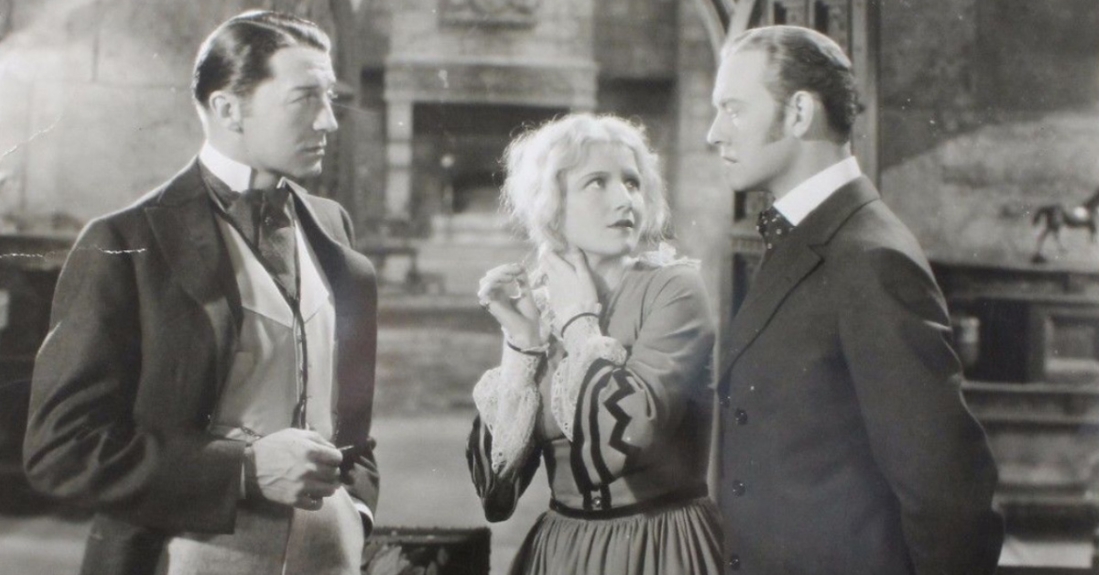
Nearly-lost Best Picture nominee is a bland melodrama that owes what fame it has to its rarity
Director: Frank Lloyd
Cast: Ann Harding (Lady Isabella), Clive Brook (Captain William Levison), Conrad Nagel (Robert Carlyle), Cecilia Loftus (Cornelia Carlyle), Beryl Mercer (Joyce), OP Heggie (Lord Mount Severn), Flora Sheffield (Barbara Hare), David Torrence (Sir Richard Hare)
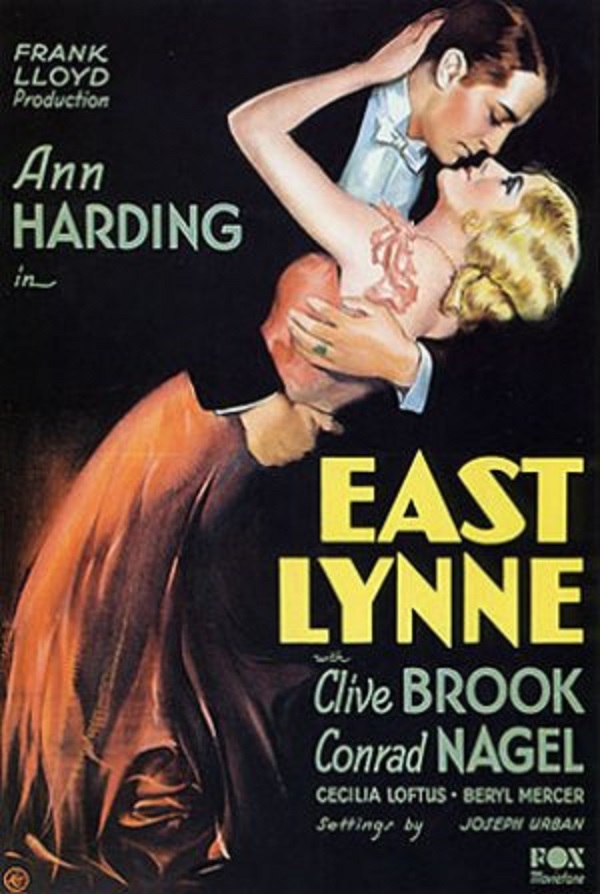
East Lynne is one of the three hardest historical Best Picture nominees to find today. Along with The White Parade (1934), only one print of it exists held by UCLA (which is better than Ernst Lubitsch’s The Patriot from 1928, of which precisely no copies exist). That fact is probably now the most famous thing about it, with Oscar afficionados (like myself!) hunting down bootleg copies (thanks go to WestLynne for posting a copy, including the hard-to-find final ten minutes) on YouTube. It’s possibly one of the oddest illicit films you could hunt down, not least because in many ways it’s a hilarious dated piece of misery porn, soaking in melodrama and some stilted acting.
It’s loosely based on a tragic Victorian misery novel by Ellen Wood (who, at one point, was nearly as famous as Dickens) – I say loosely as that was written in 1861 and this film is largely set during the 1871 Franco-Prussian war (presumably because it was a cooler backdrop). Isabella (Ann Harding) marries wealthy Robert Carlyle (Conrad Nagel), to become mistress of his house East Lynne. However, that’s in name only as the shots are really called by Robert’s domineering sister Cornelia (Cecila Loftus) who loathes Isabella with a Mrs Danvers-like fury. Lonely in her own home, she flirts with old friend (and professional rascal) Captain William Levison (Clive Brook) but that’s as far as it goes. Cornelia reports her to Robert as a shameless hussy and, despite Isabella’s denials, Robert divorces her.
Separated from their child, she has no choice but to live with William who indeed turns out to be a selfish rascal – and a near-traitor and crook into the bargain. The two are stranded in Paris during that 1871 war, Isabella denied all access to her son – and it’s all downhill from there. She’s near-blinded in an explosion, uses the last of her failing sight to return home and see her son, is thrown out again and promptly walks off a cliff – just as Robert (inevitably) realises the error he has made in chucking this saint in the first place. Cue the hankees.
East Lynne falls very naturally into the Hollywood trend at the time of suffering women, constantly judged by society and chucked into ever more damaging, depressing and fatal, tear-jerking situations by cruel fate. Because, I suppose, few things are more satisfying than feeling sorry for someone whose life is unquestionably more miserable and disastrous than yours. The film makes tweaks to the novels set up to dial up the injustice – the book’s version of Isabella is undoubtedly guilty of infidelity, whereas the film version is tempted but certainly doesn’t give in. (Also neatly making her more sympathetic to conservative Hollywood audiences).
That is if we believe her denials of course. No reason not to, since Ann Harding’s affronted denials of misdeeds followed by her despondent desperation, hammering on a door to be allowed back in to see her child are clearly meant for us to believe in. To be honest, watching it today, it’s hard not to see (cruel as Robert is in severing, Karenin-like, Isabella from her child) that Robert has a point. There is more than a little enthusiasm in the passionate kiss Isabella shares with William on the night in question – and Lloyd’s decision to cut the scene with Isabella’s bedroom door closing on her and William leaves us with only her word that she instantly threw him out.
A slightly more interesting film therefore lurks under the surface – especially since Isabella adapts very quickly to a life of semi-disgrace among the more flexible society of Vienna and Paris, sharing a home with William after her divorce. I’d actually prefer a version of this story where Isabella at least made some independent choices (although it would give even more of an air of punishment to her ‘reward’ of being abandoned, blinded and killed for it). Especially since Robert – played with a rather wooden stiffness by Conrad Nagel, which at least makes him suitably boring – is hardly anyone’s idea of an ideal husband.
Especially since he’s utterly controlled by his sister, introduced with a tracking zoom shot by Frank Lloyd which hammers home the cold lack-of-welcome she gives this woman who she sees as, at best, a crude interloper in their home. It’s very easy to see the roots of Rebecca’s Mrs Danvers in Cornelia – did du Maurier see East Lynne as she planned that novel I wonder? – sharing with her the same dislike and subtle bullying designed to undermine Isabella’s position. Cecila Loftus does lack the vicious, insinuating, two-faced venom the part really needs (she’s really more of a smackable snob) but again it’s an interesting idea.
East Lynne is a film however full of decent ideas that never quite deliver, not least because it’s all dialled up to the melodramatic max. Isabella’s eventual fate is only the ultimate expression of it – the sight of Ann Harding stumbling through a wood, her hands reaching out in front of her, audibly provokes laughter in the UCLA audience on the bootleg, and who can blame them. The misery piles on and on relentlessly, Isabella tumbling through a conga-line of misfortune, scorn and miserable denial. Not helped of course by the fact the Clive Brook – whose patrician manner and cut-glass accent seem ill-suited to playing the sort of rogue he is here – makes William an utterly selfish rogue.
Ann Harding pushes through all this with maximum commitment, her voice throbbing with emotion as yet more tricks of cruel fate lash her. She has to go for it, since even the slightest doubt or reserve would probably make the ridiculousness of the film stand out even more. But Harding manages to make Isabella just flawed enough to not be a saint – those little touches of good-time-girl that attract William – while unquestionably capturing her devotion and love as a mother. And no one could have sold that arms-out-stretched “blindness” acting that East Lynne closes with.
East Lynne is exactly the sort of competently-made but basically bland melodrama that makes for a very odd Best Picture nominee over 90 years later. The fact that its fame largely rests on its scarcity is fitting – otherwise it would quite happily have been lost altogether and no one would probably have batted an eyelid. Certainly, it wouldn’t challenge any retrospective lists of the great films of 1931.

