Category: Directors

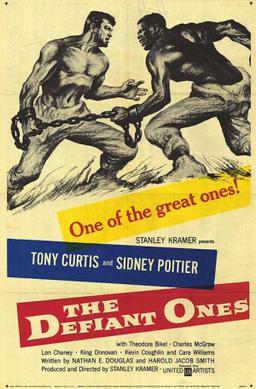
The Defiant Ones (1958)

The Defiant Ones (1958)

Kramer’s film is well-balanced mix of drama and message with two strong performances from the leads

Director: Stanley Kramer

Cast: Sidney Poitier (Noah Cullen), Tony Curtis (John “Joker” Jackson), Theodore Bikel (Sheriff Max Muller), Charles McGraw (Captain Frank Gibbons), Lon Chaney Jnr (Big Sam), King Donovan (Solly), Claude Akins (Mack), Lawrence Dobkin (Editor), Whit Bissell (Lou Gans), Carl Switzer (Angus), Kevin Coughlin (Billy), Cara Williams (Billy’s Mother)

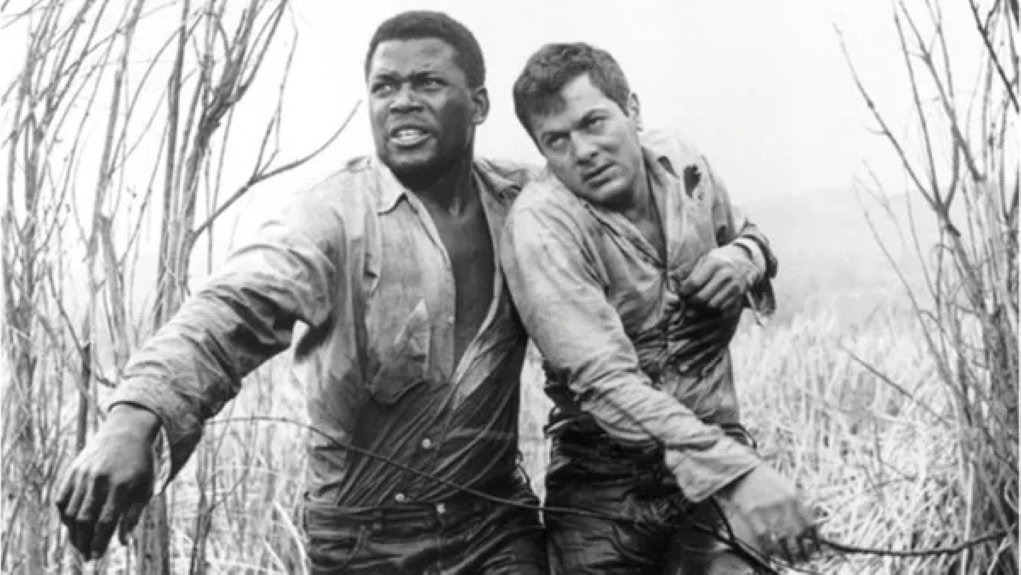
The Defiant Ones is a vintage Stanley Kramer message film, one of his best mixings of serious social issues with entertainment. Two convicts escape from a prison transport, making a run for it while chained together at the wrist. They are thief John “Joker” Jackson (Tony Curtis) and Noah Cullen (Sidney Poitier), imprisoned for standing up to a racist thug. Cullen is Black – and that’s a big issue in the racist world of Southern America. Forced to work together to survive, despite their mutual distrust and outright dislike, slowly the two form a curious bond – all while dodging the dangers of recapture and falling foul to vigilante ‘justice’ from ordinary people.

The message of The Defiant Ones is pretty clear to see, but Kramer’s film manages to avoid laying it on too heavily, mostly letting it be seen in everyday casual prejudice. Starting with Jackson’s constant use of the word “boy” – and his complete failure to understand why Cullen finds this grating. Jackson has already used the n-word the very first time he speaks to Cullen, side-by-side in the prison transport. Most of the police and enthusiastic deputies helping them are itching to release fierce dogs on the escapees (it’s clear why). The hostility Cullen immediately encounters when they are briefly caught by turpentine workers, accelerates with terrifying speed into ropes being flung over lampposts for a lynching (Jackson’s protest, that you can’t lynch a white man, is telling in itself). Even when they encounter a scared child, he jumps to Jackson to protect him from Cullen (he even assumes Jackson must be Cullen’s guard).

The constant repetition of the dangers and assumptions behind racism probably gained added force at the time because they a white man shared some of the chance of being suddenly murdered for looking the wrong way. Part of The Defiant Ones aim is to show through adversity that more connects us than not. This also comes out when the two men talk about their lives. When Jackson bitterly describes his life of working-class drudgery in a hotel, scraping and smiling for tips from the rich, Cullen quickly points out it places him only a mild rung above a Black man who wouldn’t even be allowed in the hotel unless he was holding a mop. Both are firmly wedged on the bottom of the social ladder, part of the film’s suggestion that, prejudice aside, they are natural allies.

Allies is what they become, a relationship that develops smoothly thanks to the skilled playing and excellent chemistry between Poitier and Curtis (both Oscar-nominated). They certainly were put through their paces physically – aside for brief doubles (or dummies) work when they traverse some rapids, pretty much all the difficult stunts (all the more so, since they were chained together) were done by the actors themselves. In particular, an awkward escape from a clay pit was remembered by Curtis as possibly the toughest thing he ever did on a film set. Kramer throws the two stars into a parade of dangerous terrain – wading bogs, fast rivers, climbing awkwardly up and down heights – which adds a narrative energy to his issues-based plot.

Poitier at this time had to carry the burden not only of acting, but also representing a significant share of the American population single-handed. Here, he’s sharper, rougher and more resentful than his reputation suggests. Poitier makes Cullen a no-nonsense fist, someone who refuses to take crap from anyone – least of all Jackson. Frequently he uses singing to express his refusal to knuckle down and be silent, and it’s his strength and resourcefulness that does the most to keep the men moving. If Poitier does have a disadvantage, it’s that Kramer’s film gives him less of a personal journey – it’s the world that must accept Cullen, not vice versa, and rightly-or-wrongly the character is little different from his journey (aside a personal loyalty to Jackson) than he was at the start.

This means, Tony Curtis actually many of the more interesting character beats. If Cullen remains largely unchanged, Jackson progresses from holding thoughtless, knee-jerk assumptions into someone who forms his own opinions and loyalties. It’s very well-drawn by Curtis – who relished the chance to play such a complex character – as he slowly reveals Jackson as a vulnerable, regretful and lonely figure under the bluster. So much so, that his late realisation of where his true loyalties lie – an outburst of anger, expertly delivered by Curtis – feels completely earned, as an expression of all the character depth we’ve watched him develop. Its Curtis’ finest performance.

The Defiant Ones does lose some energy in its later stages. It splits, fairly naturally, into three acts: the convicts alone, the convicts at the turpentine camp and the convicts at the secluded home of a lonely woman (an Oscar-nominated Cara Williams) who takes a shine to Jackson. Each of these acts is, if I’m honest, marginally less compelling than the one before, in a film at its strongest when focused on the relationship between its two stars and their conflict with each other, the elements and the wild terrain. There is something more melodramatically familiar about watching Cullen resentfully face down would-be-lynchers, or Curtis’ flirt with a desperate woman who doesn’t even need to know his name to have the hots for him.

There is good work from the rest of the cast. Cara Williams does manage to make a lot of her quietly siren-like character, with surprising depths of selfishness and cruelty – even if her section is the film’s least narratively intriguing. Lon Chaney Jnr is very good as a work boss, appalled by the racist violence his colleagues are capable with. The police crew following our heroes – oddly soundtracked to a constant barrage of music from their portable radios (the only music in the film) – are little more than narrative tools, but Theodore Bikel (Oscar-nominated) finds a fair bit of humanity in his sheriff.

The Defiant Ones though is strongest with the focus on its two excellent leads, with the constant parade of obstacles and dangers it throws them into powering the film strongly without letting it lapse too much into moralising and preaching. It’s a very good balance of high-brow earnestness, and genuine entertainment, one of Kramer’s most successfully films.

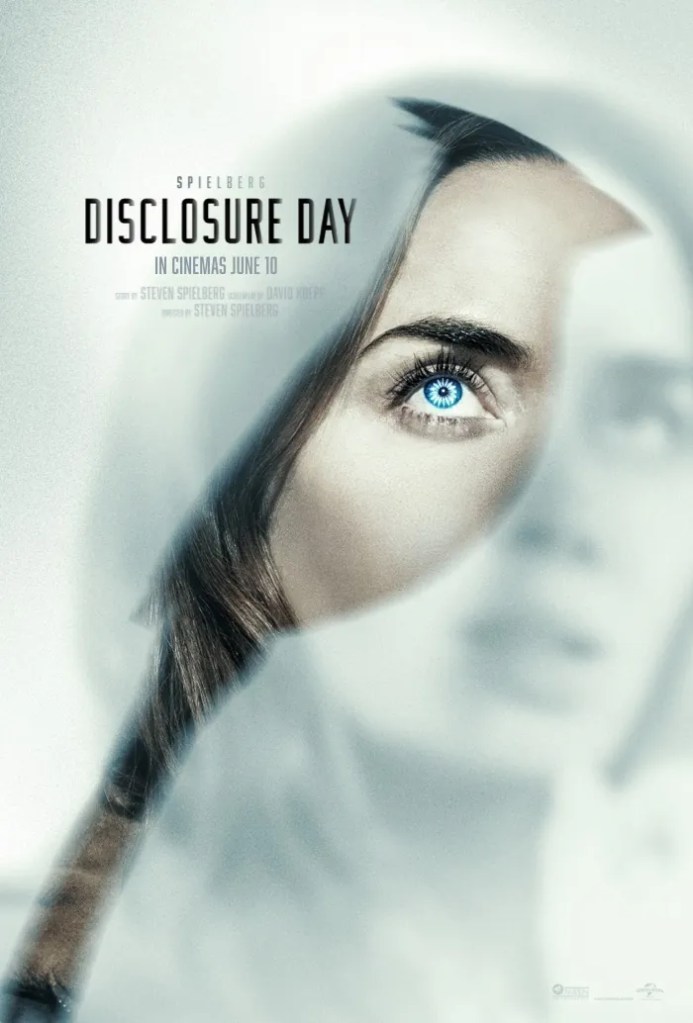
Disclosure Day (2026)

Disclosure Day (2026)

Spielberg returns to Close Encounters in a film that explores interesting ideas but doesn’t quite no how to conclude

Director: Steven Spielberg

Cast: Emily Blunt (Margaret Fairchild), Josh O’Connor (Daniel Kellner), Colin Firth (Noah Scanlon), Eve Hewson (Jane Blankenship), Colman Domingo (Hugo Wakefield), Wyatt Russell (Jackson), Henry Lloyd-Hughes (Casper Boyd), Elizabeth Marvel (Sister Maura), Hettienne Park (Serena)

After almost fifty years, Spielberg returns to Close Encounters territory: the wonder and fear from learning we might not be alone. Disclosure Day wraps this up in a very modern conspiracy, a shady organisation keeping secrets, but still carrying the optimism and hope Spielberg’s previous encounters with Little Green Men had. Disclosure Day is a film awash in different ideas and concepts, assembled with the flair and skill you expect from Spielberg, but somehow not quite sensational enough to hold together as well as you hope it’s going to from its punchy opening.

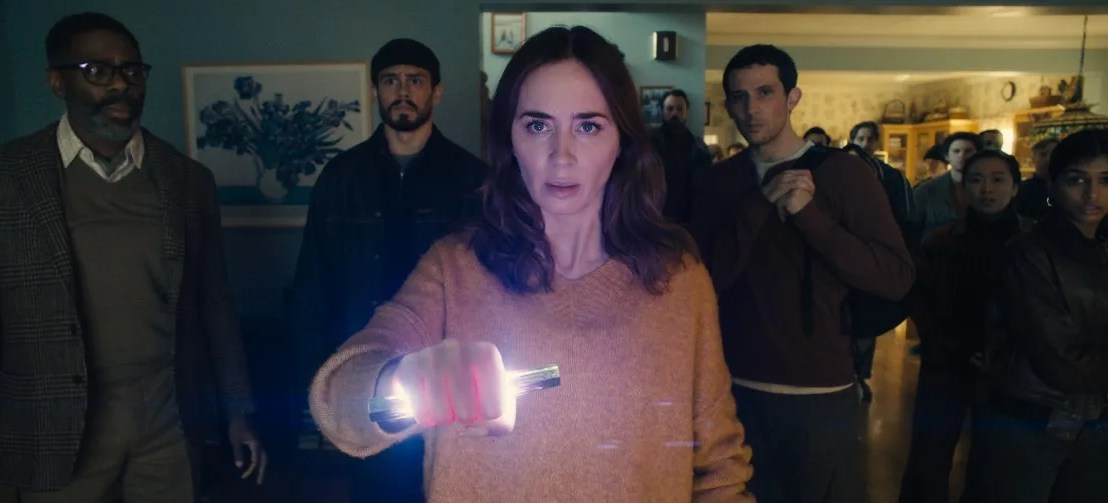
It does start with the sort of guts that you only get after a lifetime of directing mega-hits, throwing us into the middle of the story and avoiding clumsy flashbacks and voiceover and trusting we will catch up as we go. Two very different people find their lives surprisingly changed: Daniel Kellner (Josh O’Connor), a mathematics genius, feels compelled to steal (to release to the public) a mountain of evidence of extra-terrestrial visitations (and our mistreatment of them) hidden by shady corporation Wardex, run by Noah Scanlon (Colin Firth). And TV weather presenter Margaret Fairchild (Emily Blunt) suddenly finds she has the ability to know people’s whole live stories just by looking at them and to speak every language fluently, including a clicky alien dialect that sounds like dolphin chat but is clearly not of this world.

This forms the set-up for a mix of chase movie and earnest plea for patience, understanding and togetherness that feels very in-tune with Spielberg’s greatest hits. Disclosure Day is set in a world where, playing in the background of many scenes, the world teeters on the edge of World War Three – right down to panicked small-town citizens stripping a convenience store to the bones. There is a half-formed argument bubbling here about whether the world is ready for the revelations to come. Will it tip everyone into destructive panic? Eve Hewson’s Jane, a former novitiate, worries it could lead to a brutal shattering of faith – and rightly argues Daniel would have responsibility for the possible negative effects that might come out of whistle-blowing.

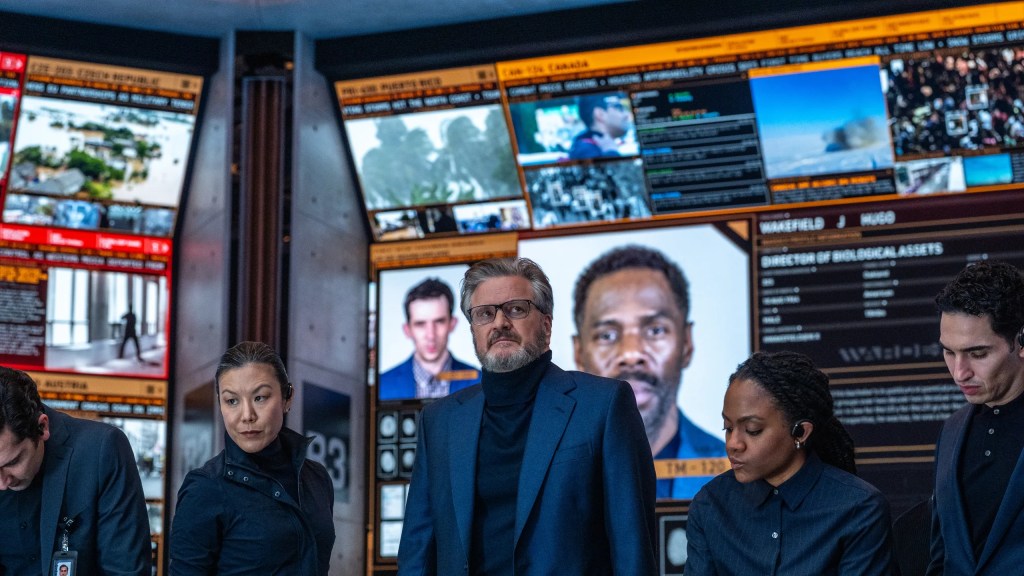
It’s avoiding this that is the justification used for by Wardex, our sinister corporation, with its small private army that uses its control of alien tech to call the shots with the government and hunt down whistle-blowers. They are represented by Colin Firth, perfectly cast as an imperiously gruff corporate suit who has just enough humanity bubbling under the surface to make you believe he regrets the things he does. Wardex uses alien mind-control tech, to form a psychic bond with people over great distances, something akin to heightened interrogation and mind-control. These sequences are the film’s stand-outs, Spielberg skilfully using simple effects (both parties pupils switch colour to a sky blue) and effective editing to cross-cut between two people talking while their bodies are miles apart (and he cleverly shows the punishing impact – especially on Firth of the strain of using the device) – as well as the creeping, unsettling horror of mind control pushing people to do and say things they don’t want to do.

It’s a perversion of what Disclosure Day holds up as the alien’s evolutionary advantage: their empathy. That’s the root of Margaret’s powers, which come so naturally to her that when she drops into Russian from nowhere when talking to her slacker boyfriend (a good performance of unreliable decency from Wyatt Russell) or enters into a long fast-paced Korean conversation with a visiting professor in her TV studio (so fast, the official translator can’t even keep up), she doesn’t even notice she’s not talking English. Similarly, her ability to “see” people’s lives – allowing her to offer small titbits of immediate advice that instantly disarm everyone she meets – happens so naturally, it takes her few moments to notice and become scared by her insight.

Her mixed feeling about these skills – which sometimes seem like a blessing and others a terrible curse – are beautifully played by Emily Blunt, who gives a stand-out performance of a driven, successful woman, increasingly terrified but still resolute in the actions she feels compelled to do. Blunt is able to handle the emotion and distress, as well as deliver on the comedy (there is a very funny sequence where, in pelting rain, she grows increasingly frustrated by Jackson’s inability to crush her phone by driving over it with her car). She finds a great deal of sensitivity and gentleness in Margaret, who mixes responsibility, fear, anxiety and exhilaration.

This all comes together very well in the momentum-packed first-half of the film, which sees Margaret and Daniel (a decent performance by Josh O’Connor, that largely fails to really stretch him) travelling together. It’s crammed with inventively shot sequences, such as Daniel and Jane’s escape from a blown countryside safe-house – a brilliant sequence of tracking camera-shots, inventive angles and nerve-tangling tension, helped by O’Connor’s rather sweet nervous fear (“What am I doing?”) throughout. Match that with Margaret’s engrossing pilgrimage across country, and the fascinating use of the alien bond-control device and it makes for a film that sets up a lot of interest.

It’s a shame then that the second half never quite pays this off. As the film proceeds, it feels compelled to start answering the questions that have been bubbling under most of its chase. It’s here the film’s deliberate narrative card-holding starts to work against it. Since our heroes don’t even fully know the questions they should be asking, Colman Domingo’s whistle-blower has to both ask them and then immediately answer them. It leads to a long ‘revelation’ scene, that rather overwhelms us with points about our heroes’ backgrounds stretching back to their childhood that feel both rather heavily delivered and not quite engaging enough.

It also builds towards a sort of modern recap of the ending of Close Encounters, but this time in a TV studio – and it’s interesting to see that Spielberg perhaps still believes that a TV news programme showing footage of aliens would be instantly trusted the world over, without any talk of AI fakery. This long sequence, spooling out the whole backstory of the film’s close encounter phenomena is also similar to Close Encounters in the sense that it’s a simple presentation – but differs in that it lacks the awe-inspiring scale and spectacle of that movie. Without it, it feels somehow slightly drier and more earnest, rather than carrying the sort of magical force the film needs.

It’s part of a sense that Disclosure Day throws a lot of complex stuff at us – our place in the universe, ability to empathise, the potentially dangerous impact revelations can have – but lets these drift away, in favour of a more reassuring and slightly simplistic ending that leaves you feeling its points have been underexplored. This is slightly more disappointing because there has been so much good stuff in Disclosure Day – Blunt is excellent, Hewson and Firth are very good, the direction and film-making on show is first class – but there doesn’t feel like a fully satisfying conclusion is found for everything we have seen.

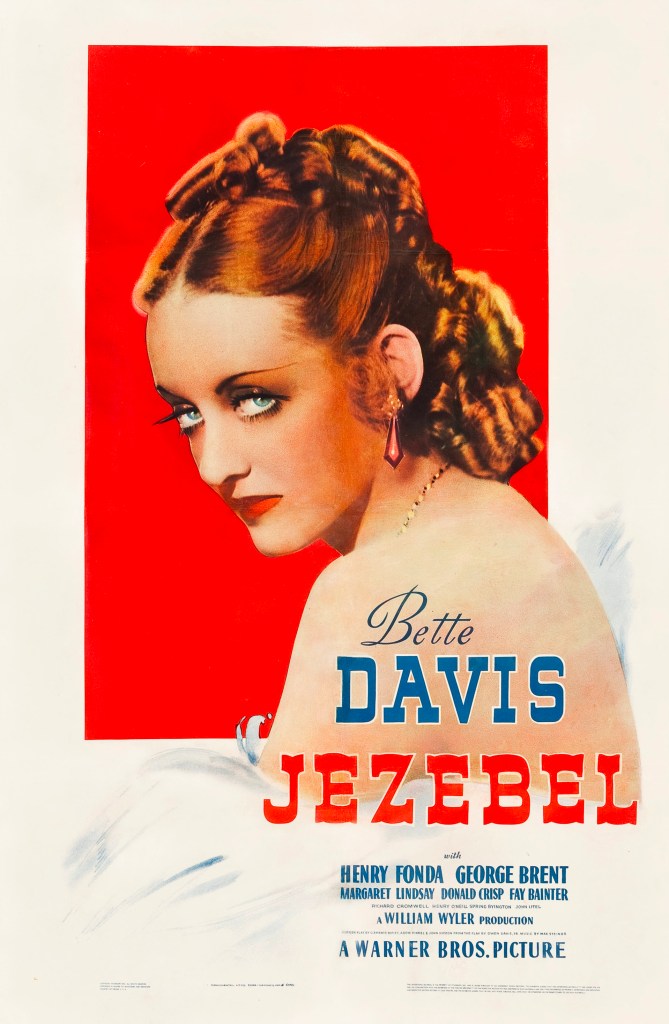
Jezebel (1938)

Jezebel (1938)

A star turn helps to lift this bonkers melodrama into the realm of delicious entertainment

Director: William Wyler

Cast: Bette Davis (Julie Marsden), Henry Fonda (Preston Dillard), George Brent (Buck Cantrell), Donald Crisp (Dr Livingstone), Fay Bainter (Aunt Belle Massey), Margaret Lindsay (Amy Bradford Dillard), Richard Cromwell (Ted Dillard), Henry O’Neil (General Theophilius Bogardus), Spring Byrington (Mrs Kendrick), John Litel (Jean la Cour)

It’s pretty much the first line in any review about Jezebel so let’s start with it: rumour claims it largely exists as a consolation prize for Bette Davis after missing out on Scarlett O’Hara. It makes sense: Julie Marsden is a Southern Belle so similar to Scarlett they could almost be sisters. And Bette Davis is so wonderfully, passionately, brilliant playing her that, if it wasn’t for Vivien Leigh’s landmark performance, Jezebel could make you deeply regret Davis never got that role. But there is more to Jezebel than that, a handsomely filmed adaptation of a hit play by Owen Davis Snr, which predated Margaret Mitchell putting pen to paper. This is delicious, old-school, scandal-tinged Hollywood melodrama, with a star actor in a custom-made star role.

Julie Marsden is a fiery, independent-minded woman in 1850s New Orleans, convinced she can bend the world around her (and the wills of men) to her own whims. She’s engaged to strait-laced Pres Dillard (Henry Fonda), but flirts with playboy Buck Cantrell (George Brent) and won’t play by societies rules. So much so, she plans to attend the high-society Olympus Ball in a dress not of virgin white but Jezebel red. This goes down like a lead balloon; Pres effectively drops her in disgust at her wilful selfishness and a year later returns married to someone else. At which point Julie, a woman spurned, plans revenge even as yellow fever rips through the city.

Jezebel is a great big, melodramatic soap with a celluloid-burning turn by Davis (who won her second Oscar) at its heart. Davis dominates the film, a boundless force of charisma from the moment she sashays (late!) into her own party, whipping her dress up behind with a riding crop to when she departs the film, eyes full of genuine remorse, nursing a fever cart. She plays the role full of sinful flirtatiousness and playful certainty. No one will tell her what to do and where to go – from charging through a bank (captured in a beautiful tracking shot from Wyler) to drag Pres out for the day, to headstrongly ignoring all pleas to not wear her dress of choice, to holding court a year later in her own home planning revenge with burning, destructive glee.

It’s a portrait of bull-headed, feminine, self-destructive foolishness and pride that Davis would make her own, a marvellous star-turn that helps lift this otherwise rather silly melodrama with an inevitable message (this bull-headed floozy will learn the error of her head-strong ways) into something quite magic. That and the superlative richness of Wyler’s direction (and Gregg Toland’s sumptuous camera work), full of dynamic images, as well as a series of top-drawer performances from a strong cast.

Obviously, it’s hard not to spot that Jezebel lacks the scale and colour of Gone with the Wind (has any black-and-white film ever so openly revolved around colour as a source of drama?). But it has a lot of its dramatic energy, despite the fact you can sense its theatrical roots (it splits rather neatly into four acts, each set in a distinct location). Jezebel juggles its balls remarkably well, balancing a focus on Julie’s desire for attention and control with a fine portrait of two different men. George Brent, with a sly, self-satisfied grin as a Don Juan and Henry Fonda, prissy and stuffed-of-shirt (mouthing, at points, an awkward Southern accent) successfully making Pres profoundly wise, surprisingly weak despite his certainty, rigid and unpersuasive.

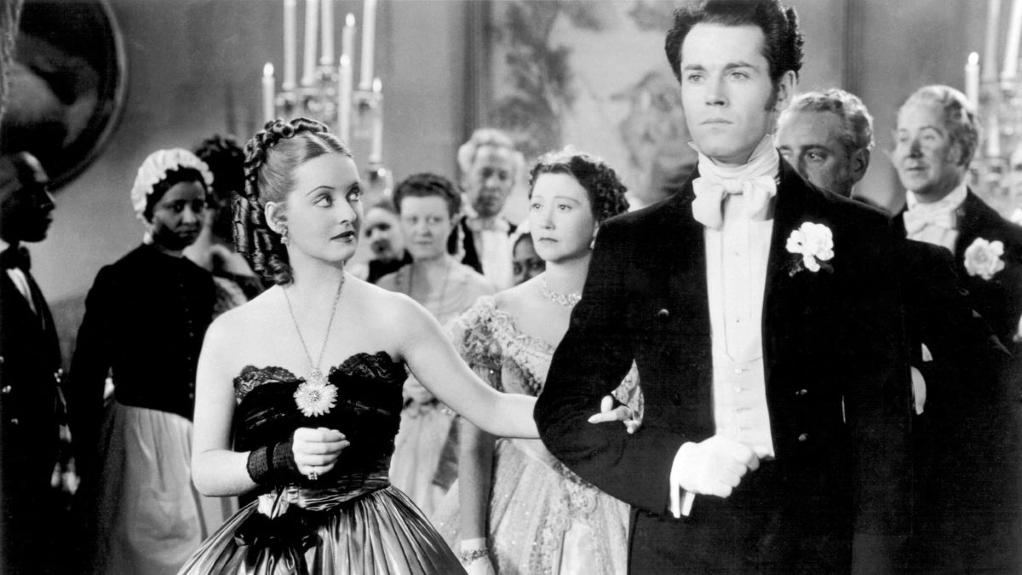
The pivotal ball-room sequence, and its build-up, works particularly marvellously. Despite Julie’s determination, its clear everyone around her feels it to be a terrible idea. Pres concedes to it with a grudging irritation and, once it becomes clear even to Julie it’s an appalling idea, forces Julie to be swallowed up in her public humiliation. After watching a parade of genteel ladies and gentlemen scurry away from her, as if in fear of catching her loose morals, Pres drags her to the dance floor (despite her pleas). Tracking back, Wyler shows the dance floor clear in moments, leaving just these two dancing alone (Pres even insists the band continues playing), cementing her humiliation. He’s made his point and, even though she slaps him later, even she knows he was right. Not that this will help either of them in the long run.

It’s part of the moral of the story, that sometimes women need a firm hand. (Sometimes literally so, as Donald Crisp’s grouchy Dr Livingston tells Pres). There has to be a punishment for Julie’s willingness to scheme, her constant placing of her own whims above everyone else and her inability to even consider that there might be dangerous consequences to her actions. It doesn’t wear us down though, because Davis is such a dynamic and forceful presence it’s hard not to rather like her. And then, of course, you sort of sympathise with her (even though she is awful and selfish) as a conga-like of damage and guilt leave her reeling before converting her into an ideal self-sacrificing woman.

Of course you watch Jezebel today and can hardly fail to notice that the greatest wickedness all these Southern gents and dames can possibly imagine is turning up at a ball in the wrong dress. Certainly not the slavery all around them. There is a parade of “yasum” slaves in Jezebel, all of them (like old retainer Cato) perfectly content in their lives of servitude. Pres may get a few loose critiques off about the South, but even those are focused on its economic and political short-sightedness: like everyone he’s paternally fond of his naïve property but wouldn’t imagine giving any of them freedom.

It’s another echo perhaps of Gone with the Wind and not a welcome one. Jezebel settles down for another genteel, Birth of a Nation myth of a sublime South doomed for being too noble. Not even the terror of yellow fever – and, at one point, the shooting of an infected man for fleeing his island ghetto – can get in the way of that feeling, that this way of life is not the problem, even if it does allow the odd bad apple like Julie to pop up.

That’s a more awkward political point, but it’s hard to imagine it crossing the mind of many at the time. And it doesn’t stop an enjoyment of Jezebel as a masterfully executed soap. Wyler’s direction is excellent, the filming wonderful and the actors firing on all cylinders. (Fay Bainter also won an Oscar for her fine performance as Julie’s horrified Aunt). Davis of course reigns supreme in the cinematic equivalent of an airport novel, a big, steamy, sex-fuelled melodrama with a handwringing ending of moral enlightenment delivered with such earnest, underplayed sensitivity by Davis and Wyler that it convinces. A big, brash, hugely enjoyable entertainment.

Night Moves (1975)

Night Moves (1975)

A private detective out of his depth in this excellent 70s conspiracy-thriller tinged noir detective drama

Director: Arthur Penn

Cast: Gene Hackman (Harry Moseby), Jennifer Warren (Paula), Susan Clark (Ellen Moseby), Melanie Griffith (Delly Grastner), Edward Binns (Joey Ziegler), Harris Yulin (Marty Heller), Janet Ward (Arlene), James Woods (Quentin), John Crawford (Tom Iverson)

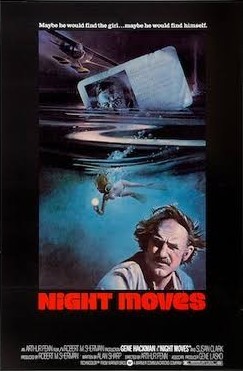
“Yeah, but he didn’t see it. He played something else and he lost. He must have regretted it every day of his life. I know I would have.” That’s how Harry Moseby – PI, retired footballer and chess enthusiast – explains the fall out of a 1925 chess championship game, where the losing player failed to spot a checkmate in three through a brilliant flurry of knight moves. There’s a reason why a tweaked version of this makes the title (Penn argued it was because so many key scenes were set at night, though I suspect he just worried the alternative would either be too confusing or tip the wink too much). Turns out the case Moseby is investigating is just like that chess game, with himself as the losing player failing to spot the killer checkmate move.

That’s the set-up for a very seventies private detective movie, where the hero is effectively living out a fantasy of being Marlowe or Spade, turning down every opportunity to bring himself into the modern world (via a near-fangled database-using detective agency, awash with cash) and pays a heavy price. Because, rather like Matthau in Charley Varrick, Moseby sees himself as last of the Independents, but without (it turns out) the nous or ruthlessness to succeed. Instead, Harry misses everything that turns out to be important, heads down blind alleys, focuses on the wrong motives and ends the film like he spent it, drifting in circles drenched in defeat.

Harry (Gene Hackman) is hired by an ageing former Hollywood starlet (Janet Ward) to find her daughter Delly (Melanie Griffith), a case he solves with relative ease since she is staying with her estranged father-in-law Tom Iverson (John Crawford) and Tom’s wise-crackingly flirtatious marinist girlfriend Paula (Jennifer Warren). Easy peasy right? Wrong, as Harry finds himself embroiled in a further mysteries and deaths, revolving around links between the family and the world of Hollywood stunt drivers, led by the good-natured Joey Ziegler (Edward Binns). As he scratches the surface of the mystery, he will discover to his horror he is way out of his depth.

Arthur Penn’s detective drama soaks in the paranoic style he virtually made his own, mixed with grimy depression at the world gone to hell. “Where were you when Kennedy was shot?” Paula asks Harry who responds with a weary sigh of “which one?” Everything feels sordid and shabby: Harry’s job is essentially trailing unfaithful wives; Hollywood is a cheap exploitation flick machine and alcoholic ex-starlet Janet bemoans how good her breasts used to be. It’s a film shot with a grainy, dirty detail by Bruce Surtees and edited with a deliberately disjointed suddenness by Dede Allen, scenes often feeling like they end abruptly or jarringly, leaving us as off balance as Harry is. There is, throughout, a creeping air of confusion and uncertainty – Penn designed the film to require multiple viewings and even then questions remain – not least since vital clues and hints are dropped in with marked casualness, while major red herrings are flashed in front of us.

In the middle of this, Harry wants to be a resourceful, determined, ingenious private eye plucked from Chandler. But he’s far from that, not quite smart enough to realise he’s not that smart. His naïve cluelessness should be clear, since he stumbles only by chance on an affair his wife (Susan Clark) has been having for some time. He lets his prejudices and opinions get in the way of conclusions – most especially in the instant dislike he takes (who can blame him) of James Woods’ snivelling bitter mechanic, a casual boyfriend of Delly, who looks more beat up and scarred every time we see him (a nice hint he’s not the criminal-in-waiting Harry assumes he is). On the other hand, since he likes Edward Binn’s jovial stunt driver Joey, he seems to forget in their first meeting he watched Joey violently rough up a young man in a bar for trivial reasons.

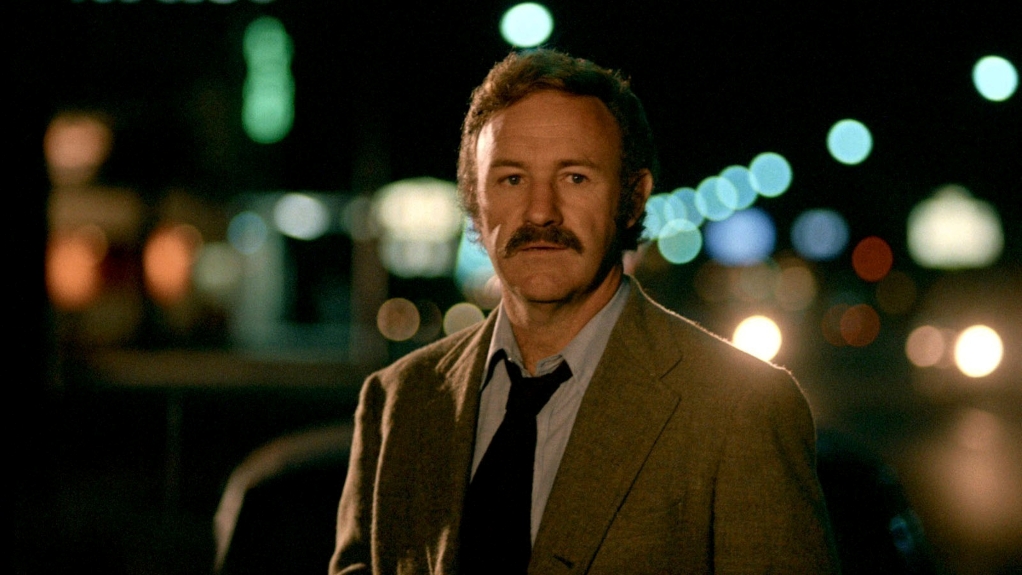
He’s superbly played by Gene Hackman, who makes Harry full of vulnerability and shyness that marks him out as a slightly naïve lost soul, despite his more hard-bitten outer shell. Hackman understands perfectly that Harry is really a big kid, living out a fantasy, but without the instincts or the skill to pull it off. He’s flustered by women (Delly’s casual teenage sexuality, in particular, disorientates him no end) and his all-too-obvious crush on Jennifer Warren’s very well-played mix of femme fatale and wisecracking sidekick is rather sweet. Hackman also invests Harry with an old-world decency and (knightly!) sense of chivalry: he’s disgusted at Tom’s sleeping with his step-daughter (“There should be a law against it” Tom sighs; “There is” Harry contemptuously states) and quickly feels a protective feeling towards Delly.

But despite this, he’s as much a clueless patsy in all this as he is in his marriage, unable to see the wood for the trees. Just like Chinatown, he ends up out of his depth – the difference being the case turns out to be far more mundane then he suspects. In fact, Harry turns out to be the main destructive force of the film: his ham-fisted persistence in delving deeper, panicking characters into murderous actions, even while Harry fails to understand for a moment what he is involved in and who he should be wary of.

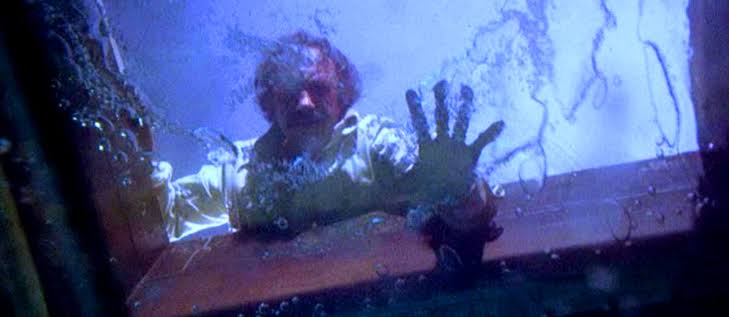
It’s a great visual metaphor that Harry only realises (possibly) what’s been going on in the whole film, when he stares down through the sea-view window of Paula’s boat at a vital clue he’s missed all this time. Harry has to strain to interpret what he can see, water and bad lighting obscuring his view. It’s the murky, obscured world of the film bought to visual life. A film during which Harry has closed his ears and eyes to all the crucial details, failed to appreciate the real meanings of the things he has focused on and left himself alone and adrift in a sea of carnage, only just beginning to piece things together (but far too late).

It makes for a superb, labyrinthine detective drama, laced with paranoia and unsettling mystery, with a superb Hackman full of a mix of bashful charm, world-weary cynicism and tragic naivety, clinging to a fantasy that can’t survive contact with reality. Penn’s film might rival Chinatown as the definitive hard-bitten detective drama of the 70s, one where the hero’s every action leads to disaster, every decision is misguided in some way, every conclusion flawed and learns only too late how wrong he was. If that’s not hard-bitten 70s cynicism I don’t know what is.

The House of Mirth (2000)

The House of Mirth (2000)

Masterful adaption of Wharton, beautifully judged, brilliantly acted and superbly filmed

Director: Terence Davies

Cast: Gillian Anderson (Lily Bart), Eric Stoltz (Lawrence Seldon), Dan Aykroyd (Gus Trenor), Anthony LaPaglia (Simon Rosedale), Laura Linney (Bertha Dorset), Terry Kinney (George Dorset), Eleanor Bron (Julia Peniston), Jodhi May (Grace Stepney), Elizabeth McGovern (Carry Fisher), Penny Downie (Judy Trenor), Pearce Quigley (Percy Glyde), Lorelei King (Mrs Hatch)

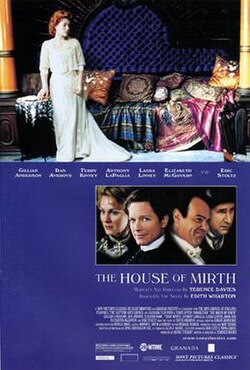
When Scorsese bought Edith Wharton’s The Age of Innocence to the screen, it was seen as a wild swing out in his career. You could have said the same thing when Terence Davies made The House of Mirth, an unlikely follow-up from a host of artistically constructed, meditative memory pieces. But in doing so, Davies executed perhaps one of the most perfectly executed translations of a novel to the screen, a gorgeous, beautifully moving film. Put simply, in its grace and magic glow, it’s pretty hard to imagine The House of Mirth being done better.

Our hero is Lily Bart (Gillian Anderson), a woman who feels she is at the heart of 1905 New York society but will discover her grip on life is far less secure than she believes. Dependent on her aunt (Eleanor Bron) for financial support, needing to marry for money, perhaps in love with not-quite-rich-enough bachelor Lawrence Seldon (Eric Stoltz), unwilling to compromise on her principles and desires, Lily will make a series of catastrophic decisions. Thee will leave her facing the brunt of the ruthlessness of her so-called friends such as banker Gus Trenor (Dan Aykroyd) or Bertha Dorset (Laura Linney) and her world falling apart with extraordinary speed.

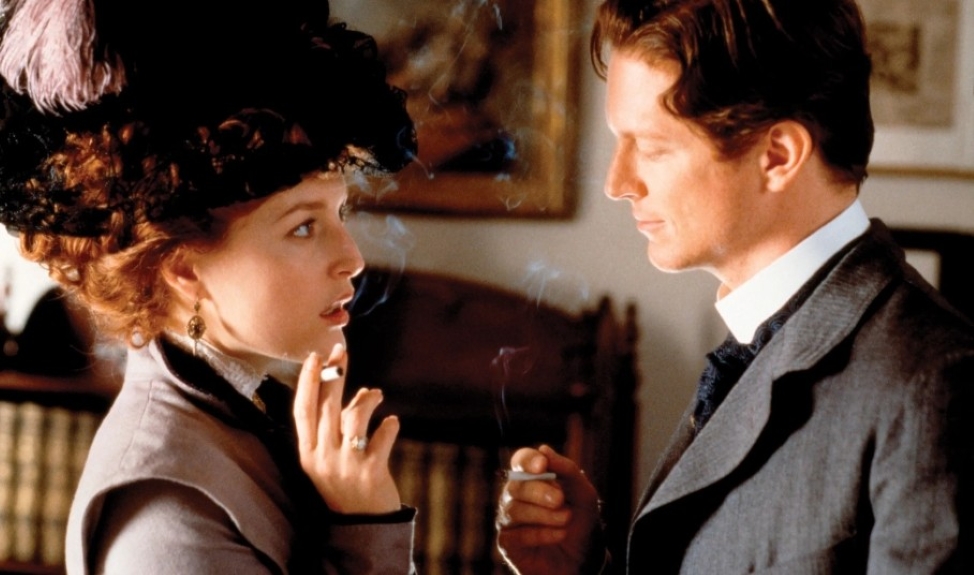
Shot with a visual beauty inspired by a host of painters – most notably John Singer Sergeant, whose compositions are referenced throughout to breathtaking effect – Davies film is measured, wise and slowly unleashes a powerful emotional impact. Carefully adapted, Davies film is awash with the intricate, ornate dialogue of early twentieth century New York: speech that, it quickly becomes clear, is about disguising and obscuring the true meaning of what is being said. New York society is awash with lies, deceptions, selfishness and greed, all of it disguised with fine words and high-living – as Lily says “Why is it when we meet we always play this elaborate game?”

What’s tragic about Lily Bart is that it’s a game she believes herself to be skilled at, time revealing she is a novice stumbling in the big leagues. On top of which, as someone penniless, unmarried and reliant on others, she has a terrible lack of security. A lack of security meaning people like Trenor can demand a very personal reward in exchange for his financial services, without worrying about disgrace. Someone savvier would have seen through Ackroyd’s wonderful portrait of barely concealed greed under Trevnor’s avuncular pleasantness. Just as a more worldly figure would have seen that (the simply brilliant) Laura Linney’s gossipy Bertha sees Lily as nothing more than a simple soul ripe for manipulation, a pathetic fall-guy to hide her own infidelities.

It becomes clear there is a doomed, tragic quality to Lily. She’s introduced emerging from a blackened screen in a puff of train steam, an Anna Karenina-ish echo hinting at her eventual fate. In an extraordinarily complex, perfectly judged performance from Gillian Anderson, Lily emerges as a woman of far greater depth and principle than we (or she) suspects. But prone to terrible errors of judgment, often for the right reasons. She is too principled to marry for money, but not savvy enough to play the courting game, publicly humiliating the wealthy Percy Glyde (Pearce Quigley) who she dutifully woos, only to stand him up for a walk that is a clear proposal hint.

But she is too aware of her wordly needs to embrace the mutual love between her and Eric Stoltz’s charmingly enigmatic Lawrence Stern. These two conduct a dance of suggestive flirtation, without ever truly committing their feelings openly. Lily seems to be almost a tease, but Anderson beautifully demonstrates a hesitancy born from an attempt to be honest, to find love and money in one man. The heart-rending realisation later in the film that she has made a terrible mistake, out of a mix of principle, pride, foolishness and decency is captured in Anderson’s superbly pained expression – not to mention a late emotional out-pouring that is heart-breaking in its pain and honesty.

Slowly, Lily’s world falls apart, Davies capturing the tragedy with coolly observant camerawork gliding through society, echoing the photographic approach that defined his earlier work. In every sequence, and between every scene cut, Lily’s position slowly, at first imperceptibly, becomes worse and worse. Less and less secure, until eventually she’s lost to society, in a world of run-down bedsits and laudanum addictions. Where she brutally realises her life of society balls has made her a “useless person”, with no skills and utterly out-of-depth in a world where she must earn her living.

Anderson’s punctures Lily beautifully throughout with a naïve vulnerability. In a way, the undeserved social disgrace Lily suffers (wrongly seen as a slut and a home wrecker) makes her cling even more closely to her principles – even as they become more and more damaging to her. These principles can seem as inexplicable to us as they do to her few allies: she pays out a stock of her limited personal finances to cover up Bertha’s affair with Lawrence, continuing to cover for her even as Bertha burns her in front of all of New York (and barely considers using her evidence for blackmail). It’s part of what makes Lily an astonishingly admirable figure, even as her life spirals downward.

The powerful emotion of this, the deep investment Davies helps us feel for a woman who becomes more and more understandable to us as she is more and more stripped of privilege, is complemented by exquisite film-making. One breath-takingly superb transition sees Davies camera drift through a grand house with all its furniture and fittings carefully hidden under dustsheets, out into a rain-speckled stream, the camera swooping lower and faster until the water transitions into the sun-kissed waves of the Mediterranean: a gorgeously, masterfully simple transition that moves us across weeks and miles in a moment. Haunting images abound, a spilt ink pot in the film’s closing sequence like a gut punch of emotional rawness.

Really, what Davies understands, is that Wharton’s bitter comedy is set in a ‘vile’ world. In society, nothing matters other than the quality of homes and classiness of backgrounds. The finest people can lie, cheat and steal with no blowback. Nouveau riche like Simon Rosedale (a very good Anthony LaPaglia) are judged as vulgar when their actions reveal they are decent. It’s a world where you start to expect no one is happy: Lily’s cousin Grace (an excellent Jodhi May) is unloved, her aunt miserable, half of society are privately humiliated cuckolds, deeply bitter and unhappy.

The House of Mirth is a truly outstanding literary adaptation, beautifully assembled, wonderfully acted – Anderson, in particular, was and is an absolute revelation – and directed with a deeply powerful simplicity by Davies. It’s possibly his masterpiece.

Captain Blood (1935)

Captain Blood (1935)

Errol Flynn buckles swashes in this stirring and exciting pirate adventure

Director: Michael Curtiz

Cast: Errol Flynn (Peter Blood), Olivia de Havilland (Arabella Bishop), Lionel Atwill (Colonel Bishop), Basil Rathbone (Lavasseur), Ross Alexander (Jeremy Pitt), Guy Kibbee (Hagthorpe), Henry Stephenson (Lord Willoughby), Robert Barrat (Wolverstone), Hobart Cavanagh (Dr Bronson), Donald Meek (Dr Whacker), Jessie Ralph (Mrs Barlow), Frank McGlynn Snr (Reverend Ogle), David Torrence (Andrew Baynes), J. Carrol Naish (Cabusac), George Hassell (Governor Steed), Halliwell Hobbes (Sunderland)

Dr Peter Blood (Errol Flynn) is having a bad day. Plucked from his bed to tend to a dying man by close friend Jeremy Pitt (Ross Alexander), he’s arrested. That’s because it’s 1685 and Jeremy and tat dying man are part of Monmouth’s ill-fated rebellion against James II. Blood, Pitt and many others are shipped to Jamaica and sold into slavery. Blood is purchased by the ambitious Colonel Bishop (Lionel Atwill), whose daughter Arabella (Olivia de Havilland) is strangely drawn to the proud slave. Blood struggles to find freedom for his friends, helped by his medical skills successfully treating the governor’s gout, until a fortunate Spanish attack gives them the chance to escape and set up a career as pirates – all while dreaming of one-day clearing their names.

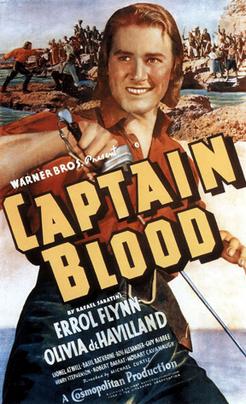
It’s all gist to the swashbuckling mill, in this rip-roaringly entertaining adventure, the first collaboration of Curtiz, Flynn, de Havilland and Rathbone, that would eventually lead to the genre-defining brilliance of The Adventures of Robin Hood. Flynn was essentially plucked from nowhere, taking the part after an asthma-suffering Robert Donat turned it down, coached (or bullied) through the performance by the relentless task-master Curtiz, opposite a de Havilland with less than a handful of credits to her name. Everything pretty much comes together in a celebration of old-school matinee thrills, with a star oozing charisma at its heart.

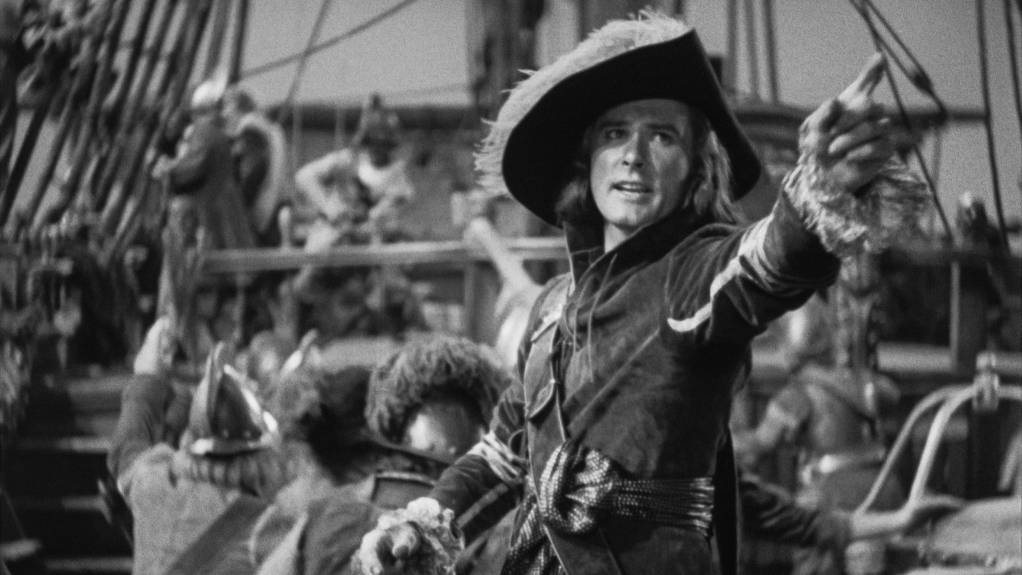
Because, say what you like about Flynn, if there is star quality they guy had it in spades. Whether that’s swinging by rope from ship to ship, staunchly standing against injustice against Judge Jeffries (shooting off a few cutting one-liners on Jefferies ill-health along the way), defiantly stating he will never be broken when tied to a pole for a lashing or delicately navigating a spikey love-hate relationship with the haughtily playful Arabella, you can’t take your eyes off him. Captain Blood’s dialogue is frequently slightly heightened, but Flynn’s ease with it (which he learned the hard way – Curtiz reshot several earlier sequences later when he had relaxed and got better) lets it sing, as he stands tall and talks of equality and justice.

Captain Blood is in many ways the perfect Flynn vehicle, setting the template for the roles the star would later triumph in: an egalitarian man of nobility and principle, who fights when he must, with determination and never bitterness. Captain Blood uses this to maximum effect, surrounding Flynn with a cast of seasoned pros virtually none of whom were taller than his shoulders (just to make him look even more heroic as he towers above them). This was the guy Hollywood had been waiting for since Douglas Fairbanks, a hale-fellow well-met slice of masculine charm and energy.

He triumphs in a film which is often wordier and plot-heavier than you think. It’s a credit to the relentless energy Curtiz bring to it, that you almost don’t notice it takes nearly an hour before piracy enters this pirate movie, almost half its run time dedicated to Blood’s struggles in Jamaica. It works because the character dynamics are very well-drawn. George Hassell’s slightly pathetic governor, constantly whining about his gout is as entertaining as the two useless doctors (Hobart Cavanagh and Donald Meek) easily bested by Blood’s practical brilliance. Curtiz is also able to lay-on the grim injustice of indentured servitude on Jamaica, embodied by a gigantic mill wheel the prisoners turn round and round, to the constant soundtrack of lashing (it has to be said, Captain Blood does feel a bit awkward, especially today, in its near complete absence of Black slaves).

But you can don’t feel any drag when sequences like Blood’s defiant trial in England or the carefully measured flirtation between him and de Havilland (full of intelligence and allure) is so well done. And then of course, when you get to the piratical antics, it’s well worth the wait. Flynn, as noted, was made for making principled speeches in the nominal role of rebel (these pirates solemnly swear, among other things, never to mistreat a woman). The naval battles – brilliantly assembled from a mix of miniatures, old footage from silent films and studio-bound sets – are quite gripping, full of exploding ships, cannon fire, boardings and frantically energetic sword fights.

That’s almost nothing to the location-shot, shoreline duel among the rocks between Flynn and Rathbone. Basil Rathbone was surely only cast for his ability to fight duels like this – his character, a French pirate captain, is so unnecessary to the plot and turns on Blood for such trivial reasons, it’s hard not to feel it’s been shoe-horned in to give the actor something to do before the swords come out. The duel is full of deathly cut and thrust, with its final shot of Rathbone lying in the sand, the turf washing over his face (it’s no spoiler to say that Hollywood’s finest fencer again loses) beautifully done.

Captain Blood is full of visual style and flair, Curtiz the master-craftsman showing us all how it’s done. The Rembrandt-inspired locations of Stuart England are filled with angular lighting and giant-cast shadows. The camerawork through the mix of studio sets and location footing seamlessly ties locations together. His management of the film perfectly marries the scale of the adventure set-pieces with the elements of character stories that run throughout. It’s a film that manages to be exciting and witty, rollicking adventure and light comedy.

It also helps that it has a host of leading Hollywood character players doing fabulous work. Lionel Atwill is full of pomposity, self-importance and casual, unthinking cruelty as the ambitious Colonel Bishop. Ross Alexander – who tragically died only a year after the film was released – has a fair degree of earnest charisma. Guy Kibbee is hugely entertaining as grouchy Hagthorpe, a stand-out in a parade of crewmen (Frank McGlynn, David Torrance, Forrester Harvey and J Carrol Naish) who fully embrace their concisely written characters. And, of course, Olivia de Havilland is romantic allure itself, determined and independent and more than a match for Flynn.

As is the way with this era of Hollywood, there are several period details that are all over the place (a street light outside Blood’s London home?), with things like coaches and de Havilland’s dresses parachuted in from several decades later. But these little details are almost by-the-by in a film as full of energy, entertainment and excitement as this, a swashbuckler that continues to thrill and delight almost 90 years on.

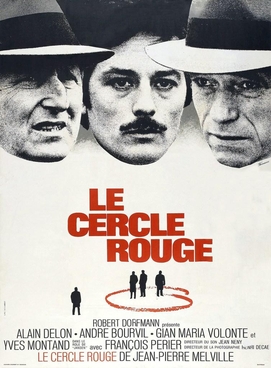
Le Cercle Rouge (1970)

Le Cercle Rouge (1970)

Melville delivers one of his patented, stripped-back, gangster films full of monochromatic Bogart-like cool

Director: Jean-Pierre Melville

Cast: Alain Delon (Corey), André Bourvil (Inspector Mattei), Gian Maria Volonté (Vogel), Yves Montand (Jansen), Paul Crauchet (The receiver), Paul Amiot (Chief of Police), Pierre Collet (Prison guard), André Ekyan (Rico), Jean-Pierre Posier (Mattei’s assistant), François Périer (Santi)

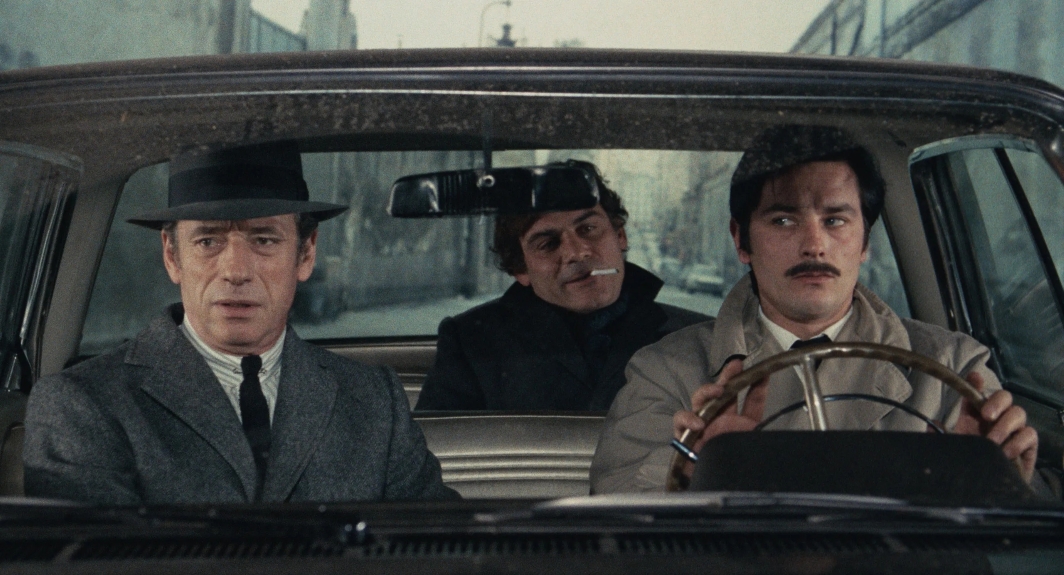
Can you have honour among thieves? Perhaps only when all of you sink or swim together. Three men need a big score and will stick together to get it. Corey (Alain Delon) has the tip-off about a high-end jewellery store, ripe for turning over. He needs the money, as he’s earned the enmity of gang boss Rico (André Ekyan), who repaid Corey’s years of jail-time silence by shacking up with Corey’s girl. Vogel (Gian Maria Volonté) is on-the-run after a daring train escape from dedicated Inspector Mattei (André Bourvil). And retired police sharp-shooter Jansen (Yves Montand) just needs a reason to stop hitting the bottle. All of them will come together for a heist.

It’s a classic journey for Melville, another exploration of the director’s love for stripped-back cool with a bunch of broodingly silent 40s throwback crooks in Bogartian-rain-jackets puffing cigarettes and going about their dirty-but-strangely-honourable business in a monochromatic world of nightclubs and hideouts. So far, in fact, so Le Samouraï, Melville’s previous Delon starrer, with Le Cercle Rouge echoing that film’s mix of stripped-back Bresson simplicity with French New Wave existentialism. Like that film, this also starts with an import-filled opening quote (claiming to be from the Buddha) which in fact, Melville actually made-up.

Le Cercle Rouge was a film Melville had planned to make years earlier – only for Rififi to come along and execute (flawlessly) his central conceit of a heist conducted in deadly-cool silence. (“They’re not much for talking” Mattei drily observes here when watching the surveillance footage.) But enough time had gone by for the idea to feel fresh again and the heist is another masterfully forensic piece of Melville-magic, that soaks itself in the detail of carefully executed timing, pin-point marksmanship, just a touch of ruthless violence and unflappable cool. (He even speeds us over the duller parts of the prep with skilfully executed wipes). Montand even gets a kick-ass moment of marksmanship that nearly raises a cheer.

The thieves go about much of their work with ice-cold professionalism. We’ve already had Corey’s anti-authoritarian cool well-established, as he effortlessly disarms and steals a bundle of cash from the furious (and humiliated) Rico before casually besting in a pool-hall punch-up two of Rico’s heavies (Corey doesn’t hesitate to take down the first man in seconds with a pool cue). He’s similarly unphased by taking his new car through a police road-block – neither is he anything more than wryly amused when he spots (naturally, while supping an expresso and cigarette) Vogel climbing into the boot of said car to avoid the cops. Its Delon to a tee, here playing to the hilt the casual, confident cool of a guy who knows he’s pretty much tougher than anyone else in the room.

He’s meets a match of sort in Vogel – in what Melville develops into his idea of bromance, where the bros are two hoods who bound over popping a couple of hitmen. Vogel’s escape from the police has a wildness to it that’s almost missing in the rest of the film until its end, a desperate dive through a window and a helter-skelter run through the forest dodging bullets. There is more twitch in Gian Maria Volonté, but when he decides to trust Corey – and Melville captures this moment with a striking fourth-wall-breaking stare in turn from both actors straight down the camera – he’s all in. So much so, Corey is confident that when Rico’s thugs catch up with him moments later, Vogel will be on hand to dispatch the pair of them, and the two remain inseparable (Corey even loaning Vogel his spare pyjamas) throughout the rest of the movie.

It’s these bonds of loyalty that are an underlying theme to Le Cercle Rouge. In a crime world full of bounders who constantly betray those around them – from Rico’s betrayal of Corey to François Périer’s excellently grimy boss Santi only slightly reluctantly turning informer to make his life easier – these men stand out. The cops seem little better: Melville’s policemen are frequently heavy-handed (Mattei frustratedly has to slap down one cop for pushing Santi’s kid almost to breaking point in a manufactured case set up as a light bit of quid-pro-quo with the gangster), have little loyalty for each other and reach for their guns at every opportunity. Corey’s prison guard is on the take and ex-sharp-shooter Jansen left the force because the corruption was sinking into his soul.

Probably why Jansen is now a drunk, Melville introducing him with a strikingly surreal Buñuel-inspired nightmare, where the sweating Montand imagines jerky, giant spiders, then rats and snakes crawling over him in his gin-soaked bedsit. Nevertheless, Montand has his own code of honour: the job is not about the money, but the chance to chuck the demon drink. And he’s got as much contempt for the police’s corruption as anyone, despite that proudly framed police pistol on his wall. Montand’s nervy attempts to hide his booze dependency are well-done, and Melville executes some fine tension by not showing us the results of Jansen’s pre-heist shooting practice, showing us only Montand’s ambiguous face as he inspects the target.

Arrayed against them, André Bourvil brings a Maigret-like quality to Inspector Mattei – the guy who goes home to his classically-named cats, who he dotes on like a loving dad – but when action comes, he’s just as ruthless as anyone, for all his softly spoken professionalism. He’ll lie, cheat and steal to get evidence or witness co-operation and is as quick to pull his gun (and as deadly with it) as the most hardened criminal. In this cruel, winner-takes-all game of cops-and-robbers (and it’s hard not to spot Michael Mann’s Heat owes a huge debt to Le Cercle Rouge, right down to matching his cooly monochrome visuals) he’s as determined to win as anyone.

Le Cercle Rouge has an odd ending, all characters converging almost with a sense of magical realism in one place, at one time. Of course, this echoes the words of Melville’s opening words of men coming together, on a said day, in the red circle – but then you remember that this quote is just some bollocks Melville made up and it was probably written to add a little bit of philosophical justification to what would otherwise be a very sudden and shallowly plotted, fortuitously unlikely, arrival of every character in a key location at the same time. With the expected deadly results.

Le Cercle Rouge though is taut, chilled and cool Melville at his best, with a dark air of danger throughout and a host of characters playing metaphorical chess while puffing cigarettes and looking unflustered. And, when it comes to that sort of thing, few did it better than Melville.

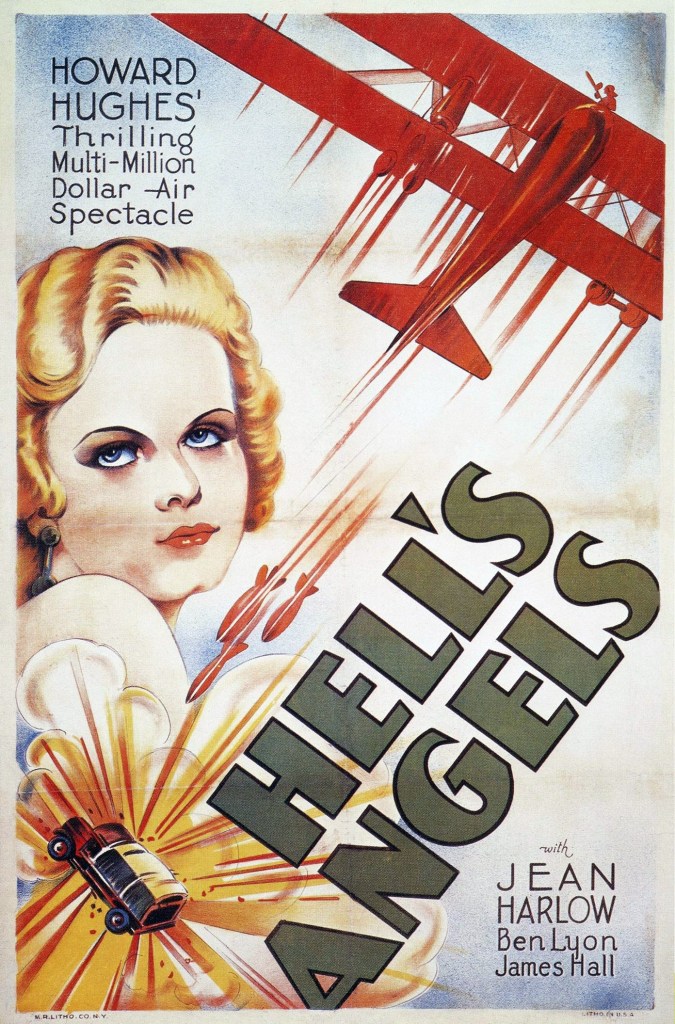
Hell’s Angels (1930)

Hell’s Angels (1930)

Hughes magnificent folly has stunning scenes of aerial combat, among it’s more functional dialogue scenes

Director: Howard Hughes (& James Whale)

Cast: Ben Lyon (Monte Rutledge), James Hall (Roy Rutledge), Jean Harlow (Helen), John Darrow (Karl Armstedt), Lucien Prival (Baron von Kranz), Roy Wilson (Baldy Maloney)

There is an old line about Orson Welles calling a film set “the biggest train set a boy ever had”. A feeling no doubt shared by Howard Hughes, one of the wealthiest men in America, who loved pouring his fortune into his private passions: fast planes and big movies. So, why not throw the two of them together into Hell’s Angels, the film which he planned to use to scoop recent Best Picture winner Wings title as the greatest fighter-ace film ever made. To get there, money would be no object at all.

Which meant Hughes didn’t think twice of reshooting most of the film over again when sound took over Hollywood. After all, why not put more money in: he had already spent millions on assembling a personal army of world-war-one planes, all of them frequently kept waiting on the ground for days on end (pilots and film crew sitting around collecting pay cheques) while he waited for the clouds to be perfectly positioned to best demonstrate the speed the planes flew at. Since he was waiting, why not bring in James Whale to re-shoot all the dialogue scenes with all the actual talking?

Whale came on board, fresh from directing Journey’s End on Broadway (after his work was finished, Hell’s Angels release was so further delayed he had time to shoot a film of that too and release it before anyone outside Hughes’ office saw a frame of Hell’s Angels), Whale first insisted the script be re-written. Hughes was more than happy with that, since I doubt he really gave a damn about the very-loose story used to join together the bits with the planes in. The cast was kept the same, bar one change: original female lead Greta Nissen’s Norwegian accent was judged impenetrable, so Jean Harlow was bought in to slip into something a little more comfortable in her place.

Not that it mattered particularly. The story of Hell’s Angels is simplicity itself. Two Brit brothers (though neither them or Harlow make any attempt to change their accents) join the flying corp at the outbreak of war. One brother, Monte (Ben Lyon), is a selfish, care-free rogue. The other, Roy (James Hall) is so painfully noble and dutiful (he even fights duels on behalf of the cowardly Monte) he’s nearly an idiot. Roy loves Helen (Jean Harlow) but is utterly unaware that she is nymphomaniac vamp who will do it with anything in a uniform – including Monte. Monte thinks war is a fool’s crusade, Roy considers it well-worth dying for – attitudes that will lead to a clash when they both volunteer for what turns out to be a suicide mission behind enemy lines.

None of this is particularly a surprise and, despite Harlow’s charisma, none of the three leads particularly stand-out on the acting front (though James Hall makes a decent fist of Monte’s big speech on the suicidal futility of war). Each of these characters is fairly thin in any case, and none of their actions carry any real surprise factor at any point. Whale shoots the dialogue scenes with a breezy competence, doing his best with material that on paper would hardly be winning any plaudits.

In fact, the most interesting thing about these scenes is how much it seems to subvert expectations of a martial flag-waver. It’s natural to assume the cowardly brother will either redeem himself or shown to be completely in the wrong, while the noble brother will be vindicated. In fact, Hell’s Angels ends up having more than a little sympathy with Monte who, while undeniably “yellow” (he looks terrified after his first solo flight and its downhill from there), is also given a fair bit of sympathy when he rants about war being murder and patriotism being just a word. It’s hard not to feel he’s right after watching the insane uber-nationalism of the German zeppelin crew who willingly fling themselves to their death to lighten their ship with cries of “Kaiser and Reich!” on their lips.

Just as it’s hard not to think Roy’s blind-nobility makes him less of a hero and more of a clueless buffoon. How he misses that Helen (who, at one point, staggers out of a bush immediately followed by an officer straightening his uniform) is as shallow as a puddle and faithful as a cat in heat is a complete mystery. It’s hard not to see him as a duped cuckold, cluelessly waiting for Monte in their digs (unaware Monte and Helen are currently going at it), or insanely obsessed with honour as he nearly gets himself killed fighting a duel in Monte’s place. It’s not surprising that (as Monte says) war is “like being drunk – it brings out who you really are”. It makes Monte increasingly wild and selfish, and Roy increasingly mule-like his in rigid following of form.

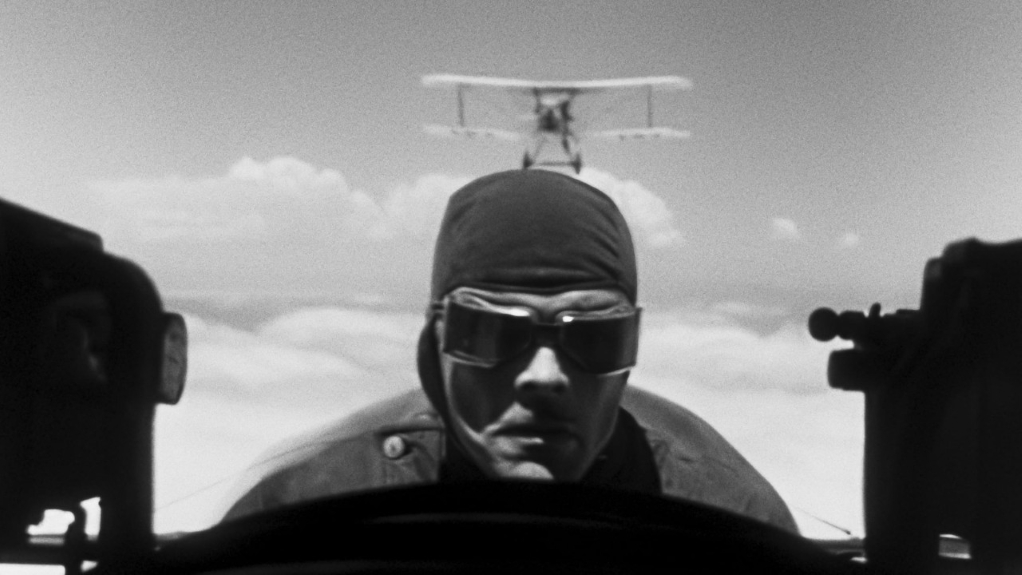
This subliminal interest is the best spark you can take from the otherwise fairly turgid dialogue scenes. The real interest is those dog fight scenes. And they remain outstanding today. There was no question Hughes wasn’t going to direct those – and he directed them from the sky himself, calling the shots from a plane amongst the action. These sequences are all stunningly assembled and genuinely compelling in their sense of speed and danger. There is also a real visual beauty to them: in particular a shot of a German zeppelin emerging from blue tinged clouds is awe-inspiring. The epic sweep of tight formation planes, swooping closely between each other, tailing each other, bullets flying and pilots whizzing by is brilliant.

And the film doesn’t shirk on the horrors. Flames – whether they come from machine guns or from burning planes – are hand painted yellow to make the destruction stand out. The human impact on the pilots is brilliantly captured. During these battles, pilots will burn or die with blood streaming from their mouth. Panicked flyers will gulp back shots of whiskey midair, or scream in agony as their bullet riddled planes and bodies crash to the ground. Planes ram into each other in fiery explosions, or streak bullets across each other. That’s not to mention the horrifying madness of that German zeppelin crew stepping into the oblivion of a long fall, pushed towards their fate by their fanatically insane captain (who has already sacrificed/murdered sympathetic German Karl – an old college friend of Monte and Roy – to lighten the zeppelin).

The dog fight sequences are compelling and if the drama on the ground never quite reaches these heights, in a way that’s only to be expected. For all the quiet subversion – and it’s up to you how much you think Hughes noticed or cared about that – they are functional moments to carry us to the drama in the skies. That’s what Hell’s Angels does best – and few have done it better.

Fitzcarraldo (1982)

Fitzcarraldo (1982)

Almost as famous for the story of its making, a stunningly epic look at idealism and hubris

Director: Werner Herzog

Cast: Klaus Kinski (Brian Sweeney ‘Fitzcarraldo’ Fitzgerald), Claudia Cardinale (Molly), José Lewgoy (Don Aquilino), Miguel Ángel Fuentes (Cholo), Paul Hittscher (Captain “Orinoco” Paul Resenbrink), Huerequeque Enrique Bohórquez (Huerequeque), Grande Othelo (Stationmaster), Peter Berling (Opera manager), David Pérez Espinosa (Campa chief), Milton Nascimento (Opera house doorman), Ruy Polanah (Rubber baron)

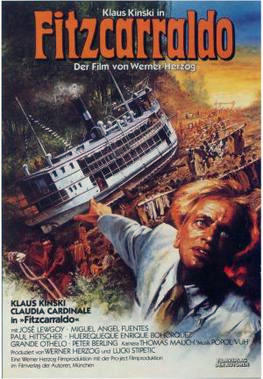
Possibly no film is as famous (if not more so) for its making, as much as the film itself. Fitzcarraldo is the epicentre of the Herzog myth (that’s saying something for a guy who once ate a shoe on film and dismissed getting shot by an air rifle during an interview as ‘insignificant’ before continuing). Herzog not only committed his crew to pulling a steamer ship up a jungle mountain for real, but also continued his tumultuous partnership with the notoriously unpleasant Kinski (who the indigenous cast even offered to bump off). Chuck in that Herzog spent had to reshoot most of the film from scratch after original stars Jason Robards and Mick Jagger dropped out, and you have a film that could almost become a film itself.

In the early years of the twentieth century, the shores of the Amazon are being exploited by business barons. Brian Sweeney Fitzgerald (Klaus Kinski) – known as Fitzcarraldo – wants to become one of them. But not because he hungers for money: his passion is opera, and his dream is to raise the capital to build an opera house in Inquitos. This leads to a final desperate throw of the dice: buying a claim to a stretch of rubber trees, inaccessible behind rapids on tributary stream of the Amazon. But there is only one way to get to it: take a ship down a parallel river, then drag it over a small mountain at the narrowest point, farm the rubber and drag the ship back to sail home. Simple right?

At one point, Fitzgerald calls himself the “Conquistador of the useless”. It’s also the title Herzog himself chose when he wrote about making the film, which was born out of his obsession with how ancient civilisations moved giant stone menhirs. You could (very easily) argue Fitzcarraldo is a self-portrait of a man compelled to bring his impossible ideas to life. There is no doubt a lot of the films power comes from knowing a real (admittedly 30-tonne rather than 320) steamship was pulled up a mountain by hundreds of people. It’s one of the reasons why the film’s more luxuriant pace sometimes drag – we want to get into the jungle as much as Fitzgerald does. We know it’s coming and the first hour leading to it, particularly on a first viewing, can try the patience.

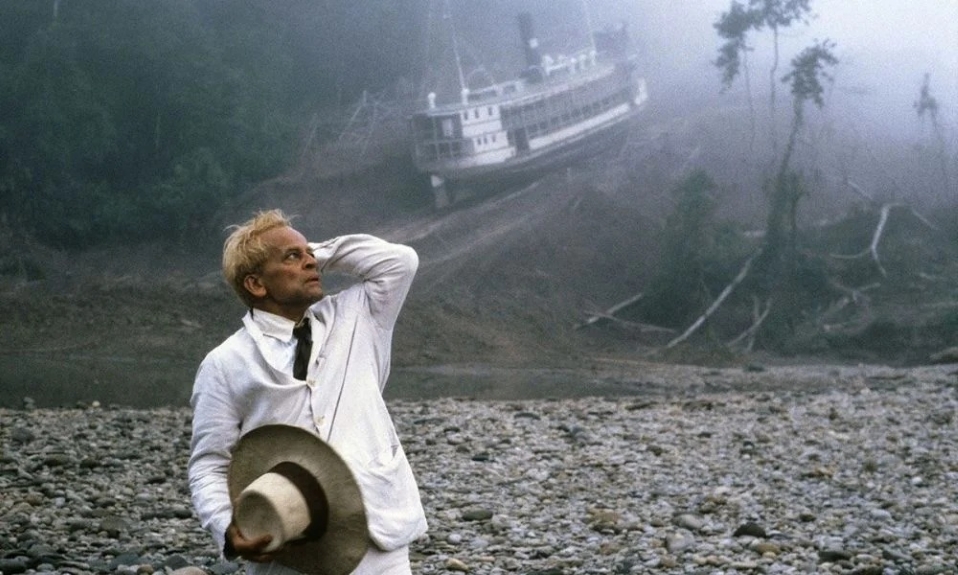
Much like his last famous film in the jungles, Fitzcarraldo has a mystic, mythical and timeless quality. With Popul Vuh’s haunting music seeping into your soul, Thomas Mauch’s camerawork stresses the vastness of the jungle and the size of the ship. The riverbanks this ship will be dragged over seem to tower over it, but the ship itself is frequently framed in relation to the crew it dwarves. There is an impossible, suitably Operatic, quality to what Fitzcarraldo (film and man) is attempting, and Herzog’s film doesn’t shirk in presenting the awesome impossibility of it, the dizzying unlikeliness of success, that only the most obsessed would ever even think of attempting. When you watch this ship being winched painfully slowly up a hill, ropes screaming, it’s somewhere between awe-inspiring and rubber-neckingly compelling. Part of the magic of Herzog’s film is that you invest as utterly in its mad quest as its lead does.

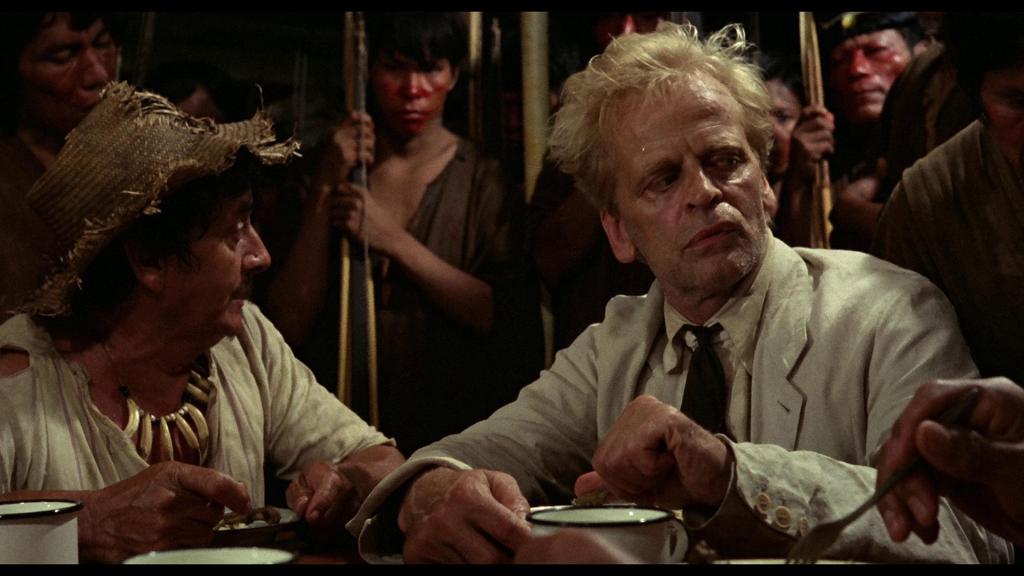
Of course, even though the film nearly starred Jason Robards, the wild-eyed intensity of Klaus Kinski was the only suitable channel for this madness. Despite this though, Fitzcarraldo inverts your expectations by giving us Kinski at possibly his most boyish, sweet and endearing (the exact opposite of the actor’s own personality on set). He’s an excitable eccentric, giddy with joy at hearing Caruso sing live, bounding around, forming a natural bond with children and animals, pushing his vision forwards because he earnestly believes it can be done because it must be done. This might be Kinski’s least ‘dangerous’, most gentle role, Fitzgerald able to inject his passion into others.

Not all of course – its notable that, when he reveals his plan, almost the entire crew deserts en masse in shock, leaving him just the eccentric drunken chef, his world-weary captain and cynical indigenous engineer. But there is a messianic quality in Kinski’s Fitzgerald that sweeps up the indigenous tribes into making enormous sacrifices to assist his vision (Fitzgerald’s tragedy is that his naïve, optimistic excitement blinds him to the fact that their motives are radically different to his own).

But then Fitzcarraldo, for all of the stunning excitement of the feat at its centre, doesn’t let you forget this is a grand folly, built on the back of oppression and colonial greed. That the sole reason Europeans have piled down to the Amazon is to dig bucketloads of cash out of the ground and that Fitzgerald also has no problem with sacrificing indigenous lives and tearing up the South American countryside to suit his needs. Fitzcarraldo for all its sanity-defying gorgeous, is about the selfish cost of this, and we are not allowed to forget that Fitzgerald is also a ball of monstrous vanity, the self-proclaimed “spectacle of the forest”. That there is a huge element of hubris in his desire to bend nature to his will to fulfil his artistic dreams.

Early in the boat haul, a slipped rope sends the boat rolling backwards and crushing (horribly) the life out of several workers, with others pulled out to die agonisingly slow deaths. At no point does Fitzgerald break off from his dance of celebration as the boat moves to notice this. Later he offers payment to the indigenous workers in the form of blocks of ice (“do they know it melts” he sheepishly asks his translator). The countryside around the boat is torn apart to produce a mud slope to pull the ship up, and Fitzgerald’s grand plan is to industrialise the area. Really, is he that different from the robber baron industrialists, who are full of self-satisfied, cigar chomping greed, talking about civilising the land but really only interested in lining their own pockets.

They take whatever isn’t nailed down from the tribes, feed bottles of champagne to their horses, mockingly keep bonfires going with bundles of bank notes and congratulate themselves over poker games in posh clubs. Herzog records this all with a calm, measured preciseness allowing us to draw our own conclusions. Soon, we can’t miss that even Fitzgerald’s girlfriend (a charming Claudia Cardinale) makes the money to finance their venture from training up a host of extremely reluctant looking indigenous women in the arts of bordello prostitution (“it’s better than working the street” she blithely says).

For all Fitzgerald’s mission is a last desperate throw of the dice, to raise funds for his opera house (it’s striking by the way how many viewers misremember the steamship as the opera house, as if Herzog was dragging a building up a hill), it’s also a quietly subversive look at the arrogance of the West (Fitzgerald is eventually thwarted, as it never occurs to him that the indigenous tribes have motives independent of his own). It’s a reminder that behind many dreams, is often a selfish obsession around gain – be that for glory, money or art. Fitzgerald loves the opera for sure – but he also loves the idea of himself as the ambassador for the art in South America. That’s the real dream and lives will be lost on the way. Fitzcarraldo is willing to forgive him this; even after death and failure, it gives him a sentimental coda that feels almost not quite real in its quiet optimism. But it won’t turn a blind eye to the losses he has caused. Herzog’s film (and you could accuse it, as some of, of doing the same exploitation of others as Fitzgerald does) is still an impossible, marvellous folly that no one else surely could have imagined or made.

The Lost World: Jurassic Park (1997)

The Lost World: Jurassic Park (1997)

Second-tier Spielberg sequel, one-for-the-money but still entertaining for fans of Dinosaur action

Director: Steven Spielberg

Cast: Jeff Goldblum (Dr Ian Malcolm), Julianne Moore (Dr Sarah Harding), Pete Postlethwaite (Roland Tembo), Arliss Howard (Peter Ludlow), Richard Attenborough (Dr John Hammond), Vince Vaughn (Nick Van Owen), Vanessa Lee Chester (Kelly Curtis), Peter Stormare (Dieter Stark), Harvey Jason (Ajay Sidhu), Richard Schiff (Eddie Carr)

Sometimes I wonder if Spielberg even remembers he directed The Lost World. I guess he wanted something to ease him back in after a few years off, which came with a nice big pile of cash to set up Dreamworks. There isn’t anything particularly wrong with The Lost World. It just feels from top-to-bottom like something rolled off a production line, largely devoid of any of the spark or magic you associate with the director. It’s like a Spielberg-pastiche and, while still better than several films in the franchise that followed, it’s unlikely to last 65 million years in the mind.

After the disaster of Jurassic Park, turns out there was a Site B. John Hammond (Richard Attenborough) plans to let the dinos there live freely, under observation. But InGen, now led by his greedy nephew Peter Ludlow (Arliss Howard), plans to exploit the dinos for cash. Hammond recruits Ian Malcolm (Jeff Goldblum) as part of an island team to build a case for protecting the dinosaurs – having already recruited his Malcolm’s girlfriend Sarah Harding (Julianne Moore). Malcolm high-tails it to the dangerous island to get her back (accidentally dragging his kid Kelly (Vanessa Lee Chester) along), only to find Ludlow also on the island, guided by big game-hunter Roland Tempo (Pete Postlethwaite) to capture dinosaurs. Soon “oohs” and “aahhs” turn to “arragghhs!”.

It was adapted pretty much in name only from Michael Chrichton’s Jurassic Park sequel – in fact, several of its most memorable scenes (such as Stormare’s character being munched by compeys, or its child-attacked-on-a-beach opening) are in fact unused material from Chrichton’s first book. The film feels like a wall where a collection of fun-sounding ideas have been chucked to see what it sticks, right down to the sudden gear-change final act with a T-Rex causing havoc in the streets of San Diego. To make this work, major characters consistently make sudden, contradictory or flat-out-stupid decisions, or abruptly disappear once their plot function has been served.

In fact, it’s basically a film of set-pieces with a very, very thinly plotted through-line. The main beats are either thuddingly obvious (can Malcolm bond with his kid?) or get completely lost (the very-lightly sketched non-intervention plans that kickstart the film quickly get dropped completely). What’s important instead is that this is a series of chases against dangerous dinos, with the T-Rex and the velociraptors playing narrative tag between them as flesh-eating antagonists with various (mostly unsympathetic) humans filling out their lunchboxes.

Spielberg is still Spielberg though, so when he gets into a set-piece it tends to be a good one. The T-Rex assault on our heroes caravan base (in a particularly great Spielberg touch, Moore finds herself on a slowly cracking glass windscreen with a deadly drop below) is genuinely exciting – and, in the fate of Richard Schiff’s luckless team mate, genuinely a bit sad. The rag-tag remains of both parties desperately trying to escape the island gives us exciting T-Rex attacks, Stormare (as slimily detestable as only he can be) eaten by a hundred compeys is well-executed and, finally, a brilliantly conceived sequence of raptors ploughing like torpedoes through a forest of long grass to pluck off stragglers is really striking, despite being very short.

These sit alongside (admittedly fun) set-pieces that also feel a little silly. The entire final sequence of the T-Rex fits neatly into this, full of cartoonish nonsense (a doghouse hanging by a lead from the T-Rex after a dog is consumed, or a giant pool ball sent rolling down a road in its carnage) as people scream, run about and generally panic as the T-Rex bombards down a busy high street. That’s without even thinking about the silliness that the T-Rex, like Dracula on the Demeter, kills everyone on the ship transporting it (including getting its massive body inside some really tiny rooms, to leave grisly remains like a hand hanging from a wheel) then calmly goes back inside its storage hold and (presumably) locks itself back in again.

But then this is also a film that throws in a chase between three of our leads and a group of velociraptors (which feels narratively its there to kill time while a miscast Vince Vaughan – as an all-action animal rights activist of all things – phones for help) which builds towards the totally absurd sight of a 12-year-old dispatching a velocitator to a spikey death via her gymnastic skills. It really hammers home how wildly the velociraptors’ skills vary: against Postlethwaite’s hunters they are ruthlessly effective; here Moore slows them down with well-aimed roof tiles, a limping Goldblum deters one with a car door and of course, Kelly uses them to show why she should never have been cut from the school sports team.

The Lost World barrels along leaving logic in its wake. Julianne Moore’s Sarah Harding is set-up as an expert on animal-survivalism, but in her first scene is nearly killed by that humble “children’s favourite dinosaur” the Stegosaurus, after startling their baby with her noisy camera (she learns nothing from this about the protectiveness dinosaurs have for their young). She presents a list of strict survival “rules”, all of which she promptly breaks, culminating in walking miles in a shirt soaked in T-Rex blood, after telling us their sense of smell is a superpower. Meanwhile Goldblum’s feelings towards Hammond veer between frustration and deep respect depending on the immediate requirements of the scene.

The film is in fact a parade of characters behaving stupidly and slightly miscast actors. –Moore’s chippy feistiness makes her seem reckless and out-of-her-depth rather than plucky and brave, Goldblum isn’t quite right as action hero (interestingly. I can’t really think of them playing as conventional action adventure roles as this again). As a result, its most compelling character is actually Pete Postlethwaite’s Allan Quartermain-throwback. Postlethwaite is by far the film’s most assured and authoritative performer, makes his character the film’s most professional and logical, and our heroes so frequently look frustratingly smug (and incompetent), that you end up seeing things more from his side. Postlethwaite is greatly missed when he departs the film abruptly before the final act.

That all sounds really harsh doesn’t it? The Lost World may well be very much second tier Spielberg, full of moments that don’t quite work, are very silly or feel half-baked. But despite that, it’s swift, pacey and generally entertaining even when it’s stupid. Because when Spielberg fills a bowl of popcorn, he generally knows just how much butter and salt to add in. It’s never going to be anyone favourite Jurassic Park film, but it’s still going to be good entertainment for a Saturday night.